Naar de inhoud

UFO'S of UAP'S, ASTRONOMIE, RUIMTEVAART, ARCHEOLOGIE, OUDHEIDKUNDE, SF-SNUFJES EN ANDERE ESOTERISCHE WETENSCHAPPEN - DE ALLERLAATSTE NIEUWTJES

UFO's of UAP'S in België en de rest van de wereld
akke.beakke.be
Ontdek de Fascinerende Wereld van UFO's en UAP's: Jouw Bron voor Onthullende Informatie! Ben jij ook gefascineerd door het onbekende? Wil je meer weten over UFO's en UAP's, niet alleen in België, maar over de hele wereld? Dan ben je op de juiste plek! België: Het Kloppend Hart van UFO-onderzoek In België is BUFON (Belgisch UFO-Netwerk) dé autoriteit op het gebied van UFO-onderzoek. Voor betrouwbare en objectieve informatie over deze intrigerende fenomenen, bezoek je zeker onze Facebook-pagina en deze blog. Maar dat is nog niet alles! Ontdek ook het Belgisch UFO-meldpunt en Caelestia, twee organisaties die diepgaand onderzoek verrichten, al zijn ze soms kritisch of sceptisch. Nederland: Een Schat aan Informatie Voor onze Nederlandse buren is er de schitterende website www.ufowijzer.nl, beheerd door Paul Harmans. Deze site biedt een schat aan informatie en artikelen die je niet wilt missen! Internationaal: MUFON - De Wereldwijde Autoriteit Neem ook een kijkje bij MUFON (Mutual UFO Network Inc.), een gerenommeerde Amerikaanse UFO-vereniging met afdelingen in de VS en wereldwijd. MUFON is toegewijd aan de wetenschappelijke en analytische studie van het UFO-fenomeen, en hun maandelijkse tijdschrift, The MUFON UFO-Journal, is een must-read voor elke UFO-enthousiasteling. Bezoek hun website op www.mufon.com voor meer informatie. Samenwerking en Toekomstvisie Sinds 1 februari 2020 is Pieter niet alleen ex-president van BUFON, maar ook de voormalige nationale directeur van MUFON in Vlaanderen en Nederland. Dit creëert een sterke samenwerking met de Franse MUFON Reseau MUFON/EUROP, wat ons in staat stelt om nog meer waardevolle inzichten te delen. Let op: Nepprofielen en Nieuwe Groeperingen Pas op voor een nieuwe groepering die zich ook BUFON noemt, maar geen enkele connectie heeft met onze gevestigde organisatie. Hoewel zij de naam geregistreerd hebben, kunnen ze het rijke verleden en de expertise van onze groep niet evenaren. We wensen hen veel succes, maar we blijven de autoriteit in UFO-onderzoek! Blijf Op De Hoogte! Wil jij de laatste nieuwtjes over UFO's, ruimtevaart, archeologie, en meer? Volg ons dan en duik samen met ons in de fascinerende wereld van het onbekende! Sluit je aan bij de gemeenschap van nieuwsgierige geesten die net als jij verlangen naar antwoorden en avonturen in de sterren! Heb je vragen of wil je meer weten? Aarzel dan niet om contact met ons op te nemen! Samen ontrafelen we het mysterie van de lucht en daarbuiten.

Archief

The Hidden Story of Young Martian Volcanoes

The Hidden Story of Young Martian Volcanoes

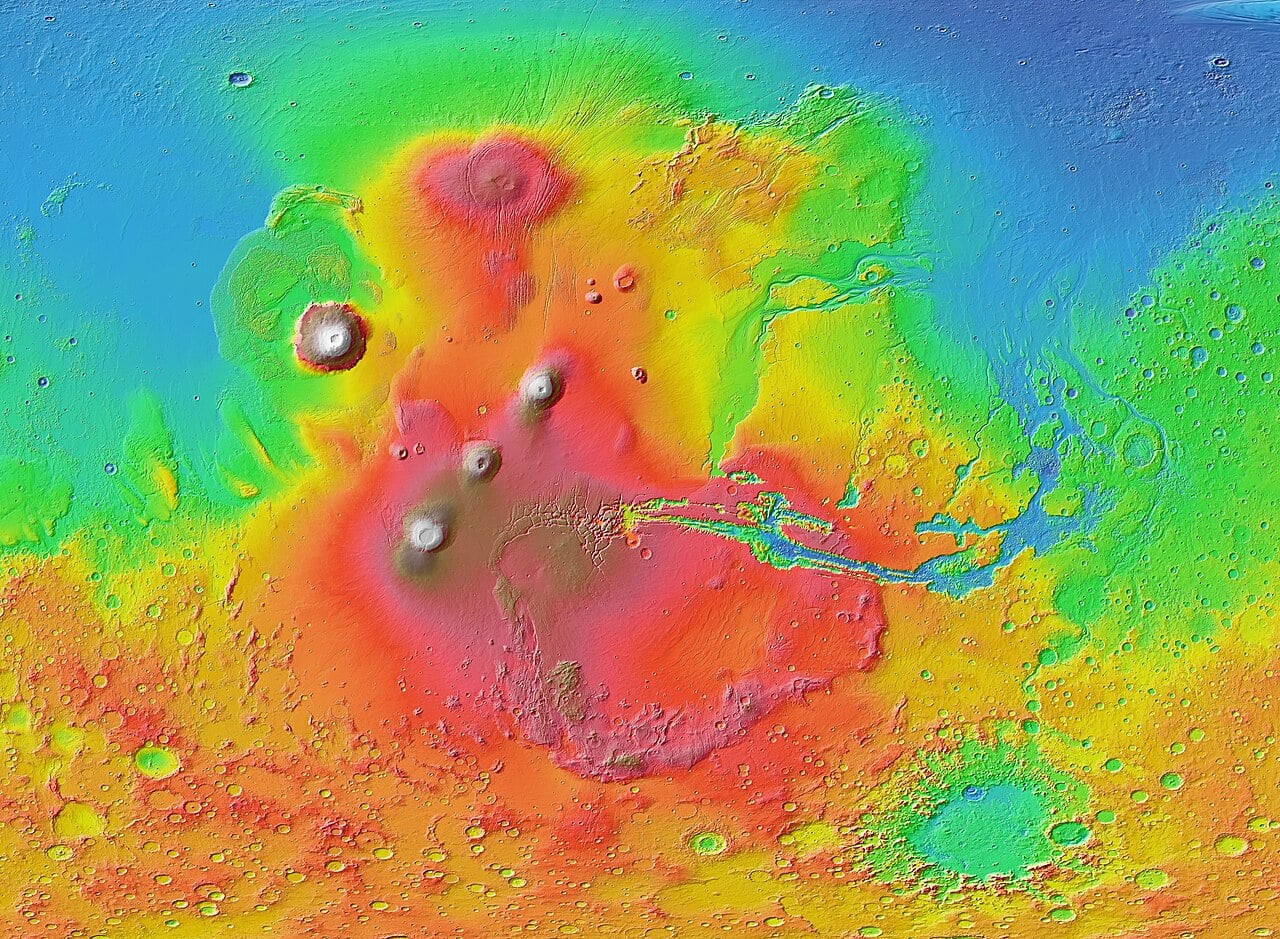
Mars Orbiter Laser Altimeter (MOLA) colorised topographic map of the western hemisphere of Mars, showing the Tharsis region of volcanoes (Credit : NASA / JPL-Caltech / Arizona State University) Mars Orbiter Laser Altimeter (MOLA) colorised topographic map of the western hemisphere of Mars, showing the Tharsis region of volcanoes (Credit : NASA / JPL-Caltech / Arizona State University)

When you look at a volcano, you’re seeing the tip of a vastly more complicated system. The mountain itself is just the exit point for processes that have been happening deep underground, perhaps for millions of years. Magma doesn’t simply appear at the surface ready to erupt it rises, stalls, cools, changes, and evolves in underground chambers before finally breaking through.

We’ve known this about Earth’s volcanoes for a long time, but it turns out Mars has been playing the same game. New research published in the journal Geology shows that some of the Red Planet’s youngest volcanic systems had far more intricate histories than anyone realised. An international team of scientists studied a volcanic system south of Pavonis Mons, one of Mars’ giant shield volcanoes in the Tharsis region. Using high resolution images and mineral data from orbiting spacecraft, they essentially performed detective work from space, piecing together clues left behind in the rocks.

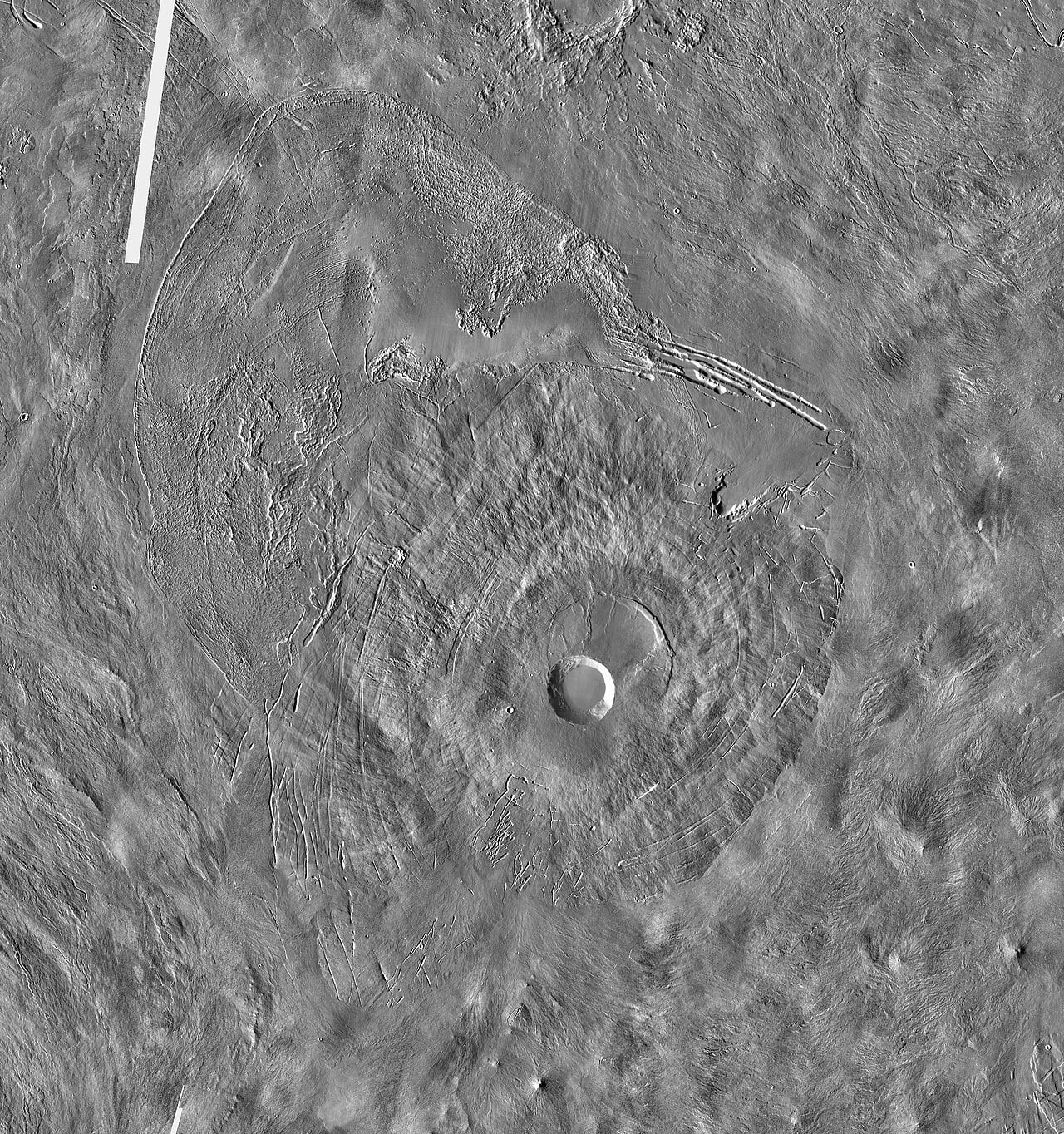
Infrared image mosaic showing the shield volcano Pavonis Mons, the central of three peaks in the Tharsis Montes chain, in the central part of the Tharsis region of Mars (Credit : NASA / JPL-Caltech / Arizona State University)

Infrared image mosaic showing the shield volcano Pavonis Mons, the central of three peaks in the Tharsis Montes chain, in the central part of the Tharsis region of Mars

(Credit : NASA / JPL-Caltech / Arizona State University)

What they discovered was fascinating. Rather than forming in a single, straightforward eruption, this volcanic system went through multiple distinct phases. Early on, lava poured out through long cracks in the ground, what geologists call fissure eruptions. Later, the style changed completely, with lava erupting from concentrated point sources that built up cone shaped vents.

Here’s the clever bit: although these different lava flows look quite different on the surface, they all came from the same underground plumbing system. Think of it like a house with several taps (and I should know as recently done a load of plumbing in my house, mostly successful!) the water comes from the same pipes, but it emerges in different places and different ways.

The real revelation came from analysing the minerals in each lava flow. Each eruption left behind a distinct mineral fingerprint, and these signatures tell us that the magma itself was evolving over time. The magma was probably coming from different depths, or spending varying amounts of time stored underground before erupting.

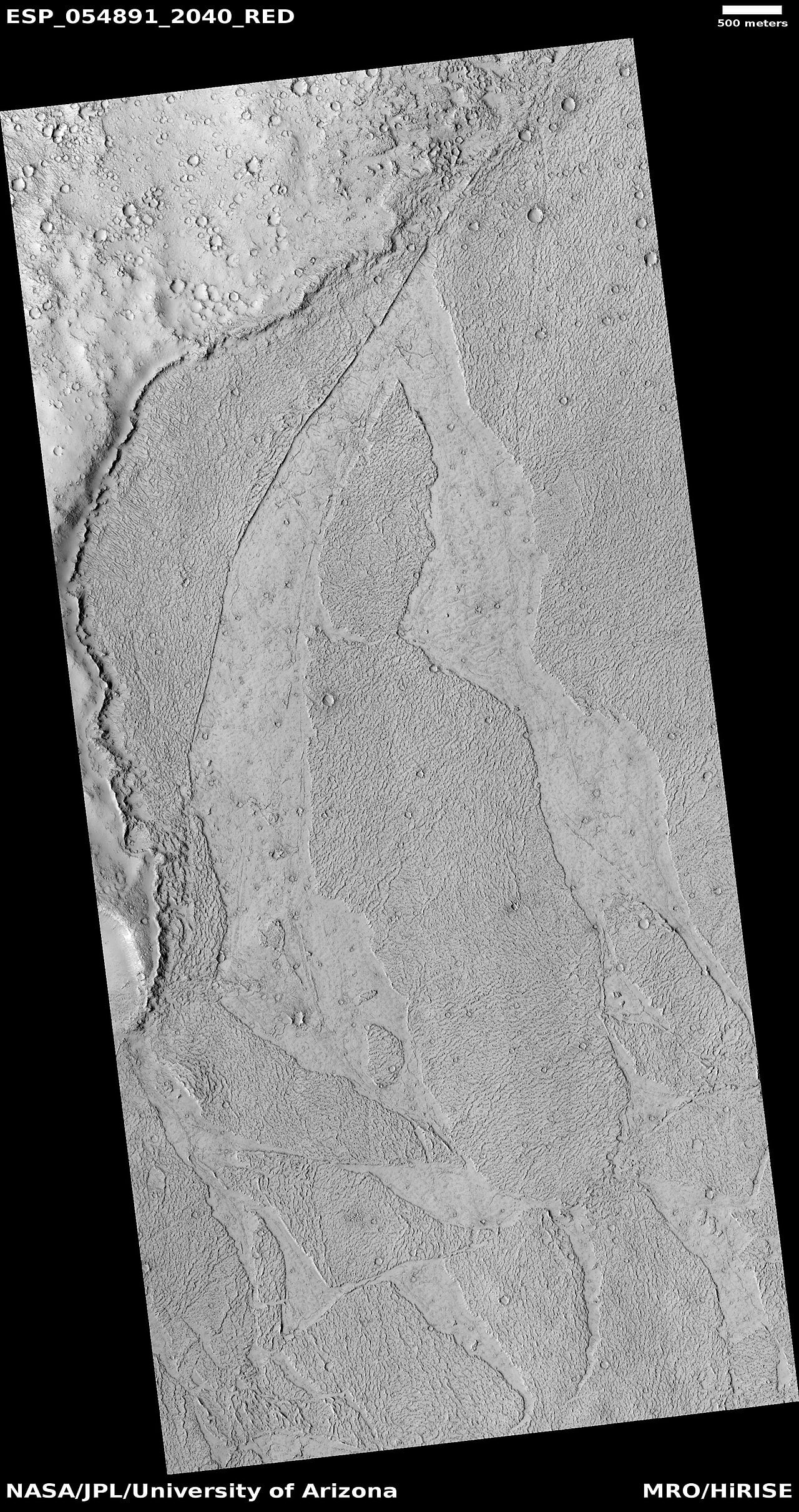
Lava rafts and flows, as seen by HiRISE under HiWish program. Location is the Elysium quadrangle on Mars (Credit : NASA/Jim Secosky)

Lava rafts and flows, as seen by HiRISE under HiWish program. Location is the Elysium quadrangle on Mars

(Credit : NASA/Jim Secosky)

This matters because we can’t exactly pop over to Mars and chip off a rock sample. Everything we know about the planet’s interior has to come from studying what’s visible on the surface. These volcanic systems are like windows into Mars’ deep interior, revealing processes happening kilometres below ground.

This all suggests that even during Mars’ most recent volcanic period, the planet’s subsurface remained geologically active and complex. The volcano didn’t just erupt once and fall silent, it evolved as conditions beneath the surface shifted and changed. It’s a reminder that Mars, though smaller and colder than Earth, has led a rich geological life. The planet’s volcanic history isn’t a simple story of early activity followed by steady decline. Instead, it’s a tale of ongoing processes, of magma systems that remained dynamic for millions of years, shaping the surface we see today.​​​​​​​​​​​​​​​​

Source : 

RELATED VIDEOS

{ https://www.universetoday.com/ }

Hoe vind je dit bericht?
Geschreven door peter om 22:05 Stuur door

China Successfully Tests Their New Rocket and Lunar Crew Capsule, Placing them On-Track to Reach the Moon

China Successfully Tests Their New Rocket and Lunar Crew Capsule, Placing them On-Track to Reach the Moon

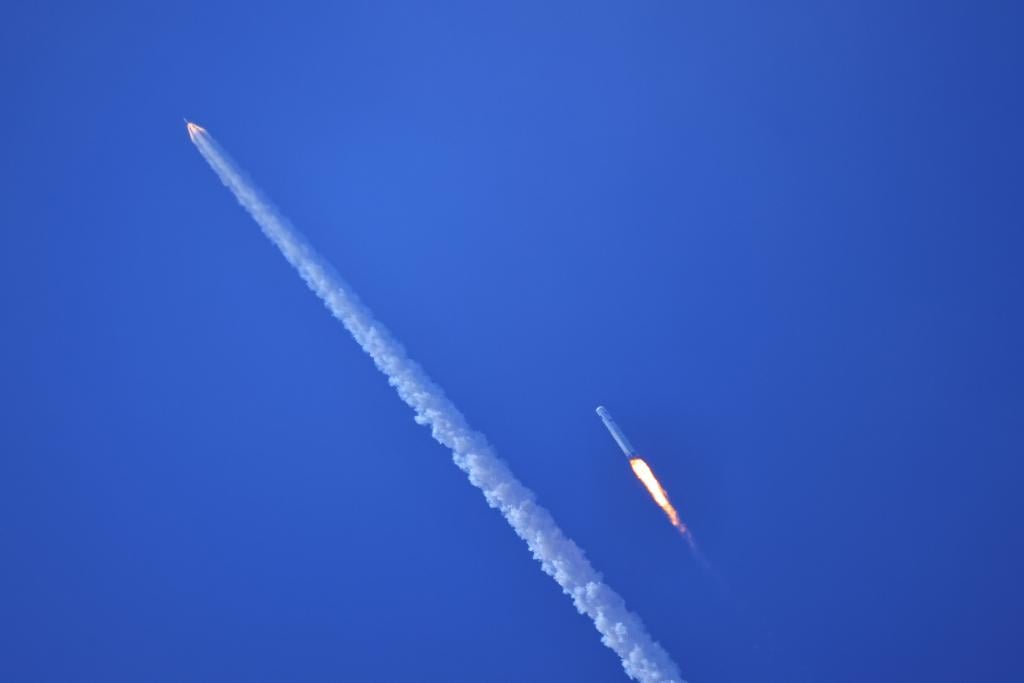
A low-altitude demonstration and verification flight test for the Long March-10 carrier rocket and the Mengzhou crewed spaceship system. Credit: Xinhua] A low-altitude demonstration and verification flight test for the Long March-10 carrier rocket and the Mengzhou crewed spaceship system. Credit: Xinhua]

China has achieved several impressive milestones in its space program in recent years. As part of their plan to build an outpost on the Moon that will compete with NASA's Artemis Program - the International Lunar Research Station (ILRS) - they are busy developing a super-heavy launch system and a crew-capable spacecraft that will take taikonauts to the Moon by the end of the decade. That is the plan, at any rate, and recent tests indicate that they are on track to achieve that goal. On Wednesday, Feb. 11th, the China Manned Spaceflight Agency (CMSA) completed a major test of its Long March-10 rocket and the Mengzhou spacecraft.

The test took place at the Wenchang Spacecraft Launch Site in south China's Hainan Province. It combined a low-altitude demonstration of the Long March-10 and an in-flight abort test of the Mengzhou spacecraft. This was the first ignition flight of the Long March-10 rocket and saw the spacecraft power through the most dangerous phase of ascent - maximum dynamic pressure (or Max Q). This phase occurs as the vehicle accelerates in the lower, denser atmosphere into the thinner upper atmosphere, when aerodynamic stress peaks.

An in-flight abort test, meanwhile, evaluates the crew capsule's safety system, which separates from the rocket in case of emergency. Both the capsule and the rocket's first stage were successful and landed in their designated recovery zones. Key moments in the flight test are featured in the video below, via the state-owned China Global Television Network (CGTN):

Said Ji Qiming, the CMSA spokesperson, during an interview with CGTN:

The test represents the five 'first-times,' as we call it. It's the inaugural ignition flight of the Long March-10 carrier rocket. It's the country's first maximum-dynamic-pressure escape test for a spacecraft. It's the first sea landing and recovery of a crewed spacecraft's return capsule. It's the first sea landing of the rocket's first-stage body. And it's the first ignition launch mission for the newly constructed launch pad for lunar missions.

The Long March-10* is a next-generation partially reusable launch system designed for crewed lunar missions. The rocket comes in two configurations, the first with three stages and two strap-on boosters, similar to SpaceX's Falcon 9 or the ULA's Vulcan and Atlas V rockets. The second, the 10A, has two stages and no boosters. The rocket is powered by seven liquid oxygen (LOX) and kerosene engines in parallel. The Mengzhou* spacecraft (Chinese for 'Dream Vessel') is a reusable vehicle capable of carrying 6 to 7 taikonauts.

After the spaceship separated, the rocket continued ascending until the first stage reached its predetermined height and speed, when its engines were shut down. The rocket then commenced its glide phase and changed its orientation several times, shifting from nose-forward to tail-forward. At an altitude of about 110 km (68 mi), the rocket deployed its four grid fins to prepare for landing. Two of its engines were then reignited for the powered deceleration phase, which was followed by the aerodynamic deceleration phase that relied solely on its grid fins to slow down and adjust its position.

During the final landing phase, three engines were reignited, and the rocket maneuvered toward its landing site. When it was just a few meters above sea level, the rocket hovered in place while ground crews tested an onboard tether mechanism to simulate a recovery using a ground-based net system. The rocket then splashed down in the ocean, where recovery crews retrieved it.

The first stage of the Long March-10 carrier rocket safely splashes down in the predetermined sea area in a controlled manner as planned, Feb. 11, 2026. [Photo/Xinhua]

The first stage of the Long March-10 carrier rocket safely splashes down in the predetermined sea area in a controlled manner as planned, Feb. 11, 2026.

[Photo/Xinhua]

Said Zhu Pingping of the China Aerospace Science and Technology Corporation:

After completing this test flight, we can say that both the ascent profile of the Long March-10 series' first stage and the return profile of the Long March 10A have been validated. This means that the risks associated with subsequent formal mission flight tests can be effectively eliminated and controlled.

This test places China a step closer to its goal of landing astronauts on the Moon by 2030 and sending crews to other locations in deep space - like Mars. Combined with their planned expansion of the Tiangong space station, robotic missions to explore a Near Earth Asteroid (NEA), a Main Belt comet, and a Mars Sample Return (Tianwen-2 and -3, respectively), China is assuming a leadership role in space.

Further Reading: 

R£LATED VIDEOS

{ https://www.universetoday.com/ }

Hoe vind je dit bericht?
Geschreven door peter om 21:44 Stuur door

Glowing Orbs Over Ault, Colorado, USA Feb 8, 2026, UFO UAP Sighting News.

Glowing Orbs Over Ault, Colorado, USA Feb 8, 2026, UFO UAP Sighting News.

UFO_Colorado.png

Date of sighting: February 8, 2026
Location of sighting: Ault, Colorado, USA
Source: NUFORC
 
Now this raw footage just came in yesterday and its two short videos showing not one, but three to five orbs glowing over the city of Ault. The city of Ault has a population of less than 2,000 so few eyewitnesses probably recorded this event. Colorado is famous for it sightings of huge white spheres near the edges of the Rocky Mountains and Ault is just a few miles from these mountains. Compounded by the fact that they were in triangle military formation just tells me that there is an intelligence controlling them. These are alien craft, there is no denying that fact. 
Scott C. Waring - UFO Sightings Daily, Taiwan 
 
Eyewitness states: 
We were driving on hwy 14 east towards hwy 85 in between county roads 29 and 27, I think. Then we looked towards Loveland/Denver/ South and we saw 1 really bright light, looking like it was carrying, other bright light. I say, hey whats that, and as we're looking on, they seperate into a uniformed curved line. Then they begin to get very bright and some dim at the same time. All while in this curved line for like 10 minutes. At this point I had pulled over and were facing the 3 lights.
So, the light on the right of this curved line, dims itself and drops down below the other 2 lights and starts moving to the left and under the other 2 and then gets back into the lone but on the left side! Then it brightens up again. They stayed like this for 5 minutes and the light that was the middle light but now is the right light (bc the other light moved to the left) decides to do the same move as the 1st bright light. It's so hard to explain. I hope someone else saw this!

{ https://www.ufosightingsdaily.com/ }

Hoe vind je dit bericht?
Geschreven door peter om 21:20 Stuur door

UFO in Google Earth Map Libya, the Sahara Desert, UAP paranormal sighting alien news. 👽

UFO in Google Earth Map Libya, the Sahara Desert, UAP paranormal sighting alien news. 👽

UFO_UAP_alien.png
UFO_alien.png

Date of discovery: Feb 14, 2026
Location of discovery: 24°08’56”N 23°25’25”E
Source: Google Earth Map
 
I found this strange craft on Google map this week. Obviously a UFO landed with a glowing doorway and a person moving towards its entrance. To see it, you must drop the person icon into the center of the crop formation and it shows a google earth 360 degree view.  Is it real or just an ai photo inserted by a Google employee? AI is running rampant out of control across the internet and clearly this has a high possibility of being AI, however I feel that this could be real, it may have been cloaked at the time of the recording and may have gone overlooked by the employee posting the photo. Cameras without an ir filter can see cloaked UFOs, due to the infrared light revealing the craft, a light the human eye cannot see, but is emitted by our sun across our planet. I also notice the shadows and sky around it show zero sign of being ai (ai makes thing 100% focused) this was not, appearing to be untouched, original lighting a fading along edges. So yes, it may be real, and yes, this shape of UFOs does exist. We are left with a mystery. One thing I guarantee, Google will delete it within the next 30 days, because Google is involved with the UFO cover-up in America. 
Scott C. Waring - Taiwan 
 

{ https://www.ufosightingsdaily.com/ }

Hoe vind je dit bericht?
Geschreven door peter om 21:14 Stuur door

UFO Report Spurs US military to disrupt cell phones, almost close airport for two weeks in Texas, Feb 2026, UAP Sighting News.

UFO Report Spurs US military to disrupt cell phones, almost close airport for two weeks in Texas, Feb 2026, UAP Sighting News.

UFO,%20UAP.jpg
UFO%20Photo.img.jpeg
Date of sighting: February 10, 2026
Location of sighting: El Paso, Texas, USA
News source: 
A UFO was seen in a recent video from Feb 2 in El Paso that is stirring up US gov investigations into UFOs over El Paso this week. Texas tried to shut down the El Paso airport for several weeks, but in its first hour of announcement, it was taken back due to the large amounts of travelers protesting. This UFO was caught on video in the distance and I took a screenshot of it and tried to focus it. I didn't use AI but instead did it myself. I show the steps of me adding contrast and sharpness to it. It's clear in the 4th screenshot that this object in the sky is disk with an upper and lower hump. From the distance and shape, I can estimate its size to be that of two city buses.  When the US gov reacts so drastically...its a 100% guarantee its an a real UFO. 
Scott C. Waring - UFO Sightings Daily, Taiwan
Eyewitness states: 
According to the witness recording the hovering craft, it appeared on video 'like a dot' after moving off far into the distance, but the object was allegedly incredibly large and looked somewhat like 'a blob.'
 

{ https://www.ufosightingsdaily.com/ }

Hoe vind je dit bericht?
Geschreven door peter om 21:09 Stuur door

Global analysis tracks 3,100 glacier surges as climate change rewrites the rules

Global analysis tracks 3,100 glacier surges as climate change rewrites the rules

Glacier surges and surge mechanisms. Credit: Nature Reviews Earth & Environment (2026). DOI: 10.1038/s43017-025-00757-9

While most of the world's glaciers are retreating as the climate warms, a small but significant population behaves very differently—and the consequences can be severe. A team of international scientists, led by the University of Portsmouth, has carried out a comprehensive global analysis of surging glaciers, examining the hazards they cause and how climate change is fundamentally altering when and where these dramatic events occur.

Glacier surges—when a glacier suddenly moves much faster than normal—rapidly transport ice to the glacier front and often cause advances. These events typically last for several years, with many glaciers experiencing repeated surges separated by decades of relative inactivity.

The study, published in Nature Reviews Earth & Environment, compiled a database of more than 3,100 glaciers that have surged. Rather than being scattered globally, these glaciers cluster in dense groupings across the Arctic, High Mountain Asia and the Andes.

It includes the key features and basic processes controlling glacier surges, characterizes the wide range of surging behaviors, and maps the global locations of surge-type glaciers and the climate conditions that cause them to cluster in specific areas.

"Surge-type glaciers are very unusual and can be troublesome," said lead author Dr. Harold Lovell, Senior Lecturer and glaciologist from the University of Portsmouth's School of the Environment and Life Sciences. "As a friend and fellow glaciologist once put it, they save up ice like a savings account and then spend it all very quickly like a Black Friday event. But while they only represent 1% of all glaciers worldwide, they affect just under one-fifth of global glacier area, and their behavior can result in serious and sometimes catastrophic natural disasters that affect thousands of people."

Contrary to what you might expect, the researchers found surging makes glaciers more vulnerable to climate change. When they surge, these glaciers are responsible for a large proportion of ice mass loss in some regions.

Six major hazards identified

The research identified six main types of hazards caused by glacier surges that affect communities in high mountain regions, which can result in damage to infrastructure and in some cases loss of life:

  1. Glacier advance—ice overruns buildings, roads and farmland
  2. River blockages—surging glaciers dam rivers, creating dangerous lakes that can release devastating floods
  3. Meltwater outbursts from beneath the glacier—these also release potentially devastating floods
  4. Sudden detachments of glaciers—cause large ice and rock avalanches
  5. Widespread crevassing—high ice velocities fracture glacier surfaces, making travel extremely hazardous in regions where glaciers serve as highways between settlements and are used for tourism activities, and affecting climbing routes where glaciers provide access to mountain peaks
  6. Iceberg hazards—when glaciers surge into the sea, they release numerous icebergs in a short time, creating risks for shipping and marine tourism

Using this data, the research team identified 81 glaciers that pose the greatest danger when they surge. The majority are in the Karakoram Mountains in High Mountain Asia, where populated valleys and critical infrastructure lie directly below surging glaciers. These glaciers are large, close to communities, and most have histories of repeated surging behavior.

Climate change is making surges increasingly unpredictable

Perhaps most concerning is the growing evidence that climate warming is fundamentally changing how glacier surges behave—making them harder to predict just when better forecasting is most needed for hazard management.

"By drawing on previous studies, we have been able to piece together the growing body of evidence that shows how climate change is affecting glacier surges, including where and how often they happen," Dr. Lovell said. "This includes instances of extreme weather such as heavy rainfall events or very warm summers triggering earlier than expected surges, suggesting an increasing unpredictability in their behavior."

The picture emerging from the research is complex and regionally varied. Some glaciers are now surging more frequently than they did several decades ago, while in other regions surge activity is declining. There is evidence that some glaciers have thinned so much they can no longer build sufficient ice to surge in the future.

Surge behavior may also shift to new regions entirely. It is known that surging glaciers are currently concentrated in the Arctic and sub-Arctic (48%) and High Mountain Asia (50%), where specific climate conditions make surges more likely. But ongoing climate warming may change this distribution dramatically.

Surges might largely stop in places like Iceland, where glaciers are shrinking rapidly and struggling to accumulate enough ice. Meanwhile, they could become more frequent in parts of High Mountain Asia and in the Canadian and Russian Arctic due to warmer temperatures and increased meltwater. It's even possible that glaciers might begin surging in the Antarctic Peninsula and other areas where surge-type glaciers are not currently known to exist.

Co-author Professor Gwenn Flowers, from Simon Fraser University in Canada, said, "The challenge we face is that just as we're starting to develop a more comprehensive understanding of the mechanisms behind glacier surges, climate change is rewriting the rules. Extreme weather events that might have been rare even 50 years ago could become triggers for unexpected surges. Given that surges cause hazards in some settings, this makes protecting vulnerable communities much more difficult."

Dr. Lovell added, "This research is extremely important because understanding which regions have concentrations of surging glaciers helps us plan monitoring efforts and understand future behavior. Knowing which specific glaciers pose the greatest risks can help protect communities, especially those most at risk. But the increasing unpredictability means we need much better surveillance and forecasting capabilities."

The findings emphasize the urgent need for continued satellite monitoring, expanded on-the-ground observations of conditions during surges, improved computer models of surge processes, and projections of how surging glaciers will respond to ongoing climate warming.

Publication details
  • Harold Lovell et al, Glacier surging and surge-related hazards in a changing climate, Nature Reviews Earth & Environment (2026). DOI: 10.1038/s43017-025-00757-9

Journal information: 

Hoe vind je dit bericht?
Geschreven door peter om 20:41 Stuur door

Scientists are baffled to discover 3,100 glaciers SURGING – as they warn it could be even more 'troublesome' than glacial retreat

Scientists are baffled to discover 3,100 glaciers SURGING – as they warn it could be even more 'troublesome' than glacial retreat

While many of the world's glaciers are in rapid retreat, scientists have been baffled to find 3,100 that are 'surging'. 

While this might sound like a good thing, the experts warn that it could be even more 'troublesome' than glacial retreat.

During a surge, a glacier sends large amounts of ice built up over decades racing downhill, where it rapidly melts in the warm lower-altitude weather.

Surge–prone glaciers make up a large proportion of lost ice in some regions, and experts warn that some are even 'surging themselves to death'.

While this is bad news for the glaciers themselves, the outlook is even worse for the people who live beside them. 

Unlike most glaciers, which move gradually forward, surging glaciers shift in short bursts of rapid movement lasting a few years, followed by decades-long periods of quiet. 

Lead author Dr Harold Lovell, a glaciologist from the University of Portsmouth, says: 'They save up ice like a savings account and then spend it all very quickly like a Black Friday event.

'But while they only represent one per cent of all glaciers worldwide, they affect just under one–fifth of global glacier area, and their behaviour can result in serious and sometimes catastrophic natural disasters that affect thousands of people.'

Scientists have discovered 3,100 glaciers that are not retreating but surging (illustrated), as they warn that this could be even more 'troubling'

Scientists have discovered 3,100 glaciers that are not retreating but surging (illustrated), as they warn that this could be even more 'troubling' 

Scientists aren't entirely sure what triggers surges, but research suggests they are probably related to conditions in the glacier's underside, where ice meets the ground

These glaciers store massive reserves of ice until heavy rainfall or hot weather trigger a buildup of water beneath the ice, reducing friction and allowing the glacier to slide downhill.

Although it might temporarily look like the glacier is advancing, the results are often catastrophic for the glacier.

Dr Lovell told the Daily Mail: 'When glaciers surge, they very quickly spend all the ice they have built up over a long period of time. This ice then melts away in warmer temperatures at lower elevations, leaving the glacier very vulnerable. 

'There are examples of glaciers "surging themselves to death" - losing so much ice during a surge that they cannot recover in the current warmer climate.'

Surging glaciers are also highly concentrated in just a few dense clusters in the Arctic, High Mountain Asia, and the Andes, where there is the right balance of temperature and precipitation.

The problem is that these surges result in huge changes to the environment around the glacier, which can be devastating for nearby settlements.

Glacier surging creates serious hazards for people living near the ice, as the advance threatens to swallow homes, trigger flooding, create landslides, and fill waterways with dangerous icerbergs

Glacier surging creates serious hazards for people living near the ice, as the advance threatens to swallow homes, trigger flooding, create landslides, and fill waterways with dangerous icerbergs

The threat posed by the world's surge-prone glaciers (illustrated) is made worse by the fact that these events are so unpredictable

The threat posed by the world's surge–prone glaciers (illustrated) is made worse by the fact that these events are so unpredictable 

Why are surging glaciers dangerous?

  1. Glacier advance: Ice overruns buildings, roads and farmland.
  2. River blockages: Surging glaciers dam rivers, creating dangerous lakes that can release devastating floods.
  3. Meltwater outbursts from beneath the glacier: These also release potentially devastating floods.
  4. Sudden detachments of glaciers: Cause large ice and rock avalanches.
  5. Widespread crevassing: High ice velocities fracture glacier surfaces, making travel extremely hazardous in regions where glaciers serve as highways between settlements and are used for tourism activities, and affecting climbing routes where glaciers provide access to mountain peaks.
  6. Iceberg hazards: When glaciers surge into the sea, they release numerous icebergs in a short time, creating risks for shipping and marine tourism

Glacier advances can overrun roads, farmland, and even buildings, as well as blocking rivers, creating lakes that can release dangerous floods.

During a surge, meltwater that has built up beneath the glacier can suddenly be released in the form of a devastating flash flood.

The rapid movement forward also makes the glacier less stable, creating a network of widespread crevasses that can be perilous for anyone travelling over the ice.

In extreme cases, the glacier may begin to break up, releasing hazardous icebergs or suddenly detaching in a large ice and rock avalanche.

In their paper, published in Nature Reviews Earth & Environment, the researchers identified the 81 glaciers that pose the greatest danger when they surge.

Most of these are in the Karakoram Mountains, which span China, India, and Pakistan, where populated valleys and critical infrastructure sit directly below surging glaciers such as the Shisper and Kyagar.

However, they can also be found all over the world, with serious threats posed by the Tweedsmuir Glacier in Alaska-Yukon and the Kolka Glacier in the Caucasus.

This risk is made worse by the fact that surges are very hard to predict, and climate change is only making them less reliable.

Of the 81 most dangerous glaciers in the world, most are in the Karakoram mountain range, where inhabited valleys sit directly below surging glaciers such as the Shisper glacier (pictured)

Of the 81 most dangerous glaciers in the world, most are in the Karakoram mountain range, where inhabited valleys sit directly below surging glaciers such as the Shisper glacier (pictured)

In some areas, glaciers are now so thin that they don't have the ice to surge, but others are now surging more than ever.

Dr Lovell says: 'We have been able to piece together the growing body of evidence that shows how climate change is affecting glacier surges, including where and how often they happen.

'This includes instances of extreme weather such as heavy rainfall events or very warm summers, triggering earlier than expected surges, suggesting an increasing unpredictability in their behaviour.'

Surges might stop altogether in places like Iceland, where glaciers are shrinking rapidly and struggling to build up ice.

article image

But they could become more frequent in parts of High Mountain Asia and in the Canadian and Russian Arctic due to warmer temperatures and increased meltwater.

The researchers even suggest that surges could be seen in the Antarctic Peninsula, where surging glaciers have never been seen before.

Co–author Professor Gwenn Glowers, of Simon Fraser University in Canada, says: 'Just as we're starting to develop a more comprehensive understanding of the mechanisms behind glacier surges, climate change is rewriting the rules.

'Extreme weather events that might have been rare even 50 years ago could become triggers for unexpected surges. Given that surges cause hazards in some settings, this makes protecting vulnerable communities much more difficult.'

The 81 most dangerous surging glaciers on Earth

  1. Ghiacciaio del Belvedere, European Alps
  2. Vernagtferner, European Alps
  3. Tweedsmuir Glacier, Alaska-Yukon
  4. Sít' Tlein (Malaspina) Glacier, Alaska-Yukon
  5. Hubbard/Valerie Glacier, Alaska-Yukon
  6. Bering Glacier, Alaska-Yukon
  7. Náłúdäy (Lowell) Glacier, Alaska-Yukon
  8. Dań Zhùr (Donjek) Glacier, Alaska-Yukon
  9. Steele Glacier, Alaska-Yukon
  10. Flat Creek Glacier, Alaska-Yukon
  11. Henteel No’ Loo’ (Muldrow) Glacier, Alaska-Yukon
  12. Black Rapids Glacier, Alaska-Yukon
  13. Glaciar Grande del Nevado del Plomo, Andes
  14. Horcones Inferior Glacier, Andes
  15. Juncal Sur Glaciar, Andes
  16. Cachapoal Glaciar, Andes
  17. Tinguiririca 3, Andes
  18. Mittie Glacier, Canadian Arctic
  19. Kolka Glacier, Caucasus
  20. Devdorak Glacier, Caucasus
  21. Davidov Glacier, Central Tien Shan
  22. Lysii Glacier, Central Tien Shan
  23. Northern Inylchek Glacier, Central Tien Shan
  24. Sortebræ, Greenland
  25. Zelunglung Glacier, Eastern Himalaya
  26. Karayaylak/Kelayayilake Glacier, Eastern Pamir
  27. Xiaoma Glacier, Eastern Tibetan Mountains (Tibetan Plateau)
  28. Breiðamerkurjökull east (Norðlingalægðarjökull), Iceland
  29. Skeiðarárjökull, Iceland
  30. Eystri-Hagafellsjökull, Iceland
  31. Shisper (Shishper, Shispare) Glacier, Karakoram
  32. Chong Kumden Glacier, Karakoram
  33. Aktash Glacier, Karakoram
  34. Kichik Kumden Glacier, Karakoram
  35. Kyagar (Keyajir) Glacier, Karakoram
  36. Shinghi (Singkhu, Telamukanli) Glacier, Karakoram
  37. North Gasherbrum Glacier, Karakoram
  38. Urdok Glacier, Karakoram
  39. Khurdopin Glacier, Karakoram
  40. Malangutti Glacier, Karakoram
  41. Yazdghil Glacier, Karakoram
  42. Ghulkin Glacier, Karakoram
  43. Aling Glacier, Karakoram
  44. Yengutz Har Glacier, Karakoram
  45. Yukshin Gardan Glacier, Karakoram
  46. Batura Glacier, Karakoram
  47. Bualtar (Hopar) Glacier, Karakoram
  48. Sultan Chussku Glacier, Karakoram
  49. Balt Bare Glacier, Karakoram
  50. Balthar Glacier, Karakoram
  51. Karamber Glacier, Karakoram
  52. Chillinji Glacier, Karakoram
  53. Chhatteboi Glacier, Karakoram
  54. Warghut Glacier, Karakoram
  55. Sotkher Rabot Glacier, Karakoram
  56. Saklei Shuyinj Glacier, Karakoram
  57. Biafo Glacier, Karakoram
  58. Tashing (Toshain) Glacier, Karakoram
  59. Kutiah Glacier, Karakoram
  60. North Terong Glacier, Karakoram
  61. Chiring Glacier, Karakoram
  62. Sedongpu Glacier, Nyainqentanglha (Tibetan Plateau)
  63. Midui Glacier, Nyainqentanglha (Tibetan Plateau)
  64. Zawadzkibreen, Svalbard
  65. Penckbreen, Svalbard
  66. Moršnevbreen, Svalbard
  67. Scheelebreen, Svalbard
  68. Sefströmbreen, Svalbard
  69. Hinlopenbreen, Svalbard
  70. Fjortende Julibreen, Svalbard
  71. Bråsvellbreen, Svalbard
  72. Austfonna Basin-3, Svalbard
  73. Etonbreen, Svalbard
  74. Aru-1 Glacier, Tibetan Interior (Tibetan Plateau)
  75. Aru-2 Glacier, Tibetan Interior (Tibetan Plateau)
  76. Unnamed Glacier, Petra Pervogo Range, Western Pamir
  77. Unnamed Glacier, Petra Pervogo Range, Western Pamir
  78. Didal Glacier, Western Pamir
  79. Ravak Glacier, Western Pamir
  80. Medvezhiy Glacier, Western Pamir
  81. Geographical Society Glacier, Western Pamir

Source: Harold Lovell, et al., (2026)

{ https://www.dailymail.co.uk/sciencetech/index.html }

Hoe vind je dit bericht?
Geschreven door peter om 20:23 Stuur door

30 misvattingen die moderne ‘feiten’ zijn geworden

30 misvattingen die moderne ‘feiten’ zijn geworden

30 misvattingen die moderne ‘feiten’ zijn geworden

©Getty Images

30 misvattingen die moderne ‘feiten’ zijn geworden
Koffie wordt gemaakt van bonen, pinguïns paren voor het leven en kameleons veranderen van kleur om bij hun omgeving te passen... Dit zijn allemaal 'feiten' waarvan je waarschijnlijk denkt dat ze waar zijn. De meeste mensen geloven tenslotte dat dit zo is. Deskundigen hebben er echter op gewezen dat veel zogenaamde 'feiten' eenvoudige misvattingen zijn. Dan zijn er enkele die gewoon regelrechte mythen zijn!Wat zijn enkele veelvoorkomende ‘feiten’ die eigenlijk misvattingen zijn? Lees verder om erachter te komen.

Mount Everest is de ‘hoogste’ berg ter wereld

©Getty Images

Mount Everest is de ‘hoogste’ berg ter wereld
Hoewel de Mount Everest wordt beschouwd als de hoogste berg ter wereld, beweren experts dat dit technisch gezien niet waar is. De top van de Mount Everest ligt officieel hoger boven zeeniveau dan de top van welke andere berg dan ook. Mauna Kea is echter de hoogste, gemeten van basis tot top.

Via je hoofd verlies je je lichaamswarmte het snelst

©Getty Images

Via je hoofd verlies je je lichaamswarmte het snelst
Hoewel algemeen wordt aangenomen dat dit waar is, zeggen sommige experts dat het slechts een mythe is, en dat mensen het net zo koud zouden hebben als ze zonder hoed zouden gaan, als wanneer ze zonder broek zouden gaan.

Eén mensenjaar komt overeen met zeven hondenjaren

©Getty Images

Eén mensenjaar komt overeen met zeven hondenjaren
Hoewel het voor sommige honden waar kan zijn, is het geen vuistregel. Het hangt allemaal af van de grootte en het ras van de hond.

De aarde draait om de zon

©Getty Images

De aarde draait om de zon
Technisch gezien draaien de zon, de aarde en alle andere planeten rond het centrum van het zonnestelsel.

Sushi betekent ‘rauwe vis’

©Getty Images

Sushi betekent ‘rauwe vis’
Hoewel een van de meest voorkomende ingrediënten rauwe vis kan zijn, vertaalt sushi zich eigenlijk van het Japans naar 'zure smaak'.

Vikingen droegen gehoornde helmen

©Getty Images

Vikingen droegen gehoornde helmen
Hoewel dit misschien wel waar is, zeggen historici dat er feitelijk geen bewijs is dat Vikingen ooit gehoornde helmen droegen.

Vitamine C is een effectieve behandeling tegen verkoudheid

©Getty Images

Vitamine C is een effectieve behandeling tegen verkoudheid
Grieppatiënten worden vaak aangemoedigd om hun vitamine C-dosering te verhogen, maar de meeste deskundigen hebben verklaard dat er weinig tot geen bewijs is dat de vitamine kan helpen bij de behandeling van verkoudheid. In plaats daarvan wordt aangenomen dat het helpt bij het opbouwen van het immuunsysteem om potentiële griepvirussen af ​​te weren.

Mensen gebruiken slechts 10% van hun hersenen

©Getty Images

Mensen gebruiken slechts 10% van hun hersenen
Neurologen zeggen dat dit volkomen onwaar is. Mensen gebruiken bijna elk deel van hun hersenen, en het grootste deel van de hersenen is altijd actief.

Koffie wordt gemaakt van bonen

©Getty Images

Koffie wordt gemaakt van bonen
Hoewel velen aannemen dat koffie uit koffiebonen komt, zeggen experts dat ze eigenlijk zijn gemaakt van zaden die boon worden genoemd.

Gelukskoekjes zijn een Chinese traditie

©Getty Images

Gelukskoekjes zijn een Chinese traditie
Gelukskoekjes waren oorspronkelijk een Japans-Amerikaanse uitvinding voordat ze op grote schaal werden overgenomen door de Chinese cultuur.

Verschillende delen van je tong detecteren verschillende smaken

©Getty Images

Verschillende delen van je tong detecteren verschillende smaken
Dit werd wetenschappelijk weerlegd, omdat onderzoekers ontdekten dat alle smaaksensaties uit alle delen van de tong komen. Verschillende delen zijn echter gevoeliger voor bepaalde smaken, en dit is wellicht de reden waarom dit populaire geloof ontstaat.

Als je een babyvogeltje vastpakt, zal de moeder het afwijzen

©Getty Images

Als je een babyvogeltje vastpakt, zal de moeder het afwijzen
De meeste vogels hebben een zeer slecht reukvermogen, dus in de meeste gevallen kunnen ze de menselijke geur op een babyvogel niet eens opmerken.

Kameleons veranderen van kleur om bij hun omgeving te passen

©Getty Images

Kameleons veranderen van kleur om bij hun omgeving te passen
De waarheid is dat kameleons feitelijk van kleur veranderen als reactie op stemming, temperatuur, communicatie en licht, in plaats van op het object dat ze aanraken.

Er is een donkere kant van de maan

©Getty Images

Er is een donkere kant van de maan
Omdat de maan voortdurend om zijn eigen as draait, is er geen enkel deel van de planeet dat in permanente duisternis verkeert.

Bloed is blauw voordat het zuurstof krijgt

©Getty Images

Bloed is blauw voordat het zuurstof krijgt
Hoewel velen geloven dat zuurstofarm bloed blauw is, is dit feitelijk een mythe, omdat menselijk bloed altijd rood is. De mate van roodheid verschilt echter afhankelijk van hoe zuurstofrijk het is.

Wakkere slaapwandelaars zijn schadelijk voor hen

©Getty Images

Wakkere slaapwandelaars zijn schadelijk voor hen
Het wakker maken van een slaapwandelaar zal geen lichamelijk letsel veroorzaken, maar het kan ervoor zorgen dat hij schrikt of gedesoriënteerd raakt.

Pinguïns paren voor het leven

©Getty Images

Pinguïns paren voor het leven
Pinguïns zijn meestal monogaam, maar er zijn enkele soorten, zoals de keizerspinguïn, die alleen serieel monogaam zijn. Ze paren een seizoen lang met één pinguïn en gaan het volgende seizoen over op een andere pinguïn.

Als je je beenhaar scheert, groeit het sneller terug

©Getty Images

Als je je beenhaar scheert, groeit het sneller terug
Velen geloven dat het scheren van lichaamshaar ervoor zorgt dat het sneller teruggroeit, maar het scheren van haar verandert niets aan de dikte, kleur of groeisnelheid. Het kan een tijdje grof aanvoelen als het uitgroeit.

De Chinese Muur is vanuit de ruimte te zien

©Getty Images

De Chinese Muur is vanuit de ruimte te zien
De Apollo-astronauten bevestigden dat je de Chinese Muur vanaf de maan niet kunt zien. In feite is het enige wat je vanaf de maan kunt zien het witte en blauwe marmer van de aarde.

Cafeïne droogt je uit

©Getty Images

Cafeïne droogt je uit
Hoewel cafeïnehoudende dranken een mild diuretisch effect hebben, zeggen experts dat ze het risico op uitdroging niet lijken te vergroten.

Stieren zijn woedend over de kleur rood

©Getty Images

Stieren zijn woedend over de kleur rood
Het is een bewezen feit dat stieren alleen blauw en geel zien. Alleen tijdens stierengevechten reageren ze vanwege de bewegingen op de rode cape.

Vingernagels blijven groeien nadat je sterft

©Getty Images

Vingernagels blijven groeien nadat je sterft
De uitdroging van het lichaam na de dood kan ervoor zorgen dat de huid rond haar en nagels terugtrekt, waardoor de illusie ontstaat dat ze zijn gegroeid. Alle weefsels hebben echter energie nodig om hun functies te behouden, wat niet mogelijk is als ze dood zijn.

Pinda's zijn een soort noot

©Getty Images

Pinda's zijn een soort noot
Eigenlijk behoren pinda's, samen met bonen en erwten, tot de leguminosae-familie.

Een goudvis heeft een geheugenspanne van drie seconden

©Getty Images

Een goudvis heeft een geheugenspanne van drie seconden
Dit is niet waar, aangezien goudvissen zeer goede herinneringen aan vissen hebben. Ze kunnen worden getraind om op verschillende manieren te reageren op bepaalde kleuren licht en verschillende soorten muziek.

Als je veel chocolade eet, krijg je vlekken

©Getty Images

Als je veel chocolade eet, krijg je vlekken
Er is geen concreet bewijs dat suggereert dat het eten van meer chocolade vlekken kan veroorzaken.

Microgolfstraling kan kanker veroorzaken

©Getty Images

Microgolfstraling kan kanker veroorzaken
De meeste deskundigen zijn van mening dat magnetrons niet genoeg energie afgeven om het genetisch materiaal in de cellen te beschadigen en dus geen kanker kunnen veroorzaken.

Kaas eten voor het slapengaan zal je nachtmerries bezorgen

©Getty Images

Kaas eten voor het slapengaan zal je nachtmerries bezorgen
Er wordt aangenomen dat kaas je meer emotioneel geladen dromen bezorgt, maar niet noodzakelijkerwijs nachtmerries.

Struisvogels steken hun kop in het zand als ze bang zijn

©Getty Images

Struisvogels steken hun kop in het zand als ze bang zijn
Struisvogels slikken zand en kiezelstenen in om het voedsel in hun maag te vermalen. Dit betekent dat ze moeten bukken en hun hoofd kort in de aarde moeten steken om de steentjes op te vangen. Het heeft niets te maken met hun angst.

Alcohol houdt je warm

©Getty Images

Alcohol houdt je warm
Alcohol zorgt ervoor dat je bloedvaten verwijden, waardoor warm bloed dichter bij het huidoppervlak komt. Hierdoor kun je je tijdelijk warmer voelen. Diezelfde aderen die het bloed dichter naar het huidoppervlak pompen, zorgen er echter ook voor dat je lichaamswarmte verliest.

Huisvliegen leven slechts ongeveer 24 uur

©Getty Images

Huisvliegen leven slechts ongeveer 24 uur
De volwassen huisvlieg kan in het wild maximaal een maand leven.

Bronnen:

  • (Dagelijkse post)

{ Stars Insider }

Hoe vind je dit bericht?
Geschreven door peter om 18:26 Stuur door

Aardkern bevat negen keer meer water dan oceanen

Aardkern bevat negen keer meer water dan oceanen

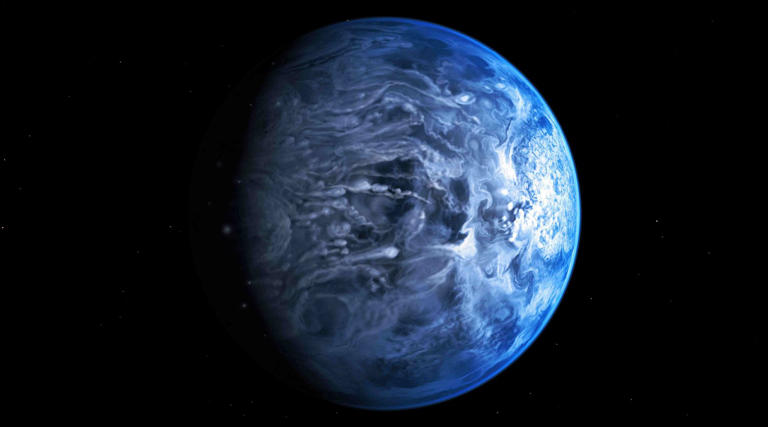
Een conceptafbeelding van een exoplaneet

Een conceptafbeelding van een exoplaneet

In het kort

  • De aardkern heeft mogelijk negen keer zoveel waterstof als alle oceanen op aarde bij elkaar.
  • Deze waterstof is waarschijnlijk ontstaan tijdens de vorming van de aarde en niet door latere inslagen van kometen.
  • Onderzoekers hebben een nieuwe techniek gebruikt, atoomprobetomografie genaamd, om individuele atomen in ijzermonsters die de omstandigheden in de kern van de aarde nabootsen, rechtstreeks te observeren, wat tot deze baanbrekende schatting heeft geleid.

De aardkern bevat mogelijk enorme reservoirs aan waterstof, mogelijk negen keer zoveel als alle oceanen op aarde samen. Volgens recent onderzoek in Nature Communications zou de aardkern wel waterstof kunnen bevatten ter hoeveelheid van 45 oceanen.

Vroege waterverwerving

Wetenschappers denken dat deze waterstof tijdens de eerste vorming van de aarde in de aarde is opgenomen, en niet door latere kometeninslagen die water op het oppervlak zouden hebben afgezet. Dit betekent dat de aarde het grootste deel van haar water vroeg in haar geschiedenis heeft gekregen, waarbij de mantel en de korst minder water bevatten dan de kern.

De aardkern, die voornamelijk bestaat uit ijzer en nikkel, genereert het beschermende magnetische veld van de planeet. Inzicht in het waterstofgehalte in deze kern is cruciaal voor het begrijpen van de vorming van planeten en de evolutie van het leven. Het is echter onmogelijk om de kern rechtstreeks te observeren vanwege de enorme diepte en de extreme druk.

Layers of planet earth

De kern van de aarde bestaat voornamelijk uit de metalen ijzer en nikkel, maar bevat ook lichtere elementen zoals waterstof, zuurstof en silicium.

CharlesC via Wikimedia Commons onder CC-BY-3.0

Nieuwe observatietechniek

Eerdere pogingen om de waterstof in de kern te meten gebruikten indirecte methoden. Ze analyseerden bijvoorbeeld de structuur van ijzerkristallen. Dit leidde tot sterk verschillende schattingen. In het nieuwe onderzoek gebruiken de wetenschappers een techniek genaamd Atoomprobe-tomografie. Daarmee kunnen ze individuele atomen in een monster direct bekijken. Dit gebeurt onder hoge druk en temperatuur, zoals in het binnenste van de aarde.

De onderzoekers smolten ijzermonsters in een diamant-aambeeldcel. Daarna gebruikten ze Atoomprobe-tomografie om te zien hoe waterstof, silicium en zuurstof waren verdeeld. Zo konden ze de verhouding tussen waterstof en silicium ongeveer op 1:1 schatten. Door dit te combineren met eerdere schattingen van het siliciumgehalte in de kern, konden ze ook de totale hoeveelheid waterstof benaderen.

Onzekerheden blijven bestaan

De nieuwe methode geeft waardevolle inzichten in de samenstelling van de kern. Ook helpt het te begrijpen hoe warmte wordt afgegeven, wat bijdraagt aan het magnetisch veld van de aarde. Onderzoekers geven wel aan dat er nog onzekerheden zijn. Zo kan er tijdens het decompressieproces waterstof verloren gaan, waardoor de hoeveelheid waterstof misschien wordt onderschat.

Meer onderzoek is nodig om deze schattingen te verbeteren. Ook willen wetenschappers de complexe chemische interacties in de kern beter begrijpen. Toch laat het onderzoek zien dat waterstof belangrijk is voor de ontwikkeling van de aarde. Het speelde al een grote rol in een vroeg stadium van de vorming van planeten.

{ https://newsmonkey.be/news/ }

Hoe vind je dit bericht?
Geschreven door peter om 17:26 Stuur door

Everything Trump Has Said About UFOs, Aliens in Speeches

Everything Trump Has Said About UFOs, Aliens in Speeches

By Joe Edwards

President Donald Trump has alternated between skepticism and curiosity about unidentified flying objects (UFOs) and aliens, discussing pilots’ sightings, government secrecy, and his own access to information during interviews and appearances.

Public interest in unidentified anomalous phenomena (UAPs) surged after Congress and the Pentagon released reports and held hearings, making presidential comments—past and present—central to understanding what the government might know and disclose.

A 2021 survey by Pew Research Center found that almost two-thirds (65 percent) of Americans believe that intelligent life could exist on other planets.

Trump’s evolving remarks offer a window into how a former and current president talks about alleged sightings.

GettyImages-2190485630.jpg?w=1600&quality=80&webp=1
Donald Trump looks on during Turning Point USA's AmericaFest at the Phoenix Convention Center on December 22, 2024 in Phoenix, Arizona. 
 Rebecca Noble/Getty Images

In June 2019, Trump said he had been briefed on Navy UFO reports and expressed doubt, stating to ABC News: “I did have one very brief meeting on it,” adding that “people are saying they’re seeing UFOs. Do I believe it? Not particularly.” 

Also in 2019, he told Tucker Carlson he wasn’t convinced in the existence of UFOs. “Well, I don't want to really get into it too much. But personally, I tend to doubt it," Trump said. "I'm not a believer, but you know, I guess anything is possible.”

In June 2020, when his son Donald Trump Jr. asked him about revealing “what’s really going on with Roswell,” Trump answered, per The Hill: “I won’t talk to you about what I know about it, but it’s very interesting.” 

Major Jesse Marcel, pictured below in 1947 with crash debris, was the first military officer to investigate the Roswell Incident, one of the most famous examples of the supposed recovery of crashed extraterrestrial technology and biological entities.

Roswell, Roswell crash, Roswell incident

On Logan Paul’s Impaulsive podcast in June 2024, Trump said he had met with pilots who described seeing "things you wouldn’t believe,” reiterating he was not a believer himself.

“But I have met with people, serious people, that say there are some really strange things flying around out there,” he said.

Pressed on whether he had access to files about aliens and UAPs, Trump added: “I have access...and I speak to people about it, I’ve had actually meetings on it,” also saying he had heard of aircraft “round in form, going like four times faster than my super jet fighter plane.” 

Appearing on Joe Rogan’s podcast in 2024 Trump also expressed skepticism, saying that he’d never been a believer.

On Greg Gutfeld's Fox News show in September 2024, Trump said the question he may get more than any other is about aliens in Area 51, and repeated that pilots told him of a “round object going faster than my F-22.”

  • Newsweek’s reporters and editors used Martyn, our AI assistant, to help produce this story. Learn more about Martyn.

{ https://www.newsweek.com/ }

Hoe vind je dit bericht?
Geschreven door peter om 23:52 Stuur door

Meer van UFO'S of UAP'S, ASTRONOMIE, RUIMTEVAART, ARCHEOLOGIE, OUDHEIDKUNDE, SF-SNUFJES EN ANDERE ESOTERISCHE WETENSCHAPPEN - DE ALLERLAATSTE NIEUWTJES

↑ Terug naar de berichten