Naar de inhoud

UFO'S of UAP'S, ASTRONOMIE, RUIMTEVAART, ARCHEOLOGIE, OUDHEIDKUNDE, SF-SNUFJES EN ANDERE ESOTERISCHE WETENSCHAPPEN - DE ALLERLAATSTE NIEUWTJES

UFO's of UAP'S in België en de rest van de wereld
akke.beakke.be
Ontdek de Fascinerende Wereld van UFO's en UAP's: Jouw Bron voor Onthullende Informatie! Ben jij ook gefascineerd door het onbekende? Wil je meer weten over UFO's en UAP's, niet alleen in België, maar over de hele wereld? Dan ben je op de juiste plek! België: Het Kloppend Hart van UFO-onderzoek In België is BUFON (Belgisch UFO-Netwerk) dé autoriteit op het gebied van UFO-onderzoek. Voor betrouwbare en objectieve informatie over deze intrigerende fenomenen, bezoek je zeker onze Facebook-pagina en deze blog. Maar dat is nog niet alles! Ontdek ook het Belgisch UFO-meldpunt en Caelestia, twee organisaties die diepgaand onderzoek verrichten, al zijn ze soms kritisch of sceptisch. Nederland: Een Schat aan Informatie Voor onze Nederlandse buren is er de schitterende website www.ufowijzer.nl, beheerd door Paul Harmans. Deze site biedt een schat aan informatie en artikelen die je niet wilt missen! Internationaal: MUFON - De Wereldwijde Autoriteit Neem ook een kijkje bij MUFON (Mutual UFO Network Inc.), een gerenommeerde Amerikaanse UFO-vereniging met afdelingen in de VS en wereldwijd. MUFON is toegewijd aan de wetenschappelijke en analytische studie van het UFO-fenomeen, en hun maandelijkse tijdschrift, The MUFON UFO-Journal, is een must-read voor elke UFO-enthousiasteling. Bezoek hun website op www.mufon.com voor meer informatie. Samenwerking en Toekomstvisie Sinds 1 februari 2020 is Pieter niet alleen ex-president van BUFON, maar ook de voormalige nationale directeur van MUFON in Vlaanderen en Nederland. Dit creëert een sterke samenwerking met de Franse MUFON Reseau MUFON/EUROP, wat ons in staat stelt om nog meer waardevolle inzichten te delen. Let op: Nepprofielen en Nieuwe Groeperingen Pas op voor een nieuwe groepering die zich ook BUFON noemt, maar geen enkele connectie heeft met onze gevestigde organisatie. Hoewel zij de naam geregistreerd hebben, kunnen ze het rijke verleden en de expertise van onze groep niet evenaren. We wensen hen veel succes, maar we blijven de autoriteit in UFO-onderzoek! Blijf Op De Hoogte! Wil jij de laatste nieuwtjes over UFO's, ruimtevaart, archeologie, en meer? Volg ons dan en duik samen met ons in de fascinerende wereld van het onbekende! Sluit je aan bij de gemeenschap van nieuwsgierige geesten die net als jij verlangen naar antwoorden en avonturen in de sterren! Heb je vragen of wil je meer weten? Aarzel dan niet om contact met ons op te nemen! Samen ontrafelen we het mysterie van de lucht en daarbuiten.

Archief

After thousands of years, archaeologists think we’ve finally found ‘Noah’s Ark’

After thousands of years, archaeologists think we’ve finally found ‘Noah’s Ark’

Hoe vind je dit bericht?
Geschreven door peter om 14:57 Stuur door

Two Ancient Books Talk About Aliens, UFOs & Robots, Written In 2nd & 17th Century

Ancient Book On Aliens UFOs

Two Ancient Books Talk About Aliens, UFOs & Robots, Written In 2nd & 17th Century

There are various controversial ancient texts that hint at the interaction between humans and the beings that arrived on Earth from another place. Although there is no definite evidence to support this theory, many credible personalities have given credence to it. In the midst of this, there are two ancient  books that discuss aliens, UFOs, and life on other planets. This evidence clearly states that humans believed in the existence of aliens for thousands of years.

Ancient Novel About Aliens, UFOs, and Robots Written in the 2nd Century

Lucian of Samosata, a Syrian satirist and rhetorician, is credited with introducing the world to science fiction almost 2,000 years before Jules Verne and H.G. Wells. As one of the earliest novelists in Western Civilization, he envisioned a future where humankind would encounter alien life, engage in interplanetary warfare, and create artificial life.

Lucian covered topics such as extraterrestrials, spaceships, and robots in the Greek language long before the works of Verne and Wells. Many scholars consider him to be the father of science fiction, as his stories laid the groundwork for the genre as we know it today, even though they were written two millennia ago.

In his novel “A True Story,” Lucian narrates the adventures of Lucian and his crew, all of who were cosmonauts, flying ships, television projections, talking machines, artificial intelligence, encounters with aliens, space battles, UFOs, humanoids, as well as cities erected inside a living organism.

Lucian’s work, written centuries ago, foreshadowed many contemporary science fiction motifs. Lucian and his fellow travelers embark on their journey beyond the Pillars of Heracles, but their plans are disrupted by a fierce storm that blows them off course. Eventually, they arrive at an island with a remarkable river of wine that is teeming with fish and bears. Despite the island’s wonders, they do not stay long and continue on their way, only to be swept up by a powerful whirlwind that carries them all the way to the moon.

Ancient Book On Aliens UFOs Illustration by William Strang from the 1894 edition of Lucian’s True History; colossal lunar spiders spin a web in the air between the Moon and the Morning Star. Image Credit: Wikimedia Commons

They arrive in the midst of a conflict between the rulers of the moon and sun, battling for control over the “Morning Star.” The armies are comprised of hybrid creatures, part mechanical and part biological, with strange forms. The Sun army prevails, leading to a treaty of peace. Lucian provides insight into the disparities between life on Earth and the other planets.

Upon their return to Earth, Lucian and his travelers are engulfed by a colossal whale spanning 200 miles. Inside, they discover a diverse population of fish people.

After engaging in a war with enigmatic creatures, they eventually triumph over the whale after starting a bonfire within its body. Finally, they succeed in unlocking its jaws and making a daring escape. As they continue on their voyage, they chance upon a colossal oceanic abyss but manage to navigate its edge, leading to the discovery of a distant continent that they decide to explore.

Lucian abruptly concludes his writing by indicating that their forthcoming adventures will be chronicled in the following sequels, all of which remained unpublished. In addition, Lucian’s work encompasses tales of incredible shipwrecks and voyages to extraordinary lands, such as an island of dreams, and wondrously traversing through interstellar forests and landscapes.

Read also:

Being the first writer to distinguish between reality and fiction, Lucian made a significant contribution to literature, albeit not a widely recognized one in his time. Moreover, “A True Story” is an early example of the idea of traveling across the Atlantic Ocean and the exploration of unknown lands, predating Columbus’s journey by approximately 1,400 years.

Rare 17th-century book on alien life discovered

Due to the hard work of books valuer Jim Spencer, there is a discovered  book about what life might be like on other planets, entitled “The Celestial World Discover’d: Or, Conjectures Concerning the Inhabitants, Plants and Productions of the Worlds in the Planets ” by Christiaan Huygens. Spencer found the book at a free antique valuation event in Gloucestershire, UK. Published in 1698, the book offers a unique view of how people of the time perceived the possibility of extraterrestrial life.

Ancient Book On Aliens UFOs The 324-year-old book concludes that extra-terrestrial beings must exist

Christiaan Huygens, a prominent Dutch scientist who excelled in the fields of astronomy, mathematics, physics, and invention, is renowned as one of the greatest scientists of all time. In addition to his pioneering work on the pendulum clock, the wave theory of light, and the discovery of the true shape of Saturn’s rings, it has been revealed that Huygens believed in the existence of extraterrestrial life, as evidenced by a rare book recently unearthed.

The book, which includes five folding plates, presents Huygens’ argument that it is unlikely that God would have created other planets solely to be observed from Earth, suggesting that there must be a greater purpose. Spencer commented on the discovery in a statement:

“It’s fascinating to think who turned these pages in 1698, what they must’ve felt when reading these descriptions of life on Jupiter or Saturn before gazing up at the night sky. The book tries to describe what extraterrestrial beings might look like, how they spend their time, even what their music sounds like. It seems almost comical, but it’s informed by scientific reasoning, and who knows how our own thoughts on these matters will appear to people looking back in 324 years.” (Source)

Such weird and wonderful musings include Huygens concluding aliens must have hands and feet, writing in the book:

“Aliens must have hands and feet like humans because of their “convenience,” writing: “What could we invent or imagine that could be so exactly accommodated to all the design’d uses as the Hands are? Shall we give them an Elephant’s Proboscis.”

And that “‘celestial beings’ must have feet ‘[unless] they have found out the art of flying in some of those Worlds.’” Not to mention that Huygens believed: “aliens enjoyed astronomy and observation, sailed boats and listened to music” but also suffered misfortunes, wars, afflictions and poverty “because that’s what leads us to invention and progress. Aliens! Who sail boats and listen to tunes! They’re just like us.”
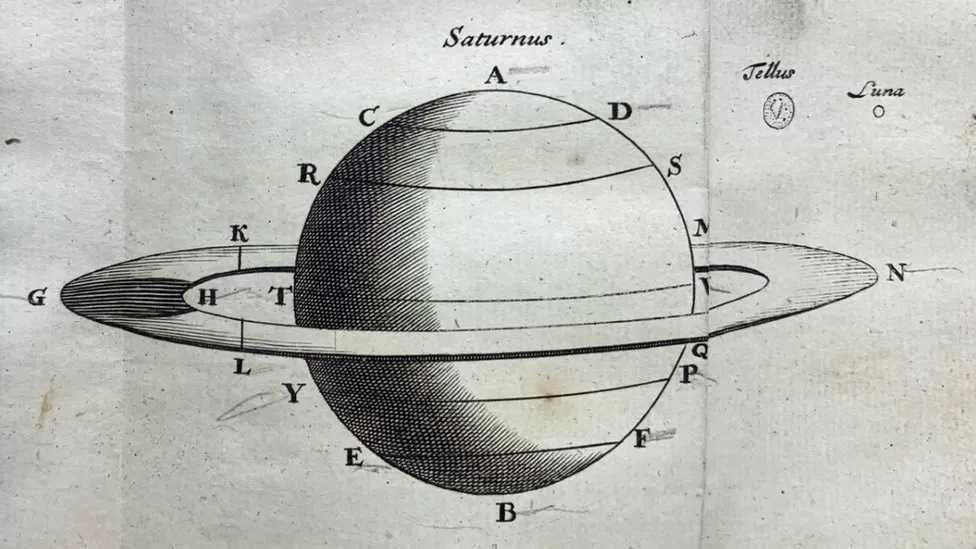
Rare Book From 1698 Reveals Belief In Extraterrestrial Life On Saturn And Jupiter Saturnus, where alien life was living happily enough. Image credit: Hansons Bookshelves

Huygens shared the belief that aliens, just like humans, must experience difficulties in order to drive innovation and advancement. “If Men were to lead their whole Lives in an undisturb’d continual Peace, in no fear of Poverty, no danger of War, I don’t doubt they would live little better than Brutes, without all knowledge or enjoyment of those Advantages that make our Lives pass on with pleasure and profit.”

Although some of Huygens’ conclusions may seem absurd to modern readers, Spencer finds the book captivating because of the many unanswered questions about the cosmos that still exist today. He notes that the subject matter seems futuristic or like science fiction, yet the writer is speaking to us from the past.

Despite the increased understanding of space and our own planet nowadays, Huygens’ book still draws our attention to the mystery of the universe. Spencer sees the book as a source of amusement and wonder, as it reminds us of how much we still do not know about the cosmos. Ultimately, he views it as a remarkable discovery that is truly out of this world.

{ https://howandwhys.com/ }

Hoe vind je dit bericht?
Geschreven door peter om 22:43 Stuur door

Exploring the Truth Behind UFO Sightings: Fact or Fiction?

Exploring the Truth Behind UFO Sightings: Fact or Fiction?

 Exploring the Truth Behind UFO Sightings: Fact or Fiction?

Overview

In recent years, the phenomenon of Unidentified Aerial Phenomena (UAP), commonly known as UFOs, has moved from the realm of science fiction and conspiracy theories into mainstream scientific and governmental discussions. The increased frequency of sightings, combined with technological advancements in imaging and sensors, has fueled a renewed global interest in understanding these unexplained phenomena. As governments, military agencies, scientists, and private individuals analyze new evidence, questions abound: Are these sightings evidence of extraterrestrial visitors, advanced human-made technology, or mere natural or human-made misinterpretations?

In this comprehensive examination, we delve into recent sightings, analyze available evidence, consider scientific and skeptical viewpoints, and explore the ongoing efforts to demystify these enigmatic events. Our goal is to facilitate a fact-based assessment that separates credible sightings from hoaxes, optical illusions, or atmospheric anomalies, ultimately seeking to determine whether these unexplained encounters reveal new physical phenomena, hidden terrestrial technologies, or are simply perceptual errors.

Recent Sightings and Eyewitness Accounts

Between March and September 2025, several high-profile UAP incidents captured widespread media attention, supported by an array of data including pilot logs, video footage, radar returns, and sensor readings. These incidents exemplify the complexity and diversity of recent sightings, illustrating the varied nature of the evidence and the challenges faced in establishing their origins.

  • The March 12 Incident: Denver to Seattle On the morning of March 12, a commercial flight operated by SkyHigh Airlines, traveling from Denver International Airport to Seattle-Tacoma International Airport, reported an extraordinary visual encounter. According to pilot logs, the crew observed a luminous, metallic-looking disc hovering silently at approximately 20,000 feet altitude. The captain’s official report describes it as “a bright, metallic disk, silent and stationary in the sky.”

The on-board camera footage corroborates this account, showing a glowing circular object that appeared to hold its position relative to the aircraft. The footage indicates the object remained stationary for about 45 seconds before suddenly accelerating at an incredible rate and disappearing from view. Notably, the aircraft's radar systems registered no other aircraft nearby, and weather conditions at the time were clear, ruling out common meteorological phenomena such as lenticular clouds or meteorite activity.

Analysis by independent experts confirmed the unusual nature of the sighting. The object exhibited neither standard aircraft lights nor identifiable flight patterns consistent with known technology. Further, calculations based on the video and radar data suggest the object’s acceleration exceeded typical human-made aerial vehicles, raising questions about its propulsion and energy source. While some skeptics have proposed optical illusions or camera anomalies, rigorous spectral analysis and multiple corroborating sources have reinforced the authenticity of the footage.

  • The May 27 Encounter Near Tucson, Arizona A different kind of sighting emerged on May 27, captured by an amateur astronomer collective operating out of the Tucson Observatory. Using a high-resolution 4K telescope equipped with infrared filters, they recorded a striking video of an anomalous object exhibiting “Tic-Tac-like” characteristics—a reference to a famous U.S. Navy sighting.

The object displayed rapid, highly irregular maneuvers—abrupt accelerations, sudden dips, and quick directional changes—behaviors that defy conventional aerodynamics at high altitudes. It appeared to emit its own light, rather than solely reflect ambient solar radiation. The motion profile and optical characteristics prompted analyses from multiple scientific bodies.

The National Institute for Aerospace Studies (NIAS) conducted an in-depth review, concluding that the object's movement was inconsistent with drones, weather balloons, or known aircraft. It exhibited acceleration rates that violated physical constraints of current aerospace technology. Skeptics have posited potential optical artifacts—lens flare, reflections, or camera glitches—but spectral and multispectral analyses dismissed these as explanations. The multiple layers of analysis, including cross-validation with different cameras and filters, pointed toward a genuine phenomenon.

  • The August 9 Incident Over the Gulf of Mexico On August 9, during a routine U.S. Navy training operation over the Gulf of Mexico, radar operators detected a high-RCS (radar cross-section) target at approximately 15,000 feet altitude. The object was tracked for about 30 seconds, displaying stable radar returns before disappearing abruptly. Infrared sensors on the aircraft recorded a brief but substantial temperature spike synchronizing with the radar detection.

This event resembles the seminal “Tic Tac” incident encountered by U.S. Navy pilots in 2004, which famously contributedto enhanced governmental interest and subsequent declassified reports. The Gulf event, however, involved a smaller, more localized object, with no visual confirmation from aircraft cameras at the time, suggesting a purely sensor-based encounter. Analysts point out that the radar signature was anomalous and did not match known aircraft or missile profiles, and the infrared spike indicates some form of high-energy activity or propulsion.

vlcsnap-2024-10-28-15h28m38s280.png?w=900

In Dec. 2017, the Tic Tac became worldwide news as the centerpiece of a front-page story in the New York Times. The article revealed the existence of previously unknown Department of Defense programs looking into UFOs. The video of the Tic Tac alongside Fravor’s account was, and still is, viewed as solid proof that genuine unknowns have continued to perplex the world’s most powerful military.

Scientific and Skeptical Perspectives

The diversity and often inexplicability of recent sightings have prompted vigorous debate among scientists, skeptics, and UFO researchers. Skeptics emphasize the importance of mundane explanations—optical illusions, camera artifacts, misidentified atmospheric phenomena such as ball lightning, or even drone activity. They argue that the pressure to find extraterrestrial origins can lead to premature conclusions, especially given the current limitations in sensor data and environmental context.

Conversely, many researchers emphasize the extraordinary nature of the observed accelerations, energy signatures, and flight characteristics that challenge conventional aircraft physics as known today. The consistent corroboration across multiple independent sources—including eyewitness testimonies, multiple sensor types, and high-resolution imagery—strengthens the case for genuine unexplained phenomena. They argue that extraordinary claims require extraordinary evidence, and current data, though compelling, still demand rigorous verification.

Ongoing Efforts and Future Directions

To advance understanding, agencies worldwide are investing in dedicated UFO research programs. The U.S. Department of Defense’s Unidentified Aerial Phenomena Task Force (UAPTF) has integrated these recent findings into their analyses, aiming to declassify and disseminate findings transparently. Similar initiatives are underway in other countries, emphasizing scientific rigor and interoperability of data.

Innovations in sensor technology, machine learning, and international data sharing are poised to provide clearer insights. The eventual goal is to develop a unified, evidence-based framework that can distinguish between natural atmospheric, human-made, and potentially extraterrestrial phenomena. Such efforts are crucial not only for security and aerospace safety but also for understanding whether these sightings represent undiscovered natural phenomena or advanced technology.

Conclusion

The recent wave of UAP sightings presents an unprecedented opportunity to explore phenomena that extend beyond our current scientific understanding. While skepticism remains essential to avoid jumping to conclusions, dismissing all observations as mere hallucinations or hoaxes ignores the consistency, corroboration, and scientific analysis supporting many cases. Determining whether these objects are terrestrial or extraterrestrial is still a work in progress, but the mounting evidence encourages open-minded investigation and scientific inquiry. Through meticulous research, technological advancements, and international collaboration, we are gradually peeling back the layers of mystery surrounding UFO sightings. The truth, perhaps, lies somewhere in the confluence of natural phenomena, advanced terrestrial technology, or genuine extraterrestrial visitation—each possibility deserving careful, unbiased exploration. Only with sustained scientific rigor can we hope to uncover the reality behind these perplexing encounters and separate fact from fiction, ultimately expanding our understanding of the universe and our place within it.

RELATED VIDEOS

4 Hours Of Incredible UFO and Aliens Stories With Richard Doty Dive into 4 hours of mind-blowing UFO and alien stories...

UFOS: Investigating the Unknown 0:00:01 Secret Pentagon Program The truth behind the U.S. Government's secret ...

{ PETER2011 }

Hoe vind je dit bericht?
Geschreven door peter om 22:23 Stuur door

The Saas Fee Picture – A UFO Encounter In The Swiss Alps?

The Saas Fee Picture – A UFO Encounter In The Swiss Alps?

The Saas-Fee Picture – A UFO Encounter in the Swiss Alps?

Overview

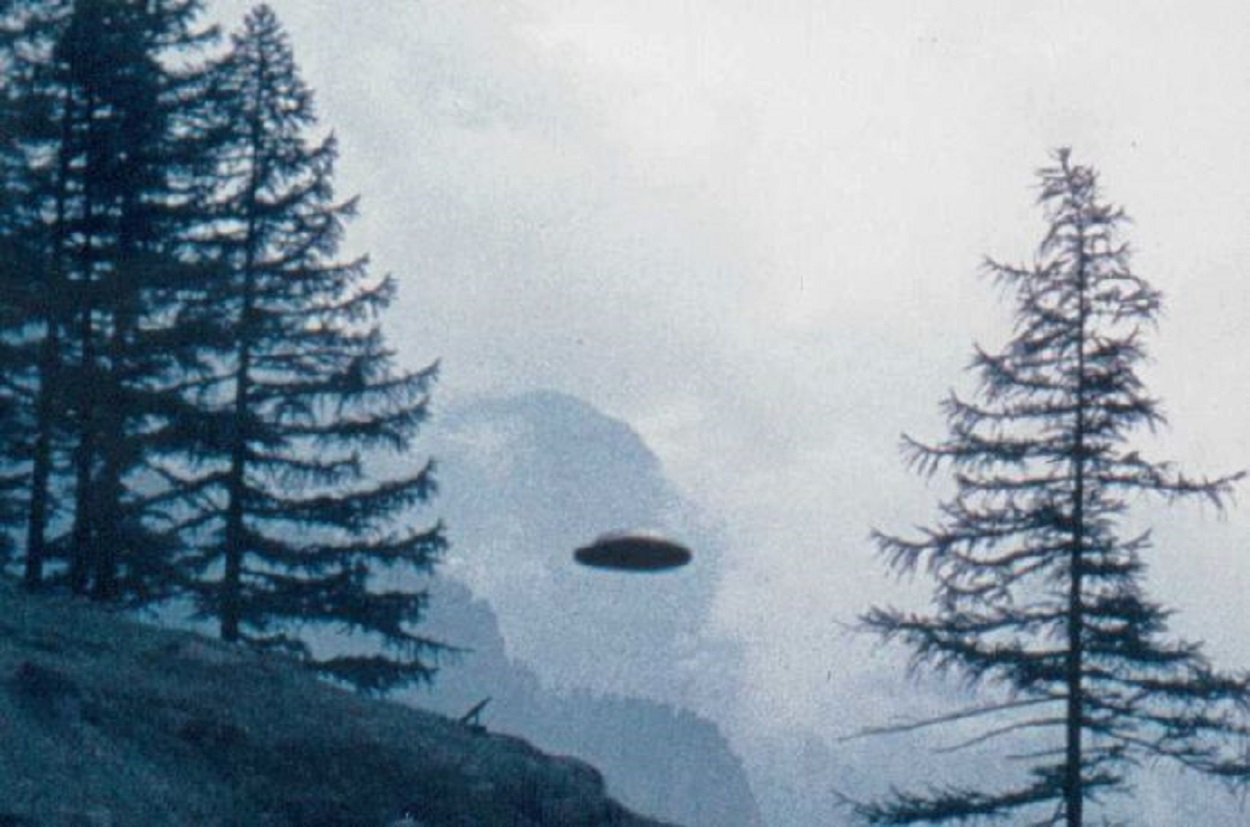
In July 1975, amidst the breathtaking vistas of the Swiss Alps, an intriguing photographic mystery emerged, capturing the imagination of UFO enthusiasts and skeptics alike. A black-and-white photograph, known as the “Saas-Fee picture,” depicts what appears to be a circular, metallic object hovering above the serene Swiss village of Zwischbergen. Decades later, this image has resurfaced on social media platforms such as #ufotwitter, igniting fresh debates about its authenticity and the potential existence of extraterrestrial visitors. The photograph’s provenance, combined with the enduring testimony of its witnesses, has made it a compelling subject in the history of UFO research. While some experts dismiss it as a cleverly staged hoax, others regard it as an authentic sighting that challenges our understanding of the universe. As the debate continues, the Saas-Fee image stands as a symbol of the enduring allure of the unexplained and the ongoing quest for truth in the realm of unidentified flying objects.

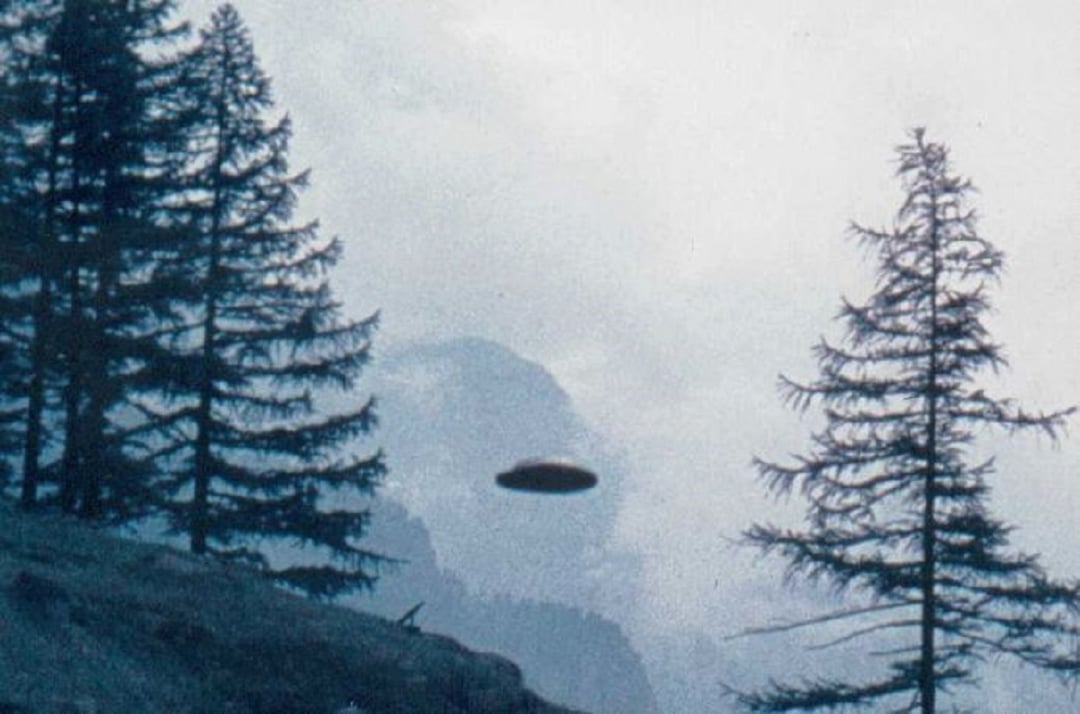
Close-up of the Saas-Fee UFO picture

Close-up of the Saas-Fee UFO picture

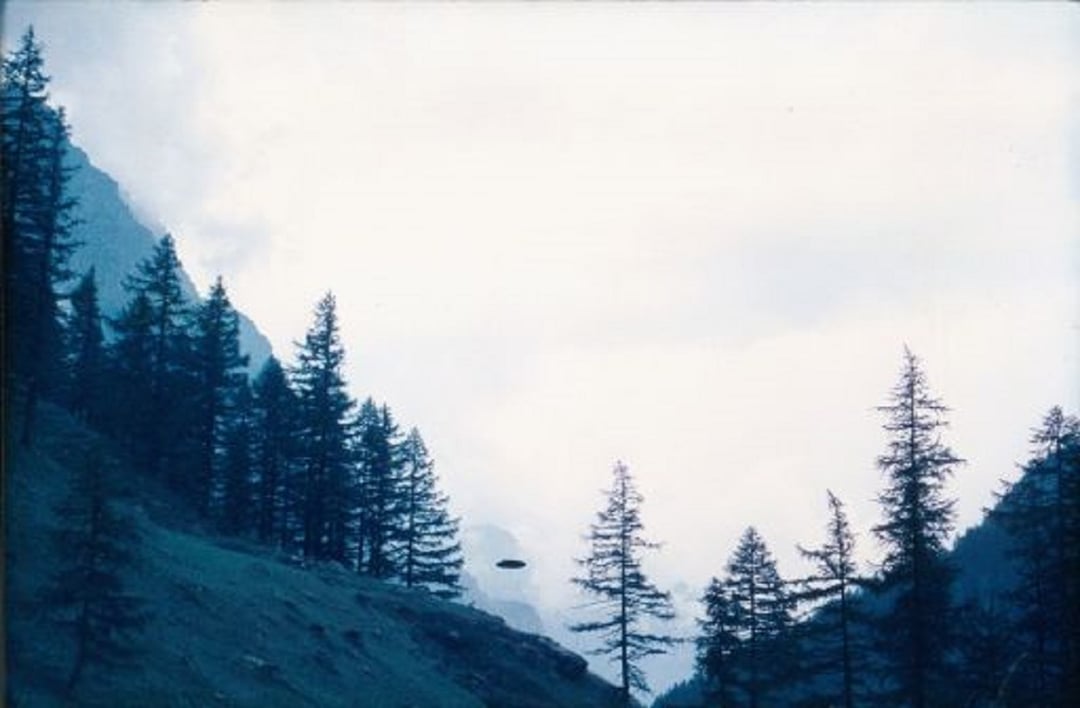
The much publicized "Saas Fee" photo from 1975. The picture, taken not in Saas Fee but near the village of Zwischbergen, is a stereotype image of a "flying saucer"-type UFO from the seventies.

Incident Details

The origins of the Saas-Fee photograph trace back to a casual hiking adventure undertaken by three young men—two Dutch brothers identified only by the initials B and H, alongside their friend M. According to their accounts, during their second day of trekking in the Swiss Alps, around 3:00 p.m., they encountered an extraordinary phenomenon. The trio reported observing a “circular object” approximately 15 meters across, hovering at a distance estimated between 100 and 500 meters from their vantage point. The object’s description emphasized its dull grey, solid-metal exterior—a striking detail given the typically unpredictable atmospheric conditions of the Alpine region. The witnesses recounted that the craft did not seem to be affected by the wind or temperature fluctuations, adding a layer of mystery to their sighting.

The trio watched the object for several minutes, during which time they observed its movements and appearance before B decided to document the phenomenon with his camera. As B pressed the shutter button, he captured the now-famous black-and-white image. Interestingly, B recalled that immediately after the photograph was taken, the object abruptly moved, disappearing behind the mountain’s treetops. This rapid departure echoes many UFO encounter reports where the act of recording or observing the craft seems to prompt its swift departure. The witnesses have maintained their story steadfastly over the years, asserting that their experience was genuine and unaltered by external pressures or incentives. This consistency has distinguished their account from many other alleged sightings, fostering both intrigue and skepticism.

Several decades later, in multiple interviews, the witnesses reaffirmed their belief that what they saw was not a natural phenomenon, nor a man-made aircraft, but something extraordinary. Their firsthand account remains a cornerstone of the incident’s credibility among certain UFO aficionados. However, skeptics argue that initial impressions alone cannot determine the nature of the event, prompting the need for detailed analysis of the photographic evidence and contextual factors surrounding the sighting.

Photographic Examination

Since its circulation in the late 20th century, the Saas-Fee photograph has been the subject of numerous technical analyses, with researchers attempting to establish its authenticity. The image, taken with a standard 35 mm SLR camera—a common device during the 1970s—shows a clear circular shape with defined borders and uniform shading, suggesting a metallic surface. Experts have scrutinized various aspects, such as grain structure, exposure levels, and shadowing, to determine whether the photograph was manipulated or staged.

click for a more detailed image

A closer view of the unidentified object.

One line of investigation focuses on the ambient lighting conditions and the physical environment captured in the image. The scene appears to have no obvious signs of digital alteration, which is unsurprising given the pre-digital era in which it was taken. Yet, some investigators argue that the background appears somewhat artificial or blurred, lacking the detailed depth expected from a genuine alpine landscape. This observation has led some to posit that the background could be a painted backdrop or a composite image, possibly inserted to lend credibility to the object.

Attempts to replicate the scene using period-appropriate equipment and models have yielded mixed results. In a notable 2005 experiment conducted by a European photographic society, researchers created a replica of the craft using a metal disc mounted on a remotely controlled drone or kite. The resulting images bore a striking resemblance to the original, but they also displayed a luminous halo of light around the replica, a feature not present in the original photograph. This discrepancy highlights the difficulty in conclusively determining whether the original was genuine or a skillful hoax.

Further analysis has involved examining the negative or print quality. High-resolution scans have failed to uncover any signs of digital or manual tampering, but the resolution and aging of the original negatives limit definitive conclusions. The lack of discernible background detail—such as the landscape’s texture or natural features—remains a significant point of debate among forensics experts. Some suggest that the photograph’s consistency with known period-correct film grain and exposure supports its authenticity, while others argue that it could be a carefully crafted model photograph taken under controlled conditions.

Photographers and image analysts continue to debate whether the level of detail, lighting, and composition points toward an authentic extraterrestrial craft or just an elaborate hoax. Without the original negatives or additional supporting evidence, the photograph’s true origin remains shrouded in ambiguity, embodying what Dr. Elena Marquez, a photographic historian at the University of Zurich, describes as “a perfect example of the gray zone in photographic validation—neither wholly convincing nor completely dismissible.”

b9cz2qbdb11f1.jpg

rzkaopodb11f1.jpg

a1hoiiydb11f1.jpg

Super clear UFO photo taken in Saas-Fee, Switzerland on July 26, 1975.

by NetOne613

Expert Opinions

The contrasting perspectives surrounding the Saas-Fee photograph highlight the complex interplay between credulity and skepticism in UFO research. On one side, enthusiasts argue that the consistency in witness testimonies—despite the passage of almost fifty years—and the detailed description of the object lend credibility to the sighting. They point out that the witnesses have refused monetary offers to recant or alter their story, suggesting genuine conviction. The fact that these individuals have maintained their account despite public ridicule and the potential social pressures increases their credibility among believers.

Moreover, proponents emphasize the historical context of UFO sightings in the 1970s. The era was rife with media sensationalism, coinciding with a cultural fascination with “flying saucers” fueled by movies, books, and popular science fiction. This environment led some skeptics to argue that such sightings, including the Saas-Fee incident, could be attributable to hoaxes or imaginative interpretations of ordinary objects—such as aircraft, natural phenomena, or optical illusions—amplified by media influence. Nevertheless, proponents counter that the specific details of the sighting—such as the sudden disappearance upon photographing and the metallic symmetry—are atypical of mundane explanations.

Skeptics, including Dr. Hans Keller of the Swiss Institute for Critical Inquiry, stress the importance of applying rigorous scientific standards when evaluating such evidence. Keller points out that the visual style of the Saas-Fee image aligns with the sci-fi media prevalent during the 1970s, raising the risk of deliberate or subconscious mimicry. “The aesthetics of many purported UFO images from that era often resemble science fiction motifs,” Keller notes, “which complicates their authenticity unless corroborated by other data such as radar logs or physical traces.”

In contrast, some experts and investigators champion the credibility of part of the witnesses’ story, especially given their long-standing refusal to profit from their account. The Dutch UFO researcher Jan de Vries echoes this sentiment, stating, “The consistency over decades and their outright rejection of financial gain suggest they truly believed what they saw.” Yet, others caution that eyewitness accounts, no matter how steadfast, are inherently subjective and vulnerable to memory distortions, especially after so many years.

This divergence in expert opinions underscores the central challenge of UFO investigation: distinguishing genuine anomalous phenomena from artifacts of perception, fabrication, or cultural influence. The Saas-Fee case exemplifies this dilemma, illustrating how subjective witness testimony and limited photographic evidence can perpetuate ambiguity. Ultimately, most scientists advocate for a cautious approach, emphasizing the need for corroborative physical data—such as radar recordings, radar-visual matches, or physical traces—to substantiate or refute the sighting’s extraterrestrial nature.

Ongoing Debate

The Saas-Fee photograph remains a focal point in contemporary UFO discourse, serving as a testament to the enduring human fascination with the unknown. Its renewal on social media and in investigative circles has revitalized interest, prompting discussions about the nature of evidence and the limitations of photographic analysis. The core difficulty lies in determining whether this single image, taken with period-appropriate equipment and accompanied by consistent witness accounts, constitutes compelling proof of extraterrestrial visitation or if it is a product of hoax, misinterpretation, or coincidence.

One of the fundamental challenges in evaluating the photograph is the scarcity of supporting data. No original negatives are publicly available, and there are no accompanying radar logs, physical traces, or contextual information to verify the encounter. This absence restricts analysis and leaves open many possibilities. Some researchers have called for a thorough archival review—hoping that original film negatives, if they exist in any private collection, could shed light on the authenticity. Similarly, attempts to locate any physical remnants or traces in the area where the sighting occurred have been inconclusive.

The incident exemplifies a broader issue in UFO research: the reliance on anecdotal evidence and photographs that are prone to manipulation or misinterpretation. As technology advances, digital forensics provide new methods of analysis, but aged materials often lack the resolution or integrity needed for definitive conclusions. Meanwhile, the phenomenon persists—be it extraterrestrial, natural, or man-made—challenging the scientific community’s capacity to differentiate fact from fiction.

As the debate rages on, proponents advocate for a cautious but open-minded approach, emphasizing the importance of transparency, interdisciplinary research, and the search for corroborative physical evidence. Critics argue that without additional data, the photograph remains an intriguing anomaly but cannot be considered proof of an extraterrestrial craft. The debate exemplifies the tension at the heart of UFO investigations: a desire to uncover profound truths versus the necessity of empirical rigor.

Until new evidence surfaces—such as original negatives, radar logs, or possible physical artifacts—the Saas-Fee picture will likely continue to be debated, representing “a case too close to call” in the annals of UFO history. Its enduring mystery encapsulates the human desire to know the unknown and the careful skepticism needed to separate genuine phenomena from illusions or hoaxes. As such, the incident continues to inspire curiosity, investigation, and skepticism, highlighting the complex interplay between human perception, technological limitations, and the pursuit of truth in the cosmic frontier.

CONCLUSION

The Saas Fee photograph, purportedly capturing an unidentified flying object (UFO) in the Swiss Alps, has garnered significant attention both from the public and the scientific community. To analyze this phenomenon scientifically, one must consider various factors including image analysis, atmospheric conditions, natural and human-made objects, and the limitations of photographic evidence.

Saas-Fee, Valais, Switzerland UFO

During a hunting expedition, a group of individuals encountered a low-hovering craft that glided quietly among the nearby trees. One member managed to capture a photograph of the object. Skeptic Wim Van Utrecht contended that the image might be fabricated.

Firstly, the object depicted in the photograph can be subjected to rigorous image analysis to determine its physical characteristics, such as shape, size, and movement. Advanced software can help identify anomalies or inconsistencies suggestive of tampering or digital manipulation. If the object appears to have features inconsistent with known aircraft or natural phenomena, further scrutiny is warranted.

Secondly, understanding the environmental context is essential. The Swiss Alps' weather conditions often cause optical illusions, such as lens flares, reflections, or atmospheric phenomena like clouds or ice crystals, which can produce visual artifacts resembling unidentified objects. High-altitude glaciers and snowfields can also reflect sunlight, creating bright spots or unusual shapes in photographs.

Thirdly, human-made objects should be considered. The region is frequented by helicopters, drones, or aircraft which, at certain angles and lighting conditions, can resemble UFOs. Additionally, the presence of military or scientific equipment, such as weather balloons or research balloons, can create similar visual signatures in aerial photographs.

Furthermore, photographic artifacts and camera limitations can generate optical illusions. For instance, lens aberrations, reflections within the camera lens, or digital artifacts arising from the image processing can produce unexpected shapes or anomalies. Such artifacts are often mistaken for genuine unidentified objects.

Evaluation of the original photographic data, including metadata and high-resolution scans, helps determine authenticity and identify possible causes of anomalies. If the image is a composite or has undergone digital editing, this diminishes its credibility as evidence of a UFO encounter.

Importantly, no verifiable physical evidence supports the existence of extraterrestrial craft in this region. The absence of corroborating observations, radar data, or sensor readings further constrains the hypothesis that the object is an extraterrestrial spacecraft.

In summary, the "UFO" in the Saas Fee image can most plausibly be attributed to natural atmospheric phenomena, reflections, human-made objects, or photographic artifacts. Without concrete physical evidence or corroborating data, these explanations align with the scientific principle of parsimony, favoring natural or human-related causes over extraordinary ones. Thus, the photograph is best understood as an intriguing optical or photographic artefact rather than definitive proof of extraterrestrial activity.

{ PETER2011 }

Hoe vind je dit bericht?
Geschreven door peter om 21:46 Stuur door

Godfather of AI Warns That It Will Replace Many More Jobs This Year

Godfather of AI Warns That It Will Replace Many More Jobs This Year


"Godfather" of AI Geoffrey Hinton predicts that AI will continue to improve at a rapid pace, devouring our jobs in the process.

JORGE UZON

AFP via Getty Images

Rejoice, for the year of 2025 is finally over.

During our planet’s latest and seemingly interminable revolution around the Sun, the tech industry’s obsession with AI soared to ever more implausible heights. CEOs began openly gloating about replacing their underlings with AI “agents.” The phenomenon of so-called AI psychosis became a national news story as more people were seemingly driven over the edge by their silver-tongued chatbot companions. “Slop” took on a new meaning. And the word “circular” suddenly started being used a whole lot in the same sentence as “billions of dollars” or even “hundreds of billions of dollars.” 

Will 2026 finally deliver us from this endless cavalcade of large language model madness? Not likely, according to computer scientist and “godfather” of AI Geoffrey Hinton. AI will only continue to improve next year, he predicts, reaching a point where it will liberate us from all our horrible low-paying jobs.

“I think we’re going to see AI get even better,” Hinton said during an interview on CNN’s State of the Union on Sunday. “It’s already extremely good. We’re going to see it having the capabilities to replace many, many jobs. It’s already able to replace jobs in call centers, but it’s going to be able to replace many other jobs.”

Hinton was one of three recipients of the prestigious Turing Award in 2018 for his work on neural networks that formed the bedrock of modern AI, earning him the moniker of being a “godfather” of the field. 

In 2023, Hinton declared that he regretted his life’s work after stepping down from his role at Google, where he had been for over a decade. Since then, he’s become one of the tech’s most prominent doomsayers.

During the CNN interview, Hinton was asked whether he was more or less worried about AI since making that now infamous declaration.

“I’m probably more worried,” Hinton replied. “It’s progressed even faster than I thought. In particular, it’s got better at doing things like reasoning and also at things like deceiving people.”

AI is progressing so quickly, according to Hinton, that around every seven months it can complete tasks that took twice as long before. He predicted that it’s only a matter of years until an AI will effortlessly perform software engineering tasks that take a human a month to complete.

“And then there’ll be very few people need for software engineering projects,” Hinton added.

Hinton made similarly gloomy predictions in a talk with Senator Bernie Sanders last month, saying that tech leaders are “betting on AI replacing a lot of workers.”

It still remains to be seen, though, if AI will actually make those strides. Many efforts to replace workers with semi-autonomous AI models have failed, while some new models, like OpenAI’s GPT-5, showed only lackluster improvements.

More on AI: 

RELATED VIDEOS


{ https://futurism.com/category/science-energy }

Hoe vind je dit bericht?
Geschreven door peter om 20:41 Stuur door

What Chang’e 4 told scientists about the far side of the Moon

What Chang’e 4 told scientists about the far side of the Moon

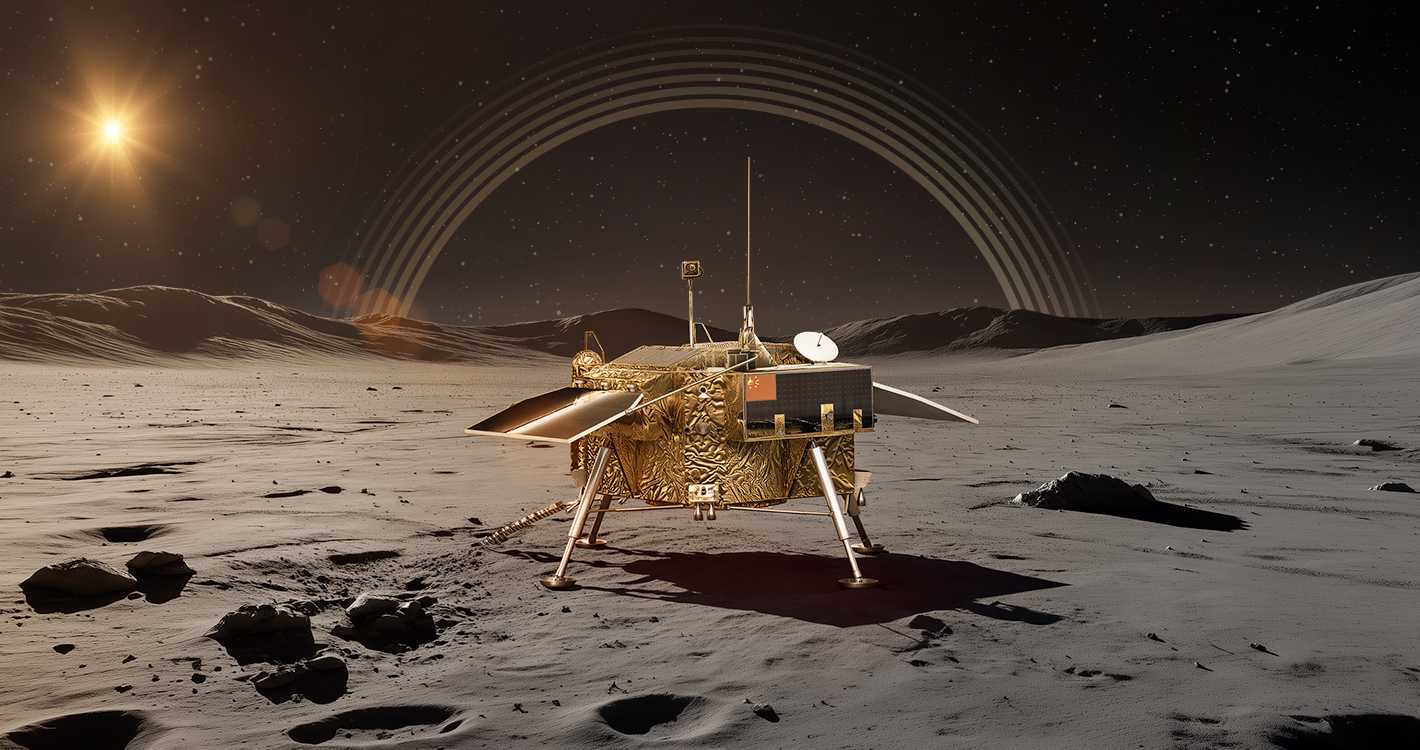
Chang’e 4 is a Chinese space probe that landed on the far side of the Moon on January 3, 2019. It not only studied the chemical composition of the rocks in this location, but also conducted the first experiment in history to grow plants on another celestial body.

The Chang’e 4 spacecraft

Chinese space program

January 3, 2019, was a triumph for the Chinese space program. The rest of humanity also had reason to rejoice. For the first time in history, the Chang’e 4 spacecraft landed on the far side of the Moon, which we never see from Earth.

The road to this landing was quite long. China was late to the lunar race between the US and the USSR. The PRC had to implement its lunar program in the 21st century. It began with two spacecraft that operated in lunar orbit, photographing and remotely sensing the Moon. Both were named after Chang’e, the Chinese goddess of the Moon.

Initially, the Chang’e 1 spacecraft operated in lunar orbit from 2007 to 2009. It made general observations, which were hardly surprising at the time, since the US had already found water on our satellite.

Chang’e 1. Source: moonregistry.forallmoonkind.org

However, in 2010, Chang’e 2 was launched to the Moon. It photographed the surface of our satellite from an altitude of only 100 km. In 2012, based on the data it collected, the Chinese government presented the most detailed map of the Moon at that time, and it was confirmed that all this time, the Chinese had been looking for a landing site for Chang’e 3.

Around that time, the first discussions about China’s lunar ambitions began, but no one knew how seriously to take them, since only two countries – the US and the USSR – had successfully landed on the Moon at that point.

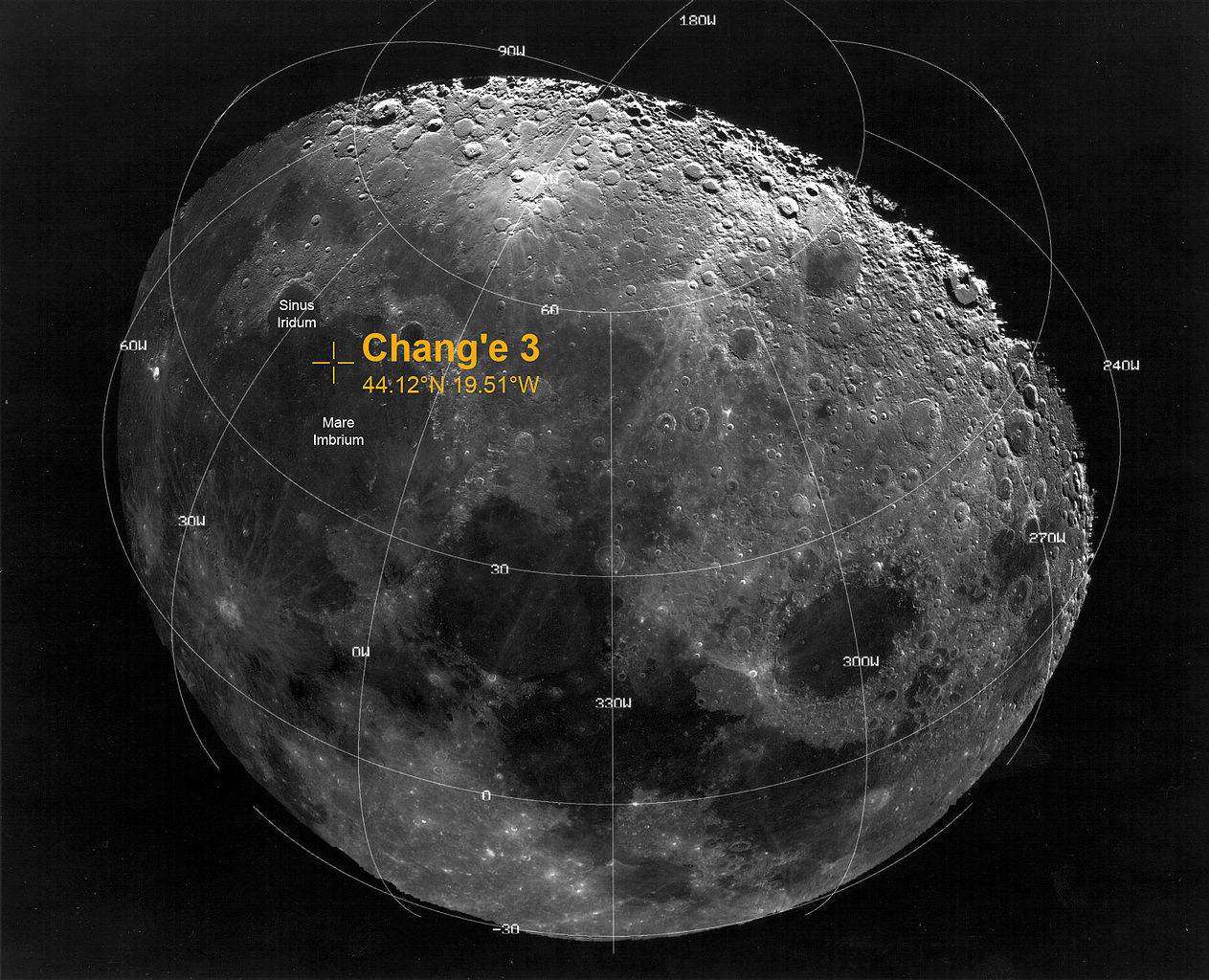
However, on December 14, 2013, Chang’e 3 landed in the Sinus Iridum of the Mare Imbrium. It was not only the first spacecraft in 37 years to remain intact after reaching the surface of our satellite. It also carried the Yutu rover, named after the jade rabbit, a character from Chinese legends who is said to have prepared the powder of immortality on the Moon. At that time, China was able to explore the material of our satellite for the first time and confirm that it was exactly as American and Soviet scientists had determined.

The Chang’e 3 landing site. Source: Wikipedia

The Chang’e 4

However, all this was a repeat of achievements made many years ago. In order to challenge the US, which had already announced plans to return to the Moon, it was necessary to show that Chinese missions could provide the global scientific community with data that no one had previously had access to.

This was the goal of the Chang’e 4 probe. In terms of design, it was a copy of the previous mission, with the same cameras and spectrographs, and even carried the Yutu-2 rover on board. However, this device was to land on the far side of the Moon, which humans first saw only in 1959 and, before the Chinese attempt, had only seen from orbit.

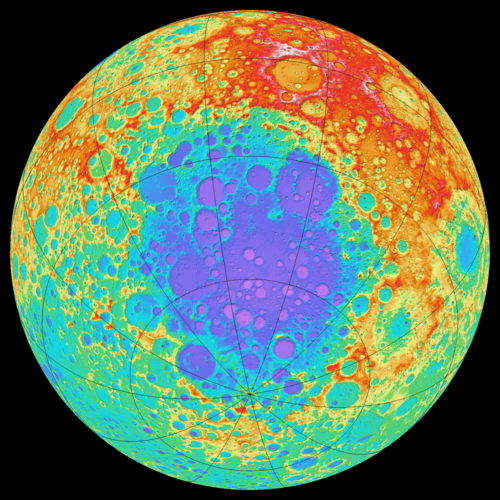
Moreover, Chang’e 4 was supposed to land in the Von Kármán lunar crater, which covers the much older and largest basin on our satellite, the South Pole-Aitken basin. Once, at the dawn of the solar system’s existence, a body much larger than the asteroid that ended the dinosaurs crashed into the Moon, which, scientists believe, led to the asymmetry of its two hemispheres: the visible and the reverse.

South Pole-Aitken basin. Source: Wikipedia

Almost all experimental data confirming this was obtained thanks to the Chinese missions Chang’e 4 and Chang’e 5, which followed it. But for them to be possible, it was first necessary to ensure their connection with Earth. This mission was entrusted to the Queqiao-1 relay satellite, which was launched to the Lagrange 2 point of the Earth-Moon system, i.e., directly behind our natural satellite.

Queqiao-1 began operating in May 2018, and in December of the same year, Chang’e 4 was launched to the Moon. It remained in orbit around our satellite for some time, and on January 3, 2019, it landed at the planned location. On the same day, it began scientific research and took photographs.

Yutu-2 rolled off the platform and began performing spectroscopic analysis of the rocks. After a few days, scientists had to interrupt their work because night fell on the Moon and the temperature dropped to extreme levels. However, two weeks later, when dawn finally broke, the mission resumed its work.

Yutu-2 . Source: news.cgtn.com

In total, Chang’e 4 lasted more than a year and a half. Technically, the mission is not yet complete. It is currently in sleep mode. Ultimately, it accomplished its main task: it examined the mantle rock emissions and noted how they are similar to and different from those found on the visible side of the Moon.

Growing plants on the Moon

The biggest difference in the design of Chang’e 4 from previous spacecraft was the addition of a module for biological experiments. It consisted of germinating seeds. This had been done repeatedly in space before, but it was all in Earth orbit.

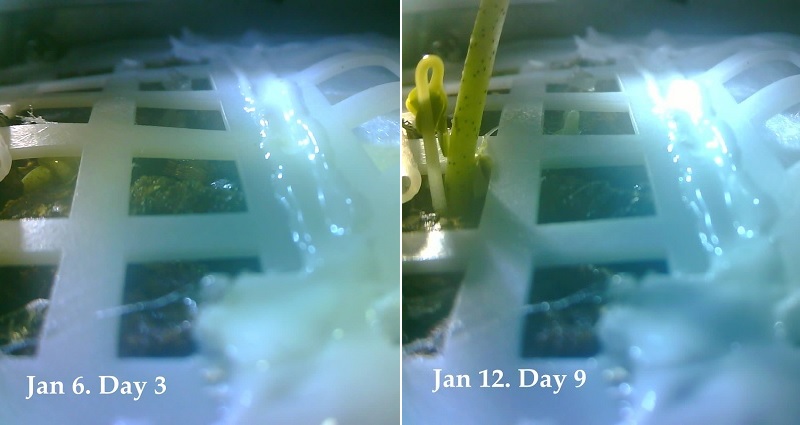
It was Chang’e 4 that became the first spacecraft to successfully grow cotton, potato, and rapeseed seeds on another celestial body. This happened a few days after landing, and photos of the tiny sprouts went viral around the world. The experiment was supposed to last 100 days. During this time, the capsule with the samples had to be heated and humidified.

Plants on the Moon. Source: nextshark.com

Incidentally, it also contained yeast spores and Drosophila fly eggs. So, theoretically, an entire ecosystem could have developed on board in later stages. However, with the onset of the lunar night, the temperature outside dropped too sharply, and too much electricity was needed for heating. Therefore, the experiment had to be interrupted.

Nevertheless, it is considered successful and was extremely important for global science. It proved the fundamental ability of plants to overcome the most difficult stage of their development in space conditions. In the future, humans will inevitably live in space, and we will need oxygen and nutrients that plants can provide. To achieve this, large modules with artificial biospheres will need to be created on planets. Similar to the one that was on board Chang’e 4.

RELATED VIDEOS

 { https://universemagazine.com/en/articles-en/ }

Hoe vind je dit bericht?
Geschreven door peter om 20:29 Stuur door

Sudden threat from the air: NASA has identified a danger in drones

Sudden threat from the air: NASA has identified a danger in drones

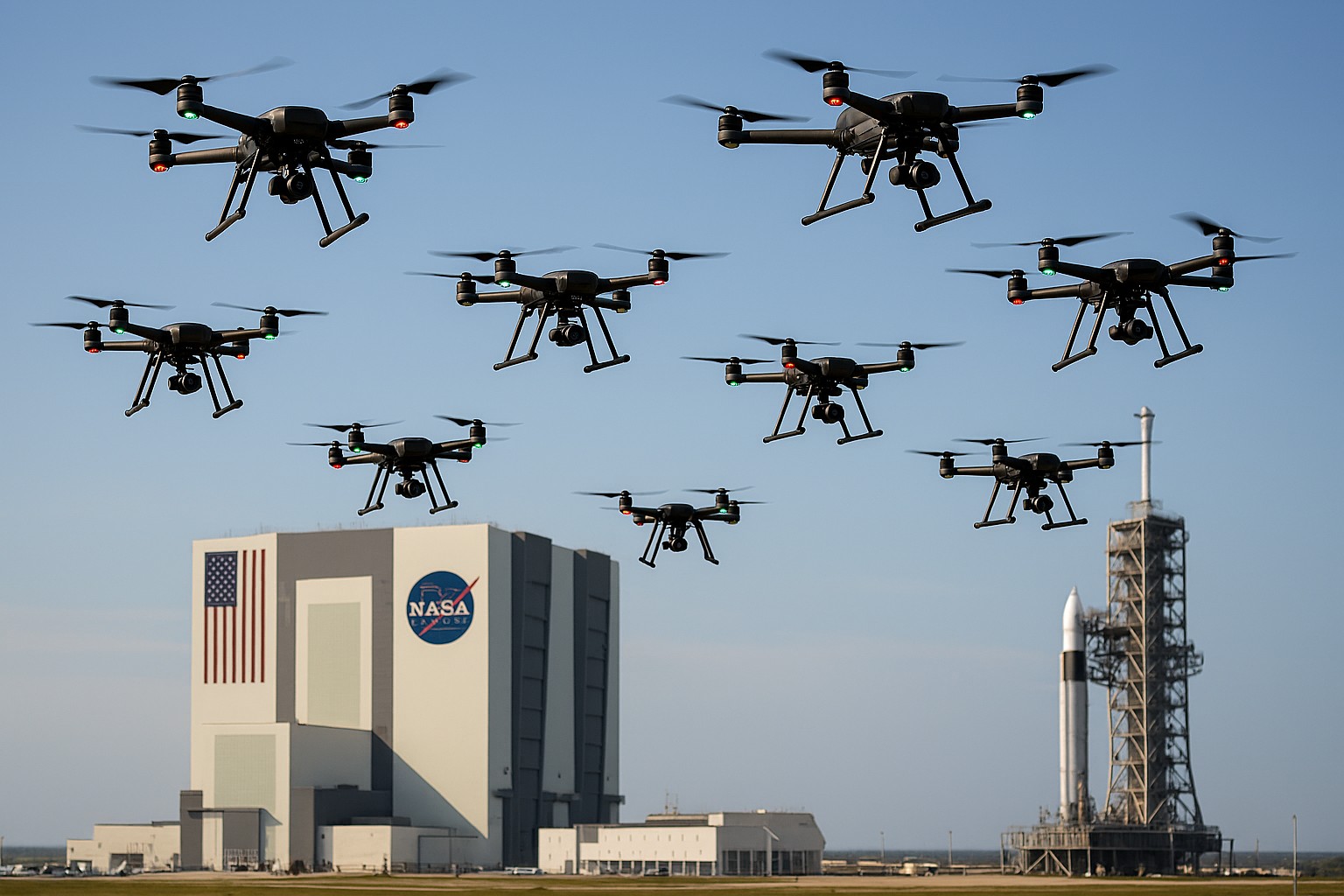
The US Space Agency has announced a search for an innovative system to detect and neutralize potential airborne threats in the form of drones. The goal is to protect personnel, rockets, and critical infrastructure in the area of the Kennedy Space Center at Cape Canaveral.

Any outside interference in the Kennedy Space Center area at Cape Canaveral, even accidental, could have catastrophic consequences. Illustration generated by Copilot AI

The decision to develop a special system was made in the context of a nationwide ban on the use of foreign-made drones for security reasons.

The Kennedy Space Center is the heart of the Artemis lunar program, from where powerful Space Launch System rockets will be launched. Any outside interference, even accidental, could have catastrophic consequences.

How the “smart shield” will work

Space Launch System rocket. Source: JOE SKIPPER | REUTERS

According to the agency’s request, the system should include a network of stationary and mobile sensors (radar, radio frequency, optical). Its key tasks are:

  • Detect and identify unknown drones at a distance of up to 64 km.
  • Analyze risk in real time.
  • Provide data for quick decision-making by the security service.

The system is scheduled to be implemented in April 2026. From now on, all drone flights in the central area will be strictly limited and will require special permission.

Balancing security and innovation

Interestingly, NASA itself periodically uses drones for festive events – for example, the visitor center hosts a show featuring 600 autonomous devices. The new system is designed to distinguish authorized flights from potentially dangerous ones, protecting the future of lunar missions.

This move demonstrates how space agencies are adapting to the challenges of a new era, where advanced technologies can bring both benefits and risks.

Earlier, we explained what a rocket drone is and how it differs from a UAV.

 { https://universemagazine.com/en/articles-en/ }

Hoe vind je dit bericht?
Geschreven door peter om 20:16 Stuur door

Spanish Soldiers Fired on a Tall Humanoid After a UFO Landed Near Their Base (1971 )

Spanish Soldiers Fired on a Tall Humanoid After a UFO Landed Near Their Base (1971)

In March 1971, an extraordinary series of events unfolded at a Spanish military radar installation near the coast. What began as routine perimeter patrols escalated into one of the most unsettling close-encounter testimonies to emerge from Cold War-era Europe. The account comes from Jesus Jofre Mila, a corporal stationed at the base, whose story was later discussed publicly in interviews and investigative programs.

This article is based exclusively on his testimony, reconstructed from later retellings and corroborated by partial witness accounts and secondary investigators.

An Uneasy Night at the Radar Base

On the night of March 25, 1971, something felt wrong almost immediately. The base’s German Shepherd patrol dogs – highly trained and accustomed to night duty, became unusually aggressive and agitated. No amount of calming helped. According to Mila, the dogs reacted as if sensing something entirely unfamiliar.

Shortly after, a guard pointed toward the sky. Above the radar domes, a disc-like craft appeared, described as a classic stacked or double-layered oval shape emitting a golden-yellow light. The glow was bright enough to illuminate the object clearly, yet strangely non-blinding.

Several soldiers watched as the object drifted slowly across the horizon, then suddenly accelerated at tremendous speed toward the sea before vanishing.

A Blinding Flash from the Water

That was not the end of the night’s events.

Another soldier stationed closer to the rocky shoreline later witnessed the object descend rapidly toward the ocean. Upon contact with the water, it emitted a violent flash of light so intense it temporarily blinded him. He was later found clutching his eyes, which remained swollen and red for days. Base medical personnel could not explain the injuries.

No conventional explosion, aircraft, or weapon discharge was reported.

The Green Light Beyond the Fence

Later that same night, Mila and a fellow handler armed themselves and followed one of the dogs toward the perimeter fence after noticing an unnatural green glow in an area where the base ended and open land began.

As they advanced, the atmosphere reportedly felt “charged,” like static electricity. Mila described a tingling sensation on his tongue, similar to touching a battery. Even the dog appeared distressed, shaking its head as if in pain.

Then they heard it.

Heavy footsteps -fast, deliberate, and unnervingly close.

Face-to-Face with a Tall Humanoid Figure

Out of the darkness emerged a very tall figure, estimated between 7 and 7.2 feet in height. The soldiers shouted warnings. There was no response.

Panicking, one soldier opened fire. Mila followed, firing his 9 mm sidearm multiple times. The muzzle flashes briefly illuminated the being.

What they saw was unlike anything human.

The figure was described as:

  • Extremely tall and thin
  • Pale in appearance
  • With long, light-colored hair falling to the shoulders
  • Wearing a tight, metallic-looking suit with a high collar
  • A belt featuring a distinct inverted triangle symbol at the center

The being did not react to the gunfire.

For a brief moment, Mila described the sensation that time itself had stopped. Then the figure turned calmly and walked away, disappearing toward the fence.

A Fence That Vanished

Moments later, the soldiers heard metallic impacts. At dawn, the evidence was impossible to ignore.

A section of the inner perimeter fence; approximately 50 cm wide, had vanished entirely. The edges were scorched, as if cut or disintegrated. The outer fence beside it was completely intact. There were no footprints, no debris, and no mechanical explanation.

The missing section had to be crudely repaired with wire.

Dreams, Voices, and a Return to the Sky

In the nights that followed, Mila experienced intense dreams involving the encounter. On one night, he reported hearing overlapping voices in his head- unintelligible at first. Days later, he claimed the message became clearer, though he has remained guarded about its content.

On March 27, the lights returned, this time witnessed by dozens of personnel, possibly over a hundred. The object hovered visibly above the base for several minutes.

On March 29, the phenomenon escalated again: two military jet aircraft were reportedly seen approaching the object before all three accelerated away at extreme speed. Officially, no jets were launched that night. Unofficially, radar operators reportedly disagreed.

The Investigation That Left No Records

After the mass sighting, higher command intervened. Soldiers were interviewed individually and instructed to write reports. Shortly after, two American servicemen, accompanied by a Spanish Air Force officer, arrived on base.

According to witnesses:

  • Soldiers were questioned separately
  • Told explicitly to forget the incident
  • Photographed against a white wall using an unusually powerful flash that temporarily blinded them

No explanations were provided. No official findings were released.

Later, Spanish ufologist Antonio Rivera reported that American technicians were seen inspecting coastal cliffs near where the object had descended into the sea. Officially, it was described as radar maintenance. The case was subsequently classified by the Spanish Ministry of Defense.An Unresolved Military Encounter

More than five decades later, the 1971 radar base incident remains unexplained.

There are no radar records, no declassified conclusions, and no conventional explanations that fully account for:

  • The disciplined dogs’ reaction
  • The blinding light injuries
  • The humanoid figure unaffected by gunfire
  • The selectively disintegrated fence
  • The mass sightings over multiple nights

What remains is the testimony of trained military personnel, men with no incentive to fabricate a story that initially brought them reprimand rather than recognition.

Whether interpreted as a close encounter, a classified technology incident, or something beyond current understanding, the events described by Jesus Jofre Mila stand as one of the most detailed and unsettling military UFO encounters on record.

{ https://www.latest-ufo-sightings.net/ }

Hoe vind je dit bericht?
Geschreven door peter om 20:04 Stuur door

Robots with Feelings: New Robotic Skin Reproduces the Human Experiences of Touch and Pain

(Image Credit: Xinge Yu, City University of Hong Kong)

Robots with Feelings: New Robotic Skin Reproduces the Human Experiences of Touch and Pain

Chinese researchers have developed a robotic e-skin that brings robots one step closer to humans by mimicking our ability to touch, and even sense “pain” when encountering potentially dangerous surfaces.

As companies like Tesla push robots toward a fully human level of capability, recreating the sense of touch is essential not only for understanding the environment but also for navigating it safely. The team behind the robotics advancement revealed their work in a recent paper published in the Proceedings of the National Academy of Sciences.

The Importance of Pain

While pain may be among the least desirable human experiences, it plays an essential role in self-preservation. The spinal cord acts as a relay system to the brain, sending reflexive messages to our muscles in response to pain stimuli. For example, if we touch something hot, we withdraw our hand without thinking, thereby preventing a more severe burn. Alternatively, if we step on a sharp object, we lift our foot to avoid a deep wound. The signals involved in these actions are rapid, with the brain becoming aware of what has occurred only after the movement has begun.

Saving those precious seconds of processing time as the brain decodes sensory data into understanding (which results in a conscious response in humans) can make an enormous difference between receiving a minor abrasion and sustaining a serious injury. However, robots typically lack a swift, automatic system for processing external stimuli. Instead, sensors collect data, which is sent to a central processing unit (CPU).

Single-material electronic skin gives robots the human touch

Electronic robotic skin (representational image)

The CPU compares the data against its program and generates an appropriate response, which is then transmitted over the robot’s data network to an actuator, which decodes the response and executes the CPU’s selected movement. While this may occur at an impressive speed, even a slight delay in action due to processing time can cause greater damage to the robot.

Challenging Environments for Robots

Automation, until now, has primarily been confined to highly controlled environments, specifically designed to safely accommodate robotic machinery, such as factory floors and laboratories.

Presently, advances in both mechanical robotics and artificial intelligence are seeking to change this. Companies such as Tesla, with its humanoid Optimus robot, are attempting to integrate robots into everyday environments to perform a variety of human tasks. Unfortunately, homes, hospitals, and workplaces are designed for humans, who can navigate with considerably more intuitive ease than pre-programmed machines.

To enable robots to match humans’ instinctive environmental responses as they move into our imperfect and sometimes hazardous world, Chinese scientists have developed a robotic e-skin (NRE-skin) that provides robots not only with a “sense” of touch, but also the ability to “feel” pain.

Previous attempts to provide robots with sensor skins have been much simpler, wrapping the robot in a sensor system that sends signals to a CPU for processing and response. By contrast, the NRE-skin processes the information obtained when a robot comes into contact with an object and identifies potentially dangerous contact (i.e., pain) within the skin itself, thereby reducing the time required for sending and receiving information.

robot skin

Modular, neuromorphic electronic skin capable of active pain and injury perception in robotic applications.

Credit: Xinge Yu, City University of Hong Kong

Robotic NRE-Skin

The Chinese researchers developed their NRE-skin as a four-layer system. Like our own epidermis, the top layer features a protective coating that shields the delicate underlying components from the environment. Beneath that layer, the skin performs its functions, with layers of sensors and circuits designed to mimic human nerves. Even when nothing is touching the robot, the skin sends a “all clear” null result signal every 75-150 seconds, informing the CPU that the system is still operating correctly. If the skin is cut or damaged significantly enough, the lack of signal alerts the robot that damage has occurred in the area.

Most importantly, the skin registers touch with signals called “spikes.” These spikes occur in two forms, depending on the severity of the situation. Regular touch sends a spike to the CPU, which processes the data to understand the environment. When the skin detects an extreme event, it instead sends a spike directly to the robot’s actuators to produce an automatic response, thereby removing it from potential harm.

The team designed the skin not only to warn of real-world dangers but also to accept that harm will eventually occur in an uncontrolled environment. The skin is produced in swappable magnetic patches. While it cannot “heal” in the sense that a living creature does, it can quickly be mended by changing a patch without having to repair the entire skin covering.

Currently, the primary issue is that multiple points of contact can lead to confusion within the system. To overcome this, the next step for researchers will be to enhance the skin’s sensitivity and enable it to disambiguate between the many sensations experienced while moving through a range of environments.

The paper, “A Neuromorphic Robotic Electronic Skin with Active Pain and Injury Perception,” appeared in the Proceedings of the National Academy of Sciences on December 22, 2025.

  • Ryan Whalen covers science and technology for The Debrief. He holds an MA in History and a Master of Library and Information Science with a certificate in Data Science. He can be contacted at ryan@thedebrief.org, and follow him on Twitter @mdntwvlf.

{ https://thedebrief.org/category/science/ }

Hoe vind je dit bericht?
Geschreven door peter om 18:38 Stuur door

Cremation Before Civilization? Evidence Suggests Ancient Hunter Gatherers Cremated a Woman Nearly 10,000 Years Ago

Reconstruction of Hora pyre in color.
Image Credit: Patrick Fahy.

Cremation Before Civilization? Evidence Suggests Ancient Hunter Gatherers Cremated a Woman Nearly 10,000 Years Ago

Analysis of 9,500-year-old human remains discovered in Central Africa, led by University of Oklahoma scientists, has revealed evidence suggesting these ancient hunter-gatherers cremated their dead millennia before the first organized African civilizations existed.

If confirmed, the discovery of a small, cremated woman on a funeral pyre at the base of Mount Hora, a prominent natural landmark in northern Malawi, would represent the oldest known example of ancient African hunter-gatherers intentionally burning the remains of a deceased individual.

The research team behind the discovery said the cremation site also hints at potentially spiritually complex ritual practices surrounding fire and death that had not previously been identified during this ancient period.

“Not only is this the earliest cremation in Africa, it was such a spectacle that we have to rethink how we view group labor and ritual in these ancient hunter-gatherer communities,” explained Jessica Thompson, an assistant professor of anthropology at Yale University, and leader of a long-term research project at the site of the discovery.

Date of Discovery Rivals Oldest Known Human Cremation Site

According to a statement announcing the unexpected discovery of ancient, cremated human remains, evidence of intentionally burned human remains appears as early as 40,000 years ago in Australia. However, “intentionally built” structures made of combustible materials don’t appear until about 10,000 years before present.

According to researchers, the previously discovered ancient pyre at the Xaasaa Na’ Upward Sun River archaeological site in Alaska, which contained the remains of a small child, was dated to sometime around 11,500 years ago. Conversely, the oldest known funerary cremation site in Africa, dated to a comparatively recent 3,500, was likely built by Pastoral Neolithic herders who were much more organized than the ancient hunter-gatherers associated with the discovery.

“Cremation is more common among ancient food-producing societies, who generally possess more complex technology and engage in more elaborate mortuary rituals than earlier hunter-gatherers,” the researchers explain.

Remains of a Single Individual Discovered in the Pyre

In the 1950s, archaeologists determined that the ancient cremation site, dubbed Hora 1, was a hunter-gatherer burial ground. However, those scientists didn’t know when those burials occurred. Decades later, Thompson’s team unearthed evidence that it was used by ancient humans as far back as 21,000 years ago, with the site’s burials seemingly dating to between 16,000 and 8,000 years before present. Notably, all the bodies buried during this period were interred in a complete state.

cremation

The Hora 1 site photographed from the air.

Image credit: Jacob Davis.

In collaboration with the Malawi Department of Museums and Monuments, the latest effort analyzed a separate set of bones from what they described as a “highly fragmented individual.” 170 separate bones were examined, mostly originating from the woman’s arms and legs. The researchers say the bones suggest the woman was between 18 and 60 years old and slightly under 5 feet tall.

After a closer analysis of the cremated remains, the researchers determined that the body was likely cremated before decomposition, most likely within a few days of the woman’s death. The researchers also found cut marks on the bones, suggesting that the flesh had been removed before incineration.

Study team member Elizabeth Sawchuk, a Curator of Human Evolution at the Cleveland Museum of Natural History and a bioarchaeologist, said they were surprised to find no teeth or skull bone fragments in the cremated remains. Sawchuk said that because those body parts are historically preserved during cremations, the team believed they may have been removed “prior to burning.”

cremation

Researchers found cut marks on the bone fragments recovered from the ancient funeral pyre.

Image credit: Jessica Thompson.

Labor Intensive Cremation Hints at Its Purpose

When discussing the unusual nature of an organized cremation by African hunter-gatherers almost 10,000 years ago, Jessica Cerezo-Román, an associate professor of anthropology at the University of Oklahoma and the study’s lead author, noted the significant amount of labor and time required to complete an effective cremation.

“Cremation is very rare among ancient and modern hunter-gatherers, at least partially because pyres require a huge amount of labor, time, and fuel to transform a body into fragmented and calcined bone and ash,” Professor Cerezo-Román explained.

For example, the team estimated that ancient humans would have had to gather at least 30 kilograms of deadwood and grass, a figure they said points to a significant communal effort. An analysis of ash sediments and bone fragments also suggests that participants actively disturbed the fire throughout the burning, including regularly adding more fuel to maintain the high temperatures needed. The team estimated the fire reached temperatures above  500°C.

Cerezo-Román said the job of removing and preparing the body may sound “gruesome,” but also noted that these practices may have been associated with social memory, remembrance of a loved one, or an ancestral veneration. The professor also pointed out that a growing body of evidence suggests ancient hunter-gatherers in Malawi performed cremations that included the posthumous “removal, curation, and secondary reburial of body parts,” maybe as tokens of the deceased.

In the study’s conclusion, the team notes that stone tools discovered at the site may have been funerary objects added during or after the cremation. They also note that no other individuals were cremated, suggesting that the site was considered significant.

“The history of large fires in this location, the effort associated with the cremation, and the subsequent burning events reflect a deep-rooted tradition at the site linked to ritual behavior and memory-making tied to a place that was clearly a local landmark,” they explained.

As far as the woman who was cremated when others at the site were buried, the researchers said that is still an open question.

“Why was this one woman cremated when the other burials at the site were not treated that way?” Thompson asked.

The study “Earliest Evidence for Intentional Cremation of Human Remains in Africa” was published in Science Advances.

  • Christopher Plain is a Science Fiction and Fantasy novelist and Head Science Writer at The Debrief. Follow and connect with him on X, learn about his books at plainfiction.com, or email him directly at christopher@thedebrief.org.

RELATED


{ https://thedebrief.org/category/science/ }

Hoe vind je dit bericht?
Geschreven door peter om 18:21 Stuur door

Meer van UFO'S of UAP'S, ASTRONOMIE, RUIMTEVAART, ARCHEOLOGIE, OUDHEIDKUNDE, SF-SNUFJES EN ANDERE ESOTERISCHE WETENSCHAPPEN - DE ALLERLAATSTE NIEUWTJES

↑ Terug naar de berichten