Naar de inhoud

UFO'S of UAP'S, ASTRONOMIE, RUIMTEVAART, ARCHEOLOGIE, OUDHEIDKUNDE, SF-SNUFJES EN ANDERE ESOTERISCHE WETENSCHAPPEN - DE ALLERLAATSTE NIEUWTJES

UFO's of UAP'S in België en de rest van de wereld
BerichtenArchiefGastenboekContact
akke.beakke.be
Ontdek de Fascinerende Wereld van UFO's en UAP's: Jouw Bron voor Onthullende Informatie! Ben jij ook gefascineerd door het onbekende? Wil je meer weten over UFO's en UAP's, niet alleen in België, maar over de hele wereld? Dan ben je op de juiste plek! België: Het Kloppend Hart van UFO-onderzoek In België is BUFON (Belgisch UFO-Netwerk) dé autoriteit op het gebied van UFO-onderzoek. Voor betrouwbare en objectieve informatie over deze intrigerende fenomenen, bezoek je zeker onze Facebook-pagina en deze blog. Maar dat is nog niet alles! Ontdek ook het Belgisch UFO-meldpunt en Caelestia, twee organisaties die diepgaand onderzoek verrichten, al zijn ze soms kritisch of sceptisch. Nederland: Een Schat aan Informatie Voor onze Nederlandse buren is er de schitterende website www.ufowijzer.nl, beheerd door Paul Harmans. Deze site biedt een schat aan informatie en artikelen die je niet wilt missen! Internationaal: MUFON - De Wereldwijde Autoriteit Neem ook een kijkje bij MUFON (Mutual UFO Network Inc.), een gerenommeerde Amerikaanse UFO-vereniging met afdelingen in de VS en wereldwijd. MUFON is toegewijd aan de wetenschappelijke en analytische studie van het UFO-fenomeen, en hun maandelijkse tijdschrift, The MUFON UFO-Journal, is een must-read voor elke UFO-enthousiasteling. Bezoek hun website op www.mufon.com voor meer informatie. Samenwerking en Toekomstvisie Sinds 1 februari 2020 is Pieter niet alleen ex-president van BUFON, maar ook de voormalige nationale directeur van MUFON in Vlaanderen en Nederland. Dit creëert een sterke samenwerking met de Franse MUFON Reseau MUFON/EUROP, wat ons in staat stelt om nog meer waardevolle inzichten te delen. Let op: Nepprofielen en Nieuwe Groeperingen Pas op voor een nieuwe groepering die zich ook BUFON noemt, maar geen enkele connectie heeft met onze gevestigde organisatie. Hoewel zij de naam geregistreerd hebben, kunnen ze het rijke verleden en de expertise van onze groep niet evenaren. We wensen hen veel succes, maar we blijven de autoriteit in UFO-onderzoek! Blijf Op De Hoogte! Wil jij de laatste nieuwtjes over UFO's, ruimtevaart, archeologie, en meer? Volg ons dan en duik samen met ons in de fascinerende wereld van het onbekende! Sluit je aan bij de gemeenschap van nieuwsgierige geesten die net als jij verlangen naar antwoorden en avonturen in de sterren! Heb je vragen of wil je meer weten? Aarzel dan niet om contact met ons op te nemen! Samen ontrafelen we het mysterie van de lucht en daarbuiten.

Archief

Zondag 30 november 2025

US Army's secret mind-control unit releases chilling new recruitment video: 'We are everywhere'

US Army's secret mind-control unit releases chilling new recruitment video: 'We are everywhere'

By STACY LIBERATORE, US SCIENCE & TECHNOLOGY EDITOR

A secretive US military unit has released a new recruitment video packed with cryptic messages and unsettling imagery.

The 4th Psychological Operations-Airborne (4th PSYOP), based at Fort Bragg in North Carolina, specializes in influence campaigns aimed at shaping how enemies think, react and communicate.

The clip opens on a burning 1980s CRT television that flickers to life with the dancing ghost from Fleischer Studios' 1930 cartoon 'Swing You Sinners!'

Within seconds, the screen jumps to a dark forest where leaflets fall through the trees, followed by shots of soldiers standing among civilians as the words 'We are everywhere' flash across the frame.

The video then appears to rewind to a WWII-era bombing run, showing a plane dropping pamphlets over a crowd below.

A narrator says: 'There's another force applied in combat that we generally don't think of as a weapon of war. That weapon is words.'

His gravel-voiced warning repeats: 'We are everywhere. Words are our weapon.' 

The reel ends on the unit's lightning-bolt patch and a pulsing QR code directing viewers to goarmy.com/PSYOP.

The 4th Psychological Operations-Airborne has released a new recruitment video, with the opening scene featuring a clip from a 1930s cartoon

The 4th Psychological Operations-Airborne has released a new recruitment video, with the opening scene featuring a clip from a 1930s cartoon

The chilling tagline of the video is 'We are everywhere'

The chilling tagline of the video is 'We are everywhere'

The video is being hailed as the Army's strongest pitch yet for its influence-warfare unit, designed to attract recruits who can craft viral memes as confidently as they can jump out of aircraft.

It opens with a grainy shot of an old Zenith TV in a dark void, VHS lines rolling as a ghostlike version of Koko the Clown flickers on the screen. 

The cabinet edges glow with animated flames, and faint 1930s jazz plays under a modern beat

The pacing ramps up immediately. Arabic-script leaflets fall from an aircraft. A soldier rides in a tank strapped with a massive loudspeaker blasting distorted messages.

And there is a brief animated segment that appears to show a quill turning into a dagger.

Inside a dim command tent, PSYOP specialists type across multi-lingual dashboards that track sentiment and morale.

The video is packed with unexpected Easter eggs: nods to conspiracy theories, the WWII 'Ghost Army' that tricked Nazi generals, and even a Pepe the Frog GIF decked out in a clown suit. Pepe is a hate symbol by the alt-right movement.

The WWII 'Ghost Army' was a secret US Army unit officially called the 23rd Headquarters Special Troops. 

The video shows what appears to be WWII, with bombers dropping leaflets from the skies

The video shows what appears to be WWII, with bombers dropping leaflets from the skies 

The 4th Psychological Operations-Airborne, based at Fort Bragg in North Carolina, specializes in influence campaigns aimed at shaping how enemies think, react and communicate.

The 4th Psychological Operations-Airborne, based at Fort Bragg in North Carolina, specializes in influence campaigns aimed at shaping how enemies think, react and communicate.

Another part of the video conveys the idea of blasting messages to the public as soldiers move through worn-torn towns

Another part of the video conveys the idea of blasting messages to the public as soldiers move through worn-torn towns

Their mission was to deceive German forces about the location, size, and movements of Allied troops. 

They used inflatable tanks, trucks, and artillery to create the illusion of large forces where there were none. 

BLACK FRIDAY SALE

EXCLUSIVE
  • 'Patient 4' feared missing after getting revolutionary brain chip. Now his wife tells the REAL story 

article image

Soldiers also played pre-recorded sounds of troops and vehicles over loudspeakers to simulate army movements. 

They sent fake radio traffic to trick German intelligence into thinking units were present. Live actors and props were sometimes used to stage fake headquarters.

Their deception efforts saved thousands of lives by diverting German troops from real operations. 

The unit's work remained classified for decades and is only recently widely recognized. 

The 4th PSYOP is known to conduct 'influence activities to target psychological vulnerabilities and create or intensify fissures, confusion, and doubt in adversary organizations.'

'We use all available means of dissemination – from sensitive and high tech to low-tech, to no-tech, and methods from overt, to clandestine, to deception,' the organization's official website reads.

Soldiers looking to join the PSYOP must endure a physically and mentally demanding training pipeline, which starts with a grueling assessment and selection that lasts for 10 days. 

And there is a brief animated segment that appears to show a quill turning into a dagger

And there is a brief animated segment that appears to show a quill turning into a dagger

Master Sgt. Mathews, the Noncommissioned Officer (NCO) in Charge of the PSYOP Assessment and Selection course, told Task and Purpose: 'We're looking at soldiers who are adept at conducting research to understand target audiences.

'And use critical thinking to determine the best methods and arguments to influence and effectively communicate verbally and in writing using multimedia.'

The first 10 days of PYSOP focus on a candidate's physical fitness, mental resilience, critical thinking, communication skills and sustainability.

Candidates are not just doing physical challenges, but are writing reports, crafting narratives, or presenting arguments, simulating real-world PSYOP tasks.

These individuals also undergo psychological evaluations to determine their suitability for the demanding nature of the operation's roles.

A narrator says: 'There's another force applied in combat that we generally don't think of as a weapon of war. That weapon is words'

A narrator says: 'There's another force applied in combat that we generally don't think of as a weapon of war. That weapon is words'

Candidates who meet the standards are invited to continue with the Psychological Operations Qualification Course.

This includes studying human psychology, sociology and cultural dynamics to design effective influence strategies, identifying and analyzing groups for tailored messaging and crafting messages that align with mission objectives and resonate with target audiences.

During this time, soldiers will test their abilities in dynamic environments, using tactics to confuse and find vulnerabilities within each other.

They also train on the ethical considerations of PSYOP missions, including avoiding manipulation that violates international law or military ethics. 

After the 10-day assessment, soldiers are put through 41 weeks of physically and mentally demanding training, called the PSYOP Qualification Course.

The last few months have seen soldiers learn how to use propaganda and other methods to influence the thoughts, emotions, and behaviors of a target audience, often in an enemy territory.

{  https://www.dailymail.co.uk/sciencetech/index.html }

MYSTERIES , Complot Theories, ed ( EN, FR, NL )

Hoe vind je dit bericht? 0 stemmen
Geschreven door peter om 17:35 Stuur door
Zaterdag 29 november 2025

Hundreds of Easter Island Moai Statues Can Now Be Explored in Unprecedented Detail, Thanks to This Interactive 3D Model

(Image Credit: German Glez/Unsplash)

Hundreds of Easter Island Moai Statues Can Now Be Explored in Unprecedented Detail, Thanks to This Interactive 3D Model

Christopher Plain

A team of archaeologists led by researchers from Binghamton University has combined over 22,000 images of the primary quarry on Rapa Nui (Easter Island) to create the first-ever interactive 3D model of the remote site, allowing users to explore its archaeological marvels in unprecedented detail.

Unlike the more famous coastal platform that contains over a dozen Moai statues facing the ocean, the 3D model’s creators chose the Rano Raraku quarry because it contains over 1,000 statues in various forms of completion. The study also found evidence that the quarry was used by several different “tribes” working alongside each other.

“As an archeologist, the quarry is like the archeological Disneyland,” explained Binghamton University Professor of Anthropology Carl Lipo, lead author of the paper detailing the team’s work and member of a previous research team that proved the statues were ‘walked’ into place.

Easter Island Moai Three-dimensional model of Rano Raraku quarry produced through Structure-from-Motion photogrammetry. This comprehensive digital documentation, derived from 11,686 UAV images, reveals the complex spatial organization of production activities distributed across multiple workshop areas. Image Credit: Carl Lipo.

The team hopes their new 3D model will allow researchers to conduct studies in an extremely difficult-to-access area and to attract the attention of curious amateurs who may visit the island in person.

Building the Easter Island Moai Quarry 3D Model from Thousands of Images

According to a statement detailing the effort, the project began in October 2023 after a wildfire swept through the area, prompting locals to implore the scientific community to document the location. The Binghamton-led team, which also included Thomas Pingel and Kevin Heard from Binghamton’s Geography Department, responded by conducting the first-ever in-depth digital documentation of the quarry in January 2024.

Over 30 drone flights, the researchers collected high-resolution images from a wide range of perspectives, including angles unavailable to a ground observer.

“You can see things that you couldn’t actually see on the ground,” Professor Lipo said. “You can see tops and sides and all kinds of areas that just would never be able to walk to.”

Easter Island Rapa Nui Moai

Production technique revealed through 3D modeling. Unfinished moai attached to bedrock by “keels” along their backs demonstrate how carvers worked underneath from both sides until figures were separated from the source material. This production stage, difficult to document through traditional methods, is visible in the 3D model.

Image credit: Carl Lipo.

By the completion of the aerial sorties, the team had successfully captured around 22,000 images of the Rapa Nui quarry at 30-meter increments. Pingel said it was amazing how far the technology that allowed the team to collect the data used to create an interactive 3D VR model of the quarry has come in such a short time.

“The quality of this model is far above what could be done even just a couple of years ago, and the ability to share such a detailed model in a way that is accessible from anyone’s desktop computer is remarkable,” the researcher explained.

“The project was of a scale of complexity that had never been attempted before,” Professor Lipo added.

Users who want to explore the model will find a variety of built-in controls and functions, including the ability to zoom in and pan across individual statues and quarry features from numerous angles. Because the Rano Raraku quarry is located within a rugged, steep volcanic crater, the team said that traversing it on foot is too dangerous, making the 3D VR model of this remote location a priceless research tool.

“It has everything you can possibly imagine about moai construction, because that’s where they did most of the construction,” Professor Lipo said when describing the remote Easter Island quarry. “It’s always been this treasure of information and cultural heritage, but it’s remarkably underdocumented.”

Model Could Aid Researchers and Entice Visitors

When discussing the potential uses of their new interactive 3D VR map of the Easter Island Moai statue quarry, Lipo said their model could “open the door” for researchers by providing a three-dimensional replica and allowing everyday people the unusual opportunity to ‘visit’ the island without leaving home.

  • Homo sapiens
See Also

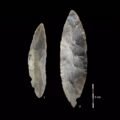
Homo Sapiens Arriving in Northern Europe Over 45,000 Years Ago Encountered This Enigmatic Human Species

“We can say, ‘Here, go look at it.’ If you want to see the different kinds of carving, fly around and see stuff there,” the professor explained. “So, it’s really exciting to bring these two things together. We’re documenting something that really has needed to be documented, but in a way that’s really comprehensive and shareable.”

The researchers acknowledge that some locals have expressed concern that such a high-quality map may reduce tourism and eliminate the desire to see the site in person. However, Professor Lipo believes the detail and interactivity with the nearly 1,000 moai in a way previously unavailable will inspire people to go there in person and explore all of the wonders associated with the Island and its awe-inspiring sites, “because otherwise, you’re just seeing sort of snapshots of stuff.”

“What we would really like to do is be able to say, ‘Go visit it yourself. Learn from it,’ the researcher concluded. “This is an incredible landscape of stuff that you could really go visit, that you’ll want to see.”

The Binghamton University team’s 3D model of the Rapa Nui quarry is available to view online.

The paper “Megalithic statue (moai) production on Rapa Nui (Easter Island, Chile)” was published in PLOS One.

  •  Christopher Plain is a Science Fiction and Fantasy novelist and Head Science Writer at The Debrief. Follow and connect with him on X, learn about his books at plainfiction.com, or email him directly at christopher@thedebrief.org.

{ https://thedebrief.org/category/science/ }

ARCHEOLOGIE ( E, Nl, Fr )

Hoe vind je dit bericht? 0 stemmen
Geschreven door peter om 18:45 Stuur door
Zaterdag 29 november 2025

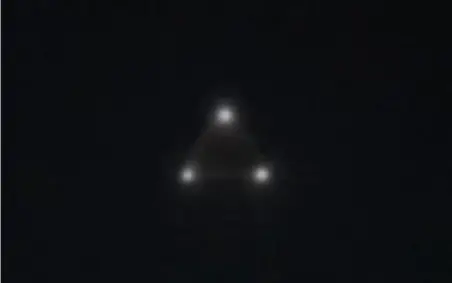
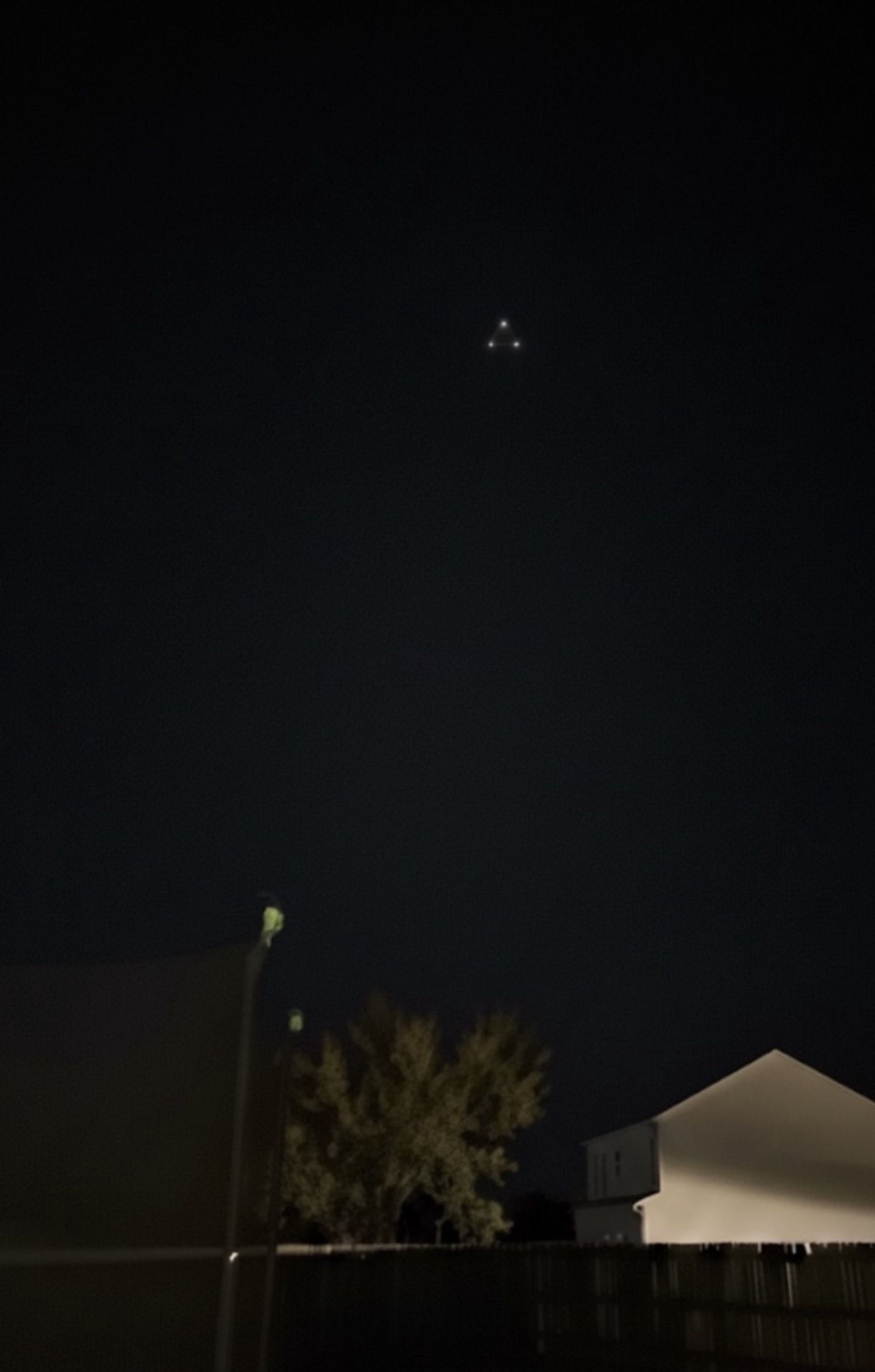
Triangular UFO Over New Bern, North Carolina – November 13, 2025

Triangular UFO Over New Bern, North Carolina – November 13, 2025

triangle-ufo-sighting-2025.png

A striking UFO sighting occurred in Derby Park, New Bern, North Carolina, on the evening of November 13, 2025, leaving three witnesses stunned. Around 9:29 p.m. local time, a triangular formation of bright white lights appeared silently in the night sky, hovering for only a few seconds before shooting upward at an incredible speed and disappearing from view.Eyewitness AccountAccording to the witnesses, the object had three distinct lights, one at each corner of a perfectly symmetrical triangle. The lights remained stationary for roughly three seconds before the object accelerated vertically, vanishing into the upper atmosphere in what they described as a smooth but extremely rapid motion. There was no audible sound, no visible trail, and no blinking navigation lights typically seen on airplanes or drones.

“We saw a triangle in the sky, and it took off in two to three seconds and disappeared,” one of the witnesses reported. “It was completely silent.”

Visual Evidence

Photos captured during the event show three luminous points arranged in a precise triangular pattern against a dark sky. The lights appear evenly spaced and of similar brightness, suggesting they were part of a single structured object rather than separate sources. No structure is clearly visible between the lights, though the dark contrast hints at the possibility of a solid body blocking the starlight behind it.

This sighting closely resembles other “black triangle” UFO reports that have been documented worldwide for decades — often described as large, silent craft with bright lights at each corner.

Possible Explanations

Skeptics often attribute such sightings to:

  • Military aircraft, such as stealth bombers or advanced drones flying under low visibility.
  • Civilian drones flying in formation or viewed from unusual angles.
  • Optical illusions caused by navigation lights on planes appearing as a triangle against a dark sky.

However, what makes this particular sighting stand out is the rapid vertical acceleration and the absence of any sound or flashing lights, features inconsistent with known human-made aircraft.

Significance

Triangular UFOs have become one of the most consistently reported shapes in modern UAP observations, often associated with silent flight, hovering capability, and sudden acceleration. Whether the object seen over New Bern was an advanced experimental craft or something beyond our current understanding remains unknown.

As UAP reporting continues to increase across the United States, this North Carolina encounter adds another intriguing case to the growing list of triangular UFO sightings that defy easy explanation.

Reported by: Local witnesses at Derby Park, New Bern, NC
Date: November 13, 2025
Duration: Approximately 3 seconds
Number of witnesses: 3
Shape: Triangle
Characteristics: Three lights, silent movement, rapid vertical ascent

RELATED VIDEO

{ https://www.latest-ufo-sightings.net/ }

LATEST ( UFO ) VIDEO NEWS ( ENG)

Hoe vind je dit bericht? 0 stemmen
Geschreven door peter om 18:31 Stuur door
Zaterdag 29 november 2025

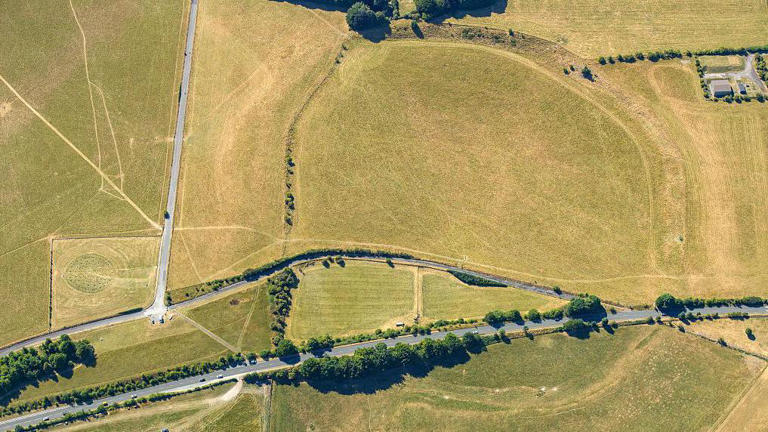
Massive prehistoric structure found near Stonehenge

Massive prehistoric structure found near Stonehenge

Story bySophie Parker - Wiltshir
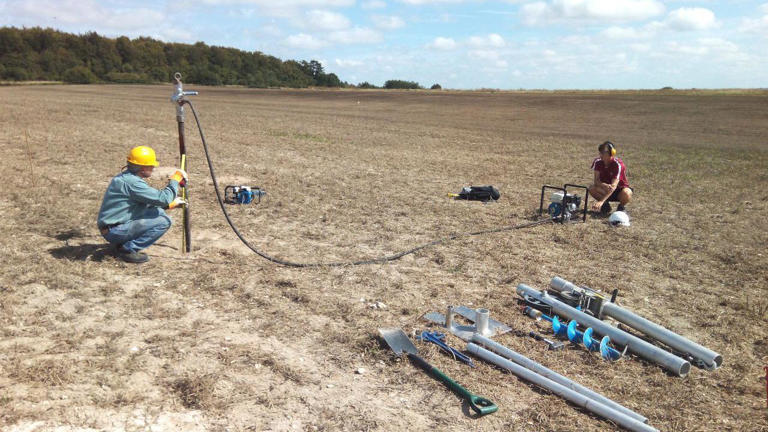
The pits were found with geophysics, then boreholes were made to test the sediment.
© Internet Archaeology journal

The discovery of a series of huge Neolithic pits have been confirmed at the Stonehenge World Heritage Site after initial research a few years ago.

The massive pits at Durrington Walls in Wiltshire are set at regular intervals, ten metres in diameter and more than five metres deep.

Professor Vince Gaffney said that as a "cohesive structure" they could be "one of the largest prehistoric structures in Britain, if not the largest prehistoric structure".

The new research has been published in the Internet Archaeology Journal and concludes pits are almost certainly man-made and more than 4,000 years old.

Durrington Walls sits next to Woodhenge in the Stonehenge landscape
© Historic England Archive/Heritage Images via Getty Images

Prof Gaffney, from the University of Bradford, explained it would have taken a lot of effort to dig the holes - around two storeys deep - from the chalk landscape.

The horseshoe-shaped pits also link to another monument near Larkhill.

"The circle is pretty accurate. It suggests that people were pacing the distances out to make sure that the pits were aligned at the same distance all the way around as the distance from the henge to the earlier enclosure" he said.

Prof Gaffney said it added to previous evidence that people were counting and applying it.

"They're inscribing something about their cosmology, their belief systems, into the earth itself in a very dramatic way."

Researchers had surveyed 12 sq km (7.4 sq m) of the landscape when they spotted the giant holes.

No longer visible to the naked eye and too big to realistically excavate very quickly, they made narrow boreholes to take samples of the material from the features.

Experts analysed sediment from the pits to date them
© Internet Archaeology journal

DNA extracted from the samples revealed remains of animals, including sheep and cattle.

The samples also helped experts date the excavations.

Dr Tim Kinnaird from the University of St Andrews called it a "super henge" and used a method called luminescence dating: "So just before that sediment falls into the pit, it's exposed to daylight, so we can date the time of construction."

It also revealed they were kept open for 1,000 years: "So that spans changing cultures," he explained.

  • Follow BBC Wiltshire on Facebook, X and Instagram. Send your story ideas to us on email or via WhatsApp on 0800 313 4630.

RELATED VIDEOS

{ BBC Wiltshire }

ARCHEOLOGIE ( E, Nl, Fr )

Hoe vind je dit bericht? 0 stemmen
Geschreven door peter om 18:18 Stuur door
Zaterdag 29 november 2025

Astonishing interstellar comet captured in new images by NASA Mars missions

Astonishing interstellar comet captured in new images by NASA Mars missions

By Ashley Strickland

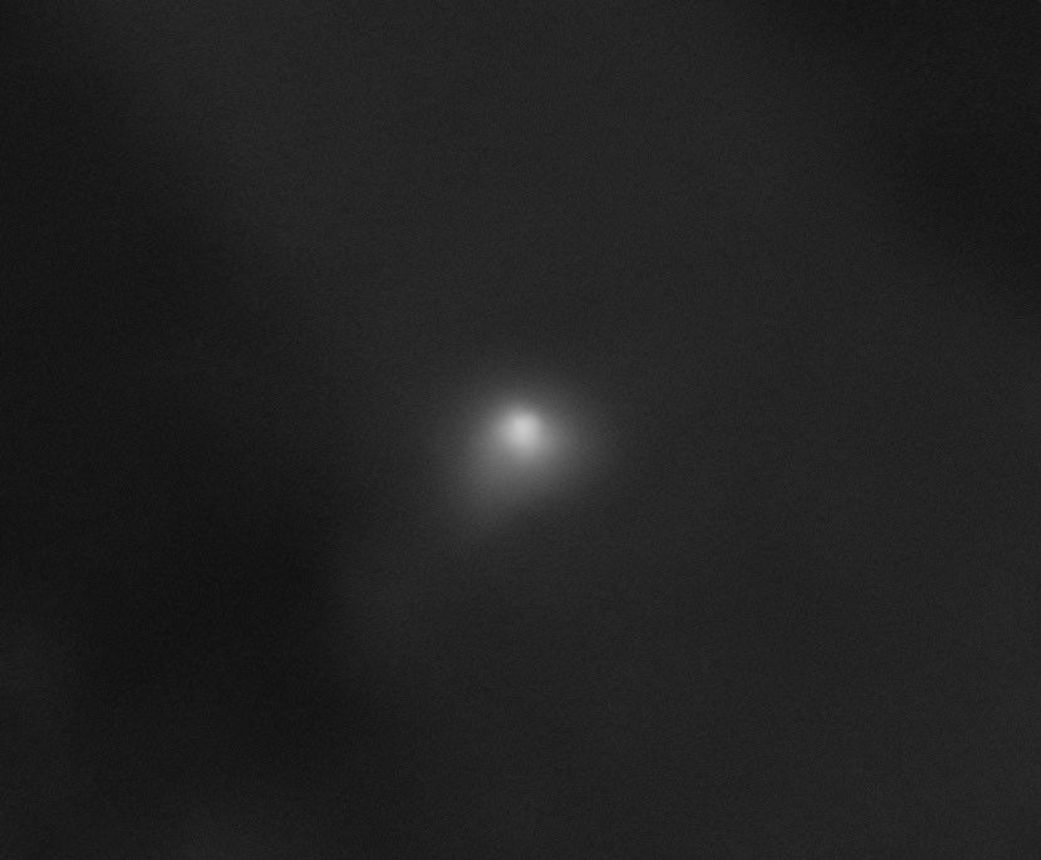
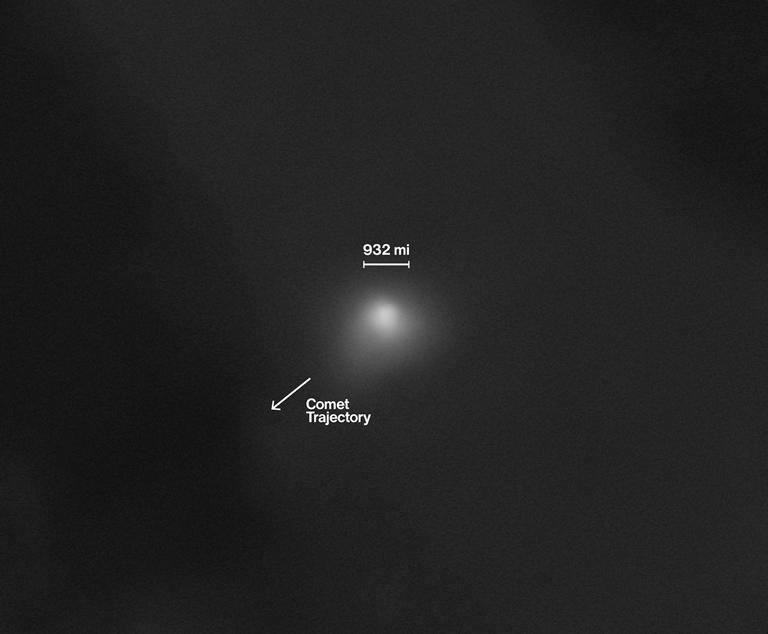
A camera aboard NASA’s Mars Reconnaissance Orbiter captured this image of interstellar comet 3I/ATLAS on October 2.

A camera aboard NASA’s Mars Reconnaissance Orbiter captured this image of interstellar comet 3I/ATLAS on October 2. 
NASA/JPL-Caltech/University of Arizona

The latest images of an interstellar comet shared by NASA have captured how an array of spacecraft witnessed a flyby that was truly out of this world, revealing clues to the object’s composition.

Astronomers first detected the rare comet, known as 3I/ATLAS, on July 1. It’s only the third observed interstellar object, or ISO, to originate outside of our solar system and pass through it.

When the interstellar comet flew by the red planet in October, multiple NASA missions pivoted from their explorations to capture tantalizing images of the object that originated outside of our solar system.

Stacked images of 3I/ATLAS, taken by the Solar Terrestrial Relations Observatory spacecraft, show it speeding at 130,000 miles per hour in September.
Stacked images of 3I/ATLAS, taken by the Solar Terrestrial Relations Observatory spacecraft, show it speeding at 130,000 miles per hour in September. 
NASA/Lowell Observatory/Qicheng Zhang

The US space agency released the new observations on Wednesday since it had been unable to share them during the government shutdown.

While none of the spacecraft have cameras perfectly designed to spot comets zipping by at speeds up to about 153,000 miles per hour (246,000 kilometers per hour), astronomers didn’t want to miss what might be a once-in-a-lifetime opportunity.

“It’s a little bit as if our NASA spacecraft were at a baseball game, watching the game from different places in the stadium,” said Tom Statler, lead scientist for solar system small bodies at NASA. “Everybody has got a camera and they’re trying to get a picture of the ball and nobody has a perfect view, and everybody has a different camera.”

The Lucy spacecraft captured a faint halo of gas and dust around the comet on September 16.
The Lucy spacecraft captured a faint halo of gas and dust around the comet on September 16. 
NASA/Goddard/SwRI/JHU-APL

Missions capture images of a rare interstellar comet

Nearly 20 mission teams collaborated to capture images of the comet, said Nicky Fox, associate administrator for NASA’s Science Mission Directorate.

“Everything we’re learning about the comet is possible because of the distribution of all of the different instruments on our spacecraft with different capabilities,” Fox said. “We’ve even pushed our scientific instruments beyond the things that they were designed to achieve, to allow us to capture this amazing glimpse at this interstellar traveler.”

Ahead of the Martian flyby in September, the Lucy and Psyche spacecraft, en route to study asteroids, and solar-focused missions, like the Parker Solar Probe, SOHO and PUNCH, caught glimpses of the comet in action.

Combining the data from Lucy and Psyche with Earth-based telescopes can reveal more about the three-dimensional structure of the comet and the nature of the dust coming off of it due to the heat of the sun, Statler said.

“It’s a rare opportunity to compare ancient dust from a distant solar system to that from our own,” he said.

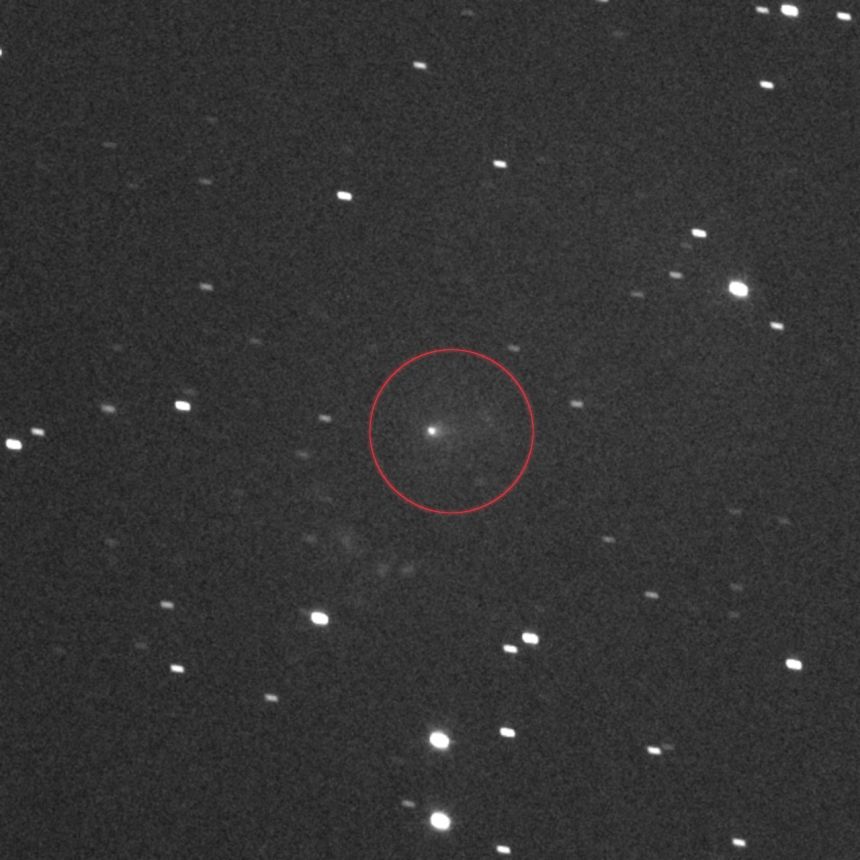
3I/ATLAS appears as a faint smudge against a background of stars from the Perseverance rover's perspective on October 4.
3I/ATLAS appears as a faint smudge against a background of stars from the Perseverance rover's perspective on October 4. 
NASA/JPL-Caltech/ASU/MSSS

The Mars Reconnaissance Orbiter and Perseverance rover also tracked the comet as it zoomed past the red planet in October. The orbiter was the spacecraft physically closest to the comet, Fox said.

The comet arrived at its closest point to the sun when Earth was on the wrong side for ground-based telescopes to conveniently observe, but Mars had optimal viewing conditions, according to Statler. “Our Mars assets were able to observe the comet, and also several of our other spacecraft were on the correct side of the sun,” he said. “We could not get this view from the vantage point of the Earth.”

Two spacecraft that will study Jupiter and its moons, Europa Clipper and the European Space Agency’s Jupiter Icy Moons Explorer, or Juice, and Europa Clipper, will also aim to capture the comet’s movements as it nears the orbit of Jupiter in the spring.

The comet came within about 18 million miles (29 million kilometers) of Mars on October 3. The ESA’s ExoMars Trace Gas Orbiter, which has been circling the red planet since 2016, was about 10 times closer to the comet than telescopes on Earth — and it captured images from an angle that Earth-based telescopes couldn’t see. The fresh perspective on 3I/ATLAS enabled scientists to predict the comet’s future path with a tenfold jump in accuracy.

Related article
  • This artist’s impression shows a coronal mass ejection (CME) around another star. We see these eruptions coming often from the Sun. During a CME, massive amounts of material are flung out from our star, flooding the surrounding space. These dramatic expulsions shape and drive space weather, such as the dazzling auroras we see on Earth, and can chip away at the atmospheres of any nearby planets.

Solar storms can trigger auroras on Earth. This star’s explosion could destroy a planet’s atmosphere

A multitude of other spacecraft, including the Hubble and James Webb Space telescopes, have also observed the object.

While scientists have been using telescopes around the world to study 3I/ATLAS, spacecraft missions provide some key observational advantages, said Dr. Theodore Kareta, planetary astronomer and assistant professor in the department of astrophysics and planetary science at Villanova University in Pennsylvania.

Cameras and instruments on different spacecraft are geared toward various goals and measurements, and they can provide distinct vantage points that might be otherwise impossible to capture, he said.

“Comets are three-dimensional objects, and looking at them from different angles will give us a much clearer picture of not just where they are and the trajectory they’re on, but also how large the nucleus of the comet is and the nature of any structures or patterns we can see in its atmosphere,” Kareta said.

Scientists currently think the comet is anywhere from a couple of thousand feet to a couple of miles in diameter, but they are still refining their measurements, Statler said.

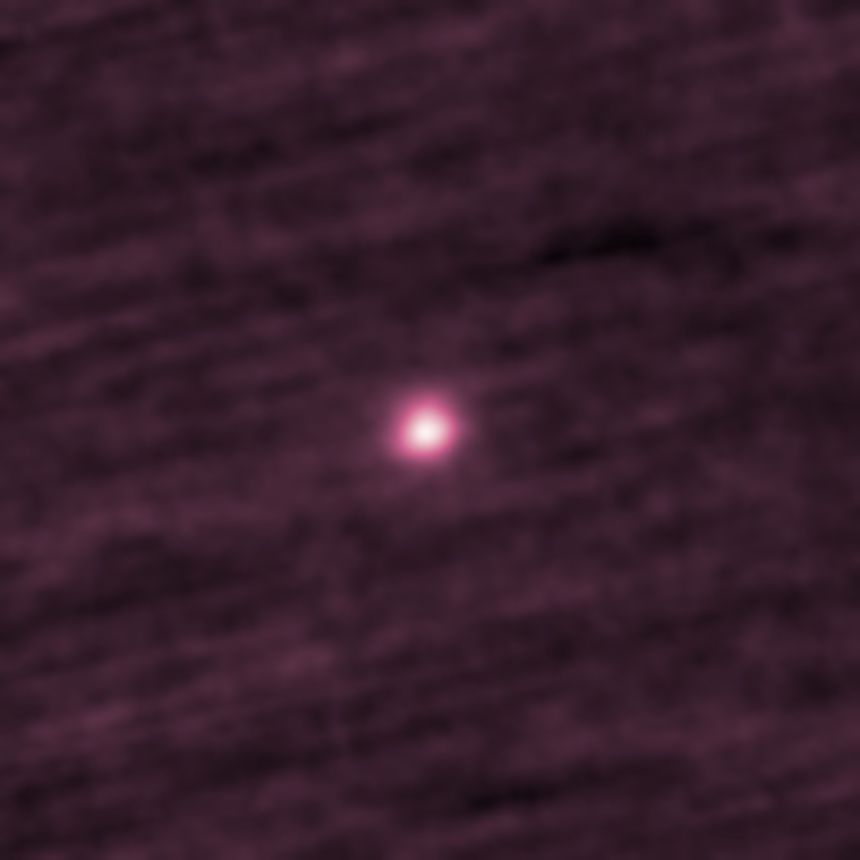
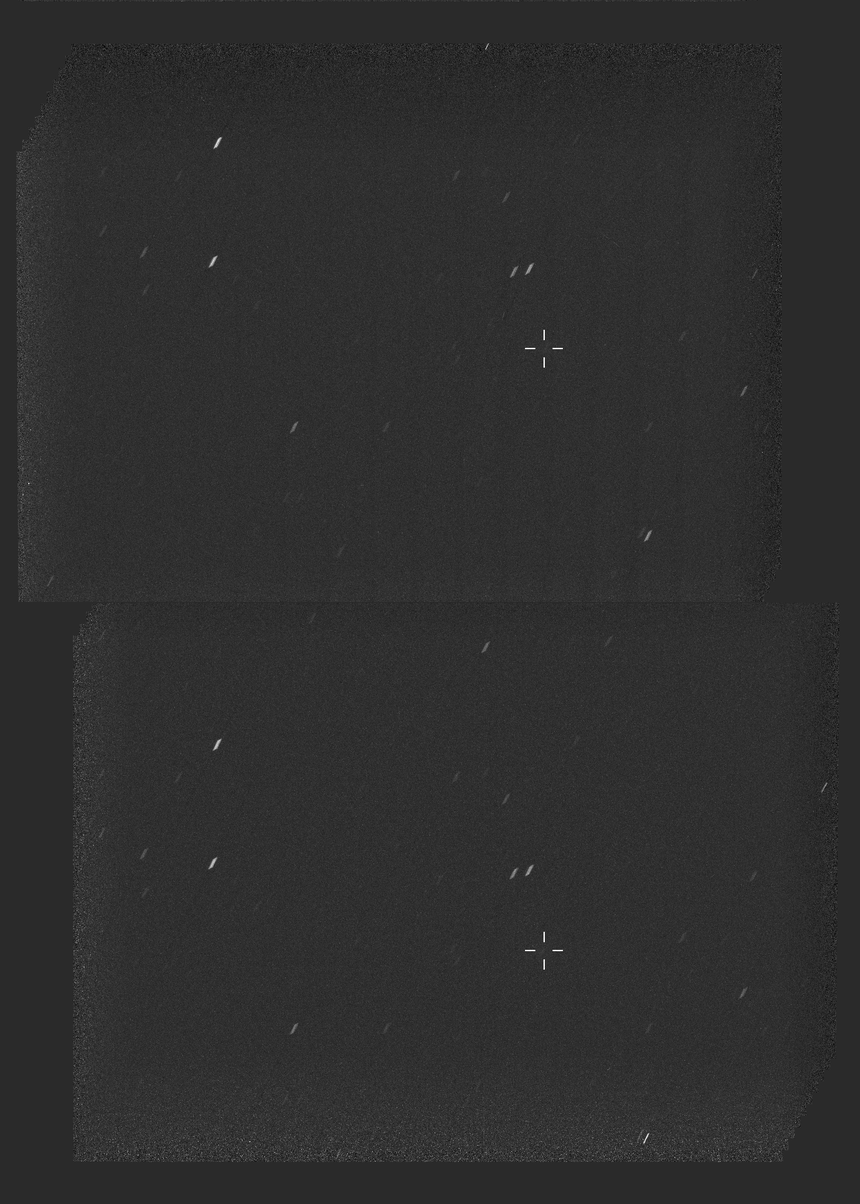
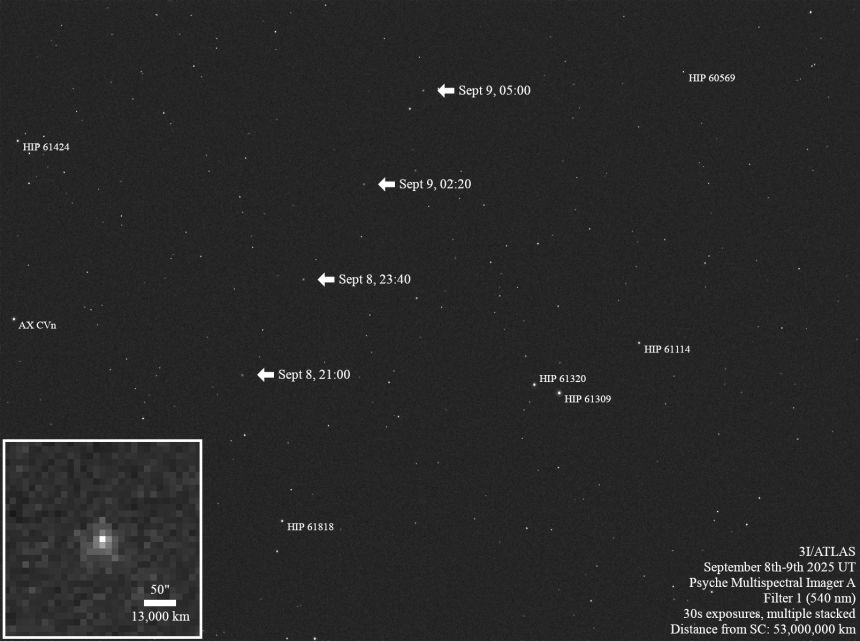
Psyche tracked 3I/ATLAS over the course of eight hours on September 8 and 9 when the comet was about 33 million miles from the spacecraft.
Psyche tracked 3I/ATLAS over the course of eight hours on September 8 and 9 when the comet was about 33 million miles from the spacecraft. 
NASA/JPL-Caltech/ASU

A comet’s behavior

NASA officials were also quick to address rumors that have swirled around the comet’s interstellar nature, including the idea that it’s an alien spacecraft.

“It looks and behaves like a comet, and all evidence points to it being a comet,” said NASA Associate Administrator Amit Kshatriya. “But this one came from outside the solar system, which makes it fascinating, exciting and scientifically very important.”

Fox said that NASA’s close monitoring of the comet since its discovery has not yielded any evidence that would lead them to believe it was anything other than a natural celestial object, like technosignatures — a signal that could be created by extraterrestrial life.

“But the super cool thing is not that it’s exactly like all the comets that we see in our solar system,” Fox said. “It’s the differences that are so tantalizing for us.”

Kshatriya said he was actually excited to see much of the world speculating about the comet while NASA was unable to share comment about it due to the constraints of the recent shutdown.

“It expanded people’s brains to think about how magical the universe could be,” he said. “In fact, we want very much to find signs of life in the universe. But 3I/ Atlas is a comet.”

Comparing 3I/ATLAS with more common comets

The comet made its closest approach of the sun on October 30, coming within 130 million miles (210 million kilometers) according to NASA.

A comet that originates within our solar system is like a dirty snowball. Its nucleus, or solid core, is a frozen mashup of rock, gas, dust and ice leftover from the formation of the stars, planets and other celestial bodies. As comets approach stars like our sun, they heat up, forming tails of sublimating material that streak behind them.

The MAVEN orbiter captured the comet in ultraviolet light, spying its hydrogen atoms on September 28.
The MAVEN orbiter captured the comet in ultraviolet light, spying its hydrogen atoms on September 28. 
NASA/Goddard/LASP/CU Boulder

Because 3I/ATLAS is from another solar system, astronomers are eager to see how different or similar its composition is to the comets they are used to witnessing.

3I/ATLAS has been releasing more carbon dioxide than water, and more nickel than iron, compared with comets that originated in our solar system — something that is still being investigated, Statler said.

The comet has also shown increased activity, which has caused some observers to question whether the object broke apart during its close pass of the sun.

The “jets” observed releasing from the comet can mean there are particularly active areas on the surface of the comet where more material is evaporating than elsewhere, Statler said.

“Comets frequently show ‘jets’ or ’spiral’ features in their inner atmospheres related to which parts of their surfaces are active and releasing gas and dust, so taking a picture of them from one angle only can be challenging to interpret,” Kareta added.

Related article
  • This artist's illustration shows the wayward interstellar visitor 'Oumuamua (pronounced oh-MOO-ah-MOO-ah) racing toward the outskirts  of our solar system. The object, heated by the Sun (lower right), is venting gaseous material from its surface, as a comet would.  Researchers suggest this outgassing is one possible cause for 'Oumuamua's slight acceleration, as detected by several telescopes. The irregularly shaped object is only a half-mile across. It is now farther from the Sun than Jupiter and traveling away at about 70,000 miles per hour. The orbits of the major planets are included for scale. The box-shaped constellation Corvus is in the background near image center, and the bright blue star Spica is at upper left of center, in the constellation Virgo. The stars at bottom left belong to the constellation Hydra.

Astronomers discover two populations of unusual dark comets in our solar system

Now, the object is starting to reappear on the other side of our star for Earth-based telescopes. The object will swing within 168 million miles (270 million kilometers) of Earth on December 19 before beginning to make its way out of our solar system.

The SOHO mission spied the comet between October 15 and 16.
The SOHO mission spied the comet between October 15 and 16. 
Lowell Observatory/Qicheng Zhang

“The fact that so many NASA missions have tried observing this interstellar visitor should tell you how seriously we all take this opportunity,” Kareta said. “Interstellar objects like 3I/ATLAS are fundamentally rare, and ISOs as bright as 3I should be rarer still — this object might very well be the ISO we learn the most about for many years to come.”

While the exact age of the comet is unknown, the object’s speed suggests it is much older than anything in our solar system, Statler said.

“3I/ATLAS is not just a window into another solar system, it’s a window into the deep past — and so deep in the past that it predates even the formation of our Earth and our sun,” Statler said.

RELATED VIDEOS

{ https://edition.cnn.com/science }

ASTRONOMIE / RUIMTEVAART

Hoe vind je dit bericht? 0 stemmen
Geschreven door peter om 17:08 Stuur door
Zaterdag 29 november 2025

4 key things NASA just revealed about the interstellar comet 3I/ATLAS

Story by Sharmila Kuthunur
 

Since the interstellar comet 3I/ATLAS was discovered this past July — just the third confirmed object to arrive from another star — astronomers have been closely following its passage through our solar system.

As the icy visitor brightened on its coast toward the sun, the public narrative brightened too, with online rumors casting it as a possible alien spacecraft during the recent 43-day-long government shutdown when NASA could not comment on the object or release new images. Last week, with the shutdown over, NASA held a long-awaited briefing in which it shared observations and early analysis from more than 20 missions across the solar system, assembling the most complete picture yet of this rare visitor — and made one point immediately clear: 3I/ATLAS is of natural origin, not an example of alien technology.

"We very much want to find signs of life in the universe," NASA Associate Administrator Amit Kshatriya said during the briefing. "But 3I/ATLAS is a comet."

Discovered on July 1 by the NASA-funded ATLAS telescope in Chile, 3I/ATLAS offers a rare chance to study material forged around another star, scientists say. Early findings suggest the object is carrying chemical clues from a distant, unknown planetary system that's likely older than our own.

A camera aboard NASA’s Mars Reconnaissance Orbiter captured this image of interstellar comet 3I/ATLAS on October 2.

A camera aboard NASA’s Mars Reconnaissance Orbiter captured this image of interstellar comet 3I/ATLAS on October 2. 
NASA/JPL-Caltech/University of Arizona
Here are four key things the agency revealed about the interstellar visitor.

1) 'This object is a comet'

In July, about two weeks after 3I/ATLAS was discovered, a trio of researchers, including Harvard astrophysicist Avi Loeb, posted a non-peer-reviewed preprint arguing that the comet's characteristics hint at disguised, possibly hostile alien technology. The claim echoed earlier speculation made about the first-known interstellar object, 'Oumuamua, and quickly gained traction online.

It picked up further momentum after SpaceX CEO Elon Musk suggested on a podcast that something beyond gravity could be influencing the comet's motion, and by Kim Kardashian's viral request on X asking NASA Acting Administrator Sean Duffy to spill the "tea" on the object.

During last week's NASA briefing, Kshatriya wasted no time addressing the speculation. "This object is a comet," he said at the outset. "It looks and behaves like a comet, and all evidence points to it being a comet."

Nicky Fox, the associate administrator of NASA's Science Mission Directorate, added that none of NASA's observations show any technosignatures "or anything from it that would lead us to believe it was anything other than a comet."

She also stressed that scientists are confident 3I/ATLAS poses no threat to Earth, as it will come no closer than 170 million miles (270 million kilometers) to our planet. It will also not come close to any other planets during its passage, including when it passes the orbit of Jupiter in Spring 2026. The objects in our solar system, Fox said, "will be just fine."

2) A solar system-wide watchtower

From the moment of its discovery, scientists knew from 3I/ATLAS' trajectory that it sat on the opposite side of the sun from Earth, making ground-based observations difficult. To compensate, NASA convened a coordinated planning session in August, bringing together teams from more than 20 missions to mount a fleet-wide campaign to track the interstellar comet. In the end, dozens of spacecraft from Earth orbit to Mars and beyond worked in concert, each with a different vantage point.

Tom Statler, the lead scientist at NASA for solar system small bodies, likened the effort to watching a baseball game from different seats around the stadium, with both flagship telescopes and smaller spacecraft trying to follow the same fast-moving target.

"Everybody has got a camera and they're trying to get a picture of the ball," he said. "Nobody has the perfect view, and everybody has a different camera."

Mars happened to be on the favorable side of the sun. In early October, NASA's Mars Reconnaissance Orbiter captured images of 3I/ATLAS as a fuzzy white ball, revealing its dust-and-ice coma, from about 90 million miles (145 million km) away. Around the same time, the MAVEN orbiter detected the comet from 20 million miles (32 million km) through ultraviolet "science wiggles" that picked up signatures of hydrogen gas released as sunlight vaporized the comet's water ice, said Statler. Combined with data from the Swift telescope and the James Webb Space Telescope (JWST), scientists were able to estimate the comet's water production rate, a key clue to its formation history.

The Lucy spacecraft captured a faint halo of gas and dust around the comet on September 16.

The Lucy spacecraft captured a faint halo of gas and dust around the comet on September 16. 

NASA/Goddard/SwRI/JHU-APL

Other spacecraft offered snapshots from farther out. In September, NASA's Psyche asteroid mission imaged the comet as a faint blob from 33 million miles (53 million km) away. A week later, the Lucy mission, en route to study Jupiter's Trojan asteroids, observed the coma and tail from the opposite direction, helping researchers reconstruct the 3D structure of the dust. Even the NASA-European Space Agency SOHO (Solar and Heliospheric Observatory), managed to detect the faint object in mid-October despite expectations that it would be too dim to register, scientists shared during the briefing.

Additional assets contributed further pieces of the puzzle. The Hubble Space Telescope, shortly after its 35th anniversary earlier this year, observed the comet from 277 million miles (446 million km) away, revealing a pear-shaped coma and narrowing the possible size of the nucleus to between 1,400 feet (427 meters) and 3.5 miles (5.6 km). JWST provided the first infrared look at an interstellar object since its launch, detecting an unusually high ratio of carbon dioxide to water ice, well above what's typical for comets born in our own solar system. That information suggests that 3I/ATLAS's ices may have been shaped by harsher radiation environments around an older star, scientists said.

"This is a snapshot of where we are very early in the scientific process," Statler said.

The interstellar comet 3I/ATLAS, imaged by the HiRISE camera on NASA's Mars Reconnaissance Orbiter. (Image credit: NASA/JPL-Caltech/University of Arizona)

The interstellar comet 3I/ATLAS, imaged by the HiRISE camera on NASA's Mars Reconnaissance Orbiter.

(Image credit: NASA/JPL-Caltech/University of Arizona

3) A rare window into distant, older star systems

Scientists say that 3I/ATLAS has likely been traveling through interstellar space for a long time. Based on how fast it was moving upon entering the solar system, Statler said the circumstantial evidence points to the comet originating in a very old planetary system, possibly one older than our own.

That "gives me goosebumps to think about, frankly," he said, noting that 3I/ATLAS may reveal insights into cosmic history that predates the formation of both Earth and the sun.

"It is a new window into the makeups and histories of other solar systems," he said.

4) Intriguing chemical clues

So far, 3I/ATLAS has behaved exactly as a comet should as it warms near the sun, shedding water and carbon dioxide, but with some intriguing twists. Scientists have detected a higher-than-usual ratio of carbon dioxide to water compared with typical solar system comets, as well as gas unusually rich in nickel relative to iron. Both findings are scientifically compelling and worth further investigation, researchers said.

The dust around the comet also shows slightly atypical properties, suggesting its grain sizes differ from those of local comets. One especially curious behavior was the dust was initially blown toward the sunward side before solar radiation gradually pushed it back, a longer and less common sequence than scientists usually observe in homegrown comets.

"We're still learning even about what questions we still need to ask," said Statler. "And this, of course, is the scientific process in action."

Like this article? For more stories like this, follow us on MSN by clicking the +Follow button at the top of this page

{ Follow Space }

ASTRONOMIE / RUIMTEVAART

Hoe vind je dit bericht? 0 stemmen
Geschreven door peter om 16:47 Stuur door
Zaterdag 29 november 2025

Navy's 'Doomsday plane' vanishes over the Atlantic during mysterious mission

Navy's 'Doomsday plane' vanishes over the Atlantic during mysterious mission

By STACY LIBERATORE, US SCIENCE & TECHNOLOGY EDITOR

A US Navy 'Doomsday plane' has vanished after embarking on a mysterious transatlantic mission.

The Boeing E-6B Mercury was last seen crossing the Atlantic east of Virginia Beach on public flight-tracking systems around 8.30am ET on Friday.

One of just 16 specialized 'Doomsday planes,' Mercury serves as a command-and-control hub for US Strategic Command, the Secretary of War and the President. 

It can also transmit orders to carry out nuclear strikes if necessary.

Flight data showed the aircraft departed Naval Air Station Patuxent River, Maryland, and followed a routine southeast path over the Chesapeake Bay, skirting the Norfolk naval complex before heading offshore.

About 60 miles east of the Virginia Capes, its public transponder went dark, a normal practice during sensitive operations.

Once over the ocean, Mercury typically enters classified warning zones, lowers a multi-mile trailing wire antenna, and flies racetrack patterns for four to eight hours while sending secure test messages to submarines and ground stations. 

Turning off its transponder during these operations has long led trackers to report the aircraft as 'gone dark.'

Flight tracking data spotted the plane taking off around 8.30am and soaring over the Atlantic before vanishing from radar

Flight tracking data spotted the plane taking off around 8.30am and soaring over the Atlantic before vanishing from radar

The aircraft, operating under the callsign AFD FE2, followed a familiar route used for TACAMO (Take Charge and Move Out) missions that keep US strategic forces, including ballistic-missile submarines, connected to national command authorities even during nuclear conflict. 

It came just one day after Thanksgiving, a period when US strategic forces traditionally scale back operations before quickly returning to full readiness.

The 'Doomsday plane' fleet makes up part of Operation Looking Glass, officially known as the Airborne Command Post, which helps communicate with American nuclear forces if ground-based command centers are destroyed.

According to the squadron, its mission is to allow the President and the Secretary of War to directly liaise with US submarines, bombers, and missile silos in the event of a nuclear war.

Boeing built the Navy's fleet between 1989 and 1992.

'The TACAMO airplanes support the Navy's ballistic missile submarine force, providing a vital link to the force from national command authorities,' Boeing's description reads.

'The TACAMO E-6B airplanes are equipped with dual trailing wires that serve as transmitter and antenna, transmitting in the very low frequency spectrum.'

Mercury was built to withstand any large electromagnetic pulse generated by a nuclear disaster. 

One of just 16 specialized 'Doomsday planes,' Mercury serves as a command-and-control hub for US Strategic Command, the Secretary of War and the President

One of just 16 specialized 'Doomsday planes,' Mercury serves as a command-and-control hub for US Strategic Command, the Secretary of War and the President

The US Navy's 'Doomsday plane' conducted five mysterious flights in March. All missions saw the plane leave Oklahoma and circle Omaha, Nebraska

The US Navy's 'Doomsday plane' conducted five mysterious flights in March. All missions saw the plane leave Oklahoma and circle Omaha, Nebraska

BLACK FRIDAY SALE

EXCLUSIVE
  • 'Patient 4' feared missing after getting revolutionary brain chip. Now his wife tells the REAL story 

article image

It relies on older analogue technology rather than digital technology, which would be fried by the pulse.

A previous sighting was in March, when flight radar tracked a Mercury leaving Tinker Air Force Base around 9am ET and soaring around Omaha, where Offutt Air Base is located. 

Offutt Air Force Base is a nuclear command, control and communications base that supports national leadership and warfighters.

AirNav Radar, a flight tracker, captured the plane’s path as it circled and weaved in the skies over Nebraska.

The flight tracker spotted three other Mercury planes in the skies on Monday as well.

One of the planes did a shorter trip, circling outside Tulsa and returning to base one hour later.

Another flew south toward Dallas, and the last Mercury was spotted leaving from Maryland.

That flight also lasted no more than one hour. The purposes of the five Mercury flights are unknown.

RELATED VIDEOS


{ https://www.dailymail.co.uk/sciencetech/index.html }

MYSTERIES , Complot Theories, ed ( EN, FR, NL )

Hoe vind je dit bericht? 0 stemmen
Geschreven door peter om 15:58 Stuur door
Zaterdag 29 november 2025

Kan AI ooit echt bewustzijn bereiken?

Kan AI ooit echt bewustzijn bereiken?

Kan AI ooit echt bewustzijn bereiken?

Kan AI ooit echt bewustzijn bereiken?

Key takeaways

  • AI-bewustzijn stuit op bezwaren door computationele, algoritmische en fysieke beperkingen.
  • De onderzoekers verdelen hun argumenten in drie categorieën op basis van overtuigingskracht: verbeterpunten, praktische obstakels in de huidige technologie, en fundamentele onmogelijkheden.
  • Het raamwerk verduidelijkt het debat over AI-bewustzijn en biedt een routekaart voor toekomstig onderzoek, ethiek en beleidsontwikkeling in artificiële intelligentie (AI).

De vraag of artificiële intelligentie (AI) bewustzijn kan bereiken, is al lange tijd onderwerp van intens debat tussen wetenschappers, filosofen en technologen. Een recente studie, Consciousness in Artificial Intelligence? A Framework for Classifying Objections and Constraints, probeert die complexe discussie te verduidelijken door een gestructureerd model te ontwikkelen voor het categoriseren van de verschillende bezwaren rondom digitaal bewustzijn.

Artificial intelligence: de belangrijkste feiten & ontwikkelingen

Soorten bezwaren

Het onderzoek erkent dat argumenten tegen AI-bewustzijn vaak overlappen of verkeerd zijn gericht. Sommige bezwaren komen voort uit de overtuiging dat bewustzijn niet verklaard kan worden door louter computationele processen, terwijl andere het principe van computationeel bewustzijn wel accepteren, maar stellen dat huidige digitale systemen niet beschikken over de noodzakelijke architectuur. Weer andere argumenten verwerpen de mogelijkheid van digitaal bewustzijn juist op basis van inzichten uit de fysica of biologie, in plaats van uit de computatietheorie.

Analytische structuur op drie niveaus

Om die complexiteit te adresseren, stellen de auteurs een analytisch kader met drie niveaus voor, geïnspireerd op het cognitieve wetenschappelijke model van David Marr. Het eerste niveau richt zich op bewustzijn als een input-outputcorrespondentie, gestuurd door berekenbare functies. Het tweede niveau behandelt de specifieke algoritmen, architecturen en representatiestructuren die nodig zijn om bewustzijn te realiseren. Het derde niveau richt zich op de bezwaren dat het fysieke substraat zelf essentieel is voor bewuste ervaring.

Dit kader stelt onderzoekers, beleidsmakers en filosofen in staat om overeenkomsten en verschillen te identificeren, met een duidelijk onderscheid tussen argumenten tegen computationeel functionalisme en argumenten tegen digitaal bewustzijn.

Niet-berekenbare functies

Sommige critici beweren dat bewustzijn niet-computeerbare processen omvat die buiten het bereik van Turing-machines liggen, terwijl anderen stellen dat elk computationeel model van bewustzijn te complex zou zijn om op grote schaal te implementeren. De studie benadrukt tevens het belang van dynamische koppeling en suggereert dat bewustzijn mogelijk real-time interactie met omgevingen vereist—iets wat digitale systemen moeilijk kunnen nabootsen.

artificial-intelligence-kunstmatige-intelligentie

Algoritmische organisatie

Op algoritmisch niveau draait het debat om de organisatie van algoritmen. Theorieën onderzoeken of symbolische architecturen, neurale netwerken of hybride systemen in staat zijn bewuste toestanden te genereren. Sommigen benadrukken de noodzaak van analoge processen met continue waarden, die digitale systemen niet volledig kunnen emuleren. Anderen leggen de nadruk op synchronisatie en representatievormen die essentieel zijn voor subjectieve ervaring, maar die in de huidige digitale architecturen ontbreken.

Dit niveau omvat ook discussies over belichaming en enactivisme, waarin wordt gesteld dat bewustzijn uitsluitend voortkomt uit lichamen die handelen binnen een omgeving. Volgens die zienswijze kunnen grote taalmodellen, ondanks hun ogenschijnlijke intelligentie, de interactieve eigenschappen missen die essentieel zijn voor bewuste toestanden.

Fysieke substraat

Bezwaren met betrekking tot het fysieke substraat leggen de strengste beperkingen op. Die argumenten richten zich op de unieke eigenschappen van biologische hersenen die digitale hardware niet kan repliceren. Theorieën in deze categorie beweren dat bewustzijn afhankelijk is van informatie die in biologische netwerken is ingebed, de dynamica van elektromagnetische velden in de hersenen, of zelfs kwantumprocessen.

Volgens deze bezwaren zijn digitale AI-systemen fundamenteel niet in staat bewustzijn te bereiken door de cruciale rol van het fysieke substraat. Het onderzoek benadrukt dat deze beweringen eerder op het niveau van natuurkunde en biologie liggen dan op dat van de computerwetenschap, waarvoor nog empirisch bewijs nodig is over hoe bewustzijn in natuurlijke systemen ontstaat.

ANP-529313115

Evaluatiesysteem met drie niveaus

Om de kracht van elk bezwaar beter te verduidelijken, hanteert de studie een evaluatiesysteem op drie niveaus. Sommige bezwaren suggereren dat machinebewustzijn mogelijk is, mits bepaalde mogelijkheden of architecturen worden toegepast. Andere wijzen op praktische obstakels die bewuste AI onwaarschijnlijk maken met de huidige technologie. De sterkste bezwaren stellen dat digitale systemen, ongeacht technologische vooruitgang, nooit bewust kunnen worden.

Dit classificatiesysteem maakt onderscheid tussen conceptuele, technologische en metafysische bezwaren. Het benadrukt bovendien de gebieden waar empirisch onderzoek de meningsverschillen zou kunnen oplossen, evenals de domeinen die verder filosofisch onderzoek vereisen.

Kader voor bestuur, ethiek en AI-ontwikkeling

De studie sluit af met een bespreking van de praktische implicaties van het kader voor bestuur, ethiek en AI-ontwikkeling. Nu AI-modellen steeds vaker cruciale beslissingen beïnvloeden en op geavanceerde manieren met mensen interageren, is het essentieel het volledige spectrum van argumenten rondom digitaal bewustzijn te begrijpen. De voorgestelde classificatie kan beleidsmakers helpen bij het ontwikkelen van weloverwogen regelgeving, het opstellen van ethische richtlijnen en het ondersteunen van AI-ontwikkelaars bij verantwoorde uitspraken over de mogelijkheden van hun systemen. (fc)


{  Business AM }

SF-snufjes }, Robotics and A.I. Artificiel Intelligence ( E, F en NL )

Hoe vind je dit bericht? 0 stemmen
Geschreven door peter om 15:36 Stuur door
Vrijdag 28 november 2025

8 Reasons Aliens Exist and Have Visited Earth, According to ‘The Age of Disclosure’ Documentary

8 Reasons Aliens Exist and Have Visited Earth, According to ‘The Age of Disclosure’ Documentary

Now available on Amazon Prime, the film interviews dozens of officials with 'direct knowledge' of UAP

By Addie Morfoot

the age of disclosure
Vincent Wrenn

Unidentified Anomalous Phenomena (UAP), formerly known as UFOs, have been visiting earth for decades and the U.S. government knows about it. At least that’s the case made in the recently released documentary “The Age of Disclosure.”

In the 110-minute independently-made doc, director Dan Farah meticulously lay out evidence to prove that theory.

Farah, a debut feature director, spent three years making “The Age of Disclosure” in secrecy, seeking out sources with direct knowledge of the government’s work around UAPs. While the film could have been dismissed as a conspiracy theory doc, Farah sought to boost credibility by including interviews from over 30 members of the U.S. government. High-ranking politicians from both the Democratic (senator Kirsten Gillibrand) and Republican (secretary of state Marco Rubio) sides, as well as military and intelligence communities, all contend in their interviews that we are not alone in the universe.

The film also includes clips from congressional hearings about UAPs and makes clear that there is major bipartisan support for the proposed UAP Disclosure Act. In fact, Trump or a subsequent president could make a massive impact, Farah says, by disclosing what he says is the truth.

“I think it’s only a matter of time before the release of this film is followed by a sitting president stepping to the podium and telling the world, ‘We’re not alone in the universe,'” the director told Entertainment Weekly. “It’s the most significant moment a leader could possibly have.”

One of the key voices in the film is Jay Stratton, former Defense Intelligence Agency official and director of the government’s UAP Task Force. “I have seen, with my own eyes, non-human craft and non-human beings,” he says in the doc.

Below are eight key extraterrestrial facts put forth in “The Age of Disclosure”:

  • Otherworldly vehicles

Transmedium crafts — vehicles that have the capability to operate in space, air, and water — defy all that humanity knows about physics, and have been operating with complete impunity around the world since at least the 1940s, according to the documentary.

  • Multi-national race

Since the 1940s, an ongoing arms race between China, Russia and the U.S. was set off by the discovery of crashed UAPs. Each nation, according to the doc, wants to be the first to crack into extraterrestrial technology to reverse-engineer it for human use. But as defense official Stratton explains in the film, “You can’t tell your friends without telling your enemies.”

  • FAA involvement

Aviation safety is in jeopardy if the Federal Aviation Administration doesn’t track UAPs, the film concludes. (As of Oct. 22, the FAA requires air traffic control to notify the National Tactical Security Operations and the Air Traffic Security Coordinator team of any pilot reports or air traffic personnel observations of UAP activity.)

  • Deep, watery cover?

If any intelligence from outside our universe did want to arrive on earth and remain undetected, they would most likely hide out in the deep zone of the ocean, which hasn’t been explored by humans, posits interviews in the doc.

  • Giant crafts

UAPs the size of football fields that can travel over 30,000 mph are just a few of the types of UAPs — some can travel 40,000 miles per hour, sometimes faster, and go from zero to thousands of miles per hour in less than a second, according to the doc.

  • Humanoid! Aliens!

According to Dr. Eric Davis in 1989 the Soviet Union recovered four bodies of humanoid aliens — extraterrestrials — from a UAP crash site where they discovered an advanced directed energy weapon.

  • Uses for good or evil

Similar to artificial intelligence, the film asserts that UAP technology can revolutionize the way we do things – such as provide a clean energy source – or completely destroy everything that we know.

  • Does he or doesn’t he?

Information about UAPs is on a need-to-know basis. The President of The United States and the head of the CIA might know nothing about UAP intelligence.

“The Age of Disclosure” debuted at SXSW in March, where Variety critic Owen Gleiberman questioned why it doesn’t include more convincing video in this era of pervasive surveillance. “When are we actually going to be shown something that looks like more than a dupe of a dupe of an old video game depicting a blurry black dot of an alien spaceship cruising over water at what looks to be about 300 miles per hour?,” he asked.

The film began its Oscar-qualifying run-in select theaters in New York and Los Angeles and now is available to rent or buy on Amazon Prime Video.

 { https://cloud.email.variety.com/signup/ }

LATEST ( UFO ) VIDEO NEWS ( ENG)

Hoe vind je dit bericht? 0 stemmen
Geschreven door peter om 22:55 Stuur door
Vrijdag 28 november 2025

100,000 mph 'comet fragment' explodes in green fireball over Great Lakes, eerie videos show

100,000 mph 'comet fragment' explodes in green fireball over Great Lakes, eerie videos show

By James Price 

A fireball lit up the skies over the Great Lakes in the early hours of Sunday and was visible for hundreds of miles.

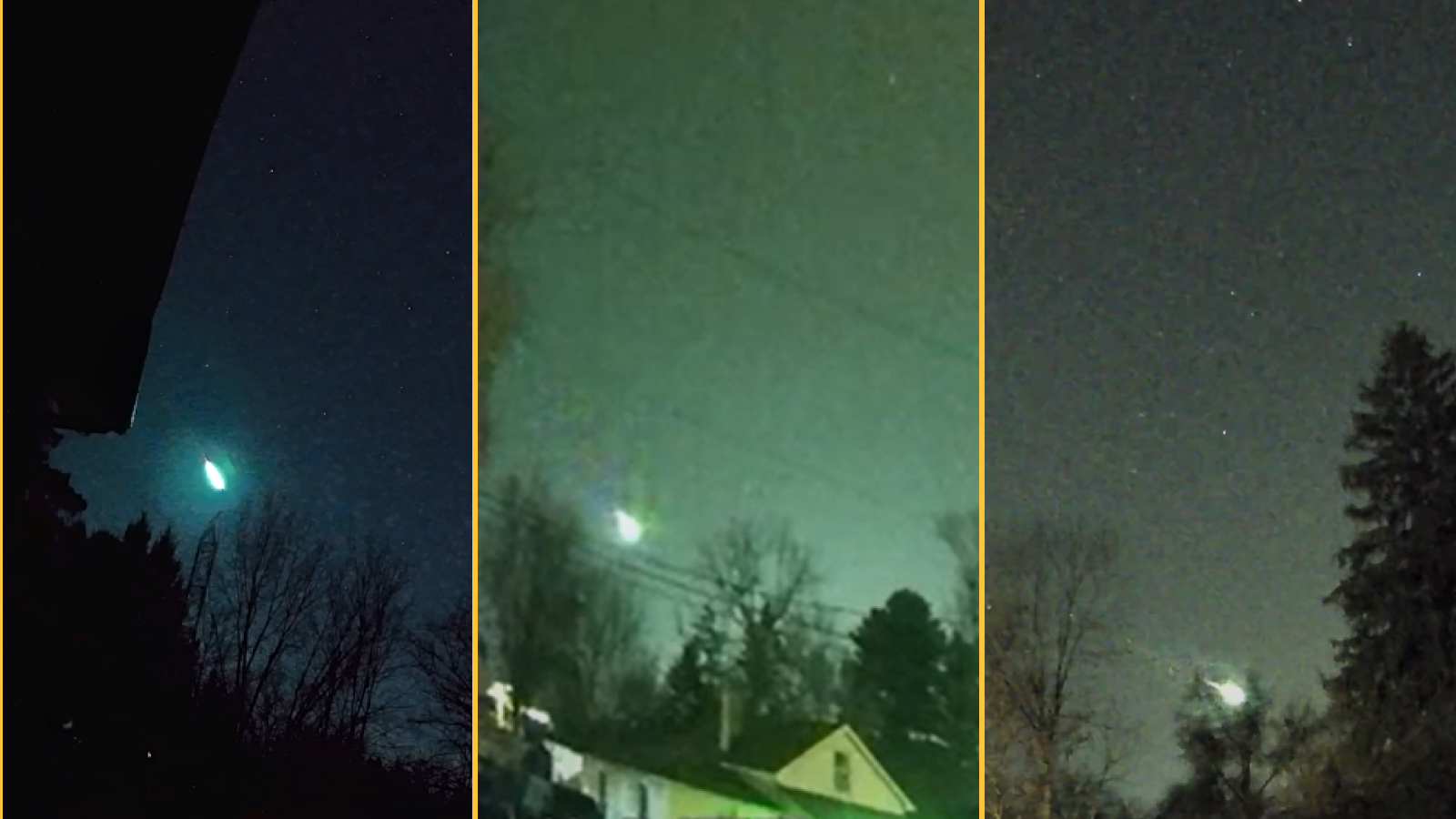
Three screenshots taken by three videos of the green fireball meteor.
(Image credit: (left to right)
© Skippy the Magnificent Destroyer of Worlds Romancer of Women/© Bam B/© Jeremy Downard)

A meteor exploded over Michigan's Great Lakes in a green fireball, videos reveal. The dramatic event was likely caused by a comet fragment burning up in the atmosphere.

On Sunday (Nov. 23) at around 5:29 a.m. ET, dozens of witnesses reported a meteor racing across the sky before exploding in a fiery ball. Cameras set up by the group Michigan Storm Chasers captured the object's rapid passage and fiery descent, the group revealed in a Facebook post.

The fireball was reportedly seen in Michigan, Wisconsin and Indiana, and up to 340 miles (550 kilometers) away in Lancaster, Ohio, according to the American Meteorological Society (AMS).

You may like
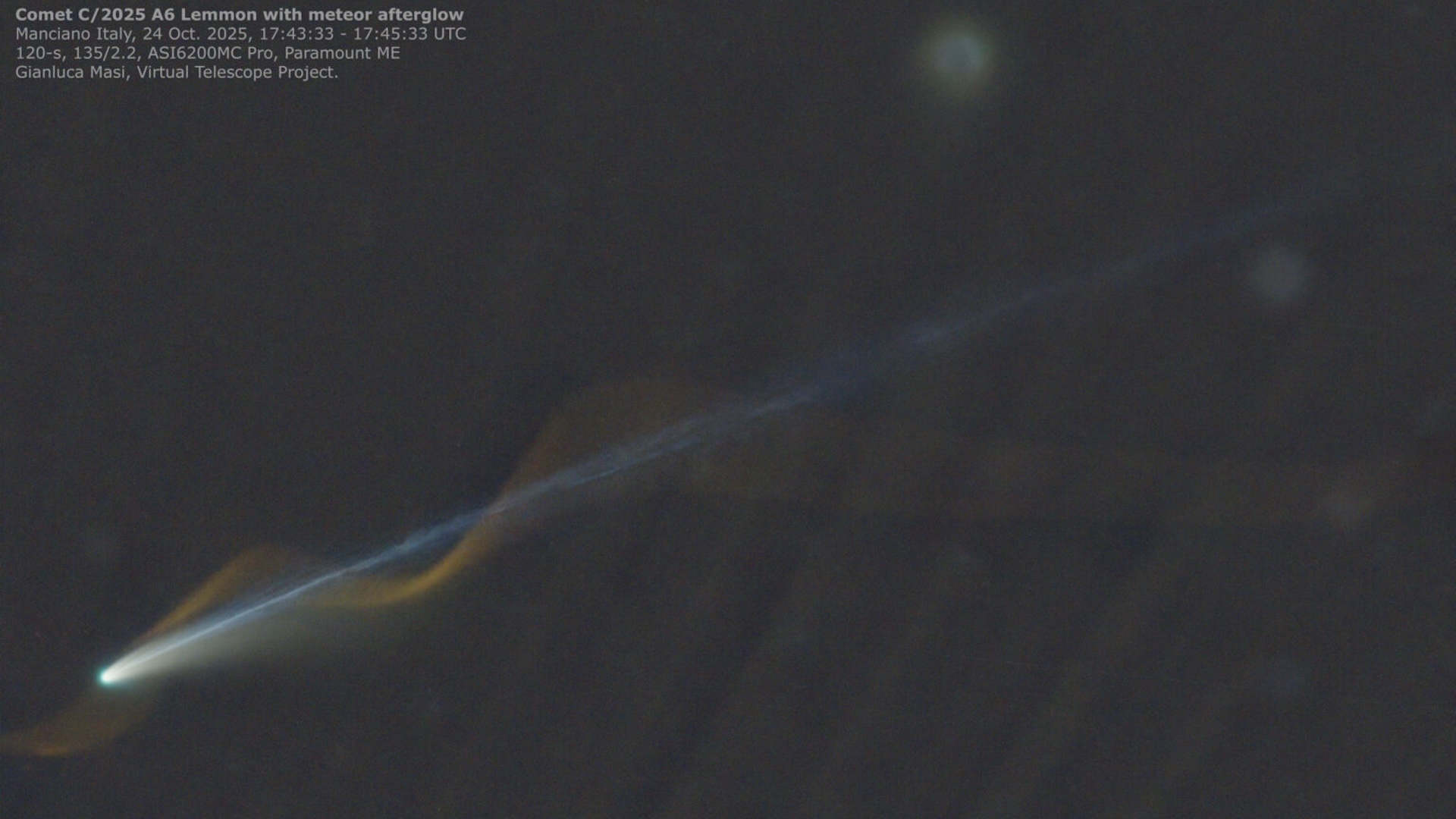
  • An image of a comet with a straight blue tail and a red meteor corkscrewing around the comet

'Miracle' photo captures Comet Lemmon and meteor seemingly entwined over Earth

  • A space photo of a green comet surrounded by stars with a boxout highlighting the comet closer

Interstellar comet 3I/ATLAS could be turning bright green, surprising new photos reveal

  • A close-up photo of Comet Lemmon appearing to fly through red and green auroras

Superbright 'Comet Lemmon' flies through auroras over Scotland during surprise solar storm

AMS event #9010-2025 caught from Coldwater US - YouTube
One video sent to AMS captured the stunning fireball flying through the sky from Coldwater, Michigan, while another video showed the streaking lightshow from Tecumseh, Michigan.

NASA later tracked the meteor's path using videos and other reports. It became visible 62 miles (100 km) above Hubbard Lake, before racing at 98,500 mph (160,000 km/h) for another 82 miles (132 km) and disintegrating 46 miles (74 km) above Lake Huron, NASA representatives wrote.

The streaking fireball was likely a one-off and not part of a wider shower, such as the ongoing Leonid meteor shower, which runs from Nov. 6 to Nov. 30. Leonid meteors are known for their speed, striking Earth's atmosphere at about 160,000 mph (260,000 km/h). This velocity often produces bright meteors, or fireballs, some of which leave persistent trails. "This event appears to have been caused by a small comet fragment and was not part of any currently active meteor shower," NASA representatives wrote.

Most comets and meteors can be seen with the naked eye, but photographing them requires a good set of astrophotography equipment.

AMS event #9010-2025 caught from Tecumseh US - YouTube
RELATED STORIES
  • RIP 'other ATLAS': Watch the doomed comet explode into pieces in incredible new images
  • Astronomers discover skyscraper-size asteroid hidden in sun's glare — and it's moving at a near-record pace
  • Astronomers detect first 'radio signal' from interstellar comet 3I/ATLAS — but it wasn't aliens

Fireball meteors sometimes give off a green color due to a high concentration of metals such as nickel, while faster meteoroids also typically produce more vivid colors, according to AMS. Other elements can create different-colored fireballs — for example, sodium produces a bright yellow color while magnesium appears as blue-white, according to AMS.

Similar green colors have been given off by other fireball meteors. For example, in July 2022, a green fireball was spotted above New Zealand, and in November 2022, another one crashed into Lake Ontario. The Ontario fireball was the smallest asteroid ever recorded in space, at just 16 to 24 inches (40 to 60 centimeters) wide.

RELATED VIDEOS

{ https://www.livescience.com/space }

ASTRONOMIE / RUIMTEVAART

Hoe vind je dit bericht? 0 stemmen
Geschreven door peter om 21:58 Stuur door
‹ Nieuwere berichten Meer berichten

Meer van UFO'S of UAP'S, ASTRONOMIE, RUIMTEVAART, ARCHEOLOGIE, OUDHEIDKUNDE, SF-SNUFJES EN ANDERE ESOTERISCHE WETENSCHAPPEN - DE ALLERLAATSTE NIEUWTJES

 FORUM 

Geen fotobeschrijving beschikbaar.

Kan een afbeelding zijn van hond

Geen fotobeschrijving beschikbaar.

5 juni 2025 , DAN BESTAAT MIJN BLOG AL 14 JAAR!!!

Carl Sagan Space GIF by Feliks Tomasz Konczakowski

X Files Ufo GIF by SeeRoswell.com

1990: Petit-Rechain, Belgium triangle UFO photograph - Think AboutIts

Ufo Pentagon GIF

Alberta_meteor_GIF_%283%29.gif

Asteroid_sitecard.gif

ufo abduction GIF by Ski Mask The Slump God

Flying Sci-Fi GIF by Feliks Tomasz Konczakowski

Season 3 Ufo GIF by Paramount+

DEAR VISITOR,


MY BLOG EXISTS TODAY 6 - 10 - 2026 15 YEARS AND 4 MONTHS  = 5.622 days.

ON 06/10/2026 MORE THAN 4.434.000 bezoekers..

VISITORS FROM 135 DIFFERENT NATIONS ALREADY FOUND THEIR WAY TO MY BLOG.

THAT IS AN AVERAGE OF 789 GUESTS PER DAY.

THANK YOU FOR VISITING  MY BLOG AND HOPE YOU ENJOY EACH TIME.


Goodbye and thanks
PETER2011

De bronafbeelding bekijken

De bronafbeelding bekijken

Beste bezoeker, bedankt voor uw bezoek.

Dear visitor, thank you for your visit.

Cher visiteur, je vous remercie de votre visite.

Liebe Besucher, vielen Dank für Ihren Besuch.

Estimado visitante, gracias por su visita.

Gentile visitatore, grazie per la vostra visita.

Inhoud blog

  • EXCLUSIVE - Giant UFO with dangling tentacles hovers near US military base before vanishing: 'Only God and the government know what it is'
  • 48 Years Ago, a TV Crew Went to Investigate UFO Reports and Actually Captured Them on Camera
  • Alien Disclosure in 2027? What the Public Record Actually Shows
  • Grusch Says Recovery Footage Showed Human-Looking Beings
  • Mars' Molten Heart is Long Gone, but Some Magma Chambers May Persist
  • AI imagines what cities on other planets could look like
  • The Living-Orb Accounts Robert Hastings Wants to Investigate
  • Trump says Air Force pilots described a round UFO flying three times faster than an F-22 fighter jet
  • Trump says ‘young, handsome’ pilots have told him ‘very strange’ things about UFOs
  • Donald Trump on UFOs, Aliens & UAPs (Compilation)
  • Arizona Nurse Claims Over 100 Terminally Ill Children Saw Grey Alien-Like Beings Before Death
  • An Artificial CORTEX to Guide Satellite Rescue Missions
  • Five Alien Orbs Being Followed By Small Aircraft, Madison, Wisconsin, USA Nov 8, 2026, UFO UAP Sighting News.
  • Do you have what it takes? Nasa is hiring new astronauts to live and work on the MOON - with a $165,000 salary
  • Joe Rogan warns of 'human vs nonhuman' war in the next five years: 'We're not going to be the apex predator anymore'
  • Ancient writings offer 'historical evidence' Jesus was hailed 'a god' after the crucifixion, researcher claims
  • Meet the real-life 'Thing': Scientists develop a robotic hand that walks on its fingers – just like the creepy Addams Family character By WILIAM HUNTER, SENIOR SCIENCE & TECHNOLOGY REPORTER
  • The Army Built a Nuclear-Powered ‘City’ Beneath Greenland’s Ice. It Was a Test for Something Bigger
  • A Strange Radio Signal in The Far Reaches of The Milky Way Is Behaving Like Nothing Else in The Galaxy
  • Details of New Jersey’s 2024 Drone Outbreak Still Remain Largely Unexplained

Categorieën

  • ALIEN LIFE, UFO- CRASHES, ABDUCTIONS, MEN IN BLACK, ed ( FR. , NL; E ) 3765
  • André's Hoekje (ENG) 745
  • André's Snelkoppelingen (ENG) 383
  • ARCHEOLOGIE ( E, Nl, Fr ) 2086
  • ARTICLES of MUFON ( ENG) 478
  • Artikels / PETER2011 (NL EN.) 174
  • ASTRONOMIE / RUIMTEVAART 14048
  • Before it's news (ENG.) 5702
  • Belgisch UFO-meldpunt / Frederick Delaere ( NL) 23
  • Diversen (Eng, NL en Fr) 4383
  • FILER FILES - overzicht met foto's met dank aan Georges Filer en WWW.nationalUFOCenter.com (ENG) 930
  • Frederick's NEWS ITEMS (ENG en NL) 112
  • HLN.be - Het Laatste Nieuws ( NL) 1717
  • INGRID's WEETJES (NL) 6
  • Kathleen Marden 's News about Abductions... ( ENG) 36
  • LATEST ( UFO ) VIDEO NEWS ( ENG) 12045
  • Michel GRANGER - a French researcher ( Fr) 22
  • MYSTERIES ( Fr, Nl, E) 2270
  • MYSTERIES , Complot Theories, ed ( EN, FR, NL ) 519
  • Myths, legends, unknown cultures and civilizations 233
  • National UFO Center {NUFOC} 110
  • News from the FRIENDS of facebook ( ENG ) 6019
  • NIEUWS VAN JAN ( NL) 42
  • Nieuws van Paul ( NL) 17
  • NineForNews. nl ( new ipv NIBURU.nl) (NL) 3711
  • Oliver's WebLog ( ENG en NL) 118
  • Paul SCHROEDER ( ENG) 98
  • Reseau Francophone MUFON / EUROPE ( FR) 87
  • références - MAGONIE (Fr) 486
  • Ruins, strange artifacts on other planets, moons, ed ( Fr, EN, NL ) 655
  • SF-snufjes }, Robotics and A.I. Artificiel Intelligence ( E, F en NL ) 980
  • UFO DIGEST / a Weekly Newsletter - thanks that I may publish this on my blog (ENG) 125
  • UFOs , UAPs , USOS 3191
  • Vincent'snieuws ( ENG en NL) 5
  • Who is Stanton FRIEDMAN - follow his news (ENG) 16
  • WHO IS WHO? ( ENG en NL) 5

Zoeken in blog

Beoordeel dit blog

Bekijk de resultaten

12:07:34 AM

Vier uur geweest. Tijd voor een vieruurtje!

Er is nu 1 bezoeker op dit blog.
Record tot nu toe: 845

Woensdag11november2026

The purpose of  this blog is the creation of an open, international, independent and  free forum, where every UFO-researcher can publish the results of his/her research. The languagues, used for this blog, are Dutch, English and French.You can find the articles of a collegue by selecting his category.
Each author stays resposable for the continue of his articles. As blogmaster I have the right to refuse an addition or an article, when it attacks other collegues or UFO-groupes.
 

Archief per maand

  • November 2026
  • Oktober 2026
  • September 2026
  • Augustus 2026
  • Juli 2026
  • Juni 2026
  • Mei 2026
  • April 2026
  • Maart 2026
  • Februari 2026
  • Januari 2026
  • December 2025
  • November 2025
  • Oktober 2025
  • September 2025
  • Augustus 2025
  • Juli 2025
  • Juni 2025
  • Mei 2025
  • April 2025
  • Maart 2025
  • Februari 2025
  • Januari 2025
  • December 2024
  • November 2024
  • Oktober 2024
  • September 2024
  • Augustus 2024
  • Juli 2024
  • Juni 2024
  • Mei 2024
  • April 2024
  • Maart 2024
  • Februari 2024
  • Januari 2024
  • December 2023
  • November 2023
  • Oktober 2023
  • September 2023
  • Augustus 2023
  • Juli 2023
  • Juni 2023
  • Mei 2023
  • April 2023
  • Maart 2023
  • Februari 2023
  • Januari 2023
  • December 2022
  • November 2022
  • Oktober 2022
  • September 2022
  • Augustus 2022
  • Juli 2022
  • Juni 2022
  • Mei 2022
  • April 2022
  • Maart 2022
  • Februari 2022
  • Januari 2022
  • December 2021
  • November 2021
  • Oktober 2021
  • September 2021
  • Augustus 2021
  • Juli 2021
  • Juni 2021
  • Mei 2021
  • April 2021
  • Maart 2021
  • Februari 2021
  • Januari 2021
  • December 2020
  • November 2020
  • Oktober 2020
  • September 2020
  • Augustus 2020
  • Juli 2020
  • Juni 2020
  • Mei 2020
  • April 2020
  • Maart 2020
  • Februari 2020
  • Januari 2020
  • December 2019
  • November 2019
  • Oktober 2019
  • September 2019
  • Augustus 2019
  • Juli 2019
  • Juni 2019
  • Mei 2019
  • April 2019
  • Maart 2019
  • Februari 2019
  • Januari 2019
  • December 2018
  • November 2018
  • Oktober 2018
  • September 2018
  • Augustus 2018
  • Juli 2018
  • Juni 2018
  • Mei 2018
  • April 2018
  • Maart 2018
  • Februari 2018
  • Januari 2018
  • December 2017
  • November 2017
  • Oktober 2017
  • September 2017
  • Augustus 2017
  • Juli 2017
  • Juni 2017
  • Mei 2017
  • April 2017
  • Maart 2017
  • Februari 2017
  • Januari 2017
  • December 2016
  • November 2016
  • Oktober 2016
  • September 2016
  • Augustus 2016
  • Juli 2016
  • Juni 2016
  • Mei 2016
  • April 2016
  • Maart 2016
  • Februari 2016
  • Januari 2016
  • December 2015
  • November 2015
  • Oktober 2015
  • September 2015
  • Augustus 2015
  • Juli 2015
  • Juni 2015
  • Mei 2015
  • April 2015
  • Maart 2015
  • Februari 2015
  • Januari 2015
  • December 2014
  • November 2014
  • Oktober 2014
  • September 2014
  • Augustus 2014
  • Juli 2014
  • Juni 2014
  • Mei 2014
  • April 2014
  • Maart 2014
  • Februari 2014
  • Januari 2014
  • December 2013
  • November 2013
  • Oktober 2013
  • September 2013
  • Augustus 2013
  • Juli 2013
  • Juni 2013
  • Mei 2013
  • April 2013
  • Maart 2013
  • Februari 2013
  • Januari 2013
  • December 2012
  • November 2012
  • Oktober 2012
  • September 2012
  • Augustus 2012
  • Juli 2012
  • Juni 2012
  • Mei 2012
  • April 2012
  • Maart 2012
  • Februari 2012
  • Januari 2012
  • December 2011
  • November 2011
  • Oktober 2011
  • September 2011
  • Augustus 2011
  • Juli 2011
  • Juni 2011

Rondvraag / Poll

Bestaan UFO's echt? Are UFOs real?Les OVNIS existent-ils vraiement?

Bekijk resultaat

Rondvraag / Poll

Denk Jij dat UFO's buitenaards zijn? Do You think that UFOs are extraterrestrial? Les OVNIS sont- ils ET?

Bekijk resultaat

E-mail mij

Druk oponderstaande knop om mij te e-mailen.
E-mail mij!

Zoeken in blog

Deze blog is opgedragen aan mijn overleden echtgenote Lucienne.

In 2012 verloor ze haar moedige strijd tegen kanker!

In 2011 startte ik deze blog, omdat ik niet mocht stoppen met mijn UFO-onderzoek.

BEDANKT!!!

Een interessant adres?

Hello GIFs – Fun Animated Images to Greet Anyone - Funimada.com

Item preview, Colorful UFO Design with Hello Text designed and sold by Rue Market.

Ufo GIFs | Tenor

De bronafbeelding bekijken

MUFON’s New Social Network

full-blackMUFON-logo-copy.png

Mijn favorieten

  • Verhalen TINNY * SF
  • IFO-databank van Belgisch UFO meldpunt
  • Belgisch UFO meldpunt
  • The Black Vault
  • Terry's Theories UFO Sightings. Its a Youtube Channel thats really overlooked, but has a lot of great and recent sightings on it.
  • . UFO Institute: A cool guy who works hard
  • YOUTUBE kanaal van het Belgisch UFO-meldpunt
  • LATEST UFO SIGHTINGS

DES LIENS AVEC LE RESEAU FRANCOPHONE DE MUFON ET MUFONEUROP

  • BELGISCH UFO-NETWERK BUFON
  • RFacebook BUFON
  • MUFONFRANCE
  • MUFON RHÔNE-ALPES
  • MUFON MIDI-PYRÉNNÉES
  • MUFON HAUTE-NORMANDIE
  • MUFON MAROC
  • MUFON ALSACE LORRAINE
  • MUFON USA
  • Site du REUB ASBL

Other links with friends / bloggers # not always UFOs

  • PANGRadio MarcSima
  • Blog 2 Bernward
  • Nederlandse UFO-groep
  • Ufologie Liège
  • NIBURU
  • Disclose TV
  • UFO- Sightings - HOTSPOT
  • Website van BUFON ( Belgisch UFO-Netwerk)
  • The Ciizen Hearing on Disclosure
  • Exopolitics Finland: LINKS

LINKS OF THE BLOGS OF MY FACEBOOK-FRIENDS

  • ufologie -Guillaume Perrot
  • UFOMOTION
  • CENTRE DE RECHERCHE OVNI PARASPYCHOLOGIE SCIENCE - CROPS -
  • SOCIAL PARANORMAL Magazine
  • TJ Morris ACO Associations, Clubs, Organizations - TJ Morris ACO Social Service Club for...
  • C.E.R.P.I. BELGIQUE
  • Attaqued'un Autre Monde - Christian Macé
  • UFOSPOTTINGNEDERLAND
  • homepage UFOSPOTTINGNEDERLAND
  • PARANORMAL JOURNEY GUIDE
WELCOME TO THIS BLOG! I HOPE THAT YOU ENJOY THE LECTURE OF ALL ISSUES. If you did see a UFO, you can always mail it to us. Best wishes.

Beste bezoeker,
Heb je zelf al ooit een vreemde waarneming gedaan, laat dit dan even weten via email aan Frederick Delaere op
 www.ufomeldpunt.be. Deze onderzoekers behandelen jouw melding in volledige anonimiteit en met alle respect voor jouw privacy. Ze zijn kritisch, objectief  maar open minded aangelegd en zullen jou steeds een verklaring geven voor jouw waarneming!
DUS AARZEL NIET, ALS JE EEN ANTWOORD OP JOUW VRAGEN WENST, CONTACTEER FREDERICK.
BIJ VOORBAAT DANK...

Laatste commentaren

  • crop cirkels (herman)
    op UFO'S FORM CROP CIRCLE IN LESS THAN 5 SECONDS - SCOTLAND 1996
  • crop cirkels (herman)
    op UFO'S FORM CROP CIRCLE IN LESS THAN 5 SECONDS - SCOTLAND 1996
  • Een zonnige vrijdag middag en avond (Patricia)
    op MUFON UFO Symposium with Greg Meholic: Advanced Propulsion For Interstellar Travel

Gastenboek

  • Nog een fijne avond
  • Hallo Lieverd
  • kiekeboe
  • Een goeie middag bezoekje
  • Zomaar een blogbezoekje
Druk op onderstaande knop om een berichtje achter te laten in mijn gastenboek Alvast bedankt voor al jouw bezoekjes en jouw reacties. Nog een prettige dag verder!!!
Voeg berichtje toe!

Over mijzelf

Ik ben Pieter, en gebruik soms ook wel de schuilnaam Peter2011.
Ik ben een man en woon in Linter (België) en mijn beroep is Ik ben op rust..
Ik ben geboren op 18/10/1950 en ben nu dus 76 jaar jong.
Mijn hobby's zijn: Ufologie en andere esoterische onderwerpen.

Op deze blog vind je onder artikels, werk van mezelf. Mijn dank gaat ook naar André, Ingrid, Oliver, Paul, Vincent, Georges Filer en MUFON voor de bijdragen voor de verschillende categorieën... Veel leesplezier en geef je mening over deze blog.

Zoeken in blog

LINKS NAAR BEKENDE UFO-VERENIGINGEN - DEEL 1

  • http://www.ufonieuws.nl/
  • http://www.grenswetenschap.nl/
  • http://www.beamsinvestigations.org.uk/
  • http://www.mufon.com/
  • http://www.ufomeldpunt.be/
  • http://www.ufowijzer.nl/
  • http://www.ufoplaza.nl/
  • http://www.ufowereld.nl/
  • http://www.stantonfriedman.com/
  • http://ufo.start.be/

LINKS NAAR BEKENDE UFO-VERENIGINGEN - DEEL 2

  • www.ufo.be
  • www.caelestia.be
  • ufo.startpagina.nl.
  • www.wszechocean.blogspot.com.
  • AsocCivil Unifa
  • UFO DISCLOSURE PROJECT

Een interessant adres?

Mijn favorieten

  • Verhalen
↑ Terug naar de berichten
SeniorenNet BlogsEen blog op SeniorenNet
Maak ook een blog Mijn blog
RSSAtom JavaScript Meld misbruik Privacy