Ontdek de Fascinerende Wereld van UFO's en UAP's: Jouw Bron voor Onthullende Informatie!
Ben jij ook gefascineerd door het onbekende? Wil je meer weten over UFO's en UAP's, niet alleen in België, maar over de hele wereld? Dan ben je op de juiste plek!
België: Het Kloppend Hart van UFO-onderzoek
In België is BUFON (Belgisch UFO-Netwerk) dé autoriteit op het gebied van UFO-onderzoek. Voor betrouwbare en objectieve informatie over deze intrigerende fenomenen, bezoek je zeker onze Facebook-pagina en deze blog. Maar dat is nog niet alles! Ontdek ook het Belgisch UFO-meldpunt en Caelestia, twee organisaties die diepgaand onderzoek verrichten, al zijn ze soms kritisch of sceptisch.
Nederland: Een Schat aan Informatie
Voor onze Nederlandse buren is er de schitterende website www.ufowijzer.nl, beheerd door Paul Harmans. Deze site biedt een schat aan informatie en artikelen die je niet wilt missen!
Internationaal: MUFON - De Wereldwijde Autoriteit
Neem ook een kijkje bij MUFON (Mutual UFO Network Inc.), een gerenommeerde Amerikaanse UFO-vereniging met afdelingen in de VS en wereldwijd. MUFON is toegewijd aan de wetenschappelijke en analytische studie van het UFO-fenomeen, en hun maandelijkse tijdschrift, The MUFON UFO-Journal, is een must-read voor elke UFO-enthousiasteling. Bezoek hun website op www.mufon.com voor meer informatie.
Samenwerking en Toekomstvisie
Sinds 1 februari 2020 is Pieter niet alleen ex-president van BUFON, maar ook de voormalige nationale directeur van MUFON in Vlaanderen en Nederland. Dit creëert een sterke samenwerking met de Franse MUFON Reseau MUFON/EUROP, wat ons in staat stelt om nog meer waardevolle inzichten te delen.
Let op: Nepprofielen en Nieuwe Groeperingen
Pas op voor een nieuwe groepering die zich ook BUFON noemt, maar geen enkele connectie heeft met onze gevestigde organisatie. Hoewel zij de naam geregistreerd hebben, kunnen ze het rijke verleden en de expertise van onze groep niet evenaren. We wensen hen veel succes, maar we blijven de autoriteit in UFO-onderzoek!
Blijf Op De Hoogte!
Wil jij de laatste nieuwtjes over UFO's, ruimtevaart, archeologie, en meer? Volg ons dan en duik samen met ons in de fascinerende wereld van het onbekende! Sluit je aan bij de gemeenschap van nieuwsgierige geesten die net als jij verlangen naar antwoorden en avonturen in de sterren!
Heb je vragen of wil je meer weten? Aarzel dan niet om contact met ons op te nemen! Samen ontrafelen we het mysterie van de lucht en daarbuiten.
Unveiling the Truth (Ep. 4) 'Shadow People: The Dark Watchers of the Night'
Introduction
In the quiet hours of the night, when most of the world drifts into peaceful slumber, some individuals find themselves confronted by inexplicable and often unnerving visions: shadowy silhouettes that seem to lurk just beyond the edge of vision. These entities, commonly known as shadow people, have puzzled humanity for centuries, inspiring countless stories, investigations, and theories. Despite their recurrent nature across different cultures and historical periods, shadow figures remain shrouded in mystery, straddling the boundary between the psychological and the paranormal.
The latest episode of "Unveiling the Truth" hosted by Robin and Brad ventures into this enigma, combining personal testimonies, scientific insights, and speculative hypotheses. The episode aims to present a balanced exploration of shadow people by considering their psychological roots, cultural symbolism, and potential connections to interdimensional or extraterrestrial phenomena. In this expanded discussion, we will delve deeply into the nature of shadow beings, explore the various interpretations supported by scientific and paranormal communities, analyze prominent cases and testimonies, and assess what current research suggests about their origins.
Defining Shadow People
Visual Characteristics and Descriptions
Shadow people are typically described as vague, dark silhouettes seen in the peripheral vision—often fleeting and difficult to catch. Unlike traditional ghosts or spirits that might appear as luminescent or detailed apparitions, shadow people lack distinct features: no facial details, clothing, or identifiable physical traits. Instead, they manifest as amorphous outlines or human-shaped shadows, sometimes shifting or flickeringering in and out of visibility.
Robin emphasizes this distinction: "A shadow figure doesn't have any distinguishable features about it other than a silhouette outline." These figures often move quickly, darting through rooms or standing motionless at the edge of perception, provoking feelings of fear, curiosity, or awe.
Common Variations and Cultural Analogues
While modern descriptions emphasize their featureless nature, folkloric and cultural narratives have interpreted similar entities differently:
The Hooded Specter or 'Hatman': Some witnesses report shadow figures wearing hats, cloaks, or hoods. These are sometimes called Hatman or Hooded Shadows. In various cultures, hooded figures can symbolize death, mystery, or spiritual guardianship.
Tall, Humanlike Figures: Certain reports describe shadow entities as tall, elongated beings that loom over victims, sometimes referred to as shadow giants.
Hooded or Cloaked Outlines: These resemble cloaked monks or grim reapers, suggesting archetypes of death or judgment.
Unlike the classic image of a ghost with a glowing face or ethereal glow, shadow people appear as the absence of light, making them uniquely elusive and unsettling.
Psychological and Paranormal Perspectives
The phenomenon of shadow people resonates both in the domain of psychology and the paranormal realm. Understanding these perspectives can illuminate why widespread reports emerge and what they may signify.
Psychological Explanations
- Sleep Paralysis
One of the most common phenomena associated with shadow person sightings is sleep paralysis—a state where an individual, upon falling asleep or awakening, experiences an inability to move, coupled with vivid hallucinations. During sleep paralysis, the brain remains semi-conscious, and visual or auditory hallucinations are common, often with terrifying entities at the edge of perception.
Psychologists suggest that shadow figures during sleep paralysis are a product of the brain’s attempt to interpret the paralysis hallucinations—an intersection of the subconscious, dreams, and sensory deprivation. The "default schematic" for many individuals may involve seeing a shadowy figure because the brain interprets the partial sensory input as a sentient entity.
- Jungian Archetypes & Collective Unconscious
Carl Jung's theories posit that archetypes—universal symbols embedded in the collective unconscious—manifest in dreams and visions. Shadow figures could represent the shadow self, an unconscious part of the psyche containing repressed fears, traumas, or undesirable traits.
Jung believed these archetypes are projections from the unconscious, which may appear in night visions as dark silhouettes. This psychological framework explains why shadow people appear across cultures, embodying universal fears of the unknown or suppressed emotions.
- Anxiety, Stress, and Psychopathology
Stressful life circumstances or mental health issues like schizophrenia or trauma can also produce hallucinations or visual distortions. While not all shadow sightings are pathological, individual mental health states can influence perception.
Paranormal and Supernatural Hypotheses
While psychology offers valuable insights, many believe shadow people point to realities beyond the material world.
- Interdimensional Beings
Some theorists propose shadow figures are entities from another dimension or realm that intersect with our reality, revealing themselves briefly before retreating back to their own universe. This hypothesis is supported by fringe theories suggesting that our universe overlaps with others, and shadow entities are witnesses or residents of these overlapping worlds.
- UFO and Alien Abduction Links
Numerous abductees and UFO witnesses report seeing shadowy figures during or after their encounters. These beings are sometimes described as men in black or interdimensional guides, assisting alien entities or acting as gatekeepers. The overlapping descriptions have led some researchers to suggest a possible continuum of interdimensional or extraterrestrial phenomena.
- Shadow People as Omnipresent 'Dark Watchers'
Historical and contemporary accounts describe shadowy guardians or watchers—sometimes benevolent, sometimes malevolent. In some Indigenous cultures, shadow figures are considered spirits protecting or warning communities. Conversely, some individuals interpret them as malevolent entities feeding on fear or negative energy.
Personal Encounters and Viewer Reports
Notable Personal Experiences
Robin's recounting of her vivid experience embodies the emotional and psychological impact these encounters can have. She describes an instance involving a hooded shadow figure following a spiritual session, emphasizing feelings of vulnerability and awe.
"It was like a shadow figure, not really hooded, but you could tell an outline of a human. And it was just standing at my bed. I tried to swat at it, and I lost my hand as if it went through my vision of myself—like I was just a shadow myself."
Her experience aligns with other reports where individuals perceive these figures as presences that exist at the periphery of consciousness, often provoking fear but sometimes curiosity.
Global Patterns and Cultural Variations
The podcast notes that shadow people reports are universal, spanning continents and cultures. From the United States to Asia, Africa, and Europe, witnesses report encounters during sleep or in moments of heightened stress or transition.
In Japan, similar entities called yūrei or m Styx are sometimes visualized as dark or shadowy figures associated with spirits of the restless dead. In Western folklore, shadow figures are often linked with malevolent spirits or demons.
Narratives and stories tend to reflect cultural beliefs, but the core visual phenomenon remains remarkably similar: dark silhouettes, roughly human in shape, present at times of vulnerability or liminal states.
Common Themes in Testimonies
Presence during sleep or sleep paralysis
Sudden appearance at night, often in bedrooms
Feelings of fear, sometimes awe or calm
The impression of watching or following
Lack of facial features, only shadowy outlines
By analyzing these common patterns, researchers aim to distinguish between psychological artifacts and encounters indicative of somethi something more prosaic or paranormal.
Scientific Investigations
Sleep Studies and Hypotheses
The connection between shadow people and sleep paralysis is well-documented. Researchers have examined the neurological basis for these phenomena, correlating hallucinations with the activity of the periaqueductal gray region of the brain, a control center associated with fear and threat detection.
In sleep paralysis, the limbic system—which processes emotions—is hyperactive, leading to intense feelings of dread and hallucinations of threatening figures, often shadowy, due to the brain's misinterpretation of sensory input.
Brainwave Activity
Studies using EEG (electroencephalogram) monitoring have shown that during hallucinations of shadow figures, the brain exhibits theta and delta wave activity characteristic of REM sleep intrusion into wakefulness. This suggests that shadow people are not external entities but products of altered brain states.
Psychological Testing & Environmental Factors
Research also indicates environmental factors such as darkness, sleep deprivation, substance use, and high stress increase the likelihood of shadow person sightings. The consistency of reports across these variables supports the hypothesis that many shadow encounters are rooted in altered states of consciousness rather than external supernatural forces.
Paranormal Research and Limitations
While scientific investigations provide plausible explanations, they often cannot fully account for the emotional and subjective aspects of shadow person encounters. Many individuals describe feeling genuine presence or influence that defy purely neurological explanations.
No empirical evidence conclusively proves shadow people are interdimensional entities or beings from another realm, leading to ongoing debates between scientific skepticism and paranormal credence.
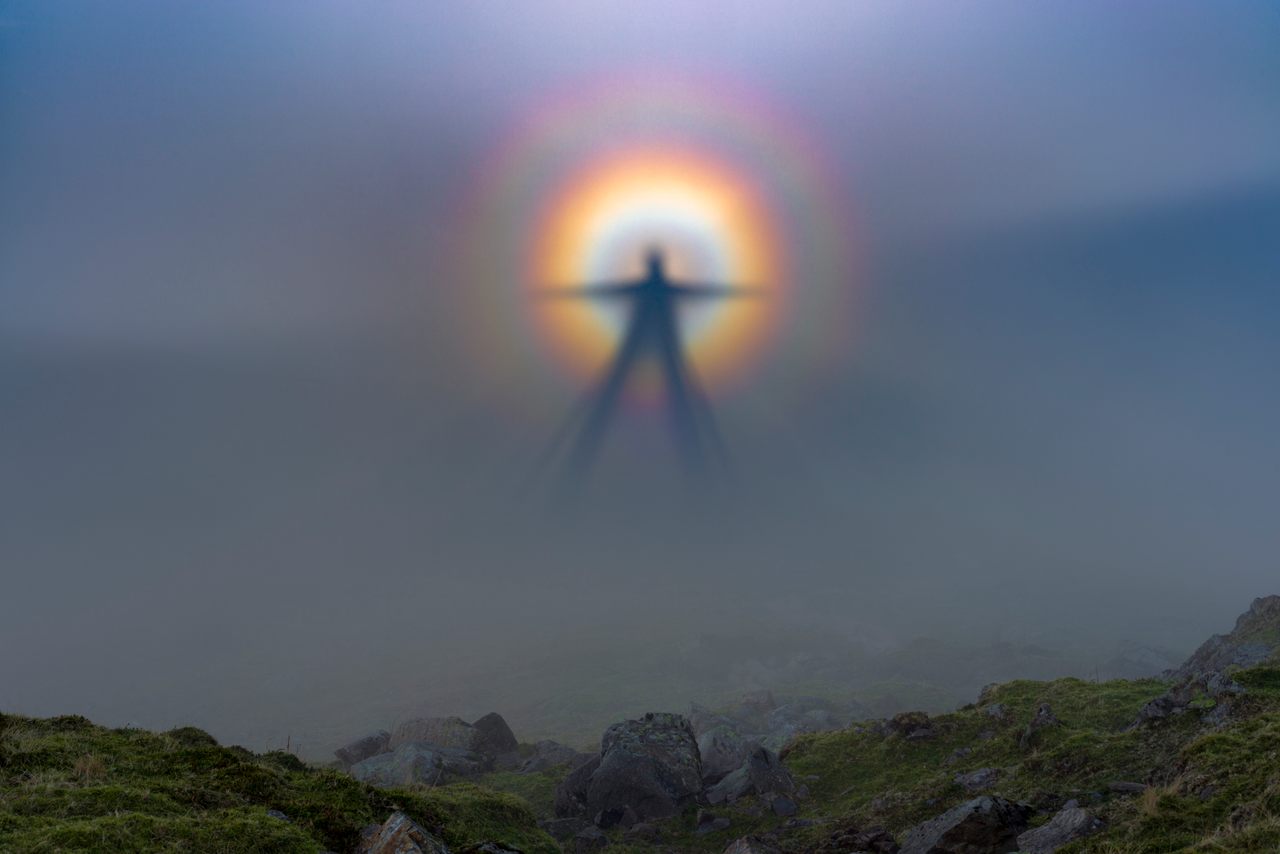
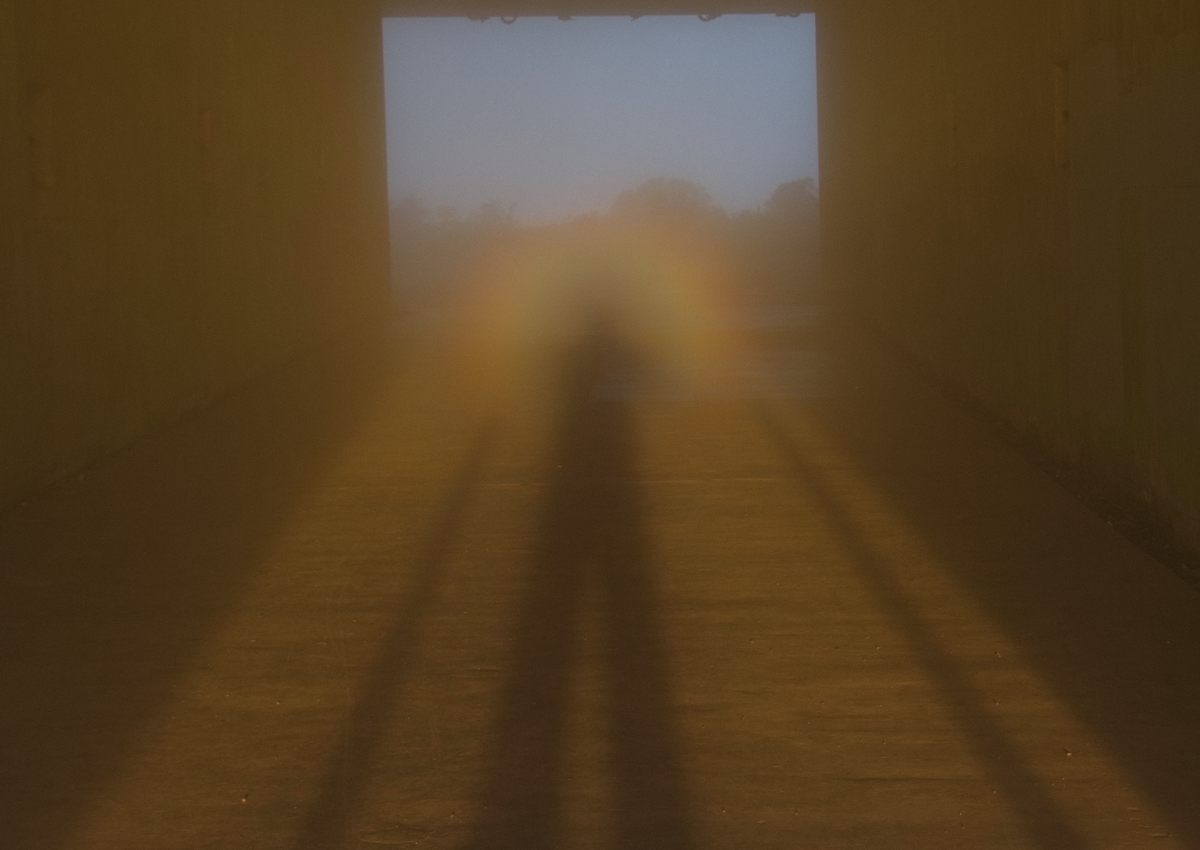
The Brocken spectre phenomenon, when a human’s shadow seems enormous and far away, is the likely explanation for numerous sightings of so-called dark watchers in California’s Santa Lucia Mountains.
John Finney Photography / Getty Images
Theories and Controversies
The Shadow Self and Repressed Fears
From a psychological lens, shadow figures represent repressed aspects of the subconscious—the "shadow self"—which manifests in dreams or hallucinations. Carl Jung emphasized that confronting these dark archetypes could lead to inner growth, suggesting shadow people could symbolize unresolved inner conflicts.
Interdimensional Phenomena
Proponents believe shadow beings are visitors from other realities, glimpsed during moments of dimensional overlap. This approach posits that humanity's perception of these beings is fundamentally limited, and their true nature is beyond our understanding.
The 'Watcher' Hypothesis
Some accounts suggest shadow figures are observers, silently watching victims—potentially guiding or warning. This aligns with folklore describing spirits or hauntings where entities appear to serve a purpose beyond mere manifestation.
Controversies and Skepticism
Mainstream science remains skeptical of paranormal claims, citing psychological explanations and hallucinations. Critics argue that shadow figures are misinterpretations of normal visual phenomena, sleep-related hallucinations, or visual distortions caused by environmental stimuli.
Others challenge the interpretation of personal experiences as evidence of the supernatural, emphasizing the need for controlled scientific studies.
Notable Cases and Cases Studies
The William and Sarah Case
One documented case involved William, a middle-aged man who reported seeing a tall, shadowy figure in his home during episodes of severe sleep paralysis. He described it as a dark, towering presence that seemed to watch him with an unsettling stillness. Despite efforts to dismiss it as hallucination, the sensation persisted over months, impacting his sleep and mental well-being.
Research into such cases frequently reveals underlying stress, traumatic memories, or sleep disorders. Physical evidence is elusive, but persistent reports keep the debate alive.
The 'Cumberland Ghost' Phenomenon
In the historic town of Cumberland, numerous residents have reported seeing shadowy figures near old abandoned buildings or during foggy nights. These sightings are often accompanied by feelings of intense fear or curiosity. Local folklore attributes these to spirits of former residents, emphasizing the cultural dimension of shadow entities.
Theories about Their Function and Purpose
Protective or Warning Symbols
Some sightings may serve as subconscious warnings or protectors—manifestations of warnings about danger or harm. For example, a shadow figure appearing during a dangerous situation might be interpreted as a protective presence, or as a projection of inner intuition.
Negative Entities Feeding on Fear
Other theories suggest shadow people are malevolent entities feeding on negative energy or fear. Their dark, featureless appearance embodies aspects of nightmare terror and subconscious anxieties.
Messengers or Guides
Less commonly, shadow figures are viewed as guides or messengers from the spiritual realm, offering insights or warnings through their silent presence.
Dark watchers are often seen near dusk and dawn in the Santa Lucia Mountains, when light plays off the misty peaks.
Throughout history, shadowy figures have appeared in art, folklore, and religious narratives. Medieval depictions of demons or spirits often resemble shadowy beings. In more recent times, mentions appear in Victorian ghost stories, indigenous narratives, and modern paranormal literature.
Modern Popularity and Media
The representation of shadow people in movies, television, and online forums has popularized and sensationalized the phenomenon, influencing personal perceptions and collective fears. They often appear in horror genre media as ominous, threatening presences.
Implications and Future Research
What Do Shadow People Signify?
Understanding whether shadow figures are illusions, archetypes, interdimensional visitors, or spiritual entities is vital for framing future research. They challenge our perceptions of reality and consciousness, urging scientific, psychological, and spiritual inquiry.
Potential for Interdisciplinary Studies
Future research could benefit from an interdisciplinary approach, combining neuroscience, psychology, anthropology, and paranormal studies. Advances in brain imaging, sleep research, and quantum physics may eventually shed light on these elusive phenomena.
Ethical and Practical Considerations
It is essential to respect individual experiences and consider their impact on mental health. For some, shadow encounters evoke fear or trauma; providing supportive guidance and understanding is paramount.
Meteorologist Jan Null captured his own Brocken spectre in a tunnel.
Courtesy Jan Null
Conclusion
The phenomenon of shadow people remains one of the most compelling mysteries—oscillating between the realms of science and the supernatural. Whether viewed as manifestations of the subconscious, ancient archetypes, or interdimensional visitors, these dark watchers continue to fascinate, terrify, and invite curiosity.
The "Unveiling the Truth" episode highlights the importance of maintaining perspective: exploring the psychological, cultural, and potential paranormal explanations carefully without prematurely concluding their true nature. As Robin and Brad suggest, asking the right questions and investigating diligently might bring us closer to understanding who or what these shadowy figures are—if they indeed have an existence beyond our perception.
In the end, shadow people serve as reflections of our fears, hopes, and mysteries—reminding us that some questions about the universe and ourselves are still waiting to be answered. Whether as symbols of repressed emotions or portals to other dimensions, they challenge us to look beyond the shadows and seek the light of understanding.
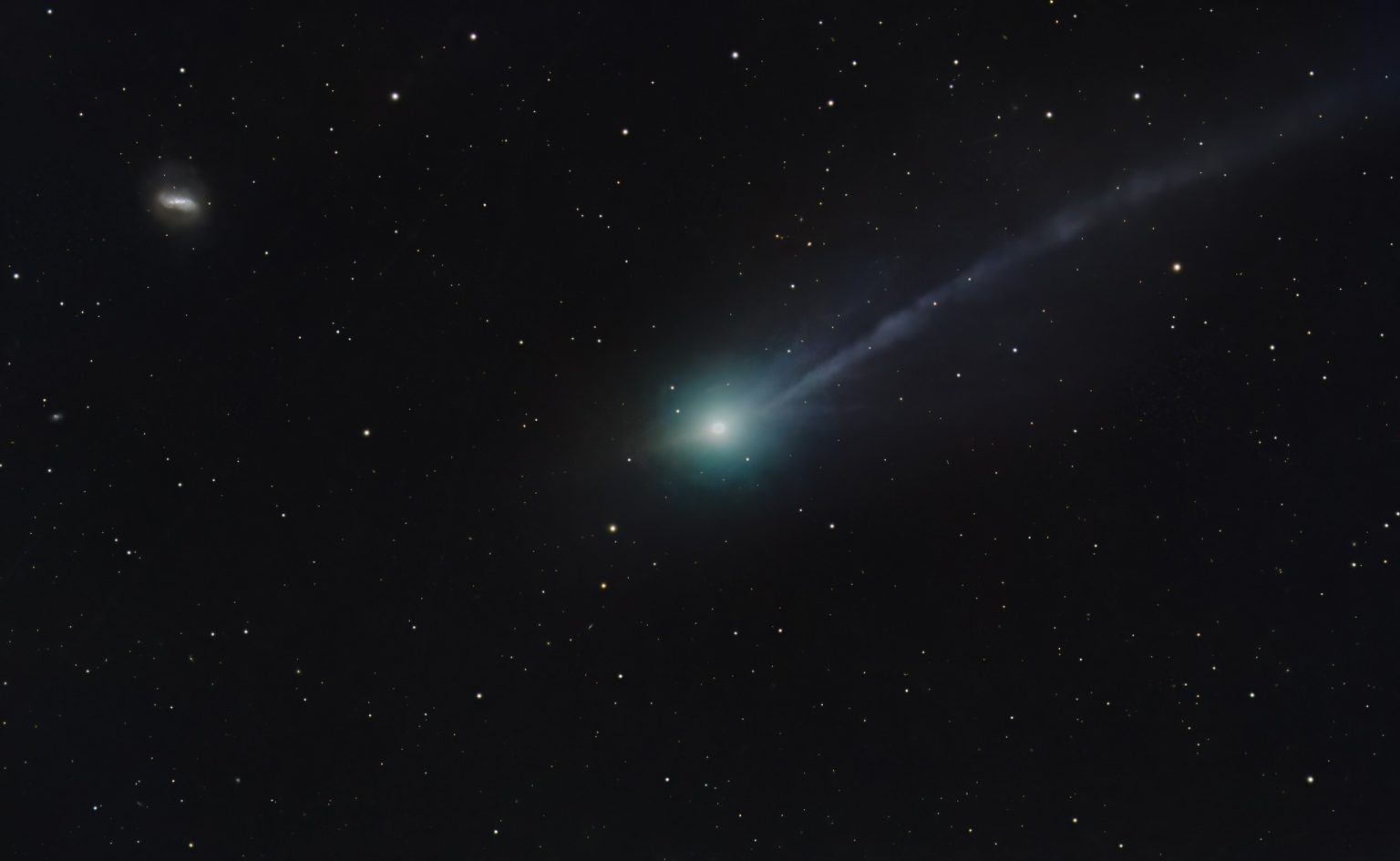
The 3I/ATLAS image was taken on the morning of November 16 in New Mexico. To capture the image, Murat used a Celestron EdgeHD800 telescope and a Touptek ATR2600C camera. The image he published is composed of 24 frames taken with a 60-second exposure.
The photograph shows the complex structure of the tails of 3I/ATLAS. They consist of volatile substances that have sublimated from its surface. Observations have shown that 3I/ATLAS is unusually rich in carbon dioxide. Astronomers have also detected substances such as water ice, carbon monoxide, carbonyl sulfide, and cyanide. It is the molecules of the latter that are responsible for the characteristic blue-green color of the interstellar comet. Earlier it was reported that 3I/ATLAS changed color as it passed through perihelion, but as it turned out later, this was incorrect.
In addition to its main tail, the ATLAS comet also has an anti-tail. In the image, it looks like a small spike. The anti-tail consists of larger dust particles that are less affected by the Sun’s radiation pressure and tend to remain roughly in the plane of the comet’s orbit, eventually forming a disk along its orbit. When Earth passes through the plane of the comet’s orbit, this disk is visible from the side and looks like a distinctive spike.
In addition to the comet, the photo also captured the galaxy NGC 4691. It is located 70 million light-years from Earth in the direction of the constellation Virgo.
Earlier, we reported on how the Mars mission helped to pinpoint the location of comet 3I/ATLAS.
Participats in the LRO mission have published an image showing a young crater on the Moon. It formed after the spacecraft began operating.
A section of the lunar surface featuring a newly formed crater (shown in the inset). Source: NASA/GSFC/Arizona State University
Throughout its history, the Moon has been regularly bombarded by comets and asteroids. This bombardment was particularly intense during the first billion years after the formation of the Solar System. It was then that the Moon acquired its largest “scars.”
Although the frequency of collisions has decreased since then, they have not stopped completely. And since the Moon has no atmosphere, even small objects that would not be able to reach the Earth’s surface can reach the Moon’s surface unhindered.
It was precisely such an object, several meters in size, that formed the crater found by LRO. It is located north of the 44-kilometer-wide Römer crater. The 22-meter funnel formed between December 2009 and December 2012, when the spacecraft photographed this area again.
Animation showing the lunar surface before and after the formation of a crater. Source: NASA/GSFC/Arizona State University
The crater discovered by LRO is surrounded by bright rays consisting of lighter subsurface material ejected during the impact. They extend tens of meters from the crater. Over time, under the influence of space weathering, the rays will darken to match the color of the surrounding regolith.
The discovery of new craters using LROC is important for understanding the frequency of impacts and the rate of crater destruction over time. Planetary scientists use this data to estimate the age of surface features on celestial bodies. This data is also important for future manned missions to the Moon.
Astronomers have confirmed the arrival of a rare and gigantic visitor from outside the Solar System. Officially named 3I/ATLAS, it is the third interstellar object ever noted following 1I/ʻOumuamua in 2017 and 2I/Borisov in 2019. It was first discovered on July 1, 2025, by the NASA-funded Chilean-based Asteroid Terrestrial-impact Last Alert System (ATLAS) telescope in Río Hurtado, and its path immediately indicated a source far, far beyond our planetary community.
1. A journey from the Constellation Sagittarius 3I/ATLAS entered the Solar System along the way of Sagittarius, an area with thick densities of star fields and molecular clouds. NASA Center for Near Earth Object Studies Director Paul Chodas stated, "These objects take millions of years to wander from one stellar neighborhood to another, so this object has likely been drifting through space for hundreds of millions, perhaps even billions, of years." Today's speed of the comet, 37 miles per second, and trajectory coming in put it between Jupiter and on a collision course with a close solar encounter in late October.
2. ATLAS Discovery and Global Tracking Activities ATLAS, intended to give early warnings for possible asteroid impacts, relies on survey telescopes with wide fields of view to monitor the sky for objects on the move. The discovery by 3I/ATLAS was then followed by prompt follow-up observations by Hawaii, Chilean, and Australian telescopes. ESA's Planetary Defence Office organized "precovery" searches using archival data to build a longer observation record, improve orbital models, and verify its interstellar origin.
3. Size, Mass, and Composition arvard astrophysicist Avi Loeb approximated the nucleus of the comet to be larger than 3.1 miles across and larger than 33 billion tons. High concentrations of carbon dioxide gas in its coma and water ice in its nucleus were found by James Webb Space Telescope observations on August 6. The chemistry is suggestive of creation in a cold, volatile-rich setting, characteristic of planetary systems in existence at the outer limits of the galaxy.
4. Bizarre Tail Behavior Unlike normal comets whose dust tails are directed away from the Sun because of solar radiation pressure, 3I/ATLAS's tail is directed toward the Sun. Astronomer Bryce Bolin described how big dust particles hundreds of microns are too massive to be blown outward. Instead, they're expelled on the Sun's side at slow velocities of roughly one meter per second, which means the comet is weakly active.
5. Visibility Windows Ground telescopes will be able to observe 3I/ATLAS through early September, when it will pass solar conjunction and pass from sight. It will re-emerge in December on the opposite side of the Sun and provide a second observing opportunity before moving out into interstellar space. At its closest approach, it will skim the inner edge of Mars's orbit, at least 150 million miles from Earth.
6. Galactic Origins and Age Recent trajectory modeling by Avi Loeb and Shokhruz Kakharov, with the GalPot model of galactic potential, tracked 3I/ATLAS as originating from the thick disk of the Milky Way. At a median age of 4.6 billion years, it is the oldest of the three known interstellar visitors. It is an older, lower-metallicity population of stars that suggests that the comet has undergone distinct evolutionary processes prior to ejection into interstellar space.
7. Scientific Significance European Space Agency's Sarah Al-Ahmed added, "Interstellar objects provide us with one of our best opportunities to be able to really see material coming into our Solar System from somewhere entirely elsewhere." Analyzing its spectral signatures cyanogen, diatomic carbon, and triatomic carbon scientists will be able to decipher chemical processes in cometary atmospheres so foreign to ours. These molecules are initially ices, subliming from solar radiation and progressing through intricate chemistry in the coma.
8. Future Missions and Prospects ESA's Comet Interceptor mission in 2029 will remain at the Sun–Earth Lagrange Point 2 to wait for a good target, preferably a clean comet from the Oort Cloud or an interstellar object. Discovery of 3I/ATLAS is not possible, but it emphasizes the necessity of quick-response spacecraft to intercept these infrequent visitors in orbit. New observatories such as the Vera C. Rubin Observatory's Legacy Survey of Space and Time will greatly boost detection rates, potentially finding dozens of interstellar objects per year. 9. Context in the Expanding Catalog of Interstellar Visitors
ʻOumuamua's cometary shape and non-gravitational motion generated controversies regarding its nature, whereas 2I/Borisov's more typical cometary shape revealed more about extrasolar ice composition. 3I/ATLAS, through its gigantic size, atypical tail, and being thoroughly ancient, gives a new addition to this little but scientifically valuable list. Every discovery gives a short-term opportunity to take a snapshot of planetary system remnants' diversity scattered in the galaxy.
As 3I/ATLAS travels through the Solar System, it bears with it a record of conditions from a distant and old stellar environment. To astronomers, it is simultaneously a message from the past of the galaxy and an echo of the majestic, dynamic space beyond our Sun's reach.
Scientists have unveiled the most detailed map of the brain ever created.
The fascinating chart represents almost 10 million neurons, 26 billion synapses and 86 interconnected brain regions.
It was created with Fugaku, Japan's ultra–fast supercomputer, which is capable of quadrillions of calculations per second.
Scientists will use their digital copy to answer questions about what happens in a disease, how brain waves shape mental focus and how seizures spread in the brain.
Until now, these questions could only be answered using real brain tissue, one experiment at a time.
Dr Anton Arkhipov, an investigator at the Allen Institute in Seattle who worked on the project, called the map a 'technical milestone'.
'With this kind of computational power, the goal of a full, biophysically accurate brain model isn't just science fiction anymore,' he said.
'Scientists are in a new frontier where understanding the brain means, quite literally, being able to build one.'
The image is a detailed simulation of the whole mouse cortex neuron by neuron. It represents 'spontaneous' activity of the cortex in a resting state. Neurons are colored by cortical area and marked with a light flash when active. Only 1 per cent of neurons are shown for clarity
The stunning new image is a virtual copy of a mouse's cortex, the brain's critically important outermost layer.
The vibrant colours refer to the different cortical areas responsible for different jobs, such as visual processing, body movement, decision–making and more.
Each region is made up of an incredibly dense forest of neurons (otherwise known as nerve cells) which transmit electrical and chemical signals to enable communication throughout the brain and body.
The little white tree–like branches emanating from all the regions are the active neurons, which spike, signal, and chatter to send messages.
Electrical signals travel the length of a single neuron, from its round central body down a long, specialized tendril called an axon, until that axon reaches a connection point with another neuron.
The electrical signal triggers a chemical signal, where molecules known as neurotransmitters flow from one cell to the next and serve as the signal hand–off, beginning a new electrical current in the next cell.
'Modeling is incredibly important, because the brain is too complex a system to use your intuition to figure out how cells should be behaving,' said Dr Tim Jarsky, associate director of electrophysiology at the Allen Institute.
'Even with the subset of kinds of neurons in this dataset, we have so many possible interactions with many different types of signaling.
The incredibly detailed brain simulation shows a dense forest of neurons – otherwise known as nerve cells, which transmit electrical and chemical signals to enable communication
The simulation, carried out on supercomputer Fugaku with approximately 150,000 compute nodes, describes several seconds of biological dynamics of the mouse cortex
What is Fugaku?
Fugaku is a supercomputer at the Riken Center for Computational Science in Kobe, Japan.
It is the seventh–fastest supercomputer in the world, according to the 2025 edition of the TOP 500 list.
Fugaku is capable of quadrillions of calculations per second (one quadrillion is written as 1,000,000,000,000,000).
The supercomputer is made up of small parts called nodes, which are grouped together in layers like units, shelves, and racks.
Together, these components add up to a total of 158,976 nodes, allowing Fugaku to manage a massive volume of data and computations.
'You really need a model to understand how the circuit could behave when you put all those elements together.'
According to the experts, the long–term goal is to simulate the entire brain of the mouse, not just the cortex, as well as human brain models.
This is, however, a reliable model for human brain development due to certain structural similarities between the two species.
The image was created using Fugaku, a powerful supercomputer at the Riken Center for Computational Science in Kobe, Japan.
Japan's flagship supercomputer is capable of more than 400 quadrillion calculations per second and can crunch data faster than we can blink.
To put that into perspective, if you started counting in seconds right now, it would take over 12.7 billion years to reach that number – nearly the age of the universe!
'Fugaku is used for research in a wide range of computational science fields, such as astronomy, meteorology, and drug discovery, contributing to the resolution of many societal problems,' said Dr Tadashi Yamazaki from Japan's University of Electro–Communications in Tokyo.
'On this occasion, we utilised Fugaku for a neural circuit simulation.'
It is the product of Supercomputer Fugaku (pictured), one of the fastest supercomputers in the world built with the backing of the Japanese government
Fugaku was deemed the world's fastest supercomputer back in June 2020, but five years later it has slipped down the TOP 500 list to seventh.
At the top of the list is El Capitan, hosted at Lawrence Livermore National Laboratory in Livermore, California.
El Capitan, the most powerful supercomputer in the world, is the third 'exascale' system deployed by the United States.
Exascale refers to a system that can perform at least one quintillion operations per second – a billion billion calculations, or 1 followed by 18 zeroes.
An upcoming paper will unveil the new virtual brain simulation at SC25, a supercomputing conference taking place this week in St. Louis, Missouri.
WHAT IS A SUPERCOMPUTER?
A supercomputer is a computer with a high level of performance compared to a general–purpose computer.
Performance of a supercomputer is measured in floating–point operations per second (FLOPS) instead of million instructions per second (MIPS).
Supercomputers contain tens of thousands of processors and can perform billions and trillions of calculations or computations per second.
Supercomputers are used for data–intensive and computation–heavy scientific and engineering purposes such as quantum mechanics, weather forecasting, oil and gas exploration, molecular modeling, physical simulations, aerodynamics, nuclear fusion research and cryptoanalysis.
Because supercomputers are often used to run artificial intelligence programs, supercomputing has become synonymous with AI.
This regular use is because AI programs require high–performance computing that supercomputers offer.
In other words, supercomputers can handle the types of workloads typically needed for AI applications.
UFO fleet viewed from boat in Turkey creek, Charleston, South Carolina, USA Nov 8, 2025 UAP Sighting News.
Date of sighting: Nov 8, 2025
Location of sighting: Turkey Creek, Charleston, SC, USA
Source: NUFORC
Watch carefully and you will see three UFOs entering the earths atmosphere over Charleston last week. Now the US gov will make excuses and call it meteors (much slower than meteors) or space junk (not possible since these objects are not leaving debris or smoke). These are UFOs...the very thing the US gov prefers us not knowing about.
Scott C. Waring
Eyewitness states:
Lights on object, Aircraft nearby I was on my boat when I saw two flying objects/lights following each other flying faster than an aircraft.
Rare V-Shaped UFO Over Fawn Grove Borough in Pennsylvania, USA Nov 6, 2025, UAP Sighting News.
Date of sighting: Nov 6, 2025
Location of sighting: Fawn Grove, PA, USA
Source: NUFORC
Now V shaped UFOs are very rare and are of the most notoriously told about...for instance, the Phoenix Lights Incident back in March 19, 1997 where hundreds of reports came into police about a giant V shaped UFO blocking out the stars over Phoenix, Arizona. This UFO here might just do the same if it's close enough. The size is huge, about half a mile or more and it's really lit up below the moon with the moonlight shining off of it. Great capture and absolute important evidence that aliens exist...but even more so...of a very rare V shaped craft!
Scott C. Waring
Eyewitness states:
V shape moved from left to right in front of the moon At approximately 6:10 pm we were looking at the moon from our back deck when we noticed a strange object moving from left to right slowly at the bottom of the moon. It was a dark V shape and did show up on pictures.
I recorded a sphere on the live nasa space station cam. Nov 14, 2025, UFO UAP paranormal sighting news
Date of sighting: Nov 14, 2025
Location of sighting: Space station
Source: NASA Live cam feed
I was watching the live cam of the space station and this lesser known camera finally turned away from the space station and gave me a great view of the Earth below. Thats today and I noticed this sphere near it and it was changing luminosity and finally after about 1 minute it just disappeared. I made a close up at the end of the video for you. The speed is normal, but you can adjust the youtube settings to go 2.0 speed or more. Amazing because this orb is huge, about the size of a bus. This is 100% proof that aliens are still visiting the space station and still are curious about humans and our way of thinking. Oh...and I put the video into 4k so put it on a TV and see the detail. Usually this particular camera is focused on the space station itself and gives very little view of earth, but today it was changed to give a great view and there it was, full out orb!
Saw this while jogging in Bountiful, Utah Nov 14, 2025, then it disappeared, UFO sighting news
Date of sighting: Nov 14, 2025
Location of sighting: Bountiful, Utah, USA
Hey all, I recorded this in my back yard this morning and whats really odd is, as soon as I lowered my camera, the UFO 100% disappeared. I wish I had kept it running to show that part. The UFO, which looks to be a huge classic disk shape craft was trying to blend in with the surrounding clouds, but it was just too obvious that it was an alien ship. And the onboard ai sensors that scan telepathically all the human thoughts below for being recognized...like ai searching for keywords in our heads...sky, cloud, UFO, alien, what is that, ect. Anyways take a look at the video, I bet you have seen similar things, but feared ridicule from others over it.
In een recente lezing georganiseerd door het Human Institute en UAPMed schetste Michael Cifone, een filosoof van de wetenschap verbonden aan de Society for UAP Studies, een verschuiving in de manier waarop onderzoekers onherleidbare luchtfenomenen (UAP) en niet-menselijke intelligentie (NHI) benaderen. Hij contrasteerde het model van de “klassieke ufologie”—voornamelijk gerechtelijk, retrospectief en afhankelijk van ooggetuigenverslagen—met wat hij beschreef als de “opkomende wetenschap van UAP,” een demonstratieve inspanning die zich richt op het bouwen van speciale instrumenten, het synchroniseren van datastromen en het nastreven van directe observatie. Cifones presentatie, onderdeel van een serie getiteld Investigating Non‑Human Intelligence, onderstreepte de noodzaak om verder te kijken dan het verzamelen van oude rapporten en over te gaan op een systematische, op data gebaseerde methodologie.
Epistemologische Uitdagingen
Cifone waarschuwde dat de aannames die in de traditionele natuurwetenschappen worden gehanteerd, onderzoekers kunnen verblinden voor het fenomeen dat zij proberen te bestuderen. Hij stelde een prikkelende vraag: “Wat als het probleem niet ontbrekende bewijzen zijn, maar ontbrekende categorieën?” Volgens zijn kader worden drie onderling verweven kwesties het kennislager vormgegeven:
Bewijsmateriaal is niet neutraal– de instrumenten en theorieën die wij gebruiken, predeterminen wat wij kunnen meten. Dit betekent dat de instrumenten die we inzetten noodzakelijkerwijs bepalen naar welk fenomeen we zoeken en hoe we dat interpreteren. Een laserafstandsmeter kan bijvoorbeeld alleen afstanden meten die binnen het bereik en de precisie vallen die het apparaat toestaan. Daarnaast bepalen bestaande theorieën welke interpretaties als legitiem worden beschouwd.
De epistemische cirkel– buitensporige claims vereisen bewijs dat niet door bestaande instrumenten kan worden vastgelegd. Dit betekent dat sommige fenomenen, indien ze zelden voorkomen of zich slechts onder bepaalde condities voordoen, niet gemakkelijk te vast te leggen zijn met de huidige technologie. Toch houden onderzoekers vol dat bewijs wel mogelijk moet zijn, wat leidt tot een vicieuze cirkel tussen hypothese en observatie.
Fenomenen kunnen tijdelijk, participatief en relationeel zijn – anders dan de stabiele, herhaalbare gebeurtenissen waar de conventionele wetenschap de voorkeur aan geeft. UAP kunnen zich bijvoorbeeld slechts af en toe voordoen, afhankelijk zijn van het bewustzijn of de intentie van de waarnemer, of een relationele dynamiek vertonen die niet past binnen traditionele natuurwetenschappelijke modellen.
Cifone pleit voor een nieuwe vorm van empirisme die objectieve instrumenten combineert met fenomenologische, eerst-person ervaring. Hierdoor kunnen onderzoekers “luisteren naar de data” voordat zij vooraf ingestelde categorieën opleggen. Dit impliceert dat de beleving en interpretatie van de waarneming even belangrijk moeten worden genomen als meetinstrumenten, vooral in gevallen waarin het fenomeen moeilijk of onmogelijk reproduceerbaar is.
Opkomende Wetenschappelijke Benaderingen
De presentatie omschreef concrete stappen om UAP-onderzoek te transformerentr en tot een rigoureuze wetenschap. Enkele voorstellen waren:
Het opbouwen van speciale sensor netwerken – deze netwerken kunnen in real-time high-resolutie, multimodale data vastleggen. Denk aan het gebruik van radar, infrarood, elektromagnetische metingen en audio. Het doel is om het veld te verschuiven van retrospectief getuigenis naar live observatie, waardoor de kans op snelle verificatie en analyse toeneemt.
Professionalisering van forensische onderzoeksmethoden– door te zorgen dat sporen zoals elektromagnetische anomalieën of materiaalerestanten worden verzameld en geanalyseerd volgens strikte normen die ook in de ruimtevaart of forensische laboratoria worden gehanteerd. Dit zorgt voor een hogere betrouwbaarheid van de bevindingen en maakt ze vergelijkbaar met andere takken van geavanceerd technisch onderzoek.
Het behandelen van mensen als sensoren – een concept dat werd verkend door Maya Cowan. Hier wordt erkend dat menselijke waarneming betrouwbaar is, maar ook zijn grenzen kent, en dat deze waarnemingen kunnen worden geïntegreerd met instrumentale gegevens. In deze aanpak wordt de menselijke interpretatie niet uitgesloten maar juist aangevuld, door bijvoorbeeld gecombineerde analyses te maken van witness reports en meetgegevens.
Deze initiatieven weerspiegelen de focus van de UAP-onderzoeksgemeenschap op “lokale gedragingen en dynamische relaties,” wat het onderscheid maakt van de verre, message-gerichte doelen van SETI. Terwijl SETI zich richt op signaaldetectie en communicatie met buitenaardse intelligentie op grote afstand, richt UAP-onderzoek zich vaak op snelle, onvoorspelbare fenomenen die zich direct manifesteren in onze atmosfeer. Door menselijke rapporten te synchroniseren met instrumentale metingen hopen onderzoekers een rijker, gevalideerd datacollectief te scheppen dat meer inzicht kan geven in het aard, de aard en de mogelijke intelligentie achter deze fenomenen.
Interdisciplinaire Kaders
Cifone benadrukte het belang van radicale interdisciplinariteit als essentieel voor een opkomende wetenschap van niet-menselijke intelligentie. In dit kader wordt vaak teruggevallen op het 6W-model – wie, wat, wanneer, waar, waarom en hoe – als een raamwerk voor het organiseren van onderzoeken die fysieke verklaringen combineren met geleefde ervaring.
Wie betreft de onderzoekers en waarnemers, waaronder wetenschappers, piloten, nauwe observatoren en betrokken burgers.
Watverwijst naar de fenomenen zelf: UAP, anomalieën in elektromagnetische velden, materiaalterreinen of mogelijk niet-menselijke activiteiten.
Wanneer en waar beschrijven de tijdstippen en locaties van waarnemingen, cruciaal voor correlaties en patroonherkenning.
Waarom en hoe betreffen de interpretaties en mechanismen die mogelijk ten grondslag liggen aan de fenomeen; deze bieden inzicht in de motivatie en aard van de aanwezige intelligenties of natuurlijke processen.
Fenomenologen zoals Kim Engels ontwikkelen methoden om het “gehele UFO-gevoel” vast te leggen, door narratieve gegevens te verbinden met sensorlogs. Deze aanpak beoogt de kloof te overbruggen tussen objectieve data en subjectieve betekenis, omdat hij van mening is dat dit noodzakelijk is om antropocentrisme te overwinnen. Door het onderzoeken van de percepties, gevoelens en interpretaties van getuigen wil men niet alleen de feiten vastleggen maar ook de context waarin deze plaatsvinden, wat kan leiden tot een dieper begrip van het fenomeen.
Verder suggereerde Cifone dat het herintegreren van de geesteswetenschappen—zoals antropologie, filosofie en psychologie—met de natuurwetenschappen het conceptuele vocabulaire kan uitbreiden dat nodig is om fenomenen te beschrijven die “participatief en relationeel” zijn, in plaats van louter externe objecten.
Dit multidisciplinaire model benadrukt dat het begrijpen van UAP en NHI niet louter een technische onderneming is, maar ook een cultureel en interpretatief vraagstuk. Het vraagt om een brede blik, waarin wetenschap en erfgoed, perceptie en werkelijkheid, samenvallen.
Vooruitzichten en Skepsis
Hoewel de visie ambitieus is, betwijfelde Cifone zelf de haalbaarheid ervan; hij merkte op dat veel van de voorgestelde praktijken nog “utopisch” zijn zonder duurzame financiering, institutionele steun en methodologische consensus. Het opzetten van uitgebreide sensor netwerken, het trainen van multidisciplinaire teams en het integreren van fenomenologische benaderingen vereisen aanzienlijke middelen en lange termijnplanning.
Desalniettemin werden enkele pilotprojecten besproken, zoals gecoördineerde hemelwacht-netwerken en samenwerkingsworkshops tussen natuurkundigen, antropologen en piloten, die het praktische potentieel van dit interdisciplinaire model demonstreren. Zo werd het voorbeeld gegeven van internationale netwerken die realtime data verzamelen en analyseren, als een mogelijke basis voor bredere wetenschappelijke samenwerkingen.
De bredere wetenschappelijke gemeenschap houdt deze ontwikkelingen nauwlettend in de gaten. Zoals Cifone afsluit: “De werkelijke vraag is niet of niet-menselijke intelligentie bestaat – het universum is groot genoeg dat dit bijna triviaal is. De vraag is of onze wetenschappen al intelligent genoeg zijn om het waar te nemen.” Als de opkomende wetenschap van UAP erin slaagt instrumenten, fenomenologie en rigoureuze epistemologie te integreren, kan dit mogelijk het systematische bewijs leveren dat zowel sceptici als gelovigen al lang zoeken. Het zou kunnen leiden tot een paradigmaverschuiving, waarin we niet alleen de fenomenen accepteren maar ook begrijpen en, misschien, contact maken met andere vormen van intelligentie die onze horizon nu nog verbreden.
Slotwoord
De overgang van klassieke ufologie naar een meer wetenschappelijke en systematische benadering markeert een belangrijke ontwikkeling in de studie van het onbekende. Door een combinatie van geavanceerde technologieën, interdisciplinaire samenwerking en een herziening van epistemologische principes, wordt het mogelijk om de mysterieuze fenomenen rondom UAP en NHI in een nieuw, meer rigoureus licht te plaatsen. Het pad naar een echte wetenschap binnen dit domein is nog lang en vol uitdagingen, maar de richting is duidelijk: een integrale aanpak waarin data, ervaring en theorie hand in hand gaan. Alleen zo kunnen we misschien ooit de antwoorden vinden op vragen die ons al eeuwenlang bezighouden.
Meer van UFO'S of UAP'S, ASTRONOMIE, RUIMTEVAART, ARCHEOLOGIE, OUDHEIDKUNDE, SF-SNUFJES EN ANDERE ESOTERISCHE WETENSCHAPPEN - DE ALLERLAATSTE NIEUWTJES


 Unveiling the Truth (Ep. 4) 'Shadow People: The Dark Watchers of the Night'
 Interstellar comet 3I/ATLAS.
Source: Satoru Murata