Ontdek de Fascinerende Wereld van UFO's en UAP's: Jouw Bron voor Onthullende Informatie!
Ben jij ook gefascineerd door het onbekende? Wil je meer weten over UFO's en UAP's, niet alleen in België, maar over de hele wereld? Dan ben je op de juiste plek!
België: Het Kloppend Hart van UFO-onderzoek
In België is BUFON (Belgisch UFO-Netwerk) dé autoriteit op het gebied van UFO-onderzoek. Voor betrouwbare en objectieve informatie over deze intrigerende fenomenen, bezoek je zeker onze Facebook-pagina en deze blog. Maar dat is nog niet alles! Ontdek ook het Belgisch UFO-meldpunt en Caelestia, twee organisaties die diepgaand onderzoek verrichten, al zijn ze soms kritisch of sceptisch.
Nederland: Een Schat aan Informatie
Voor onze Nederlandse buren is er de schitterende website www.ufowijzer.nl, beheerd door Paul Harmans. Deze site biedt een schat aan informatie en artikelen die je niet wilt missen!
Internationaal: MUFON - De Wereldwijde Autoriteit
Neem ook een kijkje bij MUFON (Mutual UFO Network Inc.), een gerenommeerde Amerikaanse UFO-vereniging met afdelingen in de VS en wereldwijd. MUFON is toegewijd aan de wetenschappelijke en analytische studie van het UFO-fenomeen, en hun maandelijkse tijdschrift, The MUFON UFO-Journal, is een must-read voor elke UFO-enthousiasteling. Bezoek hun website op www.mufon.com voor meer informatie.
Samenwerking en Toekomstvisie
Sinds 1 februari 2020 is Pieter niet alleen ex-president van BUFON, maar ook de voormalige nationale directeur van MUFON in Vlaanderen en Nederland. Dit creëert een sterke samenwerking met de Franse MUFON Reseau MUFON/EUROP, wat ons in staat stelt om nog meer waardevolle inzichten te delen.
Let op: Nepprofielen en Nieuwe Groeperingen
Pas op voor een nieuwe groepering die zich ook BUFON noemt, maar geen enkele connectie heeft met onze gevestigde organisatie. Hoewel zij de naam geregistreerd hebben, kunnen ze het rijke verleden en de expertise van onze groep niet evenaren. We wensen hen veel succes, maar we blijven de autoriteit in UFO-onderzoek!
Blijf Op De Hoogte!
Wil jij de laatste nieuwtjes over UFO's, ruimtevaart, archeologie, en meer? Volg ons dan en duik samen met ons in de fascinerende wereld van het onbekende! Sluit je aan bij de gemeenschap van nieuwsgierige geesten die net als jij verlangen naar antwoorden en avonturen in de sterren!
Heb je vragen of wil je meer weten? Aarzel dan niet om contact met ons op te nemen! Samen ontrafelen we het mysterie van de lucht en daarbuiten.
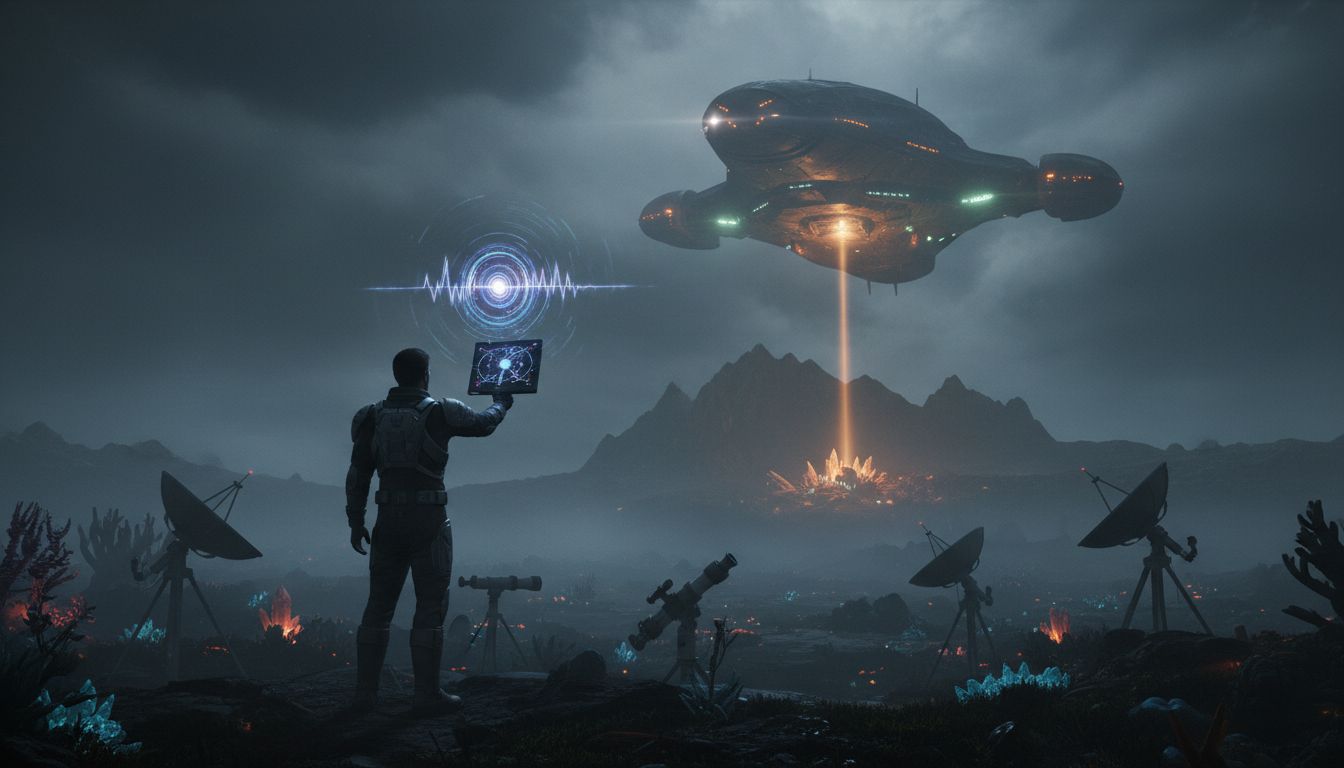
What if the aliens come and we just can’t communicate?
Overview
Ars Technica recently sat down with particle physicist Daniel Whiteson, co‑author of the newly released book Do Aliens Speak Physics? And Other Questions About Science and the Nature of Reality. Illustrated by cartoonist Andy Warner, the volume uses speculative scenarios to probe how humanity might—or might not—communicate with an extraterrestrial intelligence. The conversation, conducted shortly after the book’s launch, highlights Whiteson’s long‑standing interest in the philosophical limits of physics and his concern that the “universal” nature of scientific laws may be more human‑centric than commonly assumed.
Physics Beyond the Human Lens
Whiteson, a researcher on the ATLAS experiment at CERN, explains that his curiosity stems from a “implicit promise” that physics reveals truths that hold everywhere. He cautions, however, that this promise may be oversold. “None are fundamental, and we don’t understand why anything emerges,” he told Ars Technica. The book therefore asks whether the mathematical frameworks we rely on—geometry, calculus, quantum theory—would be recognizable to a species whose sensory apparatus and evolutionary pressures differ radically from ours. By framing each chapter around a concrete, fictional first‑contact vignette, the authors illustrate how even basic concepts such as “force” or “mass” could be alien to an intelligence that perceives the universe through a completely different set of constants.
Linguistic and Cultural Barriers
Beyond the abstract question of shared mathematics, the authors delve into linguistic and cultural obstacles. An alien language would likely be shaped by its environment—gravity, atmospheric composition, or the presence of a magnetic field could dictate the range of perceivable frequencies. Moreover, cultural constructs such as time, individuality, or even the notion of “science” may be absent. Whiteson notes, “Their language will be shaped by their home environment, broader culture, and even how they perceive the universe.” The book explores scenarios where attempts at symbolic exchange break down because the underlying semantic frames are incompatible, echoing real‑world challenges faced by human linguists when deciphering undocumented languages.
SETI, Consciousness, and Alternative Physics
The work also touches on ongoing SETI strategies, which typically assume that an advanced civilization would transmit signals rooted in universal mathematics (e.g., prime number sequences). Whiteson argues that this assumption may be naïve if alien cognition operates on principles outside current physical theory—such as emergent consciousness that directly manipulates spacetime, a notion occasionally floated in fringe discussions of quantum mind‑matter interactions. While the book does not endorse speculative physics, it treats these ideas as boundary conditions for thinking about communication: if an extraterrestrial species harnesses “alternative physics,” our detection methods might miss them entirely. The authors thus call for a broader, interdisciplinary approach that includes philosophy, biology, and even art to anticipate non‑standard modes of contact.
Reception and Future Outlook
Do Aliens Speak Physics? has been praised for its blend of rigorous scientific insight and accessible storytelling. The collaboration between Whiteson and Warner, who “cold‑emailed” each other to combine expertise with whimsical illustration, results in a volume that is both educational and entertaining. Early reviewers highlight the book’s ability to make abstract concerns—like the potential distortion of observation by a “human lens”—tangible through imagined dialogues with alien scientists. As humanity continues to scan the cosmos for technosignatures, the authors suggest that preparing for communication failures may be as crucial as the search itself. Their final message: the path to first contact will likely require humility, interdisciplinary dialogue, and a willingness to rethink what we consider “universal” in science.
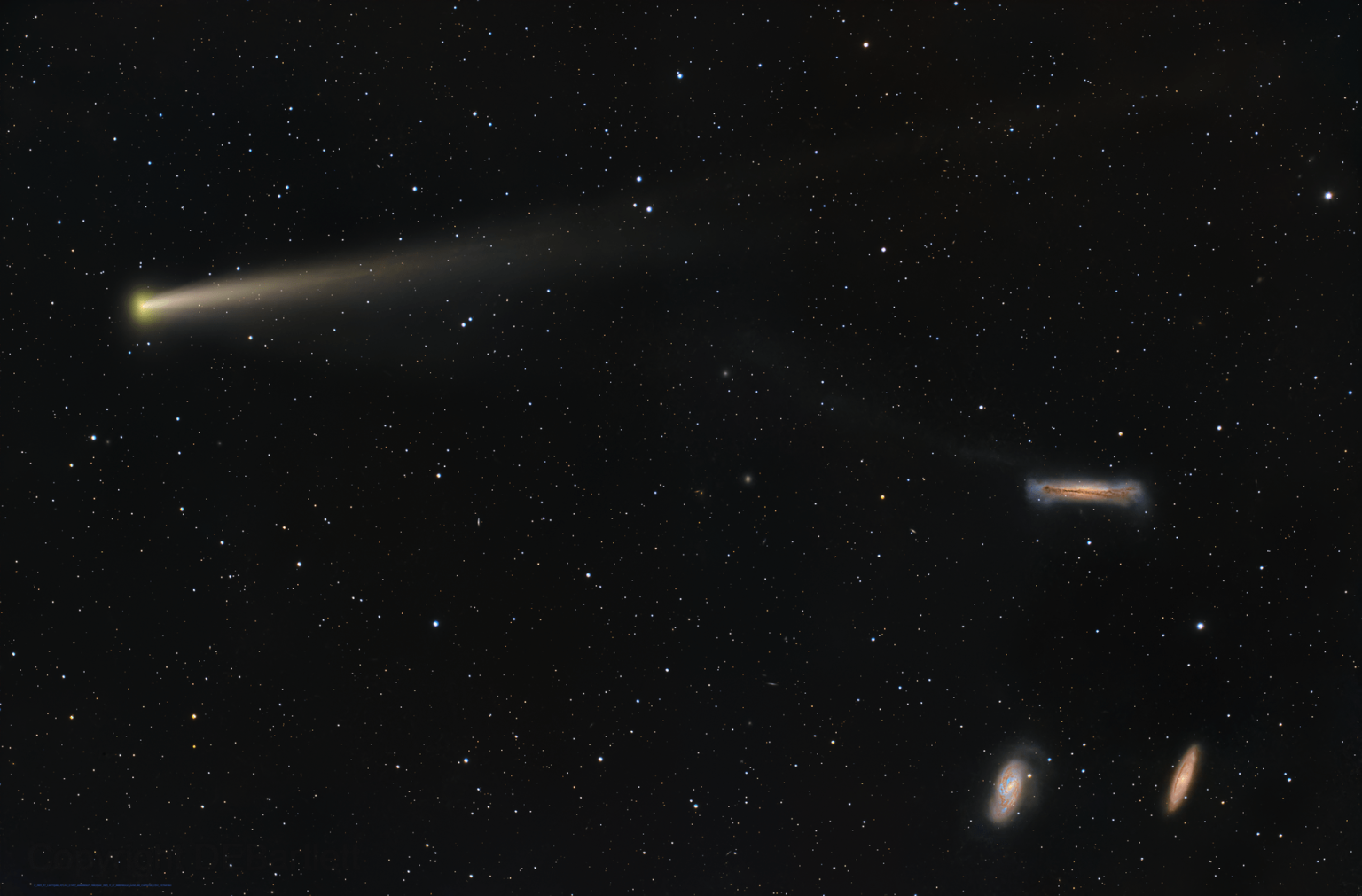
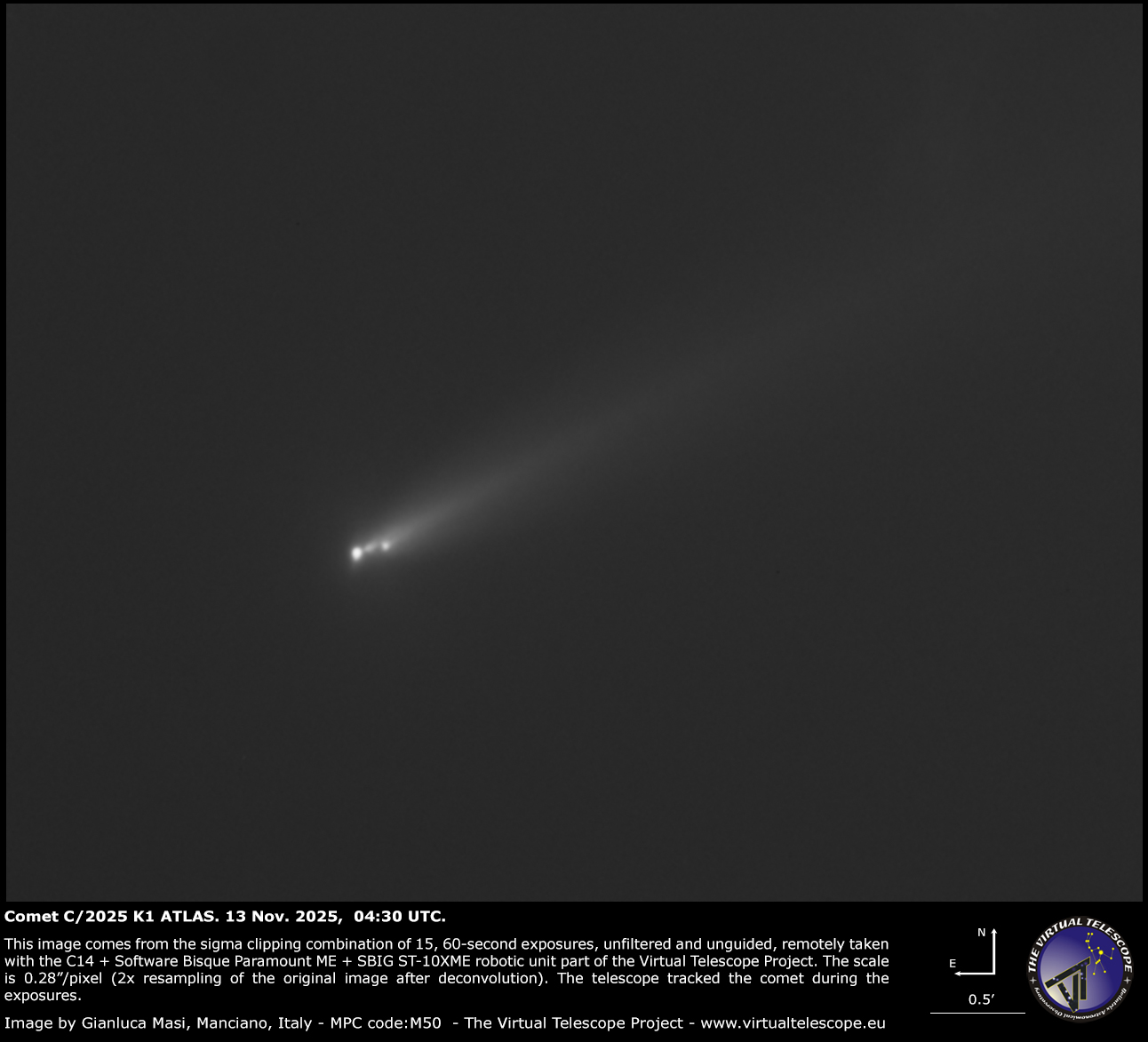
Comet C/2025 K1 ATLAS has broken up. Its nucleus has split into several fragments, as shown in recent images taken on November 13.
Not that comet ATLAS
C/2025 K1 ATLAS should not be confused with the much more famousinterstellar comet 3I/ATLAS, which is currently the focus of global attention. Both were discovered in 2025 by the ATLAS system, a network of robotic telescopes designed to search for small near-Earth objects and warn of possible collisions with Earth. This is why the word ATLAS appears in the designation of both comets.
Comet C/2025 K1 ATLAS. Source: Dan Bartlett
As for the alphanumeric designations, they are deciphered as follows. In the case of C/2025 K1/ATLAS, the letter “C” means that the comet is long-period (its orbital period around the Sun exceeds 200 years), 2025 is the year of its discovery, the letter “K” is the half-month of discovery (the second half of May), and the number 1 indicates that it is the first comet discovered during that half-month.
In turn, in the case of comet 3I/ATLAS, the letter “I” means that it is an interstellar object, and the number 3 means that it is the third such object found. In the future, as the number of interstellar objects found increases, changes may be made to their designation system.
Golden Comet
Although C/2025 K1 ATLAS is not an interstellar visitor, it is still a rather curious object. The comet arrived from the Oort Cloud, a cluster of icy bodies located at the far reaches of the Solar System. This means that its material has never been exposed to solar radiation.
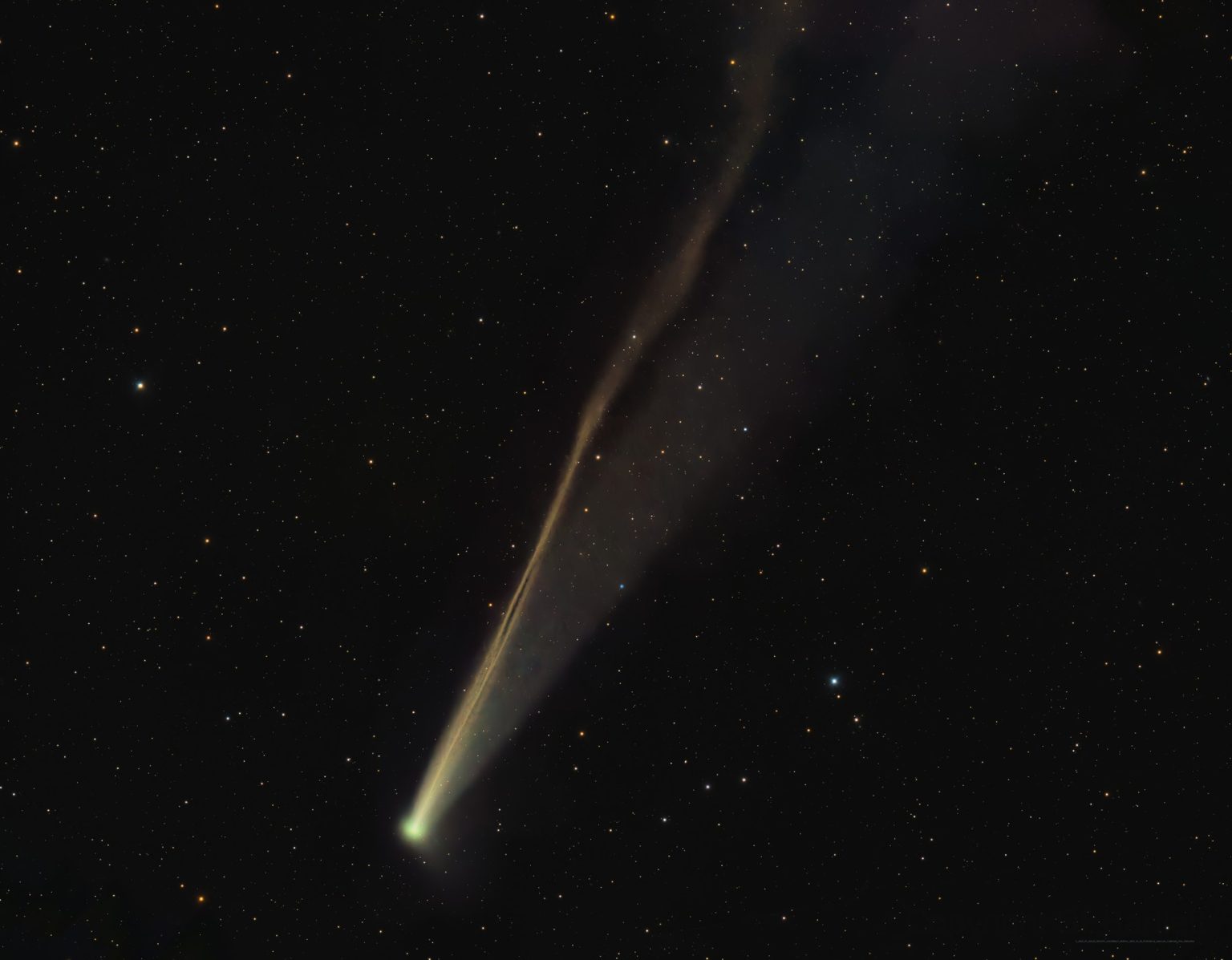
Comet C/2025 K1 ATLAS. Source: Dan Bartlett
On October 8, C/2025 K1 ATLAS passed the perihelion of its orbit at a distance of 0.33 AU (50 million km) from the Sun. The comet surprised scientists by acquiring a very rare golden color. Subsequent studies revealed that C/2025 K1 ATLAS contained very few carbon-containing molecules, such as dicarbon, carbon monoxide, and cyanide. In the absence of these compounds, light is reflected differently, creating a golden glow effect. This peculiarity in the chemical composition is probably due to the fact that the comet originated in the Oort cloud.
Initially, astronomers believed that due to its fragility and small size, C/2025 K1 ATLAS would not survive perihelion. However, to the surprise of many, the comet passed through it intact. Nevertheless, the encounter with the Sun did not remain without consequences. Images taken on November 10 showed that the comet’s nucleus had begun to fragment. Three days later, astronomers confirmed the fragmentation of C/2025 K1 ATLAS. Its nucleus broke up into at least three fragments.
Disintegration of the nucleus of comet C/2025 K1 ATLAS
Before its demise, comet C/2025 K1 ATLAS was moving along a hyperbolic trajectory. This means that if any of its fragments manage to survive, they will be ejected from the Solar System forever, after which they will continue their journey through interstellar space.
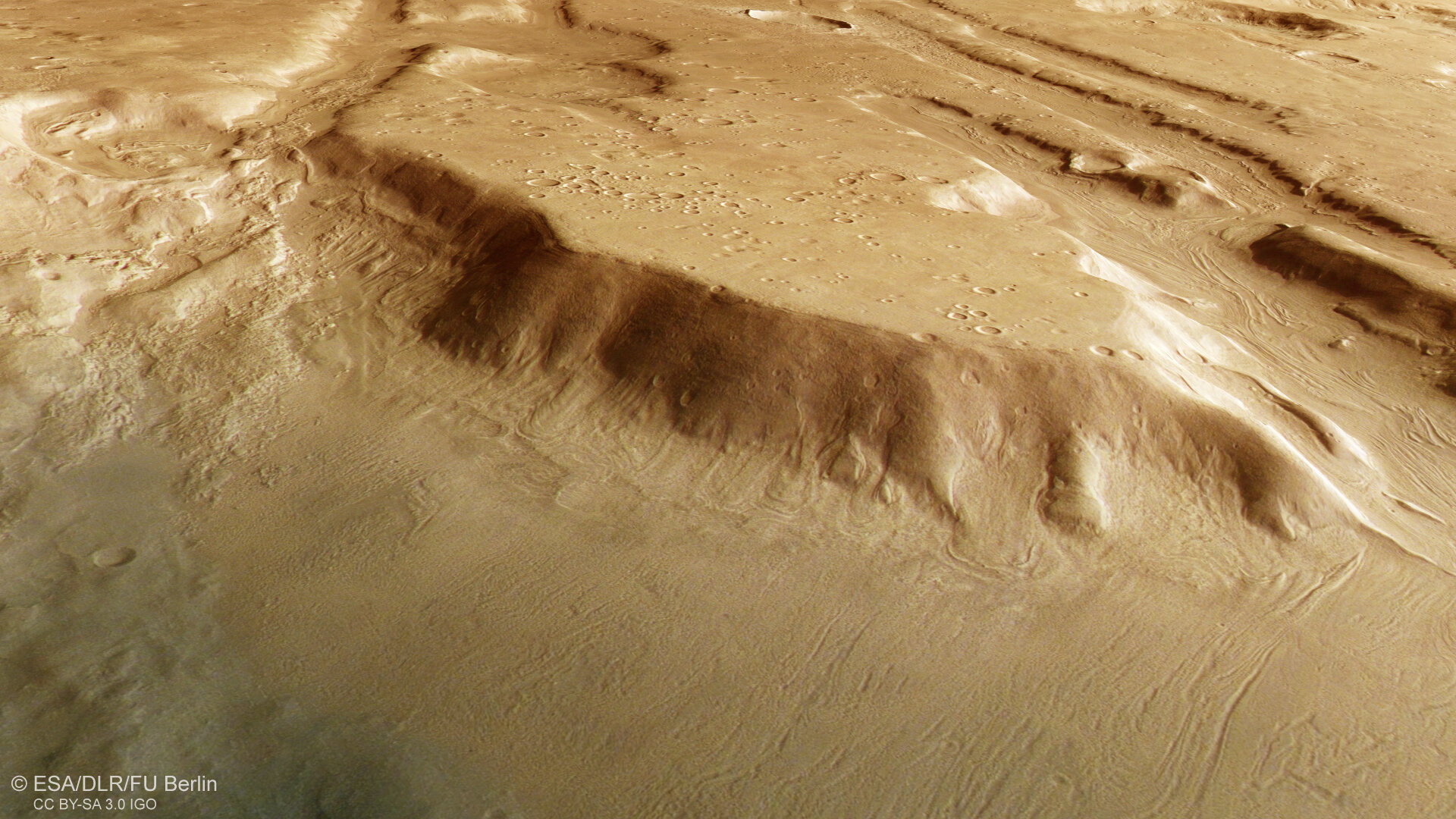
The European Space Agency has published images taken by the Mars Express spacecraft. They show traces of the Martian ice age.
Coloe Fossae region. Source: ESA/DLR/FU Berlin
Over the past 2.5 billion years, our planet has experienced several ice ages. These were part of an ancient geological cycle caused mainly by changes in the Earth’s orbit around the Sun and fluctuations in its axis of rotation. The last glaciation peaked about 20,000 years ago, lowering the planet’s average temperature to 7–10 °C (8 °C lower than today).
But Earth is not the only planet to have experienced glaciation. Ice ages also occurred on Mars, as clearly demonstrated by images taken by the Mars Express spacecraft. They show an area known as Coloe Fossae.
Context map of the Coloe Fossae region. Source: NASA/MGS/MOLA Science Team
Coloe Fossae is crisscrossed by long parallel lines resembling scratches. These are the remains of glaciers that repeatedly advanced and retreated, gradually carving out deep depressions and trenches. Like other parts of Mars, this region is covered with numerous craters of varying degrees of erosion. At their bottom, you can see another sign of the glacial period: spiral patterns.
The Coloe Fossae region. Image created from photos taken by the Mars Express mission. Source: ESA/DLR/FU Berlin
These patterns provide insight into the climate of the Red Planet in the past. They were formed when ice flows covered with a thick layer of rock material slowly flowed across the surface of Mars (something similar happened on Earth).
The area photographed by Mars Express is located at 39° north latitude, which is very far from the north pole and raises the obvious question of how ice could have reached such low latitudes. The answer lies in the pulsation of advancing and retreating glaciers. Although Mars is currently dry, throughout its history it has experienced alternating periods of warming and cooling, freezing and thawing, caused by changes in the tilt of its axis.
Topographic map of the Coloe Fossae region. Source: ESA/DLR/FU Berlin
During cold periods, ice spread from the poles of Mars to the mid-latitudes, and when it got warmer, it receded, leaving behind characteristic traces. Spacecraft have discovered valleys and craters filled with glacial deposits across this entire latitudinal band, evidence of global climate change on the planet. This area may have been covered in ice as recently as half a million years ago, when the last ice age ended on Mars.
A colossal comet, 3I/ATLAS, is making headlines as it streaks through our solar system at more than 124,000 miles per hour. Discovered on July 1, 2025, this interstellar visitor—originating from beyond our Sun’s gravitational reach—is the third confirmed object from outside our solar system. Scientists are captivated by its size, speed, and unusual behavior, marking it as a rare opportunity to study the building blocks of distant star systems.
3I/ATLAS stands out for its sheer scale. With a core estimated at 3.4 miles wide, it dwarfs previous interstellar visitors like 1I/’Oumuamua and 2I/Borisov. Some experts suggest it could be millions of times more massive than ‘Oumuamua if both were solid rock, though the exact composition remains uncertain. Its velocity and trajectory confirm it is not bound to our solar system, traveling on a hyperbolic orbit with an eccentricity of about 6.1—the highest ever recorded for such objects. This means 3I/ATLAS is just passing through, having spent most of its existence frozen in deep space before being warmed by the Sun’s approach.
The comet’s detection was a triumph of international collaboration. First spotted by the ATLAS telescope in Chile, astronomers quickly identified earlier images from June 2025 at observatories around the world. By pooling data, scientists reconstructed its path before its official discovery, showcasing the power of rapid global teamwork. Major observatories in Chile, Hawaii, California, and Australia have since joined the effort, making 3I/ATLAS the most closely studied interstellar object to date.
As 3I/ATLAS neared the Sun in late October 2025, it exhibited baffling changes. It accelerated faster than gravity alone could explain, a phenomenon known as “non-gravitational acceleration,” likely caused by jets of gas and dust erupting from its surface. Simultaneously, its color shifted from reddish to blue, and it brightened at an extraordinary rate. These behaviors are unlike those of typical solar system comets, raising questions about its origins and composition.
The comet’s unique chemistry—particularly its high ratio of carbon dioxide to water, about 8 to 1—suggests it formed under conditions very different from those in our solar system. NASA scientist Charles Lisse described its composition as “well baked and boiled,” indicating it may have originated close to its parent star before being ejected into space billions of years ago. Some researchers, including Harvard’s Avi Loeb, speculate that its odd movements could hint at an “internal engine” beyond simple outgassing, though most scientists favor natural explanations.
Public and Industry Impact
3I/ATLAS has sparked widespread public interest, with social media abuzz and hashtags like #AlienComet trending. NASA’s Sean Duffy has clarified there is “no aliens and no threat to Earth,” while physicist Michio Kaku has warned against misinformation and deepfake videos. The event also highlights the growing relevance of space monitoring for both scientific research and commercial ventures, such as asteroid mining. As the comet moves away, its legacy will likely influence future missions and planetary defense strategies, offering a rare glimpse into the chemistry and dynamics of distant worlds.
The interstellar visitor blazing through our solar system shows startling signs that it may not be a comet, but something truly alien.
The object, known as 3I/ATLAS, recently survived a scorching flyby of the sun completely intact, something no natural comet should be able to do.
A Harvard professor had said that humans would learn the truth about the visitor's origins after it reached its closest point to the sun on October 29, when it should have begun to melt and a huge cloud of dust should have formed around it.
However, the latest data has revealed that 3I/ATLAS is still a single, bright object with no pieces breaking off and no cloud of fragments or debris, further supporting Loeb's theory that the object could be an alien mothership maneuvering around the sun.
Instead of a shattered mess, astronomers David Jewitt and Jane Luu found an intact body surrounded by a glowing coma, a fuzzy envelope of gas that is stretched out in two directions, one pointing toward the sun and another away from it.
The new images captured by the Nordic Optical Telescope in Spain also revealed that 3I/ATLAS still has a mysterious 'anti-tail' pointing toward the sun, despite the object now moving away from our home star. Scientists have argued this could be an optical illusion.
A comet's tail is a trail of dust and debris behind it as the rocks are blasted by sunlight and solar wind.
However, the new photos taken on Tuesday also spotted two giant jet-like streams blasting out for hundreds of thousands of miles from the object's surface, which defy the laws of science.
New images of 3I/ATLAS taken by the Nordic Optical Telescope in Spain have just been released and show the alleged comet has not broken apart
The object has also developed an anti-tail point toward the sun and two massive jets shooting material out into space
One has been shooting material out into space in the direction of the sun, while the other is nearly three times as long and appears to be pointing in the opposite direction.
Based on the size of 3I/ATLAS, which is roughly 3.5 miles across, Harvard professor Avi Loeb has said these jets can't be naturally explained as water vapor pouring out of the comet because there isn't enough ice there to produce such massive streams.
'Technological thrusters which point their exhaust towards the sun would accelerate away from the Sun,' Loeb said.
'This post-perihelion maneuver might be employed by a spacecraft that aims to gain speed rather than slow down through the gravitational assist from the sun.'
Loeb's theory that 3I/ATLAS has a technological origin has been met with scrutiny by many in the scientific community.
Astronomers throughout the world have maintained since its discovery in July that the object is a comet with an unusual chemical makeup from a distant solar system that formed under conditions far different from our own.
This includes shooting out streams of frozen carbon dioxide (CO₂) instead of normal water vapor, like comets that formed within our solar system.
However, the images revealed that the unexplained jet pointing toward the sun is 620,000 miles long, while the stream facing away from the sun is 1.86 million miles in length.
3I/ATLAS passed the sun on October 29, but new images show it has remained in one piece, which is unusual for a comet
Optical images captured on November 9 (pictured) reveal that 3I/ATLAS is ejecting enormous jets of material both toward and away from the sun
The presence of those giant jets means 3I/ATLAS was spitting out an enormous amount of material as it passed the sun in late October and early November, roughly five billion tons per month.
For a natural comet to release that much gas and dust, it would need a huge amount of ice being vaporized by the sun's heat, and the three-mile-long 3I/ATLAS simply isn't that large.
Loeb calculated the supposed comet would have needed an icy surface at least 14 miles across if it was composed of CO₂ ice and a staggering 32 miles across if 3I/ATLAS was venting water ice into space.
'This raises a new anomaly of 3I/ATLAS that must be explained by those who wish to shove the anomalies of 3I/ATLAS under the carpet of traditional knowledge on solar system comets rather than consider alternatives,' Loeb explained.
On Wednesday, Florida congresswoman Anna Paulina Luna, chairman of the House Oversight Committee investigating reports of UFOs and extraterrestrials, said some information gathered on 3I/ATLAS was still being withheld from the public.
Luna revealed that she was denied access to classified information on the interstellar object by the Pentagon, and also alleged that members of the US intelligence community were actively blocking the truth of 3I/ATLAS from being released.
'I do believe it's a passing through comet, and so I don't think we are going to have any contact with any non-human intelligence yet, but the ruling is still out there on what this is,' the congresswoman told NewsMax.
3I/ATLAS is expected to make its closest approach to Earth on December 19
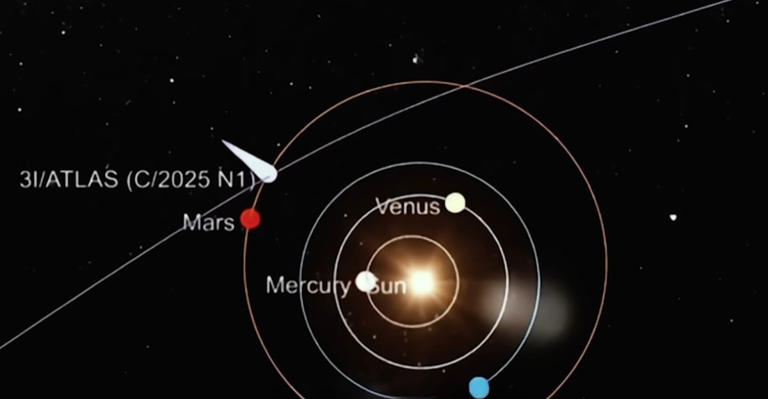
Despite the pushback, Luna has continued to call on NASA to release all of the images it has collected during the interstellar visitor's journey through the solar system, including its close passes by Venus, Mars and the sun.
She has also publicly supported Loeb's investigation into 3I/ATLAS, which has now found at least 11 anomalies that scientists have yet to fully explain, including its anti-tail, turning blue as it neared the sun, and sudden course changes that defy gravity.
While one strange oddity being seen in a comet could be explained by science, Loeb previously told the Daily Mail that the odds of 3I/ATLAS displaying all these anomalies at the same time were astronomical and point to it being an extraterrestrial craft.
The legend of Atlantis tells us that the world may be dotted with lost settlements – and scientists may have just discovered one.
Explorers at the Russian Academy of Sciences have found 'traces of a submerged city' beneath Lake Issyk Kul in Kyrgyzstan.
The massive salt lake has a maximum depth of 2,192 feet (668 metres), making it the eighth-deepest lake in the world, but the remains are remarkably shallow.
These telling pieces of evidence include the remains of a medieval burial ground, large ceramic vessels and parts of a building made of baked bricks.
t's thought the city housed Muslim prayer houses, schools, bathhouses and possibly even a grain-milling operation for making bread.
Expedition leader Valery Kolchenko, researcher at the National Academy of Sciences of the Kyrgyz Republic, said it was an 'important' commercial settlement.
'The site we are studying was a city or a major trading hub,' Kolchenko said.
Traces of a lost city at relatively shallow depths have been discovered by archeologists beneath Lake Issyk-Kul in Kyrgyzstan
Scientists have reportedly uncovered a 'medieval necropolis' with fired-brick structures and ceramic vessels at the northwest of the lake
Appearing from space as a stunning blue void, Lake Issyk Kul is nearly 500,000 feet (182km) long and just under 200,000 feet (60km) wide.
The mysterious Issyk-Kul has no known outflow, although some experts claim it is linked to a local river by a channel deep underground.
Surrounded by the dramatic Tianshan mountains, it has risen dramatically since ancient and medieval times, which is why the ruins now lie underwater.
As reported by Heritage Daily, excavations have taken place at the the flooded Toru-Aygyr complex at the lake's northwest, an important point on an ancient trade route.
Archeologists surveyed four underwater zones at very shallow depths of three feet to 13 feet (one to four metres) near the lake's shoreline.
In the first one, they discovered numerous fired-brick structures including one containing a millstone – a huge circular stone used for crushing and grinding grain – plus collapsed underwater stone structures and wooden beams.
Researchers think they've uncovered traces of a public building that possibly served as a mosque, bathhouse or a school, known as a madrassa.
The three other zones also revealed evidence of an early burial ground, a 13th century Muslim necropolis, and round and rectangular structures made of mudbrick.
Archaeologists and divers are pictured at the site, surrounded by the dramatic Tianshan mountains
What is Lake Issyk-Kul?
Lake Issyk-Kul is an enormous saline lake in the western Tianshan Mountains, eastern Kyrgyzstan.
It has a maximum depth of 2,192 feet (668 metres), making it the eighth-deepest lake in the world.
Scientists say it was the location of a city that went underwater following a terrible earthquake near the the beginning of the 15th century.
The city was an important stop-off location along the Silk Road, the great trade route connecting China and the Mediterranean.
Burials have also been found that have preserved signs of traditional Islamic rituals – the skeletons face north with their faces turned towards the Qibla, to which Muslims turn at prayer.
According to the Russian Geographical Society, which funded the project, 'all this confirms that an ancient city really once stood here'.
Eve so, the samples have already been sent for analysis and accelerator mass spectrometry dating – a highly accurate method that can determine the age of organic materials.
This lost settlement at Toru-Aygyr was a 'city or a large commercial agglomeration' on one of the important sections of the Silk Road, the historic network that connected Europe and Asia.
Active from the second century BC until the mid-15th century, the Silk Route facilitated the exchange of silk, spices, precious metals and ideas between China and the Mediterranean and played a key role in the spread of industry, art and religion.
But the city at Lake Issyk-Kul was devastated by a 'terrible earthquake' at the beginning of the 15th century, causing the settlement to go under, according to Kolchenko.
'According to our assessment, at the time of the disaster, the residents had already left the settlement,' he said.
'After the earthquake disaster, the region’s population changed drastically, and the rich medieval settlement civilization ceased to exist.'
Issyk-Kul (pictured) has a maximum depth of 2,192 feet (668 metres), making it the eighth-deepest lake in the world
It's generally believed the story about the world of Atlantis was first told 2,300 years ago by the Greek philosopher Plato who made it up, but some history fans persist with the idea that it actually existed (artist's impression)
Once the civilization fell, nomadic people took its place and today the shoreline of the lake is dotted with small villages.
Land sinking to the seafloor is not unusual; in fact Britain is also surrounded by former islands and coastal spots that are now submerged, many sunk by wild weather events.
One of these is Ravenser Odd, a short-lived medieval city on an island in the Humber Estuary, described as 'Yorkshire's Atlantis' in reference to the world's most famous fictional island.
It's generally believed the story of Atlantis was first told 2,300 years ago by Greek philosopher Plato who made it up, but some fans persist with the idea that it actually existed.
What was the Silk Road?
The Silk Road was not a single road, but a vast network of land and sea trade routes connecting the East and West for over 15 centuries.
Originating at Xi'an (Sian), the 4,000–mile (6,400–km) road followed the Great Wall of China to the northwest, bypassed the Takla Makan Desert, climbed the Pamirs (mountains), crossed Afghanistan, and went on to the Levant.
From there the merchandise was shipped across the Mediterranean Sea.
Few people traveled the entire route, and goods were handled in a staggered progression by middlemen.
While named for the highly prized Chinese silk that traveled westward, it facilitated the exchange of a wide range of goods like porcelain, paper, and precious metals, as well as cultural ideas, technologies, and religions.
The term 'Silk Road' was not used by those plying its supposed path in the ancient and medieval past, according to the British Museum.
In fact, it was not coined until the 19th century, and only gained wider currency in the 20th century.
Nina Kulagina was particularly interesting to the United States government, which possessed unbelievable telekinesis abilities. Stranger still, her supernatural achievements are detailed in multiple US federal reports.
Nina was born in St. Petersburg in 1926. At 14, she was recruited to fight against the Nazis in World War II. During her service in the Red Army, she was seriously injured, ending her military career. Afterward, she got married and had children. But soon, strange things started happening to her.
One day, when she was furious, Nina noticed objects around her moving on their own. She thought it might be a poltergeist. Over time, she realized that these movements were linked to her strong emotions.
Nina Kulagina
Curious, Nina began practicing to control this strange ability, known as psychokinesis. At first, she struggled to move objects at will. But with persistence, she managed to move small items like matchsticks just by thinking about it.
As her confidence grew, she could move heavier objects and even develop other psychic abilities, such as sensing what was in a stranger’s pocket or identifying colors while blindfolded.
However, the intense mental training started to affect her health, and she ended up in the hospital for exhaustion. While there, the medical staff witnessed her strange powers. Soon after, the state authorities took an interest in her.
Nina attracted the attention of parapsychologists and doctors across Russia. Many were doubtful about her supposed supernatural abilities. Forty scientists, including two Nobel Prize winners, studied the mysterious housewife and conducted various strict experiments. To the experts’ surprise, she repeatedly succeeded in many tests under controlled conditions, showing impressive skill.
After confirming her telekinetic abilities, doctors examined her. They found that her heartbeat, brain waves, and electromagnetic field changed during psychokinesis. Each session was closely monitored by researchers. Here are some of the intriguing paranormal accomplishments they recorded and filmed:
Physically moving objects & altering their rotation.
Cracking an egg, then reassembling the shell fragments.
Imprinting images on undeveloped film. Magnetizing or demagnetizing things.
Altering living cells and organic tissue. Modifying essential physiological functions.
Affecting internal organs such as the heart.
On March 10, 1970, Nina Kulagina, a housewife and former member of the Red Army tank regiment, stopped a frog’s beating heart using only her mind.
According to the Soviet doctors monitoring her, Kulagina’s own heart rate increased dramatically during the seven minutes it took her to mentally stop the frog’s heart. It had taken her 20 minutes to prepare for the exercise.
Dr. Genady Sergeyev claimed that normally frog hearts remain active in solution up to 1.5-2 hours after removal from the frog. In the first of the experiments, the electrocardiogram (EKG) indicated activity ceased about 7 minutes after Kulagina began concentrating on “stopping the heart.” The heart had been in a ceramic container.
In the second experiment, with the heart in a metallic container, heart activity ceased after 22 minutes. In both these experiments, Kulagina was 1.5 meters from the “target” hearts. (U) Sergeyev measured weak electric and magnetic fields at the target heart that correlated with some of Kulagina’s physiological activity.
This may have been responsible for the effect noted on heart activity. (U) In another experiment, Kulagina attempted to increase the heart rate of a skeptical physician.
Electroencephalogram, electrocardiogram, and other parameters were measured in both. Abrupt changes in these parameters were noted in both people within 1 minute after the experiment began. After 5 minutes, Sergeyev judged that the heart activity of the physician had reached dangerous levels, and the experiment was terminated.
Subsequent analysis indicated a definite synchronous effect was noted between certain heart parameters for both the physician and Kulagina. Sergeyev apparently views psychokinetic-type phenomena as being closely related to healing-type phenomena and apparently has done (and is doing) considerable investigations in this direction. (Source)
As the arms race unfolded and the atmosphere of deep suspicion intensified, both the U.S. and the USSR focused enormous resources on innovating ever-stranger and more sophisticated modes of spycraft. One of them was psychic power.
It was an odd turn for the Soviets, considering that they saw mysticism the same way they saw religion: as an “opiate of the masses,” in Marxist terms. As historian Annie Jacobsen writes in her book Phenomena: The Secret History of the U.S. Government’s Investigations into Extrasensory Perception and Psychokinesis, the Soviets had outlawed anything in the realm of the paranormal — that is, until they realized they might be able to use mysticism to spy on their enemies, and did an ideological about-face.
But first, they had to couch their activities in more scientific terms. In a 1963 edict, “Soviet nomenclature around ESP was rewritten to sound technical,” writes Jacobsen, “thereby severing all ties to ESP’s occult past.” She goes on to list some of the notable terminological changes this entailed: telepathy became “long-distance biological systems transmissions.” Psychokinesis (moving physical objects with the mind) became “non-ionizing, in particular electromagnetic, emissions from humans.” (Source)
In the 1960s, the Soviets studied energy around humans to control physical systems. They believed understanding this energy could be as powerful as atomic energy.
Meanwhile, the US discovered strange signals coming from a Moscow apartment, aimed at the US Embassy. This led the Pentagon to start a secret program to duplicate the signals. Later, the US studied Soviet psychic powers, like a woman who could move objects with her mind.
A report concluded that the Soviets were developing ways to control human behavior through hidden means, and their interest in psychic powers was huge. In 1978, the CIA started a secret program called StarGate to develop psychic abilities, especially “remote viewing”. This meant using psychic powers to describe places far away, like Soviet military bases, just by knowing their coordinates.
The results were often surprisingly accurate. The CIA called this unusual way of gathering information “anomalous cognition”. Some of the strange activities of StarGate were documented in the book “The Men Who Stare At Goats”, which was later made into a film.
The psychic programs always had their detractors, but they persisted into the 1990s and possibly beyond. In 1984, The Washington Post reported that the CIA continued to take psychic research seriously, adding that “Former CIA director Stansfield Turner told critics their skepticism about the CIA’s psychic projects was healthy, but that research should keep pace with their skepticism.”
For her part, Kulagina was suspected by magicians and other skeptics of rigging her supposedly psychic feats. She was called out by the Russian newspaper Pravda as a fraud. She sued for defamation in 1987 and was granted a partial victory. But her exposure didn’t change the Soviet and even post-Soviet pursuit of a psychic advantage.
Officials involved in the program report that groups of military psychics were employed by Russia as recently as the Chechen wars. (Source)
Nina struggled much to prove her psychic abilities and would have given many such experiments. But, near the end of her life, in her late seventies, she seems to have lost her powers, and her health did not support conducting scientific tests to prove her abilities. According to some reports, her psychic abilities were the root cause of her heart attack.
So, the truth behind Nina’s abilities wied along with her. At her funeral, the Soviets praised Nina Kulagina as a “Hero of Leningrad” who fought for her people and her country. But, till now, some Russians believe in her psychic abilities that are yet to be proven genuine even today.
Whether or not the Soviet Union faked Kulagina, or if she really did have profound psychokinetic abilities, remains a mystery.
Jupiter, along with the other outer planets may have had its orbit influenced by an interloper early in the Solar System's history (Credit : NASA/STSCI)
According to the textbook version of Solar System formation, planets should orbit the Sun in elliptical orbits, all lined up in the same plane. Jupiter, Saturn, Uranus, and Neptune don't follow this script. Their orbits are a little more elliptical and tilted relative to each other, not dramatically, but enough to puzzle astronomers for decades. Standard formation models predict the giant planets emerged from the protoplanetary disk on the same plane as the rest of the planets. Instead, something seems to have pushed them off course.
Atacama Large Millimeter Array image of HL Tauri showing its protoplanetary disk
(Credit : ALMA)
A new study by researchers Garett Brown, Hanno Rein, and Renu Malhotra proposes a provocative answer. Billions of years ago, an interstellar intruder passed through our Solar System and gravitationally shoved the giant planets into their current configuration. Not a star, but something called a substellar object, a rogue planet or brown dwarf between two and fifty times Jupiter's mass, wandering the Galaxy without a stellar anchor.
The researchers ran 50,000 computer simulations spanning 20 million years each, varying the intruder's mass, speed, and trajectory. Most produced solar systems nothing like ours. But in roughly one percent of simulations, a single close encounter reproduced the orbital characteristics astronomers observe today. The winning scenario involved an object about eight times Jupiter's mass swooping within 1.7 astronomical units of the Sun, barely beyond Mars's current orbit, at a velocity between one and three kilometres per second.
That's remarkably close for such a massive visitor. The gravitational disturbance during this flyby would have excited the giant planets' eccentricities and tilted their orbital planes, nudging them from idealised circles into the slightly wonky paths they follow now. The researchers estimate roughly a one in 9,000 chance that such an encounter occurred during the Solar System's residence in its birth cluster, when stars were packed more densely and close passes were more common.
Artist impression of a brown dwarf. Such an object may have been responsible for the adjustment of the orbits of the outer planets
(Credit : NASA/JPL-Caltech)
Previous theories attributed the planets' orbital quirks to internal dynamics; resonances between planets, migration through the protoplanetary disk, or gravitational interactions that played out over millions of years. These mechanisms can certainly alter orbits, but they struggle to explain the specific pattern of eccentricities and inclinations observed. The flyby hypothesis offers a cleaner explanation, one dramatic event rather than a complicated sequence of internal adjustments.
Importantly, the simulations also included Earth and the other terrestrial planets. The flybys that successfully reproduced the giant planets' orbits left the inner solar system largely intact. Rocky planets survived the encounter and acquired orbital characteristics similar to what we observe, suggesting Earth's habitability wasn't compromised by this ancient near miss.
The findings carry implications beyond our solar system. Substellar objects appear relatively common in the Galaxy, rogue planets and brown dwarfs untethered to stars, drifting through interstellar space. If such encounters can reshape planetary architectures, then the diversity of exoplanet systems discovered in recent years might partly reflect similar close calls with passing wanderers.
The research doesn't dismiss internal perturbations entirely. Brown, Rein, and Malhotra acknowledge that a combination of internal and external influences likely shaped the Solar System's final form. But their simulations demonstrate that a single substellar flyby provides a likely, efficient mechanism for generating what we see today, perhaps just a coincidence that left permanent fingerprints on our planetary neighbourhood.
Iron-oxidising bacteria in surface water (Credit : NH Estuaries Project)
Iron rusts. On Earth, this common chemical reaction often signals the presence of something far more interesting than just corroding metal for example, living microorganisms that make their living by manipulating iron atoms. Now researchers argue these microbial rust makers could provide some of the most promising biosignatures for detecting life on Mars and the icy moons of the outer Solar System.
The familiar sign of flakey rust, or iron oxide as it's more properly known may well be something we can use to identify biological processes on other worlds
(Credit : Laitr Keiows)
Laura Tenelanda-Osorio and colleagues from the University of Tübingen in Germany have compiled a comprehensive review of how iron metabolising bacteria leave distinctive fingerprints in rocks and minerals, and why these signatures matter for astrobiology. The research, published in Earth-Science Reviews, bridges decades of terrestrial microbiology with the practical challenges of searching for life beyond Earth.
Iron ranks among the most abundant elements in the Solar System, and Earth's microorganisms have evolved remarkably diverse ways to exploit it. Some bacteria oxidise ferrous iron to generate energy, essentially breathing iron the way humans breathe oxygen. Others reduce ferric iron, using it as the final electron acceptor in their metabolism. These processes don't happen in isolation. Iron metabolising microbes link their element of choice to the carbon and nitrogen cycles, coupling iron transformations to carbon dioxide fixation, organic matter degradation, and even photosynthesis.
The byproducts of these microbial reactions create what researchers call biogenic iron oxyhydroxide minerals. These aren't subtle traces. Organisms that thrive in neutral pH environments and oxidise iron produce distinctive structures such as twisted stalks, tubular sheaths, and filamentous networks of iron minerals mixed with organic compounds. The minerals precipitate as the bacteria work, forming rusty deposits that can persist in the geological record for billions of years. This durability makes iron biosignatures particularly attractive for planetary exploration. Unlike fragile organic molecules that degrade under radiation and harsh chemistry, mineralised iron structures can survive. Researchers have identified these biosignatures in environments ranging from hydrothermal vents on the ocean floor to terrestrial soils, from acidic mine drainage to neutral freshwater springs. Wherever liquid water contacts iron bearing rocks, iron metabolising bacteria typically establish themselves.
The red colour of Mars comes from the dusty iron oxide all over its surface
(Credit : Kevin Gill)
Mars presents an obvious target. The planet's distinctive red colour comes from oxidised iron in surface dust and rocks. Ancient Mars hosted liquid water, and spacecraft have documented iron rich minerals throughout the geological record. If microbial life ever evolved on Mars, iron metabolism would have provided an accessible energy source. The minerals these hypothetical organisms produced could still exist, locked in ancient sediments awaiting discovery by rovers equipped with the right instruments.
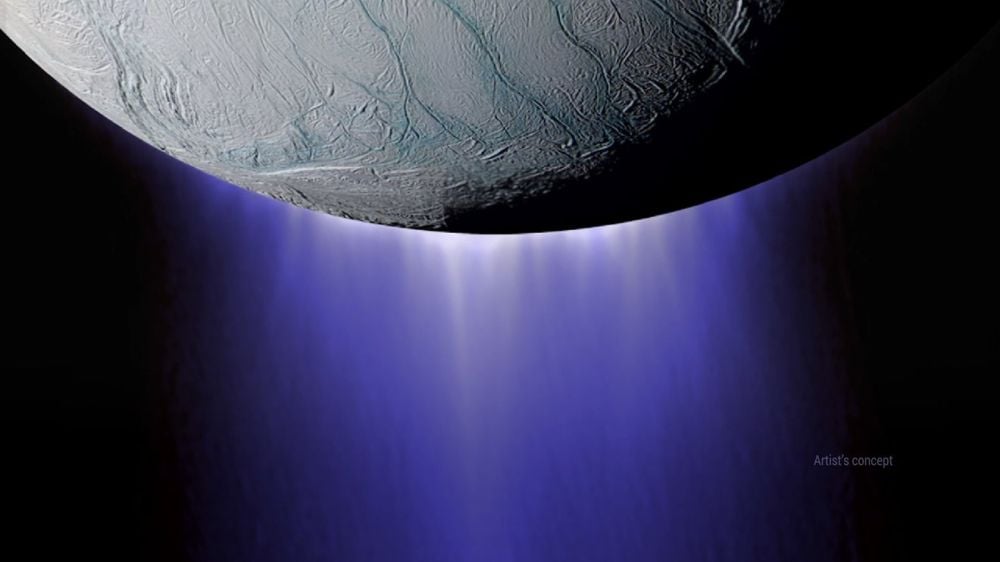
The icy moons Europa and Enceladus offer different but equally compelling possibilities. Both harbor subsurface oceans beneath frozen shells. Europa's ocean likely contacts a rocky seafloor, where water and rock interactions would release dissolved iron. Enceladus actively vents ocean material through ice geysers at its south pole. Mission concepts propose sampling these plumes or landing near the vents, analyzing ejected particles for iron minerals that might betray biological origins.
The review emphasises that recognising biogenic iron minerals requires understanding how they form, what textures they create, and how they differ from abiotic iron precipitates. Mission planners must equip spacecraft with instruments capable of detecting not just iron minerals generally, but the specific morphological and chemical signatures that distinguish biology from geology.
The stakes are high. Finding iron biosignatures on another world wouldn't just confirm life exists elsewhere, it would reveal that the same fundamental chemistry supporting Earth's deep biosphere operates throughout the Solar System.
Researchers have uncovered evidence that the ocean on Saturn's moon Enceladus is in balance. The ocean loses as much heat as it gains, boosting its prospects for habitability. Image Credit: Oxford University
The case for habitability in Enceladus' warm, ice-capped ocean is growing. Ever since Cassini found evidence of hydrothermal activity in the moon's ocean, and detected life's building blocks in the plumes of material ejected from the ocean, scientists have worked to put this data into context.
One of the most important factors in habitability is time. The conditions that support habitability need to persist, like they have on Earth for billions of years. One of those factors is a world's heat budget. A planet, or moon in this case, needs to moderate its temperature and maintain a balance in its heat flow. Too much cooling or too much heating can both damage the prospects for long-term habitability.
The Cassini mission was in the Saturnian system for about 13 years. During that time, it performed many flybys of Enceladus. The mission found plumes of water ice and vapour erupting from deep cracks in the ice covering the moon's south pole. Scientists used the data from these flybys to measure the amount of heat coming from the south pole.
*This artist's illustration highlights the plumes coming from Enceladus' south pole region. The features unofficially called 'tiger stripes', parallel linear depressions in the moon's icy surface, are also visible.
Image Credit: NASA/JPL-Caltech*
However, there was no evidence of heat escaping from the moon's north pole, and without that evidence, scientists naturally assumed that the region was geologically inactive.
New research is reconsidering that. It's titled "Endogenic heat at Enceladus’ north pole," and it's published in Science Advances. The lead author is Dr. Georgina Miles from the Southwest Research Institute.
"The long-term survival of Enceladus’ ocean depends on the balance between heat production and heat loss," the researchers write. "To date, the only place where a direct measurement of Enceladus’s heat loss has been made is at the south pole. Here, we show that the north pole also emits heat at a greater rate than can be explained by purely passive models."
Cassini was able to observe Enceladus' north pole in the winter in 2005 and in the summer in 2015 with its Cassini Composite InfraRed Spectrometer (CIRS) instrument. By working with that data, the researchers determined that the north pole's surface was about 7 degrees Kelvin warmer than thought. That's more than passive models of Enceladus' heat flux predict, and is a strong indication that the north pole is also leaking heat.
With heat measurements from both of the moon's poles, Miles and her co-researchers could then constrain Enceladus' overall heat budget.
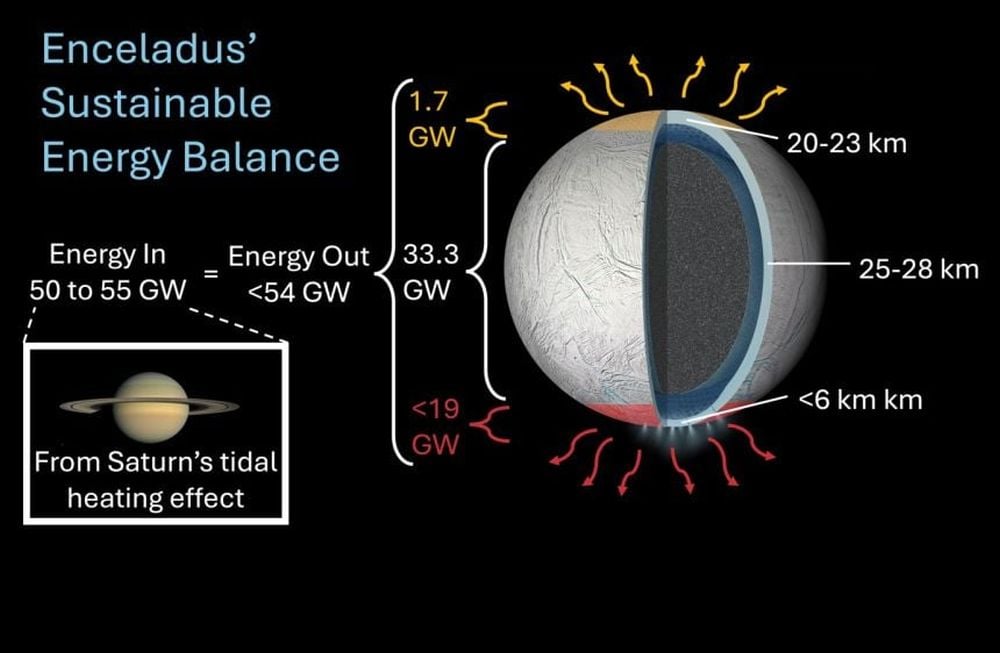
After measuring heat flow at Enceladus' north pole, the researchers were able to combine those measurements with the same measurements from the south pole. This let them constrain Enceladus’ global conductive heat flow. This is the first observational constraint of Enceladus’ energy loss budget (<54 GW). This measurement is consistent with measurements of the moon's energy input (50 to 55 GW) from tidal heating. That means that Enceladus' heat flow is sustainable in the long term, which is a key factor for the evolution of life.
Image credit: University of Oxford/NASA/JPL-CalTech/Space Science Institute (PIA19656 and PIA11141)
"The energy budget of Enceladus is an important quantity to evaluate because its tidal heat, generated from its interaction with Saturn via the orbital resonance with Dione, is linked to Enceladus’ age, ice shell thickness, and thus, the lifetime of its ocean," the researchers explain. "The similarity of the estimated heating and heat loss rates suggests the ocean in its current epoch is long-lived, making it far more likely to be an environment hospitable to the development of life."
The research also showed that thermal data like this is useful in measuring the thickness of the ice on frozen moons. This is important for any future missions to Enceladus, or to any other frozen ocean moons in the Solar System. "Assuming a conductive ice shell, our estimated heat flux in the north polar region implies an ice shell thickness of 20 to 23 km (global mean of 25 to 28 km), which falls within the range of values estimated by several previous ice shell structure models," the researchers write.
Enceladus is a prime target in the search for life in our Solar System. The bulk of evidence shows that microbial life is possible there, and this research bolsters that conclusion. Still, the only real way to know for sure is to send a spacecraft there.
"Eking out the subtle surface temperature variations caused by Enceladus’ conductive heat flow from its daily and seasonal temperature changes was a challenge, and was only made possible by Cassini’s extended missions," lead author Miles said in a press release. "Our study highlights the need for long-term missions to ocean worlds that may harbour life, and the fact the data might not reveal all its secrets until decades after it has been obtained."
Unfortunately, Saturn is a long way away. While the ESA's JUICE and NASA's Europa Clipper are on their way to investigate Europa, another frozen moon with a warm subsurface ocean, missions to Enceladus remain in the conceptual stage at this point. The future is always uncertain, but hopefully, one day, a mission will make it to this fascinating frozen moon and determine if its actually habitable.
Meer van UFO'S of UAP'S, ASTRONOMIE, RUIMTEVAART, ARCHEOLOGIE, OUDHEIDKUNDE, SF-SNUFJES EN ANDERE ESOTERISCHE WETENSCHAPPEN - DE ALLERLAATSTE NIEUWTJES


 What if the aliens come and we just can’t communicate?