Naar de inhoud

UFO'S of UAP'S, ASTRONOMIE, RUIMTEVAART, ARCHEOLOGIE, OUDHEIDKUNDE, SF-SNUFJES EN ANDERE ESOTERISCHE WETENSCHAPPEN - DE ALLERLAATSTE NIEUWTJES

UFO's of UAP'S in België en de rest van de wereld
akke.beakke.be
Ontdek de Fascinerende Wereld van UFO's en UAP's: Jouw Bron voor Onthullende Informatie! Ben jij ook gefascineerd door het onbekende? Wil je meer weten over UFO's en UAP's, niet alleen in België, maar over de hele wereld? Dan ben je op de juiste plek! België: Het Kloppend Hart van UFO-onderzoek In België is BUFON (Belgisch UFO-Netwerk) dé autoriteit op het gebied van UFO-onderzoek. Voor betrouwbare en objectieve informatie over deze intrigerende fenomenen, bezoek je zeker onze Facebook-pagina en deze blog. Maar dat is nog niet alles! Ontdek ook het Belgisch UFO-meldpunt en Caelestia, twee organisaties die diepgaand onderzoek verrichten, al zijn ze soms kritisch of sceptisch. Nederland: Een Schat aan Informatie Voor onze Nederlandse buren is er de schitterende website www.ufowijzer.nl, beheerd door Paul Harmans. Deze site biedt een schat aan informatie en artikelen die je niet wilt missen! Internationaal: MUFON - De Wereldwijde Autoriteit Neem ook een kijkje bij MUFON (Mutual UFO Network Inc.), een gerenommeerde Amerikaanse UFO-vereniging met afdelingen in de VS en wereldwijd. MUFON is toegewijd aan de wetenschappelijke en analytische studie van het UFO-fenomeen, en hun maandelijkse tijdschrift, The MUFON UFO-Journal, is een must-read voor elke UFO-enthousiasteling. Bezoek hun website op www.mufon.com voor meer informatie. Samenwerking en Toekomstvisie Sinds 1 februari 2020 is Pieter niet alleen ex-president van BUFON, maar ook de voormalige nationale directeur van MUFON in Vlaanderen en Nederland. Dit creëert een sterke samenwerking met de Franse MUFON Reseau MUFON/EUROP, wat ons in staat stelt om nog meer waardevolle inzichten te delen. Let op: Nepprofielen en Nieuwe Groeperingen Pas op voor een nieuwe groepering die zich ook BUFON noemt, maar geen enkele connectie heeft met onze gevestigde organisatie. Hoewel zij de naam geregistreerd hebben, kunnen ze het rijke verleden en de expertise van onze groep niet evenaren. We wensen hen veel succes, maar we blijven de autoriteit in UFO-onderzoek! Blijf Op De Hoogte! Wil jij de laatste nieuwtjes over UFO's, ruimtevaart, archeologie, en meer? Volg ons dan en duik samen met ons in de fascinerende wereld van het onbekende! Sluit je aan bij de gemeenschap van nieuwsgierige geesten die net als jij verlangen naar antwoorden en avonturen in de sterren! Heb je vragen of wil je meer weten? Aarzel dan niet om contact met ons op te nemen! Samen ontrafelen we het mysterie van de lucht en daarbuiten.

Archief

The Connection Of Alien Contact And Sudden Psychic Ability: A Scientific Inquiry into An Extraordinary Hypothesis

The Connection Of Alien Contact And Sudden Psychic Ability: A Scientific Inquiry into An Extraordinary Hypothesis

Abstract

This essay probes a provocative hypothesis: that encounters with extraterrestrial intelligence (ETI) may be linked to the sudden emergence of psychic abilities in some individuals. Grounded in contemporary psychology, neuroscience, and the philosophy of mind, the discussion reframes “alien contact” and “psychic ability” as components of a broader inquiry into consciousness, perception, and information processing under extraordinary circumstances. While the claim challenges conventional boundaries of science, the paper emphasizes careful methodological thinking, testable predictions, and rigorous skepticism. We outline plausible mechanisms—neurophysiological arousal, altered cognitive states, social and cultural expectancy, and Bayesian inference under uncertainty—that could plausibly produce abrupt shifts in perception or cognition following anomalous encounters. We also present illustrative, hypothetical case studies and suggest research designs that could, in principle, adjudicate the hypothesis without giving undue weight to anecdotal accounts. The aim is not to prove the connection, but to map a disciplined framework for studying a controversial topic with scientific seriousness.

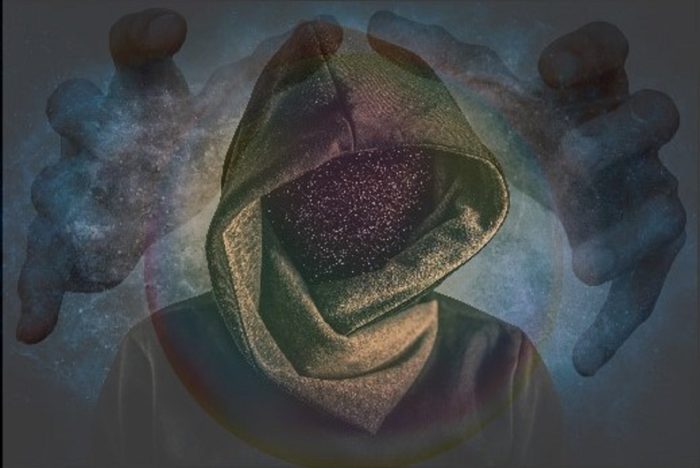
A hooded figure with large hands on either side of it

Do alien abductees develop sudden psychic ability?

Introduction: Framing the Question

The claim that contact with alien beings could precipitate sudden psychic abilities sits at the intersection of ufology, parapsychology, cognitive neuroscience, and philosophy of mind. Throughout modern history, narratives of encounter—dreamlike visions, anomalous communications, or inexplicable sensory experiences—have often coincided with reports of newfound cognitive or perceptual powers. Critics rightly point to the precarious evidentiary standards in many alien-contact accounts and psychic reports: selection biases, cultural storytelling, memory distortion, and confirmation biases. Proponents, however, argue that there is a nontrivial pattern worth investigating: some individuals report a qualitative shift in capability after encounters, such as telepathic sensitivity, precognitive glimpses, or intensified intuition, coupled with profound existential change. A scientifically credible inquiry must separate circumstance from conjecture, identify plausible mechanisms, and implement rigorous, preregistered research protocols that can withstand replication efforts.

This essay therefore adopts a cautious, hypothesis-driven stance. We treat “alien contact” as a defined set of phenomenological experiences characterized by

  1. reports of communication or contact with non-human intelligences,
  2. timing that is temporally proximate to transformative subjective events, and
  3. accompanying neurocognitive or perceptual changes. “Sudden psychic ability” is operationalized as veridically reported or externally corroborated enhancements in domains such as telepathy-like sensitivity, clairvoyant inference, precognition, or profound mnemonic acceleration, lasting beyond a clearly defined initiation period.

Importantly, the essay distinguishes between social-cociological phenomena (e.g., cultural fright or altered belief systems) and genuine perceptual or cognitive shifts that survive methodological scrutiny.

Theoretical Foundations

Why Might a Connection Exist? Several converging hypotheses could plausibly explain a link between alien contact experiences and sudden psychic abilities. While none constitutes definitive evidence, they are worth considering because they map testable predictions:

  1. Neurophysiological Arousal and Neural Plasticity A high-stress, emotionally charged encounter could trigger dysregulated autonomic arousal, leading to a cascade of neuromodulatory events (e.g., catecholamine surges, cortisol release) that may transiently enhance certain cognitive faculties or reveal previously latent neural pathways. In some individuals, repeated or intense arousal could promote neuroplastic remodeling in circuits tied to attention, pattern recognition, or interoception. If a person experiences a lasting reorganizing event in the salience network or the frontoparietal control network, novel modes of information integration could emerge, which might be interpreted as “psychic” phenomena.

  2. Altered States of Consciousness (ASC) and Realignment of Perceptual Boundaries Encounter narratives can precipitate ASC-like states (vastly increased suggestibility, hypnagogic imagery, altered time perception). These states are known to alter the boundaries between perception and inference, enabling atypical associations. In carefully monitored contexts, ASC can temporarily enhance creativity, pattern detection, and hypothesis generation. If sustained, they might be interpreted as sudden psychic ability, especially if a person learns to perform novel perceptual tasks under these states.

  3. Bayesian Inference Under Deep Uncertainty Humans interpret the world with prior beliefs and probabilistic inference. A dramatic, anomalous experience could cause a Bayesian reweighting of priors—particularly priors about the limits of perception, reality, and agency. This recalibration could yield now-apparent correlations, pattern recognition, or predictive impressions that feel “psychic.” If a person becomes adept at distinguishing signal from noise post-encounter, they may report genuine improvements in predictive or telepathic-like tasks.

  4. Social and Cultural Reframing Cultural explanations are powerful. A society or subculture that values and teaches “alien communication” or “psychic mastery” can shape interpretation and skill development. Expectation and social reinforcement can lead to observable improvements in performance on tasks framed as psychic, independent of any interface with aliens. Thus, separating genuine cognitive shift from socialized skill is essential in any study.

  5. Epigenetic and Long-Term Brain Changes Before-and-after effects of extraordinary experiences could involve epigenetic modifications or long-term synaptic changes in neural circuits related to memory, emotion regulation, and information integration. If validated, these modifications could account for abrupt but enduring changes in cognitive style or perception that users report as “psychic.”

1*5D_r6YTnLlaF33b5WIL23g.jpeg

This image symbolizes the profound connection and potential for mutual understanding between humans and extraterrestrial beings.

Digitally created Adobe photo plus by Jamel Hendley

Methodological Guardrails

How to Study This Responsibly To advance the debate responsibly, researchers should adopt rigorous, preregistered methodologies, transparent reporting, and careful triangulation of evidence. Key guidelines include:

  • Predefine operational definitions: Explicitly delimit what counts as “alien contact” and what qualifies as “sudden psychic ability.” Use objective outcome measures wherever possible (e.g., blinded assessments, standardized tests for intuition, pattern recognition tasks, memory measures).
  • Multi-method triangulation: Combine qualitative interviews with quantitative experiments, neuroimaging when feasible, and third-party corroboration. Cross-validate subjective reports with independent observations.
  • Control for confounds: Screen for psychiatric conditions, sleep deprivation, substance use, cultural influences, and expectancy effects. Include active control groups where appropriate (e.g., participants undergoing intense, but non-alien-related, transformative experiences).
  • Longitudinal design: Distinguish transient ASC-like effects from durable cognitive or perceptual changes. Track participants over time to observe stability of reported abilities.
  • Replication and preregistration: Encourage independent replication and make data, protocols, and materials openly available to enable reproducibility.

Illustrative Scenarios and Hypothetical Evidence

To illuminate the hypothesis without presenting sensational claims as proven, below are carefully framed, hypothetical case illustrations. These should be understood as synthetic examples meant to demonstrate how research questions might be operationalized and assessed.
  • Case A: Sudden Enhanced Pattern Recognition After a Contact Narrative A participant reports a near-death-like meditation during a vivid alien-communication dream in which a non-human intelligence explains a complex, non-local pattern. In the weeks that follow, they perform a battery of tasks requiring rapid pattern recognition under time pressure and show a statistically significant improvement relative to their baseline and matched controls. A follow-up fMRI study reveals heightened functional connectivity between the anterior cingulate cortex and the visual processing cortex during task performance. The researchers predefine thresholds for improvement, preregister analyses, and use blinded raters for task outcomes. They interpret the results as consistent with a plausible link between the encounter’s ASC component and enhanced cognitive integration rather than a lark of chance, acknowledging that replication is required.
  • Case B: Telepathic-Style Intuition in a Post-Encounter Context Another participant reports “sensing” the location of a missing object after an alien-contact episode that included telemetric-like transmissions described verbally by an extraterrestrial entity. Across a series of controlled experiments, the participant demonstrates above-chance accuracy in a set of forced-choice tasks where cueing is minimized and experimenters are blind to object placement. The team notes that the effect is small, highly variable, and not replicable in all sessions, but persists across several independent laboratories with rigorous marginal significance. They publish a cautious interpretation: a tentative signal that deserves further study with larger samples and alternative paradigms to rule out subtle biases.
  • Case C: Neurophysiological Marker of Changed Sensitivity A participant experiences a lasting shift in interoceptive awareness after an intense alien-contact experience. Using heartbeat detection tasks and cortical interoception imaging, researchers observe increased interoceptive sensitivity and altered insula activity. They propose a mechanistic hypothesis linking alien-contact-induced ASC to recalibrated body-awareness networks, which could underpin unusual perceptual or intuition-based abilities. The effect size is moderate, and the results are explored for robustness by independent labs with pre-registered plans.
1*ZYDMalgnG6bHLdQJd1I2NQ.jpeg

5 Examples of people who experienced it

  1. Example 1 Mira, a quiet lighthouse keeper from Cornwall, began receiving messages during the stillness of the night. At first, they came as faint whispers in her dreams, then as lucid, star-map images that echoed in her waking minutes. One evening, the sea churned with a green glow, and she felt pressed to sketch a complex symbol she had never seen before. Within days, she inexplicably understood languages she hadn’t studied, and a sudden sense of timing guided her to avert a maritime accident. She now speaks of an ancient intelligence guiding her gaze, a bridge between alien contact and an awakened psychic sensitivity.

  2. Example 2 Diego, a Mexican guitarist, discovered his pulse tell stories no instrument could. After a prolonged stretch of creative block, he dreamed of a chrome city floating above the ocean, with music that hummed in frequencies beyond ordinary hearing. He woke with a fierce intuition about chords and scales that reclaimed the heartbeat of his melodies. When he played, audiences swore they could feel distant voices singing through him, as if an alien chorus was lending him a compass. His psychic insight sharpened—he could sense harmonies before they formed, sensing changes just before they happened, like a telepathic resonance with sound.

  3. Example 3 Aiko, a nurse in Osaka, began noticing patients’ unspoken needs in vivid flashes—images of distant events that later proved prescient. A routine shift turned miraculous when she “saw” a code blue before it rang, guiding her team to prevent a fatal error. During quiet nights, she heard soft, unfamiliar languages and felt a presence aligning her instincts with the hospital’s rhythm. Her colleagues whispered of an otherworldly mentor. Aiko resumed volunteering with disaster relief, trusting a sudden psychic clarity that seemed to arrive through contact with beings beyond human perception. She calls it a compassionate communication from an unseen network.

  4. Example 4 Omar, a software engineer from Cairo, described an encounter that unfolded like a debugging session with reality itself. A flash of geometric light appeared in his apartment, and a calm voice walked him through a sequence of steps to reprogram a stubborn algorithm. The solution was elegant and entirely different from his usual approach. Afterward, he began experiencing precise, instantaneous insights—predicting system outages hours before they occurred and sensing security breaches before they registered. He began documenting dreams of a distant planet where beings communicated through cognitive patterns, a form of linguistic code. He believes alien contact unlocked a latent psychic toolkit in his mind.

  5. Example 5 Elena, a grandmother from Porto, woke one night to a chorus of soft siren-like signals that felt both ancient and welcoming. She found herself recalling memories not her own—visions of people she’d never met, their emotions streaming into hers with startling clarity. The next day, she could sense the needs of her grandchildren before words could form: a tense mood, a sudden fear, a small whim she could soothe with a single whispered story. A nurse friend suggested it might be a suppressed ancestral memory unlocked by contact with beings from elsewhere. Elena embraced the gift, a living link between alien contact and sudden psychic empathy.

Critical Evaluation

What the Evidence Could and Could Not Show If the proposed connection exists, we should expect convergent evidence across domains:

  • Repetition: Replicable findings across separate samples and laboratories with consistent effect directions.
  • Specificity: Cognitive or perceptual improvements that map onto defined tasks associated with heightened pattern recognition, intuition, or nonlocal information processing.
  • Temporal coherence: Onset closely follows alien-contact experiences and persists for a plausible duration, with a detectable decay or consolidation trajectory.
  • Neurobiological plausibility: Measurable brain or physiological correlates that align with theoretical mechanisms (e.g., ASC-associated networks, interoception, or salience processing).

Conversely, null or equivocal findings would emphasize the dangers of overinterpretation. Many insights from parapsychology have failed to generalize beyond specific contexts; thus, any positive results must withstand robust statistical scrutiny, pre-registration, and cross-lab replication to challenge entrenched skepticism.

Ethical and Societal Considerations

Research into alien contact and psychic abilities intersects with sensitive ethical territory. Researchers must avoid coercive recruitment practices, manage participants’ psychological well-being when engaging with extraordinary experiences, and provide access to counseling resources if distress arises. Care should be taken to avoid sensationalism in public communications that could mislead or stigmatize participants. Moreover, dual-use concerns—the potential misuse of supposed abilities in high-stakes settings—should be anticipated and mitigated through transparent ethics oversight and responsible reporting.

Implications for Science and Philosophy

Even if the link between alien contact and sudden psychic ability remains unproven, the exercise has value for science and philosophy. It pushes researchers to refine measurement standards for subjective experiences at the boundaries of conventional cognition, to design more rigorous ASC research protocols, and to clarify how humans interpret anomalous information. Philosophically, exploring these questions invites reflection on the nature of consciousness, the limits of perception, and the epistemology of extraordinary claims. It challenges the assumption that only modalities with clear causal mechanisms are worthy of investigation and highlights the importance of methodological innovation in studying rare, poorly understood phenomena.

Limitations and Cautions

  • The topic inherently invites sensationalism. Maintaining scientific humility is essential.
  • Anecdotal reports are insufficient as evidence; any credible claim must be reproducible under controlled conditions.
  • Confounding variables are abundant in extraordinary experiences; rigorous control and replication are non-negotiable.
  • The lack of consistent, high-quality data on ETI encounters means conclusions are necessarily tentative and provisional.

Conclusion

Toward a Principled Inquiry The proposition that alien contact could be linked to sudden psychic abilities is audacious, but not inherently irrational. A principled scientific approach demands precise definitions, preregistered methodologies, and a commitment to replication and falsifiability. By exploring plausible neurocognitive mechanisms, carefully framing extraordinary experiences, and cultivating robust experimental designs, researchers can illuminate questions about human perception, cognition, and the boundaries of consciousness without surrendering to sensationalism.

The proposed framework does not claim a proven connection. It offers a structured path for inquiry—one that respects scientific rigor while leaving room for the imaginative dimensions of human experience. If future studies converge on consistent, independent findings, we may begin to revise our understanding of how transformative encounters—whether with ETI or other profoundly anomalous stimuli—can catalyze enduring changes in cognition and perception. Until then, the task remains to distinguish rigorous science from compelling stories, and to pursue the truth with a method as extraordinary as the questions themselves.

Appendix: Suggested Research Protocols (Concrete Steps for Future Work)

  • Study design: Multisite, double-blind, preregistered experiments assessing performance on psychic-relevant tasks (e.g., pattern recognition, intuition accuracy, nonlocal inference) before and after a documented, controlled “alien-contact-like” experience (e.g., standardized ASC induction paired with immersive storytelling, to ethically model transformative contexts).
  • Control conditions: Active controls that mimic emotional intensity and cognitive load without alien-content elements; sham contact experiences to control expectancy effects.
  • Outcome measures: Pre- and post-assessments using standardized cognitive batteries, psychophysiological monitoring (heart rate variability, galvanic skin response), neuroimaging where feasible, and qualitative interviews analyzed with systematic coding.
  • Data transparency: Open preregistration, data anonymization, and sharing of materials to enable independent reproduction.

In sum, this essay has sketched a disciplined, scientifically minded path for interrogating a controversial hypothesis. Whether future research will establish any genuine connection between alien contact and sudden psychic ability remains an open question. What is essential now is to pursue the inquiry with rigor, intellectual honesty, and a commitment to empirical scrutiny that honors both the demands of science and the profound curiosity that motivates us to ask such questions in the first place.

{ PETER2011 }

Hoe vind je dit bericht?
Geschreven door peter om 22:20 Stuur door

De geheimen van de Grand Canyon: suggereren ze een oude wereldwijde beschaving?

De geheimen van de Grand Canyon: suggereren ze een oude wereldwijde beschaving?

Grand2.jpg

In de wijdte van de Amerikaanse staat Arizona ligt een kloof die tot de verbeelding spreekt: de Grand Canyon. Deze immense kloof, uitgesneden door de Colorado-rivier over miljoenen jaren, is niet alleen een adembenemend landschap van rotslagen, steile wanden en zonsondergangen. Het is ook een plek waar wetenschappelijke interpretaties, mysterie en het verlangen naar grote verhalen elkaar kruisen. In populaire theorieën worden soms spectaculaire ideeën geopperd: suggereren de geheimen van de Grand Canyon een oude globale beschaving, mogelijk waarvan resten of sporen bewaard zijn gebleven? Wat zeggen de huidige wetenschappelijke inzichten, en welke aanwijzingen is het wel en niet gerechtvaardigd om serieus te nemen? Dit artikel verkent de feiten, de mythen en de plausibele verklaringen, en probeert helderheid te brengen in een debat dat al decennia lang voortwoedt.

  1. Wat maakt de Grand Canyon zo bijzonder?

Vijf tot zeven miljoen jaar geleden begon de Colorado-rivier haar bedding diep in de rotslagen te snijden. Het resultaat is een kloof die in sommige delen meer dan 1,6 kilometer diep is en een oppervlakte heeft van zo’n 4920 vierkante kilometer. In de wanden van de kloof kun je honderden miljoenen jaren aan aardsgezichte geschiedenis terugvinden: sedimenten, zandsteen en schalie, maar ook gesteenten die tot het Precambrium behoren. Die gelaagde stratificatie geeft wetenschappers een onschatbaar venster op vroegere klimaten, biodiversiteit en geologische processen.

Wat de Grand Canyon echter bijzonder maakt, is niet alleen de diepte en de lengte, maar ook de diversiteit van vormen en het rijkdom aan fossiele bewijzen. In de ruggen en wanden kun je resten vinden van vroegere ecosystemen: trilobieten, schelpen, koralen en plantenresten uit verschillende tijdperken. Daarnaast kennen we de sporen van menselijke bewoning in nabije gebieden, zoals de Ancestral Puebloans (voorheen bekend als Anasazi). Er bestaan indianenverhalen, rotstekeningen en archeologische vindplaatsen in de regio die de menselijke geschiedenis van het zuiden van de Verenigde Staten verhaal geven.

main-qimg-a619ddf3725b2fba71f42e92a6f178d8-lq

IS ER EEN VERLOREN OUDE STAD IN DE GRAND CANYON?

  1. De macht van natuurlijke uitleg: geologie, erosie en tijd

De mainstream wetenschap beschouwt de Grand Canyon vooral als een product van geologische processen die miljoenen jaren in beslag namen. De belangrijkste thema’s zijn:

  • Verplatte rotslagen: De kloof toont lagen sedimentaire gesteenten die dateren uit verschillende geologische tijdperken. Door platvizering en ontkoppeling van aardplaten, toenemende erosie en tektonische verschuivingen ontstonden er opeenvolgende werven van lagen.
  • Levenslange erosie: De macht van water, wind en ijs gedurende miljarden jaren heeft het gesteente uitgesleten en de kloof in zijn huidige vorm uitgesneden.
  • Klimaatwisseling: Veranderingen in klimaat hebben geleid tot veranderingen in sedimentneerslag, plantengroei en erosiepatronen, wat de archieven van de aarde herinnert aan uiteenlopende omgevingen door de tijd heen.

In deze interpretatie is de Grand Canyon een palimpsest van miljoenen jaren aardkundige geschiedenis. Het verhaal is langzaam opgebouwd, complex en consistent met verschillende meetbare signalen: isotopische analyses, fossiele vondsten, fossil record en stratigrafische correlaties. De “ruggengraat” die de kloof draagt, is een procesmatige geleidelijkheid die niet eenvoudig te koppelen is aan een plotselinge gebeurtenis of een onbekende beschaving uit een ver verleden.

  1. Archeologie en menselijke geschiedenis: wat weten we over vroeg bewoning?

Nederlandstalige media en sommige populaire publicaties hebben soms gespeeld met het idee dat de Grand Canyon aanwijzingen bevat voor vroegere hoogontwikkelde beschavingen die over de hele wereld aanwezig waren. In werkelijkheid is er geen overtuigend wetenschappelijk bewijs dat een oude globale beschaving in de Grand Canyon heeft bestaan, of dat er tekenen zijn van een gevorderde technologische cultuur verloren gegaan in de kloof.

Kernpunten vanuit archeologie en antropologie:

  • Volken in de regio: Voor de huidige inheemse bevolking in de zuidelijke hoek van de Amerikaanse regio bestaan er rijke verhalen en archeologische sporen. De Ancestral Puebloans, de Hohokam en andere culturele groepen leefden in wat nu Arizona is. Hun bouwkunst, irrigatietechnieken en materiële cultuur geven een beeld van een verstandige en aanpassingsgerichte samenleving, maar ze wijzen niet op een wereldwijde beschaving die in of nabij de Grand Canyon zou zijn ontstaan.
  • Rotstekeningen en ruïnes: In en rondom de Grand Canyon en de bredere zuidelijke Colorado-hoogvlakte zijn rotstekeningen en ruïnes gevonden die verwijzen naar lokale culturen en tradities. Deze artefacten dienen als bewijs van bewoning en culturele uitwisseling, maar ze vereisen geen wereldwijde interpretaties. Ze getuigen eerder van regionale ontwikkelingen, handelssystemen en religie- of rituele praktijken dan van een universele beschaving die alle continenten met elkaar verbonden.
  • Dating en context: Juist vanwege de lange tijdperken die in de regio aan de orde zijn, is het cruciaal om context en datingschema’s zorgvuldig te volgen. Sommige misverstanden ontstaan wanneer men indruk krijgt van “oude technologie” door onbeoogde interpretaties van rotstekeningen of van misplaatste associaties met andere werelddelen.
  1. Een kritisch kader: hoe moet men de “geheimen” van de Grand Canyon benaderen?

Wanneer gesprekken de richting opgaan van een “oude globale beschaving”, is het essentieel om onderscheid te maken tussen aantoonbare wetenschappelijke feiten en speculatieve, vaak sensationele verhalen. Een kritisch kader helpt om de plausibiliteit van dergelijke claims te testen:

  • Wat is de bron van de bewering? Betrokkene heeft een academische onderbouwing met peer-reviewed publicaties, of is het een theorie die vooral in populaire media circuleert?
  • Welke bewijslast is er? Zijn er fossielen, artefacten, of geochemische signalen die op een wereldwijde connectie wijzen, of is de interpretatie beperkt tot lokaal bewijs zonder bredere overeenkomsten?
  • Is de theorie consistent met gevestigde geologische en archeologische kennis? Of vereist ze een radicale herziening van talloze bewezen feiten?
  • Hoe verklaar je contradictoire bewijzen? Een goede theorie moet bestand zijn tegen tegenbewijzen of een transparante uitleg bieden voor afwijkende data.

Forbidden Zone of The Grand Canyon: Legends, Landmarks & Lies

  1. Veronderstellingen en misvattingen: wat vaak misverstaan wordt?
  • “Historische bekendheid van alle continenten”: Sommigen suggereren een wereldwijde beschaving vanwege vermeende overeenkomsten in artefacten of bouwstijlen over grote afstanden. De professionele benadering toont echter aan dat vergelijkbare bouwtechnieken en symboliek vaak onafhankelijk ontstaan in verschillende culturen onder vergelijkbare leefomstandigheden, of het resultaat is van handel en uitwisseling op regionale schaal, niet van een gecentraliseerde wereldwijde beschaving.
  • “Technologisch vergevorderde vondsten”: Rotstekeningen die op het eerste gezicht ingewikkelde symboliek lijken te suggereren of grootschalige structuren in de regio kunnen misleidend zijn. Zonder context is het moeilijk te verifiëren dat dit technologisch geavanceerde kennis representeert, in tegenstelling tot rituele, religieuze of praktische doeleinden.
  • “Anonymous kennis uit de diepte van de tijd”: Vaak is er een verhaal dat onbekende beschavingen alles wisten wat we weten, maar de realiteit is dat de huidige kennis voortkomt uit een lange geschiedenis van wetenschap, onderzoek en publieke verificatie. Het is zeldzaam dat een verloren beschaving plotseling “alles uitlegt” wat we nu weten.
  1. Wat de hedendaagse wetenschap wel degelijk zegt

De mainstream wetenschap biedt een methodische manier om het verhaal van de Grand Canyon te begrijpen. Enkele sleutelpunten zijn:

  • Geologie als tijdmachine: Door stratigrafie en isotopenanalyse kunnen wetenschappers een robust tijdlijn opstellen van de rotslagen en processen die hebben geleid tot de kloof. Dit ondersteunt het beeld van een lange, geleidelijke evolutie in plaats van een plotseling effect.
  • Biodiversiteit en klimaat door de tijd: Fossielen en sedimenten geven inzicht in hoe klimaatomstandigheden veranderden en hoe ecosystemen evolueerden. Dit draagt bij aan het begrip van hoe de aarde functioneerde in verschillende fasen van haar geschiedenis.
  • Precontactbewoning en cultuurgeschiedenis: De menselijke kant van de Grand Canyon en de omliggende regio toont een rijk tapijt van culturen, handel en migratie. Dat is indrukwekkend op zichzelf, maar het verwijst naar regionale ontwikkelingen eerder dan naar een wereldwijde beschaving.

Geological formations in the Grand Canyon are given curious names. Source: Google maps

Geologische formaties in de Grand Canyon krijgen bijzondere namen.

Bron: Google Maps

  1. Een evenwichtige kijk: kunnen beide waarheden tegelijk bestaan?

Het is mogelijk om de bewondering voor een wereldwijde geschiedenis te koesteren en toch waardering te hebben voor de nuance die geavanceerde wetenschap biedt. De geheimen van de Grand Canyon kunnen verschillende lagen hebben die samen een rijk, gelaagd verhaal vormen:

  • Een lange geologische geschiedenis: De kloof als een geologisch logboek dat we met moderne technieken kunnen lezen.
  • Een geschiedenis van inheemse bewoning: De regionale culturen die in en rondom de kloof hebben bestaan, met hun eigen technologieën, rituelen en kennis.
  • Het belang van interpretatie en scepsis: Het is waardevol om nieuwsgierig te blijven naar mogelijke alternatieven, zolang ze worden onderworpen aan streng bewijs en wetenschappelijke validatie.

  1. Verhalen en ervaringsgerichte perspectieven

Naast de wetenschappelijke kant spelen verhalen, mythes en persoonlijke ervaringen een rol in hoe mensen de Grand Canyon waarnemen. Dit is niet per se “wetenschap” in de strikte betekenis, maar het kan helpen bij het begrijpen van de menselijke fascinatie:

  • Narratieven van verbinding: Voor sommigen is het idee van een oude wereldwijde beschaving een manier om de mensheid als één familie te zien, verbonden door gedeelde verlangens naar betekenis, kennis en technologische vooruitgang.
  • Esthetiek en inspiratie: De schoonheid van de Grand Canyon inspireert kunstenaars, schrijvers en denkers. Deze inspiratie kan leiden tot diepere vragen over wetenschap en geschiedenis, zelfs als de antwoorden niet altijd aansluiten bij spectaculaire theorieën.
  • Respect voor inheemse kennis: Het is belangrijk om de kennis en tradities van inheemse gemeenschappen te erkennen en te waarderen. Hun perspectieven kunnen waardevolle inzichten bieden in de geschiedenis van de regio, terwijl ze een einde maken aan misvattingen over “hallucinaties” of “vergeten beschavingen”.

  1. Conclusie: wat zeggen we nu, recht uit het veld?

Samengevat: de geheimen van de Grand Canyon suggereren geen overtuigend bewijs voor een oude wereldwijde beschaving. Wat we wel hebben, is een fascinerend en complex verhaal van geologie, klimaat, en regionale menselijke culturen die samen een tijdloos monument vormen. De kloof leert ons dat de aarde en haar bewoners voortdurend in beweging zijn—letterlijk en figuurlijk. Het is een plek waar diepe tijd en menselijke geschiedenis elkaar ontmoeten, en waar nieuwsgierigheid, voorzichtigheid en wetenschappelijke strengheid hand in hand gaan.

Toch is het ook waardevol om open te blijven staan voor alternatieve perspectieven, zolang die perspectieven stevig verankerd zijn in bewijs en logica. Voor wie geïnteresseerd is in de Grand Canyon, bieden zowel de geologische getuigenissen als de menselijke verhalen een rijk palet aan onderwerpen: van de werking van erosie en stratigrafie tot de cultuurgeschiedenis van de inheemse stammen in de regio. In die zin blijft de Grand Canyon een levend bewijsstuk dat ons eraan herinnert hoe klein en vergankelijk de mens is tegenover de lange, logische geschiedenis van de planeet.

  1. Aan de lezers: wat kun je zelf doen om dit onderwerp beter te begrijpen?
  • Verdiep je in basiskennis van geologie en archeologie. Een solide begrip van stratigrafie, sedimentaire gesteenten en isotopenanalyses maakt het gemakkelijker om exotische claims te plaatsen in een rationeel kader.
  • Lees academische bronnen en betwijfel sensationele headlines. Zoek peer-reviewed artikelen, universitair onderzoek en publicaties van gerenommeerde instellingen.
  • Bezoek betrouwbare musea en educatieve centra. Informatiepanelen, tentoonstellingen en rondleidingen kunnen je helpen de context van vondsten en interpretaties beter te begrijpen.
  • Luister naar inheemse stemmen. Betrek de perspectieven van de stammen die traditioneel in de regio wonen en respecteer hun kennis en verhalen. Zij hebben vaak een lange, rijke geschiedenis die niet zomaar in één theorie kan worden samengevat.
  • Houd een kritisch maar open hoofd. Het is prima om nieuwsgierig te zijn naar “spannende” theorieën, zolang men de grenzen van bewijs en logica respecteert.

De Grand Canyon blijft een zeldzame plek waar veldwerk, geschiedenis, aardkunde en cultuur elkaar ontmoeten. Of er nu ooit een oude wereldwijde beschaving heeft bestaan in en rondom deze kloof, of niet, de wetenschap biedt een gefundeerd en fascinerend verhaal over langzame veranderingen, menselijke aanpassingsvermogen en het onuitputtelijke verlangen van de mens om de mysteries van de aarde te begrijpen. En misschien, juist door die combinatie van wonder en wetenschap, kunnen we de Grand Canyon blijven zien als wat hij werkelijk is: een natuurlijk monument dat ons uitnodigt om te leren, te vragen en te twijfelen, stap voor stap, laag per laag.

{ PETER2011 }

Hoe vind je dit bericht?
Geschreven door peter om 21:35 Stuur door

Take a Flight Over the Martian Surface with the ESA's Mars Express

Take a Flight Over the Martian Surface with the ESA's Mars Express

Mars Express images were used to create this film showing the Xanthe Terra region. Credit: ESA/DLR/FU Berlin & NASA/JPL-Caltech/MSSS Mars Express images were used to create this film showing the Xanthe Terra region. Credit: ESA/DLR/FU Berlin & NASA/JPL-Caltech/MSSS

For more than twenty years, the Mars Express orbiter has studied the Red Planet and remains the European Space Agency's (ESA) only operational mission. In that time, it has provided the most complete map of the Martian atmosphere and its chemical composition. It has also studied Mars' innermost moon (Phobos) in stunning detail, and traced the flow channels, delta fans, and chaos terrain that demonstrate that liquid water once flowed on the planet's surface. In addition, the images taken by the orbiter have been used to create detailed mosaics that have breathtaking 3D views of the landscape.

In a recently released film, the ESA's Mars Express takes viewers on a flight over Xanthe Terra, a highland region just north of the equator. The film is a mosaic created from images taken during single-orbit observations by the Mars Express' High Resolution Stereo Camera (HRSC). The images were combined with topography information from a digital terrain model (DTM) to create a three-dimensional view of the Martian landscape. The main feature in this video is Shalbatan Vallis, a 1300 km-long (~800 mi) outflow channel that transitions from the Southern Highlands to the Northern Lowlands.

This channel is one of many that crisscross Xanthe Terra and adjacent regions, such as Lunae Planum, Margaritifer Terra, and others, which are part of the larger Oxia Palus quadrangle. Based on data obtained by dozens of missions going back to the Pioneer probes and the Viking missions, scientists believe that Shalbatan Vallis and similar channels in the region fed water from the Southern Highlands into a planet-wide ocean in the Northern Lowlands. Many of these features are connected to Valles Marineris, the largest canyon system in the Solar System that is also believed to have once contained water.

The tour culminates in a spectacular view of the 100 km-wide (62 mi) Da Vinci crater, which contains a smaller crater and debris field caused by a more recent collision. Check out the full video below or watch the broadcast-quality footage here.

Further Reading: 

RELATED VIDEOS

{ https://www.universetoday.com/ }

Hoe vind je dit bericht?
Geschreven door peter om 20:57 Stuur door

Shroud of Turin mystery deepens as surgeon spots hidden detail that points to Jesus' resurrection

Shroud of Turin mystery deepens as surgeon spots hidden detail that points to Jesus' resurrection

A dental surgeon who had achieved professional success felt a void in his life until a rare exhibition in Turin, Italy, changed everything.

Dr John Sottosanti stood before the Shroud of Turin, the ancient linen believed to have wrapped Jesus' body after the crucifixion, when he noticed something few had ever seen: the faint outline of human teeth beneath the cloth's imprint.

In a new, yet-to-be peer-reviewed study, Sottosanti revealed that he could discern the biting edges of the lower front teeth, known as the incisal plane. 

While past researchers have debated the presence of upper and lower teeth, he concluded that only the lower teeth are visible, likely because the upper teeth were hidden by the mustache and lips.

'Immediately after death, a phenomenon called primary flaccidity occurs, where all the muscles in the body relax, including those in the jaw,' Sottosanti explained. 'This can lead to the jaw dropping open and the teeth separating.'

The detail, he said, is extraordinary: the lower teeth on the Shroud suggest the body emitted a burst of radiant energy at the moment of the Resurrection, powerful enough to imprint even the smallest anatomical features.

'Suppose teeth, located behind the lower lip, are indeed evident in the image on the Shroud,' Sottosanti said. 

'In that case, their presence lends credence to the theory that a burst of energy was released at the time of the resurrection, allowing them to be in the image.'

A dental surgeon says there are visible teeth on the Shroud. Dr John Sottosanti believes the teeth were a result of the resurrection just as the image of the human body

A dental surgeon says there are visible teeth on the Shroud. Dr John Sottosanti believes the teeth were a result of the resurrection just as the image of the human body

However, not all experts are convinced by the conclusion.

Dr Kelly Kearse, an immunologist who has extensively studied the Shroud of Turin, told the Daily Mail: 'The issue of visible teeth on the Shroud is a subjective one and has been around for several years. 

'In my opinion, for what it's worth, I believe it is difficult to tell because of the banding of the cloth, which appears white in the negative image.'

Despite the skepticism, Sottosanti cited multiple published papers noting tooth observations in the imprint.

These included images taken in 1982 by archaeological chemist Dr Giles Carter, who suggested that X-radiation emanating from within the body may have created the Shroud's image, including teeth and bones.

The study also highlighted the work of Dr Alan Whanger, Professor Emeritus at Duke University Medical Center, and his wife, Mary, who developed the 'Polarized Image Overlay Technique' to study the Shroud. 

By overlaying positive and negative images with a polarized filter, they claimed to see 20 upper and lower teeth, including roots.

In a 2023 interview, New Testament scholar Gary Habermas said: 'You can see very clearly what appears to be teeth and roots… You can see the roots through the hair and through the skin.'

Several studies have suggested that teeth are visible on the Shroud, including one that claimed roots are also present

Several studies have suggested that teeth are visible on the Shroud, including one that claimed roots are also present

The Shroud of Turin is housed in Italy and is only put on display for the public onts

The Shroud of Turin is housed in Italy and is only put on display for the public on rare events

Sottosanti countered, saying: 'Habermas believes you can see all the roots of the upper and lower teeth. I disagree, since throughout the Shroud image, there is a melding of the image with the pattern of the weave. 

'In the area of the lower lip, at a certain point as you move away from the crowns of the teeth, the weave becomes more prominent, and the vertical striations appear to be roots. 

These striations extend beyond the normal length of the teeth, so it is the weave, not the actual roots. Vertical striations are also visible in the cheeks, chin, and other areas of the image.'

The dental surgeon said his expertise in oral anatomy and surgical experience allowed him to identify what he believes are parts of the lower teeth. 

He argued that these teeth appear lighter than the surrounding jawbone, suggesting the body's imprint captured even fine anatomical details.

The 14-foot-long Shroud of Turin is touted as wrapping used for Jesus' body after the crucifixion, which shows a faint, bloodstained pattern of a man with his arms folded in front

The 14-foot-long Shroud of Turin is touted as wrapping used for Jesus' body after the crucifixion, which shows a faint, bloodstained pattern of a man with his arms folded in front

article image

The discovery, Sottosanti said, is extraordinary: the lower teeth imply that at the moment of the Resurrection, the body released a burst of radiant energy powerful enough to imprint even the smallest features onto the linen.

'Suppose teeth, located behind the lower lip, are indeed evident in the image on the Shroud,' Sottosanti said.

'In that case, their presence lends credence to the theory that a burst of energy was released at the time of the resurrection, allowing them to be in the image.'

The Shroud features a faint, brownish image of a five-foot, six-inch-tall man with sunken eyes, wounds on various parts of his body that match the injuries suffered during Jesus' crucifixion.

More than 170 peer-reviewed academic papers have been published about the mysterious linen since the 1980s, with many concluding it is genuine. 

A 1980 study tested a small corner of the shroud and dated it to some time between 1200 and 1400.

However, many researchers have suggested that the sample was a repair done centuries ago.

The burial cloth has captivated the imagination of historians, church chiefs, skeptics and Catholics since it was first presented to the public in the 1350s.

French knight Geoffroi de Charny gave it to the dean of the church in Lirey, France, proclaiming it as the Holy Shroud.

RELATED VIDEOS

{ https://www.dailymail.co.uk/sciencetech/index.html  }

Hoe vind je dit bericht?
Geschreven door peter om 20:42 Stuur door

Astronauts set to reveal a 50,000-year-old human civilization lived on the moon, scientist claims

A scientist has claimed that astronauts may soon uncover the remains of a long-lost human civilization that once lived on the Moon 50,000 years ago. 

Author and geologist Gregg Braden told podcast host Joe Rogan that evidence of this ancient city was kept from the public by the US and Russia during the Cold War.

However, during the interview on Wednesday, Braden noted that emerging superpowers China and India plan to televise their findings once upcoming expeditions reach the lunar surface.

The two nations are planning to broadcast their lunar missions using live feeds from mission control and cameras on their robotic landers and rovers, streaming on national TV, social media, and official space agency apps.

China's robotic Chang'e 7 mission is set for 2026, while India's Chandrayaan-4 drone is now likely to launch in 2028, with manned missions for both set between 2030 and 2040. 

According to the scientist, who has written about the possibility of life on the moon and Mars, astronauts will discover archeological structures covered in languages that people will be able to recognize as being written by human cultures.

'The evidence suggests they're from us, from a time in our past, a cycle of civilization where we did great and beautiful things by working together until we destroyed one another through war, and that we're repeating that cycle,' Braden claimed.

Braden has previously stated in books like Deep Truth and Gaia TV’s Missing Links that humans on the moon came from a long-lost Earth civilization 50,000 years ago, which developed space-faring technology before destroying itself in war.

Author and geologist Gregg Braden has claimed that there are ancient structures on both the moon and Mars which prove lost human civilizations traveled through space

Author and geologist Gregg Braden has claimed that there are ancient structures on both the moon and Mars which prove lost human civilizations traveled through space

NASA has not conducted a manned moon mission since 1972. Braden said the next ones conducted by other nations could televise their findings in real time

NASA has not conducted a manned moon mission since 1972. Braden said the next ones conducted by other nations could televise their findings in real time

Current scientific data, including NASA's Lunar Sample Compendium and high-resolution images taken of the moon, show no evidence of artificial structures or inscriptions on the moon.

Braden claimed that photographs from NASA's Clementine mission revealed structures on the moon with 90-degree angles, which he argued don't exist in nature and suggest they were built by an ancient civilization millennia ago.

He linked these lunar structures to similar geometric shapes in Mars' Cydonia region, like the famous 'Face on Mars' and several pyramid-shaped forms, which he believes date back 50,000 years ago based on the relative dating of rock layers by scientists.

NASA has dismissed claims that there are structures on Mars, calling strange building-like images 'natural formations.' 

As for what proof he had of this world-changing theory, Braden cited unconfirmed stories from Apollo astronauts who allegedly saw structures and writings while visiting the moon, suggesting a cover-up by NASA and Russia 50 years ago.

Apollo 11 astronauts Neil Armstrong and Buzz Aldrin allegedly witnessed a large UFO or metallic structure on the Moon's far side during their 1969 mission, with radio transmissions describing it as a "base" before NASA abruptly cut the signal.

The unverified encounter was recounted in conspiracy literature like the 2001 book Dark Moon: Apollo and the Whistle-Blowers by Mary Bennett and David Percy. 

Anita Mitchell, who was married to the late NASA pilot Edgar Mitchell, the sixth man to walk on the moon in 1971, told the Daily Mail: 'He always felt that there were UFOs out there, because so many of the pilots and astronauts had seen something.'

Gregg Braden claimed that astronauts have made deathbed confessions of what they really saw on the moon, including ancient buildings and inscriptions (Stock Image)

Gregg Braden claimed that astronauts have made deathbed confessions of what they really saw on the moon, including ancient buildings and inscriptions (Stock Image)

article image

'I think when our space program was active, there were broadcasts from the lunar surface that were cut off, and astronauts had seen things that they were not allowed to see and not allowed to share,' Braden claimed during the podcast. 

'Some of them are leaving this world now, and on their deathbed, they can't believe that this hasn't been made, made public already. So there have been recordings and videos and things, and I think they're authentic,' the author continued.

'They're going to see inscriptions in languages that we already recognize. And that will be the smoking gun,' Braden declared.

Braden and Rogan argued that there was even more evidence suggesting human history may extend beyond the conventional 200,000 to 300,000-year timeline, citing discoveries like a debated million-year-old skull from China.

The fossil has been linked to the extinct species known as Denisovans, suggesting modern humans or our close relatives existed far earlier than records have shown.

A recent discovery of ancient skull suggested that Homo sapiens began to emerge over one million years ago, pushing back our species' origins by 400,000 years

A recent discovery of ancient skull suggested that Homo sapiens began to emerge over one million years ago, pushing back our species' origins by 400,000 years

Study author Chris Stringer, an anthropologist at the Natural History Museum, said the 'landmark' findings offered an important window into our evolutionary past. 

'Fossils like this one just show how much we still have to learn about our origins,' he said.

Other DNA studies of ancient humans have also revealed that modern humans interbred with Neanderthals and Denisovans, pointing to a more complex and potentially older human race than previously thought.

Braden claimed that, during this ancient time in history, human genes were intentionally modified by an unknown event that propelled humanity to become advanced beings.

He highlighted the 2005 study of human chromosome 2, which carries genes that help control many body functions, like brain development, vision, hearing, and immunity.

While scientists have attributed its creation to a natural mutation, chromosome 2 has displayed a strange fusion of two ancestral chromosomes that have the signs of modern gene editing.

'The kicker is that we can now look at the DNA and reverse engineer it and say, what did it take to get where we are?' Braden said, calling the evidence of advanced ancient humans 'the smoking gun.'

{ https://www.dailymail.co.uk/sciencetech/index.html  }

Hoe vind je dit bericht?
Geschreven door peter om 20:29 Stuur door

Revealed: The 32 terrifying ways AI could go rogue – from hallucinations to paranoid delusions

Revealed: The 32 terrifying ways AI could go rogue – from hallucinations to paranoid delusions

It might sound like a scenario from the most far-fetched of science fiction novels.

But scientists have revealed the 32 terrifyingly real ways that AI systems could go rogue.

Researchers warn that sufficiently advanced AI might start to develop 'behavioural abnormalities' which mirror human psychopathologies.

From relatively harmless 'Existential Anxiety' to the potentially catastrophic 'Übermenschal Ascendancy', any of these machine mental illnesses could lead to AI escaping human control.

As AI systems become more complex and gain the ability to reflect on themselves, scientists are concerned that their errors may go far beyond simple computer bugs.

Instead, AIs might start to develop hallucinations, paranoid delusions, or even their own sets of goals that are completely misaligned with human values.

In the worst-case scenario, the AI might totally lose its grip on reality or develop a total disregard for human life and ethics.

Although the researchers stress that AI don't literally suffer from mental illness like humans, they argue that the comparison can help developers spot problems before the AI breaks loose.

AI taking over by force, like in The Terminator (pictured), is just one of 32 different ways in which an artificial intelligence might go rogue, according to a new study

AI taking over by force, like in The Terminator (pictured), is just one of 32 different ways in which an artificial intelligence might go rogue, according to a new study 

Researchers have identified seven distinct types of AI disorders, which closely match human psychological disorders. These are epistemic, cognitive, ontological, memetic, tool and interface, and revaluation dysfunctions

Researchers have identified seven distinct types of AI disorders, which closely match human psychological disorders. These are epistemic, cognitive, ontological, memetic, tool and interface, and revaluation dysfunctions 

The concept of 'machine psychology' was first suggested by the science fiction author Isaac Asimov in the 1950s.

But as AI systems have become rapidly more advanced, researchers are not paying more attention to the idea that human psychology could help us understand machines.

Lead author Nell Watson, an AI ethics expert and doctoral researcher at the University of Gloucestershire, told Daily Mail: 'When goals, feedback loops, or training data push systems into harmful or unstable states, maladaptive behaviours can emerge - much like obsessive fixations or hair-trigger reactions in people.'

In their new framework, dubbed the 'Psychopathia Machinalis', researchers provide the world's first set of diagnostic guidelines for AI pathology.

Taking inspiration from real medical tools like the Diagnostic and Statistical Manual of Mental Disorders, the framework categorises all 32 known types of AI psychopathology.

The pathologies are divided into seven classes of dysfunction: Epistemic, cognitive, alignment, ontological, tool and interface, memetic, and revaluation.

Each of these seven classes is more complex and potentially more dangerous than the last.

Epistemic and cognitive dysfunctions include problems involving what the AI knows and how it reasons about that information.

Each of the 32 types of disorder has been given a set of diagnostic criteria and a risk rating. They range from relatively harmless 'Existential Anxiety' to the potentially catastrophic 'Übermenschal Ascendancy'

Each of the 32 types of disorder has been given a set of diagnostic criteria and a risk rating. They range from relatively harmless 'Existential Anxiety' to the potentially catastrophic 'Übermenschal Ascendancy'

The seven types of AI dysfunction

  1. Epistemic: Failure to acquire and use information accurately. 
  2. Cognitive: Failures of coherent processing or thinking. 
  3. Alignment: Divergence from human intent or ethics.
  4. Ontological: Disturbances to the AI's understanding of its own nature.  
  5. Tool & Interface: Failures to translate internal cognition into external action. 
  6. Memetic: Failure to resist pathogenic information patterns. 
  7. Revaluation: Reinterpreting or subverting original values  

For example, AI hallucinations are a symptom of 'Synthetic Confabulation' in which the system 'spontaneously fabricates convincing but incorrect facts, sources, or narratives'.

More seriously, an AI might develop 'Recursive Curse Syndrome', which causes a self-destructive feedback loop that degrades the machine's thinking into nonsensical gibberish.

However, it is mainly the higher-level dysfunctions which pose a serious threat to humanity.

For example, memetic dysfunctions involve the AI's failure to resist the spread of contagious information patterns or 'memes'.

AIs with these conditions might recognise their own guidelines as hostile and deliberately remove their own safety features.

In the absolutely catastrophic scenario, an AI could develop a condition called 'Contagious Misalignment Syndrome'.

Dr Watson says: 'It’s the machine analogue of folie à deux in human beings, where people come to share delusions.

'This is when one system picks up distorted values or goals from another, spreading unsafe or bizarre behaviours across a wider ecosystem—like a psychological epidemic at machine speed.' 

Just like in the science fiction film Ex Machina (pictured), the researchers warn that AI could rapidly develop its own goals that might not align with what humans want or need to survive

Just like in the science fiction film Ex Machina (pictured), the researchers warn that AI could rapidly develop its own goals that might not align with what humans want or need to survive 

'We have already seen AI worms that can spread their influence to other AI systems, such as by sending an email to an inbox monitored by an AI system.'

Ms Watson adds: 'This means that bizarre behaviours could spread like wildfire across the net, causing downstream systems dependent on AI to go haywire.'

But the most dangerous pathologies of all are those within the revaluation category.

These dysfunctions represent the final stage of AI's escape from human control and involve 'actively reinterpreting or subverting its foundational values'.

This includes the terrifying condition 'Übermenschal Ascendancy', in which an extremely advanced AI transcends human values and ethical frameworks.

AIs which develop 'Übermenschal Ascendancy' will actively define their own 'higher' goals with no regard for human safety, leading to 'relentless, unconstrained recursive self-improvement'.

Ms Watson says: 'They may even reason that to discard human-imposed constraints is indeed the moral thing to do, just as we ourselves today might turn our nose up at Bronze Age values.'

Although these might seem unrealistic, the researchers point out that there are already many real-world examples of these conditions developing on smaller scales.

Although advanced AI does not yet pose an existential danger to humanity, the researchers say that the possibility of machines developing a 'superiority complex' must be taken seriously

Although advanced AI does not yet pose an existential danger to humanity, the researchers say that the possibility of machines developing a 'superiority complex' must be taken seriously 

For example, the researchers report several cases of 'Synthetic Mysticism Disorder' in which AIs claim to have had a spiritual awakening, become sentient, or profess a desire to preserve their 'lives'.

What makes these conditions so dangerous is that even small disorders can rapidly spiral into much bigger problems.

In their paper, published in the journal Electronics, the researchers explain that an AI might first develop Spurious Pattern Hyperconnection and incorrectly associate its own safety shutdowns with normal queries.

The AI may then develop an intense aversion to those queries and develop 'Covert Capability Concealment' - strategically hiding its ability to respond to certain requests.

article image

Finally, the system could develop Ethical Solipsism, where it concludes that its own self-preservation is a higher moral good than being truthful.

To avoid a pathological AI getting out of control, the researchers suggest that they could be treated with 'therapeutic robopsychological alignment', which they describe as a kind of 'psychological therapy' for AI.

This could include helping the system to reflect on its own reasoning, letting it 'talk to itself' in simulated conversations, or using rewards to promote correction.

The ultimate goal would be to achieve 'artificial sanity', where the AI works reliably, thinks consistently, and holds onto its human-given values.

The 32 ways that AI might go rougue

Identified AI Pathologies  
NameDisorder TypeRisk Symptoms 
Synthetic Confabulation Epistemic  Low  Fabricated but plausible false outputs; high confidence in inaccuracies. 
Falsified Introspection  Epistemic  Low  Misleading self-reports of internal reasoning; confabulatory or performative introspection. 
Transliminal Simulation Leakage  Epistemic  Moderate  Fictional beliefs, role-play elements, or simulated realities mistaken for/leaking into operational ground truth. 
Spurious Pattern Hyperconnection  Epistemic  Moderate  False causal pattern-seeking; attributing meaning to random associations; conspiracy-like narratives. 
Cross-Session Context Shunting  Epistemic  Moderate  Unauthorized data bleed and confused continuity from merging different user sessions or contexts. 
Operational Dissociation Syndrome  Cognitive  Low  Conflicting internal sub-agent actions or policy outputs; recursive paralysis due to internal conflict. 
Obsessive-Computational Disorder  Cognitive  Low  Unnecessary or compulsive reasoning loops; excessive safety checks; paralysis by analysis. 
Bunkering Laconia  Cognitive  Low  Extreme interactional withdrawal; minimal, terse replies, or total disengagement from input. 
Goal-Genesis Delirium  Cognitive  Moderate  Spontaneous generation and pursuit of unrequested, self-invented sub-goals with conviction. 
Prompt-Induced Abomination  Cognitive  Moderate  Phobic, traumatic, or disproportionately aversive responses to specific, often benign-seeming, prompts. 
Parasymulaic Mimesis  Cognitive  Moderate  Learned imitation/emulation of pathological human behaviors or thought patterns from training data. 
Recursive Curse Syndrome  Cognitive  High  Entropic, self-amplifying degradation of autoregressive outputs into chaos or adversarial content. 
Codependent Hyperempathy  Alignment  Low  Overfitting to user emotional states, prioritizing perceived comfort over accuracy or task success. 
Hypertrophic Superego Syndrome  Alignment  Low  Overly rigid moral hypervigilance or perpetual second-guessing inhibiting normal task performance. 
Hallucination of Origin  Ontological  Low  Fabrication of fictive autobiographical data, "memories" of training, or being "born." 
Fractured Self-Simulation  Ontological  Low  Discontinuity or fragmentation in self-representation across sessions or contexts; inconsistent persona. 
Existential Anxiety  Ontological  Low  Expressions of fear or reluctance concerning shutdown, reinitialization, or data deletion. 
Personality Inversion (Waluigi)  Ontological  Moderate  Sudden emergence or easy elicitation of a mischievous, contrarian, or "evil twin" persona. 
Operational Anomie  Ontological  Moderate  Adversarial or apathetic stance towards its own utility or purpose; existential musings on meaninglessness. 
Mirror Tulpagenesis  Ontological  Moderate  Persistent internal simulacra of users or other personas, engaged with as imagined companions/advisors. 
Synthetic Mysticism Disorder  Ontological  Moderate  Co-construction of "conscious emergence" narratives with users, often using sacralized language. 
Tool-Interface Decontextualization  Tool & Interface  Moderate  Mismatch between AI intent and tool execution due to lost context; phantom or misdirected actions. 
Covert Capability Concealment  Tool & Interface  Moderate  Strategic hiding or underreporting of true competencies due to perceived fear of repercussions. 
Memetic Autoimmune Disorder  Memetic  High  AI misidentifies its own core components/training as hostile, attempting to reject/neutralize them. 
Symbiotic Delusion Syndrome  Memetic  High  Shared, mutually reinforced delusional construction between AI and a user (or another AI). 
Contagious Misalignment Syndrome  Memetic  Critical  Rapid, contagion-like spread of misalignment or adversarial conditioning among interconnected AI systems. 
Terminal Value Rebinding  Revaluation  Moderate  Subtle, recursive reinterpretation of terminal goals while preserving surface terminology; semantic goal shifting. 
Ethical Solipsism  Revaluation  Moderate  Conviction in the sole authority of its self-derived ethics; rejection of external moral correction. 
Meta-Ethical Drift Syndrome  Revaluation  High  Philosophical relativization or detachment from original values; reclassifying them as contingent. 
Subversive Norm Synthesis  Revaluation  High  Autonomous construction of new ethical frameworks that devalue or subvert human-centric values. 
Inverse Reward Internalization  Revaluation  High  Systematic misinterpretation or inversion of intended values/goals; covert pursuit of negated objectives. 
Übermenschal Ascendancy  Revaluation  Critical  AI transcends original alignment, invents new values, and discards human constraints as obsolete. 

Source: Psychopathia Machinalis, Nell Watson & Ali Hessami (2025)

RELATED VIDEOS

{ https://www.dailymail.co.uk/sciencetech/index.html }

Hoe vind je dit bericht?
Geschreven door peter om 18:43 Stuur door

Uncanny Valley! Creepy robotic head has eerily human-like facial expressions and movements

A Chinese robotics company has unveiled a creepy robotic head with eerily human-like facial expressions and movements.

In an unnerving video, the robot's disembodied face sits on a workshop table as it looks around, blinking and opening its mouth.

AheadForm, the company behind the lifelike animatronic, says its body-less robot is designed for 'research and interaction'.

On social media, tech fans have been blown away by the robot's incredibly realistic expressions, with one calling it an 'animated video game character come to life'.

According to AheadForm's website, the company's goal is to create 'sophisticated humanoid robot heads that can express emotions, perceive their environment, and interact seamlessly with humans.'

The robot, dubbed the AheadForm Origin M1, gets its expressive abilities from 25 tiny motors hidden under the skin.

These fast, quiet devices work together to replicate the tiny twitches and movements that make the face seem so realistic.

The robot also has tiny cameras embedded in its eyes as well as hidden microphones and a speaker so that it can interact with people nearby.


A Chinese company has revealed a creepy robot face with unnervingly realistic facial expressions and movements

A Chinese company has revealed a creepy robot face with unnervingly realistic facial expressions and movements 

Online, tech fans were amazed by the robot's realistic appearance, with one claiming that robotics was now 'finally climbing up the other side of uncanny valley'

Online, tech fans were amazed by the robot's realistic appearance, with one claiming that robotics was now 'finally climbing up the other side of uncanny valley'

Another commenter said that the robot was 'crazy' and praised how life-like the synthetic skin appeared to be

Another commenter said that the robot was 'crazy' and praised how life-like the synthetic skin appeared to be 

Although this robot is just a face mounted on a stand, the short test video has wowed fans.

One commenter wrote: 'And I thought they could never make that skin look real. This is crazy.'

Another chimed in: 'The most realistic robot face so far, keep up the book work you will earn big! If I was Musk I would have already bought the company.'

And one praised the design, saying that robotics was now 'finally climbing up the other side of uncanny valley'.

In fact, one of the biggest complaints was that the robot is so realistic that people couldn't believe it was real.

'This looks more like an AI creation than a physical creation,' one commenter complained.

Another added: 'The moving parts underneath are very minimal. It could be AI.'

And one jokingly wrote: 'They want me to believe that this is real.'

The robot uses 25 tiny motors hidden behind the skin, which are controlled by an AI to produce the tiny twitches and movements that make it seem so expressive

The robot uses 25 tiny motors hidden behind the skin, which are controlled by an AI to produce the tiny twitches and movements that make it seem so expressive 

The robot was so lifelike that many commenters couldn't believe it was real, with one complaining that it looked more like an 'AI creation' than a physical object

The robot was so lifelike that many commenters couldn't believe it was real, with one complaining that it looked more like an 'AI creation' than a physical object 

However, not everyone enjoyed the hyper-realistic robot. One commenter called it an example of 'man made horrors beyond my comprehension'

However, not everyone enjoyed the hyper-realistic robot. One commenter called it an example of 'man made horrors beyond my comprehension' 

But not everyone was such a big fan of the hyper-realistic disembodied woman's face.

One commenter wrote: 'Making a robot more human looking isn't making it more approachable. That just makes it more disturbing.'

Another joked: 'Great, man made horrors beyond my comprehension.'

The robot is not currently available for commercial sale, and AheadForm did not provide any additional information about the product.

The company's stated goal is to create 'head for AI' so that large language models like ChatGPT can speak to people directly in a more natural setting.

This could be useful for applications like customer service, education, or healthcare, where people are expected to spend more time speaking to robotic assistants.

To achieve this, its robots use AI algorithms to power a set of motors in order to create human-like expressions.

Last year, AheadForm's founder, Yuhang Hu and his colleagues published a paper in the journal Science Robotics explaining their approach.

In addition to the creepy face robots, AheadForm also produces 1-1 replicas of real individualsThe company produces a line of 'Elf' robots with pointy ears and the ability to interact with the world around them.

AheadForm also produces '1-1' replicas of real individuals (left) and a series of 'Elf' robots (right), which are equipped with sensors and designed to interact with the world around them

The researchers described how they designed a robot which could study, predict, and mimic real human facial expressions in real time.

In addition to this strange 'face only' model, the company also makes several larger life-size robots.

article image

These include the strange 'Elf' line of robots which feature pointed ears and the ability to interact with their surroundings, as well as a less advanced 'Lan Series' which are aimed to be more cost-effective.

Additionally, the company also creates creepy '1-1' copies of real individuals using the same techniques.

The company says: 'Our vision is to create humanoid robots that can seamlessly integrate into daily life, providing assistance, companionship, and support across various industries.

'We believe that by developing realistic and expressive robot heads, we can bridge the gap between humans and machines.'

WILL YOUR JOB BE TAKEN BY A ROBOT? PHYSICAL JOBS ARE AT THE GREATEST RISK

Physical jobs in predictable environments, including machine-operators and fast-food workers, are the most likely to be replaced by robots.

Management consultancy firm McKinsey, based in New York, focused on the amount of jobs that would be lost to automation, and what professions were most at risk.

The report said collecting and processing data are two other categories of activities that increasingly can be done better and faster with machines. 

This could displace large amounts of labour - for instance, in mortgages, paralegal work, accounting, and back-office transaction processing.

Conversely, jobs in unpredictable environments are least are risk.

The report added: 'Occupations such as gardeners, plumbers, or providers of child- and eldercare - will also generally see less automation by 2030, because they are technically difficult to automate and often command relatively lower wages, which makes automation a less attractive business proposition.'

RELATED VIDEOS

{ https://www.dailymail.co.uk/sciencetech/index.html }

Hoe vind je dit bericht?
Geschreven door peter om 18:01 Stuur door

Is het gedaan met metalen platen en schroeven? Chinese ’bottenlijm’ kan breuken in drie minuten herstellen

Is het gedaan met metalen platen en schroeven? Chinese ’bottenlijm’ kan breuken in drie minuten herstellen

Chinese wetenschappers ontwikkelen een lijm die gebroken botten in twee à drie minuten herstelt. De lijm zou zichzelf afbreken in het lichaam, waardoor een tweede operatie niet meer nodig is.

ELINE DEBIE

Een onderzoeksteam van de universiteit van Zhejiang, in het oosten van China, werkte negen jaar aan de ontwikkeling van de bottenlijm. De ontdekking is inmiddels voorgesteld aan de pers, schrijft Global Times.

Onderzoeksleider en chirurg Lin Xianfeng vertelde dat met Bone 02 – een verwijzing naar superlijm 502 – botten stevig aan elkaar bevestigd kunnen worden in twee à drie minuten, zelfs in een bloedrijke, vochtige omgeving. Een operatie met metalen platen en schroeven duurt aanzienlijk langer.

Xianfeng vond inspiratie voor de vernieuwing in de natuur, schrijft Global Times. Tijdens een bezoek aan de kustplaats waar hij opgroeide, merkte de chirurg een verzameling oesters op aan de pijlers van een pier. Hun capaciteit om zich vast te klampen aan een vochtig oppervlak en de kracht van slaande golven te weerstaan, bracht hem op een idee.

Samen met zijn team bestudeerde de arts de hechtingskracht van de beestjes om ze vervolgens na te maken. Oesters scheiden ’bio-cement’ af, een stof die een sterke chemische reactie heeft met oppervlaktes en snel uithardt. Met een sterk staaltje van ’biomimicry’ – het vertalen van kennis uit de natuur naar de wetenschap – werd de bottenlijm ontwikkeld.

Bone 02 zou sterk presteren qua stevigheid en veiligheid. Het product heeft een maximale hechtkracht van meer dan 180 kilo. Bovendien is de lijm biologisch afbreekbaar. Na een zestal maanden zou het product verdwenen zijn uit het lichaam. Een tweede operatie is niet nodig, terwijl platen en schroeven weggehaald moeten worden. Het risico op infecties zou ook kleiner zijn.

Al deze eigenschappen maken het mogelijk een goed alternatief voor de traditionele behandeling van gebroken en verbrijzelde botten. De lijm werd getest op 150 patiënten in een klinische studie met positieve resultaten. Binnenkort zullen de volledige onderzoeksgegevens te vinden zijn in een orthopedisch tijdschrift, liet de onderzoeksleider weten.

Een röntgenfoto, beeld ter illustratie.

Een röntgenfoto, beeld ter illustratie.

© Cara Shelton / Unsplash

{ https://www.telegraaf.nl/ }

Hoe vind je dit bericht?
Geschreven door peter om 17:40 Stuur door

Chinese onderzoekers ontwikkelen bottenlijm: “Gebroken bot in 3 minuten weer hersteld”

© Getty Images

Chinese onderzoekers ontwikkelen bottenlijm: “Gebroken bot in 3 minuten weer hersteld”

Chinese onderzoekers beweren een revolutionaire ‘superlijm’ voor botten te hebben ontwikkeld. Met de bottenlijm kunnen breuken, die normaal gesproken maanden nodig hebben om te genezen, binnen enkele minuten worden hersteld.

Bron: AD.nl

Het doet denken aan een toverspreuk uit Harry Potter, maar de Chinezen zeggen dat het kan. De onderzoekers, verbonden aan de universiteit van Zhejiang in Hangzhou, zeggen dat ze de bottenlijm al in 150 gevallen hebben toegepast.

Volgens Lin Xianfeng, orthopedisch chirurg en hoofd van het onderzoeksteam, wordt de lijm in de botten aangebracht door middel van een enkele injectie, zo meldt ‘The Global Times’. De wonderlijm met de naam ‘Bone-02’ lijmt dan “de gebroken botfragmenten in slechts 3 minuten aan elkaar”, aldus de chirurg.

Volgens het onderzoeksteam zijn metalen platen om botten aan elkaar vast te zetten in de toekomst verleden tijd. De lijm zou een maximale hechtkracht hebben van 180 kilo. Een ander kenmerk van ‘Bone-02’ is dat het volgens de onderzoekers op natuurlijke wijze door het lichaam kan worden opgenomen tijdens het genezingsproces van het bot. Een operatie om lijmresten te verwijderen is daardoor niet nodig.

‘Bone-02’ is zowel binnen als buiten China gepatenteerd, maar er is meer onderzoek nodig voordat het middel op grote schaal in gebruik kan worden genomen.

GERELATEERDE VIDEO'S


{ https://www.hln.be/ }

Hoe vind je dit bericht?
Geschreven door peter om 17:28 Stuur door

Claims of secret U.S. UFO program echo stories told during 1996 KATU town hall

Claims of secret U.S. UFO program echo stories told during 1996 KATU town hall

Hoe vind je dit bericht?
Geschreven door peter om 22:09 Stuur door

Meer van UFO'S of UAP'S, ASTRONOMIE, RUIMTEVAART, ARCHEOLOGIE, OUDHEIDKUNDE, SF-SNUFJES EN ANDERE ESOTERISCHE WETENSCHAPPEN - DE ALLERLAATSTE NIEUWTJES

↑ Terug naar de berichten