Naar de inhoud

UFO'S of UAP'S, ASTRONOMIE, RUIMTEVAART, ARCHEOLOGIE, OUDHEIDKUNDE, SF-SNUFJES EN ANDERE ESOTERISCHE WETENSCHAPPEN - DE ALLERLAATSTE NIEUWTJES

UFO's of UAP'S in België en de rest van de wereld
akke.beakke.be
Ontdek de Fascinerende Wereld van UFO's en UAP's: Jouw Bron voor Onthullende Informatie! Ben jij ook gefascineerd door het onbekende? Wil je meer weten over UFO's en UAP's, niet alleen in België, maar over de hele wereld? Dan ben je op de juiste plek! België: Het Kloppend Hart van UFO-onderzoek In België is BUFON (Belgisch UFO-Netwerk) dé autoriteit op het gebied van UFO-onderzoek. Voor betrouwbare en objectieve informatie over deze intrigerende fenomenen, bezoek je zeker onze Facebook-pagina en deze blog. Maar dat is nog niet alles! Ontdek ook het Belgisch UFO-meldpunt en Caelestia, twee organisaties die diepgaand onderzoek verrichten, al zijn ze soms kritisch of sceptisch. Nederland: Een Schat aan Informatie Voor onze Nederlandse buren is er de schitterende website www.ufowijzer.nl, beheerd door Paul Harmans. Deze site biedt een schat aan informatie en artikelen die je niet wilt missen! Internationaal: MUFON - De Wereldwijde Autoriteit Neem ook een kijkje bij MUFON (Mutual UFO Network Inc.), een gerenommeerde Amerikaanse UFO-vereniging met afdelingen in de VS en wereldwijd. MUFON is toegewijd aan de wetenschappelijke en analytische studie van het UFO-fenomeen, en hun maandelijkse tijdschrift, The MUFON UFO-Journal, is een must-read voor elke UFO-enthousiasteling. Bezoek hun website op www.mufon.com voor meer informatie. Samenwerking en Toekomstvisie Sinds 1 februari 2020 is Pieter niet alleen ex-president van BUFON, maar ook de voormalige nationale directeur van MUFON in Vlaanderen en Nederland. Dit creëert een sterke samenwerking met de Franse MUFON Reseau MUFON/EUROP, wat ons in staat stelt om nog meer waardevolle inzichten te delen. Let op: Nepprofielen en Nieuwe Groeperingen Pas op voor een nieuwe groepering die zich ook BUFON noemt, maar geen enkele connectie heeft met onze gevestigde organisatie. Hoewel zij de naam geregistreerd hebben, kunnen ze het rijke verleden en de expertise van onze groep niet evenaren. We wensen hen veel succes, maar we blijven de autoriteit in UFO-onderzoek! Blijf Op De Hoogte! Wil jij de laatste nieuwtjes over UFO's, ruimtevaart, archeologie, en meer? Volg ons dan en duik samen met ons in de fascinerende wereld van het onbekende! Sluit je aan bij de gemeenschap van nieuwsgierige geesten die net als jij verlangen naar antwoorden en avonturen in de sterren! Heb je vragen of wil je meer weten? Aarzel dan niet om contact met ons op te nemen! Samen ontrafelen we het mysterie van de lucht en daarbuiten.

Archief

Quest For Mu: 200,000-Year Old Sunken Pacific Continent
Quest For Mu: 200,000-Year Old Sunken Pacific Continent

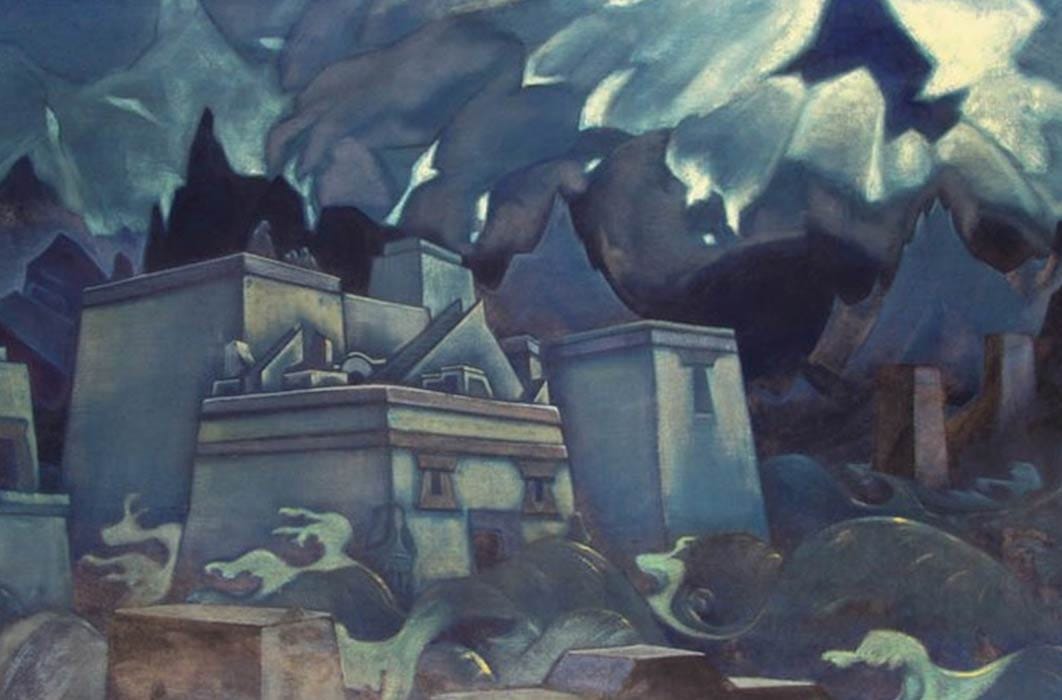
Gibel Atlantidy by N.Roerich (1929) (Public Domain)

Gibel Atlantidy by N.Roerich (1929)

(Public Domain)

In the 19th century a Hindu priest introduced British army Colonel James Churchward to ancient tablets, revealing the existence of a primordial lost civilization, which led to Churchward’s lifetime quest, spanning several continents and islands, to unravel the mysteries of Mu, a Pacific continent, which was destroyed in a cataclysmic shift of the earth’s poles. He discovered remnants and relics of this 200,000-year old civilization, and considered the great civilizations of Atlantis and the old Oriental empires, India, Egypt and Babylonia, as the ‘offspring’ or dying embers of Mu.
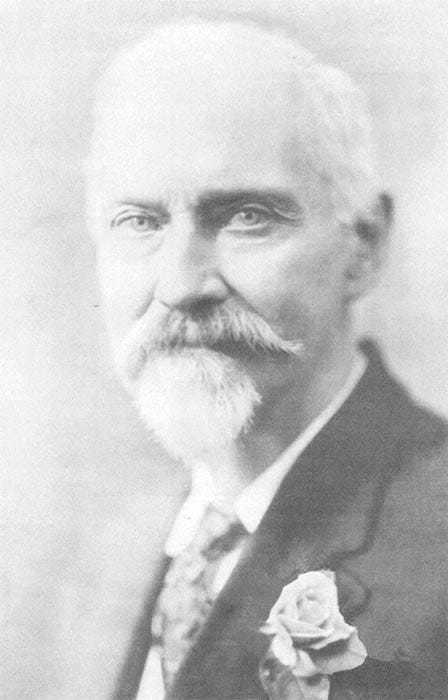
Colonel James Churchward (Public Domain)

Colonel James Churchward

(Public Domain)

James Churchward Meets The Rishi

Colonel James Churchward was born in Devonshire (southern England) in 1851. The Churchwards were an old Devonshire family with a strong Masonic background. He told friends that he had been educated at Oxford and the military academy at Sandhurst. In 1868, at only 18 years of age, he was sent to India as a young military officer. As part of the British military in occupied India, Churchward eventually rose to the rank of Colonel. His first assignment brought him to Central India to assist in famine relief, and it was here that he made a contact that would change his life. A high-ranking Hindu priest, known as a rishi from a temple school monastery befriended him, and a 12-year association began. As the friendship deepened, the rishi gave Churchward access to some very rare and mystical ancient tablets which had purportedly been hidden in the temple vaults for thousands of years. The tablets were carved with arcane symbols, and the rishi began teaching Churchward how to interpret some of the simpler signs. Churchward proved an avid student, and the lessons continued until eventually Churchward had mastered the language—supposed to be the original language of mankind!
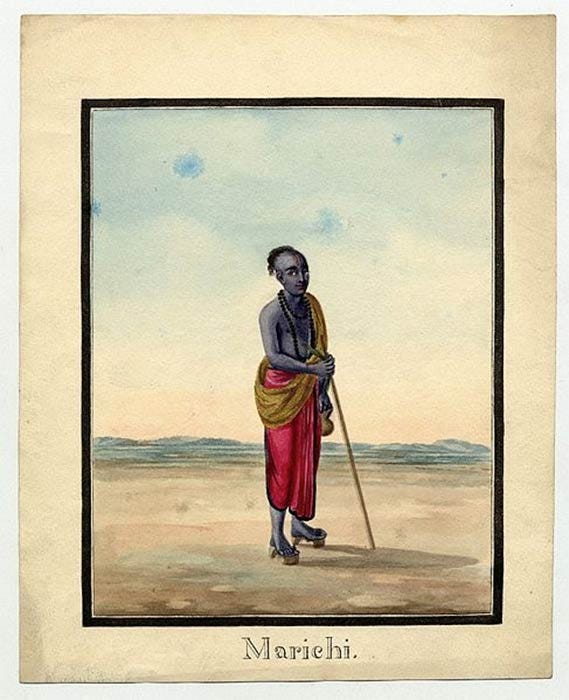
19th- Century Marichi, a Rishi and son of Brahma. (Public Domain)

19th- Century Marichi, a Rishi and son of Brahma.

(Public Domain)

The tablets revealed facts about the origin of civilization, and the tales they told of an advanced worldwide culture that disappeared after cataclysmic earth changes in the far distant past would “fire the dullest imagination.” After 12 years of studying Mu (as this mother civilization was known) with the rishi, Churchward felt it was time to leave India. His knowledge of the primordial civilization described on the tablets of the temple, combined with a scholar-adventurer’s curiosity and wanderlust, spurred him to search for further evidence of this civilization.

Following the Trail From Asia To Egypt

About 1880, the Colonel retired from the British military and left India for the South Seas (specifically, Tonga and the Caroline Islands). Here, Churchward found evidence for the existence of Mu in the form of rock carvings, which he deciphered using the language of Mu. These carvings, which he believed were being read correctly for the first time since the fall of Mu, prompted him to continue his search in Tibet and parts of Central Asia. One would imagine that Churchward used his status and contacts as a retired Colonel to travel relatively cheaply with military convoys, sleeping in army barracks and such. His letters of introduction from other British officers would no doubt serve him well. Travel in the late 1800s and early 1900s was expensive and slow, especially in Central Asia and the vast Pacific; even today many Pacific Islands are difficult and expensive to reach. Churchward became an extremely well-traveled man for the time period, by any standard.
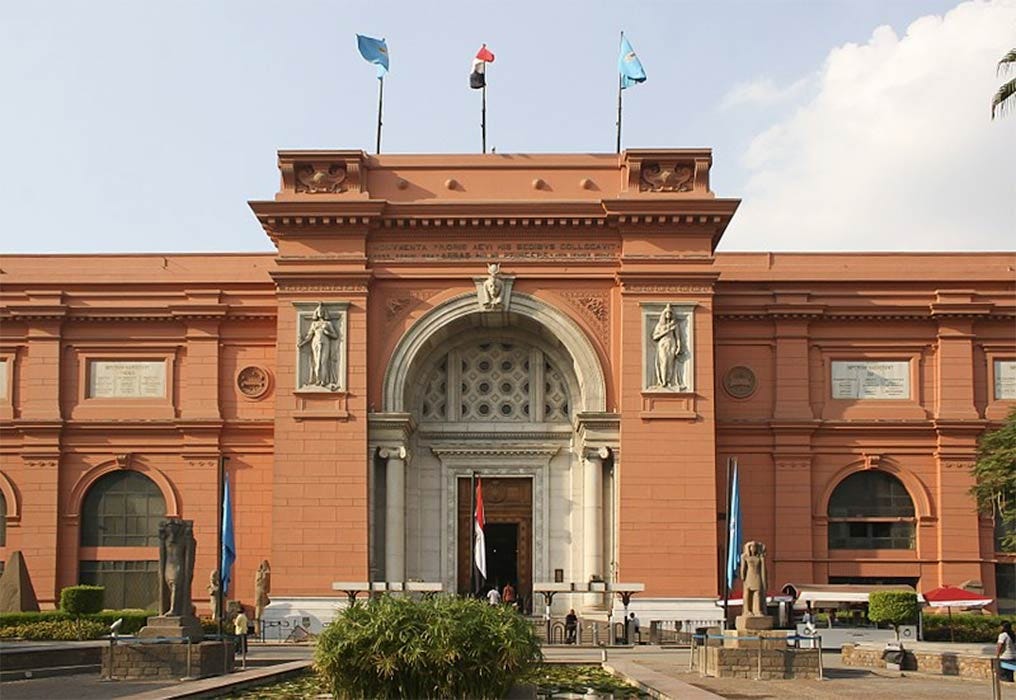
Facade of the Egyptian Museum, Tahrir Square, Cairo (Diego Delso/ CC BY-SA 3.0)

Facade of the Egyptian Museum, Tahrir Square, Cairo

(Diego Delso/ CC BY-SA 3.0)

From Tibet, Central Asia and India, Churchward journeyed to Egypt where he explored the pyramids and visited the Bulaq Museum in the ancient city of Cairo (now the Cairo Museum of Egyptian Antiquities, Egypt’s main museum). Churchward examined Egyptian hieroglyphs and papyrii in light of the symbol-language of Mu and attempted to translate some of the documents in terms of that arcane language taught to him by the rishi.

Evidence Of The Pole Shift

About 1885, Churchward found his way to Siberia and the valley of the Lena River. He was now looking for evidence of ancient cataclysms, which, if it could be found, would lend credence to the idea that an ancient, advanced civilization such as Mu could disappear. Churchward wanted to see the piles of mammoth bones and tusks washed up in tidal waves on the Lackoff Islands (The Islands of Bones) just beyond the mouth of the Lena. He was convinced by these giant piles of ivory and bones that a ‘pole shift’ phenomenon had occurred in the past, where the earth’s crust slipped several degrees toward the equator causing massive tidal waves to wash over portions of the earth and ultimately cause the sinking of entire continents such as Mu.
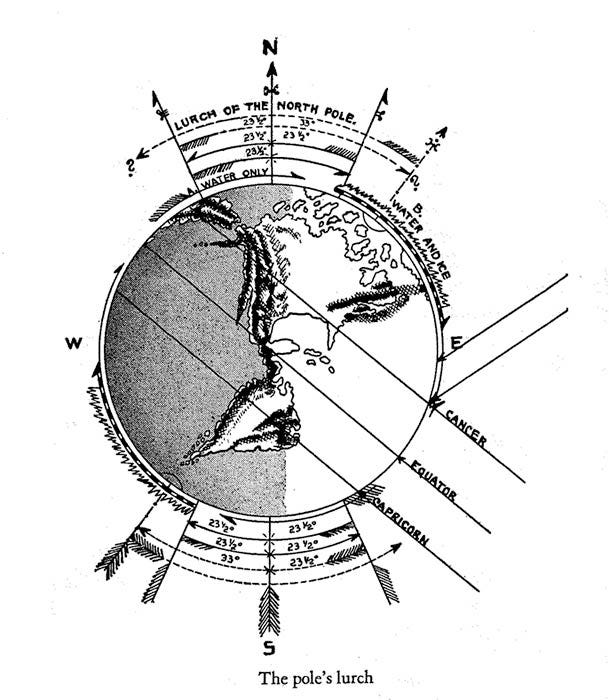
The Pole’s lurch (Author provided with permission © Children of Mu)

The Pole’s lurch (Author provided with permission

© Children of Mu)

From Siberia he made his way toward the Ural Mountains and what he called “the end of the Drift Line.” Here his trail in search of the cataclysms of the past ended, and Churchward felt he had the geological and historical proof that he needed to establish the existence of ancient civilizations. Churchward had been told by the rishi that an ancient civilization contemporaneous with Mu had existed in the Gobi Desert, and found evidence in the region to make him believe this was true. The local tradition of the land of Shambala (or Agartha) told that it was the remnant of an advanced ancient civilization that was also destroyed in the cataclysmic pole shift, with its attendant earthquakes, tidal waves and volcanic activity.
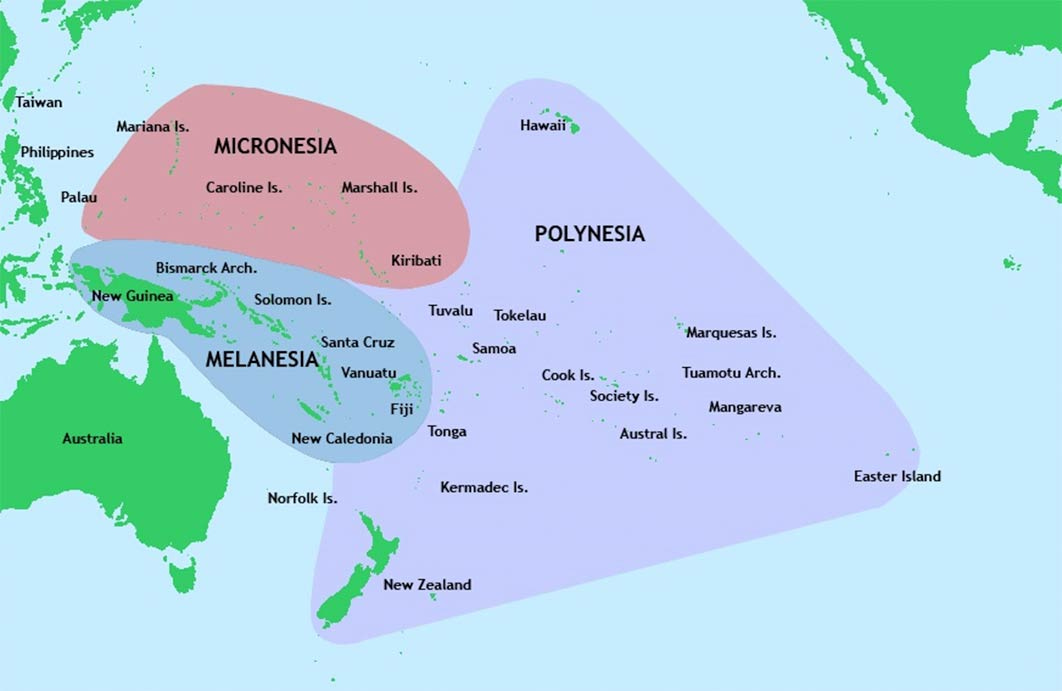
Map Pacific Islands Region (Public Domain)

Map Pacific Islands Region

(Public Domain)

Australasia And The South Pacific Islands

Churchward then went to Australia where he worked for some years. Urged by relatives to visit New Zealand, Churchward there gathered some information from local Maoris that again sent him traveling for further evidence of Mu. He journeyed as a passenger on assorted tramp steamers going to various Polynesian Islands in the South Pacific. For over two years he explored numerous islands and island groups, including Samoa, Tahiti, the Marquesas, Tonga, the Gilbert Islands, the Cook Islands, Easter Island, Hawaii and others. Churchward believed the megalithic remains he found throughout the region, coupled with island legends of sunken continents, were the final evidence he needed to write his book on the ancient, sunken continent of Mu. He believed that he had at last substantiated the stories he had learned through his studies with the rishi.

Says Churchward: “That story is the story of Mu and her vast civilization which spread over the whole world 20,000 to 200,000 years ago, inclusive. It is the story, not only of how that civilization grew, but of how it was destroyed and lapsed into the savagery out of which our own modern culture has developed.”
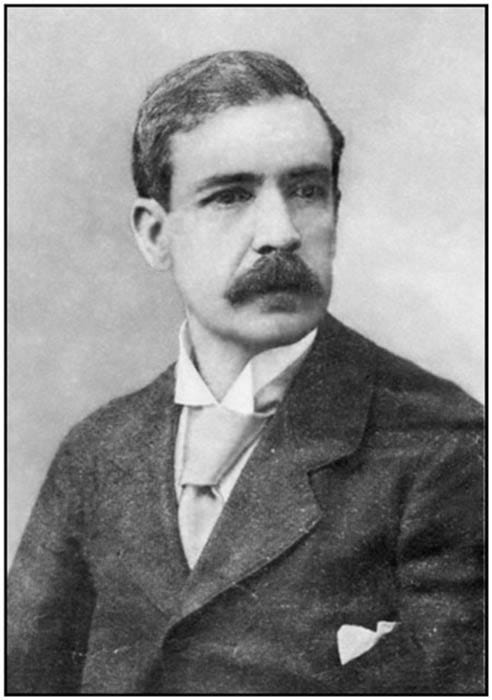
William Niven (1850-1937), mineralogist and archaeologist (circa 1895) (Public Domain).

William Niven (1850-1937), mineralogist and archaeologist (circa 1895)

(Public Domain).

Niven’s Tablets Of Mexico

So, James Churchward, with his extensive documentation, including photographs, personal paintings and proofs, came to America, where he settled in New York by 1888. He soon met Percy Tate Griffith, who was to become his best friend in his later years. Churchward lived in New York until his death in 1936, with the exception of two years when he joined his friend William Niven in Mexico and Central America. Niven’s discoveries of ancient buried cities in the valley of Mexico were exciting to Churchward and he joined Niven in Mexico City and traveled to the Yucatan and other areas of Central America to compare the records discovered there with those he had found the world over.
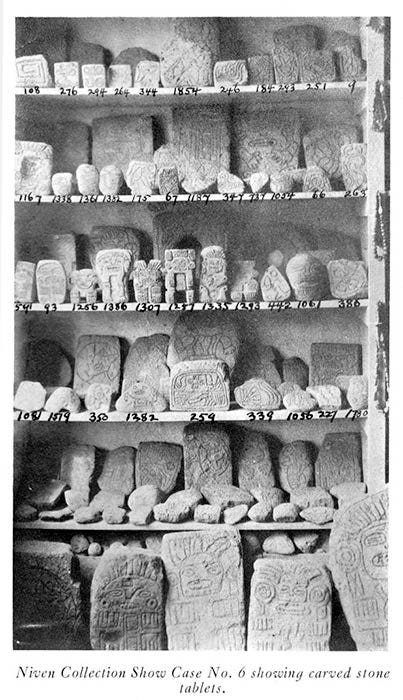
Niven’s Collection of Mesoamerican stone tablets (Author provided with permission © Children of Mu)

Niven’s Collection of Mesoamerican stone tablets

(Author provided with permission © Children of Mu)

Back in New York, Percy Tate Griffith would sit in the evenings with Churchward, and they were often joined by Augustus and Alice LePlongeon. Augustus LePlongeon was a dedicated French Mason and had done much of the early excavations at Chichen Itza in the Yucatan. His book Queen Moo and the Egyptian Sphinx was published in 1900 in London and was popular among archaeologists and mystics of the time. Churchward, Griffith and the LePlongeons would sit in Churchward’s or Griffith’s study for hours talking about Atlantis, Mexico, Tiahuanaco and Churchward’s belief in his sunken continent of Mu.

The Lost Continent Of Mu

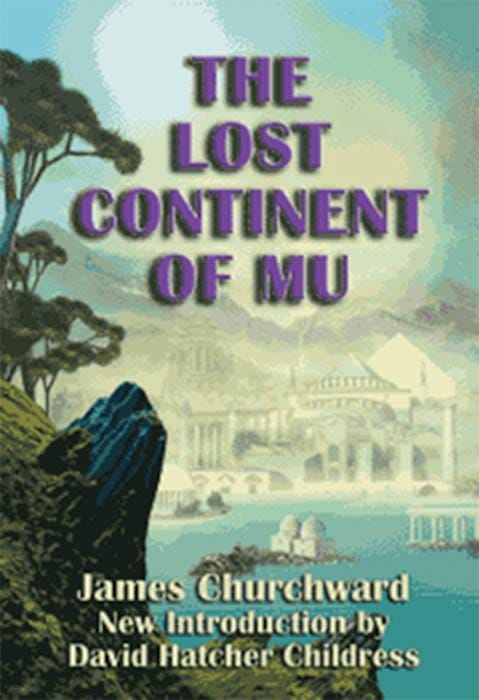
By the early 1920s and Churchward in his old age began to tell his friends of the Golden Age that had existed thousands of years ago on the sunken continent of Mu. This culminated in the self-publishing in 1926 of The Lost Continent of Mu. Churchward’s book made quite a splash at the time. It received wide attention from reviewers and became the subject of much discussion. Indeed, such groups as the Rosicrucians (AMORC) and the Lemurian Fellowship took Churchward’s books to heart and sought to elaborate on his works, with which they were largely in agreement.
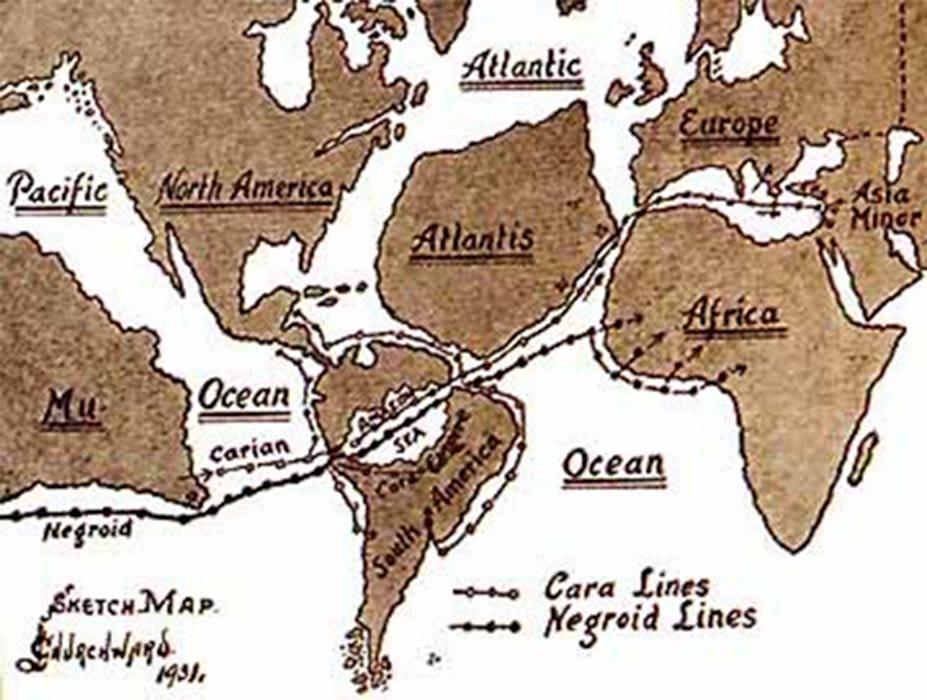
Churchward's map showing how he thought Mu refugees spread out after the cataclysm through South America, along the shores of Atlantis, and into Africa (Public Domain)

Churchward's map showing how he thought Mu refugees spread out after the cataclysm through South America, along the shores of Atlantis, and into Africa

(Public Domain)

Churchward was a very good artist and filled his books with his own maps and paintings, as well as photographs he had collected in his travels. He had sketched the megalithic arch in Tonga back in 1876, probably before he ever thought he would write a book. He cut a publishing deal with the New York City publisher Ives Washburn (now defunct) for the republishing of his book, plus the publishing of his follow-up books. The Children of Mu and The Sacred Symbols of Mu came in quick succession. Said the cover blurb for The Children of Mu, a book largely about the colonization of Atlantis and the rest of the world: “When Mu, the now-lost Pacific continent, became overcrowded, colonization began... and America was one of Mu’s first colonies. From America to Atlantis to Europe and Africa the movement of colonization continued, until cataclysms destroyed Mu and Atlantis.”

The cover copy for The Sacred Symbols of Mu reads: “James Churchward continues his occult and historical explorations of the world’s most fabled lost civilization—Mu, the motherland of mankind. Stressing the common origin of all contemporary religions, Churchward’s highly unorthodox, startling theories about the ‘Sacred Inspired Writings of Mu’ suggest that this ancient text was the basis of Christianity itself! No student of the occult, comparative religion or anthropology can afford to miss the excitement.”
James Churchward’s Books (Adventures Unlimited Press)

James Churchward’s Books

(Adventures Unlimited Press)

Churchward was a popular media figure for a few short years, and in 1934 and 1935 his final books were published. The cover copy on The Cosmic Forces of Mu, Volume One reads: “The Cosmic Forces of Mu were understood perfectly as recently as 15,000 years ago. Their application brought this lost civilization to extraordinary peaks of technology—accomplishments we are only now beginning to understand and achieve. Working from ancient tablets, James Churchward has recreated this astounding science. Everyone fascinated by prehistoric times and the occult will be gripped by The Cosmic Forces of Mu.”

The cover copy on The Cosmic Forces of Mu, Volume Two reads: “In this fifth book in his amazing Mu series, James Churchward challenges many of the theories and ‘knowledge’ of modern science with a startling new interpretation of the birth of earth based on the ancient wisdom of the lost civilization of Mu. That there was no such period as the Ice Age—and he tells what happened and why. That the center of the earth is not molten lava but gas. That Man in his present form lived through all the cataclysmic changes of the earth—and he gives archaeological proof of it.”

Colonel James Churchward died approximately one year after the publication of his final book. He died satisfied that the lessons of the rishi had filled the void that had come in his life after leaving India, and the world had now heard the rishi’s message.

https%3A%2F%2Fsubstack-post-media.s3.amazonaws.com%2Fpublic%2Fimages%2Ffd5e8d86-e287-46cf-9317-f0199a6971c2_933x700.jpeg?utm_source=substack&utm_medium=email

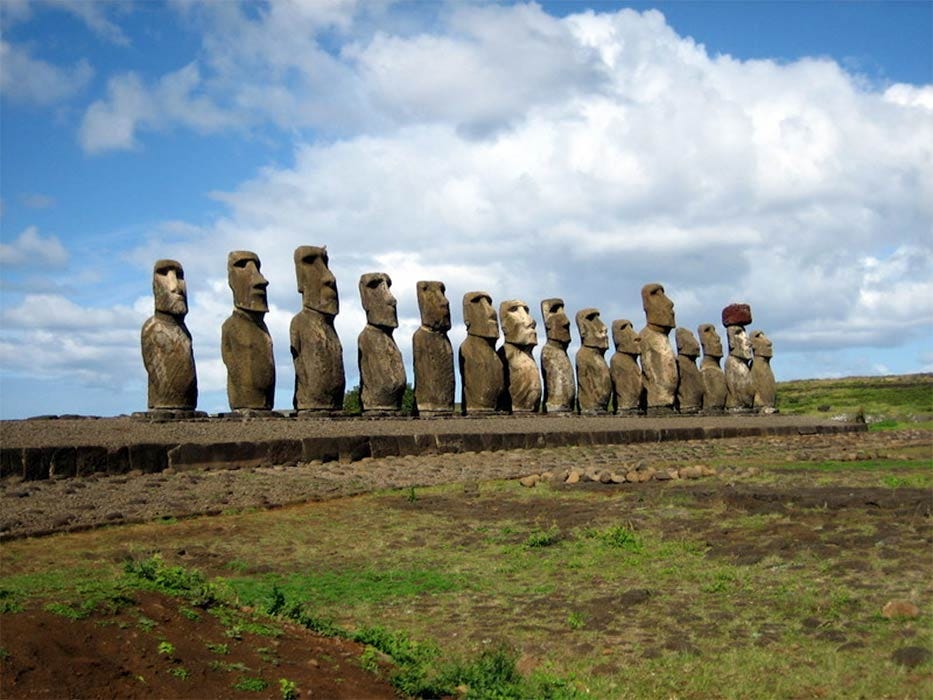
Moʻai facing inland at Ahu Tongariki, on Easter Island restored by Chilean archaeologist Claudio Cristino in the 1990s

(CC BY-SA 2.5)

Excerpt From: The Children Of Mu – The Origin of Man

The Land of Mu was a large continent situated in the Pacific Ocean between America and Asia, its center lying somewhat south of the equator. Basing its area on the remains which are still above water, it would have been about 6,000 miles from east to west, and about 3,000 from north to south. All the rocky islands, individually and in groups, scattered over the Pacific Ocean were once part of the continent of Mu. About 12,000 years ago cataclysmic earthquakes rent Mu asunder. She became a fiery vortex, and the waters of the Pacific rushed in, making a watery grave for a vast civilization and 60-million people. Easter Island, Tahiti, Samoas, Cook, Tongas, Marshall, Gilbert, Caroline, Marianas, Hawaii and the Marquesas are the pathetic fingers of that great land, standing today as sentinels to a silent grave.
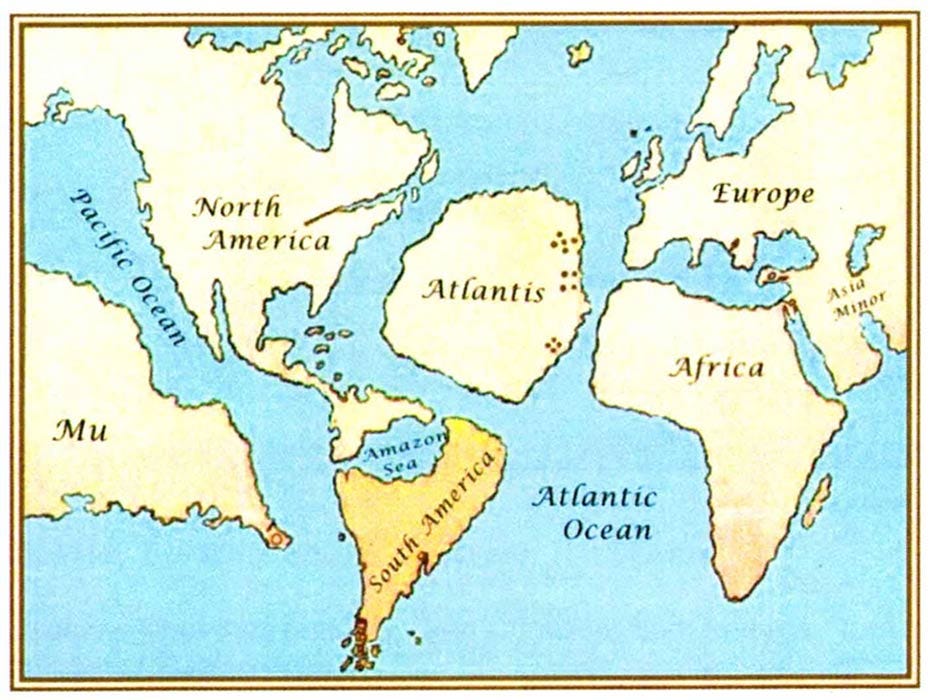
Map of the location of Mu (Author provided with permission © Children of Mu)

Map of the location of Mu (Author provided with permission

© Children of Mu)

The existence of this great continent is confirmed by: Naacal tablets, books, writings, inscriptions and legends found in India, China, Burma, Tibet and Cambodia; ancient Maya books, inscriptions, symbols and legends found in Yucatan and Central America; remains, inscriptions, symbols and legends found among the Pacific Islands; stone tablets found in Mexico near Mexico City; cliff dwellers’ writings and inscriptions found in Western North America; books of old Greek philosophers; books and writings of the ancient Egyptians and legends throughout the world.
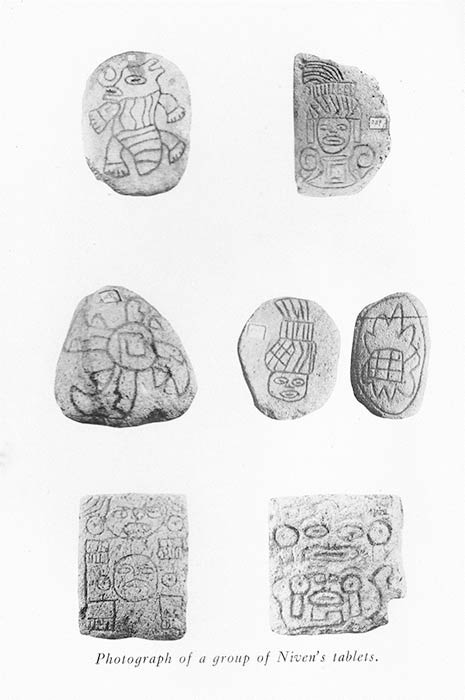
Niven’s Mexican tablets (Author provided with permission ©Children of Mu)

Niven’s Mexican tablets

(Author provided with permission©Children of Mu)

These confirmations are all given in The Lost Continent of Mu. They show that there was once a large continent of land in the Pacific Ocean called the Land of Mu. On this great continent man made his advent on earth about 200,000 years ago. The Land of Mu and the Biblical Garden of Eden were one and the same land. Both the Naacal and the Mexican tablets show clearly that man is a special creation. They also show in what way he differs from all other creations. An account of the creation is given in both sets of tablets which is very similar to the Biblical account. At the time of Mu’s destruction her people were in an exceedingly high state of civilization; as regards science she was far ahead of the present time. No wonder! She was at the end of 200,000 years of experience and development.

The great civilizations of the old Oriental empires — India, Egypt, Babylonia, etc. — were only the dying embers of Mu’s great civilization. They were her children, who withered and died without her care. All tablets, inscriptions and writings which I used in The Lost Continent of Mu are accompanied by keys for reading them. Every assertion made is accompanied by reasonable proof. The facts are there. The theories will have to take care of themselves. I wish it understood that what is revealed of the past in my writings must not be considered discoveries by me. I am simply stating what I find in writings that run from 12,000 to 70,000 years ago if the mode of keeping time was correct.

Confucius meets Lao-tzu and Buddhist Arhat (Ming Dynasty) Palace Museum, Beijing. (Public Domain)

Confucius meets Lao-tzu and Buddhist Arhat (Ming Dynasty) Palace Museum, Beijing. (Public Domain)

What is disclosed in these writings is startling, yet archaeology and geological phenomena corroborate the facts without calling to our aid legends which also confirm them. Lao Tsu, the Chinese sage of 600 BC, speaks of the great learning and advancement of his prehistoric forefathers. The ancients were wise and thoughtful for those who were to come after them. They left indestructible records written on clay and stone. This wisdom is spoken of by Souchis priests of Sais to Solon the Greek, as recorded in Plutarch. These writings have been broken up and many of them lost. As they were universal among the ancients, scraps and fragments of them are found in all quarters of the earth. When put together they supplement one another to a great extent, so that by combining them we can make a beginning towards unraveling the wonders of the earth’s First Great Civilization. For over 50 years I have been hunting these scraps and putting them together so as to form the beginning of an intelligent tale of the Creation and Man. It rests with those who come after me to complete the tale.
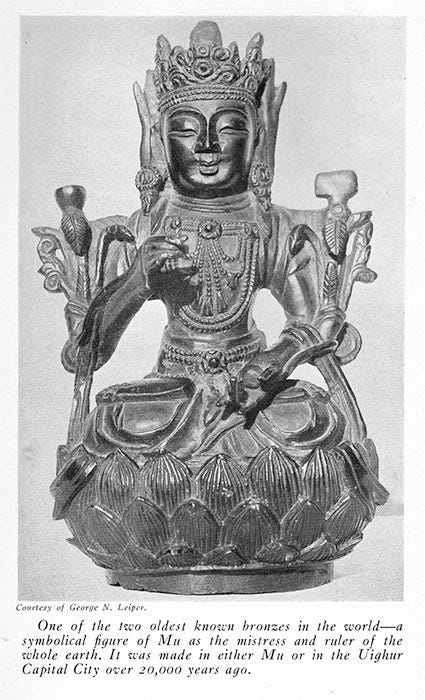
Sculpture of Mu as the mistress of the whole earth. (Author provided with permission © Children of Mu)

Sculpture of Mu as the mistress of the whole earth. (Author provided with permission © Children of Mu)

Ancient relics, that can be traced back as coming directly from Mu, the Motherland, are extremely rare. During the past few years, I have been singularly fortunate in finding two that are at least intimately connected with Mu. Both are symbolic figures in bronze. They were either made in the Motherland or in one of the ancient Uighur cities before the eastern half of that great empire was destroyed by the north running wave of the last magnetic cataclysm which was the ‘Biblical Flood’. This wave destroyed all the country over which it ran, the people were drowned and the cities washed away or buried under the drift. The Uighur capital city today lies under 50 feet of boulders, gravel and sand. It is situated in the Gobi Desert, which today has large areas of rock only, the soil and everything with it having been washed away by the ‘Flood’. I am using one of these relics as the frontispiece of this book. It is, without question, one of the two oldest bronzes in existence. If Uighur, it is about 18,000 or 20,000 years old. If from Mu, the age cannot be estimated. This figure is a symbol of Mu as the great ruler. The fineness of the workmanship is not to be found surpassed, and very seldom equaled in any of the prominent jewelry stores in our big cities today. Both symbols have been in America for about 150 years. I know their history, but the less said about it the better since, in the Oriental home from which they were taken, they were without question sacred relics. The British Museum has three scepters which undoubtedly were manufactured in Mu before she went down.
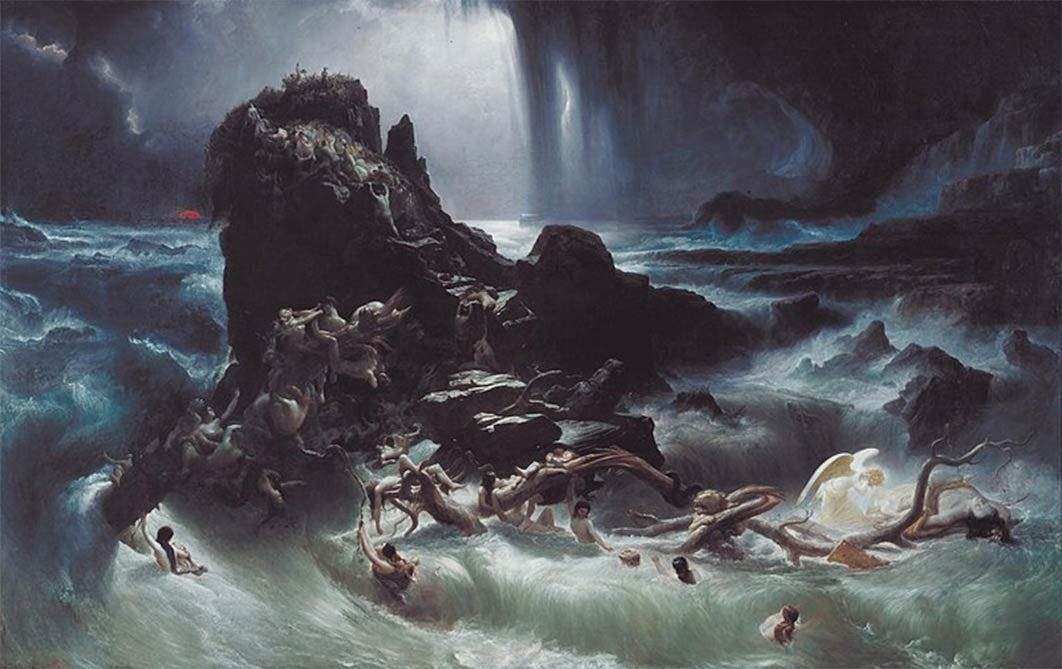
The Deluge by Francis Danby (1840) (Public Domain)

The Deluge by Francis Danby (1840) (Public Domain)

In Mu, the Motherland, there were ten distinct tribes. Although they were physically easily differentiated, there were few variations in language, and these only of a minor character. A greater change is seen in their glyphs or writings. In the Motherland each of her people occupied its own territory; and, when various tribes took part in the colonization of a new country, they did not settle down indiscriminately, but each tribe took its own land and built its own cities as their fathers did in Mu. They settled down adjoining each other and formed a homogeneous whole. Every letter in every word in the ancient language of Mu is pronounced. Mu is pronounced Moo; A is pronounced ah; U is pronounced oo as in moon; Ta is pronounced tah; Tau is pronounced ta-oo. This original form of isolation grew with time so that the tribes eventually became separate peoples, and finally nations. And as the isolation became greater, changes in language crept in.

Adieu Professional Traveler

James Churchward was a fascinating man, and truly a man for all seasons. He was a military man and administrator, a mystic and student of ancient languages, an artist and mapmaker, as well as a calligrapher. He was also a salesman, an inventor and author. For many years he was that rarest of breed, ‘the professional traveler’.

David Hatcher Childress, is a captivating speaker and the author or coauthor of over 20 books. He is the founder of the World Explorer’s Club

  • Top Image: Gibel Atlantidy by N.Roerich (1929) (Public Domain)

By David Hatcher Childress

{ Ancient Origins UNLEASHED }

Hoe vind je dit bericht?
Geschreven door peter om 01:06 Stuur door

Metals Magically Repair Themselves in Breakthrough Discovery That Could Bring About An Engineering Revolution

tDvRVXY_?format=jpg&name=900x900

(Lanju Fotografie/Unsplash)

Metals Magically Repair Themselves in Breakthrough Discovery That Could Bring About An Engineering Revolution

Observed for the first time, a phenomenon where metals repair themselves by healing small cracks could upend our understanding of material theories, and may ultimately lead to revolutionary new engineering concepts like self-healing machines.

Researchers at Sandia National Laboratories studying how microscopic cracks form in metals found that under the right circumstances, metals repair themselves, conjuring imagery similar to the famous villain seen in the film Terminator 2: Judgement Day. 

Previously, scientists and engineers believed that cracks in metals only got worse over time and that the idea of these complex materials repairing themselves was impossible. If this latest finding can be applied in a practical way, future applications with more complex machines and structures like airplanes or bridges could potentially allow them to heal microscopic cracks before catastrophic failure occurs.

Crack in Metals Are Not Supposed to Repair Themselves

For decades, engineers and scientists who work with metals were confident about two things: metals form microscopic cracks after repeated loads, and over time those cracks can and will grow until they lead to catastrophic failure. Even simulation software used by engineers to develop anything from engine parts to massive structures takes these microscopic, often nanometer-in-size, cracks into account.

The Debrief previously reported on one Terminator-inspired liquid metal “robot” that researchers were able to shape-shift with a magnetic field, but that was a customized type of material and not an everyday metal.

In 2013, Michael Demkowicz, an assistant professor at the Massachusetts Institute of Technology’s Department of materials science and Engineering who is now a full professor at Texas A&M University, started to think that modern science may be wrong and that under certain circumstances, metals should be able to heal these micro fractures. After some research, theory, and simulations, he published his concept in October of that same year.

“We present a new mechanism—discovered using molecular dynamics simulations—that leads to complete healing of nanocracks,” he wrote in the paper’s abstract outlining his simulations.

Now a decade later, a team of researchers working at Sandia National Labs who were simply studying how cracks evolve in platinum stumbled on a real-world version of the phenomenon that Demkowicz had modeled in computer simulations.

MetalS Heal Thyself?

“Cracks in metals were only ever expected to get bigger, not smaller,” explained Brad Boyce, a materials scientist at Sandia Labs. “Even some of the basic equations we use to describe crack growth preclude the possibility of such healing processes.”

Perhaps unsurprisingly, given the myriad examples of accidental discoveries throughout the history of science, Boyce said that their experiments were actually designed for another purpose altogether and that they “certainly weren’t looking for it” when they saw the cracks seem to heal themselves magically.

Instead, Khalid Hattar, currently an associate professor at the University of Tennessee, Knoxville, and Chris Barr, who is now at the Department of Energy’s Office of Nuclear Energy, was running a simple experiment that involved a specialized electron microscope technique designed to pull on the ends of metal 200 times per second. In this case, that metal was a piece of platinum that Hattar and Barr were studying to see how these microscale cracks form under this repeated stress. And then they saw something unexpected that left them stunned.

“About 40 minutes into the experiment, the damage reversed course,” the team explains in a press release announcing the unexpected finding. “One end of the crack fused back together as if it was retracing its steps, leaving no trace of the former injury.”

metal repairs itself (Credit: Sandia Labs)

Although Boyce was familiar with the theory laid out by Demkowicz, he was still shocked to see it actually happen.

“This was absolutely stunning to watch first-hand,” he said.

The stunned scientist immediately communicated the findings to Demkowicz, letting him know that his theory and simulations were right.

“I was very glad to hear it, of course,” Demkowicz said of his initial reaction before successfully confirming on his simulation software that the effect the research team working at Sandi was witnessing was indeed the same one he had theorized.

metals repair themselves Ryan Schoell works on a transmission electron microscope at Sandia Labs, analyzing how a sample of platinum gold cracks at a microscopic level on Wednesday, Nov. 16, 2022. Photo by Craig Fritz/Sandia National Laboratories

Practical Application of the Self-Repair Process Offers Challenges and Hope

While the researchers involved are confident in their findings, which were published in the journal Nature, they also caution that applying it in a real-world environment will face many challenges and may not necessarily even be possible.

“The extent to which these findings are generalizable will likely become a subject of extensive research,” Boyce explained. “We show this happening in nanocrystalline metals in [a] vacuum. But we don’t know if this can also be induced in conventional metals in air.”

Still, the theorists and researchers believe it is worth more investigation, and if successful, they see a number of critical potential applications. These include helping bridges, buildings, and other pieces of critical infrastructure last longer and be safer for a longer period of time before needing traditional maintenance. The same goes for aerospace, aviation, and even automotive and maritime engineers, who would likely jump at the opportunity to help the critical components they maintain see dramatic reductions in material failures that, in some cases, end up being fatal.

“From solder joints in our electronic devices to our vehicle’s engines to the bridges that we drive over, these structures often fail unpredictably due to cyclic loading that leads to crack initiation and eventual fracture,” Boyce said. “When they do fail, we have to contend with replacement costs, lost time, and, in some cases, even injuries or loss of life. The economic impact of these failures is measured in hundreds of billions of dollars every year for the U.S.”

Fundamentally, Demkowicz says he is happy to have offered his fellow scientists dealing with the properties of materials a new way of looking at old problems.

“My hope is that this finding will encourage materials researchers to consider that, under the right circumstances, materials can do things we never expected,” Demkowicz said.

{ https://thedebrief.org/category/tech/ }

Hoe vind je dit bericht?
Geschreven door peter om 21:59 Stuur door

Ex-US Army Claimed Over 100 E.T. Civilizations Have Visited Earth, One Looks Like Humans

Major Robert Dean On ET visit

Ex-US Army Claimed Over 100 E.T. Civilizations Have Visited Earth, One Looks Like Humans

The presence of non-human intelligence on Earth has long been debated by UFO enthusiasts as some claim that the US government is hiding the truth from the general public. Many officials who worked within the government have supported these claims on/off camera. Moreover, if Robert O. Dean’s claims about UFOs and extraterrestrials are true, then they have the potential to turn the world upside down.

Robert O. Dean, a former US Army Command Sergeant Major, revealed shocking information regarding extraterrestrial visitation. Drawing upon his experiences and knowledge from his time in the military, Major Dean shared intriguing details about various extraterrestrial groups and their interaction with humanity. His revelations indicate that the reality of extraterrestrial life extends far beyond what we previously imagined.

His credibility cannot be questioned as he worked at NATO headquarter from 1963 to 1967. He claimed to have come across the 1964 report called “An Assessment,” the NATO military study that acknowledged and analyzed the implications of the alien presence on Earth. After his military career, he revealed this information at the Roswell 50th anniversary celebration.

During his lecture on UFOs at Leeds University, Major Dean said that authorities were aware of the presence of four distinct extraterrestrial groups during his active service. However, by the time he retired, this knowledge expanded exponentially. He claimed that the United States military, and likely the British military as well, were aware of at least 12 different groups involved in interactions with Earth.

Bob Dean NASA deleted UFO photos

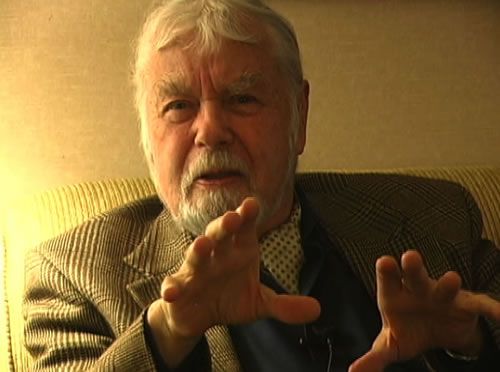
Former US military retired Major Robert Dean. Image in public domain

Astonishingly, he mentioned hearing from trusted sources that there may be well over a hundred different alien groups coming and going from unknown origins. Such a revelation challenged the conventional understanding of alien visitation and suggested a complex interplay between Earth and various extraterrestrial civilizations.

Of the four alien main groups, one particular group caught the attention of high-ranking military officials in 1964 and 1967. This group resembled humans to such an extent that they could seamlessly blend into society, sitting beside people on airplanes, in restaurants, or even in theaters without arousing suspicion.

The uncanny resemblance troubled military leaders profoundly, as their natural paranoia led them to question the possibility of alien intelligence freely navigating the corridors of power, such as SHAPE (Supreme Headquarters Allied Powers Europe) headquarters or even the Pentagon. The notion that these beings could potentially infiltrate the White House triggered a mix of nervous laughter and concern among the military personnel present.

However, Major Dean emphasized that the resemblance between these extraterrestrial beings and humans should be interpreted differently. He proposed that it was humanity who shared a likeness with these advanced beings, suggesting a profound connection between the two. He hinted that there existed a compelling reason for this similarity, which he regrettably did not elaborate on during the lecture.

Moreover, Major Dean revealed that extraterrestrial visitation extended far beyond simple interplanetary interaction. The military, scientists, and planners learned that we were dealing with beings from interstellar and even intergalactic origins. Surprisingly, these advanced non-human intellgence exhibited multi-dimensional characteristics, which enabled them to manipulate both matter and time. The repeated demonstrations of these mind-bending capabilities were intended to capture humanity’s attention and challenge our understanding of the universe.

He emphasized that these alien visitors were not merely curious explorers from other planets, but were deeply interested in humanity itself. Their multi-dimensional nature and mastery over time and matter presented a mind-boggling challenge to traditional Newtonian and Einsteinian physics.

Read also:

Major Dean expressed that only theoretical physicists, particularly those specializing in quantum physics, were equipped to begin comprehending the intricacies of multi-dimensional visitation. He acknowledged the ongoing collaboration between quantum physicists in the United States and Great Britain, suggesting that they were at the forefront of unraveling this enigma.

As Major Dean admitted, he is not a physicist or scientist, making it difficult for him to explain the intricacies of dimensions. He said: “I’m not a physicist, I’m not a scientist. I can’t begin to tell you what a dimension is, for that matter. I’m told we live in three, and that’s quite a simple world that we have around us. I’m told that time and space is the fourth.

Theoretical physicists have told me that there are as many as ten different dimensions. I cannot, for a moment, grasp what that means. I do, however, accept that it’s probably real. The evidence that I have seen over my last 40 years has told me that this is not fantasy, this is not science fiction, this is all real. And, ladies and gentlemen, this reality, when it becomes known and when it makes an impact upon our world, is going to change our world forever. You talk about a paradigm shift, that’s an understatement. The old world we have known for so long is literally coming to an end, and it’s just around the corner.”

During the Barcelona Exopolitics Summit, on July 25, 2009, Mr. Dean released a set of amazing images. He also explained the Apollo missions and what the astronauts encountered unlike anyone before. He released to the public a set of fascinating images supposedly captured by the astronauts of the Apollo 12 mission, including an image showing some mysterious spacecraft several hundred feet in diameter.

In his 41 years of federal service to the United States, Mr. Dean heard a lot of bizarre things, but the thing that the human race is a hybrid race stunned him. He said: “I’ve learned that we are not merely alone; we have never been alone. We have had an intimate interrelationship with advanced extraterrestrial intelligence from the beginning of our history. And let me tell you that that intimate interrelationship is still going on.”

He continued: “This one race, in particular, apparently reengineered us as a species about 200,000 years ago. What we are here today is what we call homo sapien sapiens — you’re an engineered creature. Your genetics have been manipulated. You’re not the same as what you were and you are not the same as to what your children and grandchildren and great-grandchildren will be in the next hundred years.” (Click here to read the full story)

Major Dean, a prominent figure in the field of UFOlogy, made significant contributions and was recognized with three-lifetime achievement awards. He enjoyed widespread support on the Internet, with many believing in his legitimacy. Sadly, Mr. Dean passed away on October 11, 2018, at the age of 89 in Tucson, Arizona.

{ https://howandwhys.com/ }

Hoe vind je dit bericht?
Geschreven door peter om 21:43 Stuur door

Buitenaards intelligent leven blijkt misschien nóg zeldzamer dan gedacht

Buitenaards intelligent leven blijkt misschien nóg zeldzamer dan gedacht

Andrei Stiru - Redacteur
graham-holtshausen-fUnfEz3VLv4-unsplash-954x637_1.jpg

De kans dat we ooit een buitenaardse beschaving ontmoeten, lijkt bijzonder klein. Volgens nieuw onderzoek zouden de dichtstbijzijnde intelligente aliens wel 33.000 lichtjaar verderop kunnen zitten en bovendien miljoenen jaren ouder zijn dan wij.

Tot die conclusie komen onderzoekers Manuel Scherf en Helmut Lammer van het Oostenrijkse instituut voor ruimteonderzoek. Zij berekenden welke strikte voorwaarden een planeet moet vervullen om niet alleen leven, maar ook intelligentie en technologie mogelijk te maken. Uit hun werk blijkt dat zulke omstandigheden wellicht veel minder vaak voorkomen dan vaak wordt aangenomen.

Andere kant van de Melkweg
Om die afstand in perspectief te plaatsen: licht reist met 300.000 kilometer per seconde, maar heeft nog steeds 33.000 jaar nodig om zo ver te komen. Ons zonnestelsel staat zelf op ongeveer 27.000 lichtjaar van het centrum van de Melkweg. De dichtstbijzijnde technologische soort zou dus zomaar zo ver kunnen leven, dat we er nooit contact mee zullen hebben. 

En dan is er nog de factor tijd. Om slechts tien beschavingen tegelijkertijd in de Melkweg te hebben, zou hun gemiddelde levensduur boven de tien miljoen jaar moeten liggen, zo berekenden de onderzoekers. Als we al ooit contact maken, dan is die beschaving vrijwel zeker miljoenen jaren ouder dan de onze. In nog geen tweehonderd jaar sprong de mensheid van de stoommachine naar ruimtevluchten, het internet en kunstmatige intelligentie. Wat kan een soort bereiken met miljoenen jaren extra voorsprong, als ze zo lang weet te overleven? Zou zo’n soort niet al doorheen de Melkweg zijn verspreid? En als dat zo is, waarom zien we hen dan nergens? 

De rol van plaattektoniek
Juist het feit dat we op die vragen geen antwoord hebben, toont volgens de onderzoekers hoe uitzonderlijk de voorwaarden voor intelligent leven zijn. Een van de belangrijkste factoren is plaattektoniek, de constante verschuiving van aardplaten die ook op onze planeet plaatsvindt.

Dat systeem houdt de hoeveelheid koolstofdioxide in de atmosfeer binnen leefbare grenzen. Te weinig en fotosynthese stopt, waardoor ecosystemen instorten. Te veel en een planeet verandert in een broeikashel, zoals Venus. Elke planeet heeft bovendien een ingebouwde limiet, zeggen de onderzoekers. Op een gegeven moment wordt er zoveel koolstofdioxide uit de atmosfeer getrokken dat fotosynthese ophoudt te werken. Voor de aarde gebeurt dat naar verwachting tussen de 200 miljoen en 1 miljard jaar in de toekomst. Ter vergelijking: het duurde 4,5 miljard jaar voordat er mensen rondliepen. Waren we een half miljard jaar later, dan waren we misschien nooit op tijd geweest om een beschaving te ontwikkelen.

Zuurstof als voorwaarde voor technologie
Maar er is meer nodig dan alleen de juiste hoeveelheid koolstofdioxide. Ook zuurstof speelt een cruciale rol. Een beschaving heeft minstens 18 procent zuurstof in de atmosfeer nodig om vuur te kunnen maken. Zonder vuur geen smeltende metalen, en dus geen technologie.

Als je alle getallen naast elkaar legt, wordt het beeld pas echt ontmoedigend. Een technologische soort op een planeet met 10 procent CO2 zou volgens de berekeningen van de onderzoekers minstens 280.000 jaar moeten standhouden voordat er zelfs maar één andere beschaving tegelijkertijd in de Melkweg bestaat. Planeten met minder CO2, zoals de aarde, hebben een nog kortere levensduur als broedplaats voor intelligente soorten.

Kanttekeningen bij het onderzoek
De onderzoekers erkennen dat hun berekeningen niet het complete plaatje geven. Er zijn andere factoren die ze nog niet konden meenemen, zoals hoe vaak leven überhaupt ontstaat, hoe vaak fotosynthese evolueert, of hoe vaak intelligent leven daadwerkelijk technologie ontwikkelt.

Mocht elk van die factoren een hoge kans hebben, dan hoeft buitenaardse intelligentie helemaal niet zo zeldzaam te zijn, erkennen ze. Maar als de kans bij elk van die stappen juist laag is, dan kan een nog somberder scenario realistischer zijn. En dat betekent misschien wel dat we écht alleen zijn. Maar of dat zo is of niet, verandert niets aan wat schrijver Arthur C. Clarke ooit zei: “er zijn twee mogelijkheden: ofwel zijn we alleen in het universum, ofwel zijn we dat niet. Beide mogelijkheden zijn even beangstigend.”

Bronmateriaal

RELATED VIDEOS


{ https://scientias.nl/ }

Hoe vind je dit bericht?
Geschreven door peter om 18:47 Stuur door

A history of human attempts to build flying saucers

A history of human attempts to build flying saucers

UFO Flying Low Over Trees

©Getty Images

UFO Flying Low Over Trees
A flying saucer might sound like something out of a sci-fi movie, but for decades humans have tried to build them. The technology that allows for flying saucer-shaped aircraft to work effectively has been a challenge for scientists and engineers. Still, there have been a few occasions where such aircraft were (vaguely) successful. One attempt in particular, which took place in 2019, might just be a game changer.

In this gallery, we look back at the times when humans tried to build flying saucers. Click on.

A history of human attempts to build flying saucers

©Public Domain

A history of human attempts to build flying saucers
A flying saucer might sound like something out of a sci-fi movie, but for decades humans have tried to build them. The technology that allows for flying saucer-shaped aircraft to work effectively has been a challenge for scientists and engineers. Still, there have been a few occasions where such aircraft were (vaguely) successful. One attempt in particular, which took place in 2019, might just be a game changer.

In this gallery, we look back at the times when humans tried to build flying saucers. Click on.

The flying saucer

©Getty Images

The flying saucer
Unlike a fighter jet or a bomber, the flying saucer is an aircraft design that is yet to be mastered. This, however, never stopped engineers from trying to make them.

Aerodynamics

©Getty Images

Aerodynamics
But first, it’s important to understand why a circular wing might not be a great idea. As far as aerodynamics is concerned, the lift-induced drag makes circular wings inefficient.

Stability and control

©Getty Images

Stability and control
The flying saucer poses problems when it comes to stability and control. The arm available is pretty small, making it harder to control.

Stability and control

©Getty Images

Stability and control
For designs like the flying saucer, keeping stable at low speeds could be an issue, unless the entire structure spins, like a frisbee.

How about spinning discs?

©Getty Images

How about spinning discs?
Sure, this could potentially work, but it would have to be unmanned, as a pilot is unlikely to be able to endure it.

Experiments

©Getty Images

Experiments
But despite all the challenges, some inventors have tried to make their own versions of flying saucers. Let’s take a look at some of them.

Lee-Richards annular monoplane

©Public Domain

Lee-Richards annular monoplane
The first experiments with a disc-shaped aircraft date back to 1913 with the Lee-Richards annular monoplane.

Lee-Richards annular monoplane

©Public Domain

Lee-Richards annular monoplane
An annual or flat ring-shaped wing aircraft was built by Cedric Lee and G. Tilghman Richards, and manufactured by James Radley (here pictured in a monoplane).

Lee-Richards annular monoplane

©Getty Images

Lee-Richards annular monoplane
The Lee-Richards annular monoplane was taken to Famine Point at Heysham, UK, for trials, but its performance was deemed “not particularly satisfactory.”

Arup S-2

©Public Domain

Arup S-2
While not a flying saucer just yet, the Arup S-2 was a low aspect ratio wing aircraft that deserves a mention. It was developed in the US and first flew in 1933.

Vought V-173

©Getty Images

Vought V-173
Following the events at Pearl Harbor, the US Navy started working on the Vought V-173 "Flying Pancake."

Vought V-173

©Public Domain

Vought V-173
The aircraft had a flat body shaped like a pancake and an "all-wing" design.

Vought V-173

©Public Domain

Vought V-173
The Vought V-173 was developed by aeronautical engineer Charles H. Zimmerman under World War II’s Vought XF5U program. It had its first flight in 1942 and was retired five years later.

Vought XF5U

©Public Domain

Vought XF5U
This US Navy fighter aircraft shared some characteristics with the Vought V-173, but it was considerably larger and heavier.

Vought XF5U

©Public Domain

Vought XF5U
The Vought XF5U "Flying Flapjack" was developed by Charles H. Zimmerman (pictured).

Vought XF5U

©Public Domain

Vought XF5U
The XF5U-1 wasn’t ready until June 1945, so its use to serve in World War II was redundant.

Nazi UFOs

©Public Domain

Nazi UFOs
There were rumors that German aeronautical engineers were developing a flying saucer of their own. Could these have been the foo fighters witnessed by both Allied and Axis pilots during the war?

Aerodyne RC-360

©Getty Images

Aerodyne RC-360
French aeronautical engineer Rene Couzinet designed the Aerodyne RC-360 in 1955.

Aerodyne RC-360

©Getty Images

Aerodyne RC-360
A 60% concept scale model of Couzinet’s radially symmetric aircraft was built, but the world never witnessed a full-scale one. How it would have worked, we will never know.

Projects Y and Y-2

©Public Domain

Projects Y and Y-2
Projects Y and Y-2 were the first steps in the development of flying saucers, first by Canada, and then by the US. Pictured is the Project Y mock-up in the Experimental Flight Hangar in 1954.

Avro VZ-9-A Avrocar

©Getty Images

Avro VZ-9-A Avrocar
The Avro VZ-9-A Avrocar was developed as a secret US military project during the Cold War. Developed by Avro Canada, the aircraft was first tested in 1959.

Avro VZ-9-A Avrocar

©Public Domain

Avro VZ-9-A Avrocar
The Avro VZ-9-A used a single "turborotor" to provide lift and thrust. It was designed to reach high speeds and altitudes, but that didn’t quite happen.

Avro VZ-9-A Avrocar

©Public Domain

Avro VZ-9-A Avrocar
The Avro VZ-9-A was initially intended to work as a fighter aircraft by the US Air Force, but it ended up being taken up by the US Army as a tactical combat aircraft (similar to a helicopter).

Avro VZ-9-A Avrocar

©Public Domain

Avro VZ-9-A Avrocar
Pictured are US Army Avrocars portrayed as "flying jeeps" in company literature.

Avro VZ-9-A Avrocar

©Public Domain

Avro VZ-9-A Avrocar
The concept was developed by British aircraft designer "Jack" Frost. Frost went on to register a number of patents on aircraft propulsion and control, such as the air cushion effect used in flying saucer-type aircraft.

Avro VZ-9-A Avrocar

©Public Domain

Avro VZ-9-A Avrocar
Pictured is an image taken from the Avro VZ-9-A manual.

Flying saucers of the 21st century

©Shutterstock

Flying saucers of the 21st century
In 2019, Romanian inventor Razvan Sabie and scientist Iosif Taposu unveiled a new All-Directional Flying Object. "The aerodynamics behind this aircraft is the result of more than two decades of work," Sabie said.

All-Directional Flying Object

©Shutterstock

All-Directional Flying Object
"And is very well reasoned in hundreds of pages and confirmed by computer simulations and wind tunnel tests," he added.

Is it alien technology?

©Getty Images

Is it alien technology?
Flying saucers are inherently linked to UFO sightings. The technology is not easy to master, and so far it hasn’t been developed on a commercial scale. This has led many ufologists to believe that such advanced technology can only come from outer space.

Sources:

  • (24/7 Wall St.)
  • (Popular Mechanics)
  • (Science Alert)
  • (Hush-Kit)

See also:The most famous UFO sightings in the world

{ Stars Insider }

Hoe vind je dit bericht?
Geschreven door peter om 17:22 Stuur door

Roswell footage uploaded to National Archives shows crashed 'UFO debris and alien bodies'

A nearly 22-minute video titled 'The Roswell Incident' has been quietly uploaded to the National Archives, reigniting interest in the infamous 1947 crash.

The footage combines still images and motion-control camera shots sourced from the published Roswell Report, as well as various magazines and books about UFOs. 

It opens with a shot of the book 'The Roswell Report: Fact Versus Fiction in the New Mexico Desert' and ends with a stark black-and-white image that appears to show a crash site, with debris scattered across a massive crater in the ground.

The video has flooded the internet, with users claiming the crater bears a striking resemblance to eyewitness reports, suggesting it could be 'the first pictures of the 1947 UFO crash site.'

Major Jesse Marcel, who recovered debris from the crash, described the scene as 'a large area heavily scattered with metallic debris from a single impact point that scarred the earth.' 

Some viewers have also pointed to a dark formation on the right side of the image, claiming it resembles an alien body. 

UFO expert Mark Lee told the Daily Mail that the crater image was likely included to add intrigue. 

'In my opinion, it's either a hoax,' he said. 'Just because it's been added to the National Archives doesn't give it scientific validation. If it came out as a release from the military or Congress, I would take it a lot more seriously.'

Lee also noted that the 'alien' in the photo is nothing more than a case of pareidolia, a psychological response to seeing faces and other significant and everyday items in random stimuli.

A video titled 'The Roswell Incident' was uploaded to the National Archives. Social media users claim an image in the footage shows UFO debris (left) and an alien body (right)

The newly uploaded video appears to focus on 'The Roswell Report: Fact Versus Fiction in the New Mexico Desert,' a 1995 book that attributes the crashed 'UFO' debris to Project Mogul.

Project Mogul was a top-secret US military program from 1947 to 1949 that used high-altitude balloons equipped with microphones to detect sound waves from Soviet atomic bomb tests. 

A 1994 military investigation concluded that the debris found at the Roswell site was likely pieces of a high-altitude balloon from Project Mogul, not an extraterrestrial spacecraft. 

Despite this official explanation, the newly uploaded video has sparked debate online, with viewers offering widely differing interpretations.

'National Archives and Records Administration (NARA) has uploaded a video of the Roswell 1947 UAP Crash site,' one user shared.

Another user posted on X: 'Like noted UFO researcher Grant Cameron has stated plenty of times, sometimes the disclosure of the real deal is a purposefully placed needle in the haystack. Roswell: slow drip…drip, drip, drip.'

In addition to the debris spotted in the footage, one user shared: 'Grey alien in the official video from the Roswell crash site.'

However, some social media suggested the footage 'is B-roll for the Roswell Report, and the images being posted do not show the Roswell debris site, nor does it even claim it's the actual debris site.'

Major Jesse Marcel, who recovered debris from the crash, described the scene as 'a large area heavily scattered with metallic debris from a single impact point that scarred the earth.' He said the debris could not melt or heat up and could not be punctured

Major Jesse Marcel, who recovered debris from the crash, described the scene as 'a large area heavily scattered with metallic debris from a single impact point that scarred the earth.' He said the debris could not melt or heat up and could not be punctured

One user posted: 'It’s clearly B-roll for that Roswell presentation the government put together in 1996. Someone must have found this and uploaded it in the last couple of days.'

Others have suggested a dead alien can be seen in the image, pointing to what Marcle said following the Roswell incident.

'I later found out that the pilot of the aircraft was a Captain Henderson, who apparently saw far more than just the debris from the impact site... he may in fact have seen the remains of a crew,' the now deceased major said. 

In July 1947, a rancher reported pieces of debris scattered over his land.

Authorities were called to the scene and, after investigating the wreckage, determined the pieces were from a flying saucer.

The local paper's front page story reported that the Roswell Army field recovered a flying saucer on a New Mexico Ranch after metallic-looking, light but strong material was scattered across the land

The local paper's front page story reported that the Roswell Army field recovered a flying saucer on a New Mexico Ranch after metallic-looking, light but strong material was scattered across the land

The local paper's front page story reported that the Roswell Army Field recovered a flying saucer on a New Mexico Ranch after metallic-looking, light but strong material was scattered across the land.

article image

'The intelligence office of the 509th Bombardment Group at Roswell Army Air Field announced at noon today that the field has come into the possession of a Flying Saucer,' Roswell Daily Record reported on July 8, 1947.

The statement was given by Marcel, who was the first on the scene and led the investigation, which he determined were pieces from an extraterrestrial vehicle. 

He also said that the material spread out from this point into a triangular-shaped area 200 to 300 feet wide at the end of the field, and 3/4 of a mile long.

Shortly after the 'UFO' discovery made headlines, the War Department in Washington released a statement claiming the debris was the remains of a weather balloon.

The US Air Force stated the weather balloon was part of Project Mogul's airborne system invented by Columbia University, New York University and the Woods Hole Oceanographic Institution.

It was designed to search the atmosphere for weak reverberations from nuclear-test blasts.

RELATED VIDEOS


{ https://www.dailymail.co.uk/sciencetech/index.html }

Hoe vind je dit bericht?
Geschreven door peter om 13:32 Stuur door

Is Cleopatra's tomb UNDERWATER? Scientists discover sunken port near the ruins of Taposiris Magna that could lead to her lost grave

Is Cleopatra's tomb UNDERWATER? Scientists discover sunken port near the ruins of Taposiris Magna that could lead to her lost grave

She's remembered as one of the most powerful and seductive queens in history. 

Now, explorers say they're closer than ever to finding Cleopatra's lost tomb – and it could be underwater. 

They've found a sunken port in the depths of the Mediterranean Sea, about two miles off the coast of Alexandria, the historic ancient city. 

And the submerged port, at a depth of about 40 feet, could lead to the remains of the lost lovers. 

Cleopatra, who ruled Egypt from 51 BC to 30 BC, used her beauty and sexual allure to get what she wanted. 

She famously had a long line of lovers, including Roman dictator Julius Caesar and one of his successors, Mark Antony.

Cleopatra and Antony both died by suicide and were buried together. 

But ever since their death more than 2,000 years ago, their final resting place has been unaccounted for.

The port (pictured in this 3D rendering) was once along Egypt's coastline, but because of coastal erosion it is now out to sea

The port (pictured in this 3D rendering) was once along Egypt's coastline, but because of coastal erosion it is now out to sea

The submerged port, at a depth of about 40 feet, could lead to the remains of lost lovers Cleopatra and Mark Antony

The submerged port, at a depth of about 40 feet, could lead to the remains of lost lovers Cleopatra and Mark Antony

Cleopatra (pictured played by Elizabeth Taylor in the 1963 film) was Egypt's last pharaoh and the ruler of the Ptolemaic Kingdom of Egypt, from 51 BC until her death 30 BC, at the age of just 39Cleopatra ruled from 51 BC to 30 BC - right up until the day she died. She was the queen of Egypt and the last and most famous of the Ptolemaic dynasty

Cleopatra VII, known both as a seductress with a captivating personality, used her charms to seduce Julius Caesar to cement Egypt's alliance with Rome 

The offshore port, flooded with water, was once connected to Taposiris Magna, a historic city containing an ancient temple dedicated to Osiris, god of death. 

Taposiris Magna, whose name means 'great tomb of Osiris', is located about 30 miles from Alexandria, which was once the country's capital.

Kathleen Martínez, an explorer and long-time hunter of Cleopatra's grave, discovered the port in a fresh round of dives with Bob Ballard, discoverer of the Titanic. 

And the port, which was connected to the temple, may provide a 'crucial clue' about the tomb's whereabouts, or even lead to the location of the tomb itself. 

The newly-found structure consists of columns, polished stone floors and scattered amphora, the tall jugs historically used for carrying wine – showing there was activity there. 

The Egyptian Ministry of Tourism and Antiquities, which announced the news on Facebook, calls this potential evidence of 'ancient marine activity'. 

Now, it's just 'a matter of time' before the tomb is finally found, said Martínez, who has been searching Taposiris Magna since October 2005. 

'After 2,000 years nobody has ever been there,' Martínez told National Geographic. 'We are the first ones.' 

Seafloor map of the waters off the coast of Taposiris Magna, a historic city containing an ancient temple

Seafloor map of the waters off the coast of Taposiris Magna, a historic city containing an ancient temple

The port consists of columns, polished stone floors and scattered amphora, the tall jugs historically used for carrying wine

The port consists of columns, polished stone floors and scattered amphora, the tall jugs historically used for carrying wine

The scattering of ancient archaeological evidence helps confirm the existence of the port, now a couple of miles offshore

The scattering of ancient archaeological evidence helps confirm the existence of the port, now a couple of miles offshore

Taposiris Magna temple, whose name means 'great tomb of Osiris', is located near the ancient Egyptian capital of Alexandria. Pictured, an internal view towards south of the temple

Taposiris Magna temple, whose name means 'great tomb of Osiris', is located near the ancient Egyptian capital of Alexandria. Pictured, an internal view towards south of the temple

What is Taposiris Magna?

Taposiris Magna is a city in Egypt established by Pharaoh Ptolemy II Philadelphus between 280 and 270 BC. The name meaning 'great tomb of Osiris' likely comes from the great temple there. 

Its position on the arm of the now dried up bed of Lake Mareotis suggests it may have played a role in trade between Egypt and Libya.

Traders from the west would be able to go by water to the harbor, then take a caravan route onwards.

The temple at Taposiris Magna is widely considered by experts to be the final resting plane of pharaoh Cleopatra and her lover Mark Antony. 

Back in 2022, Martínez and her team discovered a 4,300-foot tunnel carved through layers of rock under the ruins of Taposiris Magna. 

Inside they found ceramic jars and pottery from the time of the Ptolemaic dynasty, of which Cleopatra was the last ruler. 

Martínez believes Cleopatra was transported to Taposiris Magna after her death, carried through the underground tunnel to the direction of the port, and laid to rest there.

The tunnel points 'directly' at the port, suggesting the original function of the two are related, perhaps part of a secret network. 

However, the expert can't rule out that the tomb is somewhere among the ruins of the temple, which has largely been the assumption. 

'Nobody can tell me that Cleopatra is not at Taposiris Magna,' Martínez said. 'To say that you have to excavate the whole area and not find her.' 

Cleopatra was Egypt's last pharaoh and the ruler of the Ptolemaic Kingdom of Egypt, from 51 BC until her death 30 BC, at the age of just 39, after her defeat in the Roman civil wars. 

She famously used her charms to first seduce Julius Caesar to cement Egypt's alliance with Rome, and then to seduce one of his successors, Mark Antony.

The tunnel, found in 2022, sits about 43 feet underneath Egypt's ancient Taposiris Magna Temple, or 'Great tomb of Osiris', located outside ancient Egypt's capital Alexandria

The tunnel, found in 2022, sits about 43 feet underneath Egypt's ancient Taposiris Magna Temple, or 'Great tomb of Osiris', located outside ancient Egypt's capital Alexandria

Experts can't rule out that the tomb is somewhere among the ruins of the temple, which has largely been the assumption. Pictured, the tunnel carved in rock

Experts can't rule out that the tomb is somewhere among the ruins of the temple, which has largely been the assumption. Pictured, the tunnel carved in rock

In order to fix herself and Antony as rulers in the minds of the Egyptian people, she also worked hard to associate them with the myth of Isis and Osiris.

article image

According to the myth, Osiris was killed and hacked into pieces that were scattered across Egypt. After finding all of the pieces and making her husband whole again, Isis was able to resurrect him for a time.

Martínez thinks that the queen actually devised a plan so that the body of her and her lover would end up in a place the Romans would not even think to look. 

She had to choose a location where she could feel safe for her afterlife with Mark Antony, Martínez told National Geographic. 

More than 2,000 years later, whatever Cleopatra's plan was still seems to be working. 

A new documentary covering the dive, 'Cleopatra’s Final Secret', will premiere on National Geographic on Thursday, September 25, and stream the next day on Disney+ and Hulu. 

ANTHONY, CLEOPATRA AND THE PTOLEMAIC DYNASTY

 Cleopatra, often known as the world's first celebrity, was the last of a long line to Ptolemaic rulers of Egypt – descended from Greek general Alexander the Great. 

By the time of her birth, his empire had been reduced to a shadow of its former self, while the ruling class was prone to bitter in-fighting.

Married to her brother Ptolemy XIII in her father's will, she united with Julius Caesar against him - famously having herself smuggled to see the Roman general inside a carpet so she could strike terms with him.

After his murder in 44BC Egypt, Mark Anthony was appointed to oversee the eastern reaches of the Republic - including the independent kingdom of Egypt.

Though married to Octavian's sister, Anthony formed a relationship with Cleopatra and had three children with her.

Eventually Anthony and Octavian turned against one-another and fought for control of the Republic, which ended with defeat at the Battle of Actium.

Octavian chased Anthony and Cleopatra back to Alexandria, where they were eventually captured.

Anthony died in Cleopatra's arms after fatally stabbing himself, before she also committed suicide - reportedly by letting an asp bite her.

Octavian returned to Italy where he became the first Emperor of Rome, while Cleopatra and Anthony were buried in Egypt. 

RELATED VIDEOS

{ https://www.dailymail.co.uk/sciencetech/index.html }

Hoe vind je dit bericht?
Geschreven door peter om 13:19 Stuur door

NASA onthult MEERDERE levensvormen die waarschijnlijk op Mars hebben geleefd

NASA onthult MEERDERE levensvormen die waarschijnlijk op Mars hebben geleefd

Sinds de landing van NASA’s Perseverance-rover op Mars in februari 2021 staat het rode planeetoppervlak volop in de schijnwerpers van wetenschappelijk onderzoek. Met de missie in het bijzonder gericht op het vinden van sporen van oud leven, heeft de rover al verschillende aanwijzingen gevonden dat Mars in het verleden gunstige omstandigheden heeft gekend voor het ontstaan en mogelijk ook het bestaan van leven. Recent wetenschappelijk onderzoek bevestigt dat Mars meerdere periodes heeft gekend waarin vloeibaar water op het oppervlak aanwezig was, met elk hun eigen chemische samenstelling en milieufactoren. Deze bevindingen brengen ons steeds dichter bij het antwoord op de vraag of Mars ooit een bewoonbare wereld was en of er mogelijk nog levensvormen hebben geleefd in het verre verleden.

De zoektocht naar water op Mars

Het belangrijkste motief achter veel van het Mars-onderzoek is de aanname dat vloeibaar water essentieel is voor het ontstaan en voortbestaan van leven zoals wij dat kennen. De afgelopen jaren heeft de Perseverance-rover talrijke bewijzen verzameld dat het oppervlak van Mars ooit gevuld was met meren, rivieren en delta’s. Zo heeft de rover onder meer sporen gevonden van oude rivierbeddingen, organische moleculen en bijzondere rotsformaties die wijzen op een rijke geologische geschiedenis.

Scientists have found strong evidence that Mars was inhabited multiple times

Wetenschappers hebben sterk bewijs gevonden dat Mars meerdere keren bewoond was.

De kern van de recente ontdekkingen ligt in de analyse van de mineralen die door de rover zijn geïdentificeerd in de Jezero-krater, een gebied dat zo’n 45 kilometer in doorsnede meet en bekend staat om zijn complexe geologische structuur. Deze krater bevat een uitgestrekte delta van een oude rivier, die zich mogelijk enkele miljarden jaren geleden heeft gevormd. Door het bestuderen van de samenstelling van de mineralen in deze regio kunnen wetenschappers inzicht krijgen in de omgeving waarin ze zijn gevormd en de geschiedenis van vloeibaar water op Mars.

Hoe mineralen ons vertellen over het verleden

Om de geschiedenis van Mars en de omstandigheden waarin de planeet ooit verkeerde te kunnen interpreteren, maken wetenschappers gebruik van geavanceerde technieken en instrumenten die inzicht geven in de chemische samenstelling van rotsen en sedimenten. Mineralen vormen daarbij belangrijke bewijzen, omdat ze vaak ontstaan onder specifieke milieuprocessen en omstandigheden. Door deze mineralen te bestuderen, kunnen onderzoekers reconstructies maken van het verleden van Mars, inclusief de aanwezigheid en het verloop van vloeibaar water, het klimaat en mogelijk zelfs de voorwaarden voor het ontstaan van leven.

Een van de belangrijkste methoden die hierbij wordt toegepast, is de Mineral Identification by Stoichiometry (MIST). Dit is een geavanceerd algoritme dat chemische gegevens verzamelt en vergelijkt met een uitgebreide database van bekende mineralen. MIST analyseert de chemische samenstelling van rotsen en sedimenten op basis van hun elementaire verhoudingen, waardoor het nauwkeurig kan bepalen om welke mineralen het gaat. Deze methode is bijzonder krachtig omdat het snel en betrouwbaar grote hoeveelheden data kan verwerken en mineralen kan identificeren die met het blote oog of met eenvoudige instrumenten moeilijk te onderscheiden zijn.

Daarnaast wordt op Mars het Planetary Instrument for X-ray Lithochemistry (PIXL) ingezet. PIXL maakt gebruik van röntgenstraling (X-ray spectroscopie) om de chemische samenstelling van gesteenten en sedimenten in detail in kaart te brengen. Het instrument is zeer nauwkeurig en kan op microniveau bepalen welke elementen aanwezig zijn en in welke verhoudingen. Hierdoor krijgen wetenschappers een gedetailleerd chemisch beeld van de onderzochte rotsen, wat essentieel is voor het interpreteren van de milieuprocessen die ze gevormd hebben.

Door het combineren van deze technieken heeft het onderzoeksteam op Mars belangrijke ontdekkingen gedaan over de geschiedenis van vloeibaar water op de planeet. Zo zijn er twee hoofdgroepen mineralen geïdentificeerd die verschillende periodes van wateractiviteit aangeven. De eerste groep bevat mineralen zoals greenalite, hisingerite en ferroaluminoceladoniet. Deze mineralen wijzen erop dat ze gevormd zijn onder omstandigheden van hoge temperatuur en zure pH, wat wijst op een omgeving die mogelijk niet erg leefvriendelijk was. De tweede groep bestaat uit mineralen die ontstaan onder meer neutrale en matig alkalische omstandigheden. Deze omstandigheden zijn gunstiger voor het ontstaan en het onderhouden van leven, en geven aan dat er gedurende bepaalde periodes op Mars water aanwezig was in een meer leefbare staat.

Door de studie van deze mineralen krijgen wetenschappers niet alleen inzicht in de geologische geschiedenis van Mars, maar ook in de mogelijke omstandigheden waarin leven zich heeft kunnen ontwikkelen. Het onderzoek naar deze mineralen is dus niet alleen een venster op het verleden van de planeet, maar kan ook bijdragen aan de zoektocht naar bewijs voor leven buiten de aarde. De combinatie van geavanceerde chemische analysemethoden en instrumenten zoals MIST en PIXL vormt daarmee een essentieel onderdeel van de missie om de mysteries van Mars te ontrafelen.

The Perseverance rover discovered two dozen types of minerals that show a dynamic history of volcanic rocks altered by interactions with liquid water in the Jezero Crater

De Perseverance-rover ontdekte tweeëntwintig soorten mineralen die een dynamische geschiedenis van vulkanische rotsen tonen die zijn veranderd door interacties met vloeibaar water in de Jezero-krater.

Drie periodes van vloeibaar water

De belangrijkste conclusie uit het onderzoek is dat er in de geologische geschiedenis van Mars minstens drie aparte periodes waren waarin vloeibaar water op het oppervlak aanwezig was. Elke periode wordt gekenmerkt door verschillende chemische, fysische en milieufactoren die de potentie voor het ondersteunen van leven beïnvloeden. Deze periodes vormen een belangrijke schakel in het begrijpen van de evolutionaire geschiedenis van de planeet en bieden inzicht in de omstandigheden die mogelijk gunstig waren voor het ontstaan en de ontwikkeling van microbieel leven. Door de chemische samenstelling, mineralogische vondsten en fysische omstandigheden te bestuderen, kunnen wetenschappers een gedetailleerd beeld schetsen van de veranderingen die Mars heeft doorgemaakt en de mogelijke habiele omgevingen die zich in de loop van de tijd hebben voorgedaan.

1. Eerste episode: Hoog-temperatuur, zure wateren
De eerste periode werd gekenmerkt door lokale, hoge-temperatuur en zure wateren, vooral geconcentreerd op de bodem van bepaalde kraters. Mineralen zoals greenalite en hisingerite die in deze fase werden aangetroffen, wijzen op een omgeving met een lage pH en hoge temperaturen. Dit wijst op agressieve chemische omstandigheden die mogelijk ontstaan zijn door vulkanische activiteit of hydrothermale systemen. Zulke omstandigheden zijn doorgaans ongeschikt voor het ontstaan van leven, omdat ze organische moleculen kunnen afbreken en ongunstige chemische reacties stimuleren. Toch is het belangrijk om deze periode te erkennen, omdat ze een eerste belangrijke fase vertegenwoordigen in de geologische geschiedenis van Mars. Het feit dat er water aanwezig was onder dergelijke omstandigheden betekent dat er vroeg in de geschiedenis van de planeet al processen plaatsvonden die de basis legden voor latere, meer gunstige milieus. Bovendien kan het bestuderen van deze zure wateren meer inzicht geven in de geochemische processen en de vulkanische geschiedenis van Mars, wat essentieel is voor het begrijpen van de evolutie van de planeet.

2. Tweede episode: Gematigde, neutrale omstandigheden
De tweede periode, ondersteund door het mineraalprofiel, vond plaats onder meer gematigde en neutrale chemische condities. In deze fase was de pH meer neutraal, en de temperaturen lager dan in de eerste periode. Mineralen zoals smectieten en chlorieten wijzen op een omgeving waarin water in grotere hoeveelheden en over langere tijd aanwezig was. Dit soort omstandigheden zijn gunstiger voor het ontstaan van leven, omdat ze stabielere chemische omstandigheden bieden en organische moleculen kunnen beschermen. De aanwezigheid van mineralen die wijzen op een neutrale pH en het bewijs voor langdurige waterfaciliteiten suggereren dat Mars in deze periode een stabiele en uitgebreide waterkringloop kende. Dit zou kunnen duiden op een klimaat dat vergelijkbaar is met dat van bepaalde aardse meren of oceanen. De mogelijkheid dat deze omstandigheden lang hebben geduurd, verhoogt de kans dat micro-organismen zich in deze omgeving konden vestigen en mogelijk evolueren. De tweede fase vertegenwoordigt dus een cruciale stap in de overgang van een agressieve, chemisch veeleisende omgeving naar een meer bewoonbare en stabiele situatie.

3. Derde episode: Laag-temperatuur, alkalische omstandigheden
De meest recente en waarschijnlijk meest leefbare periode wordt gekenmerkt door de vorming van mineralen in een omgeving met lage temperaturen en alkalische pH-waarden. Mineralen zoals carbonaten en serpenten wijzen op een chemie die stabiel is en organische moleculen kan beschermen tegen afbraak. De aanwezigheid van grote watermassa’s in deze periode suggereert dat Mars mogelijk langdurige meren of oceanen had, waarin micro-organismen zich konden ontwikkelen. Alkalische omstandigheden bieden een gunstig klimaat voor het ontstaan van leven omdat ze chemisch stabiel zijn en de afbraak van organische stoffen beperken. Bovendien kunnen deze omstandigheden een meer gevarieerd ecosysteem mogelijk maken door het bieden van een stabiele voedingsbodem voor microben. Het feit dat deze periode relatief recent zou kunnen zijn, geeft ook de mogelijkheid dat er nog steeds sporen van microbieel leven aanwezig kunnen zijn in ondergrondse wateren of mineralen die in deze periode zijn gevormd. Deze fase wordt daarom beschouwd als de meest gunstige voor het ontstaan en de ontwikkeling van levensvormen op Mars.

Samenvatting en conclusie
De ontdekking van deze drie periodes benadrukt dat Mars door zijn geschiedenis heen verschillende milieus heeft gekend, elk met unieke chemische en fysische omstandigheden. Het onderzoek naar de mineralen en geochemische processen die in deze periodes plaatsvonden, helpt niet alleen bij het reconstrueren van de geologische geschiedenis van Mars, maar biedt ook belangrijke aanwijzingen voor de zoektocht naar bewijs voor voormalig leven op de planeet. De overgang van zure, hoge-temperatuur wateren naar meer stabiele, alkalische wateren wijst op een evolutie in het klimaat en de geochemie van Mars die mogelijk de voorwaarden voor het ontstaan van microbieel leven heeft gecreëerd. Het bestuderen van deze periodes biedt niet alleen inzicht in het verleden van Mars, maar vormt ook een leidraad voor toekomstige exploraties en het zoeken naar sporen van leven op Mars en mogelijk ook op andere planeten.

Curiosity nam deze selfie op een onderzoeklocatie die de naam Mary Anning heeft gekregen naar een negentiendeeeuwse Engelse paleontologe De rover heeft op deze locatie in de regio Glen Torridon drie gesteentemonsters uit een stuk rots geboord Wetenschappers denken dat de omstandigheden in dit gebied ooit geschikt waren voor levensvormen

NASA/Caltech-JPL/MSSS

Curiosity nam deze selfie op een onderzoeklocatie die de naam ‘Mary Anning’ heeft gekregen, naar een negentiende-eeuwse Engelse paleontologe. De rover heeft op deze locatie, in de regio Glen Torridon, drie gesteentemonsters uit een stuk rots geboord. Wetenschappers denken dat de omstandigheden in dit gebied ooit geschikt waren voor levensvormen.

Wat betekent dit voor de mogelijkheid van leven?

De ontdekking dat Mars meerdere periodes van vloeibaar water heeft gekend met verschillende chemische eigenschappen, versterkt de hypothese dat de planeet mogelijk meerdere keer hospitaal- of leefbare omstandigheden heeft gekend. Vooral de laatste periode van alkalisch, laag-temperatuur water lijkt het meest geschikt voor het ondersteunen van microbieel leven, zoals dat op aarde voorkomt.

Eleanor Moreland, een promovenda aan Rice University en leidster van het onderzoek, benadrukt dat de mineralen die op Mars gevonden zijn, aangeven dat de planeet niet slechts één keer, maar meerdere keren, een bewoonbare omgeving heeft gekend. Volgens haar wijzen de chemische veranderingen in de mineralen op een dynamische en complexe geschiedenis van wateractiviteiten, die meerdere kansen bieden voor het ontstaan en overleven van leven.

De rol van de Perseverance-rover

De Perseverance-rover speelt een essentiële en veelzijdige rol in het verkennen van Mars en het uitbreiden van onze kennis over de rode planeet. Sinds haar succesvolle landing in februari 2021 op de Jezero-krater, een gebied dat wordt beschouwd als een van de meest veelbelovende locaties voor het vinden van bewijs voor oud leven, heeft de rover een breed scala aan wetenschappelijke taken uitgevoerd. Een van haar belangrijkste functies is het verzamelen van rots- en sedimentmonsters, die later in detail kunnen worden onderzocht om de geologische geschiedenis van Mars te ontrafelen.

De rover is uitgerust met een geavanceerd palet aan wetenschappelijke instrumenten, waaronder een chemisch analyserend apparaat genaamd SHERLOC (Scanning Habitable Environments with Raman & Luminescence for Organics & Chemicals) en een roterende boor genaamd the Sample Caching System. Hiermee kan Perseverance rotsmonsters boren, verzamelen en bewaren in speciale cacheeenheden die bedoeld zijn voor toekomstige terugkeer naar de aarde. Dit is een cruciale stap in het plan om Mars-monsters naar onze planeet te brengen, zodat ze op een veel gedetailleerder niveau kunnen worden onderzocht met de meest geavanceerde laboratoriumapparatuur.

Een van de voornaamste doelen van de missie is het detecteren van potentiële biosignaturen, oftewel tekenen van oud leven op Mars. Door het bestuderen van de chemische en mineralogische samenstelling van de monsters, probeert de rover te achterhalen of de omstandigheden ooit geschikt waren voor microbieel leven. Naast chemische analyses gebruikt Perseverance ook haar geologische en mineralogische instrumenten om de omgeving te interpreteren. Zo onderzoekt de rover bijvoorbeeld de aanwezigheid van mineralen die typisch zijn voor water, zoals clays en sulfaten, en bestudeert ze de stratificatie van de sedimenten om de historie van water op Mars te reconstrueren.

Daarnaast speelt Perseverance een belangrijke rol in het in kaart brengen van de geologische geschiedenis van de Jezero-krater en het bepalen van de beste locaties voor het verzamelen van monsters. Het onderzoeksteam streeft ernaar om te begrijpen onder welke omstandigheden water op Mars aanwezig was en hoe lang deze omstandigheden hebben geduurd. Dit is van groot belang omdat het inzicht kan geven in de potentiële leefbaarheid van Mars in het verleden en de vraag of microbieel leven mogelijk is geweest.

Het uiteindelijke doel van de missie is om gebieden te identificeren die het meest geschikt zijn voor het vinden van bewijs voor oud leven, en om deze monsters klaar te maken voor toekomstige sample-terugname missies. Door haar uitgebreide wetenschappelijke werkzaamheden en het verzamelen van waardevolle gegevens, levert Perseverance een onschatbare bijdrage aan onze zoektocht naar het ontstaan en de geschiedenis van het leven op Mars.

De impact van deze bevindingen

De bevindingen dat Mars verschillende periodes heeft gekend waarin vloeibaar water aanwezig was, elk met hun eigen unieke chemische en geologische samenstelling, hebben ingrijpende gevolgen voor onze interpretatie van de planeet en de mogelijke aanwezigheid van leven. Deze variaties in chemische profielen suggereren dat Mars gedurende zijn geschiedenis verschillende milieus heeft gekend, met mogelijk afwisselende omstandigheden die de ontwikkeling en het bestaan van micro-organismen zouden hebben kunnen ondersteunen. Het feit dat water niet slechts één keer, maar meerdere malen en onder verschillende chemische omstandigheden op Mars heeft voorkomen, vergroot de kans dat levensvormen zich onder verschillende omstandigheden hebben kunnen ontwikkelen en voortbestaan.

Deze bevindingen bieden bovendien nieuwe perspectieven voor het begrijpen van de geologische en biologisch-potentiële geschiedenis van Mars. Ze suggereren dat de planeet niet één enkele, statische omgeving was, maar een dynamisch werelddeel met diverse milieus die mogelijk verschillende stadia van habitabiliteit hebben doorgemaakt. Dit opent de deur naar het zoeken naar microfossielen of andere tekenen van vroegere leven in verschillende regio’s, afhankelijk van de chemische samenstelling en de leeftijd van de waterlagen.

Daarnaast helpt deze kennis bij het bepalen van de meest veelbelovende locaties voor het verzamelen van monsters die mogelijk terug naar de Aarde kunnen worden gebracht. Het is van groot belang dat deze monsters afkomstig zijn uit gebieden waar de omstandigheden het meest gunstig waren voor het ontstaan, de ontwikkeling en het behoud van leven. Dit kunnen bijvoorbeeld regio’s zijn met aanwijzingen voor langdurige waterbestendigheid, zoals oude rivierbeddingen, meren of ondergrondse waterlagen die mogelijk beschermende omstandigheden boden. Door gerichte bemonstering op deze locaties kunnen wetenschappers de kans vergroten op het vinden van bewijs voor vroegere leven op Mars, wat cruciaal is voor het beantwoorden van fundamentele vragen over de oorsprong van het leven in het universum.

In de Galekrater op Mars op de foto heeft de NASArover Curiosity gesteentemonsters genomen van rotsen met een verhoogd gehalte aan lichte koolstofisotopen  iets wat op aarde in verband wordt gebracht met de aanwezigheid van levensvormen

NASA/Caltech-JPL/MSSS

De toekomst van Mars-onderzoek

De komende jaren wordt verwacht dat verdere analyses, nieuwe technologische ontwikkelingen en mogelijk zelfs sample terugkeermissies meer duidelijkheid zullen scheppen over de vraag of leven ooit op Mars heeft bestaan. Het sturen van robots en landers naar de Rode Planeet heeft de afgelopen decennia al veel kennis opgeleverd, maar het daadwerkelijke terughalen van monsters uit de planeetbodem biedt de ultieme mogelijkheid om de samenstelling ervan grondig te bestuderen in laboratoria op aarde. Door het analyseren van deze monsters kunnen wetenschappers onder meer de aanwezigheid van organische verbindingen en andere indicatoren van vroegere levensvormen opsporen, wat een cruciale stap is in het beantwoorden van de eeuwenoude vraag of Mars ooit bewoonbaar was.

De combinatie van mineralogische, chemische en geologische gegevens vormt daarbij een krachtig instrumentarium om de complexe geschiedenis van de Rode Planeet te ontrafelen. Zo kunnen we bijvoorbeeld inzicht krijgen in de vroegere klimaatveranderingen, de evolutie van het water op Mars, en de mogelijke omstandigheden waarin micro-organismen mogelijk hebben kunnen overleven. Geavanceerde instrumenten, zoals spectrometers en radarsystemen, worden ingezet om de samenstelling van gesteenten en mineralen te bepalen, terwijl orbiter- en lander-missies steeds meer gedetailleerde kaarten maken van het Mars-oppervlak. Deze gegevens helpen om de meest veelbelovende locaties voor verdere exploratie te identificeren en mogelijk in de toekomst ook voor menselijke aanwezigheid.

leven op mars

NASA/JPL-Caltech/MSSS

De vondst van Cheyava Falls werd in 2024 voor het eerst aangekondigd door NASA. Een analyse van de kern van dit gesteente leert ons nu meer over de chemische samenstelling.

Daarnaast wordt er volop gewerkt aan technologische innovaties, zoals het ontwikkelen van autonome robots en robotarmen die in staat zijn om dieper in de bodem te boren en monsters te verzamelen. Sample terugkeermissies, zoals de geplande missie van NASA en ESA, vormen een belangrijke mijlpaal in het Mars-onderzoek. Door monsters veilig terug te brengen naar de aarde, kunnen wetenschappers ze in uitgebreide laboratoria onderzoeken met een precisie die op Mars zelf niet mogelijk is. Dit geeft niet alleen inzicht in de geologie en chemie van de planeet, maar kan ook aanwijzingen bieden over de aanwezigheid van biosignaturen.

Tot slot benadrukken deze bevindingen dat Mars nog altijd een fascinerende en dynamische wereld is, met een geologische geschiedenis die mogelijk de sporen bevat van een lang verleden vol water en misschien zelfs leven. Het onderzoek aan de Jezero-krater en andere locaties op Mars blijft van cruciaal belang voor het beantwoorden van één van de grootste vragen in de astrobiologie: waren wij niet de enige wezens in het universum? Het ontdekken van bewijs voor vroegere leven op Mars zou niet alleen de menselijke kennis over de planeten en het ontstaan van leven aanzienlijk verrijken, maar ook onze plaats in het universum herdefiniëren. De komende jaren beloven dus een spannend hoofdstuk in de menselijke verkenning van de rode planeet, waarbij elke nieuwe ontdekking ons dichter brengt bij het beantwoorden van een van de grootste mysteries van het bestaan.

leven op mars

NASA/JPL-Caltech/ASU/MSSS

De Marsrover Perseverance gebruikte zijn wetenschappelijke instrument Mastcam-Z om het gebied rondom de plek waar hij het monster vandaan heeft te bekijken.

Conclusie

De recente ontdekkingen van NASA en haar partners bevestigen dat Mars in het verleden meerdere periodes van vloeibaar water heeft gekend, wat een cruciale factor is voor het ontstaan en het onderhouden van leven. Deze periodes waren niet slechts kortdurende gebeurtenissen, maar omvatten uitgebreide en mogelijk leefbare omgevingen, vooral in de latere stadia van de geologische geschiedenis van de planeet. Onderzoek door de Perseverance-rover heeft bijvoorbeeld aangetoond dat er in het verleden alkalisch, laag-temperatuur water aanwezig was, wat de kans op het ontstaan van microbieel leven significant vergroot. Alkalisch water, dat een hogere pH-waarde heeft, creëert een omgeving waarin organische stoffen en mineralen zich kunnen vormen en conserveren, wat essentieel is voor het ontstaan van leven.

De geologische bewijzen die door de rover zijn verzameld, zoals mineralen die alleen onder water kunnen vormen, vertellen een complex en dynamisch verhaal. Ze tonen aan dat Mars niet slechts een droge, roestkleurige wereld was, maar een planeet die gedurende miljoenen jaren een gevarieerd landschap kende, inclusief meren, rivieren en mogelijk ondergrondse waterreservoirs. Deze bevindingen suggereren dat de omstandigheden op Mars, zeker in bepaalde periodes, vergelijkbaar kunnen zijn geweest met die op aarde tijdens de tijd dat het leven zich daar ontwikkelde. Het feit dat mineralen zoals clays en sulfaten zijn gevonden, wijst op een rijke chemische interactie tussen water en gesteente, wat de kans op chemische evolutie en mogelijk biochemische processen vergroot.

Deze ontdekkingen brengen ons een belangrijke stap dichter bij het beantwoorden van een fundamentele vraag: heeft Mars ooit micro-organismen kunnen herbergen? Het lijkt erop dat de planeet in haar geologische geschiedenis meerdere kansen heeft gehad om levensvatbare omgevingen te bieden. Hoewel er nog geen direct bewijs van leven is gevonden, vormen deze nieuwe inzichten een stevige basis voor verder onderzoek. Wetenschappers blijven zoeken naar sporen van organische stoffen, microfossielen en andere indicatoren die kunnen wijzen op het bestaan van eenvoudig leven in het verleden.

De komende jaren zullen ongetwijfeld meer verrassingen en nieuwe ontdekkingen brengen. Met de inzet van geavanceerdere instrumenten en toekomstige missies, zoals de geplande sample-return missie, hopen we nog meer informatie te verkrijgen over de chemische samenstelling van het Marsbodem en ondergrondse waterlagen. Deze gegevens kunnen ons niet alleen helpen om de geologische geschiedenis van Mars beter te begrijpen, maar ook om te bepalen of de planeet nog steeds sporen van haar vroegere leven bewaart.

Kortom, de recente ontdekkingen versterken de hoop dat Mars ooit een leefbare wereld was en mogelijk nog steeds is. Ze onderstrepen het belang van voortdurende verkenning en onderzoek naar deze intrigerende planeet. Het zoeken naar bewijs voor oud leven op Mars is niet alleen een zoektocht naar kennis over een andere wereld, maar ook een stap in de richting van het begrijpen van onze eigen oorsprong en de universele vraag of we alleen zijn. In de toekomst kunnen deze wetenschappelijke doorbraken ons misschien wel dichter brengen bij het antwoord dat velen al lang zoeken: is er elders in het universum leven ontstaan, en heeft Mars daarin ooit een rol gespeeld?

GERELATEERDE VIDEO'S

{ PETER2011 }

Hoe vind je dit bericht?
Geschreven door peter om 23:24 Stuur door

Destroying Asteroid 2024 YR4 Is The Best Option To Stop It From Hitting The Moon

Destroying Asteroid 2024 YR4 Is The Best Option To Stop It From Hitting The Moon

Artist's impression of an asteroid. Credit - ESA-Science Office

Asteroid 2024 YR4 caused quite a stir last year when it was discovered and originally calculated to have a 3% chance of hitting Earth. Since then models have been refined and while it no longer has a chance of hitting Earth, it does have a 4% chance of hitting the Moon in December 2032. As that time gets closer, we’ll have a better idea of the probability, but engineers and scientists are also planning for what we would need to do in order to ensure it doesn’t hit our only natural satellite at all. A new paper from NASA and a bunch of other researchers details potential missions and timelines that could make sure the Moon isn’t pummeled with a decent-sized asteroid in less than a decade.

A good first question is - why do we care? There are no definitive plans to have a permanent human presence on the Moon by that point, so it wouldn’t directly affect any human activities. Except an asteroid this large could create a huge debris field that would increase the micrometeoroids hitting the Earth by up to 1,000 times the normal background average for a few days. While that would make for one of the best meteor shows of the last few hundred years, it would also pose a danger to Earth-orbiting satellites and even astronauts on the ISS and other space stations - assuming they’re still there in 2032.

Really, there are only two options to stop that eventuality, if 2024 YR4 is indeed going to hit the Moon - which to be honest is still very unlikely. One option is to deflect it. The other is to destroy it.

NASA video explaining the details of asteroid 2024 YR4

Deflection would be preferred - simply moving its orbital path slightly would ensure it would miss both the Earth and the Moon. The earlier we could do it the smaller nudge would be needed, so it’s better to do it sooner rather than later. However, in order to accurately deflect 2024 YR4, we need to know how much it weighs.

We have a relatively good estimate of its diameter - around 60m give or take 10%. But estimates of its mass depend on its density, which is hard to calculate from so far away. The asteroid’s weight could range from between 51 million kg to over 711 million kg - and the amount of energy needed to move either of those weights a very precise amount is massively different. If a mission to deflect it is based on the wrong mass calculation, it could potentially accidentally change its trajectory to make the problem even worse - including potentially redirecting it towards Earth.

Engineers could design a reconnaissance mission to try to get a better estimate of 2024 YR4’s mass, but the best time to do so would be in 2028 - only three years away. Designing and launching a purpose built mission in that tight timeframe has never been done before, and while it could be for a mission to solve something that’s a high enough threat level, 2024 YR4 probably isn’t it.

Fraser's video on how we stop asteroids from hitting Earth - or in this case the Moon.

That being said, we could repurpose existing missions that are already in space or in development. OSIRIS-APEX, the name for the extended mission for the OSIRIS-Rex mission that is currently on its way to Apophis, another near-Earth asteroid. Psyche could also be commandeered on its way to its main-belt target. But in either case, those missions would have to give up their intended targets in order to get close enough to 2024 YR4. Another option is Janus, which is currently sitting in storage, but it’s unclear how well they would do in defining its weight.

Given the uncertainties around the deflection option, the paper notes the other option is at least feasible. Destruction of an asteroid can come in one of two forms. The first is “kinetic” - basically hitting it with something big and heavy enough to break it into smaller 10m chunks. DART recently proved the idea of redirecting an asteroid by doing the same thing - but hitting it with the intention to destroy it would be a different level of difficulty, though certainly one that we could design and build in time for a launch window of sometime between April 2030 and April 2032.

The other option to destroy it will stir a feeling in the hearts of nineties kids - we could nuke it. It might not involve Bruce Willis sacrificing himself, but setting off a nuclear explosion at some height off the surface of 2024 YR4. Known as the “height of burst”, we would still need some reconnaissance to try to tailor the explosion. But, the paper calculates that a 1 megaton nuke would be enough to “disrupt” 2024 YR4 no matter what size it is - and that is well within our current nuclear arsenal.

To be fair, we’ve never tested a nuclear explosion in space before, but physics certainly says it’s possible. It's as much a political decision as a technical one as to whether that would be a viable option for this particular threat to our planetary system. We’re not even sure if 2024 YR4 is actually going to hit the Moon yet, and we won't find out until 2028. But if we find out it is, it’s best to at least have the ability to disrupt it if we want. That decision will have to be made in the next few years as the window to get missions off the ground is growing smaller every day - whether they’re nuclear or not.

Learn More:

RELATED VIDEOS

{ https://www.universetoday.com/ }

Hoe vind je dit bericht?
Geschreven door peter om 18:42 Stuur door

Living conditions in the Jezero crater have changed repeatedly throughout its history

Living conditions in the Jezero crater have changed repeatedly throughout its history

Jezero Crater. Source: phys.org

Water and minerals in Jezero Сrater

Jezero Crater on Mars is the very location that the Perseverance rover has been studying for many years. Thanks to its operation, scientists have long argued that at the beginning of the planet’s existence, there was a lake into which small rivers flowed and, possibly, life. But recently they have been able to discover that this place is actually quite important.

The rover is equipped with X-ray Lithochemistry (PIXL). It can determine the chemical composition of minerals in the surrounding rocks. Recently, scientists have developed the MIST algorithm, which allows minerals formed in the presence of water flows with different properties to be identified. 

After all, the concept of “water” in everyday life is indeed very broad. Liquids that once flowed on the surface of Mars may have had different properties. And now, thanks to an article in the Journal of Geophysical Research: Planets, we know exactly what happened there. 

Minerals and history of Jezero Crater

In total, scientists have discovered 24 minerals in the rocks of Jezero Crater that may reveal information about the interaction between its volcanic surface and liquids. Scientists have divided them into three main groups, reflecting different types of this interaction.

The first group includes greenalite, hisingerite, and ferroaluminoceladonite. They were formed in hot and highly acidic waters. Judging by the fact that they are only present in samples from the bottom of the crater, these were local volcanic sources that were not widespread. Life on Earth can totally exist in these conditions, but they’re pretty extreme, so the chances of finding traces of organisms in this early period of Mars’ existence are pretty low. 

The second group includes minnesotaite and clinoptilolite, which formed in water flows with significantly more moderate temperatures and acidity. They are present not only at the bottom of the crater, but also in the upper fan region — where water flowed out of it. This indicates that later this depression was much more heavily covered with water and conditions in it were more favorable for life.

The third group of minerals consists of minerals formed in low-temperature, slightly alkaline environments. These include, for example, sepiolite. It is found throughout the crater and indicates that at one time it was covered by a fairly thick layer of water that was quite suitable for life.

Thus, Mars indeed had several different episodes when bodies of water existed in Jezero Crater in one form or another. Details about them will be revealed when samples of its rocks are delivered to Earth.

RELATEDS VIDEOS

{ https://universemagazine.com/en/articles-en/ }

Hoe vind je dit bericht?
Geschreven door peter om 18:23 Stuur door

Meer van UFO'S of UAP'S, ASTRONOMIE, RUIMTEVAART, ARCHEOLOGIE, OUDHEIDKUNDE, SF-SNUFJES EN ANDERE ESOTERISCHE WETENSCHAPPEN - DE ALLERLAATSTE NIEUWTJES

↑ Terug naar de berichten