Ontdek de Fascinerende Wereld van UFO's en UAP's: Jouw Bron voor Onthullende Informatie!
Ben jij ook gefascineerd door het onbekende? Wil je meer weten over UFO's en UAP's, niet alleen in België, maar over de hele wereld? Dan ben je op de juiste plek!
België: Het Kloppend Hart van UFO-onderzoek
In België is BUFON (Belgisch UFO-Netwerk) dé autoriteit op het gebied van UFO-onderzoek. Voor betrouwbare en objectieve informatie over deze intrigerende fenomenen, bezoek je zeker onze Facebook-pagina en deze blog. Maar dat is nog niet alles! Ontdek ook het Belgisch UFO-meldpunt en Caelestia, twee organisaties die diepgaand onderzoek verrichten, al zijn ze soms kritisch of sceptisch.
Nederland: Een Schat aan Informatie
Voor onze Nederlandse buren is er de schitterende website www.ufowijzer.nl, beheerd door Paul Harmans. Deze site biedt een schat aan informatie en artikelen die je niet wilt missen!
Internationaal: MUFON - De Wereldwijde Autoriteit
Neem ook een kijkje bij MUFON (Mutual UFO Network Inc.), een gerenommeerde Amerikaanse UFO-vereniging met afdelingen in de VS en wereldwijd. MUFON is toegewijd aan de wetenschappelijke en analytische studie van het UFO-fenomeen, en hun maandelijkse tijdschrift, The MUFON UFO-Journal, is een must-read voor elke UFO-enthousiasteling. Bezoek hun website op www.mufon.com voor meer informatie.
Samenwerking en Toekomstvisie
Sinds 1 februari 2020 is Pieter niet alleen ex-president van BUFON, maar ook de voormalige nationale directeur van MUFON in Vlaanderen en Nederland. Dit creëert een sterke samenwerking met de Franse MUFON Reseau MUFON/EUROP, wat ons in staat stelt om nog meer waardevolle inzichten te delen.
Let op: Nepprofielen en Nieuwe Groeperingen
Pas op voor een nieuwe groepering die zich ook BUFON noemt, maar geen enkele connectie heeft met onze gevestigde organisatie. Hoewel zij de naam geregistreerd hebben, kunnen ze het rijke verleden en de expertise van onze groep niet evenaren. We wensen hen veel succes, maar we blijven de autoriteit in UFO-onderzoek!
Blijf Op De Hoogte!
Wil jij de laatste nieuwtjes over UFO's, ruimtevaart, archeologie, en meer? Volg ons dan en duik samen met ons in de fascinerende wereld van het onbekende! Sluit je aan bij de gemeenschap van nieuwsgierige geesten die net als jij verlangen naar antwoorden en avonturen in de sterren!
Heb je vragen of wil je meer weten? Aarzel dan niet om contact met ons op te nemen! Samen ontrafelen we het mysterie van de lucht en daarbuiten.
Research on minerals from Jezero Сrater on Mars has shown that water flows appeared there repeatedly. At the same time, their acidity and temperature varied at different times. And along with them, the conditions for life also changed.
Jezero Crater on Mars is the very location that the Perseverance rover has been studying for many years. Thanks to its operation, scientists have long argued that at the beginning of the planet’s existence, there was a lake into which small rivers flowed and, possibly, life. But recently they have been able to discover that this place is actually quite important.
The rover is equipped with X-ray Lithochemistry (PIXL). It can determine the chemical composition of minerals in the surrounding rocks. Recently, scientists have developed the MIST algorithm, which allows minerals formed in the presence of water flows with different properties to be identified.
After all, the concept of “water” in everyday life is indeed very broad. Liquids that once flowed on the surface of Mars may have had different properties. And now, thanks to an article in the Journal of Geophysical Research: Planets, we know exactly what happened there.
Minerals and history of Jezero Crater
In total, scientists have discovered 24 minerals in the rocks of Jezero Crater that may reveal information about the interaction between its volcanic surface and liquids. Scientists have divided them into three main groups, reflecting different types of this interaction.
The first group includes greenalite, hisingerite, and ferroaluminoceladonite. They were formed in hot and highly acidic waters. Judging by the fact that they are only present in samples from the bottom of the crater, these were local volcanic sources that were not widespread. Life on Earth can totally exist in these conditions, but they’re pretty extreme, so the chances of finding traces of organisms in this early period of Mars’ existence are pretty low.
The second group includes minnesotaite and clinoptilolite, which formed in water flows with significantly more moderate temperatures and acidity. They are present not only at the bottom of the crater, but also in the upper fan region — where water flowed out of it. This indicates that later this depression was much more heavily covered with water and conditions in it were more favorable for life.
The third group of minerals consists of minerals formed in low-temperature, slightly alkaline environments. These include, for example, sepiolite. It is found throughout the crater and indicates that at one time it was covered by a fairly thick layer of water that was quite suitable for life.
Thus, Mars indeed had several different episodes when bodies of water existed in Jezero Crater in one form or another. Details about them will be revealed when samples of its rocks are delivered to Earth.
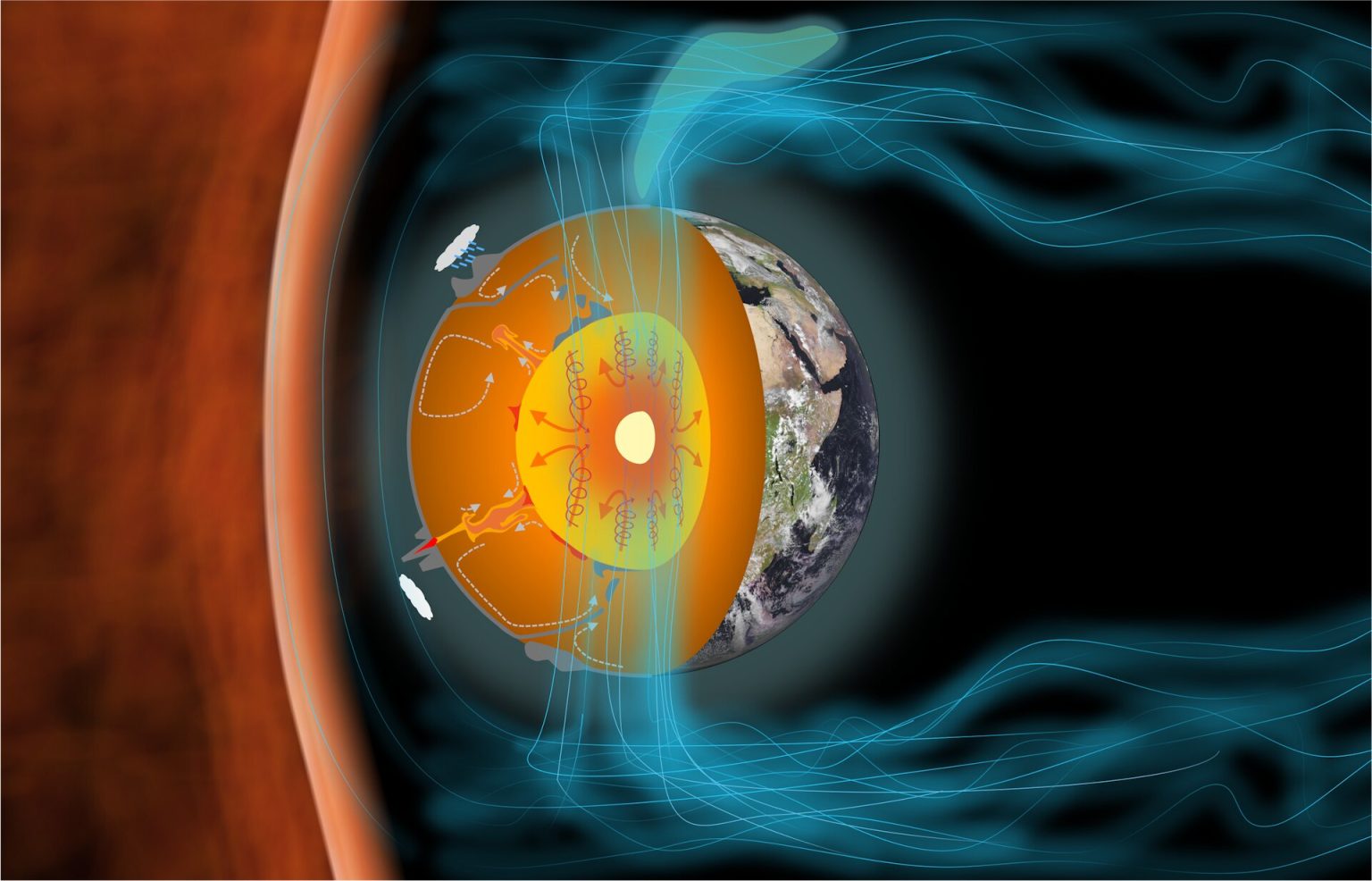
Scientists have analyzed the temperature at which the Earth’s core can remain in the state in which we observe it. They made a number of new assumptions about the chemicals it might consist of.
At the center of the Earth is its hottest and densest part — the core. No one has ever seen it, but thanks to some indirect methods, it is possible to determine its condition and chemical composition. Scientists have recently made progress in this case.
At the very beginning of its cooling, the Earth’s core was rarefied and hot. But then the temperature dropped and crystallization began in the center of the planet. Gradually, the liquid part became the outer core, and the solid part became the inner core. Charged currents began to form at their boundary.
The latter are the source of our planet’s magnetic field. In fact, its source is the temperature of the solid inner core. It cools down, transfers energy to the outer layers, and the movement of those layers generates currents and magnetic fields.
Seismic waves
All this is fine, but in reality no one has ever seen a sample of the material, either from the outer or inner core. All scientists know about them is the results of research on meteorites, which have remained unchanged since the formation of the Solar System, and observations of the propagation of seismic waves through our planet.
The latter method was used to establish the modern boundaries of the outer and inner cores. And this is precisely where the new study focused its efforts. Knowing the sizes of these two spheres, their cooling times, and information about the outer layers of the Earth, it is possible to calculate what their temperatures are now and in the past.
This is a way to determine chemical composition, because different substances transition to a solid state at different temperatures. Studies have shown that the Earth’s core has to be 10% less dense than pure iron, while the outer layer, despite being liquid, has to be a bit denser, and only certain chemical compositions can make this happen.
Most likely, the core contains sulfur and carbon. It was formed due to the process of supercooling, when, due to certain factors, a substance remains in a liquid state even though the temperature is already below the crystallization point. It is quite possible that in the case of the Earth’s core, this value was 420°C lower. This leaves a very wide range for the carbon content values in it.
In September 2022, NASA conducted an unprecedented experiment: the DART spacecraft deliberately collided with the asteroid Didymos to change its orbit. The mission was deemed a success — the trajectory of the space object really changed. It has been demonstrated that humanity already possesses the necessary technology to deflect potentially dangerous asteroids from their course toward Earth. However, new research points to an unexpected complication: such a strike may only delay the collision, rather than prevent it permanently.
Illustration of an asteroid hitting Earth, generated by ChatGPT AI
Gravitational traps
As it turns out, the main danger is gravitational traps — small areas of space where the gravity of planets can radically change the orbit of an asteroid. If, as a result of the impact, the space rock enters one of these traps, its new path could send it on a direct course toward Earth, but in the future. This makes indiscriminate use of kinetic strike technology potentially risky, merely postponing the inevitable threat.
In search of the perfect place to strike
The answer to this challenge is not to abandon the technology, but to improve it. Scientists studying data from the DART mission are proposing a new approach. Instead of simply hitting the asteroid, it is necessary to calculate the optimal point of impact with the utmost precision.To do this, detailed data about the celestial body needs to be collected in advance: its shape, mass, surface type, rotation speed, and topography.
One of the maps of the asteroid Bennu. The cross corresponds to the location on the surface that minimizes the risk of an asteroid impact after deflection. Illustration: Rahil Makadia
Based on this data, detailed probability arrays can be created that will show which part of the asteroid’s surface is safest for impact. A correctly calculated impulse in the right place will not only deflect the threat, but also ensure that the asteroid does not fall into a gravitational trap and permanently leaves its dangerous course toward Earth. Thus, future planetary defense missions will transform from brute force to precise “space billiards,” where every hit has to be calibrated.
Senator Claims Government Still Hiding UFO Evidence & ‘Proof of Non-Human Intelligence’ in 2025
Introduction: A New Era of Disclosure
In 2023, the world watched with bated breath as the U.S. Congress held a groundbreaking hearing on Unidentified Aerial Phenomena (UAP), marking a significant turning point in the global conversation about extraterrestrial life and aerial anomalies. The testimonies of highly credible whistleblowers such as David Grusch, a former intelligence officer, Ryan Graves, a commercial pilot, and David Fravor, a retired Navy pilot, brought new credibility to the subject. These individuals shared detailed accounts of unexplained sightings, encounters, and classified information, igniting widespread curiosity and prompting governments and scientific communities to reevaluate long-held assumptions about aerial phenomena.
By 2025, this momentum has only intensified. Governments around the world are increasingly acknowledging the reality of UAPs, with some openly admitting that certain sightings defy conventional explanations like weather phenomena or aircraft malfunctions. High-resolution radar data, declassified footage, and sensor recordings have all contributed to the growing body of evidence suggesting that some UAPs might involve non-human intelligence. Several nations, including Canada, the United Kingdom, and France, have initiated joint research projects and open data-sharing initiatives aimed at understanding these phenomena better.
Despite these advancements, many experts and members of the public remain skeptical, suspecting that governments are still withholding vital information. Senate Majority Leader Chuck Schumer’s 2023 legislation, which aimed to declassify and release UAP-related records, was a significant step forward. However, recent reports indicate that key details continue to be classified, fueling conspiracy theories and public distrust. Investigations by independent researchers and international collaborations have uncovered anomalies that challenge our understanding of physics and technology, hinting at the possibility of non-human origin or advanced extraterrestrial technology.
Moreover, recent technological developments, including the deployment of AI-driven analysis tools and international intelligence sharing, have accelerated efforts to decode these mysteries. The mounting evidence suggests that we are on the verge of a paradigm shift—moving from secrecy and skepticism toward openness and scientific inquiry. As we stand at this crossroads, humanity faces profound questions about our place in the universe, the presence of intelligent life beyond Earth, and what the future holds as we inch closer to discovering the truth behind these enigmatic phenomena.
The Current State of UAP Transparency and Government Action
Since 2023, significant strides have been made by the United States and its allied nations to enhance transparency and deepen understanding of Unidentified Aerial Phenomena (UAP). These developments reflect a concerted effort to move beyond secrecy and foster scientific inquiry into phenomena that have long intrigued both the public and the scientific community.
Declassification and Public Reports:One of the most notable steps has been the systematic declassification of UAP-related material. The Department of Defense (DoD), along with intelligence agencies such as the CIA and NSA, has released hundreds of previously classified videos and reports. These include compelling footage captured by military pilots and sensor systems, which depict objects displaying flight characteristics that challenge current understanding of aeronautics. In late 2024, the U.S. Office of the Director of National Intelligence (ODNI) published the “Annual UAP Report 2024,” marking a pivotal moment. This comprehensive document acknowledged over 1,200 UAP encounters since 2004, of which many remain unexplained even after rigorous analysis. The report emphasizes that these phenomena are not attributable to known aircraft, natural phenomena, or technological artifacts, thereby underscoring the need for further investigation.
Establishment of the UAP Oversight Committee: In 2024, the U.S. government formalized its approach by creating the UAP-Scientific and Technical Analysis Group (UAP-STAG), an interagency task force designed to unify efforts across military, intelligence, scientific, and diplomatic sectors. The primary mandate of UAP-STAG is to systematically analyze, catalog, and investigate UAP incidents, especially those exhibiting advanced flight capabilities or associated with unexplained materials and electromagnetic signatures. This committee aims to bring scientific rigor to the study of UAPs, moving away from speculation toward evidence-based understanding. It also seeks to develop standardized protocols for future investigations and to ensure that findings are transparently shared with policymakers and, where appropriate, the public.
International Collaboration:Recognizing the global nature of the phenomenon, the U.S. has actively engaged with international partners. Countries such as the United Kingdom, Canada, Australia, and NATO members have entered into data-sharing agreements and joint investigation initiatives. These collaborations facilitate a broader, more comprehensive approach to UAP research. Additionally, the European Space Agency (ESA) has launched dedicated missions to scan near-Earth space for anomalies, aiming to identify potential sources or links to UAP activity. Such international efforts underscore the importance of a coordinated response to phenomena that transcend national borders.
Private and Scientific Sector Engagement: Beyond government agencies, the private sector and academic institutions are increasingly involved in UAP research. Major aerospace and technology companies, including SpaceX, Blue Origin, and several university-affiliated research groups, are conducting independent studies into anomalous phenomena. These organizations often share preliminary findings with government agencies under strict confidentiality agreements, ensuring that sensitive data remains protected while fostering scientific collaboration. This engagement fosters a multidisciplinary approach, integrating aerospace engineering, physics, and atmospheric science to better understand the phenomena. The involvement of private enterprise and academia is vital in providing innovative perspectives and technological capabilities to unravel the mysteries surrounding UAPs.
Overall, these developments reflect a paradigm shift towards transparency and scientific inquiry in UAP research. While many questions remain unanswered, the increased openness and coordinated efforts mark a significant turning point in how governments and society approach the study of these enigmatic phenomena.
Recent High-Profile Incidents and Evidence
1. The “Tri-Planetary” Encounters of 2024
In early 2024, multiple UAPs were recorded simultaneously over the Pacific Ocean during joint military exercises. These objects displayed unprecedented flight characteristics: instantaneous acceleration, hovering at hypersonic speeds, and silent operation. Some of these craft appeared to communicate via electromagnetic signals, suggesting a level of sophistication far beyond current human technology.
One noteworthy incident involved a UAP that hovered near a U.S. Navy carrier for over 45 minutes before departing at incredible speeds. Analysis of recovered debris indicated exotic materials not found on Earth, with atomic structures that challenge our understanding of physics.
2. The “Lunar Anomaly” Findings
In late 2024, NASA and the European Space Agency announced the discovery of anomalous structures on the Moon’s far side, captured by new high-resolution orbiters. These structures, some resembling artificial constructs or machinery, have sparked debates about whether extraterrestrial civilizations might have visited or even established outposts on the Moon or elsewhere in the solar system.
The most compelling evidence came from a recent leak of classified images showing what appears to be a large, partially buried metallic object with geometric features inconsistent with natural geology. Scientists are calling for further investigation, but official access remains restricted.
3. Underwater UAPs and Submarine Encounters
In 2024, several allied navies reported encounters with submerged UAPs, some operating at depths beyond known human capability. These objects have been tracked traveling along undersea corridors, emitting electromagnetic signatures, and possibly interacting with undersea infrastructure. Such phenomena suggest that non-human intelligence may have mastery over both air and sea domains.
Whistleblowers and New Testimonies
David Grusch & the Hidden Programs
Whistleblower David Grusch has become one of the most prominent figures in the ongoing discussion about UFOs and government secrecy. His revelations in 2023 about secret retrieval programs have sparked intense debate worldwide, and his continued disclosures in 2024 deepen the mystery surrounding these clandestine activities. Grusch claims that the U.S. government has been involved in a series of highly classified projects aimed at recovering and analyzing extraterrestrial technology and biological specimens. One such operation, which he dubbed “Operation Deep Horizon,” is reportedly a large-scale initiative initiated decades ago with the primary goal of retrieving alien artifacts and reverse-engineering alien technology to gain a strategic advantage.
David Grusch, former national reconnaissance officer representative of the UAP Task Force at the U.S. Department of Defense, testifies during a House Oversight Committee hearing.
Drew Angerer / Getty Images
According to Grusch, thousands of recovered artifacts, some nearly a hundred years old, are stored in undisclosed facilities, guarded by a complex network of agencies and contractors. These artifacts include fragments of alien spacecraft, biological samples, and possibly preserved extraterrestrial lifeforms. Some of these biological specimens are said to be kept in specially designed biocontainment units, possibly stored in underground vaults or remote military bases. Grusch emphasizes that this extensive cover-up involves numerous government agencies, including the Department of Defense, intelligence agencies such as the CIA and DIA, and private defense contractors who have been contracted to develop technology from recovered materials. He also suggests that foreign governments may have knowledge of or even participate in parts of this covert operation, complicating international relations and raising questions about global oversight.
Grusch’s assertions point to a vast and deeply hidden archive of alien-related material, which, if verified, would fundamentally alter our understanding of human history and technological development. He warns that the scope of this concealment is enormous, involving not only military and intelligence agencies but also shadowy corporate entities that profit from the technology’s secrecy. The implications of such a cover-up extend beyond national security concerns, touching on issues of transparency, ethics, and humanity’s right to know about extraterrestrial life. Grusch’s testimonies continue to fuel speculation and investigation, prompting calls for congressional hearings and independent inquiries into the existence and extent of these secret programs.
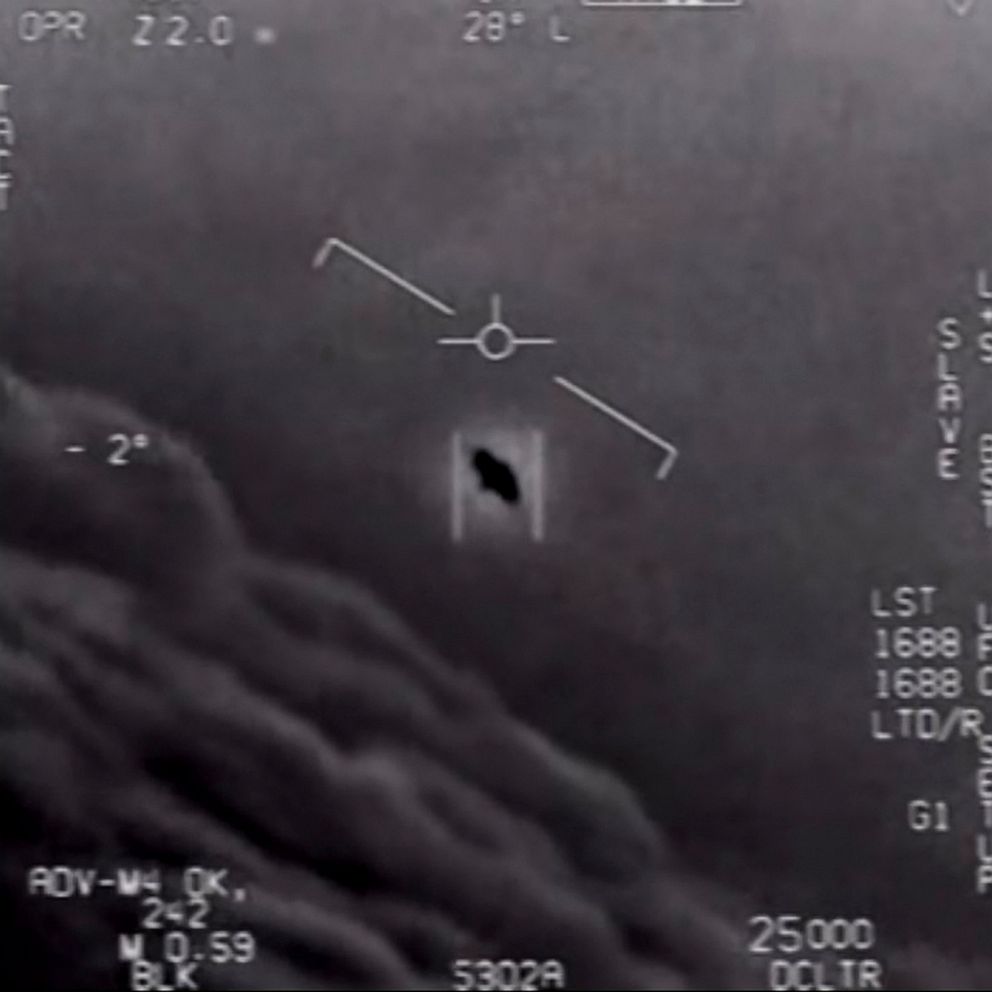
This video grab image obtained April 28, 2020, courtesy of the U.S. Department of Defense shows part of an unclassified video taken by Navy pilots that have circulated for years showing interactions with "unidentified aerial phenomena".
U.S. Dept. of Defense via AFP via Getty Images, FILE
Ryan Graves & the Threat of Advanced UAPs
Ryan Graves, a former Navy pilot and now a senior advisor to the Department of Defense, remains a key advocate for transparency regarding Unidentified Aerial Phenomena (UAP). Throughout 2024, he has published detailed analyses and reports emphasizing the potential threats posed by advanced UAPs to national security and aviation safety. Graves’s extensive experience as a pilot gives him a unique perspective on the flight capabilities of these objects, which often exhibit maneuvers and speeds that defy current human technology.
His recent report highlights that many UAPs demonstrate propulsion systems and energy sources that challenge our understanding of physics. Some of these objects can accelerate rapidly, hover silently for extended periods, or perform sharp turns and sudden accelerations that suggest highly advanced propulsion technology—possibly involving anti-gravity or zero-point energy. Such capabilities indicate that these objects could be either non-human or represent a post-human technological evolution that surpasses current human engineering.
Graves advocates for the deployment of more sophisticated detection systems, including networked radar, infrared sensors, and AI-based analysis tools. He emphasizes that improving detection and tracking systems is essential for understanding the origin, purpose, and capabilities of these UAPs. Additionally, he stresses the importance of international cooperation, advocating for a global approach to UAP monitoring and data sharing. This cooperation could help identify patterns, establish early warning systems, and develop strategies to counter potential threats.
Graves also raises concerns about the potential for UAPs to interfere with military operations or commercial aviation, especially as some of these objects have demonstrated the ability to operate near sensitive military sites and airports. He warns that if these phenomena are of extraterrestrial origin, they could represent an unprecedented technological challenge that requires coordinated international research efforts. His work aims to establish a scientific and military framework that can assess and respond to this emerging threat responsibly, prioritizing safety and security while maintaining transparency with the public.
New Testimonies from Military Personnel
Between 2024 and 2025, a significant wave of anonymous testimonies from military personnel, radar operators, and scientists has emerged, adding new layers to the UFO mystery. These testimonies describe encounters with “intelligent” UAPs that seem to exhibit behaviors indicating purpose, coordination, and even curiosity about human activity. Many of those who have come forward recount experiences where UAPs appeared to respond to human commands or gestures, suggesting a level of awareness and possibly intelligence.
Several military pilots have reported that during their encounters, UAPs adjusted their flight paths to avoid collision, often moving in ways that suggest a calculation of human intentions and movements. Some pilots noted that these objects seemed to follow specific objects or locations, such as military bases or research facilities, raising suspicions about surveillance or reconnaissance activities. Others have described observing UAPs performing complex maneuvers, such as sudden accelerations or hovering at extreme altitudes, that current human-made aircraft cannot replicate.
Radar operators have reported detecting UAPs that appear to outmaneuver conventional aircraft and radar systems. These objects often display sudden changes in direction and velocity, making them difficult to track or predict. In some cases, radar blips have disappeared or reappeared at will, indicating a mastery of electromagnetic or stealth technology that could be of extraterrestrial origin. Scientists involved in analyzing these data sets have suggested that these UAPs show signs of purposeful behavior, such as following specific flight paths or maintaining proximity to sensitive sites, implying that some UAPs may possess a form of intelligence.
The testimonies also describe incidents where UAPs exhibit curiosity about human activity, seemingly observing or even approaching military personnel or equipment. Such behaviors suggest an interest beyond mere observation, possibly indicating a willingness to interact or communicate. These encounters have often left witnesses with a mixture of fascination and concern, as they challenge existing scientific paradigms and raise questions about the intent and origin of these objects. The consistency and detail of these testimonies have prompted calls for more systematic investigation, including the deployment of specialized sensors and the development of protocols for safe interaction.
Overall, these new testimonies underscore the complexity and potential significance of UAP phenomena. They suggest that these objects are not mere anomalies or natural phenomena but may represent an advanced form of intelligence—either extraterrestrial or highly evolved human-made technology. The reports reinforce the urgency for governments and scientific institutions to prioritize research and transparency, ensuring that these encounters are thoroughly documented and understood. As public awareness grows, the hope is that a clearer picture will emerge about the nature, purpose, and capabilities of these mysterious objects, leading to a new era of scientific discovery and security preparedness.
The Scientific Community’s Perspective
While skepticism persists within many scientific circles regarding the true nature of Unidentified Aerial Phenomena (UAPs), an increasing number of researchers and institutions are advocating for a more open and systematic investigation into these mysterious objects. Historically, UAPs were often dismissed or ridiculed, but recent developments have fostered a shift towards serious scientific inquiry. Notably, organizations such as the International Astrobiology Institute and the Quantum Physics Society have issued joint statements emphasizing the potential significance of unexplained aerial phenomena. They argue that these phenomena could hold the key to revolutionary breakthroughs, ranging from discovering new physics principles to understanding the existence of non-human intelligence. Such statements encourage scientists to approach UAPs without prejudice and to consider multidisciplinary research methods. They highlight the importance of transparency, data sharing, and open collaboration among nations and scientific disciplines. This movement aims to elevate UAP research from speculative fringe science to a credible field that can contribute meaningfully to our understanding of the universe. The recognition of UAPs as phenomena worthy of scientific scrutiny marks a pivotal shift in how these mysterious objects are perceived within the scientific community.
In 2024, a groundbreaking symposium held at the United Nations signified a major milestone in formalizing international cooperation on UAP research. This event brought together scientists, policymakers, military officials, and representatives from various countries to discuss strategies for investigating these phenomena. During the symposium, the proposal for establishing an official International UAP Research Consortium (IURC) was introduced and broadly supported. The IURC aims to serve as a centralized body responsible for coordinating global efforts, sharing collected data, and developing scientifically rigorous hypotheses regarding the origins, nature, and implications of UAPs. The consortium would facilitate data pooling from military, civilian, and academic sources, promoting transparency and avoiding the duplication of efforts. Furthermore, it seeks to standardize research methodologies, establish protocols for data validation, and foster international collaboration to accelerate understanding. The establishment of the IURC signals a paradigm shift in how countries approach the phenomenon—moving from secretive, compartmentalized investigations to an open, cooperative framework aimed at uncovering the truth through scientific rigor. Such an initiative underscores the urgency and global importance of deciphering UAPs, not just as a matter of national security but as a potential doorway to new scientific horizons.
Photograph: Tom Brenner/Getty Images
Theories and Explanations: From Secret Tech to Extraterrestrial Civilizations
Several hypotheses and explanations dominate the ongoing discussions about the nature of UAPs, reflecting the wide range of interpretations and the lack of definitive evidence so far. These theories are rooted in various scientific, technological, and speculative frameworks, each offering different perspectives on what these objects could be.
Advanced Human or Secret Tech: The first and perhaps most conservative hypothesis suggests that UAPs are secret prototypes or experimental technologies developed by human military or industrial entities. Known as “secret tech” or “black projects,” these could include advanced aircraft, drone systems, or other aerospace technologies that are not publicly acknowledged. Sometimes, these craft are believed to be part of clandestine programs—such as the U.S. Black Budget projects—which operate beyond the oversight of civilian authorities. Proponents argue that some sightings could be explained by highly sophisticated, covert technology designed for intelligence gathering or military advantage. These projects often involve cutting-edge materials, propulsion systems, and stealth capabilities, which might appear extraordinary to observers unaware of their existence. The challenge, however, lies in the lack of concrete evidence linking UAPs to known secret technologies, which keeps this hypothesis speculative. Nonetheless, the possibility that some UAPs represent undisclosed human technological advancements remains a significant consideration among researchers.
Foreign Spying and Countermeasures:The second prominent theory involves foreign espionage and countermeasures. This explanation posits that UAPs could be advanced surveillance devices operated by foreign adversaries such as China, Russia, or even lesser-known nations. These entities might deploy sophisticated craft or drone systems to probe military installations, gather intelligence, or test defenses. Such devices could be designed to mimic natural atmospheric phenomena or employ stealth technologies to evade detection. The idea is that some sightings could be the result of foreign espionage efforts aimed at understanding or countering national security measures. For example, certain anomalous objects observed near sensitive military sites could be classified as foreign reconnaissance tools, especially if they exhibit flight characteristics or technological features beyond current known capabilities. This hypothesis emphasizes the importance of intelligence, counterintelligence, and technological vigilance, as nations seek to defend against potential espionage threats. While there is limited public evidence to confirm such claims, the possibility remains plausible given the geopolitical landscape and advancements in covert surveillance technology.
In an open hearing on Unidentified Aerial Phenomena (UAP) before the House Intelligence Counterterrorism, Counterintelligence, and Counterproliferation Subcommittee, Deputy Director of Naval Intelligence Mr. Scott Bray shared this Navy image of a UAP captured during Naval Exercises off the East Coast of the United States in early 2022.
U.S. Navy
Non-Human or Extraterrestrial Origins: TA highly provocative and widely debated hypothesis suggests that some UAPs originate from extraterrestrial civilizations. This theory is rooted in the possibility of intelligent life beyond Earth and posits that certain unexplained phenomena are actual craft built or piloted by non-human entities visiting our planet. Proponents argue that the extraordinary flight capabilities, lack of identifiable propulsion systems, and unusual behavioral patterns observed in some UAP encounters could point to alien technology. The hypothesis is supported by anecdotal accounts, radar-visual correlations, and some declassified military footage showing objects performing maneuvers impossible with known human technology. If true, such encounters could have profound implications for science, philosophy, and our understanding of our place in the universe. Skeptics, however, call for caution, emphasizing the lack of concrete physical evidence and the need for rigorous scientific validation. Nonetheless, this hypothesis continues to inspire research efforts and public fascination, fueling the hope that UAPs might be visitors from distant worlds rather than terrestrial or natural phenomena.
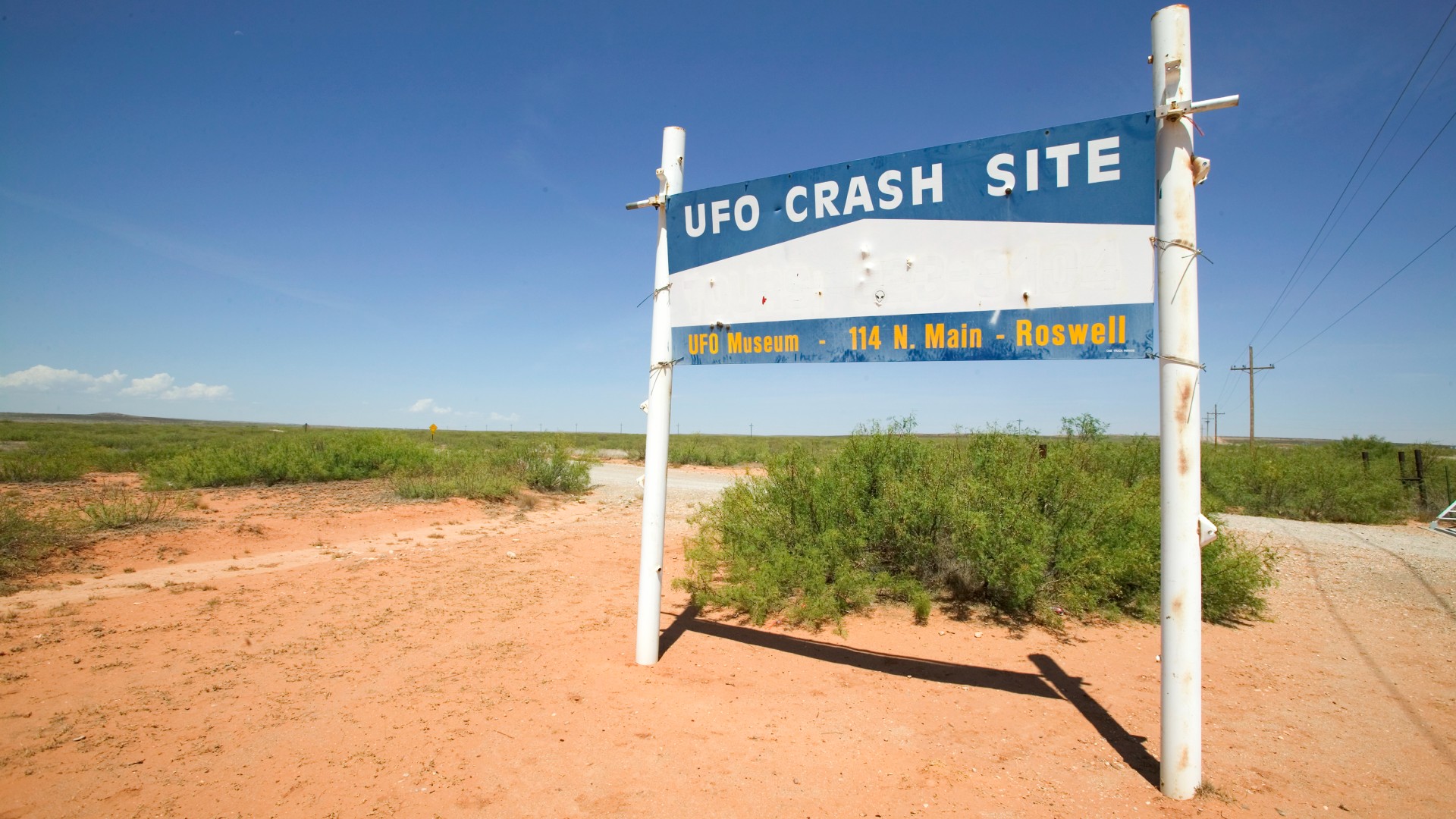
A sign in Roswell, New Mexico advertising a UFO crash site.
(Image credit: Getty Images/David Zaitz)
Interdimensional or Parallel Universe Hypotheses:Finally, an emerging fringe hypothesis involves the idea that UAPs are connected to interdimensional or parallel universe phenomena. This speculative theory suggests that UAPs could originate from other dimensions or alternate realities that coexist alongside our own. According to this perspective, these objects might be manifestations or portals linked to entities or phenomena existing outside the scope of conventional physics. Some proponents argue that the strange flight patterns, inexplicable appearances, and sudden disappearances could be explained by interactions with higher-dimensional spaces. This hypothesis challenges current scientific paradigms, as it involves concepts of multiple dimensions, quantum entanglement, and parallel universes—areas still largely theoretical and unproven. Critics regard this idea as highly speculative due to the lack of empirical evidence, but it remains intriguing for those exploring the boundaries of physics and consciousness. If validated, this theory could revolutionize our understanding of reality itself, opening new frontiers in physics and metaphysics. The interdimensional hypothesis underscores the vast uncertainty surrounding UAPs and highlights the need for open-minded scientific exploration beyond conventional frameworks.
In summary, the scientific community recognizes the complexity and mystery surrounding UAPs, with multiple competing hypotheses ranging from secret human technology to extraterrestrial and interdimensional origins. Each explanation presents unique challenges and opportunities for discovery. As international efforts such as the proposed IURC gain momentum, the hope is that systematic, open-minded research will eventually unravel the true nature of these enigmatic objects, potentially leading to revolutionary scientific breakthroughs and a deeper understanding of our univere.
The Broader Implications
The increasing acknowledgment and investigation of UAPs have profound implications across multiple domains, influencing security, scientific understanding, geopolitics, and cultural perspectives. These developments could potentially reshape our world in fundamental ways, prompting governments, scientists, and societies to rethink long-held beliefs and strategies.
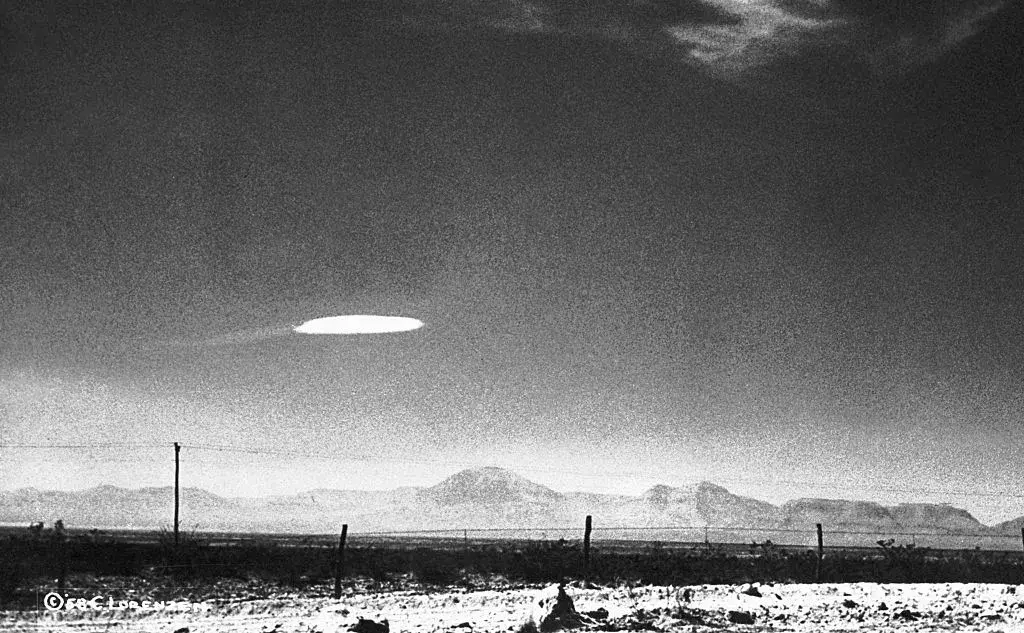
An undated government photo of "a UFO variety" that hovered for fifteen minutes near Holloman Air Development Center in New Mexico. | Bettmann / Contributor/Getty/Getty
Security and Defense:Understanding these phenomena is critical for national security, especially as some UAPs demonstrate capabilities that could threaten military assets or civilian infrastructure. Governments are investing heavily in research, surveillance, and defense measures to identify, track, and assess these objects. The potential for hostile intent or advanced technology hidden within these phenomena raises concerns about sovereignty and safety. Military installations and aircraft are now equipped with advanced sensors to detect unusual activity, and some nations are developing specialized units to analyze UAP encounters. This focus on security extends to international cooperation and intelligence sharing, aiming to prevent possible threats while also understanding the origin and purpose of these phenomena. The implications for airspace sovereignty and defense protocols are significant, potentially leading to new treaties or regulations.
Scientific Paradigm Shift: Confirming non-human intelligence or new physics could revolutionize our scientific understanding and technological development. If UAPs are proven to operate on principles beyond our current knowledge, it would prompt a reevaluation of fundamental physics, such as gravity, propulsion, and energy sources. This may lead to groundbreaking innovations in transportation, energy production, and materials science. Researchers would need to develop new theories and models to explain these phenomena, challenging existing scientific paradigms that have persisted for centuries. The potential discovery of extraterrestrial technology or consciousness could accelerate scientific progress exponentially, opening entirely new fields of study and enabling humanity to harness previously unimaginable technologies. Such a shift could also influence academic institutions, funding priorities, and international scientific collaborations.
Global Politics: Countries are now competing and collaborating in unprecedented ways to uncover the truth, with some nations establishing dedicated agencies or task forces. These efforts reflect the strategic importance of UAPs, as access to advanced technology or intelligence could confer significant geopolitical advantages. Nations like the U.S., China, Russia, and others have increased their investments in UAP research, often leading to classified projects and secretive collaborations. International organizations may eventually play a role in establishing protocols for transparency and data sharing, fostering a new era of global cooperation or competition. Diplomatic tensions could arise if some countries are perceived as withholding information or suppressing findings. Conversely, sharing knowledge could promote peaceful exploration and collective security. The geopolitical landscape is thus being reshaped by these investigations, with new alliances forming based on technological and intelligence capabilities related to UAPs.
Philosophical and Cultural Impact: The realization that we are not alone challenges humanity’s worldview, religious beliefs, and our understanding of life in the universe. For centuries, many cultures and religions have maintained that humanity is unique or at the center of creation. The confirmation of extraterrestrial life or intelligence would force a reassessment of these beliefs, leading to profound existential questions. It could inspire a new sense of humility, curiosity, and interconnectedness among humans, fostering a global identity rooted in the recognition of our place in the universe. Additionally, art, literature, and popular culture are likely to be influenced, with themes of contact, discovery, and alien civilizations becoming more prominent. Religious and philosophical debates may intensify, questioning humanity’s purpose and the nature of consciousness. This paradigm shift could also influence educational curricula, encouraging a broader and more inclusive perspective on life and our universe, ultimately fostering a more open-minded and inquisitive society.
The Future Outlook:As research continues, the implications of UAPs will likely deepen, influencing policy, science, and cultural narratives. Increased transparency and international cooperation could lead to groundbreaking discoveries, while ongoing security concerns may result in stricter regulations and defense protocols. The possibility of contact with extraterrestrial civilizations remains a tantalizing prospect, with the potential to unify humanity or cause divisions based on how information is managed and interpreted. Public interest and curiosity are expected to grow, fueling a new era of exploration and understanding. Ultimately, these phenomena challenge us to expand our horizons, rethink our assumptions, and prepare for a future where the unknown may become known, transforming our civilization in ways we can only begin to imagine.
The Path Forward: Disclosure, Research, and Public Engagement
In 2025, the momentum toward full transparency regarding Unidentified Aerial Phenomena (UAP) continues to grow. Governments worldwide are increasingly releasing classified materials, often prompted by mounting public pressure and a growing body of credible sightings. Many agencies are declassifying previously restricted documents, videos, and reports, providing the public and researchers with more detailed insights into encounters that have long been shrouded in secrecy. This shift aims to build trust, dispel misinformation, and foster a more open dialogue about the phenomenon.
Simultaneously, independent researchers and scientific institutions are gaining unprecedented access to data that was once tightly guarded. Collaborative efforts between government agencies, universities, and private organizations are expanding, allowing scientists to analyze UAP data more thoroughly. These efforts include advanced sensor analysis, radar tracking, and atmospheric studies, all of which contribute to a more comprehensive understanding of these phenomena. This democratization of information is crucial for moving beyond speculation and towards evidence-based conclusions.
Public interest remains high, with large-scale protests and demonstrations occurring globally. Citizens demand open access to all UAP information, asserting their right to understand what governments may have known for decades. Social media campaigns, public forums, and media coverage continue to amplify calls for transparency, pressuring authorities to release more data and participate in open discussions. Governments are increasingly acknowledging the importance of engaging with the public to foster trust and accountability.
In response to this evolving landscape, the U.S. Congress is actively considering new legislation aimed at formalizing international cooperation on UAP research. Proposed bills seek to establish protocols for sharing information across borders, encouraging a global approach to understanding these phenomena. Funding for scientific research is also on the rise, with grants allocated specifically for studying UAP-related data, atmospheric conditions, and potential technological implications.
The legislation also emphasizes the importance of safety and protocol development for future encounters. This includes establishing guidelines for military and civilian interactions, ensuring that investigations are conducted systematically and without unnecessary escalation. The overarching goal is to create an environment where transparency, scientific rigor, and safety are prioritized, ultimately paving the way for a more informed and collaborative approach to understanding UAPs. As the world moves forward, the hope is that increased openness and scientific inquiry will lead to groundbreaking discoveries and a clearer understanding of the phenomena that continue to intrigue humanity.
Conclusion: Are We Alone? The Future of UAP Research
While definitive proof of non-human intelligence remains elusive, the accumulated evidence, recent discoveries, and credible testimonies suggest that the phenomena we observe may be more than just secret technology or psychological illusions. Over the past decades, numerous eyewitness accounts from military personnel, pilots, and civilians have been documented, often corroborated by radar and sensor data. These reports point to objects exhibiting flight capabilities that surpass current human-made aircraft, with some demonstrating sudden accelerations, abrupt directional changes, and hover capabilities that defy known physics.
In recent years, advanced satellite imagery and high-resolution videos have added credibility to these phenomena, prompting governments and scientific institutions worldwide to take a more serious interest. The U.S. government, for example, has declassified several videos and established dedicated research groups to analyze UAP encounters. This shift indicates a growing recognition that understanding these phenomena could have profound implications for national security, aerospace technology, and our understanding of the universe.
As governments and scientists continue their investigations, humanity stands at the threshold of potentially the most significant scientific and philosophical revolution in history. The pressing questions are no longer if we are being visited or observed, but when and by whom. With ongoing technological advancements, increased international cooperation, and the collection of more comprehensive data, we may soon uncover the truth behind these mysterious visitors. Such discoveries could redefine our understanding of life beyond Earth and influence our future in ways we can scarcely imagine. The quest for answers continues, and the coming years may finally bring clarity to one of humanity’s most profound mysteries.
Note: The ongoing developments in 2025 indicate that the era of UAP mystery is giving way to one of scientific inquiry and transparency. Whether these phenomena are visitors from another world, manifestations of advanced human technology, or something else entirely, one thing is clear: we are not alone in our curiosity—and perhaps, in reality.
Sources & Further Reading:
UAP Annual Report 2024, ODNI
Official statements from NASA, ESA, and DoD
Whistleblower interviews and declassified documents
Recent congressional hearings and legislation updates
Scientific symposiums and international collaborations
Scientists say they have developed fully functional miniature robots that can go deep inside the human body to perform ultra-precise laser surgery, in a medical innovation similar to on-screen portrayals from science fiction.
The robots have roughly the same dimensions as microorganisms — like the paramecium.
Controlled by magnetic fields, the tiny wormlike robotic surgeons were recently demonstrated traveling deeper inside a human cadaver’s lungs than is possible with current state-of-the-art surgical instruments. One of the researchers behind the achievement tells The Debrief that there are a number of organs and systems the incredible “micro-bots” can get inside to perform similar pinpoint explorations and surgeries.
Discover more in the BBC news video below.
Miniature Robots Performing Surgery Has Long Been a Dream of Science Fiction
In some of the more utopian science fiction of the middle 20th century, medicine has advanced to the point that nearly all diseases and ailments have a treatment, if not an outright cure. Some of these futuristic cures involve genetically engineered super drugs, blasts of scientific-sounding rays, or even an injection of alien blood. However, seemingly the most common therapy of the future envisioned by TV writers, movie directors, and novelists involve injecting minuscule robots into the human body and letting them go to work.
Now a team of researchers says they have moved this idea from science fiction to science fact by designing the first pair of tiny surgical roots that can literally go where no surgeon has gone before.
Future tiny robots possibly upgraded with AI
More than a tiny robot army with tricked-out legs, the robots are exceptional because they employ the same fabrication techniques seen in silicon computer chips. This effectively means they may be produced en masse — researchers fit 1 million of these ultra-tiny robots onto a singular four-inch silicon wafer. This also means the robots are easily equipped with increasingly advanced technology as it progresses to smaller and smaller via Moore’s Law, reports Inverse.
Magnetic Fields, Tiny Cameras and Ultra-Precise Lasers
In an email to The Debrief, Professor Pietro Valdastri, Director of the STORM Lab and research supervisor, said that the robots themselves are made of a biocompatible plastic (silicone) with magnetic particles embedded inside them.
The first part is significant so the human body doesn’t have a negative reaction to the otherwise foreign objects operating inside of the body. However, it is the precision placement of the embedded magnet particles that allow the two wormlike robots to maneuver independently.
“Normally, two magnets placed closely together would attract each other, creating a challenge for the researchers,” the press release announcing the breakthrough procedure explains. “They overcame it by designing the bodies of the tentacles in a way that they can bend only in specific directions and by relocating the north and south poles in each magnetic robot tentacle.”
Robotic platform for peripheral lung tumour intervention based on magnetic tentacles
(STORM Lab, University of Leeds/Public Domain)
A pair of magnetic devices operating outside the human body can generate fields strong enough to cause the robots to maneuver deeper inside the lungs than even the most advanced equipment. And by moving independently, one of the robots can carry a camera to assist surgeons, while the second robot can guide a surgical laser with extreme precision.
When asked how a robot that is only 2 millimeters in diameter can carry a laser, Valdastri told The Debrief, “the source of laser is external, but the laser light is sent to the tip of the magnetic tentacle via an optical fiber. So laser energy is delivered at the tip of the tentacle directly on the target.”
In the video released by researchers (below), the pair of miniature robots are seen navigating deep into the lungs of a human cadaver. This is significant, they note, because lung cancer that often requires surgery has the highest mortality rate of any cancer worldwide. Still, when asked by The Debrief if the miniature robots can work in other areas of the body besides the lungs, they said there were a number of biological systems that would accommodate these micro-surgeons perfectly.
“The same approach can be used to reach the deep part of the brain, the pancreas, the bladder, and any other body cavity that is accessible through a narrow lumen,” Valdastri said. “The cardiovascular system is also another potential district of use.”
“Living Tissues” Clinical Trials Are the Next Proving Ground
Now that the robots have been shown to move successfully and independently in a biological environment, the team behind the exciting research effort, which was published in the journal Nature Engineering Communications, says they are working their way toward actual human trials with actual lung cancer patients. However, there is likely one more step along the way.
“For the lung cancer application, (the) next step(s) are trials in a more realistic environment that includes living tissues and respiration, so probably animal model,” Valdastri told The Debrief. “After that, human trials, possibly in 2-3 years from now.”
Given the abilities and functionality of these miniature robots, it seems that one day in the not-too-far distant future, they will actually be in medical facilities around the world exploring and repairing the deepest recesses of the human body like something right out of a movie. Plus, the researchers explain, there is a significant aspect of access for everyone and not just the rich that may make them even more successful
“The key point is that this new magnetic technology can allow us to reach way deeper into the human body than ever before in a way that doesn’t require extremely qualified surgeons (thanks to robotic guidance/assistance),” Valdastri told The Debrief. “We hope this way to democratise cancer treatment and increase access to top quality procedures.”
Christopher Plain is a Science Fiction and Fantasy novelist and Head Science Writer at The Debrief. Follow and connect with him on X, learn about his books at plainfiction.com, or email him directly at christopher@thedebrief.org.
They discussed how numerous military and civil pilots and radar operators see and track UFOs performing speeds and manoeuvres that seem to defy the laws of physics.
Sceptics believe such sightings are either misperceptions, sensor anomalies, or involve secret prototype aircraft, missiles or drones.
The third witness at the hearing, David Grusch, is a former intelligence officer who served on the US government's Unidentified Aerial Phenomena Task Force.
In testimony reminiscent of the infamous Roswell UFO incident, Grusch says the US government has recovered craft and bodies relating to what he calls a "non-human intelligence".
He undertook to pass specific details about this to Congressional representatives with the appropriate security clearances.
He said he blew the whistle because programs dealing with this are being run illegally, without proper Congressional oversight.
Grusch went further, talking about unspecified injuries that have befallen UFO witnesses, and threats and retribution against whistleblowers - including himself.
Separately, he filed a complaint with the Intelligence Community Inspector General, apparently containing specific details that were frustratingly missing from the hearing, because it was an unclassified session.
David Grusch, former National Reconnaissance Officer Representative of Unidentified Anomalous Phenomena Task Force at the U.S. Department of Defense, at the 'Unidentified Anomalous Phenomena: Implications on National Security, Public Safety, and Government Transparency' US Congress hearing on 26 July 2023.
Photo by Drew Angerer/Getty Images
Key takeaways
Unlike pilot sightings, which are multifactorial, there's no middle ground here: Grusch's claims are either true or false.
Could he be a disgruntled former employee trying to cause trouble, or involved in a deception operation - either as a willing participant or as an unwilling dupe?
If his allegations are true, they would have profound implications for humanity.
Congress is trying to verify Grusch's claims - a process complicated by the highly classified nature of some UFO information, and by the fact that multiple committees and sub-committees, both in the Senate and the House of Representatives, are investigating.
And US lawmakers are drafting multiple UFO-related provisions for inclusion in next year's Defense Bill.
Whatever the truth about UFOs, there's bipartisan agreement that it's a serious national security issue.
Furthermore, the level of official engagement in the US is in stark contrast to the UK, where the Ministry of Defence terminated UFO investigations in 2009, and say they have no plans to re-engage.
Nick Pope worked for the Ministry of Defence for 21 years. From 1991 to 1994 his duties included investigating UFO sightings to assess national security implications.
These stories about the space militarization race aren’t getting the attention the much more entertaining UFO stories are getting, but it seems likely that those who are responsible for moving the war machinery around are paying a lot more attention to the former than the latter.
If Wednesday’s House Oversight subcommittee hearing on UFOs had happened ten years ago instead of today, it would have shaken the world. Imagine someone from 2013 hearing congressional testimonies about “routine” military pilot encounters with giant flying tic tacs, floating orbs, 300-foot red squares, and cubes in clear spheres zipping around in ways that surpass all known earthly technology by leaps and bounds, or about secret government possession of otherworldly aircraft they’re trying to reverse engineer and the dead bodies of their non-human pilots, or about the possibility that these creatures are not merely extraterrestrial but extra-dimensional. Their jaws would have hit the floor.
Now in 2023 we’ve been getting incrementally drip-fed bits and pieces of these stories for six years, so the scene on Capitol Hill on Wednesday didn’t have the impact it would’ve had in 2013. It’s making headlines and getting attention, but not as much as Sinead O’Connor’s death or people’s thoughts on Barbie and Oppenheimer. The response from the general public could be described as a collective nervous laugh and a shrug.
People scroll past the footage from the hearing on social media, go “Whoa, that’s weird,” and move on with their lives. The information’s going in, but just kind of on the periphery of mainstream consciousness. Maybe next year they’ll show us something that would’ve been even more shocking to someone in 2013 than Wednesday’s hearing would’ve been, and it will be met with the same nervous laugh and shrug by the people of 2024.
Of course in the circles I tend to interact with, the response is a bit different. People who are highly skeptical of the US war machine tend to also be highly skeptical of this UFO narrative we’ve been seeing since 2017.
“Distraction” is a word you hear a lot. “It’s just a distraction from ______”, where “______” is whatever hot story they personally happen to be fascinated by at the moment. I personally don’t buy that explanation; the new UFO narrative wasn’t just cooked up at the last minute to distract from current headlines, it’s been unfolding for six years, and people aren’t even paying that much attention to it. The empire doesn’t tend to orchestrate spectacular events as a “distraction” anyway; the adjustment of public attention tends to take the much more mundane form of agenda setting in the media, where some stories receive more attention than others based on what’s convenient for the oligarchs who own the press.
I also see people theorizing that this is all a ploy to ramp up the US military budget. There could totally be something to that, but again this narrative has been unfolding for six years and so far the military budget has just been swelling in the usual yearly increments as always.
Don’t get me wrong, though — I’m as skeptical about this thing as anyone. For one thing the origins of the mainstream UFO narrative which began in 2017 were steeped in extensive distortion, dishonesty and journalistic malpractice, and were carried forward by shady intelligence operatives like Lue Elizondo. David Grusch, who made by far the most sensational claims at Wednesday’s congressional hearing with his tales of dead aliens and reverse-engineered UFOs, is himself an insider of the US intelligence cartel.
But for me what really stinks about all this UFO stuff is the timing. Here we are in the early stages of a new cold war which features a race to militarize space, and we’re hearing congressional testimony about mysterious vehicles posing a threat to US airspace which have the ability to go up and down between earth and space very quickly. That smells off.
I mean, does it really sound like a coincidence that we’re seeing all these news stories about UFOs and aliens at the same time we’re seeing news stories about a race between the US and China and Russia to dominate space militarily? A Foreign Policy article from last year blares the headline “China and Russia Are Catching Up to U.S. in Space Capabilities, Pentagon Warns” with the subheading “The militarization of space is picking up pace.” These warnings are echoed in articles by Defense One and Time. An article on the United Nations website from last year carries the title “‘We Have Not Passed the Point of No Return’, Disarmament Committee Told, Weighing Chance Outer Space Could Become Next Battlefield.” A 2021 report from the war machine-funded Center for Strategic and International Studies titled “Defense Against the Dark Arts in Space: Protecting Space Systems from Counterspace Weapons” warns of the urgent need to build more space weapons to counter US enemies. A Global Times article from last year carries the title “Chinese experts urge avoidance of space weaponization amid commercial space capability deployment in Ukraine.”
These stories about the space militarization race aren’t getting the attention the much more entertaining UFO stories are getting, but it seems likely that those who are responsible for moving the war machinery around are paying a lot more attention to the former than the latter. The US Space Force took its first steps toward becoming a reality in 2017, the same year these mainstream UFO stories started coming out, with the explicit purpose of countering Russia and China.
And it just seems mighty suspicious to me how we’re being slowly paced into this UFO narrative (or UAP narrative for those hip to the current jargon) right when there’s a mad rush to get weapons into space. I can’t actually think of any other point in history when the timing of something like this would have looked more suspicious.
So for me the most disturbing parts of the UFO hearing were the parts that could wind up facilitating the agenda to militarize space, like when this phenomenon was framed as a “national security” threat or when it was mentioned that they can transition from earth to space very rapidly.
When asked by congressman Glenn Grothman “do you believe UAPs pose a threat to our national security?”, former Navy commander David Fravor answered with an unequivocal yes. A few minutes later Fravor described these vehicles as being able to “come down from space, hang out for three hours and go back up.”
When asked by congressman Andy Ogles whether UFOs could be “collecting reconnaissance information” on the US military, all three witnesses — Grusch, Fravor, and former Navy pilot Ryan Graves — answered in the affirmative. Asked by Ogles if UFOs could be “probing our capabilities,” all three again said yes. Asked if UFOs could be “testing for vulnerabilities” in US military capabilities, all three again said yes. Asked if UFOs pose an existential threat to the national security of the United States, all three said they potentially do. Asked if there was any indication that UFOs are interested in US nuclear technology, all three said yes.
Ogles concluded his questioning by saying, “There clearly is a threat to the national security of the United States of America. As members of Congress, we have a responsibility to maintain oversight and be aware of these activities so that, if appropriate, we take action.”
When asked by congressman Eric Burlison if “there has been activity by alien or non-human technology, and/or beings, that has caused harm to humans,” Grusch said he couldn’t get into specifics in a public setting (a common theme throughout the hearing), but said that “what I personally witnessed, myself and my wife, was very disturbing.”
Grusch would complicate this cryptic statement a few minutes later by saying that he’s never seen a UFO. How this statement doesn’t contradict his previous statement about having witnessed harmful behavior from non-human technology and/or beings was not made clear.
So you’ve got US policymakers being told that there are vehicles using technology not of this world routinely violating US airspace and posing an existential threat to US national security, and that these craft can go from earth to space and back at will, and that they need to help make sure their nation can address this threat.
What conclusions do you come to when presented with that kind of information? If you’re a lawmaker in charge of facilitating the operation of a highly militaristic empire, you’re probably not going to conclude that it’s time to hold hands and sing Kumbaya. You’re probably eventually going to start thinking in terms of military technology.
One of the most important unanswered questions in all this UFO hullabaloo is, why now? Why are we seeing all this movement on “disclosure” after generations of zero movement? If these things are in fact real and the government has in fact been keeping them secret, why would the adamant policy of dismissal and locked doors suddenly be reversed, allowing “whistleblowers” to come forward and give testimony before congress? If they had motive to keep it a secret this entire time, why would that motive no longer be there?
If you ask the online UFO community, many will essentially take credit for the whole thing, saying the most powerful war machine ever assembled has reversed its policy of total opacity because of “pressure” applied by disclosure activists. This doesn’t pass the smell test; the most powerful empire in history isn’t reversing course on a longstanding policy of blanket secrecy because of internet forums and FOIA requests.
So why now? Why the drastic and sudden shift from UFOs and aliens being laughable tinfoil hat nonsense to the subject of serious congressional inquiries and widespread mainstream media coverage?
Well, the timing of the race to militarize space might provide an answer to the “why now?” question. Is it a coincidence that this new UFO narrative began its rollout in 2017, around the same time as the rollout of the Space Force? Are we being manipulated at mass scale about aliens and UFOs to help grease the wheels for the movement of war machinery into space? How likely is it that by pure coincidence this extraplanetary narrative timed out the way it did just as the US empire makes a last-ditch grab at unipolar planetary domination?
I don’t know. I do know that if I’m assigning degrees of probability, “Extraterrestrial or extradimensional beings are here and take a special interest in us and sometimes crash their vehicles and our government recovered them but kept them a secret but suddenly decided not to be so secretive about them anymore” ranks significantly lower than “Our rulers are lying and manipulating to advance their own interests again.”
I am 100 percent wide open to the possibility of extraterrestrials and otherworldly vehicles zipping around our atmosphere. What I am not open to is the claim that the most depraved institutions on earth have suddenly opened their mind to telling us the truth about these things, either out of the goodness of their hearts or because they were “pressured” by UFO disclosure activists.
I don’t know what the hell is going on with this UFO thing, but I do know the drivers of the US empire have an extensive history of manipulating and deceiving at mass scale to advance imperial agendas. And I do know that at this crucial juncture in history where the empire is clinging to planetary domination with the tips of its fingernails, there are a lot of imperial agendas afoot.
ON APRIL 17, 2013, attendees at an independently organized TEDx event in Geneva, Switzerland, were offered a glimpse at a seemingly impossible future.
Presented under the theme of “eCulture 360° and Wikinomics”, the event offered something unique even to a gathering of some of the most renowned international speakers on science and technology: the organizers billed it as a “TEDx with the opportunity to meet Jacques Vallée, one of the founder[s] of ARPANET, the first version of the Internet.”
Vallée’s lecture at the event, titled “The Age of Impossible: Anticipating Discontinuous Futures,” dealt with how the speed at which modern technology accelerates has resulted in events that would have seemed impossible to many people only years before they transpired. With examples ranging from the collapse of General Motors in 2009 to Bernie Madoff’s role in the financial crisis of 2007-2008, Vallee presented what he called a “Typology of the Impossible” that hinged on four main kinds of scenarios: events that escalated too quickly, convergences of “low-p scenarios,” events that appear to violate current cultural norms, and finally, scenarios that involve the appearance of a “completely alien concept within a particular culture.”
“There are many things in our culture today that fit that model,” Vallée said at one point during the talk, as he described historical instances where things that seemed unimaginable at one time later became technological norms. Such things, Vallee said, “are possible, but we cannot imagine them. The public is not aware that they can be done. History provides many examples, and the internet itself is an example of something that was unimaginable.”
After discussing his own part in helping create ARPANET, Vallée went on to share several more examples from recent history where unforeseen scientific advancements occurred, seemingly out of the blue.
“And finally,” the scientist said, never evincing a change in his measured tone and demeanor, “the Pentagon could not imagine that fast, erratic, mobile, oval objects in the sky were anything other than mental illusions, and they…” After a brief pause, Vallée cryptically added, “and you can fill out the answers in the next few years.”
Despite his success as a venture capitalist and “co-creator of the Internet”, most of the attendees at the 2013 TEDx event in Geneva were likely aware of what Vallée is best known for: his decades of involvement with the study of unidentified aerial phenomena. As a young computer scientist and astronomer in the 1960s, Vallee not only worked alongside Northwestern University astronomer J. Allen Hynek, the official scientific advisor to the U.S. Air Force’s Project Blue Book but also authored Anatomy of a Phenomenon, one of the earliest popular books written on the UFO subject by a professional scientist. Though he never uttered any of the popular names or abbreviations for the phenomenon, it was obvious what Vallee had been alluding to during this brief, passing reference to “oval objects” during his talk.
At least at that time, what had not been so obvious had been why Vallée specifically referenced the Pentagon’s relationship to UAP, nor why a series of seemingly impossible future events might come to pass involving this subject “in the next few years.”
THE CALL FROM DR. VALLÉE came through earlier than I expected.
The scientist’s voice, softened by age yet still resonant with the French he learned as a youth in Pontoise before emigrating to America many decades ago, was unmistakable to me, having heard it in many interviews and documentaries over the years. Vallée, now 83, is a man whose work in the study of unidentified aerial phenomena is only one finger on the glove of his impressive resume, spanning decades of work in astronomy, physics, computer science, and venture capitalism.
As evidenced by his billing at the TEDx event in 2013, one could indeed argue that Vallée is partly responsible for the creation of the Internet, although the affable Frenchman is modest on this point, nearly to a fault. This much was evident almost immediately as we began our discussion, and I wasted no time in bringing up the talk in Geneva and some of the intriguing hints he had dropped at that time.
“I’ve seen the development and the unfolding of a number of technologies,” Vallée told me during our call. “Very often what happens is that a discovery is made, and everyone agrees that it is important, and people write papers, and so on. And then it disappears.”
Vallée with collaborator and fellow author Chris Aubeck (Credit: Chris Aubeck).
Don’t miss Jacques Vallée’s recent interview on Rebelliously Curious with Chrissy Newton over on The Debrief’s YouTube Channel, and linked at the end of this article.
“You know, the Arpanet was essentially dead for a while,” Vallée recalls from his years working on the project decades ago. “Until [the] National Science Foundation picked up the funding, thinking that there would be several internets.” Initially a simple matter of accounting, the NSF initially believed it would be easier to fund three separate projects that looked at using networks through which computers could connect for purposes of communication.
“And then they picked it up from the DOD, and it became the Internet, as we know it now.”
Vallée offered several similar examples of predecessors to the Internet—not all of them American innovations—a point which Vallée emphasized as he shifted back to our subject of greater mutual interest: UAP.
“When I watched the meetings in Congress recently, all they talk about is American cases,” Vallee said. “And among American cases, all they talk about is military cases.”
“I can tell you, having developed a lot of databases over the years, the U.S. is less than 2% of the habitable surface of the Earth,” Vallée said.
“So, if this is extraterrestrial, what about the other 98%?”
THE PATH THAT BROUGHTVallée into the tempest that is the study of unidentified aerial phenomena is a long one, which stems back to his early years in Pontoise at an age when the world was still at war.
“There are things you don’t forget,” Vallée said during our call, describing his memories of seeing American aircraft being shot down over his town when he was five years old.
“I remember seeing the crew dropping out in parachutes and the Germans shooting at them.”
By 1945, the war had ended, although fears of a return to conflict lingered throughout parts of Europe. To the north, reports of ghostly “rockets” over countries like Sweden in the summer of 1946 kept many guessing whether the Soviets were conducting tests, perhaps with a form of secret new aerial weapon they had captured from the Germans. The following year, an all-new kind of paranoia would erupt across the Atlantic, as American newspapers were flooded with stories of “flying saucers” seen careening through the skies, especially in airspace around sites of importance to U.S. national security.
By the Autumn of 1954, as the wave of sightings of strange objects was cresting over North America, France was having its own torrent of reports of similar phenomena. Major newspapers like L’Aurore and France-Soir were carrying stories about unidentified flying objects almost daily, and Vallée began collecting clippings of stories like those of Marius Dewilde, a railroad worker who described his observation of a pair of diminutive “robots” next to a dark machine resting on the train tracks.
The reports seemed incredible, and very well might have remained so had it not been for what occurred the following year in May 1955, when Vallée had his own sighting.
“My mother saw it first,” he would later recall of the incident. She had been working in the garden when Vallée, sixteen at the time, heard her screaming for him and his father. Vallée made his way from the attic where his father’s woodworking shop was located, and down three flights of stairs just in time to observe a metallic disc-shaped object “with a clear bubble on top” as it hovered over the nearby church of Saint-Maclou.
A modern view of Pontoise with the Cathédrale Saint-Maclou visible in the distance (Credit: Rozinante/CC BY-SA 4.0).
The object reminded them of the parachutists the family had watched descending from the skies during the war. His mother, who continued watching it, recalled how it sped away, leaving only a few wisps of white vapor where the object had been. Vallée would later learn that a schoolmate nearby had also noticed the object, observing it through binoculars.
Despite his father’s disapproval, Vallée maintained his interest in these unusual aerial objects. “I realized,” he would later write in his journal, “that I would forever be ashamed of the human race if we simply ignored ‘their’ presence.” The young Frenchman began to educate himself on the topic by reading the works of Aimé Michel, one of the earliest serious French researchers to undertake the study of unusual aerial phenomena. It was an interest he maintained through his college years, completing his degree in mathematics at the University of Paris in 1959 and going on to receive his M.S. from the University of Lille Nord de France two years later. By 1961, Vallée was employed at the Paris Observatory as an astronomer with its artificial satellite service, tracking space objects through theodolites by night.
“Naively, I started work here with great enthusiasm, assuming that we would be engaged in genuine research,” Vallée would recall of his years at the observatory. “That is not what I found.” In July of 1961, he and the other astronomers recalled a few instances where they observed objects passing overhead that they could not identify. “The next morning,” he recalled of one incident, his superior “simply confiscated the tape and destroyed it.” Vallée inquired as to why they hadn’t sent this seemingly important information along with their normal Telex tape dispatches to U.S. Navy officials in Paris.
“The Americans would laugh at us,” his superior scoffed.
Having his fill of the prevailing attitudes in Paris, by 1962, Vallée had emigrated to the United States, first working at the University of Texas, Austin, as a research associate in astronomy, and thereafter for a short stint at the McDonald Observatory, where he helped to compile the first informational map of the planet Mars with fellow French astronomer Gérard de Vaucouleurs. However, by the summer of 1963, Vallée was looking ahead at new opportunities, one of which arrived following a meeting in September with astronomer J. Allen Hynek, chair of Northwestern University’s astronomy department, who helped the young scientist find work as a systems analyst on campus. Hynek, at the time the scientific advisor to the U.S. Air Force’s Project Blue Book UFO investigation, was a natural ally; not only would he serve as a mentor to Vallée, who went on to receive his Ph.D. from the institution in 1967, but for years thereafter the two would remain close colleagues in the pursuit of their mutual interest.
An undated photo of astronomer J. Allen Hynek and Jacques Vallée
(public domain).
However, by the late 1960s, it seemed evident that scientific opinions on the UFO subject in the United States had finally begun to sour, despite the efforts of Hynek, Vallée, and a close network of like-minded scientists looking into the problem. By the end of 1968, the University of Colorado UFO Project, a U.S. Air Force-funded study headed by physicist Edward U. Condon, had delivered its findings; in an introductory summary to the lengthy report, Condon wrote that “nothing has come from the study of UFOs in the past 21 years that has added to scientific knowledge,” adding that “further extensive study of UFOs probably cannot be justified in the expectation that science will be advanced thereby.”
Vallée, musing over the Condon study during our call, remembered his incredulity at the time he first heard about its conclusions.
“That’s an interesting chapter in science,” he said. “Or the failure of science.”
By then, Vallee had already returned to France. As he, his wife Janine, and their son, Oliver, were acclimating to life in Europe again, Vallée was quietly readjusting his approach to the UFO question.
“Once I was back in France, in a way, it served to give me the space to rethink what we had done,” Vallée told me. “I mean, I knew the Condon Committee was a joke… and that science was somewhere else. So it forced me to ask some fundamental questions that I would not have asked if I had stayed at Northwestern.”
“So I thought, where does all this come from, anyway?”
Vallée began haunting the old Paris bookshops, acquiring rare historical texts and early treatises on the sciences. An interesting question had begun to form in his mind, as he recorded in a journal entry on October 29, 1967:What about the forgotten accounts of Little People, of Elementals, of Leprechauns? If these beings are part of the same phenomenon we see now, what does that mean for their nature? Are we necessarily dealing with extraterrestrials?
“I found that the phenomenon has always been there,” Vallée says of his years spent mining observations of unusual aerial phenomena from texts that date back to classical antiquity. “Of course, they are describing it in the language of the time,” he notes, “but they are describing something that’s very, very much like what I get from witnesses today.”
The fruits of such musings culminated in Vallée’s seminal 1969 effort, Passport to Magonia, widely regarded as one of his most influential early works and, paradoxically, the effort that cast him as a pariah in the eyes of many of his ufological peers.
Mass market paperback edition of Passport to Magonia (Credit: Archives for the Unexplained)
“At first, it was completely rejected.” he says, recalling one UFO magazine that featured his likeness shortly after Magonia was published, accompanied by the headline, “Vallée has gone off the deep end.” Today, Vallée laughs about the chiding he received from his peers, and I note a hint of nostalgia about those early works behind the dry chuckle that emerges.
“Maybe the truth was in the deep end.”
OVER THE COURSE OF the ensuing decades, Vallée would continue to challenge the extraterrestrial hypothesis favored particularly among American UFO researchers. Parallel to this effort, his professional career brought him into work with the Institute for the Future in the mid-1970s, where he worked as principal investigator on the National Science Foundation computer networking project that gave rise to one of the earliest iterations of the ARPANET conferencing system. In the following decade, Vallée would become involved in venture capitalism, first as a partner at Sofinnova, then moving on to become a general partner in multiple different Silicon Valley funds, including his involvement in private investments today.
As his professional career flourished, Vallée never lost sight of his fascination with strange aerial phenomena. He authored a string of follow-ups to Magonia on the topic of UFOs throughout the 1970s and 80s, each continuing to build on the premise that the phenomenon could be far more complex than conventional opinions on UFOs would offer. His pioneering work continued to garner attention along the way, even serving as the inspiration for Claude Lacombe, a French scientist portrayed by actor François Truffaut in Stephen Spielberg’s classic film Close Encounters of the Third Kind.
Actor François Truffaut in Stephen Spielberg’s Close Encounters of the Third Kind (fair use).
In the 1990s, Vallée authored a trilogy of books that focused on the prospects of alien contact. However, he always maintained a healthy distance from drawing conclusions about what any exotic technologies behind UFOs might represent. It was also during this period that Vallée began working with real estate developer Robert Bigelow’s National Institute for Discovery Science (NIDS), a privately funded scientific research effort that looked at UFOs and related phenomena.
In July 2014, Vallée presented a paper at the GEIPAN International Workshop in Paris, France, titled “Unidentified Aerial Phenomena: A Strategy for Research,” offering both a snapshot of what he had learned about the complexities of the phenomenon over several decades of study, as well as what he believed might be a path toward more fruitful future research.
“After years of ideological arguments based on anecdotal data the field of UAP research appears ready to emerge into a more mature phase of reliable study,” Vallée wrote in the paper’s abstract. Citing the mounting scientific interest in UAP around the world, based in part on documents conveying an official military interest in these phenomena, the scientist argued that the path forward would require the analysis of hard data, paired with intelligently informed theoretical studies.
“Without pre-judging the origin and nature of the phenomena, a range of opportunities arise for investigation,” Vallée wrote, warning that “such projects need to generate new hypotheses and test them in a rigorous way against the accumulated reports of thousands of observers.”
The problem was that in 2014, despite the existence of several notable independent catalogs containing information on historical incidents, there was no single collection of reliable UAP reports—a centralized database, in other words—upon which such studies could rely. This had been part of what prompted Vallée to assemble such a database for NIDS, work that would later carry over as Bigelow’s efforts moved out of the private sector and into the official world as part of the Defense Intelligence Agency’s Advanced Aerospace Weapons Systems Application Program (AAWSAP).
(Credit: Jacques Vallée/fair use)
“In the United States the National Institute for Discovery Science (“NIDS”) and the Bigelow Aerospace Corporation have initiated a series of special catalogues to safeguard their own reports from public sources and from their staff,” Vallée wrote in his 2014 paper, adding that he had been asked to develop a UAP data warehouse containing 11 individual databases.
“The project is known as ‘Capella,’” it stated.
According to slides accompanying Vallée’s 2014 presentation, the Capella project focused on several areas that ranged from patterns emerging from UAP data to possible physics underlying the phenomenon and its impact on humans.
During our call, Vallée spoke candidly about the project and what he hopes it might still be used to achieve.
“There is such a database. It is the one we built as part of the AATIP/BAASS project in Las Vegas,” Vallée told me. Comprising roughly 260,000 cases from countries around the world, the scientist said during our call that the Capella database had been one of the major focal points of the program.
“Contrary to what people believe, [Capella] is the largest part of the budget that was spent on the classified project,” Vallée said. This included paying for translations of incident reports from Russian, Spanish, Portuguese, and several other languages into English, and providing funding for teams that conducted additional research on-site.
“It was a large effort for two years, Vallée said, though he added that in reality, “probably close to fifty or sixty years of work went into the database.” Although Capella constitutes what is arguably the most extensive database containing information on UAP ever built, don’t expect to see it any time soon; it remains classified as a part of the data developed under the DIA’s AAWSAP program managed by James Lackatski between 2008 and 2010.
“The database is still classified, to my knowledge,” Vallée said during our call, prompting me to ask whether such a vast amount of historical information on the UAP subject shouldn’t be made publicly available.
Speaking with The Debrief in December 2021, Mark Rodeghier, Ph.D., director of the J. Allen Hynek Center for UFO Studies and a longtime colleague of Vallée, expressed frustration over previous statements made by Colm Kelleher, Ph.D., another of the scientists who worked on the AAWSAP program, who noted that much of the AAWSAP data will likely remain classified.
“I mean, isn’t that discouraging, disappointing, [and] ridiculous,” Rodeghier told The Debrief. “It’s not work on how we can get a hypersonic missile. It’s UFO investigations. How can that be classified at this point? And the answer, of course, is that it shouldn’t be classified now.”
During our call, Vallée expressed similar sentiments to Rodeghier’s, although he also defended Capella’s current classified status on account of some of the information it protects.
“You make a good point,” Vallée told me. “That’s the kind of thing that should be accessible to science,” although adding that “it will be accessible to very highly competent people who can continue to look at it under the proper classification.”
“I think it’s properly classified,” Vallée added, “because it contains a lot of medical data that should be private.” However, he said that he thinks that over time, perhaps portions can be “sanitized” for release to the public, “so that we don’t invade the privacy of individuals who have reported those things, especially their medical data.”
“It’s not classified for any military or intelligence reason as far as I know,” Vallée said. “But I’m not part of the project anymore.” Vallée noted that even he no longer has access to Capella, although several longtime colleagues of his who still work in government do.
“I’m very proud to have worked on that,” Vallée said. “It’s probably the high water mark in the computer study of UFOs so far.”
“But as we know, the high water mark is going to go even higher after this.”
DESPITE HIS OWN LEVELof involvement with government UAP studies, as well as the level of interest generated by videos of unidentified objects collected by the U.S. military—the existence of which Vallée himself hinted at in Geneva as early as 2013—the 83-year-old scientist still doesn’t necessarily hold military UAP data in higher regard than that collected by civilians.
“The military cases in the databases I know of are less than ten percent in every country,” Vallee said during our call. “They are really good because the military has radar. They have, of course, planes that can chase the objects… pilots who are very well trained and very well positioned to give a description.”
“Those are excellent reports,” Vallée concedes. “But what about the farmer in the field, who sees [an object] close to him, and has traces, and has materials? Who has felt physiological reactions?”
“What about those cases?” he asks. “They are full of information.”
Vallée’s appreciation for UAP information collected from non-governmental sources is particularly evident in his latest book, Trinity: The Best-Kept Secret, coauthored with Italian journalist Paola Leopizzi Harris. In it, they unravel the story of two men, Jose Padilla and Reme Baca, who claim to have witnessed the crash of an unusual aircraft near San Antonito, New Mexico, in August 1945. Padilla, who went on to become a State Trooper in Rowland Heights, California, maintained that as children, he and Baca had seen a large, dull-gray avocado-shaped object—along with its frantic occupants—where it had apparently crashed near his family’s ranch. The object, they say, was later recovered by the military.
Vallée while conducting field research in New Mexico in advance of the publication of Trinity: The Best-Kept Secret(Credit: Jacques Vallée).
In a newly updated second edition of the book, Vallée and Harris present additional witness testimony they have gathered about the alleged incident, which includes an observation of the crash remembered by the family of Lt. Colonel William J. Brothy, who at the time had been piloting a B-25 on a training mission. According to Brothy, he and his crew had flown over the site and recalled, “There were a lot of pieces.”
In Trinity, Vallée emphasizes what he believes are undeniable similarities between descriptions of the 1945 incident and a UAP landing in New Mexico observed by police officer Lonnie Zamora in 1964. Then, the following year another strikingly similar incident occurred near Valensole, France, involving the close observation of a landed craft and its apparent pilot or occupant.
“There is a case in Valensole, in France, and the case in Socorro. The object is identical to the Trinity object,” Vallée said. “And the [occupants] are identical to the creatures that Mr. Padilla is describing to me at Trinity, that he saw.”
“I was involved in Socorro, and I was involved in Valensole. Those are cases I know very well,” Vallée said, adding that Trinity contains new information on the Socorro case, once referred to by Hector Quintanilla, director of the U.S. Air Force’s Project Blue Book at the time of the incident, as being “the best documented case on record.”
Today, much of Vallée’s research is focused on the collection and study of material samples believed to have been collected from UAP. Compared with his earlier work, which challenged popular notions about extraterrestrials being associated with UAP, this might surprise longtime followers of the scientist’s work. For Vallée, however, it is only the next phase in the many decades he has spent working toward resolving the mystery.
“It’s all one thing,” Vallée said during our call. “The first book I wrote was Anatomy of a Phenomenon, which… I took as a study of extraterrestrial intelligence in general, and how it was I thought UFOs illustrated the idea of life elsewhere and intelligence elsewhere… that’s definitely the place from which we started.”
“Then, when I started working with Dr. Hynek, and I started working with—in those days, it was just called ‘computer catalogs,’ it wasn’t dignified as databases or data warehouses—but those catalogs held thousands of cases. My first complete catalog was donated to the Condon Committee at the University of Colorado, when they did the study funded by the Air Force.”
“Which,” Vallée notes, “to my surprise, concluded the problem didn’t exist. So, we’ve come a long way from that.”
Given his level of involvement in working to resolve the UAP question—an effort now spanning more than six decades, including his involvement in official government UAP investigations in several countries and having authored some of the most popular books ever written on the subject—perhaps the most surprising thing expressed by Vallée during our discussion had been his predictions about how he thinks his own work will be remembered by future generations.
“I think everything I’ve done, and everything my contemporaries have done, is going to be forgotten,” he said, mirroring his observations of the invention, and subsequent reinvention, of so many other innovations in science over time, not least among them the World Wide Web.
“And then in a few years, it’s going to be reinvented by, you know, great people at Stanford and Harvard in a new way,” he tells me, accompanied by the distinctive chuckle I had by now come to expect after one of his witty responses
“That’s always the way science works.”
Micah Hanks is Editor-in-Chief and Co-Founder of The Debrief. Follow his work atmicahhanks.com and on Twitter:@MicahHanks.
A nearly 22-minute video titled 'The Roswell Incident' has been quietly uploaded to the National Archives, reigniting interest in the infamous 1947 crash.
The footage combines still images and motion-control camera shots sourced from the published Roswell Report, as well as various magazines and books about UFOs.
It opens with a shot of the book 'The Roswell Report: Fact Versus Fiction in the New Mexico Desert' and ends with a stark black-and-white image that appears to show a crash site, with debris scattered across a massive crater in the ground.
The video has flooded the internet, with users claiming the crater bears a striking resemblance to eyewitness reports, suggesting it could be 'the first pictures of the 1947 UFO crash site.'
Major Jesse Marcel, who recovered debris from the crash, described the scene as 'a large area heavily scattered with metallic debris from a single impact point that scarred the earth.'
Some viewers have also pointed to a dark formation on the right side of the image, claiming it resembles an alien body.
UFO expert Mark Lee told the Daily Mail that the crater image was likely included to add intrigue.
'In my opinion, it's either a hoax,' he said. 'Just because it's been added to the National Archives doesn't give it scientific validation. If it came out as a release from the military or Congress, I would take it a lot more seriously.'
Lee also noted that the 'alien' in the photo is nothing more than a case of pareidolia, a psychological response to seeing faces and other significant and everyday items in random stimuli.
A video titled 'The Roswell Incident' was uploaded to the National Archives. Social media users claim an image in the footage shows UFO debris (left) and an alien body (right)
The newly uploaded video appears to focus on 'The Roswell Report: Fact Versus Fiction in the New Mexico Desert,' a 1995 book that attributes the crashed 'UFO' debris to Project Mogul.
Project Mogul was a top-secret US military program from 1947 to 1949 that used high-altitude balloons equipped with microphones to detect sound waves from Soviet atomic bomb tests.
A 1994 military investigation concluded that the debris found at the Roswell site was likely pieces of a high-altitude balloon from Project Mogul, not an extraterrestrial spacecraft.
Despite this official explanation, the newly uploaded video has sparked debate online, with viewers offering widely differing interpretations.
'National Archives and Records Administration (NARA) has uploaded a video of the Roswell 1947 UAP Crash site,' one user shared.
Another user posted on X: 'Like noted UFO researcher Grant Cameron has stated plenty of times, sometimes the disclosure of the real deal is a purposefully placed needle in the haystack. Roswell: slow drip…drip, drip, drip.'
In addition to the debris spotted in the footage, one user shared: 'Grey alien in the official video from the Roswell crash site.'
However, some social media suggested the footage 'is B-roll for the Roswell Report, and the images being posted do not show the Roswell debris site, nor does it even claim it's the actual debris site.'
Major Jesse Marcel, who recovered debris from the crash, described the scene as 'a large area heavily scattered with metallic debris from a single impact point that scarred the earth.' He said the debris could not melt or heat up and could not be punctured
One user posted: 'It’s clearly B-roll for that Roswell presentation the government put together in 1996. Someone must have found this and uploaded it in the last couple of days.'
Others have suggested a dead alien can be seen in the image, pointing to what Marcle said following the Roswell incident.
'I later found out that the pilot of the aircraft was a Captain Henderson, who apparently saw far more than just the debris from the impact site... he may in fact have seen the remains of a crew,' the now deceased major said.
In July 1947, a rancher reported pieces of debris scattered over his land.
Authorities were called to the scene and, after investigating the wreckage, determined the pieces were from a flying saucer.
The local paper's front page story reported that the Roswell Army field recovered a flying saucer on a New Mexico Ranch after metallic-looking, light but strong material was scattered across the land
The local paper's front page story reported that the Roswell Army Field recovered a flying saucer on a New Mexico Ranch after metallic-looking, light but strong material was scattered across the land.
'The intelligence office of the 509th Bombardment Group at Roswell Army Air Field announced at noon today that the field has come into the possession of a Flying Saucer,' Roswell Daily Record reported on July 8, 1947.
The statement was given by Marcel, who was the first on the scene and led the investigation, which he determined were pieces from an extraterrestrial vehicle.
He also said that the material spread out from this point into a triangular-shaped area 200 to 300 feet wide at the end of the field, and 3/4 of a mile long.
Shortly after the 'UFO' discovery made headlines, the War Department in Washington released a statement claiming the debris was the remains of a weather balloon.
The US Air Force stated the weather balloon was part of Project Mogul's airborne system invented by Columbia University, New York University and the Woods Hole Oceanographic Institution.
It was designed to search the atmosphere for weak reverberations from nuclear-test blasts.
On May 15, 1989, KLAS-5 TV did a live interview with an anonymous man who made some extraordinary claims about UFOs and anti-gravity technology. Bob Lazar, who hid his identity under the pseudonym “Dennis,” claimed that the United States military was conducting covert research on alien technology in the Nevada desert, close to a base now commonly referred to as “Area-51.” Lazar’s claims seem to be true after a 2020 New York story, “No Longer in Shadows, Pentagon’s U.F.O. Unit Will Make Some Findings Public,” that included some information about how astrophysicist and the Pentagon contractor Eric W. Davis gave a classified briefing to government officials in March 2020 about retrieved “off-world vehicles not made on this earth.”
In an interview with Las Vegas investigative writer George Knapp in 1989, Lazar claimed unbelievable things about Area-51 that catapulted the topic into the public consciousness. Lazar said he had reverse-engineered crashed alien flying saucers at a top-secret military station called S-4 near Papoose Lake. His claims sounded like sci-fiction, but in 30 years, everything he said in his interviews seems to become quite realistic.
Knapp stated in an interview with KNPR’s State of Nevada that he was unable to verify some of the information that Lazar provided to him. For example, he asserted that Lazar studied in MIT; however, Knapp checked with the institution, and it does not have any records of Lazar there. In addition, Lazar stated that he held a position at Los Alamos National Lab; when Knapp inquired about Lazar’s employment at the lab, Los Alamos responded that Lazar did not hold a position there. (Source)
Original UFO sketch by Bob Lazar
On the other hand, Lazar showed Knapp and a photojournalist around the national lab after taking them there himself. Knapp reported that everyone, including the security guard at the front gate and other scientists, greeted him as if he was a familiar face there. So, if Lazar really worked at Los Alamos, is there any record of him?
Medium user SignalsIntelUFO has done great work by transcribing over 50 interviews of Bob Lazar with in-depth information. Bob claimed to have been hired as a physicist at Los Alamos in May 1982. For evidence about his employment, there is an article written by Terry England on June 30, 1982. “To Lazar, a physicist at the Los Alamos Meson Physics Facility, the important thing is the jet engine. It’s something he’s been working on for years,” England wrote.
Terry England article on Bob Lazar
In July 2020, during Joe Rogan’s podcast with Jeremy Corbell and George Knapp, Corbell said he asked Terry England about Bob Lazar’s occupation as a physicist at Los Alamos. Corbell said: “Look, here’s the point, you said Bob Lazar was a physicist at Los Alamos. So how did you base that? You’re writing a paper…” and he [England] goes “yeah,” — and it got picked up by AP news — he goes “if I [England] had misrepresented that he was a physicist at Los Alamos I would have been blackballed by everybody at Los Alamos. They take that very seriously. He was a physicist. I reported it. AP News picked it up, they repeated it. Not word one from anybody saying he wasn’t a physicist at Los Alamos.”
In July 2020, during Joe Rogan’s podcast with Jeremy Corbell and George Knapp, Corbell said he asked Terry England about Bob Lazar’s occupation as a physicist at Los Alamos. There are two former lab employees who worked directly with Bob. The first one is a physicist named John Jarmer, and the second one, according to SignalsIntelUFO, had an administrative role but remained to be unidentified. Jarmer worked at the lab for over two decades in the Polarized Proton section. Besides, Joe Vaninetti, who worked alongside Bob,is listed as an author on multiple original research papers with John Jarmer.
John Jarmer, Bob Lazar, and Joe Vaninetti’s Lab Directory Entries.
There are other documents and accounts stating that Lazar had worked at S-4, a government laboratory near Groom lake. Richard Geldreich has done great research in connecting the dots to Bob Lazar’s mystery.
Exactly as Lazar had described it in the 1980s, a craft of unknown origin can be seen spinning and flying belly-up in one of the US Navy’s declassified UFO videos. “The craft that I worked on, that when it’s going to travel a long distance, that is how it operates. It puts its belly to the target and then brings all of the amplifiers to power, and you know it shoots off in that direction It doesn’t fly as it would in a science-fiction movie. It flies with the belly, the bottom, forward,” Lazar said. (Source )
Take a look at the so-called Gimbal UFO if the preceding description of a tilting spacecraft seems at all familiar to you. In 2017, the Pentagon made a video available online. In 2015, naval pilots flying off the coast of Florida came face to face with a fleet of unknown ships. Since then, they have had scores of further encounters of a similar nature.
“In the Gimbal video, there’s a mechanistic turn against the wind without deceleration, and so we have a craft without rotors, without heat signatures, without plums, without tail fins, and certainly no tail number, moving in a way that is counterintuitive to our aeronautics,” filmmaker Jeremy Corbell said. “When Bob saw it, he said it has to be a gravity-propelled craft. That it does mimic the propulsion system, Bob Lazar described.”
It is eerie. When Lazar initially began discussing the possibility of using Element 115 as a power source for antigravitational propulsion, the element was not even included on the periodic table. Now it is. It does not seem like much of a coincidence, does it?
“The study of UFOs did not end in 1969 with Project Blue Book. That was a lie, and it was an admitted lie by our own Pentagon,” Corbell said. “We are living in a world where it is understood that there are craft technologically advanced from an unknown origin that are performing maneuvers that far exceed human technology. It’s been going on a long time, and our government has been studying it.”
Bob Lazar further explained in his interviews that bombarding Element 115 with protons leads to it creating Element 116 (Livermorium), which immediately decays and produces antimatter. The antimatter collides with normal particles creating a massive energy burst, which can be used for propulsion. It is quite likely Element 115 could also be the famed exotic matter that is needed to create traversable wormholes that physicists such as Drs. Kip Thorne and Carl Sagan have speculated, and was the subject of a recently leaked Defense Intelligence Reference Document titled “Traversable Wormholes, Stargates, and Negative Energy.”
This image features Bob Lazar and the Aerogel that was used to package the ELEMENT 115 for transport. There has been a lot of confusion about this – and about the function of ELEMENT 115 in alien spacecraft. And this is a core aspect of what Bob Lazar has told you. Image credit: Jeremy Corbell
In September 2020, Corbell shared a photo of Lazar holding Aerogel that was used to package Element 115 for transport. He said that he could not include this part in his Netflix documentary but promised to publish the clip on his YouTube channel, discussing Element 115 and how he observed it functioning (Editor’s note: I have searched throughout Corbell’s channel but could not find a clip explaining Element 115).
“It’s reported that a distortion occurs – a gravitational distortion. This is highlighted by how these vehicles appear to negate the effects of inertia. You’ve heard it thousands of times from credible witnesses regarding their UFO encounters… ‘It shot off at an IMPOSSIBLE speed.’ Cmdr. Fravor & Cmdr. Select Underwood used those exact words to me when describing their encounters with the TIC TAC UFO. The craft displayed instantaneous acceleration – and was immediately gone from both sight and radar. Even the Princeton with it’s SPY-1 radar system confirmed this in real-time.
So what’s up with these transmedium machines – these UFOs that fly with impunity in our airspace? Maybe ELEMENT 115 can give us a glimpse into the UFO presence on Planet Earth,” Corbell wrote.
Meer van UFO'S of UAP'S, ASTRONOMIE, RUIMTEVAART, ARCHEOLOGIE, OUDHEIDKUNDE, SF-SNUFJES EN ANDERE ESOTERISCHE WETENSCHAPPEN - DE ALLERLAATSTE NIEUWTJES


 Living conditions in the Jezero crater have changed repeatedly throughout its history
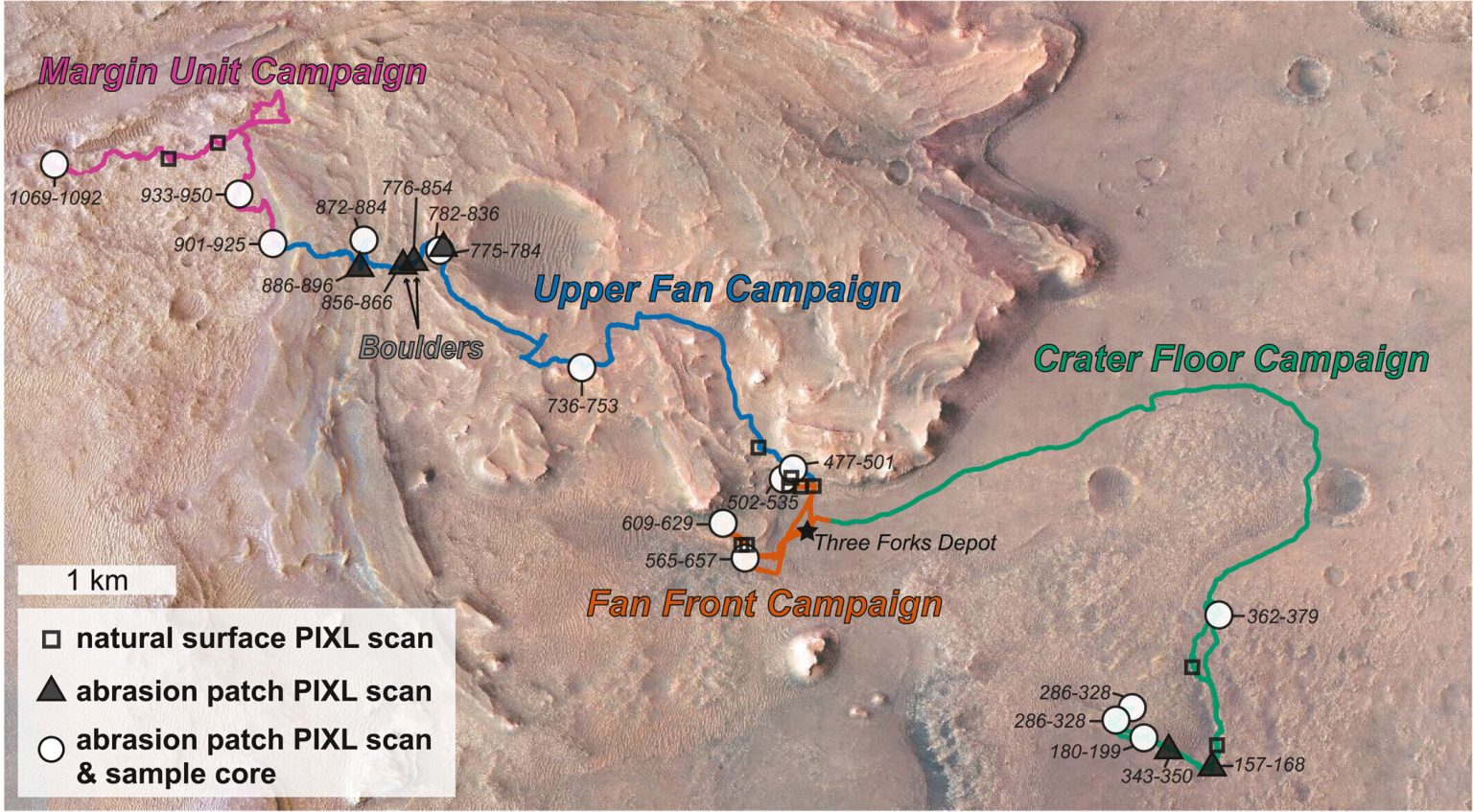 Jezero Crater.
Source: phys.org