Naar de inhoud

UFO'S of UAP'S, ASTRONOMIE, RUIMTEVAART, ARCHEOLOGIE, OUDHEIDKUNDE, SF-SNUFJES EN ANDERE ESOTERISCHE WETENSCHAPPEN - DE ALLERLAATSTE NIEUWTJES

UFO's of UAP'S in België en de rest van de wereld
akke.beakke.be
Ontdek de Fascinerende Wereld van UFO's en UAP's: Jouw Bron voor Onthullende Informatie! Ben jij ook gefascineerd door het onbekende? Wil je meer weten over UFO's en UAP's, niet alleen in België, maar over de hele wereld? Dan ben je op de juiste plek! België: Het Kloppend Hart van UFO-onderzoek In België is BUFON (Belgisch UFO-Netwerk) dé autoriteit op het gebied van UFO-onderzoek. Voor betrouwbare en objectieve informatie over deze intrigerende fenomenen, bezoek je zeker onze Facebook-pagina en deze blog. Maar dat is nog niet alles! Ontdek ook het Belgisch UFO-meldpunt en Caelestia, twee organisaties die diepgaand onderzoek verrichten, al zijn ze soms kritisch of sceptisch. Nederland: Een Schat aan Informatie Voor onze Nederlandse buren is er de schitterende website www.ufowijzer.nl, beheerd door Paul Harmans. Deze site biedt een schat aan informatie en artikelen die je niet wilt missen! Internationaal: MUFON - De Wereldwijde Autoriteit Neem ook een kijkje bij MUFON (Mutual UFO Network Inc.), een gerenommeerde Amerikaanse UFO-vereniging met afdelingen in de VS en wereldwijd. MUFON is toegewijd aan de wetenschappelijke en analytische studie van het UFO-fenomeen, en hun maandelijkse tijdschrift, The MUFON UFO-Journal, is een must-read voor elke UFO-enthousiasteling. Bezoek hun website op www.mufon.com voor meer informatie. Samenwerking en Toekomstvisie Sinds 1 februari 2020 is Pieter niet alleen ex-president van BUFON, maar ook de voormalige nationale directeur van MUFON in Vlaanderen en Nederland. Dit creëert een sterke samenwerking met de Franse MUFON Reseau MUFON/EUROP, wat ons in staat stelt om nog meer waardevolle inzichten te delen. Let op: Nepprofielen en Nieuwe Groeperingen Pas op voor een nieuwe groepering die zich ook BUFON noemt, maar geen enkele connectie heeft met onze gevestigde organisatie. Hoewel zij de naam geregistreerd hebben, kunnen ze het rijke verleden en de expertise van onze groep niet evenaren. We wensen hen veel succes, maar we blijven de autoriteit in UFO-onderzoek! Blijf Op De Hoogte! Wil jij de laatste nieuwtjes over UFO's, ruimtevaart, archeologie, en meer? Volg ons dan en duik samen met ons in de fascinerende wereld van het onbekende! Sluit je aan bij de gemeenschap van nieuwsgierige geesten die net als jij verlangen naar antwoorden en avonturen in de sterren! Heb je vragen of wil je meer weten? Aarzel dan niet om contact met ons op te nemen! Samen ontrafelen we het mysterie van de lucht en daarbuiten.

Archief

Scientists unveil most detailed photo of a solar flare ever taken

Scientists unveil most detailed photo of a solar flare ever taken

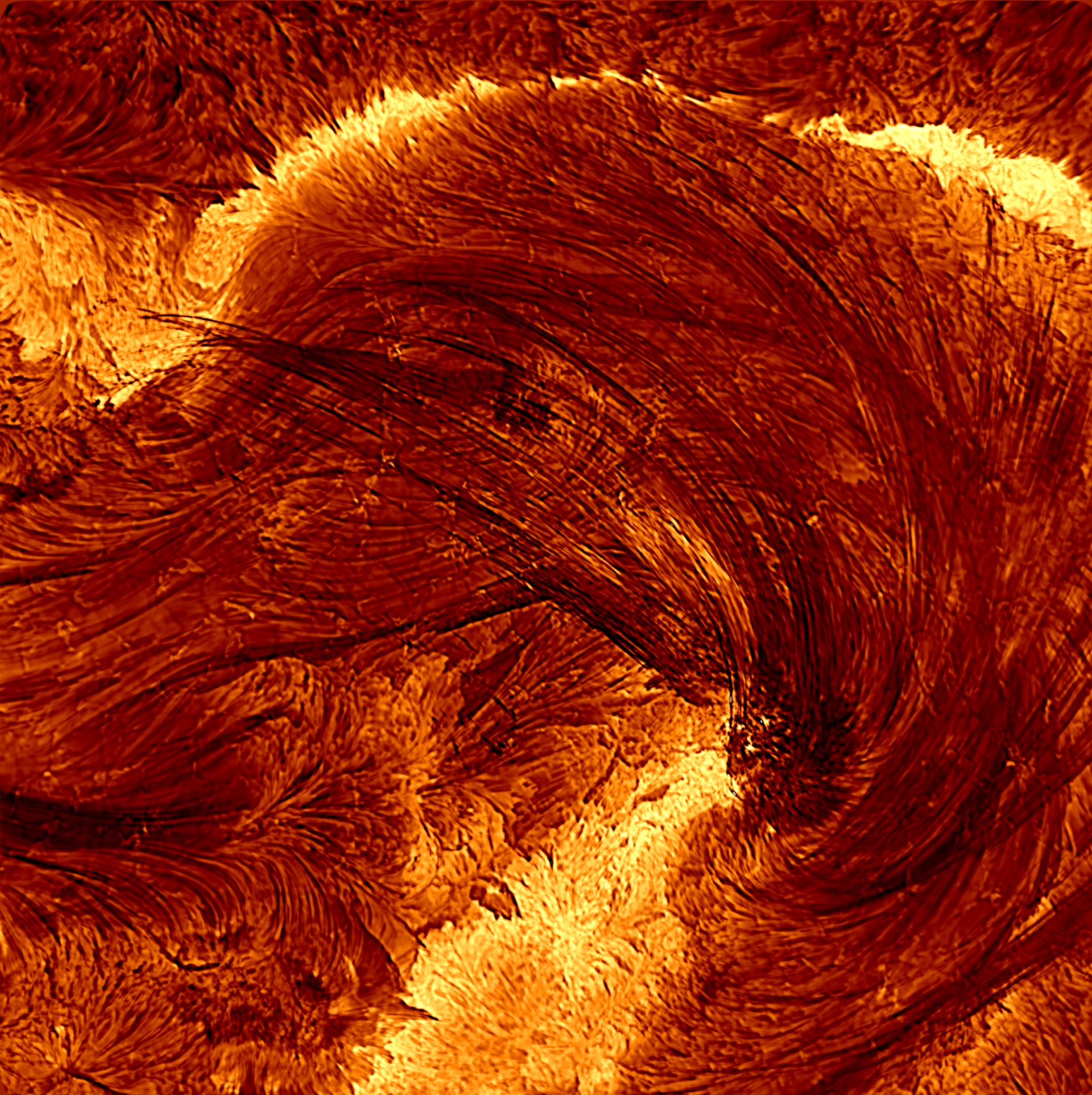
a close-up image of a solar flare

The Inouye Solar Telescope captured this image of a solar flare on August 8, 2024.  (Image credit: NSF/NSO/AURA, CC-BY)

The world's largest solar telescope just captured the highest-resolution images of a solar flare to date — and they're spectacular.

Researchers trained the Hawaii-based Daniel K. Inouye Solar Telescope on the final stages of a powerful X-class solar flare on Aug. 8, 2024, capturing detailed images of chaotic loops of plasma at the sun's surface. The observations could help scientists understand the mechanics of solar flares and improve predictions of future flares.

"This is the first time the Inouye Solar Telescope has ever observed an X-class flare," study coauthor Cole Tamburri, a solar physicist at the University of Colorado Boulder, said in a statement. "These flares are among the most energetic events our star produces, and we were fortunate to catch this one under perfect observing conditions."

Solar flares are massive bursts of light emitted by the sun during solar storms. Twisting magnetic fields create large, bundled loops of plasma called arcades that extend into the corona — the hot, outermost layer of the sun's atmosphere. When the magnetic fields get so convoluted that they snap back into place (a phenomenon called magnetic reconnection), the sun blasts particles and energy in the form of solar flares into space. When aimed at Earth, energy from the flares can disrupt radio communications and spacecraft orbiting our planet.

Related: 

But scientists don't know the size of the plasma loops that make up these arcades. Previous observations of the individual loops have been limited by the resolutions of older solar telescopes.

In a new study, published Aug. 25 in The Astrophysical Journal Letters, Tamburri and his colleagues collected high-resolution images of plasma loops in the last stages of a powerful solar flare using the Inouye's Visible Broadband Imager instrument. On average, the plasma loops spanned about 30 miles (48 kilometers) wide. But some were smaller, down to about 13 miles (21 km), which is about as small as the telescope can resolve.

You may like
  • Golden blobs over a dark background

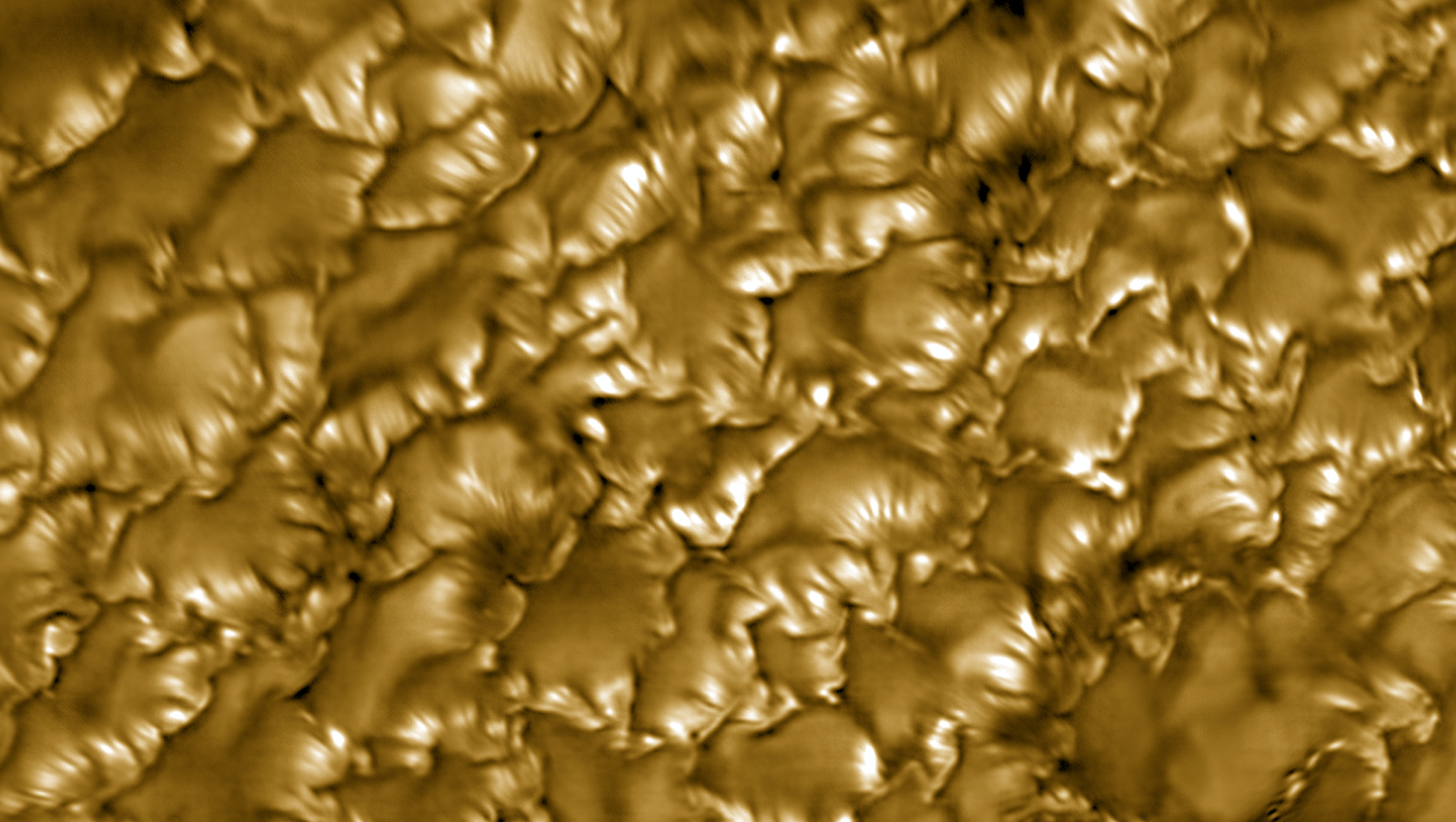
Powerful solar telescope unveils ultra-fine magnetic 'curtains' on the sun's surface

  • a fuzzy-looking sea of yellow and orange splotches with several large black splotches throughout

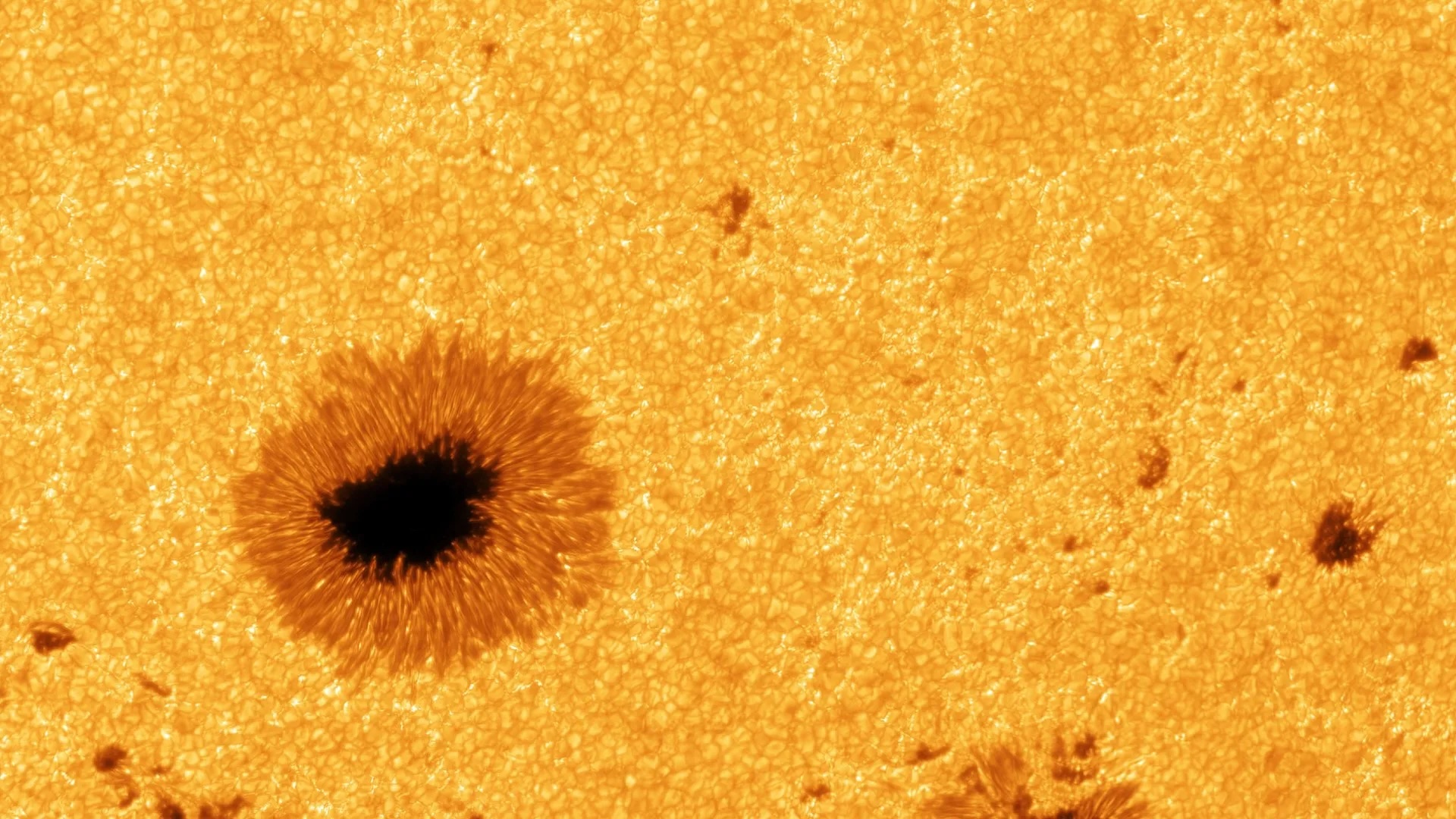
New 8K-resolution photos of the sun show off incredible details of raging sunspots

  • GIF showing temperature fluctuations in the corona using infrared

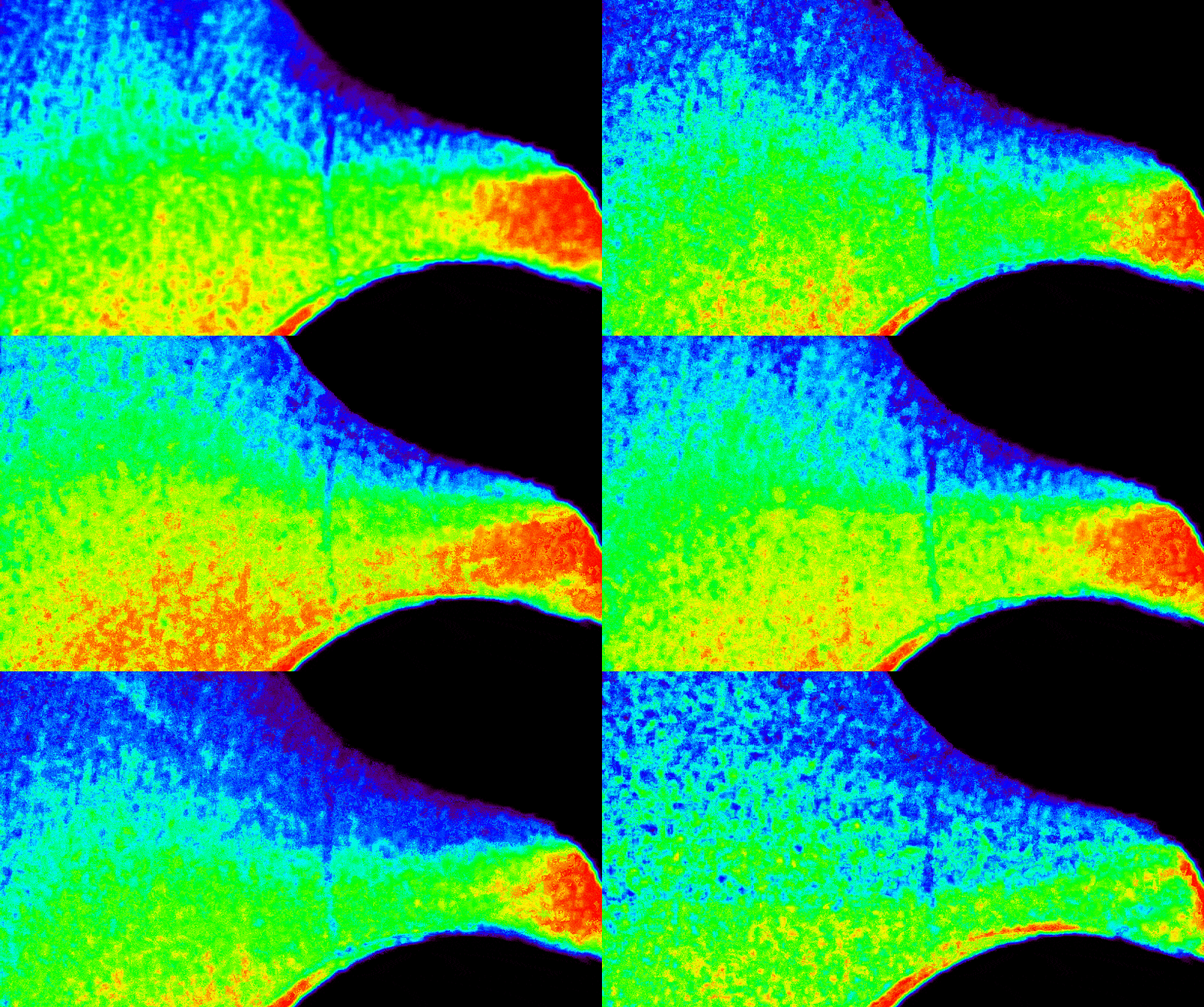
'Never been seen before': First images from new ISS solar telescope reveal subtle 'fluctuations' in sun's outer atmosphere

"We're finally peering into the spatial scales we've been speculating about for years," Tamburri said in the statement. "This opens the door to studying not just their size, but their shapes, their evolution, and even the scales where magnetic reconnection — the engine behind flares — occurs."

According to the researchers, it's possible that the coronal loops observed here might be the building blocks of larger solar arcades. "If that's the case, we're not just resolving bundles of loops; we're resolving individual loops for the first time," Tamburri said in the statement. "It's like going from seeing a forest to suddenly seeing every single tree."

The new data on coronal loops could help scientists improve models of solar flares and better understand the magnetic field in the corona, the researchers wrote in the study.

"It's a landmark moment in solar science," Tamburri said. "We're finally seeing the sun at the scales it works on."


{ https://www.livescience.com/space }

Hoe vind je dit bericht?
Geschreven door peter om 21:55 Stuur door

Mystery of the Supposedly 300-Million-Year-Old Wheel Imprint That Shocked Joe Rogan Explained

300 million-year-old wheel imprint

Mystery of the Supposedly 300-Million-Year-Old Wheel Imprint That Shocked Joe Rogan Explained

In episode #2368 with Michael Button, Rogan learned for the first time about this mysterious imprint, which has been believed to be 300 million years old for many years. The wheel is said to have been discovered in 2008 in a coal mine in the Donetsk, Rostov Region (as per Alexander Koltypin).

In 2008, a very unusual discovery was made inside the “Western” coal mine in Donetsk at a depth of about 900 meters below the surface. While miners were drilling through a coal layer called the J3 “Sukhodolsky” seam, they found what looked like the clear imprint of a wheel pressed into sandstone rock above the coal. Photographs and documents about this discovery were later sent to Alexander Koltypin by a mine foreman named S. Kasatkin, who worked there and personally visited the site several times.

The source of this story is Alexander Koltypin, a Russian geologist and researcher with a distinguished academic background, having graduated with honors from the Moscow Geological Prospecting Institute and completed postgraduate work at the Russian Academy of Sciences.

Koltypin received photos and documents about the imprint from S. Kasatkin, a mine foreman who personally visited the site multiple times. Kasatkin and others witnessed the imprint before the mine was abandoned and flooded, making further study impossible.

300 million-year-old wheel imprint

Credit: Alexander Koltypin

Koltypin explained that the exact age of the sandstone containing the imprint was never officially recorded, since mining engineers focus on coal extraction rather than geology. However, the Donetsk region is known for Carboniferous rocks dating between 360 and 300 million years old. Koltypin believes the imprint likely comes from this Middle Carboniferous period, which would make it at least 300 million years old.

According to Kasatkin, in 2008, he was working as a foreman in the Ventilation and Safety Engineering sector, which handled dangerous gas emissions. He insisted this discovery was not a publicity stunt; he is experienced in the coal industry and knew the weight of his words.

At the time, the miners and engineers wanted to call scientists to study the object properly, but the mine’s director forbade it. The director, likely following orders from the mine’s owners, did not want to delay production. Instead, he ordered the team to continue mining quickly through that section. As a result, the imprint remained underground, blocked by collapsed tunnels and later flooded when the mine was abandoned. This meant it was never properly studied.

Despite this, some miners secretly took photographs of the imprint before the area became inaccessible. Kasatkin says there were more than a dozen witnesses, including both engineers and workers, who saw the imprint with their own eyes.

Despite this, some miners secretly took photographs of the imprint before the area became inaccessible. Kasatkin says there were more than a dozen witnesses, including both engineers and workers, who saw the imprint with their own eyes.

There was even a second imprint of a smaller wheel found in another part of the same mine (lava tunnel 0406). Unfortunately, that one was partly destroyed during blasting. Kasatkin admits he visited that spot several times and could hardly believe it might be artificial, but he could not dismiss the idea either.

According to him, older miners in Donetsk often told stories of unusual fossil-like imprints being found in the area, such as gigantic snake shapes and bird-like creatures, maybe even resembling mythical winged reptiles. The Donetsk region is known for fossils, too; nearby schoolchildren once discovered fossilized dinosaur eggs in Cretaceous deposits. Those finds were confirmed by local archaeologists and even made into a school museum exhibit.

Back to the wheel imprint, Kasatkin explained that the wheel shape was not carved out because the sandstone was so tough. The miners tried using pick hammers to cut it free, but when they realized they might damage it, they left it in place. After the “Western” mine officially closed in 2009, the tunnels were dismantled, flooded, and sealed, making the imprint impossible to reach today.

Koltypin further mentioned that a paleontologist-anthropologist named Vyacheslav Valevsky from Odessa, examined photographs of the imprint. He concluded that there was no known fossil resembling it and therefore named it the “Kasatkin Object” after the man who reported it. He compared it with several fossils that sometimes have circular shapes, but he confirmed that none matched this particular discovery.

Below is a photo of fossils that were sent to Kasatkin by V. Valevsky. He told him that all of them are known to science as fossils of the kind of “wheel”:

In 2015, Koltypin also claimed that enigmatic groove-like markings in the Phrygian Valley of central Turkey were artificially made by all-terrain  vehicles and not created by any natural process. (Source)

According to mainstream scholars, the Phrygia Valley is home to ancient tracks that have been dated to different historical eras. The oldest roads are believed to have been built during the Hittite Empire, around 1600 BC to 1178 BC. Over time, the Phrygians, Greeks, and Alexander the Great’s armies carved paths into the soft rock. These paths later became a part of the Roman road network, as noted by Culture Routes in Turkey.
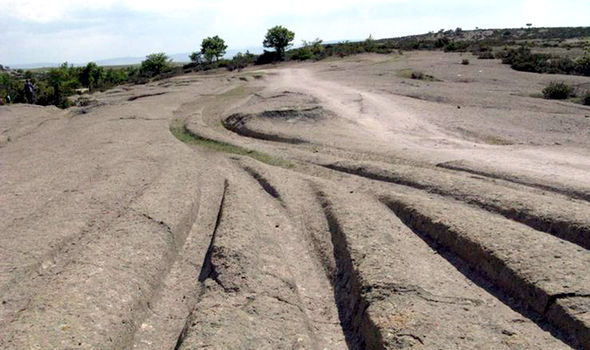
ancient cars The team has recently returned from the site in Anatolia/ancient cars Credit: Express
  • Note: The Phrygians were a civilization that existed in ancient Turkey and became prominent in the 8th century BC. They had a well-functioning state, as evidenced by 260 inscriptions found throughout their kingdom in Anatolia. Their capital city, Gordium, is located at the site of the modern city of Yassıhüyük, about 43 miles (70 km) southwest of Ankara.

The ancient track marks found in the Phrygian Valley have puzzled archaeologists for a long time, with explanations ranging from Phrygian carts to speculations about ancient alien vehicles. King Midas, described in Greek legends and Assyrian sources, is the most famous king of the Phrygians. According to stories, after his defeat in the battle by the Cimmerians, he committed suicide by drinking bull’s blood.

Koltypin and his team studied the rocky terrain with deep grooves and proposed that lightweight carts or chariots did not make those tracks, but instead heavy and huge unknown vehicles from an ancient civilization. He estimated that these tracks are around 14 million years old and posited that an unknown civilization created them.

Alexander Koltypin

Alexander Koltypin

It was discovered that the excavations of the ancient settlement of the Indians of this nation. At first, there was a version that it was a tomb, but as the excavation progressed, scientists discovered that these were ancient baths. The structure was made of limestone, and it has been well-preserved for several centuries.

“All these rocky fields were covered with the ruts left by millions of years ago… we are not talking about human beings. The methodology of specifying the age of volcanic rocks is very well studied and worked out,” Koltypin said.

Koltypin observed that the distance between each pair of tracks found in the area is consistent and matches the distance between the wheels of modern vehicles. However, the tracks are too deep for any modern car, which raises questions about the type of transportation that might have been used.

Read also:

The deepest ruts are three feet (one meter) deep, and on the walls of these ruts, there are horizontal scratches that appear to have been left by the ends of axles that were poking out of ancient wheels. This suggests that the ancient wheels were wider than the ruts, which is a characteristic of an all-terrain vehicle that would have been able to navigate through rough terrain.

The fact that the tracks are so deep also implies that the vehicle was heavy and possibly used for transporting heavy loads. These observations raise more questions about the technology and capabilities of the civilization that created these tracks, and further research is needed to understand their origins.

Koltypin argued that the weight of large prehistoric vehicles created the deep channels found in the soil and rock. He also noted that later, the ruts and the surrounding area petrified, preserving the evidence. This phenomenon is known to geologists, as similar preservation is observed in the footprints of dinosaurs.

He acknowledged that his theories are controversial and is aware that mainstream academia may not want to address the subject matter as it could potentially challenge or “ruin” their established theories. “I think we are seeing the signs of the civilization that existed before the classic creation of this world. Maybe the creatures of that pre-civilization were not like modern human beings,” he proposed.

Other locations around the world, such as the Maltese archipelago, have similar mysterious tracks that continue to perplex researchers. Some of the strange tracks in Misrah Ghar il-Kbir are particularly intriguing as they appear to lead off cliffs or continue into the ocean. The origins and purpose of these tracks remain unknown. (Source)

{ https://howandwhys.com/ }

Hoe vind je dit bericht?
Geschreven door peter om 21:28 Stuur door

A New Theory of the Universe’s Origins Without Inflation

A New Theory of the Universe’s Origins Without Inflation

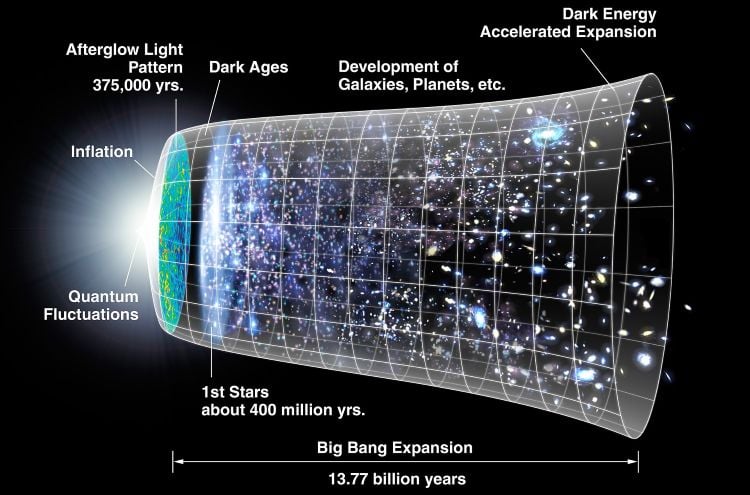
Credit: NASA/WMAP Science Team

How exactly did the universe start and how did these processes determine its formation and evolution? This is what a recent study published in Physical Review Research hopes to address as a team of researchers from Spain and Italy proposed a new model for the events that transpired immediately after the birth of the universe. This study has the potential to challenge longstanding theories regarding the exact processes that occurred at the beginning of the universe, along with how these processes have governed the formation and evolution of the universe.

For the study, the researchers used a series of computer models to simulate the beginning of the universe that challenge the longstanding theory that the universe began with a period of rapid expansion known as “inflation”, with scientists estimating this occurred within the first fraction of a second of the universe’s existence. However, this inflation theory postulates that several variables were all involved in making this theory possible.

In contrast, this new model suggests that a longstanding phenomenon of general relativity called gravitational waves are responsible for the universe and all its components, including galaxies, stars, planets, and life on Earth. The team proposes these gravitational waves are part of a longstanding mathematical model called De Sitter space, which is named after the Dutch mathematician Willem De Sitter, who worked with Albert Einstein regarding the universe’s structure throughout the 1920s.

“For decades, we have tried to understand the early moments of the Universe using models based on elements we have never observed”, said Dr. Raúl Jiménez, who studies experimental sciences & mathematics at ICREA in Spain and is a co-author on the study. “What makes this proposal exciting is its simplicity and verifiability. We are not adding speculative elements but rather demonstrating that gravity and quantum mechanics may be sufficient to explain how the structure of the cosmos came into being”.

First proposed in 1893 and 1905 by Oliver Heaviside and Henri Poincaré, respectively, gravitational waves received a huge boost in attention in 1916 when Albert Einstein proposed them to be ripples in the space-time continuum as part of his general theory or relativity. Despite myriads of sources, including supernovae, black holes, and neutron stars, gravitational waves are incredibly difficult to detect and require very sensitive instruments. This is potentially why gravitational waves were not detected until September 2015 by the Laser Interferometer Gravitational-Wave Observatory (LIGO) observatory, which have locations in Washington and Louisiana.

The origin of the universe remains one of the biggest mysteries in science, as the Big Bang has long been theorized to have been the catalyst for the origin of the universe. Despite ongoing scientific breakthroughs and advancements, scientists remain puzzled regarding the origins of the universe, and especially what might have happened before the Big Bang.

Carl Sagan famously said, “The cosmos is within us. We are made of star-stuff. We are a way for the universe to know itself.”

We may never know exactly how the universe began and the processes responsible for you reading this article right now. But like the simplicity this study presents, perhaps this study is simply a way for us to know the universe itself a little bit better.

What new discoveries about the origins of the universe will researchers make in the coming years and decades? Only time will tell, and this is why we science!

  • As always, keep doing science & keep looking up!

RELATED VIDEOS


{ https://www.universetoday.com/ }

Hoe vind je dit bericht?
Geschreven door peter om 20:35 Stuur door

Two Planets Seen Within Hole On Earths Sun! Aug 2025, UFO Sighting News.

Two Planets Seen Within Hole On Earths Sun! Aug 2025, UFO Sighting News.

Hollow%20sun%20theory.png

Date of discovery: Aug 27, 2025, but took place March 2025
Location of discovery: Earths sun
Source: 
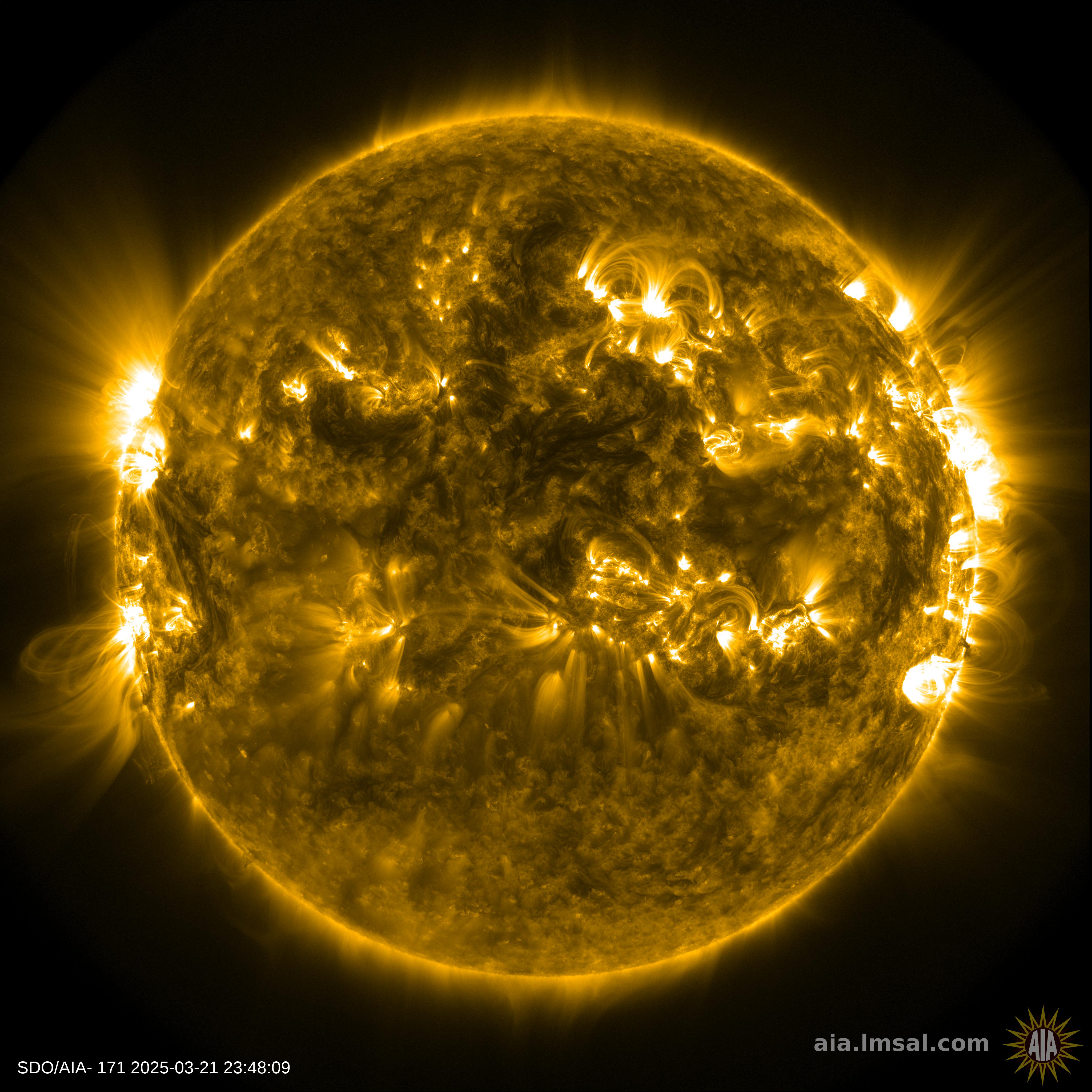
You know, I find a lot of interesting things here and there when looking into NASA photos and here is a thought provoking anomaly that needs further investigation into. I found two massive planet size spheres within our sun. Let me explain, the sun has dark spots, areas that open up from deep within our sun and reveals the inner workings of the sun. This revealed not one but two mini planets hiding with the sun. Certainly there are many more. I would estimate that there are 10+ planets of massive sizes within it. So, not only a few planets but an entire solar system within our sun. It's so complex an issue, so massive of a discovery and change that stands opposite to everything we have been taught...and yet...it's real. 
 
Hollow Sun Theory is a theory I made a decade ago, but still talk about it now and then, when the evidence presents itself. 

UFO_UAP_Sun.jpg

{ https://www.ufosightingsdaily.com/ }

Hoe vind je dit bericht?
Geschreven door peter om 20:02 Stuur door

The Mystery of the Vanishing Star

The Mystery of the Vanishing Star

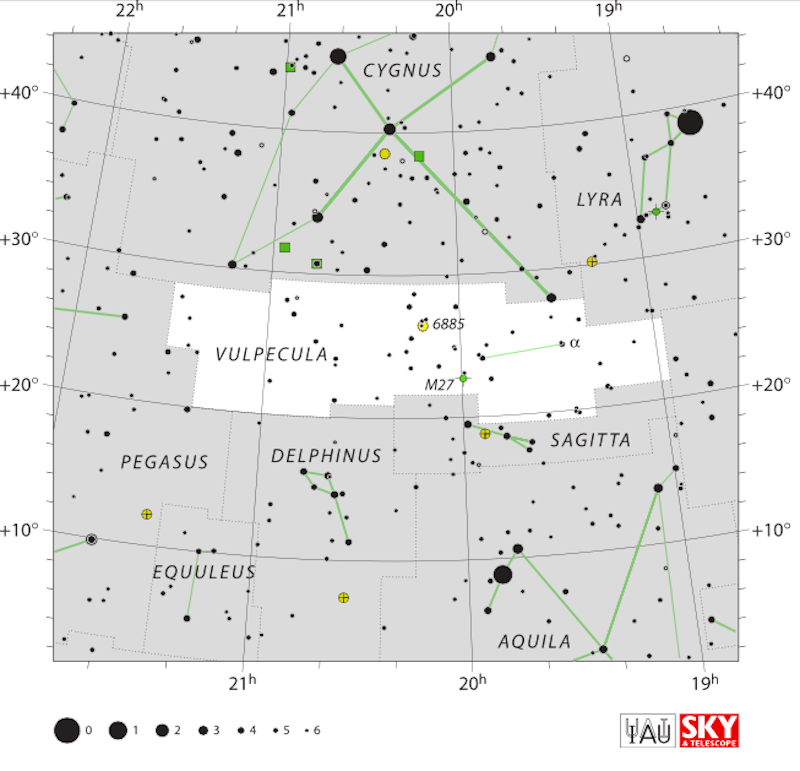
The exact location of ASASSN-24fw is unknown but it lies within the boundary of the constellation Vulpecula (Credit : IAU and Sky & Telescope magazine) The exact location of ASASSN-24fw is unknown but it lies within the boundary of the constellation Vulpecula (Credit : IAU and Sky & Telescope magazine)

Imagine looking up at the night sky and watching a star almost completely disappear, then reappear months later. That's exactly what happened with a distant star called ASASSN-24fw, leaving astronomers scratching their heads for months.

Located about 3,000 light years from Earth, this star pulled off an incredible disappearing trick between late 2024 and early 2025. For eight months, it dimmed by an astounding 97% before returning to its normal brightness. To put this in perspective, imagine a bright streetlight suddenly becoming as dim as a birthday candle.

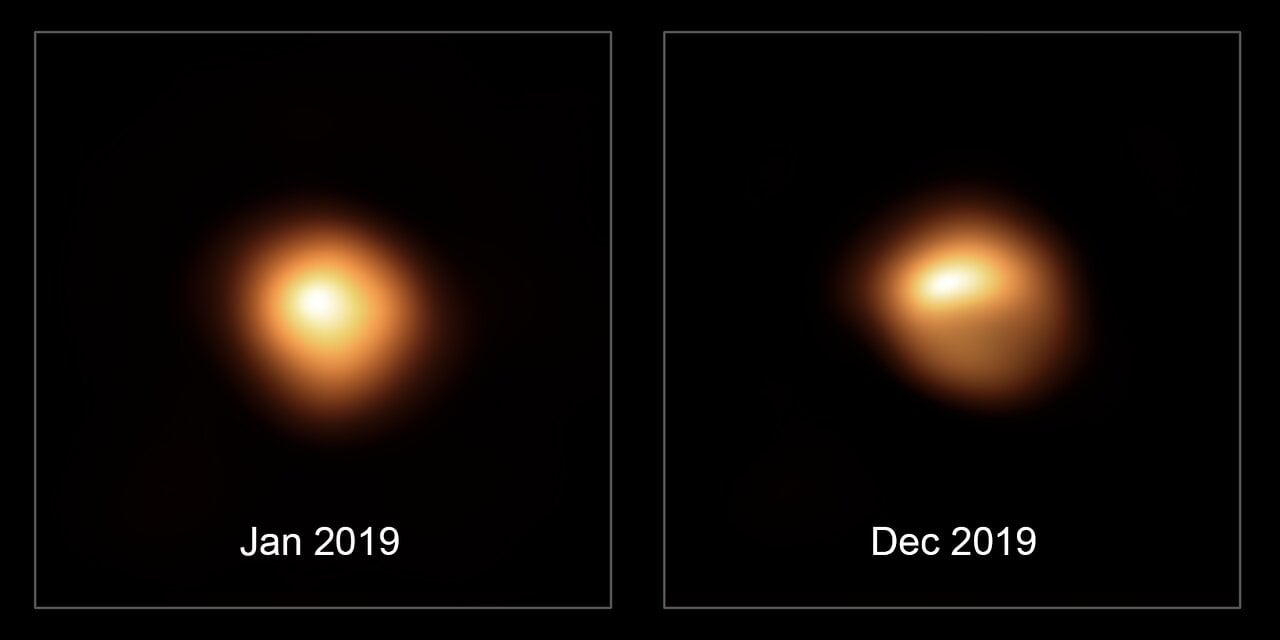
It's not unheard of for stars to unexpectedly fade. Comparison of SPHERE images of Betelgeuse taken in January 2019 and December 2019, showing changes in brightness and shape (Credit : ESO/M)

It's not unheard of for stars to unexpectedly fade. Comparison of SPHERE images of Betelgeuse taken in January 2019 and December 2019, showing changes in brightness and shape

(Credit : ESO/M)

What made this event particularly puzzling was that the colour of the star's light remained unchanged during its dimming. This crucial clue told scientists that the star itself wasn't changing or dying, something else was blocking our view. After analyzing the data, researchers from The Ohio State University believe they've cracked the case. Evidence suggests it is likely that there is a cloud of dust in the form of a disk around it, according to lead researcher Raquel Forés-Toribio.

This isn't just any ordinary dust cloud though. The disk surrounding ASASSN-24fw is enormous, about 1.3 astronomical units (AU) across, even bigger than the distance between the Sun and our planet. The dust particles themselves are made of carbon or water ice, similar in size to large grains of dust found on Earth.

The mystery deepens further however since scientists suspect this star isn't alone; it likely has a smaller, cooler companion star orbiting nearby, making it what astronomers call a binary system. The second star, which is much fainter and less massive, may be driving the changes in geometry leading to the eclipses, explains Forés-Toribio. This hidden partner could be responsible for stirring up the dust disk, creating the conditions that led to the dramatic dimming event we witnessed.

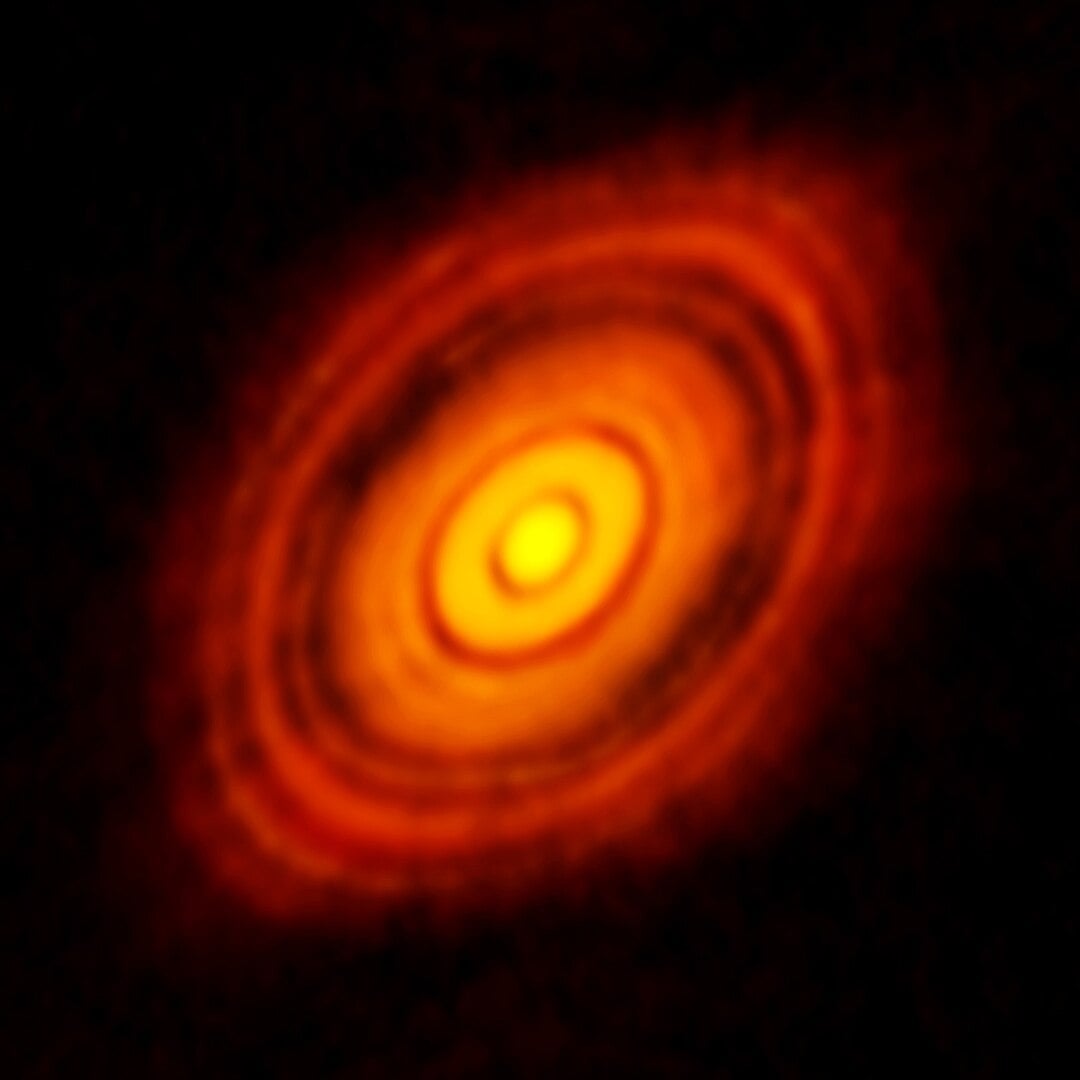
Atacama Large Millimetre Array image of the dust disk around HL Tauri (Credit : ALMA)

Atacama Large Millimetre Array image of the dust disk around HL Tauri

(Credit : ALMA)

How rare is this phenomenon? Extremely. Chris Kochanek, a professor at Ohio State who co-authored the study, describes it as one in a million eclipsing. Even when researchers searched for similar events in their databases, they couldn't find anything quite like it.

The star was discovered by the All-Sky Automated Survey for Supernovae (ASAS-SN), a network of small telescopes that continuously monitor our night sky. Since its establishment more than a decade ago, ASAS-SN has collected about 14 million images and that keeps going up. Don't expect to see this show again anytime soon. Researchers calculate that the ASASSN-24fw system likely experiences an eclipse about once every 43.8 years, with the next one not expected to occur until around 2068.

This discovery reminds us that the universe still holds countless mysteries. As astronomer Krzysztof Stanek notes, The universe's capacity to surprise us is continuous. Each unusual event like this helps scientists better understand how stars and planetary systems form and evolve, pushing our theories to new limits.

Source : 

RELATED VIDEOS


{ https://www.universetoday.com/ }

Hoe vind je dit bericht?
Geschreven door peter om 23:58 Stuur door

NASA's Perseverance Rover Studies Giant Sand Ripples on Mars

NASA's Perseverance Rover Studies Giant Sand Ripples on Mars

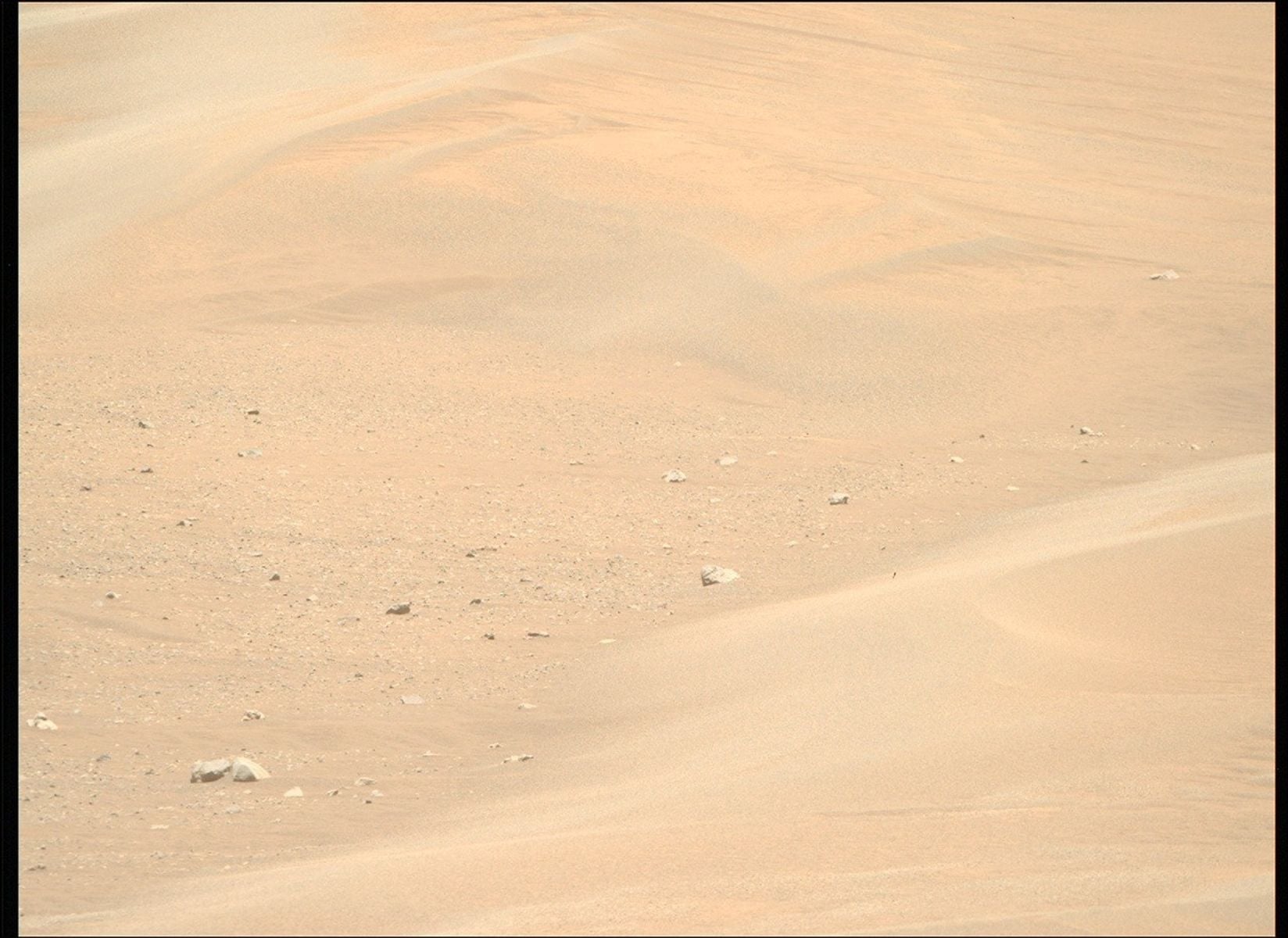
NASA's Mars Perseverance rover acquired this image of inactive megaripples at “Kerrlaguna,” Perseverance’s latest target of exploration, on Aug. 13, 2025 (Credit : NASA/JPL-Caltech/ASU) NASA's Mars Perseverance rover acquired this image of inactive megaripples at “Kerrlaguna,” Perseverance’s latest target of exploration, on Aug. 13, 2025 (Credit : NASA/JPL-Caltech/ASU)

NASA's Perseverance rover has turned its attention to towering sand formations called megaripples at a site named Kerrlaguna on Mars. These windblown features, standing up to a metre tall, are providing new insights into how wind shapes the red planet today and could even help prepare for future human missions to Mars.

While Mars might seem like a frozen, static world, its landscape is actually being constantly reshaped by powerful winds. As NASA puts it, "On Mars, the past is written in stone, but the present is written in sand." This poetic description captures exactly what Perseverance has been studying lately, massive sand formations that tell the story of modern Martian weather.

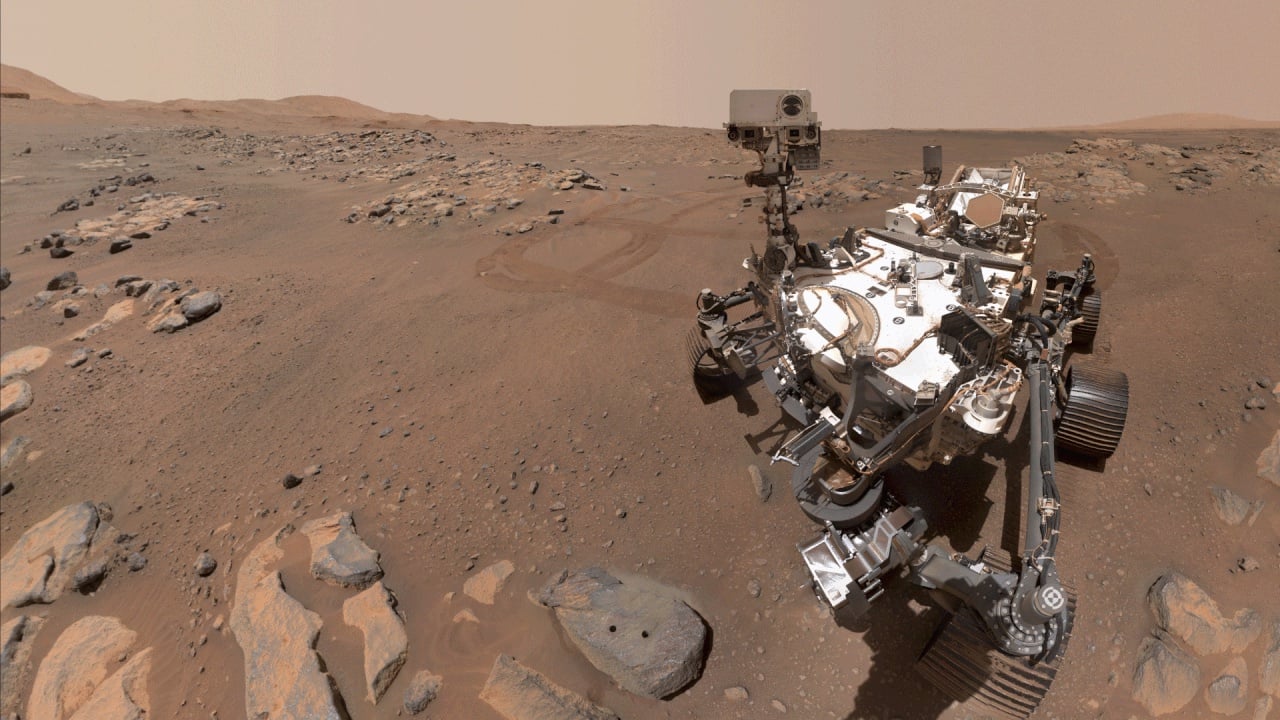
NASA’s Perseverance Mars rover took this selfie over a rock nicknamed “Rochette,” on September 10, 2021, the 198th Martian day, or sol of its mission (Credit : NASA/JPL Caltech)

NASA’s Perseverance Mars rover took this selfie over a rock nicknamed “Rochette,” on September 10, 2021, the 198th Martian day, or sol of its mission

(Credit : NASA/JPL Caltech)

After completing investigations at a geological contact zone called Westport, Perseverance attempted to climb steep slopes to reach a new rock exposure named Midtoya. However, the combination of treacherous terrain and rocky, unstable soil proved too challenging, forcing the rover team to retreat to smoother ground. The effort wasn't wasted though since Perseverance managed to study fascinating spherule rich rocks that had tumbled down from above, including a distinctive helmet shaped rock dubbed "Horneflya" that captured public attention online.

The rover then moved to Kerrlaguna, where the steep slopes give way to a field of megaripples. These aren't your typical beach type sand ripples, they're massive windblown formations that can tower up to one meter high. While that might not sound enormous, imagine sand dunes the height of a tall person scattered across an alien landscape.

The science team decided these features deserved a detailed mini-campaign of study. Usually, Perseverance focuses on ancient rocks that preserve evidence of Mars' distant past, but understanding the planet's current environment is equally important. These megaripples offer a window into how wind and weather continue to shape Mars today.

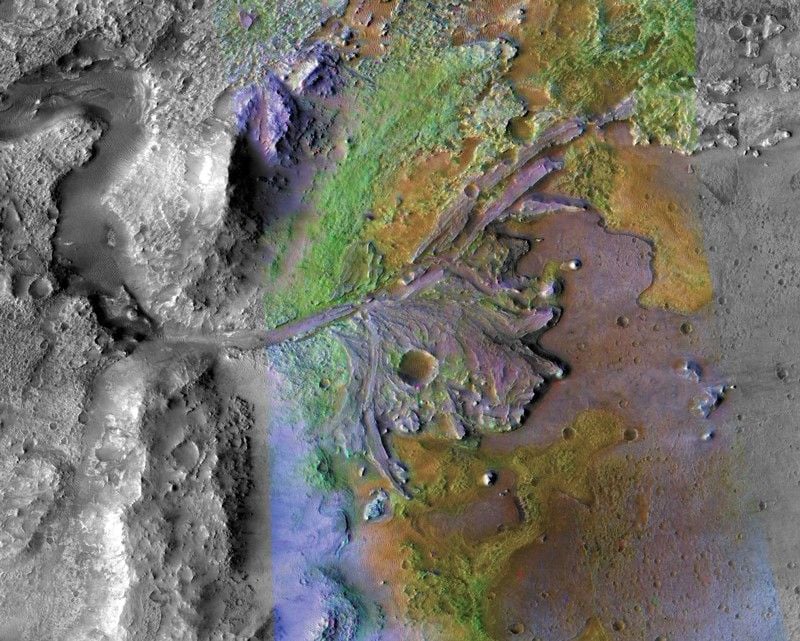
The Kerrlaguna feature on Mars is located in the Jezero Crater (Credit : NASA)

The Kerrlaguna feature on Mars is located in the Jezero Crater

(Credit : NASA)

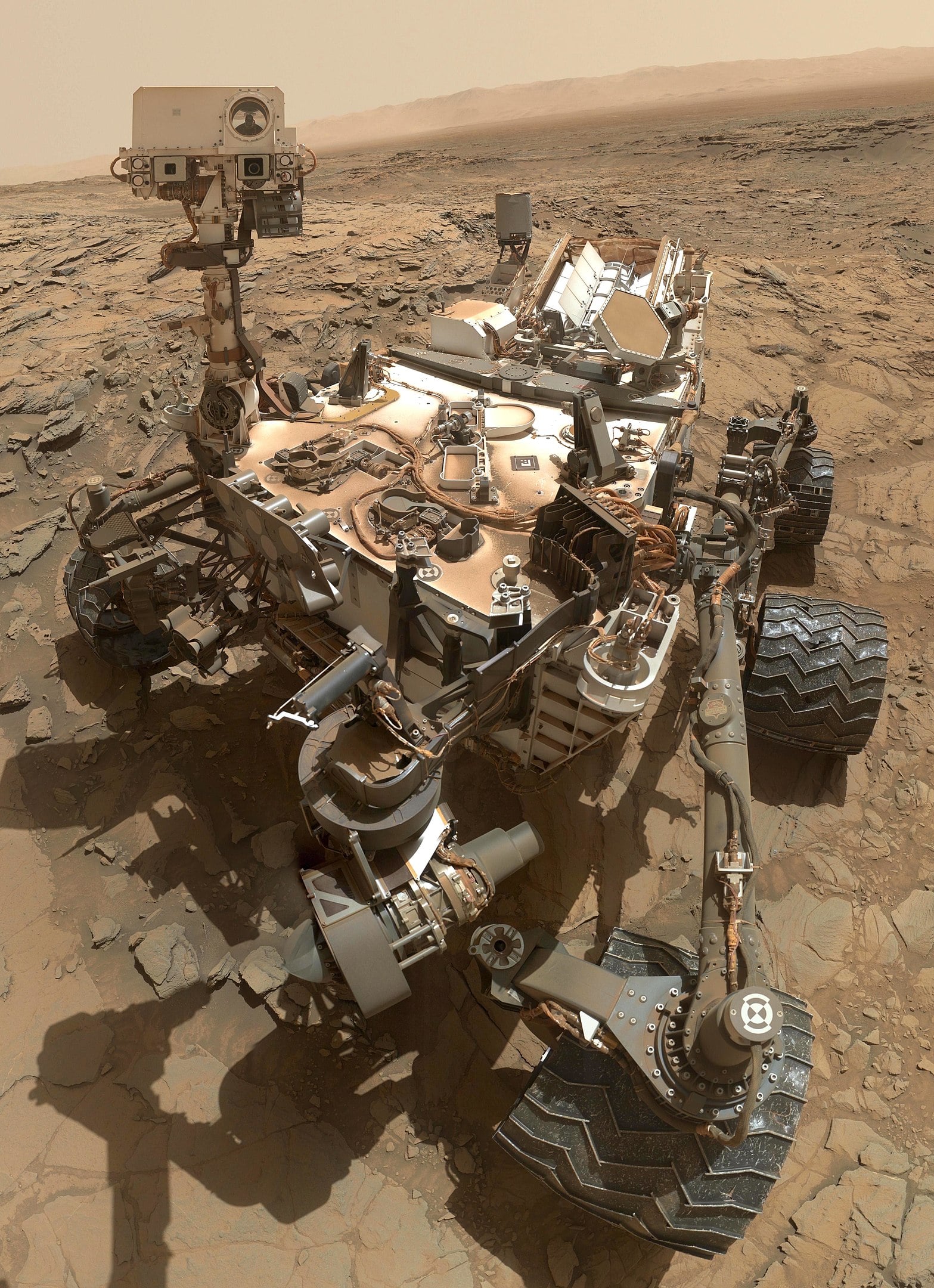
Nearly a decade ago, Perseverance's predecessor, the Curiosity rover, studied an active sand dune in Gale crater and took a famous selfie there. However, the megaripples at Kerrlaguna appear inactive and dusty, representing a different type of Martian sand formation that's common across the planet's surface. These older, immobile features could reveal new insights about how wind and even trace amounts of water interact on modern Mars.

This self-portrait of NASA's Curiosity Mars rover shows the vehicle at the "Big Sky" site, where its drill collected the mission's fifth sample of Mount Sharp (Credit : NASA)

This self-portrait of NASA's Curiosity Mars rover shows the vehicle at the "Big Sky" site, where its drill collected the mission's fifth sample of Mount Sharp

(Credit : NASA)

During its investigation, Perseverance deployed multiple scientific instruments to thoroughly analyze the megaripples. Using SuperCam, Mastcam-Z, and MEDA instruments, the rover characterised the surrounding environment, measured the size and chemistry of individual sand grains, and looked for any salty crusts that might have developed over time.

This research serves a dual purpose beyond pure scientific curiosity. Understanding Martian soil composition and behaviour could prove crucial for future human missions to the red planet. Astronauts will likely need to use local Martian resources to help them survive, making detailed knowledge of soil properties and composition invaluable for mission planning.

The Kerrlaguna investigation also serves as preparation for a more ambitious study planned at Lac de Charmes, a location further along Perseverance's route that features an even more extensive field of larger sand formations. By studying these windblown features grain by grain, Perseverance continues to unlock the secrets of how Mars behaves today, complementing its discoveries about the planet's ancient past and helping pave the way for humanity's eventual arrival on one of our nearest planetary neighbours.

Source : 

RELATED VIDEOS


{ https://www.universetoday.com/ }

Hoe vind je dit bericht?
Geschreven door peter om 23:45 Stuur door

The Great Filter Part 1: The Legacy of Fermi’s Paradox

The Great Filter Part 1: The Legacy of Fermi’s Paradox

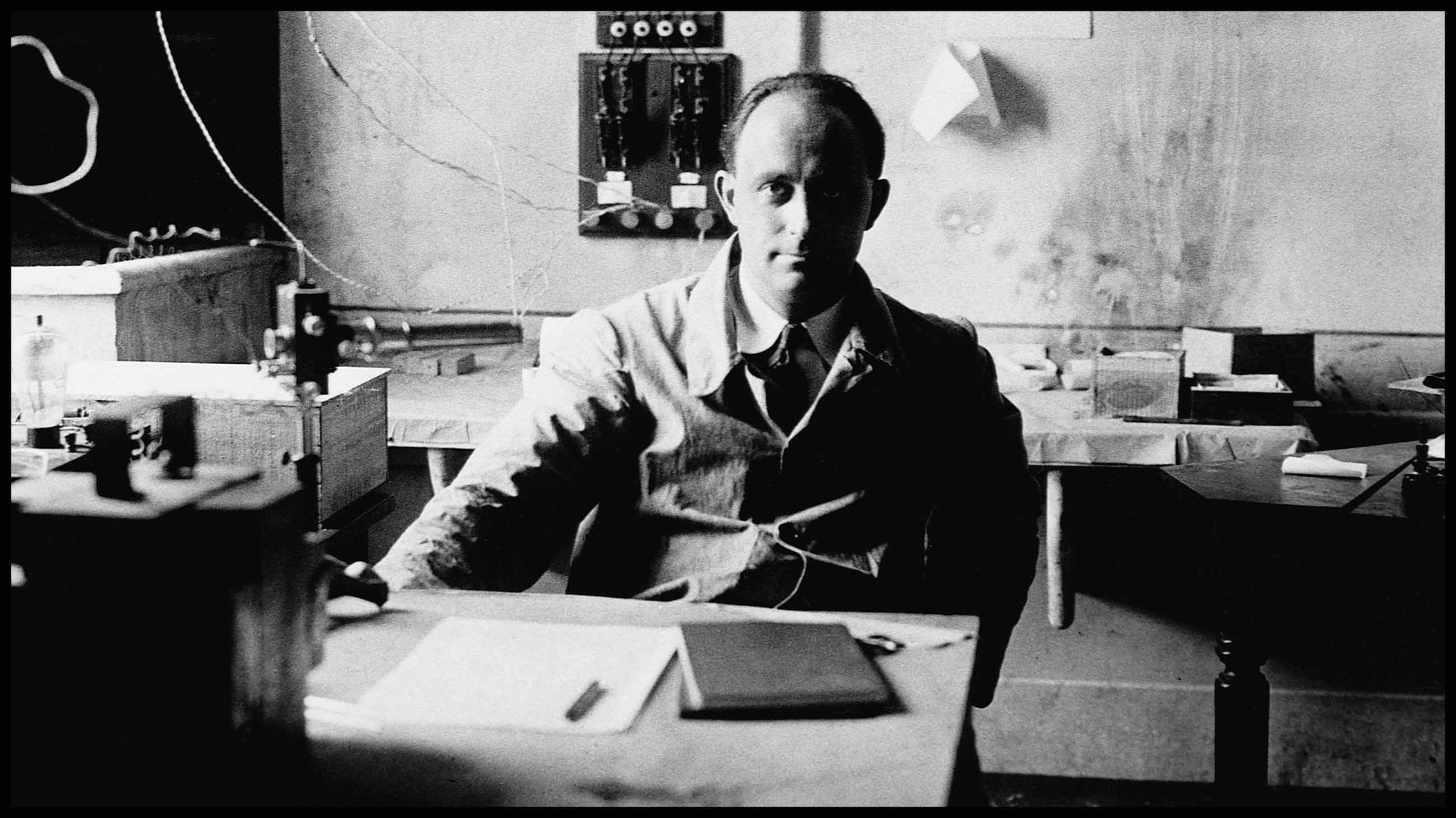
Enrico Fermi at work. Enrico Fermi at work.

Where is everybody?

For decades that question was merely a part of physics legend, the kind of thing grad students overhear when their advisors take them out to dinner. But the story behind that question is true, and it’s a good one. It was the late 1940’s, soon after the close of World War 2. The world was buzzing with reports of UFO’s, flying saucers, and aliens sticking their probes where the sun don’t shine.

Physicists can sometimes resemble real people, and like real people when they get together for lunch at work they like to chat about whatever’s in the news. And one time, famed physicist Enrico Fermi was visiting his colleagues at Los Alamos National Laboratory. Right down the road from Roswell. The conversation turned to UFO’s, and the group, including Fermi, started speculating wildly, quickly coming to the realization that the only feasible way that UFO’s could be aliens would be if faster-than-light travel was possible. But during the conversation, Fermi fell silent.

Sometime later, as the conversation shifted to other topics, Fermi suddenly blurted out, “Where is everybody?”

Everyone at the table immediately knew what we meant.

That lunchtime exclamation became the core what we call today the Fermi paradox. Here’s the basic deal: life is possible in the universe. Need proof? Hello, nice to meet you. It happened here on Earth, and the universe tends to not just do things only once. In fact, the default assumption in astronomy and cosmology is that we’re not special – we occupy no privileged position and we have no unique status (sometimes called Copernican principle for his removal of the Earth from the center of the universe). And indeed, nothing about our planet is all that remarkable: it’s just another lump of oxygen and carbon orbiting just-another-star. Heck, even our preliminary estimates suggest that there are something around 5 billion duplicates of the Earth in the Milky Way alone.

That’s 5 billion chances for life to arise under identical conditions.

So by that logic, the universe should be teeming with life. and not just regular life, intelligent life, and not just intelligent life, but space faring, and even space colonizing life! We can again point to ourselves as an example: we are right on the cusp of a sustained presence in space (like, in a real way), and it’s not hard to imagine that by extending our technology just a little bit, we could be one of those, I don’t know, star trek civilizations.

So if we could do it, then somebody else should be able to do it too.

You can even imagine throwing every technological hurdle in our way – nothing better than fusion-powered rockets, always constrained by the speed of light, limited lifespans, disease, warfare, anything that would and could slow down our progress, the works. But the fact is that our milky way galaxy is roughly 10 billion years old, and given that enormous amount of time, then space-faring civilizations have had more than enough eons to essentially spread throughout the entire galaxy, even doing it the slow way.

We should see advanced civilizations everywhere. We’re talking Dyson spheres, stellar engineering, or signatures of powerful engines. And while we do see many mysteries out in the universe – unexplained explosions or strange particles zipping by, we see no need to explain ANY observation in the solar system, galaxy, or universe, by invoking advanced alien civilizations. Even when our natural “dead” explanations don’t explain everything (cough FRBs, dark energy, hexagon on Saturn), we find no great pressure to say ALIENS DID IT.

Even leaving astronomical observations aside, given the abundance of life and intelligent civilizations, plus the raw amount of time they’ve had to poke around the galaxy, our solar system should have been visited MULTIPLE times by MULTIPLE species, either in person (or in-alien) or with their robotic craft. We should have monoliths and nanobots and space jockey skeletons everywhere, especially on the airless worlds that have maintained a record of impacts and events going back over four billion years.

So…where is everybody?

Hence the paradox: something in this line of reasoning has to give. We’ve got one, if not many – if not all – of these statements wrong. But which one?

Now, I would love to do an entire series on the fermi paradox and all its possible answers and what that means for current searches for life, but I’ll save that for a future date (and please, if more of you ask about it RIGHT NOW the sooner I’ll get to it).

But to slake your thirst for solving long-standing puzzles in physics, we’ll spend today jumping into one of the possible resolutions to the fermi paradox, the so-called GREAT FILTER.

Which sounds…kinda ominous. And…is…kinda ominous. But as we’ll see, it doesn’t HAVE to be ominous, but…sigh…it probably is.

{ https://www.universetoday.com/ }

Hoe vind je dit bericht?
Geschreven door peter om 22:23 Stuur door

The Great Filter Part 2: We’ve Made It Through

The Great Filter Part 2: We’ve Made It Through

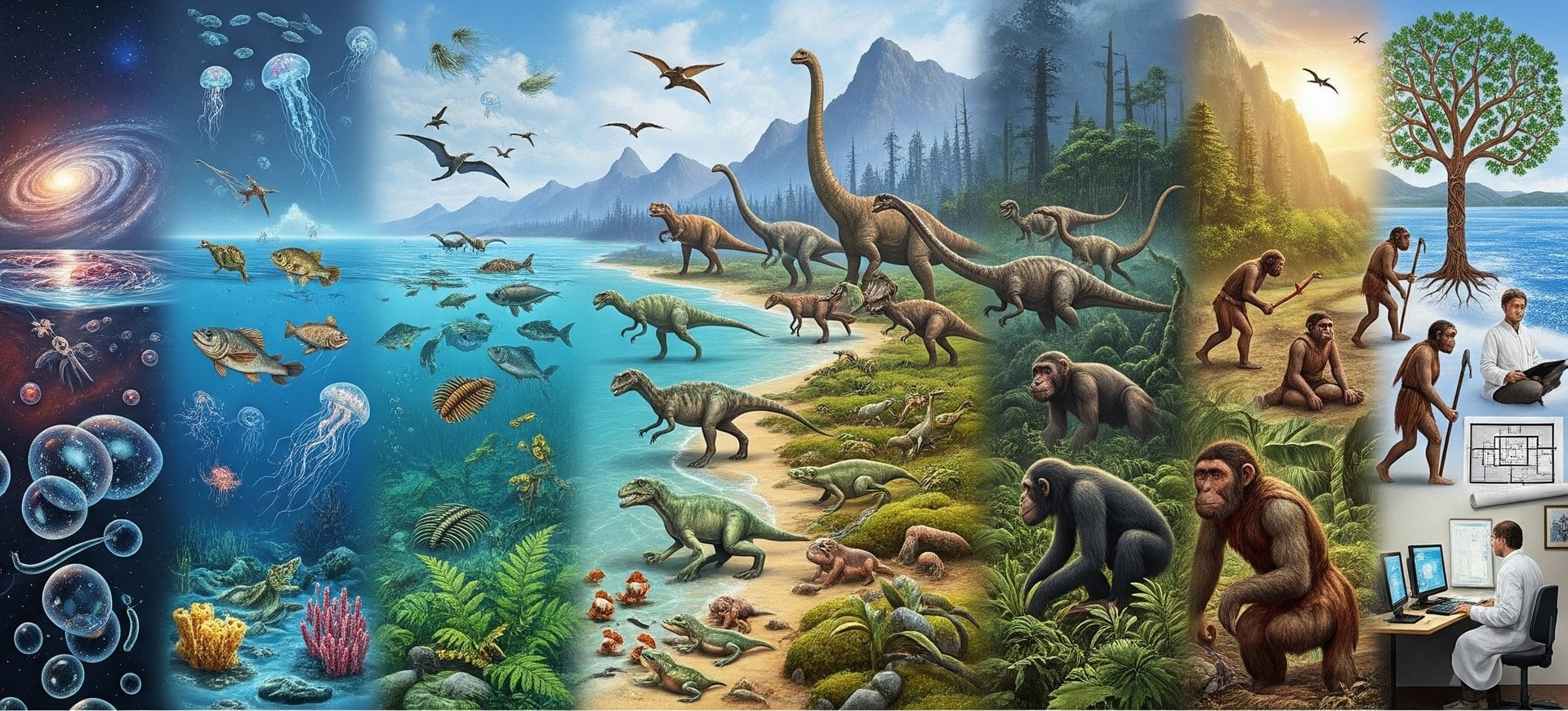
The evolution of life as depicted by Google Gemini.
  • Check out Part 1 of the series here.

Now versions of the Great Filter argument had been around for decades (just like Fermi was not the first person to ask where everybody is), but the most comprehensive form of the argument comes from Robin Hanson in 1996, who is an economist. Now I know you’re thinking: an economist, really? But hey, who says astronomers get to have all the fun. Possible resolutions to Fermi’s paradox are less about physical theory and raw observations and more about statistics and probabilities, so hey economists, welcome to the party.

Here’s the simplest possible reduction of the great filter argument, the most distilled essence of the entire chain of reasoning to explain why we don’t see advanced space-faring civilizations roaming the galaxy: nobody makes it.

That’s it. nobody makes it to that stage. Question: where is everybody? Answer: nobody’s home. The logical chain that leads to Fermi’s paradox is broken in the assumption that intelligent space-faring civilizations are COMMON. According to the great filter answer, they’re not common at all, and so we shouldn’t be surprised when we don’t see anybody.

But wait, wait wait. Aren’t we on the cusp of achieving space colonization status? If the great filter is true, and nobody makes it to that level of sophistication, then…what does it mean for us? Is this…the end of the road?

Like I said, a little ominous.

Let’s breaks things down to see under what exact conditions things should start to feel a little spooky, and where we might be able to keep our blood pressure in a nice safe range.

The issue is that we don’t know exactly when or where the great filter actually happens. There are a lot of steps to go from “random planet with the right ingredients for life” to “vast interstellar empire”. For his part, ol robby hanson broke it down into 9 separate steps that life must go through to get from the little to the big leagues. These steps are: having the right star system to create the basic conditions for life, generating self-reproductive molecules (as in, abiogenesis), stepping up to basic cells with prokaryotic life, advancing to more complex and capable cells with eukaryotic life, achieving sexual reproduction, making the jump to multicellular life roaming around the world, achieving some vague sense of intelligence (like, say, mastering fire or using tools), then advancing to the status of a civilization with the POTENTIAL for space colonization, and finally, once all the pieces are in place, becoming a gigantic galaxy-spanning explosion of life.

We can debate the particulars of this classification scheme until the cows come home, but the point is that to get to make the galaxy your playground, you have to jump through a lot of hoops and pass a lot of tests. Some of those tests are early on, and some are a little later in the process. Sooooo the big question is: where’s the bottleneck? Where does the “Great filter” become so great? What stops nascent life from reaching the stage where we should be able to detect it? Is it at the beginning, with life-ready systems hard to come by? Somewhere in the middle, where life never gets a start or just spends billions of years swimming around in oceans, or is it towards the latter stages? And considering that WE OURSELVES ARE NEAR THE LAST STAGE, we’d really like to settle this question, because the location of the great filter means a lot for the future survival of our species.

Now I know there is an obvious bias in this argument: that life across the galaxy follows a similar path to us, which may or may not be true. But if we expand our definition of life, that makes fermi’s paradox even WORSE: there should be MORE evidence of life in that scenario, not less, so let’s stick with this restriction because it’s the most compatible with solutions to fermi’s paradox and move on.

So let’s talk about the early stages first, because…that makes sense. Maybe the great filter takes place at stage 1. Maybe the conditions for life are exceedingly rare. Well, to be perfectly honest, that doesn’t like that’s the case. Yes, I know that the Earth is the only known planet in the solar system, heck, the universe, where we know life can exist. But it seems based on our limited observations that life has had plenty of chances, even in our own solar system. We know for a fact that Mars once hosted liquid water oceans and a thick atmosphere, right around the same time that the early Earth did. Life happened here, and so it’s somewhat plausibly reasonable to assume that life got a start there. It just…kinda died. Same thing for Venus.

And we have to mention the icy moons of the outer planets, like Europa, Enceladus, and more. Under their icy shells those worlds host globe-spanning liquid water oceans, more liquid water than the Earth has! Those oceans just might be rich in minerals and nutrients..and might be homes for life.

I could go on. And I will. We see organic molecules, and even amino acids, in molecular clouds and on comets. The galaxy is swimming in the ingredients needed for our kind of life. So the basis, the stage 1, of just having the right conditions, seems to be very common indeed. No signs of a great filter here.

What about the next couple stages? You know, the bits about self-reproducing molecules and the evolution of single-celled organisms. Well, we don’t have much to go on here: we only have evidence for life on one single planet. But it’s still a data point that we can learn some lessons from. It’s not much – I’m definitely venturing into speculation territory here, so you’re welcome to make your own arguments – but it’s something. We know that life appeared basically ASAP once our planet cooled. Once the conditions for life were met – with the right ingredients, temperatures, and so on – life…happened. Life on Earth is almost as old as the Earth itself. So if we were forced to guess (and again it’s only a guess!) then a halfway decent reasonable guess is that the great filter is NOT in the earliest stages: if life has the right conditions, it probably shows up right away.

So where does that leave us?

{ https://www.universetoday.com/ }

Hoe vind je dit bericht?
Geschreven door peter om 22:23 Stuur door

The Great Filter Part 3: This is the End

The Great Filter Part 3: This is the End

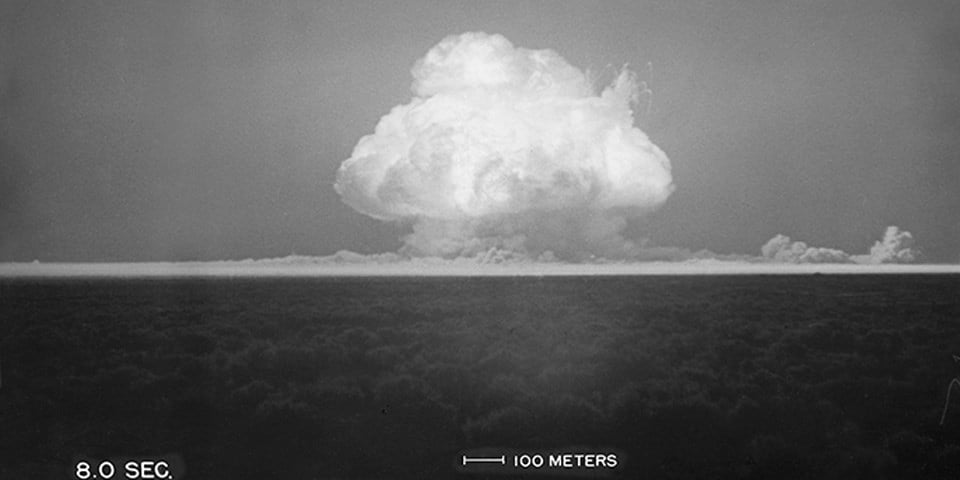
The first atomic bomb test at the Trinity site.
  • Check out Part 2 of the series here.

What about the middle stages? The march from single-celled organisms doing their single-celled thing to intelligent creatures that can wield tools and leave feedback reviews about them?

Well, again we still only have one data point, but we MIGHT be able to learn something about filters both small and great in those middle stages. And that’s the fact that intelligent life appeared very LATE on earth. Check this out, within 500 million years of our planet even forming, self-reproducing molecules and single-celled critters evolved. And here we are, intelligent creatures, only arising into consciousness within the past few hundred THOUSAND years. And guess what? We’re about to get cooked. No, that’s not a metaphor. As the sun ages it expands and brightens. It’s been doing so for…well, four and a half billion years already. That’s right, the first life to appear on the Earth knew a small, dimmer Sun than we do today. And it’s only going to get worse. Within about five hundred million years from now, the Sun will become so hot that the oceans will boil, plate tectonics will grind to a halt, and the greenhouse effect will spiral out of control, turning the Earth into another Venus: superheated and choking on its own acidic atmosphere. While life might – might - cling to a miserable existence in some crevice in that future hell-world, it’s definitely not going to be intelligent, let alone space-faring.

In other words, we are here, building our rockets, in the final stages where it’s even possible to do on the Earth. Now again, I have to sprinkle a lot of caution into these statements, but again maybe nature is trying to tell us something. Life itself appeared within the first chapter of the Earth’s viable history, and intelligent life appeared in the last.

So maybe that’s the answer: life is common, but intelligent life is not. Maybe that’s the Great Filter. Intelligence takes a lot of luck and stable evolutionary history (and maybe a few good whacks with an asteroid). So we shouldn’t expect other space faring civilizations because intelligence is a precious commodity in the cosmos (and on the Earth, yuk yuk).

How could we test this? Or, maybe “test” is too strong a world, but at least start to wrap the questions in some sort of statistics or probabilities. After all, so far we’re only going on one example. But we can imagine a future where we are able to find microscopic critters, maybe deep in the Martian crust, or swimming in the seas of Europa, or hanging out on some exoplanet. If we continue our searches and find simple life, but no signs of INTELLIGENT life, then this would be a major clue that the Great Filter is behind us: that we’re already on the other side and it’s all going to great.

Or not. “Not” is definitely still an option.

Until we have enough data to build statistics, and trust me that’s going to be a long way off so don’t hold your breath, then all we have is speculation. Which while not very scientifically rigorous is still really fun. What if the Great Filter is in front of us? What if it’s in our future? What if once life gains a foothold somewhere it has a universally decent chance of arising to intelligence, like it’s a foregone conclusion of the evolutionary process?

Well then, that means that maybe species simply destroy themselves. I mean, it’s not hard once you put your mind to it. The idea is that to travel interstellar, or even interplanetary, distances, you must be able to harvest, store, and use incredible amounts of energy, and develop a sophisticated technological base to do it. And if you can do that, then you can harvest, store, and use MORE THAN ENOUGH ENERGY to wipe every single living thing off the face of your home planet.

The best insurance against that is to have your favorite kind of living thing on multiple surfaces on multiple planets, but you will have to spend a certain amount of time – maybe centuries, maybe millennia – in a precarious balance, where you’re trying to climb the ladder to the stars without cutting yourself off at the knees. A species needs to use its technologies for good, not evil, for a very long time so that it can ensure its own survival. Meanwhile, during all that time slowly developing space travel and self-sustaining offworld habitats, a rogue state or actor or even the combined actions of the entire species can just...end it all.

And, like, THAT’S US. We can send robotic craft beyond the edges of the solar system. We can send crews to live months at a time in orbit. And…we can also wipe every living thing off the face of the earth. We have more than enough nuclear weapons to kill off all of humanity and trigger a mass extinction. If we pump enough carbon into the atmosphere, things can go haywire real quick and have the same effect. The same abilities that bring us to the stars can bury us in the dirt, which is real dark but kinda poetic.

Or maybe it takes so long that nature does the job for us, sending an unlucky rock in our direction or an ozone-killing blast from a gamma ray burst. Life may be hardy in general but individual species are not. Something – from nature or from ourselves – can kill us while we’re still in the cradle.

Remember, for the great filter argument to work, it has to be NEAR TOTAL. Which means…this is it. The end of the line. The last stop before galactic extinction. Goodbye everyone, hug your loved ones, and take one last bite of cheese, because the end of our species is right around the corner.

Wow, that got morbid.

{ https://www.universetoday.com/ }

Hoe vind je dit bericht?
Geschreven door peter om 22:22 Stuur door

5 meter UFO crashed in ocean near island, UAP USO Sighting News 📰 Ancient Alien Ships Everywhere! Lets investigate.

5 meter UFO crashed in ocean near island, UAP USO Sighting News 📰 Ancient Alien Ships Everywhere! Lets investigate.

UFO_Ocean.png

USO_UFO.png
Date of discovery: Aug 26, 2025
Location of discovery: Makemo Island
Source: Self found Watch video to find it too. 
 
Hey check this out. Way out in the ocean in the middle of nowhere is a small island called Makemo. On the edge of the island I noticed a sphere that is 5 meters long! Thats huge among spheres and it crashed in the shore water so it's about 1-2 meters deep. Why has no-one found it yet or why hasn't it been recovered? Because this is the first anyones ever heard of it, but it is sure to have governments around the world soon scrambling to recover it first. 
 
There are thousands of UFOs on the surface of land and below the ocean yet to be discovered...all we have to do is look...and they will soon be found. 
Scott C. Waring - UFO Sightings Daily
 

{ https://www.ufosightingsdaily.com/ }

Hoe vind je dit bericht?
Geschreven door peter om 21:00 Stuur door

Meer van UFO'S of UAP'S, ASTRONOMIE, RUIMTEVAART, ARCHEOLOGIE, OUDHEIDKUNDE, SF-SNUFJES EN ANDERE ESOTERISCHE WETENSCHAPPEN - DE ALLERLAATSTE NIEUWTJES

↑ Terug naar de berichten