Ontdek de Fascinerende Wereld van UFO's en UAP's: Jouw Bron voor Onthullende Informatie!
Ben jij ook gefascineerd door het onbekende? Wil je meer weten over UFO's en UAP's, niet alleen in België, maar over de hele wereld? Dan ben je op de juiste plek!
België: Het Kloppend Hart van UFO-onderzoek
In België is BUFON (Belgisch UFO-Netwerk) dé autoriteit op het gebied van UFO-onderzoek. Voor betrouwbare en objectieve informatie over deze intrigerende fenomenen, bezoek je zeker onze Facebook-pagina en deze blog. Maar dat is nog niet alles! Ontdek ook het Belgisch UFO-meldpunt en Caelestia, twee organisaties die diepgaand onderzoek verrichten, al zijn ze soms kritisch of sceptisch.
Nederland: Een Schat aan Informatie
Voor onze Nederlandse buren is er de schitterende website www.ufowijzer.nl, beheerd door Paul Harmans. Deze site biedt een schat aan informatie en artikelen die je niet wilt missen!
Internationaal: MUFON - De Wereldwijde Autoriteit
Neem ook een kijkje bij MUFON (Mutual UFO Network Inc.), een gerenommeerde Amerikaanse UFO-vereniging met afdelingen in de VS en wereldwijd. MUFON is toegewijd aan de wetenschappelijke en analytische studie van het UFO-fenomeen, en hun maandelijkse tijdschrift, The MUFON UFO-Journal, is een must-read voor elke UFO-enthousiasteling. Bezoek hun website op www.mufon.com voor meer informatie.
Samenwerking en Toekomstvisie
Sinds 1 februari 2020 is Pieter niet alleen ex-president van BUFON, maar ook de voormalige nationale directeur van MUFON in Vlaanderen en Nederland. Dit creëert een sterke samenwerking met de Franse MUFON Reseau MUFON/EUROP, wat ons in staat stelt om nog meer waardevolle inzichten te delen.
Let op: Nepprofielen en Nieuwe Groeperingen
Pas op voor een nieuwe groepering die zich ook BUFON noemt, maar geen enkele connectie heeft met onze gevestigde organisatie. Hoewel zij de naam geregistreerd hebben, kunnen ze het rijke verleden en de expertise van onze groep niet evenaren. We wensen hen veel succes, maar we blijven de autoriteit in UFO-onderzoek!
Blijf Op De Hoogte!
Wil jij de laatste nieuwtjes over UFO's, ruimtevaart, archeologie, en meer? Volg ons dan en duik samen met ons in de fascinerende wereld van het onbekende! Sluit je aan bij de gemeenschap van nieuwsgierige geesten die net als jij verlangen naar antwoorden en avonturen in de sterren!
Heb je vragen of wil je meer weten? Aarzel dan niet om contact met ons op te nemen! Samen ontrafelen we het mysterie van de lucht en daarbuiten.
Flying object that crashed in Poland was a Russian drone, Polish officials say
Poland's defense minister said that a flying object that crashed and exploded in a cornfield in eastern Poland early Wednesday was identified as a Russian drone, calling it a provocation by Russia.
At a news conference in Warsaw, Defense Minister Władysław Kosiniak-Kamysz accused Russia of provoking NATO during a crucial moment, as peace talks over the war in neighboring Ukraine are underway, the country's news agency PAP reported.
"Russia is provoking us once again," Kosiniak-Kamysz said, just as peace talks have given hope that the war "has a chance of ending."
Local police said they received reports of the crash around 2 a.m. and found burned metal and plastic debris at the scene, near the village of Osiny. As a result of the explosion, windows were broken in some houses but nobody was injured, PAP reported.
Poland's Armed Forces Operational Command said Wednesday on social media that no violations of Polish airspace from neighboring Ukraine or Belarus were recorded overnight
Officials initially said the explosion may have been caused by a part of an old engine with a propeller.
Defense Minister Wladyslaw Kosiniak-Kamysz later said the object was most likely a drone, adding that an analysis was underway to determine whether it was a military or smuggling one, PAP reported.
A police officer sets up a police tape, after an unidentified object fell and exploded in a cornfield overnight, according to Polish authorities, in the village of Osiny, eastern Poland, Aug. 20, 2025.Kacper Pempel/REUTERS
"I was sitting in my room at night, around midnight, maybe, and I heard something just bang," local resident Pawel Sudowski told local news website Lukow.tv. "It exploded so loudly that the whole house simply shook."
Lublin District Prosecutor Grzegorz Trusiewicz told reporters several investigators — both civilian and military — were examining the crash site.
"We have a lot of manpower, we have the army to help us. I hope that we will be able to finish the operation by the evening," Trusiewicz said.
Since Russia launched a full-scale invasion of Ukraine more than three years ago, there have been a number of intrusions into Polish airspace, raising alarm in the European Union and NATO member state and reminding people how close the war is.
In 2023, a Russian missile went through Polish airspace near the Ukrainian border during one of Russia's barrages.
In 2022, a Ukrainian air defence missile fell on the Polish village of Przewodow, near the border, killing two people.
Earlier this year, unidentified crashed objects were found on the ground in two locations in Poland. Authorities said it was possible those objects came from a SpaceX rocket after debris entered the atmosphere over Poland.
"Our work is a new piece of evidence that suggests that Mars was once a much more complex and active planet than it is now."
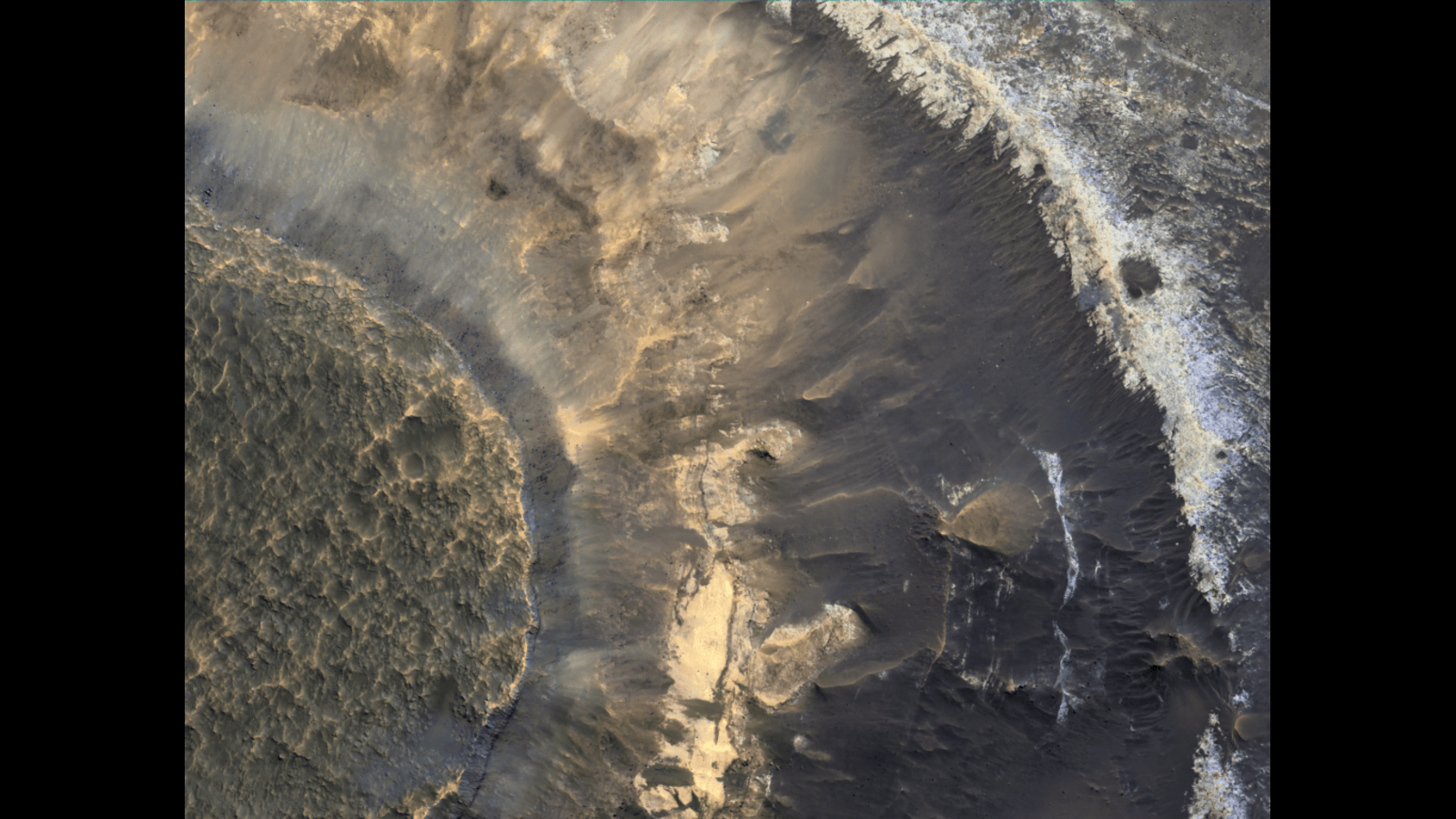
A HiRISE image of the heavily eroded ridge of an inverted channel left behind by a dried up river billions of years ago.
(Image credit: NASA/JPL/University of Arizona.)
Mars was a rainier, wetter place than planetary scientists previously thought, according to a new study of ancient, inverted river channels that span more than 9,000 miles (14,484 kilometers) in the Red Planet's southern Noachis Terra region.
"Our work is a new piece of evidence that suggests that Mars was once a much more complex and active planet than it is now, which is such an exciting thing to be involved in," study leader Adam Losekoot of the U.K.'s Open University said in a statement.
We've known Mars was once a wet planet ever since the Mariner 9 orbiter mission from the '70s photographed a surface covered in dried-up river channels. These channels were dated back to over 3.5 billion years ago. However, channels cut into the ground are not the only evidence for running water on Mars.
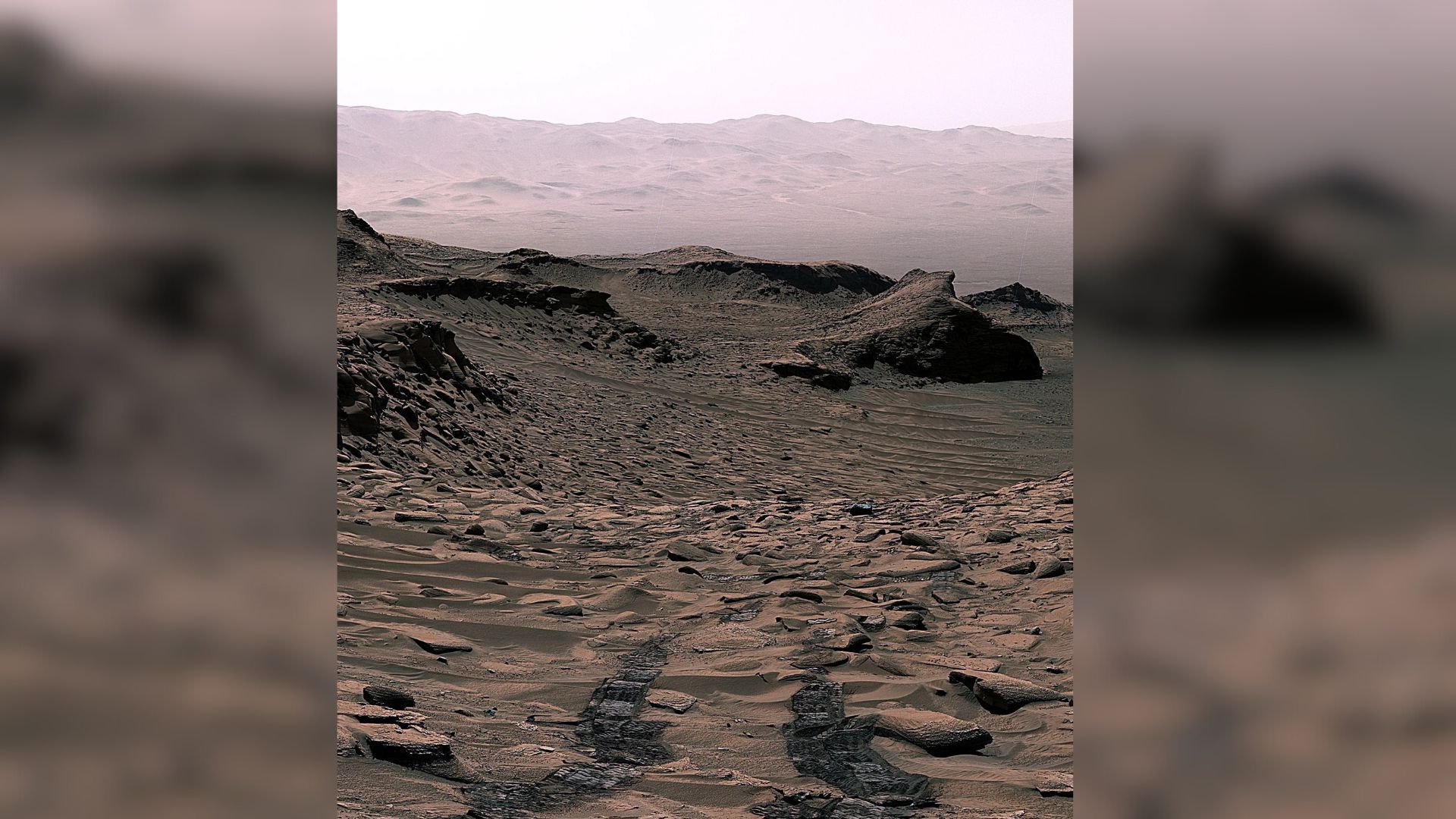
When that water ran-off, or evaporated, it left sedimentary deposits. Sometimes we see these in craters that were once lakes filled with water: NASA's Curiosity rover is exploring Gale Crater, which has a central three-mile-tall (five-kilometer-tall) peak covered in sediment.
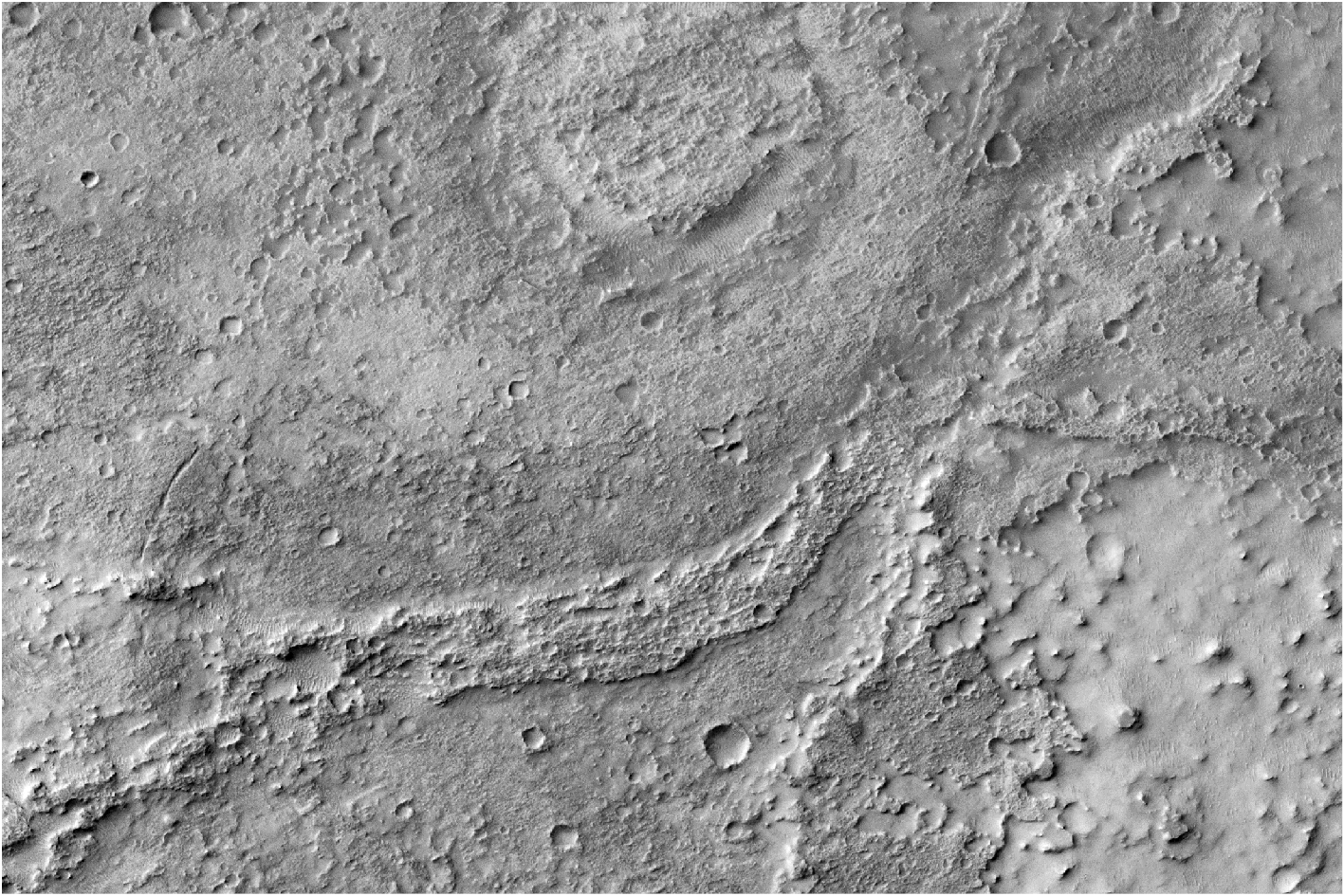
Other times, these sediments were laid down on river beds. Over the eons, the sediments would have hardened, while the river channels and the land around them would have weathered and eroded away. That left the sediments, which are more resistant to erosion, sticking out as tall ridges. Geologists today call them fluvial sinuous ridges, or, more plainly, inverted channels.
Now, Losekoot, who is a Ph.D. student, has led the discovery of a vast network of these channels in Noachis Terra based on images and data taken by the High Resolution Imaging Science Experiment (HiRISE) camera and the Context Camera on NASA's Mars Reconnaissance Orbiter, and the Mars Orbiter Laser Altimeter (MOLA) on the defunct Mars Global Surveyor mission.
(Image credit: NASA/JPL/MSSS/The Murray Lab)
Previously, Noachis Terra had not been given due attention because it lacked the more classical river channels that form more obvious evidence of water. However, by mapping the network of inverted channels, Losekoot realized there was lots of evidence there had once been plentiful water in the region.
"Studying Mars, particularly an under-explored region like Noachis Terra, is really exciting because it's an environment which has been largely unchanged for billions of years," said Losekoot. "It's a time capsule that records fundamental geological processes in a way that just isn't possible here on Earth."
Some of the inverted channels appear as isolated segments that have survived the elements for billions of years. Others are more intact, forming systems that run for hundreds of miles and stand tens of yards tall.
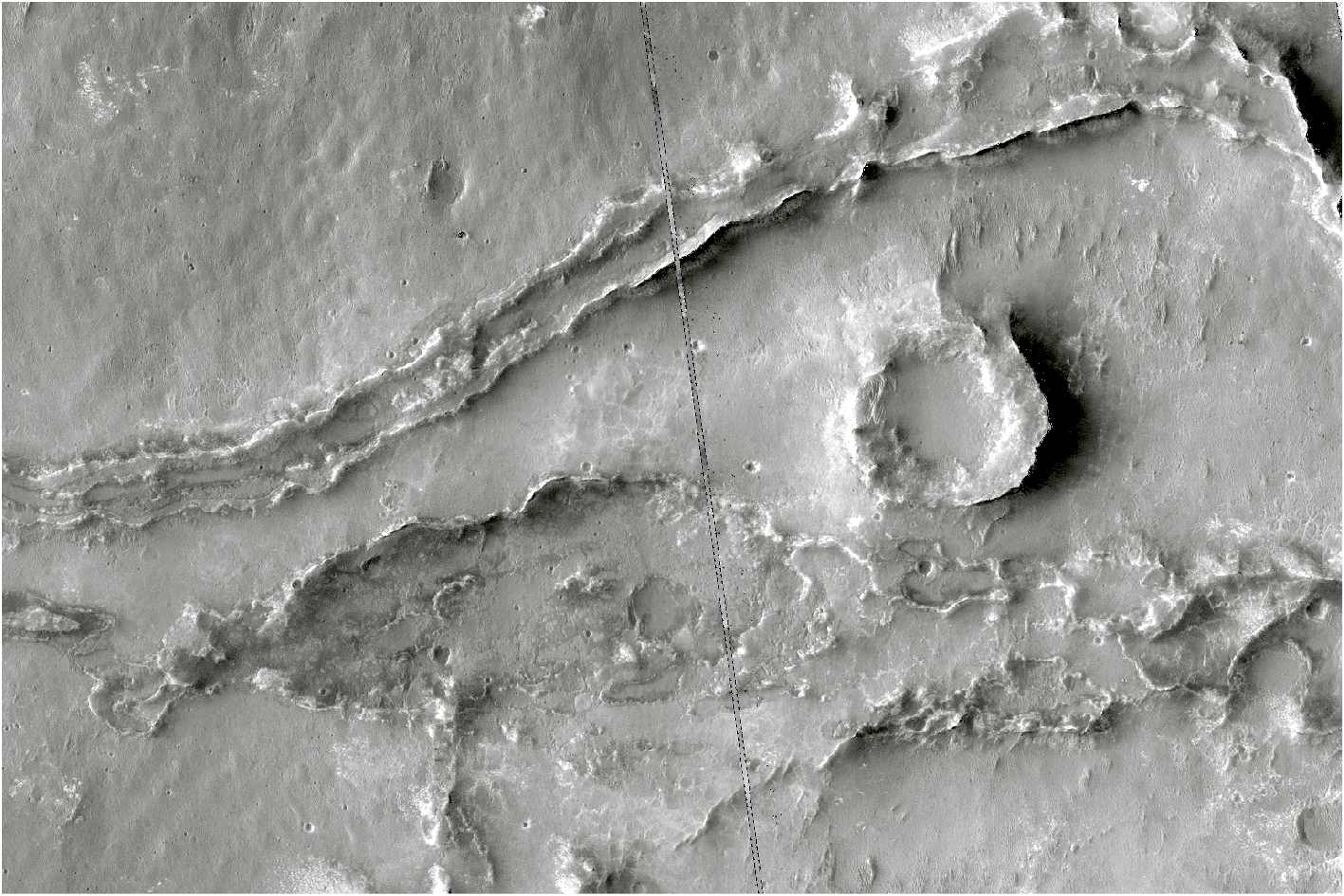
This double inverted ridge signifies where an ancient river split into two before reconnecting downstream. Between the two ridges we can see a mesa, which may be the harder material that caused the river to diverge to get around it. (Image credit: NASA/JPL/University of Arizona)
Such a widespread network of inverted channels does not suggest these channels were caused by flash floods, argues Losekoot. Rather, they seem to have formed in stable climatic conditions over a geologically significant period of time during the Noachian–Hesperian transition, which was the shift from one geological era into the next around 3.7 billion years ago.
What's particularly intriguing is the most likely source of water to have formed these inverted channels is precipitation — be it rain, hail or snow. Indeed, given the size of the inverted channel network in Noachis Terra, this region of Mars may have experienced lots of rainy days in a warm and wet climate.
It's more evidence that Mars was once more like Earth than the cold and barren desert it is today.
Losekoot presented his findings at the Royal Astronomical Society's National Astronomy Meeting held at the University of Durham in the U.K., which ran between July 7 and July 11.
On July 24, 2025, the 4,608th Martian day, or Sol, of the mission, NASA’s Curiosity rover imaged wind-eroded rocks shaped like a piece of coral in the Gale crater on Mars.
This image of the Paposo rock was taken by Curiosity’s MAHLI instrument on July 24, 2025.
Image credit: NASA / JPL-Caltech / MSSS.
One of the wind-eroded rocks was captured by Curiosity’s Mars Hand Lens Imager (MAHLI), a camera on the end of its robotic arm.
“Nicknamed Paposo, the rock was about 5 cm (2 inches) from MAHLI when this image was taken,” members of the Curiosity team wrote in a statement.
On the same day, Curiosity used its Remote Micro Imager, part of its ChemCam instrument, to view another coral-shaped rock.
This image of a wind-eroded rock was taken by Curiosity’s Remote Micro Imager on July 24, 2025.
£Image credit: NASA / JPL-Caltech / MSSS.
“Curiosity has found many small features like these, which formed billions of years ago when liquid water still existed on Mars” the researchers said.
“Water carried dissolved minerals into rock cracks and later dried, leaving the hardened minerals behind.”
“Eons of sandblasting by the wind wore away the surrounding rock, producing unique shapes.”
“This common process is seen extensively on Earth and has produced fantastic shapes on Mars, as well, including a flower-shaped rock.”
Curiosity rover took this selfie on October 11, 2019. The rover drilled twice in this location, nicknamed Glen Etive. Just left of the rover are the two drill holes, called Glen Etive 1 (right) and Glen Etive 2 (left).
Image credit: NASA / JPL-Caltech / MSSS.
Launched November 26, 2011, Curiosity is the fourth rover the United States has sent to Mars.
Led by NASA’s Jet Propulsion Laboratory, the mission involves almost 500 scientists from the United States and other countries.
Curiosity explores the 154-km- (96-mile) wide Gale crater and acquires rock, soil, and air samples for onboard analysis.
The car-size rover is about as tall as a basketball player and uses a 2.1-m- (7-foot) long arm to place tools close to rocks selected for study.
Scientists found a mysterious cosmic object that's between 10 and 100 times more powerful than all known supernovas. What could it be?
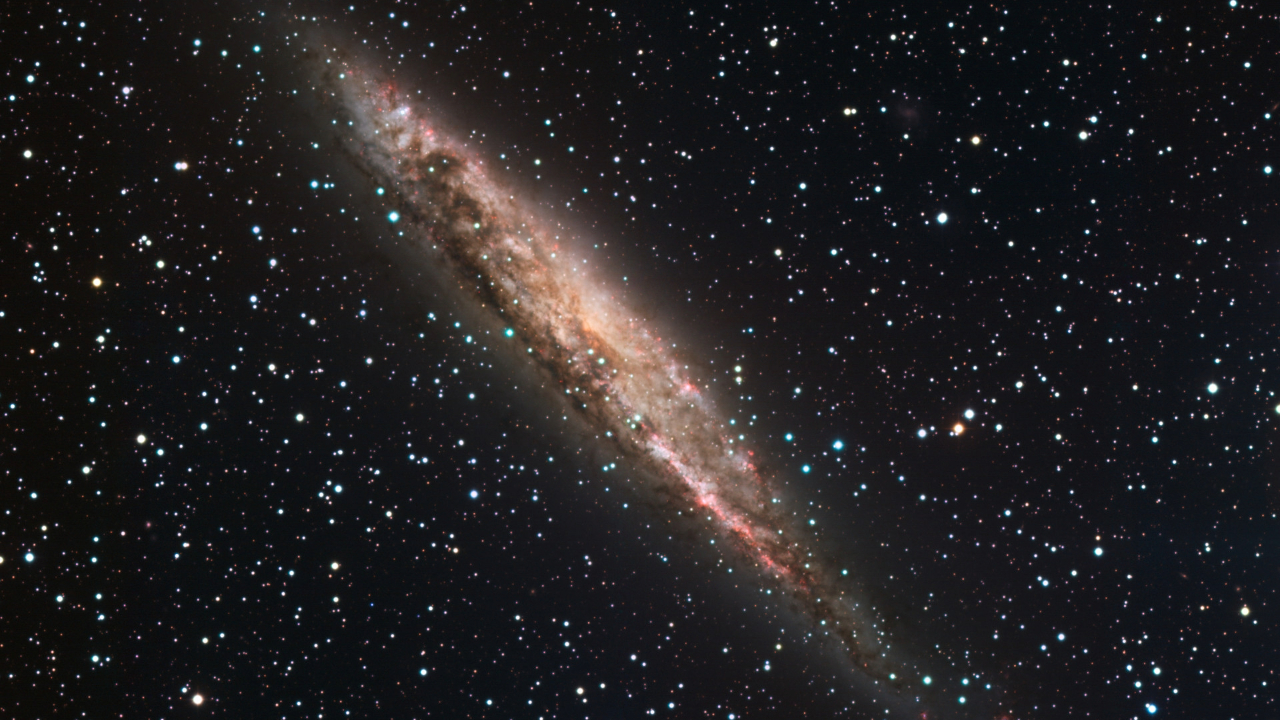
NGC 4945 is an edge-on spiral galaxy just 11 million light years away in Centaurus
(Image credit: ESO)
A bewilderingly powerful mystery object found in a nearby galaxy and only visible so far in millimeter radio wavelengths could be a brand new astrophysical object unlike anything astronomers have seen before.
The object has been named 'Punctum,' derived from the Latin pūnctum meaning "point" or "dot," by a team of astronomers led by Elena Shablovinskaia of the Instituto de Estudios Astrofísicos at the Universidad Diego Portales in Chile. Shablovinskaia discovered it using ALMA, the Atacama Large Millimeter/submillimeter Array.
"Outside of the realm of supermassive black holes, Punctum is genuinely powerful,” Shablovinskaia told Space.com.
Witnessing the Dawn of a New Solar System: A Historic Discover
Astronomers don't know what it is yet — only that it is compact, has asurprisingly structured magnetic field, and, at its heart, is an object radiating intense amounts of energy.
"When you put it into context, Punctum is astonishingly bright — 10,000 to 100,000 times more luminous than typical magnetars, around 100 times brighter than microquasars, and 10 to 100 times brighter than nearly every known supernova, with only the Crab Nebula surpassing it among star-related sources in our galaxy," Shablovinskaia said.
Punctum is located in the active galaxy NGC 4945, which is a fairly close neighbor of our Milky Way galaxy, located 11 million light-years away. That's just beyond the confines of the Local Group. Yet, despite this proximity, it cannot be seen in optical or X-ray light but rather only millimeter radio wavelengths. This has only deepened the mystery, although the James Webb Space Telescope (JWST) has yet to take a look at the object in near- and mid-infrared wavelengths.
ALMA's view of the bright core of NGC 4945, and inset, the compact, mystery object called Punctum. (Image credit: Elena Shablovinskaia et al.)
What could Punctum be?
Its brightness remained the same over several observations performed in 2023, meaning it is not a flare or some other kind of transitory phenomenon. Millimeter-wave radiation typically comes from cold objects such as young protoplanetary disks and interstellar molecular clouds. However, very energetic phenomena such as quasars and pulsars can also produce radio waves through synchrotron radiation, wherein charged particles moving at close to the speed of light spiral around magnetic field lines and radiate radio waves.
What we do know about Punctum is that based on how strongly polarized its millimeter light is, it must possess a highly structured magnetic field. And so, Shablovinskaia believes what we are seeing from Punctum is synchrotron radiation. Objects with strong polarization tend to be compact objects, because larger objects have messy magnetic fields that wash out any polarization.
Perhaps that synchrotron radiation is being powered by a magnetar, the team believes, which is a highly magnetic pulsar. However, while a magnetar's ordered magnetic field fits the bill, magnetars (and regular pulsars for that matter) are much fainter at millimeter wavelengths than Punctum is.
Supernova remnants such as the Crab Nebula, which is the messy innards blasted into space of a star that exploded in 1054AD, are bright at millimeter wavelengths. The trouble is that supernova remnants are quite large — the Crab Nebula itself is about 11 light-years across — whereas Punctum is clearly a much smaller, compact object.
The Crab Nebula taken by the James Webb Space Telescope (Image credit: NASA/JPL-Caltech)
"At the moment, Punctum truly stands apart — it doesn't fit comfortably into any known category," said Shablovinskaia. "And honestly, nothing like this has appeared in any previous millimeter surveys, largely because, until recently, we didn't have anything as sensitive and high-resolution as ALMA."
There is the caveat that Punctum could just be an outlier: an extreme version of an otherwise familiar object, such as a magnetar in an unusual environment, or a supernova remnant interacting with dense material. For now, though, these are just guesses lacking supporting evidence. It is quite possible that Punctum is indeed the first of a new kind of astrophysical object that we haven't seen before simply because only ALMA can detect them.
In the case of Punctum, it is 100 times fainter than NGC 4945's active nucleus that is being energized by a supermassive black hole feeding on infalling matter. Punctum probably wouldn't have been noticed at all in the ALMA data if it wasn't for its exceptionally strong polarization.
Further observations with ALMA will certainly help shed more light on what kind of object Punctum is. The observations that discovered Punctum were actually focused on NGC 4945's bright active core; it was just happenstance that Punctum was noticed in the field of view. Future ALMA observations targeting Punctum instead would be able to go to much lower noise levels without worrying about the galaxy's bright core being over-exposed, and it could also be observed across different frequencies.
The greatest help could potentially come from the JWST. If it can see an infrared counterpart, then its greater resolution could help identify what Punctum is.
"JWST's sharp resolution and broad spectral range might help reveal whether Punctum's emission is purely synchrotron or involves dust or emission lines," said Shablovinskaia.
For now, it's all ifs and buts, and all we can say for sure is that astronomers have a genuine mystery on their hands that has so far left them feeling flummoxed.
"In any case," concluded Shablovinskaia, "Punctum is showing us that there is still a lot to discover in the millimeter sky.”
A paper describing the discovery of Punctum has been accepted by the journal Astronomy & Astrophysics, and a pre-print is available on astro.ph.
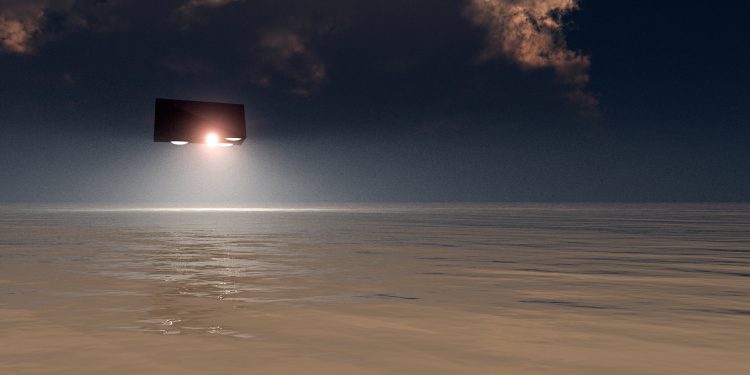
Cube-Shaped UFOs: Not Drones, Not Balloons, So What Are They?
Introduction
The Age of UFO Transparency is upon us—an era in which the veil of secrecy surrounding unidentified flying objects is gradually lifting, revealing a reality that once belonged solely to conspiracy theories and clandestine government programs. Many would argue that this shift is long overdue; the days of dismissing UFO reports as mere hallucinations or fabrications are waning. Instead, an increasing number of scientific institutions, government agencies, and independent researchers are approaching the subject with a newfound seriousness and rigor. NASA, the renowned space agency, has taken a significant step by assembling a dedicated team of astrophysicists tasked with investigating UFO phenomena. Their goal is to analyze sightings, assess the data with scientific precision, and determine whether these objects are of terrestrial origin or if they indeed originate from beyond our planet. This paradigm shift reflects a broader societal change—one that embraces curiosity and evidence-based inquiry over skepticism and suppression.
This newfound transparency has empowered witnesses, especially aviators, to come forward and share their extraordinary encounters. For decades, pilots and military personnel have reported strange objects in the skies, but fear of ridicule or official silence often kept these stories from reaching the public. Today, those barriers are diminishing. As a result, a wealth of firsthand accounts is now available, providing invaluable insights into phenomena that continue to baffle scientists and enthusiasts alike. Among these accounts, some are particularly perplexing: sightings of cube-shaped UFOs. Unlike the more common disc-shaped or spherical craft, these geometric anomalies challenge our conventional understanding of aircraft and extraterrestrial technology alike.
Unusual as they are, reports of cube-shaped UFOs are not isolated incidents. Naval aviators, in particular, have documented encounters with strange “Black Cube” objects. These mysterious crafts are often described as being surrounded by transparent spheres—strange, clear orbs that seem to interact with the cubes in inexplicable ways. Some of these cube-shaped objects have been observed shadowing military aircraft, maintaining a close proximity that suggests a high level of intelligence and control. On multiple occasions, fighter jets have narrowly avoided collisions with these enigmatic objects, raising urgent questions about their nature and intentions. The fact that these encounters occur in controlled airspace, under the watchful eye of military personnel, underscores their significance. It’s one thing to observe strange lights from the ground, but when trained pilots report close encounters with seemingly autonomous, technologically advanced objects, the stakes become much higher.
What makes these cube-shaped UFOs particularly fascinating—and unsettling—is their apparent technological sophistication. According to testimonies from fighter pilots and military officials, these objects display characteristics that defy our current understanding of aeronautical engineering. They are reported to exhibit rapid acceleration, sudden directional changes, and hovering capabilities that no known human-made aircraft can replicate. Some witnesses describe the objects as having a solidity and geometric precision that suggests a level of design and manufacturing far beyond our contemporary capabilities. The technology behind these objects, as hinted at by witness observations, appears to surpass our own, hinting at either a highly advanced extraterrestrial origin or an as-yet-undiscovered terrestrial technology.
The danger posed by these unidentified objects extends beyond mere curiosity. The close encounters with military aircraft—often with near-misses—highlight a potential risk to aviation safety. Such incidents raise critical questions: Are these objects probes sent to gather information? Are they aware of our defenses? Or are they simply passing through our airspace without regard for human activity? The fact that fighter pilots have repeatedly reported these objects “everywhere”—over the ocean, in restricted military zones, and even near major cities—only amplifies their significance. These encounters suggest that whatever these objects are, they are not only real but also capable of operating in ways that challenge our understanding of physics and technology.
The phenomenon of cube-shaped UFOs raises numerous scientific and philosophical questions. Are these objects of extraterrestrial origin, representing a form of advanced alien technology that has yet to be understood? Or could they be manifestations of some unknown terrestrial phenomenon—perhaps an undiscovered natural anomaly or experimental craft? Alternatively, some theories posit that these objects might be artificial constructs created by an unknown intelligence, capable of manipulating matter and energy at levels far beyond human capabilities. The consistent reports from credible witnesses, especially military personnel, lend weight to the argument that these phenomena are real and potentially significant.
In conclusion, the era of UFO transparency offers a rare opportunity to explore these mysteries with scientific rigor and open-minded curiosity. The encounters with cube-shaped UFOs, in particular, challenge our assumptions about the limits of technology and the nature of reality itself. As research progresses and more data becomes available, we may soon uncover answers to questions that have puzzled humanity for generations. Whether these objects are visitors from distant worlds, manifestations of unknown natural phenomena, or advanced terrestrial inventions, their existence demands our attention and careful investigation. The skies are revealing secrets once hidden in darkness, and it is up to us—scientists, pilots, policymakers, and curious minds—to understand what these enigmatic objects truly are.
Historical Context and Sightings
Historically, reports of unidentified flying objects (UFOs) have predominantly featured disc-shaped or spherical objects, which have long captured the imagination of the public and researchers alike. These classic sightings often involved disc-shaped crafts, sometimes described as "flying saucers," with smooth, metallic surfaces reflecting sunlight or other ambient light sources. Such reports date back to the mid-20th century, with famous incidents like the 1947 Kenneth Arnold sighting and the 1948 Roswell incident shaping public perception of UFOs as potentially extraterrestrial visitors.
However, in recent years, there has been a noticeable shift in the types of shapes reported by witnesses around the world. Increasingly, eyewitnesses describe encounters with craft exhibiting distinctly cubic or rectangular geometries. These objects are characterized by sharp edges, well-defined geometric symmetry, and metallic surfaces that reflect light in a manner consistent with highly polished or reflective materials. Witness reports often describe these craft as having a sense of precision and angularity that sets them apart from more traditional, rounded UFOs.
One of the most notable recent cases took place in 2017 over the skies of the United Kingdom. Multiple eyewitnesses, including commercial pilots, reported observing a large, luminous cube silently floating at high altitude. The object was described as a perfectly symmetrical cube, glowing with a bright, white light, and hovering motionlessly for several minutes before suddenly ascending at an incredible speed, disappearing from view in seconds. This phenomenon was documented by multiple independent witnesses, adding credibility to the report. The silence of the craft and its abrupt maneuvering defied typical explanations involving known aerial vehicles.
Similarly, in 2020, a drone operator in Japan captured compelling footage of a cube-like object performing abrupt and complex maneuvers. The footage showed a metallic, box-shaped craft executing rapid directional changes, hovering in place before accelerating vertically at a speed inconsistent with conventional drones or aircraft. The object’s sharp edges and geometric shape were clearly visible in the footage, and it maintained a stable, angular form throughout its movements. Such precise and sudden maneuvers are difficult to reconcile with known human-made aerial technology, especially at the altitudes and speeds observed.
While skeptics often argue that these sightings are misidentifications of familiar objects, such as drones, weather balloons, or conventional aircraft, several factors challenge these explanations. For instance, many of the reported objects lack the typical features associated with drones, such as visible propellers, rotors, or blinking lights. Moreover, some witnesses have emphasized the lack of sound emanating from these craft, which further complicates identification. The consistent reports of sharply defined geometric shapes, coupled with unusual flight behaviors, suggest that these objects may be of unfamiliar origin or possess capabilities beyond current human technology.
The increasing frequency of these cubic and geometrically precise sightings raises important questions about the nature and origin of these objects. Their persistent appearance across diverse locations and contexts indicates that they are not merely optical illusions or misidentifications but potentially a new class of unidentified aerial phenomena. As such, these reports warrant rigorous scientific investigation—using advanced radar, infrared imaging, and other technologies—to better understand their characteristics, behaviors, and potential implications for aviation safety and scientific knowledge. The evolution from traditional disc-shaped sightings to geometric, angular crafts marks a fascinating chapter in the ongoing exploration of UFO phenomena.
Differentiating From Drones and Balloons
To understand what cube-shaped UFOs are not, it is essential to consider and dismiss common explanations such as drones and balloons. These familiar objects often come to mind when interpreting unidentified aerial phenomena, but thorough analysis reveals significant differences that set the cube-shaped UFOs apart.
1. Drones: Modern quadcopters and multirotor drones are ubiquitous and increasingly sophisticated. They are designed for recreational, professional, and military purposes, and their features are well-documented. Drones typically have recognizable propellers or rotors, which are often visible even when in motion. They also tend to have blinking LED lights—red, green, or white—used for visibility and navigation. The size of drones varies from small handheld devices to larger unmanned aircraft, but most are relatively compact, generally less than 2 meters in wingspan or length.
The movement patterns of drones are often erratic or highly controlled, depending on the operator. They can hover precisely, perform rapid directional changes, and even execute complex aerial maneuvers, especially with the aid of onboard sensors and autopilot systems. These capabilities are well within the realm of current technology, and drones are usually observed within the visual range of observers.
In contrast, the reported cube-shaped UFOs are often described as large and silent. Witness testimonies frequently mention objects measuring several meters across, with no audible noise emanating from them. Moreover, these UFOs are observed performing abrupt, highly controlled maneuvers—such as rapid accelerations, sudden directional changes, or hovering in place—beyond what typical consumer or even advanced military drones can achieve. For example, a witness might describe a large, luminous cube darting swiftly across the sky, changing direction instantaneously without any sound or visible propulsion system, making it unlikely to be a drone.
2. Balloons: Balloons are among the simplest explanations for aerial phenomena. They are lightweight, often made of latex, Mylar, or paper, and are designed to drift passively with prevailing wind currents. Their shapes are generally soft and irregular—round, elongated, or amorphous—lacking rigid geometrical features. They are commonly used for weather measurement, promotional displays, or festivities, and are often associated with specific events or locations.
Balloons tend to ascend slowly, drifting with the wind, and can be observed at various altitudes. Their movements are predictable, dictated largely by atmospheric conditions. They usually have minimal reflective surfaces, except maybe a metallic or shiny patch, which can catch light but does not produce complex reflections. Their lack of maneuverability means they cannot perform sudden directional changes or hover precisely at a fixed point in the sky.
The cube-shaped UFOs, however, are described as having a rigid, geometrical structure resembling a perfect cube or rectangular prism. Witnesses often report the object remaining stationary in the air for extended periods, then suddenly accelerating or changing direction abruptly—behaviors incompatible with passive balloons. Furthermore, the shiny or reflective surfaces of some of these objects suggest a solid, possibly metallic, construction rather than a lightweight, inflatable structure. Their apparent ability to perform complex maneuvers further rules out balloons as a plausible explanation.
3. Alternative Explanations:
Given these distinctions, it becomes necessary to consider other possibilities. For instance, some hypothesize that these cube-shaped UFOs could be advanced experimental aircraft or drones developed by military agencies, designed with stealth and maneuverability in mind. The geometrical shape might serve specific aerodynamic or stealth purposes, although such designs are not publicly acknowledged or documented.
Others suggest they could be optical illusions, reflections, or camera artifacts. For example, the angle of sunlight reflecting off a high-altitude metallic object can produce a cube-like appearance in photographs or videos. Similarly, digital glitches or lens effects might distort the shape of an object, leading to misinterpretations.
Yet, many reports describe these objects as solid, three-dimensional entities with consistent shape and behavior over time, making mere optical illusions unlikely. In some cases, multiple witnesses across different locations observe the same object simultaneously, further discounting the possibility of misidentification or camera artifacts.
Conclusion: In summary, the characteristics of cube-shaped UFOs—large size, silence, abrupt maneuvers, rigid geometrical shape, and reflective surfaces—are inconsistent with the properties of drones and balloons. While these common explanations are often considered first, detailed analysis and eyewitness accounts suggest that these objects are something more enigmatic. The need to explore alternative hypotheses remains, including advanced technology, atmospheric phenomena, or other yet-to-be-understood factors. As such, distinguishing these UFOs from everyday objects is crucial in advancing our understanding of unexplained aerial phenomena.
Yet another Unidentified Aerial Phenomena.
Image Credit: kolesinibimitresku/Shutterstock.com
Possible Explanations and Scientific Investigations
1. Advanced Human-Made Technology One prominent hypothesis suggests that these cube-shaped objects are experimental aircraft or unmanned aerial vehicles (UAVs) developed by military agencies or private aerospace corporations. Throughout history, the military has often pursued unconventional designs to gain strategic advantages, such as stealth, speed, or maneuverability. For example, the development of stealth aircraft like the F-117 Nighthawk involved radical geometries to reduce radar detection. The cube shape, with its sharp edges and symmetrical form, might serve similar purposes—perhaps to minimize radar cross-section or to enable unique flight characteristics.
Another possibility is that these objects are test models for future aircraft or drone technology. For instance, a cube-shaped drone could potentially harness novel aerodynamic principles or employ advanced materials that allow for silent, highly maneuverable flight. Such designs might also incorporate innovative propulsion systems, such as ion thrusters or electromagnetic propulsion, to achieve speeds or maneuvers that conventional aircraft cannot match.
However, the lack of official acknowledgment from governments or defense agencies raises questions about this hypothesis. Typically, military projects undergo extensive testing and are disclosed to some degree, especially if they involve technology with significant strategic implications. The unconventional shape and reports of extraordinary maneuvers—such as sudden accelerations, abrupt direction changes, or hovering in ways impossible for known aircraft—further complicate this explanation. If such technology exists, it is likely highly classified, and its existence remains unconfirmed publicly.
2. Extraterrestrial Craft Another compelling explanation is that these cube-shaped objects are extraterrestrial in origin, representing advanced alien technology. The geometric symmetry, structural complexity, and unusual flight behaviors could imply a purpose beyond human engineering. For instance, the cube shape might be related to energy manipulation, communication, or propulsion systems unknown to current science.
In science fiction and popular culture, geometric shapes like cubes and pyramids often symbolize advanced civilization artifacts. The pyramids of Egypt, for example, are sometimes speculated to have been aligned with cosmic energies or serve as energy conduits, leading some researchers to consider whether similar principles could be at play with these objects. The recurring reports of these objects exhibiting behaviors such as hovering silently, rapid acceleration, or sudden disappearance—phenomena that challenge our current understanding of physics—add intrigue to the extraterrestrial hypothesis.
It's important to note, however, that there is no direct, conclusive evidence linking these sightings to extraterrestrial life. No recovered debris, biological material, or definitive signals have been detected. Nonetheless, the consistency and frequency of reports, coupled with the objects’ peculiar behaviors, suggest that scientific investigation is warranted. Researchers in the SETI (Search for Extraterrestrial Intelligence) community often advocate for thorough examination of unexplained aerial phenomena, emphasizing the importance of unbiased data collection and analysis.
3. Optical Illusions and Atmospheric Phenomena
Some researchers posit that optical illusions or atmospheric phenomena could account for certain sightings. For example, lenticular clouds—lens-shaped clouds that form at high altitudes—can appear as solid objects with geometric shapes, especially when illuminated by the sun at specific angles. Similarly, ice crystal reflections in the atmosphere can create halos, sun dogs, or other optical artifacts that might be mistaken for solid craft.
Reflections from high-altitude ice crystals or man-made objects like airplanes and drones can also produce geometric shapes in the sky. For instance, a reflective surface on a passing aircraft could create a brief, cube-like reflection, especially under certain lighting conditions.
However, many eyewitness reports include physical traces—such as radar returns, thermal signatures, or photographic evidence—that support the presence of solid objects rather than mere optical illusions. For example, radar data showing coherent, moving targets synchronized with visual sightings provide strong evidence against purely atmospheric explanations. Additionally, some sightings involve objects that produce no sound or appear to hover silently, which are less easily explained by atmospheric phenomena alone.
4. Psychological Factors
Perception biases and psychological factors can significantly influence UFO sightings. Human cognition tends to interpret ambiguous stimuli based on prior knowledge or expectations, often filling in gaps with familiar shapes or patterns—this is known as pareidolia. For example, under low visibility conditions or stressful situations, witnesses might perceive abstract shapes as familiar objects like cubes or disks.
Mass hysteria, cultural influences, and media exposure can also shape perceptions. The proliferation of science fiction movies and media stories featuring alien craft can prime observers to interpret unusual aerial phenomena as extraterrestrial or advanced technology. Psychological factors may contribute to false memories, especially when witnesses discuss sightings repeatedly or are influenced by others’ accounts.
Nonetheless, the consistency and level of detail in many reports suggest that not all sightings are solely products of perception. When physical evidence, such as radar data, photographs, or multiple independent witnesses, corroborate visual reports, the likelihood of misperception diminishes. These cases merit scientific scrutiny, including analysis of environmental conditions, eyewitness interviews, and technological data to discern the true nature of the phenomena.
In conclusion, the enigma surrounding these cube-shaped objects involves multiple plausible explanations, ranging from advanced human-made technology and extraterrestrial origins to atmospheric illusions and psychological factors. Scientific investigations employ a multidisciplinary approach—combining radar analysis, atmospheric science, material testing, and psychological assessment—to unravel these mysteries. Only through rigorous, unbiased research can we hope to understand the true nature of these intriguing phenomena.
Physical Characteristics and Behavior
Reports of cube-shaped UFOs frequently describe metallic, reflective surfaces that appear smooth and featureless, often emphasizing their sharp edges and precise corners. Witnesses note that these objects have a distinctly geometric appearance, which sets them apart from more common saucer or disc-shaped unidentified flying objects. The surfaces are often described as mirror-like, reflecting the sky, clouds, or even the landscape below, which adds to their mysterious nature. Some accounts mention a duller, matte finish, suggesting a coating or material that reduces reflections, perhaps to avoid detection or glare.
In addition to their shape and surface features, these UFOs are often observed to hover silently in the sky, seemingly defying the laws of physics as we understand them. Witnesses report that the objects can remain stationary for extended periods, sometimes hours, with no visible means of propulsion or exhaust. However, they occasionally exhibit sudden and rapid accelerations, darting across the sky at incredible speeds that would be impossible for conventional aircraft or balloons. These abrupt movements are often described as 'teleportation-like' or 'instantaneous,' indicating a propulsion mechanism beyond current technology.
Another characteristic behavior involves abrupt directional changes, where the cube seemingly flips or rotates on its axis before changing course. Some witnesses describe the objects exhibiting anti-gravity capabilities, allowing them to hover effortlessly or ascend vertically without any visible thrust. These behaviors suggest an advanced form of propulsion or energy manipulation, possibly involving unknown physical principles such as electromagnetic or gravitational forces.
Such behaviors are incompatible with conventional aircraft, which rely on aerodynamic lift and jet propulsion, as well as with balloons, which depend on buoyancy. The physical descriptions challenge current understanding of aerodynamics, propulsion, and energy sources. For example, the ability to hover silently and make sudden, high-speed maneuvers implies a propulsion system that is highly efficient and potentially based on unknown physical principles. These characteristics continue to intrigue scientists and enthusiasts alike, fueling speculation about extraterrestrial technology or advanced human-made devices that utilize physics beyond our current comprehension.
Implications for Physics and Engineering
If such objects are indeed artificial and capable of the maneuvers reported, they could represent groundbreaking advancements in physics and engineering. The potential discovery of technologies far beyond our current capabilities would challenge many fundamental principles and open new avenues for scientific exploration. Several hypotheses have been proposed to explain how these objects might operate, each with profound implications.
1. Zero-Point or Quantum Levitation: One of the most intriguing possibilities is that these objects utilize zero-point or quantum energy manipulation to achieve levitation or anti-gravity effects. Zero-point energy refers to the residual energy present in a vacuum due to quantum fluctuations. If an object could harness this energy, it might generate a repulsive force against gravity, enabling it to hover effortlessly. For example, in laboratory conditions, researchers have experimented with quantum locking and superconductors to produce levitation phenomena, but scaling such effects to macroscopic objects remains a significant challenge. If an artificial craft could tap into zero-point energy efficiently, it would revolutionize transportation and energy systems, making traditional fuel-based propulsion obsolete.
2. Unknown Propulsion Systems: Another hypothesis is that these objects employ propulsion methods beyond our current technological understanding. This could involve manipulation of electromagnetic fields, spacetime bending, or even the exploitation of exotic physics such as warp drives or wormholes. For instance, theoretical models like the Alcubierre drive propose contracting space in front of a craft and expanding it behind, effectively allowing faster-than-light travel without violating relativity. If such propulsion methods are realized, they would drastically reduce travel times across vast distances, transforming interplanetary and interstellar exploration. Engineering such systems would require precise control over electromagnetic and gravitational fields, pushing the boundaries of materials science, quantum physics, and energy management.
3. Structural Engineering: The cube shape of the object may serve specific structural or functional purposes. In engineering, geometrical shapes often optimize strength and stability; for example, cubes distribute stress evenly across their surfaces. In this context, the cube could serve as an energy containment vessel, signal transmission hub, or a modular platform for various onboard systems. Some speculate that the shape might facilitate interactions with electromagnetic or gravitational fields, acting as an antenna or energy conduit. Advanced materials, such as metamaterials with negative refractive indices, could be integrated into its structure to manipulate fields or shield internal components from external interference.
4. Scientific Validation and Broader Implications: Confirming the existence and understanding the technology behind such objects would be a scientific revolution. It would necessitate revisiting and possibly rewriting the laws of physics as we know them. For instance, discovering a practical application of zero-point energy or a new form of propulsion could lead to the development of highly efficient energy sources and propulsion systems, drastically reducing the environmental impact of transportation. Moreover, it could inspire the development of new materials with extraordinary properties, such as superstrength, superconductivity at higher temperatures, or dynamic adaptability.
In conclusion, the implications of these objects extend beyond mere curiosity—they could fundamentally alter our technological landscape. For physics, they pose questions about the limits of energy manipulation, spacetime control, and material science. For engineering, they challenge us to develop new manufacturing techniques, energy systems, and structural designs. The potential for breakthroughs is immense, promising a future where interstellar travel might become feasible, and energy harnessing could reach levels previously thought impossible. Scientific validation of such technologies would mark a new era in human achievement, transforming our understanding of the universe and our place within it.
Current Limitations and Need for Further Research
Despite numerous sightings and reports over the years, definitive identification of unidentified flying objects (UFOs) and unidentified aerial phenomena (UAP) remains elusive. Several significant limitations hinder our understanding and impede scientific progress in this field. Addressing these challenges is crucial to advancing our knowledge and potentially uncovering the nature of these mysterious phenomena.
1. Limited Data:
The primary obstacle is the scarcity of comprehensive and reliable data. Most UFO sightings are anecdotal, relying heavily on eyewitness accounts that are often subjective and prone to error. Photographic and video evidence, when available, frequently suffers from poor quality, low resolution, or unclear imagery, making analysis difficult. For instance, many early UFO photographs from the mid-20th century are grainy or blurry, which hampers definitive assessment. Radar data, which could provide valuable tracking information, is often unavailable or not systematically collected during sightings. Without high-quality, consistent data, it is challenging to distinguish between genuine unknown phenomena and misidentifications of known objects or atmospheric effects.
2. Classified Technologies:
Governments and military organizations around the world likely possess advanced aerospace technologies that are not publicly acknowledged. These could include secret aircraft, experimental drones, or other sophisticated systems developed for defense purposes. For example, sightings of fast-moving, highly maneuverable objects could potentially be attributed to classified military projects such as stealth aircraft or drone swarms. The existence of such classified technologies complicates efforts to determine whether observed phenomena are extraterrestrial or human-made. This also raises the issue of transparency, as governments may withhold information to protect national security interests, thus limiting the available data for scientific scrutiny.
3. Potential Hoaxes or Misidentifications:
While many sightings are credible and supported by multiple witnesses or sensor data, others may be hoaxes, deliberate fabrications, or misinterpretations of natural phenomena. For example, weather balloons, atmospheric reflections, or astronomical objects like planets and meteors are often mistaken for unidentified craft. Additionally, social media and internet forums have sometimes facilitated hoaxes, leading to false reports that can muddy the waters of serious investigation. Distinguishing between genuine unexplained phenomena and fabricated or misinterpreted reports remains a persistent challenge.
4. Advancing scientific understanding
in this field requires a systematic approach to data collection, analysis, and open sharing of findings. Implementing standardized protocols for documenting sightings—including high-resolution photographs, video recordings, radar, and infrared data—is essential. Collaboration between civilian researchers, government agencies, and international organizations can foster a more comprehensive database. For example, deploying dedicated tracking stations equipped with multi-spectral sensors and high-speed cameras at known hotspots could yield valuable insights. Independent investigations by scientists and enthusiasts, free from governmental or commercial influence, can also contribute to unbiased analysis.
5. the development of advanced tracking technologies,
such as enhanced radar systems, infrared imaging, and machine learning algorithms for pattern recognition, will facilitate the identification and classification of aerial phenomena. Transparency and data sharing are vital; public access to declassified data can foster a broader scientific inquiry. Initiatives like the U.S. Department of Defense's Unidentified Aerial Phenomena Task Force and similar international efforts exemplify steps toward more systematic and open research.
In conclusion, addressing current limitations and fostering further research are essential steps toward understanding the true nature of UFOs and UAPs. Only through rigorous scientific methods, technological innovation, and open collaboration can we hope to uncover whether these phenomena are of extraterrestrial origin, advanced human technology, or natural atmospheric effects.
CONCLUSION
Cube-shaped UFOs represent a fascinating and perplexing anomaly within the realm of aerial phenomena. Their distinct geometric structure sets them apart from more commonly reported shapes such as discs, spheres, or elongated objects. These cube-shaped entities challenge our conventional understanding of flight and aerodynamics, prompting a wide array of hypotheses and debates among scientists, enthusiasts, and skeptics alike. While some suggest these objects could be advanced secret military technology—perhaps experimental aircraft or drone prototypes—others posit that they are extraterrestrial crafts operating with unfamiliar physics. The diversity of theories underscores the complexity and mystery surrounding these phenomena.
One of the key reasons why cube-shaped UFOs intrigue researchers is their apparent defiance of typical aerodynamic principles. Traditional aircraft rely on aerodynamic shapes—wings, fuselages, and streamlined bodies—to achieve lift and stability. A cube, with its sharp edges and flat surfaces, seems inherently unstable and unlikely to sustain flight under normal conditions. For example, some eyewitness reports describe these objects hovering silently or moving with peculiar, abrupt maneuvers that do not align with known human-made technology. These observations raise questions about whether these objects are employing unknown forms of propulsion or manipulating physical laws in ways we do not yet comprehend.
Furthermore, the hypothesis that these objects could be extraterrestrial in origin remains compelling, especially considering their unexplained behaviors and the lack of identifiable propulsion systems. If they are indeed alien crafts, their geometric shape might serve a purpose, such as optimal structural integrity or a form of communication. Alternatively, these objects could be the result of advanced human experimentation, perhaps involving materials or technologies that are still in the developmental phase or classified.
To truly understand the nature of cube-shaped UFOs, a multidisciplinary approach is essential. Physics and engineering are crucial in analyzing the potential propulsion mechanisms and aerodynamic properties. Atmospheric science can help determine how these objects interact with environmental conditions, such as wind, temperature, and atmospheric density. Psychology and sociology also play significant roles, as they help interpret eyewitness accounts and address possible perceptual biases or hallucinations. For example, some reports may be influenced by optical illusions, psychological expectations, or environmental factors like lighting and weather conditions.
In conclusion, the enigma of cube-shaped UFOs challenges the boundaries of current scientific knowledge and invites a comprehensive, open-minded investigation. Only through rigorous scientific inquiry—combining empirical data, technological analysis, and open discourse—can we hope to demystify these extraordinary objects. Their study not only expands our understanding of aerial phenomena but also has the potential to reveal new insights into physics, material science, and perhaps even the existence of intelligent life beyond Earth. The pursuit of this knowledge may ultimately lead to breakthroughs that redefine our understanding of the universe and our place within it.
References
Hynek, J. (1972). The UFO Experience: A Scientific Inquiry. Henry Regnery Company.
Maccabee, B. (2012). UFOs and Government: A Historical Inquiry. Anomalist Books.
National UFO Reporting Center. (2021). UFO Sightings Database.
Ruppelt, E. J. (1956). The Report on Unidentified Flying Objects. Doubleday.
Reid, J. (2019). "Analysis of Geometric UFO Sightings." Journal of Ufology, 45(3), 123-137.
Wetenschappers zijn er inmiddels in geslaagd om te achterhalen waar je gedachten zich afspelen. Ze hebben deze vinding meteen een toepassing gegeven – met succes.
De afgelopen jaren komen ze steeds vaker voor: zogeheten brain-computer interfaces (BCI’s). Kort gezegd werkt een BCI door hersenactiviteit op te nemen met sensoren en de resulterende data om te zetten naar instructies voor een computer – bijvoorbeeld om een bepaalde zin uit te spreken. Tot voor kort maakten vooral spraak-BCI’s gebruik van signalen die via de motorische zenuwbanen naar de spreekspieren werden gestuurd.
Daar is nu verandering in gekomen. Onderzoekers hebben namelijk een nieuwe generatie BCI ontwikkeld die – met behulp van kunstmatige intelligentie – gedachten direct kan ‘uitlezen’ en correct interpreteren, zonder dat de gebruiker hoeft te proberen te spreken.
Onder leiding van onderzoeker Erin Kunz is de ontdekking gedaan. “Dit is de eerste keer dat het ons is gelukt om te begrijpen hoe hersenactiviteit eruitziet op het moment dat iemand alleen denkt aan spreken,” zegt Kunz. “Voor mensen met ernstige spraak- en motorische beperkingen kan dit een veel makkelijkere en natuurlijkere manier van communiceren zijn.” Het onderzoek is gepubliceerd in Cell.
Gedachten uitlezen Hoewel eerdere BCI-systemen al sneller waren dan oudere communicatiemethoden, waren ze nog altijd niet bijzonder gebruiksvriendelijk. Voor mensen met beperkte spiercontrole kan het gebruiken van oudere BCI’s erg zwaar en vermoeiend zijn. Dat komt doordat oudere BCI’s werken door hersenactiviteit in de motorische cortex uit te lezen via implantaten. Hiervoor moeten gebruikers proberen om te spreken, wat erg zwaar kan zijn op het moment dat je een verlamming hebt.
Voor het nieuwe onderzoek werkte het team met vier deelnemers die ernstig verlamd waren, bijvoorbeeld door amyotrofische laterale sclerose (ALS) of een hersenstamberoerte. Hen werd gevraagd een set woorden hardop uit te spreken, en vervolgens diezelfde woorden alleen in gedachten te vormen.
Uit de metingen bleek dat beide taken – hardop spreken en in gedachten spreken – grotendeels dezelfde hersengebieden activeerden en vergelijkbare activiteitspatronen veroorzaakten. Het verschil zat vooral in de signaalsterkte: gedachten genereerden zwakkere signalen dan daadwerkelijke spraakpogingen.
AI Met deze gegevens trainde het onderzoeksteam verschillende AI-modellen om de juiste woorden te herkennen. Tijdens een testdemonstratie bleek dit al opmerkelijk goed te werken: met een vocabulaire van ongeveer 125.000 woorden wist het systeem soms tot wel 74% van de gedachten correct te interpreteren.
Opvallend was dat de nieuwe BCI ook woorden kon herkennen die niet expliciet in de trainingsset voorkwamen. Zo kon het systeem bijvoorbeeld correct benoemen welke getallen een deelnemer in gedachten telde terwijl hij of zij naar een reeks roze cirkels op een scherm keek.
Chitty Chitty Bang Bang Volgens de onderzoekers verschillen de hersenpatronen van innerlijke spraak en daadwerkelijke spraakpogingen voldoende om ze van elkaar te onderscheiden. Daardoor is het ook mogelijk om bepaalde gedachten juist níét te laten registreren. Dat kan handig zijn voor gebruikers die hun gedachten tijdelijk privé willen houden.
In een test voerden de onderzoekers een wachtwoord in: zodra de deelnemer in gedachten de zin “chitty chitty bang bang” formeerde, stopte het systeem met opnemen en uitspreken van innerlijke gedachten. Dit biedt een extra laag controle en privacy.
Hoopvolle toekomst Vooral voor mensen die door ziekte of letsel niet meer kunnen praten, zou de technologie een enorme stap vooruit betekenen. Ook onderzoeker Frank Willett, die meewerkte aan het project, ziet veel potentie. “De toekomst van BCI’s ziet er veelbelovend uit,” zegt hij. “Ons werk geeft hoop dat spraak-BCI’s op een dag net zo vloeiend, natuurlijk en comfortabel zullen communiceren als wij nu doen.”
When Ancient Wisdom Meets Modern Psychology: Exploring the Timeless Pursuit of Flow and Human Flourishing
Throughout human history, the quest for understanding what constitutes a fulfilling and meaningful life has been a central concern across cultures and civilizations. While modern psychology, particularly through the pioneering work of Mihaly Csikszentmihalyi, has introduced the concept of “flow” as a state of complete absorption and optimal performance, this phenomenon is far from a recent discovery. In fact, ancient philosophers, spiritual teachers, and cultural traditions have long recognized and cultivated states akin to flow, often describing them with different terminology but with remarkably similar insights. By examining these ancient perspectives alongside contemporary scientific understanding, we can uncover enduring truths about human nature and explore how reconciling these traditions can enhance our pursuit of well-being, mastery, and purpose in the modern world.
The Concept of Flow in Modern Psychology
Mihaly Csikszentmihalyi’s groundbreaking research in the late 20th century introduced a revolutionary understanding of human consciousness and well-being through the concept of flow. Flow refers to a mental state where individuals are deeply immersed and fully engaged in an activity, experiencing a sense of effortless concentration and a loss of self-awareness. This state is often described as being “in the zone,” where external distractions fade away, and the individual’s focus becomes entirely absorbed in the task at hand.
According to Csikszentmihalyi, people typically experience flow when they undertake activities that challenge their skills just enough to keep them engaged without causing anxiety or boredom. For instance, a musician might enter a flow state when improvising during a performance, or an athlete might experience it during an intense game. During flow, perceptions of time often distort—hours can feel like minutes—and individuals often report feeling a high level of satisfaction and fulfillment. Interestingly, this state is linked to peak performance, heightened creativity, and increased productivity in various domains, including arts, sports, work, and even daily routines.
Modern psychological research has expanded on Csikszentmihalyi’s original work, identifying specific conditions that foster flow. These conditions include having clear goals that provide direction and purpose, receiving immediate feedback that helps individuals adjust their actions, and maintaining a balance between the challenge of the activity and their own skill level. When these elements align, individuals are more likely to experience sustained engagement and intrinsic motivation—doing something because it is inherently rewarding rather than for external rewards like money or recognition.
The implications of understanding flow extend far beyond individual experiences. In education, incorporating activities that promote flow can enhance student engagement and learning outcomes. In the workplace, designing tasks that balance challenge and skill encourages employees to find their work more meaningful and satisfying, ultimately boosting productivity and innovation. Personal development strategies often aim to cultivate flow experiences as a way to improve overall life satisfaction and mental well-being.
Furthermore, flow has been linked to positive mental health outcomes, including reduced stress, increased happiness, and resilience. As modern society becomes increasingly fast-paced and distracted, understanding how to facilitate flow can help individuals find more fulfillment and balance in their everyday lives. Overall, the concept of flow remains a vital area of research within psychology, offering insights into how people can optimize their experiences and achieve a more meaningful and satisfying existence.
Ancient Wisdom and the Recognition of Optimal Experience
Long before the formalization of the concept of flow by Csikszentmihalyi in the 20th century, many cultures and spiritual traditions around the world recognized and described states of consciousness characterized by harmony, mastery, and transcendence. These states often resemble what modern psychology identifies as flow—a mental state where a person is fully immersed in an activity, experiencing effortless engagement, deep focus, and a sense of unity with their environment. These ancient traditions not only acknowledged such experiences but also provided guidance on how to attain them, emphasizing harmony with oneself, others, and the universe. By exploring these teachings, we gain insight into the enduring human pursuit of optimal experience and the universal nature of flow-like states across different cultures and eras.
1. Chinese Philosophy: Wu Wei
In Taoism, one of the most influential Chinese philosophical traditions, the concept of wu wei—literally translating as “non-action” or “effortless action”—serves as a foundational principle for achieving harmony with the natural world. Wu wei advocates for aligning oneself with the spontaneous flow of the Tao, which is considered the underlying principle of all existence. Rather than forcing outcomes or resisting circumstances, practitioners are encouraged to act in a manner that is effortless, spontaneous, and in accordance with nature’s rhythms. This approach fosters a sense of ease and grace in action, allowing individuals to operate with minimal resistance and maximum harmony. When a person successfully embodies wu wei, their actions often feel natural, seamless, and devoid of unnecessary struggle, leading to peak experiences where mastery and effortlessness coexist. In such moments, practitioners often describe a sense of unity with their surroundings, a profound understanding of the interconnectedness of all things, and feelings of transcendence—akin to the psychological state of flow. Taoist masters often exemplify this, engaging in activities such as painting, martial arts, or poetry with a fluidity that appears almost effortless, revealing an intrinsic link between ancient wisdom and modern concepts of optimal experience.
2. Greek Philosophy: Eudaimonia and Arete
The ancient Greeks, especially Aristotle, articulated ideas closely related to the modern concept of flow through their emphasis on eudaimonia and arete. Eudaimonia, often translated as “flourishing” or “living well,” refers to a life of virtue, purpose, and fulfillment. Aristotle believed that achieving eudaimonia required the cultivation of moral virtues, intellectual development, and the actualization of one’s potential. Central to this pursuit was engaging in activities that develop one’s character and mastery—whether in arts, sciences, or moral conduct. Such activities, when performed with excellence (arete), foster a deep sense of engagement and satisfaction that resembles the experience of flow. For Aristotle, the highest human good was found in the activity of rational contemplation and virtuous action, which involve complete absorption and a sense of harmony with one’s purpose. The Greek philosophical tradition thus recognized that mastery, moral virtue, and intellectual growth are pathways to profound fulfillment—a pursuit that aligns closely with the modern understanding of being fully immersed and engaged in meaningful activity.
3. Indian Spiritual Traditions: Samadhi and Moksha
In Indian spiritual philosophies, especially within Hinduism and Buddhism, states of deep meditative absorption—called samadhi—are considered the pinnacle of spiritual practice. Samadhi refers to a state of intense concentration and unity with the object of meditation, characterized by bliss, clarity, and transcendence. When practitioners achieve samadhi, they experience a complete dissolution of the ego and a profound sense of interconnectedness with all existence. These moments are often described as peak experiences, where duality and self-consciousness fade away, leaving only pure awareness. Similarly, the concept of moksha in Hinduism signifies liberation from the cycle of suffering and rebirth (samsara). Achieving moksha entails realizing one’s true nature and attaining self-realization through disciplined practice, devotion, or insight. These states involve focused effort, detachment from egoic desires, and an experience of unity with the divine or the universe—paralleling the psychological concept of flow, where full absorption and a loss of self-awareness lead to transcendence. Practitioners often describe these experiences as moments of bliss, clarity, and ultimate freedom, emphasizing the importance of discipline and inner harmony in reaching such states.
4. Additional Perspectives and Cross-Cultural Insights
Beyond these major traditions, many other cultures have recognized similar states of optimal experience. Indigenous spiritual practices, for example, often involve rituals, dances, or ceremonies designed to induce trance-like states of unity and mastery. Similarly, Sufi mystics seek fana—an annihilation of the self—through prayer, poetry, and dance, experiencing profound union with the divine. These teachings underscore a universal human tendency to seek states of harmony, mastery, and transcendence that elevate everyday consciousness into moments of peak experience.
The common thread across these diverse traditions is the understanding that achieving harmony within oneself and with the universe leads to states of profound fulfillment and transcendence. These states share remarkable similarities with modern psychological flow—marked by complete absorption, intrinsic motivation, and a sense of unity. By examining these ancient perspectives, we can appreciate that the pursuit of optimal experience is a timeless aspect of human life, rooted in spiritual, philosophical, and practical wisdom accumulated over centuries.
In conclusion, ancient cultures and spiritual traditions recognized and valued states of harmony, mastery, and transcendence that closely resemble the modern concept of flow. Whether through Taoist wu wei, Greek eudaimonia, Indian samadhi and moksha, or other cultural practices, these teachings continue to inspire and inform our understanding of how to achieve peak experiences and live fulfilling lives. Their enduring wisdom highlights that the quest for harmony with oneself, others, and the universe is a fundamental aspect of human nature—an ongoing journey toward the realization of our highest potential.
Universal Themes and Cross-Cultural Parallels
Despite the diverse terminology, cultural backgrounds, and philosophical frameworks, these ancient concepts share fundamental themes that underscore a universal human pursuit: the quest for optimal experience. Central to these ideas are notions such as effortless action, harmonious engagement with one's environment, mastery of skills, and transcendence beyond the ego or ordinary consciousness. These themes reveal that across different civilizations and epochs, humans have sought to understand and attain states of flow or harmony that lead to fulfillment, meaning, and a sense of unity with the world around them. Whether articulated through the Chinese concept of wu wei, the Indian idea of dhyana or meditation, or the Greek notions of eudaimonia, these principles emphasize that the drive for balance and transcendence is ingrained in the human condition.
Bridging Ancient Wisdom and Modern Science
Recent scientific developments, especially in neuroscience and psychology, have begun to shed light on the mechanisms underlying these timeless states. Advanced brain imaging techniques, such as functional magnetic resonance imaging (fMRI) and electroencephalography (EEG), have identified specific neural patterns associated with flow and similar states of heightened consciousness. Notably, during flow experiences, there is a marked decrease in activity within the prefrontal cortex—the brain region involved in self-awareness, critical judgment, and the narrative of the ego. This reduction explains why individuals often experience a loss of self-consciousness and a sense of effortless immersion in their activity.
Furthermore, the neurochemical landscape during flow states involves the release of mood-enhancing and motivational chemicals such as dopamine, endorphins, and norepinephrine. These neurochemicals contribute to feelings of pleasure, focus, and a sense of mastery, reinforcing the behavior that led to the flow state. The interplay of these biological processes supports the subjective experience of being "in the zone," where effort seems to dissolve, and performance reaches its peak.
Interestingly, these modern scientific insights resonate strongly with ancient teachings. For example, the Chinese philosophy of wu wei emphasizes surrendering ego-driven control and harmonizing with natural laws, which parallels the observed decrease in self-referential brain activity during flow. Similarly, Indian meditative practices often involve focused attention and cultivating a state of inner stillness, aligning with neural patterns seen during flow—reduced cognitive chatter and increased present-moment awareness. These parallels underscore a profound cross-cultural understanding: that the pursuit of effortless engagement and harmony is a shared aspect of human spiritual and psychological development, now increasingly understood through the lens of science as well.
Understanding the profound intersection between ancient wisdom and modern psychology offers a wealth of insights that can significantly enhance human flourishing at both the individual and societal levels. By examining timeless principles rooted in history alongside contemporary scientific findings, we can develop more holistic strategies for personal growth and societal well-being. Here are some key implications, elaborated in detail:
Cultivating Mindfulness and Presence
Many ancient traditions—such as Buddhism, Stoicism, and Taoism—place a strong emphasis on mindfulness, which involves being fully present in the current moment. This state of awareness allows individuals to engage deeply with their experiences, fostering a sense of flow—a mental state characterized by complete immersion and enjoyment in an activity. Modern psychology supports this, showing that mindfulness practices can reduce stress, improve focus, and enhance emotional regulation. Incorporating mindfulness into daily routines—through meditation, breathing exercises, or simple awareness practices—can help individuals develop greater capacity for deep engagement with their work, relationships, and personal pursuits. For example, taking a few minutes each day to focus on one’s breath or observe surroundings without judgment can cultivate a calm, attentive mind that is better equipped to handle life's challenges. Moreover, mindfulness enhances resilience and promotes a balanced perspective, contributing to long-term mental health and well-being.
Designing Engaging Activities
An essential aspect of fostering flow is the structuring of activities that strike a balance between challenge and skill level. This principle echoes ancient philosophies which emphasized aligning effort with natural ability to promote harmony and mastery. In practical terms, this means designing tasks—whether in education, professional work, or leisure—that are neither too easy nor overly difficult. When individuals encounter appropriately challenging tasks that stretch their capabilities without overwhelming them, they are more likely to experience intrinsic motivation and a sense of achievement. For instance, educators can tailor assignments to match students’ skill levels, gradually increasing difficulty as competence develops. In workplaces, job roles can be designed to include clear goals and opportunities for skill development. Leisure activities—such as hobbies or sports—can be chosen or adapted to maintain engagement and promote mastery over time. This careful calibration of challenge and skill fosters sustained motivation, personal growth, and a sense of accomplishment.
Encouraging Virtue and Purpose
The ancient pursuit of eudaimonia (meaningful living) and arete (virtue or excellence) underscores the importance of engaging in purpose-driven activities. When individuals find meaning and align their actions with personal values, they are more likely to experience flow, fulfillment, and resilience. Modern psychology confirms that purpose enhances motivation, well-being, and even physical health. Encouraging individuals to reflect on their core values and to pursue goals that serve a greater good—whether through community service, creative expression, or professional endeavors—can foster a sense of purpose. For example, someone working in healthcare may find deep satisfaction not only in the technical aspects of their job but also in the knowledge that they are contributing to the well-being of others. Societal institutions, such as educational systems and workplaces, can promote purpose by emphasizing ethical values, social responsibility, and personal development. Cultivating a culture that celebrates virtues like compassion, integrity, and perseverance can inspire individuals to live meaningful lives aligned with their highest ideals.
Creating Supportive Environments
Societies that value mastery, harmony, and spiritual development provide fertile ground for individuals to attain states of optimal experience. These environments can include a variety of institutional and community practices designed to support growth and well-being. Educational systems that emphasize holistic development, critical thinking, and emotional intelligence can nurture students’ potential from a young age. Workplaces that promote autonomy, mastery, and purpose—often referred to as creating a “positive work environment”—can enhance employee engagement and satisfaction. Community practices, such as local clubs, spiritual groups, or volunteer organizations, foster social connection and shared growth. Policies that prioritize mental health, inclusivity, and lifelong learning further reinforce a society’s commitment to individual and collective flourishing. When societal values emphasize harmony, respect, and continual development, individuals are more likely to thrive and reach their full potential. This, in turn, creates a positive feedback loop where societal well-being and personal fulfillment reinforce each other.
Conclusion
In summary, integrating ancient wisdom with modern psychological insights offers a comprehensive framework for fostering human flourishing. By cultivating mindfulness, designing engaging activities, encouraging virtue and purpose, and creating supportive environments, both individuals and societies can unlock their full potential. These principles emphasize the importance of harmony, deliberate effort, and meaningful engagement—timeless values that remain relevant across cultures and eras. Embracing these insights can lead to more fulfilled individuals and healthier, more resilient societies committed to growth, harmony, and well-being.
Challenges in Modern Life
Despite the many insights gained into human psychology and well-being, contemporary society faces numerous barriers that hinder individuals from experiencing the state of flow—those deep, immersive moments of focused engagement and intrinsic satisfaction. One of the most pervasive challenges is the omnipresence of constant connectivity through smartphones, social media, and digital devices. While these tools provide convenience and instant communication, they also lead to frequent interruptions and a fragmented attention span. The bombardment of notifications, messages, and information streams makes it difficult to sustain the sustained concentration required for entering and maintaining flow states.
In addition, the modern emphasis on multitasking—juggling multiple activities simultaneously—further undermines the quality of attention. Although multitasking may seem efficient, it often results in superficial engagement, reducing the likelihood of achieving the deep focus necessary for flow. Scientific studies suggest that the human brain is not well-designed for multitasking; instead, it thrives on focused effort and single-tasking, which foster mastery and intrinsic motivation.
Moreover, the culture of instant gratification prevalent in today's society can divert individuals away from activities that require patience, effort, and long-term commitment—key elements for experiencing flow. The commercialized nature of leisure activities, such as quick-fix entertainment and fleeting social media interactions, encourages a superficial sense of fulfillment that can diminish the value of sustained, meaningful pursuits. As a result, many people may find it increasingly difficult to engage deeply in activities like practicing a craft, learning a new skill, or engaging in creative work.
Recognizing these modern challenges, some thinkers and psychologists advocate for a conscious integration of ancient principles of harmony, effortlessness, and purpose into daily life. Practices such as mindfulness, deliberate unplugging from digital devices, and engaging in activities that align with one's core passions can help restore focus and facilitate flow. By consciously creating space for deep work and intrinsic motivation, individuals can counteract the distractions and superficial pursuits that dominate modern life, thereby enriching their overall well-being and sense of fulfillment.
Conclusion: A Timeless Pursuit
The exploration of ancient wisdom alongside modern psychology reveals that the pursuit of optimal experience, often called "flow," is a fundamental aspect of human nature that transcends different cultures and historical periods. These insights demonstrate that achieving fulfillment in life involves more than temporary pleasures; it requires aligning oneself with natural rhythms, cultivating skills, and engaging in activities that are meaningful, purposeful, and performed with full presence.
Throughout history, various philosophies and spiritual traditions have emphasized the importance of harmony and mastery. Concepts such as wu wei from Taoism, which advocates effortless action in accordance with the natural order; eudaimonia from Aristotle, representing human flourishing through virtuous living; and samadhi from Eastern meditation practices, denoting deep states of focused consciousness, all highlight the timeless nature of these ideas. By revisiting and integrating these ancient teachings, modern individuals and societies can develop more sustainable, fulfilling ways of living that resonate with our innate human tendencies.
Incorporating these principles into daily life offers practical guidance for navigating the complexities and distractions of contemporary society. They encourage us to seek balance, develop mastery in our pursuits, and find joy in the process itself rather than solely focusing on outcomes. By doing so, we honor a shared human heritage—an enduring collective wisdom—that continues to inspire and guide us in our ongoing quest for meaning, personal growth, and deep satisfaction. Ultimately, the pursuit of a meaningful, flow-filled life remains a timeless endeavor rooted in the universal truths of human nature.
References for Further Reading:
Csikszentmihalyi, M. (1990). Flow: The Psychology of Optimal Experience. Harper & Row.
Lao Tzu. (6th century BCE). Tao Te Ching.
Aristotle. (4th century BCE). Nicomachean Ethics.
Patanjali. (2nd century BCE). Yoga Sutras.
Sivananda, S. (1988). The Science of Pranayama. Divine Life Society.
Nisbett, R. E. (2003). The Geography of Thought. Free Press.
Note:This essay synthesizes ancient philosophical concepts with modern psychological findings to provide a comprehensive understanding of human optimal experience. It emphasizes the universality of these ideas and their relevance in contemporary life.
A petrographic thin section of Apollo 17 sample 72275, a fragmental breccia. Photo credit: Randy Korotev
A set of instruments shut off almost 50 years ago are still producing useful results. It’s the seismometers left by the Apollo missions to monitor moonquakes, which as the name suggests are earthquakes but on the Moon. First off, the Apollo seismometers were the first to reveal that the Moon does indeed have quakes, which is an impressive achievement in its own right. And once we realized that the Moon shakes, we’ve been able to use the natural seismic vibrations produced inside the Moon to map out its interior structure.
It's the same way that we can map out the interior of the Earth. Vibrations travel at different speeds through different kinds of materials, just like sounds are different in the air versus under water.
The reason that the Apollo-era seismometers, which were shut off in 1978, still provide useful results is that even though they’re not producing data, our analysis techniques and understanding have improved. This means we can squeeze more information out of the data we already have, and decades after the seismometers went silent, we were able to use their data to find evidence for the existence of the Moon’s core.
So the Moon’s got a core, that’s nice. What’s the big deal? The big deal is that it’s best to stop thinking of the Moon as merely the natural satellite of the Earth. Instead, think of it as small rocky terrestrial world in its own right. It’s stepping out of the shadow and into the limelight, and it’s got something to say.
I’m reframing this because the Moon is our keystone to understanding how ALL terrestrial planets – Mercury, Venus, Mars, and yes, even Earth – evolved in their early history. That’s because the Moon still retains a record, a memory, of its younger days, frozen in place for billions of years. The Earth doesn’t remember most of its ancient history because of all our plate tectonics. We haven’t landed on Mercury. We’ve technically landed on Venus, but that wasn’t for very long so it doesn’t count. And yes, we’ve landed a lot on Mars, and even collected some samples…but we haven’t figured out how to get those samples back to Earth.
So not only does the Moon retain a memory of what all terrestrial planets go through, it’s right there and we’ve been able to touch it! And bring some back! And, and smell it! By cracking open Moon rocks, by looking at seismometer data, by looking at core samples, by looking at heat flow data, we can piece together what happened on the Moon and use that knowledge to inform what happens to Mars, Venus, Mercury…and Earth.
And what happened to the Moon was, put simply, not very pretty. We now know that there was a phase, shortly after it formed, when the Moon was covered in a single magma ocean with a depth of around 500 kilometers. What we call the Lunar highlands are simply the slightly-less-dense rock that floated to the surface of that magma ocean and then solidified first. What floated to the top and cooled was largely minerals containing oxygen and silicon, with iron sinking down to form the core – hey wait a minute, that’s exactly like the Earth! I told you the Moon could tell us about our own planet.
Shortly after the surface of the Moon largely cooled and the crust formed, it suffered a series of intense impacts, an epoch between 3.85 and 4 billion years ago called the Late Heavy Bombardment. Just strike after strike after strike, like a brutal uneven boxing match that you just can’t look away from. Each of those impacts formed breccias, which comes from the Italian word for rubble. Why we didn’t just call it rubble, I don’t know.
Breccias are formed when you have a bunch of different kinds of rocks and minerals doing their own thing, minding their own business, when WHAM a meteorite comes crashing in, smashing and mixing and fusing everything together, and then all those minerals are forced to cohabitate in the same rocks.
Finally, after the late heavy bombardment, the moon suffered periods of major volcanism, which would explode and pour liquid hot magma across their surroundings, generating the mare, or seas, that we see today.
Artist's depiction of comets containing semi-heavy water hitting Earth. Credit - NASA / Theophilus Britt Griswold
Comets are like the archeological sites of the solar system. They formed early on, and their composition helps us understand what the area around the early Sun was like, potentially even before any planets were formed. A new paper from researchers at a variety of US and European institutions used the Atacama Large Millimeter Array (ALMA) to capture detailed spatial spectral images of comet 12P/Pons-Brooks, which is very similar to the famous Halley’s comet, and might hold clues to where the water on the Earth came from.
It might not be intuitively obvious just looking at it, but there are three types of water in Earth’s ocean. H2O, what we think of as regular water, is the most common, but there’s another, less common type known as semi-heavy water. Semi-heavy water replaces one of the hydrogen atoms in a water molecule with a deuterium atom - essentially a “heavy” version of hydrogen with two neutrons. About one in every 3,200 water molecules in the oceans is made up of this semi-heavy molecule, which is known as the D/H ratio. Even more rare is the true “heavy” water, where both hydrogen atoms are replaced with deuterium, which only happens in one in every 41 million water molecules.
The ratio of regular water to semi-heavy water has been of interest to astronomers for a long time as it can be used as evidence for where that water came from. There aren’t any biological or chemical processes that would change that ratio on a global scale, so it should be the same as when water was first delivered to Earth. Astronomers had long debated whether or not comets were that delivery mechanism, but data so far had been mixed as best about whether the ratio of semi-heavy water to water in the comets themselves was the same as that on Earth.
Fraser discusses the Oort Cloud, the source of many comets
Most previous comets that had been observed had higher D/H ratios in the water in their coma than that of Earth’s oceans, calling into question whether they were the original source. However, more recently comets from other “families”, such as Oort-cloud comets and Jupiter-family comets, which have a distinct orbital path from Halley-types like 12P/Pons-Brooks, have been found to have the correct D/H ratio, bringing these interplanetary travelers back into the spotlight as a potential source of Earth’s water.
However, up until now, no one had yet found the correct D/H ratio in a Halley-type comet. That’s really the most important finding of the new paper - ALMA watched the coma of 12P/Pons-Brooks in April and May 2024, with one continual week-long observational period capturing data on the semi-heavy water in it, and a single day capturing the much stronger spectrographic signal of the normal water.
To reconcile these two observational times, and any changes that might have occurred between them, the researchers used a radiative transfer model based on methanol, another common cometary gas, as a proxy for the potential variability in the rate of water production. To prove this point, the researchers also utilized data from the NASA Infrared Telescope Facility to prove that the production rate of both methanol and water didn’t change. Importantly, this proved that both the water and semi-heavy water in the coma was being produced by sublimation from the nucleus, not through chemical reactions in the coma itself.
Dr. Paul Hartogh discusses the D/H ratio in comets.
Credit - Serious Science YouTube Channel
One added feature of the ALMA data was its spatial resolution, and it was the first time that spatial data of these ratios was obtained for a Halley-type comet. While that particular finding didn’t have a major impact on the overall D/H ratio, it might be useful for future studies on the physics of comets. It can also be combined with spatial data from other types of comets that hint at an interesting theory - that, despite our different labels for them, they might have all come from the same place originally. The ratios are similar enough that the researchers suggest that the comets might have developed within 10AU of each other in the early solar system, essentially making only what happened to them afterward the differentiator between what we now view as different classes of comets.
More data is needed to prove that theory, but if it is true then comets are not only spectacular visitors that light up the sky every so often. They are a common thread that ties everything in the solar system together throughout its billion year history. While this paper in particular contributes to our understanding of that, and how they might have been the driving force of the creation of Earth’s oceans, there’s still a lot we don’t know about them - which means it is indeed time to collect more data.
Meer van UFO'S of UAP'S, ASTRONOMIE, RUIMTEVAART, ARCHEOLOGIE, OUDHEIDKUNDE, SF-SNUFJES EN ANDERE ESOTERISCHE WETENSCHAPPEN - DE ALLERLAATSTE NIEUWTJES


 Flying object that crashed in Poland was a Russian drone, Polish officials say