Ontdek de Fascinerende Wereld van UFO's en UAP's: Jouw Bron voor Onthullende Informatie!
Ben jij ook gefascineerd door het onbekende? Wil je meer weten over UFO's en UAP's, niet alleen in België, maar over de hele wereld? Dan ben je op de juiste plek!
België: Het Kloppend Hart van UFO-onderzoek
In België is BUFON (Belgisch UFO-Netwerk) dé autoriteit op het gebied van UFO-onderzoek. Voor betrouwbare en objectieve informatie over deze intrigerende fenomenen, bezoek je zeker onze Facebook-pagina en deze blog. Maar dat is nog niet alles! Ontdek ook het Belgisch UFO-meldpunt en Caelestia, twee organisaties die diepgaand onderzoek verrichten, al zijn ze soms kritisch of sceptisch.
Nederland: Een Schat aan Informatie
Voor onze Nederlandse buren is er de schitterende website www.ufowijzer.nl, beheerd door Paul Harmans. Deze site biedt een schat aan informatie en artikelen die je niet wilt missen!
Internationaal: MUFON - De Wereldwijde Autoriteit
Neem ook een kijkje bij MUFON (Mutual UFO Network Inc.), een gerenommeerde Amerikaanse UFO-vereniging met afdelingen in de VS en wereldwijd. MUFON is toegewijd aan de wetenschappelijke en analytische studie van het UFO-fenomeen, en hun maandelijkse tijdschrift, The MUFON UFO-Journal, is een must-read voor elke UFO-enthousiasteling. Bezoek hun website op www.mufon.com voor meer informatie.
Samenwerking en Toekomstvisie
Sinds 1 februari 2020 is Pieter niet alleen ex-president van BUFON, maar ook de voormalige nationale directeur van MUFON in Vlaanderen en Nederland. Dit creëert een sterke samenwerking met de Franse MUFON Reseau MUFON/EUROP, wat ons in staat stelt om nog meer waardevolle inzichten te delen.
Let op: Nepprofielen en Nieuwe Groeperingen
Pas op voor een nieuwe groepering die zich ook BUFON noemt, maar geen enkele connectie heeft met onze gevestigde organisatie. Hoewel zij de naam geregistreerd hebben, kunnen ze het rijke verleden en de expertise van onze groep niet evenaren. We wensen hen veel succes, maar we blijven de autoriteit in UFO-onderzoek!
Blijf Op De Hoogte!
Wil jij de laatste nieuwtjes over UFO's, ruimtevaart, archeologie, en meer? Volg ons dan en duik samen met ons in de fascinerende wereld van het onbekende! Sluit je aan bij de gemeenschap van nieuwsgierige geesten die net als jij verlangen naar antwoorden en avonturen in de sterren!
Heb je vragen of wil je meer weten? Aarzel dan niet om contact met ons op te nemen! Samen ontrafelen we het mysterie van de lucht en daarbuiten.
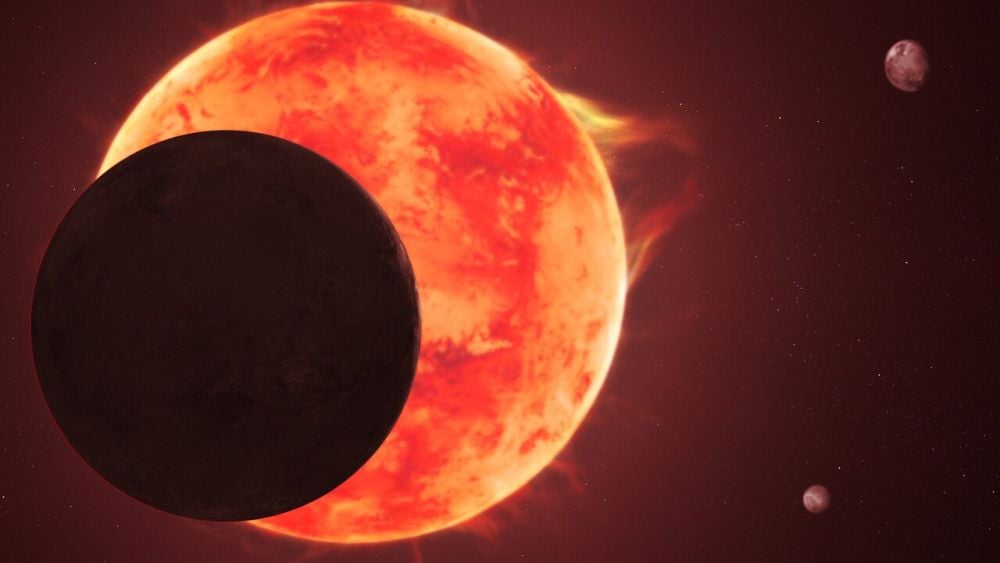
This artist’s concept depicts planet TRAPPIST-1 d passing in front of its turbulent star, with other members of the closely packed system shown in the background. Image Credit: NASA, ESA, CSA, J. Olmsted (STScI)
When global events set our minds to wondering if humanity has what it takes to persist, it's natural to wonder about other worlds, other life, other intelligent species, and if those others might be better suited to survive whatever Great Filters they face. Those are fanciful thoughts, but there's an underpinning of nuts-and-bolts thinking to them. It starts with identifying which planets in habitable zones around other stars might actually be habitable.
That begins with liquid water and a life-friendly atmosphere that can contain it.
The discovery of the TRAPPIST-1 system generated a lot of excitement a few years ago. It contains seven roughly Earth-like worlds, and three or perhaps four of them are in the red dwarf's compact habitable zone. One of them, TRAPPIST-1 d, could host water on its surface, or at least on parts of its surface, according to some research. But without a suitable atmosphere, a planet can't retain surface water, and new observations from the JWST show that TRAPPIST-1 d does not have an Earth-like atmosphere.
The TRAPPIST-1 system compared to our Solar System. TRAPPIST-1 d is on the inner edge of the star's habitable zone.
Image Credit: NASA/JPL-Caltech
The JWST observed two consecutive transits of TRAPPIST-1 d with its NIRSpec/PRISM instrument in November, 2022. Researchers from Canada, the UK, France, and the USA analyzed the data from those transits and concluded that the promising exoplanet does not have an Earth-like atmosphere. Their results are in a paper in The Astrophysical Journal titled "Strict Limits on Potential Secondary Atmospheres on the Temperate Rocky Exo-Earth TRAPPIST-1 d." The lead author is Caroline Piaulet-Ghorayeb of the University of Chicago and Trottier Institute for Research on Exoplanets (IREx) at Université de Montréal.
"While TRAPPIST-1 d may prove a barren rock illuminated by a cruel red star, the outer planets TRAPPIST-1e, f, g, and h, may yet possess thick atmospheres."
- co-author Ryan MacDonald, University of St. Andrews.
"The nearby TRAPPIST-1 system, with its seven small rocky planets orbiting a late-type M8 star, offers an unprecedented opportunity to search for secondary atmospheres on temperate terrestrial worlds," the authors write in their research. "Here we present the first 0.6–5.2 μm NIRSpec/PRISM transmission spectrum of TRAPPIST-1 d from two transits with JWST."
TRAPPIST-1 d is right at the inner edge of TRAPPIST-1's habitable zone. It's a great target for transmission spectroscopy, and these JWST observations provide the first detailed transmission spectrum of the planet's atmosphere. Unfortunately, the spectrum is flat, meaning there are no detectable atmospheric features.
“Ultimately, we want to know if something like the environment we enjoy on Earth can exist elsewhere, and under what conditions. While the James Webb Space Telescope is giving us the ability to explore this question in Earth-sized planets for the first time, at this point we can rule out TRAPPIST-1 d from a list of potential Earth twins or cousins,” said lead author Piaulet-Ghorayeb in a press release.
The JWST failed to detect the types of molecules present in Earth's atmosphere like methane, carbon dioxide, and water. However, that doesn't completely rule out an atmosphere; there are a couple of other possibilities.
“There are a few potential reasons why we don’t detect an atmosphere around TRAPPIST-1 d. It could have an extremely thin atmosphere that is difficult to detect, somewhat like Mars. Alternatively, it could have very thick, high-altitude clouds that are blocking our detection of specific atmospheric signatures — something more like Venus. Or, it could be a barren rock, with no atmosphere at all,” Piaulet-Ghorayeb said.
Studying TRAPPIST-1 d and its atmosphere is about more than just ruling out its habitability. There's a greater scientific endeavor involved.
A visual comparison of Solar System orbits, TRAPPIST-1 orbits, and Galilean moon orbits.
Image Credit: By ESO/O. Furtak - http://www.eso.org/public/images/eso1706b/, CC BY 4.0, https://commons.wikimedia.org/w/index.php?curid=56526718
Red dwarfs, or M dwarfs, like TRAPPIST-1 are common, and are likely the most plentiful type of star in the Milky Way. They're known to host their share of rocky worlds where we can reasonably wonder if life persists. But red dwarfs are also known for their violent flaring, and TRAPPIST-1 is no exception. It flares every couple of days, and each year it emits between four and six superflares. This powerful flaring activity could shred any planetary atmospheres, rendering the TRAPPIST-1 planets inhabitable.
However, there's considerable uncertainty around red dwarf flaring and habitability. Some research shows that the planets couldn't retain atmospheres in the face of the coronal mass ejections coming from the star. But it's at least possible that some of these planets could retain their atmospheres. For example, powerful planetary magnetic fields could provide a protective barrier from the star's flaring. The JWST opens a path to understanding red dwarf flaring effects on atmospheres.
“Webb’s sensitive infrared instruments are allowing us to delve into the atmospheres of these smaller, colder planets for the first time,” said Björn Benneke of IREx at Université de Montréal, a co-author of the study. “We’re really just getting started using Webb to look for atmospheres on Earth-sized planets, and to define the line between planets that can hold onto an atmosphere, and those that cannot.”
The only features in the JWST's spectra are attributed to stellar contamination rather than atmospheric absorption. "Our precise transmission spectrum can be fully explained by stellar contamination alone, and therefore enables us to rule out cloud-free or thick atmosphere scenarios across a wide range of potential atmospheric metallicities," the authors write.
This artist's illustration of TRAPPIST-1 d is from several years ago when scientists wondered about its nature and if it could support liquid water.
Updated Feb. 2018, Public Domain, https://commons.wikimedia.org/w/index.php?curid=76364484
A low molecular weight atmosphere is harder for a planet to retain, and these observations ruled out those types of hydrogen-dominated atmospheres. The observations also ruled out thicker atmospheres like Venus' or Titan's. The only things left are extremely thin atmospheres unlikely to bolster habitability, or atmospheres dominated by high clouds that mask molecular absorption features from the JWST. But the research effectively rules them out.
"Therefore, we conclude that (1) thick cloud-free hydrogen-rich atmospheres are ruled out by our transmission spectrum; (2) thin H2-rich alternatives are strongly disfavored when considering TRAPPIST-1 d in the context of its formation and evolution under stellar irradiation; and (3) high-altitude clouds or hazes are not expected to form on TRAPPIST-1 d if it has a low-metallicity atmosphere," the researchers explain.
This work almost certainly eliminates TRAPPIST-1 d from a list of potentially habitable, water-supporting exoplanets. This is Nature, so TRAPPIST-1 d's elimination isn't absolutely certain. "Our observations cannot yet completely exclude other potential atmosphere scenarios for TRAPPIST-1 d which were predicted in the literature," the authors explain, noting that other research involving climate models hints at the possibility that the tidally-locked planet could form high-altitude water clouds at its terminator, blocking atmospheric absorption signals from view.
But what about the other planets in the system?
“All hope is not lost for atmospheres around the TRAPPIST-1 planets,” Piaulet-Ghorayeb said. “While we didn’t find a big, bold atmospheric signature at planet d, there is still potential for the outer planets to be holding onto a lot of water and other atmospheric components.”
However, the outer planets aren't the juicy scientific targets that planet d is. They're further from the star, and colder. Even the JWST's powerful instruments struggle in those conditions. While detailed spectra aren't available for those worlds, the researchers still reached some conclusion.
"We find that even complete atmosphere loss for TRAPPIST-1 d would not preclude atmosphere presence for the outer HZ planets TRAPPIST-1 e, f, and g," the authors write in their conclusion. Contrary to the inner planets, it's possible that these outer planets held onto their water "even if they initially accreted only a few Earth oceans of volatiles."
“Our detective work is just beginning. While TRAPPIST-1 d may prove a barren rock illuminated by a cruel red star, the outer planets TRAPPIST-1e, f, g, and h, may yet possess thick atmospheres," added Ryan MacDonald, a co-author of the paper, now at the University of St Andrews in the United Kingdom, and previously at the University of Michigan. “Thanks to Webb we now know that TRAPPIST-1 d is a far cry from a hospitable world. We're learning that the Earth is even more special in the cosmos."
Being a human being means bearing witness to humanity's greatest, most triumphant moments of accomplishment and unity, but also to the depraved actions we take against one another. The minds of thinking people are bound to wonder if there are other worlds out there that host life. Each potentially habitable world is a glimmer of hope that humans, with all their struggles, are not the only intelligent species out there.
If we look to the heavens, and to exoplanets, for some kind of reprieve from humanity's troubles, TRAPPIST-1 d won't provide it. If this research is correct, its stricken from the list of hope-inspiring exoplanets.
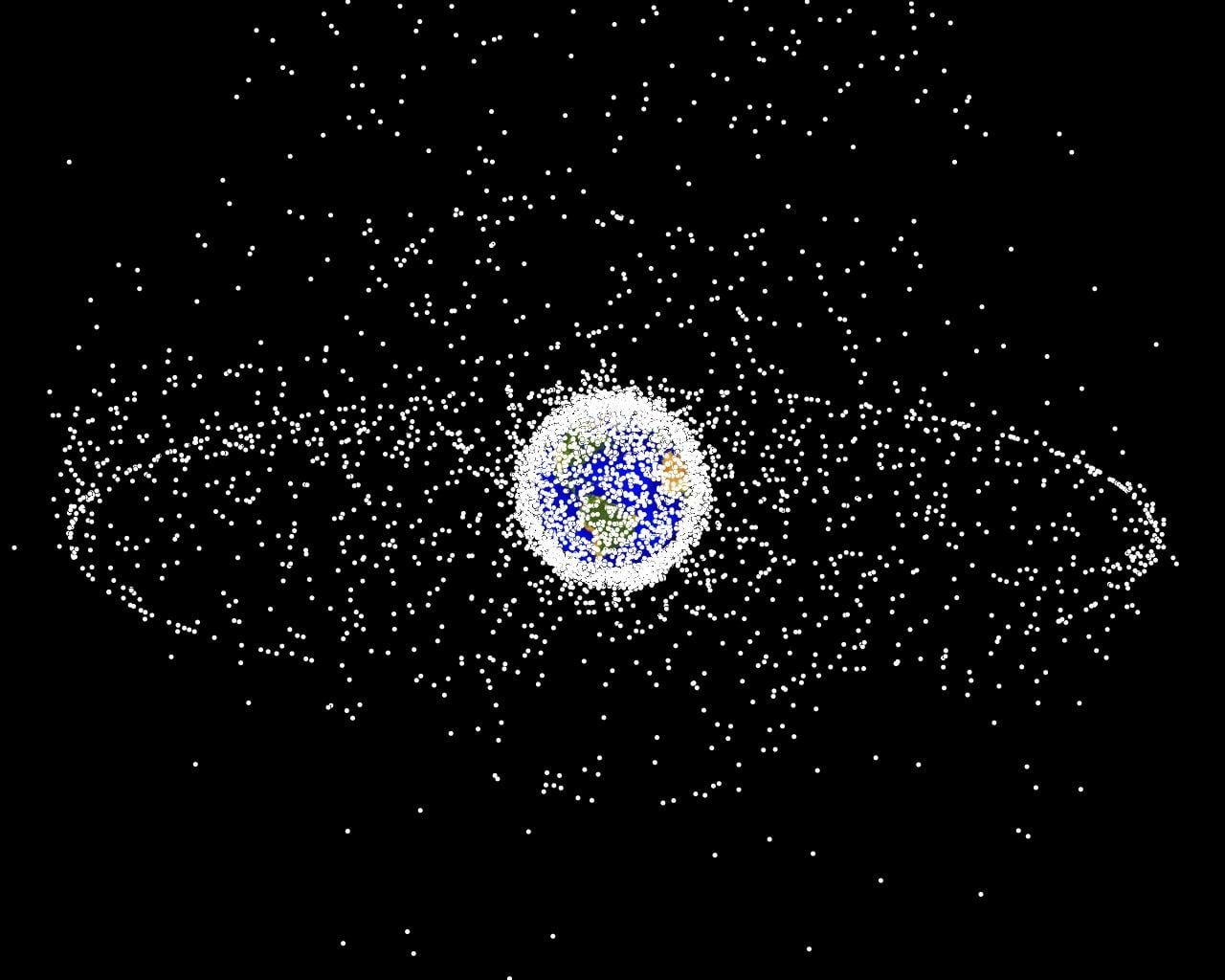
NASA computer generated image of debris objects in Earth orbit, c. 2005
The numbers paint a stark picture of our orbital traffic problem. More than 11,000 active satellites currently circle Earth, with thousands more planned for launch in coming years. Even more concerning are the over 1.2 million pieces of space debris larger than one centimetre hurtling through space at incredible speeds. At those velocities, even a paint chip can damage a spacecraft, while larger debris can destroy entire satellites.
This growing congestion has turned collision avoidance into a daily headache for satellite operators worldwide. Currently, teams of specialists must manually assess threats, calculate risks, and coordinate with other operators when collisions seem likely. This process is time consuming, labor intensive, and prone to communication breakdowns that can complicate emergency responses.
That is where CREAM comes in, it aims to revolutionise this chaotic process by automating most collision avoidance activities. The system can evaluate potential crashes, generate precise manoeuvre plans, and support decision making with minimal human intervention. Think of it as an air traffic control system for space, but with artificial intelligence handling much of the complex coordination.
The launch of yet more satellites into Earth orbit onboard a Falcon 9 rocket delivering 60 Starlink satellites to orbit on November 11, 2019.
(Credit : US Air Force)
One of CREAM's most innovative features is its ability to connect different types of organisations involved in space operations. Satellite operators, space monitoring services, regulators, and observers can all communicate through the system, streamlining what was previously a fragmented and often frustrating process.
The system goes even further by facilitating negotiations between operators when potential collisions involve two active satellites rather than debris. If operators disagree on the best solution, CREAM can refer the dispute to mediation services, ensuring fair and transparent resolution.
Currently, CREAM exists as a ground-based prototype system developed by GMV and Guardtime. This version can already provide collision alerts and generate actionable avoidance manoeuvres that ground crews can implement. However, the real breakthrough will come when CREAM moves into orbit itself.
View of an orbital debris hole made in the panel of the Solar Max satellite
(Credit : NASA)
The project is preparing for expanded pilot testing while simultaneously developing space based versions. These include "piggyback missions" where CREAM will ride aboard other spacecraft as a digital payload, plus a dedicated demonstration mission to test the system's capabilities in the harsh environment of space.
Beyond preventing immediate collisions, CREAM addresses a fundamental challenge in space governance. Establishing "rules of the road" for space traffic has always faced a chicken and egg problem; you need both international agreement on the rules and the technology to enforce them.
CREAM provides that missing technological foundation. The system offers standardised tools that help operators follow best practices while giving regulators ways to monitor compliance. Its flexible design allows non-technical users to update standards and rules as international norms evolve. This adaptability ensures CREAM will remain relevant as space technology advances and new challenges emerge. Rather than becoming obsolete, the system can grow and adapt alongside our expanding presence in space.
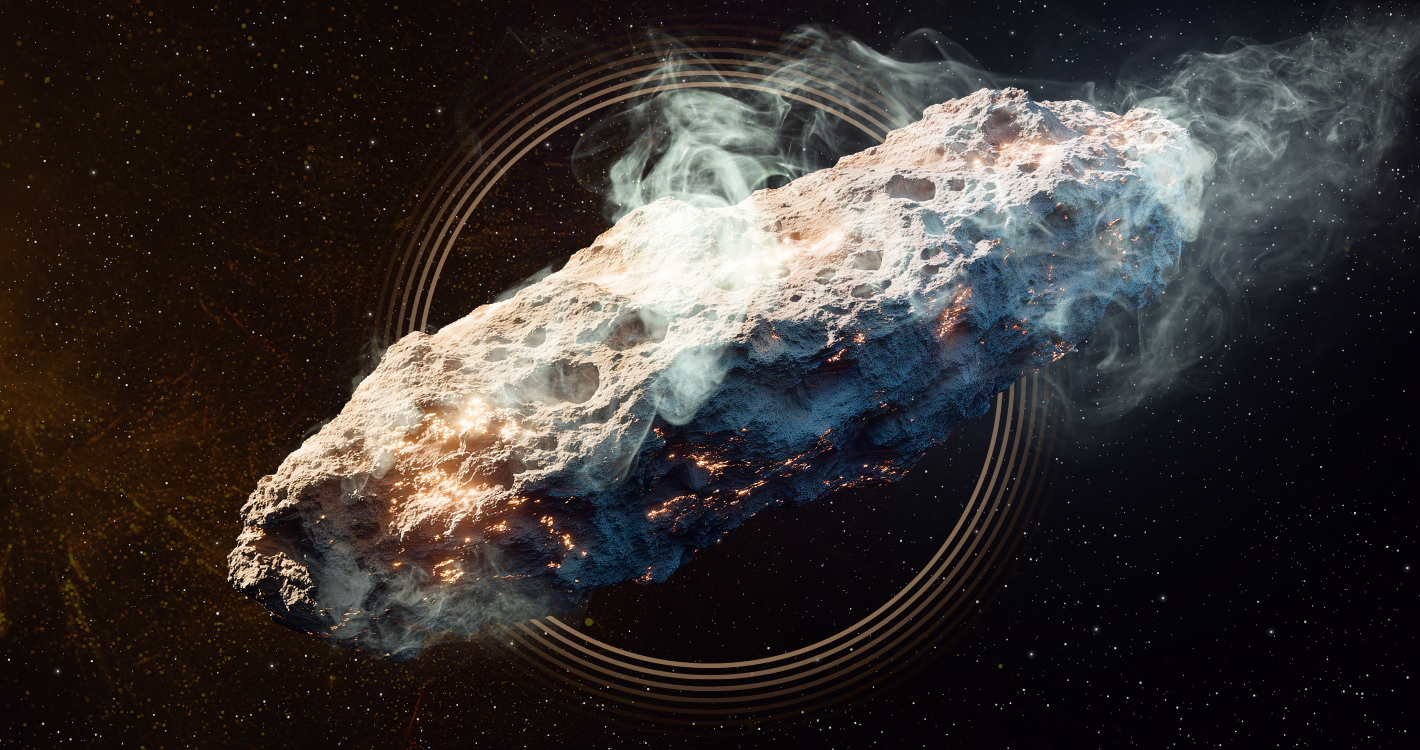
The 3I/ATLAS object has become a real sensation in modern astronomy. Most scientists agree that it is a comet that has come to us from another star. Many popular publications write that it is even more interesting, because it may turn out to be an alien probe. Let’s figure out what’s what.
3I/ATLAS
Interstellar guest
On July 1, 2025, the ATLAS robotic telescope system discovered an object beyond Jupiter’s orbit that was moving quite rapidly against the backdrop of stars. Such behavior typically indicates a comet that has originated from the Oort cloud, located at the outskirts of the Solar System. However, no cometary activity was detected at first.
However, the speed and trajectory of this object immediately made it one of the major astronomical sensations of 2025, and soon even people who were far removed from observing the sky began to talk about it. It turned out that the comet, which was soon named 3I/ATLAS (C/2025 N1), had flown in from interstellar space.
The “3I” in the name indicates that this is the third macroscopic interstellar object known to humans. The first two were the asteroid Oumuamua (1I/ʻOumuamua) and the comet Borisov (2I/Borisov), discovered in 2017 and 2019, respectively. The fact that interstellar visitors were not recorded before, but now appear so abundantly, may frighten some people. But in reality, there is nothing mystical about it.
Over the past few decades, astronomical technology has advanced rapidly, with the emergence of large survey telescopes, space observatories, robotic instruments, and a network of enthusiasts who constantly exchange information on the Internet. Humanity has reached a level of observation where it can see things in the sky that previously went unnoticed.
Borisov comet. Source: Wikipedia
So, the appearance of the third interstellar object was eagerly awaited. Immediately after the announcement of the discovery of 3I/ATLAS, several powerful astronomical instruments were directed at it, thanks to which scientists were able to establish fairly quickly that it was indeed a comet and learn enough about it.
Comet characteristics
The first thing that interested scientists in 3I/ATLAS were its speed. In the Oumuamua and Borisov comets, it was significantly higher than in bodies with aphelion somewhere at the edge of the Solar System: 26 and 32 km/s, respectively.
However, in the case of 3I/ATLAS, this value was already 58 km/s at the moment when it entered the Solar System. That is, even then, it was flying a distance equal to the distance from Earth to the Sun in about a month. And this speed has only increased since then because now the gravity of our star acts on this body.
An interstellar comet in a photograph taken on July 2. Source: Wikipedia
Such high speed determined the trajectory, which turned out to be too unusual for objects in the Solar System. Its eccentricity is 6.141. Some may say that eccentricity cannot exceed unity. But this only applies to closed elliptical orbits, which are possessed by all bodies that constantly revolve around the Sun.However, eccentricity is also present in parabolic and hyperbolic trajectories, and the latter includes the orbit followed by 3I/ATLAS. Moreover, its eccentricity is so great that the trajectory resembles a straight line rather than a curve.
The second feature of 3I/ATLAS that caught the attention of scientists is the section of the sky from which the comet came to us. It is located in the constellation Sagittarius, close enough to the center of the Milky Way. At the same time, it has a sufficiently high vertical velocity component relative to the plane of our Galaxy’s disk, meaning that the comet flies through it rather than moving within it all the time.
The section of the sky where 3I/ATLAS was discovered. Source: Wikipedia
All this indicates that it originated near a star in the thick disk of the Milky Way. And they, as a rule, belong to the most ancient generations of stars. It was from this that perhaps the most sensational statement about 3I/ATLAS was derived, which is considered scientifically true and recognized by most scientists. This interstellar comet is older than the Sun. Its age is estimated to be between 7.6 and 13 billion years, although there is another estimate that it formed somewhere between 3 and 11 billion years ago.
In addition, throughout July, scientists observed 3I/ATLAS and confirmed that it exhibits normal cometary activity, i.e., it forms a coma and something resembling a tail. This, in turn, allowed them to conduct spectroscopic studies and confirm that it consists mainly of water and contains hydroxyl ions, OH. In addition, carbon dioxide and carbon monoxide were found on it, and it seems that their evaporation is responsible for the formation of the comet’s shell.
However, cyanides, oxygen, or complex organic molecules, which are found in comets that constantly revolve around the Sun, have not yet been detected in 3I/ATLAS. Instead, there is a lot of dust, and its particles are quite large, with a diameter of about 1 micron.
There is one interesting fact about 3I/ATLAS related to dust. When archival images from various telescopes were examined, an interstellar comet was found in images taken by the TESS satellite in May of this year. It operates in the infrared range, and its images show that this celestial body, even then, far beyond Jupiter’s orbit, was ejecting matter containing dust.
Image 3I/ATLAS taken by the Hubble Telescope. Source: Wikipedia
Finally, scientists were able to calculate the diameter of the comet’s nucleus with some accuracy. In early studies, it was estimated to be between 10 and 20 km. Then, thanks to the Hubble Space Telescope, it was reduced to a range of 0.32 to 5.6 km. But scientists disagree on whether its size is closer to the upper or lower limit. Some studies show that the nucleus is less than a kilometer in diameter, while others show that it is larger.
Aliens
It would be surprising if the appearance of 3I/ATLAS did not spark rumors that it was an alien spacecraft. This idea was expressed on social media almost from the very first days after the discovery, and on July 16, a certain Avi Loeb, a real professor of astrophysics at Harvard University, joined the discussion. He published an article in which he presented several entirely scientific arguments in favor of the idea that it could be an interstellar probe from aliens.
Of course, this sparked a flurry of publications speculating that this was a real alien spacecraft and that we should expect aliens to land in late autumn. Loeb has a rather scandalous reputation in academic circles: he has many high-quality scientific works to his credit, but he often makes overly bold predictions that are mostly unconfirmed.
The alien probe would not be much larger than Voyager-1. Source: www.space.com
After such a sensational statement, other scientists rushed to refute the words of Loeb and his colleagues. Their assumptions were mainly based on the fact that the orbit of 3I/ATLAS lies almost in the plane of the ecliptic, so it will pass close enough to several inner planets, which may indicate plans to explore them or even land on them.
In addition, Loeb stated that the object did not exhibit classic cometary activity. He was reasonably told that at the time of his statements, the object was far enough away from us that we could not see any emissions from it. Indeed, 3I/ATLAS subsequently showed quite standard cometary activity.
In addition, scientists pointed out that if it were an extraterrestrial probe, it would be a small metal object that we would see, at best, as it approached Mars’ orbit, but certainly not at a distance greater than 4 AU.
As for the comet’s orbit, although it is close to the ecliptic, it is still inclined at an angle of 5° relative to it, which may well be a coincidence. In general, its passage within the system deserves separate consideration.
Orbits of the Sun and 3I/ATLAS around the center of the Galaxy. Source: Wikipedia
Comet flight
Speaking about the possibility that there are aliens on 3I/ATLAS, it is important to note that at the moment of its closest approach to the Sun, Earth will be on the other side of it. Therefore, to approach it, a hypothetical alien spacecraft would have to detach itself from the ice mountain and perform a braking maneuver.
Many of those who like Loeb’s hypothesis says that all the prerequisites are in place because the comet’s trajectory is such that it will approach several large planets at once, and it will be possible to perform a gravitational maneuver near them.
However, let us consider what these approaches will look like. The first object on the path of 3I/ATLAS will be Mars. The comet will approach it at a minimum distance of 29 million kilometers. This is 75 times the average distance from Earth to the Moon. This is somewhat excessive for a gravitational maneuver.
Then, on October 29, 3I/ATLAS will pass through perihelion – the point closest to the Sun. At that time, it will be 1.36 AU away from the Sun. This means that it will be inside the orbit of Mars, but still very far from the orbit of our planet, which at that moment will be on the other side of our star.
Shortly after that, on November 3, the comet will pass at its closest distance to Venus, but that will still be 97 million km away. Earth regularly comes much closer to our neighbor. What gravitational maneuvers can be expected in this case remains unknown.
After that, Earth will appear in front of 3I/ATLAS, which will already be moving away from the Sun. The maximum approach will occur on December 19, and the distance will be 1.8 AU, which means that the interstellar visitor will be much farther away from us than the Sun. Finally, on March 16, 2026, 3I/ATLAS will approach a planet that could give it a nice gravitational maneuver – Jupiter. However, this will happen after it has flown through the entire inner Solar System and will have to turn back and catch up with Earth, which at that time will again be on the opposite side of the Sun from it. And the distance from the gas giant will be 53 million km. Which is quite a lot.
The 3I/ATLAS movement across the starry sky. Source: Wikipedia
Of course, we can assume that the aliens’ spaceship will detach from it precisely during its approach to Mars, or during its passage through perihelion when we cannot see it. In this case, it will have to slow down by more than 20 km/s.
And even so, this will not help the aliens much, because the trajectory will remain retrograde relative to the direction of the planets’ rotation around the Sun. So, if the aliens who flew to us billions of years ago have a plan that is a little more complicated than becoming kamikaze pilots, they will have to slow down again, spending a lot of energy on it. And the aliens still need to get that energy from somewhere.
So, most likely, we should not expect any extraterrestrial visitors at the end of the year. And we will not be able to admire the interstellar comet itself. By the time it emerges from behind the Sun, its brightness will already be approximately 11 stellar magnitudes, meaning it will be inaccessible even to small amateur instruments, let alone the naked eye.
And it will not be possible to launch a spacecraft to study it up close. Calculations show that to catch up with it, it would have to launch from Earth, and this would be a mission at the limit of our capabilities in terms of accelerating spacecraft. Better yet, it would have to launch from Mars’ orbit.
But scientists continue to study 3I/ATLAS. Now we can be sure that it is not the last one, and in a few years, we can expect the next interstellar visitor. And perhaps by then, we will be able to prepare a device that will take a closer look at it.
Illustration of a giant star being torn apart by a black hole. Credit: CfA
Supernova SN 2023zkd was discovered in July 2023 using the Zwicky Transient Facility telescope in California. Artificial intelligence, which analyzes data on stellar explosions on a daily basis, marked it due to its unusual behavior.
“The open supernova had two strange features. First, it seemed to explode twice: first it became brighter, then dimmed, and then flared up again. Secondly, supernovae usually reach their peak brightness in a matter of days or weeks, but in this case, the star gradually became brighter over several years before exploding,” said lead author Alexander Gagliano.
Death dance with a black hole
Researchers suggest that the strange behavior can be explained by the star falling into the gravitational trap of a black hole. Two objects began to approach each other, causing enormous gravitational stress, which led to the premature explosion of the star.
There is another scenario: perhaps the black hole completely tore the star apart before it had a chance to explode on its own. In this case, the stellar debris collided with the gas surrounding the black hole, triggering a flare.
How artificial intelligence helps find anomalies
The LAISS system, which detected SN 2023zkd, analyzes data on the luminosity of supernovae and their galaxies, comparing them with known samples. If something unusual is found, a specially configured bot notifies scientists.
“It’s an incredible instrument for finding rare phenomena,” says Gagliano. Thanks to such technologies, astronomers are discovering more and more exotic cosmic events.
The discovery of SN 2023zkd is just the beginning. Studying such supernovae will help us better understand how stars and black holes interact.
The Perseverance rover photographed a rock with a very unusual shape. It resembles a weathered medieval helmet.
A helmet-shaped rock found by the Perseverance rover. Source: NASA/JPL-Caltech/ASU
The image of this unusual formation was taken on August 5, 2025, using the Mastcam-Z instrument. It consists of a pair of cameras mounted on the Perseverance mast. They enable scientists to obtain high-resolution stereo images and study unusual objects, such as this rock covered with spherical formations, from a distance.
The rock has a pointed peak and a pitted, nodular texture, which makes it look like a helmet forged many centuries ago. On Earth, similar nodular textures can form as a result of chemical weathering, mineral precipitation, or even volcanic processes. Perseverance already found a similar rock in March 2025.
It was these spherical formations that intrigued scientists. The rock consists almost entirely of them. Researchers suggest that in some rocks found on Mars, these spherical particles formed when groundwater passed through pores in sedimentary rocks. But they are not sure that all of them were formed in this way.
The Perseverance science team will continue to analyze other rocks in search of answers to this mystery of Martian geology. Studying them will help reconstruct the environmental history of the Red Planet, showing how wind, water, and internal processes have shaped its landscapes over billions of years.
Source: NASA/JPL-Caltech/ASU/Rogers Fund, 1904
It is also worth noting that the “helmet” is a new addition to the growing collection of strange rocks and formations found on Mars: from a “doorway” to rocks shaped like avocados and ducks. All of these are examples of a phenomenon known as pareidolia. This describes the human brain’s tendency to superimpose familiar images onto random visual data — whether it be a face on the Moon or a Martian sphinx.
De Mysteries van de Bermudadriehoek, UFO’s en Verbindingen met Atlantis
De Bermudadriehoek, ook wel bekend als de “Driehoek van de Verloren Zenders”, is een gebied in de Atlantische Oceaan dat zich uitstrekt tussen Miami, Bermuda en Puerto Rico. Sinds de 20e eeuw hebben talloze verhalen de ronde gedaan over mysterieuze verdwijningen van schepen en vliegtuigen binnen dit gebied. Deze fenomenen hebben de menselijke nieuwsgierigheid gewekt en geleid tot een breed scala aan theorieën, variërend van natuurlijke oorzaken tot bovennatuurlijke en paranormale verklaringen. Recentelijk is ook de connectie met UFO-waarnemingen en de legende van Atlantis in de discussie betrokken, waardoor de mysteries rondom de Bermudadriehoek een complex en intrigerend onderwerp vormen dat wetenschap, mythologie en pseudowetenschap met elkaar verbindt.
De geschiedenis en waarnemingen
De eerste berichten over onverklaarbare incidenten in de Bermudadriehoek dateren uit de 19e eeuw, maar de populariteit nam sterk toe na de publicatie van het artikel “The Deadly Bermuda Triangle” in 1964, en de publicatie van het boek “The Bermuda Triangle” door Charles Berlitz in 1974. Volgens deze bronnen zouden honderden schepen en vliegtuigen binnen dit gebied zijn verdwenen zonder duidelijke oorzaak. De bekendste incidenten omvatten de verdwijning van de USS Cyclops in 1918, de vlucht van Flight 19 in 1945, en de verloren Boeing 777 in 2015.
Wetenschappelijk onderzoek naar deze incidenten heeft echter aangetoond dat veel van de vermeende verdwijningen kunnen worden verklaard door natuurlijke oorzaken. Bijvoorbeeld, snel veranderende weersomstandigheden, onderwaterstromingen, menselijke fouten en technische storingen spelen een significante rol. De regio staat bekend om zijn hete wateren en snel bewegende stormen, wat de navigatie bemoeilijkt. Daarnaast is het gebied een drukke scheepvaartroute, waardoor het statistisch gezien onvermijdelijk is dat er ongevallen plaatsvinden.
Natuurlijke verklaringen en wetenschappelijke benadering
Wetenschappers benadrukken dat de vermeende mysterieuze verdwijningen grotendeels kunnen worden verklaard door natuurlijke factoren en menselijke fouten. Onderwatergeologie toont aan dat de regio gekenmerkt wordt door zogeheten “muren” en “snelstromingen”, die schepen kunnen verrassen en doen kapseizen. Bovendien kunnen onderwatergeulen en riffen scheepswrakken veroorzaken. Ook de aanwezigheid van methaanhydraatgaten, waarbij gas uit de zeebodem vrij komt en het water minder dicht maakt, kan leiden tot plotselinge verzakkingen van schepen.
Wat betreft vliegtuigen, worden storingen vaak toegeschreven aan onvoorspelbare weersomstandigheden, zoals onweersbuien en turbulentie. De menselijke factor speelt eveneens een rol, vooral gezien de hoge verkeersdrukte in het gebied. De combinatie van natuurlijke en menselijke factoren verklaart grotendeels de incidenten, waardoor het idee van een bovennatuurlijk mysterie wordt onderuit gehaald.
UFO’s en buitenaardse theorieën
Naast de natuurlijke verklaring bestaan er theorieën die de rol van UFO’s en buitenaardse wezens in de mysteries van de Bermudadriehoek suggereren. Aanvankelijk werden waarnemingen van onverklaarbare vliegende objecten vaak gerelateerd aan de legendes over buitenaardse bezoeken. Sommige onderzoekers beweren dat de anomalieën in het gebied mogelijk het gevolg zijn van buitenaardse activiteit, zoals het observeren of zelfs het kidnappen van mensen en schepen.
Deze theorieën worden vaak ondersteund door anekdotisch bewijs van getuigen die vreemde lichten en objecten in de lucht hebben gezien. UFO-onderzoekers wijzen op de frequentie van deze waarnemingen in de regio en suggereren dat de anomalieën niet volledig kunnen worden verklaard door natuurlijke oorzaken. Echter, wetenschappelijke consensus blijft sceptisch, omdat er geen concreet bewijs is dat UFO’s daadwerkelijk betrokken zijn bij de verdwij
ningen in de Bermudadriehoek. Desalniettemin blijven deze theorieën populair onder het grote publiek en dragen ze bij aan de mystiek rondom het gebied. Sommige onderzoekers speculeren dat de regio mogelijk een soort portaal of energetisch knooppunt zou kunnen zijn, waar bovennatuurlijke of buitenaardse krachten zich manifesteren. Hoewel deze ideeën fascinerend zijn, ontbreekt het wetenschappelijke bewijs om deze te ondersteunen en blijven ze binnen het domein van pseudowetenschap en speculatie.
De connectie met Atlantis en de mythevorming
Een andere intrigerende dimensie die vaak in verband wordt gebracht met de Bermudadriehoek is de legende van Atlantis. Volgens sommige theorieën zou de ondergang van de mythische beschaving verband kunnen houden met de mysterieuze gebeurtenissen in dit gebied. De veronderstelde verbindingen worden vooral gesuggereerd door de aanwezigheid van onderwaterstructuren en artefacten die mogelijk op het continent Atlantis wijzen.
De mythe van Atlantis, zoals beschreven door de Griekse filosoof Plato, beschrijft een geavanceerde beschaving die onder water zou zijn verdwenen na een catastrofale gebeurtenis. Sommige onderzoekers en pseudowetenschappers geloven dat deze gebeurtenis mogelijk plaatsvond in de buurt van de Bermudadriehoek, en dat de anomalieën en verdwijningen daar verband mee houden. Ze wijzen op onderwaterstructuren die lijken op restanten van oude beschavingen en beweren dat deze bewijzen zouden kunnen zijn voor een verloren stad of continent.
Echter, archeologisch bewijs voor het bestaan van Atlantis is uiterst beperkt en wordt door de meeste wetenschappers als niet overtuigend beschouwd. De connectie tussen Atlantis en de Bermudadriehoek blijft dus grotendeels speculatief en onderdeel van de mythische narratieven die de regio omringen. Niettemin blijft de fascineratie voor een mogelijke onderwater- of ondergrondse lost city een krachtig element in de popularisering van de mysteries van de regio.
Moderne wetenschappelijke inzichten en technologische ontwikkelingen
In de afgelopen decennia hebben technologische vooruitgang en wetenschappelijk onderzoek geleid tot een beter begrip van de fenomenen in de Bermudadriehoek. Satellietbeelden, sonar en diepzeeonderzoeken hebben aangetoond dat veel van de vermeende mysteries verklaarbaar zijn door natuurlijke processen en geologische kenmerken. Bijvoorbeeld, het zogenaamde “Bermuda Triangle Mystery” wordt nu vaak toegeschreven aan een combinatie van menselijke fouten, weersomstandigheden en natuurlijke geologische structuren.
Daarnaast heeft de ontwikkeling van navigatiesystemen zoals GPS en radar de veiligheid van scheepvaart en luchtvaart aanzienlijk verbeterd. Hierdoor is het aantal ongevallen in het gebied afgenomen en wordt de regio niet langer beschouwd als bijzonder gevaarlijk. Wetenschappers benadrukken dat de angst voor het onbekende vaak versterkt wordt door sensationalistische media en pseudo-wetenschappelijke publicaties, en dat een rationele, op bewijs gebaseerde benadering de beste manier is om de mysteries te begrijpen.
De rol van pseudowetenschap en de media
Ondanks de wetenschappelijke verklaringen blijven pseudowetenschappelijke theorieën en sensationele verhalen de publieke verbeelding voeden. Films, boeken en documentaires over de Bermuda Triangle brengen de mythe levend en versterken het idee dat er onverklaarbare krachten in het spel zijn. Sommige auteurs en onderzoekers maken gebruik van de angst en nieuwsgierigheid van mensen om commerciële belangen te dienen, door bijvoorbeeld onverklaarbare gebeurtenissen te dramatiseren of te overdrijven. Deze sensationalistische benaderingen leiden vaak tot een vervorming van de feiten en een verdeling tussen feit en fictie, wat het begrip van de werkelijke oorzaken bemoeilijkt.
De media spelen hierbij een grote rol door het creëren van een sensationeel narratief dat niet altijd overeenkomt met de feiten. Door het benadrukken van mysterieuze en onverklaarbare gebeurtenissen wordt de aandacht van het publiek getrokken, vaak zonder kritische reflectie op de betrouwbaarheid van de bronnen. Sensatiejournalistiek en populaire documentaires laten zelden ruimte voor wetenschappelijke nuance en verklaringen gebaseerd op empirisch bewijs. Hierdoor worden complottheorieën en pseudowetenschappelijke ideeën als plausibele alternatieven gepresenteerd, wat de verwarring en scepsis onder de bevolking versterkt.
Deze tendens heeft geleid tot een cultuur waarin het mysterieuze en het onverklaarbare aantrekkelijker lijken dan de wetenschappelijke verklaringen. Het bevordert een wereldbeeld waarin de Bermuda Triangle niet slechts een gebied is waar natuurlijke en technische oorzaken kunnen worden gevonden, maar een plek vol verborgen krachten en buitenaardse invloeden. Dit versterkt de mythe en maakt het moeilijk voor het publiek om onderscheid te maken tussen feit en fictie. Het gevaar hiervan is dat het geloof in pseudowetenschap en complottheorieën kan leiden tot desinformatie en het ondermijnen van wetenschappelijke kennis.
Het is daarom essentieel dat wetenschappers en journalisten samenwerken om correcte informatie te verspreiden en kritisch denken te stimuleren. Educatie over de wetenschappelijke methode en het belang van bewijs kan helpen om de invloed van sensationele verhalen te beperken. Door transparant te zijn over de beperkingen en onzekerheden binnen de wetenschap, kunnen we het vertrouwen in empirisch onderzoek behouden en voorkomen dat pseudowetenschap een dominante rol krijgt in de publieke perceptie. Alleen door kritisch te blijven en bewust te zijn van de rol die media en pseudowetenschap spelen, kunnen we een meer geïnformeerde en realistische kijk op de mysteries van de Bermuda Driehoek en gerelateerde onderwerpen ontwikkelen.
BESLUIT
De verkenning van de mysteries rondom de Bermudadriehoek, UFO-waarnemingen en de mogelijke connecties met de legendarische beschaving van Atlantis biedt een fascinerend inzicht in de complexiteit en het mysterie dat deze onderwerpen omringt. Hoewel veel van de verhalen en theorieën aanvankelijk op speculatie en anekdotisch bewijs leunen, ontstaat er door grondig onderzoek en kritische analyse een genuanceerder beeld. De Bermudadriehoek wordt vaak geassocieerd met mysterieuze verdwijningen van schepen en vliegtuigen, maar wetenschappelijke verklaringen zoals weersomstandigheden, menselijke fouten en elektromagnetische fenomenen bieden vaak voldoende uitleg. Toch blijven er vragen bestaan die niet volledig beantwoord kunnen worden, wat bijdraagt aan de aura van mysterie.
Wat UFO’s betreft, tonen de vele waarnemingen en rapportages dat deze verschijnselen de verbeelding blijven prikkelen en vaak aanleiding geven tot speculaties over buitenaardse betrokkenheid. Hoewel er geen definitief bewijs is voor buitenaardse visitaties, blijven deze fenomenen een interessant onderzoeksgebied dat onze perceptie van de werkelijkheid uitdaagt.
De mogelijke verbindingen met Atlantis voegen een extra dimensie toe aan de discussie. Atlantis fungeert als symbool voor een geavanceerde beschaving die mogelijk verbonden is met onderwater- en aardse mysteries. Sommige theorieën suggereren dat de kennis en technologie van Atlantis een rol kunnen spelen bij de verklaringen voor de onverklaarbare verschijnselen in de Bermudadriehoek en de UFO-waarnemingen.
Kortom, de dissertatie benadrukt dat hoewel veel mysteries onopgelost blijven, het belang ligt in het blijven onderzoeken en kritisch evalueren van de beschikbare bewijzen. Het zoeken naar antwoorden op deze intrigerende vragen stimuleert niet alleen onze nieuwsgierigheid, maar draagt ook bij aan een dieper begrip van de wereld en haar verborgen geheimen. De mysteries rondom de Bermudadriehoek, UFO’s en Atlantis blijven een bron van inspiratie en onderzoek, en wellicht ligt de sleutel tot hun oplossing in de combinatie van wetenschap, openheid en creatieve verbeelding.
A Vulcan rocket lifts off from Space Launch Complex-41 on Aug. 12. (Courtesy of the United Launch Alliance)
Massachusetts residents who looked up at the night sky late Tuesday might've seen something that sent them into an X-Files-esque spiral of curiosity: a bizarrely lit-up shape, almost like a bright cloud, shimmering across the sky in unmistakable UFO fashion.
And while it wasn't an alien craft or even an unidentified flying object, it was indeed a partially classified government operation.
The strange light and shapes seen were the Vulcan rocket, launched by United Launch Alliance in Cape Canaveral, Florida, on behalf of the U.S. Space Force.
It was no routine rocket launch: It marked the first "national security"-related launch of materials by the powerful Vulcan rocket into orbit, officials said.
The specifics of the rocket's payload are classified and were not disclosed by Space Force, but officials said it included an experimental military navigation satellite along with other items, and that they were successfully put in orbit around the Earth.
The rocket was launched at 8:56 p.m., and reports of sightings came in from across much of the eastern United States and the Midwest shortly thereafter.
“Vulcan is a catalyst to supporting national defense in the strategic warfighting domain of space,” Tory Bruno, United Launch Alliance's president and CEO, said in a statement. “Vulcan is the world’s most capable, high-energy orbit rocket meeting the demand for expanding space competencies.
Vulcan provides flexibility to our nation’s decision makers as we combat our adversaries' attempts to disrupt the U.S. in space operations.
He continued, "This launch begins a new era in national space security.”
The rocket traveled seven hours and covered some 22,000 miles to complete its mission, officials said.
Why Are Pyramids Everywhere? A Global Pattern or Universal Logic?
Why are pyramids everywhere? This is a beautiful photo of the Great Pyramid at sunset.
Pyramids have captivated human imagination for centuries, appearing in a broad spectrum of cultures across every continent—Egypt, Mesoamerica, Mesopotamia, Africa, Asia, and regions where direct contact between civilizations seems unlikely. Their widespread occurrence prompts profound questions about their origins, functions, and possible underlying principles. Are these structures coincidental, products of convergent evolution driven by similar practical needs, or do they hint at a deeper, perhaps lost, global connection? This comprehensive analysis aims to explore the phenomenon of pyramids worldwide, examining their origins, cultural significance, and the potential universal architectural logic that underpins their recurrence.
Why are pyramids everywhere? In the Egyptian desert, the pyramids stand still under a shifting sky. Their limestone blocks, weathered and pale, still hold their lines after more than four thousand years. The shape is deliberate: wide at the base, narrowing as it climbs, ending in a point that once caught the sun.
Half a world away, the jungle presses against broken stone. In Guatemala, temple steps rise above the trees, stacked high by Maya masons who built for ceremony, not burial. Their pyramids were climbed, not sealed. The shape is familiar, but the meaning was different.
The most well-known of these is the tomb of Qin Shi Huang, which remains sealed beneath a massive earthen pyramid surrounded by a buried army of terracotta soldiers.
These structures have no shared blueprint. Their builders never met, never traded, never wrote of one another. They spoke different languages and worshipped different gods. Still, the shape repeats. From the Andes to the Nile, from the Sahara to the Yangtze, the pyramid keeps showing up, always rising, always reaching.
The Ubiquity of Pyramids: A Global Phenomenon
Architectural forms resembling pyramids have been discovered on every inhabited continent, underscoring their status as a truly global phenomenon. The Egyptian pyramids, especially the Great Pyramid of Giza, dating back to approximately 2580–2560 BCE, are among the most iconic symbols of ancient architecture. Meanwhile, civilizations in Mesoamerica, including the Maya and Aztecs, constructed step pyramids such as El Castillo at Chichen Itza and the Templo Mayor, serving religious and ceremonial purposes. In Africa, the Nubian pyramids of Sudan, built between circa 800 BCE and 1500 CE, feature steep-sided structures that differ from their Egyptian counterparts but share the pyramidal form. Southeast Asia boasts structures like Borobudur in Indonesia, a massive stepped pyramid that functions as a Buddhist pilgrimage site, while the ancient Mesopotamians built ziggurats—terraced platforms with pyramidal outlines serving as temples. Even in China, the mausoleum of Emperor Jing of Han exhibits pyramidal features.
This extensive distribution raises critical questions: Is this mere coincidence, or does it reflect some universal principle or shared human instinct? The widespread nature of pyramids across cultures and epochs suggests an underlying pattern that warrants scientific and cultural inquiry.
The shape that touches the sky
The pyramid is not just a symbol. It’s a shape grounded in physics and built from the simplest logic of weight and balance. A wide base. Sloping sides. As the structure rises, it narrows. That design doesn’t happen by accident. When you stack stone or mudbrick and let gravity do the rest, the most reliable shape you get is a pyramid. The weight holds itself together. It pushes down, not out. And because of that, pyramids can stand for thousands of years without columns or internal framing. They’re not easy to build, but we are told and reassured by mainstream experts that they don’t require complex tools, just labor, patience, and a plan.
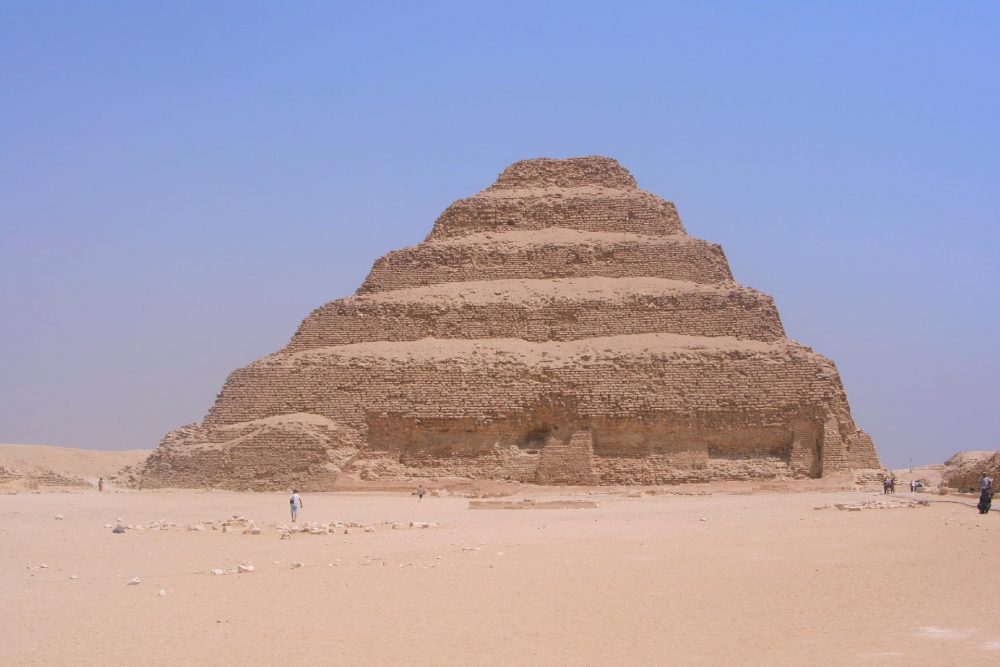
In Egypt, the earliest pyramid-like structures are believed to have begun as mastabas: rectangular tombs with flat tops and sloped sides. Around 2600 BCE, that changed. Djoser, a king of Egypt’s Third Dynasty, commissioned his architect, Imhotep, to stack mastabas into tiers. That experiment became the Step Pyramid at Saqqara, the first pyramid in Egypt. Later builders and architects are believed to have refined the idea, smoothing the angles and expanding the scale. By the time of Khufu, the shape had reached its peak: the Great Pyramid at Giza, aligned almost perfectly to the cardinal points, built from more than two million blocks of stone.
Step pyramid of Djoser. Credit: Jumpstory
Some of those blocks are still difficult to explain. The core limestone came from quarries nearby, but the smooth outer casing, now mostly gone, came from Tura, across the river. The granite beams above the King’s Chamber, some weighing more than 50 tons, were transported from Aswan, over 800 kilometers to the south. No records explain how they were moved. Ramps are the leading theory, but no ramp system found so far fully accounts for the scale, precision, and elevation involved. For all the study and excavation, the logistics behind the Great Pyramid remain one of archaeology’s most persistent puzzles. And one of my favorite mysteries about the pyramids.
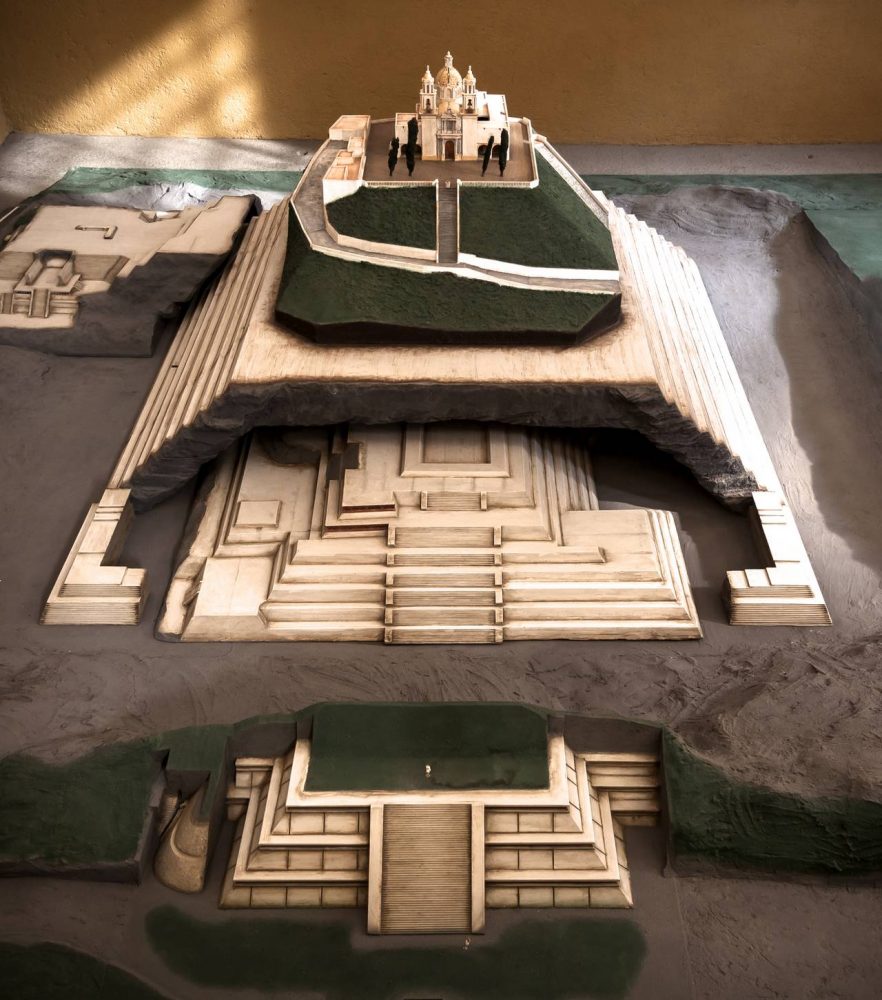
In Central America, the pyramid took on a different role. The Maya, Aztec, and earlier cultures like the Olmec built stepped pyramids not as tombs but as stages. These were sites of ceremony, processions, and offerings to the gods. Temples sat at the top. Staircases ran down the middle. Unlike the sealed pyramids of Egypt, these were designed to be climbed. Many were built over earlier structures, layer by layer, as each new ruler added their mark to the past. One of the largest pyramids on Earth is located in North America, in the city of Puebla. It is called the Great Pyramid of Cholula.
How the Pyramid of Cholula supposedly looked like.
Back to Africa and Egypt. To the south of Egypt, in what is now Sudan, the Nubian pyramids rose after Egypt’s golden age had faded. The Kingdom of Kush built hundreds of small, narrow pyramids in the desert near Meroë and Napata. They were sharper in angle, often just 6 to 30 meters tall, but their purpose was similar, to honor and bury kings, queens, and elites. They reflected Egypt’s influence, but with distinct local style.
In China, the shape appears again. The burial mound of Qin Shi Huang, the first emperor to unite China, was built in the 3rd century BCE and shaped like a low, flat pyramid. It’s still sealed. Remote sensing suggests a vast complex beneath the soil, rivers of mercury, miniature palaces, walls — but the tomb itself remains untouched. Other imperial mausoleums in the region follow the same form: wide at the base, rising to a flat point, then covered in earth and left to blend into the hills.
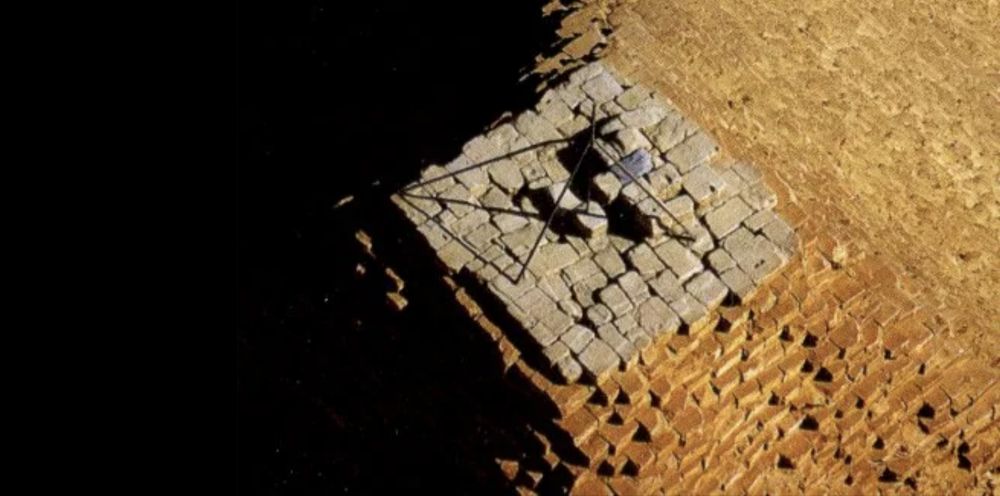
A rare view of the summit of the Great Pyramid of Giza.
Coincidence or Convergent Evolution?
The question of whether pyramids are the result of coincidence or convergent evolution is central to understanding their ubiquity. Coincidence implies that different cultures independently arrived at similar architectural solutions due to common needs or constraints. Convergent evolution in architecture suggests that similar forms develop independently in response to analogous environmental factors, societal functions, or symbolic needs.
Several factors strongly support the idea of convergent evolution:
Practicality and Structural Stability:Pyramids are inherently stable structures. Their broad bases and tapering apex facilitate weight distribution and resistance to environmental stressors such as earthquakes and erosion. This stability makes them ideal for tombs, religious temples, or ceremonial platforms—functions that require durability.
Resource Availability:The materials used for pyramid construction—stone, mud brick—were accessible in numerous regions. For example, limestone in Egypt, volcanic stone in Mesoamerica, and mud bricks in Mesopotamia were locally abundant, enabling the independent development of pyramid structures.
Symbolic Significance:The pyramid shape often symbolizes a connection between earth and the divine, with the apex representing the heavens or spiritual ascent. Such symbolism appears to be universally appealing, possibly rooted in innate human cognition or shared spiritual concepts.
Functional Utility: Pyramids serve similar societal functions across cultures—marking tombs, serving as temples, or acting as territorial symbols. Their monumental nature elevates their societal importance, which may naturally lead to the adoption of similar forms.
The convergence of these factors suggests that the recurrence of pyramids can largely be explained by convergent evolution driven by shared environmental constraints, resource availability, and symbolic universals rather than direct contact or shared origins across civilizations.
Independent invention or shared idea?
As much as some would like to believe otherwise, there’s no evidence that ancient Egypt and the civilizations of the Americas ever made contact. The oceans were too wide, the timelines too far apart. They didn’t share a language, trade goods, or leave behind anything that connects them. And yet, both built pyramids. Large, angular, enduring. The resemblance has confused and intrigued scholars for over a century. It still does. But most experts agree: it’s coincidence.
Archaeologists call it convergent design. The pyramid solves practical problems. If you’re stacking stone or mudbrick and want the structure to last, gravity does most of the planning for you. Build up, and the shape naturally tapers. It’s stable. It’s strong. And if the base is wide enough, it will stand for a very long time. Just look at the pyramids in Egypt.
The pyramid is what happens when you stack stone long enough, said one archaeologist when I was living in Mexico (Yup, I lived there for over 15 years). He argued that it is the most efficient way to build tall without needing much engineering.
That’s true in theory maybe. The shape is efficient. But in practice, building a pyramid wasn’t easy. It took organization, manpower, and long-term planning. Moving heavy stone, lifting it into place, and keeping the structure aligned over dozens of vertical meters demanded far more than instinct. So we have to remember that these weren’t casual constructions. Some pyramids, like for example Cholula, took several generations to build.
And also, practicality wasn’t the only reason pyramids were built, either. In many places, height carried symbolic weight. Mountains were often seen as sacred, places where gods lived or where the living could reach toward the sky. By building upward, people recreated that connection. A pyramid placed the dead, the divine, or the ceremonial high above the ground. That elevation wasn’t just by chance or just because a king back in the day wanted something pointy.
The shape also served power. A pyramid stands out. It can be seen from far away. It doesn’t need decoration to feel important. It can be built over time, layer by layer, each generation adding to the one before (just like cholula). It doesn’t crack or lean, well at least not if it was built right. For rulers who wanted to mark the land, or be remembered long after they were gone, it was a shape that worked.
Cultural and Religious Significance
Despite their similar forms, pyramids often have distinct cultural meanings. Egyptian pyramids are primarily designed as royal tombs, facilitating the pharaoh’s journey to the afterlife. Mesoamerican pyramids, such as those at Chichen Itza, served as temples for religious rituals and sacrifices. Ziggurats in Mesopotamia functioned as terraced platforms dedicated to gods, reflecting a different religious worldview. In Nubia, the pyramids served as tombs for kings and queens, emphasizing their role in funerary practices. In Asia, structures like Borobudur symbolize spiritual enlightenment and the journey toward nirvana. While the architectural form remains similar—a stepped or smooth-sided pyramid—their purposes are deeply embedded in specific cultural, religious, and societal contexts.
This diversity underscores an important point: although the shape of pyramids appears across cultures, their symbolic meanings are often context-dependent. Nonetheless, the recurring use of a pyramid shape in sacred and funerary architecture suggests a shared human tendency to use monumental forms to mark significance, transcendence, and the divine. This universality in symbolic gesture might be rooted in innate cognitive patterns, such as the human tendency to recognize and emulate hierarchical, ascending forms as expressions of spiritual or societal hierarchy.
The Universal Architectural Logic Given the widespread occurrence and similar structural features, it is worth exploring whether there exists a universal architectural logic underlying pyramid construction. Several scientific and geometrical principles support this idea:
Geometric Efficiency and Structural Stability: The pyramid’s shape distributes weight evenly downward, minimizing stress on the structure and enabling it to reach impressive heights without complex support systems. The broad base provides stability, while the tapering apex reduces material use and enhances strength.
Material Optimization: The pyramid form allows builders to use locally available materials efficiently, stacking stones or bricks in a way that maximizes the strength-to-weight ratio. This principle of material efficiency is consistent with engineering practices observed across various civilizations.
Environmental Adaptation: Pyramids are well-suited to diverse climates and geographies. Their shape offers resistance to weathering and erosion, and their thermal properties—such as the ability to maintain stable internal temperatures—are advantageous in hot, dry environments.
Symbolic Geometry: The pyramid’s shape can be associated with fundamental geometric principles, such as the concept of the monumental triangle, which is aesthetically and symbolically powerful. The pyramid’s form can be linked to the idea of a mountain—a universal symbol of stability, permanence, and spiritual ascent.
Cognitive and Cultural Universals Research in cognitive science and anthropology suggests that humans have innate tendencies toward certain geometric forms and symbolic representations. For instance, studies indicate that humans across cultures tend to attribute sacredness to pyramidal shapes, possibly because they resemble natural features like mountains or celestial bodies. The universality of such forms could be rooted in shared neurocognitive mechanisms, such as pattern recognition, hierarchical structuring, and the human tendency to associate upward movement with spiritual elevation.
Moreover, the pyramid’s form facilitates ritualistic functions. Its geometric simplicity and visual prominence make it an effective focal point for collective ceremonies and social cohesion. This aligns with theories of cognitive archetypes—universal symbols embedded in the human psyche, as proposed by Carl Jung and others—where certain shapes and motifs recur across different cultures because they resonate with deep-seated psychological patterns.
A pattern across continents
Each region built its own kind of pyramid, shaped by the materials they had, the way their societies worked, and what they believed. In Egypt, mainstream experts maintain that the pyramids were tombs (I kind of disagree). In Mesoamerica, they were said to have been used as temples. In China, they sealed emperors underground. In Sudan, they marked the graves of royalty. The designs varied, but the basic form stayed the same, wide at the base, rising to a point.
In Egypt, pyramid construction reached its height during the Old Kingdom. As political power and resources declined, it is believed that the building slowed and eventually stopped. In Mesoamerica, the tradition lasted much longer. The Maya were still building pyramids into the 15th century, often adding new layers on top of older ones. In Sudan, the Napatan and Meroitic kingdoms revived the form long after Egypt had moved on. Their pyramids were smaller and steeper, but just as symbolic.
The Chinese pyramids are harder to spot. Most are covered in earth and blend into the landscape. The largest belongs to Qin Shi Huang, the first emperor of a unified China. His tomb has never been opened, but surveys suggest there’s a vast underground complex beneath it, palaces, walls, and rivers made of mercury.
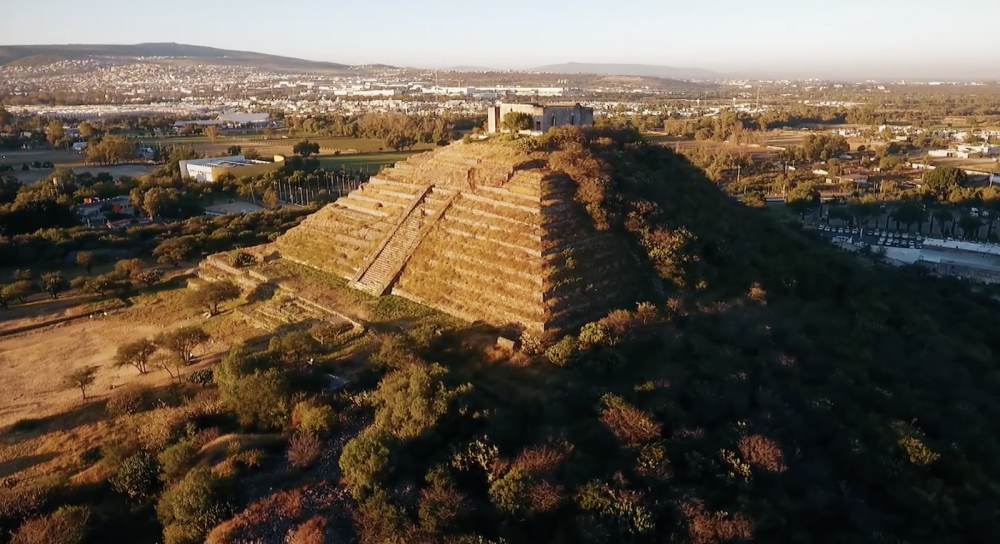
A screengrab showing an aerial view of the Pyramid of El Cerrito. Image Credit: Video Master Producciones / Youtube.
Why the pyramid worked
If you asked me to reply logically, I would probably say that a pyramid holds its own weight. That’s the simplest reason it shows up in so many ancient cultures. The wider the base, the more weight it can carry above. When people were building with stone, without mortar or steel, this mattered. You could stack layer after layer, and the shape would stay intact. It didn’t need columns or supports. It stayed up because of the way it was built. The question remains, however, how some of the supermassive stones were transported in ancient Egyp, and stacked to the height the stones were stacked. But then again…The structure wasn’t the only reason. Height made a difference. A pyramid could rise above everything around it. In open landscapes, it became a fixed point on the horizon. For rulers, that visibility meant power. It gave their cities a center. It reminded people who was buried there, or who held the land.
In many places, height also carried spiritual meaning. Mountains were seen as sacred. They stood between the world of people and the world of gods. By building upward, ancient cultures brought that idea into daily life. A pyramid wasn’t a mountain, but it borrowed the shape. It gave form to beliefs that were otherwise invisible.
There are other ideas, too. Some people believe that different pyramid-building cultures inherited the design from a lost civilization. Others say there was contact between continents long before recorded history. A few suggest more unusual explanations. Archaeologists don’t accept these theories, because they aren’t supported by evidence. But their persistence shows how much mystery the pyramid still holds. For something made of stone, it remains hard to pin down.
The Role of Contact and Cultural Diffusion in the Development of Pyramid Structures: A Comparative and Scientific Perspective
The emergence of pyramid-shaped structures across different ancient civilizations has long intrigued scholars, prompting debates about whether these architectural feats resulted from independent innovation (convergent evolution) or through intercultural contact facilitating the dissemination of ideas. While convergent evolution offers a compelling explanation—highlighting how similar environmental and societal pressures can lead to analogous architectures—consideration of trade routes, technological exchange, and archaeological evidence suggests that cultural diffusion may have played a significant role in some instances.
Historical trade networks such as the Silk Road, which connected East Asia with Central Asia and the Middle East, and maritime routes in the Indian Ocean, facilitated not only the exchange of goods but also the transmission of technological knowledge and architectural concepts. For example, the spread of Buddhist stupas across Asia and Southeast Asia demonstrates how religious and cultural ideas traveled along these networks, potentially influencing local architectural styles, including pyramid-like structures. Maritime exploration and trade might have similarly enabled the transfer of construction techniques, stone-working methods, and symbolic motifs associated with pyramids, thereby fostering their adoption or adaptation in distant regions.
Nevertheless, the considerable temporal and geographic disparities among pyramid-building civilizations suggest that many of these structures arose independently rather than through direct influence. The Egyptian pyramids, notably the Pyramid of Khufu at Giza, date to the 26th century BCE, significantly predating Mesoamerican pyramids such as the Pyramid of Kukulcán at Chichen Itza, which was constructed around the 12th century CE. Furthermore, Chinese and Southeast Asian civilizations developed their own pyramid-like edifices—such as the Chinese burial mounds (tombs) from the Han Dynasty and the stepped pyramids of Southeast Asia—without definitive archaeological evidence linking these structures to external influences. These patterns support the hypothesis that environmental factors, societal organization, religious beliefs, and technological capabilities independently led to the emergence of pyramids across different regions.
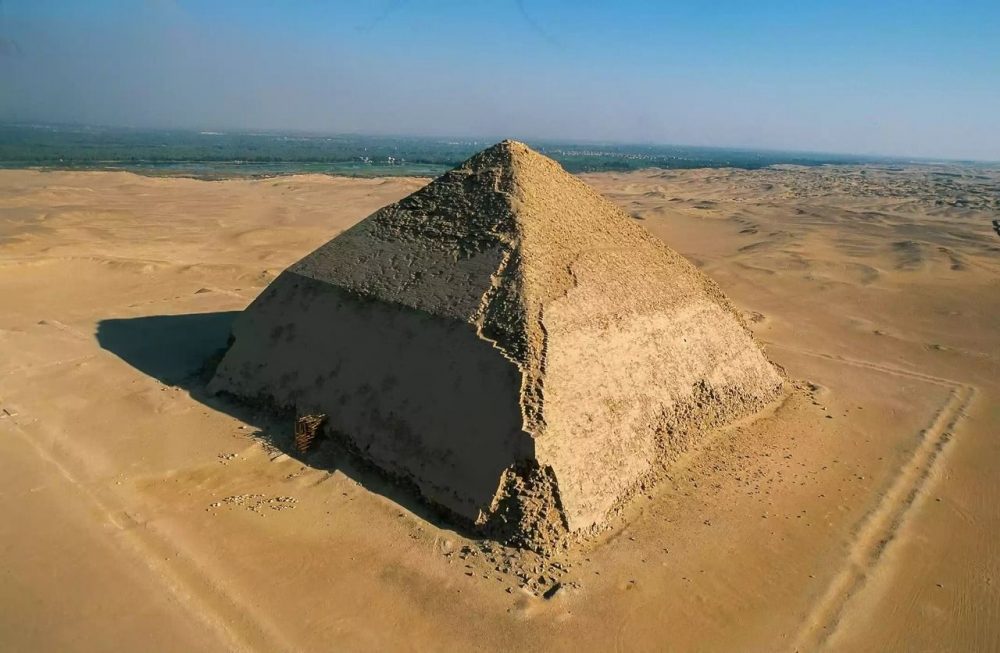
One of the most curious ancient Egyptian megastructures – the Bent Pyramid.
Credit: Yann Arthus-Bertrand
Modern archaeological and engineering studies have shed light on the complexity of pyramid construction and the advanced knowledge systems employed. For instance, the Great Pyramid of Giza exemplifies precise astronomical alignment, with its sides oriented almost perfectly along the cardinal points, indicating sophisticated understanding of geometry and celestial phenomena. Analysis of the core and casing stones reveals advanced quarrying and transportation techniques, reflecting complex logistical organization. Similarly, in Mesoamerica, the construction of pyramids involved specific astronomical alignments and ritual significance, emphasizing the role of cultural symbolism alongside engineering prowess.
Contemporary scientific methods, such as radiocarbon dating, remote sensing, and material analysis, continue to refine our understanding of these structures' origins and development. These techniques often reveal independent timelines and technological innovations, reinforcing the notion of independent evolution. Moreover, digital reconstructions and structural analyses demonstrate how different civilizations tackled common architectural challenges—such as stability, durability, and symbolic representation—using locally available materials and indigenous engineering techniques.
In conclusion, while intercultural contact and trade networks undoubtedly facilitated the exchange of ideas and techniques, the independent emergence of pyramid structures in diverse civilizations appears to be primarily driven by convergent evolution—where similar environmental and societal pressures fostered analogous architectural solutions. The integration of archaeological evidence, scientific analyses, and historical context underscores the multifaceted nature of pyramid development, highlighting humanity’s universal tendencies to seek monumental expression of cultural, religious, and societal values through similar architectural forms across different regions and epochs.
CONCLUSION
The widespread presence of pyramids across various cultures and regions suggests a fascinating phenomenon: are pyramids a manifestation of a global pattern or do they emerge from a universal logic rooted in human psychology and environmental factors? To understand this, it is essential to consider both the cultural significance and the structural advantages of pyramids.
Historically, pyramids appear independently in diverse civilizations, from ancient Egypt and Mesoamerica to Mesopotamia and China. This parallel development indicates that pyramids are not simply cultural exports but rather a recurring solution to comparable societal needs and environmental challenges. The pyramid's shape symbolizes stability and durability—an enduring monument that withstands the test of time. Its broad base provides a sturdy foundation, while the tapering apex signifies ascent and spiritual elevation, often reflecting religious or cosmological beliefs.
From a practical perspective, the pyramid's geometric structure offers remarkable stability, making it suitable for monumental construction. Its inclined sides effectively distribute weight, reducing the risk of collapse, which was crucial in ancient engineering. Additionally, pyramids served as tombs or sacred sites, emphasizing their role as physical embodiments of spiritual beliefs and social hierarchy. Their prominent visibility also reinforced political power and religious authority, serving as symbols of divine legitimacy.
Culturally, the universal human tendency to seek immortality and to honor the dead may underpin the pyramid form. Many pyramids functioned as elaborate tombs or spiritual gateways, connecting the earthly realm with the divine. This shared human inclination to create enduring monuments to the dead and to express cosmological ideas suggests a universal logic rooted in human psychology.
Furthermore, environmental factors influenced pyramid design. In regions with abundant stone resources, such as Egypt and Central America, the material dictated the construction style. The pyramid's form was adaptable to local conditions, reinforcing the idea that its prevalence is driven by both cultural symbolism and practical considerations.
In conclusion, the widespread occurrence of pyramids across civilizations reflects a blend of universal human aspirations, psychological needs, and environmental influences. While cultural nuances shape specific interpretations, the underlying logic—stability, spirituality, and social cohesion—appears to be a common thread. This pattern underscores the universality of human creativity and the shared quest to leave a lasting legacy, making pyramids a compelling symbol of our collective history and aspirations
Scientists have created a specialized AI assistant that will help in the study of Earth and other planets. It is capable of receiving data from geophysical instruments and using it to construct graphs and make assumptions. At the same time, requests can be made to it in normal human language.
AI will help study processes on Earth and other planets. Source: phys.org
AI for scientists
The new generation of AI has long sparked debate about whether it can really help people acquire new knowledge, or whether it is simply capable of stringing letters together to form words. But it seems that researchers at the University of Hawaii at Manoa have the answer to this question.
They created the Intelligent Data Exploring Assistant (IDEA) software platform, which combines the functionality of large language models such as ChatGPT with the capabilities of specialized neural networks designed to analyze large scientific data sets.
Based on IDEA, it is possible to create a variety of assistant instruments capable of understanding questions in plain language, analyzing queries based on data sets from various measuring devices, and generating graphs and assumptions that will provide scientifically agreed answers to scientists’ questions.
Earth and beyond
First and foremost, the platform is designed for studying Earth as a planet. Based on IDEA, scientists were able to create a prototype of the Station Explorer Assistant (SEA) and applied it to analyze data from tide gauges — instruments that measure sea level with high accuracy. Usually, special programs need to be written to process data from them, but the new AI has already demonstrated its ability to provide answers without this.
Researchers say that it is not perfect, still makes mistakes, and its work needs to be carefully monitored. But it still makes the work of scientists much easier. And this applies not only to oceanographic data.
Although SEA focuses on sea level data, the basic structure of IDEA is designed to work across a wide range of geological scientific disciplines. In one example from the study, researchers applied IDEA to atmospheric data from Mars — an area they had never worked with before — and were surprised at how easily the assistant adapted to the new dataset with only a change in instructions and data sources.
Although SEA is still a prototype, it is available online for scientists or university students to test and try out. Developers are encouraged to familiarize themselves with the IDEA framework on GitHub and experiment with adapting it to their own data or using other large language modeling services.
Scientists are pondering the nature of 300 mysterious objects that the James Webb Space Telescope has spotted in the depths of space. Most likely, these are incredibly bright young galaxies, but this assumption still needs to be verified.
Scientists from the University of Missouri are discussing whether the bright objects recorded in large numbers by the James Webb Space Telescope could be distant but bright galaxies, or something else.
In the first few years of operation, the new space observatory saw many more objects than any telescope. This led to a problem with sorting all the objects it discovered. Initially, 300 of them simply could not be classified.
“These mysterious objects are candidate galaxies in the early universe, meaning they could be very early galaxies,” said Haojing Yan, a professor of astronomy at the College of Arts and Sciences at Mizzou and co-author of the study. “If even a few of these objects turn out to be what we think they are, our discovery could challenge current ideas about how galaxies formed in the early universe—the period when the first stars and galaxies began to take shape.”
But identifying objects in space does not happen instantly. This requires a careful, step-by-step process to confirm their nature, combining advanced technology, detailed analysis, and several space detective investigations.
Step 1: Identifying the first clues
Mizzou’s researchers used two powerful infrared cameras on the JWST: the Near Infrared Camera and the Mid-Infrared Instrument. Both devices are specially designed to detect light from the most distant corners of space, which is key to studying the early Universe.
Why infrared? Because the farther away an object is, the longer its light travels to reach us. As light from these early galaxies travels through space, it stretches into longer wavelengths — shifting from visible light to infrared. This stretching is called redshift, and it helps us determine how far away these galaxies are. The higher the redshift, the farther the galaxy is from Earth, and the closer it is to the beginning of the Universe.
Step 2: “ The dropout”
To identify each of the 300 candidates for early galaxies, researchers at Mizzou used a well-known method called the “dropout” technique.
This method detects galaxies with high redshifts by examining objects that appear in redder wavelengths but disappear in bluer ones — a sign that their light has traveled vast distances and time. This phenomenon is an indicator of the “Lyman Break” — a spectral feature caused by the absorption of ultraviolet light by neutral hydrogen. As the redshift increases, this signal shifts toward redder wavelengths.
Step 3: Estimating the details
Once the “dropout” technique identifies each of the galaxy candidates, the next step is to check whether they could be at very high redshifts, Yan said.
“Ideally this would be done using spectroscopy, a technique that spreads light across different wavelengths to identify signatures that would allow an accurate redshift determination,” he said.
However, when complete spectroscopic data are not available, researchers can use a technique called spectral energy distribution fitting. This method provided Sun and Yan with a basis for evaluating the redshifts of their candidate galaxies, as well as other properties such as age and mass.
In the past, scientists commonly believed that these extremely bright objects were not early galaxies, but rather something that mimicked them. However, based on their achievements, Sun and Yan believe that these objects deserve closer attention and should not be dismissed so quickly.
Step 4: Final answer
The final test will use spectroscopy — the gold standard — to confirm the team’s findings.
Spectroscopy separates light into different wavelengths, just as a prism separates light into a rainbow of colors. Scientists use this technique to detect the unique fingerprint of a galaxy, which can tell them how old the galaxy is, its formation and composition.
“One of our objects is already confirmed by spectroscopy to be an early galaxy,” Sun said. “But this object alone is not enough. We will need to make additional confirmations to say for certain whether current theories are being challenged.”
Meer van UFO'S of UAP'S, ASTRONOMIE, RUIMTEVAART, ARCHEOLOGIE, OUDHEIDKUNDE, SF-SNUFJES EN ANDERE ESOTERISCHE WETENSCHAPPEN - DE ALLERLAATSTE NIEUWTJES


 The JWST Shows Us That TRAPPIST-1d Is Not As Earth-Like As We Hoped