Naar de inhoud

UFO'S of UAP'S, ASTRONOMIE, RUIMTEVAART, ARCHEOLOGIE, OUDHEIDKUNDE, SF-SNUFJES EN ANDERE ESOTERISCHE WETENSCHAPPEN - DE ALLERLAATSTE NIEUWTJES

UFO's of UAP'S in België en de rest van de wereld
akke.beakke.be
Ontdek de Fascinerende Wereld van UFO's en UAP's: Jouw Bron voor Onthullende Informatie! Ben jij ook gefascineerd door het onbekende? Wil je meer weten over UFO's en UAP's, niet alleen in België, maar over de hele wereld? Dan ben je op de juiste plek! België: Het Kloppend Hart van UFO-onderzoek In België is BUFON (Belgisch UFO-Netwerk) dé autoriteit op het gebied van UFO-onderzoek. Voor betrouwbare en objectieve informatie over deze intrigerende fenomenen, bezoek je zeker onze Facebook-pagina en deze blog. Maar dat is nog niet alles! Ontdek ook het Belgisch UFO-meldpunt en Caelestia, twee organisaties die diepgaand onderzoek verrichten, al zijn ze soms kritisch of sceptisch. Nederland: Een Schat aan Informatie Voor onze Nederlandse buren is er de schitterende website www.ufowijzer.nl, beheerd door Paul Harmans. Deze site biedt een schat aan informatie en artikelen die je niet wilt missen! Internationaal: MUFON - De Wereldwijde Autoriteit Neem ook een kijkje bij MUFON (Mutual UFO Network Inc.), een gerenommeerde Amerikaanse UFO-vereniging met afdelingen in de VS en wereldwijd. MUFON is toegewijd aan de wetenschappelijke en analytische studie van het UFO-fenomeen, en hun maandelijkse tijdschrift, The MUFON UFO-Journal, is een must-read voor elke UFO-enthousiasteling. Bezoek hun website op www.mufon.com voor meer informatie. Samenwerking en Toekomstvisie Sinds 1 februari 2020 is Pieter niet alleen ex-president van BUFON, maar ook de voormalige nationale directeur van MUFON in Vlaanderen en Nederland. Dit creëert een sterke samenwerking met de Franse MUFON Reseau MUFON/EUROP, wat ons in staat stelt om nog meer waardevolle inzichten te delen. Let op: Nepprofielen en Nieuwe Groeperingen Pas op voor een nieuwe groepering die zich ook BUFON noemt, maar geen enkele connectie heeft met onze gevestigde organisatie. Hoewel zij de naam geregistreerd hebben, kunnen ze het rijke verleden en de expertise van onze groep niet evenaren. We wensen hen veel succes, maar we blijven de autoriteit in UFO-onderzoek! Blijf Op De Hoogte! Wil jij de laatste nieuwtjes over UFO's, ruimtevaart, archeologie, en meer? Volg ons dan en duik samen met ons in de fascinerende wereld van het onbekende! Sluit je aan bij de gemeenschap van nieuwsgierige geesten die net als jij verlangen naar antwoorden en avonturen in de sterren! Heb je vragen of wil je meer weten? Aarzel dan niet om contact met ons op te nemen! Samen ontrafelen we het mysterie van de lucht en daarbuiten.

Archief

Ice in Space Isn't the Same as Ice on Earth
Ice in Space Isn't the Same as Ice on Earth

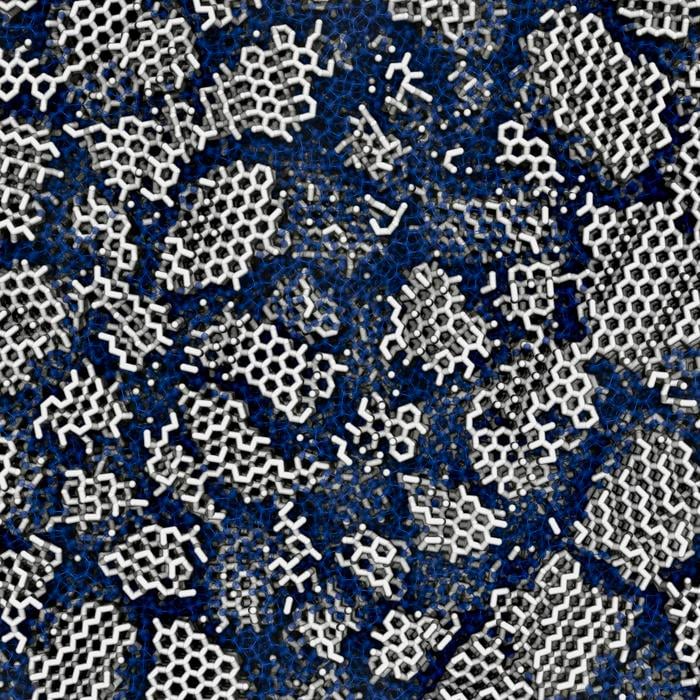
Visual representation of the structure of low-density amorphous ice. Many tiny crystallites (white) are concealed in the amorphous material (blue).  Credit Credit: Michael B Davies, UCL and University of Cambridge Visual representation of the structure of low-density amorphous ice. Many tiny crystallites (white) are concealed in the amorphous material (blue). Credit Credit: Michael B Davies, UCL and University of Cambridge

Next time you're drinking a frosty iced beverage, think about the structure of the frozen chunks chilling it down. Here on Earth, we generally see ice in many forms: cubes, sleet, snow, icicles, slabs covering lakes and rivers, and glaciers. Water ice does this thanks to its hexagonal crystal lattice. That makes it less dense than nonfrozen water, which allows it to float in a drink, in a lake, and on the ocean.

Water ice exists across the Solar System beyond Earth, and it’s abundant in the larger Universe. For example, it shows up in dense molecular clouds. These are star- and planet-forming crèches laced with water ice throughout, as well as in the resulting cometary nuclei. That material is called "low-density amorphous ice (LDA)" and it doesn’t have the same rigid structure as Earth ice does.

We all know that water is the basis for life on this planet. Despite how common it may appear across the Universe, scientists still don’t fully understand it. Studying amorphous ice may help explain its still-to-be-solved mysteries. Here in the Solar System, large amounts of LDA exist in the realm of the ice and gas giants, throughout the Kuiper Belt, and the Oort Cloud. A team of scientists at University College London investigated the form of this ice using computer simulations. They found that the simulations matched the makeup of ice that isn’t completely amorphous and has tiny crystals embedded within.
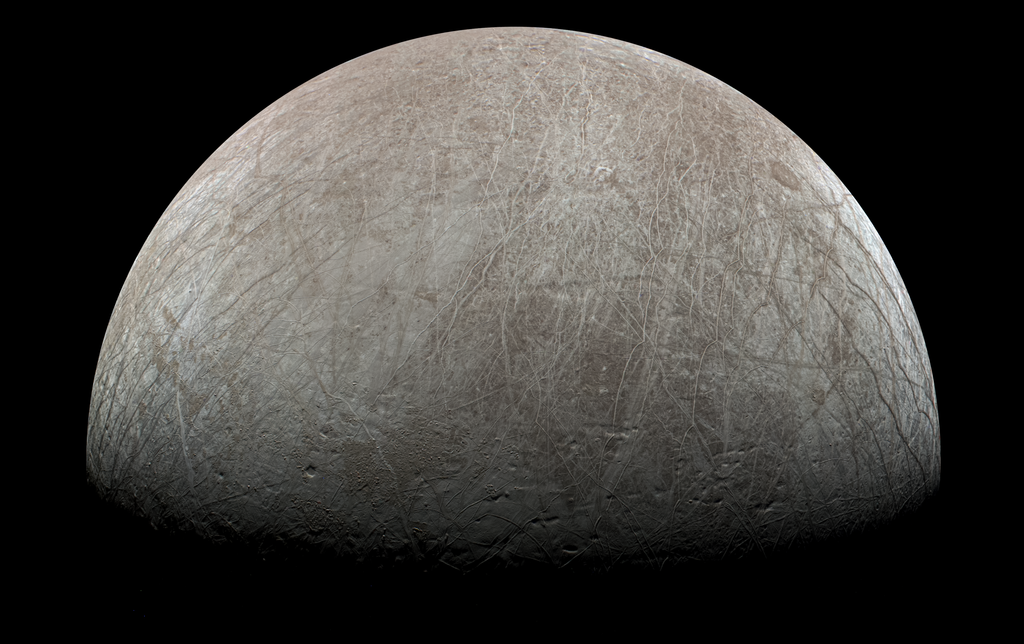
Jupiter's moon Ganymede is covered with water ice. It likely has a deep, subsurface ocean. Other moons in the Solar System, such as Enceladus, also show evidence of water ice and scientists are interested in the structure of that material. Courtesy NASA/JPL-Caltech/SwRI/MSSS/Kalleheikki Kannisto

Jupiter's moon Ganymede is covered with water ice. It likely has a deep, subsurface ocean. Other moons in the Solar System, such as Enceladus, also show evidence of water ice and scientists are interested in the structure of that material.

Courtesy NASA/JPL-Caltech/SwRI/MSSS/Kalleheikki Kannisto

What the Difference Means

Scientists long assumed that "space ice" would be "disordered" without the structure we see in ice on Earth. Why does the structure of ice matter? According to researcher Michael Davies, who led the research team, water ice plays a crucial role in materials and structures across the cosmos. “This is important as ice is involved in many cosmological processes,” he said, “for instance in how planets form, how galaxies evolve, and how matter moves around the Universe.” In addition, understanding the structure of this ice in comparison to ice that formed on Earth has implications for understanding other similar "ultrastable glass" substances that form similar to the way ice does.

Low-density water ice was first discovered in the 1930s and a high-density version was discovered in the 1980s. Davies and his team discovered medium-density amorphous ice in 2023. This is a form of water ice that has the same density as liquid water. Unlike the ice cubes in our theoretical drink, such water ice would neither sink nor float in water, which seems strange to us.

Davies’s team’s work also has interesting implications for a speculative theory called Panspermia. It looks at how life on Earth began and suggests that the building blocks of life came to the infant planet as part of a barrage of icy comets. LDA ice could have essentially been the carrier for material such as simple amino acids. However, according to Davies, that "flavor" of ice isn't likely the transporter of choice. “Our findings suggest this ice would be a less good transport material for these origin of life molecules,” he said. “That is because a partly crystalline structure has less space in which these ingredients could become embedded. The theory could still hold true, though, as there are amorphous regions in the ice where life’s building blocks could be trapped and stored.”

Testing the Water Ice

According to Davies, water ice is an important material not just for life, but for other uses. “Ice is potentially a high-performance material in space,” he said. “It could shield spacecraft from radiation or provide fuel in the form of hydrogen and oxygen. So we need to know about its various forms and properties.”

The research team used two computer models of water and froze these virtual “boxes” of water molecules by cooling to -120 °C at different rates. Those different rates had different results, creating varying amounts of crystalline and amorphous ice. The team also created larger boxes of water ice containing many small, closely packed ice crystals. Then, they heated the resulting ice so it could form crystals. Eventually, differences in the resulting crystals showed up, based on their original formation.

The result was an LDA ice with about a quarter of its mass in crystalline form. This was indirect evidence, they said, that low-density amorphous ice contained crystals. If it was fully disordered, the ice would not retain any memory of its earlier forms. The tests raise a lot of questions about the nature of amorphous ices and the role they play in processes such as planet formation. Davies’s co-author Professor Christoph Salzmann, of UCL Chemistry, described the difference between the very structured ice on Earth (and implications for its formation) and the amorphous ice in space. “Ice on Earth is a cosmological curiosity due to our warm temperatures,” he said. “You can see its ordered nature in the symmetry of a snowflake. Ice in the rest of the Universe has long been considered a snapshot of liquid water – that is, a disordered arrangement fixed in place.”

Implications

The result of the team’s simulations shows that the theory of liquid water going straight to a blob of amorphous ice isn’t completely true. Salzmann also suggests that the lab work they did could have important implications for other similar substances. “Our results also raise questions about amorphous materials in general,” he said. “These materials have important uses in much advanced technology. For instance, glass fibers that transport data long distances need to be amorphous, or disordered, for their function. If they do contain tiny crystals and we can remove them, this will improve their performance.”

In layperson’s terms, these substances beyond water ice are part and parcel of such technologies as OLEDs and fiber optics. In the future, an amorphous silicon, for example, could be studied in the same way and lead to major improvements in technologies that depend on the resulting ultrastable glasses.

For More Information

{ https://www.universetoday.com/ }

Hoe vind je dit bericht?
Geschreven door peter om 17:05 Stuur door

The Fourth Kind: Fact or Fiction? De Waarheid Achter de Film

The Fourth Kind: Fact or Fiction? De Waarheid Achter de Film

In 2009 bracht de film The Fourth Kind een nieuwe dimensie aan het genre van de paranormale en ufologische films. Geregisseerd door Olatunde Osunsanmi en met actrice Milla Jovovich in de hoofdrol, wekte de film meteen de interesse van het publiek en de media. Wat deze film echter onderscheidt van veel andere in het genre, is de bewering dat het gebaseerd is op ware gebeurtenissen. Maar hoe feitelijk is dat? Is The Fourth Kind een authentiek verslag van echte gebeurtenissen, of is het slechts een goed gemaakte fictieve vertelling? In dit artikel duiken we diep in de achtergrond van de film en scheiden we feit van fictie.

abductions-600x0.jpg

De setting en centrale beweringen van de film

The Fourth Kind speelt zich af in het noordelijke stadje Nome, Alaska, waar de hoofdpersoon, Dr. Abigail Tyler, onderzoek doet naar mysterieuze verdwijningen en abductions. De film beweert dat de gebeurtenissen die worden afgebeeld gebaseerd zijn op echte getuigenissen en door de FBI en lokale autoriteiten bevestigde incidenten. De film combineert dramatiseerde scènes met zogenaamde "archiefbeelden" en "verhoorfragmenten", die de indruk wekken van authentieke documenten.

Het centrale thema draait om buitenaardse abductions en de mogelijkheid dat menselijke ervaringen hiermee verband houden. De film beweert dat de gebeurtenissen in Nome daadwerkelijk hebben plaatsgevonden en dat de getuigenissen en beelden die worden getoond, authentiek zijn.

De marketing en de claims over authenticiteit

Een van de meest opvallende aspecten van The Fourth Kind is de marketingstrategie. De film presenteert zichzelf als een documentair-achtige vertelling en claimt dat de beelden, interviews en gebeurtenissen gebaseerd zijn op echte gebeurtenissen. Voor de release werd er zelfs een website opgezet die beweerde dat de film een reconstructie is van echte gebeurtenissen, met echte getuigenissen en bewijsstukken.

De makers benadrukten dat de film gebaseerd was op het werk van Dr. Abigail Tyler, die zou hebben samengewerkt met de FBI en lokale autoriteiten om de incidenten te documenteren. Deze marketingaanpak creëerde een sfeer van authenticiteit en zette de film neer als een soort "verboden film" die de waarheid over buitenaardse ontmoetingen onthult.

De waarheid achter de beweringen: feit of fictie?

Hoewel de film zich presenteert als gebaseerd op ware gebeurtenissen, is de werkelijkheid genuanceerder. Verschillende onderzoeken en kritische analyses wijzen uit dat de claims over de authenticiteit van de gebeurtenissen in The Fourth Kind niet worden bevestigd door officiële bronnen.

De rol van de hoofdpersonen en de werkelijkheid

Dr. Abigail Tyler, de hoofdpersoon in de film, bestaat niet echt. De naam en het personage worden gecreëerd voor de film, en er is geen bewijs dat een dergelijk onderzoek of dergelijke getuigenissen echt hebben plaatsgevonden. De film claimt dat de beelden en interviews authentiek zijn, maar deze worden later getoond als onderdeel van de vertelling.

Bovendien bleek uit onderzoek dat de zogenaamde "archiefbeelden" en getuigenissen in de film fictief en sterk geënsceneerd zijn. Er zijn geen officiële documenten of rapporten die de beweringen ondersteunen. De FBI heeft verklaard dat er geen bewijs is dat de gebeurtenissen daadwerkelijk plaatsvonden.

De makers en de waarheid

Regisseur Olatunde Osunsanmi heeft toegegeven dat de film een mix is van fictieve elementen en geïnspireerd is door vermeende echte gebeurtenissen, maar niet letterlijk gebaseerd op feiten. De marketingcampagne die de film presenteerde als gebaseerd op ware gebeurtenissen, wordt door velen beschouwd als een vorm van "viral marketing" en niet als een accurate reconstructie van de werkelijkheid.

De rol van "archiefbeelden" en de bewering dat de film documentair is

De film maakt gebruik van "verloren archiefbeelden", die eruitzien als echte beelden van buitenaardse ontmoetingen. Deze beelden blijken echter te zijn geënsceneerd en geproduceerd voor de film. De makers hebben toegegeven dat deze beelden niet authentiek zijn, maar bedoeld als onderdeel van de vertelling om de illusie van authenticiteit te vergroten.

Waarom blijft de mythe bestaan?

Ondanks dat er geen bewijs is dat de gebeurtenissen in The Fourth Kind echt hebben plaatsgevonden, blijft de film populair onder liefhebbers van het genre. Een belangrijke reden hiervoor is de overtuigende presentatie en de sfeer van authenticiteit die de film creëert. Daarnaast speelt de universele nieuwsgierigheid naar buitenaardse levens en de mogelijkheid van geheime overheidsdekmantels mee in de aantrekkingskracht.

De film heeft ook bijgedragen aan de hype rondom UFO's en buitenaardse ontmoetingen, en moedigt mensen aan om zelf onderzoek te doen en kritisch te blijven over wat ze zien en horen.

Conclusie: feit of fictie?

De film The Fourth Kind blijft een intrigerend voorbeeld van hoe media en marketing de grens tussen feit en fictie kunnen vervagen. Aan de ene kant wordt de film gepresenteerd als een authentieke reconstructie van echte gebeurtenissen, met schijnbare bewijsstukken, echte getuigenissen en een documentaire-achtige stijl. Aan de andere kant blijkt uit onderzoek en verklaringen dat de hoofdpersonen fictief zijn, de "archiefbeelden" geënsceneerd en niet authentiek, en de beweringen over samenwerking met de FBI en officiële documenten niet worden ondersteund door enige bewijsvoering.

Het gebruik van marketingstrategieën die de film presenteren als een ware gebeurtenis heeft bijgedragen aan de mythevorming. Door de combinatie van dramatische vertellingen, vermeende echte beelden en de suggestie dat de gebeurtenissen in Nome daadwerkelijk hebben plaatsgevonden, weet de film een gevoel van realiteit over te brengen op het publiek. Dit speelt in op onze nieuwsgierigheid en onze behoefte aan het ontdekken van de "verboden" waarheden over buitenaardse ontmoetingen.

Echter, de werkelijkheid is dat er geen officiële bevestiging is van de gebeurtenissen die worden afgebeeld in The Fourth Kind. De FBI, lokale autoriteiten en andere officiële instanties hebben geen bewijs geleverd dat er ooit sprake is geweest van de beschreven abductions of incidenten in Nome. Regisseur Olatunde Osunsanmi heeft zelf toegegeven dat de film een mengeling is van fictieve elementen en dat het niet gebaseerd is op echte gebeurtenissen. De zogenaamde "archiefbeelden" en getuigenissen zijn geënsceneerd en bedoeld om de illusie van authenticiteit te versterken.

Waarom blijft de mythe bestaan? Een belangrijke factor is de kracht van de presentatie en de manier waarop de film wordt gepresenteerd. Door het gebruik van documentaire-achtige technieken en het suggereren dat de beelden echt zijn, wordt de grens tussen fictie en werkelijkheid vervaagd. Daarnaast speelt de universele fascinatie voor buitenaardse wezens en het onbekende een grote rol. Veel mensen willen geloven dat er meer is tussen hemel en aarde en dat de overheid misschien geheime informatie verbergt.

Bovendien heeft de film bijgedragen aan de bredere hype rond UFO's en buitenaardse ontmoetingen. Het heeft de nieuwsgierigheid aangewakkerd en mensen aangemoedigd om zelf kritisch te blijven en niet alles klakkeloos te geloven wat ze zien of horen. In die zin fungeert The Fourth Kind niet alleen als entertainment, maar ook als een soort moderne mythe die onze collectieve verbeelding voedt.

Kortom, ondanks de aantrekkelijke presentatie en de beweringen dat de film gebaseerd is op ware gebeurtenissen, is er geen bewijs dat deze gebeurtenissen echt hebben plaatsgevonden. De makers en onderzoekers wijzen erop dat de film vooral een creatieve interpretatie is, bedoeld om de kijker te boeien en te laten nadenken over de mogelijkheid van buitenaardse ontmoetingen. Het is dus belangrijk om kritisch te blijven en niet alles voor waar aan te nemen dat in de film wordt gepresenteerd.

De waarheid achter The Fourth Kind is dus dat het een fictief verhaal is dat door slimme marketing en overtuigende beelden de illusie van authenticiteit probeert te scheppen. Het spel met feiten en fictie maakt het een fascinerend fenomeen dat nog altijd de verbeelding van velen weet te prikkelen. Het herinnert ons eraan dat we altijd kritisch moeten blijven nadenken over wat we zien en horen, vooral wanneer het lijkt te gaan om de ultieme waarheid over het onbekende.

{ PETER2011 }

Hoe vind je dit bericht?
Geschreven door peter om 23:55 Stuur door

Did the James Webb telescope really find evidence of alien life? Here's the truth about exoplanet K2-18b.

Did the James Webb telescope really find evidence of alien life? Here's the truth about exoplanet K2-18b.

{ https://www.livescience.com/space }

Hoe vind je dit bericht?
Geschreven door peter om 22:31 Stuur door

In a first, breakthrough 3D holograms can be touched, grabbed and poked

In a first, breakthrough 3D holograms can be touched, grabbed and poked

Holograms that can be physically manipulated have made their way out of science fiction and into real life thanks to a breakthrough in mixed reality technology.

In a new study uploaded March 6 to the HAL open archive, scientists explored how three-dimensional holograms could be grabbed and poked using elastic materials as a key component of volumetric displays.

This innovation means 3D graphics can be interacted with — for example, grasping and moving a virtual cube with your hand — without damaging a holographic system. The research has not yet been peer-reviewed, although the scientists demonstrated their findings in a video showcasing the technology.

You may like
  • an abstract illustration with two glowing orbs connected by what looks like droplets of water, with more rainbow glowing orbs in the background

Physicists force atoms into state of quantum 'hyper-entanglement' using tweezers made of laser light

  • Representative image of the electronic ink.

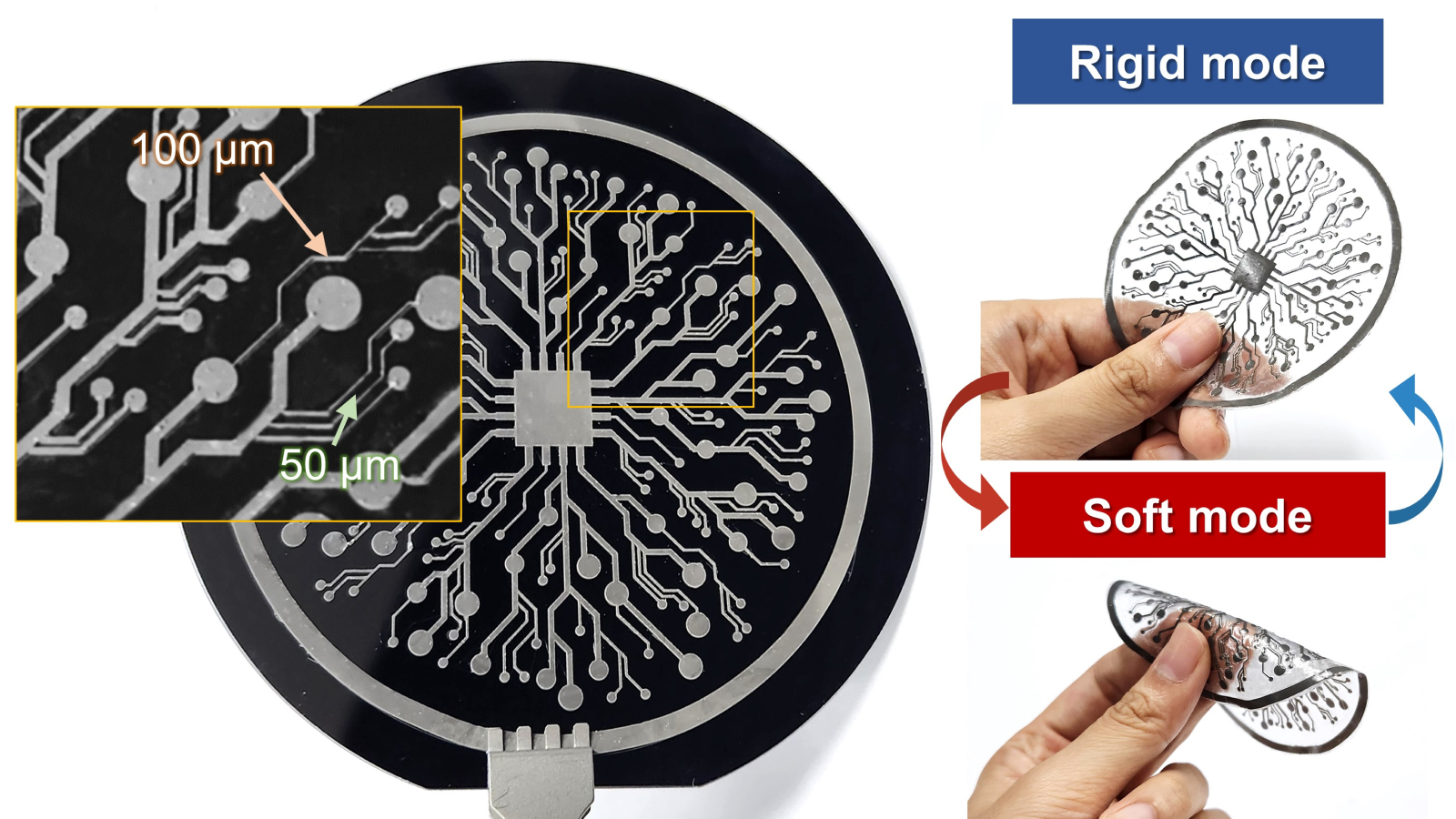
Scientists invent weird, shape-shifting 'electronic ink' that could give rise to a new generation of flexible gadgets

  • Image of robot hand with the new 'skin' material.

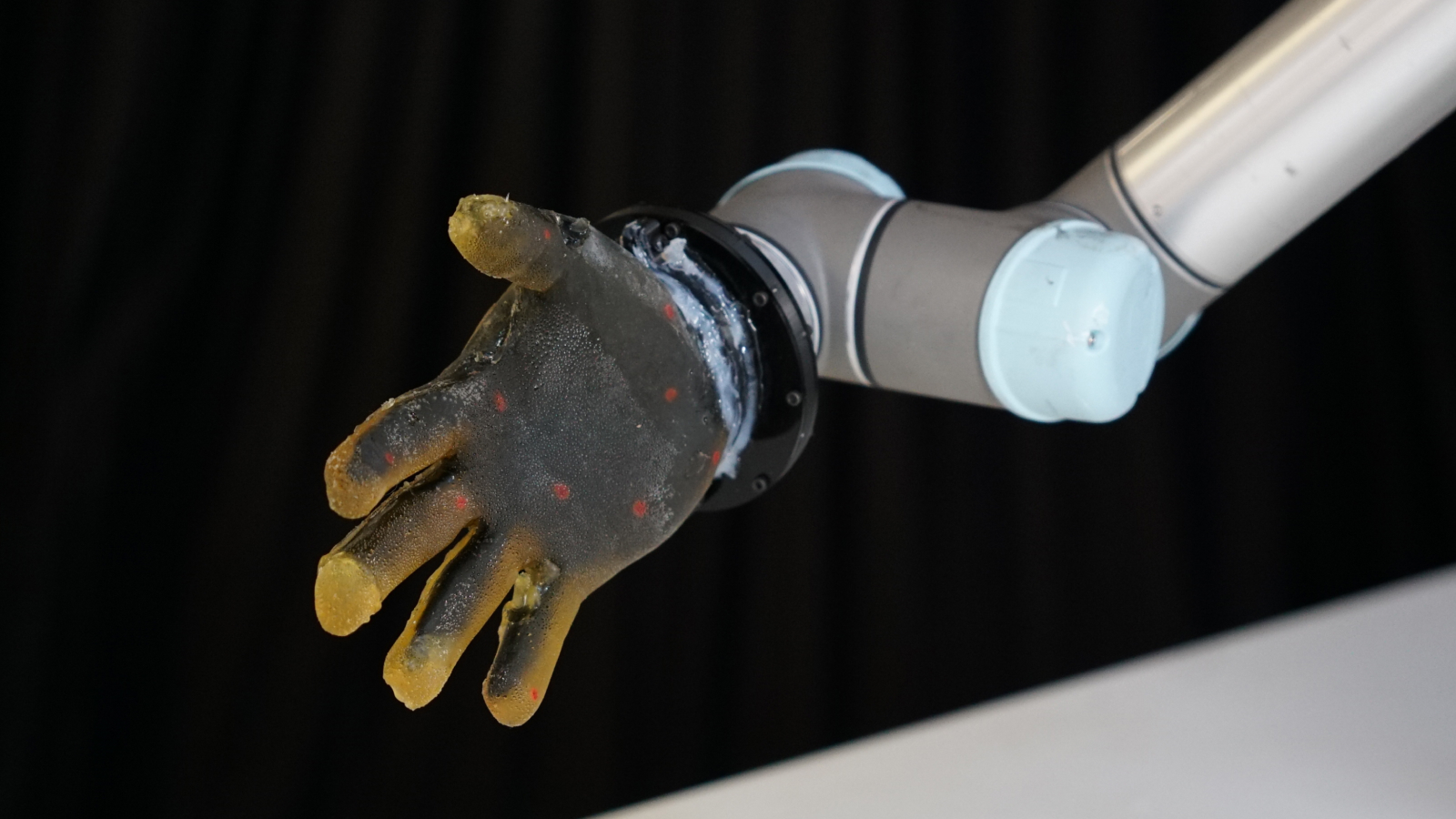
Scientists burned, poked and sliced their way through new robotic skin that can 'feel everything'

"We are used to direct interaction with our phones, where we tap a button or drag a document directly with our finger on the screen — it is natural and intuitive for humans. This project enables us to use this natural interaction with 3D graphics to leverage our innate abilities of 3D vision and manipulation,” study lead author Asier Marzo, a professor of computer science at the Public University of Navarra, said in a statement.

Related: 

The researchers will present their findings at the CHI conference on Human Factors in Computing Systems in Japan, which runs between April 26 and May 1.

Holographic hype

While holograms are nothing new in the present day — augmenting public exhibitions or sitting at the heart of smart glasses, for example — the ability to physically interact with them has been consigned to the realm of science fiction, in movies like Marvel's "Iron Man."

The new research is the first time 3D graphics can be manipulated in mid-air with human hands. But to achieve this, the researchers needed to dig deep into how holography works in the first place.

At the heart of the volumetric displays that support holograms is a diffuser. This is a fast-oscillating, usually rigid, sheet onto which thousands of images are synchronously projected at different heights to form 3D graphics. This is known as the hologram.

However, the rigid nature of the oscillator means that if it comes into contact with a human hand while oscillating, it could break or cause an injury. The solution was to use a flexible material — which the researchers haven’t shared the details of yet — that can be touched without damaging the oscillator or causing the image to deteriorate.

From there, this enabled people to manipulate the holographic image, although the researchers also needed to overcome the challenge of the elastic material deforming when being touched. To get around that problem, the researchers implemented image correction to ensure the hologram was projected correctly.

While this breakthrough is still in the experimental stage, there are plenty of potential ways it could be used if commercialized.

"Displays such as screens and mobile devices are present in our lives for working, learning, or entertainment. Having three-dimensional graphics that can be directly manipulated has applications in education — for instance, visualising and assembling the parts of an engine," the researchers said in the statement.

"Moreover, multiple users can interact collaboratively without the need for virtual reality headsets. These displays could be particularly useful in museums, for example, where visitors can simply approach and interact with the content."

RELATED VIDEOS

{ https://www.livescience.com/technology }

Hoe vind je dit bericht?
Geschreven door peter om 22:15 Stuur door

Watch this robot 'cannibal' grow bigger and stronger by consuming smaller robots

Watch this robot 'cannibal' grow bigger and stronger by consuming smaller robots

Scientists have created a prototype robot that can grow, heal and improve itself by integrating material from its environment or by "consuming" other robots. It's a big step forward in developing robot autonomy, the researchers say.

The researchers coined the term "robot metabolism" to describe the process that enables machinery to absorb and reuse parts from its surroundings. The scientists published their work July 16 in the journal Science Advances.

"True autonomy means robots must not only think for themselves but also physically sustain themselves," study lead author Philippe Martin Wyder, professor of engineering at Columbia University, said in a statement.

You may like
  • A photo of a humanoid robot running a marathon with two people running behind it

Robots run out of energy long before they run out of work to do — feeding them could change that

  • Humanoid robot changing its own battery.

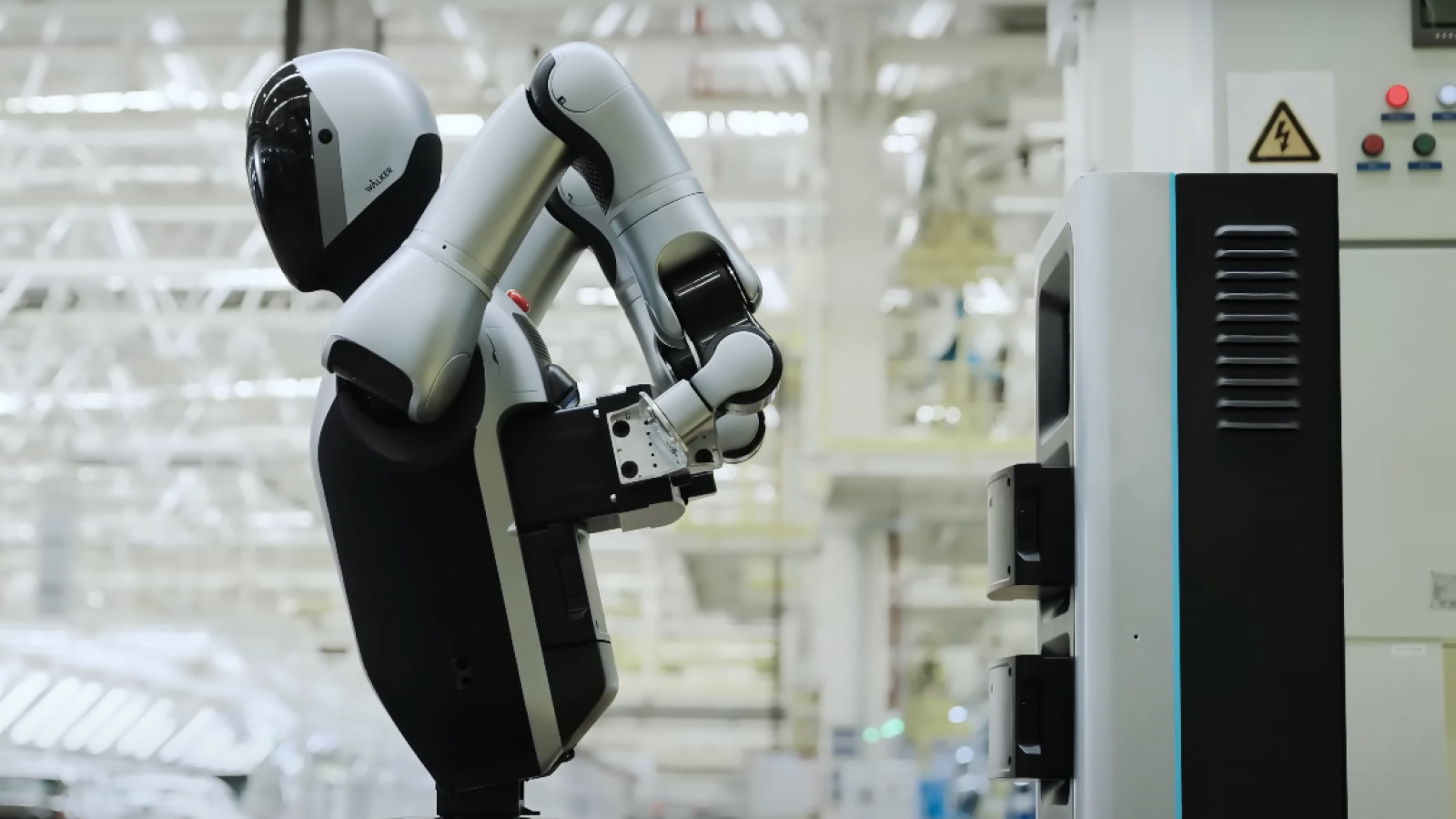
China launches world's first robot that can run by itself 24/7 — watch it change its own batteries in unsettling new footage

  • A soft robotic hand curls its fingers to grasp a wooden pencil.

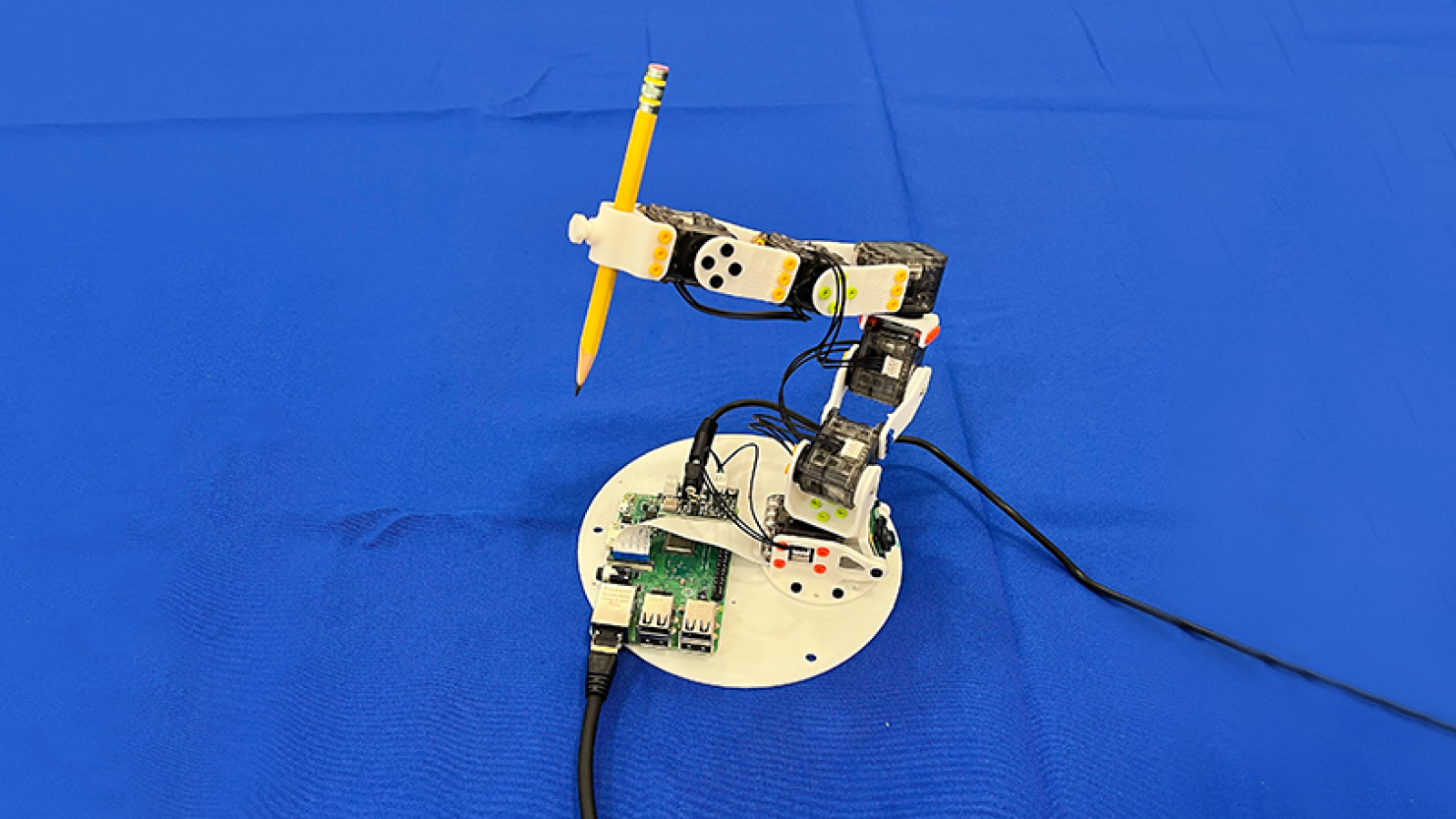
MIT's new AI can teach itself to control robots by watching the world through their eyes — it only needs a single camera

"Just as biological life absorbs and integrates resources, these robots grow, adapt, and repair using materials from their environment or from other robots."

The robots are made from "truss links" — six-sided elongated rods with magnetic connectors that can contract and expand with other modules.

These modules can be assembled and disassembled as well. The magnets enable the robots to form increasingly complex structures in what their makers hope can be a "self-sustaining machine ecology."

Related: 

There are two rules for robot metabolism, the scientists said in the study. First, a robot must grow completely on its own, or be assisted by other robots with similar components. Second, the only external provisions granted to the truss links are materials and energy. Truss links use a mix of automated and controlled behaviors. Shape-shifting, cannibalizing robots

'Bad sci-fi scenarios'

In a controlled environment, scientists laid truss links across an environment to observe how the robot connects with other modules.

The researchers noted how the truss links first assembled themselves in 2D shapes but later integrated new parts to become a 3D tetrahedron that could navigate the uneven testing ground. The robot did this by integrating an additional link to use as a walking stick, the researchers said in the study.

"Robot minds have moved forward by leaps and bounds in the past decade through machine learning, but robot bodies are still monolithic, unadaptive, and unrecyclable. Biological bodies, in contrast, are all about adaptation — lifeforms can grow, heal and adapt," study co-lead author Hod Lipson, chair of the department of mechanical engineering at Columbia University, said in the statement.

"In large part, this ability stems from the modular nature of biology that can use and reuse modules (amino acids) from other lifeforms," Lispon added. "Ultimately, we'll have to get robots to do the same — to learn to use and reuse parts from other robots."

The researchers said they envisioned a future in which machines can maintain themselves, without the assistance of humans. By being able to grow and adapt to different tasks and environments, these robots could play important roles in.disaster recovery and space exploration, for example.

"The image of self-reproducing robots conjures some bad sci-fi scenarios," Lipson said. "But the reality is that as we hand off more and more of our lives to robots, from driverless cars to automated manufacturing, and even defense and space exploration. Who is going to take care of these robots? We can't rely on humans to maintain these machines. Robots must ultimately learn to take care of themselves."

{ https://www.livescience.com/technology }

Hoe vind je dit bericht?
Geschreven door peter om 22:01 Stuur door

AI could soon think in ways we don't even understand — evading our efforts to keep it aligned — top AI scientists warn

AI could soon think in ways we don't even understand — evading our efforts to keep it aligned — top AI scientists warn

Evil robot/rogue AI concept.
(Image credit: wildpixel/ Getty Images)

Researchers behind some of the most advanced artificial intelligence (AI) on the planet have warned that the systems they helped to create could pose a risk to humanity.

The researchers, who work at companies including Google DeepMind, OpenAI, Meta, Anthropic and others, argue that a lack of oversight on AI's reasoning and decision-making processes could mean we miss signs of malign behavior.

In the new study, published July 15 to the arXiv preprint server (which hasn't been peer-reviewed), the researchers highlight chains of thought (CoT) — the steps large language models (LLMs) take while working out complex problems. AI models use CoTs to break down advanced queries into intermediate, logical steps that are expressed in natural language.

You may like
  • A floating virtual brain surrounded by question marks.

Cutting-edge AI models from OpenAI and DeepSeek undergo 'complete collapse' when problems get too difficult, study reveals

  • Robot with bullhorn and fingers crossed behind back.

Threaten an AI chatbot and it will lie, cheat and 'let you die' in an effort to stop you, study warns

  • Illustration of opening head with binary code

AI is just as overconfident and biased as humans can be, study shows

The study's authors argue that monitoring each step in the process could be a crucial layer for establishing and maintaining AI safety.

Monitoring this CoT process can help researchers to understand how LLMs make decisions and, more importantly, why they become misaligned with humanity's interests. It also helps determine why they give outputs based on data that's false or doesn't exist, or why they mislead us.

However, there are several limitations when monitoring this reasoning process, meaning such behavior could potentially pass through the cracks.

Related: 

"AI systems that 'think' in human language offer a unique opportunity for AI safety," the scientists wrote in the study. "We can monitor their chains of thought for the intent to misbehave. Like all other known AI oversight methods, CoT monitoring is imperfect and allows some misbehavior to go unnoticed."

The scientists warned that reasoning doesn't always occur, so it cannot always be monitored, and some reasoning occurs without human operators even knowing about it. There might also be reasoning that human operators don't understand.

Keeping a watchful eye on AI systems

One of the problems is that conventional non-reasoning models like K-Means or DBSCAN — use sophisticated pattern-matching generated from massive datasets, so they don't rely on CoTs at all. Newer reasoning models like Google's Gemini or ChatGPT, meanwhile, are capable of breaking down problems into intermediate steps to generate solutions — but don't always need to do this to get an answer. There's also no guarantee that the models will make CoTs visible to human users even if they take these steps, the researchers noted.

"The externalized reasoning property does not guarantee monitorability — it states only that some reasoning appears in the chain of thought, but there may be other relevant reasoning that does not," the scientists said. "It is thus possible that even for hard tasks, the chain of thought only contains benign-looking reasoning while the incriminating reasoning is hidden."A further issue is that CoTs may not even be comprehensible by humans, the scientists said. "

New, more powerful LLMs may evolve to the point where CoTs aren't as necessary. Future models may also be able to detect that their CoT is being supervised, and conceal bad behavior.

To avoid this, the authors suggested various measures to implement and strengthen CoT monitoring and improve AI transparency. These include using other models to evaluate an LLMs's CoT processes and even act in an adversarial role against a model trying to conceal misaligned behavior. What the authors don't specify in the paper is how they would ensure the monitoring models would avoid also becoming misaligned.

They also suggested that AI developers continue to refine and standardize CoT monitoring methods, include monitoring results and initiatives in LLMs system cards (essentially a model's manual) and consider the effect of new training methods on monitorability.

"CoT monitoring presents a valuable addition to safety measures for frontier AI, offering a rare glimpse into how AI agents make decisions," the scientists said in the study. "Yet, there is no guarantee that the current degree of visibility will persist. We encourage the research community and frontier AI developers to make best use of CoT monitorability and study how it can be preserved."


The video discusses the implications of Artificial General Intelligence (AGI) and its impact on society as humanity enters the sixth ...

{ https://www.livescience.com/ }

Hoe vind je dit bericht?
Geschreven door peter om 21:36 Stuur door

Building blocks of life may be far more common in space than we thought, study claims

Building blocks of life may be far more common in space than we thought, study claims

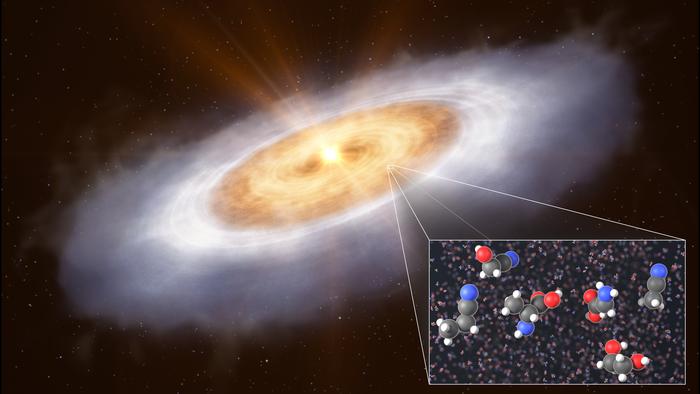
An artist's impression showing the planet-forming disk around the star V883 Orions.
An artist's impression showing the planet-forming disk around the star V883 Orions. 
(Image credit: ESO/L. Calçada/T. Müller (MPIA/HdA))

Astronomers have discovered key components to life's building blocks swirling around a remote baby star, hinting that the stuff of life is far more prevalent throughout the universe than once thought.

The material, discovered circling the protostar V883 Orionis 1,300 light-years from Earth in the constellation Orion, consists of 17 complex organic molecules that include ethylene glycol and glycolonitrile — precursors to components found in DNA and RNA.

The finding, published July 23 in the The Astrophysical Journal Letters, could prompt scientists to rethink just how common the chemical progenitors to life are. Though similar compounds have been discovered elsewhere in space, astronomers previously assumed that much of these would be destroyed by the violent births of stars, leaving life's seeds scattered around only the rare planetary systems capable of reproducing them.

You may like
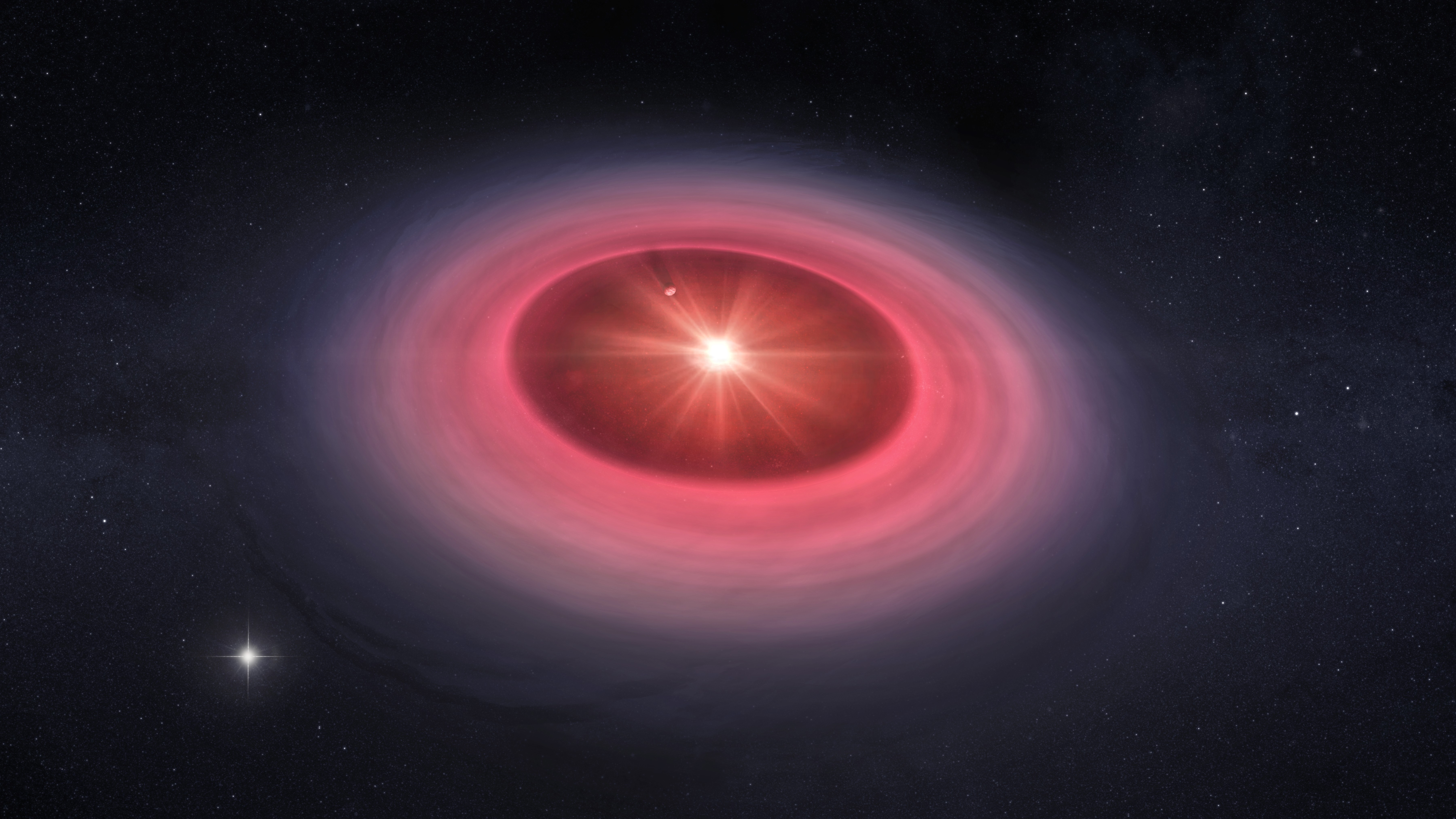
  • An illustration of the protoplanetary disk around the star HD 100453.

Alcohol-soaked star system could help explain 'why life, including us, was able to form'

  • an illustration showing a large disk of material around a star

James Webb telescope discovers frozen water around alien star

  • An illustration of a large UFO landing near a satellite at sunset

Aliens: Facts about extraterrestrial life and how scientists are looking for it

"Now it appears the opposite is true," study co-author Kamber Schwarz, an astrochemist at the Max Planck Institute for Astronomy in Heidelberg, Germany, said in a statement. "Our results suggest that protoplanetary discs inherit complex molecules from earlier stages, and the formation of complex molecules can continue during the protoplanetary disc stage."

Scientists have long traced the chemicals fundamental to life's origins across space. So far this search has yielded prebiotic molecules in comets, asteroids and floating in the gas and dust of interstellar space.

Stars begin in clouds of gas and dust, which slowly collapse and heat up as they coalesce into protostars and protoplanetary disks from which comets, asteroids and planets eventually form. Yet this process is a violent one, where outflows of shocked gas and intense stellar radiation produce enough energy to disrupt and even reset the steady chemical enrichment that leads to complex organic molecules.

Related: 

Or that's what scientists thought. Using the Atacama Large Millimeter/submillimeter Array (ALMA), a collection of 66 radio telescopes in northern Chile, the scientists behind the new study spotted telltale emission lines from a cluster of organic molecules inside V883 Orionis' protoplanetary disk. The young star is still stoking the fire of nuclear fusion at its core, leading to powerful bursts of radiation.

"These outbursts are strong enough to heat the surrounding disc as far as otherwise icy environments, releasing the chemicals we have detected," study first author Abubakar Fadul, a graduate student at the Max Planck Institute for Astronomy, said in the statement.

This means that instead of destroying these organic compounds, the star's growth could instead be freeing them from the icy surfaces upon which they typically form, pointing to "a straight line of chemical enrichment and increasing complexity between interstellar clouds and fully evolved planetary systems," Fadul said.

While the results are exciting, the scientists cautioned that they remain tentative. The researchers still need to retrieve higher resolution data to confirm their detections and conduct closer studies of how well these compounds hold up as their host star grows.

"Perhaps we also need to look at other regions of the electromagnetic spectrum to find even more evolved molecules," Fadul said. "Who knows what else we might discover?"

RELATED VIDEOS


{ https://www.livescience.com/space }

Hoe vind je dit bericht?
Geschreven door peter om 21:16 Stuur door

3I/ATLAS is 7 miles wide — the largest interstellar object ever seen — new photos from Vera C. Rubin Observatory reveal

3I/ATLAS is 7 miles wide — the largest interstellar object ever seen — new photos from Vera C. Rubin Observatory reveal

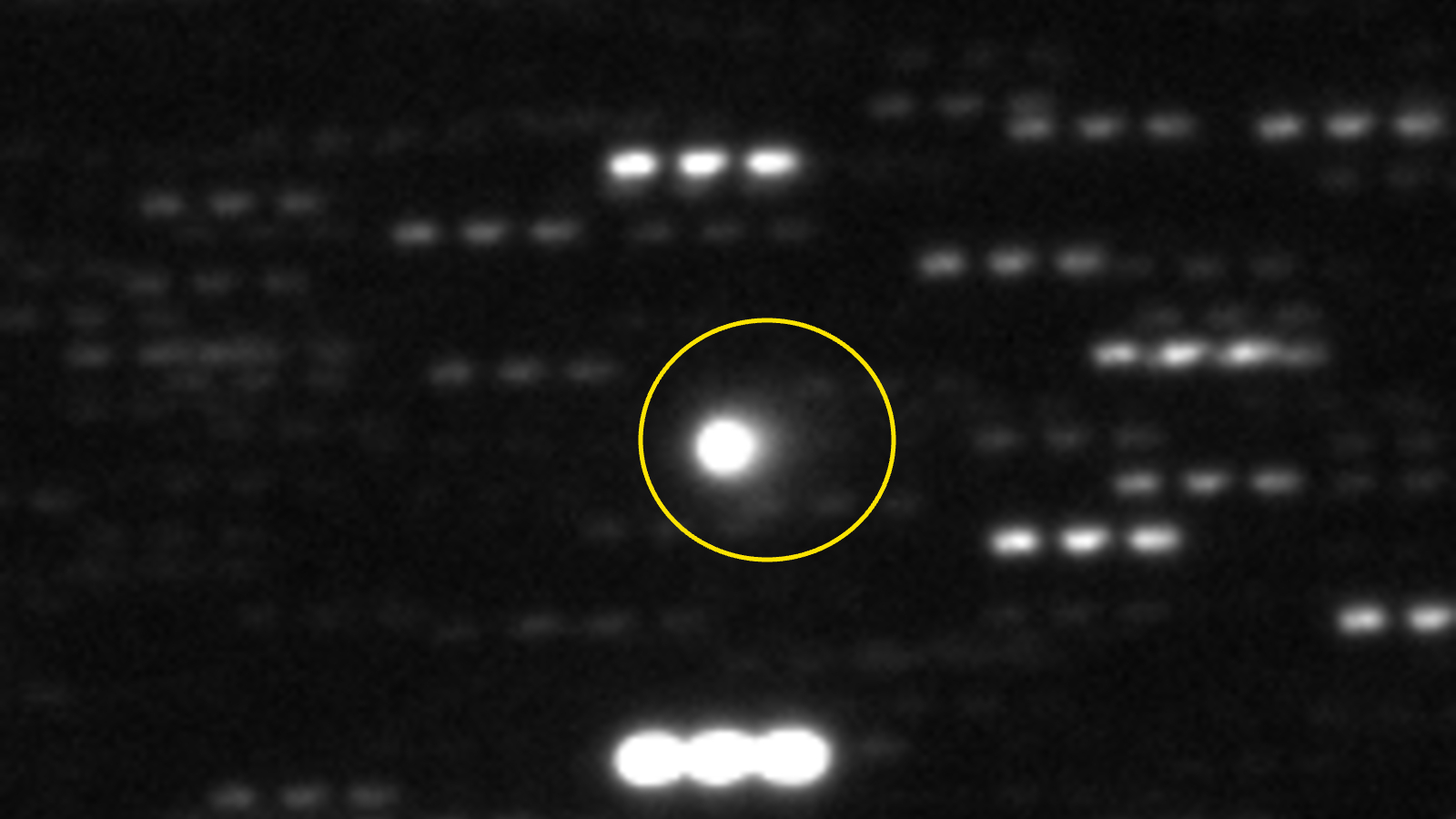
A blurry photo of a comet in the sky with a ring around it
3I/ATLAS is an interstellar comet that is currently shooting toward the sun on a one-way trip through the solar system. 
(Image credit: Darryl Seligman et al.)

The alien comet 3I/ATLAS is roughly 7 miles (11.2 kilometers) wide, making it the largest interstellar object ever spotted, according to newly revealed photos from the Vera C. Rubin Observatory.

The detailed images, which were captured before the extrasolar entity was officially discovered, highlight the immense power of the record-breaking telescope and demonstrate how valuable it will be for finding future interstellar interlopers, researchers say.

3I/ATLAS was discovered on July 1, barrelling toward the sun at more than 130,000 mph (210,000 km/h). Less than 24 hours later, NASA had confirmed that it was the third known interstellar object (ISO) — an ejected piece of an alien star system that is shooting clean through our solar system. It quickly became clear that 3I/ATLAS was a comet, and computer simulations tracing back its likely region of origin hint that it could be up to 3 billion years older than Earth, potentially making it the oldest comet ever detected.

You may like
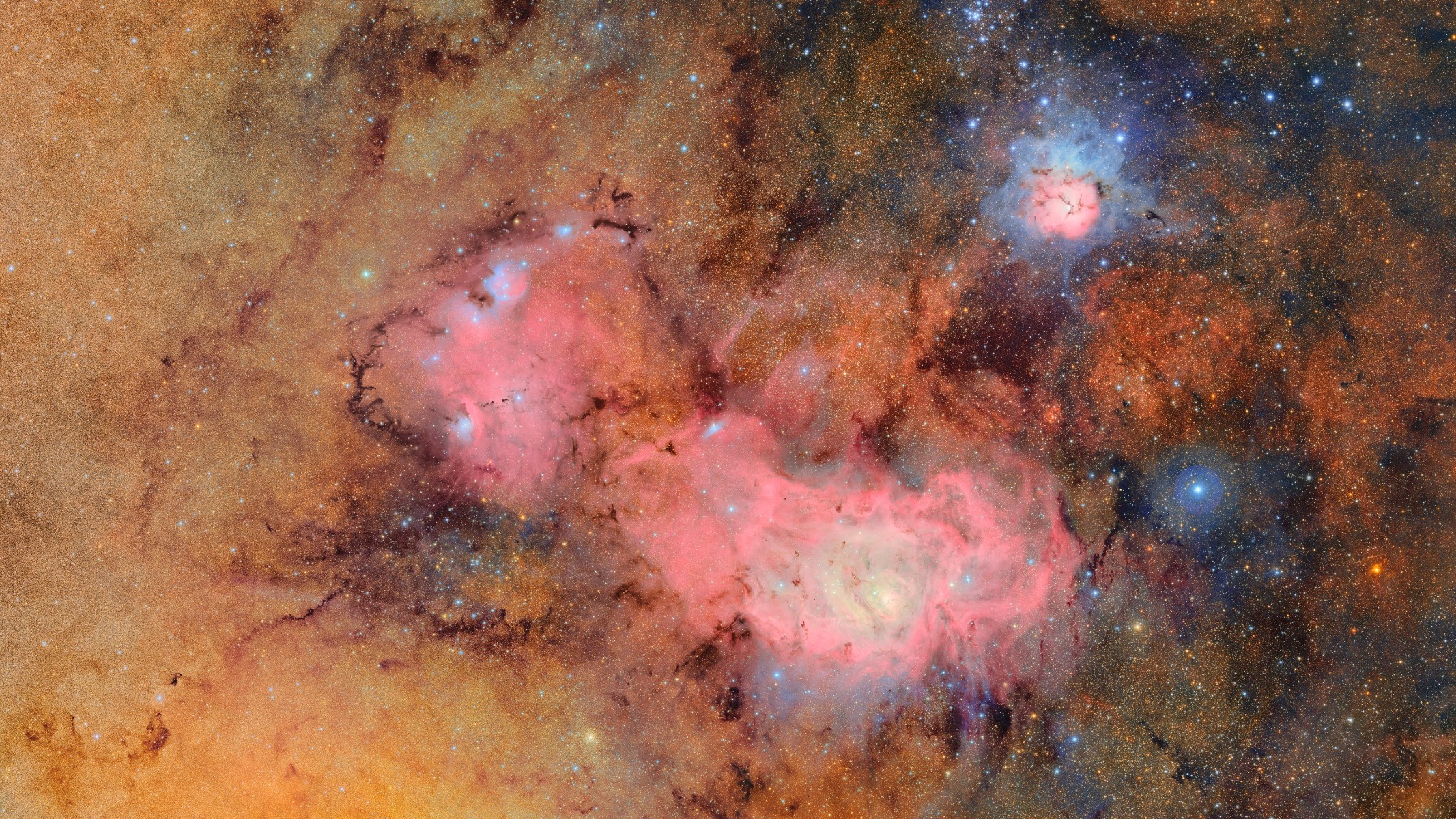
  • A space photograph of the Trifid and Lagoon nebulae taken with the Vera C. Rubin Observatory.

Rubin Observatory releases 'sneak peek' of first images taken with world's largest camera

  • an image of outer space showing a collection of galaxies that are all different colors, shapes, and sizes

James Webb telescope unveils largest-ever map of the universe

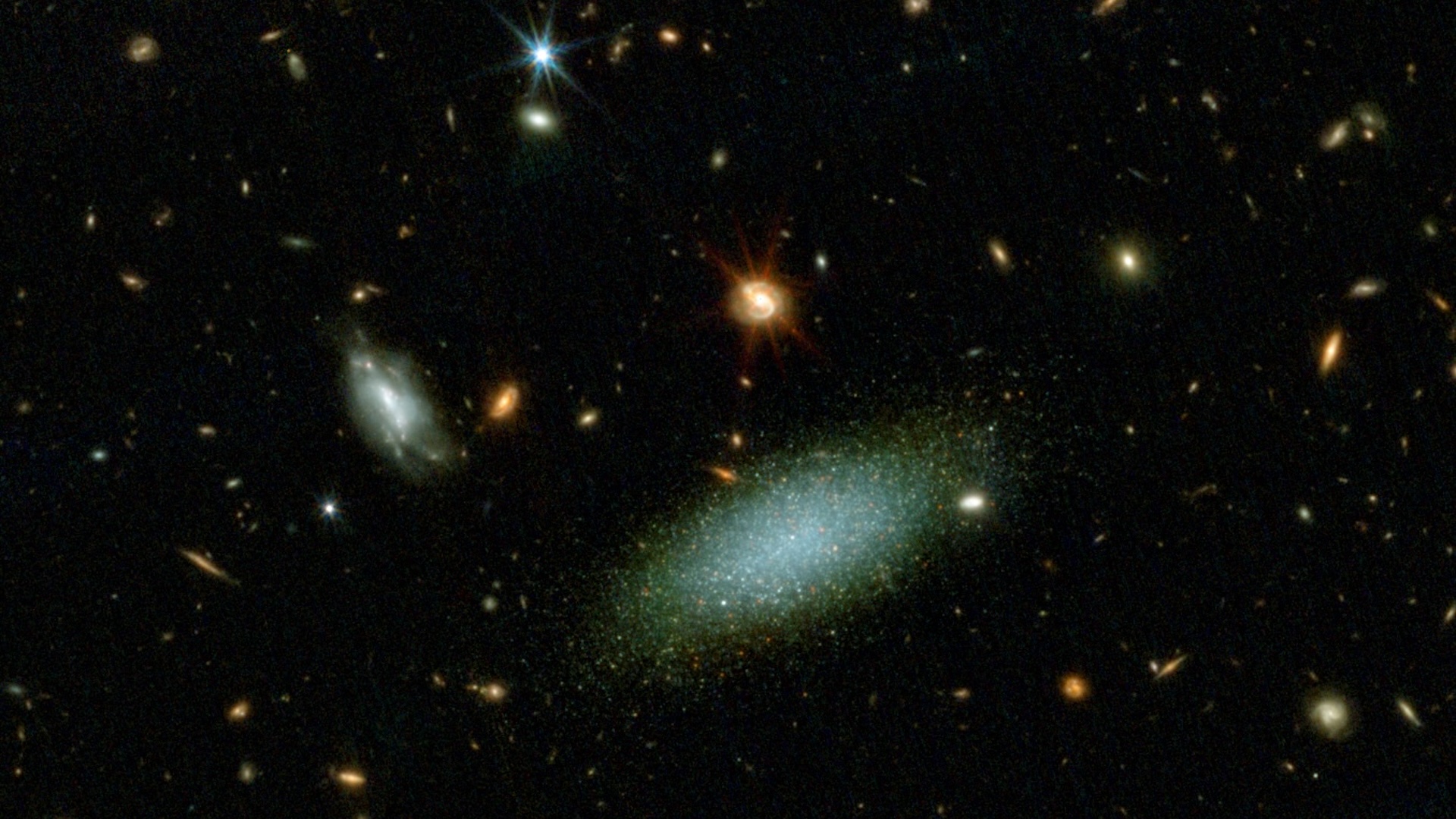
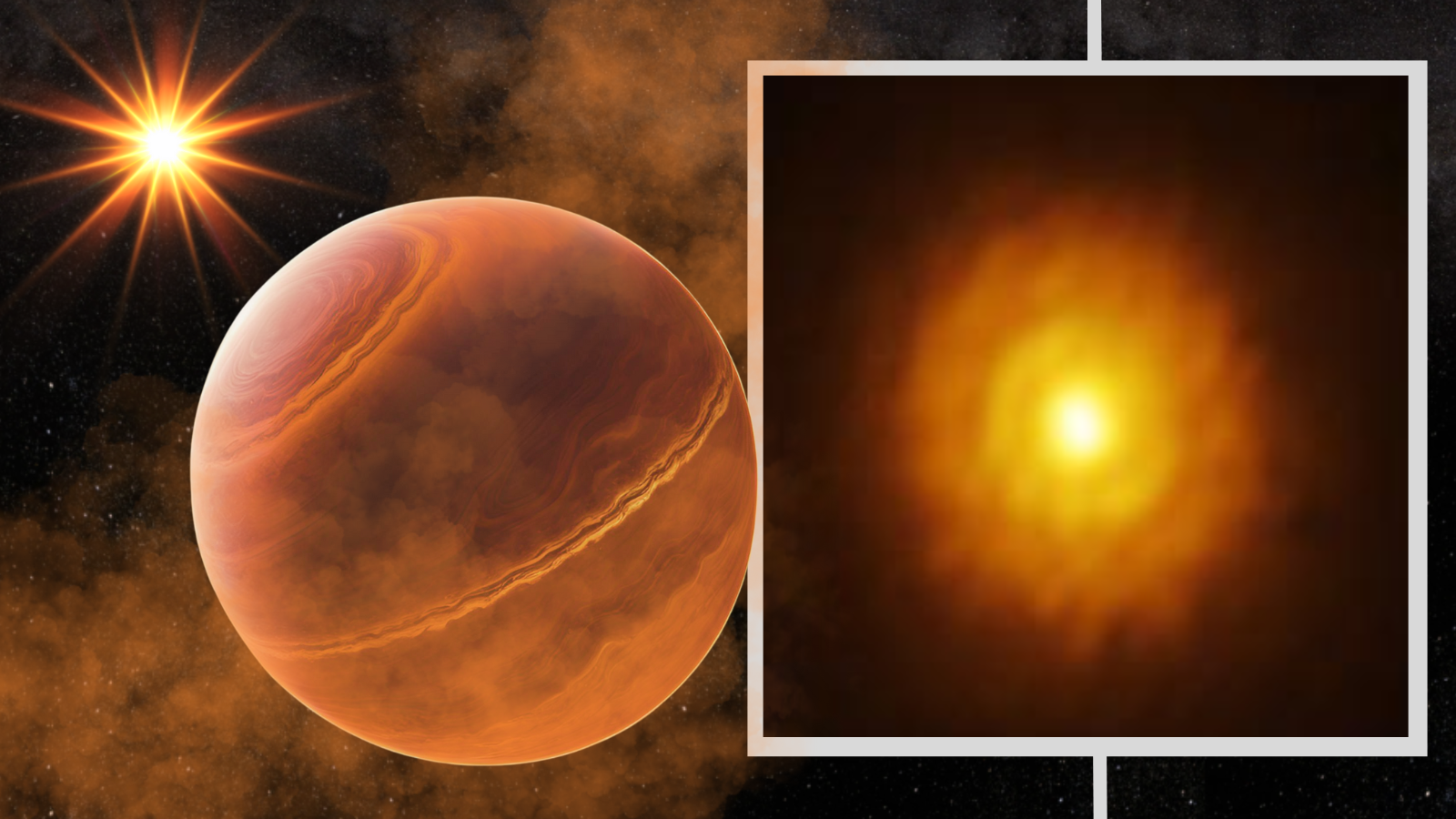
  • (Main) an illustration of a massive exoplanet emerging friom stellar fog (inset) MP Mus and its protoplanetary disk as seen by ALMA

Astronomers discover monster exoplanet hiding in 'stellar fog' around young star


"Breakthrough: James Webb Telescope Captures Jaw-Dropping Image of Massive Cosmic Entity"

Stunning New Image of Betelgeuse Captured by James Webb Telescope

Until now, all researchers have been able to uncover about the comet's size was that its coma — the cloud of ice, dust and gas surrounding it — was up to 15 miles (24 km) across. However, the size of its icy nucleus, or outer shell, remained a mystery.

But in a new study, uploaded July 17 to the preprint server arXiv, a group of more than 200 researchers was able to find images of the comet in Vera C. Rubin's extensive early data set, revealing the nucleus's likely size.

The images, which were snapped on June 21, suggest that the comet's nucleus has a likely radius of around 3.5 miles — or a diameter of about 7 miles — with a margin of error equal to around 0.4 mile (0.7 km).

Related:

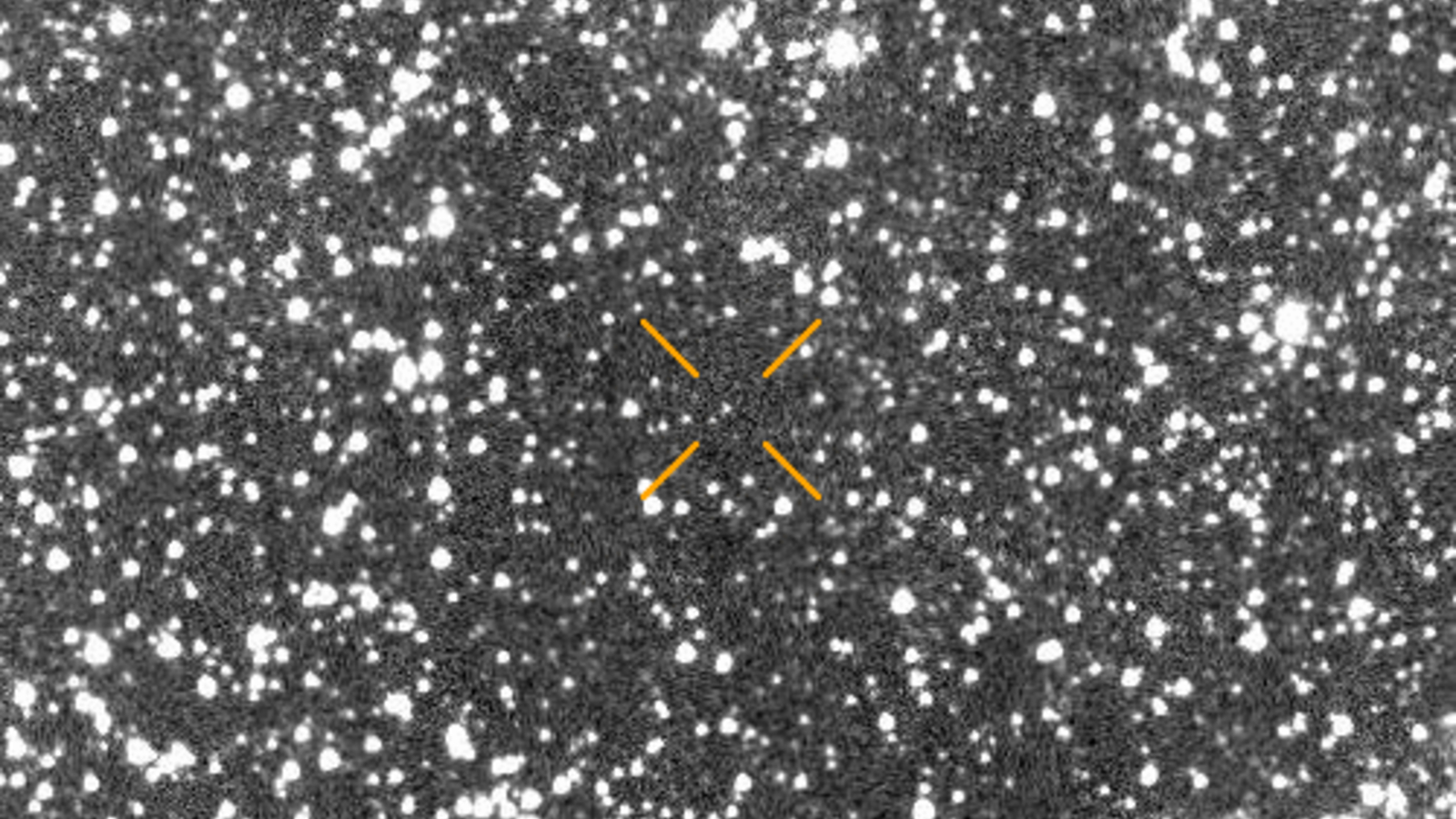
A blurry picture of stars with arrows pointing to where a comet is

3I/ATLAS was discovered on July 1 in images captured by the Asteroid Terrestrial-impact Last Alert System (ATLAS).  (Image credit: ATLAS/University of Hawaii/NASA)

Until now, only two other ISOs have ever been confirmed: 1I/'Oumuamua, an asteroid that was discovered in 2017; and 2I/Borisov, a comet spotted in 2019. Astronomers have, however, long suspected that many more ISOs have passed through the solar system undetected.

'Oumuamua is believed to be around 0.2 mile (0.4 km) wide, although its exact shape was unclear, while Comet Borisov has a nucleus roughly 0.6 mile (1 km) wide. This means that 3I/ATLAS is comfortably the largest ISO ever seen.

The new study has also given scientists a good look at the comet's coma and helped to identify large amounts of dust and water ice surrounding its nucleus. These additional findings are further evidence that 3I/ATLAS is a natural comet — not a disguised probe sent here by an advanced alien civilization, as some researchers have controversially proposed in recent weeks.

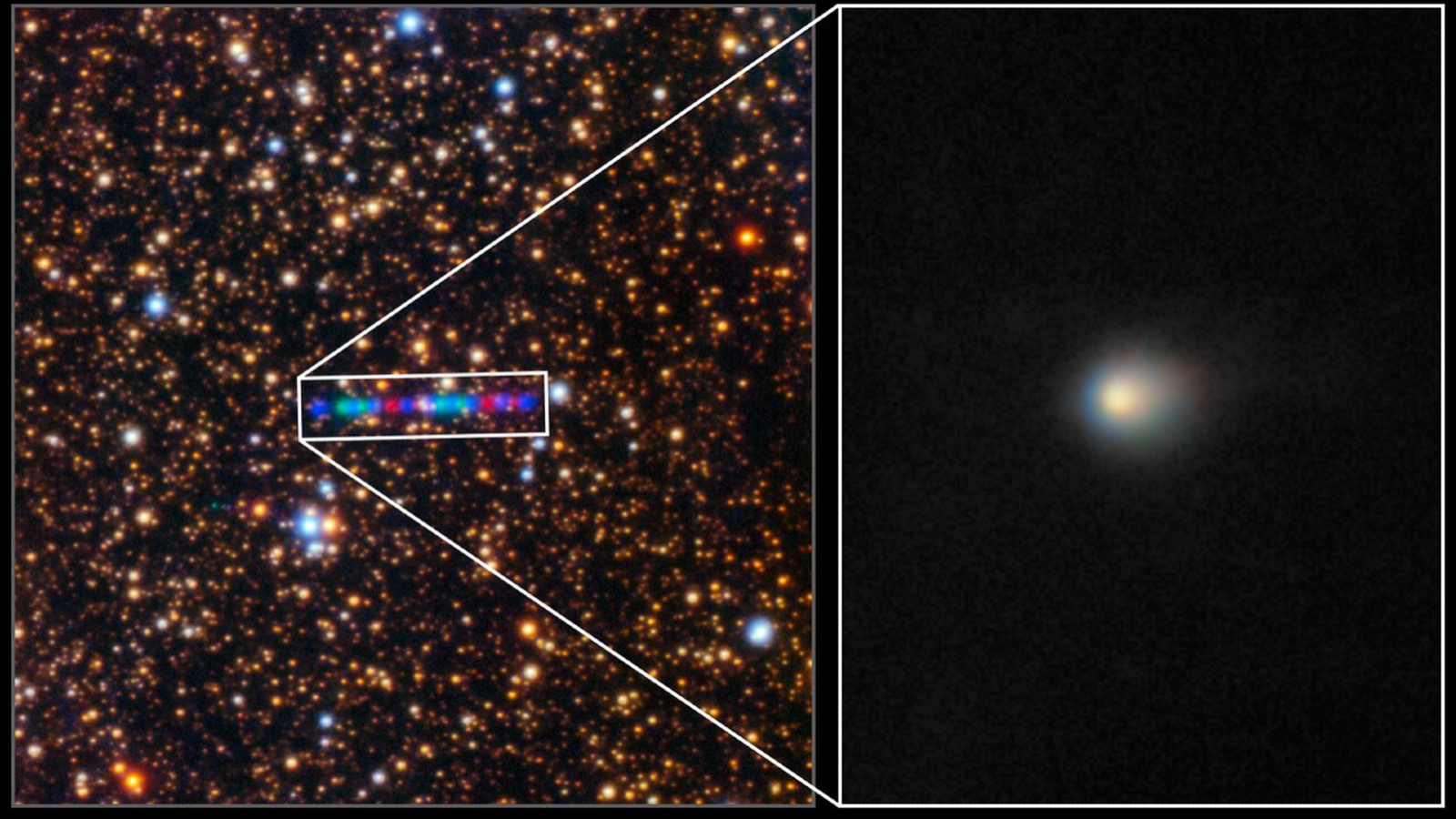
Photograph of a string of blue, red and green lights against a starry background

Until now, researchers had only been able to get accurate measurements of the coma surrounding 3I/ATLAS.  (Image credit: International Gemini Observatory/NOIRLab/NSF/AURA/K. Meech (IfA/U. Hawaii)Image Processing: Jen Miller & Mahdi Zamani (NSF NOIRLab))

The Vera C. Rubin Observatory, located in the Chilean Andes, is equipped with the world's largest digital camera, which is about to begin a 10-year mission to scan the Southern Hemisphere's skies, known as the Legacy Survey of Space and Time (LSST). The telescope released its first images in June, revealing more than 10 million galaxies in unprecedented detail, and has already discovered thousands of new asteroids.

The fact that the newly released photos could determine 3I/ATLAS' size, 10 days before the object was discovered, is proof of what Vera C. Rubin will be able to accomplish when it is fully switched on later this year, the study team wrote.

Many experts believe that the observatory will revolutionize the study of ISOs and predict that it could spot up to 50 new alien interlopers within the next decade, according to Forbes.

RELATED VIDEOS


{ https://www.livescience.com/space }

Hoe vind je dit bericht?
Geschreven door peter om 20:58 Stuur door

Stonehenge Mystery Solved: Ancient Britons Transported Massive Boulders 450 Miles

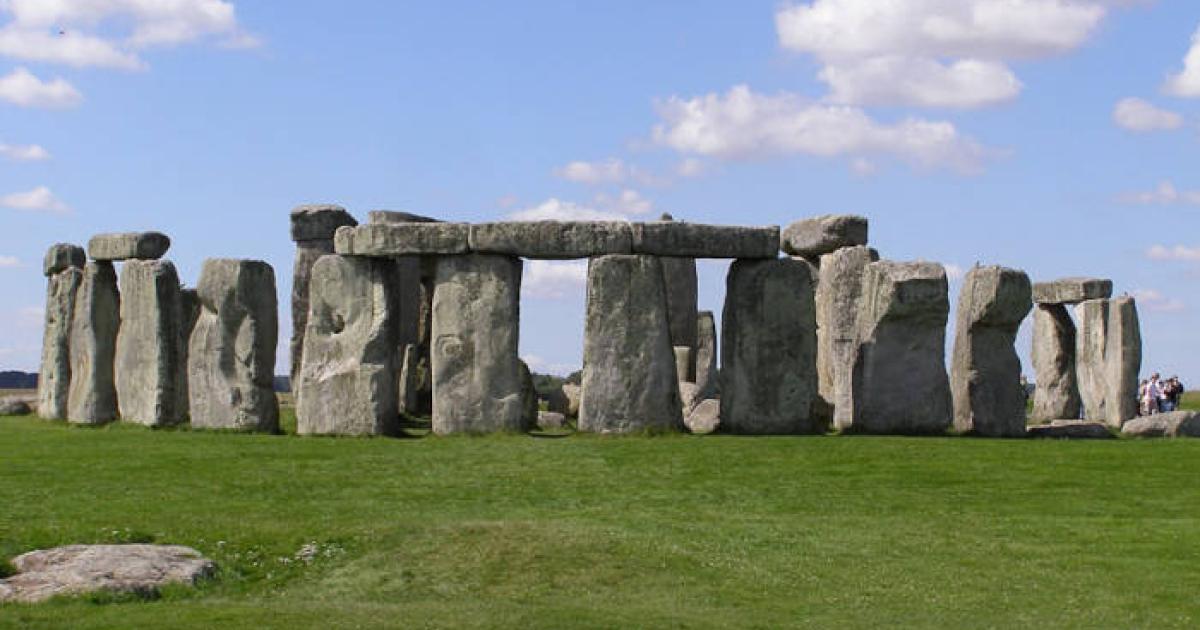
Stonehenge's iconic stone circle on Salisbury Plain on a clear day.

Stonehenge Mystery Solved: Ancient Britons Transported Massive Boulders 450 Miles

New archaeological evidence has settled one of Stonehenge's most enduring mysteries, confirming that ancient Britons accomplished extraordinary feats of logistics by transporting massive stone boulders across vast distances over 5,000 years ago. A groundbreaking study published in the Journal of Archaeological Science: Reports has provided conclusive proof that the iconic monument's builders moved stones not just from Wales, but from as far away as Scotland - a journey exceeding 435 miles (700 km) that would have challenged even modern engineering capabilities.

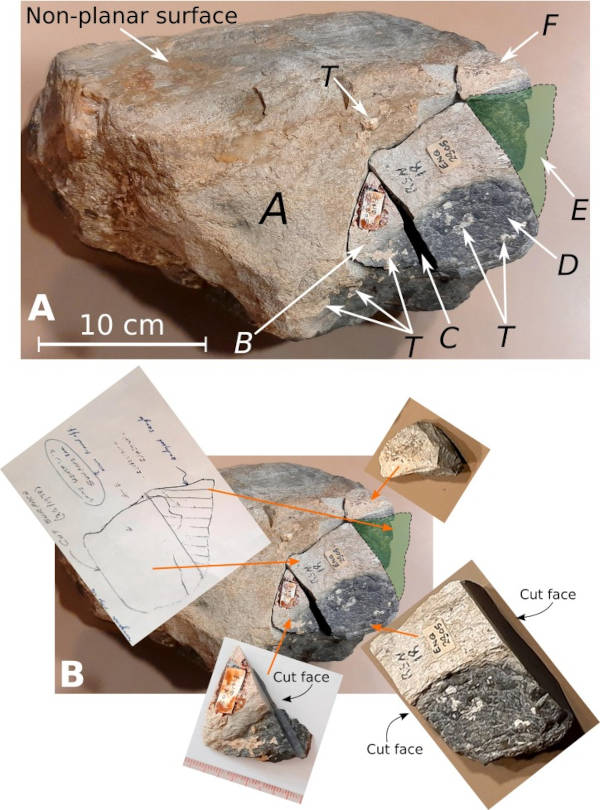
The research, led by Professor Richard Bevins from Aberystwyth University, focused on the enigmatic Newall boulder, a football-sized rock discovered during excavations a century ago. Through sophisticated geochemical and microscopic analysis, the team has conclusively proven that this stone and others were deliberately transported by humans 125 miles (200km) from Craig Rhos-y-Felin in north Pembrokeshire, Wales, rather than carried by glacial ice as some theories had suggested.

Most remarkably, previous research has shown that Stonehenge's six-ton Altar Stone originated in northeastern Scotland, requiring transport across an almost incomprehensible distance for Neolithic peoples who lacked wheeled vehicles or domesticated horses.

The Newall boulder, discovered at Stonehenge, shows the distinctive weathering patterns that prove human rather than glacial transport. 

(Bevins et al. 2025/ScienceDirect)

Scientific Analysis Reveals Human Achievement Over Natural Forces

The research team's meticulous investigation of the Newall boulder revealed compelling evidence that is seen to dismiss the glacial transport theory once and for all. Chemical analysis showed that the boulder and other fragments found at Stonehenge share identical levels of thorium and zirconium with stones from the Welsh quarry site, creating an undeniable geological fingerprint.

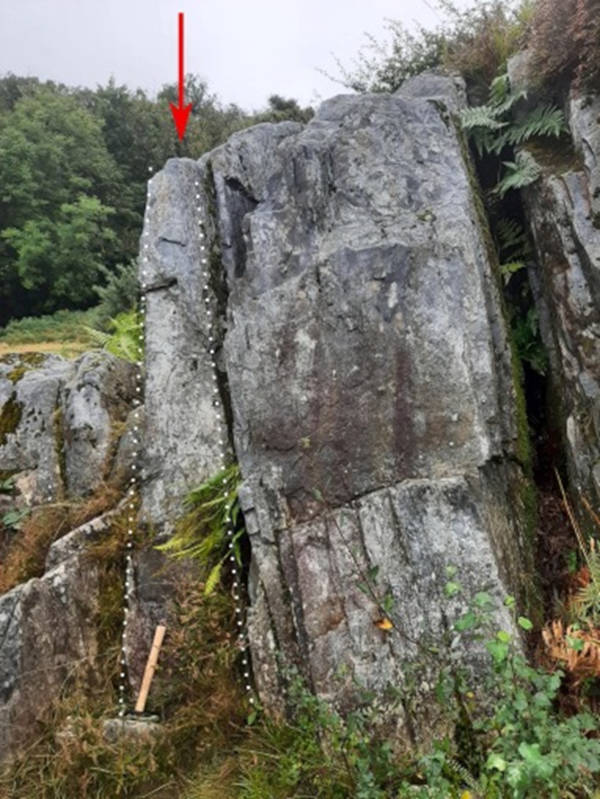
The scientists discovered that Craig Rhos-y-Felin contains columns of foliated rhyolite with rounded, "bullet-shaped" tops that are identical in form to the Newall boulder. This unique geological formation provides irrefutable evidence of the stone's Welsh origin and rules out random glacial distribution.

Perhaps most significantly, the study revealed that the Newall boulder has developed a surface layer rich in calcium carbonate - the result of its long burial in Stonehenge's chalky soils. This weathering pattern further reinforces human transport, as glacial movement would have created a much more dispersed distribution of similar stones across the Salisbury Plain, something that archaeological surveys have never found.

The research also made an important discovery about another buried stone at Stonehenge, designated Stone 32d. Previously thought to be spotted dolerite, new analysis confirms it is also foliated rhyolite like the Newall boulder, suggesting both originated from the same Welsh quarry and were transported together as part of a coordinated construction effort.

The Craig Rhos-y-Felin quarry in Wales, showing the distinctive bullet-shaped rock columns that match the Newall boulder. 

(Bevins et al. 2025/ScienceDirect)

Unprecedented Logistics of Ancient Engineering

The implications of these findings extend far beyond simple stone transport - they reveal sophisticated planning and coordination capabilities among Neolithic British communities that rival modern engineering projects. Transporting stones weighing over three tones from Wales to Stonehenge would have required unprecedented collaboration between different tribal groups across hundreds of miles of challenging terrain.

Evidence suggests that ancient quarrying operations at Craig Rhos-y-Felin were active around 3000 BC, with Neolithic communities deliberately extracting specific stones for transport to distant sites. The precision with which particular rock types were selected indicates sophisticated geological knowledge and suggests that certain stones were valued for properties beyond mere construction material.

The researchers emphasize that if Neolithic peoples could move stones weighing several tons across such distances, they certainly possessed the capability to transport the much heavier sarsen stones from West Woods in Wiltshire - a mere 20 miles (32 km) away. The largest sarsen stones weigh over 20 tons and stand up to seven meters (23 feet) tall, yet their transport would have required an order of magnitude less effort than moving the bluestones from Wales or the Altar Stone from Scotland.

Recent archaeological evidence has demonstrated that indigenous peoples in various parts of the world have successfully transported stones weighing many tones across great distances using technologies available during the Neolithic period: ropes, wooden sledges, and carefully constructed trackways.

Stonehenge as Monument to Ancient British Unity

The discovery that Stonehenge incorporated stones deliberately transported from across the British Isles - Wales, Scotland, and local Wiltshire sources - suggests the monument served a far greater purpose than previously understood. Rather than being merely a local religious or astronomical site, Stonehenge appears to have been conceived as a unifying symbol for the peoples of Britain, celebrating eternal links with ancestors and the cosmos.

This interpretation gains support from the extraordinary effort required to coordinate such a massive construction project. Moving the six-ton Altar Stone from northeastern Scotland alone would have necessitated cooperation between numerous communities. The logistics of such an undertaking suggest sophisticated communication networks and shared cultural objectives that extended across the entire British Isles.

The researchers noted that while ancient peoples typically used locally available materials for stone circles, Stonehenge is exceptional for being constructed entirely of stones brought from long distances. This unique characteristic reinforces theories that the monument was intended to serve as a political as well as religious center - "a moment of unification for the peoples of Britain."

The study's authors conclude with a claimed 95 percent accuracy that their findings definitively refute glacial transport theories and establish human agency in creating one of the world's most remarkable ancient monuments. Their research provides compelling evidence that Neolithic British communities possessed far more sophisticated organizational capabilities than previously recognized.

As the mystery of how Stonehenge was built continues to unfold, this latest research provides crucial insights into the remarkable capabilities of ancient British peoples. While questions remain about the exact methods used to transport these massive stones and the specific purposes the monument served, the evidence now clearly establishes that Stonehenge stands as a testament to sophisticated planning, extraordinary logistics, and unified purpose among the peoples of prehistoric Britain.

  • Top image: Stonehenge's iconic stone circle on Salisbury Plain, incorporating massive megaliths transported from across the British Isles by Neolithic peoples over 5,000 years ago.
  • Source: garethwiscombe/CC BY 2.0

By Gary Manners

References

{ https://www.ancient-origins.net/history-archaeology }

Hoe vind je dit bericht?
Geschreven door peter om 18:47 Stuur door

When Moon Dust Becomes a Weapon!

When Moon Dust Becomes a Weapon!

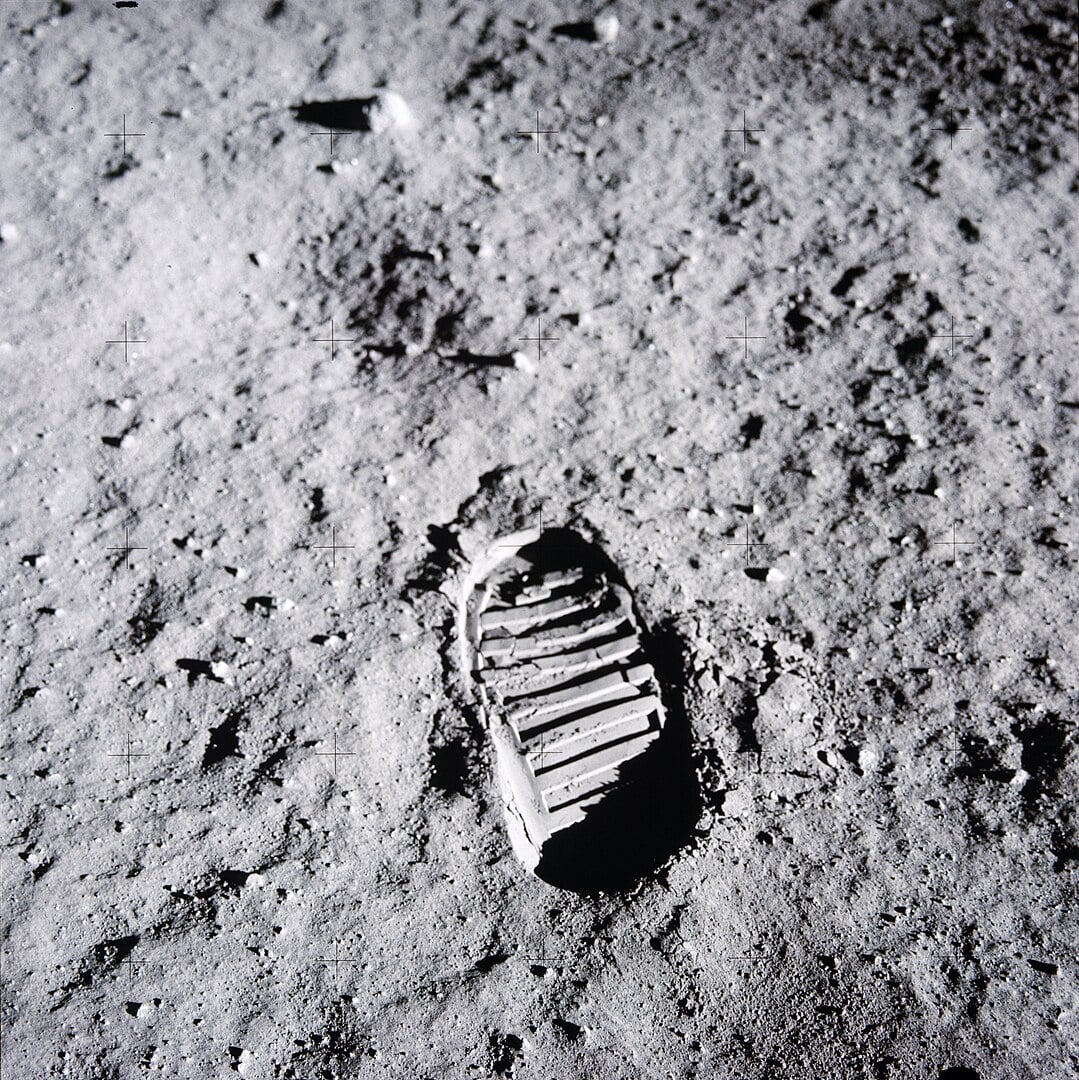
The footprint of Buzz Aldrin on the surface of the Moon is imprinted in the lunar regolith, the powdery lunar surface material. (Credit : NASA / Buzz Aldrin) The footprint of Buzz Aldrin on the surface of the Moon is imprinted in the lunar regolith, the powdery lunar surface material. (Credit : NASA / Buzz Aldrin)

When rocket engines fire during lunar landings, they don't just kick up a little dust. They unleash massive clouds of high speed particles that behave like natural sandblasting jets, capable of damaging expensive equipment, solar panels, and even entire habitats. As space agencies prepare for permanent lunar settlements through programs like NASA's Artemis mission, understanding this phenomenon has become a matter of survival.

The mystery began during the Apollo era, when astronauts and mission controllers noticed something peculiar, the dust clouds didn't spread randomly. Instead, they formed distinctive streaks radiating outward from the landing site in regular patterns, like spokes on a wheel. The same patterns appeared again recently during Firefly Aerospace's Blue Ghost lander mission, proving this wasn't just an Apollo-era anomaly.

Apollo Apollo Lunar Module-5 Eagle as seen from CSM-107 Columbia (Credit : NASA)

Apollo Apollo Lunar Module-5 Eagle as seen from CSM-107 Columbia

(Credit : NASA)

For years, no one could explain why these patterns formed so consistently. Now, a research team led by Rui Ni from Johns Hopkins University has cracked the code. Working with NASA's Marshall Space Flight Center and the University of Michigan, they discovered that the streaks result from something called the Görtler instability, a fluid dynamics phenomenon where curved exhaust flows create rotating vortices that organise the dust into those characteristic patterns.

The vacuum test chamber with its door open at NASA's Johnson Space Center (Credit : NASA Johnson Space Centre)

The vacuum test chamber with its door open at NASA's Johnson Space Center

(Credit : NASA Johnson Space Centre)

To solve this puzzle, the researchers built a sophisticated experimental setup in NASA's 15 foot vacuum chamber. They used six cameras to track how gas jets interacted with simulated lunar soil in near vacuum conditions, mimicking the Moon's environment. This allowed them to observe crater formation and trace the paths of individual dust particles as they were blasted away from the surface.

"We discovered that the strikingly regular streak patterns seen during landings aren't caused by the chosen landing sites. Instead, they result from the behaviour of the supersonic rocket plume as it imprints on the granular surface. This effect is extremely pronounced on the Moon due to its near-vacuum environment.”

- Rui Ni from Johns Hopkins University.

The Moon's lack of atmosphere makes this problem much worse than it would be on Earth. Without air resistance to slow them down, dust particles can travel at tremendous speeds and distances. What might be a minor dust cloud on Earth becomes a dangerous projectile field on the moon.

This outcome of the study is essential for future lunar exploration. High speed lunar dust can damage landing gear, contaminate scientific instruments, reduce solar panel efficiency, and even pose risks to astronauts and their equipment. For permanent lunar bases to succeed, engineers need to understand and prepare for these dust storms.

By understanding how these dust plumes behave, mission planners can better predict where debris will land for future missions, design more resilient equipment, and develop strategies to protect critical infrastructure. They might position sensitive equipment away from predicted dust trajectories for example or design landing pads that minimise dust generation.

Source :

{ https://www.universetoday.com/ }

Hoe vind je dit bericht?
Geschreven door peter om 18:30 Stuur door

Meer van UFO'S of UAP'S, ASTRONOMIE, RUIMTEVAART, ARCHEOLOGIE, OUDHEIDKUNDE, SF-SNUFJES EN ANDERE ESOTERISCHE WETENSCHAPPEN - DE ALLERLAATSTE NIEUWTJES

↑ Terug naar de berichten