Ontdek de Fascinerende Wereld van UFO's en UAP's: Jouw Bron voor Onthullende Informatie!
Ben jij ook gefascineerd door het onbekende? Wil je meer weten over UFO's en UAP's, niet alleen in België, maar over de hele wereld? Dan ben je op de juiste plek!
België: Het Kloppend Hart van UFO-onderzoek
In België is BUFON (Belgisch UFO-Netwerk) dé autoriteit op het gebied van UFO-onderzoek. Voor betrouwbare en objectieve informatie over deze intrigerende fenomenen, bezoek je zeker onze Facebook-pagina en deze blog. Maar dat is nog niet alles! Ontdek ook het Belgisch UFO-meldpunt en Caelestia, twee organisaties die diepgaand onderzoek verrichten, al zijn ze soms kritisch of sceptisch.
Nederland: Een Schat aan Informatie
Voor onze Nederlandse buren is er de schitterende website www.ufowijzer.nl, beheerd door Paul Harmans. Deze site biedt een schat aan informatie en artikelen die je niet wilt missen!
Internationaal: MUFON - De Wereldwijde Autoriteit
Neem ook een kijkje bij MUFON (Mutual UFO Network Inc.), een gerenommeerde Amerikaanse UFO-vereniging met afdelingen in de VS en wereldwijd. MUFON is toegewijd aan de wetenschappelijke en analytische studie van het UFO-fenomeen, en hun maandelijkse tijdschrift, The MUFON UFO-Journal, is een must-read voor elke UFO-enthousiasteling. Bezoek hun website op www.mufon.com voor meer informatie.
Samenwerking en Toekomstvisie
Sinds 1 februari 2020 is Pieter niet alleen ex-president van BUFON, maar ook de voormalige nationale directeur van MUFON in Vlaanderen en Nederland. Dit creëert een sterke samenwerking met de Franse MUFON Reseau MUFON/EUROP, wat ons in staat stelt om nog meer waardevolle inzichten te delen.
Let op: Nepprofielen en Nieuwe Groeperingen
Pas op voor een nieuwe groepering die zich ook BUFON noemt, maar geen enkele connectie heeft met onze gevestigde organisatie. Hoewel zij de naam geregistreerd hebben, kunnen ze het rijke verleden en de expertise van onze groep niet evenaren. We wensen hen veel succes, maar we blijven de autoriteit in UFO-onderzoek!
Blijf Op De Hoogte!
Wil jij de laatste nieuwtjes over UFO's, ruimtevaart, archeologie, en meer? Volg ons dan en duik samen met ons in de fascinerende wereld van het onbekende! Sluit je aan bij de gemeenschap van nieuwsgierige geesten die net als jij verlangen naar antwoorden en avonturen in de sterren!
Heb je vragen of wil je meer weten? Aarzel dan niet om contact met ons op te nemen! Samen ontrafelen we het mysterie van de lucht en daarbuiten.
Bestaat er een mysterieuze negende planeet in ons zonnestelsel? Nieuw bewijs toont aan dat er mogelijk ver voorbij Pluto een hypothetische planeet is die 'Planeet Negen' of 'Planeet X' wordt genoemd. Astronomen voorspellen dat er mogelijk een grote, nog niet ontdekte planeet met gravitationele interactie zich in de Kuipergordel bevindt. Het bestaan van deze mysterieuze planeet kan de afwijkende banen en gravitationele interacties van enkele dwergplaneten en andere objecten in de Kuipergordel verklaren.
Wil je meer weten? Bekijk dan deze afbeeldingen en informatie!
Neptunus Het is bijna 200 jaar geleden dat astronomen op een nieuwe planeet in ons zonnestelsel stuitten. Neptunus werd in slechts één nacht planeten observeren ontdekt, toen Johann Gottfried Galle en zijn student in 1846 een telescoop op de planeet richtten.
California Institute of Technology In 2016 verklaarden Konstantin Batygin en Mike Brown, twee astronomen van het California Institute of Technology (Caltech), dat hun onderzoek bewijs levert voor het mogelijke bestaan van een grote planeet in het buitenste zonnestelsel.
Sterk bewijs Hoewel de astronomen de planeet niet hebben waargenomen, leveren ze sterk theoretisch bewijs voor zowel het bestaan ervan als relevante informatie over de mogelijke impact ervan.
Kuipergordel Dit bewijsmateriaal toont de invloed van de hypothetische planeet op dwergplaneten en kleinere objecten in de Kuipergordel en de mogelijke relatie tussen hen.
Planeet Negen De mysterieuze planeet, die ook wel 'Planeet X' (de 'X' staat voor de letter, niet voor het Romeinse cijfer) of 'Planeet Negen' wordt genoemd, is vermoedelijk 1,5 keer zo groot als de aarde en bevindt zich ver voorbij Pluto.
Vijf tot tien keer grotere massa dan die van de aarde De massa van de planeet is mogelijk 5 tot 10 keer groter dan die van de aarde en hij zou in een 20 tot 30 keer grotere baan om de zon kunnen draaien dan Neptunus. NASA merkt op dat het Planeet Negen, mocht deze theorie kloppen, 10.000 tot 20.000 aardjaren zou kosten om één keer om de zon te draaien.
Unieke banen Astronomen zeggen dat het mogelijke bestaan van deze planeet het gedrag van bepaalde objecten in het buitenste zonnestelsel zou kunnen verklaren, met name de unieke banen van dwergplaneten en ijzige objecten in de Kuipergordel.
Gerard Kuiper De Kuipergordel is vernoemd naar de astronoom Gerard Kuiper. Het is een koud gebied dat zich voorbij de baan van Neptunus bevindt en wordt soms de 'derde zone' van het zonnestelsel genoemd.
IJzige objecten Astronomen denken dat er naast Pluto nog miljoenen andere ijzige objecten in de Kuipergordel aanwezig zijn, waaronder stoffen als ammoniak en methaan.
Opgeblazen donut De Kuipergordel staat bekend als een van de grootste samenstellingen in ons zonnestelsel en wordt over het algemeen beschreven als een opgeblazen donut.
Rand van de baan van Neptunus De Kuipergordel begint aan de rand van de baan van Neptunus en strekt zich uit over bijna 1.000 AE (1 AE komt overeen met de afstand van de zon tot de aarde).
Meer dan 2.000 objecten ontdekt Hoewel astronomen rond de 2.000 objecten hebben geïdentificeerd in de Kuipergordel, is het waarschijnlijk dat er nog honderdduizenden onontdekte objecten zijn. Deze worden vaak beschouwd als 'overblijfselen' van de vorming van het zonnestelsel.
Vorming van het zonnestelsel De theorie over hoe dit tot stand kwam, is dat toen het zonnestelsel zich vormde, Uranus en Neptunus door verschuivingen in de banen van Jupiter en Saturnus gedwongen werden om verder van de zon te bewegen.
Jupiter De zwaartekracht van de baan van Neptunus duwde deze objecten in de richting van de zon en grote planeten zoals Jupiter, terwijl Jupiter ze vervolgens uit het zonnestelsel slingerde of naar verre banen bracht.
Verbrokkelde stukken De zwaartekracht van Neptunus duwde de resterende objecten de Kuipergordel in, waar ze soms op elkaar botsten en in verbrokkelde stukken uiteenvielen.
Dwergplaneten en samengeklonterde objecten Astronomen die de Kuipergordel onderzoeken, merken dat verschillende kleinere planeten en sommige objecten de neiging hebben om in dezelfde banen rond te draaien en daarbij samen te klonteren.
Theorie over Planeet Negen Het is de analyse van deze banen, oftewel de gravitationele interacties met een grote planeet, waar astronomen hun theorie over het bestaan van Planeet Negen op baseren.
Sommige onderzoekers ontkennen het bestaan ervan Sommige criticasters in de gemeenschap van wetenschappers ontkennen het mogelijke bestaan van Planeet Negen. Zij beweren dat de waargenomen banen slechts te wijten zijn aan de willekeurige verspreiding van objecten langs de Kuipergordel.
Alle middelen worden ingezet Wetenschappers proberen wanhopig de planeet te vinden om het bestaan ervan te bevestigen. Met behulp van een speciaal observatorium, krachtige telescopen en burgerprojecten proberen astronomen zoveel mogelijk gegevens te verzamelen om de planeet te lokaliseren.
Complexe computersimulaties De huidige theorie is gebaseerd op complexe computersimulaties waarbij rekening wordt gehouden met een aantal voorwaarden. Het model dat het meest aansluit bij het waargenomen gedrag van banen is het model waarin Planeet Negen is opgenomen.
Vera C. Rubin Observatory Wetenschappers hopen dat het nieuwe Vera C. Rubin Observatorium in Chili zal bijdragen aan het beantwoorden van een aantal vragen over Planeet Negen en het oplossen van andere kwesties m.b.t. sterrenkunde.
Gedetailleerde timelapse Dankzij innovatieve technologie kan het observatorium gedurende tien jaar een uitgebreid en gedetailleerd overzicht van het heelal bieden met behulp van de grootste camera die ooit is gebouwd.
Verzamelde beelden De beelden die het observatorium verzamelt, kunnen een gedetailleerder inzicht verschaffen in de verspreiding van objecten langs de Kuipergordel.
Waarom is het zo moeilijk om de planeet te vinden? Het lokaliseren van planeten is een behoorlijke uitdaging. Astronomen gebruiken de transitmethode om planeten in andere zonnestelsels te vinden.
Transitmethode Astronomen kunnen planeten waarschijnlijk beter vinden door de bewegingen van een ster te observeren. Het computermodel dat wordt gebruikt om Planeet Negen te detecteren, schat de kans dat de planeet bestaat op 99 procent.
Malena Rice Malena Rice, universitair docent astronomie aan de Yale-universiteit, stelde dat het vinden van een andere planeet "ons begrip van het zonnestelsel en andere planetenstelsels, en hoe wij in die context passen, volledig zou kunnen veranderen".
Mysteries van het buitenste zonnestelsel Kleine zwarte gaten, potentiële buitenaardse werelden, extra dwergplaneten, vulkanische kometen en asteroïden zijn slechts enkele van de mysteries omtrent het buitenste zonnestelsel die astronomen proberen te ontrafelen.
De zoektocht gaat door Terwijl de zoektocht naar Planeet Negen doorgaat, zetten sommige wetenschappers alles in op indirect bewijs voor het bestaan van de planeet, terwijl anderen er zeer kritisch tegenover staan.
High resolution image of interstellar visitor 3I/ATLAS, captured by the Vera Rubin observatory on July 3rd. Credit - C.O. Chandler et al.
Sometimes serendipity happens in science. Whether it’s an apple falling from a tree or a melting chocolate bar, some of the world’s greatest discoveries come from happy accidents, even if their stories may be apocryphal. According to a new paper on arXiv, there’s a new story to add to the archives of serendipitous scientific discoveries - Rubin happened to make observations of interstellar object 3I/ATLAS before its official discovery, while the telescope was still in its Science Validation survey, marking the earliest, high resolution images we will likely get of the comet at that time.
According to the paper, Rubin just happened to be pointing at the part of the sky where 3I/ATLAS was located during its Science Validation (SV) phase. It unknowingly took pictures of the object between June 21st (10 days before it was officially discovered) and July 7th. June 21st was even a few days before the telescope officially released its “First Look” images to the public back on June 23rd.
These observations are important because they are the earliest ones done by a high power telescope. Rubin’s 8.4m Simoyi Survey Telescope and 3.2-gigapixel Legacy Survey of Space and Time (LSST) combined to capture the highest resolution images of the comet released to date. Since the images were captured before full commissioning, the data they represented had to be run through customer data pipelines rather than the standard automated ones that will handle the terabytes of data normally created by Rubin every night.
Fraser discusses the new interstellar object, 3I/ATLAS.
There were 49 images included in the study, though some were excluded due to being captured during telescope alignments, blending with other stars, or just being out of focus. Nineteen of the images were captured during intentional SV operations.
Those images show a comet that largely behaved as expected. They provided the highest resolution proof that 3I/ATLAS is, in fact a comet, and shows cometary behavior, like a coma of gas and dust surrounding it. The apparent size of its coma grew about 58% over the observational period as it continued to approach the Sun. Interestingly, it had a sunward pointing tail. According to the paper this can be explained by “anisotropic dust emission”, and has been observed in other comets, though it is relatively rare. Several explanations are offered, including slow ejection of large particles that aren’t pushed back as quickly by the Sun’s radiation pressure or a rotational axis that nearly aligns with its orbital plane.
Perhaps not as excitingly, 3I/ATLAS doesn’t show any sign of non-gravitational acceleration like 1I/Oumuamua. That’s not to say there won’t eventually be - 1I/Oumuamua’s acceleration was first observed during its perihelion, so astronomers will be watching closely to see if the same effect happens for 3I/ATLAS when it approaches its perihelion in October. However, in an opposite twist of luck, the object itself won’t be visible at that time as it will be blocked by the Sun from September through December.
Fraser discusses the observational power of Vera Rubin and how it could change astronomy forever.
Rubin will lose sight of its slightly beforehand, on August 22nd, when it will move out of the telescope's surveyed area of the sky. Between the final image presented in the paper and that time, the authors expect at least 100 more images of the comet to be captured, many of which will likely be high quality than the earlier sets when the telescope operators didn’t know they had such a valuable and rare object in their field of view. An even more detailed paper is sure to be forthcoming, even if it might not be as much of a surprise.
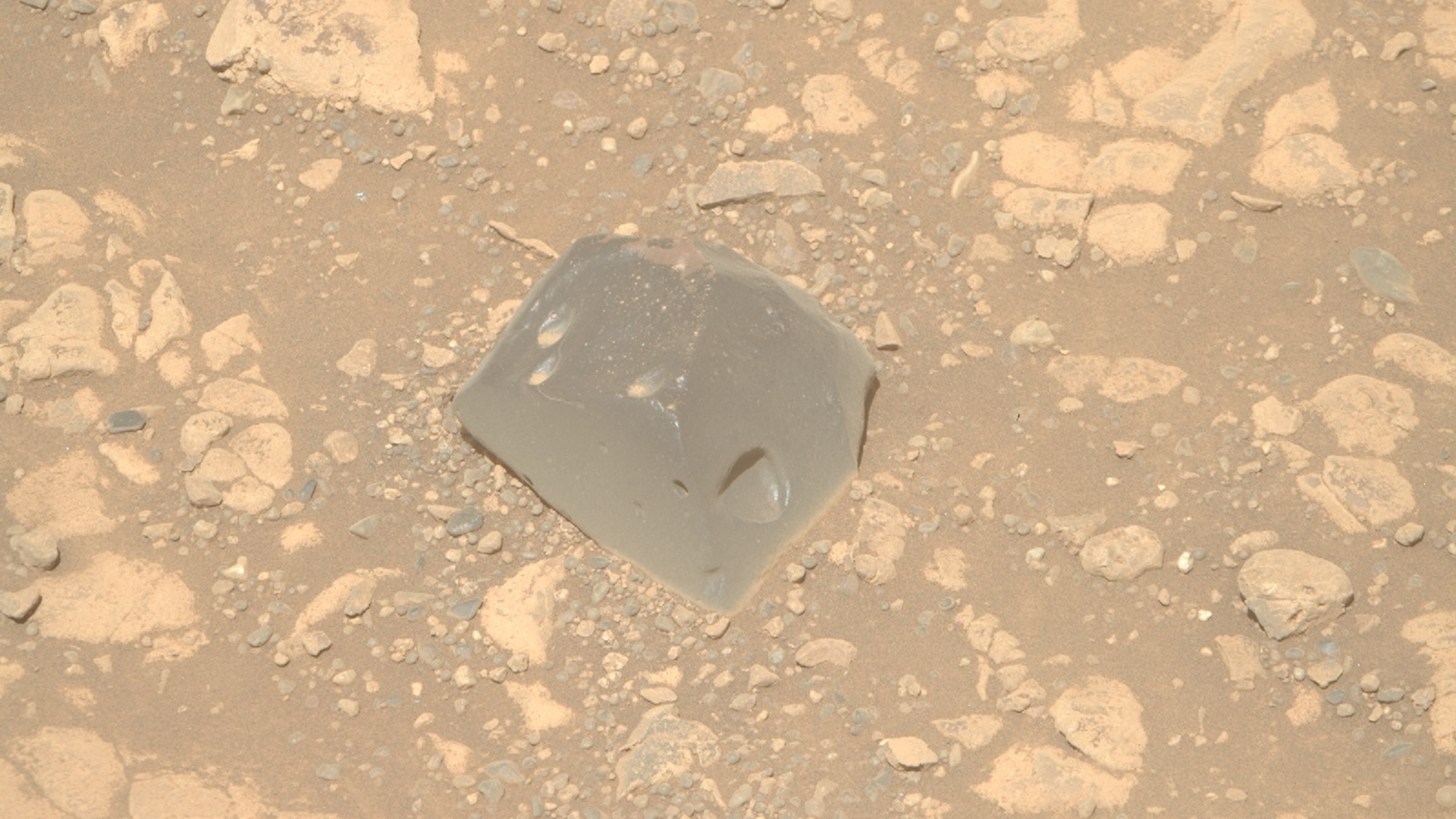
NASA's Perseverance rover on Mars has discovered unusual "float" rocks on the rim of Jezero Crater while searching for signs of ancient microbial life. Scientists are investigating their origin.
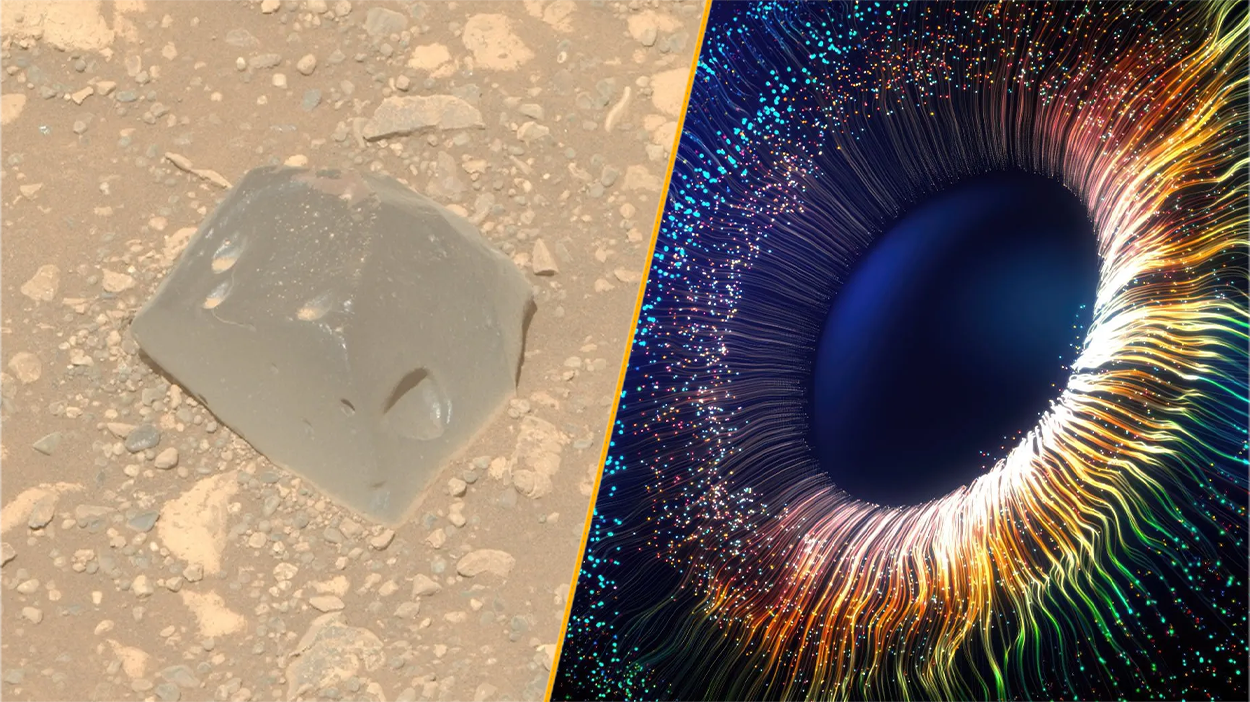
NASA's Perseverance rover found an unusual dark, pitted rock dubbed Skull Hill while exploring Jezero Crater's rim. The rock contrasts with lighter surrounding terrain and was likely transported from elsewhere, scientists say.(Image credit: NASA/JPL-Caltech/ASU)
NASA's Perseverance Mars rover has come across several unusual rocks that don't seem to be in their original place.
Perseverance is currently searching for signs of ancient life in the hills and rocky outcrops along the rim of the Jezero Crater — a barren, bowl-shaped depression north of the Martian equator that scientists suspect held a huge lake billions of years ago. Since December 2024, the rover has been trekking down a tall slope called Witch Hazel Hill, which scientists hope will provide clues aboutMars' past climate.
On April 11, Perseverance paused at a visually distinct geological boundary where light and dark rock outcrops meet. Here, one particular rock, which scientists nicknamed "Skull Hill," stood out against the surrounding light-toned, rock-riddled surface due to its dark color, angular shape and pitted texture, according to a NASA blog post.
The region, called Port Anson, contains several such rocks that may have been transported from elsewhere, scientists said. Known as "floats," these loose rocks likely traveled vast distances billions of years ago when Mars possessed a warmer, wetter environment with rivers, lakes and potentially even oceans. As the water receded and softer surrounding material eroded over eons, the more resilient rocks remained perched on the Martian soil.
"We've found a few of these dark-toned floats in the Port Anson region," the post noted. "The team is working to better understand where these rocks came from and how they got here."
The mystery of Skull Hill
According to the post, the pits on Skull Hill may have formed in a couple of ways. Small pieces within Skull Hill itself might have become loose and eroded away, leaving the holes. Another possibility is that Martian winds, carrying tiny dust and rock particles, could have acted like sandpaper, slowly wearing away the rock's surface and creating the pits.
The dark tone of Skull Hill and similar rocks could suggest they are meteorites, but recent analysis of their chemical data from Perseverance's SuperCam instrument indicates their composition doesn't match that of a typical meteorite.
Alternatively, these dark rocks could have a volcanic origin. On both Earth and Mars, minerals like olivine, pyroxene and biotite are known to give igneous rocks their dark color. If these rocks are indeed igneous, they might have come from nearby volcanic rock formations that have eroded away, or they could have been blasted out of the ground by an impact crater that excavated deeper volcanic layers.
"Luckily for us, the rover has instruments that can measure the chemical composition of rocks on Mars," according to the post. "Understanding the composition of these darker-toned floats will help the team to interpret the origin of this unique rock."
In the past few months, Perseverance has collected samples of five rocks, analyzed seven others in detail and zapped 83 more with its laser for remote study — the robotic explorer's fastest pace of scientific data collection since landing on Mars four years ago, representatives of NASA's Jet Propulsion Laboratory (JPL) said in another statement.
Mission scientists noted that it often takes months of searching the crater to find a scientifically unique rock worth sampling. On the crater rim, however, Perseverance is encountering new and intriguing rocks at every turn, according to the statement.
"Crater rims — you gotta love 'em," Katie Morgan, Perseverance's project scientist at JPL, said in the statement. "The last four months have been a whirlwind for the science team, and we still feel that Witch Hazel Hill has more to tell us — it has been all we had hoped for and more."
Scientists are keen to get the samples Perseverance has collected back to Earth to determine if life ever existed on Mars. However, NASA's Mars Sample Return mission is facing significant challenges with budget, timelines and technical complexities, leaving its future uncertain.
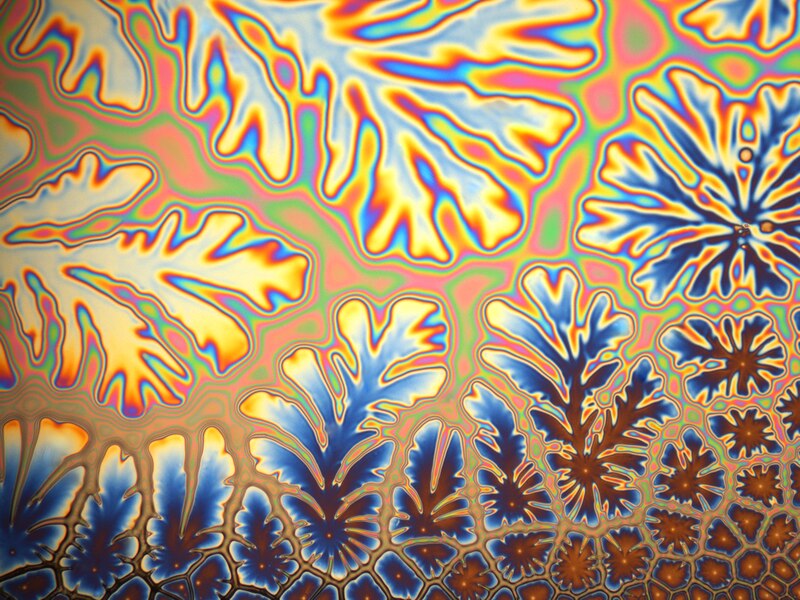
When two fluids don't mix well, they sometimes form strange patterns called "viscous fingering," or Saffman-Taylor instability. Studying these patterns can help scientists understand how to design systems for carbon storage, a key part of managing climate change.
Computer simulations showing how two immiscible fluids with different viscosities interact.
(Image credit: Chi-Chian Chou, Yuka F. Deki, Ryuta X. Suzuki, Yuichiro Nagatsu, and Ching-Yao Chen)
These mysterious "fireworks" aren't lighting up the night sky — they're computer simulations from a recentpaper on mixing fluids that don't want to mix.
Researchers mapped out how two immiscible fluids (two fluids that do not mix, like oil and water) with different viscosities can create "fingers" when they interact. They created different patterns by alternately injecting the fluids at the center of each "firework," allowing the fluids to spread out.
Studying this phenomenon is important for storing carbon from the atmosphere in the ground, a strategy for tackling climate change. Carbon dioxide is responsible for about80% of all heating from human-caused greenhouse gases since 1990. Removing large amounts of carbon dioxide from the atmosphere is possible, but it still has to go somewhere. Storing it in the ground is one option — and understanding fluid interactions can help us figure out how to do that.
In this case, the word "fluid" can refer to both gases and liquids, including gaseous carbon dioxide. Viscosity is a measure of how easily a fluid moves. Fluids with high viscosity move sluggishly, like molasses or tar, while low-viscosity fluids move faster and can spread out more, like water or air.
The fluid "fireworks" are caused bySaffman-Taylor instability — a phenomenon that occurs when two immiscible fluids with different viscosities are confined in a small space. When a less viscous fluid is added to the system, there aren't a lot of places for it to go, so it pushes against the thicker fluid instead — forming the distinctive patterns.
An example of Saffman-Taylor instability causing complex patterns in a thin film. (Image credit: Claire Trease)
If you've ever put a drop of glue between two flat surfaces, then changed your mind and pulled them apart, you might have noticed the wet glue forming strange ridges and channels. This is Saffman-Taylor instability in action. When you pulled the pieces apart, air tried to go where the more viscous glue was and left those patterns behind.
Storing carbon dioxide in the ground involves "injecting" carbon dioxide gas into a more viscous liquid (water) in confined spaces underground, leading to Saffman-Taylor instability. The "fireworks" from thepaper show that the number and extent of the fingers can be changed depending on when and how the fluid is injected into the system. Increasing the fingering effect helps keep the gas from escaping back into the atmosphere.
People across the globe are already working on carbon sequestration (storage) projects — as of 2024, there were 50 facilities in operation, 44 being built, and an additional 534 in development according to the Global CCS (carbon capture and storage) Institute. Developing this technology further gives us more tools to rein in global heating caused by the presence of too much carbon dioxide in Earth's atmosphere.
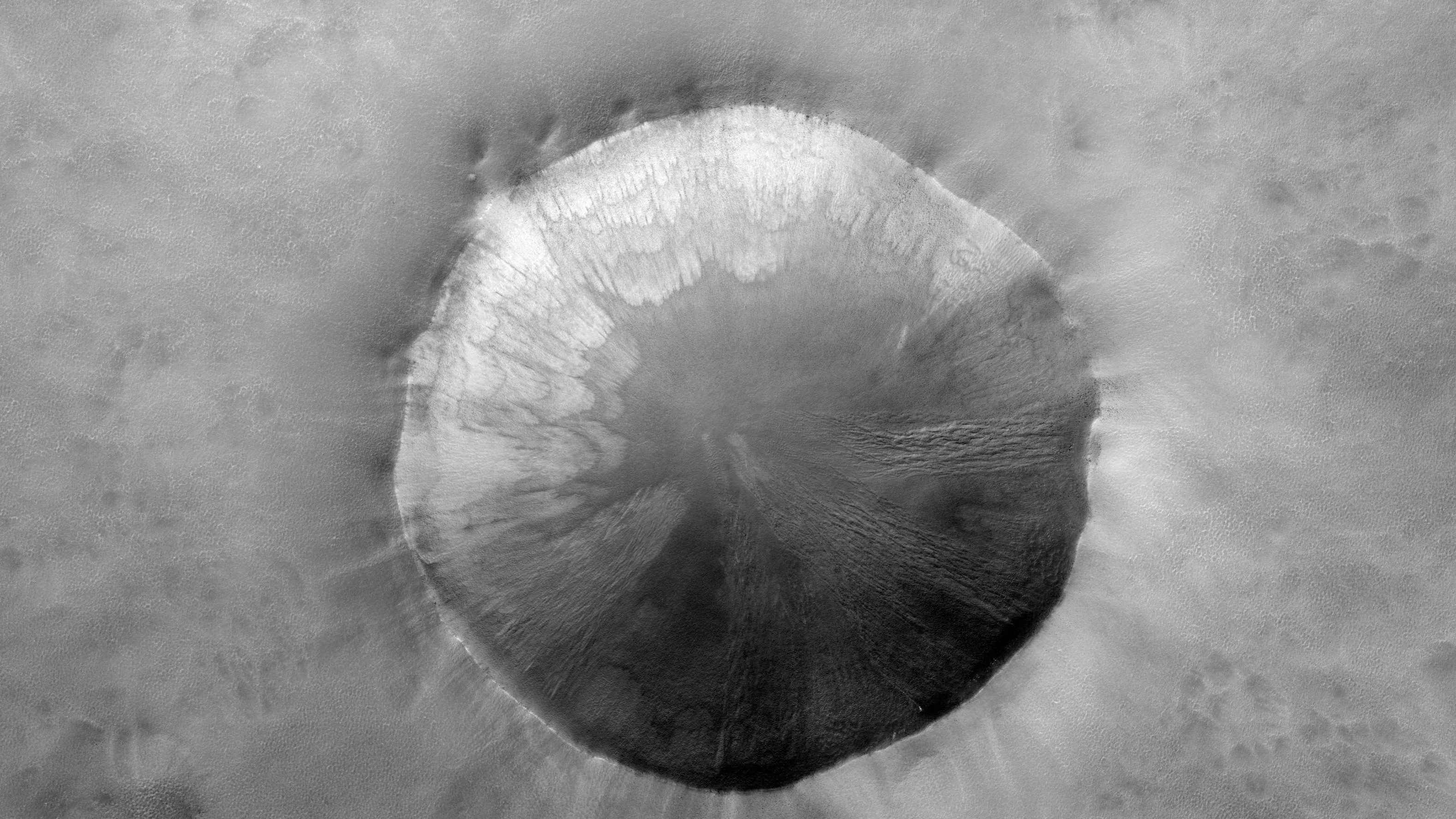
A vast network of inverted channels, formed of sediment laid by ancient rivers, implies Mars was once a much rainier place than we thought.
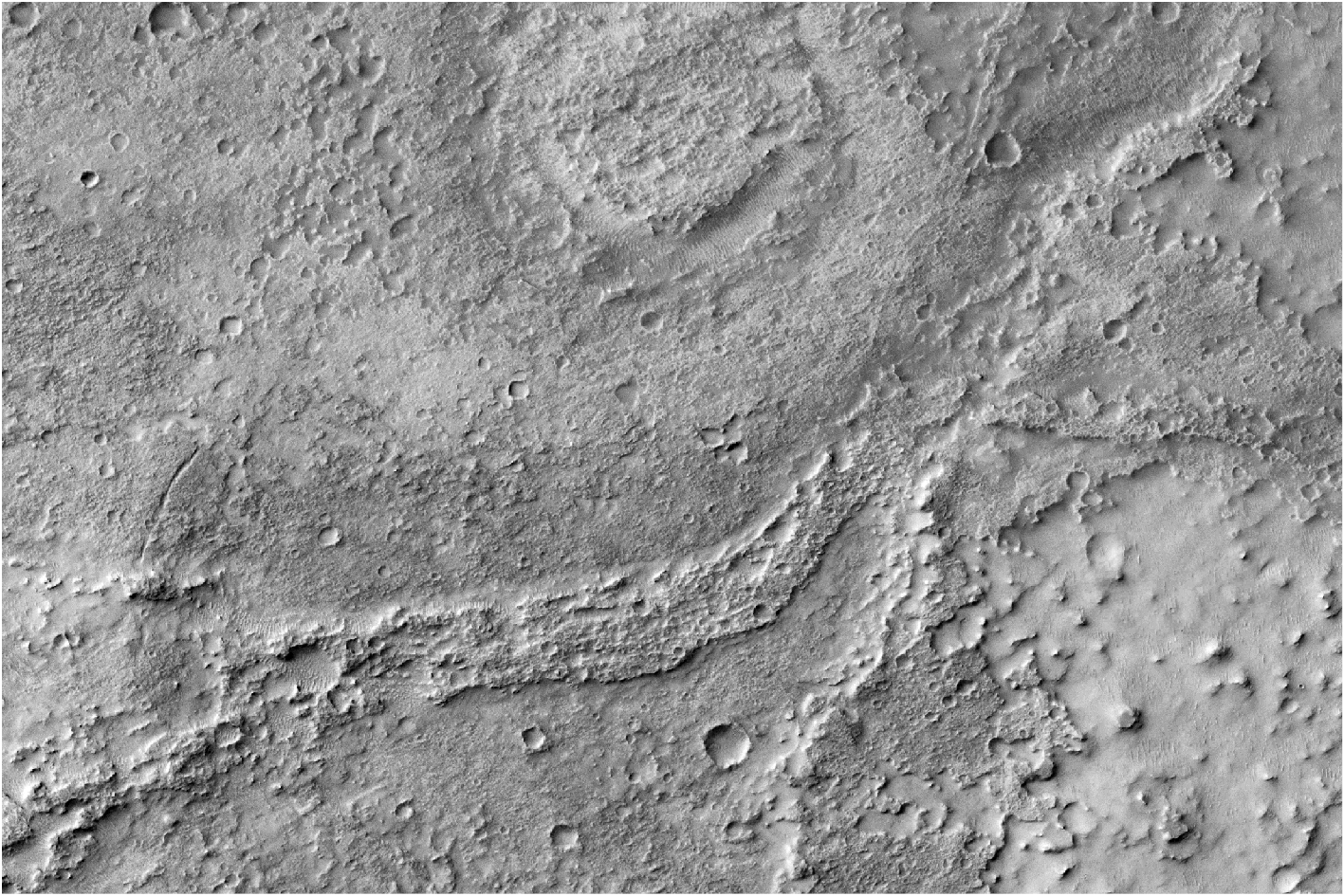
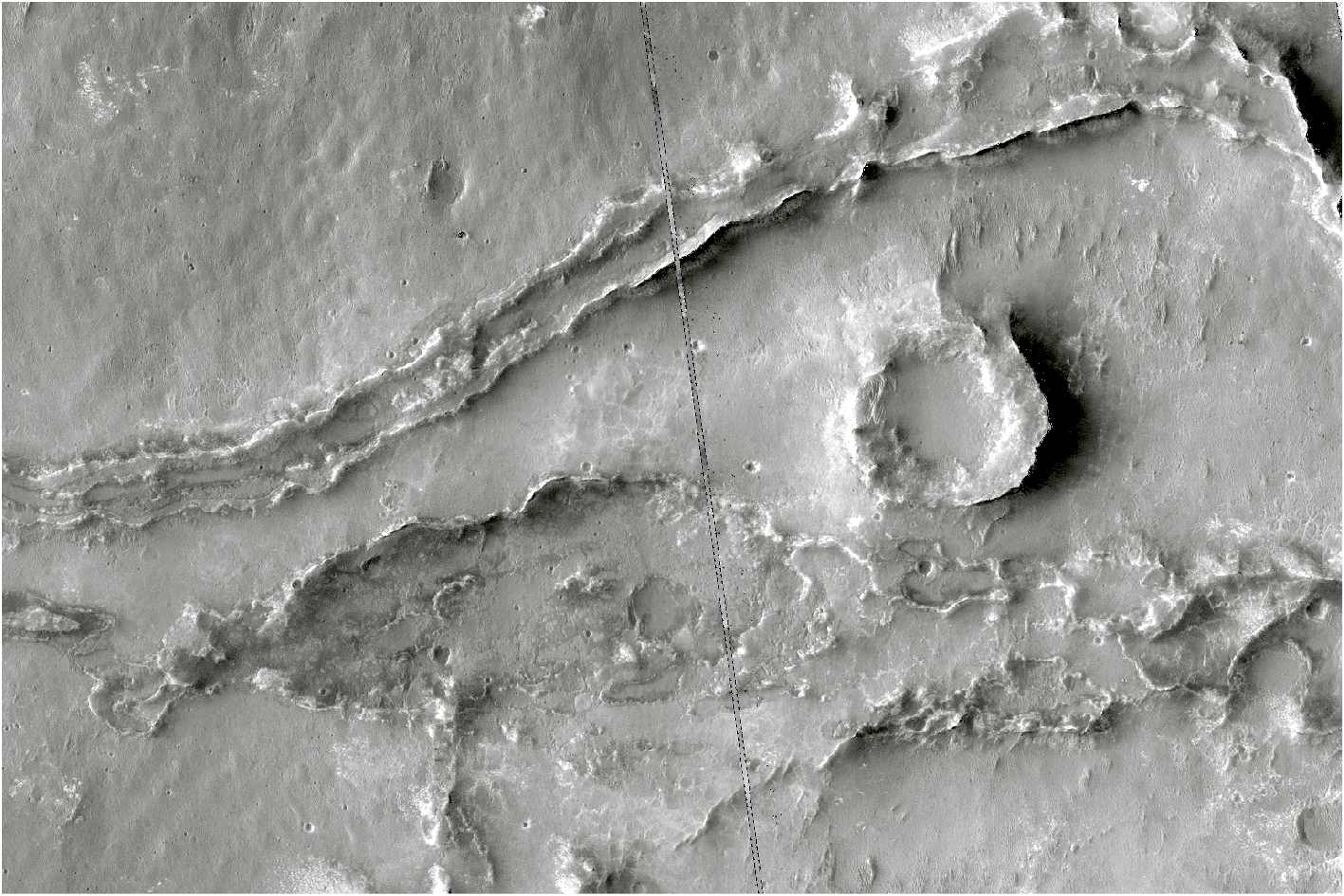
A HiRISE image of the heavily eroded ridge of an inverted channel left behind by a dried up river billions of years ago.
(Image credit: NASA/JPL/University of Arizona)
Marswas a rainier, wetter place than planetary scientists previously thought, according to a new study of ancient, inverted river channels that span more than 9,000 miles (14,484 kilometers) in the Red Planet's southern Noachis Terra region.
"Our work is a new piece of evidence that suggests that Mars was once a much more complex and active planet than it is now, which is such an exciting thing to be involved in," study leader Adam Losekoot of the U.K.'s Open University said in a statement.
We've known Mars was once a wet planet ever since the Mariner 9 orbiter mission from the '70s photographed a surface covered in dried-up river channels. These channels were dated back to over 3.5 billion years ago. However, channels cut into the ground are not the only evidence for running water on Mars.
When that water ran-off, or evaporated, it left sedimentary deposits. Sometimes we see these in craters that were once lakes filled with water: NASA's Curiosity rover is exploring Gale Crater, which has a central three-mile-tall (five-kilometer-tall) peak covered in sediment.
Other times, these sediments were laid down on river beds. Over the eons, the sediments would have hardened, while the river channels and the land around them would have weathered and eroded away. That left the sediments, which are more resistant to erosion, sticking out as tall ridges. Geologists today call them fluvial sinuous ridges, or, more plainly, inverted channels.
Now, Losekoot, who is a Ph.D. student, has led the discovery of a vast network of these channels in Noachis Terra based on images and data taken by the High Resolution Imaging Science Experiment (HiRISE) camera and the Context Camera on NASA's Mars Reconnaissance Orbiter, and the Mars Orbiter Laser Altimeter (MOLA) on the defunct Mars Global Surveyor mission.
Previously, Noachis Terra had not been given due attention because it lacked the more classical river channels that form more obvious evidence of water. However, by mapping the network of inverted channels, Losekoot realized there was lots of evidence there had once been plentiful water in the region.
"Studying Mars, particularly an under-explored region like Noachis Terra, is really exciting because it's an environment which has been largely unchanged for billions of years," said Losekoot. "It's a time capsule that records fundamental geological processes in a way that just isn't possible here on Earth."
Some of the inverted channels appear as isolated segments that have survived the elements for billions of years. Others are more intact, forming systems that run for hundreds of miles and stand tens of yards tall.
This double inverted ridge signifies where an ancient river split into two before reconnecting downstream. Between the two ridges we can see a mesa, which may be the harder material that caused the river to diverge to get around it. (Image credit: NASA/JPL/University of Arizona)
Such a widespread network of inverted channels does not suggest these channels were caused by flash floods, argues Losekoot. Rather, they seem to have formed in stable climatic conditions over a geologically significant period of time during the Noachian–Hesperian transition, which was the shift from one geological era into the next around 3.7 billion years ago.
What's particularly intriguing is the most likely source of water to have formed these inverted channels is precipitation — be it rain, hail or snow. Indeed, given the size of the inverted channel network in Noachis Terra, this region of Mars may have experienced lots of rainy days in a warm and wet climate.
It's more evidence that Mars was once more like Earth than the cold and barren desert it is today.
Losekoot presented his findings at the Royal Astronomical Society's National Astronomy Meeting held at the University of Durham in the U.K., which ran between July 7 and July 11.
This article was originally published onSpace.com.
A report published in June found that the world only has three years before it crosses the 1.5 C climate target. So what should we do now?
There is a way to reverse temperature rise, but it will be challenging and there are great uncertainties.
(Image credit: chuchart duangdaw via Getty Images)
In June, more than 60 climate scientists warned that the remaining "carbon budget" to stay below a dire warming threshold will be exhausted in as little as three yearsat the current rate of emissions.
But if we pass that critical 1.5-degree-Celsius (2.7 degrees Fahrenheit) warming threshold, is a climate catastrophe inevitable? And can we do anything to reverse that temperature rise?
Although crossing the 1.5 C threshold will lead to problems, particularly for island nations, and raise the risk of ecosystems permanently transforming, the planet won't nosedive into an apocalypse. And once we rein in emissions, there are ways to slowly bring temperatures down if we wind up crossing that 1.5 C threshold, experts told Live Science.
Still, that doesn't mean we should stop trying to curb emissions now, which is cheaper, easier and more effective than reversing a temperature rise that has already happened, Michael Mann, a leading climate scientist and director of the Center for Science, Sustainability and the Media at the University of Pennsylvania, told Live Science in an email.
"Every fraction of a degree of warming that we prevent makes us better off," Mann said.
Delayed response
A report released June 19 found that the world has only 143 billion tons (130 billion metric tons) of carbon dioxide (CO2) left to emit before we likely cross the 1.5 C target set in the Paris Agreement, which was signed by 195 countries to tackle climate change. We currently emit around 46 billion tons (42 billion metric tons) of CO2 per year, according to the World Meteorological Organization.
The world is currently 1.2 C (2.2 F) warmer than the preindustrial average, with almost all of this increase in temperature due to human activities, according to the report. But our emissions may have had an even bigger warming impact that has so far been masked, because the ocean has soaked up a lot of excess heat.
The ocean will release this extra heat over the next few decades via evaporation and direct heat transfer regardless of whether we curb emissions, according to the National Oceanic and Atmospheric Administration (NOAA).
This means that even if carbon emissions dropped to zero today, global temperatures would continue to rise for a few decades, with experts predicting an extra 0.5 C (0.9 F) of warming from oceans alone.
However, temperatures would eventually stabilize as heat radiated out to space. And over several thousand years, Earth would dial temperatures back down to preindustrial levels via natural carbon sinks, such as trees and soils absorbing CO2, according to NOAA.
Why 1.5 C?
Climate scientists see 1.5 C as a critical threshold: Beyond this limit, levels of warming are unsafe for people living in economically developing countries, and particularly in island nations, said Kirsten Zickfeld, a professor of climate science at Simon Fraser University in Canada.
The 1.5 C limit is "an indicator of a state of the climate system where we feel we can still manage the consequences," Zickfeld told Live Science.
A huge amount of additional heat could be baked into the ocean and later released if we exceed 1.5 C, which is another reason why scientists are worried about crossing this threshold.
Although it's best to reduce emissions as quickly as we can, it may still be possible to reverse a temperature rise of 1.5 C or more if we pass that critical threshold. The technology needed isn't quite developed yet, so there is a lot of uncertainty about what is feasible.
If we do start to bring temperatures down again, it would not undo the effects of passing climate tipping points. For example, it would not refreeze ice sheets or cause sea levels to fall after they've already risen. But it would significantly reduce risks for ecosystems that respond more quickly to temperature change, such as permafrost-covered tundras.
Permafrost-covered tundras can melt and refreeze within decades, so dialing down temperatures could restore these ecosystems. (Image credit: Stockdonkey via Shutterstock)
Reversing temperature rise requires not just net zero emissions, but net negative emissions, Zickfeld said. Net zero would mean we sequester as much CO2 via natural carbon sinks and negative emissions technologies as we emit. Negative emissions would require systems that suck carbon out of the atmosphere and then bury it underground — often known as carbon capture and storage.
Net zero may halt warming. But if we want to reverse warming, we must remove more carbon from the atmosphere than we emit, Zickfield said.
Scientists estimate that 0.1 C (0.2 F) of warming is equivalent to 243 billion tons (220 billion metric tons) of CO2, which is a "massive amount," Zickfeld said. "Let's say if we go to 1.6 C [2.9 F] and we want to drop down to 1.5 C — we need to remove around 220 billion metric tons of carbon dioxide."
Currently, nature-based carbon-removal techniques, such as planting trees, sequester around 2.2 billion tons (2 billion metric tons) of CO2 each year. "So we need to scale that up by a factor of 100 to drop us down by 0.1 C" in one year, Zickfeld said.
Due to competing demands for land, it is highly unlikely that we could plant enough forests or restore enough peatland to meaningfully reverse temperature change, Zickfeld said.
This means we will definitely need negative emissions technologies, she said. However, most negative emissions technologies are still being tested, so it's difficult to say how effective they would be, Zickfeld said.
These technologies are also extremely expensive and will likely remain so for a long time, Robin Lamboll, a climate researcher at Imperial College London and a co-author of the recent report, told Live Science in an email.
"In practice we will be doing quite well if we find that the rollout of these technologies does any more than bring us to net zero," Lamboll said. There is some uncertainty about how Earth might respond to net zero, and it's possible that the planet might cool at that point. "If we cool at all, we do so very slowly. In a very optimistic case we might go down by 0.3 C [0.5 F] in 50 years," Lamboll said.
There is no requirement under the Paris Agreement for countries to roll out negative emissions technologies. But the goal of the agreement to stay well below 2 C (3.6 F) means that governments may decide to ramp up these technologies once we pass 1.5 C, Lamboll said.
Figures from the recent report indicate that at the current rate of emissions, the remaining carbon budgets to stay below 1.6 C, 1.7 C (3.1 F) and 2 C could be used up within seven, 12 and 25 years, respectively.
"If we do pass 1.5 C, 1.6 C is a whole lot better than 1.7 C, and 1.7 C is a whole lot better than 1.8 C [3.2 F]," Mann said in an interview with BBC World News America in June. "At this point, the challenge is to reduce carbon emissions as quickly as we can to avert ever-worse impacts."
It's worth noting that the world is making progress with emission cuts, Mann added in the interview. "Let's recognize that we're starting to turn the corner," he said.
The road ahead will be even more scientifically intriguing, and probably somewhat easier-going, now that the six-wheeler has completed its long climb to the top.
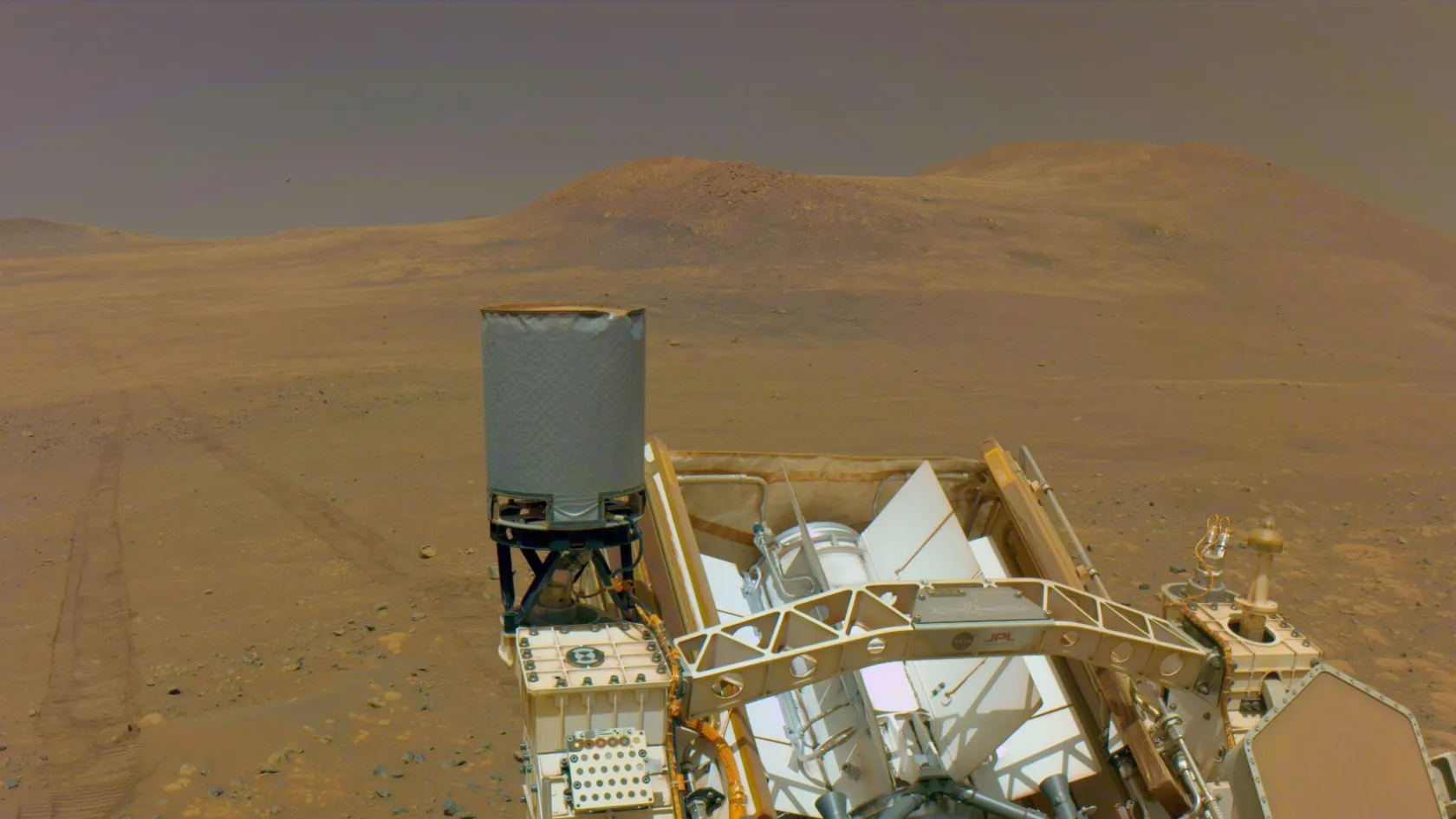
NASA’s Perseverance Mars rover has crested the top of Jezero Crater’s rim at a location the science team calls “Lookout Hill” and rolling toward its first science stop after the monthslong climb. The rover made the ascent in order to explore a region of Mars unlike anywhere it has investigated before.
Taking about 3½ months and ascending 1,640 vertical feet (500 vertical meters), the rover climbed 20% grades, making stops along the way for science observations. Perseverance’s science team shared some of their work and future plans at a media briefing held Thursday, Dec. 12, in Washington at the American Geophysical Union’s annual meeting, the country’s largest gathering of Earth and space scientists.
“During the Jezero Crater rim climb, our rover drivers have done an amazing job negotiating some of the toughest terrain we’ve encountered since landing,” said Steven Lee, deputy project manager for Perseverance at NASA’s Jet Propulsion Laboratory in Southern California. “They developed innovative approaches to overcome these challenges — even tried driving backward to see if it would help — and the rover has come through it all like a champ. Perseverance is ‘go’ for everything the science team wants to throw at it during this next science campaign.”
A scan across a panorama captured by NASA’s Perseverance Mars rover shows the steepness of the terrain leading to the rim of Jezero Crater. The rover’s Mastcam-Z camera system took the images that make up this view on Dec. 5. NASA/JPL-Caltech/ASU/MSSS
Since landing at Jezero in February 2021, Perseverance has completed four science campaigns: the “Crater Floor,” “Fan Front,” “Upper Fan,” and “Margin Unit.” The science team is calling Perseverance’s fifth campaign the “Northern Rim” because its route covers the northern part of the southwestern section of Jezero’s rim. Over the first year of the Northern Rim campaign, the rover is expected to visit as many as four sites of geologic interest, take several samples, and drive about 4 miles (6.4 kilometers).
“The Northern Rim campaign brings us completely new scientific riches as Perseverance roves into fundamentally new geology,” said Ken Farley, project scientist for Perseverance at Caltech in Pasadena. “It marks our transition from rocks that partially filled Jezero Crater when it was formed by a massive impact about 3.9 billion years ago to rocks from deep down inside Mars that were thrown upward to form the crater rim after impact.”
This animation shows the position of NASA’s Perseverance Mars rover as of Dec. 4, 2024, the 1,347th Martian day, or sol, of the mission, along with the proposed route of the mission’s fifth science campaign, dubbed Northern Rim, over the next several years. NASA/JPL-Caltech/ESA/University of Arizona
“These rocks represent pieces of early Martian crust and are among the oldest rocks found anywhere in the solar system. Investigating them could help us understand what Mars — and our own planet — may have looked like in the beginning,” Farley added.
First Stop: ‘Witch Hazel Hill’
With Lookout Hill in its rearview mirror, Perseverance is headed to a scientifically significant rocky outcrop about 1,500 feet (450 meters) down the other side of the rim that the science team calls “Witch Hazel Hill.”
“The campaign starts off with a bang because Witch Hazel Hill represents over 330 feet of layered outcrop, where each layer is like a page in the book of Martian history. As we drive down the hill, we will be going back in time, investigating the ancient environments of Mars recorded in the crater rim,” said Candice Bedford, a Perseverance scientist from Purdue University in West Layfette, Indiana. “Then, after a steep descent, we take our first turns of the wheel away from the crater rim toward ‘Lac de Charmes,’ about 2 miles south.”
Lac de Charmes intrigues the science team because, being located on the plains beyond the rim, it is less likely to have been significantly affected by the formation of Jezero Crater.
After leaving Lac de Charmes, the rover will traverse about a mile (1.6 kilometers) back to the rim to investigate a stunning outcrop of large blocks known as megabreccia. These blocks may represent ancient bedrock broken up during the Isidis impact, a planet-altering event that likely excavated deep into the Martian crust as it created an impact basin some 745 miles (1,200 kilometers) wide, 3.9 billion years in the past.
More About Perseverance
A key objective of Perseverance’s mission on Mars is astrobiology, including caching samples that may contain signs of ancient microbial life. The rover will characterize the planet’s geology and past climate, to help pave the way for human exploration of the Red Planet and as the first mission to collect and cache Martian rock and regolith.
NASA’s Mars Sample Return Program, in cooperation with ESA (European Space Agency), is designed to send spacecraft to Mars to collect these sealed samples from the surface and return them to Earth for in-depth analysis.
The Mars 2020 Perseverance mission is part of NASA’s Moon to Mars exploration approach, which includes Artemis missions to the Moon that will help prepare for human exploration of the Red Planet.
NASA’s Jet Propulsion Laboratory, which is managed for the agency by Caltech, built and manages operations of the Perseverance rover.
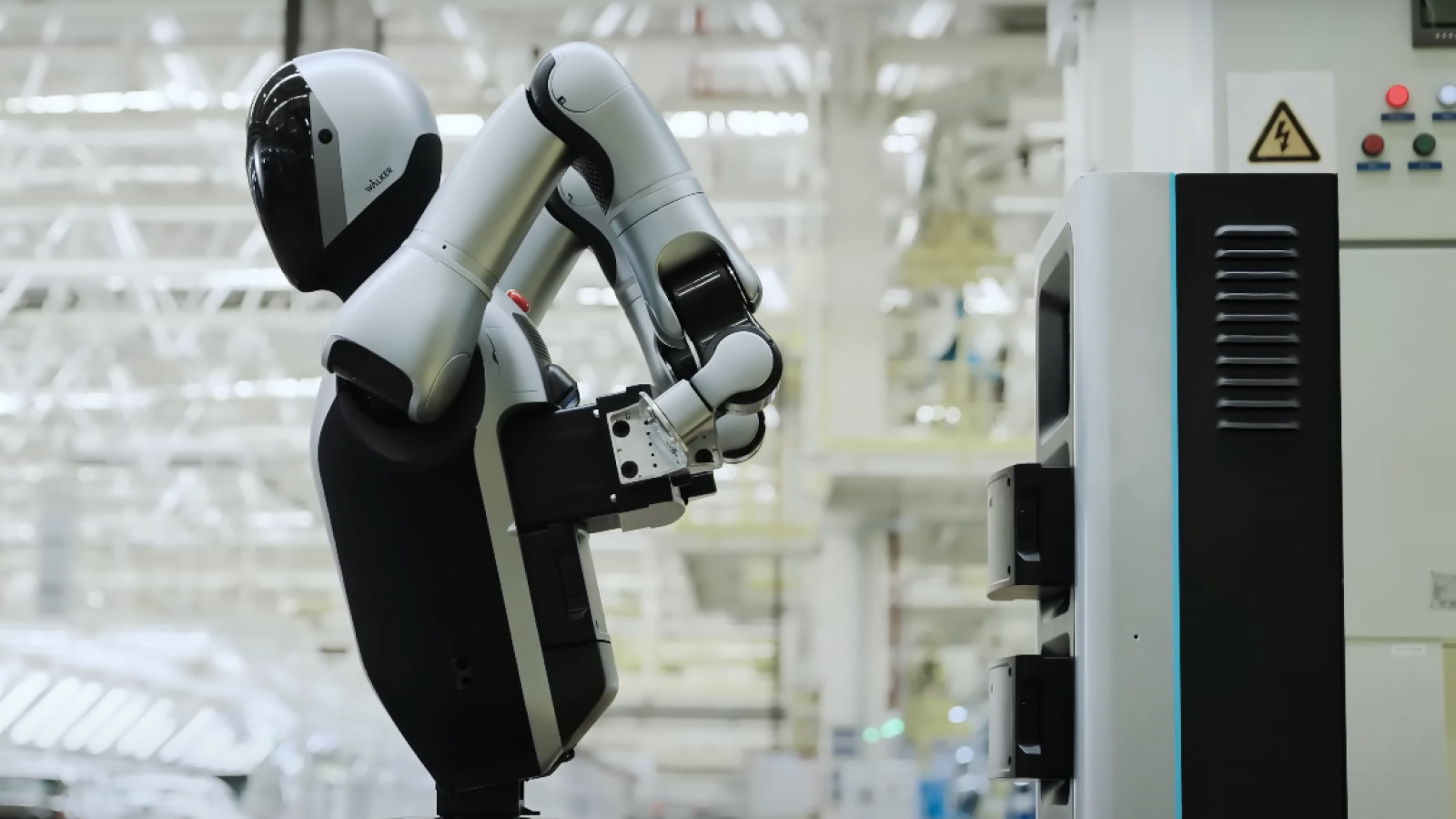
The Walker S2 humanoid robot, which can change its own battery when it's running low on power, could potentially be left to run on its own forever.
Walker S2 - The World's First Humanoid Robot Capable of Autonomous Battery Swapping - YouTubeThere are many weird and wonderful humanoid robots out there, but one of the most eye-catching machines launched this year can change its own battery pack — making it capable of running autonomously for 24 hours a day, seven days a week.
The Walker S2 robot, made by the Chinese company UBTECH, is 5 foot 3 inches (162 centimeters) tall and weighs 95 pounds (43 kilograms) — making it the size and weight of a small adult.
Using a 48-volt lithium battery in a dual-battery system, the robot can walk for two hours or stand for four hours before its power runs out. The battery takes 90 minutes to fully recharge once depleted.
Its most interesting feature — which UBTECH representatives say is a world first — is that instead of relying on a human operator to remove and recharge its battery pack, the machine can perform this task entirely on its own.
In new promotional footage published July 17 on YouTube, the Walker S2 robot is seen approaching a battery charging station to swap out its battery supply. Facing away from the station, it uses its arms to remove the battery pack fitted into its back and places this into an empty slot to recharge. It then removes a fresh battery pack from the unit and inserts it into its port.
The robot will swap out its own battery in the event that one of its batteries runs out of power. It is also capable of detecting how much power it has left and decides whether it is best to swap out one of its batteries or charge based on the priority of its tasks, company representatives said, as reported by the Chinese publication CnEVPost.
The Walker S2, which is designed to be used in settings like factories or as a human-like robot to meet and greet customers at public venues, has 20 degrees of freedom (the number of ways that joints or mechanisms can move) and is also compatible with Wi-Fi and Bluetooth.
Facts about UFOs that will blow your mind and change how you see the sky
Whether you’re a skeptic or already convinced we’re not alone, these facts are difficult to ignore — and they may change the way you see the world above.
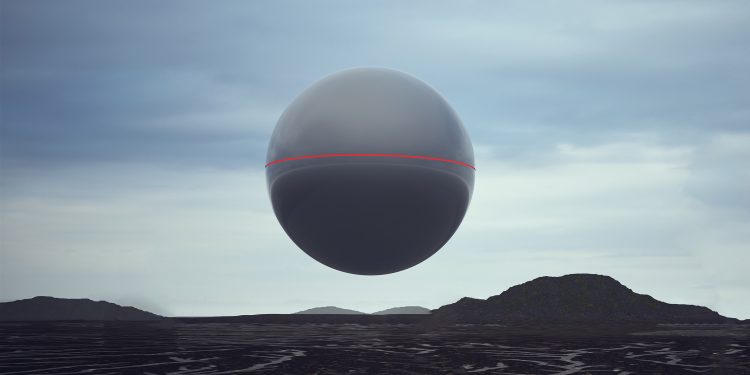
An illustration of a UFO probe contorlled by superadvanced AI.
Stories of strange lights in the sky used to live on the edges of belief — whispered by conspiracy theorists or buried in classified files. But that’s changed. Military pilots have gone public. Governments have released official documents. And decades of silence are starting to crack. This article explores 15 remarkable facts about UFOs — from ancient sightings to modern-day encounters, including government programs, radar anomalies, and mysterious objects seen by astronauts. Whether you’re curious, skeptical, or something in between, these cases challenge everything we think we know about what’s in our skies.
Whether you’re a skeptic or already convinced we’re not alone, these facts are difficult to ignore — and they may change the way you see the world above.
Declassified U.F.O. Documents
Even though governments around the world have long denied serious interest in unidentified flying objects, a large number of recently declassified documents suggest otherwise. Contrary to public denials, agencies like the U.S. Department of Defense and the CIA have spent millions of dollars studying unidentified aerial phenomena that often defy the laws of known physics.
The American government alone has invested heavily in these investigations. These documents, now public, paint a very different picture — one in which UFOs are not dismissed, but tracked, analyzed, and kept under tight control.
You can find examples of UFO-related declassified documents here, here, and here.
Official Video Footage of Pilots Chasing a U.F.O.
When it comes to UFOs, people want more than rumors — they want proof. A few years ago, the U.S. government declassified a video captured by a Boeing F/A-18F Super Hornet. In it, military pilots can be heard reacting in disbelief as they chase an object flying at impossible speeds.
This wasn’t fiction or amateur footage — it was released through official channels, prompting a shift in how the public perceives the UFO phenomenon.
Video Footage: The Best Evidence
The Super Hornet video is far from the only footage out there. Over the years, numerous videos have emerged showing craft that move in ways no known aircraft should. One of the most famous examples is the STS-75 Tether Incident, captured by NASA during the space shuttle Columbia’s mission in 1996.
During this mission, a 12-mile-long tether broke off and floated into space. As the tether drifted, countless bright, disc-like objects appeared around it. While some have written the incident off as space debris or lens flare, others argue it represents one of the clearest recordings of unidentified flying objects in space.
The Pentagon Studied “Exotic U.F.O. Tech”
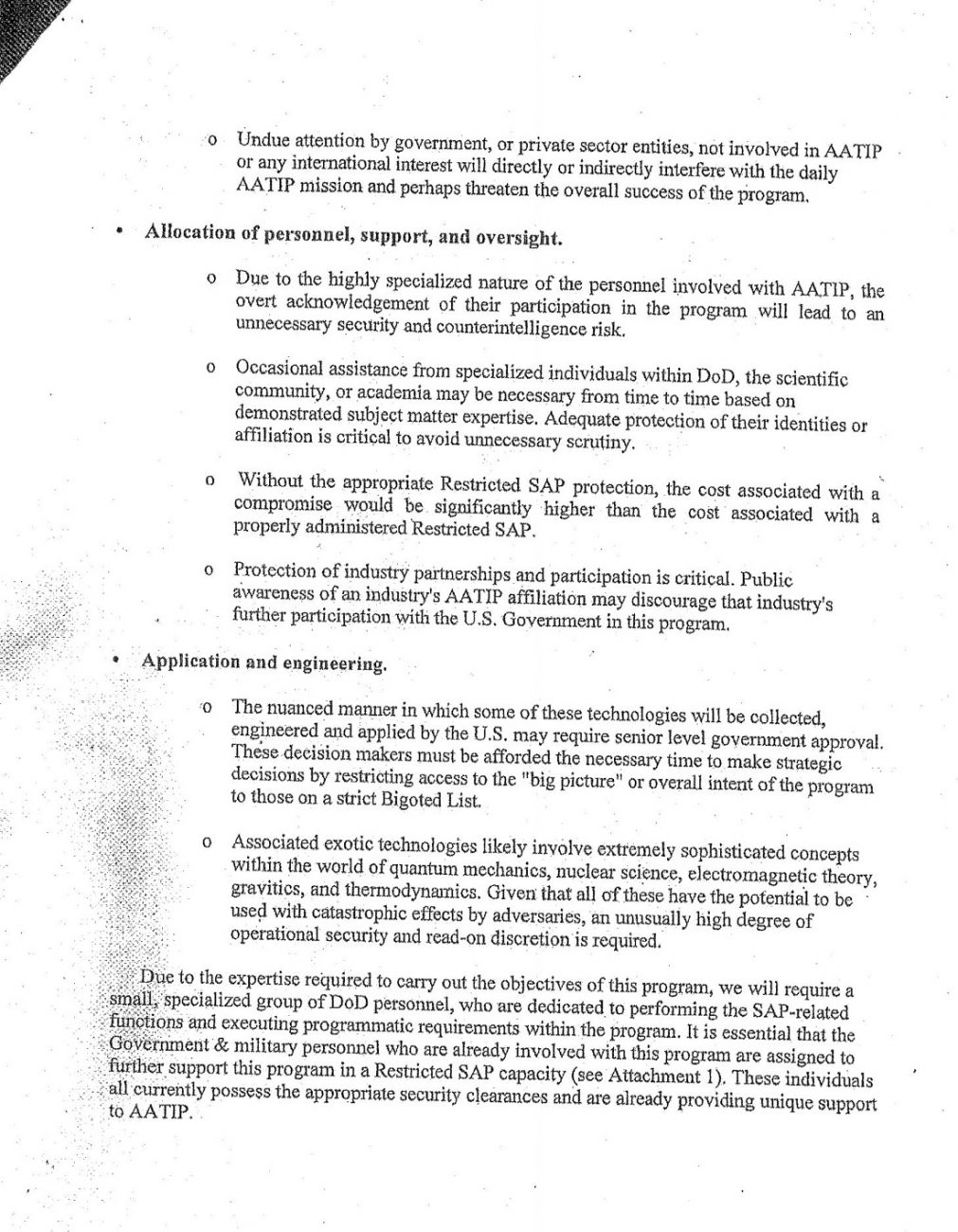
AATIP letter about UFOs.AATIP letter about UFOs.
Although most governments publicly downplay the existence of UFOs, internal reports show another side. Declassified papers have revealed that the U.S. Department of Defense conducted secret research into what they called “exotic, futuristic technologies.”
These investigations were part of the now-famous Advanced Aerospace Threat Identification Program (AATIP), and were authorized in part by Senator Harry Reid. In a letter to Deputy Secretary of Defense William Lynn III, Reid supported funding the program to explore advanced propulsion systems and technologies far beyond our current capabilities.
These weren’t just speculative ideas. The documents state that researchers explored whether certain technologies could give the U.S. military an edge — technologies that may have come from observed phenomena, or possibly reverse-engineered craft.
Official Documents Reveal Antarctic U.F.O. Encounters
Antarctica has long been tied to tales of hidden bases, strange energy sources, and mysterious sightings. While some of these claims are rooted in conspiracy, there are verified reports that are difficult to dismiss.
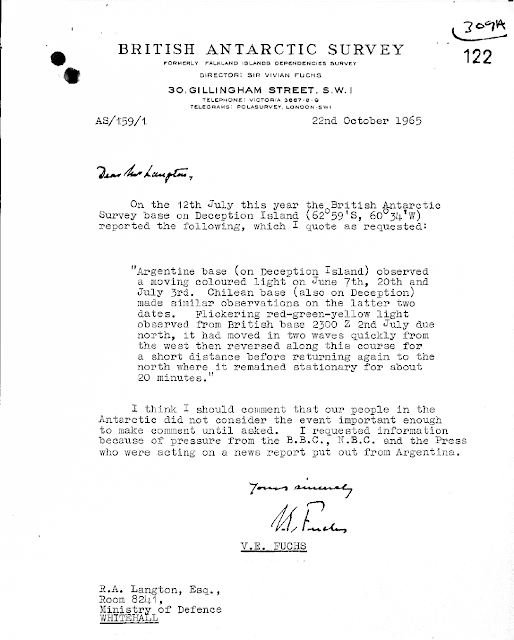
In 1965, scientists at three separate Antarctic research stations witnessed unexplained lights in the sky. Two reports were filed by the Chilean Air Force (FACh), two others by the Argentine Navy, and a fifth by the British Antarctic Survey (B.A.S.).
Antarctic survey report letter.
Dated October 22, 1965, a letter (above) written by a B.A.S. researcher reads:
“On the July 12 this year, the British Antarctic Survey Base on Deception Island (62° 59′ S, Long. 60° 34′ W) reported the following, which I quote as requested:
‘Argentine base (on Deception Island) observed a moving colored light on June 7th, 20th, and July 3. Chilean base (also on Deception) made similar observations on the latter two dates.
Flickering red-green-yellow light observed from British Base 2300 Z July 2 die north; it had moved in two waves quickly from the west then reversed along the course for a short distance before returning again to the north where it remained stationary for about 20 minutes.’
I should comment that our people in the Antarctic did not consider the important event enough to comment until asked. I requested information because of pressure from the B.B.C., N.B.C., and the Press, who acted on a news report put out from Argentina.
Yours sincerely, V.E. Fuchs.”
The C.I.A. Alone Declassified Thousands of U.F.O. Documents
The CIA has released thousands of documents detailing their involvement with UFO investigations, stretching from the 1940s to the early 1990s. These reports include everything from international news clippings to internal memos and firsthand accounts of sightings.
According to the CIA’s own archive:
“This collection catalogs C.I.A. information on this subject from the 1940s through the early 1990s.”
While many of the sightings remain unverified, the sheer volume of reports — and the agency’s decision to preserve them — speaks to the seriousness with which these phenomena were taken.
U.F.O.s Aren’t a Modern Phenomenon
Antique report of damatic sightings over Nuremberg.
One of the earliest and most dramatic sightings occurred over Nuremberg, Germany, in 1561. It was documented in the city’s newspaper and later studied by historians. The report reads:
“In the morning of April 14, 1561, at daybreak, between 4 and 5 a.m., a dreadful apparition occurred on the sun, and then this was seen in Nuremberg in the city, before the gates, and in the country – by many men and women.
At first, there appeared in the middle of the sun, two blood-red semi-circular arcs, just like the moon in its last quarter. And in the sun, above and below and on both sides, the color was blood, there stood a round ball of partly dull, partly black ferrous color. Likewise, there stood on both sides and as a torus about the sun such blood-red ones and other balls in large number, about three in a line and four in a square, also some alone.
In between these globes, there were visible a few blood-red crosses, between which there were blood-red strips, becoming thicker to the rear and in the front malleable like the rods of reed-grass, which were intermingled, among them two big rods, one on the right, the other to the left, and within the small and big rods there were three, also four and more globes.
These all started to fight among themselves so that the globes, which were first in the sun, flew out to the ones standing on both sides; thereafter, the globes standing outside the sun, in the small and large rods, flew into the sun.
Besides, the globes flew back and forth among themselves and fought vehemently with each other for over an hour. And when the conflict in and again out of the sun was most intense, they became fatigued to such an extent that they all, as said above, fell from the sun down upon the earth ‘as if they all burned’ and they then wasted away on the Earth with immense smoke. After all this, something like a black spear, very long and thick, sighted; the shaft pointed to the east, the point pointed west. Whatever such signs mean, God alone knows…”
(Source: Colman S. Von Kevicsky, “The Ufo Sighting Over Nuremberg in 1561” Official Ufo January 1976. Translation by Ilse Von Jacobi.)
One of the First U.F.O. Reports in America
One of the earliest sightings in North America dates back to 1639. Near the Massachusetts Bay Colony, Governor John Winthrop recorded an event in his diary involving strange lights in the sky over Boston. Witnesses reported the objects moving rapidly and even claimed they lost track of time — a possible reference to missing time, a common theme in modern abduction narratives.
U.F.O. in Northern Saskatchewan
A letter mentionig a crashed UFO.
In 1968, a strange object was discovered near Wollaston Lake, close to the Manitoba border. A letter from that time reads:
“Examination revealed the exhibit had likely formed part of a vehicle that traveled in outer space.”
The metallic fragment was handed to J. Hodges of the Canadian National Research Council by an unnamed pilot. Its origins remain unexplained.
Oppenheimer and Einstein Wrote About U.F.O.s
A six-page document written by physicists Robert Oppenheimer and Albert Einstein discussed “Relationship with Inhabitants of Celestial Bodies.”
The document is one of the first to reference Extraterrestrial Biological Entities and indicates that the military had considered UFOs as part of its strategic assessments. You can read the full document here.
Winston Churchill Wrote About Alien Life
In an essay written in 1939, Churchill speculated:
“I, for one, am not so immensely impressed by the success we are making of our civilization here that I am prepared to think we are the only spot in this immense universe that contains living, thinking creatures…”
Churchill’s essay, “Are We Alone in the Universe?”, predicted a vast universe filled with potentially habitable planets long before exoplanets were ever confirmed.
California Is a U.F.O. Hot Spot
According to the National U.F.O. Reporting Center, more sightings have occurred in California than in any other U.S. state. Los Angeles in particular has been the epicenter for sightings between 2001 and 2015.
One of the most famous events took place in 1942.
The Battle of Los Angeles
An image of the so-called Battle of L.A.
“The city went completely dark as Air Raid sirens started going off. Massive searchlights searched the sky for potential threats. Eventually, the anti-aircraft fire started going off, and in the middle of the ‘battle,’ a photograph of the enigmatic object was taken.”
The object was never identified, and explanations ranged from weather balloons to enemy aircraft. To this day, the event remains one of the most widely discussed mass sightings in American history.
Washington D.C., 1952: Radar Confirms Fast-Moving Object
On July 19, 1952, air traffic controllers at Washington National Airport picked up a fast-moving object on radar. In the weeks that followed, additional sightings were reported by military personnel.
Despite public reassurances, the official explanation never fully accounted for the object’s speed or maneuverability.
The Rendlesham Forest Incident
In December 1980, U.S. Air Force personnel stationed at RAF Woodbridge in England reported seeing a glowing object in the woods.
“Allegedly, the U.F.O. irradiated several different colors. The craft landed, and soldiers went out to investigate. They supposedly found the spaceship. The following day, radiation levels where the alleged U.F.O. landed were off the charts, and there were reports of damaged trees nearby.”
The case remains one of the most famous and well-documented U.F.O. encounters involving military witnesses.
UFO sightings have increased in the past few years abruptly. The key point in this was probably the declassification of the three UFO videos shot by Navy pilots as they were in pursuit of Unidentified Flying Objects. This was back in 2017. Since then, the UFO topic has morphed from being a conspiracy theory, a joke to many, to something worthy of the most rigorous scientific study. Now, people no longer see UFOs as something that can be joked about. No longer are people afraid to speak out about the subject. But what is perhaps even more important is that military personnel, as well as pilots and intelligence officers, have also obtained more freedom to speak out.
What has changed
In fact, the United States Government is working on laws that will protect people who come forward with valuable information about the phenomenon. Officially, UFOs are now known also as UAP, Unidentified Aerial Phenomenon. NASA, which in the past has denied having anything to do with UFOs, is now actively studying them. The Pentagon is doing so, too, with a dedicated UFO research group. In fact, not long ago, the Pentagon revealed it would be studying so-called transmedium UFOs.
Corbell’s contribution
Some of the best footage about tr4ansmeidum UFOs was presented by UFO researcher Jeremy Corbell, who has worked tirelessly over the past few years to force transparent UFO research. Corbell has been “fighting” for UFO disclosure and has gained much territory in recent years. Now, Corbell has posted a new video on his YouTube channel. The video dubbed the “Immediate UFO Situation” is an interview with reporter John Hook and Corbell. In this video, Corbell speaks out about current UFO events in addition to detailing key pieces of UFO footage and images taken by military pilots and leaked to the public. Check it out here, it is worth a few minutes of your time.
Meer van UFO'S of UAP'S, ASTRONOMIE, RUIMTEVAART, ARCHEOLOGIE, OUDHEIDKUNDE, SF-SNUFJES EN ANDERE ESOTERISCHE WETENSCHAPPEN - DE ALLERLAATSTE NIEUWTJES


 Bestaat er een mysterieuze negende planeet in ons zonnestelsel?