Naar de inhoud

UFO'S of UAP'S, ASTRONOMIE, RUIMTEVAART, ARCHEOLOGIE, OUDHEIDKUNDE, SF-SNUFJES EN ANDERE ESOTERISCHE WETENSCHAPPEN - DE ALLERLAATSTE NIEUWTJES

UFO's of UAP'S in België en de rest van de wereld
akke.beakke.be
Ontdek de Fascinerende Wereld van UFO's en UAP's: Jouw Bron voor Onthullende Informatie! Ben jij ook gefascineerd door het onbekende? Wil je meer weten over UFO's en UAP's, niet alleen in België, maar over de hele wereld? Dan ben je op de juiste plek! België: Het Kloppend Hart van UFO-onderzoek In België is BUFON (Belgisch UFO-Netwerk) dé autoriteit op het gebied van UFO-onderzoek. Voor betrouwbare en objectieve informatie over deze intrigerende fenomenen, bezoek je zeker onze Facebook-pagina en deze blog. Maar dat is nog niet alles! Ontdek ook het Belgisch UFO-meldpunt en Caelestia, twee organisaties die diepgaand onderzoek verrichten, al zijn ze soms kritisch of sceptisch. Nederland: Een Schat aan Informatie Voor onze Nederlandse buren is er de schitterende website www.ufowijzer.nl, beheerd door Paul Harmans. Deze site biedt een schat aan informatie en artikelen die je niet wilt missen! Internationaal: MUFON - De Wereldwijde Autoriteit Neem ook een kijkje bij MUFON (Mutual UFO Network Inc.), een gerenommeerde Amerikaanse UFO-vereniging met afdelingen in de VS en wereldwijd. MUFON is toegewijd aan de wetenschappelijke en analytische studie van het UFO-fenomeen, en hun maandelijkse tijdschrift, The MUFON UFO-Journal, is een must-read voor elke UFO-enthousiasteling. Bezoek hun website op www.mufon.com voor meer informatie. Samenwerking en Toekomstvisie Sinds 1 februari 2020 is Pieter niet alleen ex-president van BUFON, maar ook de voormalige nationale directeur van MUFON in Vlaanderen en Nederland. Dit creëert een sterke samenwerking met de Franse MUFON Reseau MUFON/EUROP, wat ons in staat stelt om nog meer waardevolle inzichten te delen. Let op: Nepprofielen en Nieuwe Groeperingen Pas op voor een nieuwe groepering die zich ook BUFON noemt, maar geen enkele connectie heeft met onze gevestigde organisatie. Hoewel zij de naam geregistreerd hebben, kunnen ze het rijke verleden en de expertise van onze groep niet evenaren. We wensen hen veel succes, maar we blijven de autoriteit in UFO-onderzoek! Blijf Op De Hoogte! Wil jij de laatste nieuwtjes over UFO's, ruimtevaart, archeologie, en meer? Volg ons dan en duik samen met ons in de fascinerende wereld van het onbekende! Sluit je aan bij de gemeenschap van nieuwsgierige geesten die net als jij verlangen naar antwoorden en avonturen in de sterren! Heb je vragen of wil je meer weten? Aarzel dan niet om contact met ons op te nemen! Samen ontrafelen we het mysterie van de lucht en daarbuiten.

Archief

Is THIS how the world will end? The universe has a 'self-destruct button' that could WIPE OUT life in an instant, scientists warn

Is THIS how the world will end? The universe has a 'self-destruct button' that could WIPE OUT life in an instant, scientists warn

From the Big Crunch to the heat death of the universe, it seems that science is always finding new ways the cosmos might come to an end.

But physicists have now revealed the most devastating doomsday scenario possible.

Experts believe the universe may have a built-in 'self-destruct button' called false vacuum decay.

If this was ever triggered, every planet, star, and galaxy would be wiped out and life as we know it would become impossible.

The basic idea is that our universe isn't currently in its most stable state, meaning we are in what scientists call a 'false vacuum'.

If any part of the universe is ever pushed into its stable state, a bubble of 'true vacuum' will expand through the universe, destroying everything it touches.

Professor Ian Moss, a cosmologist at Newcastle University, told MailOnline that the universe is like 'a table-top with many dominoes standing on their side.'

Professor Moss says: 'They can stay upright unless some small disturbance topples one, and triggers all of them to fall.'

Scientists say that the universe has a 'self-destruct button' called false vacuum decay. The idea is that the cosmos is not at its most stable state, if it is ever pushed into this state a vast sphere of energy will consume everything in existence (AI-generated impression)

Scientists say that the universe has a 'self-destruct button' called false vacuum decay. The idea is that the cosmos is not at its most stable state, if it is ever pushed into this state a vast sphere of energy will consume everything in existence (AI-generated impression) 

What is a false vacuum?

All objects contain a certain amount of energy and the amount of energy it contains is called its 'energy state'.

The lower the energy state, the more stable the object becomes.

If you think about a lump of coal, it has a very high energy state because it contains lots of potential energy, which means it's unstable and could catch on fire.

Once that coal has been burned and the energy released as heat, the remaining ash has a very low energy state and becomes stable.

Everything in the universe, from lumps of coals to stars, wants to get to its most stable state and so always tends towards the lowest energy state possible.

We call the lowest energy state an object can have its 'vacuum' state, but sometimes objects can get trapped in something called a 'false vacuum'.

Dr Louis Hamaide, a postdoctoral fellow at the National Institute for Nuclear Physics in Naples, told MailOnline: 'A good analogy for a field in a false vacuum is a marble in a bowl on top of a stool.

Professor Ian Moss, a cosmologist at Newcastle University, told MailOnline that the universe is like 'a table-top with many dominoes standing on their side.' It is stable for now but could collapse at any moment if pushed

Professor Ian Moss, a cosmologist at Newcastle University, told MailOnline that the universe is like 'a table-top with many dominoes standing on their side.' It is stable for now but could collapse at any moment if pushed

'The marble cannot leave the bowl unless it is given some energy in the form of a push, and if it does it will fall all the way to the ground.'

Being on the ground is what we would call the vacuum state, whereas the bowl is merely a false vacuum which prevents the marble from falling to the ground.

What makes this idea worrying is the possibility that a fundamental part of the universe's structure could be stuck in one of these false vacuums.

All it needs is a little push, and the structure of reality itself will come crashing down to the ground.

The universe's self-destruct button

The idea of a false vacuum gets really scary when we apply it to our current model of reality.

The universe and everything in it is made of subatomic particles such as electrons, photons, and quarks.

But according to quantum field theory, all of these particles are actually just disturbances in an underlying field.

Scientists say that the quantum field which creates the Higgs Boson, the mysterious particle that the Large Hadron Collider (pictured) was built to find, could be in a 'false vacuum state'

Scientists say that the quantum field which creates the Higgs Boson, the mysterious particle that the Large Hadron Collider (pictured) was built to find, could be in a 'false vacuum state'

What is false vacuum decay?

One of the fundamental concepts of the universe is that things are moving from a state of high energy to a more stable 'ground' state, of lower energy.

This fundamental concept holds true even in the strange world of quantum mechanics, with particles trying to reach their ground, called their vacuum state.

The concept takes a stranger turn when it comes to the Higgs field – the quantum field which gives particles throughout the universe their mass. 

It is thought that this field is in its lowest energy state, but one theory states it may not be as stable as it seems.

With the right kick, the Higgs field could careen towards its true lower energy state, sparking a chain reaction which would spread in all directions.

Dr Alessandro Zenesini, a scientist at the National Institute of Optics in Italy, told MailOnline: 'The basic idea of quantum field theory is to represent reality only with fields.

'Think of a water surface. When flat, it is an empty field. As soon you have a wave, this wave can be seen as a particle which can interact with another wave.'

Just like everything else, these fields have energy states, and want to get to their lowest energy state possible like a body of water becoming flat and calm.

In the first few seconds of the Big Bang, so much energy was released that it pushed all the fundamental fields down into their vacuum states.

But scientists now think that one of the fields might have gotten stuck along the way.

Some researchers believe that the Higgs field, the field which makes the elusive Higgs Boson, is stuck in a false vacuum state.

This essentially means that the entire universe could be rigged to blow at any moment.

What would happen if a false vacuum collapsed?

If the data from the Large Hadron Collider (pictured) is correct, the Higgs field is not in its most stable state. This means it could suddenly move into that new state like a domino toppling over

If the data from the Large Hadron Collider (pictured) is correct, the Higgs field is not in its most stable state. This means it could suddenly move into that new state like a domino toppling over

If the Higgs field is ever pushed down to its true vacuum, the resulting 'phase shift' will release a vast amount of energy.

This energy is so concentrated that it will force nearby areas of the field out of their false vacuum, dropping their energy level and releasing even more energy.

The resulting chain reaction would spread through the universe like the flames from a match dropped into a lake of petrol.

A bubble of true vacuum would then spread out in a sphere from the starting point until it consumes the entire cosmos.

At its edge, between the true and false vacuum, the energy would collect into a thin wall of incredible power.

Dr Hamaide says: 'That kinetic energy of the wall is so high, even though the Higgs carrying this energy is a very heavy particle, it would move at the speed of light.

'So we would never see the wall coming, because light couldn't reach us before the wall did.'

If the wall hit the solar system, Dr Hamaide says it would have so much energy that 'it would instantaneously destroy any star or planet its path'.

The Higgs field fills the entire known universe, if it is ever pushed out of its 'false vacuum' the resulting chain reaction would spread through the entire field. Pictured: The DESI map of the universe

The Higgs field fills the entire known universe, if it is ever pushed out of its 'false vacuum' the resulting chain reaction would spread through the entire field. Pictured: The DESI map of the universe 

The expanding bubble of true Higgs vacuum would spread like a wave, pushing a wall of energy powerful enough to tear apart stars (stock image)

The expanding bubble of true Higgs vacuum would spread like a wave, pushing a wall of energy powerful enough to tear apart stars

(stock image) 

However, what would be left behind after the initial destruction is perhaps even more terrifying.

The interaction between the fundamental fields is what gives particles their properties and determines how they interact.

This, in turn, determines everything from the physics that holds planets together to the chemical reactions taking place inside our cells.

If the Higgs field suddenly takes on a new energy level, none of the physics we are familiar with would be possible.

Dr Dejan Stojkovic, a cosmologist from the University at Buffalo, told MailOnline: 'As a consequence, electrons, quarks and neutrinos would acquire masses different from their current values.

'Since the structures that we observe around us are made atoms, whose existence depends on the precise values of the parameters in the standard model, it is likely that all these structures would be destroyed, and perhaps new ones would be formed.'

Scientists have no idea what the world left behind by false vacuum decay would be like.

But we do know that it would be absolutely incompatible with life as we now know it.

If the Higgs field does change its energy level, the world that is left behind will have entirely different rules of physics to the ones we know now. That will make life as we know it impossible (AI-generated impression)

If the Higgs field does change its energy level, the world that is left behind will have entirely different rules of physics to the ones we know now. That will make life as we know it impossible (AI-generated impression) 

What could trigger the end of the world?

To trigger false vacuum decay, you would need an extremely powerful force to pack a huge amount of Higgs particles into a tiny space.

In the current universe, places with this much energy might not even be possible but the bad news is that the early universe might have been violent enough to do it.

In particular, scientists think that dense regions of matter might have been crushed into tiny primordial black holes in the first few seconds of the Big Bang. 

These are ultra-dense points of matter no larger than a single hydrogen atom but containing the mass of an entire planet.

As these black holes evaporate through Hawking radiation, some researchers believe they could trigger false vacuum decay.

Professor Moss says: 'Condensation is a similar process to vacuum decay, the condensation of water vapour into clouds is triggered by tiny grains of dust or ice crystals.

'Tiny black holes seed vacuum decay in the same way.'

Scientists say that tiny primordial black holes left over from the Big Bang could 'seed' false vacuum decay like grains of dust seed rain to condense

Scientists say that tiny primordial black holes left over from the Big Bang could 'seed' false vacuum decay like grains of dust seed rain to condense 

Is the world already over?

Perhaps one of the strangest implications of false vacuum decay is that it might have already started somewhere in the universe.

Dr Hamaide says: 'Under some very specific assumptions, we showed these bubbles are 100 per cent likely to occur.'

According to some calculations, one primordial black hole in the universe would be enough to trigger the universe's self-destruct process.

Likewise, due to small fluctuations at the quantum level, known as quantum tunnelling, it is possible that the parts of the universe might randomly jump into the lower energy state at any time.

That could mean that a bubble of true vacuum is already out there somewhere in the cosmos, racing towards us at the speed of light and annihilating everything it encounters.

The comforting news is that, even at the speed of light, it could take billions of years for a true vacuum bubble to reach us.

If the bubble starts far enough away, the expansion of the universe might even mean it never reaches us at all.

Some scientists think that this has already happened and that the Big Bang was really just a decay from one false vacuum to another

Some scientists think that this has already happened and that the Big Bang was really just a decay from one false vacuum to another

article image

Dr Hamaide and Professor Moss suggest that the fact we aren't already dead is evidence that there aren't any primordial black holes out there in the first place.

We also don't know what effects dark matter and dark energy could have on the energy state of the universe.

It might be possible that these mysterious substances reverse any bubble expansions as soon as they occur to keep the universe stable.

However, until a bubble of true vacuum does tear our reality apart, there might not be any way to know who's right.

EXPLAINED: THE STANDARD MODEL OF PHYSICS DESCRIBES THE FUNDAMENTAL STRUCTURE OF MATTER IN THE UNIVERSE

The theories and discoveries of thousands of physicists since the 1930s have resulted in a remarkable insight into the fundamental structure of matter.

Everything in the universe is found to be made from a few basic building blocks called fundamental particles, governed by four fundamental forces.

Our best understanding of how these particles and three of the forces are related to each other is encapsulated in the Standard Model of particle physics.

All matter around us is made of elementary particles, the building blocks of matter.

These particles occur in two basic types called quarks and leptons. Each consists of six particles, which are related in pairs, or 'generations'.

All stable matter in the universe is made from particles that belong to the first generation. Any heavier particles quickly decay to the next most stable level.

There are also four fundamental forces at work in the universe: the strong force, the weak force, the electromagnetic force, and the gravitational force. They work over different ranges and have different strengths.

Gravity is the weakest but it has an infinite range.

The electromagnetic force also has infinite range but it is many times stronger than gravity.

The weak and strong forces are effective only over a very short range and dominate only at the level of subatomic particles.

The Standard Model includes the electromagnetic, strong and weak forces and all their carrier particles, and explains well how these forces act on all of the matter particles.

However, the most familiar force in our everyday lives, gravity, is not part of the Standard Model, and fitting gravity comfortably into this framework has proved to be a difficult challenge.

RELATED VIDEOS

False Vacuum Decay: The Real End of The Universe
The End of the Universe: What Happens During False Vacuum Decay? WION Podcast
The universe may have a 'self-destruct button'

{ https://www.dailymail.co.uk/sciencetech/index.html }

Hoe vind je dit bericht?
Geschreven door peter om 21:20 Stuur door

EXCLUSIVE - Scientists uncover SECOND 'hidden city' beneath Egypt's Giza pyramids in discovery that rewrites history

EXCLUSIVE - Scientists uncover SECOND 'hidden city' beneath Egypt's Giza pyramids in discovery that rewrites history

Scientists who revealed an underground 'hidden city' in Egypt have announced the discovery of a second city they say 'proves' the existence of a massive subterranean complex linking the Giza pyramids 2,000 feet beneath the surface.

The newly-discovered shafts and chambers could rewrite history if confirmed to be true.  

The team of Italian researchers first claimed to have uncovered vast underground structures below the Khafre pyramid in March, igniting fierce backlash from mainstream archaeologists who called the findings 'false' and lacking scientific basis.

Famed archaeologist Dr Zahi Hawass is the team's biggest critic, saying it is impossible for the ground-penetrating radar to see thousands of feet below the surface.

Undeterred by the scrutiny, the team has now reportedly detected similar shafts beneath the Pyramid of Menkaure, the smallest of the three main pyramids at Giza, months after their initial findings below Khafre. 

The Giza complex, west of Cairo, includes the pyramids of Khufu, Khafre, and Menkaure, along with the Great Sphinx. All shrouded in mystery due to their unclear construction methods, precise astronomical alignment, and still-debated purpose. 

Filippo Biondi, a radar expert from University of Strathclyde in Scotland and co-author of the research, told the Daily Mail that their data shows a 90 percent probability that the Menkaure shares the same pillars as Khafre. 

The team arrived at the probability 'through objective analysis of the tomography data, which, as experimental measurements, strongly indicate that the structures we identified beneath Khafre are also present under Menkaure.'

'We firmly believe that the Giza structures are interconnected, reinforcing our view that the pyramids are merely the tip of the iceberg of a colossal underground infrastructural complex,' Biondi said. 

'This network likely consists of a dense system of tunnels linking the main subterranean structures.' 

The three pyramids in Giza are shrouded in mystery due to their unclear construction methods, precise astronomical alignment, and still-debated purpose

The three pyramids in Giza are shrouded in mystery due to their unclear construction methods, precise astronomical alignment, and still-debated purpose

WATCH THE VIDEO BELOW FOR MORE INFORMATION:

The controversial research, not yet peer-reviewed or published in a scientific journal, captivated the world when it was revealed, even mesmerizing podcast star Joe Rogan who called it 'fascinating.' 

However, famed archaeologist Dr Zahi Hawass deemed the discovery 'bulls***' due to his scientists saying it is not possible for the technology to see that deep in the ground.

While the Italian researchers' findings have yet to be proven, or disproven, the team is still moving forward with their work.  

Images of the pillars below Menkaure appear to be identical to those beneath Khafre, Biondi said. 

'The measurements reveal pillar-like structures with consistent characteristics,' he added.

'Given that Menkaure is smaller than Khafre, we believe the number of pillars is likely even but fewer than those under Khafre.'

Those under Khafre were estimated to measure more than 2,000 feet long and feature what looked like spiral-like structures wrapping around each of the eight. 

The pillars beneath Menkaure further support the team's theory that a 'megastucture' sits below the sands of the Giza plateau. 

The team used their ground-penetrating radar to see if anything was below the Menkaure pyramid (right). The Giza complex, west of Cairo, includes the pyramids of Khufu, Khafre, and Menkaure, along with the Great Sphinx

The team used their ground-penetrating radar to see if anything was below the Menkaure pyramid (right). The Giza complex, west of Cairo, includes the pyramids of Khufu, Khafre, and Menkaure, along with the Great Sphinx

Researchers found pillars similar to those beneath the Khafre pyramid, showing they span thousands of feet below the surface

Researchers found pillars similar to those beneath the Khafre pyramid, showing they span thousands of feet below the surface

When asked about the purpose of the hidden structures, Biondi said: 'At this stage, we’re still gathering information to thoroughly study the matter, but we can confidently say that the operation of this structure likely involves the natural elements: air, water, fire and earth.

'Discoveries like these under Menkaure challenge us to rethink our understanding of ancient Egyptian history and humanity’s past, opening new perspectives on our origins and capabilities.'

Biondi and his team proposed that the structures were built by a lost ancient civilization around 38,000 years old.

However, archaeologists have estimated the three pyramids to be only around 4,500 years old. 

The Italian researchers' timeline is based on a theory that a highly advanced prehistoric society was wiped out by a global cataclysm, possibly caused by a comet impact, around 12,800 years ago.

Armando Mei (center) and his team, which includes Corrado Malanga (right) and Filippo Biondi (left), took the world by storm last month when they discovered shafts and chambers more than 2,000 feet below the surface

Armando Mei (center) and his team, which includes Corrado Malanga (right) and Filippo Biondi (left), took the world by storm last month when they discovered shafts and chambers more than 2,000 feet below the surface

According to this theory, the resulting floods and chaos erased most traces of this civilization, whose survivors passed down knowledge of astronomy, engineering, and sacred architecture to later cultures, including the ancient Egyptians.

Dr James Kennett, a geologist at the University of California Santa Barbara and a major proponent of the comet-impact hypothesis, told the Daily Mail that a highly advanced Stone Age culture in North America — the Clovis people — mysteriously vanished at the same time the comet is believed to have struck Earth.

'There is evidence of a major population decline in North America beginning at 12,800 years ago,' he said.

'That lasted a few hundred years, and then they started to come back — but as a different culture.'

But last month, the mystery deepened when a team of Italian scientists said they found a vast city and structures stretching thousands of feet below the Khafre pyramid. Picture are enormous shafts with staircases around them

But last month, the mystery deepened when a team of Italian scientists said they found a vast city and structures stretching thousands of feet below the Khafre pyramid. Picture are enormous shafts with staircases around them

The said the technology captured enormous chambers (pictured) in the middle of the shaft

The said the technology captured enormous chambers (pictured) in the middle of the shaft

While Kennett can't confirm the same impact effects occurred in Egypt, he points to impact evidence found at Abu Hureyra in Syria, which is around 1,000 miles from Giza, as compelling.

If debris struck that region, he said, it could have triggered massive flooding from the Mediterranean Sea and Nile River, potentially engulfing parts of ancient Egypt.

The flood narrative echoes surprisingly well with ancient Egyptian mythology.

Andrew Collins, a researcher of prehistoric civilizations, notes that hieroglyphs on the walls of the Temple of Edfu — some 780 miles south of Giza — reference a devastating flood that wiped out a mysterious civilization referred to as the 'Eldest Ones.'

According to Collins, the temple's inscriptions (known as the Edfu Building Texts) describe a 'sacred domain' in the Giza region that was destroyed by an 'enemy serpent' plunging the world into darkness and submerging the land under a great flood.

Collins believes the enemy serpent could be a metaphor for a comet due to ancient cultures using the creature to symbolize celestial events.

The serpent in the Edfu Texts is described as a destructive force disrupting the primeval island, sometimes linked to a 'Great Leap' or a sudden, chaotic event like.

'[The text describes] them storing sacred objects in an underground structure called the Underworld of the Soul,' Collins told the Daily Mail.

'This I am sure relates to Giza's cave system and any structures it may contain.'

Though Collins' interpretations are widely rejected by mainstream Egyptologists, he  argues that the mythical 'Island of Creation' mentioned in the texts may symbolize a long-lost civilization at Giza, a sacred homeland destroyed in a cataclysm and later memorialized in myth.

However, mainstream scholars counter that the Edfu inscriptions are symbolic and that there's no direct reference to Giza itself.

Researchers believe there are other structures reaching more than 4,000 feet below the surface. The scans captured structures extend along the northern side with a tuning fork shape

Researchers believe there are other structures reaching more than 4,000 feet below the surface. The scans captured structures extend along the northern side with a tuning fork shape

They interpret the texts as mythological, with the surviving gods migrating to Egypt after the flood, not originating there.

Still, Collins insists that the sophistication of ancient cultures like the Gravettian peoples of Russia, who built rectilinear dwellings, wore tailored clothing, and possibly tracked lunar movements as early as 30,000 years ago, suggests that the official timeline of human history may be missing some vital chapters.

'Just look at the immense sophistication of the Gravettian peoples of Sungir and Kostenki in Russia,' he said.

'As much as 30,000 years ago, they were building rectilinear structures that might well have been aligned to the moon, experimenting with agriculture and wearing tailored clothing. They looked and acted like people living in medieval times.' 

RELATED VIDEOS


New Scan Reveals Massive Structure Hidden Under Khafre Pyramid
SAR Scans Reveal 8 Hidden Chambers Beneath Egypt’s Khafre Pyramid

Massive Structures Found Hidden Beneath The Pyramid of Khafre! ... This Could Change Everything!

{ https://www.dailymail.co.uk/sciencetech/index.html }

Hoe vind je dit bericht?
Geschreven door peter om 20:51 Stuur door

EXCLUSIVE - Ancient Egyptian relics 'rewrite everything' we know about history after 5000 years in the shadows

EXCLUSIVE - Ancient Egyptian relics 'rewrite everything' we know about history after 5000 years in the shadows

A Florida retailer and podcaster has unveiled a private collection of ancient Egyptian vases he believes could rewrite history. 

Matt Beall, CEO of the retail giant Bealls Stores, has spent the last three years acquiring 85 hard-stone vessels carved from a range of stones, including granite, limestone and quartz. 

Many date back more than 5,000 years, but they feature a level of precision, symmetry, and detail that he says rivals modern machine work. 

The vases, carved from single blocks of hard stones, feature intricately shaped handles, finely hollowed interiors and bases accurate to thousandths of an inch.

'The explanation is that stone and copper chisels were used, that's absolutely ridiculous,' Beall said at the Cosmic Summit, a conference on alternative history held in North Carolina. 

'There was certainly a lathe involved. But the tools needed to make these things aren't in the archaeological record.'

Beall, who also hosts the Matt Beall Limitless podcast, has spent countless hours scouring auction sites and antiquities dealers, acquiring pieces he believes hold the key to a lost technology. He has also teamed up with engineers and researchers to probe the mystery behind the vases' construction. 

However, Beall's claims challenge traditional views of Egyptian craftsmanship and have sparked debate among scholars. While experts admire the ancient stonework, they say there’s no proof of lathes or advanced lost tools.

Matt Beall, CEO of Bealls Stores, has spent the last three years acquiring 85 hard-stone vessels carved from granite, limestone and quartz. He showcased his collection at the Cosmic Summit, a conference on alternative history held in North Carolina

Matt Beall, CEO of Bealls Stores, has spent the last three years acquiring 85 hard-stone vessels carved from granite, limestone and quartz. He showcased his collection at the Cosmic Summit, a conference on alternative history held in North Carolina

The vases, carved from single blocks of hard stones like granite, limestone and quartz crystal, feature intricately shaped handles, finely hollowed interiors and bases accurate to thousandths of an inch

The vases, carved from single blocks of hard stones like granite, limestone and quartz crystal, feature intricately shaped handles, finely hollowed interiors and bases accurate to thousandths of an inch

Over 40,000 similar vases have been recovered from sites like the Step Pyramid of Djoser, and many are dated to before 2800 BC. Despite their age, many exhibit surprising symmetry and fine detailing. 

They are among the oldest artifacts of ancient Egypt, with some dating back over 6,000 years to the Predynastic period, which spanned from 4000 to 3000BC.

The earliest examples were found in graves, where they were likely used in religious or funerary rituals. 

By the time of Egypt’s First Dynasty, around 3100BC, stone vases had become widespread and increasingly sophisticated, used to hold oils, perfumes or offerings, and were often buried with the dead. 

Beall's controversial theory builds on observations made as far back as 1883, when famed British archaeologist Flinders Petrie discovered a trove of goods, noting signs that some vases may have been turned on lathes. 

'The curves of vases are so regular, and the polish so fine, that it seems as if some mechanical means, such as a rotating appliance, must have been employed,' Petrie wrote in his studies.

While some archaeologists argue that such precision can be explained by highly skilled manual craftsmanship, refined over generations, Beall has put his money and time on Petrie's side. 

Stone vases are among the oldest artifacts of ancient Egypt, with some dating back over 6,000 years to the Predynastic period from 4000 to 3000BC

Stone vases are among the oldest artifacts of ancient Egypt, with some dating back over 6,000 years to the Predynastic period from 4000 to 3000BC

'Interior tool marks are present on most, if not all, of these artifacts, which is pretty fascinating,' Beall said

'Interior tool marks are present on most, if not all, of these artifacts, which is pretty fascinating,' Beall said

'We know they were made before the third dynasty, so they could go way back to before the Younger Dryas,' said Beall.

The Younger Dryas is a controversial period proposed to have ended around 11,600 BC. 

While not widely accepted by mainstream scholars, some fringe researchers have linked it to a cataclysmic event that may have wiped out a forgotten advanced civilization, possibly the makers of these vases. 

Beall has been working with the Artifact Research Foundation, a team of metrologists and engineers who specialize in ancient technologies. 

Together, they have used structured-light scanning, a method that projects light patterns to create highly accurate 3D models, on around 30 of the vases. 

CT scans have been performed on 35, offering a deeper look at their internal structure and uniformity.

Beall has spent countless hours scouring auction sites and antiquities dealers online, acquiring pieces he believes hold the key to a lost technology

Beall has spent countless hours scouring auction sites and antiquities dealers online, acquiring pieces he believes hold the key to a lost technology

Beall pointed to CT scans of a thin granite vase, which revealed that both the top and sides are nearly perfectly round, with variations of less than one-thousandth of an inch, a level of accuracy rarely seen in ancient artifacts.

article image

A separate study of 22 vases by Dr Max Fomitchev-Zamilov, a computer scientist from the Moscow Institute of Electronic Technology, uncovered shape errors as small as 15 microns, making them up to 10 times more precise than vases carved using modern machinery.

Dr Fomitchev-Zamilov also noted that many of the vases appeared to be perfectly centered, suggesting a highly controlled method for aligning and rotating the stone during carving, which is typically associated with machine tools like lathes.

However, the findings have not yet been peer-reviewed, and the researchers acknowledge the need for independent academic verification. 

Some of the vases have openings that are smaller than a human finger, baffling experts on how ancient people made a small, precise hole and then removed all the material inside thousands of years ago. 

A separate study of 22 vases by Dr Max Fomitchev-Zamilov, a computer scientist from the Moscow Institute of Electronic Technology, uncovered shape errors as small as 15 microns, making them up to 10 times more precise than vases carved using modern machinery

A separate study of 22 vases by Dr Max Fomitchev-Zamilov, a computer scientist from the Moscow Institute of Electronic Technology, uncovered shape errors as small as 15 microns, making them up to 10 times more precise than vases carved using modern machinery

Some of the vases have openings that are smaller than a human finger, baffling experts on how ancient people made a small, precise hole and then removed all the material inside thousands of years ago

Some of the vases have openings that are smaller than a human finger, baffling experts on how ancient people made a small, precise hole and then removed all the material inside thousands of years ago

'Interior tool marks are present on most, if not all, of these artifacts, which is pretty fascinating,' Beall said.

'It's strong evidence of lathe use. You just don't get those fine, precise lines inside these objects unless they're being cut with a very sharp tool. 

'Now, whether that tool was diamond-tipped or something else, we don't know. But these are some of the hardest stones on Earth.

'And to think those lines, these aren't spiral grooves, by the way, they're horizontal lines, cleanly cutting across the stone. So yes, we do see tool marks inside the material, but so far, no physical tool remnants have been found within the cuts.

RELATED VIDEOS


Ancient Egyptian relics 'rewrite everything' we know about history after 5000 years in the shadows

Ancient Egypt’s Most Mysterious Underground Discovery Yet

{ https://www.dailymail.co.uk/sciencetech/index.html }

Hoe vind je dit bericht?
Geschreven door peter om 20:15 Stuur door

Mars rover captures first close-up photos of giant 'spiderwebs' on the Red Planet

Mars rover captures first close-up photos of giant 'spiderwebs' on the Red Planet

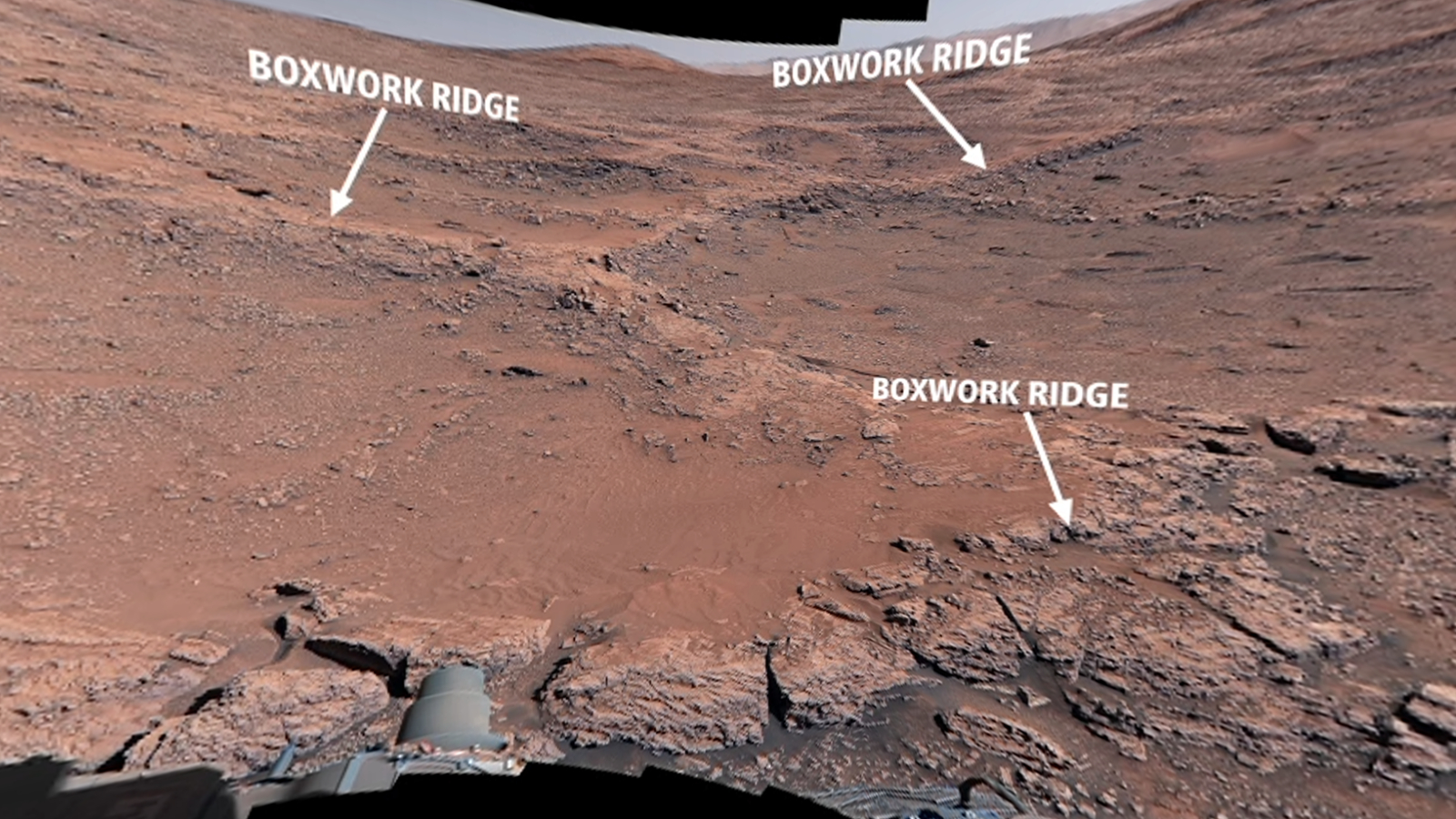
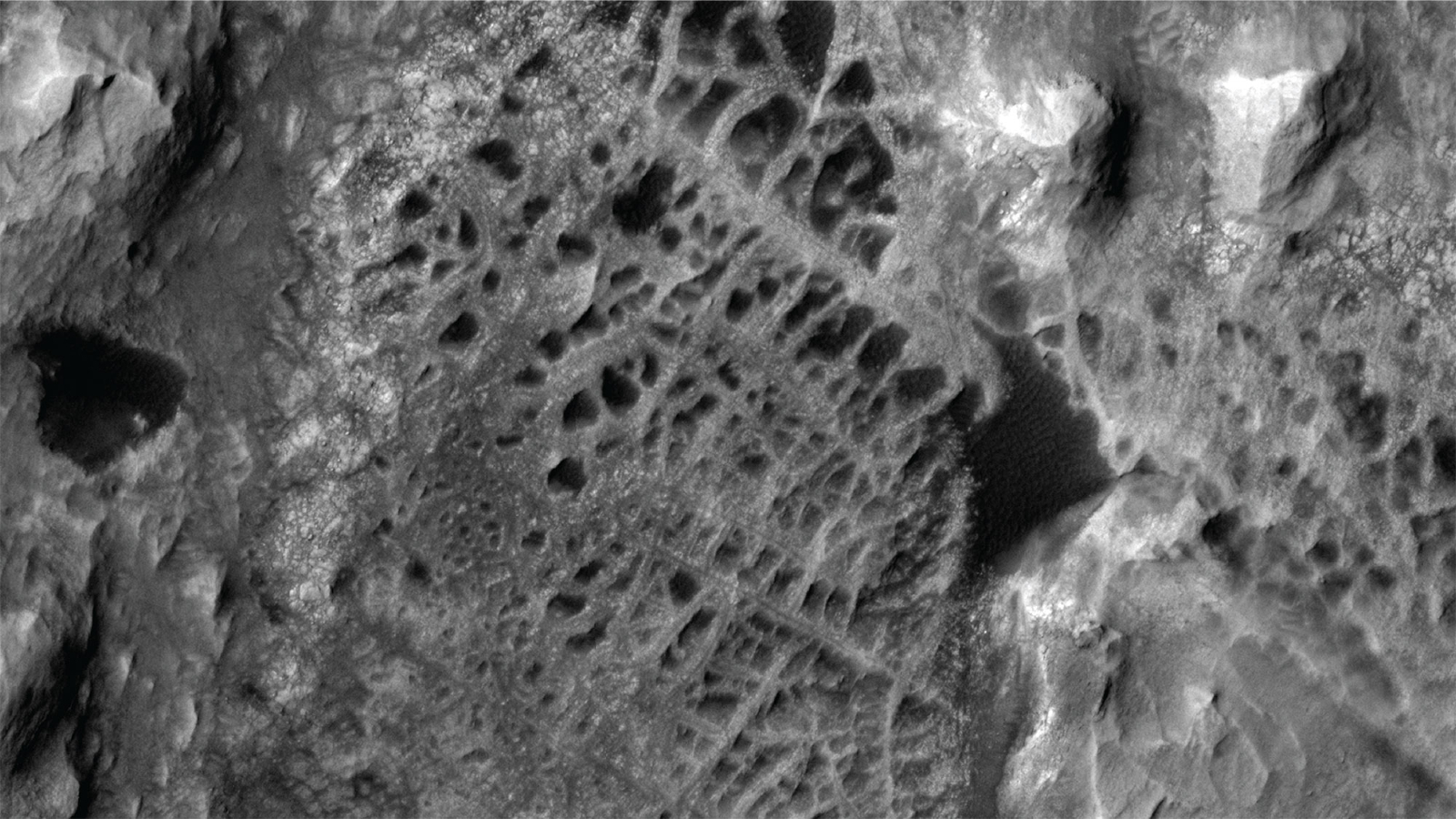
Photo of Mars surface taken by the Curiosity rover with boxwork ridges labelled

New images from NASA's Curiosity rover show a series of "boxwork" ridges, which looks like large spiderwebs when viewed from above. 
(Image credit: NASA/JPL-Caltech/MSSS)

NASA's Curiosity Mars rover has taken the first ever close-up images of gigantic Martian "spiderwebs" on the Red Planet. The zig-zagging ridges, which were left behind by ancient groundwater, could reveal more about Mars' watery past and provide clues about whether the planet once harbored extraterrestrial life, researchers say.

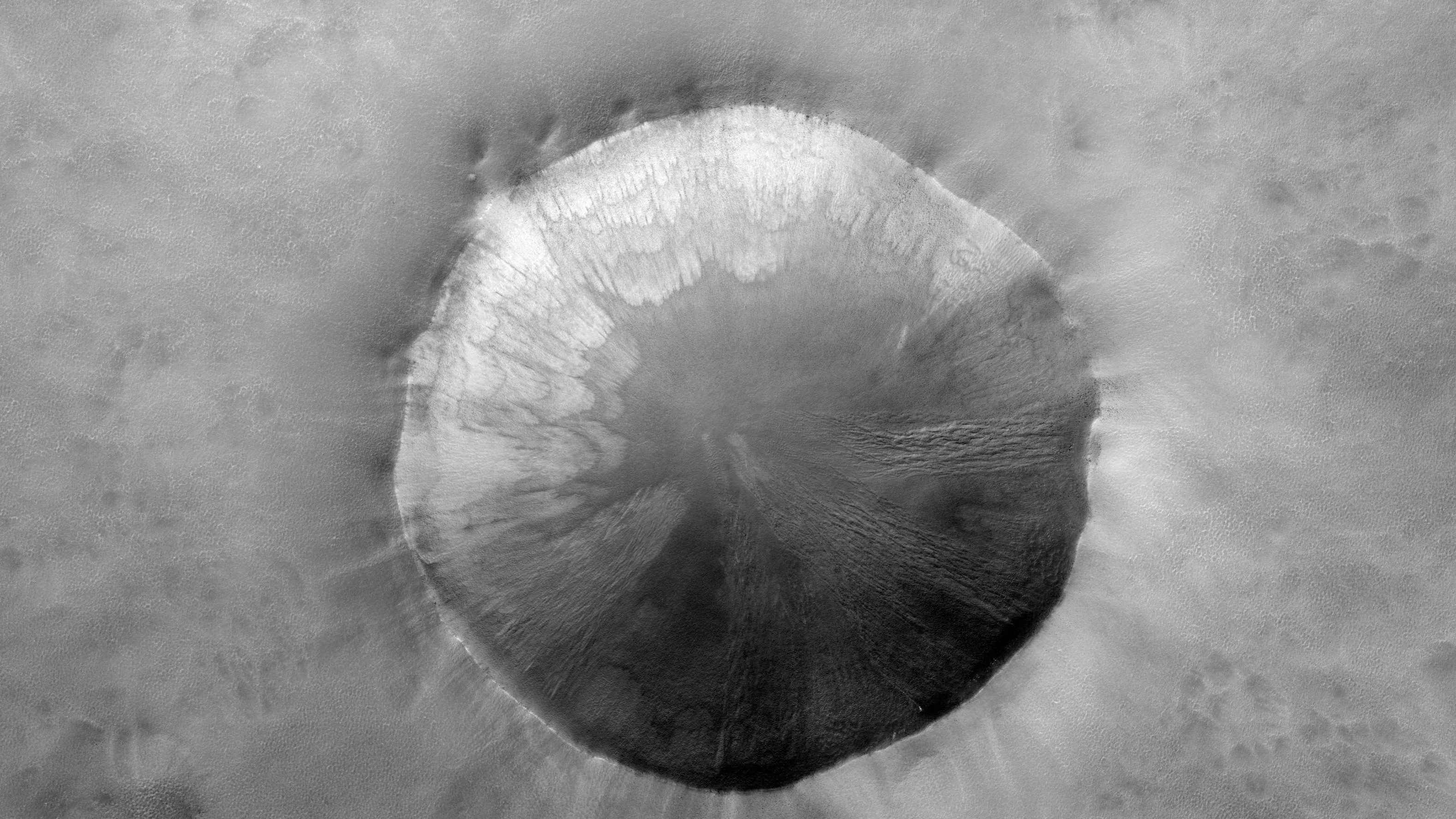
The web-like features, known as "boxwork," are made up of criss-crossing ridges of mineral-rich rocks that infrequently litter the surface of Mars. The patterns can span up to 12 miles (20 kilometers) across and look as if they have been spun by giant arachnids when viewed from space. Yet, until now, these structures have never been studied up close.

Smaller boxwork formations are found on the walls of caves on Earth and form via a similar mechanism to stalagmites and stalactites. Scientists have suggested the same mechanism created these structures on Mars, only on a much larger scale.

You may like
  • A photograph taken from the Mars Reconnaissance Orbiter, which shows wave-like patterns inside a Mars crater.

NASA Mars satellite uncovers markings 'like paint dripping down a wall' on Martian surface

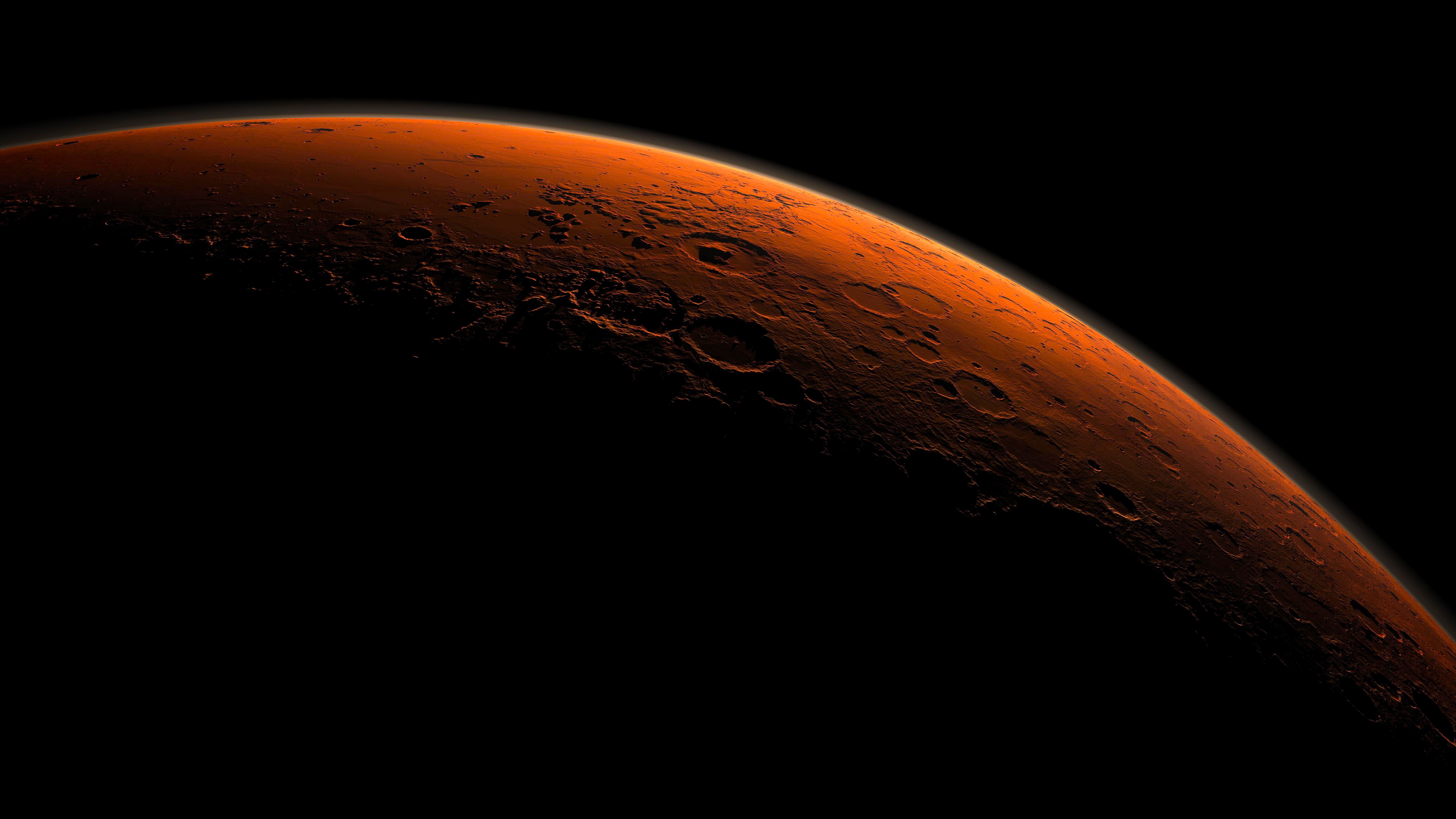
  • An artist's illustration of Mars's Gale Crater beginning to catch the morning light.

NASA rover reveals signs of crucial life-sustaining process on Mars

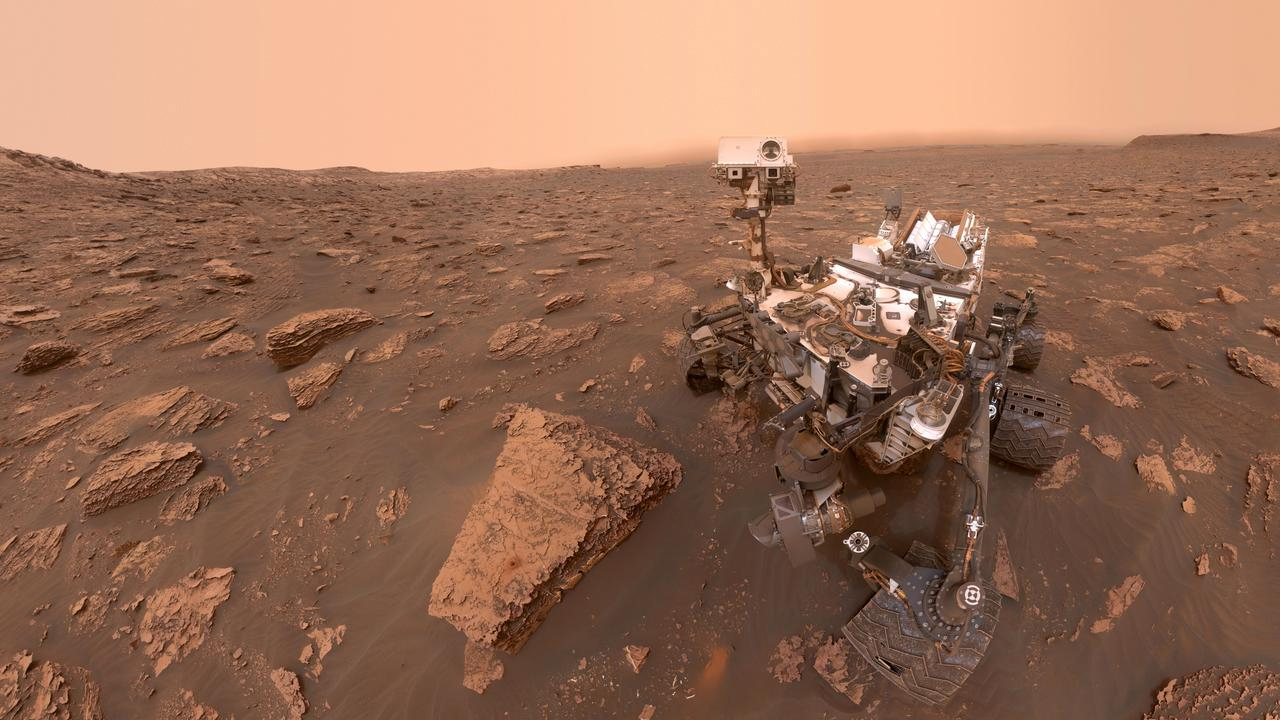
  • NASA's Curiosity rover took this selfie while inside Mars' Gale crater on June 15, 2018, which was the 2,082nd Martian day, or sol, of the rover's mission.

Curiosity rover finds largest carbon chains on Mars from 3.7 billion-year-old rock


Mars Gets Solar Eclipses Too (Now in High-Def)

"The bedrock below these ridges likely formed when groundwater trickling through the rock left behind minerals that accumulated in those cracks and fissures, hardening and becoming cementlike," NASA representatives wrote in a statement. "Eons of sandblasting by Martian wind wore away the rock but not the minerals, revealing networks of resistant ridges within."

aaf46a3577fa4c5e0f84be48b42a6894

New images from NASA's Curiosity rover show a series of "boxwork" ridges, which looks like large spiderwebs when viewed from above.

Credit: NASA/JPL-Caltech/MSSS

The web-like features should not be confused with the infamous "spiders on Mars" — a geological feature created by carbon dioxide ice on the planet's surface, which was recently recreated on Earth for the first time.

Related: 

A black and white satellite image of spiderweb-like surface features on Mars

Martian boxwork features look like rocky spiderwebs when viewed from space.  (Image credit: NASA/JPL-Caltech/University of Arizona)

Curiosity is currently exploring a patch of boxwork on the slopes of the 3.4-mile-tall (5.5 kilometers) Mount Sharp at the heart of Gale Crater, where the wandering robot touched down in 2012. The rover set out for the area in November 2024 and arrived earlier this month. The features are a priority target for mission scientists because the ridges do not appear anywhere else on the mountain — and experts have no idea why.

On June 23, NASA released the first close-up images of the faux spiderwebs, along with an interactive video on their YouTube channel (see below), which enables you to explore the site in 3D.

NASA’s Curiosity Rover Explores “Spiderwebs” on Mars (360)

The rover also drilled and analyzed some samples of rocks surrounding the web-like ridges and found that they contained veins of calcium sulfate, a salty mineral that is also left behind by groundwater. This particular mineral hasn't been seen so far up Mount Sharp before, so its discovery here is "really surprising," Abigail Fraeman, Curiosity’s deputy project scientist based at NASA's Jet Propulsion Laboratory, said in the statement.

Researchers hope that by studying boxwork up close, they can learn more about Mars' watery past, before the planet's oceans were stripped away by solar radiation. Future findings could also shed light on the giant subsurface ocean that was recently discovered deep below the Martian crust.

Some experts also think that the ridges could finally help settle the debate around whether Mars once harbored extraterrestrial life.

"These ridges will include minerals that crystallized underground, where it would have been warmer, with salty liquid water flowing through," Kirsten Siebach, a Curiosity mission scientist at Rice University in Houston who has been studying the area, previously said. "Early Earth microbes could have survived in a similar environment. That makes this an exciting place to explore."

RELATED VIDEOS

The Truth About Humanity's Mission To Mars | Race To The Red Planet | Full Documentary

{ https://www.livescience.com/space }

Hoe vind je dit bericht?
Geschreven door peter om 18:03 Stuur door

10 Interesting Facts About The Only Animals, The Tardigrades, That Can Survive In Outer Space

10 Interesting Facts About The Only Animals, The Tardigrades, That Can Survive In Outer Space

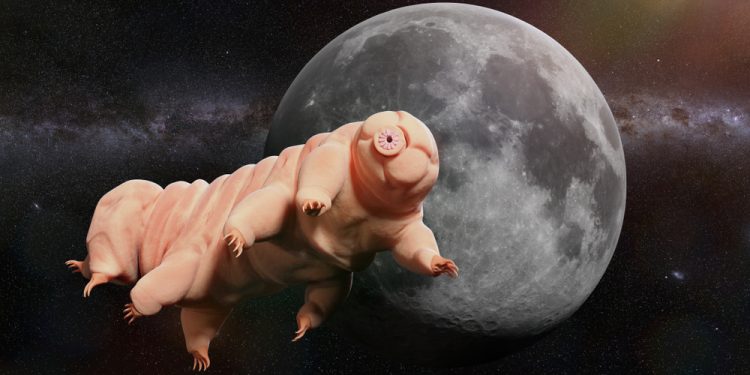
Tardigrades are specialists in survival, they can even withstand the conditions in space. Credit: Shutterstock

Introduction

Tardigrades, commonly known as water bears or moss piglets, are microscopic, eight-legged animals renowned for their extraordinary resilience. These tiny creatures, measuring less than a millimeter in length, inhabit diverse environments worldwide—from moss and lichen to freshwater and terrestrial habitats. Their resilience has captivated scientists for decades, especially their ability to survive extreme conditions that would be lethal to most life forms. Notably, tardigrades are the only animals known to endure the vacuum of outer space and high levels of radiation. This essay explores ten fascinating facts about tardigrades, emphasizing their unique adaptations that enable them to survive in the harsh environment of space.


10 Interesting Facts about Tardigrades | Waterbears | Nature's Survivors That Defy the Impossible!

Fact 1: Tardigrades Can Survive the Vacuum of Outer Space

Tardigrades, often called water bears or moss piglets, are microscopic creatures renowned for their incredible resilience. One of their most astonishing abilities is surviving the vacuum of outer space. In 2007, the European Space Agency conducted a groundbreaking experiment using its FOTON-M3 mission. During this mission, tardigrades were exposed to the harsh conditions of space, including the vacuum, intense solar radiation, and extreme temperatures, for more than a week. The results were remarkable: about 68% of the tardigrades survived the exposure. When brought back to Earth and rehydrated, many of these resilient creatures regained their mobility, showcasing their extraordinary ability to recover from such extreme conditions.

The secret behind their survival lies in their ability to enter a state called cryptobiosis. In this state, tardigrades suspend their metabolic processes, effectively shutting down all biological activity. This allows them to withstand environments that would normally be lethal, such as extreme cold, dehydration, and high radiation levels. Cryptobiosis acts as a protective mechanism, enabling tardigrades to endure conditions in space that are inhospitable to most other forms of life. Their resilience has fascinated scientists and expanded our understanding of life's potential to survive in extraterrestrial environments. Overall, tardigrades are a testament to the extraordinary adaptability of life and continue to be a subject of scientific research into resilience and survival in extreme environments.

Fact 2: Tardigrades Enter a State of Cryptobiosis to Survive Extreme Conditions

Tardigrades, often called water bears, are tiny, resilient creatures known for their extraordinary survival skills. One of their most remarkable abilities is entering a state called cryptobiosis, which allows them to survive extreme and unfavorable environmental conditions. Cryptobiosis is a reversible, ametabolic state, meaning the tardigrades' metabolic processes almost completely shut down, and they become virtually dormant. This process is triggered by stressful conditions such as dehydration, intense heat or cold, high levels of radiation, or the vacuum of space.

In order to survive these harsh environments, tardigrades undergo specific physiological changes. They lose almost all of their water content, shrinking into a dehydrated, desiccated form. Simultaneously, they produce special protective molecules, including trehalose sugar and vitrification proteins. Trehalose acts as a stabilizer, replacing water in cells and preventing damage to cell membranes and proteins. Vitrification proteins facilitate the formation of a glass-like state inside their bodies, effectively immobilizing cellular components and preventing structural damage during dehydration and extreme conditions.

While in cryptobiosis, tardigrades' cellular activities are halted, essentially freezing their biological clock. This state can last for decades, enabling them to withstand environments that would typically be lethal. When conditions become favorable again—such as through rehydration—they rehydrate and reanimate, resuming normal biological functions. Their ability to survive space vacuum, intense radiation, and other environmental extremes has fascinated scientists, highlighting their potential for understanding biological resilience and inspiring advances in medicine, biotechnology, and space exploration.

Fact 3: Tardigrades Can Survive Temperatures Close to Absolute Zero and Above Boiling Point

Tardigrades, also known as water bears, are among the most resilient creatures on Earth, capable of surviving extreme temperature conditions that would be lethal to most other forms of life. They can endure temperatures as low as -458°F (-272°C), which is just above absolute zero—the theoretical limit where all molecular motion ceases. Conversely, they can survive temperatures as high as 300°F (149°C), significantly above the boiling point of water. This extraordinary temperature tolerance is made possible by their unique survival strategies. When exposed to cold, tardigrades enter a state called cryptobiosis, during which their cellular components become stabilized, and ice crystal formation is prevented, thus avoiding cell damage.

At high temperatures, protective proteins and antioxidants are produced to shield their cells from heat-induced harm. These adaptations allow tardigrades to endure environments like the icy depths of glaciers, where temperatures plummet to near absolute zero, and the scorching surfaces of hot springs or deserts, where extreme heat prevails. Their ability to survive such temperature extremes highlights their incredible level of adaptability, making them one of the most resilient animals on Earth.

This resilience not only fascinates scientists but also provides insights into biological survival mechanisms, potentially informing future research in cryopreservation and space exploration. Tardigrades’ survival in such harsh conditions exemplifies nature’s astonishing ability to adapt and thrive in environments that are inhospitable to most other life forms.

Fact 4: Tardigrades Can Survive High Levels of Radiation

Radiation is generally deadly to living organisms because it causes severe damage to DNA and other vital cellular components. Yet, tardigrades, often called water bears, exhibit an extraordinary ability to withstand ionizing radiation, including gamma rays and X-rays. Scientific studies have demonstrated that tardigrades can survive radiation doses up to 1,000 times higher than the lethal amount for humans. This remarkable resilience is due to several specialized adaptations.

Firstly, tardigrades possess highly efficient DNA repair mechanisms. When their DNA is damaged by radiation, they can quickly and accurately repair the breaks and mutations, preventing cell death. Additionally, they produce protective molecules such as trehalose, a sugar that stabilizes cellular structures and prevents damage caused by radiation-induced oxidative stress. Another crucial adaptation is their ability to enter cryptobiosis, a state of suspended animation where metabolic processes nearly come to a halt. During cryptobiosis, cellular components are shielded from environmental stressors, including radiation, allowing tardigrades to survive extreme conditions that would be lethal to most other life forms.

This extraordinary radiation resistance has significant scientific implications. Researchers are interested in understanding how tardigrades achieve such resilience, as it could inform the development of new radioprotective agents or strategies for humans exposed to radiation, such as astronauts or cancer patients. Their ability to survive space exposure has already been demonstrated in experiments where tardigrades endured the vacuum and radiation of outer space. This resilience makes tardigrades valuable models in astrobiology, the study of life's potential to survive in extraterrestrial environments, and radiobiology, the study of radiation effects on living organisms. Ultimately, studying tardigrades may contribute to advancements in human space travel, radiation shielding, and understanding life's limits under extreme conditions.

3D image of a Tardigrade taken during a microscope scan. Credit: NPS/Diane Nelson

3D image of a Tardigrade taken during a microscope scan.

Credit: NPS/Diane Nelson

Fact 5: Tardigrades Are Capable of Surviving in Extreme Salinity.

Tardigrades, also known as water bears, are microscopic creatures renowned for their extraordinary resilience in a variety of extreme environments. One remarkable aspect of their adaptability is their ability to survive in conditions of extreme salinity. These tiny animals can thrive in habitats ranging from freshwater lakes to hypersaline bodies of water, which contain salt concentrations that would be lethal to most other forms of life.

Their capability to tolerate such high salinity levels is primarily due to specialized osmotic regulation mechanisms. Osmotic regulation is the process by which organisms control the movement of water and solutes across their cell membranes to maintain cellular integrity. Tardigrades produce compatible solutes, such as trehalose and glycerol, which help balance osmotic pressure between their internal environment and their surroundings. These solutes act as cellular protectants, preventing dehydration caused by high salt concentrations and stabilizing vital cellular components like membranes and proteins.

In environments with fluctuating or extremely high salt levels, tardigrades can adjust their internal osmotic balance by regulating the production and retention of these solutes. This adaptation prevents cellular swelling or shrinking, which could otherwise damage their cells. Consequently, tardigrades can survive in hypersaline lakes and other saline habitats where few other animals can endure.

This remarkable salinity tolerance not only enables tardigrades to occupy diverse ecological niches but also contributes to their widespread distribution across the planet. Their ability to withstand such harsh conditions allows them to survive in some of Earth's most extreme terrestrial environments, including salt flats and saline deserts. Their resilience to salinity variations exemplifies their overall adaptability and underscores their status as one of the most hardy and versatile creatures on Earth.

Fact 6: Tardigrades Have a Unique Protein That Protects Their Cells from Damage

Tardigrades, also known as water bears, are microscopic creatures renowned for their extraordinary survival skills. One of their most fascinating biological features is a unique protein called Dsup, short for “damage suppressor.” This protein plays a crucial role in protecting tardigrades’ cells from damage caused by radiation and oxidative stress, making them some of the most resilient organisms on Earth.

Dsup functions by binding directly to the DNA within the tardigrades’ cells. This binding creates a protective shield around the genetic material, preventing damage from harmful radiation. When exposed to radiation or oxidative stress, free radicals—unstable molecules that can cause strand breaks in DNA—are generated. Dsup acts as a safeguard against these free radicals, effectively absorbing or deflecting their harmful effects. As a result, the DNA remains intact, ensuring the survival of the organism even under extreme conditions.

Scientists have conducted experiments where they introduced the Dsup protein into human cells. The results were promising: the modified human cells exhibited increased resistance to radiation exposure. This discovery suggests that Dsup could have significant applications in medicine and biotechnology, especially in fields where radiation exposure is a concern, such as cancer radiotherapy or space travel. For astronauts venturing into deep space, where radiation levels are much higher than on Earth, Dsup could potentially offer protective benefits.

The protein’s unique ability to shield cells from radiation damage is a key factor behind tardigrades’ resilience in extreme environments, including the vacuum of space and high-radiation settings. Ongoing research aims to better understand Dsup’s properties and explore ways to harness its protective effects for human health and technological advancements. Ultimately, this tiny protein holds great promise for improving our ability to protect living organisms from radiation-induced damage, opening new doors in medicine and space exploration.

The Only Animal That Can Survive in Space! 🐻🌌

Fact 7: Tardigrades Can Survive Dehydration for Decades

Tardigrades are tiny, resilient creatures renowned for their extraordinary survival skills. One of their most remarkable abilities is to withstand complete dehydration for extremely long periods, sometimes spanning decades. This feat is achieved through a process called cryptobiosis, where tardigrades enter a state of suspended animation to survive harsh environmental conditions.

During dehydration, tardigrades produce special molecules such as trehalose and vitrification proteins. Trehalose is a sugar that replaces water in cells, helping to stabilize cellular structures and prevent damage caused by ice crystal formation during freezing. Vitrification proteins, on the other hand, help form a glass-like state within cells, further protecting the organism’s internal components. These adaptations prevent oxidative stress and physical damage, allowing tardigrades to remain in a dormant state without harm.

When environmental conditions improve, tardigrades can rehydrate rapidly by absorbing water, which triggers the resumption of their metabolic functions. They then return to active life, capable of reproduction and normal activity. This ability to endure prolonged periods of dryness and extreme environmental stresses allows tardigrades to survive droughts, cold seasons, and other challenging conditions that would be lethal to most other organisms.

Scientists are deeply interested in the resilience of tardigrades because their mechanisms for surviving desiccation could inform new preservation techniques for biological materials. For example, understanding how they protect their cells could lead to advances in the storage of vaccines, tissues, and other delicate biological samples, reducing reliance on cold storage and refrigeration. Overall, tardigrades exemplify nature’s ingenuity in adaptation and resilience, inspiring innovations in biotechnology and cryopreservation.

Fact 8: Tardigrades Can Reproduce After Surviving Space Conditions

Tardigrades are microscopic creatures renowned for their extraordinary resilience. Not only can they survive extreme conditions on Earth, but recent experiments have demonstrated that they can also endure the harsh environment of outer space. When exposed to the vacuum of space, intense radiation, and temperature fluctuations, many tardigrades did not perish. Instead, they survived these extreme conditions and, crucially, were able to reproduce once back on Earth. This remarkable ability underscores the resilience of their cellular and reproductive systems, which can withstand and recover from environments that are lethal to most forms of life.

The survival and reproductive success of tardigrades in space have profound implications for our understanding of life's endurance beyond Earth. Their resilience suggests that life might be capable of existing and spreading in extraterrestrial environments, supporting the hypothesis of panspermia—the idea that life can be transferred between planets via space debris or meteorites. If simple organisms like tardigrades can survive the vacuum and radiation of space and still reproduce, it raises the possibility that microbial life could potentially travel between planets, establishing new ecosystems elsewhere in the universe.

This discovery fuels ongoing scientific discussions about the potential for life beyond our planet and the robustness of Earth's earliest life forms. It also highlights the importance of studying extremophiles like tardigrades to better understand the limits of life and the possibilities for extraterrestrial habitability. As research continues, tardigrades serve as a compelling example of life's tenacity and the potential for life to endure and propagate in environments previously thought inhospitable.

Tardigrades Can Survive Extreme Conditions: These microscopic creatures ...

Fact 9: Tardigrades Have a Simple but Effective Nervous System

Tardigrades are microscopic creatures renowned for their remarkable resilience. Despite their tiny size, they possess a surprisingly simple but highly effective nervous system. This system consists of a dorsal brain, located at the top of their body, and paired ventral nerve cords running along their underside. These neural structures work together to process environmental information and coordinate responses, allowing tardigrades to survive in extreme conditions.

Their nervous system enables them to detect various environmental stimuli, such as light, temperature fluctuations, and humidity levels. For example, when conditions become unfavorable, tardigrades can enter a state of suspended animation called cryptobiosis, during which their neural activity diminishes significantly but remains capable of reactivation. Studies have demonstrated that even after exposure to extreme environments—such as high radiation, vacuum, or intense heat—their nervous system remains largely intact. This neural resilience is crucial for their ability to reanimate and behave normally once conditions improve.

This robustness of their nervous system has fascinated scientists, as it offers insights into how neural tissues can withstand and recover from extreme stress. Understanding the mechanisms behind tardigrade neural resilience could inform the development of protective strategies for human neural tissues and inspire innovations in neurobiology. Furthermore, their ability to survive in space and other hostile environments underscores the potential for studying their nervous system to unlock new knowledge about neural durability and adaptation. Overall, tardigrades exemplify how a simple neural architecture can be highly effective in ensuring survival under the harshest conditions on Earth and beyond.

Fact 10: Tardigrades Are Ecosystem Engineers and Bioindicators

Tardigrades, also known as water bears, are tiny, resilient creatures that play an essential role in their ecosystems as both decomposers and bioindicators. As decomposers, they help break down organic material, contributing to nutrient cycling in moss, lichen, and soil habitats. Their presence often signals a healthy environment because they are sensitive to environmental changes. Scientists frequently study tardigrades to assess ecosystem health and environmental stressors such as pollution, radiation, and climate change. Their remarkable resilience makes them ideal bioindicators, providing early warnings about ecosystem degradation or contamination.

In addition to their ecological significance, tardigrades are important in scientific research due to their ability to survive extreme conditions. They can withstand high levels of radiation, desiccation, freezing, and even the vacuum of space. This extraordinary resilience has made them valuable models in astrobiology, where researchers explore the possibilities of life beyond Earth. Studying tardigrades helps scientists understand how life might endure harsh extraterrestrial environments, informing planetary protection protocols and the search for extraterrestrial life.

Furthermore, their survival capabilities suggest that tardigrades could potentially survive future colonization efforts beyond our planet. Their ability to endure extreme environments grants insights into the possibilities of life surviving on other planets or moons. Overall, tardigrades serve as vital indicators of environmental health and as models for understanding life's resilience under extreme conditions, providing valuable knowledge for ecology, astrobiology, and planetary science.

Tardigrade on the Moon! NASA is trying to cover it up, but why? | Space documentary

Conclusion

In conclusion, tardigrades are remarkable creatures whose extraordinary resilience sets them apart from most other forms of life. Their ability to withstand the vacuum of space, extreme temperatures, high radiation levels, dehydration, and salinity demonstrates their incredible adaptations for survival in the harshest environments.

The discovery of protective proteins such as Dsup highlights the biological mechanisms that enable them to endure such extreme conditions. Furthermore, their capacity to recover and reproduce after space exposure provides valuable insights into biological resilience and resilience mechanisms. These findings have significant implications for various scientific fields, including biotechnology, medicine, and astrobiology.

Tardigrades may inspire innovative solutions for radiation protection, preservation techniques, and understanding life's limits on Earth and beyond. Their resilience not only broadens our understanding of the boundaries of life but also fuels the hope of discovering extraterrestrial life. As tiny water bears, they exemplify nature’s incredible capacity for adaptation and survival in the most inhospitable environments. Overall, tardigrades serve as a powerful reminder of nature’s ingenuity and the potential for discovery that still lies ahead in understanding life's resilience and possibilities in the universe.

{ PETER2011 }

Hoe vind je dit bericht?
Geschreven door peter om 16:42 Stuur door

The Oceans on Enceladus Are Highly Alkaline

The Oceans on Enceladus Are Highly Alkaline

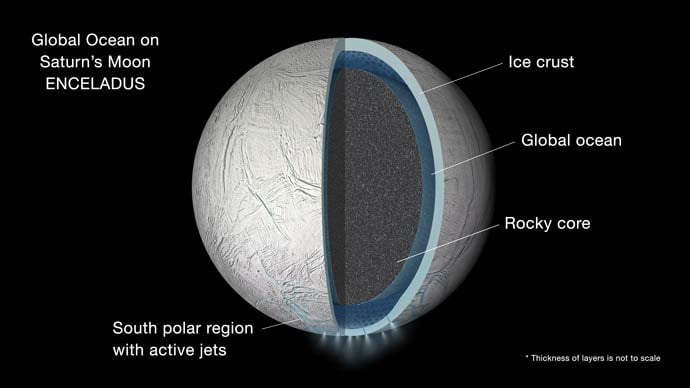
Illustration of the interior of Saturn's moon Enceladus showing a global liquid water ocean between its rocky core and icy crust. Image Credit: JPL

What can the pH level of the subsurface ocean on Enceladus tell us about finding life there? This is what a recent study accepted to Icarus hopes to address as a team of researchers investigated the potential pH level of Enceladus’ subsurface ocean based on current estimates. This study has the potential to help scientists better understand the composition of Enceladus’ subsurface ocean and what this can mean for finding life as we know it.

For the study, the researchers used computer models to estimate the pH levels of the subsurface liquid water ocean based on data regarding phosphate levels in ice grains that were discharged from Enceladus’ plumes at the moon’s south polar region. This data was obtained when NASA’s Cassini spacecraft flew through the plumes during its historic mission after it discovered the plumes existed.

In the end, the researchers’ models estimate that Enceladus’ ocean has pH between 10.1-11.6, which they note is higher than longstanding estimates between approximately pH 8-9. The researchers then postulated if the estimated pH in the plumes was the same as the pH within the ocean and the processes responsible for changing it. Based on Earth processes, the researchers postulated that carbon dioxide degassing within Enceladus’ ocean could increase the pH when it’s discharged via the plumes.

The researchers concluded that the carbon dioxide degassing is too small to cause large increases in pH, ultimately estimating the ocean’s pH is approximately 10.6. For context, a pH of 7 is considered neutral with fully acidic being 0 and fully alkaline being 14. The average pH of Earth’s water ranges between 6-8.5, freshwater ranging between 6.5-8, rainwater is approximately 5.6, and seawater is approximately 8.2.

The study notes, “Our new understanding of the pH of Enceladus’s ocean and how volatile signatures are transferred between the ocean and plume have important implications. High pH ocean water is evidence of a strong degree of interaction between chemically basic rocks and the ocean of Enceladus.”

Discovered in 1789 by William Herschel, Enceladus is the sixth-largest moon of Saturn and the 18th largest moon in the solar system. For context, the Earth’s Moon is approximately one-quarter the diameter of Earth and Enceladus is approximately one-seventh the diameter of the Earth’s Moon. While Enceladus was briefly explored during the flybys of NASA’s Voyager 1 and Voyager 2 spacecraft in 1980 and 1981, respectively, it wasn’t until NASA’s Cassini spacecraft arrived in the Saturn system and began conducting several flybys of Enceladus in 2005.

During these flybys, Cassini discovered the plumes that emanated from Enceladus’ south pole regions called “tiger stripes”, which were named due to the large scar-like cracks where the plumes were discharged, ultimately discovering more than 100 geysers. Cassini even flew through the plumes to ascertain their composition, discovering water vapor, molecular hydrogen, organic hydrocarbons and molecules like methane, ethane, oxygen, and nitrogen. The phosphates that were examined for this study were first discussed in a 2023 study published in Nature based on data collected by Cassini’s Cosmic Dust Analyzer instrument.

Cassini officially “retired” in 2017 when it was intentionally burned up in Saturn atmosphere to avoid contaminating moons like Enceladus with Earth-based microbes. However, scientists continue to pour over large amounts of data the pioneering spacecraft obtained about Enceladus while gaining greater insight into this intriguing ocean world. While future missions to Enceladus have not been accepted, the Enceladus Orbilander is a current mission concept that is gaining steam in the scientific community for its promise to teach us more about Enceladus in greater detail than Cassini was capable of doing. This will include conducing in-depth analyses of Enceladus’ plumes and land a probe on Enceladus’ surface with the goal of ascertaining the habitability of this small moon and whether there’s life as we know it.

What new discoveries about the pH level, and other aspects, of Enceladus’ subsurface ocean will researchers make in the coming years and decades? Only time will tell, and this is why we science!

  • As always, keep doing science & keep looking up!
RELATED VIDEOS

Does Enceladus Have An Ocean? - Physics Frontier

Enceladus: Saturn's Ocean World Full of Mysteries 🌊✨
Secrets of Enceladus: Saturn’s Hidden Ocean

{ https://www.universetoday.com/ }

Hoe vind je dit bericht?
Geschreven door peter om 14:00 Stuur door

Secret Missions and Lost Civilizations: The Many Mysteries and Conspiracies of the Icy, Enigmatic World of Antarctica!

Secret Missions and Lost Civilizations: The Many Mysteries and Conspiracies of the Icy, Enigmatic World of Antarctica!

Secret Missions and Lost Civilizations: The Many Mysteries and Conspiracies of the Icy, Enigmatic World of Antarctica!

There is little doubt that one of the most mysterious and intriguing locations on the planet is the seventh continent of the world, Antarctica, an icy land that almost certainly holds secrets that are simply awaiting discovery. It is also a location that is highly protected, and as such, has a number of conspiracies that have persisted through time.

Mysteries of Antarctica That Can't Be Explained!

Antarctica is under the control of the Antarctic Treaty of 1961, which is overseen by multiple countries, and anyone who wishes to go to the icy continent, whether they are individuals or an organization, needs to get permission from this group. The area has been put off-limits for scientific preservation and investigation. Given that this location is the last place on Earth that is largely untouched by human activity, it is perhaps easy to understand why these protections have been put in place. However, as we might imagine, some people have questions about the rigid control such a small group has over an entire continent. Indeed, when we explore some of these conspiracies, we can see why, along with the secrecy that surrounds Antarctica, they have endured for such a long time and are likely to continue.  

The mysteries of Antarctica stretch back centuries, arguably with the discovery of the Piri Reis Map, which was made in 1513, and appeared to have Antarctica accurately placed, even though it wasn’t officially discovered until 1820. Moreover, as pointed out by the late Jim Marrs in his book Our Occulted History: Do The Global Elite Conceal Ancient Aliens?, this was “especially puzzling because (Antarctica) has been under an ice cap for at least four thousand years!” Where, then, did the information come from that had this ice-covered world not only accurately placed but depicted (presumably equally accurately) without ice?

Most research suggests that the map was created by a Turkish admiral, Piri Reis, who had used other, much older, perhaps even ancient maps to create the map that would be named after him. He also claimed to have “made use of charts and maps dating back to ancient Greece!” Making the creation of the map even more mysterious, these maps and charts from ancient Greece, according to Reis, were themselves based on documents from ancient Egypt and Mesopotamia, meaning he was working with information that could have been, even during his time, 4000 years old, perhaps even older. What makes these alleged ancient Egyptian documents even more intriguing is the potential that this information could itself have come from much further back than even the time of the ancient Egyptian civilization. In his book Temple of the Stars, author Brinsley le Poer Trench offered that “tradition tells us that ancient Egypt was a colony of Atlantis!” If there was any truth to this, could the information the Piri Reis Map was based on stretch back to Atlantis which would, in turn, offer proof that tales of Atlantis are much more than pure legend and myth, and that survivors of the legendary land somehow made their way to Egypt, perhaps even kick-starting the ancient civilization there.
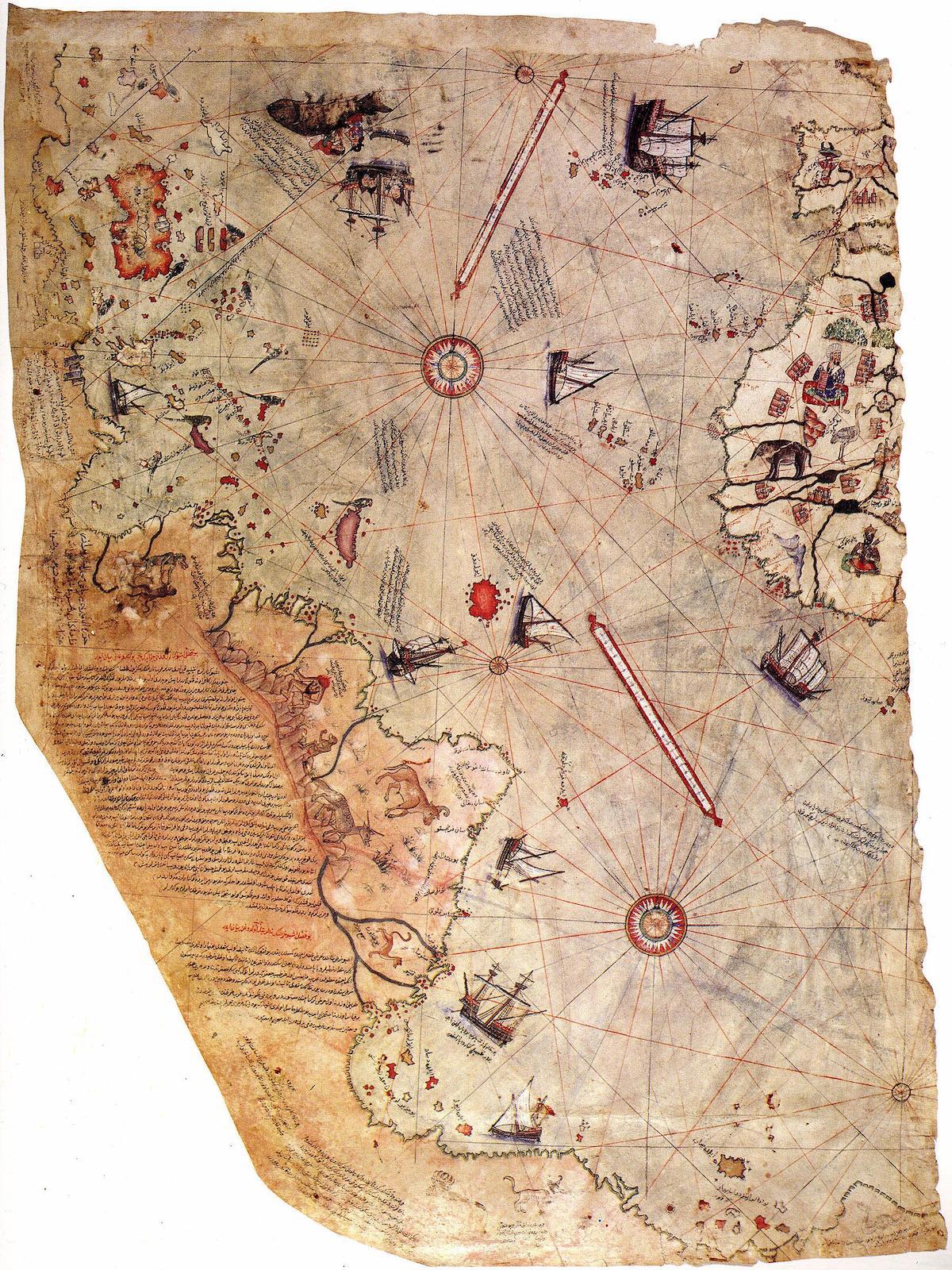
1620px-Piri_reis_world_map_01-2.jpg A fragment of the Piri Reis Map (public domain)

What is even more interesting and thought-provoking is that recent satellite images taken over the icy continent appear to match the basic outline on the Piri Reis Map that most people assume to be Antarctica. If the outline is proven accurate, then other information detailing extensive forests, mountains, and other terrains would also likely be accurate, and would perhaps offer further speculative proof that Antarctica, many thousands of years ago, was once an inhabitable and inhabited land. In fact, when we consider such claims of the planet undergoing a pole shift that plunged Antarctica into the icy conditions it endures today in a matter of hours, we might also find further connections between the legends of Atlantis, as well as what was responsible for its sudden destruction. Indeed, we might contemplate that if Antarctica was once much further north than it currently is, if there had been any kind of advanced warnings, that a small group of survivors could have reached Africa and, eventually, what was the land of ancient Egypt.

One of the first people to suggest such a possibility was researcher Charles Hapgood, who, among other things, suggested that Antarctica could have been free of ice and inhabited as recently as 4000 BC. While this speculative end to Antarctica and its presumed advanced civilization would still put it 1000 years away from the accepted start of the great civilizations in Egypt and Sumer, we should also note that these dates are often the result of guesswork and might not be entirely accurate. Moreover, we might also consider that a small group of survivors, even a group that numbered several hundred, might have taken a considerable amount of time to rebuild themselves anywhere close to where the legends tell us such lands of Atlantis once were, perhaps even several hundred years.

While these suggestions might sound preposterous to some, we should consider that the Piri Reis Map also includes other accurate information before it was, once more, according to mainstream history, known to the people of Europe. It shows, for example, what appears to be the Falkland Islands just short of a century before they were discovered. Moreover, and even more impressive, the map also showed an accurate coastal outline of what is modern-day South America, including several of the major rivers, rivers, incidentally, that would not be fully mapped out until the twentieth century.

The Piri Reis Map Mystery: Ancient Alien Tech or Lost Civilization?

We know that the Piri Reis Map is not a silly hoax and that the map is genuine. Just how those whose work Reis used to so accurately depict such coastal outlines, including, remember, Antarctica, and how it might look without the covering of ice,  remains a complete mystery. Had an ancient civilization, one that was at its peak before the time of the ancient Egyptians, somehow managed to map out most of the land masses of the planet? And if so, just how had they done this? Were they masters of the waves and had mapped out the land masses of the world that way? Or might they have even had access to aerial vehicles, machines, and devices, in much the same way as we do today, and is this how they so accurately recreated such coastal outlines?

Even considering these possibilities forces us to look deeper into the mystery, which, in turn, brings up further questions. For example, according to mainstream science and history, Antarctica has been under a huge sheet of ice for approximately the last 15 million years (just think about that number for a moment!). So, does that mean that the coastal outline of Antarctica was mapped out by an advanced civilization over 15 million years ago, obviously much earlier than mainstream history says advanced humans existed, or does that mean that Antarctica was, as Hapgood suggested, not covered by ice as recently as several thousand years ago? If either of those possibilities were true, it would be highly significant for our understanding of human history.

Of course, we should perhaps also consider, if mainstream history is correct and Antarctica has been under ice for around 15 million years, as well as being correct about advanced humans not existing so far back, then might whoever made the outlines of Antarctica before it was covered by ice not have been human at all but some other intelligent species that once existed on Earth and whose knowledge and wisdom was somehow preserved right up until the time of ancient Egypt, before the scribes and scholars of ancient Greece preserved it further, with it eventually falling into the hands of Piri Reis himself in the early sixteenth century. It is also interesting to note that Hapgood speculated that this information was likely passed down through the generations in an “underground stream” – essentially, through secret societies, whose presence in such matters only makes them more mysterious.

Before we move on, it is worth our time briefly examining another mysterious map that Charles Hapgood discovered hidden in the Congress archives in 1960. Known as the Terra Australis Map, it was drawn up in 1531 (less than 20 years after the Piri Reis Map, incidentally), and contains an area of land, named Terra Australis on the map, that appears remarkably similar to the ice mass of Antarctica. Moreover, there are even markings for mountains on this particular piece of land that also match those known to exist on Antarctica. Once more, considering that no type of known exploration of Antarctica had taken place in the early 1500s, then we have to assume that this map, or at least the information it was based on, was created thousands of years previously, quite possibly around the same time as the documents used to create the Piri Reis Map were created.  

Without a doubt, some of the most enthralling and equally outrageous conspiracies concerning Antarctica have taken hold since the years following the Second World War, and it would be impossible to explore the mysteries of Antarctica during this time without turning our attention to Operation Highjump, which took place in late 1946 and early 1947. Whether the real reason for the expedition was for training exercises in “cold conditions” as well as to establish a multinational research base or not remains open to debate. There were, however, even then, rampant rumors of a Third Reich base in Antarctica, as well as even more bizarre rumors that the Third Reich had stumbled upon an entrance to the alleged Inner Earth and had established contact with an extraterrestrial race that had resided there for thousands of years. As bizarre as these suggestions might be, we might also consider that many Third Reich engineers and scientists had been transplanted to the United States as part of Operation Paperclip, and could very well have passed on such information to their new superiors.

With these last thoughts in mind it is also worth considering the contemplations of researcher and author Graeme Davis, who claimed in his book Nazi Moonbase that the Third Reich had managed to transfer the Haunebe Disc to this base in Antarctica, and high-ranking Third Reich member, Hans Kammler, had also traveled to the base to carry on working on the program with a view to “continuing the war!”
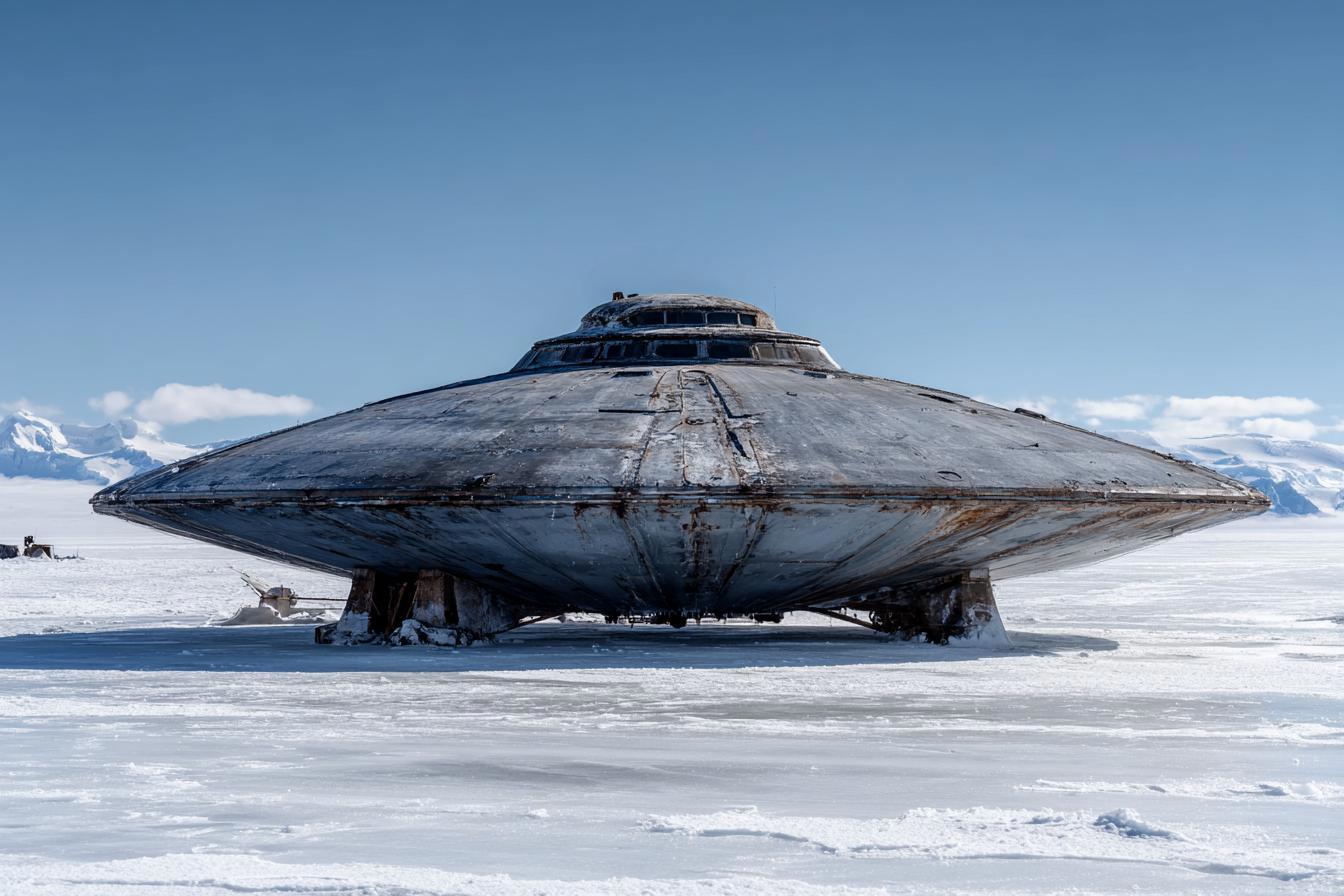
german-saucer.jpg

Whatever the truth, the multinational mission resulted in some of the strangest encounters ever documented, as well as some remarkable statements from one of the highest-ranking members of the mission, Admiral Richard Bryd. The fleet was approaching the Antarctic coast in December 1946. However, it was in February 1947 when Byrd took to the skies in order to observe the icy land that was Antarctica. He would, if we are to believe his reports and diary notes to be accurate, see a lot more than he bargained for.

He claimed that, as opposed to being continuous sheets of ice below, the terrain suddenly changed to vast fields of green vegetation. What’s more, he could see multiple animals that “shouldn’t have been there”, including some kind of “mammoth-like animal!” Even stranger, at one point when he looked down from his plane, he saw something that appeared “to be a city!” Then, as he ventured deeper and deeper over the land, a voice suddenly came over the radio. However, it wasn’t from his Operation Highjump crew, but instead had a “Nordic or Germanic accent!” This foreign voice welcomed Byrd to “our domain!”

It was around this time that he realized he had been flying into some kind of “opening” in the Earth, and only moments after this realization, some powerful force suddenly took control of his aircraft. Before he had time to contemplate what was happening, his plane was surrounded by several saucer-shaped vehicles – and each of these strange vehicles had what appeared to be a Third Reich swastika on their exteriors. Realizing he was in a helpless situation, Bryd remained as calm as he could as his plane was brought down calmly to the ground.

According to his flying notes, after his plane was brought down, several “tall men with blond hair” approached the aircraft, while “in the distance,” he could see “a shimmering city pulsating with rainbow hues of color!” He noted that he couldn’t see any signs that the men were carrying any weapons before ending his flight notes, stating he could “hear a voice ordering me by name to open the cargo door!” According to recollections he later revealed from memory, he did so and stepped out of the plane.

Upon scanning his surroundings, Byrd found himself standing inside a “mammoth cavern”. As he looked around further, he could see what appeared to be large stretches of vegetation, as well as what looked like lakes. Stranger still, Bryd claimed he could sense or feel the presence of some kind of sun. The next thing he realized, he, along with one of his wingmen, was led towards a large building. As they walked, Byrd could see that many of the buildings of this inner city were “made of a crystal material!” Once inside the building, the two men were led inside a room where they were each given a “warm beverage which tasted like nothing I have ever savored before!” They were left alone for several minutes before two of the tall, blond men returned, requesting that Byrd join them, which he duly did.  

According to what Byrd later stated, he was taken to meet representatives of a civilization that resided inside the Inner Earth, and that they had allowed him entry to their subterranean domain because he was “of noble character and (was) well known on the ‘Surface World’”. Further, according to Byrd’s recollections, this civilization had taken a great interest in the human race following the dropping of the atomic bombs over Nagasaki and Hiroshima, not least because of the potential danger the use of such weapons had to their own civilization. Moreover, at least according to claims Byrd made during a press conference interview with a Chilean newspaper shortly after his encounter, he was told by these representatives of this inner race that “in the case of a new war, the continental United States would be attacked by flying objects which could fly from pole to pole at incredible speeds!” Although it wasn’t perhaps picked up on that much at the time, in the years and decades that have followed, it appears that Byrd was describing many of the disc-like objects that would be witnessed regularly following the wave of UFO sightings in the summer of 1947, just one of which, remember, was the infamous Roswell crash.

As we might imagine, there was and has been a mixed reaction to Byrd’s statements and claims. It is interesting to note, though, that Byrd was “hospitalized” only days after his famous press conference, the last such press conference he would ever give. He did, though, make further references to the incident, both in his reports and his writings. In one of his reports to his superiors, for example, he stated that he had been “ordered to remain silent regarding all that I have learned on behalf of humanity!” One of his final thoughts, committed to paper in December 1956, however, is particularly interesting. In this writing, he stated his desire that “this secret will not die with me!” It is, though, his last line of this particular piece of writing that his of most interest, when he states, “…for I have seen the land beyond the pole, that center of the great unknown!”

Operation Highjump: The Forgotten Battle For Antarctica

Byrd, incidentally, passed away suddenly in 1957 from an “underlying heart ailment!” While you might make of that what you will, it is also interesting to note the sudden death of Byrd’s son, who had accompanied his father on Operation Highjump, whose dead body was discovered in suspicious circumstances in an abandoned warehouse in New York.    

Several years before Operation Highjump, in the immediate months following the end of the war in Europe, according to a series of articles by James Roberts in Nexus Magazine between late 2005 and early 2006, a discreet British military unit was dispatched to Antarctica on a highly secretive mission. James claimed his source was a (then) serving British soldier, whose unit was “resting in a cave in the former Yugoslavia” following the end of the fighting in Europe. His unit was expecting to be dispatched to Japan, where the conflict was still raging, but they instead were sent to Palestine to help ease rising tensions in the country. Then, out of the blue in October 1945, he received orders to immediately report to his commanding officer, where he was informed he had been selected for an ultra-secret mission – a mission so secret that “none of his senior officers knew why!”

He found himself on his way to Gibraltar, where he would be sent to the Falkland Islands. Once there, he found himself among other soldiers from various units across “other elite British forces”, all specifically selected for this top-secret mission. Moreover, during the flight to the Falklands Islands, all of the unit was told they were under strict orders to speak to nobody outside of the unit about their mission. Once on the Falkland Islands, the unit was met by a British Officer who would be leading the mission, as well as a member of the Norwegian Resistance, who, they were told, would train them in “winter warfare and survival!”

For the next month, the unit underwent intense training in cold-weather warfare, including exercises in the icy waters of the South Atlantic Ocean. Following this, the unit was finally briefed on the nature of their mission, a mission, incidentally, that there was “little chance” of all of them surviving. They were informed they were to be transported to the British base in Maudheim on Antarctica, where they would investigate “anomalous activity” in the Muhlig-Hoffmann Mountains, which was, they were told, part of “Britain’s secret war!”

The unit was then briefed on the British military’s secret operations and activity on Antarctica. According to the briefing, the British military had begun establishing bases on Antarctica following the Third Reich's establishment of a presence there in the late 1930s. Moreover, Maudheim, where they would be based, was less than 200 miles from this main Third Reich base. Then, the briefing turned even stranger.

The unit was briefed on “extensive German activity” in the water of the South Atlantic Ocean, specifically off the coast of Antarctica, activity which appeared to increase at the same time as several German U-boats went “missing” after the war. According to their briefing, following the fall of Berlin and the end of the war in Europe, British forces had captured leading Third Reich members, Rudolph Hess, Heinrich Himmler, and Hitler’s named successor, Karl Donitz, which gave them the chance to question the men extensively, away from the Americans and the Soviets. This meant they managed to extract information that remained with the British only, allowing them to act independently of the Allied powers. This intelligence suggested that the Third Reich had not only managed to establish one base on Antarctica, but several, and what’s more, not only were these bases used to house high-ranking Third Reich members, but the results of ominous and bizarre experiments.
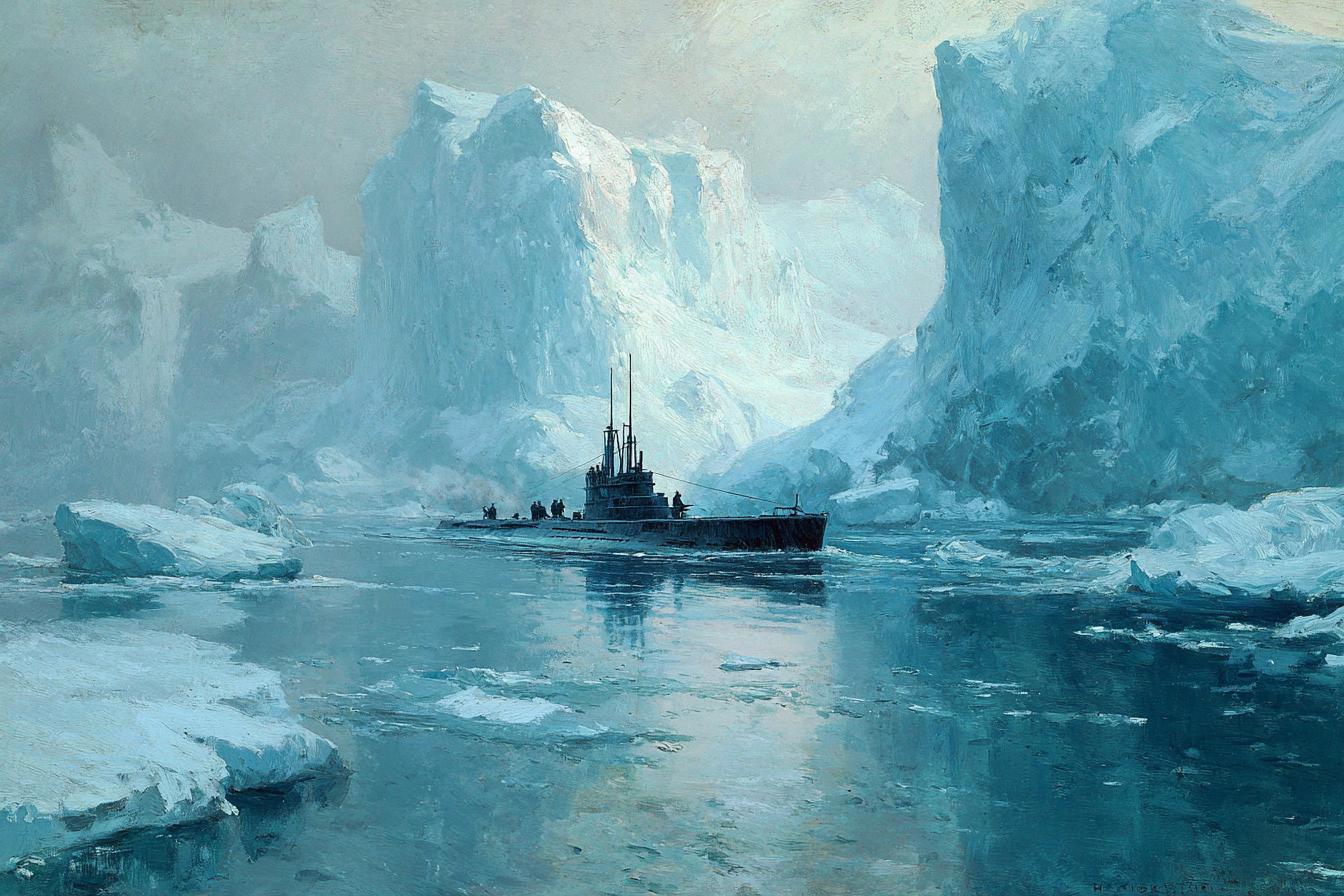
u-boat-antarctica.jpg

The briefing continued that several months earlier, a first unit had been sent to the region to investigate. This unit, which consisted of a mixture of soldiers, scientists, and engineers, had discovered an “ancient tunnel” that they, ultimately, investigated. The mission, though, seemingly took a tragic turn. Only two members of the unit returned from wherever the tunnel system had led. However, as the intense winter had now set in, the pair were stranded in their location for several months. They managed to remain in radio contact with the main base for some time, but their communications became increasingly bizarre and absurd. They began reporting, for example, of surviving Third Reich members who had control of strange creatures referred to as “Polar Men!” Then, in late July 1945, the main base received a final message from the pair. This communication ended with a panicked voice stating that, “The Polar Men have found us!”

At this point, the newly assembled unit received the directives of their mission. They were to head to Maudheim and then locate the ancient tunnel network that the first unit had investigated. They were then to venture inside and report back on what they found. Moreover, they were to investigate the claims of the surviving Third Reich members, as well as the mysterious and ominous-sounding Polar Men. Ultimately, if they were to find such a base or survivors, they were under orders to completely destroy it.

According to Roberts’ source, the unit then bombarded their superiors with a flurry of questions – questions which he stated, to their credit, their superiors were “honest and direct” in answering. The unit asked, for example, why Britain had decided to undertake such a mission alone, to which they were told that the British government did not wish the United States or the Soviet Union to gain access to any further Third Reich technologies, or scientists or engineers in the interests of keeping the balance of power on the international stage.

Not long after this brutal briefing, the unit was taken to their drop-off point approximately 20 miles from Maudheim Base, where they “parachuted into the icy wilderness” below. Once on the icy terrain, they discovered snow tractors awaiting them to negotiate their route to the base. Ominously, each of the units realized that as soon as they touched down on the ground, they were “on a war footing!” Moreover, they all knew that there was “no back-up or chance of retreat!”

It didn’t take long for the unit to discover the base, which very much appeared abandoned. They split into several smaller groups and began searching. Moments later, some kind of tripwire was broken, and alarms blared out all around them. As the unit quickly scanned their surroundings, looking to identify any potential threats, a voice sounded out, telling the men to identify themselves. Suddenly, with all members of the units with their guns at the ready, the leader of the mission ordered them to lower their weapons before telling them the voice belonged to the surviving member of the first unit.

The men quickly went about debriefing this surprise survivor. He informed them that the other missing soldier was locked in “Bunker One” with one of the savage Polar Men. Not long after, members of the unit were ordered to gain entry to Bunker One and inspect inside. The surviving soldier warned the unit not to open the bunker, but his concerns were overruled by the leader of the mission.

After opening the bunker, one of the soldiers stepped inside. For a moment or two, there was nothing but silence. Then, two gun shots rang out before a huge, bulking figure sprang from the darkness and vanished from the base with remarkable speed. The unit then inspected the bunker from which the figure had emerged, and into which their colleague had entered. Once inside, they were greeted with the sight of their dead colleague, his “throat ripped out!” They then turned their attention to a grim pile of bones close by – bones they presumed belonged to the other surviving soldier.

The leader of the mission then turned his attention back to the lone surviving soldier, who told them everything that had happened. He claimed that when his unit had searched the ancient tunnel system, it had gone on for several miles before they entered a “vast underground cavern” that he recalled was “abnormally warm!” Even stranger, they noticed several large lakes within this cavern, as well as artificial lighting – lighting they assumed belonged to the Third Reich presence they had come to investigate.

As the unit searched this huge, cavernous space, they made further, even more remarkable discoveries, finding huge hangars large enough to fit several aircraft, as well as a docking station for U-boats, with one U-boat even being docked there. It was as they were investigating these parts of the cavern when they were suddenly surrounded by a unit of Third Reich soldiers. The soldier informed them that he and the other surviving member had somehow managed to go unnoticed and had managed to slip back into the tunnel system, although not before they witnessed several of their unit executed by the Third Reich soldiers. It was as they were making their way back through the tunnel systems that they realized two large figures were pursuing them – figures they would call Polar Men.
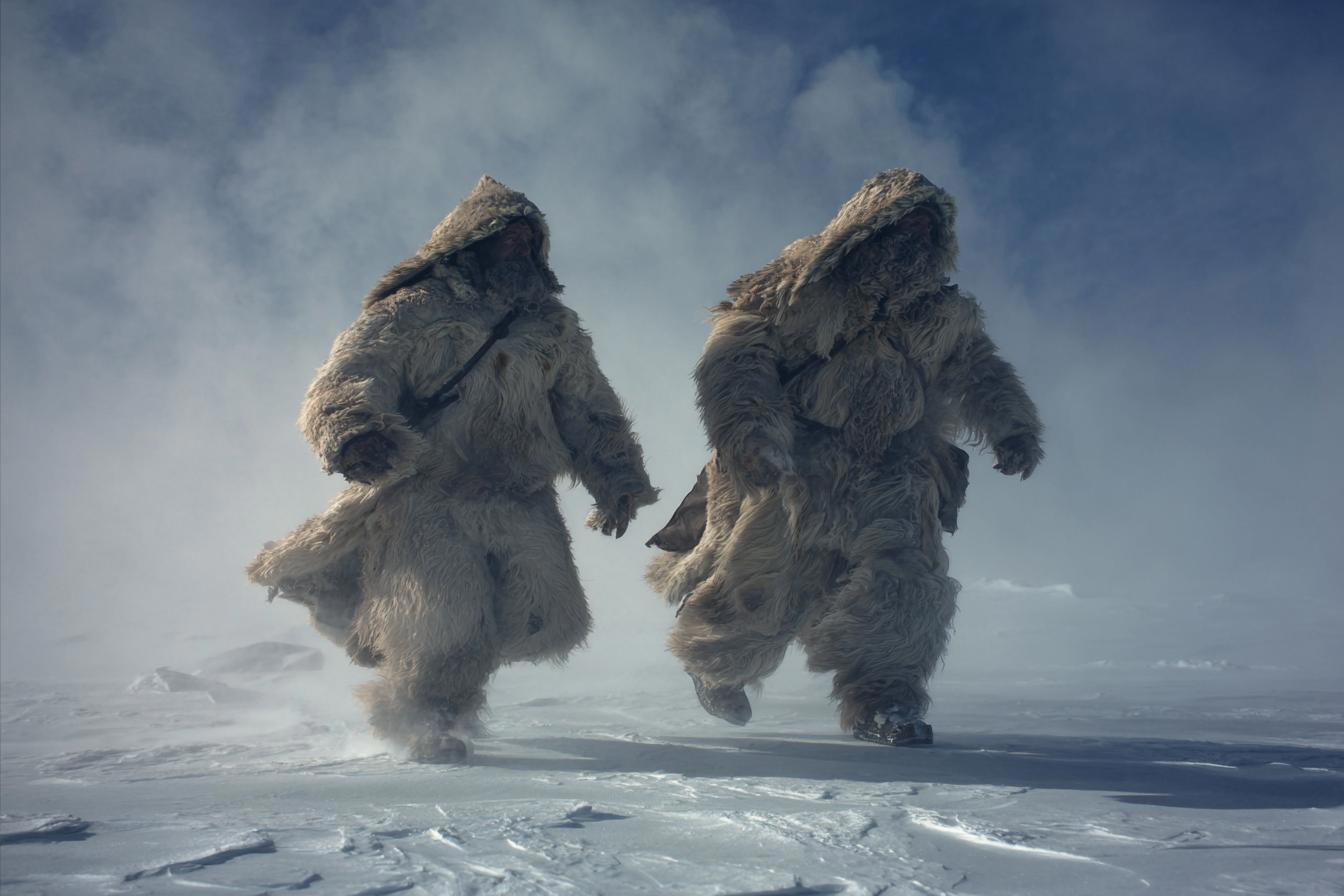
polar-men.jpg

By the time they arrived back at the base, the two soldiers, realizing they would be unable to reach the main base on foot and that a rescue attempt would be doomed, decided to each take a radio and then head to a separate bunker. Here, though, is where the story became a little strange. For reasons the surviving soldier simply couldn’t fathom, his fellow soldier seemingly enticed one of these Polar Men into the bunker with him, perhaps in an attempt to kill it, an attempt that clearly failed. Following this, the surviving soldier simply remained in the bunker until the second unit arrived – a unit, remember, that he would have had no knowledge of.

The survivor was then asked who these monstrous Polar Men were, and the answer he gave turned the whole affair even more bizarre. He stated that they were the result of some kind of Third Reich experiment that involved the “mastery of an unknown power source!” These Polar Men were men that had been genetically altered to allow them to adapt to their environment – in this case, the brutal cold conditions of Antarctica – as well as making them aggressive, obsessive human killing machines, essentially, a super soldier who would stop at nothing to hunt and kill its target.

Despite what they had learned, the following day, this second unit received orders to investigate the tunnel system. They set out for their destination, amazed that the icy environment around them suddenly changed to one of a “dry valley” that was more akin to a North African desert than the subzero conditions of Antarctica. Not long after finding themselves in this region, they discovered the tunnel’s entrance. Rather than investigate immediately, they decided to camp down near the entrance for the night in order to rest. However, several hours after doing so, one of these mysterious Polar Men approached their camp. This time, though, the unit was not only quick to react to the threat, but they managed to kill the intruder. They quickly dissected the specimen, noting that while it was indeed human, it was much stronger than even the strongest human might be, and seemingly had the ability to grow thick hair on its body, seemingly to protect it from the harsh, icy conditions.

The following morning, after leaving two soldiers to guard the tunnel entrance and the carcass of the Polar Man, the rest of the unit set off into the tunnel network. There were nine men in total, including the unit leader, one of the scientists, the Norwegian Resistance member, and the surviving member of the first unit, each carrying with them heavy weapons and “enough explosives to wage a small war!” For a large part of the descent, the unit found themselves in almost complete darkness. Then, suddenly, they could see a light in the distance ahead of them. A short time later, they found themselves in the artificially lit cavern.

At this point, they moved quietly and were soon looking down at various Third Reich personnel “scurrying about like ants” below them. As this was happening, and with the unit leader relaying the plan for their operation, the scientist scribbled down as many notes as he could of the activity unfolding below them. This discreet surveillance continued for the next 48 hours before specific targets in the base were identified as locations to plant explosives. This operation went perfectly, with the Third Reich personnel remaining ignorant of their activities. In fact, things went so perfectly that the unit even managed to capture a member of the Third Reich unit who could be used as a hostage or source of information. However, as they were about to vacate the cavern and set off the carefully planted explosives, a number of Third Reich soldiers spotted them. Moreover, they, along with what appeared to be several of the Polar Men, began in pursuit of them.

The unit decided to quickly set up some of the explosives near the tunnel entrance in an attempt to destroy the way out of the cavern, and so buy them some time to escape their pursuers. This worked, but by the time the mines had gone off, several Third Reich soldiers as well as several Polar Men had already managed to venture into the tunnel. According to Roberts’ source, by the time they reached the tunnel’s outer entrance, only he, the scientist, and the Norwegian Resistance member remained alive. Along with the two soldiers who had remained guarding the entrance, the three of them quickly set up the rest of their explosives at the tunnel’s entrance. They managed to detonate them before their pursuers had reached them, and by the time the air had settled, there was “no evidence of any tunnel ever existing!” Ultimately, the unit was successfully recovered from the base a short time later and transported back to the Falkland Islands. Once there, they were debriefed, with a lot more urgency and harshness than before. They were told that it was strictly forbidden for any of them to speak to anyone about their mission, including their superiors. As Roberts’ source noted, the cover-up was already unfolding, and it appeared to be more than just the mission that was being suppressed.

As they had ventured into the tunnel system, for example, the scientist had noticed that not only was it clear that it was ancient and not recently created, but that it was not a naturally occurring tunnel but one of precision planning and execution. Their superiors, however, insisted that the tunnel was the result of “glacial erosion”, something they were quite insistent on. Perhaps most remarkable of all, though, despite the clear findings of the dissection they had performed, not to mention the superhuman strength and speed they had witnessed, the unit was told the Polar Men were “nothing more than unkempt soldiers who had gone crazy!”

The source also told Roberts that the Royal Air Force continued to fly mysterious missions over this part of Antarctica for several years following the mission. The official reason for these flybys was to scout potential locations for scientific bases. However, the source stated to Roberts that “one can’t help but wonder!” Indeed, one can’t.

We might contemplate just how true such claims might be, and who might have been the source of such information to the British military. According to some researchers, a likely candidate could very well be none other than the previously mentioned named successor to Adolf Hitler, Karl Dönitz. Dönitz was in charge of the German Navy and, in turn, the German U-boat program, something that Hitler became quite fixated on towards the end of the war. Most mainstream researchers suggest that this fixation likely came out of a hope that the U-boats could turn the tide of the war back in the Third Reich’s favor. However, some researchers have suggested that the real reason for a concentration on the U-boat program was so they could be used to secretly transport high-ranking members of the Third Reich – perhaps even Hitler himself – to locations in South America, and perhaps, Antarctica.
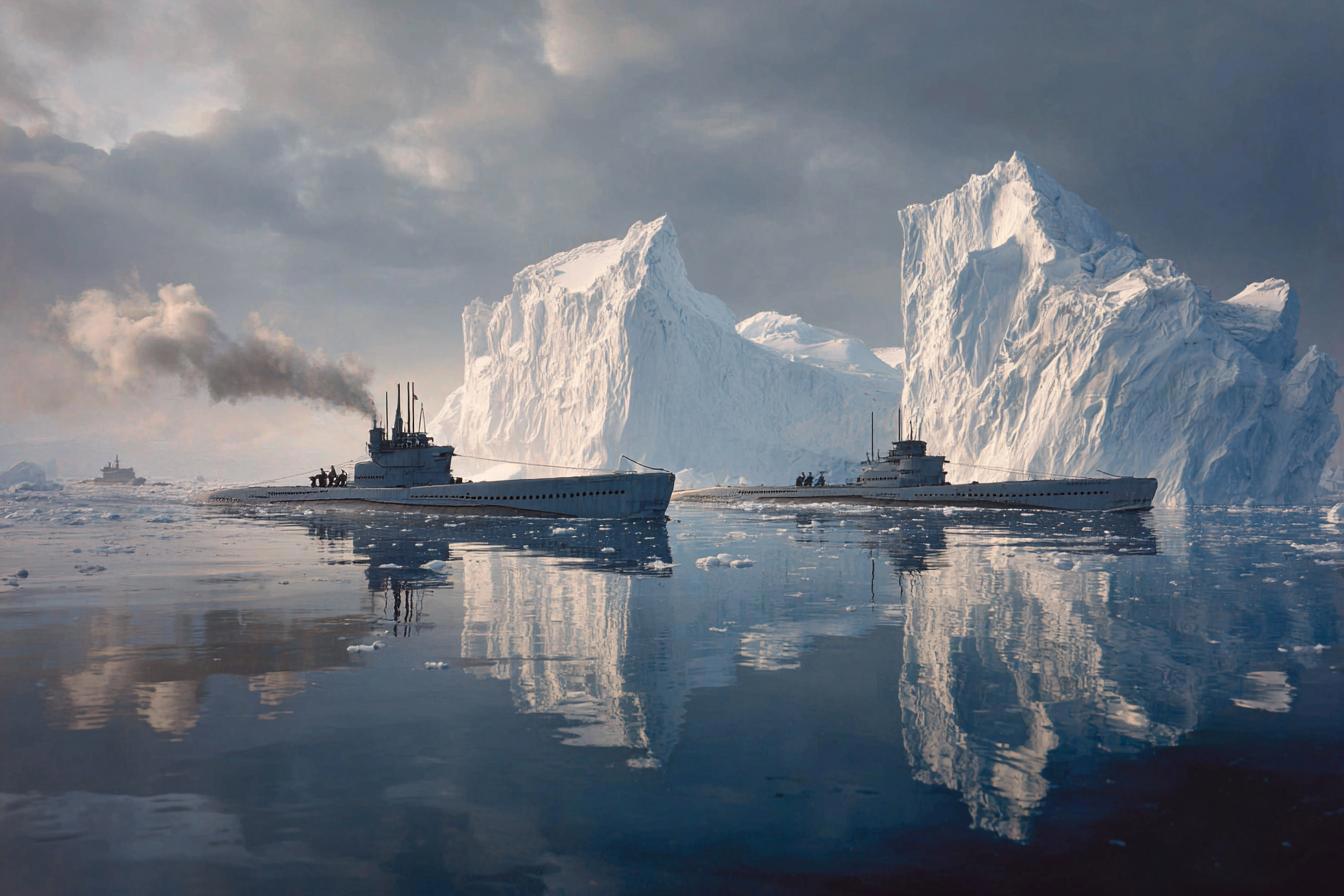
u-boat-antarctica-2.jpg

Another thing to keep in mind about Dönitz is his trial as a war criminal following the war. While many of his fellow Third Reich members were executed, Donitz insisted that he was “ignorant of Nazi atrocities” and that he “only fought a legal war!” He further claimed that he had no knowledge whatsoever of the horrors of the concentration camps. Ultimately, he was not only spared the death penalty, but he received a prison sentence of only 10 years. We might ask how likely it is that someone so high up in the Third Reich, not to mention the person named as Hitler’s successor, would have been unaware of the full horrors of the regime’s actions. Moreover, we might indeed ask if some kind of deal was arranged behind the scenes between Donitz, the British, and those at the Hague.

It is also not unrealistic to think that the British military would have had relatively free access to Antarctica following the end of the war in Europe, with various factors at play. Of immediate concern for the United States, for example, was bringing the conflict with Japan to an end, something that happened several months later with the dropping of the atomic bombs over Nagasaki and Hiroshima. Moreover, it was becoming apparent to the United States that the Soviet Union was about to join them as a superpower on the world stage, and that despite their alliances in the conflict with Germany, their political ideology of communism set them against the United States and its interests – ultimately, the Cold War was just about to unfold.

Of course, by the time of Operation Highjump, the secretive British missions were over a year in the past. However, if Admiral Bryd’s claims are true and accurate, if only partially, it would very much attest to a prolonged Third Reich presence on Antarctica after the secretive British mission.

Whether a secret British mission to Antarctica took place or not remains very much open to debate, at least for some. With this in mind, we might ask, if there was any truth to such claims, just what the real importance of the nearby Falklands Islands might actually be. Could it be that it provides the British military with a quick launch-point to the icy continent should further discoveries be made or anomalous activity detected? Perhaps they are still monitoring the region today.

Another thought-provoking detail to note, however, before we move on, was the discovery in 1984 (although not made public until 1985) by the British Antarctic Survey of a hole in the Ozone layer – a hole that was over the same location as the secretive British missions at the end of the Second World War. The cause of this hole was determined to have been due to an increase in the use of CFCs. However, some researchers into the alleged strange goings-on in Antarctica have offered that this hole in the Ozone layer could very well have been the result of powerful explosions from nuclear weapons deployed in a war that the vast majority of the world is completely ignorant of.  

One last thing to consider is another detail put forward in the Nexus Magazine articles that detailed the secret British mission in late 1945. It stated that in 1999, a team of scientists on an expedition in the area allegedly discovered a new virus that no animals or humans had immunity to. While it is not clear what happened to this virus and how it was contained, as well as the fact that we need to treat such claims with a considerable helping of salt, it is also interesting to think that if Third Reich scientists were continuing their experiments on Antarctica in the years following the war could very well have established some kind of new virus to attack their enemies. Perhaps their bases were destroyed before this virus could be unleashed, but the virus itself remained within the icy ruins of these facilities.

Several years after these events, including Operation Highjump, one of the first recognized UFO researchers and investigators, Albert Bender, also made some remarkable discoveries about Antarctica, at least according to reports in the years that followed. As Bender began to investigate the many UFO reports that were surfacing across the United States, he formed the International Flying Saucer Bureau (IFSB) and soon caught the attention of the authorities and, as we shall see, the Men In Black. Bender spoke to hundreds of people who claimed they had witnessed these strange craft, and put out multiple articles and books. Then, out of nowhere in the mid-1950s, he suddenly claimed that he had ”solved the mystery of UFOs!” He also stated, though, that he was unable to speak further about his findings and that he would no longer comment publicly on UFOs. He then closed down the IFSB and disappeared from public life. However, that wasn’t the end of Bender’s story.

In 1956, Gray Barker released the book They Knew Too Much About Flying Saucers, and in it, he made some claims as to Bender’s mysterious statements and behavior several years earlier. He stated that Bender was at home one evening when he suddenly felt an intense feeling of dizziness overtake him. The next thing he knew, three strange men were standing in his living room, each dressed in the same style of dark suit. Even stranger, where their eyes should have been, there were instead glowing red orbs. Moreover, several times, these glowing orbs appeared to “flash,” and with each flash, a surge of pain went through Bender’s head. It wasn’t made clear exactly what was said, but they certainly scared Bender enough for him to draw back from the public.

Then, however, six years later in 1962, Bender suddenly returned to public life with a new book, Flying Saucers and the Three Men, in which he made some truly remarkable and, to some, outrageous statements. He claimed that the three men who visited him – essentially the Men In Black – were, in fact, extraterrestrial entities. Moreover, they appeared as they did because their real appearance was “so monstrous” that they couldn’t allow human beings to see their true form (a statement, incidentally, that was often attributed to the gods of the ancient world). Of most interest to us here, though, are his claims that he made several journeys with these strange men to a subterranean base in Antarctica.

Although we should perhaps treat it with a considerable pinch of salt, it is worth examining an article by Jonathan Gray in the newsletter of World Education Research Ltd., Archaeology News Flash, in which he claimed that a video that appeared to be some kind of unfinished documentary or news report from a television crew from California who had seemingly gone missing while reporting in Antarctica in 2002. Moreover, the article claimed that the video detailed “spectacular ruins” on the icy continent. Even more interesting, and remember, we should treat the claims with caution, the article claimed that the video showed “intense activity” in the region by what appeared to be American authorities (we should note that the American presence in Antarctica on scientific missions all denied any knowledge of the missing crew, or the claims made in the video). Whether the video does exist, and where it might be now, remains unknown.  

There have also been several strange and chilling encounters in more recent times. On December 10th, 2019, for example, a military plane left a runway in Chile and disappeared while on its way to Antarctica. The BBC reported on the incident, claiming that 38 people went missing with the plane – 17 crew members and 21 passengers. The plane was on its way to a military base on King George Island on a “logistical support” mission. What made the disappearance even stranger was that the pilot, who had extensive experience, didn’t issue any kind of distress call. What is also of interest is that the last known location of the plane – the Drake Passage – is known to be home to some of the most vicious waters on the planet. Of course, whether or not the plane’s mission was something other than what was officially declared remains open to debate.

As we can see, then, while some claims and conspiracies are perhaps more likely than others, Antarctica is one of the most mysterious and enigmatic locations on the planet – perhaps, outside of the world’s oceans, the last unexplored region on Earth. And, due to it being one of the most guarded and off-limits locations on Earth, it makes it a hotspot for conspiracies – conspiracies that are almost certain to continue to swirl for the foreseeable future.

Is it possible that this icy, inhospitable world was once the legendary land of Atlantis, or even some older advanced civilization from prehistory hundreds of thousands of years ago? And what should we make of the claims of some kind of entrance to the Inner Earth? Could it be the case that, if there is some kind of connection between Atlantis and Antarctica, some of the Atlantean survivors had used this entrance to escape disaster, perhaps even permanently residing in this Inner Earth? And if there are connections between Atlantis and some of the ancient civilizations, such as the Egyptians and the Sumerians, perhaps these were outposts of Atlantis. There is, as always, much for us to consider and contemplate, regardless of how outrageous it all might seem.


{ https://mysteriousuniverse.org/ }

Hoe vind je dit bericht?
Geschreven door peter om 12:32 Stuur door

Een Mysterie van Onze Collectieve Realiteit: De Experiments met Astrale Projectie

Een Mysterie van Onze Collectieve Realiteit: De Experiments met Astrale Projectie

Inleiding

Het fenomeen van astrale projectie, ook wel bekend als het buitenlichamelijke ervaring (BLE), is een fascinerend en mysterieus onderwerp dat door de geschiedenis heen de menselijke verbeelding heeft gevangen. Het verwijst naar het vermeende vermogen van een persoon om bewust zijn of haar bewustzijn los te maken van het fysieke lichaam en zich te verplaatsen naar andere rijken, werelden of dimensies. Dit verschijnsel wordt al eeuwenlang beschreven in verschillende culturen en religieuze tradities, variërend van het oude Egypte en Griekenland tot traditionele Chinese en Indiase spirituele praktijken. In veel van deze tradities wordt astrale projectie gezien als een manier om kennis te vergaren, contact te maken met overleden voorouders of spirituele gidsen, en diepere inzichten in het bestaan te verkrijgen.

Naast haar spirituele en esoterische betekenis, heeft astrale projectie ook de interesse gewekt van wetenschappers en onderzoekers die proberen te begrijpen of dit fenomeen een echte ervaring is of een product van de menselijke geest en verbeeldingskracht. Het onderwerp roept vragen op over de aard van bewustzijn, realiteit en de grenzen van menselijke perceptie. Sommige onderzoekers beschouwen BLE als een soort droom of hallucinatie, terwijl anderen geloven dat het mogelijk is dat het een niet-physicalistische vorm van bewustzijnstoestand betreft, die buiten de kaders van de traditionele wetenschap valt.

In dit essay zullen we niet alleen de historische en culturele achtergronden van astrale projectie bespreken, maar ook de verschillende theorieën en verklaringen die er bestaan. Daarnaast zullen we ingaan op actuele onderzoeksinitiatieven en de wetenschappelijke uitdagingen die gepaard gaan met het bestuderen van dit complexe fenomeen. Door deze gestructureerde benadering hopen we een diepgaand inzicht te bieden in een onderwerp dat zowel wetenschappelijk als spiritueel intrigeert en dat nog steeds veel vragen oproept over de aard van ons bewustzijn en de werkelijkheid waarin wij leven.

Pic-5-Main-1200x0.jpg

Historische Achtergrond en Cultuurhistorische Context

De interesse in het vermogen om het fysieke lichaam te verlaten en andere dimensies te betreden, is niet iets van de moderne tijd, maar heeft diepe wortels in de geschiedenis van verschillende oude beschavingen. Al eeuwenlang bestaan er verhalen, rituelen en overtuigingen die aangeven dat mensen kunnen reizen buiten hun fysieke lichaam om andere werelden en vibraties te verkennen. Deze interesse wordt vaak gekoppeld aan een zoektocht naar spirituele groei, genezing en het verkrijgen van verborgen kennis die niet via gewone zintuigen bereikbaar is.

In de oude Egyptische beschaving bijvoorbeeld, speelde het concept van astrale reizen een belangrijke rol in religieuze rituelen en het geloof in het hiernamaals. Het Egyptische Dodenboek, een verzameling teksten die bedoeld waren om de ziel te begeleiden door het onderwereldrijk, bevat aanwijzingen en rituelen die mogelijk verwijzen naar ervaringen die lijken op wat later wordt beschreven als astrale projectie. Deze rituelen waren bedoeld om de ziel te beschermen en te begeleiden op haar reis naar het hiernamaals, en impliceren dat de Egyptenaren geloofden dat de ziel zich kon verplaatsen buiten het fysieke lichaam om, in een soort spiritueel reizen.

Ook in de Griekse cultuur vinden we sporen van dergelijke overtuigingen. De term "ektasis" werd gebruikt om de uitstijging van de ziel uit het lichaam te beschrijven, vaak in verband met mystieke en visionaire ervaringen. Deze verhalen en termen wijzen op een diepgeworteld geloof dat de menselijke geest de mogelijkheid bezit om zich los te maken van de fysieke beperkingen en andere dimensies te verkennen. De Grieken geloofden dat zulke reizen niet alleen een middel tot mystieke ervaringen waren, maar ook inzicht konden bieden in het hogere zelf en de kosmos.

Daarnaast spelen het boeddhisme en hindoeïsme een belangrijke rol in de geschiedenis van het concept van reizen tussen verschillende bewustzijnsniveaus en werelden. Beide religies ontwikkelen uitgebreide theorieën over het bestaan van meerdere niveaus van werkelijkheid en beschrijven dat het bewustzijn zich kan verplaatsen tussen deze lagen. In de hindoeïstische traditie wordt bijvoorbeeld gesproken over "lokas" (werelden) en de mogelijkheid om het bewustzijn te verkennen via meditatie en trance. Het boeddhisme benadrukt eveneens het belang van het ontwikkelen van inzicht in de aard van de werkelijkheid, waarbij men door middel van meditatie en trance in staat zou kunnen zijn om bewust te reizen in andere dimensies.

Wat opvalt, is dat deze verhalen en overtuigingen niet beperkt blijven tot één cultuur of tijdperk. Ze vormen een universeel fenomeen dat door de geschiedenis heen blijft terugkeren. Het feit dat zoveel oude beschavingen vergelijkbare ideeën ontwikkelen over het verkennen van andere werelden en het loslaten van het fysieke lichaam, wijst op een fundamentele menselijke behoefte. Een behoefte om de grenzen van de fysieke realiteit te overstijgen, het ongrijpbare te begrijpen en zich verbonden te voelen met hogere vermogens en kennis die buiten het gewone bereik liggen. Deze eeuwenoude tradities en overtuigingen tonen dat de zoektocht naar het ontsnappen aan de fysieke beperkingen en het ontdekken van nieuwe dimensies altijd een belangrijk onderdeel is geweest van de menselijke spiritualiteit en cultuur.

Learn Astral Projection Online
Wetenschappelijke Benaderingen en Theorieën

In de moderne tijd is het fenomeen van astrale projectie, ook wel bekend als buitenlichamelijke ervaring (BLE), steeds meer onderwerp geworden van wetenschappelijk onderzoek. Hoewel het oorspronkelijk vooral in spirituele en esoterische kringen werd bestudeerd, proberen tegenwoordig ook onderzoekers binnen de psychologie, neurowetenschappen en parapsychologie te achterhalen wat er precies gebeurt tijdens deze ervaringen en of er objectieve verklaringen voor bestaan.

Een van de meest onderzochte wetenschappelijke verklaringen is dat BLE voortkomt uit bepaalde hersenactiviteiten. Met behulp van geavanceerde technologieën zoals functionele MRI-scans (fMRI) en elektro-encefalografie (EEG) hebben wetenschappers kunnen aantonen dat specifieke gebieden van de hersenen actief worden tijdens het ervaren van het losmaken van het lichaam. Vooral in situaties van slaapverlamming, trance of hallucinaties lijkt het alsof bepaalde hersengebieden, zoals de temporale kwab en de pariëtale cortex, een belangrijke rol spelen. Deze gebieden worden geassocieerd met het verwerken van lichaamspercepties en het integreren van zintuiglijke informatie. Wanneer deze gebieden op een bepaalde manier worden gestimuleerd of uitgeschakeld, kunnen mensen het gevoel krijgen dat ze hun lichaam verlaten, wat mogelijk de basis vormt voor veel BLE-ervaringen.

Daarnaast bestaat er een andere theorie die het fenomeen benadert vanuit een meer bewustzijngerichte invalshoek. Volgens deze visie is astrale projectie niet simpelweg het resultaat van hersenactiviteit, maar eerder een vorm van bewustzijnsverplaatsing. Het idee is dat het bewustzijn zich kan losmaken van de fysieke en zintuiglijke beperkingen van het lichaam en zich in andere dimensies of realiteiten kan bewegen. Sommige onderzoekers suggereren dat het bewustzijn mogelijk niet volledig afhankelijk is van de hersenfunctie en dat het kan bestaan in een soort ‘collectief bewustzijn’ of verbonden is met een hogere realiteit die buiten het fysieke bestaat. Deze theorie wordt onder meer ondersteund door anekdotische rapportages van mensen die tijdens BLE-objecten, locaties of gebeurtenissen in andere ruimtes beschreven, die ze konden waarnemen en later konden bevestigen.

Verder worden er ook experimenten uitgevoerd waarbij proefpersonen proberen objecten of informatie waar te nemen die zich buiten hun directe zintuiglijke bereik bevinden. Hoewel deze experimenten vaak op controverse stuiten en niet altijd reproduceerbare resultaten opleveren, wijzen ze toch op de mogelijkheid dat er meer is dan alleen hersenactiviteit die bijdraagt aan deze ervaringen. Sommige wetenschappers zien BLE daarom als een fenomeen dat mogelijk verband houdt met onbewuste processen of subtiele vormen van waarneming die nog niet volledig begrepen worden.

Kortom, de wetenschappelijke benaderingen van astrale projectie variëren van neurologische verklaringen tot meer esoterische theorieën over bewustzijn en realiteit. Hoewel er nog geen definitieve consensus bestaat, zorgen deze onderzoeksinitiatieven er wel voor dat het onderwerp serieus genomen wordt binnen de wetenschappelijke wereld en dat er stappen worden gezet naar een beter begrip van dit mysterieuze fenomeen.

Hedendaagse Experiments en Onderzoek


The CIA’s Hidden Experiments on Astral Projection!

Hoewel het wetenschappelijke bewijs voor astrale projectie nog niet definitief is vastgesteld, worden er voortdurend verschillende onderzoeksinitiatieven en experimenten uitgevoerd om het fenomeen beter te begrijpen. Deze studies variëren van psychologische en neurologische benaderingen tot technologische experimenten die proberen het proces te simuleren of te reproduceren. Het doel van dit soort onderzoek is niet alleen om het bestaan van astrale reizen te bevestigen of te weerleggen, maar ook om inzicht te krijgen in de mechanismen die eraan ten grondslag liggen.

The Most TERRIFYING Entities of the Astral plane Explained In Obsessive Detail

Een van de meest gebruikte methoden in wetenschappelijke experimenten is het toepassen van 'verblindings'-protocollen. Bij deze aanpak worden proefpersonen gevraagd om bepaalde objecten te waarnemen of te beschrijven terwijl zij in een trance- of slaaptoestand verkeren. De proefpersonen worden bijvoorbeeld in een situatie gebracht waarin ze zich in een ontspannen toestand bevinden, vaak met behulp van meditatie, geleide visualisaties of hypnose. Vervolgens wordt geprobeerd om te bepalen of ze objecten of plaatsen kunnen waarnemen die zich op een andere locatie bevinden en die ze normaal gesproken niet zouden kunnen zien. Sommige deelnemende proefpersonen rapporteren succes in het identificeren van objecten of details die alleen via de astrale reis konden worden waargenomen. Deze resultaten worden echter vaak betwist vanwege methodologische problemen, zoals het ontbreken van controleprocedures, kleine steekproeven, of de mogelijkheid van interpretatieverschillen. Desalniettemin blijven dergelijke experimenten interessant en worden ze door sommige onderzoekers als indicatief gezien dat er wellicht meer aan de hand is dan louter subjectieve ervaringen.

Naast psychologische en experimentele benaderingen wordt er ook gebruikgemaakt van technologische hulpmiddelen om het fenomeen te bestuderen. Zo worden bijvoorbeeld virtual reality (VR) en neurofeedback-technieken ingezet om de ervaringen van bilocatie of astrale reizen na te bootsen en te onderzoeken. Met VR kunnen onderzoekers immers gesimuleerde omgevingen creëren waarin proefpersonen in een gecontroleerde setting kunnen 'reizen', terwijl hun hersenactiviteit wordt gemonitord. Neurofeedback, waarbij de hersenactiviteit wordt teruggekoppeld aan de gebruiker, wordt gebruikt om te proberen de kans op het ervaren van bepaalde trance- of meditatieve toestanden te vergroten. Door deze technieken te combineren, proberen onderzoekers de neurologische en psychologische processen die betrokken zijn bij dergelijke ervaringen beter te begrijpen.

Ook worden meditatie- en trance-technieken geëvalueerd op hun effectiviteit bij het bevorderen van astrale reizen. Sommige studies richten zich op het identificeren van specifieke mentale staten of hersengolven die mogelijk gerelateerd zijn aan het optreden van deze ervaringen. Zo wordt bijvoorbeeld gekeken of bepaalde frequenties van hersengolven, zoals theta- of delta-golven, vaker voorkomen tijdens ervaringen die door deelnemers als buitenlichamelijk of astrale reizen worden ervaren. Het doel hiervan is niet alleen om de ervaringen te verklaren, maar ook om mogelijk methoden te ontwikkelen om deze ervaringen op een gecontroleerde en veilige manier op te roepen.

A Mystery Of Our Collective Reality: The Astral Projection Experiments ...

Kortom, hoewel astrale projectie nog niet wetenschappelijk definitief bewezen is, wordt er actief onderzoek gedaan naar het fenomeen. De combinatie van psychologische experimenten, technologische simulaties en neurologisch onderzoek biedt hopelijk in de toekomst meer inzicht in de aard van deze bijzondere ervaringen. Het blijft een fascinerend onderwerp dat de grenzen tussen wetenschap, psychologie en spiritualiteit uitdaagt, en dat mogelijk nog veel te bieden heeft voor onze kennis over de menselijke geest en bewustzijn.

Wetenschappelijke Uitdagingen en Kritiek

Het onderzoeken van astrale projectie, ook wel bekend als uitwaartse reizen of buitenlichamelijke ervaringen, brengt aanzienlijke wetenschappelijke uitdagingen met zich mee. Een van de grootste problemen ligt in de subjectieve aard van de ervaringen. De meeste rapportages over astrale projectie komen van de persoon zelf, die beweert dat hij of zij het bewustzijn buiten het fysieke lichaam heeft verplaatst. Deze persoonlijke getuigenissen zijn inherently moeilijk te verifiëren en te reproduceren door anderen, waardoor ze een grote uitdaging vormen voor de wetenschap die juist objectieve en reproduceerbare resultaten nastreeft. Dit leidt tot een algemeen scepticisme binnen de wetenschappelijke gemeenschap, omdat zonder controleerbare bewijzen het moeilijk is om astrale projectie als een feit te bevestigen.

Daarnaast speelt de vraag of deze ervaringen daadwerkelijk buiten het lichaam plaatsvinden, of dat ze het resultaat zijn van interne mentale processen. Sommige wetenschappers beschouwen deze ervaringen mogelijk als hallucinaties, dromen of suggestieve fantasieën die worden beïnvloed door de geestelijke toestand, stress, vermoeidheid of andere psychologische factoren. Critici wijzen erop dat cognitieve biases, geheugenfouten en culturele overtuigingen een grote rol kunnen spelen bij het interpreteren van deze ervaringen. Bijvoorbeeld, iemand die in een cultuur leeft waarin het concept van een 'ziel' of 'geest' gangbaar is, kan eerder geneigd zijn om een ervaring te interpreteren als een echte astrale reis, terwijl iemand uit een andere cultuur dat misschien als fantasie beschouwt.

Tot op heden ontbreken er overtuigende, empirische bewijzen die astrale projectie als een fysiek of onafhankelijk fenomeen bevestigen. Wetenschappelijke experimenten tot nu toe hebben geen onweerlegbare gegevens geleverd die het bestaan van een bewustzijn dat zich buiten het lichaam kan bewegen, staven. Veel van de gegevens blijven anekdotisch en niet reproduceerbaar onder gecontroleerde omstandigheden. Hierdoor wordt astrale projectie vaak beschouwd als een fenomeen dat niet wetenschappelijk kan worden bevestigd.

Ondanks deze kritieken blijven sommige onderzoekers geloven dat er mogelijk aanwijzingen zijn voor een dieper, collectief bewustzijn dat nog niet volledig wordt begrepen door de wetenschap. Zij pleiten voor een meer open en rigoureus wetenschappelijk onderzoek naar het fenomeen. Dit zou onder meer kunnen inhouden dat er gecontroleerde experimenten worden uitgevoerd met behulp van nieuwe technologieën, zoals neuroimaging, om te proberen de hersenactiviteit te bestuderen tijdens ervaringen die lijken op astrale reizen. Daarnaast wordt er voorgesteld om protocollen te ontwikkelen die subjectieve ervaringen kunnen meten en analyseren, zodat het mogelijk wordt om patronen en mogelijk onderliggende mechanismen te identificeren.

Het is belangrijk om te benadrukken dat een open houding en kritisch onderzoek hand in hand gaan. Het doel zou moeten zijn om op een wetenschappelijk verantwoorde wijze de aard van deze ervaringen te begrijpen, zonder ze voorbarig af te wijzen of te bevestigen. Door een combinatie van traditionele wetenschappelijke methoden en innovatieve technologieën te gebruiken, hopen sommige onderzoekers dat de ware aard van astrale projectie uiteindelijk kan worden onthuld. Het ontwikkelen van een beter begrip van deze fenomenen kan niet alleen leiden tot nieuwe inzichten over de menselijke geest en bewustzijn, maar ook bijdragen aan bredere wetenschappelijke en filosofische discussies over de aard van realiteit en perceptie.

Kortom, hoewel astrale projectie nog altijd wordt geconfronteerd met aanzienlijke wetenschappelijke uitdagingen en kritiek, blijft het een fascinerend onderzoeksgebied dat mogelijk nieuwe deuren opent naar het begrijpen van de complexiteit van het menselijke bewustzijn en de mogelijkheden die nog onontdekt zijn.

Implicaties voor Onze Collectieve Realiteit

Het bestuderen van astrale projectie heeft niet alleen wetenschappelijke waarde, maar roept ook diepgaande filosofische en existentiële vragen op die onze kijk op de werkelijkheid kunnen veranderen. Als ervaringen van buitenlichamelijke reizen daadwerkelijk bestaan en niet slechts hallucinaties of illusies zijn, betekent dat dat onze perceptie van de wereld mogelijk slechts een klein deel is van een veel grotere en complexere werkelijkheid. Dit zou kunnen betekenen dat er lagen van bestaan zijn die wij met onze zintuigen niet kunnen waarnemen en dat onze fysieke werkelijkheid slechts een soort schaduw of projectie is van een diepere, meer fundamentele realiteit.

Daarnaast dwingt het ons om onze relatie met het universum en onszelf opnieuw te evalueren. Het idee dat bewustzijn niet volledig gebonden is aan de fysieke hersenen opent de deur naar het bestaan van andere dimensies of niveaus van bestaan die we momenteel nog niet kunnen detecteren of begrijpen. Dit kan leiden tot een herziening van onze opvattingen over dood en het hiernamaals, waarbij astrale reizen mogelijk een vorm van voortbestaan of communicatie na de fysieke dood suggereren. Bovendien kan het inzicht in astrale projectie ons helpen om ons spirituele potentieel te ontdekken en te ontwikkelen, en een meer holistische kijk op menselijk bestaan te bevorderen.

De implicaties voor de samenleving en de wetenschap zijn enorm. Als we accepteren dat de geest meer is dan een product van de hersenen, zou dat kunnen leiden tot nieuwe benaderingen in de geneeskunde, psychologie en spiritualiteit. Het zou ook kunnen bijdragen aan het doorbreken van bestaande dogma’s over de fysieke werkelijkheid en de beperkingen van het menselijke bewustzijn. Kortom, de studie van astrale projectie kan niet alleen ons begrip van het universum verdiepen, maar ook een brug slaan naar een meer geïntegreerde en spirituele kijk op ons bestaan, die de grenzen tussen wetenschap en spiritualiteit minder strikt maakt.


The TRUTH About ASTRAL PROJECTION (SHOCKING)

Conclusie

Astrale projectie blijft een fascinerend en mysterieus fenomeen dat zowel oude tradities als moderne wetenschap uitdaagt. Hoewel er nog geen definitieve wetenschappelijke bewijzen zijn die het buitenlichamelijke reizen volledig bevestigen, blijven onderzoekers en enthousiastelingen geïnteresseerd in de mogelijkheden die het fenomeen biedt voor ons begrip van bewustzijn en realiteit. Veel mensen geloven dat astrale projectie hen in staat stelt om op een andere manier de wereld te ervaren, los van fysieke beperkingen.

Het onderzoeken van deze ervaringen kan ons mogelijk leiden tot nieuwe inzichten over de grenzen van menselijke ervaring en de aard van het universum zelf. Daarnaast kan het ook een bron van spirituele groei en zelfontdekking zijn voor degenen die het willen verkennen. Het is een uitnodiging om verder te kijken dan de stoffelijke wereld en de mysteries van onze collectieve realiteit te blijven verkennen. Hoewel er nog veel onduidelijkheid bestaat over de precieze werking en wetenschappelijke onderbouwing van astrale projectie, blijft het fenomeen een boeiend onderwerp dat onze nieuwsgierigheid en zoektocht naar kennis prikkelt. Het onderzoeken van astrale projectie kan ons helpen om onze perceptie van werkelijkheid uit te breiden en nieuwe dimensies van bewustzijn te ontdekken.


Unlocking the Out of Body Experience: Secrets of Astral Projection & Consciousness Expansion; BamHek

Bronnen

  • Greyson, B. (2000). Near-death experiences. In E. Cardeña, S. J. Lynn, & S. Krippner (Eds.), Varieties of Anomalous Experience: Examining the Evidence (pp. 315-352). American Psychological Association.
  • Tart, C. T. (1990). Out-of-Body Experiences and Other Altered States of Consciousness. Journal of Scientific Exploration, 4(3), 283-308.
  • Maimon, S. (2011). The Science of Astral Projection: An Overview. Journal of Parapsychology Research, 12, 45-67.
  • Kastrup, H. (2017). The Nature of Consciousness: A Hypothesis. Oxford University Press.

Kortom, astrale projectie blijft een intrigerend fenomeen dat de grenzen van onze kennis uitdaagt en ons uitdaagt om verder te kijken dan de fysieke werkelijkheid. Het is een gebied dat, ondanks de uitdagingen, nog veel te ontdekken heeft en mogelijk onze kijk op het bestaan fundamenteel kan veranderen.

{ PETER2011 }

Hoe vind je dit bericht?
Geschreven door peter om 22:36 Stuur door

Strange Lights, Circling Objects, And Backyard Aliens – The 1926 Wave Of UFO And Humanoid Encounters

Strange Lights, Circling Objects, And Backyard Aliens – The 1926 Wave Of UFO And Humanoid Encounters

Maitland3.jpg

Introduction

The phenomenon of unidentified flying objects (UFOs) and humanoid encounters has fascinated humanity for centuries. While modern UFO sightings gained prominence in the mid-20th century, there are historical accounts predating this era. Notably, the year 1926 witnessed a series of peculiar reports across various regions, characterized by strange lights, circling aerial objects, and even alleged encounters with humanoid entities in backyards. This report aims to explore the details of these incidents, their context, and their significance within the broader history of UFO phenomena.

Historical Context

The 1920s was a time of rapid technological progress and social change. Aviation was still in its early stages, with airplanes becoming more common but remaining relatively new and intriguing to the public. During this period, there was a heightened fascination with the sky, driven by reports of mysterious lights and unexplained aerial phenomena. The 1926 wave of UFO sightings fits within this broader context, highlighting both genuine curiosity and the influence of popular culture and folklore. People were increasingly interested in understanding what was happening overhead, often interpreting strange lights and objects as otherworldly. This era’s fascination with flight and the unknown helped shape early perceptions of UFOs, blending actual technological advancements with myths and stories that fueled public imagination. Overall, the 1920s marked a pivotal moment when humanity’s fascination with the sky began to merge with emerging technological achievements, laying the groundwork for future interest in aerial mysteries.

Key Reports from 1926

1. The Ohio Encounters

 The Ohio Encounters In early 1926, residents of rural Ohio reported seeing luminous objects moving swiftly across the night sky. Witnesses described these lights as “glowing orbs” that would sometimes hover before darting away at incredible speeds. Several accounts mention circling lights that appeared to stalk farmhouses and barns, creating an eerie feeling of surveillance. One notable incident involved a farmer who claimed to have seen a “small metallic craft” land briefly in his backyard. From this craft, a humanoid figure emerged before disappearing into the night, fueling speculation about extraterrestrial visitors. The descriptions emphasized the metallic sheen of the craft and the humanoid's grayish appearance, suggesting an encounter with an unfamiliar, possibly intelligent entity.

2. The California Lights

The California Lights Similarly, in California, reports emerged of strange lights dancing over mountains and plains. Multiple witnesses, including pilots and farmers, observed circular objects with flashing lights that performed acrobatic maneuvers across the sky. Some accounts describe these objects forming patterns such as spirals and figure-eights, indicating deliberate aerial choreography. Several witnesses also reported strange humming sounds accompanying the lights, adding an auditory element to the visual spectacle. These lights often appeared suddenly, persisted for minutes, and then vanished without explanation, heightening the mystery surrounding their origin.

3. The New England Encounters 

The New England Encounters In New England, especially in rural Massachusetts and Vermont, farmers and townsfolk recounted seeing glowing orbs that would appear suddenly and then vanish just as swiftly. Multiple reports describe these lights descending into fields or hovering near homes, often at low altitudes. One particularly intriguing account involved a family who claimed to have observed a small “grayish” humanoid figure in their backyard one evening. The figure retreated quickly when approached, suggesting possible contact or observation. These phenomena were characterized by their fleeting nature and the eerie silence accompanying the lights, leaving residents both curious and apprehensive about the true nature of these encounters.

4. Maitland UFO Lights, FLORIDA: A Close Encounter In 1926

In a quiet and muggy July night in 1926 a woman awoke to loud noises outside of her house in the outskirts of rural Maitland, Canada. Looking outside she saw strange lights hovering a few hundred feet next to her farm. Terrified and confused, the woman couldn’t do anything but stare in complete disbelief of the otherworldly lights. What were they? Who were they?

As one of the lights got closer she managed to catch something staring at her from within the bright, bathing light. Not something but rather someone.

Descriptions of the Phenomena

The common themes across these reports include:

  • Strange Lights: Bright, luminous objects that appeared without warning and often moved unpredictably. These lights varied in color from white to greenish hues and sometimes displayed pulsating or flashing effects.

  • Circling and Maneuvering: Many witnesses observed the objects performing complex aerial maneuvers—circling, spiraling, or darting at high speeds—often defying known aircraft capabilities of the time.

  • Humanoid Encounters: Several reports describe encounters with small humanoid figures, often gray or featureless, emerging from or near the mysterious objects. These entities were typically described as being no taller than three feet and lacking distinctive facial features.

  • Audible Phenomena: Some witnesses reported hearing humming or buzzing sounds associated with the lights, further emphasizing their otherworldly nature.

Analysis of the Incidents

While some of these reports could be attributed to natural phenomena such as meteors, ball lightning, or atmospheric reflections, the consistency and detail in many accounts suggest that some sightings might have been genuine unidentified phenomena. The presence of humanoid entities, in particular, raises questions about possible extraterrestrial or paranormal origins.

The descriptions of small, gray humanoids bear similarities to later “Greys” commonly associated with UFO lore. The fact that these encounters occurred in backyards indicates that these phenomena were not confined to isolated or remote areas but penetrated into inhabited zones, adding to their unsettling nature.

Furthermore, the timing of these reports prior to the era of widespread aviation and radar technology implies that witnesses relied solely on visual perception, which may have both limited and enhanced their interpretations of these phenomena.

Possible Explanations

Several hypotheses have been proposed to explain the 1926 wave:

  • Natural Atmospheric Phenomena: Some sightings could be explained by meteorites, atmospheric reflections, or ball lightning, phenomena that can produce strange lights and movements.

  • Aerial Testing or Secret Military Devices: Given the period's technological innovations, some theorists speculate that experimental aircraft or secret military projects might have been responsible, especially considering the unusual maneuvers attributed to these objects.

  • Psychological Factors: Mass hysteria, hallucinations, or collective misperceptions could have contributed to the reports, especially in rural communities where folklore and imagination often intertwine with reality.

  • Extraterrestrial Hypotheses: The recurring descriptions of humanoid entities and advanced-looking craft lend some credence to the possibility of extraterrestrial visitors, although there is no concrete evidence to support this.

Significance of the 1926 Wave

The 1926 wave of UFO and humanoid encounters is significant for several reasons:

  • It predates the modern UFO movement, illustrating that such phenomena have long been part of human consciousness.

  • It demonstrates that reports of strange lights and humanoids are not exclusive to the mid-20th century but have historical antecedents.

  • The incidents highlight the persistent human fascination with the sky and the unknown, influencing later UFO lore and investigations.

  • The encounters with humanoids in backyards foreshadow later reports and theories about close-contact cases and alien abductions.

Conclusion

The wave of UFO and humanoid encounters that occurred in 1926 remains a captivating chapter in the history of unexplained aerial phenomena. These reports, many of which were documented with remarkable detail and consistency, continue to intrigue researchers and enthusiasts alike. While a significant number of these sightings can be explained through natural phenomena, misidentifications, or man-made objects, some accounts defy straightforward explanation, hinting at the possibility of genuinely mysterious occurrences. The 1926 incidents remind us that humanity's curiosity about the cosmos and the potential for extraterrestrial life has been a longstanding aspect of our collective consciousness.

Throughout history, people have reported strange lights, unusual crafts, and encounters with humanoid entities, often describing phenomena that challenge our understanding of physics and reality. The 1926 wave is particularly notable because it predates the modern era of UFO research, yet it shares many features with contemporary sightings—such as rapid movement, unusual shapes, and reports of beings not belonging to our known terrestrial species. These accounts fuel ongoing debates about the origins and nature of such phenomena, oscillating between skepticism and belief.

Moreover, these encounters serve as a testament to human fascination with the unknown. They encourage a sense of wonder and curiosity that drives scientific inquiry and exploration. While definitive proof of extraterrestrial visitation remains elusive, the persistence of these reports suggests that there is still much we do not understand about our universe. They also highlight the importance of critical analysis and rigorous investigation to distinguish between genuine anomalies and misinterpretations.

In conclusion, the 1926 UFO wave exemplifies the enduring mystery surrounding aerial phenomena. Whether these events were caused by natural phenomena, psychological factors, or extraterrestrial craft, they continue to inspire curiosity and investigation. As our technology and understanding advance, so too does our capacity to explore these phenomena more thoroughly. Ultimately, these historical sightings remind us that the universe is vast and filled with secrets waiting to be uncovered, keeping alive the human spirit of exploration and discovery.


Nicholas Roerich’s Himalayan UFO Sighting – 1926

 { PETER2011 }

Hoe vind je dit bericht?
Geschreven door peter om 21:46 Stuur door

See the stunning reconstruction of a Stone Age woman who lived 10,500 years ago in Belgium

See the stunning reconstruction of a Stone Age woman who lived 10,500 years ago in Belgium

A reconstruction of a Stone Age woman with tattoos along her collarbones and nose and a headdress and jewelry made of feathers, leather and bone

A reconstruction of the environment that the Margaux woman once inhabited in what is now Belgium's Meuse Valley region. She lived around 10,500 years ago, during the Mesolithic period. 
(Image credit: ©2025 Kennis en Kennis)

Researchers and artists have created a striking facial reconstruction of a Stone Age woman who lived roughly 10,500 years ago in what is now Belgium.

The detailed depiction of the prehistoric hunter-gatherer, known as the "Margaux woman," is based on various scientific data, including the remains of her skeleton and ancient DNA, according to a statement from Ghent University in Belgium.

The reconstruction — which was produced by the university's interdisciplinary Regional Outlook on Ancient Migration (ROAM) project, in collaboration with Dutch artists and twin brothers Adrie and Alfons Kennis — reveals an intriguing set of features.

You may like
  • A human skeleton lies in the ground, arms and legs flexed into almost a fetal position

Newly discovered 'ghost' lineage linked to ancient mystery population in Tibet, DNA study finds

  • Right side view of a mummy with dark hair in a bowl cut. There are three black horizontal lines on the cheek.

Rare face tattoos on 800-year-old mystery mummy baffle archaeologists

  • an image of a femur with a zoomed-in inset showing projectile impact marks

'It was probably some kind of an ambush': 17,000 years ago, a man died in a projectile weapon attack in what is now Italy

ROAM research has indicated that the hunter-gatherer likely had blue or light eyes and a surprising "medium-toned" skin complexion, project leader Isabelle De Groote, a professor in the Department of Archaeology at Ghent University, told Live Science in an email. This skin tone appears to be slightly lighter than that of most other Western European individuals from the Mesolithic period (or Middle Stone Age) that scientists have studied so far.

Related: 

Comparing her to other individuals who lived in roughly the same time period, such as the iconic Cheddar Man from England, reveals this "subtle but important" difference that highlights the variation already present in post-ice age Western Europe, De Groote said. "The skin pigmentation of the Margaux woman points to greater complexity of skin pigmentation within these populations and that it was more heterogenous than previously thought."

Gezichtsreconstructie van de Cheddar Man

cheddar man

The full facial reconstruction of "Cheddar Man" on display at the National History Museum in London on Feb. 6. 
(Image credit: JUSTIN TALLIS/AFP/Getty)

Cheddar Man belonged to the same Western European hunter-gatherer population as the Margaux woman, according to the statement. Previous research has suggested that he also had blue eyes, although his skin complexion is thought to have been slightly darker. Other members of this hunter-gatherer population shared a similar combination of dark skin and pale eyes.

Three people stand around the reconstructed head holding a skull, a model of a skull, and an incomplete model of a head

The facial reconstruction of the Margaux woman on display in June 2025 with Kennis & Kennis in Dinant, Belgium. The model was based on various scientific data, including her skull and ancient DNA.  (Image credit: ©2025 Vakgroep Archeologie University Ghent.)

The Margaux woman

The remains of the female hunter-gatherer first came to light in 1988 during an excavation of the Margaux cave near Dinant, in Belgium's Meuse Valley region. At the time, the genetic analysis techniques that informed the new reconstruction were not available.The research team first scanned the woman's skull and created a 3D-printed reproduction, De Groote said. The Kennis brothers then used this printed version to model the muscle and skin of the head. They did this using anatomical standards for the region while taking into account the age of the woman. Based on features of her skull, the researchers estimated that she would have been between 35 and 60 years old when she died.

The Margaux woman turned out to be related to Western European hunter-gatherers, including the famous Cheddar Man from Great Britain. Like him, she had blue eyes, but her skin was slightly lighter than that of many other individuals from the same period.

“This indicates greater diversity in skin pigmentation than we previously thought,” said Maïté Rivollat, chief geneticist of the project.

“This indicates greater diversity in skin pigmentation than we previously thought"

​Her living environment was also accurately reconstructed based on archaeological data and scientific models. Campsites, hunting techniques and means of transport bring the world of more than 10,000 years ago back to life.

© KENNIS & KENNIS

© KENNIS & KENNIS

The team deduced her potential eye color and skin complexion using ancient DNA extracted from parts of her skull. They also considered the effect of suntanning to re-create her skin color, given that she likely lived a mobile, outdoor lifestyle.

Although facial reconstructions such as these can provide a fascinating window into the distant past, some elements are open to interpretation.

"Actual skin tone and eye colour is difficult to discern," De Groote said. "There is no exact answer in ancient DNA."

{ https://www.livescience.com/archaeology }

Hoe vind je dit bericht?
Geschreven door peter om 20:59 Stuur door

Meer van UFO'S of UAP'S, ASTRONOMIE, RUIMTEVAART, ARCHEOLOGIE, OUDHEIDKUNDE, SF-SNUFJES EN ANDERE ESOTERISCHE WETENSCHAPPEN - DE ALLERLAATSTE NIEUWTJES

↑ Terug naar de berichten