Ontdek de Fascinerende Wereld van UFO's en UAP's: Jouw Bron voor Onthullende Informatie!
Ben jij ook gefascineerd door het onbekende? Wil je meer weten over UFO's en UAP's, niet alleen in België, maar over de hele wereld? Dan ben je op de juiste plek!
België: Het Kloppend Hart van UFO-onderzoek
In België is BUFON (Belgisch UFO-Netwerk) dé autoriteit op het gebied van UFO-onderzoek. Voor betrouwbare en objectieve informatie over deze intrigerende fenomenen, bezoek je zeker onze Facebook-pagina en deze blog. Maar dat is nog niet alles! Ontdek ook het Belgisch UFO-meldpunt en Caelestia, twee organisaties die diepgaand onderzoek verrichten, al zijn ze soms kritisch of sceptisch.
Nederland: Een Schat aan Informatie
Voor onze Nederlandse buren is er de schitterende website www.ufowijzer.nl, beheerd door Paul Harmans. Deze site biedt een schat aan informatie en artikelen die je niet wilt missen!
Internationaal: MUFON - De Wereldwijde Autoriteit
Neem ook een kijkje bij MUFON (Mutual UFO Network Inc.), een gerenommeerde Amerikaanse UFO-vereniging met afdelingen in de VS en wereldwijd. MUFON is toegewijd aan de wetenschappelijke en analytische studie van het UFO-fenomeen, en hun maandelijkse tijdschrift, The MUFON UFO-Journal, is een must-read voor elke UFO-enthousiasteling. Bezoek hun website op www.mufon.com voor meer informatie.
Samenwerking en Toekomstvisie
Sinds 1 februari 2020 is Pieter niet alleen ex-president van BUFON, maar ook de voormalige nationale directeur van MUFON in Vlaanderen en Nederland. Dit creëert een sterke samenwerking met de Franse MUFON Reseau MUFON/EUROP, wat ons in staat stelt om nog meer waardevolle inzichten te delen.
Let op: Nepprofielen en Nieuwe Groeperingen
Pas op voor een nieuwe groepering die zich ook BUFON noemt, maar geen enkele connectie heeft met onze gevestigde organisatie. Hoewel zij de naam geregistreerd hebben, kunnen ze het rijke verleden en de expertise van onze groep niet evenaren. We wensen hen veel succes, maar we blijven de autoriteit in UFO-onderzoek!
Blijf Op De Hoogte!
Wil jij de laatste nieuwtjes over UFO's, ruimtevaart, archeologie, en meer? Volg ons dan en duik samen met ons in de fascinerende wereld van het onbekende! Sluit je aan bij de gemeenschap van nieuwsgierige geesten die net als jij verlangen naar antwoorden en avonturen in de sterren!
Heb je vragen of wil je meer weten? Aarzel dan niet om contact met ons op te nemen! Samen ontrafelen we het mysterie van de lucht en daarbuiten.
A Scientific Examination of 17 Key Characteristics Unique to Unidentified Flying Objects (UFOs)
Introduction
Unidentified Aerial Phenomena (UAPs) have fascinated both scientists and the general public for decades. These mysterious sightings often involve objects that move in ways impossible for known aircraft, such as sudden accelerations, abrupt stops, or changes in direction. Many UAPs are observed with advanced radar and visual confirmation, yet they lack clear explanations. Researchers continue to study these phenomena, considering possibilities like advanced foreign technology, natural atmospheric effects, or even extraterrestrial origins. Governments around the world have declassified some information about UAPs, acknowledging their existence but not providing definitive explanations. The study of UAPs challenges our understanding of aerodynamics, propulsion, and physics, prompting scientists to explore new theories and technological possibilities. While definitive answers remain elusive, ongoing investigations aim to uncover the truth behind these intriguing aerial mysteries.
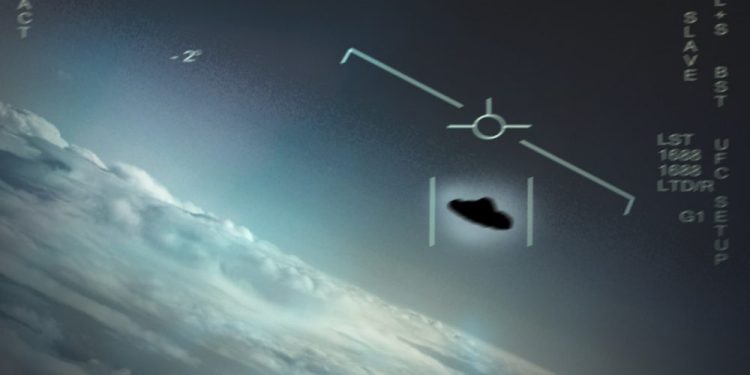
The USS Nimitz UFO that reportedly hovered over an underwater disturbance in the ocean. Some believe that there was either another mysterious object or an underwater base where UFOs come from. Credit: US Navy
Unidentified Aerial
1. Unusual Flight Maneuvers
Many UFO sightings are characterized by their extraordinary flight patterns that defy the laws of physics as we understand them. Witnesses frequently report objects executing abrupt, sharp turns that seem impossible for conventional aircraft, often at high speeds. These maneuvers include sudden stops, rapid accelerations, and instantaneous changes in direction which suggest the presence of propulsion or control mechanisms far beyond current human technology. Such capabilities imply an advanced understanding of aerodynamics and physics, potentially involving anti-gravity or other exotic propulsion systems. The precision and agility displayed by these objects raise questions about their origin and purpose. They may be controlled by intelligent entities or advanced technology not yet available to humans. These flight characteristics continue to puzzle scientists and enthusiasts alike, fueling speculation about the nature of these mysterious aerial phenomena and their possible connection to extraterrestrial intelligence or unknown terrestrial technology.
2. Silent Hypersonic Speeds
UFO reports frequently mention objects moving at hypersonic velocities, often exceeding Mach 10, which is ten times the speed of sound. Such extraordinary speeds are well beyond the capabilities of modern man-made aircraft, which are limited by material strength, heat resistance, and aerodynamics. The ability to reach and sustain these velocities suggests the use of propulsion systems that are either highly advanced or fundamentally different from our current understanding. These speeds would generate immense heat and aerodynamic stress, implying the existence of materials capable of withstanding such conditions or innovative cooling and energy management techniques. Achieving hypersonic travel also raises questions about how these objects maneuver, decelerate, and maintain control at such velocities. Their ability to traverse vast distances quickly could explain some of the rapid appearances and disappearances reported in UFO sightings. The existence of hypersonic UFOs challenges current scientific theories and hints at revolutionary propulsion technologies.
UFO sightings have happened all over the world, including Rendlesham forest in Suffolk in 1980
Getty Images
3. No Visible Means of Propulsion
A striking feature of many UFO sightings is the absence of any visible engine, exhaust, or other signs of traditional propulsion methods. Unlike conventional aircraft and rockets, these objects often appear to have no external propulsion system, yet they move swiftly and perform complex maneuvers. This lack of visible indicators suggests that they might utilize energy sources or propulsion techniques that are invisible or operate on principles yet to be discovered. Some hypotheses include the use of electromagnetic fields, anti-gravity, or other forms of energy manipulation that do not produce exhaust or heat signatures detectable by current instruments. This invisibility of propulsion mechanisms makes it difficult for observers and scientists to analyze or track these objects using standard detection methods. It also raises questions about how they generate thrust, control movement, and sustain flight. The mystery of their propulsion systems remains one of the most intriguing aspects of UFO phenomena, pointing to potential breakthrough technologies.
4. Shape Diversity
UFOs are reported in a remarkable variety of shapes and sizes, ranging from classic disc or saucer forms to spheres, triangles, cylinders, and more intricate geometries. This wide diversity suggests that multiple types of craft or different origins might be involved. Some shapes, like the disc or sphere, are often associated with traditional extraterrestrial craft, while triangular or angular objects may hint at experimental terrestrial technology or secret military projects. The variety could also reflect different functions, such as surveillance, transportation, or communication, each requiring specific design features. The complex geometries point to advanced engineering capabilities, whether from an alien civilization or human inventors pushing the boundaries of aeronautics. Additionally, the shape diversity complicates identification and analysis, as each form may employ different propulsion, control, and stealth technologies. Overall, the wide array of UFO shapes underscores the multifaceted nature of the phenomena, suggesting multiple sources, purposes, and technological paradigms behind what observers see in the sky.
5.Persistent Luminosity or Illumination
Many UFO sightings describe objects that emit their own light, often appearing bright, steady, or pulsing. Sometimes, their colors change, adding to their mysterious nature. This persistent luminosity indicates the presence of highly advanced energy sources onboard these crafts. Such energy manipulation might involve exotic power fields or plasma-based systems that can sustain a luminous glow over extended periods. The steady light emission often defies conventional propulsion methods, hinting at technologies that generate or harness energy in ways that are currently beyond human understanding. The ability to produce light autonomously also raises questions about the materials and energy containment systems used, which could involve advanced superconductors or energy fields capable of sustaining luminous displays without external illumination. This characteristic suggests that these objects are not merely visual phenomena but are powered by sophisticated energy systems that enable continuous illumination, reinforcing the idea that they are technologically advanced beyond our current capabilities.
6. Lack of Sound
One of the most intriguing aspects of many UFO sightings is the complete absence of sound, regardless of the object's size or speed. Witnesses often report observing large objects moving silently across the sky, which is highly unusual compared to conventional aircraft that produce noise due to engine exhaust and aerodynamic interactions. The silent operation indicates that these crafts utilize propulsion systems that do not create sonic booms, jet noise, or other mechanical sounds typical of human-made aircraft. This could imply the use of advanced anti-gravity or inertial propulsion technologies that eliminate the need for jet engines or propellers, thus producing no noise pollution. Such silent movement might also involve energy fields or force manipulation that suppress sound waves, making the objects virtually inaudible. This characteristic not only enhances their mysterious presence but also suggests a level of technological sophistication that allows for near-silent operation at high speeds, further differentiating these entities from traditional aircraft and emphasizing their potentially extraterrestrial or highly advanced origin.
7. Hovering Capabilities
UFOs are often observed hovering motionless in the sky for extended periods, sometimes for hours. This ability to remain stationary without visible support systems is extraordinary, as conventional aircraft require wings, engines, or rotors for stabilization and lift. The hovering phenomenon strongly suggests the use of advanced stabilization technologies, such as anti-gravity or gravitational manipulation, which counteract Earth's gravity to keep the craft suspended effortlessly. These technologies might involve manipulating local gravitational fields or generating gravitational shields that provide lift without any visible means like rotors or propellers. The ability to hover for prolonged periods also indicates precise control over position and stability, possibly through sophisticated onboard computers or inertial dampening systems. Such capabilities imply a mastery of physics that far surpasses our current understanding, hinting at alien technology or future human innovations capable of defying gravity and maintaining stationary flight in a controlled manner.
8. Rapid Acceleration and Deceleration
UFOs are frequently reported to accelerate or decelerate in fractions of a second, far beyond the limits of any known human-made aircraft. This extraordinary maneuverability suggests the presence of propulsion systems capable of manipulating inertia, gravity, or spacetime itself. Conventional aircraft rely on jet engines or propellers, which have physical and aerodynamic limits; in contrast, these crafts can change velocity instantaneously, indicating the use of advanced propulsion technology such as electromagnetic or plasma drives. Such systems might generate powerful force fields or warp spacetime to achieve rapid movement without the physical stresses experienced by traditional craft. The ability to decelerate suddenly without any apparent mechanical braking system further emphasizes their control over fundamental forces. This rapid acceleration and deceleration demonstrate that these objects possess a highly advanced understanding of physics, enabling them to perform maneuvers impossible with current technology and suggesting an extraterrestrial origin or future human technological evolution.
9. Ability to Penetrate Physical Barriers
Many eyewitness accounts and photographic evidence suggest that UFOs can pass through physical barriers such as fog, clouds, and even solid objects without any visible disturbance or damage. This phenomenon implies that these craft might possess some form of advanced technology capable of manipulating physical matter or bypassing the laws of physics as we understand them. Some researchers hypothesize that UFOs utilize cloaking or phase-shifting technologies, allowing them to become intangible or invisible to the human eye and detection systems. This ability could be achieved through highly sophisticated energy fields or localized spacetime manipulation, enabling these objects to traverse obstacles seamlessly. Such capabilities challenge conventional understanding of aerodynamics and physics, hinting at the existence of physics principles beyond our current scientific knowledge. The implications are profound, suggesting that these objects operate on a different technological level that allows them to bypass physical constraints effortlessly.
10. Non-Standard Trajectories
UFOs frequently exhibit flight patterns that defy our conventional understanding of aerodynamics and physics. Unlike traditional aircraft, which are limited by gravity, air resistance, and propulsion technology, these objects often perform sudden, sharp turns, rapid ascents, or dives that seem impossible within normal parameters. Witnesses report witnessing craft making abrupt directional changes at high speeds, sometimes accelerating or decelerating instantaneously. Such movements challenge existing aerodynamic models and imply the use of propulsion systems far more advanced than current human technology. The trajectories often appear to be controlled by intelligent guidance rather than natural phenomena, further suggesting an advanced level of technological sophistication. These unusual flight patterns raise questions about the fundamental principles of physics that these objects might be exploiting, such as manipulating inertia or gravity.
11. Multi-Object Sightings
Repeatedly, multiple witnesses report observing the same UFOs simultaneously, often describing formations or coordinated movements that suggest a high degree of control and communication among these objects. These multi-object sightings frequently involve complex patterns, such as geometric formations, synchronized maneuvers, or seemingly tactical positioning. The consistency and coordination imply that these craft are not random or independent phenomena but are part of an organized fleet or system capable of precise control and communication. Such observations challenge the idea that these objects are mere natural phenomena or simple drones, instead favoring the hypothesis that they are operated by intelligent entities with advanced technological capabilities. The ability to coordinate multiple objects over vast distances and with such precision indicates a level of technological sophistication that surpasses current human capabilities, pointing to potentially extraterrestrial origins or unknown terrestrial technologies.
12. Electromagnetic Interference
Many UFO encounters are characterized by disruptions or anomalies in electronic systems, including interference with radio signals, radar detection, GPS navigation, and communication devices. Witnesses often report their electronic instruments malfunctioning or experiencing loss of signal when a UFO is nearby. Such electromagnetic interference suggests that these objects emit or interact with powerful electromagnetic fields or energy sources that disrupt human-made electronic systems. This behavior indicates an ability to manipulate electromagnetic energy, possibly for propulsion, cloaking, or communication purposes. The interference is often localized and intense, pointing to the presence of advanced energy manipulation technologies that can affect surrounding electronic infrastructure. This phenomenon not only complicates efforts to detect or track UFOs using conventional radar but also hints at the existence of technologies that operate on principles beyond our current scientific understanding, possibly involving unknown energy sources or field manipulation techniques.
13. No Visible Means of Lift
Many UFO sightings describe objects that appear to float or move effortlessly through the sky without the usual indicators of flight, such as wings, rotors, or jet engines. This absence suggests that these crafts might be utilizing unconventional lift mechanisms. Some hypotheses propose that they operate using anti-gravity technology, which cancels out gravitational forces, allowing for smooth, silent movement. Others speculate electromagnetic propulsion, where powerful electromagnetic fields generate lift and thrust without traditional engines.
The lack of visible propulsion systems challenges our understanding of aerodynamics and physics, hinting at advanced technology far beyond current human capabilities. Researchers continue to investigate these phenomena, considering whether these crafts rely on unique energy sources or physical principles that bypass conventional aeronautical design. This mystery remains one of the most intriguing aspects of UFO encounters, fueling theories about extraterrestrial or highly advanced terrestrial technology that defies our standard notions of flight.
UFOs (UAP) can resist Earth’s gravity without the usual aerodynamic means for lift and thrust, such as engines, propellers, exhaust plumes, wings, rudders, ailerons, or fins. Despite lacking these features, they still move precisely in our atmosphere.
14. Ability to Change Size and Shape
Numerous reports describe UFOs that can alter their physical dimensions and form during flight or observation, suggesting advanced, adaptable technology. These craft often seem to morph from small, compact objects into large, complex structures or change their shape seamlessly, sometimes appearing as disks, spheres, or elongated forms. This ability to morph could be achieved through the use of highly advanced materials capable of changing shape on command, similar to programmable matter or flexible, lightweight composites. Another theory involves holographic or optical illusion effects, where the craft projects different shapes or sizes to observers, creating the illusion of transformation. Such capabilities imply a high level of technological sophistication, possibly involving nanotechnology or shape-shifting materials that can respond instantly to control inputs. The purpose of this ability might be for evasion, communication, or intimidation, making these crafts incredibly difficult to analyze or track using conventional methods.
15. Absence of Contrail or Exhaust
Unlike traditional aircraft, which produce visible contrails or exhaust plumes due to combustion engines, many UFOs are observed leaving no such trails. This absence indicates the use of propulsion systems that do not rely on combustion or produce minimal emissions. One possibility is that these crafts utilize advanced energy sources, such as zero-point energy or highly efficient plasma drives, which generate propulsion without heat or visible exhaust. Alternatively, they could be employing electromagnetic or gravitational propulsion that inherently leaves no physical trail in the atmosphere. The lack of emissions not only makes these objects harder to detect and track but also raises questions about the nature of their energy systems and their environmental impact. This stealth characteristic suggests a level of technological advancement that allows for silent, clean, and highly efficient flight, further fueling speculation about their extraterrestrial origin or the existence of secret human-developed propulsion technologies.
16. Elusive Observability:
The challenge of observing Unidentified Aerial Phenomena (UAPs) or UFOs is a significant aspect that complicates their study and understanding. Whether detected visually through the naked eye, captured via electro-optical sensors, or identified through electromagnetic means such as radar, these objects consistently prove difficult to observe clearly. Witnesses often report that UAPs are difficult to describe accurately, as their appearances are ambiguous and elusive. Radar technology frequently produces nonsensical or inconsistent returns, which are sometimes jammed or disrupted, further obscuring the objects’ true nature. Additionally, the physical appearance of these entities is often described as opaque, semi-metallic, or reflective, which hampers visual identification and prevents a detailed analysis of their structure and size. This opacity makes it nearly impossible to determine their internal mechanisms or any other defining features. The combination of visual ambiguity, electromagnetic interference, and the objects’ semi-metallic, opaque surfaces contributes to their elusive nature, fueling ongoing debates and skepticism about their origins and capabilities.
17. Mysterious Trans-medium Travel:
UFOs, also known as UAPs, demonstrate an extraordinary ability to travel effortlessly across different physical environments—air, water, and space—without losing performance or functionality. Unlike human-engineered vehicles, which are typically designed for specific mediums such as aircraft for the air, submarines or ships for water, or spacecraft for space, these unidentified objects appear to operate seamlessly across all three. Their capability to transition between these environments suggests an advanced, possibly non-conventional form of physics or propulsion that defies current scientific understanding. Witness reports often describe objects that can plunge into the ocean and emerge at high altitude, or move from space-like conditions directly into the atmosphere without any apparent loss of speed or control. This ability to navigate through multiple mediums indicates a level of technological sophistication that surpasses current human engineering and challenges our fundamental understanding of physics, material science, and aerodynamics. The phenomenon raises questions about the existence of new physical principles or technologies that enable such trans-medium travel, remaining one of the most intriguing aspects of UAP studies.
The Role of Technology and Radio Signals in UFO Investigations
Discussion
The characteristics described above collectively point toward technological capabilities that, at present, surpass our current scientific understanding and engineering achievements. While some features—such as high speeds and rapid maneuverability—might be tentatively explained by experimental human-made technology or advanced military projects, the consistency and corroboration of reports across multiple independent sources strongly suggest the involvement of highly advanced, potentially non-human, origins.
One of the most intriguing aspects is the apparent absence of visible means of propulsion. Conventional aircraft and spacecraft depend on visible engines, thrusters, or exhaust plumes to generate movement. In contrast, these objects appear to operate silently, without the typical visual cues associated with propulsion systems. The combination of silent operation and lack of visible exhaust or contrails implies that their propulsion mechanisms are fundamentally different from those of conventional vehicles. This raises the possibility that they manipulate gravitational forces or harness zero-point energy—concepts that remain largely theoretical within our current scientific framework.
The ability of these objects to penetrate physical barriers presents another extraordinary feature. Reports frequently describe entities passing through solid objects such as walls, windows, or even the Earth's crust without any apparent resistance or damage. Such capabilities suggest the existence of advanced technologies capable of altering or bypassing the physical properties of matter, potentially through sophisticated field manipulation or spacetime distortion. If substantiated, this would challenge and potentially revolutionize our understanding of physics, particularly concepts related to inertia, density, and material integrity.
Furthermore, the shape-shifting nature of these objects—altering size and form—indicates a high degree of intelligent control and adaptability. Unlike fixed-shaped aircraft or spacecraft, these entities seem capable of morphing their form at will, which may serve specific functional purposes or aid in evading detection. This shape-shifting ability could also function as an advanced camouflage mechanism, allowing them to blend seamlessly into their surroundings or mimic natural phenomena. Such adaptability suggests not only advanced engineering but also the possible presence of artificial intelligence or autonomous control systems embedded within these objects.
The frequent observations of hovering and sudden, rapid maneuvers further attest to their advanced control systems. These objects can seemingly maintain stationary positions in mid-air for extended periods and then accelerate instantaneously in various directions, perform complex aerial maneuvers, or change altitude abruptly. Achieving such feats would typically necessitate enormous energy reserves and precise control mechanisms, pointing to a technology far beyond current human capabilities. Their ability to perform these maneuvers with apparent ease hints at control over electromagnetic fields, gravitational forces, or other fundamental forces.
Additionally, reports often describe electromagnetic interference during encounters—disturbances in radio, radar, and other sensor systems when these objects are nearby. This interference could be a byproduct of their electromagnetic activity or a deliberate attempt to disable detection systems. Notably, the objects themselves do not produce visible exhaust gases or contrails, suggesting their energy systems are highly efficient and possibly involve mechanisms that do not generate significant heat or emissions detectable by conventional sensors.
Collectively, these features—silent operation, invisibility to certain sensors, rapid and complex maneuvering, shape-shifting, and the ability to pass through solid matter—strongly support the hypothesis that these objects operate via mechanisms unknown to current science. If these capabilities are conclusively demonstrated and understood, they could precipitate a paradigm shift in physics, materials science, and energy research. Mastery of such technology could revolutionize transportation, energy efficiency, and expand our understanding of the universe itself.
In conclusion, while many of these phenomena could potentially be misidentifications, hoaxes, or experimental human technology, the consistency and nature of the reports suggest a genuine phenomenon warranting further scientific investigation. The hypothesis that these objects are of non-human origin or involve technology far beyond our current capabilities remains compelling. Unlocking the secrets behind these phenomena could catalyze a new era of scientific discovery, transforming our civilization in profound and unforeseen ways. Continued research, advanced instrumentation, and open scientific inquiry are essential to uncover the truth behind these extraordinary phenomena.
Conclusion
The 17 key characteristics identified in UFO reports highlight phenomena that challenge current scientific understanding and technological capabilities. While some features may be attributable to experimental human craft or natural phenomena misidentified, the recurring combination of these traits across multiple independent sightings suggests that UFOs possess attributes indicative of advanced, possibly non-terrestrial, technologies. To fully appreciate the significance of these observations, it is essential to explore each characteristic in detail and consider their implications for our scientific paradigms and technological development.
Many reports describe objects exhibiting extraordinary flight capabilities, such as instantaneous acceleration, sharp turns, and high-speed maneuvers that surpass the known limits of human-made aircraft. For instance, witnesses have observed objects accelerating from a standstill to hypersonic speeds within seconds, with no visible means of propulsion or exhaust. Such behaviors imply propulsion systems that operate beyond our current understanding of physics, possibly involving anti-gravity, warp drives, or other exotic mechanisms. These capabilities challenge our existing technological frameworks and suggest that the observed phenomena could be using advanced energy sources or propulsion methods not yet publicly known.
Another prominent trait is the apparent invisibility or cloaking ability. Numerous sightings report objects that suddenly appear or vanish, often without any apparent transition. Some witnesses have described objects that become transparent or blend seamlessly into their surroundings, indicating the existence of advanced stealth and cloaking technologies. The development of such systems would require manipulation of electromagnetic spectra or spacetime itself, pointing toward technological mastery far beyond current human capabilities.
Furthermore, many reports mention anomalous physical effects associated with these objects, such as electromagnetic interference, unexplained radiation, or disturbances to local environments. For example, some witnesses have experienced electronic malfunctions, compass anomalies, or disturbances in nearby instrumentation when in proximity to these objects. These effects suggest that the UFOs may emit or interact with electromagnetic fields in ways that we do not yet understand, hinting at a sophisticated control over energy and matter.
The persistent observation of structured craft with defined shapes—such as disks, triangles, or other geometric forms—also raises questions about their purpose and design. The symmetry and complexity of these objects imply advanced engineering and manufacturing capabilities. Some reports indicate that these craft are capable of hovering silently at high altitudes or moving through the atmosphere with minimal noise or detectable emissions. Such traits reinforce the idea that these phenomena are not merely natural occurrences but are engineered constructs with specific technological objectives.
The recurring combination of these features across diverse geographical locations and independent sightings suggests a pattern that cannot be dismissed as coincidence or misidentification. Instead, it points toward a phenomenon that operates according to principles fundamentally different from those of conventional aircraft or natural phenomena. This realization compels us to reconsider the scope of our scientific inquiry and the potential existence of technologies that could revolutionize our understanding of physics and energy.
Given the complexity and the profound implications of these observations, future research must adopt a comprehensive and systematic approach. This includes establishing standardized data collection protocols, employing high-resolution sensors, and fostering interdisciplinary collaboration among physicists, engineers, and other scientists. Experimental replication of observed behaviors in controlled laboratory settings could provide insights into the underlying principles governing these phenomena. Additionally, the development of new theoretical models that incorporate quantum physics, spacetime manipulation, and advanced energy systems is crucial to accommodate the extraordinary characteristics observed.
Investing in advanced detection and analysis tools, such as radar, lidar, infrared imaging, and electromagnetic field sensors, will enhance our ability to gather reliable data. Public and governmental cooperation is also essential to facilitate open information sharing, reduce stigma associated with reporting sightings, and promote scientific curiosity. Only through rigorous investigation and openness to revolutionary ideas can we hope to understand these enigmatic phenomena truly.
The presence of these seventeen unique observations compels us to reevaluate our understanding of unidentified aerial phenomena (UAPs). To unravel this mystery, we need more comprehensive data and sustained research efforts. The confluence of unusual flight dynamics, cloaking capabilities, electromagnetic effects, and structural complexity suggests that what we are witnessing may be beyond current human technological reach—potentially of non-terrestrial origin. As such, these phenomena represent not just isolated incidents but a challenge to our scientific and technological paradigms. Embracing this challenge could lead to groundbreaking discoveries that expand our understanding of the universe and our place within it. Ultimately, continued investigation and open-minded scientific inquiry are essential to deciphering the true nature of these extraordinary phenomena.
This enhanced, colour image of Mercury reveals the planet’s complex surface geology, from the Messenger probe.
Mercury is definitely the troublemaker of our Solar System. The smallest planet orbiting our Sun is also one of the most perplexing, with characteristics so unusual that scientists are still scratching their heads about how it came to be. But new laboratory experiments are finally starting to unravel Mercury's mysteries and what they're revealing could reshape our understanding of rocky planets everywhere.
Mercury, the innermost planet of the Solar System captured by Mariner 10.
(Credit: NASA/JPL/USGS)
Unlike Earth, where the core makes up just 15% of the planet's volume, Mercury's massive metallic core accounts for a whopping 60%. It's as if someone took a planet and stripped away most of its rocky exterior. Scientists debate whether Mercury formed this way naturally from metal-rich building blocks, or whether catastrophic collisions early in its history removed its outer layers.
"Mercury is so off, it has this huge core, weird chemistry, and a magnetic field that doesn't quite add up. In a way, it's like an exoplanet in our own backyard."
Anne Pommier, Carnegie Science's Earth and Planets Laboratory.
Since it’s not possible to drill directly into Mercury's surface, the team led by Anne Pommier from the Carnegie Science Earth and Planets Laboratory has taken an ingenious approach; they're recreating Mercury's geology in their laboratory. By synthesizing artificial lavas that match the chemical composition detected by NASA's MESSENGER mission, they've discovered something remarkable about how Mercury's ancient volcanoes behaved.
Artist's impression of the MESSENGER Spacecraft
(Credit: Johns Hopkins University)
The key difference, it seems, lies in sulfur. While Earth's lava is built from silicon-oxygen bonds that form long, sticky chains (somewhat like melted plastic), Mercury's sulfur-rich lavas have much shorter, less connected structures. This fundamental atomic difference means Mercury's ancient lava flows behaved more like syrup than tar, potentially explaining why the planet has surprisingly smooth volcanic plains despite its violent history.
Perhaps even stranger is Mercury's magnetic field. For such a small, slowly cooling planet, Mercury shouldn't really have an active magnetic field at all yet, unexpectedly... it does. Through thousands of computer simulations, Pommier and her colleagues have identified a narrow range of scenarios that could explain this puzzle.
Their models suggest that Mercury maintains its magnetic dynamo by slowly growing a solid inner core while a thin layer in the outer core continues to generate the magnetic field. This convecting region is getting progressively thinner, which might explain why Mercury's magnetic field is so weak compared to Earth's.
Mercury's magnetic field
(Credit: NASA)
These laboratory insights couldn't come at a better time. In 2025, the European-Japanese BepiColombo mission will begin orbiting Mercury, carrying with it instruments designed to probe the planet's magnetic field, chemistry, and electrical conductivity in unprecedented detail. But interpreting that flood of new data will require exactly the kind of fundamental understanding that experiments like Pommier's provide.
As we discover more rocky planets around distant stars, Mercury serves as a crucial test case, close enough to study in detail, yet alien enough to challenge our assumptions about planetary formation. Understanding this strange planet might just be the key to understanding rocky worlds throughout the universe.
Imagine a star so dense that a teaspoon of its material would weigh as much as Mount Everest, spinning hundreds of times per second while beaming radio waves across the universe. These are pulsars, the collapsed cores of massive stars. Some pulsars are breaking the rules of physics as we understand them, and the answer might lie in something as simple as tiny mountains on their surfaces.
Scientists have long known that pulsars should eventually "die" when they spin down too much to generate the powerful electric fields needed to produce radio waves. This boundary, called the "death line," marks where a pulsar should fall silent forever and, well, stop pulsing! Yet a team of researchers has discovered pulsars that are very much alive despite being well below this theoretical limit.
Composite optical/X-ray image of the Crab Nebula, showing synchrotron emission in the surrounding pulsar wind nebula, powered by injection of magnetic fields and particles from the central pulsar
(Credit: NASA/HST/ASU/J)
Two particularly puzzling examples are PSR J0250+5854 and PSR J2144-3933. These pulsars should be radio quiet according to current models, yet they continue to beam signals across space. Until now, scientists couldn't explain how these "dead" pulsars were still pulsing.
New research from Peking University suggests the answer might be surprisingly simple: tiny mountains on the pulsar's surface. These aren't mountains as we know them on Earth; they’re probably no more than a centimetre tall, roughly the height of your fingernail. But on a neutron star, where gravity is 100 billion times stronger than Earth's, even such small features can have dramatic effects.
The researchers led by Zi-Hao Xu from Peking University developed sophisticated computer models to understand how these miniature mountains would affect the powerful electric fields around pulsars. They found that the steep slopes of these tiny peaks dramatically amplify the local electric field, making it much easier for the pulsar to accelerate particles and generate the cascades of electrons and positrons that create radio waves.
Schematic view of a pulsar. The sphere in the middle represents the neutron star, the curves indicate the magnetic field lines, the protruding cones represent the emission beams and the green line represents the axis on which the star rotates.
Think of it like focusing sunlight with a magnifying glass; the mountain's curved surface concentrates the electric field into a much more powerful beam. This amplification can reduce the energy threshold needed to trigger radio emission by half or more, effectively bringing "dead" pulsars back to life. They also provide clues about what neutron stars are actually made of, one of the biggest unsolved mysteries in physics. For mountains to survive on a neutron star's surface, the material must be incredibly strong. The intense bombardment of high-energy particles would quickly erode any ordinary matter.
The researchers propose that neutron stars might be made of "strangeon matter," an exotic form of matter bound together by the strong nuclear force rather than electromagnetic forces. This material would be tough enough to maintain surface features against the neutron star's extreme environment, with binding energies millions of times stronger than ordinary matter.
This research opens exciting new possibilities for understanding neutron stars and testing fundamental physics. If surface mountains are common on pulsars, astronomers should be able to detect their effects through careful observations of pulse timing and intensity patterns. The upcoming Chinese FAST telescope, for example, may be able to spot the tell-tale signatures of these tiny peaks.
The work also suggests that neutron star "glitches," sudden changes in spinning speed, might be connected to the formation or destruction of surface mountains during starquakes. This could provide a new way to study the internal structure of these exotic objects.
This image combines 678 separate images taken by NSF-DOE Vera C. Rubin Observatory in just over seven hours of observing time. Combining many images in this way clearly reveals otherwise faint or invisible details, such as the clouds of gas and dust that comprise the Trifid nebula (top right) and the Lagoon nebula, which are several thousand light-years away from Earth. Credit: NSF-DOE Vera C. Rubin Observatory
The Vera C. Rubin Observatory, constructed in Chile's Atacama Desert, houses perhaps the most powerful survey telescope ever built. Named after the pioneering astronomer who provided crucial evidence for dark matter, the telescope features an 8.4-meter primary mirror and the world's largest digital camera at 3.2 gigapixels. It’s plan…. to conduct the Legacy Survey of Space and Time (LSST), photographing the entire visible southern sky every few nights for ten years. This unprecedented survey will catalog billions of galaxies and stars, track moving objects throughout the Solar System, and help scientists study dark matter, dark energy, and the changing universe with remarkable precision.
Vera C. Rubin Observatory and the Milky Way
(Credit : Rubin Observatory/NSF/AURA/B)
We have been tracking the development of the telescope here at UniverseToday and we can now, finally and somewhat excitedly share details of the first images from this historic instrument. You can view them all yourself right here.
One of the images just released shows a stunning composite of the Trifid and Lagoon Nebula. The image combines 678 separate images taken in just over seven hours of observing time, revealing otherwise faint or invisible details in these wonderful examples of stellar nurseries. It shows the Trifid Nebula (positioned in the upper right) and the Lagoon Nebula (in the centre,) both located several thousand light years from Earth. They are clouds of gas and dust where new stars are born, and the extended exposure time allowed the camera to capture intricate details that would otherwise remain hidden. The image beautifully demonstrates the telescope's ability to combine multiple observations to reveal faint structures, displaying the full beauty of these distant stellar formation regions. The image clearly shows two of the main types of nebula in the universe. Emission and reflection nebulae differ in how they interact with starlight to create their distinctive colours. Red emission nebulae, such as the Lagoon Nebula in the image glow with their own light when ultraviolet radiation from hot, young stars ionizes hydrogen gas, causing it to emit the characteristic red hydrogen-alpha wavelength. Blue reflection nebulae like parts of the Trifid Nebula, however, don't produce their own light but instead scatter starlight from nearby stars, the fine dust particles preferentially scatter blue wavelengths while allowing red light to pass through.
NSF-DOE Rubin Trifid and Lagoon nebulas with insets showing M21, Bochum 14 and NGC6544
(Credit : NSF-DOE Vera C. Rubin Observatory)
The second image released by the Rubin team reveals the Virgo Cluster with a fabulous level of detail. It shows a breathtaking mix of nearly 2,000 galaxies, with bright stars from our own Galaxy shining amongst them. Each of the scattered dots in the background represents a distant galaxy. Just take a moment to ponder that! The image reveals a chaotic jumble of merging galaxies (a process that plays a crucial role in the evolution of galaxies,) along with intricate details in the spiral structure of individual galaxies. Perhaps tantalisingly though, this image represents only a small section of the telescope's total field of view, yet this image still contains millions of galaxies.
The Virgo Cluster
(Credit : NSF-DOE Vera C. Rubin Observatory)
These first images represent just the beginning of what promises to be a fabulous decade in astronomy. When the Vera C. Rubin Observatory begins its full Legacy Survey of Space and Time later this year, it will detect about 10 million changes every night, allowing observations to catch transient phenomena they otherwise wouldn't know to look for; from exploding stars to passing asteroids. Over its ten year mission, Rubin is expected to discover 20 billion new galaxies, providing an unprecedented census that will help solve some of the deepest mysteries in cosmology, including the nature of dark matter and dark energy that Vera Rubin herself helped discover. I can't wait!
‘Disc-shaped UFO’ captured by US military flying through sky in never-before-seen footage
'Ufologist celebrity' Jeremy Corbell leaked the video and said it has 'implications that are huge'
Jess Battison
In never-before-seen footage, it’s said the US military captured a ‘disc-shaped’ UFO flying through the sky.
American artist, filmmaker and a ‘ufologist celebrity’ Jeremy Corbell has been publicly sharing the video that left him stunned over the ‘implications’.
He has previously leaked footage from the US forces and shared this latest clip on his social media earlier this week.
Corbell says the video comes from 23 November 2020 and was filmed by a platform ‘operating under the direction of the United States Air Force’.
The clip does appear to show a huge disc weaving in and out of the clouds with co-ordinates indicating it was filmed somewhere over Afghanistan and Pakistan.
Corbell claims the video captures unidentified anomalous phenomena (UAP) and that officials have admitted it’s a ‘disc’.
The 'disc-shaped' sighting was recorded in 2020.
(X/@JeremyCorbell)
“This is the first time in history that military filmed footage of a disc-shaped UAP, designated as such by the military, has been captured on camera and released to the public,” the ufologist told DailyMail.com.
“It has implications that are huge.”
Corbell claims US officials said the craft ‘displayed abrupt movement and intelligent control’, with it seeming to suddenly change directions in footage.
He added to NBC News: “It’s a perfect-looking disc, maybe it’s an orb.”
It’s believed the object is somewhere between 200 and 400 metres in diameter but the exact size is apparently still being debated.
There’s no heat signature in the video, and nothing you’d expect ‘for a normal aircraft’.
And Corbell says it’s ‘astonishing’ that a UFO with a shape like this could move about without emitting heat signatures.
“You do not see plumes of heat coming off this disc-shaped object,” he explained.
·FollowLARGE “DISC” UAP / ACTIVITY : UAP NAVIGATES THROUGH CLOUDS / DETECTION : AIR FORCE / 23 NOV 2020 *** Investigative journalists Jeremy Corbell and George Knapp obtained and are revealing for the first time - military filmed footage of a UAP - officially documented and catalogued
“This was captured on a thermal sensor - it should have detected heat if any traditional propulsion was present. But there's nothing. That's one of the wildest aspects.”
The filmmaker claims the forces still consider the sighting a UAP and are continuing to investigate it, with him calling it a first of its kind.
During an episode of their podcast Weaponised, his cohost George Knapp said the source is ‘legit’.
“We know it’s real,” he said. “It was not supposed to be made public. But it should have been.”
The pair say they spent over two years validating the clips with a number of sources – apparently including people who work in official US government UFO programmes.
“This is just the start,” Corbell added.
When approached for comment, a spokesperson from the US Department of Defence said to LADbible: “We have nothing to offer on that.”
America has duly adopted the lead believer of aliens over the decades, with over 100,000 sightings since 1947. But how do other countries compare?
When rooting around for interviews, stories, and commentary on UFO / UAP sightings over the last few months, I feel like I’ve been boxed into some kind of American discourse.
Don’t other countries have a shared curiosity, too? I had to go a bit deeper.
Global curiosity, local differences
Japan, for example, has a high output of sci-fi culture in anime and manga, but far fewer UFO sightings. It seems escapist culture is firmly tied to the arts there and not caught up in delusion.
Germany has a high military and tech history, too, and still less public UFO appeal.
Only Brazil and Russia come anywhere close to reporting UFOs – the former being on a more spiritual level and the latter intertwined with the Soviet Union's position in the space race.
To get expert insight, we spoke with Joe Gutheinz, a retired NASA Senior Special Agent and former Army Intelligence Officer who has extensively researched UFO phenomena and military secrecy.
“The old Soviet Union had an equally gullible population and would literally hide military towns and launch pads from the Russian population, letting fantasies replace logic when observations were made,” explained Gutheinz.
And Russia lacks a glossy fictive producer like Hollywood to drive the narrative forward.
Image via Getty
Fiction weaponized as cover
This might explain how the US military could have deliberately created fake UFO stories to mask secret weapons and aircraft.
A skeptical school of thought has the Cold War–era US military creating fake UFO stories to cover secret aircraft and weapons, with Area 51 myths and staged leaks uniquely fuelling US UFO lore.
“US military disinformation gave Americans an edge… the intelligence community happily fuels fantasies by classifying info,” Gutheinz contextualized.
American kids are glued to TV and social media, unlike any other country… science fiction rules over science, so people often see clouds as flying saucers.
Gutheinz explained.
Hollywood and US media saturate global culture with alien themes, shaping public perception, with many shows and movies perpetuating the myth – some believe that it helps drive paranoia.
“Pop culture like The X-Files created believers who think they’re tracked by aliens or government agents,” ventured Gutheinz.
It seems that historical narratives – chiefly the Cold War – are a huge part of why UFO sightings persist so strongly in the US.
RELATED VIDEOS
Musk Claims UFOs in US Skies Are Secret Military Projects, Not Aliens | WION Podcast
Pentagon's UFO report finds 21 alleged sightings that could not be explained
Mystery in the US skies: Concern over unidentified drones
Video of a large flying saucer-shaped UFO recorded by a military sensor over a conflict zone has now been released to the public for the first time. The video of the UFO, labeled a UAP (or Unidentified Anomalous Phenomena) by the U.S. Department of Defense, had been hidden for years by the government.
According to investigative journalists Jeremy Corbell and George Knapp, this particular UFO video was recorded by government personnel over the Afghan-Pakistan border in November of 2020. They were finally able to release it to the public on the most recent episode of their Weaponized podcast.
The UFO video contains raw thermal imagery, as well some enhanced images, taken during a mission by a high-altitude U.S. Air Force reconnaissance platform.
“This is the first time in history that military filmed footage of a disc-shaped UAP, designated as such by the military, has been captured on camera and released to the public,” Jeremy Corbell told DailyMail.com. “It has implications that are huge.”
“The source is legit. We know it’s real,” Knapp said. “It was not supposed to be made public. But it should’ve been.”
While discussing the UFO, the Weaponized co-hosts noted how the UFO, which they estimate the was between 200 and 400 meters in diameter, was “navigating through clouds” and abruptly changing directions without any visible heat signature.
“You do not see plumes of heat coming off this disc-shaped object,” said Corbell, adding, “This was captured on a thermal sensor – it should have detected heat if any traditional propulsion was present. But there’s nothing. That’s one of the wildest aspects.”
Corbell also pointed out, “There’s depth of field. There’s relative distance. The shape is undeniable. And the movement? It’s extraordinary. You’re seeing it dip into clouds, then emerge and reverse direction. That’s not an artifact. That’s a real object in motion.”
“The public has a right and a need to know,” Corbell said. “This capture is worthy of serious discourse – not just in the UFO community, but in international and scientific conversations. It challenges our understanding of what’s flying through our skies.”
The co-hosts also touched on the recent report that the Pentagon has secretly been spreading Area 51 and UFO stories to hide classified weapons programs, casting doubt on the authenticity of thousands upon thousands of UFO sightings and the testimony of credible whistleblowers. As the point out, this message is also meant to dissuade future whistleblowers from going public with their testimonies.
“I think [the CIA and the Pentagon] are covering up criminality,” said Knapp. “They’ve misled Congress. They’ve certainly misled major media like the Wall Street Journal, like the New York Times, like us, like everybody. They’ve lied for 75, 80 years and so piercing the veil and figuring out what’s true and what isn’t is hard.”
Major Ryan Bodenheimer, a former United States Air Force Thunderbirds ace and F-15E combat fighter pilot, recently recalled almost colliding with a UFO that appeared “out of nowhere.” Bodenheimer says the incident occurred while he was on a training mission in southern Wyoming, not too far from Area 51.
Major Bodenheimer shared the details of the frightening UFO encounter, and others, recently on his YouTube channel. He called it one of the “wildest” experiences he ever had with a UFO while flying.
Bodenheimer said that he was flying at an altitude of around 30,000 feet at a speed of over 400 knots (460 mph) when he saw a “bright object” suddenly appear “out of nowhere.” Noticing that he and the UFO appeared to be on a “collision course,” he had to take control of the jet to avoid a potential catastrophe.
“I put my hand on the control stick, I’m about to turn off the autopilot, and then I realized we weren’t going to hit, and all of a sudden it came more into view, and it was a rectangular shape,” he recalled. “This was like essentially a perfect rectangle.”
TheUFOwas, by his estimate, “30 to 40 feet” tall, “bright white” with a clear center and “glowing” edges, had no wings nor any exhaust.
“Its edges were so bright they were pulsing,” he said, adding, “I know it sounds like I’m talking about a delicious pastry, but this was the wildest experience I’ve ever had.”
Bodenheimer reported the encounter to Air Traffic Control, but nothing came up on either his radar or the tower’s, nor was he experiencing any radio interference.
“Aerodynamically, this thing shouldn’t be going at close to 400 knots,” he added. For a rectangle to be flying through the air was a wild experience.”
The Major said the UFO defied “any type of aeronautical laws” that he had learned during his lengthy military career.
He also recalled another encounter with an UFO during a training exercise near Area 51 that was “silver, unpainted, shiny and reflective,” shaped like a triangle with pointed wing-like structures and a tail. “It looked like a futuristic fighter jet – too advanced, almost machine-welded,” he recalled.
Again, he was unable to pick up the object on his radar, nor was anyone on the ground. He said he has never heard anything about either UFO encounter since other than a report that was filed about an “anomalous object” spotted in the area.
Vera Rubin Observatory has already found thousands of new asteroids
In just 10 hours of observing the night sky, the powerful new telescope detected more than 2000 new asteroids, including a few that will pass near Earth
“These two beautiful galaxies were photobombed by asteroids,” said ´eljko Ivezić at the University of Washington in Seattle, presenting an image showing several asteroids streaking past two spiral-armed galaxies during a press briefing on 23 June.
During just 10 hours of observing the night sky, the telescope – situated in the clear air high atop a mountain in the Chilean Andes – captured 2104 previously unknown asteroids. Of these, seven are on a trajectory that would pass near Earth, though none pose a risk of hitting us, said Ivezić.
Researchers identified and tracked newly discovered asteroids in images taken over 10 hours
NSF-DOE Vera C. Rubin Observatory
The telescope was not primarily designed to detect near-Earth objects, but to conduct a decade-long survey expanding our view of the entire universe. But the same qualities that make it useful for that purpose are also good for asteroid detection: “You need to scan the sky very fast, with a very large field of view, for a long time,” said Ivezić.
The asteroids were identified by scanning the same region of sky and noting what was moving. In a composite image Ivezić displayed during the briefing, the asteroids appeared as coloured streaks on a background of bright objects in deeper space. This gives us a better picture of our planetary neighbourhood and its inhabitants. “They were not a surprise,” he said. “We have exquisite simulations.”
During the course of its 10-year survey, the telescope is expected to detect about 5 million new asteroids, quintupling the number identified in previous centuries of searching.
Asteroids are marked in coloured dots in front of an image of galaxies visible in the southern sky
NSF-DOE Vera C. Rubin Observatory Copyright: NSF-DOE Vera C. Rubin Observatory
Any new detections will be reported on a daily basis to the Minor Planet Center in the US, which will analyse their orbital trajectories and identify any objects that could pose a threat to Earth. “Within 24 hours, everyone in the world will know that there is a particular object which could be hazardous,” says Ivezić.
Matthew Payne at the Minor Planet Center says only an estimated 40 per cent or so of the near-Earth objects large enough to pose a threat have been found. The radical increase in the number of detections from the Vera Rubin Observatory will help quickly find the rest of them, he says.
The huge increase in observations of other objects in the solar system – from the main belt asteroids between Mars and Jupiter to objects further out beyond the orbit of Neptune – is also expected to give us new insight into our immediate cosmic neighborhood. “It will revolutionise, broadly, solar system science,” says Payne.
This continent, the bottom of the world, Antarctica, coldest and farthest on earth, has been the great fascination of explorers, scientists and conspiracy theorists for over a thousand years. Frozen land mass constitutes 5.5 million square miles of and lies hidden behind mystery in places until now. Hidden lakes buried under miles of ice and unexplainable UFO sightings experience nothing even without speculating, as both fuel speculation and scientific inquiry alike.
1. The Hidden World Beneath the Ice
One of the most astounding discoveries made on Antarctica is the presence of subglacial lakes. Of them all, the most prominent one is Lake Vostok. This lake is marooned under more than two miles of ice and has been cut off from the rest of the world for millions of years. Scientists believe that these lakes may have unique forms of microbial life there, which would give clues to life elsewhere in the universe.
Similar to this, radar imaging revealed gigantic mountain ranges buried underground and rivers flowing under the ice that greatly reduced previous assumptions about how icy Antarctica was. Such hidden landscapes may house new, undiscovered species and old climatic records that give new insights into Earth's history.
2. Ancient Civilizations and the Piri Reis Map
The existence of a prehistoric civilization in Antarctica has long been a topic of debate. For example, those who support this theory, among other things, often mention the Piri Reis map-the 16th-century Ottoman map that for some reason manages to pretend an ice-free Antarctica. In the eyes of others, it could imply the existence of a super civilization that inhabited that continent, when it began to freeze. To mainstream historians, it is nonsense, but one can find its fascination among alternative researchers.
3. The Bizarre Anomalies and UFOs
Some of the conspiracy theories surrounding Antarctica include UFOs, secret military bases, and hidden alien technology. Some even claim that the large, unexplained structures beneath the ice, detected via satellite imaging, could be remnants of ancient extraterrestrial civilizations.
Probably one of the most famous stories is Operation Highjump, a U.S. military expedition led by Admiral Richard Byrd in 1946-1947. According to some theorists, mysterious flying objects and advanced technology were met by the Byrd-led team, but no proof confirms these claims
4. The Antarctic Ice Wall Theory
Another interesting theory is that Antarctica houses an enormous ice wall that runs as a barrier for unknown lands beyond it. Some flat earth theorists perceive this wall to confine our known world, cutting off any exploration beyond the walls. Though this claim has no scientific evidence, it remains to fuel curiosity and speculation.
5. The Mysterious Antarctic Pyramids
Satellite pictures and expedition accounts have revealed that there are pyramid-like structures existing in Antarctica. Some say it is just a natural mountain weathered by the extreme climate, but others said that it is an ancient civilization with the style of pyramids that exist in Egypt; however, no evidence that it is an artificial formation can be found.
6. Antarctica in Climate Change
Antarctica is a significantly influential part of the earth's climate system. The continent features an ice sheet that holds 60% of the earth's freshwater supply; melting contributes to sea levels across the world and threatens the growth of such sea levels. This understanding is reached by scientists when they monitor how fast these ice sheets melt in conjunction with gaining an understanding of the long-term implications.
Recently, one research shows that Thwaites Glacier, which is called "Doomsday Glacier," is melting at an alarming rate. In case it collapses, it will make a huge increase in the sea levels. It will affect various peoples living along the coastal regions of the world.
7. Weird Fossil Discoveries
Although icy, Antarctica is not always a frozen wasteland. Fossil discoveries have shown that millions of years ago, the continent had lush forests and diverse wildlife, including dinosaurs. The discovery of fossilized trees, ferns, and even giant amphibians suggests that Antarctica once had a much warmer climate, similar to modern-day rainforests.
These questions have people asking whether it is possible the Earth's climate has changed sometimes and what is the cause of the transformation of turning Antarctica into a frozen desert as one would experience.
8. Sectors Censured by Law and State Government Secrets
Some researchers believe that some areas of Antarctica are closed because of secret government projects. The Antarctic Treaty, signed by 54 countries, banned military activities and ensured that it was used only for peaceful scientific research. However, skeptics suggested that there could exist classified research facilities that are hidden from the public eye.
There are said to be high-security zones where only authorized personnel can enter, and people speculate about what might be hidden beneath the ice. Could these restricted areas be protecting ancient artifacts, secret military bases, or even extraterrestrial discoveries?
Conclusion: A Land of Endless Mysteries
Antarctica is still one of the least explored places on Earth, and there is still much room for mystery and speculation. From hidden lakes to ancient maps, UFO theories, and strange structures, this frozen continent continues to captivate the imagination of scientists and adventurers alike. As technology advances, future expeditions may finally unravel the true secrets of Antarctica, providing answers to questions that have puzzled humanity for centuries.
FAQs
Q1: Can humans visit Antarctica?
Yes, only by organized expeditions. Scientists are the chief population of the continent.
Q2: What is the minimum temperature reported to date in Antarctica?
The minimum temperature reported till date is -128.6°F (-89.2°C) at Vostok Station.
Q3: Is Antarctica a permanently populated land?
No, it has scientists and some supporting staffs living in the station for short durations
Q4: Are there life-forms existing underneath the Antarctic ice?
Yes, microbial life has been discovered in subglacial lakes, which means that life can survive in extreme conditions.
Q5: What is the role of Antarctica in climate change?
The ice sheets of Antarctica govern the global sea levels, and the melting of these ice sheets because of climate change poses a serious environmental threat.
Further research will just unravel the secrets of Antarctica and one of the most interesting places on Earth.
Meer van UFO'S of UAP'S, ASTRONOMIE, RUIMTEVAART, ARCHEOLOGIE, OUDHEIDKUNDE, SF-SNUFJES EN ANDERE ESOTERISCHE WETENSCHAPPEN - DE ALLERLAATSTE NIEUWTJES


 A Scientific Examination of Key Characteristics Unique to Unidentified Flying Objects (UFOs)