Naar de inhoud

UFO'S of UAP'S, ASTRONOMIE, RUIMTEVAART, ARCHEOLOGIE, OUDHEIDKUNDE, SF-SNUFJES EN ANDERE ESOTERISCHE WETENSCHAPPEN - DE ALLERLAATSTE NIEUWTJES

UFO's of UAP'S in België en de rest van de wereld
akke.beakke.be
Ontdek de Fascinerende Wereld van UFO's en UAP's: Jouw Bron voor Onthullende Informatie! Ben jij ook gefascineerd door het onbekende? Wil je meer weten over UFO's en UAP's, niet alleen in België, maar over de hele wereld? Dan ben je op de juiste plek! België: Het Kloppend Hart van UFO-onderzoek In België is BUFON (Belgisch UFO-Netwerk) dé autoriteit op het gebied van UFO-onderzoek. Voor betrouwbare en objectieve informatie over deze intrigerende fenomenen, bezoek je zeker onze Facebook-pagina en deze blog. Maar dat is nog niet alles! Ontdek ook het Belgisch UFO-meldpunt en Caelestia, twee organisaties die diepgaand onderzoek verrichten, al zijn ze soms kritisch of sceptisch. Nederland: Een Schat aan Informatie Voor onze Nederlandse buren is er de schitterende website www.ufowijzer.nl, beheerd door Paul Harmans. Deze site biedt een schat aan informatie en artikelen die je niet wilt missen! Internationaal: MUFON - De Wereldwijde Autoriteit Neem ook een kijkje bij MUFON (Mutual UFO Network Inc.), een gerenommeerde Amerikaanse UFO-vereniging met afdelingen in de VS en wereldwijd. MUFON is toegewijd aan de wetenschappelijke en analytische studie van het UFO-fenomeen, en hun maandelijkse tijdschrift, The MUFON UFO-Journal, is een must-read voor elke UFO-enthousiasteling. Bezoek hun website op www.mufon.com voor meer informatie. Samenwerking en Toekomstvisie Sinds 1 februari 2020 is Pieter niet alleen ex-president van BUFON, maar ook de voormalige nationale directeur van MUFON in Vlaanderen en Nederland. Dit creëert een sterke samenwerking met de Franse MUFON Reseau MUFON/EUROP, wat ons in staat stelt om nog meer waardevolle inzichten te delen. Let op: Nepprofielen en Nieuwe Groeperingen Pas op voor een nieuwe groepering die zich ook BUFON noemt, maar geen enkele connectie heeft met onze gevestigde organisatie. Hoewel zij de naam geregistreerd hebben, kunnen ze het rijke verleden en de expertise van onze groep niet evenaren. We wensen hen veel succes, maar we blijven de autoriteit in UFO-onderzoek! Blijf Op De Hoogte! Wil jij de laatste nieuwtjes over UFO's, ruimtevaart, archeologie, en meer? Volg ons dan en duik samen met ons in de fascinerende wereld van het onbekende! Sluit je aan bij de gemeenschap van nieuwsgierige geesten die net als jij verlangen naar antwoorden en avonturen in de sterren! Heb je vragen of wil je meer weten? Aarzel dan niet om contact met ons op te nemen! Samen ontrafelen we het mysterie van de lucht en daarbuiten.

Archief

Alien Signal Detected Under Antarctica: Proof of Hidden Base! UFO UAP Sighting News.

Alien Signal Detected Under Antarctica: Proof of Hidden Base! UFO UAP Sighting News.

Alaska_Alien_Base_UFO.png

Antarctica_Alien%20Base.jpg

Source: 

Something absolutely wild is going on beneath the Antarctic ice...and it’s not just physics gone rogue. According to Penn State’s ANITA balloon experiment, mysterious radio pulses are emerging from roughly 30° below the horizon...basically coming up from under the ice shelf, as if something buried deep down is beaming them outward.  Now, ANITA is made to hunt cosmic rays and neutrinos...particles that, if they came from below, would have to pass through thousands of kilometers of solid Earth before hitting the detector. That’s practically impossible under known physics and the scientist states that; the signals should have vanished long before then. Yet here they are: bright, steep, and unstoppable. 

 
So what gives? Scientists are baffled. ANITA’s team admits these can’t be neutrinos and they’ve ruled out reflections and background noise via rigorous simulations and comparisons with other observatories (like IceCube and Pierre Auger), which saw nothing matching.  The more exotic particle theories are all on the table...but none fully explain a beam shooting straight through rock and ice that somehow still punches through to a balloon flying at 40 km altitude. The next-gen PUEO mission may detect more of these anomalies...but right now, this is signal-level stuff that screams intentional. 
 
Which brings me to the only explanation that holds any strange gravity: an alien base. Think about it...if some intelligence were hiding under Antarctica, deep in ice, broadcasting signals outward, this is exactly what we’d detect. Not random noise, not natural geophysics, not neutrinos...but radio pulses cut at a perfect angle, defying physics models because they weren’t made by Earth physics. We’ve got a transmitter, it’s directional, it’s powerful...and it’s coming from beneath the ice. Until ANITA or PUEO finds a terrestrial source, it’s time to ask: what if this is their beacon, not ours?
Scott C. Waring 
2 comments:
  1. That is nonsense! Neutrinos can indeed go through miles of rock to punch through to a high altitude balloon, after travelling through billion miles of space, even. That's what neutrinos do, and that is why neutrino detectors have to be placed inside thick rock caves (as neutrinos are the few particles with mass small enough to pass through rock to reach the detectors down there). It's certainly a more likely story than jumping to "It has to be an alien base that for some reason would have been placed under there and started broadcasting signals all of a sudden". Stop inventing just-so stories and use some common sense. Just because the particles have yet to be identified doesn't mean it has to be aliens. FFS! This kind of gullible nonsense gives UFO research a bad name. Grrr.

    Reply
  2. Looks like an orb beside the sun at 4:00 position

    Reply

{ https://www.ufosightingsdaily.com/ }

Hoe vind je dit bericht?
Geschreven door peter om 21:06 Stuur door

Nikola Tesla Death Ray On A USAF Bunker Being Used In Area 51 Near A Pyramid! UFO UAP Sighting News.

Nikola Tesla Death Ray On A USAF Bunker Being Used In Area 51 Near A Pyramid! UFO UAP Sighting News.

Tesla%20Death%20Ray,%20Area%2051.png

Tesla,%20Weapon.png
Date of discovery: June 11, 2025
Location of discovery: Area 51, Nevada
Source: Google Earth map
 
I was checking out area 51 and I noticed some interesting things...but one stood out the most. There is a Tesla Death Ray weapon on top of this USAF underground bunker! As most people know, Nicola Teslas apartment was raided by the FBI after he died in 1943 and all his blueprints of the death ray and other weapons including his UFO blueprints all vanished. But its clear that the USAF has create his death ray sometime after his death in 1943 probably created in 1947...the year of the Roswell UFO crash, and they may have used this weapon to shoot down the Roswell UFO, which eventually traveled a few hundred miles away to New Mexico. This...is more than an amazing discovery, this is the first ever video of the US military Death Ray. 
Scott C. Waring - UFO Sightings Daily
 
Pyramid - tunnel= 37° 5'47.70"N 116° 5'33.34"W 
Tesla Weapon= 37°14'27.69"N 115°53'49.31"W 
Water Objects= 37°52'17.4"N 116°47'19.3"W 

{ https://www.ufosightingsdaily.com/ }

Hoe vind je dit bericht?
Geschreven door peter om 20:54 Stuur door

High-Speed UFO Caught Over Grand Canyon in Split-Second Footage

High-Speed UFO Caught Over Grand Canyon in Split-Second Footage

Some time ago, while visiting the Grand Canyon in Arizona, a photographer captured several short video clips of the landscape. In one of those clips, an unusual anomaly was discovered. 
ufo%20uap%20grand%20canyon.jpg

The original footage is only 1.9 seconds long, but within that moment, something remarkable was caught on camera. An unidentified aerial phenomenon (UAP) flashed across the frame, visible for less than a second, only noticeable when the video was paused and analyzed frame by frame. 
The object was moving at an astonishing speed, covering an estimated two to three miles in under a second, far beyond the capabilities of any conventional aircraft, drone, or helicopter. 
This isn’t the first time such anomalous flying objects have been observed. Their characteristics defy comparison with known aerial technology. 
Some skeptics have proposed that the object might have been a rock thrown into the canyon from behind the camera. However, that explanation seems unlikely. Most people can only throw objects at speeds of 10 to 20 meters per second (approximately 22 to 45 mph). The velocity of this object far exceeded that range, and its near-invisibility in the unedited video suggests it was moving much faster.
  

{ http://ufosightingshotspot.blogspot.com/ }

Hoe vind je dit bericht?
Geschreven door peter om 20:48 Stuur door

Astronomers discover most powerful cosmic explosions since the Big Bang

Astronomers discover most powerful cosmic explosions since the Big Bang

Story by Sharmila Kuthunur
Astronomers discover most powerful cosmic explosions since the Big Bang 
Astronomers discover most powerful cosmic explosions since the Big Bang
© NASA/JPL-Caltech

Astronomers have uncovered a new extreme in the universe's catalog of violent phenomena — a class of cosmic explosions so powerful that they rank among the most energetic events since the Big Bang.

These rare, ultra-luminous events were observed in the centers of tree distant galaxies, where supermassive black holes lit up as they tore apart massive stars that strayed too close. Unlike typical stellar explosions, which brighten and fade within weeks after dramatic bursts of energy, these cosmic beacons took months to reach peak brightness and remained visible for years. Scientists have now classified these events as extreme nuclear transients (ENTs).

One such event, named Gaia18cdj, released as much energy in a year as 100 suns would emit over their entire lifetimes.

"Off the bat, there was an indication that we were looking at something pretty extreme in terms of the energy," Jason Hinkle, now an astronomer at the University of Illinois Urbana-Champaign who identified the flares while sifting through data from the now-retired Gaia space telescope, told Live Science.

What makes ENTs stand out is not just their immense energy but also their longevity, Hinkle said. Their sustained brightness enables them to be seen across vast cosmic distances — much farther than typical stellar explosions — giving astronomers a rare opportunity to probe the distant, early universe.

"We're pushing the upper bounds of what we understand to be the most energetic environments of the universe," study co-author Anna Payne, a staff scientist at the Space Telescope Science Institute in Maryland, said in a NASA statement.

Related: 

The events, described in a study published June 4 in the journal Science Advances, provide scientists with a powerful new tool to study the earliest, most distant black holes and how they evolved alongside their host galaxies.

A new class of cataclysm

In 2020, Hinkle noticed a couple of unusually bright and long-lasting flares while analyzing data from the Gaia telescope, which monitored the sky for changes in light from distant stars and galaxies. The two flares were originally recorded in 2016 and 2018.

Then, in 2023, a third, strikingly similar event was detected by the Zwicky Transient Facility, nicknamed "Barbie" or "Scary Barbie" for its catalog ID ZTF20abrbeie. The discovery helped confirm that these flares weren't isolated anomalies and instead represent a new class of powerful cosmic explosions, Hinkle said.

"It kind of all clicked together," he said. "There was this admittedly rare but very exciting class of extreme nuclear transients."

To pin down the identity of these mysterious outbursts, the researchers coordinated observations using a network of observatories, including NASA's now-retired NEOWISE asteroid hunter, which helped map the dust surrounding each black hole, offering clues about their environments.

Meanwhile, the Neil Gehrels Swift Observatory helped confirm that these events weren't caused by supernovas or other known astrophysical processes, the study noted. The observatory's data showed that the outbursts emitted most of their energy in ultraviolet (UV) light, and the way the X-ray, UV, and optical light brightened and faded over time created a distinctive light curve. That pattern — like a cosmic fingerprint — matched what astronomers would expect from a black hole tearing a star apart, confirming that the outbursts were linked to supermassive black holes at the centers of galaxies.

Now, with three confirmed cases, astronomers hope to use the data as a guide for upcoming surveys to identify more flares that fit the ENT profile — and in doing so, uncover quiescent, distant black holes that would otherwise remain hidden.

One key mission that could help spot ENTs is NASA's Nancy Grace Roman Space Telescope, slated for launch in early 2027 — though its progress has been clouded by budget concerns. With its powerful infrared sensitivity, it could detect dozens of ENTs from more than 12 billion years ago. Additional discoveries are expected from ground-based observations from the Legacy Survey of Space and Time at the Vera C. Rubin Observatory, which will scan vast regions of the sky with unprecedented depth and resolution.

Hinkle suspects these upcoming surveys could not only catalog more ENTs but also uncover variations and diversity within this new class of cosmic explosions.

"Nature likes to be tricky," he said. "What is the periphery that we haven't actually explored yet?"

RELATED VIDEOS


Hoe vind je dit bericht?
Geschreven door peter om 23:45 Stuur door

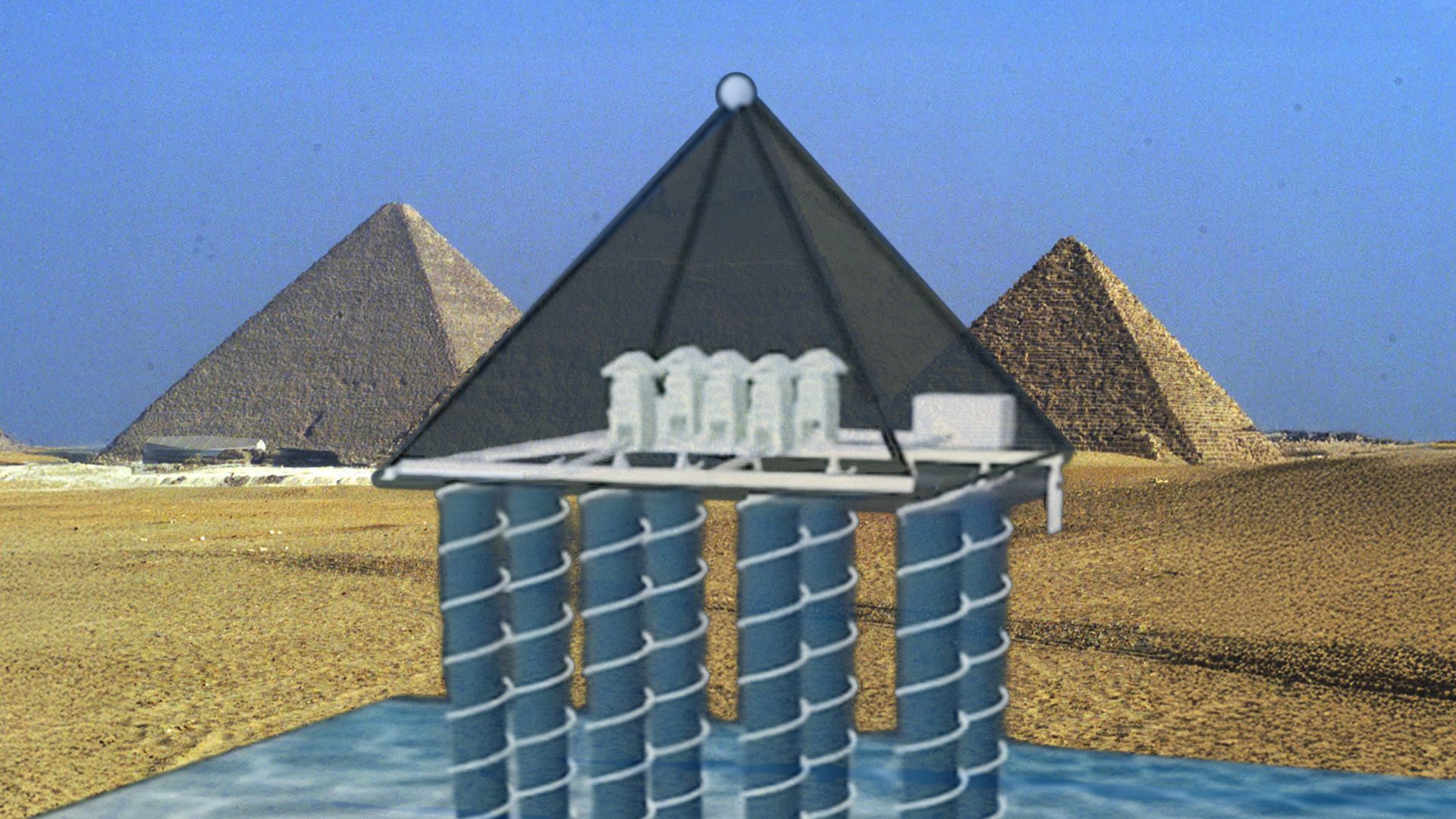
De Verborgen Stad Onder de Piramides: Een Fascinerende Theorie

EXCLUSIVE: Is there a secret city under the Giza Pyramids? Unpacking the controversy

De Verborgen Stad Onder de Piramides: Een Fascinerende Theorie

De piramides van Egypte, vooral de Grote Piramide van Gizeh, blijven tot op de dag van vandaag een bron van mysterie en fascinatie voor archeologen, historici en avonturiers. Naast hun indrukwekkende architectuur en historische betekenis, bestaan er geruchten en theorieën die suggereren dat er onder deze iconische monumenten een verborgen stad of ondergrondse structuur zou kunnen liggen. Een van de meest intrigerende theorieën is die van een ondergrondse stad onder de piramides, die mogelijk eeuwenlang verborgen is gebleven. In dit artikel duiken we dieper in deze fascinerende theorie en de bewijzen die eraan ten grondslag liggen.

De oorsprong van de theorie

De oorsprong van de theorie over een verborgen stad onder de piramides ligt in de waarnemingen en speculaties van 19e-eeuwse ontdekkingsreizigers en archeologen. Tijdens hun expedities in Egypte stuitten zij op complexe ondergrondse structuren en tunnels die aanvankelijk als natuurlijke formaties werden beschouwd, maar later als menselijke bouwwerken werden geïdentificeerd. Deze vondsten wekten nieuwsgierigheid en leidden tot de hypothese dat de oude Egyptenaren mogelijk uitgebreide ondergrondse netwerken hadden aangelegd voor religieuze, administratieve of beveiligingsdoeleinden.

In de loop der jaren werden er ook oude teksten en inscripties gevonden die mogelijk verwijzingen bevatten naar verborgen ruimtes of geheime kamers. Sommige onderzoekers vermoeden dat deze ondergrondse constructies dienden als opslagplaatsen voor waardevolle artefacten of als geheime locaties voor rituelen. Daarnaast speelden de grote mysteries rondom de bouwtechnieken en het doel van de piramides een rol bij het ontstaan van deze theorie.

Recente archeologische opgravingen en technologieën, zoals ground-penetrating radar en 3D-scans, hebben de interesse in ondergrondse structuren verder versterkt. Zo werden er in de buurt van de piramides van Gizeh ondergrondse tunnels en kamers ontdekt die mogelijk deel uitmaken van een groter, nog onontdekt complex. Hoewel bewijs voor een volledige ondergrondse stad nog ontbreekt, blijven deze bevindingen de theorie over een verborgen ondergrondse wereld onder de piramides ondersteunen en inspireren tot verder onderzoek

Artist's reimagination of the purported hidden city believed to lie beneath the Pyramids of Giza, TRT World

Kunstenaarsherinterpretatie van de vermeende verborgen stad die onder de piramides van Gizeh zou liggen,

TRT World

Bewijzen en ontdekkingen

Hoewel er tot op heden geen definitief bewijs is voor een volledige ondergrondse stad onder de piramides van Gizeh, zijn er verschillende interessante vondsten en aanwijzingen die de mogelijkheid ondersteunen dat er meer onder de oppervlakte ligt dan tot nu toe bekend is. Deze bevindingen wekken de nieuwsgierigheid van archeologen en onderzoekers en dragen bij aan de mystiek rondom de oude Egyptische bouwwerken.

  • Ondergrondse tunnels en kamers

Een van de meest veelbelovende ontdekkingen werd gedaan in 2017 door een Chinees archeologisch team. Tijdens hun onderzoek onder de Grote Piramide van Gizeh gebruikten ze geavanceerde technologieën zoals grondradar en seismisch onderzoek. Uit deze technieken bleek dat er een netwerk van tunnels en kamers onder de piramide aanwezig is, waarvan sommige nog niet volledig zijn onderzocht. Deze ruimtes kunnen mogelijk dienen als opslagplaatsen, rituele kamers of zelfs als ontsnappingsroutes voor de farao’s en priesters. Het feit dat delen van deze ondergrondse structuren nog niet volledig zijn onderzocht, laat ruimte voor verdere ontdekkingen. Sommige onderzoekers speculeren dat er onder de piramide wellicht een heel ondergronds complex ligt dat nog niet in kaart is gebracht, wat de theorie versterkt dat er een verborgen ondergrondse stad of uitgebreide structuren onder de piramide kunnen liggen.

  • Geofysisch onderzoek

Naast archeologisch onderzoek wordt er ook veel gebruik gemaakt van geofysische technieken om ondergrondse structuren te detecteren. Hierbij wordt gebruik gemaakt van grondradar, elektromagnetische inductie en seismische metingen. Deze methoden hebben anomalieën en structuren aangewezen die niet overeenkomen met de bekendste bouwwerken van de piramides. Sommige van deze anomalieën kunnen wijzen op gangen, kamers of tunnels die nog niet zichtbaar zijn op het oppervlak. Onderzoekers geloven dat deze ondergrondse routes mogelijk dienden voor rituelen, opslag of als ontsnappingswegen. Een interessant aspect is dat sommige van deze structuren zich op strategische locaties bevinden, bijvoorbeeld onder de tempelcomplexen of nabij de piramide zelf. Dit geeft aan dat ze mogelijk een speciale functies hadden in het oude Egypte.

  • Sporen van oude constructies

Naast technologische bewijzen verwijzen ook oude teksten, kaarten en legendes naar ondergrondse ruimtes en tunnels in de omgeving van de piramides. Sommige oude Egyptische inscripties en grafteksten spreken over ondergrondse gangen en verborgen kamers die door de farao’s of priesters gebruikt werden. Daarnaast bestaat er een oude kaart uit de 19e eeuw die schematisch ondergrondse structuren rondom de piramides toont, al is de betrouwbaarheid hiervan niet volledig vastgesteld. Hoewel de exacte locatie en functie van deze ondergrondse constructies vaak onduidelijk blijven, ondersteunen ze de theorie dat de oude Egyptenaren mogelijk uitgebreide ondergrondse netwerken hadden aangelegd voor rituelen, opslag of verdediging.

  • Samenvatting

De verzameling van deze bewijzen en ontdekkingen wijst erop dat er onder de piramides van Gizeh mogelijk meer ligt dan slechts de bekende bouwwerken. De ondergrondse tunnels, kamers en anomalieën die met moderne technologieën worden aangetoond, vormen een fascinerend puzzelstuk in het begrijpen van de oude Egyptische cultuur en architectuur. Hoewel er nog geen sluitend bewijs is voor een volledige ondergrondse stad, suggereren deze ontdekkingen dat de ondergrondse wereld onder de piramides complex en mogelijk zeer groot is. Toekomstig archeologisch onderzoek en technologische innovaties kunnen mogelijk nog meer verborgen structuren aan het licht brengen, waardoor we een beter beeld krijgen van de mysterieuze ondergrondse netwerken die mogelijk door de oude Egyptenaren zijn aangelegd. De voortdurende zoektocht naar deze ondergrondse wereld blijft een boeiend hoofdstuk in de archeologie en de geschiedenis van het oude Egypte.

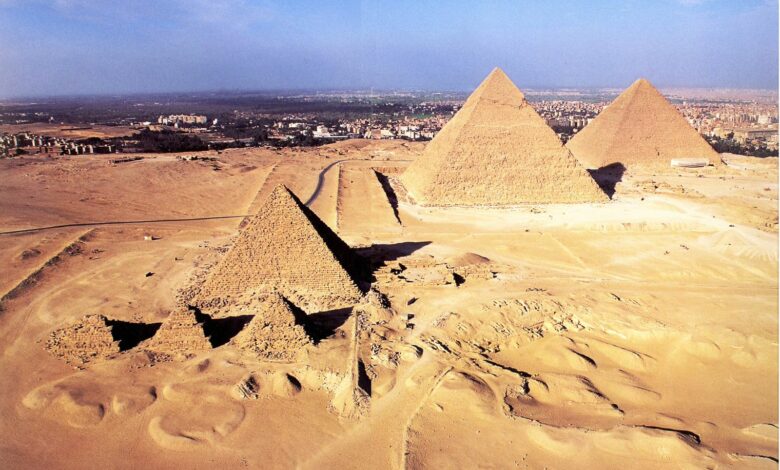
Giza pyramid complex

Waarom zou er een ondergrondse stad zijn?

De vraag waarom er een ondergrondse stad of complex zou bestaan onder de oude Egyptische piramides is een intrigerende en complexe kwestie die al decennia lang wetenschappers, archeologen en onderzoekers bezighoudt. De ondergrondse structuren, die soms worden aangeduid als ‘ondergrondse steden’, ‘kamers’, tunnels of geheime gangen, roepen vele vragen op over hun functie, oorsprong en betekenis. In dit essay worden de belangrijkste theorieën en mogelijke motieven besproken, ondersteund door archeologische bevindingen, historische context en wetenschappelijke analyses.

  • Religieuze en rituele doeleinden Een van de meest gangbare theorieën is dat de ondergrondse structuren bedoeld waren voor religieuze en rituele doeleinden. In de oude Egyptische cultuur speelde de dood en het hiernamaals een centrale rol, en veel structuren waren ontworpen om de overgang van de farao’s en belangrijke figuren naar het hiernamaals te faciliteren.

a. Begraafplaatsen voor farao’s en elite: Sommige onderzoekers geloven dat de ondergrondse complexen dienden als grafkamers of crypte-achtige ruimtes waar farao’s en hoge priesters werden begraven. De piramides zelf worden vaak gezien als monumenten voor de farao’s, maar de ondergrondse kamers zouden extra ondergrondse grafkamers kunnen zijn, bedoeld om de farao’s te beschermen tegen plundering en kwaadwillende geesten. Deze ondergrondse ruimtes zouden ook kunnen dienen als opslagplaatsen voor de spullen die de overledene nodig had in het hiernamaals, zoals voedsel, voorwerpen en symbolische artefacten.

b. Rituele centra en ceremonies: Daarnaast zouden de ondergrondse ruimtes dienen voor religieuze rituelen die gericht waren op de verering van goden zoals Osiris, Anubis en Hathor. De ondergrondse gangen zouden symbolisch de overgang tussen de wereld van de levenden en die van de doden vertegenwoordigen, en rituelen mogelijk gemaakt hebben die de ziel van de overledene konden begeleiden. Sommige theorieën suggereren dat deze ondergrondse kamers ook fungeren als plekken voor geheime ceremonies die niet voor het grote publiek bestemd waren, en dat ze een belangrijke rol speelden in de voorbereiding op de reis naar het hiernamaals.

c. Verborgen betekenis en symboliek: De ondergrondse structuren kunnen ook een symbolische betekenis hebben, zoals het vertegenwoordigen van de onderwereld of de ‘Duat’ (de Egyptische onderwereld). De complexiteit en het labyrintachtige karakter van sommige ondergrondse netwerken zouden de reis van de zielen door de onderwereld kunnen symboliseren, en zo de spirituele reis van de overledene ondersteunen. Deze symboliek zou ook kunnen verwijzen naar een dieper esoterisch inzicht dat de oude Egyptenaren hadden over de kosmos en de overgang tussen leven en dood.

  • Veiligheid en geheimhouding Een andere belangrijke reden voor de constructie van ondergrondse complexen was de behoefte aan veiligheid en geheimhouding. In een samenleving waar waardevolle artefacten, hiërarchische documenten en religieuze relikwieën werden bewaard, was bescherming tegen diefstal, plundering of ongewenste bezoekers van groot belang.

a. Opslagplaatsen voor waardevolle artefacten: De ondergrondse ruimtes konden dienen als geheime opslagplaatsen voor juwelen, goud, religieuze voorwerpen en hiërarchische documenten. Het gebruik van ondergrondse tunnels en kamertjes maakte het mogelijk om deze schatten te beschermen tegen gravende buitenaars en plunderaars.Door ze onder de grond te plaatsen, werden ze minder zichtbaar en moeilijker te vinden voor indringers, wat het risico op diefstal aanzienlijk verkleinde.

b. Schuilplaatsen en schermutselingen: In tijden van conflicten of bedreigingen konden ondergrondse gangen en kamers dienen als schuilplaatsen voor belangrijke functionarissen, priesters of zelfs de farao zelf. Het ondergronds netwerk bood een veilige haven waar men kon ontsnappen of zich kon verbergen. Deze ondergrondse complexen zouden ook kunnen functioneren als geheime bunkers of schuilplaatsen tijdens aanvallen of invallen door vijandige groepen.

c. Geheime doorgangen en routes: Het bestaan van geheime doorgangen onder de piramides en andere bouwwerken zou ook strategisch kunnen zijn geweest, bijvoorbeeld voor het discreet verplaatsen van mensen of voor rituelen die niet openbaar mochten zijn. Sommige onderzoekers vermoeden dat ondergrondse tunnels mogelijk dienden als ontsnappingsroutes of geheime routes tussen verschillende tempelcomplexen, waardoor de Egyptenaren in tijden van nood snel konden vluchten of belangrijke personen konden verplaatsen zonder dat dit werd opgemerkt.

  • Wetenschappelijke en technische kennis De constructie van uitgebreide ondergrondse netwerken en structuren wijst mogelijk op een geavanceerde technische en hydrologische kennis van de oude Egyptenaren.

a. Hydrologie en waterbeheer: De oude Egyptenaren hadden uitgebreide kennis van waterbeheer, vooral rondom de Nijl. Het is mogelijk dat ondergrondse tunnels en kamers werden gebouwd om water te controleren, te verzamelen of te beheren, vooral in tijden van droogte of overstroming. Sommige theorieën suggereren dat ondergrondse waterreservoirs of kanalen onderdeel waren van het complexe watersysteem dat de regio beheerde. Het gebruik van ondergrondse waterbakken, sluizen en afwateringssystemen zou hebben geholpen om het land vruchtbaar te houden en overstromingen te voorkomen.

b. Bouwtechnieken en materialen: De ondergrondse structuren getuigen van technische vaardigheden, zoals het gebruik van speciale stenen, cement en technieken om gangen stabiel te houden. Het feit dat men in staat was om ondergrondse kamers te bouwen die vele eeuwen standhielden, wijst op een geavanceerde kennis van ondergrondse bouwtechnieken en stabiliseringsmethoden. Het gebruik van trilplaatstechnieken, holle stenen en waterdichtingstechnieken zou hebben bijgedragen aan de duurzaamheid van deze ondergrondse constructies. Daarnaast was het waarschijnlijk dat de oude Egyptenaren experimenteerden met verschillende bouwmaterialen en methoden om de integriteit van deze netwerken te waarborgen, vooral in het vochtige ondergrondse milieu.

c. Geotechnische kennis: Het bouwen van uitgebreide ondergrondse netwerken vereiste een diepgaand begrip van de geologie en de eigenschappen van de bodem. De oude Egyptenaren zouden inzicht hebben gehad in de draagkracht van verschillende bodemsoorten, drainage en de stabiliteit van ondergrondse structuren. Het feit dat zij dergelijke complexe systemen konden ontwerpen en onderhouden, wijst op een geavanceerde kennis van geotechniek en bodemmechanica.

d. Astronomische en geometrische kennis: Sommige ondergrondse structuren zijn mogelijk afgestemd op astronomische of geometrische principes, zoals het aligneren van tunnels met sterrenbeelden of specifieke astronomische gebeurtenissen. Dit zou kunnen betekenen dat de oude Egyptenaren een geavanceerd begrip hadden van geometrie en astronomie, wat hen in staat stelde om ondergrondse netwerken te koppelen aan religieuze of astronomische symboliek.

e. Doel en gebruik: Hoewel sommige ondergrondse structuren nog niet volledig begrepen worden, suggereren theorieën dat ze mogelijk dienden voor rituele doeleinden, opslag van waardevolle goederen, geheime communicatie of als schuilplaatsen. Het gebruik van dergelijke ondergrondse netwerken weerspiegelt een hoog niveau van planning en organisatie binnen de oude Egyptische samenleving.

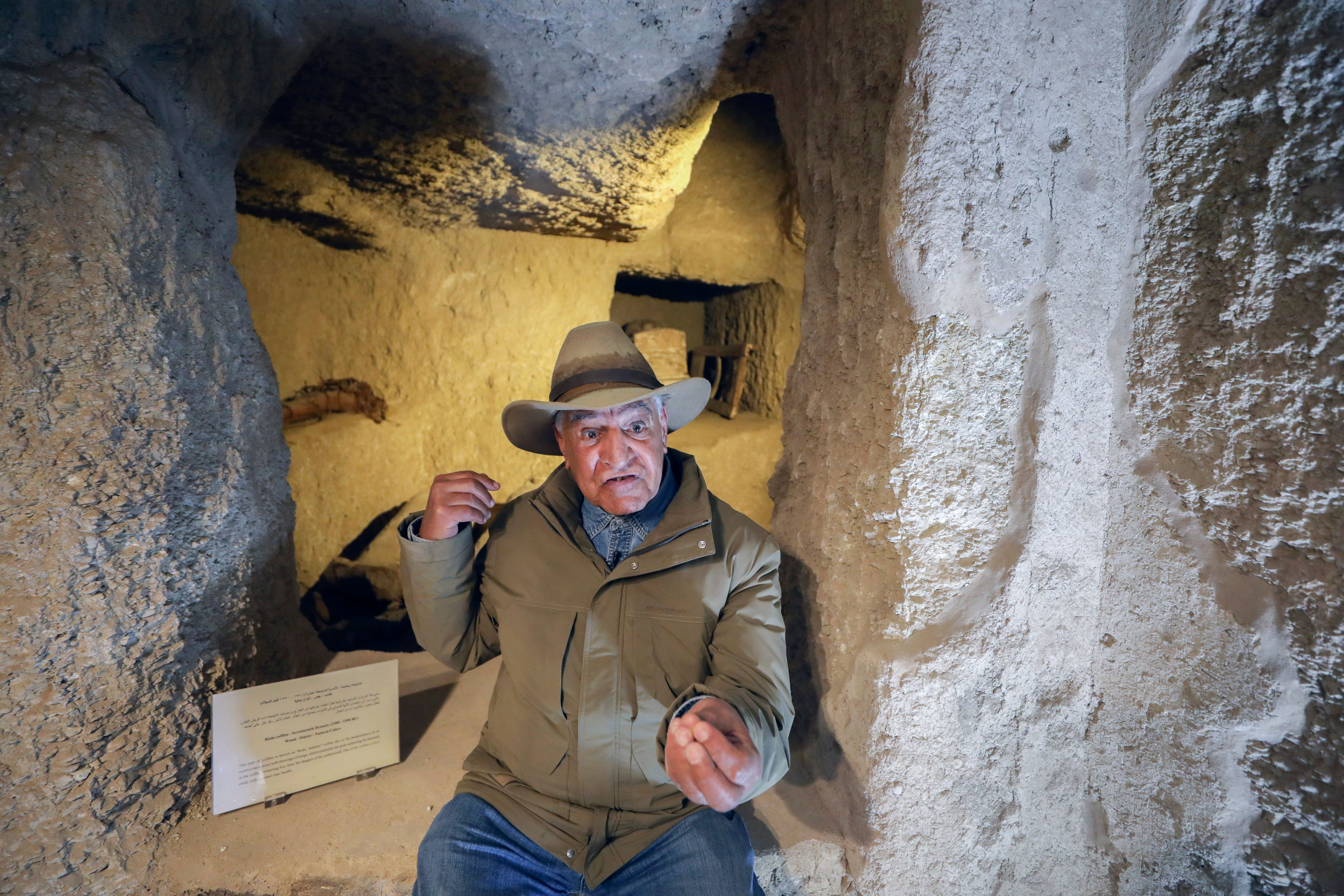
Egyptologist Zahi Hawass is one of the most stringent critics of the hypothesis that there is a city under the Pyramids of Giza, Egypt, January 8, 2025. (APPhoto/Khaled Elfiqi)

Egyptoloog Zahi Hawass is een van de strengste critici van de hypothese dat er een stad onder de piramides van Gizeh ligt, Egypte, 8 januari 2025.

(APPhoto/Khaled Elfiqi)

Kortom, de constructie en het ontwerp van deze ondergrondse netwerken tonen aan dat de oude Egyptenaren beschikten over een zeer geavanceerde combinatie van hydrologische, bouwkundige, geotechnische en astronomische kennis. Deze expertise stelde hen in staat om complexe, duurzame systemen te ontwikkelen die niet alleen functioneel waren, maar mogelijk ook symbolisch of ritueel van aard.

Critics say it is impossible to scan through the rocks that constitute the Pyramids of Giza. (Khaled Desouki/Pool via AP)

Volgens critici is het onmogelijk om door de rotsen heen te kijken die de piramides van Gizeh vormen.

(Khaled Desouki/Pool via AP)

Controverse en skeptische geluiden

Hoewel de theorie over een verborgen stad onder de piramides van Egypte bijzonder intrigerend is en veel nieuwsgierigheid opwekt, wordt deze niet breed geaccepteerd binnen de mainstream wetenschappelijke gemeenschap. De voornaamste reden hiervoor is het ontbreken van onweerlegbaar bewijs dat daadwerkelijk wijst op een uitgebreide ondergrondse structuur of een vergeten stad. Archeologen en Egyptologen wijzen erop dat veel van de beweringen gebaseerd zijn op interpretaties van anomalieën en ondergrondse waarnemingen die niet altijd eenduidig te verklaren zijn.

Een van de meest gehoorde kritieken is dat de zogenaamde 'ondergrondse kamers' of 'doorgangen' vaak ontstaan door natuurlijke geologische processen. De regio rondom Gizeh, waar de piramides liggen, bestaat uit kalksteen en sedimentgesteenten die door miljoenen jaren van natuurlijke erosie en aardbevingen kunnen leiden tot scheuren en holtes. Sommige onderzoekers stellen dat de waargenomen anomalieën eenvoudig natuurlijke formaties zijn, zonder dat hier menselijke bouwkundige activiteiten aan ten grondslag liggen.

Daarnaast is er het probleem van de interpretatie van technische gegevens. Bijvoorbeeld, bepaalde radar- en seismische scans die worden aangevoerd als bewijs voor ondergrondse structuren, kunnen ook worden verklaard door natuurlijke verschillen in de samenstelling van de ondergrond. Het is niet altijd mogelijk om met de beschikbare technologieën met volledige zekerheid te concluderen dat de gevonden structuren door mensen gemaakt zijn of dat ze een architectonisch plan vertegenwoordigen.

Ook wordt betoogd dat de verhalen over een verborgen stad onder de piramides vaak worden versterkt door pseudowetenschappelijke theorieën, samenzweringstheorieën en speculatie. Sommige onderzoekers waarschuwen dat deze theorieën de geschiedenis en archeologie ondermijnen door te veel te vertrouwen op interpretaties zonder voldoende bewijs. Ze benadrukken dat de immense leeftijd van de piramides, meer dan 4.500 jaar, en de complexiteit van de bouwtechnieken destijds, al voldoende bewijs bieden voor de ingenieuze vaardigheden van de oude Egyptenaren, zonder dat uit die wetenschap per se een ondergrondse stad hoeft te voort te komen.

Tot slot is er ook kritiek op de manier waarop sommige van deze theorieën worden gepromoot in populaire media en documentaires. Deze brengen vaak sensationele verhalen die niet altijd gebaseerd zijn op gedegen archeologisch onderzoek. Hierdoor ontstaat de indruk dat er sprake zou zijn van een grote geheimenis die nog moet worden ontrafeld, terwijl de meeste experts juist pleiten voor een meer genuanceerde en wetenschappelijk verantwoorde benadering.

Kortom, hoewel de theorie over een verborgen stad onder de piramides fascinerend blijft en veel mensen blijft intrigeren, is het bewijs op dit moment onvoldoende om deze claims serieus te nemen binnen de wetenschappelijke gemeenschap. De controverse blijft bestaan, en verder onderzoek met behulp van geavanceerde technologieën en een kritische blik is noodzakelijk om de waarheid te achterhalen.

Conclusie

De aantrekkingskracht van een ondergrondse stad onder de piramides van Egypte blijft een intrigerend onderwerp dat zowel wetenschappers als liefhebbers fascineert. Verschillende geofysische onderzoeken, zoals seismische scans en grondradarmetingen, hebben aanwijzingen opgeleverd die de mogelijkheid van ondergrondse structuren ondersteunen. Zo zijn er bijvoorbeeld anomalieën gevonden onder de Grote Piramide van Gizeh, die mogelijk wijzen op verborgen gangen of kamers. Daarnaast worden oude teksten en legendes vaak aangehaald om het mysterie te onderbouwen, hoewel er geen sluitend bewijs is dat deze daadwerkelijk verwijzen naar een ondergrondse stad.

Tegelijkertijd blijft het bewijs beperkt en is er nog geen onomstotelijke ontdekking gedaan. Archeologisch onderzoek is complex en kostbaar, en de Egyptische autoriteiten zijn vaak terughoudend vanwege het beschermen van het erfgoed. Toch blijven technologische innovaties, zoals 3D-scanning en geavanceerde detectiemethoden, veelbelovend. Toekomstige expedities en onderzoek kunnen mogelijk de sluier oplichten over deze mysterieuze ondergrondse wereld. Het idee van een verborgen stad onder de piramides prikkelt onze nieuwsgierigheid en zet aan tot verdere exploratie. Uiteindelijk kan deze zoektocht ons niet alleen meer inzicht geven in de bouwtechnieken en functies van de piramides, maar ook in de geschiedenis en cultuur van de oude Egyptenaren. Het blijft een boeiend hoofdstuk in de archeologische en mysterieuze geschiedenis van Egypte.


{ peter2011 }

Hoe vind je dit bericht?
Geschreven door peter om 22:13 Stuur door

'It's a ticking time bomb': Acid levels in Earth's oceans have already breached 'danger zone', study suggests

'It's a ticking time bomb': Acid levels in Earth's oceans have already breached 'danger zone', study suggests

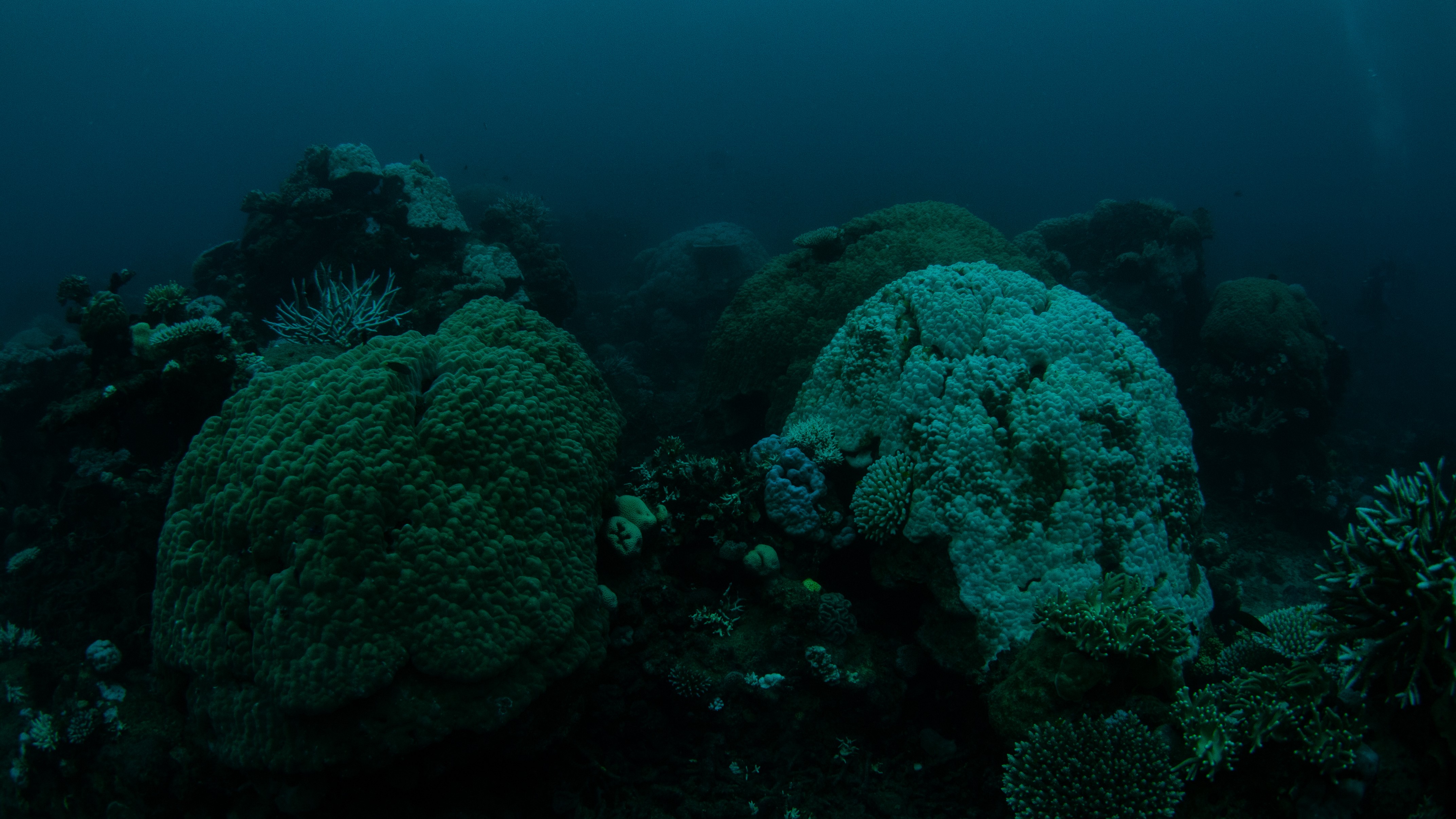
An underwater photograph of a shoal of fish swimming above corals.
The new study suggests our planet's oceans are becoming too acidic to remain healthy. 
(Image credit: Philip Thurston via Getty Images)

Earth's oceans are in worse condition than scientists thought, with acidity levels so high that our seas may have entered a "danger zone" five years ago, according to a new study.

Humans are inadvertently making the oceans more acidic by releasing carbon dioxide (CO2) through industrial activities such as the burning of fossil fuels. This ocean acidification damages marine ecosystems and threatens human coastal communities that depend on healthy waters for their livelihoods.

Previous research suggested that Earth's oceans were approaching a planetary boundary, or "danger zone," for ocean acidification. Now, in a new study published Monday (June 9) in the journal Global Change Biology, researchers have found that the acidification is even more advanced than previously thought and that our oceans may have entered the danger zone in 2020.

You may like

The researchers concluded that by 2020, the average condition of our global oceans was in an uncertainty range of the ocean acidification boundary, so the safety limit may have already been breached. Conditions also appear to be worsening faster in deeper waters than at the surface, according to the study.

"Ocean acidification isn't just an environmental crisis — it's a ticking time bomb for marine ecosystems and coastal economies," Steve Widdicombe, director of science and deputy chief executive at Plymouth Marine Laboratory, a marine research organization involved in the new study, said in a statement. "As our seas increase in acidity, we're witnessing the loss of critical habitats that countless marine species depend on and this, in turn, has major societal and economic implications."

Related: 

In 2009, researchers proposed nine planetary boundaries that we must avoid breaching to keep Earth healthy. These boundaries set limits for large-scale processes that affect the stability and resilience of our planet. For example, there are boundaries for dangerous levels of climate change, chemical pollution and ocean acidification, among others.

A 2023 study found that we had crossed six of the nine boundaries. The authors of that study didn't think the ocean acidification boundary had been breached at the time, but they noted it was at the margin of its boundary and worsening.

Katherine Richardson, a professor at the Globe Institute at the University of Copenhagen in Denmark who led the 2023 study and was not involved in the new study, told Live Science that she was "not at all surprised" by the new findings.

"We said it was on the edge in our last assessment and, as atmospheric CO2 concentrations have risen since then, it is hardly surprising that it should be transgressed now," Richardson said in an email.

What causes ocean acidification?

Ocean acidification is mostly caused by the ocean absorbing CO2. The ocean takes up around 30% of CO2 in the atmosphere, so as human activities pump out CO2, they are forcing more of it into the oceans. CO2 dissolves in the ocean, creating carbonic acid and releasing hydrogen ions. Acidity levels are based on the number of hydrogen ions dissolved in water, so as the ocean absorbs more CO2, it becomes more acidic.

The hydrogen ions bond with carbonate ions in the ocean to form bicarbonate, which reduces the carbonate available to marine life like corals, clams and plankton. These animals need carbonate for their bones, shells and other natural structures, which they make out of calcium carbonate (CaCO3). Researchers measure aragonite — one of the soluble forms of CaCO3 — to track ocean acidity levels.

An underwater photograph of corals on the Great Barrier Reef, in Queensland Australia.

Corals are dying as the oceans become warmer and more acidic.  (Image credit: Brett Monroe Garner via Getty Images)

The ocean acidification boundary would be breached when the oceans see a 20% reduction of aragonite compared with preindustrial levels (estimated ocean acidification for 1750 and 1850). The 2023 study estimated that ocean acidification was at 19%, just below the boundary.

The authors of the new study used physical and chemical measurements in the upper ocean and computer models to update and refine previous ocean acidification estimates. They also introduced a margin of error, including uncertainties in both the boundary and the present-day acidification value.

With the new data, the researchers found that at the ocean's surface, the global average acidification level is 17.3% (with a 5% margin of uncertainty) less than preindustrial levels. That estimate is lower than the 2023 estimate but well within the new study's wider boundary region (20% but with a 5.3% margin of uncertainty). The newly estimated acidification levels increased at greater depths, though the margin for error also increased below 330 feet (100 meters), according to the study's data.

Not all of the ocean is acidifying at the same rate. For example, the researchers determined that about 40% of the water at the surface had crossed the boundary, but that estimate rose to 60% for the waters below, down to about 650 feet (200 m).

"Most ocean life doesn't just live at the surface — the waters below are home to many more different types of plants and animals," study lead author Helen Findlay, a biological oceanographer at the Plymouth Marine Laboratory, said in the statement. "Since these deeper waters are changing so much, the impacts of ocean acidification could be far worse than we thought."

{ https://www.livescience.com/planet-earth }

Hoe vind je dit bericht?
Geschreven door peter om 00:59 Stuur door

Supernova Explosions Changed Earth's Climate and Shaped Humanity's History

Supernova Explosions Changed Earth's Climate and Shaped Humanity's History

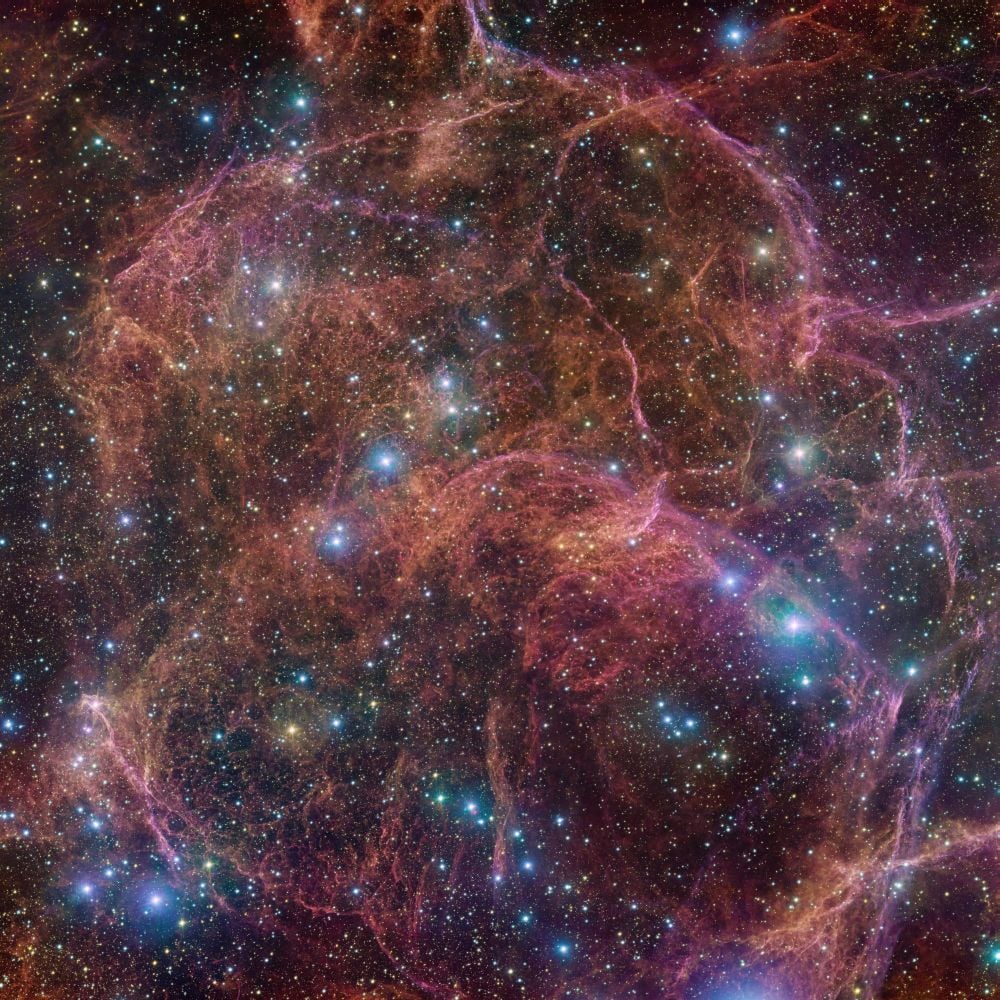
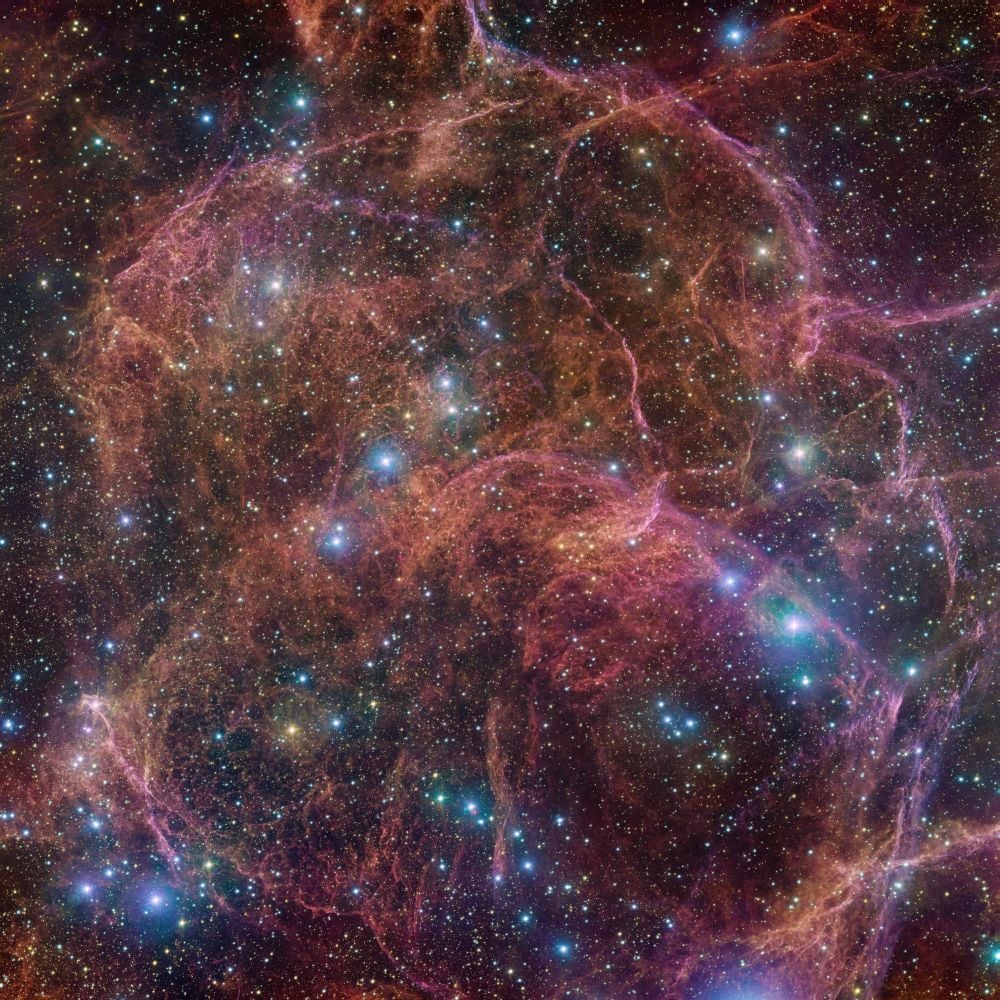
The Vela Supernova Remnant is one of the closest supernova remnants to Earth. The supernova is about 900 light-years away and exploded about 11,000 years ago. That's right around the time of the Younger Dryas and scientists wonder if the two are related, and if other supernovae triggered other cooling episodes. Image Credit: By (Credit) ESO/TIMER survey - https://www.eso.org/public/news/eso2214/, CC BY 4.0

Most scientists agree that supernova explosions have affected Earth's climate, though the details are not all clear. They likely cooled the climate several times in the last several thousand years, just as humanity was becoming established around the world. The evidence is in telescopes and tree rings.

We live in the Quaternary period which spans from 2.58 million years ago to the present. The Quaternary is characterized by climatic and environmental changes, most significantly the Ice Ages. The Quaternary also encompasses human existence and evolution from early hominids to our species.

New research in the Monthly Notices of the Royal Astronomical Society examines the role supernovae explosions played in the Quaternary climatic changes. It's titled "Late Quaternary supernovae in Earth history," and the author is Robert Brakenridge. He's a senior research associate in the Institute of Arctic and Alpine Research at the University of Colorado.

The Late Quaternary is loosely defined as the time period from 50,000 years ago to the present. It featured several abrupt, dramatic changes in Earth's climate. These include the Older Dryas and the Younger Dryas, abrupt shifts to a colder climate while the Earth was experiencing a warming trend after the last ice age, at the end of the Pleistocene epoch.

There are several ways that SN can cool Earth's climate. They can weaken or destroy Earth's ozone layer, which would allow more UV light to reach the surface. That leads to knock-on effects that can cause cooling. SN also contribute to cooling by degrading atmospheric methane, a greenhouse gas. The primary way that SN can cool Earth's climate is by increasing the cloud cover.

The idea that supernovae could be responsible for abrupt climate shifts is supported by evidence from tree rings. Trees absorb three isotopes of carbon, carbon-12 (12C), carbon-13 (13C), and carbon-14 (14C). When researchers examine ancient tree rings, they find different ratios of the carbon isotopes in different rings. 12C and 13C are stable isotopes, while 14C isn't. 14C is created continuously in the upper atmosphere all of the time.

When supernovae explode, they send high-speed energetic particles outward in all directions. When some reach Earth, they collide with nitrogen in the atmosphere and generate 14C. Because of this, the atmospheric level of 14C spikes when a nearby supernova (in astronomical terms) explodes.

Tree rings can be dated, and when scientists date tree rings with raised levels of 14C, it indicates that a supernovae explosion occurred somewhere nearby at a specific time.

It's not that cut and dried, however, and not all researchers agree that we can link tree rings with supernovae. Miyaki events also create a burst of 14C that can be identified in tree rings, but they're caused by the Sun. However, the the idea that supernovae could be responsible for 14C and climate shifts won't go away.

“We have abrupt environmental changes in Earth’s history. That’s solid, we see these changes,” study author Brakenridge said. “So, what caused them?”

The question rings out as we try to understand our own history and what the future might hold for Earth.

“When nearby supernovae occur in the future, the radiation could have a pretty dramatic effect on human society,” he said. “We have to find out if indeed they caused environmental changes in the past.”

Tree rings and carbon-14 are only part of the story. The other part is told by our powerful telescopes that search the heavens. When stars explode as supernovae, they don't just simply disappear. They leave behind remnants, an expanding shock wave of dead star material and swept up interstellar medium that's lit up by the explosion and depending on the type of supernova, a white dwarf.

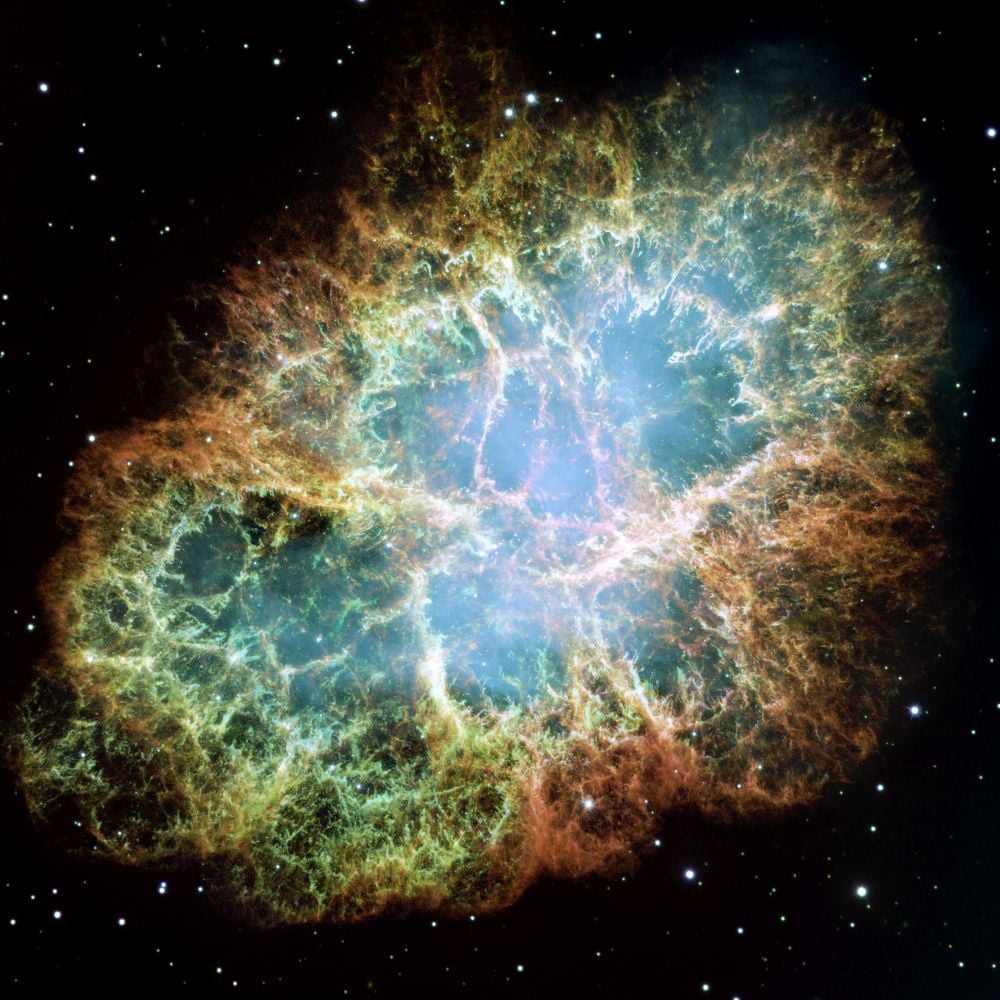
Supernova remnants (SNR) are some of Nature's most dazzling displays. The most well-known one is probably the Crab Nebula, the remnant from the 1054 supernova. The crab nebula was the first astronomical object successfully linked with a historical supernova.

The Crab Nebula is the remnant from the 1054 AD supernova. Ancient astronomers in China and other places observed the explosion at the time and recorded it. Image Credit: By NASA, ESA, J. Hester and A. Loll (Arizona State University) - Public Domain

The Crab Nebula is the remnant from the 1054 AD supernova. Ancient astronomers in China and other places observed the explosion at the time and recorded it.

Image Credit: By NASA, ESA, J. Hester and A. Loll (Arizona State University) - Public Domain

As our telescopes have grown in power, scientists have learned a lot about the radiation that comes from supernovae. The struggle is to understand exactly how the radiation interacted with Earth and affected its climate. There's no clear picture of how far away SN can be and still affect Earth.

"All known Late Quaternary SNRs are much further away than the solar system neighbourhood," the author writes in his research. "SNe at distances of >0.1 kpc have sometimes been considered too remote to affect Earth's biosphere and atmosphere." Brakenridge explains that this conclusion is based on catastrophic effects rather than significant effects. "Such a criterion is not appropriate for Late Quaternary time, as there is no known global extinction event comparable to, for example, those in the late Ordovician and the Cretaceous-Tertiary boundary," he explains, mentioning two of Earth's major extinctions.

"Instead, there is abundant evidence of global climate changes of lesser magnitude and also major mammalian extinction events," Brakenridge explains. "It is thus not possible with present knowledge to rule out SNe at a few 0.1 kpc as causing significant effects observable in Late Quaternary records."

In this research, Brakenridge created a new model of how SN radiation affects the planet's atmosphere.

No SN are affecting Earth right now, so Brakenridge tested the model the only way he can: with tree rings. He examined tree rings over the last 15,000 years and found 11 carbon spikes. Eventually, he determined that four supernovae could have affected Earth's climate during the Late Quaternary.

“The events that we know of, here on earth, are at the right time and the right intensity,” Brakenridge said.

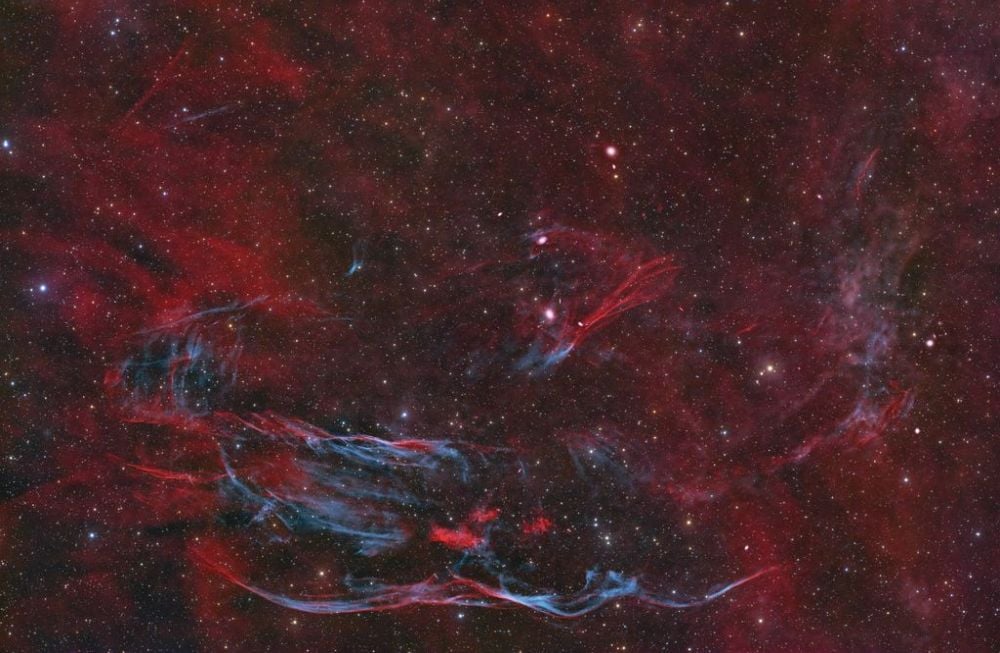
The Hoinga SNR closely aligns with the Older Dryas abrupt cooling about 14,000 years ago.

The Hoinga SNR may be linked to the Earth's Older Dryas abrupt cooling period. Image Credit: Team New Horizons/Australia Telescope National Facility.

The Hoinga SNR may be linked to the Earth's Older Dryas abrupt cooling period.

Image Credit: Team New Horizons/Australia Telescope National Facility.

The Vela SNR is associated with the Younger Dryas cooling about 12,000 years ago.

The Vela SNR may be linked to Earth's Younger Dryas cooling period. Image Credit: By (Credit) ESO/TIMER survey - https://www.eso.org/public/news/eso2214/, CC BY 4.0

The Vela SNR may be linked to Earth's Younger Dryas cooling period.

Image Credit: By (Credit) ESO/TIMER survey

- https://www.eso.org/public/news/eso2214/, CC BY 4.0

Two other C14 events, the largest of the Holocene, at about 9,000 and 7,000 years ago, are also closely aligned with nearby SNR.

The Older and Younger Dryas affected our human ancestors, who were struggling to survive. The Younger Dryas was particularly difficult for humans, who saw a significant population decrease during this time. We may be buffered from similar climatic changes by technology, but these types of rapid climate shifts could be catastrophic for civilization as we know it.

Tree rings and telescopes aren't the only evidence showing how SN could've affected Earth. There's also sediments, ice cores, and other evidence. The challenging part is to piece all of it together and understand how the past played out.

The other challenge is to look around and us and determine what nearby stars may be about to explode, and what threat they might pose to the climate. It's possible that we could be thrust back into a difficult survival situation like our ancestors were.

“As we learn more about our nearby neighboring stars, the capability for prediction is actually there,” Brakenridge said. “It will take more modeling and observation from astrophysicists to fully understand Earth’s exposure to such events.”


{ https://www.universetoday.com/ }

Hoe vind je dit bericht?
Geschreven door peter om 22:59 Stuur door

TR3B Craft Flying Over On June 3, 2025, Alien or Military? UFO UAP Drone Sighting Breaking News.

TR3B Craft Flying Over On June 3, 2025, Alien or Military? UFO UAP Drone Sighting Breaking News.

UFO_Toronto.png

UFO_Canada.png

Date of sighting: June 3, 2025

Location of sighting: Toronto, Canada
Source: X Chrissy Newton
 
This is amazing! Check out this video captured by writer and podcaster, Chrissy Newton on X, specifically went to the scene afterward to conduct an on-site investigation. She concluded that it was unlikely to be a light from the crane boom. She wrote on X (formerly Twitter): “I went to the location in Toronto where the UAP was recently spotted. There is a crane nearby, but it's too low to be the object seen in the video. I went around 11 p.m., and the weather conditions were similar to when the video was filmed, to make a fair comparison. So far, the object in the video doesn’t appear to be CGI or AI-generated, at least based on. This is a 100% alien, if it was military, it would not be hovering over a major city. Alien tech at its best.
Scott C. Waring - UFO Sightings Daily
the following observations.”

{ https://www.ufosightingsdaily.com/ }

Hoe vind je dit bericht?
Geschreven door peter om 22:42 Stuur door

Haunted Undergrounds, Lost Civilizations, and Secret Rail Networks: The Mysteries and Terrors of the Subterranean World!

Haunted Undergrounds, Lost Civilizations, and Secret Rail Networks: The Mysteries and Terrors of the Subterranean World!

Marcus Lowth

Haunted Undergrounds, Lost Civilizations, and Secret Rail Networks: The Mysteries and Terrors of the Subterranean World!

There are many haunted and indeed haunting locations above the ground around the planet, each offering its own unique blend of spooky goings-on and bone-chilling accounts. There are, though, just as many such locations beneath the ground. When we venture into these subterranean lairs, we find the levels of terror and fright are taken up a notch or two, leaving those who experience these underground encounters with unsettling and disturbing tales to tell.

Perhaps a good place to start our look at haunting – and quite possibly haunted – locations would be with one of the oldest rail networks in the world, the London Underground, which is also claimed by many people to be one of the most haunted locations on the planet, and when we explore just some of these claims and accounts, it is easy to see why. If we look at Piccadilly Station (arguably one of the most well-known in the world), we can find reports of strange Morse-code-like bangs, as if someone is attempting to communicate from beyond the veil. There are also reports of phantom footsteps being heard, as well as strange noises similar to large doors being slammed shut at the Elephant and Castle underground station. One of the most thought-provoking ghosts to haunt the London Underground can be found at Covent Garden, where the spirit of actor William Terriss (who was murdered where the station stands today in 1897) has been seen multiple times wearing a Victorian-style hat and cloak.

Without a doubt, though, one of the most disturbing underground stations of the London Underground is Liverpool Street Station, where multiple strange entities and ghostly figures have been witnessed, with some of these figures even being captured on the station’s CCTV system, and multiple passengers over the years reporting seeing a man wearing overalls walking up and down the platform before disappearing right in front of them.

One of the most disturbing ghosts of Liverpool Street Station is that of a woman who was once a patient at Bedlam Hospital, which once stood on the land Liverpool Street Station resides on today. Many people have reported hearing her bone-chilling screams coming from the tunnels of the station, perhaps resonating with research that suggests when she was a patient at the hospital (thought to be during the 1780s), she was desperately mistreated (something the hospital in question was said to have a reputation for). Furthermore, according to local legend, during her lifetime, she often clung to an old coin as some kind of comfort blanket, physically attacking anyone who tried to take it from her. However, following her death, the coin was removed from her grip, and she was buried without it, as such, her spirit wanders the tunnels of the station, seemingly desperately in search of her most prized and likely only possession.

Just one reason put forward to explain the abundance of ghostly activity at his particular station is that it appears to have been built on what was once a mass grave, most likely from the Black Death era, following the discovery of over 3000 skeletal remains in 2015.

underground-2.jpg

If we turn our attention to London’s East End, we will find Bethnal Green Underground Station, another location that is said to be a hive of strange goings-on. According to many people, strange cries are often heard echoing around the station, with some researchers suggesting these cries come from those who used the tunnels during German bombing missions of the Second World War. In part, because this part of London was poverty-stricken and overpopulated, many residents would find themselves packed into this underground station, often dangerously.

This danger was realized on the evening of March 3rd, 1943, as residents around Bethnal Green station hurriedly made their way underground to escape the German bombs falling around them. One of those making their way deep under the ground was a young woman who was carrying her baby and bedding for warmth. However, as she made her way down the almost completely dark staircase, she tripped, causing a woman behind her, who was also carrying a young child, to fall over her. This had a knock-on effect as more and more people tripped over them. Within seconds, a pile-up of almost 300 bodies had ensued, with 173 eventually being confirmed to have lost their lives, mostly from being crushed or from lack of oxygen.

Reports of the strange cries coming from the station began in the years that followed. There is, though, one particular account that stands out from the rest. One evening in 1981, a station employee was working late on paperwork when he heard the sound of several children crying. As he had locked the station himself, he knew he was the only person there, so the sounds were not only unsettling for him, but they were perplexing. To begin with, he assumed the sounds must be coming into the station from outside, and he did his best to ignore them. The sounds began to increase in volume, however, and then came the sudden sounds of multiple women screaming. At this point, he got up from his desk and ran to the ticket area. There wasn’t, however, anyone there. After around 15 minutes, the sounds suddenly died down and then ceased altogether.

Commuters and employees alike have also reported unsettling screams coming from the tunnels of Farringdon Underground Station, screams which have seemingly been traced to a 13-year-old girl who was murdered and whose body was dumped on the land where the station resides in 1758. The girl in question – Anne Naylor – was an apprentice hat maker who lived in Farringdon at a time when the area was crawling with criminal gangs and general unsavory types. Anne worked for a “sadistic” mother and daughter, who often beat the young girl, as well as forced her to go without food for days at a time. One of these beatings, however, resulted in Anne’s untimely death.

After initially storing the tragic girl’s remains in their attic, the mother and daughter decided to chop up the remains and burn them due to the smell of the decay threatening to expose their crime. However, they soon realized that the smell of burning flesh would also alert authorities to the killing, so they decided to take the remains and dump them near the sewer – the same spot where Farringdon Underground Station sits today. Her remains were discovered a short time later, and despite her death initially being ruled as not suspicious, the mother and daughter – for reasons unknown – turned themselves in and admitted to the killing. Each was hanged shortly after.

Whether the strange screams heard at Farringdon Underground station are Anne Naylor's or not remains open to debate. They do, however, continue to be reported today.

underground-3.jpg

Perhaps what makes the apparent hauntings at the British Museum-Holburn Station unique is that, rather than being the spirit of a local person who died there decades or even centuries ago, they are said to be that of an ancient Egyptian woman.

The British Museum Station opened in the early 1900s, but by 1933, it was replaced by Holborn Station, which was not only just meters away but was also much more modern and passenger-friendly. However, almost immediately, rumors swirled that a secret, or at least, non-publicized line remained open that connected the museum to the new station. It was, according to local legend, along this secret line where many paranormal happenings were reported.

As we mentioned earlier, the most intriguing of these is that of an ancient Egyptian woman named Amun-Ra, after the ancient Egyptian god. The woman’s mummy is said to reside inside the British Museum, with her ghost being seen in this secret tunnel many times, as well as people reported hearing her shrieking in rage. Perhaps of more concern, one account states this ancient Egyptian spirit was even responsible for the disappearance of two women one fateful evening in 1935. On the night in question, the two women simply vanished into thin air somewhere inside the station, and, even more disturbing, on the night of their disappearance, several commuters reported hearing strange, unnerving shrieking sounds coming from the tunnels around the station. In the days that followed, it is claimed that several scratch marks were discovered at the old British Museum Station. Of course, as with most legends, we should be cautious about what is accurate and what is fabricated, not least as there appear to be no newspaper reports of the disappearances, which there surely would have been.

It is, though, interesting to note the fortune, or perhaps more specifically, the misfortune of the person who purchased the mummy in question, Thomas Douglas Murray. Not long after making the purchase and having the mummy shipped to London, Murray was accidentally wounded in a shooting. The wound was such that he had to have his arm amputated. Not long after the mummy arrived in London, two of Murray’s servants who had assisted in its transportation suddenly died. Murray’s bad luck, however, continued once he had arrived back in England, as well as anyone else who had any kind of contact with the mummy. One of these people was Murray’s friend’s sister, who eventually took possession of the mummy so she could have it photographed, which she duly did. However, when the photographer was developing the pictures, he claimed that the face of a “living Egyptian woman” appeared in one of the pictures before his eyes and “stared furiously with an expression of singular malevolence!” The photographer in question, at least according to the legends, died suddenly not long after.

The mummy was eventually donated to the British Museum in the early 1930s – and the strange goings-on continued. Although, once more, there are no official reports or newspaper articles to back it up, it is said that anyone who photographed or sketched the mummy died shortly afterward. Moreover, staff at the museum began to report strange, loud bangs coming from around the building, as well as the sounds of a desperate woman’s cries. Whatever the truth of the matter, these accounts are some of the most unsettling of the London Underground.

While the underground stations of London are undoubtedly some of the most disturbing, there are many others around the world that are worth briefly exploring. If we look at Bisham MRT (Mass Rapid Transit) Station in Singapore, we can find an abundance of strange activity. The reason for this could very well be because the station was built on land that was once home to the Bi Shan Teng cemetery. Reports and accounts of bizarre goings-on began as soon as the station opened in 1987 – reports of unnerving sounds and phantom-like manifestations. Passengers also began reporting hearing footsteps on top of the train carriages, while others claimed to have been grabbed or even pushed by invisible assailants. Perhaps the strangest reports of all, though, came from maintenance workers who worked on the tracks themselves. Many of these workers reported seeing ghostly figures walking along the tracks carrying coffins before disappearing into thin air. There are also multiple reports of a headless figure seen walking on the tracks that also vanishes right in front of shocked onlookers.

Another truly profound underground station is Caobao Road Subway Station in China, specifically, it would seem, Line 1, which not only has many reports of strange activity but is seemingly connected to at least nine deaths. As well as the many strange entities and figures witnessed at the station, many trains inexplicably break down while there, and, much like the reports at the Bisham MRT Station, many commuters have reported being pushed toward the tracks by a pair of invisible hands. Many staff at the station, as well as passengers, have reported hearing the strange and disturbing laughter of a seemingly deranged woman, while multiple people began reporting seeing a young girl dressed in red, only days after a young girl dressed in red had taken her own life at the station. Just what makes this particular station a hub of paranormal activity remains unknown.

One last underground station to explore is the Panteones Metro Station in Mexico City, Mexico. According to reports, many commuters and station staff have reported hearing thunderous banging sounds reverberating around the station, while some people have reported seeing disturbing shadow-type figures that disappear when a person walks towards them. There are also regular reports of unsettling screams heard coming from the tunnels of the station. Similarly to the Bisham MRT Station, the Panteones Metro Station was built very close to an old cemetery, which would, on balance, surely be at least part of the cause of the strange activity reported there.  

underground-4.jpg

If we return to the United Kingdom and north of the England-Scotland border, we find another haunting underground location – the underground vaults of Edinburgh’s South Bridge, where some of the most intense paranormal activity in the United Kingdom ever recorded has unfolded.

Although it took almost two decades to build, the South Bridge opened in 1788 and assisted in connecting the rapidly growing population of Edinburgh with the old part of the city. Almost immediately, on both sides of the bridge, businesses soon appeared, many of which used the arches of the bridge as their premises and storerooms, and so, inadvertently creating the vaults. In the book Hidden and Haunted: Underground Edinburgh, Des Brogan wrote that “by the middle of the nineteenth century, these vaulted areas were being used as workshops by many of the people who lived in the tenements”, businesses that ranged from “cobblers, butchers, wine merchants, bookbinders, and jewelers!”

While these businesses and the premises that had been created provided cheap business and even living premises, to begin with, the harsh Scottish winters soon took a toll on the bridge, particularly the vaults in the lower sections, and after years of leaking rainwater, disease and ill health began to spread around the vaults. As this was happening, many of the business owners, while keeping their businesses in the vaults, had moved to other living quarters in better parts of the city, leaving their living quarters empty. These were usually rented out to those who could barely afford better accommodation, and, in some cases, were taken over by squatters. It didn’t take long for the vaults to turn into a ghetto. It was, in part, because of these worsening conditions that the authorities decided to move out the remaining tenants and rehouse them. Following this, the slums quickly slid into criminal lairs, with illegal bars and brothels operating out of the empty space at the vaults. As we might imagine, the vaults quickly became a no-go area for most residents of the city, with many crimes, including murder, taking place there.

Eventually, the vaults were sealed off completely, but in the 1980s, one-time international rugby player Norrie Rowan, whose land was home to some of the vaults, rediscovered them. He immediately went about installing a modern lighting system in the vaults, suspecting that there was a good business opportunity in reopening them to the public. He eventually arranged for a tour company to give guided tours of the morose but intriguing location. It wasn’t long after these tours began that reports of paranormal goings-on began to surface. Des Brogan was one of two guides who took multiple people into the vaults. He stated that if any of those entering the vaults “were at all sensitive to the other world, they would feel very uncomfortable!”

Many people have reported seeing children running through the vaults, while others have reported seeing ominous, shadowy adult figures. There have also been multiple reports of people hearing strange cries and screams coming from within the vaults, and some people have reported being pushed, grabbed, or even scratched by some kind of invisible presence. Of all the strange entities witnessed in the vault, one stands out from the rest.

Sometimes called “The Watcher” a figure known as Mr. Boots appears to be the most terrifying of the strange entities in the vaults, his name a reflection of the knee-length boots he is often seen wearing. The previously mentioned Des Brogan describes this strange figure as being “unkempt and unshaven, and with very bad breath!” Even more interesting, Mr. Boots almost always appears in the same specific location of the vaults. Even more ominous and concerning, according to many paranormal investigators and psychics, in this same room, there is also the presence of a young girl – a young girl that it is claimed Mr. Boots murdered there.

Many mediums have communicated with Mr. Boots, claiming he tells them that all candles brought into the room must be placed on the floor, and never shined directly towards his face. He also states that he is not happy with the many people who come down to the vaults, and often expresses his unhappiness by blowing out the lights in the room, plunging those who are there into complete darkness. Although Mr. Boots is only physically seen in one particular room, his footsteps can be heard throughout the vaults, as can the jangling of his keys as he walks. Even stranger, many people report being pushed or pulled by the menacing entity, and even being told in no uncertain terms to “get out!”

Those who have researched Mr. Boots might have been suggesting that he was likely a watchman or security officer at the vaults, most likely during the late eighteenth and early nineteenth centuries, during a time when criminal activity was particularly rife. Whatever the truth is, many people claim to have seen or interacted with him. One tour guide, for example, recalled being in the vaults after all of the guests had left following the tour. The guide was blowing out all of the candles before they left. As he was doing this, though, he suddenly heard the sound of footsteps heading up the corridor in his direction. Several moments later, the footsteps came to a stop right outside the room he was standing in. He stared intensely at the doorway, and although he couldn’t see anything out of the ordinary, he claimed that he could sense someone – or something – staring at him. Then, several moments later, the footsteps started again, heading away from him up the corridor.

On another occasion, another guide was turning out all of the lights following a tour when she suddenly realized there were two she had missed at the end of the corridor. She immediately headed toward them before noticing that they appeared to dim slightly, something which halted her advance immediately. A moment later, to her absolute shock and disbelief, she witnessed a dark figure pass in front of the lights before the glow returned to its bright state.    

The United States has long had legends and conspiracies of a vast underground tunnel network existing not only under the country but the entire North American continent. In November 2018, in Ybor City near Tampa, Florida, apparent proof of such tunnel networks was made during a development project in the area. According to a report in The Tampa Bay Times, the tunnels were discovered during construction on the corner of 12th Street and Sixth Avenue. One person who took an immediate interest in the discovery was Dr. Gary Mormino, who stated that the “legendary labyrinth” was likely to have been constructed sometime in the 1800s, before the founding of Ybor City in 1886. Moreover, he claimed they were likely used for smuggling and storing “riches” and also offered that they were likely abandoned for unknown reasons before completion.

Although it was 2018 when this tunnel network was discovered, rumors of their presence go back to at least November 2000, when purposely constructed brick walkways were discovered while laying a streetcar system. It was determined by some that the walkways were, in fact, some kind of drainage system. However, with no official records of such a project existing, these claims were dismissed, and the discovery was all but forgotten about. What we might assume from this is that whoever was behind the drainage system was part of some kind of secret order, or it was constructed long before the founding of Ybor City.

underground-sewer.jpg

As exciting as the discovery in Ybor City was, just shy of a century earlier on the west coast of the United States, there was a similar discovery of an underground network – and this one was much older. According to an article in the January 29th, 1934 edition of The Los Angeles Times, G. Warren Shufelt discovered the remains of an underground city beneath Los Angeles that was 5000 years old and was inhabited by a race of Lizard People, no less. Further, according to the article, Shufelt had mapped out the entire site using X-ray devices and had even managed to excavate around 200 feet below the ground. Then, despite having granted Shufelt permission to excavate the location, the city of Los Angeles suddenly revoked this. They then sealed up the site, and Shufelt was, perhaps suspiciously, never heard from again. Part of the article stated:

“So firmly does Shufelt and a little staff of assistants believe that a maze of catacombs and priceless golden tablets are to be found beneath downtown Los Angeles that the engineer and his aides have already driven a shaft 250 feet into the ground, the mouth of the shaft being on the old Banning property on North Hill street overlooking Sunset Boulevard, Spring Steet, and North Broadway!”

Shufelt also believed that he would discover several golden tablets in the ancient underground city which would detail the history of the human race on Earth, as well as the history of both the American continents (much of which, remember, was lost during the Spanish invasion of the southern continent, and the lost records of many of the Native American tribes following the Pilgrims arrival in the Northern continent). What made him certain of these finds was information he had been given by a chief from the Hopi Native American tribe in Arizona, information, incidentally, that matched much of his own research.

Further according to Shufelt, the ancient subterranean city had been constructed by an ancient technologically advanced race following a meteor impact that had destroyed many of their cities above the ground (with some claiming the Winslow Crater was the result of this impact). Shortly after, this ancient race began to build the underground lair, using a “chemical solution” to melt away the rock to create tunnels and chambers. It isn’t known exactly who these “lizard people” might have been, but some have suggested they could have been the Anunnaki from ancient Sumerian legends, or, at the very least, some kind of reptilian civilization, perhaps one that remains here on Earth deep under the ground.

In a strange twist to the whole affair, several months before Shufelt began his expedition, well-known psychic, Edith Elden Robinson stated in the American Society for Psychic Research newspaper that a “vast city lay under Los Angeles, with massive tunnels that stretch right out to the coast” that had been “constructed by a vanished race who had needed protection from the air and access to the sea!” Was she describing the same underground location that Shufelt allegedly discovered only months later?

As strange as it might sound, there are numerous tunnel networks that have been discovered in the United States. There are said, for example, to be many such cave and tunnel networks in and around Mount Shasta in California, a location that is awash with legends of strange lights and equally strange creatures. Much the same can be said for Brown Mountain in North Carolina, where, as well as the rumors of intricate tunnel networks in the area, there are regular sightings and reports of bizarre, glowing orbs in and around the mountain.

Without a doubt, some of the strangest and most intriguing underground locations in the United States are the alleged ancient tunnel networks of the Grand Canyon, a location, incidentally, that has a long history of strange, supernatural entities and bizarre energies, as well as a place awash with multiple conspiracy theories. Moreover, there are legends and accounts of bizarre lights and unsettling noises coming from the region and even accounts of timeslip events and temporal anomalies.

Perhaps of particular interest to many people regarding the legends of the Grand Canyon are tales of lost cities and tunnel networks that are said to exist under the ground of this area of natural beauty, just one of which is referred to as the Lost City of Supai, said to only be visible to those who had advanced wisdom and spiritual enlightenment.

There is little doubt that one of the most thought-provoking accounts connected to the Grand Canyon is the 1909 expedition of G.E. Kinkaid, during which it is claimed he discovered physical evidence of the underground remains of a mysterious ancient civilization. The main purpose behind the mission – which was sponsored by the Smithsonian Institute – was to carry out geological surveys so as to document the natural marvels of the canyon. He would, though, discover much more than he bargained for.

According to a report of the expedition in the Arizona Gazette, Kinkaid noticed a cave opening in the rocky walls that lined the water’s edge of the Colorado River. Immediately intrigued, Kinkaid and his team ventured inside the entrance. As they made their way deep into the cave (eventually discovered to extend approximately a mile under the ground), they could see that the walkway was not a natural formation, with distinct and deliberate chisel markings evident. As they ventured inside further, they discovered various chamber-like rooms on either side of the subterranean walkway. Then, around 100 feet from the entrance, Kinkaid found himself in a grand hall that was around 700 feet in length. This chamber was full of ancient relics, including a statue of a figure sitting cross-legged with a lotus flower in each hand, perhaps, as Kinkaid suggested, an ancient deity worshipped by whoever had once called this location home.

Kinkaid and his team explored the network in full, discovering various pieces of pottery and vases as they did so. Kinkaid later estimated that around 50,000 people could have comfortably fit inside the underground network, and also documented that the underground lair had an intricate ventilation system – all, that is, except for one chamber that they discovered at the lowest level. Moreover, all agreed that an ominous “serpent-like odor” came from this chamber, something which convinced them to abandon any thoughts of exploring this particular room, not least as their lamps appeared to have no effect on the darkness inside. Although this room went unexplored, many other rooms didn’t.

As the team ventured through the network, they noted multiple urns and statues, all decorated with ancient Egyptian-style hieroglyphics. Even more remarkable, these same styles of symbols were discovered carved into many of the rocky walls of the tunnel network, as well as into a large stone table. Incidentally, there is no record of any deciphering or translation of these symbols, although it is worth mentioning that there have been discoveries of similar symbols in a cave along another stretch of the Colorado River in southern Arizona.

The most remarkable discovery, however, came in a chamber at the end of the tunnel that was separate from the others. Kinkaid claimed that as soon as he entered this particular room, he could see evidence of meticulous planning and advanced engineering. Moreover, the room was full of large statues that had been intricately carved, multiple copper vessels, as well as various swords and spears. Most astonishing of all, though, was the discovery of several mummies, each of which was remarkably well preserved and each around nine feet in height. Although these mummies were extremely similar to those found in ancient Egypt, they were wrapped in a strange, dark material as opposed to white linen.

underground-mummies.jpg

These mummies, along with the strange symbols, were not the only potential connection to ancient Egypt. Rumors began to circulate in the years following Kinkaid’s expedition that they had also discovered a large boat in the same style as vessels discovered in ancient Egyptian locations, leading to some researchers into the case in the years since asking if there was some kind of direct connection between to the ancient Egyptian civilization, or even to the Atlanteans.

Of course, underlying this connection is the fact that the apparent civilization that once called the Grand Canyon home (if indeed there was such a civilization) was the fact that they were, technically at least, giants. Were these apparent giants of the Grand Canyon connected to ancient Egypt through trade, or was this evidence of some kind of unrecorded migration? Or, given their literal stature, were these mummies the remains of ancient Egyptian gods who had, for reasons unknown, retreated to what is modern-day North America?

As we might imagine, many are more than skeptical about such claims. There are, though, many things to consider, perhaps not least that Kinkaid, rather than being some kind of rogue explorer, had been commissioned to undertake the expedition by the Smithsonian Institution (although we should note that the organization has always denied such discoveries were made). We might also ask just why Kinkaid would have risked his reputation by making such claims if they weren’t true, and, given Kinkaid’s experience, it is highly unlikely that he had misidentified such findings.  

Adding a further twist to the whole affair were the claims in the years that followed that the entrance Kinkaid had discovered had been sealed shut by a mysterious government agency group. If this is true, we might ask, what do such dark agencies fear humanity will learn that requires it to be suppressed? Of course, if there was any truth to such claims, then not only would it suggest that advanced human civilization was on the North American continent long before mainstream academics state, but that such legends of “giants” are also true, both of which would force major rethinks on human history.

There are also apparent connections to ancient Egypt. Is it possible, for example, that the ancient Egyptians made it much further – all the way to North America – than is known? And once there, did they encounter a race of giants – each standing around nine feet tall – and is that where legends of giants stem from? It is worth noting that there have been many alleged discoveries of gigantic remains in North America, many of which have been documented in newspaper articles from the late nineteenth to the mid-twentieth century (with alleged discoveries still happening today, albeit fewer and further between). Or might this potential giant civilization have arrived in Egypt, and then taken certain artifacts back with them? Once more, we might ask, was this giant race seen as “the gods” of ancient Egypt, and if so, what is their origin – are they indigenous to our planet or might they have come here from elsewhere?  

Perhaps one of the most intriguing and disturbing underground locations is one alleged to stretch out from deep under Moscow, a product of the Cold War that some insist remains operational today. The location in question is said to reside deep under the Moscow Metro rail network, referred to as Metro-2, and rather than just being one level below the metro system, some researchers have suggested that this secret underground network stretches to 15 levels below the Russian capital.

It is said that this secret rail network was discreetly built at the same time as the public metro system, which, despite plans being in place since the early 1900s, did not start until 1931. According to some sources, many of the workers of the metro system were political opponents of the Stalin regime. There were, though, certain “loyal workers” – often members of the Russian military – who were taken off the project, and directed to another, secret line – Metro 2.

As we might imagine, with such a secretive location, information is sketchy at best. Some believe that the line, while almost certainly built, ceased to be operational upon Stalin’s death. Others, though, believe the work continued for decades, even after the fall of the Soviet Union. One researcher – Yuri Zaitsev – claims there are four main lines to the Metro-2 system, which connect the Federal Security Services to various government departments and buildings, including the government airport at Vnukovo.

Perhaps making such claims of secret rail network existing and still operating deep under Moscow even more intriguing are claims made by the head of the Moscow Metro independent trade union, Yuri Saitsev, in 2008 that there was a “recruiting drive for secret routes” among metro drivers, adding that “entering the midst of these tunnels is only for people with special clearance!” Further details suggest that the trains in operation on the Metro-2 system are “very short”, very often with only one passenger car and operated by an electric battery.

Yuri Saitsev is not the only person to have seemingly confirmed the existence of Metro-2. Also in 2008, Mikhail Poltorani, a former minister under Boris Yeltsin, stated that not only did the secret rail network exist, but that it could “hide a lot of people!” He elaborated that “Metro-2 has branches that go to the suburbs so that the command could move away from the epicenter of a nuclear attack!”

It is also worth our time examining the 1992 book Abyss by Vladimir Gonik, or more specifically, his inspiration for it. The plot of the book is set in an underground bunker in Moscow, although he claimed – after the fall of the Soviet Union, remember – that this plot and the details around it stem directly from information he learned while working for the Soviet Ministry of Defense from the early 1970s to the mid-80s. He stated that it was during this time that the term “Metro-2” began being used, mainly by high-ranking members of the Politburo, as well as high-ranking members of the Communist Party of the Soviet Union (CPSU). Further details, if we assume Gonik’s claims are accurate, offer that each of these elite, high-ranking members had a personal underground apartment, complete lounge, bathroom, kitchen, and study, with each being large enough to house them and their families.  

Another former Soviet minister – Alexander Muzykantskiy – claimed the Metro-2 system was “gigantic” and was “designed to ensure the stable operation of the senior military and political leadership in times of armed conflict, including nuclear conflict!” Oleg Gordievsky, another researcher and Soviet defector, made similar claims, stating that the main secret of the KGB was “a huge underground city. A whole communications network of such facilities!”

Of course, despite the wealth of people offering that the secret rail system exists, most people dismiss such claims as nothing but conspiracy theories, including the Russian authorities themselves. However, there are other reasons to believe that such claims are true, if only in part – and one of these is a “vacant lot” in the south-west district of Moscow, Remenki, and so named, Remenki-43 According to some researchers, in this seemingly abandoned lot, is an entrance to a huge underground bunker said to be able to house up to 15,000 people, and connected to other similar networks by the Metro-2 rail system.

With those claims in mind, it is worth examining other potential entrance and exit points to Metro-2 at other similar, seemingly abandoned buildings. In 1985, for example, five years after it had begun, work suddenly ceased on the would-be state-of-the-art Khovrino Hospital complex, with the site simply being abandoned. Needless to say, the unfinished complex attracted all manner of unsavory characters, including several apparent Satanic cults. One member of a film crew who was there to film a documentary stated that it was “one of the most feared unfinished construction projects on the planet!” It is also rumored, at least by some, to be another secretive entrance to the equally secret underground network.

It is also worth highlighting another abandoned building, the Rossiya Hotel, right in the heart of Moscow, which was demolished in 2006. The hotel had opened in 1967 and was for the sole use of Communist Party officials, and before its construction, an entire section of the city was flattened to the ground to build it. Following its destruction, though, those on the demolition team made some remarkable discoveries, not least an underground tunnel system that led to some kind of nuclear bunker. The person in charge of the destruction of the hotel and the development of the land was Shalva Chigirinsky. He claimed that shortly after they made the discovery, “mysterious agents” arrived at the site. He later claimed in interviews with the media that “some people in plain clothes are not allowing us access to an area where there is a tunnel from the Kremlin!”

Ultimately, it appears if there is any truth in the claims of a secret rail network connecting a vast underground city deep below Moscow and the surrounding areas, then those secrets continue to be covered up today, perhaps, as the powers on the world stage in the mid-2020s are seemingly in flux somewhat, for the same reasons they were during the Cold War of the second half of the twentieth century. There are, though, other claims regarding the strange goings-on in the alleged underground facilities under Moscow, ones that stretch back to the years immediately following the end of the Second World War, and it is to those we will turn our attention to next.

According to Russian UFO researcher Anton Anfalov, in the summer of 1947, as Soviet soldiers began the rebuilding operation of Kyiv (in modern-day Ukraine), a huge, silver object was discovered around 15 feet under the ground. It is not clear if the object had been purposely abandoned or if it had crashed, but Soviet troops soon cordoned off the area, and the object was discreetly transported to Podlipki (now called Korolyev) just outside Moscow. Further according to the report, once Soviet scientists had examined the otherworldly object, they made some remarkable discoveries.

It was determined that, rather than being a top-secret advanced craft of the Americans or the Third Reich, the object had been underground for approximately 5000 years. Moreover, they eventually managed to gain access to the inside of the craft, which contained multiple advanced technological instruments. They also discovered two small chairs in what was presumed to be the cockpit area of the craft, each presumably for the pilots, which must have been much smaller than a typical adult human, around three to four feet tall. Ultimately, it was determined that the craft was “not of terrestrial origin” and was of “non-human manufacture!” Further examination of the craft led scientists to conclude that this section was only the front part of the craft, with the rest either residing under the ground elsewhere or even destroyed at the time of the impact. There were also discoveries of strange inscriptions in the cabin similar to ancient Sanskrit, which led those studying the object to consider whether it was some kind of Vimana documented in ancient Indian texts.

underground-ship.jpg

Anfalov continued that scientists even managed to reverse-engineer parts of the technology they discovered in the craft, with which, they managed to greatly upgrade their own rocket and missile systems. Most of this technology was so far advanced that scientists and engineers struggled to understand the vast majority of it. That said, we might ask whether it is a coincidence or not that the Soviet Union managed to launch history’s first satellite only a decade later.

Whatever the truth, in the book The World’s Weirdest Places, Nick Redfern relays the claims of one-time KGB officer, V L Durov, who claimed that not only was the account of a recovered UFO from Kyiv true, but that in 1987, the vehicle was transported to a secret bunker “far below the Kremlin” – almost certainly on the Metro-2 line.  Durov elaborated that this was done using a “series of very deep underground rail systems” that had originally been designed to “ferry and protect senior government and military personnel in the event of a nuclear strike on Moscow!”

With this idea of advanced vehicles from another world being stored deep under the ground of modern cities, it is perhaps worth our time returning to the United Kingdom and claims of otherworldly craft residing under the grounds of a stately home in the south of England, specifically, Rudloe Manor near the city of Bath. The property and the ground upon which it sits date back to the times of King Henry III in the 1200s, and progressed through the hands of various lords and nobility until Countess Raben sold the entire estate to the Air Ministry in 1940 to aid with the war effort.

Upon purchasing the grounds, the many underground mining tunnels around the estate were modified by the military to accommodate the building of warplanes underground, safe from German bombing missions. This was the case with many such stately homes around the UK during the early 1940s, however, unlike most of these estates, following the end of the war, Rudloe Manor remained in the hands of the British military, and the reason for this, at least according to some, was because deep below the ground in the tunnel network was the remains of a craft from another world.

Here, it is worth mentioning the claims of the late and respected journalist Dorothy Kilgallen. She claimed as far back as the late 1950s that she had been informed by a “British Official of Cabinet rank” that the British government (through their military) had recovered a crashed UFO shortly after the war, with the futuristic vehicle being stored under Rudloe Manor. Further according to Kilgallen’s source, multiple of the United Kingdom’s top scientists had been involved in reverse-engineering projects on the vehicle that had “come from another world!”

As we might imagine, the British military denied the claims, stating that Kilgallen must have been the victim of a hoax. Coincidentally or not, Kilgallen, who was also investigating the John F. Kennedy assassination, died in suspicious circumstances shortly after making such claims. We should perhaps make of that what we will.

Whatever the truth of the matter, Rudloe Manor remains a place of secrecy today, over three-quarters of a century after the end of the Second World War, surrounded by high-security military fencing. With this in mind, it is perhaps also worth mentioning that the entire Wiltshire region is a hotspot of UFO activity. Might this be because of alleged advanced aerial vehicles being housed underground at Rudloe Manor, with subsequent test flights of reverse-engineered technology taking place from there?

What is known is that Rudloe Manor once acted as the headquarters for the RAF Provost and Security Services (PSS), a covert-type organization that deals with “special security needs” and connects to such organizations as MI5 and MI6. We might imagine, then, that if such an organization has its headquarters on the property, it would make sense to house such a possession as a downed UFO in the same place.

There are also claims that the network below the property stretches down several floors, with bunkers for high-ranking government and military officials, and even the Royal Family. There are even claims from some researchers that other bunkers stretch down even further, although these levels are seemingly off-limits to all but a very select few.

Here, it is worth highlighting the work of Timothy Good, who, in his 1991 book Alien Liaison, claimed that a source who worked for the PSS told him that all UFO reports submitted in the United Kingdom are fed through the PSS at Rudloe Manor. From there, they were sent to a Metropole Building on Northumberland Lane in London before being sent to the relevant department of the Ministry of Defense. Interestingly or not, another UFO researcher, Gordon Creighton, had independently claimed that one of his sources was a former United States intelligence officer who worked out of the very same building on Northumberland Lane. Moreover, declassified files since the release of Alien Liaison have proven Good’s claims to be correct. As a demonstration of the discreet nature of the activities at Rudloe Manor, Good’s source claimed that “the activities of this unit are so secret that fellow investigators serving in the Special Investigations and Counter-Intelligence services are not aware of their activities!”

With all of this in mind, it is also worth examining the activities of the Corsham Computer Centre (CCC), an underground facility in Wiltshire. This “data processing” unit employs around 4000 people, all of whom can only enter and leave the building following strict procedures, and who must have their ID with them at all times. According to some researchers, several tunnels lead from this secretive underground facility directly to the underground facility below Rudloe Manor, with some even calling this network an “underground city!”

There are several discreet entrances to the main underground entrance of the CCC building, including through old mining caves and old railway tunnels. Several people have gained access to the outside of the inner facility through these unorthodox entrances and reported seeing extensive and modern lighting systems, as well as fully tarmacked roads. The 24-hour television news channel Sky News received permission to film at the facility in September 2000. Whether it was an error of judgment on the CCC’s part, during that broadcast, huge ventilation fans similar to jumbo jet engines were visible, as well as some kind of nuclear bunkers and a rail network – and it was this rail network, it is claimed by some, that lead directly to the underground facility at Rudloe Manor. Further, according to other researchers, a huge computer network exists at the CCC, which connects to systems at GCHQ and the NSA, with further suggestions that one of the underground rail networks even leads directly to Westminster and the heart of the British government.

As we can see, then, there is a lot more going on under the ground than many of us might think. Whether it is the ghosts of old rail stations, strange creatures in tunnels and sewer networks, ancient discoveries suppressed by the authorities, or even top-secret subterranean lairs for the world’s elites, deep below the ground holds much fascination, as well as, it would appear, many secrets. Indeed, further study of these fascinating subterranean locations could very well tell us much more about the nature of our collective reality.


{ https://mysteriousuniverse.org/ }

Hoe vind je dit bericht?
Geschreven door peter om 21:58 Stuur door

NASA's Top 5 Technical Challenges Countdown: #1: Survive the Lunar Night

NASA's Top 5 Technical Challenges Countdown: #1: Survive the Lunar Night

By Paul Sutter

a12_h_50_7438.gif

In this series we are exploring NASA's top five challenges as detailed in its Civil Space Shortfall Ranking, which is basically NASA's Christmas wish list. These are the technologies that NASA believes we need to develop if we want to go to space…and stay there.

And finally, after multiple rounds of voting from NASA centers, industry partners, and academic researchers, the highest priority goal we need to accomplish to make all our space dreams come true: surviving the Lunar night.

Now I know this sounds like a low-budget knockoff of Five Nights at Freddy's, but it's the real deal. The Lunar night is no fun at all. For one, it typically lasts two weeks at a time (although there are some peaks that receive sunlight almost permanently, but there are also regions where the sun never strikes at all). For another, temperatures can plummet down to 35 degrees above absolute zero. This is absolutely unprecedented; there is no analogy to anything we have experienced on the Earth. Even in arctic regions, where the Sun can disappear for months at a time, are helped by the fact that we still have an atmosphere that can retain and distribute heat. When the Sun shines on the equator, some of that heat makes it up to the poles. But the Moon has no atmosphere, so the only heat you get is from the Sun. When it's gone, it's gone. This makes nighttime operations are a serious challenge. It's really hard to design electronics, and especially batteries, that can function for long periods of time at low temperatures, because almost all of our battery designs rely on chemical processes to generate electricity – processes that slow down at low temperatures, and all of our electronics are designed to work…you know, on Earth.

There has been some headway in the direction of surviving the lunar night. In early 2024 the Japanese lander SLIM, for Smart Lander for Investigating Moon, also known by the much cooler anime nickname of "Moon Sniper", made history by surviving three lunar nights – that's three four-week cycles of light and darkness. But to survive the nights the lander had to shut down and enter a hibernation state, hoping that its batteries would stay warm enough to power itself back up once daylight hit again.

So while that technically counts as surviving the lunar night, that's not exactly what NASA and its partners had in mind when they ranked this as their number one challenge. We can't just go into low-power sleep mode every two weeks, especially if we're talking about extended human or even robotic activities on the lunar surface.

Surviving the Lunar night means transitioning from a daylight temperature of over a blistering 120 degrees Celsius (or 260 degrees Fahrenheit) all the way down to -240 Celsius at night, which is…negative a lot in Fahrenheit. On the other side of the coin, our own robotics and electronics are going to generate their own heat, anywhere from 5 Watts to 10,000 Watts. We need to efficiently manage that heat and make sure it doesn't warp or destroy other vital components on its way out of the spacecraft, especially when the outside temperatures will vary so much.

What will it take to enable lunar night operations? We need components that can manage those kinds of massive temperature swings and still efficiently operate in frigid conditions. We need systems that can efficiently dump heat in both freezing and boiling outside conditions. We need large solar panels that can absorb energy during the daytime and low-temperature batteries that can continue to supply that power through the night. We can't just have these components specialized to one temperature extreme or the other – they need to be able to handle both.

I see this challenge as the culmination of all the other ones. Surviving the lunar night isn't easy, but it serves as a critical milestone in our advance into space. If we want to survive the lunar night and maintain activities and exploration for those two weeks of darkness, we need to solve the other four challenges. This will be our true test. We can't just content ourselves with literal day-trips or low-power night modes. We have to be able to maintain the same level of activity regardless of the daylight conditions. We need high-powered, capable robotics. We need reliable systems for timing and navigation. We need more sophisticated computers, and most importantly we need a lot of electricity. If we can maintain robotic or crewed activities through lunar night after night, then we will have the technological base we need to create a more robust presence on the Moon and extend even further into the solar system.

It won't be easy. The lunar night is unforgivingly cold, depressingly dark, and depressingly long. But hey, at least we'll get a great view of the stars.

RELATED VIDEOS

{ https://www.universetoday.com/ }

Hoe vind je dit bericht?
Geschreven door peter om 01:16 Stuur door

Meer van UFO'S of UAP'S, ASTRONOMIE, RUIMTEVAART, ARCHEOLOGIE, OUDHEIDKUNDE, SF-SNUFJES EN ANDERE ESOTERISCHE WETENSCHAPPEN - DE ALLERLAATSTE NIEUWTJES

↑ Terug naar de berichten