Ontdek de Fascinerende Wereld van UFO's en UAP's: Jouw Bron voor Onthullende Informatie!
Ben jij ook gefascineerd door het onbekende? Wil je meer weten over UFO's en UAP's, niet alleen in België, maar over de hele wereld? Dan ben je op de juiste plek!
België: Het Kloppend Hart van UFO-onderzoek
In België is BUFON (Belgisch UFO-Netwerk) dé autoriteit op het gebied van UFO-onderzoek. Voor betrouwbare en objectieve informatie over deze intrigerende fenomenen, bezoek je zeker onze Facebook-pagina en deze blog. Maar dat is nog niet alles! Ontdek ook het Belgisch UFO-meldpunt en Caelestia, twee organisaties die diepgaand onderzoek verrichten, al zijn ze soms kritisch of sceptisch.
Nederland: Een Schat aan Informatie
Voor onze Nederlandse buren is er de schitterende website www.ufowijzer.nl, beheerd door Paul Harmans. Deze site biedt een schat aan informatie en artikelen die je niet wilt missen!
Internationaal: MUFON - De Wereldwijde Autoriteit
Neem ook een kijkje bij MUFON (Mutual UFO Network Inc.), een gerenommeerde Amerikaanse UFO-vereniging met afdelingen in de VS en wereldwijd. MUFON is toegewijd aan de wetenschappelijke en analytische studie van het UFO-fenomeen, en hun maandelijkse tijdschrift, The MUFON UFO-Journal, is een must-read voor elke UFO-enthousiasteling. Bezoek hun website op www.mufon.com voor meer informatie.
Samenwerking en Toekomstvisie
Sinds 1 februari 2020 is Pieter niet alleen ex-president van BUFON, maar ook de voormalige nationale directeur van MUFON in Vlaanderen en Nederland. Dit creëert een sterke samenwerking met de Franse MUFON Reseau MUFON/EUROP, wat ons in staat stelt om nog meer waardevolle inzichten te delen.
Let op: Nepprofielen en Nieuwe Groeperingen
Pas op voor een nieuwe groepering die zich ook BUFON noemt, maar geen enkele connectie heeft met onze gevestigde organisatie. Hoewel zij de naam geregistreerd hebben, kunnen ze het rijke verleden en de expertise van onze groep niet evenaren. We wensen hen veel succes, maar we blijven de autoriteit in UFO-onderzoek!
Blijf Op De Hoogte!
Wil jij de laatste nieuwtjes over UFO's, ruimtevaart, archeologie, en meer? Volg ons dan en duik samen met ons in de fascinerende wereld van het onbekende! Sluit je aan bij de gemeenschap van nieuwsgierige geesten die net als jij verlangen naar antwoorden en avonturen in de sterren!
Heb je vragen of wil je meer weten? Aarzel dan niet om contact met ons op te nemen! Samen ontrafelen we het mysterie van de lucht en daarbuiten.
NASA will send astronauts Butch Wilmore and Suni Williams home from the International Space Station early on a previously used SpaceX Dragon space capsule, not on a brand-new one, the agency announced.
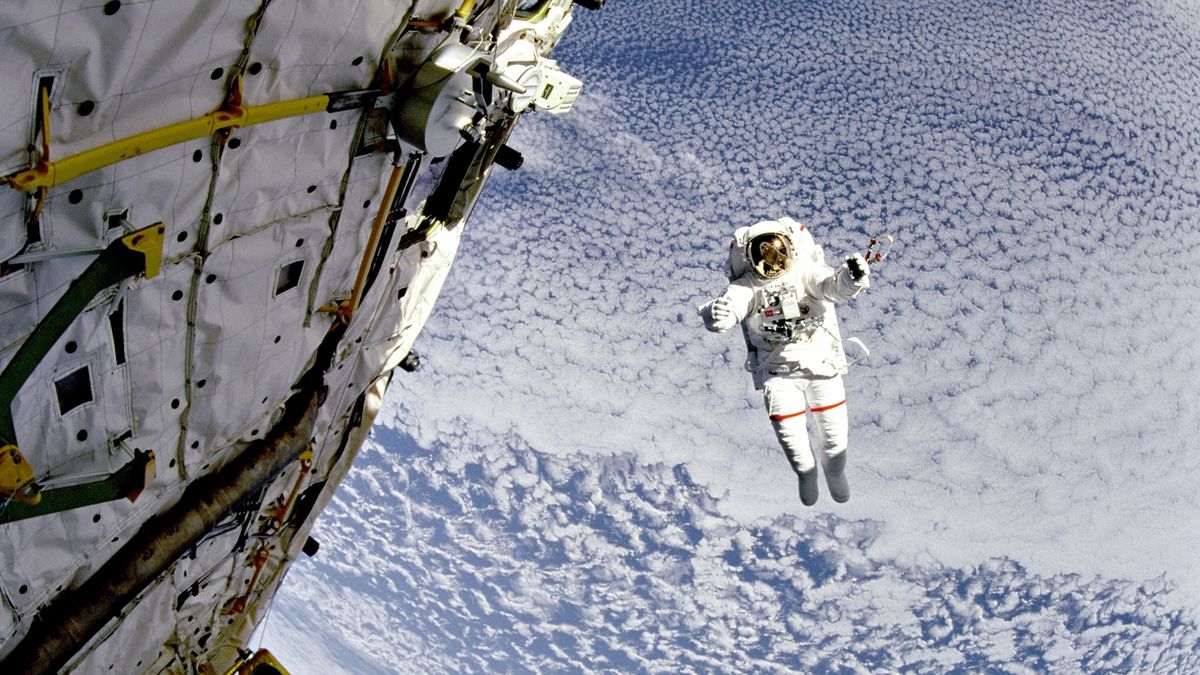
A NASA astronaut testing equipment on a spacewalk outside the International Space Station.
(Image credit: NASA)
Stranded Starliner astronauts Butch Wilmore and Suni Williams finally have a return date to head back to Earth, and it's a few weeks earlier than previously expected.
NASA announced Tuesday (Feb. 11) that the two astronauts, who hitched a ride to the International Space Station (ISS) on a Boeing Starliner spacecraft last June, will head home on a SpaceX Dragon capsule that will leave Earth with the ISS Crew-10 on Wednesday, March 12. After a few days' handover period, Williams and Wilmore will leave the ISS with the rest of the Crew-9 mission, after having spent about 250 consecutive days in orbit.
NASA's Boeing Starliner astronauts Butch Wilmore and Sunita Williams will now return to Earth on a SpaceX Dragon capsule in February 2025.
(Image credit: NASA)
Williams and Wilmore were initially meant to spend about a week in space, but problems with the propulsion and helium systems on their Boeing Starliner led NASA to return the capsule to Earth empty after three months of troubleshooting couldn't resolve the issues. The capsule ended up landing safely in New Mexico on Sept. 7, 2024. However, a watchdog report just released by the Aerospace Safety Advisory Panel found that new thruster problems did appear during the descent. In October, The Wall Street Journal reported that Boeing is in the early stages of considering a sale of its space business, including Starliner.
In December 2024, NASA announced that Williams and Wilmore would return on a newly designed SpaceX Dragon capsule in late March 2025 at the earliest. But now, the astronauts and the rest of Crew-9 will come home on a previously flown Dragon capsule, the Endurance. This will allow the swap between Crew-9 and Crew-10 to happen sooner while SpaceX continues to finalize the interior and final integration of the new Dragon capsule, according to NASA.
Along with Wilmore and Williams, astronaut Nick Hague and Roscosmos cosmonaut Aleksandr Gorbunov will leave the ISS in March. They'll be replaced by NASA astronauts Anne McClain and Nichole Ayers, Japan Aerospace Exploration Agency astronaut Takuya Onishi, and Roscosmos cosmonaut Kirill Peskov. The precise day of the return will be determined by weather conditions near Florida, where Endurance will splash down.
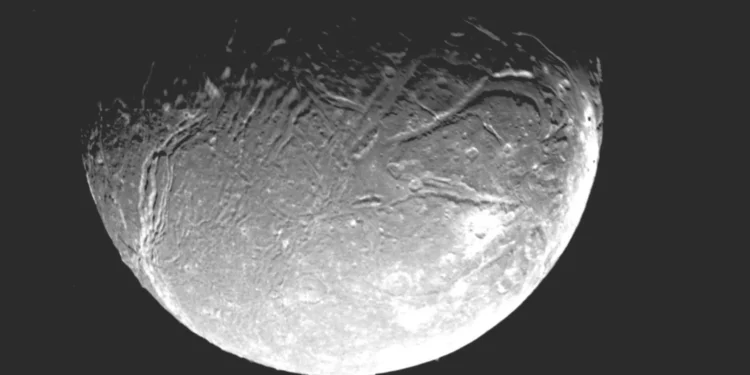
Astronomers have long suspected that several moons in our Solar System, including those orbiting Jupiter, Saturn,Uranus, and Neptune, may conceal vast liquid oceans beneath their frozen crusts. Now, new research suggests that Uranus’s moon Ariel might be offering a rare glimpse into its hidden depths.
Cracks in Ariel’s Surface May Expose Its Interior
Deep chasms mark Ariel’s surface, and researchers believe these fractures could be transporting material from the moon’s interior to the surface. Among the substances detected is carbon dioxide ice, which suggests the possibility of chemical processes occurring below the crust. If these deposits originated from within Ariel, they may provide a unique window into the moon’s subsurface environment—without the need for complex drilling missions.
“If we’re right, these medial grooves are probably the best candidates for sourcing those carbon oxide deposits and uncovering more details about the moon’s interior,” says planetary geologist Chloe Beddingfield of Johns Hopkins University Applied Physics Laboratory.
Unlike other surface features, these chasms appear to be the only structures facilitating material movement from Ariel’s interior, making them particularly valuable for future study.
Scientists analyzing Ariel’s terrain have found striking similarities to a geological process observed on Earth known as spreading. This occurs along volcanic ridges where the seafloor slowly separates, allowing molten material to rise and form new crust.
On Ariel, a similar process could be unfolding as warmer material from the moon’s interior forces its way up, splitting the icy surface before filling the cracks. Researchers tested this theory by digitally aligning the two sides of Ariel’s chasms as if “zipping them back up,” and found a perfect match. The presence of parallel grooves along some chasm floors further supports the idea that material has been accumulating over time through repeated geological activity.
Could a Hidden Ocean Be Driving These Changes?
Another factor influencing Ariel’s surface could be gravitational interactions between Uranus and its moons. These interactions, known as orbital resonance, create internal heating that can melt ice and sustain liquid water beneath the crust.
Recent observations from the James Webb Space Telescope (JWST) provide compelling evidence that a hidden ocean may exist beneath Ariel’s surface. If so, this ocean might be responsible for the carbon dioxide deposits seen within the moon’s deep chasms. However, current data is insufficient to determine the exact size and depth of this possible ocean.
“The size of Ariel’s possible ocean and its depth beneath the surface can only be estimated, but it may be too isolated to interact with spreading centers,” Beddingfield explains.
Despite significant advancements in planetary exploration, much about Ariel remains unknown. While the Voyager 2 spacecraft provided valuable data during its 1986 flyby, it lacked the instruments needed to map the precise distribution of ices on the moon’s surface. Future missions with more advanced sensors will be crucial in determining whether Ariel is truly home to a hidden ocean—and what that might mean for our understanding of ocean worlds beyond Earth.
RELATED VIDEOS
Moons of Planet Uranus - Mind blowing facts revealed
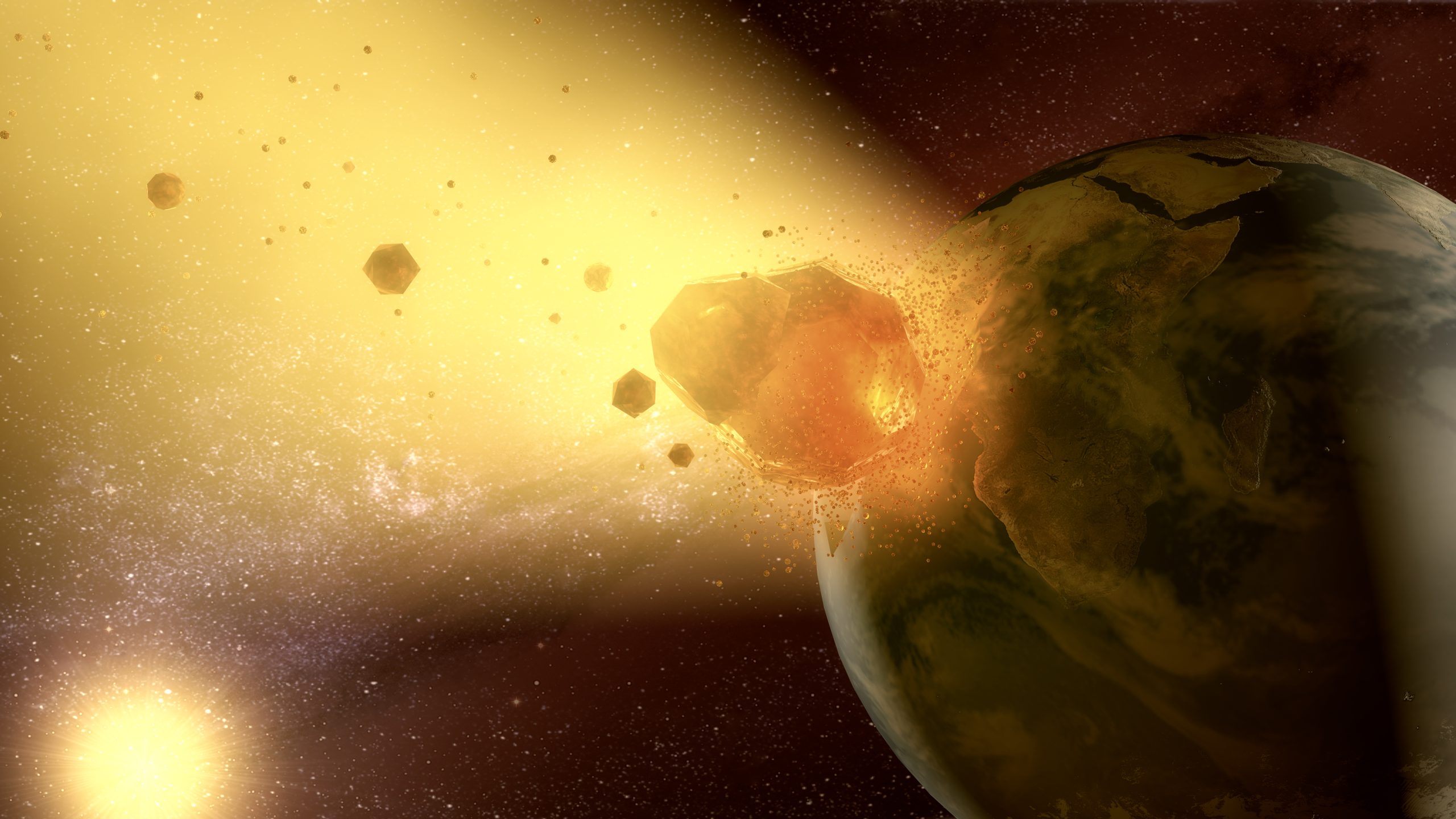
While thousands of asteroids pass harmlessly through space, a select few have orbits that bring them dangerously close to Earth. These objects, classified as potentially hazardous asteroids (PHAs), are actively monitored by NASA, ESA, and other space agencies. Though the probability of impact remains low for most of them, even a small chance is enough to warrant continuous tracking. Here are the five most dangerous asteroids that could collide with Earth and are currently being monitored.
1. 2024 YR4
Potential Impact Date: December 22, 2032
Estimated Size: 40–90 meters
Impact Probability: 1 in 43 (2.3%)
Energy Release Upon Impact: Equivalent to 8 megatons of TNT
Discovered in late 2024, 2024 YR4 is currently the most concerning asteroid on record due to its high impact probability. The latest NASA observations indicate a 2.3% chance of collision in 2032—which translates to 1 in 43 odds.
If 2024 YR4 were to strike Earth, it could cause severe regional devastation, releasing an explosion about 500 times stronger than the Hiroshima bomb. The potential impact zone, known as the “risk corridor,” stretches across the Pacific Ocean, South America, the Atlantic, Africa, and parts of Asia.
Although further tracking will likely lower the impact probability, 2024 YR4 is a top priority for planetary defense experts.
Energy Release Upon Impact: Equivalent to 1.4 billion tons of TNT
Bennu is one of the most well-studied potentially hazardous asteroids, thanks to NASA’s OSIRIS-REx mission, which returned samples in 2023.
Although the impact probability is low, a collision would be catastrophic—releasing enough energy to cause continent-wide destruction and severe climate disruptions. NASA scientists continue to monitor Bennu to determine if future deflection strategies will be necessary.
3. 1950 DA
Potential Impact Date: March 16, 2880
Estimated Size:1,300 meters
Impact Probability: 1 in 34,500 (0.0029%)
Energy Release Upon Impact: Equivalent to 75 billion tons of TNT
1950 DA is a massive asteroid that, despite its low impact probability, remains a serious long-term threat. If it were to hit Earth, it would cause global devastation—triggering tsunamis, firestorms, and potentially a planet-wide climate crisis.
Although the impact risk is expected to decrease with further observations, planetary defense programs continue to monitor this colossal object.
4. 2023 VD3
Potential Impact Date: November 8, 2034
Estimated Size:11–24 meters
Impact Probability: 1 in 387 (0.26%)
Energy Release Upon Impact: Comparable to the Chelyabinsk meteor event
Although 2023 VD3 is much smaller than the other asteroids on this list, its relatively high impact probability makes it a major concern. With a 1 in 387 chance of impact in 2034, it has one of the highest statistical risks currently known.
While it wouldn’t cause a global disaster, an asteroid of this size could explode in the atmosphere, producing a shockwave strong enough to damage buildings and injure thousands—similar to the Chelyabinsk event in 2013, where a 20-meter asteroid caused widespread damage.
Further observations will determine whether 2023 VD3 will safely pass Earth or require further attention.
5. 1979 XB
Potential Impact Date: December 14, 2113
Estimated Size:400–900 meters
Impact Probability: 1 in 1.8 million (0.000055%)
Energy Release Upon Impact: Equivalent to 30 billion tons of TNT
First observed in 1979, 1979 XB is one of the largest asteroids on the risk list. Because of its size, a collision with Earth would have severe global consequences, similar to the asteroid that wiped out the dinosaurs.
However, 1979 XB is classified as a lost asteroid, meaning its exact orbit is uncertain. Scientists are working to relocate it and refine its trajectory to confirm whether it poses a real long-term risk.
Can We Stop an Asteroid Impact?
While none of these asteroids pose an imminent danger, scientists are working on planetary defense strategies to ensure Earth’s safety.
NASA’s DART Mission– Successfully altered an asteroid’s trajectory in 2022, proving that impact deflection is possible.
Upcoming Space Missions– Future missions will explore gravity tractors, nuclear deflection, and other techniques to steer dangerous asteroids away from Earth.
Advanced Tracking Systems – Telescopes like ATLAS, Pan-STARRS, and the Vera C. Rubin Observatory are improving our ability to detect threats decades in advance.
The likelihood of a catastrophic asteroid impact remains low, but continuous tracking is critical for ensuring early detection and possible deflection efforts.
Among all the asteroids being monitored, 2024 YR4 is the most immediate concern due to its relatively high impact probability in 2032. While ongoing observations will likely refine its trajectory, planetary defense experts are paying close attention—ensuring that if an asteroid ever truly threatens Earth, we’ll be ready.
RELATED VIDEOS
Top 10 Most Dangerous Asteroids That Could Hit Earth!
Earth’s Greatest Threat? Meet the Most Dangerous ASTEROIDS Lurking in Space!
A Blown-Glass Structure Could House Astronauts on the Moon
Humanity will eventually need somewhere to live on the Moon. While aesthetics might not be the primary consideration when deciding what kind of habitat to build, it sure doesn’t hurt. The more pleasing the look of the habitat, the better, but ultimately, the functionality will determine whether or not it will be built. Dr. Martin Bermudez thinks he found a sweet synergy that was both functional and aesthetically pleasing with his design for a spherical lunar habitat made out of blown glass. NASA apparently agrees there’s potential there, as he recently received a NASA Institute for Advanced Concepts (NIAC) Phase I grant to flesh out the concept further.
Bermudez’s vision’s artistic design looks like something out of an Arthur C. Clarke novel: a glass sphere rising off the lunar surface that could potentially contain living and work areas for dozens of people. His firm, Skyeports, is founded on creating these blown glass structures in space.
The design has some challenges, as Dr. Bermudez discusses in an interview with Fraser. First is how to build this thing. It’s far too large to ship in any conventional lunar lander. However, there’s also no air on the Moon to use as the blown gas to create the spherical shape. Dr. Bermudez plans to utilize argon, which would initially be shipped up from Earth to fill the sphere. Argon has several advantages in that it’s a noble gas and not very reactive, so it’s unlikely to explode in the furnace while the glass is blown.
Video animation showing the blown glass concept. Credit – Skyeports YouTube Channel
Surprisingly, the lack of outside air pressure actually makes it easier to form a sphere than it would be on Earth since less pressure would be necessary to expand the sphere outwards. There are some nuances in the glass as well, with it being more like a glass lattice with embedded titanium or aluminum to make it stronger. Specific kinds of glass, such as borosilicate glass, could potentially add to the strength of the glass itself.
Most of the materials required to create such a structure could already be found on the lunar surface. Lunar regolith is full of the raw building materials required to make the structure work. Some of it has already been blasted into glass-like structures called agglutinates when micrometeoroids hit the lunar surface.
Those micrometeoroid impacts pose another risk to the glass sphere. Dr. Bermudez suggests having multiple layers of glass protecting the habitat, each with a layer of argon between them, like modern-day double-glazed windows. He suggests that spinning the outer layer might also provide some advantage, as will the spherical shape itself, as the impact force will dissipate better into the structure than it would on a flat surface.
Fraser interviews Dr. Martin Bermudez, the PI of the new NIAC project.
Dr. Bermudez’s dreams don’t stop at the Moon, though. He suggests such a glass-blown structure could be useful on Mars or asteroids, where the microgravity would make it even easier to create these structures. On Mars, such a habitat might be limited to the top of Olympus Mons, where the atmosphere is thinner, and there isn’t as much wind and dust that could erode away the outer layers.
Many use cases exist for a structure like this, though many technical challenges remain. NIAC is the place for novel ideas that could potentially impact space exploration, and this one certainly fits that bill. As Dr. Bermudez works through de-risking his design, we get closer than ever to a future of aesthetically pleasing habitats on the Moon and everywhere else in the solar system.
Image of the most recent Orientale basin geologic map at 1:200,000-scale, which improves upon past geologic maps of the region that were 1:5,000,000-scale. The project focused on impact melt (depicted in red), which was created from the extreme heat of the high-speed impact and has been preserved for potentially billions of years. The stars represent potential landing sites for future sample return missions that scientists can analyze back on Earth to determine the absolute age of Oriental basin.
How can a geologic map of a lunar impact crater created billions of years ago help future human and robotic missions to the lunar surface? This is what a recent study published in The Planetary Science Journal hopes to address as an international team of researchers produced arguably the most in-depth, comprehensive, and highest resolution geologic maps of Orientale basin, which is one of the largest and oldest geologic structures on the Moon. This study has the potential to help scientists, engineers, and mission planners develop sample return missions that could place absolute ages on the Moon’s geology, resulting in better understanding the formation and evolution of our Moon and the Earth.
For the study, the researchers created a 1:200,000-scale geologic map of the Moon’s Orientale basin while focusing on identifying what are known as impact melt deposits, which are molten rocks created from a high-speed impact and intense heat that cooled and is now frozen in time, thus preserving its geologic record of when it was formed billions of years ago. The 1:200,000-scale means the map is 200,000 times smaller than in real life. Additionally, one pixel on the geologic map is equal to 100 meters, or approximately the size of an American gridiron football field, which improves upon previous Orientale basin geologic maps that were created at 1:5,000,000-scale.
“We chose to map Oriental basin because it’s simultaneously old and young,” said Dr. Kirby Runyon, who is a Research Scientist at the Planetary Science Institute and lead author of the study. “We think it’s about 3.8 billion years old, which is young enough to still have its impact melt freshly exposed at the surface, yet old enough to have accumulated large impact craters on top of it as well, complicating the picture. We chose to map Orientale to test melt-identification strategies for older, more degraded impact basins whose ages we’d like to know.”
The goal of the study is to not only create an improved geologic map of Orientale basin, but to provide a foundation for future missions to potentially obtain surface samples of the impact melt and return them to Earth for analysis. Such analyses would reveal absolute ages of the impact melt through radiometric dating since these samples have been frozen in time for potentially billions of years. These results could help scientists unravel the Earth’s impact history, as both the Earth and Moon were potentially formed around the same period.
Along with the targeted impact melt, the team successfully identified and mapped a myriad of geologic features within Orientale basin as part of the new geologic map, including smaller craters within Orientale, fractures, fault lines, calderas, crater ejecta, and mare (volcanic basalt deposits), while also constructing a top-to-bottom map of Orientale basin, also called a stratigraphic map, that shows the most recent layers on top with the oldest layers on the bottom.
Image of the most recent Orientale basin geologic map at 1:200,000-scale, which improves upon past geologic maps of the region that were 1:5,000,000-scale. The project focused on impact melt (depicted in red), which was created from the extreme heat of the high-speed impact and has been preserved for potentially billions of years. The stars represent potential landing sites for future sample return missions that scientists can analyze back on Earth to determine the absolute age of Oriental basin. (Credit: Runyon et al.)
Unlike Earth, whose surface processes like plate tectonics and multitude of weather processes have erased impacts from billions of years ago, the preserved lunar geologic record could provide incredible insight into not only Earth’s impact history, but both how and when life first emerged on our planet. This is due to Orientale basin’s crater size and age, as such a large impact on Earth billions of years ago could have postponed or reset how and when life first emerged on the Earth.
“Giant impacts – like the one that formed Orientale – can vaporize an ocean and kill any life that had already started,” said Dr. Runyon. “Some recent modeling has shown that we probably never totally sterilized Earth during these big impacts, but we don’t know for sure. At some point our oceans could have been vaporized from impacts, then recondensed and rained out repeatedly. If that happened a number of times, it’s only after the last time that life could have gotten a foothold.”
While Orientale basin is one of the most striking features on the lunar surface, more than approximately 75 percent of it is not visible from Earth due to its location at the lunar nearside and farside boundary on the western limb of the Moon as observed from the Earth. Therefore, studying the Orientale basin is only possible with spacecraft. Despite this, Orientale basin was first suggested to be an impact crater during the 1960s when scientists at the University of Arizona’s Lunar and Planetary Laboratory used groundbreaking techniques to “image” the sides of the Moon not visible to Earth using telescopic images taken from the Earth.
While NASA is focused on returning astronauts to the lunar surface with its Artemis program with the goal of establishing a permanent human presence on the Moon, returning scientific samples from Orientale basin could provide enormous scientific benefits for helping us better understand both the age of the Moon but also how and when life emerged on Earth billions of years ago.
How will the Orientale basin geologic map help us better understand the Moon’s and Earth’s history in the coming years and decades? Only time will tell, and this is why we science!
Space Updates: A Lunar Map for the Best Places to Get Samples
Kans dat asteroïde aarde raakt in 2032 is bijna verdubbeld: moeten we ons zorgen maken om 2024 YR4?
Er is een kleine kans dat in 2032 een asteroïde zal inslaan op onze planeet. Tot die conclusie kwamen astronomen recent na het bestuderen van de baan van 2024 YR4 rond de zon. Volgens nieuwe berekeningen is die kans inmiddels net niet verdubbeld. Moeten we ons zorgen maken? Waar en hoe hard kan ze inslaan? En kunnen we daar iets tegen ondernemen? HLN-wetenschapsexpert Martijn Peters stelt gerust en licht de situatie toe.
Martijn Peters
Wat weten we over 2024 YR4?
Astronomen zagen 2024 YR4 voor het eerst vliegen op 27 december 2024 met het ‘Asteroid Terrestrial-impact Last Alert System’, ook bekend als de ATLAS-telescoop, in Chili. Dat gebeurde pas twee dagen nadat de asteroïde op 828,800 kilometer langs de aarde raasde, waarna ze de ontdekking officieel hebben gerapporteerd aan de nodige instanties.
De asteroïde is volgens eerste metingen zo’n 40 tot 90 meter groot en heeft een steenachtige samenstelling. Dat ze de grootte niet exact kunnen bepalen, komt doordat ze die inschatten met behulp van zonlicht dat de ruimterots weerkaatst. Het kan dus gaan om een asteroïde van 40 meter die veel licht reflecteert of eentje van 90 meter die weinig licht reflecteert, en alles daartussenin.
2024 YR4 is een zogenaamd ‘Near-Earth Object’ (NEO), een ruimterots waarvan de baan hem tot binnen een straal van 195 miljoen kilometer van de zon brengt. Zo’n omwenteling rond de zon kost 2024 YR4 net geen vier jaar. Maar zijn bekendheid heeft 2024 YR4 niet aan al deze eigenschappen te danken, maar vooral aan zijn opvallende stijging op de bekende Sentry lijst van NASA. Daarop kan je alle NEO’s terugvinden die een kans hebben om hier op aarde in te slaan.
2024 YR4 beweegt nu weg van ons en zal na april niet meer zichtbaar zijn met de meeste van onze telescopen
HLN-wetenschapsexpert Martijn Peters
Hoe groot is die kans momenteel?
Eerst hadden de astronomen berekend dat die kans op een inslag op 22 december 2032 zo’n 1,2 procent bedroeg. Maar nieuwe waarnemingen van 2024 YR4 en analyses hebben die nu bijgesteld naar 2,1 procent. Dat is net geen verdubbeling. Wetenschappers blijven de asteroïde dan ook nauwlettend in de gaten houden met verschillende telescopen van het International Asteroid Warning Network en zullen in maart en mei de James Webb Space Telescope op de ruimterots richten om hem beter te kunnen bestuderen. Zo willen ze te weten komen wat de exacte grootte is van 2024 YR4. Dat zal makkelijker gaan met het infraroodlicht dat de ruimtetelescoop kan waarnemen.
Hoe bereken je die kans?
De rode lijn bestaat uit 500 punten waarop de asteroïde de aarde zou kunnen passeren op 22 december 2032. Zo’n lijn kan links of rechts van de aarde liggen of onze planeet kruisen. Dat laatste is momenteel het geval. Dan kan je de kans van impact berekenen door de lengte te nemen van de rode lijn en te kijken hoeveel procent daarvan de breedte van de aarde is (zo’n 12.756 km). In dit geval is dat 2,1 procent.
Die stijging is normaal en op zich niets om wakker over te liggen. De kans op een inslag van een asteroïde neemt vaak eerst toe, om dan na bijkomende observaties snel tot nul te dalen. Want in het begin zit er nog veel onzekerheid op de precieze baan waarmee een asteroïde langs onze planeet vliegt. Dat venster kan verkleinen door bijkomende metingen, waardoor het percentage even toeneemt (als de aarde binnen dit venster blijft liggen). Maar als toekomstige metingen het venster verder verkleinen en daaruit blijkt dat de aarde erbuiten valt, dan kan de kans plots naar 0 procent zakken.
Of dat snel zal gebeuren, is nog maar de vraag. 2024 YR4 beweegt nu weg van ons en zal na april niet meer zichtbaar zijn met de meeste van onze telescopen. Het kan dus zijn dat de asteroïde al te ver weg is voor we een impact kunnen uitsluiten. Dan is het wachten tot juni 2028 voor ze terug in beeld komt.
De score voor impactrisico is relatief laag, maar is wel het tweede hoogste cijfer ooit toegekend aan een asteroïde
HLN-wetenschapsexpert Martijn Peters
Stel dat de kans aanwezig blijft, hoe gevaarlijk is dat dan voor ons?
Daarvoor kunnen we kijken naar twee schalen waarop wetenschappers de asteroïde indelen en die ons iets leren over het inslagrisico. Dit zijn de ‘Palermo Technical Impact Hazard Scale’ en de ‘Torino Impact Hazard Scale’. Op die eerste heeft 2024 YR4 een score van - 0,34 gekregen en op de tweede een score van 3.
Een negatieve score op de Palermo Technical Impact Hazard Scale betekent dat de impactdreiging van 2024 YR4 lager is dan het gemiddelde achtergrondrisico. Daarmee bedoelen astronomen het risico dat een ruimteobject van die grootte inslaat op aarde. Een waarde lager dan - 2 betekent zoveel als ‘geen zorgen’. Ligt de waarde tussen - 2 en 0 betekent ‘deze asteroïde moeten we in de gaten houden’. Bij een waarde tussen 0 en +2 ‘is er reden voor bezorgdheid’ en een waarde hoger dan +2 geeft ‘kans op inslag is 100 keer hoger dan gemiddeld, alle hens aan dek’.
De Torino Impact Hazard Scale gaat tot 10. Drie valt onder een code geel. Dat betekent dat het risico groot genoeg is om de aandacht te vereisen van de wetenschappelijke instanties, maar dat het geen alarmerende situatie betreft. Daarnaast heb je ook code oranje of rood. Die staan voor een echte bedreiging of een zekere inslag. De score van 3 is relatief laag, maar is wel het tweede hoogste cijfer ooit toegekend aan een asteroïde.
De asteroïde Apophis haalde begin jaren 2000 even een score van 4 (met een impactkans van bijna 3 procent), maar verder onderzoek wees uit dat er geen gevaar dreigde in 2029. Mogelijk herhaalt dit scenario zich voor 22 december 2032 en wordt dit een dag zoals een ander.
De impact is zes keer krachtiger dan de zwaarste bom in het arsenaal van de VS
HLN-wetenschapsexpert Martijn Peters
Hoe gaan we hier internationaal mee om?
Omdat de asteroïde groter is dan 50 meter en een impactkans heeft van meer dan 1 procent binnen de komende 50 jaar, zijn de twee door de VN goedgekeurde asteroïdereactiegroepen in gang geschoten. Dat zijn het ‘International Asteroid Warning Network’ (IAWN) en de ‘Space Mission Planning Advisory Group’ (SMPAG). Dit doen ze enkel als die drempels overschreden zijn. Het IAWN staat onder meer in voor de internationale coördinatie van alle organisaties die de baan en de eigenschappen van de asteroïde verder gaan bestuderen. Het SMPAG kijkt dan weer hoe we die bedreiging moeten onschadelijk maken indien nodig.
Waar kan ze inslaan op aarde en wat zijn dan de gevolgen?
Asteroïde 2024 YR4 valt niet onder de zogenaamde ‘mogelijk-gevaarlijk-objecten’. Daarvoor is ze te klein, aangezien die minstens 140 meter in diameter moeten zijn.
Dat betekent echter niet dat ze, moest ze op aarde terechtkomen, geen gevaar zou vormen. Want als de asteroïde in bewoond gebied valt met een snelheid van 17,32 km/s en een stad treft, dan is de impact equivalent aan 7,6 megaton TNT. Ter vergelijking, de atoombom op Hiroshima was 0,015 megaton en de krachtigste bom in het arsenaal van de Verenigde Staten (B83) is 1,2 megaton.
Een asteroïde van die grootte is nog niet zo lang geleden al eens hier op aarde terechtgekomen. Op 30 juni in 1908 vond de krachtigste explosie van de 20ste eeuw plaats in Tunguska boven de Siberische vlaktes. Deze asteroïde was naar schatting zo’n 50 à 100 meter groot en veroorzaakte enorm veel schade, gelukkig in onbewoonbaar gebied. Over een oppervlakte van 2.000 vierkante kilometer, ruim twee keer New York, lagen vrijwel alle bomen tegen de grond nadat de asteroïde in de lucht was ontploft.
Volgens voorlopige berekeningen lopen wij in Europa geen gevaar. De Duitse astronoom Daniel Bamberger (Northolt Branch Observatories) heeft de huidige observaties gebruikt om de mogelijke locatie van impact te beperken: dat zou ergens op een lange lijn zijn die zich uitstrekt van de Stille Oceaan voor de kust van Mexico, door Ecuador en noordelijk Zuid-Amerika, over de Atlantische Oceaan, door centraal Afrika (van Kenia tot Somalië) en dan dwars door naar noordelijk India. Dit beslaat grote stukken oceaan, maar ook bevolkte gebieden en enkele grote steden.
Wat kunnen we doen als ze effectief zou inslaan?
Het probleem is dat we nog niet echt een manier hebben om onszelf tegen zo’n asteroïde te verdedigen. Wetenschappers werken volop aan de ontwikkeling van nieuwe manieren om zo’n botsing te kunnen vermijden. Meestal door de baan van de asteroïde of komeet te veranderen. Dat kan bijvoorbeeld door ertegen te vliegen met een ruimtetuig, zoals recent werd getest met de DART missie, of met een nucleair explosief. Onze enige kans om dit te doen zou dan waarschijnlijk in 2028 zijn als 2024 YR4 opnieuw langsvliegt.
Als we tegen dan geen manier hebben gevonden om een impact te vermijden, zal het de enige realistische optie wellicht zijn om iedereen te evacueren in de gebieden waar de ruimterots kan inslaan.
NASA’s Webb Reveals the Ancient Surfaces of Trans-Neptunian Objects
Trans-Neptunian objects (TNOs) are icy bodies ranging in size from Pluto and Eris (dwarf planets with diameters of about 1,500 miles) down to tens of miles (Arrokoth) and even smaller. TNOs are on orbits comparable in size, or even much larger than, that of Neptune. The existence of TNOs was postulated by Kenneth Edgeworth, and later by Gerard Kuiper, in the 1950s; the region of space occupied by TNOs is usually referred to as the Kuiper Belt, and TNOs themselves, sometimes referred to as Kuiper Belt objects (KBOs).
The orbits of TNOs are extremely diverse but fall into groupings that reflect the outward migration of Uranus and Neptune early in the history of the formation of the solar system. As such, TNOs hold the keys to understanding that early history. However, it took NASA’s James Webb Space Telescope and its unparalleled ability to study the materials on the surfaces of TNOs to fully begin to grasp what they can tell us about our origins. Here Bryan Holler and John Stansberry from the Space Telescope Science Institute (STScI) in Baltimore describe how Webb is expanding our knowledge of these objects.
Images of the trans-Neptunian objects (TNOs) Pluto [left] and Arrokoth [right], the primary flyby targets of NASA’s New Horizons spacecraft in 2015 and 2019. NASA’s James Webb Space Telescope is capable of obtaining observations for in-depth studies of a wide range of TNOs that both complement, and go beyond what was learned by New Horizons. (Image credits: NASA/SwRI/JHU-APL)Pluto was the first TNO discovered, in 1930 by Clyde Tombaugh at the Lowell Observatory. It wasn’t until 1992 that the second TNO (1992 QB1, now named Albion) was discovered, by Dave Jewitt at the University of California, Los Angeles, and Jane Luu at the Massachusetts Institute of Technology. Now over 5,000 TNOs have been identified. The orbits of TNOs reveal an “architecture” that records the history of how the orbits of Jupiter, Saturn, Uranus, and Neptune evolved early in solar system history. Computer models indicate that as Uranus and Neptune migrated outward into the primordial disk of TNOs, they ejected many objects and shepherded the remaining TNOs onto the orbits we see today. These present-day orbits are classified based on their orbital distances, eccentricity (ellipticity of the orbit), and inclination (tilt with respect to the plane that the planets orbit in). Of particular interest are objects on dynamically “cold” classical orbits, with very low inclination and eccentricity. The computer models indicate that these cold-classical objects still occupy their primordial orbits, and so represent an undisturbed remnant of the original protoplanetary disk. These TNOs truly represent the pristine building blocks of the planets, and one of them, Arrokoth, was visited and studied up-close by the New Horizons spacecraft in January 2019.
Of the TNOs whose orbits were perturbed during giant-planet migration, it is difficult to trace them back to where they formed. Yet it is only by studying the composition of individual TNOs that we can hope to map out the composition of the primordial outer disk. TNOs are on very distant orbits from the Sun, and are very cold, below minus 280 degrees Fahrenheit (about minus 170 degrees Celsius), so their surfaces could provide information about the original composition of planetesimals within the disk. Webb is the first observatory able to provide detailed compositional information about typical TNOs (with diameters less than about 500 miles, or 800 kilometers) because of its large primary mirror and highly sensitive instruments. In particular, the Near Infrared Spectrograph (NIRSpec) has for the first time revealed TNO compositions in exquisite detail.
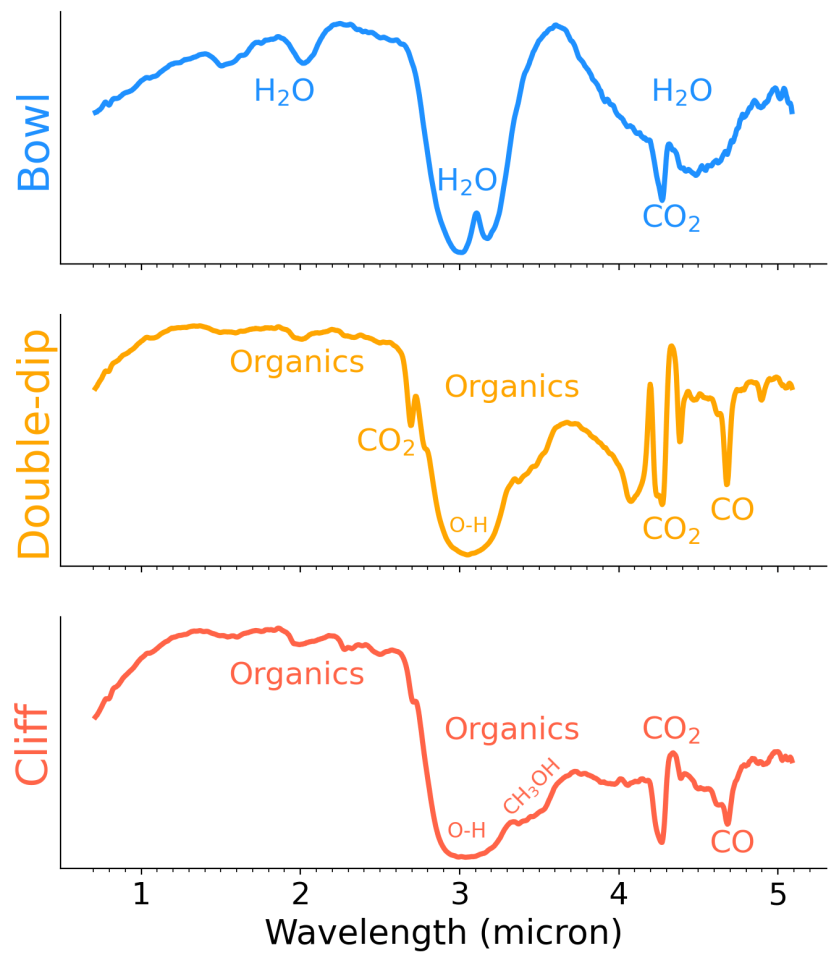
Spectra for the three TNO spectral classes identified for the first time using data from NASA’s James Webb Space Telescope. The heavy solid line in each panel is the average of over a dozen TNO spectra within each class. Prominent features in each spectrum are highlighted and/or labeled with the name of the molecule, or class of materials, responsible for absorbing at those wavelengths. Credit: Adapted from Pinilla-Alonso et al. 2024.
Webb’s NIRSpec divides light at wavelengths between about 1 and 5 microns into hundreds or thousands of individual colors. The relative brightness of those colors as a function of wavelength is a spectrum. Different materials exhibit different spectra that help identify the composition of the object observed. Because the TNOs formed in the cold, outer portions of the protoplanetary disk, it has long been expected that they would have surfaces dominated by ices of molecules that are gases or liquids at Earth’s surface, e.g. water (H2O), carbon dioxide (CO2), nitrogen (N2), and methane (CH4), among others. Further, radiation from the Sun and outside the solar system alters the chemistry, creating new, more complex hydrocarbon (organic) molecules such as methanol (CH3OH), acetylene (C2H2), and ethane (C2H6). Webb data has confirmed this, but in unexpected ways, and in unprecedented detail.
Within the first two years of science operations, Webb has taken high-quality spectra of over 75 TNOs and provided the first comprehensive look at what they are made of, including nearly 60 objects from the Large Cycle 1 program called “DiSCo-TNOs” (program ID #2418, PI: Noemí Pinilla-Alonso). The major result from the large dataset from the DiSCo-TNOs program is the identification of three spectral classes, which is the first evidence for distinct surface compositions, that was completely unexpected based on earlier studies. These classifications are named based on the spectral shape in the 2.5–4 micron region, with the deepest band centered at 3.0 microns generated by molecules that contain an oxygen-hydrogen bond, such as water. Bowl-type spectra are dominated by the absorption features of water ice, with some carbon dioxide ice, and indications of silicate-rich dust. Double-dip spectra have absorption features due to complex organic molecules, carbon dioxide, and carbon monoxide ices. Cliff spectra have even more complex organic materials and carbon dioxide than Double-dips, and also include features due to CH3OH. Double-dip spectra indicate very abundant and pure carbon dioxide ice, as evidenced by the two reflectance peaks (never observed outside of a laboratory) bounding the 4.27 micron band. The three spectral types are also distinct in their color at the shortest visible wavelengths, with bowls being least red, double-dips intermediate, and cliffs reddest.
The DiSCo-TNOs team hypothesizes in Pinilla-Alonso et al. (2024) that these different spectral types are the result of higher temperatures closer to the Sun, and colder temperatures farther out. Specifically, the Bowl types formed closer to the Sun and were subject to higher temperatures that essentially baked off the carbon dioxide and methane. These compounds were more stable on Double-dips and Cliffs, which formed farther out. An important clue leading to that hypothesis is that all of the objects on undisturbed cold-classical orbits are Cliffs. TNOs on other orbits include objects from all three compositional types, as would be expected due to the dynamical reshuffling as Neptune migrated outward, as described above.
Looking ahead, Webb continues to carry out a robust program of TNO observations each year, with new and exciting programs selected by the community for execution. Cycle 3 will see imaging and spectroscopy of a handful of TNOs and their satellites, including the first-ever spectral observations of the “extreme” TNOs, with orbits that take them well into interstellar space. Another program aims to circle back to targets observed in the first year of science operations to get an even more detailed look at the materials that led to the formation of TNOs in the protosolar nebula. Two other programs focus on imaging and spectroscopy of TNO binary systems to better understand the origins of TNO satellites, either via giant impacts or co-formation via gravitational collapse. Who knows what new ideas and exciting discoveries the next year will bring?
Editor’s Note:These findings have been published in Nature Astronomy.
By CHRIS MELORE ASSISTANT SCIENCE EDITOR FOR DAILYMAIL.COM
A 2.8 magnitude earthquake that rattled Las Vegas Monday hit just miles from the secretive US Air Force base Area 51.
The United States Geological Survey (USGS) says the quake struck 32 miles southeast of Beatty that sits about 60 miles from the mysterious military facility.
Area 51 has become a cultural phenomenon thanks to decades of conspiracy theories connecting the base to UFOs, aliens, and experimental aircraft testing.
The announcement of a large tremor right on the base's doorstep will likely ramp up the speculation of what might be happening underground at this top secret facility - even if this was just an ordinary earthquake.
The small earthquake was detected at 2:11 a.m. PST Monday.
Although an earthquake above 2.5 in magnitude can often be felt and cause minor damage, there have not been any reports of injuries due to the quake.
Nevada is one of the most seismically active states in the country, according to the National Parks Service.
Officials say it ranks third after California and Alaska because of the state's many faults, found at the base of almost every mountain range.
The USGS reported that a 2.8 magnitude earthquake struck Nevada on February 10, roughly 50 south of the mysterious US Air Force base Area 51.
The 2.8 magnitude quake near Area 51 - and less than 80 miles from Las Vegas - wasn't even the largest seismic event in Nevada in recent months.
A 5.7 magnitude earthquake shook northern Nevada on December 9, 2024.
It was the largest quake since May 15, 2020, when a 6.5 magnitude earthquake struck the Monte Cristo Range.
Nevada experiences thousands of microearthquakes each year, according to Shakeout.
'Earthquakes in Western Nevada are caused by the extension that is pulling Nevada apart and wrenching created as the Sierra Nevada is pulled to the north because it is caught up in the Pacific-North America plate motion,' the site explains.
If you're hoping to ask someone at the secretive military base about the earthquake, think again.
Area 51 is not accessible by the public and is even off-limits to regular military air traffic.
In fact, a Google map of the area where Monday's earthquake took place will show you nothing at all - no base or mention of the Air Force's presence in the Nevada desert.
Above, a satellite view of Area 51. The United States Air Force facility is a remote detachment of Edwards Air Force Base, within the Nevada Test and Training Range.
However, some believe the theories about Area 51 are true and say the details will soon become public.
Jim Goodall, an aviation journalist with firsthand sources who worked at the classified base, gave an interview in the mid-1990s where he discussed top-secret technologies at the site that 'would make George Lucas envious.'
'One gentleman spent 12 of his 30 years in black programs at Groom Lake [as Area 51 is also known],' Goodall explained in a recently unearthed documentary interview.
'I asked him, 'Can you really tell me what's happening out there?'' he continued.
'And he said, 'Well, there's a lot of things going on there that I won't be able to tell you until the year 2025.''
The mention of '2025' could refer to an executive order by then-President Bill Clinton, which established a 25-year timer for the 'automatic declassification' of government secrets.
Recently, secret military testing has been a hot topic throughout the US as countless people have spotted mysterious drone swarms over their neighborhoods.
In November, scores of witnesses revealed footage of eerie 'drone' UFO swarms buzzing key US military sites, including 'a big fireball in a cube' over Area 51.
The Las Vegas-area witness who reported this bizarre cube-shaped object claims to have observed similar strange aerial lights in the area 'over 100 times' since June 2020, adding that these craft always seem to head towards the top secret base.
One Las Vegas witness, who documented their own months-long experience with the odd lights near Area 51 on Sept. 4, 2024, hoped coming forward might end their own confusion: 'Just wondering what it all is.' Above, a still from that witness's video, dubbed Enigma #298748
'I lived under a commercial flight pattern near the airport, so I'm very familiar with what airplanes and conventional aircraft look and behave like,' one observer to a September 13, 2022 case (above) stated. 'This was not conventional,' they said of the 'very bright light.'
A Google map search of the area where the February 10 earthquake took place shows a blank space where Area 51 should be.
In 2022, former President Bill Clinton told James Cordon he sent federal agents to Area 51 to find out if aliens were hiding there.
'When I was president, and I had a Chief of Staff John Podesta - he loved science fiction - he made every attempt to find out everything about Roswell. And we also sent people to Area 51, we wanted to make sure there were no aliens,' the 42nd president said.
When Cordon excitedly asked the former president who exactly he sent to the coveted area, he grabbed the late-night host's shoulder and said: 'Oh, if I told you that.'
However, Clinton ended up revealing that, while the alien hunt was a disappointment, the base was used as a research and test ground for stealth aircraft.
'I got to find out how we're going to deal with this, because [Area 51] is where we do a lot our invisibility research in terms of technology, like how do we fly airplanes that aren't pick up by radar and all that,' he said. 'So that's why they're so secretive.'
As for the current commander-in-chief, President Donald Trump noted during the 2024 campaign that he isn't really a conspiracy theorist when it comes to the famous base.
Trump said during his interview on the Joe Rogan podcast, 'I have to be honest. I have never been a believer. I have people that Area 51 or whatever it is. I think it's the number one tourist attraction in the whole country or something. Area 51 in Las Vegas.'
Being wiped out by a massive space rock that hits Earth at thousands of miles an hour may sound like a plot worthy of a Hollywood film.
But a newly-discovered space rock, called 2024 YR4, really is heading our way.
Only discovered at the end of last year, 2024 YR4 is somewhere between 130 to 300 ft (40 to 90 metres) in diameter – so likely bigger than the Statue of Liberty.
Dr Robin George Andrews, a volcanologist and author based in London, points out that we 'have less than eight years to potentially deal with it'.
'You need 10 years or more to build, plan and execute an asteroid deflection mission,' he said.
'We don't have much time.'
Scientists currently predict that the 90-metre-wide (300 feet) asteroid 2024 YR4 has a one in 43 chance of hitting Earth in 2032. If it does it would cause widespread damage to a populated area
Dr Robin George Andrews, a volcanologist and author based in London, says 'we might not be able to stop 2024 YR4'
NASA's Double Asteroid Redirection Test (DART) mission, surely one of its greatest feats ever, demonstrated how a space rock could potentially be thrown off a collision course with Earth by crashing a spacecraft into it.
The DART spacecraft launched from California in November 2021 and completed its 10-month journey when it hit the asteroid Dimorphos on September 26, 2022.
Dimorphos, around 560 feet in diameter, orbits a larger asteroid called Didymos, both of which are around 6.8 million miles away from our planet.
However, neither Dimorphos nor its Didymos posed any danger to Earth; instead, DART was rehearsal of what may be required if a space rock does one day threaten our planet.
Although he acknowledged DART 'worked wonders', Dr Andrews said we 'might not be able to stop 2024 YR4' in a similar way.
'It doesn't mean we can use kinetic impactors like it to deflect any asteroid whenever we want,' he said.
'So much could go wrong if we try and hit it with something like DART.'
On average, Earth is hit by a football pitch-sized rock every 5,000 years, and a civilisation-ending asteroid every one million years, according to NASA's Near-Earth Object Program
Already, NASA has reached a hugely-important milestone with the DART asteroid deflection mission. In September 2022, the DART spacecraft was intentionally crashed into Dimorphos, an asteroid 6.8 million miles away
The Dimorphos space rock is pictured here as seen by the DART spacecraft 11 seconds before impact
What is 2024 YR4?
2024 YR4 is a 'city killer' asteroid determined to have a low chance of impacting Earth on December 2, 2032.
It was first spotted in late December last year by astronomers at the NASA-funded Asteroid Terrestrial-impact Last Alert System station in Chile.
Since then, this rock has become a growing matter of concern as the probability of an impact rises.
When first spotted, NASA assigned the asteroid an impact probability of 1.2 per cent that it would hit Earth, but that has since increased to 2.3 per cent.
Most asteroids are not solid rock but 'rubble piles' – clusters of loose boulders, stones and sand held together by the weak mutual gravity of space.
At the moment, we don’t know the exact size of 2024 YR4, or even if it's a rubble pile asteroid too – but hitting rubble pile asteroids with a spacecraft like DART could potentially generate a cloud of debris that could head towards Earth anyway.
'Nobody wants to accidentally "disrupt" an asteroid, because those components can still head for Earth,' Dr Andrews said.
There's also the chance that a mammoth space effort akin to DART wouldn't even sufficiently alter the asteroid's path.
'With only a few years down the line, we could accidentally deflect it – but not enough to make it avoid the planet,' the expert added.
'Then, it still hits Earth, just somewhere else that wasn't going to be hit.'
He added: 'I'm not saying a kinetic impactor mission, or missions, couldn't work.
'But we don't have much time, and we don't have enough info about this rapidly fading asteroid to properly inform our planetary defense decisions yet.'
Asteroid 2024 YR4 is about the same size as the Tunguska asteroid, which caused the largest impact event in recorded history when it shot through Earth's atmosphere in 1908, flattening 830 square miles (2,150 square km) of forest (pictured)
It's worth remembering that 2024 YR4 has a 1-in-43 (2.3 per cent) chance of impacting Earth on December 2032.
Dr Andrews stressed 'the odds of an impact remain low', likening the situation to having 43 buttons in front of you and being asked to press one of them.
'I don’t think you should be concerned,' he said in an accompanying blog post.
'When more observations come in, it’s probable that the impact odds will plummet to a zero as the orbit of the asteroid is more precisely defined.'
If its point of impact is in the middle of a desert, or in the ocean, it will 'harm nobody', but if it hits a town or city, it will 'destroy much of it'.
On average, Earth is hit by a football pitch-sized rock every 5,000 years, and a civilisation-ending asteroid every one million years, according to NASA's Near-Earth Object Program.
Last year, a NASA report found we're poorly-prepared for an asteroid collision, even if we detected the object 14 years in advance.
Asteroid 2024 YR4 is thought to be at least the same size as the Tunguska asteroid – which had an estimated diameter of 130 feet, according to NASA.
Tunguska caused the largest impact event in recorded history when it shot through Earth's atmosphere in 1908, flattening 830 square miles (2,150 square km) of forest.
Many lost consciousness and at least three people passed away as a direct consequence of the Tunguska event, according to a 2019 study.
POTENTIAL METHODS FOR ELIMINATING THE THREAT OF AN ASTEROID
DART is one of many concepts of how to negate the threat of an asteroid that have been suggested over the years.
Multiple bumps
Scientists in California have been firing projectiles at meteorites to simulate the best methods of altering the course of an asteroid so that it wouldn't hit Earth.
According to the results so far, an asteroid like Bennu that is rich in carbon could need several small bumps to charge its course.
'These results indicate multiple successive impacts may be required to deflect rather than disrupt asteroids, particularly carbonaceous asteroids,' researchers said.
Nuke
Another idea, known simply as 'nuke', involves blowing up a nuclear explosive close to the asteroid.
However, this could create smaller but still potentially dangerous fragments of rock that could spin off in all directions, potentially towards Earth.
Ion Beam Deflection
With Ion Beam Deflection, plumes from a space probe's thrusters would be directed towards the asteroid to gently push on its surface over a wide area.
A thruster firing in the opposite direction would be needed to keep the spacecraft at a constant distance from the asteroid.
Gravity tractor
And yet another concept, gravity tractor, would deflect the asteroid without physically contacting it, but instead by using only its gravitational field to transmit a required impulse.
Professor Colin Snodgrass, an astronomer at the University of Edinburgh said: 'There have been a few concepts suggested, such as a ‘gravity tractor’ to slowly tow an asteroid away instead of pushing it with a kinetic impactor.
'But the kinetic impactor is definitely the simplest technology to use on the sort of timescale that is most likely to be of concern for this size of asteroid, i.e. years to decades warning time.'
RELATED VIDEOS
Asteroid 2024 YR4: Could It Hit Earth in 2032?
Asteroid 2024 YR4: Should You Be Worried?
Real Danger! Leading Scientists Warn of Imminent Asteroid 2024 YR4 Threat
Curiosity Rover Captures Stunning Martian Clouds Unlike Anything Seen Before
Stunnnig clouds on Mars.
Credit: NASA.
Introduction
The exploration of Mars has captivated humanity for decades, and the Curiosity Rover, a flagship mission of NASA's Mars Science Laboratory, has played a pivotal role in expanding our understanding of the Red Planet. Launched in 2011 and landing on Mars in August 2012, Curiosity has been equipped with a suite of scientific instruments designed to analyze the Martian environment, geology, and atmosphere. One of its most recent and intriguing discoveries involves the observation of Martian clouds, which have been described as "stunning" and "unlike anything seen before." This analysis will delve into the significance of these cloud formations, the technology behind their capture, and the broader implications for our understanding of Martian weather patterns and atmospheric processes.
NASA’s Curiosity Rover Captures Colorful Clouds Drifting Over Mars #curiosity #mars
The Importance of Studying Martian Clouds
Clouds are a fundamental component of any planetary atmosphere, playing a crucial role in weather systems, climate regulation, and the distribution of heat. On Earth, clouds form from water vapor, but on Mars, the situation is different. Martian clouds are primarily composed of carbon dioxide ice crystals and water ice. Studying these clouds can provide insights into the Martian climate, including temperature fluctuations, seasonal changes, and atmospheric dynamics.
Understanding Martian clouds is also vital for future human exploration. Weather conditions, including cloud formation, can significantly impact landing operations, surface activities, and the sustainability of life-support systems. By analyzing the clouds observed by the Curiosity Rover, scientists can develop more accurate models of Martian weather, thereby enhancing the safety and success of future missions.
Lee waves: Lee waves are a special type of cloud created by the wind encountering obstacles and build up on the ‘leeward‘ or downwind side. The geometries of the lee waves depend on the shape of the obstacles.
Credit: ESA/DLR/FU Berlin.
The Curiosity Rover's Instruments
The Curiosity Rover is equipped with a variety of scientific instruments that allow it to capture high-resolution images and analyze atmospheric components. The most relevant instruments for cloud observation include:
MastCam: This camera system captures high-definition images and videos of the Martian landscape and atmosphere. It operates in multiple wavelengths, enabling the examination of clouds in different light conditions.
ChemCam: While primarily designed for analyzing the composition of Martian rocks and soil, ChemCam can also provide data on atmospheric elements that contribute to cloud formation.
Rover Environmental Monitoring Station (REMS): This instrument continuously monitors atmospheric conditions, including temperature, humidity, and wind speed, which are essential for understanding cloud formation.
Dust Sensors: These sensors help to measure the amount of dust in the Martian atmosphere, which can influence cloud formation and behavior.
NASA Mars Science Laboratory (Curiosity Rover) Mission Animation [HDx1280]
Through these instruments, Curiosity has been able to capture unique images and data regarding cloud activity on Mars, revealing patterns and phenomena that scientists had previously only theorized.
Capturing the Clouds: A Technical Overview
The recent observations of Martian clouds by the Curiosity Rover have been made possible through a combination of advanced imaging techniques and careful mission planning.
Imaging Techniques: The MastCam's capability to capture images in different wavelengths allows scientists to differentiate between various atmospheric components. For instance, using infrared imaging, researchers can identify water ice clouds that are not visible in standard color photography.
Timing and Conditions: The Curiosity team carefully plans imaging sessions based on optimal atmospheric conditions. Clouds on Mars are often transient and may only be visible during specific times of day or under particular weather conditions. The team’s understanding of Martian seasons and atmospheric patterns enables them to capture these fleeting moments effectively.
Data Transmission: Once the images are captured, they are transmitted back to Earth for analysis. The data is processed and analyzed using sophisticated algorithms, allowing scientists to enhance and interpret the images for further study.
Unique Characteristics of Martian Clouds
NASA’s Curiosity Mars rover captured these drifting noctilucent, or twilight, clouds in a 16-minute recording on Jan. 17. (This looping clip has been speeded up about 480 times.) The white plumes falling out of the clouds are carbon dioxide ice that would evaporate closer to the Martian surface.
NASA/JPL-Caltech/MSSS/SSI
The clouds observed by Curiosity exhibit several unique characteristics that set them apart from clouds on Earth. These include:
Composition: As previously mentioned, Martian clouds are primarily composed of carbon dioxide ice and water ice. This composition leads to different optical properties and behavior compared to terrestrial clouds.
Formation Mechanisms: The formation of clouds on Mars is influenced by its thin atmosphere, which has a surface pressure less than 1% of Earth's. This affects how clouds form and dissipate, with processes such as temperature inversions playing a significant role.
Color and Appearance: The images captured by Curiosity show clouds with striking colors and textures. The interaction of sunlight with Martian dust and ice crystals can create vivid displays, often with hues of pink, orange, and blue. These colors can provide clues about the altitude and composition of the clouds.
Seasonal Variability: Martian clouds are subject to seasonal changes, influenced by the planet's axial tilt and orbital position. Observations from Curiosity have shown that cloud patterns can vary significantly between seasons, offering insights into the Martian climate.
Arsia Mons Elongated Cloud (AMEC): This elongated cloud has formed as a result of wind encountering the Arsia Mons mountains. It forms almost every day during a specific season, from early morning until noon.
(Image credit: ESA/DLR/FU Berlin/A. Cowart)
Seemingly parallel white lines are Martian clouds sculpted by gravity waves, while the splotches of brown are wind-lifted dust clouds left wafting in the air due to seasonally sharp differences in temperatures and pressures.
(Image credit: ESA/DLR/FU Berlin)
Scientific Implications of Cloud Observations
The stunning images of Martian clouds captured by Curiosity have several scientific implications:
Understanding Martian Climate: The presence and behavior of clouds are integral to understanding the broader climate on Mars. By studying cloud formations, scientists can gain insights into temperature variations, seasonal cycles, and atmospheric dynamics.
Water Cycle on Mars: Clouds are a critical component of the water cycle, even on a planet as dry as Mars. Observations of cloud patterns may help scientists piece together how water moves through the Martian atmosphere, shedding light on the planet's potential to support life.
Comparative Planetology: The study of Martian clouds allows for comparisons with Earth's atmospheric processes. Understanding the differences and similarities can enhance our knowledge of planetary atmospheres in general, contributing to the field of comparative planetology.
Future Exploration: Insights gained from cloud observations can inform the planning of future Mars missions. Understanding weather patterns and atmospheric conditions will be crucial for ensuring the safety and success of crewed missions to Mars.
Conclusion
The Curiosity Rover's recent observations of Martian clouds provide a stunning glimpse into the complexity of the Martian atmosphere. With advanced imaging techniques and a suite of scientific instruments, Curiosity has captured unique cloud formations that challenge our previous understanding of the Martian climate. These observations are not only beautiful but also scientifically significant, offering insights into the planet's weather patterns, climate variability, and potential for supporting life. As we continue to explore Mars, the data gathered by Curiosity will undoubtedly play a crucial role in shaping our understanding of this enigmatic planet and preparing for future human exploration.
References
NASA's Mars Science Laboratory mission page
Scientific journals on planetary atmospheres and Martian geology
Recent publications on atmospheric observations from the Curiosity Rover
RELATED VIDEOS
Did you know about the strange clouds on Mars?
Mars' Cloud Atlas: A Stunning Cloud Formation! | #shorts
Meer van UFO'S of UAP'S, ASTRONOMIE, RUIMTEVAART, ARCHEOLOGIE, OUDHEIDKUNDE, SF-SNUFJES EN ANDERE ESOTERISCHE WETENSCHAPPEN - DE ALLERLAATSTE NIEUWTJES


 'Stranded' Starliner astronauts finally have a return date — and it's sooner than expected