Naar de inhoud

UFO'S of UAP'S, ASTRONOMIE, RUIMTEVAART, ARCHEOLOGIE, OUDHEIDKUNDE, SF-SNUFJES EN ANDERE ESOTERISCHE WETENSCHAPPEN - DE ALLERLAATSTE NIEUWTJES

UFO's of UAP'S in België en de rest van de wereld
akke.beakke.be
Ontdek de Fascinerende Wereld van UFO's en UAP's: Jouw Bron voor Onthullende Informatie! Ben jij ook gefascineerd door het onbekende? Wil je meer weten over UFO's en UAP's, niet alleen in België, maar over de hele wereld? Dan ben je op de juiste plek! België: Het Kloppend Hart van UFO-onderzoek In België is BUFON (Belgisch UFO-Netwerk) dé autoriteit op het gebied van UFO-onderzoek. Voor betrouwbare en objectieve informatie over deze intrigerende fenomenen, bezoek je zeker onze Facebook-pagina en deze blog. Maar dat is nog niet alles! Ontdek ook het Belgisch UFO-meldpunt en Caelestia, twee organisaties die diepgaand onderzoek verrichten, al zijn ze soms kritisch of sceptisch. Nederland: Een Schat aan Informatie Voor onze Nederlandse buren is er de schitterende website www.ufowijzer.nl, beheerd door Paul Harmans. Deze site biedt een schat aan informatie en artikelen die je niet wilt missen! Internationaal: MUFON - De Wereldwijde Autoriteit Neem ook een kijkje bij MUFON (Mutual UFO Network Inc.), een gerenommeerde Amerikaanse UFO-vereniging met afdelingen in de VS en wereldwijd. MUFON is toegewijd aan de wetenschappelijke en analytische studie van het UFO-fenomeen, en hun maandelijkse tijdschrift, The MUFON UFO-Journal, is een must-read voor elke UFO-enthousiasteling. Bezoek hun website op www.mufon.com voor meer informatie. Samenwerking en Toekomstvisie Sinds 1 februari 2020 is Pieter niet alleen ex-president van BUFON, maar ook de voormalige nationale directeur van MUFON in Vlaanderen en Nederland. Dit creëert een sterke samenwerking met de Franse MUFON Reseau MUFON/EUROP, wat ons in staat stelt om nog meer waardevolle inzichten te delen. Let op: Nepprofielen en Nieuwe Groeperingen Pas op voor een nieuwe groepering die zich ook BUFON noemt, maar geen enkele connectie heeft met onze gevestigde organisatie. Hoewel zij de naam geregistreerd hebben, kunnen ze het rijke verleden en de expertise van onze groep niet evenaren. We wensen hen veel succes, maar we blijven de autoriteit in UFO-onderzoek! Blijf Op De Hoogte! Wil jij de laatste nieuwtjes over UFO's, ruimtevaart, archeologie, en meer? Volg ons dan en duik samen met ons in de fascinerende wereld van het onbekende! Sluit je aan bij de gemeenschap van nieuwsgierige geesten die net als jij verlangen naar antwoorden en avonturen in de sterren! Heb je vragen of wil je meer weten? Aarzel dan niet om contact met ons op te nemen! Samen ontrafelen we het mysterie van de lucht en daarbuiten.

Archief

First Look At Mystery Object Shot Down Over Canada By F-22 Raptor Last Year

First Look At Mystery Object Shot Down Over Canada By F-22 Raptor Last Year

Canadian authorities have released an image of an unidentified object that was shot down over the country's Yukon Territory by a U.S. Air Force F-22 Raptor stealth fighter in February 2023.

Canadian authorities have released an image of an unidentified object that was shot down over the country's Yukon Territory by a U.S. Air Force F-22 Raptor stealth fighter in February 2023.

Canadian authorities have released an image of an unidentified object that was shot  by a U.S. Air Force F-22 Raptor stealth fighter in February 2023. This is the first image of any of a trio of still-unidentified objects that were downed over the United States and Canada that month, details about which remain scant. The new disclosure continues to raise more questions about those incidents given that the picture appears to have been declassified within days of the shootdown, but was then withheld from release until now.

Canada’s CTV News first published the image of what is also known as Unidentified Aerial Phenomena (UAP) 23, seen at the top of this story and below, along with an accompanying string of partially redacted internal emails from members of the Canadian armed forces earlier today. UAP is the term U.S., Canadian, and other authorities currently use to refer to what have been commonly described as unidentified flying objects (UFOs) in the past. The outlet said it independently verified the records after recieving them from an unnamed source who had obtained them via an Access to Information request. Canada’s Access to Information Act is similar in many respects to the U.S. Freedom of Information Act (FOIA), but the former is only accessible to Canadian citizens.

<em>Canadian DND via Access to Information Request Via CTV News</em>
Canadian DND via Access to Information Request Via CTV News

UAP 23 was downed over the Yukon on February 11, 2023. This came two days after another unidentified object, also known as UAP 20, was shot down in U.S. airspace off the northern coast of Alaska. A shootdown of a third unidentified object as it passed over Lake Huron came on February 12. This all followed U.S. and Canadian authorities tracking a Chinese spy balloon passing through their airspace for days before deciding to destroy it as it soared out over the Atlantic Ocean off the coast of South Carolina on February 4.

The very low-resolution and grainy image we now have of UAP 23 shows a broadly doughnut-like shape with an open center, as well as an apparent notch or gap in its circumference on one side. It is possible that what is seen is light reflecting only from certain parts and that what is visible is not truly representative of its full shape.

The quality of the picture, which CTV News notes “appears to be a photocopy of an email printout,” makes it impossible to discern any definitive details. “The image appears to have been taken from an aircraft below it, although that has not been confirmed,” CTV News‘ report adds.

“The best description we have is: Visual – a cylindrical object. The top quarter is metallic, remainder white. 20 foot wire hanging below with a package of some sort suspended from it,” one of the associated emails, dated February 11, 2023, says. Looking at the released picture again with this description in hand it looks like it might show a balloon catching the sun with a payload underneath.

At the time, Canadian authorities described what had been shot down over the Yukon as a “small, cylindrical object.”

An F-22 Raptor stealth fighter, like the one seen here, shot down UAP 23 over the Yukon on February 11, 2023. <em>USAF</em> Senior Airman Julia Lebens
An F-22 Raptor stealth fighter, like the one seen here, shot down UAP 23 over the Yukon on February 11, 2023. 
USAF Senior Airman Julia Lebens

“It is unknown whether it [UAP 23] poses an armed threat or has intelligence collection capabilities,” according to a memo provided to Canadian Prime Minister Justin Trudeau on February 15, 2023, says. “The area in which the impact [after shootdown] occurred is a known (caribou) migration route, which opens the possibility of future accidental discovery by Indigenous hunters.”

CTV News published the heavily redacted document, which it also received from an unnamed source who obtained it first via an Access to Information request, in September 2023. The release of the memo had already raised new and still largely unanswered questions about what Canadian and U.S. authorities may or may not know about the trio of downed objects, as well as what other UAPs had been monitored in either country’s airspace before then, as you can read more about here.

No remains of any of the three still-unidentified objects brought down in February 2023 are known to have been recovered. The owners and/or operators of those objects, and whatever their purposes might have been, remain unknown, at least publicly. Past reports have suggested UAP 23, specifically, may have been a so-called “pico” balloon often launched by amateur radio enthusiasts.

U.S. officials subsequently said that the trio of objects appeared to be benign, which looks to have been a direct factor in withholding the image of UAP 23 from the public. The unredacted portions of the newly disclosed Emails, which you can find here, show a clear push between February 11 and February 15, 2023, including from then-Canadian Chief of the Defense Staff Gen. Wayne Eyre, to not only declassify the image, but also proactively release it, including on social media. However, by the end of February 15, the emails have taken a decidedly different tone.

Then-Canadian Chief of Defense Staff Gen. Wayne Eyre, at left, walks with Vice Chief of Space Operations Gen. David Thompson, at right, during a visit to the Pentagon in November 2023. <em>USAF</em> Eric Dietrich
Then-Canadian Chief of Defense Staff Gen. Wayne Eyre, at left, walks with Vice Chief of Space Operations Gen. David Thompson, at right, during a visit to the Pentagon in November 2023. 
USAF Eric Dietrich

“Should the image be released, it would be via the CAF [Canadian Armed Forces] social media accounts,” Taylor Paxton, then-acting Assistant Deputy Minister for Public Affairs with Canada’s Department of National Defense, writes in one Email. “Given the current public environment and statements related to the object being benign, releasing the image may create more questions/confusion, regardless of the text that will accompany the post.”

Major Doug Keirstead, Public Affairs Officer to Chief of the Defense Staff, subsequently sent another Email to his boss, Gen. Eyre, reiterating advice from acting Assistant Deputy Minister Taylor, as well as others, to hold off on releasing the image “pending U.S. engagement.”

The War Zone has reached out to the U.S. Office of the Secretary of Defense and the U.S.-Canadian North American Aerospace Defense Command (NORAD) for more information.

If the goal behind not releasing this image and any others from the Febraury 2023 shootdowns was to avoid confusion and speculation, it only appears to have had the opposite impact. The War Zone, along with others, has tried to obtain imagery from these incidents from the U.S. side on multiple occasions to no avail and we have called into question the puzzling optics of not doing so in the past.

Amazing how quickly they declassified the MQ-9's MTS-B sensor footage of the Su-27 collision but we still haven't even gotten a single still frame of the 3 objects NORAD shot down over North America during the great balloon hunt.

Quite telling.

— Tyler Rogoway (@Aviation_Intel) March 16, 2023

Even before February 2023, many members of Congress in the United States with access to classified information had criticized and otherwise called into question the U.S. military’s attitude towards UAP issues, broadly. The Department of Defense did establish an All-domain Anomaly Resolution Office (AARO) in 2022 as a focal point for tracking and investigating all things UAP, but significant questions have been raised since about its resourcing and authorities. There have also been as yet unsubstantiated accusations of AARO and others within the U.S. government engaging in more active coverups.

“Data release and footage is prioritized based on the geopolitical environment at the time,” then-head of AARO Sean Kirkpatrick said in response to a question from The War Zone about why imagery from the February shootdowns had not been released at a press briefing in October 2023. “So engagements with Chinese fighters, Russian fighters have a much larger priority in getting it through the review process or declassification than UAPs or other similar engagements.”

“We are however, working through those processes, which all exist and we’ve got several of them actually already declassified and ready to update on our website [which] we’ll be doing on the next update to the website,” Kirkpatrick, who left AARO in December 2023, added at that time. “And we’re putting them out as quickly as we can get them through their proper steps.”

In a report released earlier this year, the Department of Defense’s own Office of the Inspector General (DODIG) went so far as to warn that a continued “lack of a comprehensive, coordinated approach to address” UAP issues “may pose a threat to military forces and national security.” The War Zone has repeatedly highlighted the significant evidence that a substantial number of UAP sightings are not only explainable, but are likely drones, high-altitude balloons, and other uncrewed aerial assets that hostile actors are using to gather intelligence on critical capabilities and installations in and round the United States.

A more recent Congressional effort to push for more UAP transparency through an amendment to the annual defense policy bill, or National Defense Authorization Act (NDAA), for the 2025 Fiscal Year looks to have collapsed, at least for now.

UFO UPDATE:
THE UAP DISCLOSURE ACT FAILS TO MAKE THE CUT FOR THE MANAGER'S AMENDMENT TO THE NATIONAL DEFENSE AUTHORIZATION ACT

Senate Armed Services Committee Chairman Sen. Jack Reed (D-RI) and ranking Republican Roger Wicker (R-MS) yesterday (Sept. 19, 2024) filed a massive… pic.twitter.com/qVZdgUjLmF

— D. Dean Johnson (@ddeanjohnson) September 20, 2024

It will be interesting now to see whether or not the Canadian government’s decision to release the image of UAP 23, such as it is, and the accompanying emails, will lead to further disclosures about the February 2023 shootdowns by that country or the United States.

Contact the author: joe@twz.com

{ https://www.thedrive.com/the-war-zone }

Hoe vind je dit bericht?
Geschreven door peter om 21:42 Stuur door

Image of Mysterious Object Shot Down Over Yukon Finally Released

Image of Mysterious Object Shot Down Over Yukon Finally Released

yukon ufo

In September 2024, a long-anticipated image of the mysterious object shot down over Yukon, Canada, in February 2023 was obtained by CTVNews.ca through a freedom of information request. The image, which has sparked significant public interest, shows a grainy, black-and-white representation of the object that was downed by a U.S. F-22 fighter jet after it crossed into Canadian airspace.

The object in question was one of three unidentified aerial objects shot down over North America within a short period, following the more widely reported downing of a Chinese surveillance balloon earlier that month. The object shot down over Yukon has been described in official documents as a “cylindrical” or “metallic” object with a tethered payload below it, although details have remained scarce, fueling speculation and public curiosity.

The Incident

The sequence of events leading to the downing of the object began when NORAD (North American Aerospace Defense Command) tracked the unidentified object as it entered North American airspace. After moving through Alaskan airspace, the object entered Canadian territory on February 11, 2023, prompting swift action from NORAD. Following discussions between Canadian Prime Minister Justin Trudeau, the Canadian Defence Minister, and U.S. authorities, the order to engage was issued.

At 15:41 Eastern Time, the object was shot down over the Yukon, and Canadian military personnel, in coordination with the RCMP (Royal Canadian Mounted Police), were deployed to recover the debris. However, due to challenging winter conditions in the remote and mountainous region, the recovery mission was ultimately called off just days later.

Description of the Object

Documents obtained by CTVNews.ca revealed some details about the object. In a memo dated February 11, 2023, a Canadian brigadier-general described the object as cylindrical, with a metallic upper portion and a long wire hanging beneath it, supporting a suspended package. Some officials speculated that it could be a balloon with a tethered payload, similar to other unidentified aerial objects encountered during that period.

Interestingly, these objects, including the one shot down over the Yukon, were described as being much smaller than the towering Chinese surveillance balloon that had drawn global attention just days before. Although there was much speculation about the nature of the Yukon object, U.S. President Joe Biden later stated that these unidentified objects were likely private or research balloons and posed no significant threat.

The Image and Public Reaction

The image obtained by CTVNews.ca, which was part of a heavily redacted set of documents, appears to be a low-resolution photocopy, making it difficult to discern specific details. Despite being cleared for public release shortly after the incident, the image was withheld due to concerns from public affairs officials, who believed its release could raise more questions than it answered. The image was discussed internally, with some military officials advocating for its release on social media. However, the public release was delayed, partly due to the lack of clarity in the image and its potential to fuel further speculation.

This image has now been made public, and while it adds a visual element to the mystery, it does little to clear up the questions surrounding the object’s origin or purpose. The shape of the object in the image has drawn comparisons to a balloon, with a horseshoe or crescent-like shape visible, but the lack of detail makes definitive conclusions difficult.

Secrecy and Speculation

The secrecy surrounding the object, its brief tracking, and the lack of debris recovery have all contributed to an air of mystery and speculation. While officials have publicly stated that the object posed no significant threat, the minimal information provided has led to various conspiracy theories and concerns about North American air defense vulnerabilities.

Experts have suggested that the U.S. and Canadian governments’ hesitation to release more information could be due to the sensitive nature of NORAD operations and a reluctance to disclose potential defense weaknesses. Iain Boyd, the director of the Center for National Security Initiatives at the University of Colorado, noted that withholding details may reflect concerns about how adversaries could exploit knowledge of such incidents.

Broader Context of Unidentified Aerial Phenomena

The Yukon object, referred to as “UAP 23” in some documents (with UAP standing for Unidentified Aerial Phenomena), was the 23rd such object tracked over North America in early 2023. The term UAP has largely replaced “UFO” (Unidentified Flying Object) in official circles, reflecting the shift toward a more scientific and data-driven approach to such sightings.

The February 2023 incidents of unidentified aerial objects prompted further scrutiny of UAPs by governments around the world. In Canada, the Sky Canada Project, led by the Office of the Chief Science Advisor, is expected to release its own report on UAPs later this year, as public interest in such phenomena continues to grow. In the U.S., the Pentagon and NASA have been more transparent about their investigations into UAPs, signaling a shift toward more open dialogue on the issue.

VIDEO:


Searchers hunt in Yukon, Lake Huron for 'unidentified objects' shot down by U.S. warplanes

Canadian forces to analyze unidentified object shot down over Yukon

Chinese Balloon

The F-22 shooting down the Chinese balloon on Feb. 4, 2023, as seen from the ground. In the boxes: the F-22 and the balloon seen few seconds after being hit by an AIM-9X. (

Photos: @astroqv, @casual_Photoholic)

The release of the Yukon object’s image provides a glimpse into one of the more mysterious defense incidents of 2023. While the image adds to the body of evidence surrounding the event, the low quality and lack of detail leave many questions unanswered. As investigations into UAPs continue on both sides of the border, the public remains eager for further information about these objects and the implications they may have for air defense systems and international security.

{ https://www.latest-ufo-sightings.net/ }

Hoe vind je dit bericht?
Geschreven door peter om 21:27 Stuur door

Europe Simulates the Moon on Earth

ESA's LUNA facility allows future lunar astronauts to train in simulated Moon conditions here on Earth. Courtesy ESA.

Europe Simulates the Moon on Earth

Where do you go to practice living and working on the Moon before you actually get there? That’s the question the European Space Agency and German Aerospace Center wanted to answer. So, they worked together to build a mockup of the Moon’s surface near Cologne, Germany.

The facility’s name is LUNA. That stands for “Lunar Analog”. Among other things, it provides simulated regolith in a 700-square-meter hall where astronauts from ESA, NASA and other agencies can practice moving through those conditions on the Moon. “We have about 900 tonnes of regolith simulating material in the facility to simulate the dusty environment and mobility on the surface,” said Juergen Schlutz, LUNA Facility Engineer & Moon Strategy Lead at European Space Agency, during the facility’s first press briefing.

An astronaut fist bumps North Rhine-Westphalia state premier Hendrik Wüst at the opening of the the European Astronaut Centre (EAC) of the ESA in Cologne.

An astronaut fist bumps North Rhine-Westphalia state premier Hendrik Wüst at the opening of the the European Astronaut Centre (EAC) of the ESA in Cologne.

Photo: picture alliance/dpa | Benjamin Westhoff

From Earth Volcano to Moon Surface

Lunar regolith (the dusty material that coats the Moon’s surface) is the product of millions of years of bombardment of the Moon’s surface by meteorites and the solar wind. It pounds on the basaltic surface of the Moon. The result of that bombardment is a very thick, fine dust. Astronauts need to learn to work with it if they’re going to live and work on the Moon. So, the agency needed a simulant.

Researchers at ESA's astronaut centre have identified a lunar dust substitute comprised of volcanic powder from eruptions from the nearby Eifel volcanic region around 45 million years ago. This is used at the new Luna facility and is known as EAC-1.   Credit: ESA

Researchers at ESA’s astronaut center have identified a lunar dust substitute comprised of volcanic powder. This is used at the new Luna facility and is known as EAC-1.  Credit: ESA

Since Earth and the Moon have similar geological history, it made sense to look around on our planet for materials to simulate lunar dust. For LUNA, the agency partners created something called EAC-1. It’s based on volcanic powder spread out over the Eifel region in Germany some 45 million years ago. ESA has been working with this material for some years now, creating “moon bricks” that lunar colonists could use to build roads, launch pads, and habitats. Not only that, but lunar soil (like the EAC-1) contains a high percentage of oxygen. If astronauts can practice “cracking” that soil at LUNA, that would provide them with experience doing the same thing to tap in situ sources of oxygen they can use to survive.

Walking on the Moon in Cologne: Inside Europe's lunar life simulator

Two astronauts simulate a training session in the new Luna Hall as part of the opening ceremony at the European Astronaut Centre (EAC) in Cologne.

Photo: picture alliance/dpa | Benjamin Westhoff

More about LUNA

The LUNA main hall isn’t just a soil pit, however. It also has a specialized illumination simulator. That allows astronauts to recreate and practice their work under lunar day-and-night cycles. The Moon’s “day” is 14 Earth days long and a lunar night is the same length. Future astronauts and colonists will need to adapt their living and working conditions to those cycles.

A gravity offloading system at work at NASA.
Courtesy NASA.

Eventually, LUNA will also incorporate gravity off-loading systems. These are simulations of reduced gravity environments. Since the Moon’s gravity is one-sixth that of Earth’s, it’s important for astronauts to train in lower-gravity environments. Plans include a system similar to the Active Response Gravity Offload System (ARGOS) gravity system that NASA uses. It’s a device that suspends an astronaut trainee in a special trainer and uses sensors and other feedback that provide a simulated low-gravity environment.

In addition to astronaut training for low gravity and working with soil, LUNA will act as a testbed for operating robotic systems such as rovers and other tools. It will enable advanced science testing and activities, and teach astronauts how to build, manipulate, and operate energy systems. For example, researchers at the facility will test the regolith to understand the effects of moon dust on equipment space agencies plan to bring to the moon.

Luna combines a 1,000-square-meter area of simulated lunar soil with a Moon habitat, powered by an innovative energy system. It represents materials that could exist on a lunar base. Courtesy ESA.

Preparing for Artemis and Beyond

All these activities should help future astronauts and mission planners develop solutions to challenges the Artemis and other explorers will face on the Moon. LUNA will also contain a unique habitat training area called FLEXHab. It is planned as a simulated habitat that will connect to the main facility.

Finally, ESA and DLR plan to repurpose a food production facility called EDEN-ISS. It’s actually a greenhouse that hosted a five-year-long food cultivation experiment. It will become part of the LUNA laboratory and is aimed at helping astronauts figure out how to grow and prepare food during their stay on the Moon.

Building accurate replicas of the lunar environment is a big training step toward permanent habitation on the Moon. The Artemis project will be one mission to take advantage of LUNA. Its mission timeline has slipped, but astronauts will still likely be headed toward the Moon within the decade. Test sites such as LUNA will play an important role in their training and eventual colonization activities.

For More Information


Training astronauts for the Moon

{ https://www.universetoday.com/ }

Hoe vind je dit bericht?
Geschreven door peter om 00:47 Stuur door

How Does the Milky Way Compare to Other Galaxies?

How Does the Milky Way Compare to Other Galaxies?

The Milky Way is special because it is our home. No matter where we are on Earth we can see its arc of light overhead if the night is dark enough. But how similar is our galaxy to others? Is it an unusual spiral galaxy, or is it rather typical in the cosmos?

Before we had discovered exoplanets, astronomers generally thought our solar system was rather typical. Sure, there would be differences, but the general arrangement of rocky worlds close to the Sun and cold gas giants in the outer system made sense. However when we studied planetary systems we found ours was rather unusual. Most planets orbit red dwarfs, not sun-like stars, and large gas giants often orbit close to their star. Now that we have sky surveys of galaxies throughout the Universe, we can answer the same question of the Milky way, as a recent study shows.

The study is based on the Satellites Around Galactic Analogs (SAGA) Survey, which began collecting data in 2013. The goal of SAGA is to look at the small galaxies which orbit large galaxies. The team looked at 101 galaxies with masses similar to the Milky Way and found 378 satellite galaxies for them. Because of observational limits, this only covers satellites with a mass of about a million Suns or more. In this range our galaxy has four satellites. We know of many more, but most of them are below the mass cutoff.

This would seem to indicate that the Milky Way is rather typical. But then the team looked at those galaxies with a large companion, like the Large Magellanic Cloud we see in the southern hemisphere. For those galaxies the number of satellites is typically much larger than four. The Milky Way has an unusually low number of satellites. One reason for this may be that the Large Magellanic Cloud entered our sphere of influence rather recently on the cosmic timeline.

A second study based on the SAGA data looked at star formation in the satellite galaxies. It found that the closer a satellite is to the main galaxy the more likely it is to still be producing stars. This is similar to what we see among the Milky Way satellites. So it seems that while the Milky Way is a little unusual, it isn’t unique among galaxies of similar mass.

But it will always be our special spiral galaxy.

Reference: 

Reference: 

{ https://www.universetoday.com/ }

Hoe vind je dit bericht?
Geschreven door peter om 00:25 Stuur door

Breakthrough flying saucer technology could soon harness the power of waves: 'A competitive solution in our global energy mix'

Breakthrough flying saucer technology could soon harness the power of waves: 'A competitive solution in our global energy mix'

The unit can provide air-pollution-free electricity 24/7, even in stormy waters.

The unit can provide air-pollution-free electricity 24/7, even in stormy waters.

Photo Credit: Carnegie Clean Energy

The ancient Greeks knew Ceto as a sea goddess, cited by the History Cooperative as having power over monsters from the deep. But the modern-day incarnation might end up being better known for the power of ocean waves. 

That's because Carnegie Clean Energy's version of CETO is a sea-based contraption that can turn wave power into grid-ready electricity, according to the Australian firm. 

Wave-energy tech isn't new. Other iterations include buoy and raft designs. CETO is a submerged, flying saucer-shaped unit, according to CleanTechnica. 

The report noted that Carnegie received a $1.3 million grant from the U.S. Department of Energy in January to test marine-based energy production. Now, a Carnegie subsidiary has approval to place CETOs off the Spanish coast, and company leaders are pursuing various certifications to pave the way for expansion, all per CleanTechnica. 

"By aligning CETO with international standards, the company is moving toward wider adoption of the technology and a future where wave energy is a competitive solution in our global energy mix," Carnegie CTO Alexandre Pichard said in the story. 

CETO works with a fairly simple concept. Waves move in a circular motion, and CETO tracks and captures the energy generated by the movement. As the saucer-shaped unit rocks with the moving water, belts inside turn generators to make electricity. Artificial intelligence is used to help manage underwater operations, all per a video clip provided by Carnegie. 

What's more, the unit can provide air-pollution-free electricity 24/7, even in stormy waters. CETO simply submerges below the turbulence to continue its function. The tech has been proven during "tens of thousands" of testing hours, according to the company. 

It's part of a global renewable energy switchover leveraging abundant sun, wind, and waves. The United Nations reports that about 29% of the world's electricity comes from renewables. 

Wave energy has serious potential, too, with the U.S. Department of Energy estimating that kinetic waves could provide around 60% of the nation's electricity demand, as CleanTechnica observed.

If fascinating programs from other energy developers reach full vision, captured wave and wind power at sea could be collected at offshore artificial "energy islands" and efficiently sent to the coast. 

Importantly, the breakthroughs can help reduce the production of planet-warming air pollution, which NASA has linked to marine heat waves. The hotter water can harm coral and other sea life, according to the experts. 

Inspired inlanders can help to cut pollution with some simple changes around the house. Cleaning the lint out of filters on washers, dryers, and other appliances can save you 10% on the cost to run them, while also removing a fire hazard. Importantly, the machines will then use less energy, producing less heat-trapping fumes. 

For CETO's part, its developers are touting a scalable, modular design. Interestingly, the company-provided details even list a desalination ability.

Now, Carnegie seems poised to take CETO beyond myth, working toward a world powered by the "consistent rhythm of the sea," as the clip's narrator puts it.  


7 STRANGEST New Drones

Gravitational waves create a 'cosmic symphony' that scientists are tuning into

{ https://www.thecooldown.com/ }

Hoe vind je dit bericht?
Geschreven door peter om 23:52 Stuur door

Chilling video shows' 'horseshoe-shaped' UFO defying laws of physics after photo of similar craft shot down over Yukon is declassified

Chilling video shows' 'horseshoe-shaped' UFO defying laws of physics after photo of similar craft shot down over Yukon is declassified

UFO enthusiasts are attempting to draw parallels between a old video that appears to show a flying aircraft zooming through the clouds and the recently declassified image of the UFO that was shot down near Alaska last year.

The photo shows a seemingly glowing horse shoe-shaped object with ill-defined edges over the Yukon territory in northwest Canada on February 11, 2023. 

An internal email obtained by CTVNews had a Canadian brigadier-general describing it as such: 'Top quarter is metallic, remainder white. 20-foot wire hanging below with a package of some sort suspended from it.' 

It was shot down by a US Air Force F-22 stealth fighter on a joint mission with the Canadian Armed Forces following the now infamous Chinese spy balloon drama that made international news that month.

A former officer with the Royal Canadian Air Force told DailyMail.com that based on his conversations with three active-duty staff who were involved with the shootdown, the object was a balloon similar to the Chinese craft shot down days earlier.

Nonetheless, a user on Reddit said they were able to stabilize a different UFO video from over 12 years ago, claiming it is similar to the object that was shot down.

The declassified image of the UFO that was shot down in Yukon territory by US fighter jets on February 11, 2023. Canadian authorities suspect it was a balloon similar to the Chinese spy craft shot down in US airspace days earlier

The declassified image of the UFO that was shot down in Yukon territory by US fighter jets on February 11, 2023. Canadian authorities suspect it was a balloon similar to the Chinese spy craft shot down in US airspace days earlier

This is photo of a supposed UFO that some on social media believe looks similar to the horseshoe-shaped craft shot down in Yukon territory. This photo comes from an alleged UFO sighting video that's 12 years old

This is photo of a supposed UFO that some on social media believe looks similar to the horseshoe-shaped craft shot down in Yukon territory. This photo comes from an alleged UFO sighting video that's 12 years old

'I recently stabilized this footage, which has drawn interesting comparisons to the “horseshoe” object reportedly shot down over the Yukon in 2023,' the poster wrote. 'After stabilizing the video, the object’s crescent or horseshoe shape becomes much clearer, along with its curious flight dynamics.'

They said the stabilization was done with Adobe After Effects and Premiere, software packages for editing motion graphics and video.

The video was originally posted by a YouTube channel called 'xxxdonutzxxx', which claimed the footage was shot over Busan, South Korea. 

The reactions to the stabilized footage were all over the place, with some people showing their excitement and others showing skepticism.

'A better way to avoid confusion would be to publish a color, high-res photo or video, as they did with that jet intercept and the Chinese spy balloon. Amazing how transparency actually works,' one user wrote.

A picture taken on February 1, 2023, shows the suspected Chinese spy balloon flying over Billings, Montana

A picture taken on February 1, 2023, shows the suspected Chinese spy balloon flying over Billings, Montana

The suspected Chinese spy balloon drifts to the ocean after being shot down off the coast in Surfside Beach, South Carolina on February 4, 2023

The suspected Chinese spy balloon drifts to the ocean after being shot down off the coast in Surfside Beach, South Carolina on February 4, 2023

Another took issue with the entire idea that aliens are flying around in spacecrafts that always seem to look different in every UFO video.

They wrote: 'Serious question; why does every UFO look different? Do aliens hate mass production? Have they never heard of cost reduction through standardization? What does that say about their economy? Are they idiots?' 

Those who are more inclined to believe aliens are out there offered a number of explanations for this. There could many many different alien races with different vehicles, some said. Others thought their space crafts could probably shape shift.

Elsewhere on social media, people are claiming all of the videos on the now abandoned 'xxxdonutzxxx' are fake and were made by two CG artists named Nico and Marco Kaschuba.

A person posted an alleged UFO sighting in Monument Valley, Arizona, from the 'xxxdonutzxxx' channel to a UFO forum on April 5, 2012. 

At the bottom of the post, there is a copyright that belongs to 'Kaschuba Ufology.' 

DailyMail.com approached Marco Kaschuba for comment, but he didn't immediately respond.


Pentagon director reveals footage of unidentified flying object

{ https://www.dailymail.co.uk/ }

Hoe vind je dit bericht?
Geschreven door peter om 23:27 Stuur door

Ceres is Former Ocean World, Planetary Scientists Say

Ceres is Former Ocean World, Planetary Scientists Say

Ceres is a key object in understanding the evolution of small bodies and is the only dwarf planet to have been orbited by a spacecraft, NASA’s Dawn mission. Dawn data paint an inconclusive picture of Ceres’ internal structure, composition and evolutionary pathway. New research shows that a crust with nearly 90% ice near the surface, which gradually decreases to 0% at 117 km depth, simultaneously matches the Dawn observations. This crustal structure results from a frozen ocean that became more impurity rich as it solidified top-down. Therefore, the Dawn data are consistent with an icy Ceres that evolved through freezing of an ancient, impure ocean.

This false-color image shows the dwarf planet Ceres. Scientists use false color to examine differences in surface materials. The color blue on Ceres is generally associated with bright material, found in more than 130 locations, and seems to be consistent with salts. Image credit: NASA / JPL-Caltech / UCLA / MPS / DLR / IDA.

This false-color image shows the dwarf planet Ceres. Scientists use false color to examine differences in surface materials. The color blue on Ceres is generally associated with bright material, found in more than 130 locations, and seems to be consistent with salts.

Image credit: NASA / JPL-Caltech / UCLA / MPS / DLR / IDA.

“Ceres is the largest object in the asteroid belt, and a dwarf planet. I think sometimes people think of small, lumpy things as asteroids (and most of them are!), but Ceres really looks more like a planet,” said Purdue University researcher Mike Sori.

“It is a big sphere, diameter 950 km or so, and has surface features like craters, volcanoes, and landslides.”

“We think that there’s lots of water-ice near Ceres surface, and that it gets gradually less icy as you go deeper and deeper.”

“People used to think that if Ceres was very icy, the craters would deform quickly over time, like glaciers flowing on Earth, or like gooey flowing honey.”

“However, we’ve shown through our simulations that ice can be much stronger in conditions on Ceres than previously predicted if you mix in just a little bit of solid rock.”

This discovery is contradictory to the previous belief that Ceres was relatively dry.

The common assumption was that Ceres was less than 30% ice, but Sori’s team now believes the surface is more like 90% ice.

“Our interpretation of all this is that Ceres used to be an ocean world like Europa (one of Jupiter’s moons), but with a dirty, muddy ocean,’” Dr. Sori said.

“As that muddy ocean froze over time, it created an icy crust with a little bit of rocky material trapped in it.”

The authors used computer simulations to model how relaxation occurs for craters on Ceres over billions of years.

“Even solids will flow over long timescales, and ice flows more readily than rock,” said Purdue University Ph.D. student Ian Pamerleau.

“Craters have deep bowls which produce high stresses that then relax to a lower stress state, resulting in a shallower bowl via solid state flow.”

“So the conclusion after NASA’s Dawn mission was that due to the lack of relaxed, shallow craters, the crust could not be that icy.”

“Our computer simulations account for a new way that ice can flow with only a little bit of non-ice impurities mixed in, which would allow for a very ice-rich crust to barely flow even over billions of years.”

“Therefore, we could get an ice-rich Ceres that still matches the observed lack of crater relaxation.”

“We tested different crustal structures in these simulations and found that a gradational crust with a high ice content near the surface that grades down to lower ice with depth was the best way to limit relaxation of Cerean craters.”

“To me the exciting part of all this, if we’re right, is that we have a frozen ocean world pretty close to Earth,” Dr. Sori said.

“Ceres may be a valuable point of comparison for the ocean-hosting icy moons of the outer Solar System, like Jupiter’s moon Europa and Saturn’s moon Enceladus.”

“Ceres, we think, is therefore the most accessible icy world in the Universe. That makes it a great target for future spacecraft missions.”

“Some of the bright features we see at Ceres’ surface are the remnants of Ceres’ muddy ocean, now mostly or entirely frozen, erupted onto the surface.”

“So we have a place to collect samples from the ocean of an ancient ocean world that is not too difficult to send a spacecraft to.”

  • The findings were published in the journal Nature Astronomy.
  • I.F. Pamerleau et al. An ancient and impure frozen ocean on Ceres implied by its ice-rich crust. Nat Astron, published online September 18, 2024; doi: 10.1038/s41550-024-02350-4
  • This article was adapted from an original release by Purdue University.
VIDEOS

The Discoveries On Ceres That Shocked NASA Scientists | Dawn Mission

Hidden Ocean on the Dwarf Planet Ceres | Scientists Discover Water & Salt on Ceres | Astronomy

The Discoveries On Ceres That Shocked NASA Scientists | Dawn Mission

{ https://www.sci.news/ }

Hoe vind je dit bericht?
Geschreven door peter om 23:05 Stuur door

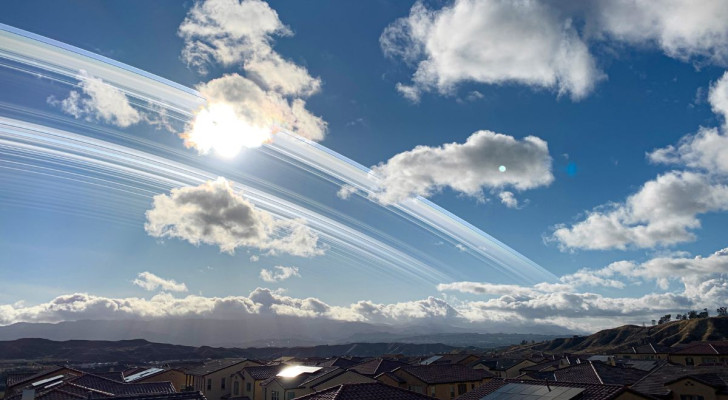
De Aarde had ook zijn planetaire ringen, net als Saturnus: dat stelt een onderzoek

De Aarde had ook zijn planetaire ringen, net als Saturnus: dat stelt een onderzoek

Janine imagedoor Janine
Artistieke weergave van een hemel vergelijkbaar met die van ongeveer 460 miljoen jaar geleden, toen de Aarde planeetringen had

Kevin M. Gill/Wikimedia Commons - CC BY 2.0

We kennen allemaal Saturnus, een van de meest iconische planeten in het zonnestelsel vanwege zijn spectaculaire planetaire ringen. Natuurlijk hebben Uranus en Neptunus ook iets dergelijks, en hetzelfde kan gezegd worden van Jupiter, maar deze structuren hebben niet dezelfde charme. Onlangs is er echter een onderzoek gedaan dat suggereert dat ook de aarde zo'n 460 miljoen jaar geleden haar eigen ringenstelsel kan hebben gehad. Laten we eens kijken hoe dit mogelijk is!

Had de Aarde ook planetaire ringen?

Een team onderzoekers van de Monash University in Melbourne stelt deze hypothese voor in een studie die is gepubliceerd in het tijdschrift Earth and Planetary Science Letters. De wetenschappers analyseerden inslagkraters die werden gecreëerd door asteroïden tijdens het Ordovicium, tussen 485 en 443 miljoen jaar geleden. Het probleem is dit: er werden 21 kraters geïdentificeerd die zich binnen 30 graden van de evenaar bevonden, maar de verdeling is te afwijkend om in traditionele theorieën te passen. Kortom, waarom zijn alle kraters geconcentreerd in deze gordel als meer dan tweederde van de aardkorst daarbuiten ligt?

Volgens de onderzoekers is het antwoord duidelijk: zo'n 460 miljoen jaar geleden zou een grote asteroïde de aarde hebben benaderd tot hij de limiet van Roche passeerde, waarna hij werd beïnvloed door getijdenkrachten. Als gevolg daarvan zou de asteroïde zijn gaan fragmenteren en deze fragmenten zouden hebben geholpen bij het vormen van een ring van puin rond de aarde. Net als bij Saturnus en andere gasreuzen.

Planeetringen en ijstijden

Weergave van een hypothetische planetaire ring van de aarde, gezien vanuit de ruimte

Oliver Hull/Monash University

Wat is het verband tussen de vorming van planetaire ringen en de concentratie inslagkraters die Australische onderzoekers hebben ontdekt? Simpel: na de vorming zouden de brokstukken die de ring vormden in de loop van miljoenen jaren beetje bij beetje op de aarde zijn gevallen en zo de piek in kraters hebben veroorzaakt. Maar dat is nog niet alles, want de studie probeerde ook bewijs te vinden voor de klimatologische gevolgen die een ringsysteem zeker zou hebben gehad op de aarde.

Vanuit dit perspectief zouden de planetaire ringen een deel van het zonlicht hebben kunnen tegenhouden en hebben bijgedragen aan de wereldwijde afkoeling. En in feite vindt precies aan het einde van het Ordovicium de Hirnatien-ijstijd plaats, die wordt beschouwd als een van de koudste periodes van de afgelopen 500 miljoen jaar. Bovendien is het deze ijstijd die de massa-uitsterving in het Ordovicium veroorzaakte, de eerste van de vijf grote massa-uitstervingen in de geschiedenis van de aarde. Gebeurde dit allemaal door 'onze' planeetringen?

Perspectieven van het onderzoek

De ontdekking door Australische onderzoekers kan veel bredere gevolgen hebben dan verwacht. In de praktijk gaat het niet alleen om het idee dat de Aarde ook een eigen planetair ringenstelsel kan hebben gehad, maar om overwegingen van complexere aard:

  • ten eerste, wat er in het laatste deel van het Ordovicium gebeurde, zou ook gebeurd kunnen zijn in de 4 miljard jaar van de vorige geschiedenis van de Aarde;
  • ten tweede kan de vorming en het daaropvolgende verval van een planetaire ring belangrijke gevolgen hebben gehad voor het klimaat op aarde;
  • ten slotte spelen astronomische gebeurtenissen, waaronder de vorming van planeetringen, een veel belangrijkere rol in de geschiedenis van een planeet dan verwacht.

Kortom, als de hypothese van het onderzoek gegrond blijkt te zijn, staan we mogelijk aan het begin van een geheel nieuw onderzoeksgebied over de interactie tussen de aarde en de kosmos. Met gevolgen voor de hele evolutionaire geschiedenis van onze planeet.


What Earth would look like with Saturn's rings

{ https://www.curioctopus.nl/ }

Hoe vind je dit bericht?
Geschreven door peter om 22:04 Stuur door

Mysterious mirror appears on the surface of Mars

Mysterious mirror appears on the surface of Mars

A photo recently captured by NASA's Perseverance rover on Mars has revealed a surprising object that stands out from the planet's natural landscape. 
mirror%20on%20Mars%20(1).png

The object in question looks like an artificial piece of glass or eventual a mirror, (the contours of the glass/mirror are clearly visible), partially located behind a rock formation. 
The fact that it could be a mirror is because the reflection in the mirror seems to show a part of what appears to be a metallic rectangular object what lies in front of the mirror. 
mirror%20on%20Mars%20(3).png

Both the glass/mirror and the metallic object seem to be remnants of something either abandoned or wrecked long ago. They clearly do not belong to the rover's equipment or any known NASA gear.  
mirror%20on%20Mars%20(2).png

This discovery joins a growing list of mysterious objects found on Mars hinting at the possibility that intelligent civilizations may have once existed on the planet potentially wiped out due to a catastrophic event which made life on the planet impossible. 
Link to the photo uploaded by Neville Thompson on his Gigapan page.

{ https://ufosightingshotspot.blogspot.com/ }

Hoe vind je dit bericht?
Geschreven door peter om 21:46 Stuur door

We spent 45 days in a simulated Mars habitat built by NASA - this is the brutal reality of life on Red Planet

We spent 45 days in a simulated Mars habitat built by NASA - this is the brutal reality of life on Red Planet

Four volunteer scientists have just emerged from a 45-day stay inside NASA's most realistic Mars simulation yet.

The crew remained completely isolated inside the Human Exploration Research Analog (HERA) - a 650-square-foot habitat at NASA's Johnson Space Center in Houston, Texas - until Monday, when the hatch opened and they finally 'returned to Earth.'

While inside, they completed 18 different studies that will help NASA and other space agencies learn how humans respond to the confinement, demanding work-life conditions and remote environments of deep-space missions, according to NASA

NASA has set a goal to get humans to Mars by the 2030s. With that deadline fast approaching, simulated missions like HERA provide key insights into how astronauts might survive the farthest crewed space mission ever attempted. 

The four person crew - comprised of Sergii Iakymov, Sarah Elizabeth McCandless, Erin Anderson, and Brandon Kent (L to R) - was the third to enter the HERA habitat

The four person crew - comprised of Sergii Iakymov, Sarah Elizabeth McCandless, Erin Anderson, and Brandon Kent (L to R) - was the third to enter the HERA habitat

Above, a 3D-rendered image of the red planet Mars - as virtual as the team's HERA experience

Above, a 3D-rendered image of the red planet Mars - as virtual as the team's HERA experience

The four person crew - comprised of Erin Anderson, Sergii Iakymov, Sarah Elizabeth McCandless and Brandon Kent - was the third to enter the HERA habitat.

Their mission was unique in that it included the more detailed assignments designed to closely replicate the living and working experience on Mars.

During the month-and-a-half-long simulation, the crew performed a wide range of tasks.

Their assignments included harvesting plants from a hydroponic garden, growing shrimp, deploying a small satellite, conducting a virtual 'walk' across the surface of Mars and flying simulated drones over Martian terrain. 

'These activities are designed to immerse the crew in the task-focused mindset of astronauts,' NASA wrote in a statement.

NASA even simulated the communication delays that real astronauts could one day face on Mars. During a real Mars mission, communications from Earth could take up to 20 minutes to reach astronauts on the red planet, and vice versa. 

All the while, the crew was being monitored by NASA scientists to assess how their day-to-day tasks, routine, and the isolation and confinement of their habitat affected their behavior and performance. 

When they weren't hard at work, the crew read books, played cards, built Legos and listened to music. 

The HERA mission three crew entered the habitat on August 9

Their mission was unique in that it included the more detailed assignments designed to closely replicate the living and working experience on Mars, including growing hydroponic plants

Their mission was unique in that it included the more detailed assignments designed to closely replicate the living and working experience on Mars, including growing hydroponic plants

The volunteers also grew shrimp, deployed a small satellite, conducted a virtual 'walk' across the surface of Mars and flew simulated drones over Martian terrain

The volunteers also grew shrimp, deployed a small satellite, conducted a virtual 'walk' across the surface of Mars and flew simulated drones over Martian terrain

On Monday afternoon, the crew finally emerged from their tiny habitat, marking the end of their mission. 

'Following our safe passage to Mars, and our safe return to Earth, as the crew of Campaign 7, Mission 3, we hereby officially transfer this exploration vessel to the flight analogs operations team,' said Kent upon exiting HERA.

'We hope this vessel continues to serve as a safe home for future HERA crews,' he added. 

NASA also runs another, bigger simulated Mars habitat called the Crew Health and Performance Exploration Analog, or CHAPEA. This 1,700-square-foot is large enough to sustain volunteers for up to a year. 

The first CHAPEA volunteer crew emerged from their habitat in July. 

If you think you have what it takes to spend weeks inside cramped Mars simulation, NASA is actively seeking non-smoking volunteers between the ages of 30 and 55 for the next HERA mission. 


Step inside NASA's 3D-printed Mars simulation habitat

NASA crew returns from simulated Mars mission after 1 year

Nasa's volunteer crew smile as they emerge from Mars simulator for first time in 378 days

{ https://www.dailymail.co.uk/ }

Hoe vind je dit bericht?
Geschreven door peter om 21:31 Stuur door

Meer van UFO'S of UAP'S, ASTRONOMIE, RUIMTEVAART, ARCHEOLOGIE, OUDHEIDKUNDE, SF-SNUFJES EN ANDERE ESOTERISCHE WETENSCHAPPEN - DE ALLERLAATSTE NIEUWTJES

↑ Terug naar de berichten