Ontdek de Fascinerende Wereld van UFO's en UAP's: Jouw Bron voor Onthullende Informatie!
Ben jij ook gefascineerd door het onbekende? Wil je meer weten over UFO's en UAP's, niet alleen in België, maar over de hele wereld? Dan ben je op de juiste plek!
België: Het Kloppend Hart van UFO-onderzoek
In België is BUFON (Belgisch UFO-Netwerk) dé autoriteit op het gebied van UFO-onderzoek. Voor betrouwbare en objectieve informatie over deze intrigerende fenomenen, bezoek je zeker onze Facebook-pagina en deze blog. Maar dat is nog niet alles! Ontdek ook het Belgisch UFO-meldpunt en Caelestia, twee organisaties die diepgaand onderzoek verrichten, al zijn ze soms kritisch of sceptisch.
Nederland: Een Schat aan Informatie
Voor onze Nederlandse buren is er de schitterende website www.ufowijzer.nl, beheerd door Paul Harmans. Deze site biedt een schat aan informatie en artikelen die je niet wilt missen!
Internationaal: MUFON - De Wereldwijde Autoriteit
Neem ook een kijkje bij MUFON (Mutual UFO Network Inc.), een gerenommeerde Amerikaanse UFO-vereniging met afdelingen in de VS en wereldwijd. MUFON is toegewijd aan de wetenschappelijke en analytische studie van het UFO-fenomeen, en hun maandelijkse tijdschrift, The MUFON UFO-Journal, is een must-read voor elke UFO-enthousiasteling. Bezoek hun website op www.mufon.com voor meer informatie.
Samenwerking en Toekomstvisie
Sinds 1 februari 2020 is Pieter niet alleen ex-president van BUFON, maar ook de voormalige nationale directeur van MUFON in Vlaanderen en Nederland. Dit creëert een sterke samenwerking met de Franse MUFON Reseau MUFON/EUROP, wat ons in staat stelt om nog meer waardevolle inzichten te delen.
Let op: Nepprofielen en Nieuwe Groeperingen
Pas op voor een nieuwe groepering die zich ook BUFON noemt, maar geen enkele connectie heeft met onze gevestigde organisatie. Hoewel zij de naam geregistreerd hebben, kunnen ze het rijke verleden en de expertise van onze groep niet evenaren. We wensen hen veel succes, maar we blijven de autoriteit in UFO-onderzoek!
Blijf Op De Hoogte!
Wil jij de laatste nieuwtjes over UFO's, ruimtevaart, archeologie, en meer? Volg ons dan en duik samen met ons in de fascinerende wereld van het onbekende! Sluit je aan bij de gemeenschap van nieuwsgierige geesten die net als jij verlangen naar antwoorden en avonturen in de sterren!
Heb je vragen of wil je meer weten? Aarzel dan niet om contact met ons op te nemen! Samen ontrafelen we het mysterie van de lucht en daarbuiten.
NASA, ESA, A. del Pino Molina (CEFCA), K. Gilbert and R. van der Marel (STScI), A. Cole (University of Tasmania);
Image Processing: Gladys Kober (NASA/Catholic University of America)
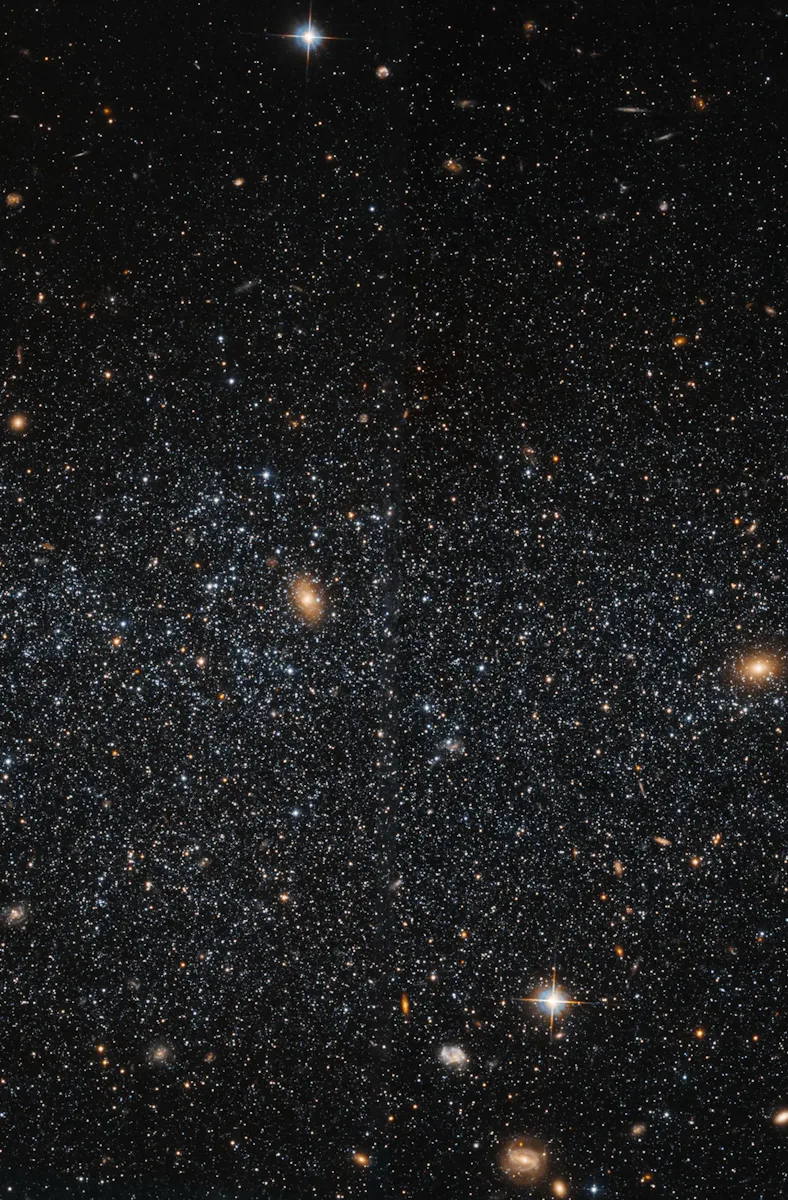
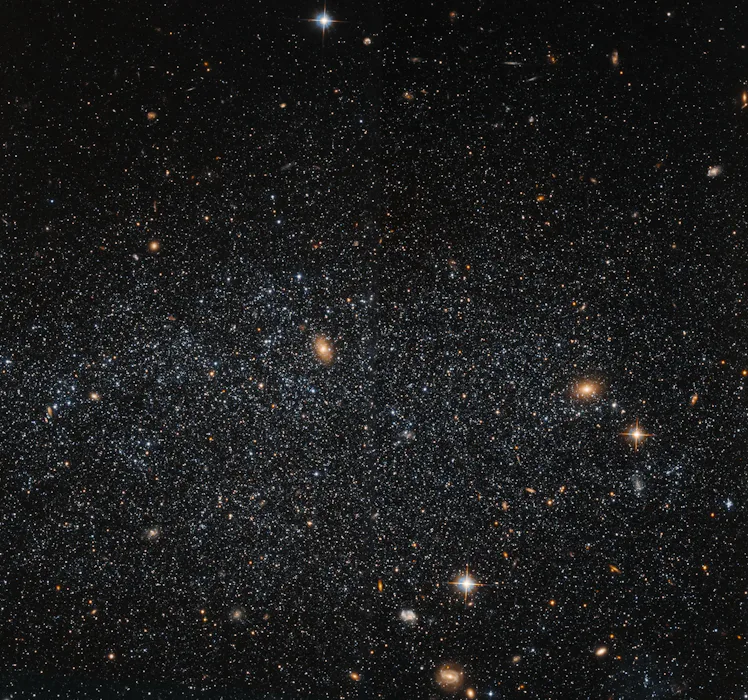
Leo A lacks galactic glamor. NASA’s newly-published image of thisdwarf galaxy is missing the Milky Way’s pizzazz, and Andromeda’s visual riches. But that’s what makes Leo A special.
Astronomers found Leo A beyond our galaxy, and past a few more, at the edge of our cosmic neighborhood. To see it, the Hubble Space Telescope peered 2.6 million light-years away. That’s a relatively close cosmic distance for galaxies. But it’s still extraordinary that Hubble saw Leo A, because this galaxy is small and dim.
This “speckling of stars,” the European Space Agency wrote in 2016, forms a single entity. “The relatively open distribution of stars in this diminutive galaxy allows light from distant background galaxies to shine through,” NASA Goddard Space Flight Center officials wrote in Thursday’s image description.
The sparsely-populated sphere in this Hubble Space Telescope image is dwarf galaxy Leo A.
This image comes from data Hubble took during four observation programs. Three of these looked at star formation and its history, in relatively nearby dwarf galaxies, including Leo A.
Although sparsely populated, Leo A’s stars have an order. They make a spherical shape in space. A pattern also emerged when astronomers peered at their ages.
The recent Hubble observations have revealed that Leo A’s younger stars are located in the middle, and they are older the farther they are from the dwarf galaxy’s center. This could offer clues about how galaxies evolve.
Perhaps stars formed from “the outside-in,” NASA wrote. Or, perhaps, older stars migrated towards the edges of Leo A.
But older is a relative term. According to NASA, “around 90 percent of the stars in Leo A are less than eight billion years old — young in cosmic terms!” Astronomers are puzzled about why this small galaxy, one of the most isolated galaxies in our local group of galaxies, didn’t form stars on a “usual” timescale.
“Instead,” NASA says, Leo A “waited until it was good and ready.”
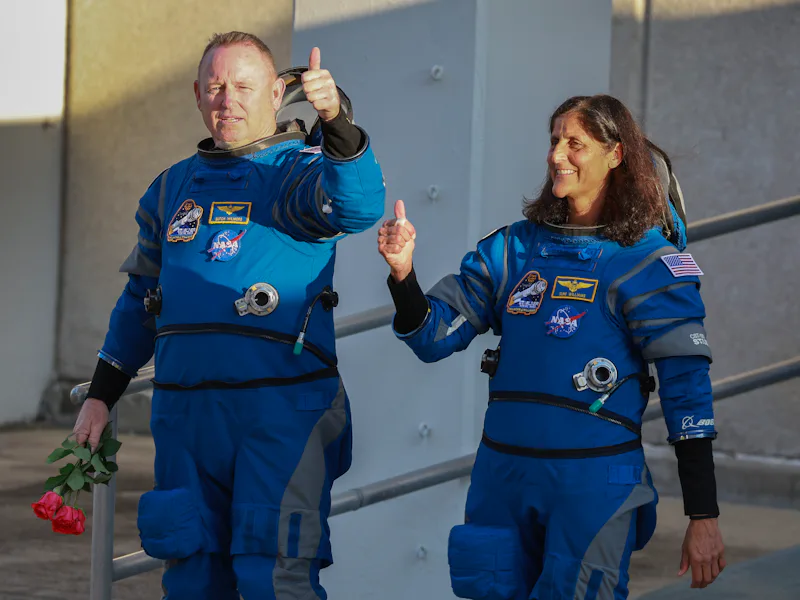
If an emergency happens on the International Space Station (ISS) sometime in the next six weeks, NASA astronauts Butch Wilmore and Suni Williams may have to flee without the added safety of in-flight spacesuits.
At a media teleconference NASA held on August 14, agency officials said the spacesuits that Williams and Wilmore wore inside the Boeing Starliner are not compatible with other spacecraft.
This complicates NASA’s decision on whether the astronauts should fly home aboard Starliner or on a SpaceX vehicle. Starliner encountered technical problems shortly after it brought Wilmore and Williams into low-Earth orbit almost three months ago. If teams deem Starliner unfit to carry them back, they’d likely come home on a SpaceX Dragon capsule.
The Dragon of the Crew-8 mission is in space now, but it is the contingency plan for Wilmore and Williams if Starliner isn’t suitable to carry them home, NASA officials said. To complicate matters, there aren't any spare SpaceX suits. Those arrive no earlier than September 24, when the Dragon of Crew-9 launches towards the ISS with two empty seats and two extra spacesuits.
If Starliner flies home uncrewed, and their Dragon Crew-9 rescue vessel hasn’t yet reached the station with its specific spacesuits in tow, Wilmore and Williams would have no choice but to enter the Crew-8 Dragon without spacesuits in an emergency situation.
That is, unless NASA decides Starliner will return with its crew after all. The space agency is expected to make a final decision about Starliner coming back to Earth empty, or with Wilmore and Williams inside, by the end of this month.
Why do spacesuits differ?
Onboard the orbiting laboratory, a spacesuit is not necessary. Regular clothing or a uniform suffices.
Spacesuits used during transit, sometimes called intravehicular spacesuits, are tailor-designed for the spacecraft the astronauts are riding. These indoor spacesuits provide an extra layer of protection. They’re an additional buffer from the potentially hazardous launch or reentry environments around them.
Joe Raedle/Getty Images News/Getty Images
When astronauts make repairs outside the station, they wear extravehicular spacesuits to remain alive and tethered to the station during their spacewalk.
Another type of spacesuit is used when launching up towards the station, aborting a flight or landing back to Earth. These are sometimes referred to as intravehicular spacesuits — and they’re tailor-designed for the spacecraft the astronauts are riding. These indoor spacesuits provide an extra layer of protection. They’re an additional buffer from the potentially hazardous launch or reentry environments around them.
Why would Starliner undock without Wilmore and Williams?
Starliner suffered helium leaks and thruster anomalies not long after launching on June 5. Since the technical dilemmas began, the aerospace giant and the space agency continue to pore over data from a slew of tests to determine if Starliner will return to Earth with its test pilots onboard.
Although designed originally as an eight-day mission, their trip has now entered its 12th week.
UFO mystery may be result of advanced 'stealth civilization' living on Earth among us, say Harvard scientists - as they reveal where their secret bases could be located
Skeptics have long questioned why UFOs, if they are alien craft, would visit Earth so often.
But two Harvard scientists suspect the beings may have been here all along.
In a new research paper, they estimate there is a one in 10 chance the true solution to the UFO mystery could be 'cryptoterrestrial' — meaning they belong to an advanced species hiding on Earth.
'While this notion may sound unlikely on first hearing, many observers are persuaded that it is at least conceivable,' the team wrote in their new study, 'not least because whole swathes of our planet remain virtually unexplored and uncharted.'
With 80 percent of our oceans unmapped, and still revealing ancient mysteries like Yonaguni Jima, the 'Japanese Atlantis,' not to mention unexplored caves and the dark side of the moon, they argue there's plenty of space for a 'stealth' civilization.
The researchers described, as one example of a potentially hiding advanced species, a massive submerged stone structure discovered by a diver off the coast of Yonaguni Jima in Japan that some marine geologists argue are might be the remnants of a 'Japanese Atlantis'
'If another intelligent species had inhabited Earth (or Mars) long before Homo sapiens, it is possible that we could have no idea,' the trio notes in their article, which is set to appear in the journal Philosophy and Cosmology this June.
The work is a collaboration between scientists who have independently tried to make sure that all viable theories are considered for the UFO mystery, which has seen a major effort effort for government declassification in recent months.
Congress, the Pentagon and others in government now more commonly refer to UFOs as UAP for 'unidentified aerial (or anomalous) phenomena.'
Multiple regions on Earth and near Earth were cited in the new study as worthwhile candidates for investigating the chances of a 'cryptoterrestrial' species' secret base.
One region, dubbed the 'Alaskan Triangle,' is a remote and sparsely populated area between the cities of Anchorage, Juneau and Utqiagvik that the authors described as 'a prominent 'hotspot' for UAP [UFOs], as well as other oddities.'
The triangle, they noted, has been ground zero for over 20,000 unexplained disappearances since the 1970s, above and beyond its penchant for UFO sightings.
Luis Guerra, a resident in the central Mexico city of Atlixco, photographed this image of an apparent UFO above the Popocatépetl volcano in Mexico. Sightings near this and other volcanos have fueled speculation that the UFOs might come from a hidden underground base
More concretely, the researchers pointed to a series of intriguing archeological finds that suggest the existence of ancient civilizations that would not only predate any known advances species, but may still exist in hiding.
They described a massive submerged stone structure discovered by a diver off the coast of Yonaguni Jima in Japan that some marine geologists argue are might be the remnants of a 5000-year-old pyramid from a Japanese Atlantis.
Habitable regions underground also remain to be explored, some with the right conditions to support life.
'The internal structure of Earth is still mostly a mystery,' the team wrote.
'For instance, it was recently found that the mantle transition zone (255 to 410 miles underground) acts as a large reservoir of water.'
They speculated that it is entirely possible that hundreds of miles below humanity 'another hominid species, or even a branch of Homo sapiens, could have adapted to live underground,' although it would likely scarcely resemble us.
Stunning photos taken by Luis Guerra, a resident in the central Mexico city of Atlixco, last year, have fueled similar speculation of a hidden UFO base underneath the country's Popocatépetl volcano, which has become a UFO hot spot.
Other major candidates, the researchers put forward, include long-term bases deep underwater in ocean trenches or on the dark side of the moon, whether built by an ancient advanced terrestrial race or our long-term extraterrestrial co-inhabitants.
Other major candidates, the researchers put forward, include long-term bases deep underwater in ocean trenches or on the dark side of the moon, whether built by an ancient advanced terrestrial race or our long-term extraterrestrial co-inhabitants
While researchers working with Nasa's LROC moon-mapping mission have debunked the theory that this lunar image captured a 3.5-mile (5.6km) 'alien base' spire, much of the dark side of the moon remains unexplored and may yet hold such a discovery
While researchers working with Nasa's LROC moon-mapping mission have debunked the theory that one captivating lunar image depicts a 3.5-mile 'alien tower,' much of the dark side of the moon remains unexplored and may yet hold such a discovery.
'Of course,' the researchers noted, 'the limits of our knowledge provides no particular argument for the CTH [the 'cryptoterrestrial hypothesis'].'
'Crucially,' they added, 'it means we must have [...] humility and realize neither can we dismiss it just because it contradicts the standard narrative of history.'
The new research follows prior exploratory work by the authors working separately.
The study's co-author Dr Michael Masters, a professor of biological anthropology at Montana Technological University, had previously written a book arguing that the beings piloting UFOs might be 'extratempestrials' or time travelers.
'The phenomenon may be our own distant descendants coming back through time to study us in their own evolutionary past,' Dr Masters told KBZK News 7 in Bozeman.
Using his evolutionary biology experience as an anthropologist, Dr Masters made the case that the so-called 'grey' aliens from UFO abduction lore resemble what time-travelling future humans might evolve to look like in a more high tech society.
His coauthor, psychologist Tim Lomas with Harvard's T.H. Chan School of Public Health, had just recently laid out the full case for the more traditional 'extraterrestrial hypothesis,' in another article for the same journal, Philosophy and Cosmology, earlier this year.
Brendan Case, the associate director for research at Harvard's Institute for Quantitative Social Science, joined them in their call for scientists to pursue the 'cryptoterrestrial' UFO hypothesis.
'The hope is that we can begin a new dialogue and get past some of this stigma,' Dr Masters said. 'And not have to defend this as science, because it is very scientific.'
The wide open spaces of Montana have been named the top spot where you are most likely to have a close encounter, as half of locals claim to have seen a UFO.
Half (exactly 50 percent) of the residents of this western state — often called 'Big Sky Country' — also reported that they 'believe in UFOs,' a new study claims.
The wide open spaces of Montana have been named the top state where you are most likely to have a close encounter, as half of locals claim to have seen a UFO. Half (50 percent) of the residents of the western state also reported that they 'believe in UFOs,' the new study found
Delaware took second place, with 80 percent of locals admitting to believing in UFOs, but zero reported they had actually seen strange craft or odd lights in the sky.
Other chart-toppers included the state of Massachusetts, as data collected from Google searches shows that the New England state is the most UFO-obsessed in America, with 13,750 monthly Google queries related to the topic (or 19.64 searches per 10,000 people). But New York and New Jersey were not far behind.
The Google search terms incorporated in this analysis included 'UFO sighting,' 'Are UFOs real' and 'UFO video,' among others.
New York's 37,260 monthly UFO-related search queries divided into 19.04 per 10,000 residents, showing that this seemingly high number needed to be adjusted for population density.
New Jersey's 16,820 UFO searches came to 18.1 per 10,000 people, ranking it third.
Despite stereotypes of repeated 'alien abduction' cases in rural America, South Dakota, Arkansas and Louisiana were all ranked at the bottom for search term interest in the phenomena.
South Dakota came in dead last in UFO interest, with only 850 monthly searches, or 9.25 per 10,000 residents.
The findings are sure to be a surprise to residents of Nevada, home to the legendary classified US Air Force base and UFO mainstay Area 51: their state did not even crack the Top 10 in this new study. Above, an alien or an extraterrestrial man
(artist's depiction)
Arkansas placed second with 2,870 UFO Google searches, or 9.36 per 10,000 people in state; followed by Louisiana with 4,300 searches or 9.4 per 10,000 residents.
Collectively, one full quarter of all Americans (25 percent) admitted to believing in UFOs, according to survey data.
The number was intriguingly higher than those who were actually willing to admit that they have seen one: only 7 percent self-reported that they had personally witnessed a UFO in the study's surveys.
The total UFO sightings, according to data from the National UFO Reporting Center (NUFORC), as used in the new study, was 132,850 last year.
The new study incorporated a range of metrics to determine which state gave locals and visitors the highest chance of seeing a UFO: including UFO sightings via NUFORC, data on light pollution levels, and survey data from 2,057 people on topics related to UFO encounters across each US state.
The project was sponsored by JackpotCity Casino for reasons that have not yet been fully disclosed.
But the adjustments based on light pollution, statewide population density, and survey data significantly altered the findings when compared to NUFORC's raw UFO sighting figures.
California, for example, would have otherwise topped the list with a staggering 16,354 UFO sightings in total reported to NUFORC.
But the state's high light pollution (57.37) and meager 7 percent of citizens who reported having seen a UFO themselves in the study's survey data weighed down the Golden State's ultimate ranking.
Nevertheless, California's skies remain a magnet for mysterious objects and nearly a quarter, about 24 percent, of its people want to 'believe in UFOs.'
Revealed: These 10 states are most likely to spot aliens in 2024
Source:UFO sightings reported to NUFORC, light pollution data at numbeo.com, and a March 2024 JPC survey
AI Corrects Six Billy Meier UFO Earliest Photos 1970s, Do You Believe Him? UAP Sighting News. Video!
Now I have lived over 5 decades and I can honestly say that I see the publics opinions of UFO sway with that of TV how hosts opinion rather than decide for themselves. I decided to take some of the earliest photos of Billy Meier of Switzerland and see for myself using AI to detect anomalies and focus everything. All went well until the last of the photos, when I ai detected something strange, a white line above a UFO, not that of an antenna, because the UFO was tilted and any center antenna would also be tilted, this was as if something were holding onto the UFO from above. You watch and decide for yourself. But in my opinion, most the earlier photos are real, but due to social pressure, Billy may have resorted to faking later sightings for personal gain.
Atlas is Boston Dynamics' humanoid robot, and is described by the firm as 'the world's most dynamic robot.'
The robot is fully electric and features an advanced control system and state-of-the-art hardware.
This gives it the power and balance to demonstrate advanced athletics and agility.
'We use Atlas to explore the potential of the humanoid form factor, leveraging the robot’s whole body to move with grace, speed, and dexterity,' Boston Dynamics explains on its website.
'Atlas demonstrates our efforts to develop the next generation of robots with the mobility, perception, and intelligence needed to be commonplace in our lives.'
In the new video, Atlas plants its feet wide apart, before squatting down and placing its hands on the floor. It jumps its feet back, before performing eight impressive push-ups
The movements are impressively human-like, and have been praised by hundreds of fans in the comments
Atlas the most human-like robot in Boston Dynamic's line-up.
It was first unveiled to the public on 11 July 11 2013.
According to the company, Atlas is a 'high mobility, humanoid robot designed to negotiate outdoor, rough terrain'.
Atlas measures 1.5m (4.9ft) tall and weighs 75kg (11.8st).
The humanoid walks on two legs, leaving its arms free to lift, carry, and manipulate objects in its environment.
Atlas is able to hold its balance when it is jostled or pushed by an external force. Should it fall over, the humanoid robot is capable of getting up again on its own
Stereo vision, range sensing and other sensors allow Atlas to walk across rough terrain and keep its balance.
'In extremely challenging terrain, Atlas is strong and coordinated enough to climb using hands and feet, to pick its way through congested spaces,' Boston Dynamics claims.
Atlas is able to hold its balance when it is jostled or pushed.
If the humanoid robot should fall over, it can get up on its own.
Atlas is designed to help emergency services in search and rescue operations.
The robot will be used to shut-off valves, opening doors and operate powered equipment in environments where human rescuers could not survive.
The US Department of Defence said it has no interest in using Atlas in warfare.
NASA Has More Disappointing News for Its Stranded Astronauts
Story by Jeffrey Kluger
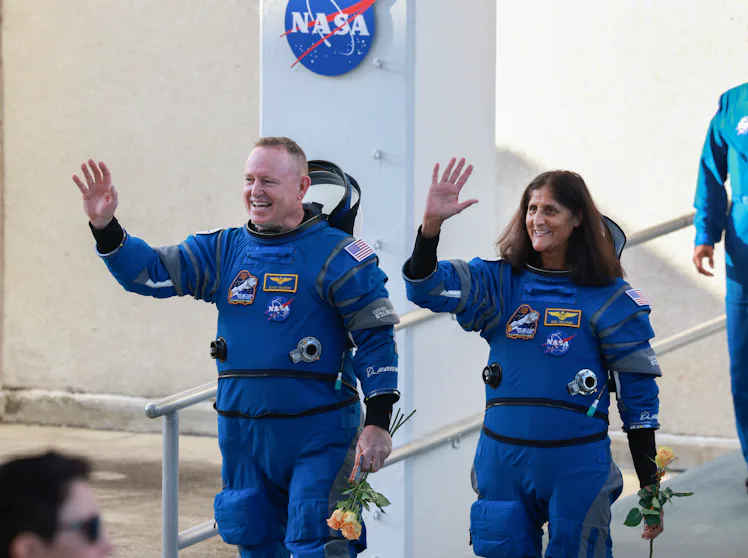
NASA astronauts Butch Wilmore and Suni Williams wave as they prepare to depart the Neil A. Armstrong Operations and Checkout Building at the Kennedy Space Center on June 5, 2024.
The two NASA astronauts stuck aboard the International Space Station (ISS), Butch Wilmore and Suni Williams, won’t be coming home anytime soon. During a press conference at the Kennedy Space Center on Saturday, Aug. 24, NASA administrator Bill Nelson announced that the space agency was giving up on the idea of bringing Wilmore and Williams home aboard their balky Boeing Starliner spacecraft—which has been experiencing thruster problems since its launch on June 5. Instead, the Starliner will be flown home uncrewed, and Wilmore and Williams will hitch a ride back to Earth aboard a SpaceX Crew Dragon spacecraft, which will launch to the ISS in September for a five-month station stay, returning in February. This extends what was supposed to be an eight-day ISS rotation for Wilmore and Williams to a whopping eight months.
“NASA has worked very hard with Boeing to reach this decision,” Nelson said. “The decision is a result of a commitment to safety.”
The ruling rested on what NASA calls a flight readiness review (FRR). As agency brass explained at an Aug. 14 news conference, FRR’s are typically held before launch, when officials gather for a final go or no-go on the planned mission.
“We bring in representatives from all of the related centers, the technical authorities, the NASA engineering, and safety center flight operations,” explained Ken Bowersox, a former astronaut and an associate administrator for NASA’s space operations mission directorate. “We listen to the status of the mission, go through some special topics, and then we poll everybody at the end on whether or not they think we're ready to undertake the mission.”
On one occasion, that panel’s decision led to disaster. The FRR for the final mission of the space shuttle Challenger was held on Jan. 15, 1986, and the ship was cleared to launch. Thirteen days later, on Jan. 28, that liftoff took place, ending in a fuel tank explosion and the death of all seven crew members just 73 seconds after the ship left the pad. That tragedy, followed by the breakup of the shuttle Columbia and a similar loss of all hands on Feb. 1, 2003, left NASA much more risk-averse than it had been before.
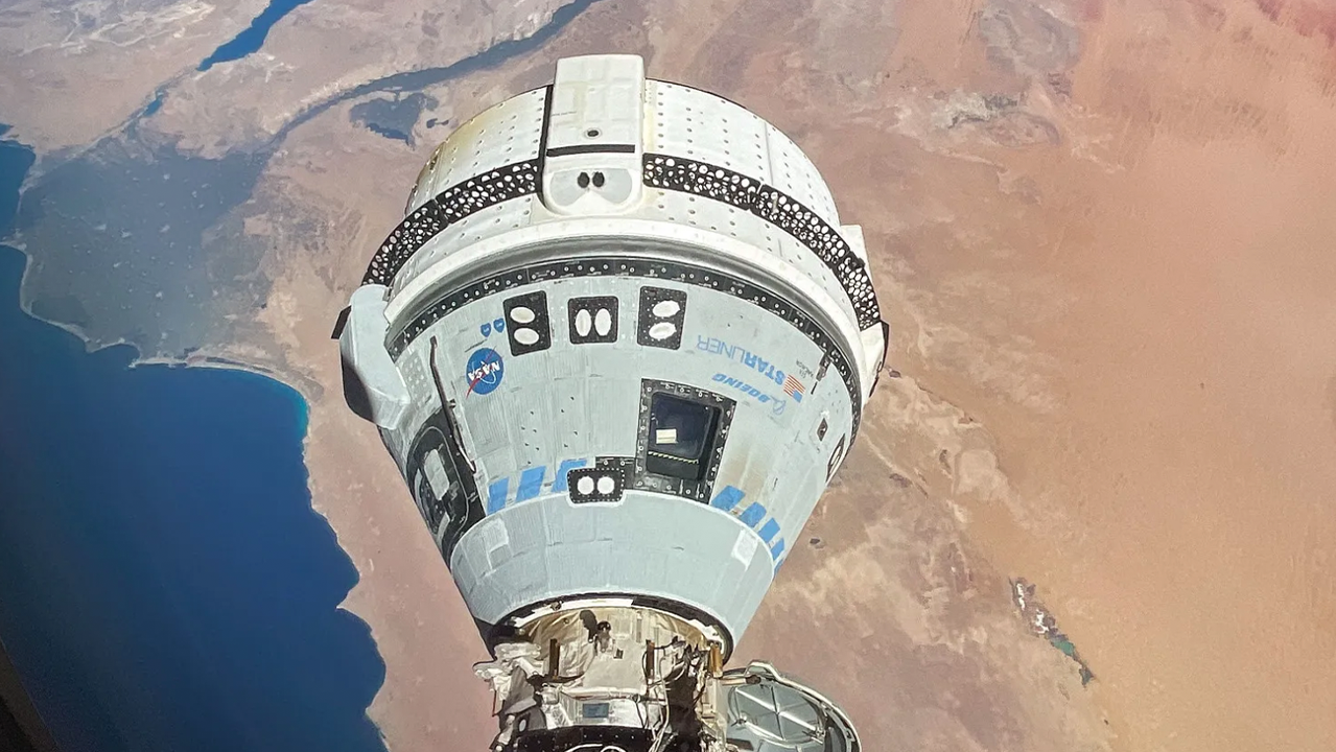
The Starliner spacecraft on NASA’s Boeing Crew Flight Test is pictured docked to the Harmony module’s forward port as the International Space Station orbited 262 miles above Egypt’s Mediterranean coast. ( )
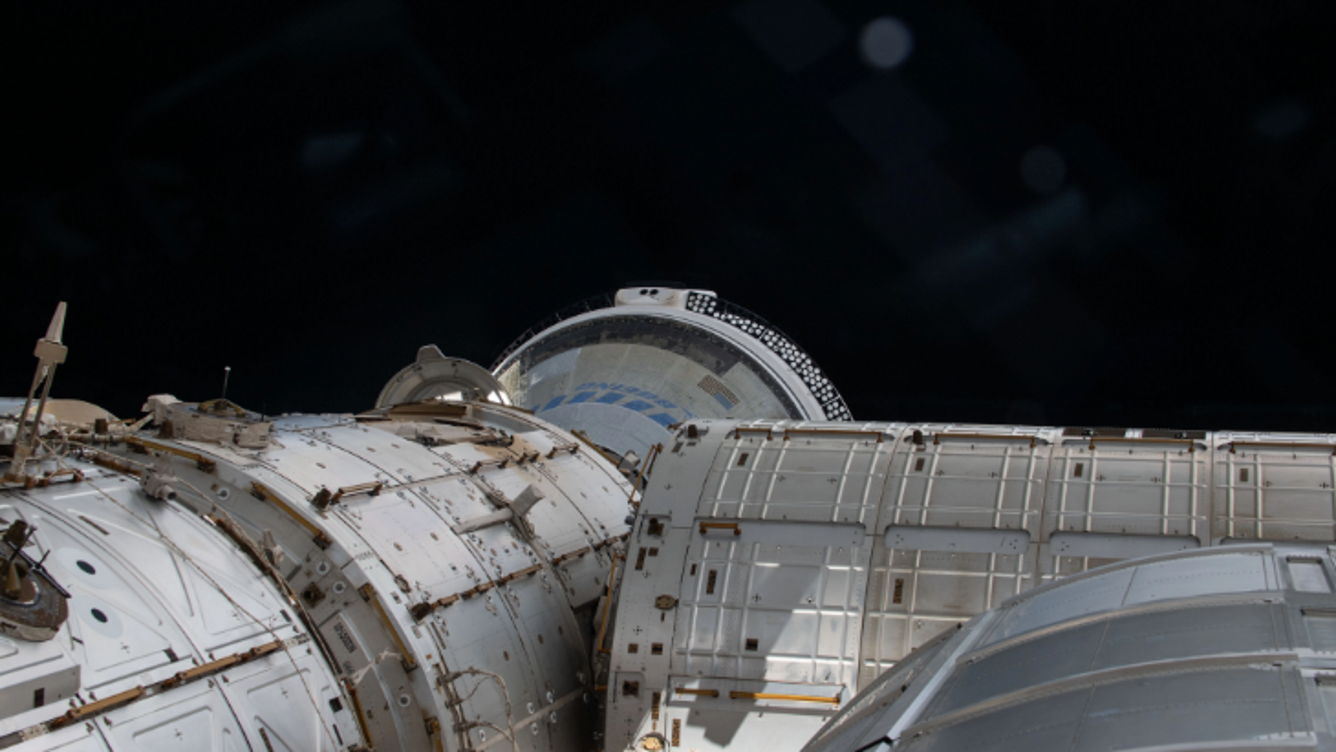
This view from a window on the space station cupola overlooks a portion of the International Space and shows the partially obscured Starliner spacecraft from Boeing docked to the Harmony module’s forward port. ( )
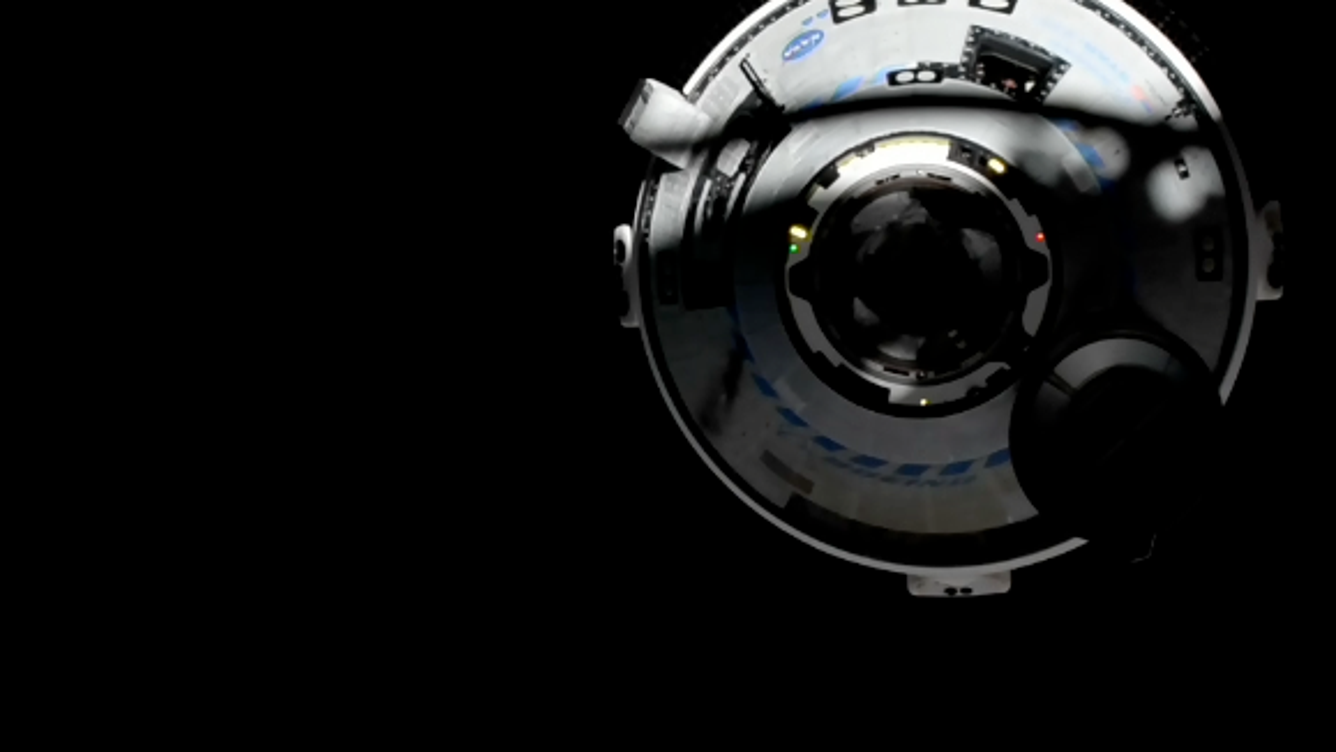
A view of Boeing's Starliner spacecraft from the International Space Station as the vehicle comes in for docking on June 6, 2024. ( )
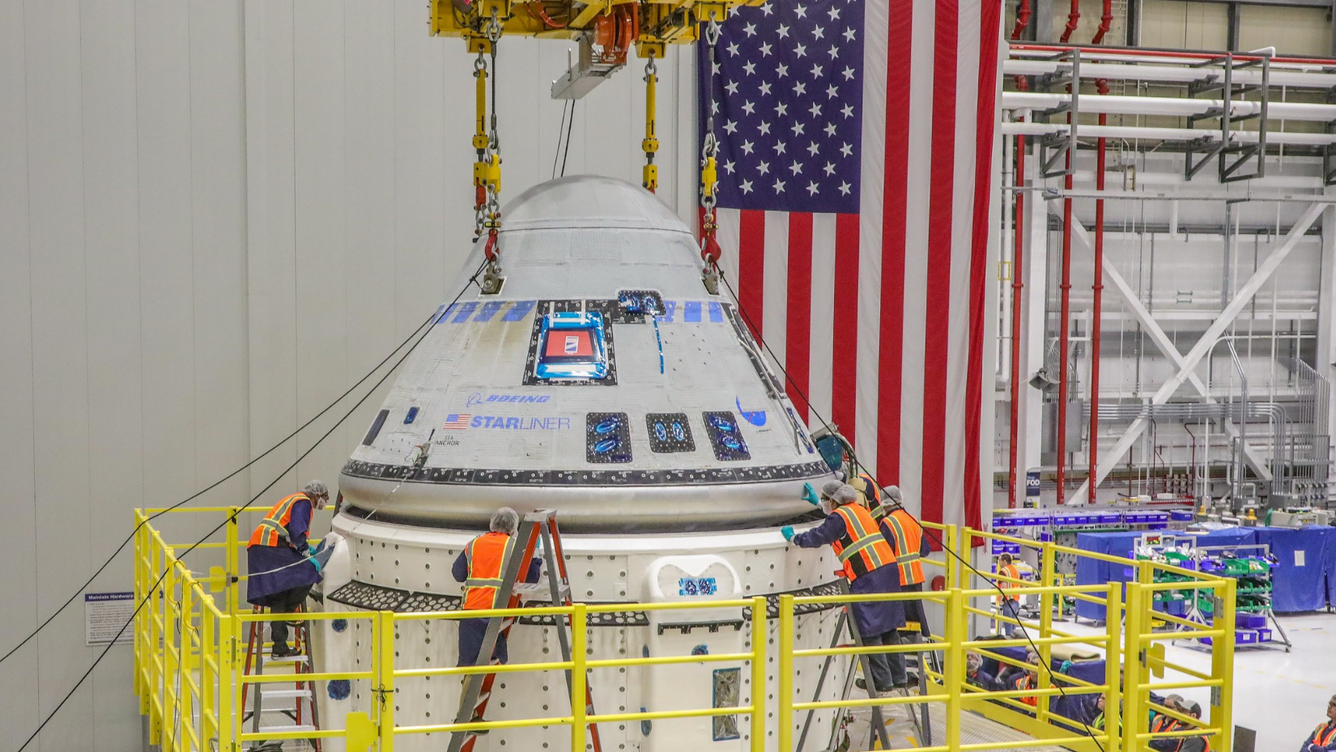
NASA’s Boeing Crew Flight Test will take astronauts Butch Wilmore and Suni Williams to the International Space Station. ( )
Related video:
NASA Starliner to return without astronauts (FOX News)
“We did not have the governance structure that we have today with technical authorities,” said Russ DeLoach, chief of NASA safety and mission assurance, during the earlier press conference. “So at that time, the program managers pretty much had near-unilateral decision making. And so if there were views that maybe a path we were taking was not correct, there was really no strong additional authority to step in and say, ‘Wait a minute.’”
That additional authority exists today, in the form of FRRs that take place mid-mission—though they often go by a different name: a mission risk acceptance forum. Whatever they’re called, the official panels are intended to bring the scrutiny of an FRR to bear at any point between the time a crew leaves the ground and the time they return to Earth. For the past several weeks, NASA has been under the gun to make such a decision about the hobbled Starliner—and to do it fast. The spacecraft’s batteries have a limited lifespan, and if the ship was not deemed fit to carry the crew home, it would have to fly back empty soon.
The FRR that resulted in the decision not to bring Wilmore and Williams home on the Boeing Starliner spacecraft was held on Aug. 23, and Nelson was very much in the loop. If there are dissenting opinions during the review, the decision goes first to Jim Free, NASA associate administrator. After him, Nelson could step in, and clearly he did.
Ahead of the decision being finalized, it was still possible that NASA could surprise the public—not to mention Wilmore and Williams—and announce that the stranded astronauts would be flying their dodgy Starliner home. But that was never likely. NASA’s institutional sorrow runs deep—back far before the Challenger and Columbia disasters, to the Jan. 27, 1967, launch pad fire that claimed the lives of astronauts Gus Grissom, Ed White, and Roger Chaffee, when they were conducting a dress rehearsal for the launch of their Apollo 1 spacecraft. Shortly after that tragedy, legendary flight director Gene Kranz gathered the grieving NASA staffers together for a grim but bracing post-mortem.
“From this day forward, flight control will be known by two words: Tough and competent,” Kranz said, chalking the words on a blackboard. “Tough means we are forever accountable for what we do or what we fail to do. We will never again compromise our responsibilities. Competent means we will never take anything for granted. Mission Control will be perfect. When you leave this meeting today you will go to your office and the first thing you will do there is to write ‘tough and competent’ on your blackboards. It will never be erased. Each day when you enter the room, these words will remind you of the price paid by Grissom, White, and Chaffee. These words are the price of admission to the ranks of Mission Control.”
That price still stands. NASA could have decided to spare Boeing the embarrassment of flying their Starliner home empty, and Wilmore and Williams the ordeal of spending six more months in space, but that’s not the route the agency chose. Astronaut lives are on the line. A chastened NASA chose not to risk them again.
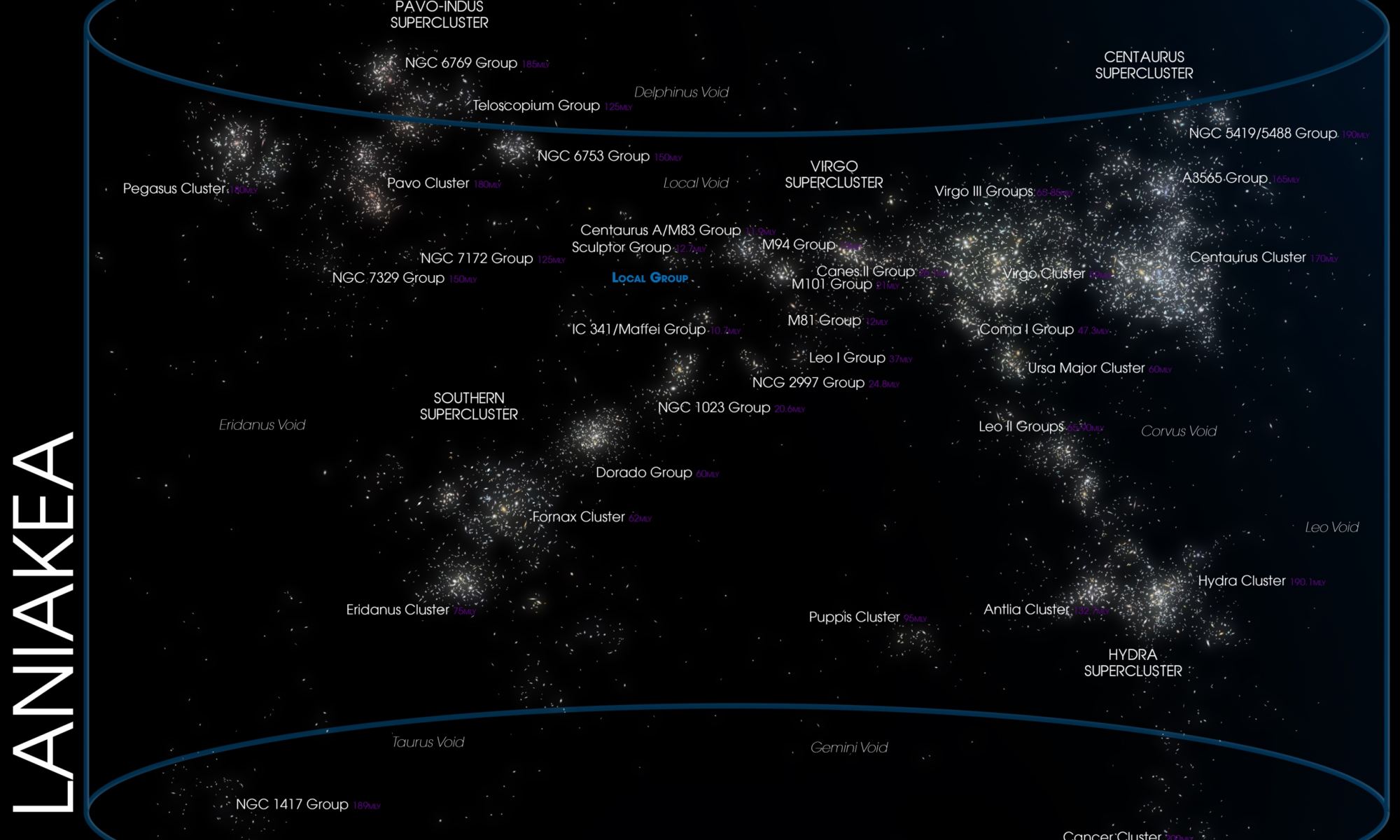
By eye, it’s impossible to pick out the exact boundaries of the superclusters, which are among the largest structures in the universe. But that’s because they are not defined by their edges, but by the common motion of their components.
The Milky Way galaxy was long thought to be a member of the Virgo supercluster, a complex, twisting branch containing over 100 individual galaxy groups and clusters stretching for more than a hundred million light-years. Astronomers arrived at that definition through some of the earliest galaxy surveys that attempted to map the nearby portions of the universe.
Those early surveys were not entirely sophisticated. Astronomers could spot the galaxies scattered around, and also dense clumps of galaxies known as clusters. Ever since the 1950’s astronomers debated if there were higher-order structures in the pattern of galaxies, wondering if “super-galaxies” (or superclusters) existed.
Once astronomers began to map deep into the universe, however, the cosmic web could not be ignored. While some galaxies found their homes in the clusters, most inhabited long, thin filaments and broad walls. This cosmic web was defined by the voids, the vast regions of almost-nothing that dominate the volume of the universe.
The largest portions of the cosmic web are the superclusters. But unlike the clusters, they are not gravitationally bound. That means that the member galaxies in a supercluster have not yet finished their building project. The superclusters are still in the process of forming. This fact makes it difficult to pick out exactly what a supercluster is.
Recently astronomers have turned to dynamical definitions of a supercluster. This means that they don’t just consider the position in space of a particular galaxy, but also its movement. Since superclusters are in the process of continual construction, this method looks at what galaxies are trying to build.
This method allows astronomers to distinguish one supercluster from another, and that’s how we’ve recognized that the Virgo supercluster is just one individual branch of a much larger structure known as Laniakea, which contains an astounding 100,000 galaxies. And that is our home in the universe.
Chinese Researchers Devise New Strategy for Producing Water on the Moon
In the coming years, China and Roscosmos plan to create the International Lunar Research PStation (ILRSP), a permanent base in the Moon’s southern polar region. Construction of the base will begin with the delivery of the first surface elements by 2030 and is expected to last until about 2040. This base will rival NASA’s Artemis Program, which will include the creation of theLunar Gatewayin orbit around the Moon and the various surface elements that make up theArtemis Base Camp. In addition to the cost of building these facilities, there are many considerable challenges that need to be addressed first.
Crews operating on the lunar surface for extended periods will require regular shipments of supplies. Unlike the International Space Station, which can be resupplied in a matter of hours, sending resupply spacecraft to the Moon will take about three days. As a result, NASA, China, and other space agencies are developing methods to harvest resources directly from the lunar environment – a process known as In-Situ Resource Utilization (ISRU). In a recent paper, a research team with the Chinese Academy of Sciences (CAS) announced a new method for producing massive amounts of water through a reaction between lunar regolith and endogenous hydrogen.
Ever since the Apollo missions brought samples of lunar rocks and soil back to Earth for analysis, scientists have known that there is abundant water on the Moon. These findings were confirmed by several subsequent robotic sample-return missions, including China’s Chang’e-5 mission. However, much of this water consists of hydroxyl (OH) created through the interaction of solar wind (ionized hydrogen) and elemental oxygen in the regolith. There is also plenty of water in the form of ice that can be found in permanent shadowed regions (PSRs), such as the craters that cover the South Pole-Aitken Basin.
Unfortunately, lunar regolith contains very little hydroxyl that can be converted into water, ranging from 0.0001% to 0.02%. Moreover, the icy patches found in cratered regions are mixed with regolith, forming layers that extend beneath the surface. As such, extraction is a challenge regardless of where the water is coming from. After they examined the samples returned by the Chang’e-5 mission, the team led by Wang determined that the highest concentrations of water were contained in ilmenite (FeTiO3), a titanium-iron oxide mineral found in lunar regolith.
According to the research team, this is due to “its unique lattice structure with sub-nanometer tunnels.” The team then conducted a series of in-situ heating experiments that revealed how hydrogen in lunar minerals could be used to produce water on the Moon. According to their study, the process consists of heating lunar regolith to temperatures exceeding 1,200 K (~930° C; 1700° F) with concave mirrors. This led to the formation of iron crystals and water bubbles in the material, the latter being released as water vapor. The chemical process is expressed mathematically as:
FeO/Fe2O3 + H –> Fe + H2O.
The resulting water vapor is then reclaimed at a rate of 51-76 mg of water for every gram of lunar soil. That works out to 50 liters (13.2 gallons) of water for every ton of processed regolith, enough to sustain 50 people daily. As the team noted in their paper, “[t]his amount is ~10,000 times the naturally occurring hydroxyl (OH) and H2O on the Moon.” In addition to drinking water, this process could provide the necessary irrigation water for growing crops, another important task for future lunar settlements to lessen their dependence on Earth.
A map showing the permanently shadowed regions (blue) that cover about 3 percent of the Moon’s south pole. Credit: NASA Goddard/LRO
This same process could be used to chemically separate hydrogen and oxygen gas from regolith, which could then be fashioned into propellant – liquid hydrogen (LH2) and liquid oxygen (LOX) – or used as fuel and for maintaining supplies of breathable oxygen. “Our findings suggest that the hydrogen retained in [lunar regolith] is a significant resource for obtaining H2O on the Moon, which is helpful for establishing scientific research stations on the Moon,” they conclude.
Another benefit is that the process is driven almost entirely by focused sunlight, while solar arrays can provide the additional power that drives the retention process. The one limiting factor is that this process will only be possible during a lunar day in the southern polar region (where China, NASA, and the ESA plan to build their bases). This means that the facility could run for two weeks straight, followed by a two-week lull.
However, this can be mitigated by stationing processing facilities away from the polar regions or possibly creating a network of solar mirrors or satellites that can direct light toward the southern polar region. In any case, this method presents a potential means of harvesting water on the Moon that is cost-effective compared to heating regolith in industrial furnaces and could be paired with ice extraction and processing to ensure future settlements have plenty of water.
Unveiling UFO Secrets: Lue Elizondo’s Revelations in Ross Coulthart Interview
In recent years, the topic of UFOs, now referred to as Unidentified Anomalous Phenomena (UAP), has shifted from the fringes of science fiction to the forefront of public discourse. One key figure at the center of this conversation is Luis “Lue” Elizondo, a former Pentagon insider who led investigations into UAPs. His revelations have stirred significant interest and concern, particularly about what the U.S. government might know—and what it may be hiding—about these mysterious objects.
In an interview with Ross Coulthart, Elizondo delved into his experiences, shedding light on his journey from a senior intelligence officer to one of the most important voices in the modern UFO movement. His story is not just about unidentified flying objects; it’s about government secrecy, personal sacrifice, and the potential implications for humanity.
The Road to UAP Investigations
Elizondo’s journey into the world of UAPs began unexpectedly. In 2009, while working as an intelligence operations specialist for the Department of Defense, he was introduced to the Advanced Aerospace Weapons System Application Program (AWSAP), which investigated advanced weaponry and technologies. It was here that Elizondo first encountered the topic of UAPs. A senior colleague bluntly asked him about his thoughts on UFOs, a subject that had never piqued his interest before. However, this conversation marked the beginning of his deep dive into the mysterious and often unsettling world of UAP investigations.
Soon, Elizondo joined the Advanced Aerospace Threat Identification Program (AATIP), where he encountered cases that challenged his understanding of reality. One such instance involved reports from the Brazilian Air Force, where townspeople in Calores claimed they were being harmed by UAPs. These accounts, once dismissed as folklore, were substantiated by military investigations, convincing Elizondo that there was more to the UAP phenomenon than mere legend.
UAPs: More Than Just Myths
Elizondo’s investigations led him to some of the most famous UFO cases in history, including the 1947 incident in Roswell, New Mexico. According to Elizondo, what happened in Roswell was not just a crash of an unknown craft but a significant event where non-human technology was recovered. While such claims may sound outlandish, Elizondo insists that they are rooted in reality.
Moreover, his research suggested that UAPs might not be as benign as some hope. Military personnel who encountered these phenomena reported being injured or traumatized, raising concerns about the true nature and intent of these unidentified objects. The Veterans Administration has even granted disability benefits to service members who suffered injuries during UAP encounters, further validating the seriousness of these incidents.
The Government’s Role and the Secrecy Surrounding UAPs
One of the most controversial aspects of Elizondo’s work is his claim that the U.S. government has been actively involved in recovering and studying UAPs for decades. He alleges that military programs have not only retrieved alien technology but have also encountered non-human entities. However, these claims have been met with stiff resistance from within the government.
Elizondo recounts facing significant obstacles during his time at the Pentagon. He believes that powerful forces within the government, possibly driven by religious beliefs or geopolitical concerns, have deliberately stymied efforts to investigate UAPs. This resistance culminated in threats against him and others involved in UAP research, leading Elizondo to make the difficult decision to resign and go public with his findings.
Public Disclosure and Its Challenges
In 2017, Elizondo took the bold step of resigning from his Pentagon position and sharing his knowledge with the world. His revelations, coupled with the release of now-famous UAP videos from the USS Nimitz and USS Roosevelt, sparked a media frenzy and reignited public interest in UFOs. These videos, which showed objects performing maneuvers beyond the capabilities of known technology, have become central to the ongoing UAP debate.
Despite the increased attention, Elizondo and others who have come forward with similar claims have faced intense scrutiny and efforts to discredit them. The Pentagon has publicly denied Elizondo’s role in AATIP and questioned the authenticity of his claims. Yet, he remains undeterred, believing that the truth will eventually prevail.
The Future of UAP Research
Elizondo’s efforts have not been in vain. His work has contributed to a shift in how UAPs are perceived, both within the government and by the public. In 2022, legislation was passed to create a UAP office within the Department of Defense, now known as the All-Domain Anomaly Resolution Office (AARO). This office is tasked with investigating UAP encounters and reporting its findings to Congress, marking a significant step towards transparency.
While Elizondo acknowledges that full disclosure is a gradual process, he remains hopeful. He believes that the next generation will play a crucial role in uncovering the truth about UAPs and their implications for humanity. For now, he encourages citizens to stay engaged, ask questions, and hold their leaders accountable.
Lue Elizondo’s journey from a Pentagon insider to a public advocate for UAP disclosure is a testament to his dedication to uncovering the truth. His experiences highlight the complexities of the UAP phenomenon and the challenges of investigating it within a framework of government secrecy and skepticism. As the conversation around UAPs continues to evolve, Elizondo’s voice remains a critical one, urging both caution and curiosity as humanity grapples with the possibility that we are not alone in the universe.
Meer van UFO'S of UAP'S, ASTRONOMIE, RUIMTEVAART, ARCHEOLOGIE, OUDHEIDKUNDE, SF-SNUFJES EN ANDERE ESOTERISCHE WETENSCHAPPEN - DE ALLERLAATSTE NIEUWTJES


 A ‘Speckling of Stars’ At the Edge of the Milky Way Is Still Puzzling Astronomers