Naar de inhoud

UFO'S of UAP'S, ASTRONOMIE, RUIMTEVAART, ARCHEOLOGIE, OUDHEIDKUNDE, SF-SNUFJES EN ANDERE ESOTERISCHE WETENSCHAPPEN - DE ALLERLAATSTE NIEUWTJES

UFO's of UAP'S in België en de rest van de wereld
akke.beakke.be
Ontdek de Fascinerende Wereld van UFO's en UAP's: Jouw Bron voor Onthullende Informatie! Ben jij ook gefascineerd door het onbekende? Wil je meer weten over UFO's en UAP's, niet alleen in België, maar over de hele wereld? Dan ben je op de juiste plek! België: Het Kloppend Hart van UFO-onderzoek In België is BUFON (Belgisch UFO-Netwerk) dé autoriteit op het gebied van UFO-onderzoek. Voor betrouwbare en objectieve informatie over deze intrigerende fenomenen, bezoek je zeker onze Facebook-pagina en deze blog. Maar dat is nog niet alles! Ontdek ook het Belgisch UFO-meldpunt en Caelestia, twee organisaties die diepgaand onderzoek verrichten, al zijn ze soms kritisch of sceptisch. Nederland: Een Schat aan Informatie Voor onze Nederlandse buren is er de schitterende website www.ufowijzer.nl, beheerd door Paul Harmans. Deze site biedt een schat aan informatie en artikelen die je niet wilt missen! Internationaal: MUFON - De Wereldwijde Autoriteit Neem ook een kijkje bij MUFON (Mutual UFO Network Inc.), een gerenommeerde Amerikaanse UFO-vereniging met afdelingen in de VS en wereldwijd. MUFON is toegewijd aan de wetenschappelijke en analytische studie van het UFO-fenomeen, en hun maandelijkse tijdschrift, The MUFON UFO-Journal, is een must-read voor elke UFO-enthousiasteling. Bezoek hun website op www.mufon.com voor meer informatie. Samenwerking en Toekomstvisie Sinds 1 februari 2020 is Pieter niet alleen ex-president van BUFON, maar ook de voormalige nationale directeur van MUFON in Vlaanderen en Nederland. Dit creëert een sterke samenwerking met de Franse MUFON Reseau MUFON/EUROP, wat ons in staat stelt om nog meer waardevolle inzichten te delen. Let op: Nepprofielen en Nieuwe Groeperingen Pas op voor een nieuwe groepering die zich ook BUFON noemt, maar geen enkele connectie heeft met onze gevestigde organisatie. Hoewel zij de naam geregistreerd hebben, kunnen ze het rijke verleden en de expertise van onze groep niet evenaren. We wensen hen veel succes, maar we blijven de autoriteit in UFO-onderzoek! Blijf Op De Hoogte! Wil jij de laatste nieuwtjes over UFO's, ruimtevaart, archeologie, en meer? Volg ons dan en duik samen met ons in de fascinerende wereld van het onbekende! Sluit je aan bij de gemeenschap van nieuwsgierige geesten die net als jij verlangen naar antwoorden en avonturen in de sterren! Heb je vragen of wil je meer weten? Aarzel dan niet om contact met ons op te nemen! Samen ontrafelen we het mysterie van de lucht en daarbuiten.

Archief

A Europan Lander Could Return an Ice Core For A Fraction of the Cost of Europa Clipper

A Europan Lander Could Return an Ice Core For A Fraction of the Cost of Europa Clipper

Cost is a major driving factor in the development of space exploration missions. Any new technology or trick that could lower the cost of a mission makes it much more appealing for mission planners. Therefore, much of NASA’s research goes into those technologies that enable cheaper missions. For example, a few years ago, NASA’s Institute for Advanced Concepts (NIAC) supported a project by Michael VanWoerkom of ExoTerra Resource to develop a lander mission that could support a sample return from Europa. Let’s examine what made that mission different from other Europa mission architectures.

The Nano Icy Moons Propellant Harvester (NIMPH) mission relies on three main advancements for one significant result: a 10x reduction in the overall mission cost. That reduced cost comes mainly from a single fact—the mission’s weight has dropped below the threshold where it can be launched by an Atlas V rather than the SLS, as similar missions would require.

The mission cost estimated for an SLS-launched Europa lander was around $5 billion, making it prohibitively expensive for NASA or any other agency without significant sacrifices to other missions. ExoTerra estimates that, by using several weight-reducing technologies, they could bring the mission price tag down to $500 million—a much more reasonable sum to garner support from one of the government space programs.

Video describing the mission concept.
Credit – NASA 360 YouTube Channel

Three different technologies would enable this weight and cost to drop. First would be the solar electric propulsion (SEP) system initially designed for use on DART. The second would be a micro in-situ resource utilization (µISRU) system, and the third would be a power-beaming system between the lander and an orbiter.

Let’s first look at the overall mission architecture to understand how each contributes. In NIMPH, a combined orbiter lander will use an Atlas V rocket to get into Earth orbit. Then, a solar electric propulsion system (SEP) was initially designed for use on the DART asteroid redirect test. Although it was not used during the DART mission, the NEXT ion thruster was part of the spacecraft that launched, and, despite suffering from some technical challenges, it could have allowed the spacecraft to reach its destination. A similar, lightweight SEP system could get NIMPH to the Jupiter system, but it could also get the sample back to Earth after the lander collected it.

Just how the lander can get that sample back off the icy moon is the focus of the next major technological step – the µISRU system. NIMPH’s architecture would require using the local ice as a propellant. A lander would literally sublimate the ice under its feet, suck up the resultant water vapor, electrolyze it to split it into oxygen and hydrogen, and then liquefy it to store it for use in getting a 1 kg ice core sample back into orbit.

Fraser discusses the missions planned for Jupiter’s system in the near future.

To do all of this requires power, though, and a lander with a radioisotope thermal generator or similar commonly used power generation system would be prohibitively heavy. So, why not utilize the massive solar array required for the SEP system and beam some of that power down to the lander? That is the concept behind the power beaming system, estimated to produce around 2 kW of power in the Jovian system, about 1.8  kW of which could be beamed directly to a lander. 

After the core has been collected and safely launched back into space using a specially designed LOx-LH2 engine that uses the water collected by the µISRU system, the lander meets up with the orbiter. The SEP system kicks back on and delivers the lander back to Earth orbit, where it once again detaches and rides back to Earth’s surface inside a standard reentry module.

There are some nuances to this entire mission architecture. For example, the SEP system wouldn’t work at full capacity in the Jovian system, so a much smaller LOx / Methane propulsion system is needed to maneuver the orbiter into position. Additionally, the lander would likely have to leave its legs embedded in the Europan ice, as the sublimation process it uses to collect fuel would likely embed them in place. 

Budgetary constraints are always a consideration in deep space exploration, as Fraser discusses in this video.

Plenty of development work on all these systems must be completed before any such mission is ready for launch. And most likely, some of the need for the scientific understanding would be met by the Europa Clipper mission set to launch later this year for $4.25 billion – not far off the 10x times expense that was the original impetus for the more capable NIMPH mission design. And while NIMPH did receive a Phase II NIAC grant, it hasn’t been selected for further development as far as we have found. So, as of now, this novel combination of mass-saving technologies will not be delivering an icy Europan sample any time soon – but maybe someday it will.

Learn More:

Lead Image:

  • Depiction of the NIMPH mission architecture.
    Credit – Michael VanWoerkom

{ https://www.universetoday.com/ }

Hoe vind je dit bericht?
Geschreven door peter om 16:31 Stuur door

'Alarming' reason UFOs appear next to nuclear power sites explained by alien experts

'Alarming' reason UFOs appear next to nuclear power sites explained by alien experts

Story by Adela Whittingham & John O'sullivan

Experts have theorized why UFOs are allegedly regularly spotted near nuclear power sites

Experts have theorized why UFOs are allegedly regularly spotted near nuclear power sites
© Getty

Experts have proposed a startling theory explaining why UFOs are often sighted near nuclear sites and high-speed aircraft. Scientists have scrutinized numerous UFO sightings over the years and believe they've identified an intriguing pattern.

The suggestion is that extraterrestrial beings might be concerned about our defensive capabilities and the potential threat of nuclear annihilation. UFO researchers have highlighted a possible link between sightings at nuclear sites and several instances have been cited to support this theory - including an orb-like object seen near Concorde and an unidentified disc that seemed to trail a squadron of fighter jets, reports the Daily Star.

The unverified UFO sighting near Concorde - which has re-emerged on Reddit's UFOs subchannel, features in a 1976 British Airways advert where an orb-like UFO can be observed darting towards the aircraft curiously before speeding away. Following the Fukushima lab disaster in Japan, witnesses told Netflix docuseries Encounters that UFOs saved them by reducing radioactivity levels, while another expert said UFOs prevented nuclear war.

Several shimmering white orbs were spotted above the plant after the nuclear catastrophe in 2011 and appeared to descend into the lab before reappearing. At the Queen's Platinum Jubilee in June 2022, the monarch was celebrated with a display by nine fighter jets releasing streams of smoke in Union Jack's red, white, and blue colors

Reddit users were quick to spot an unidentified disc near the jets, but no clear explanation has ever been provided. Reports of UFO sightings following rocket test-fires have also surfaced.

Retired US Air Force staff sergeant Larry Hancock and Ian Porritt, a data analyst associated with Harvard's UFO-hunting Galileo Project, have conducted new research showing that unusual activity around nuclear weapons and facilities has evolved over time.

The studies indicate that initially, UFOs appeared interested in nuclear weapon production, but now they are frequently seen around silos and bomber bases.

When a new arsenal of ICMBs was constructed in the 1960s, UFOs became "much more intrusive" in their approach to ICBM bases, Porritt previously stated, adding: "They're very low altitude, they penetrate the security perimeters of the base."

There is also a theory that UFOs are actually "turning off" nuclear weapons - with several reports of this happening by the US military since the 60s.

In their latest study, the pair conclude: "Notable unidentified aerial phenomena loitering, military intrusions and weapons facility interference were documented in a series of incidents in 1967 (Malmstrom AFB) and 1975 (Loring AFB and Malstrom AFB), where at least one flight of 10 Intercontinental Ballistic Missiles (ICBMs) was officially recorded as having unexplainably gone off alert status."

The study delves into the account of former US Air Force ICBM launch officer Robert Salas, who was tasked by the AARO to gather information after he reported an orange flying disc disabling 10 warheads at Malmstrom Air Force Base in Montana in 1967.

He was subsequently made to sign a non-disclosure agreement on the incident by the Air Force Office of Special Investigations. Salas isn't the only one making such claims. In 2000, US Air Force First Lieutenant Robert Jacobs also claimed to have witnessed this in 1964 but was instructed not to discuss the alleged encounter again.

Moreover, in June 2023, two Air Force veterans told DailyMail.com that they had testified to the All-domain Anomaly Resolution Office (AARO) about UFOs deactivating their nuclear warheads.

Lue Elizondo, the former head of the Advanced Aerospace Threat Identification Program, has previously stated that there "seems to be a lot of correlation" between UFO sightings and nuclear sites.

Independent researcher Robert Hastings echoed these sentiments in 2010, stating: "Declassified US government documents and witness testimony from former or retired US military personnel confirm beyond any doubt the reality of ongoing UFO incursions at nuclear weapons sites."

{ https://www.msn.com/en-us/ }

Hoe vind je dit bericht?
Geschreven door peter om 01:34 Stuur door

Aliens secretly implanted 'slimy' microchips inside folk after close encounters

Aliens secretly implanted 'slimy' microchips inside folk after close encounters

Luis Elizondo, who headed the US Government's Advanced Aerospace Threat Identification Program - aka AATIP - launched in 2007 to investigate UFOs, said he had personally handled one of the 'slimy' implants

Elizondo, 52, said it also has material from crashed 'non-human' spaceships

Elizondo, 52, said it also has material from crashed 'non-human' spaceships 

(Image: Getty Images)

Aliens secretly implanted microchips inside folk who have experienced close encounters, according to a former US defence department counter-intelligence expert.

Luis Elizondo, who headed the US Government's Advanced Aerospace Threat Identification Program - aka AATIP - launched in 2007 to investigate UFOs, said he had personally handled’ one of theslimy' implants recovered from a member of the American armed forces.

In a bombshell new book published on Tuesday the defence intelligence chief said the US Government has alien microchip-style implants in its possession.

Elizondo, 52, said it also has material from crashed 'non-human' spaceships. The revelations are set to debunk US defence department claims they have so far found no evidence aliens exist.

In his book called 'Imminent' Elizondo alleged foreign biological implants had been found in military personnel who had encountered UFOs - aka Unidentified Anomalous Phenomena or UAPs.

Elizondo alleged foreign biological implants had been found in military personnel
Elizondo alleged foreign biological implants had been found in military personnel  (Image: Getty Images/iStockphoto)

He said: "I once handled one of these implants myself, provided to me by a hospital in the Department of Veterans Affairs, where it had been removed from a US military service member who had encountered a UAP.

"The material, no longer or wider than a joint of one of your fingers, looked more like a microchip encapsulated by a slimy semi-translucent casing of tissue.

"Under a microscope it was still moving somehow.’"

He said AATIP had also 'obtained photographs of these sorts of tiny objects from living foreign military pilots'.

Elizondo claimed samples were sent to the 'Centers for Disease Control and Prevention, the Food and Drug Administration, the National Institutes of Health, and a US Army research facility at Fort Detrick in Maryland'.

Luis Elizondo, who headed the US Government's Advanced Aerospace Threat Identification Program

Luis Elizondo, who headed the US Government's Advanced Aerospace Threat Identification Program (Image: CNN)

Defence chiefs have so far refused to comment on what was one of a number of other jaw-dropping claims in Elizondo’s book.

He claimed Donald Trump had been briefed on the US Government’s UFO program during his presidency

In 2016 Elizondo said he and colleagues hatched a plan to catch a UFO in the ocean after a series of close encounters reported by US military personnel.

He revealed three years earlier a dramatic saucer had been sighted at the secretive Los Alamos missile test range in Mexico.

Laser-precise holes had been cut through armoured tanks in the Kuwaiti desert in 2003. And a giant craft had been discovered beneath the waters of Puerto Rico in 1999.

Some sections of the book were redacted by the Pentagon, which reviewed it before publication to prevent unauthorised spilling of secrets.

Defence officials stressed their review did not mean they were vouching for Elizondo’s claims - despite his credentials.

Before he took over the Government’s UFO probe he served in Afghanistan running anti-terror missions against ISIS, al-Qaeda and Hezbollah before playing a major role running terrorist jail Guantanamo Bay in the 2010s.

He said AATIP had also 'obtained photographs of these sorts of tiny objects from living foreign military pilots'.

He said AATIP had also 'obtained photographs of these sorts of tiny objects from living foreign military pilots'  (Image: Getty Images/iStockphoto)

But when top rocket scientist James Lacatski (corr) called him in for a meeting in 2008 Elizondo said he discovered something altogether stranger.

"He looked over his glasses at me and he said, 'What do you think about UFOs?’'" the defence expert said.

"I paused for a moment and I said, 'I don’t have the luxury to think about them. I’m too busy chasing bad guys'.

"He said to me: 'Don't let your own personal bias get the best of you because what you learn here may challenge any preconceived notions'.

"That’s really when I first learned what this program was about.’"

Lacatski recruited Elizondo to manage security for the Advanced Aerospace Weapon System Applications Program - a £20m defence initiative that chased down service members’ reports of UFOs and researched ways to replicate their unearthly technology.

When funding ran out in 2012 he switched to AATIP.

In his memoir Elizondo described some of the strange incidents he investigated while in Government.

He said scientists were testing a classified device at the White Sands missile test range in Los Alamos, New Mexico in 2013, when ‘witnesses spotted several mysterious and luminous orbs moving over a nearby ridge’.

x

He revealed three years earlier a dramatic saucer had been sighted at the secretive Los Alamos missile test range in Mexico  (Image: Getty)

"The orbs moved toward the test site, hovered over the device as if scanning it for intel, then zipped away, brashly flying over the heads of bewildered scientists,’’ the ex-official wrote.

"Later, several eyewitnesses saw a formation of disc-shaped objects that seemed to know precisely where the device being tested was located. This occurred several times over a few days.’’

In 1999 a Navy chopper flew over Puerto Rican waters to retrieve a dummy cruise missile they were test-launching.

"As the frogman dangled from his hoist, a large, circular object the size of a small island began to rise to the surface,’’ Elizondo wrote.

"The pilot told me that it was black as the devil and the water began to churn and roll like a witch’s brew. The crew panicked.

"As the helicopter rose, the pilot noticed the missile getting sucked underwater.’"

While serving with the US Army in Kuwait in 2003 Elizondo said military police told him a Bedouin goat herder saw a 'brilliant green flash' over tanks stationed at the remote desert base of Arifjan one night.

When Elizondo investigated they showed him a heavily armoured M1 battle tank – designed to withstand a direct missile hit – with a small hole punched through the armoured side’ that wasperfectly round, no rough edges.’

In his memoir Elizondo described some of the strange incidents he investigated while in Government.

In his memoir Elizondo described some of the strange incidents he investigated while in Government  (Image: Getty Images/Science Photo Library RF)

"The tank next to it showed precisely the same sabotage,’’ Elizondo wrote.Whatever caused this seemed to penetrate the sides of two of our best tanks with one clean hole through both.

"It was as if someone had used a super sharp cookie cutter to take a core sample of the vehicle.

"The energy required to do such a thing would have been enormous.’"

Elizondo and his colleagues’ ultimate goal was to get access to an alleged long-standing program hidden by defence contractors working with the Pentagon, that had recovered crashed UFOs – some dating back to the infamous reported flying saucer crash in Roswell, New Mexico, in 1947.

He claimed his team got a meeting with this shadowy program’s administrators.

"We were told by the people who had the material,’’ he said.

"They sat there and said: 'We’re happy to have this conversation with you. There’s some things you’re going to need to do if you want more access to it. But we’re happy to give this stuff to you’'.

"That’s a holy cow moment. That’s a seismic revelation.

"There are countless examples of this type of material being collected, that when analysed and scrutinised by scientific experts – I'm talking about US government top secret-cleared scientists – substantiate that what we're dealing with is something that was not made by us.’’

But he said these `gatekeepers’ tied his team up in red tape and ultimately failed to open their books – or secret bunkers – to the Pentagon team.

His claims echo those of Pentagon whistleblower David Grusch, a former National Geospatial-Intelligence Agency official, who told Congress in a public hearing last year that the government is covering up a UFO crash retrieval program that has half a dozen spacecraft and even alien bodies.

{ https://www.dailystar.co.uk/ }

Hoe vind je dit bericht?
Geschreven door peter om 01:16 Stuur door

AI Focused! UFO Abducts guy, teaches, returns him May 1988, Puerto Rico, UAP Sighting News.

AI Focused! UFO Abducts guy, teaches, returns him May 1988, Puerto Rico, UAP Sighting News. 

UAP,%20%E0%A4%89%E0%A4%AB%E0%A5%8C%20,%20%E0%A6%87%E0%A6%89%E0%A6%8F%E0%A6%AB%E0%A6%93,%20%C4%91i%CC%83a%20bay,%20MUFON,%20%E7%9B%AE%E6%92%83%E3%80%81%E3%82%A8%E3%82%A4%E3%83%AA%E3%82%A2%E3%83%B3,%20%20UFO,%20UFOs,%20%D0%9D%D0%9B%D0%9E%20,%20NLO,%20sighting,%20sightings,%20alien,%20aliens,%20ET,%20anomaly,%20anomalies,%20ancient,%20astrobiology,%20vreemdelinge,%20%203%20copy%204.png

Date of contact: 1988 
Location of contact: Puerto Rico 
 
This is a sighting...that pushing me in the back of my mind. It's inspiring to know that aliens abducted many individuals from many location and taught them together about the future fate of the world. None of the other abductees have ever been identified, and probably tried to hide the experience from all others, but not this brave guy in Puerto Rico. He not only reported it, he got some great photos of military jets making fly bys of the UFO when he got off. Check out his video below...it will change how you see things. Scott C. Waring

{ https://www.ufosightingsdaily.com/ }

Hoe vind je dit bericht?
Geschreven door peter om 21:51 Stuur door

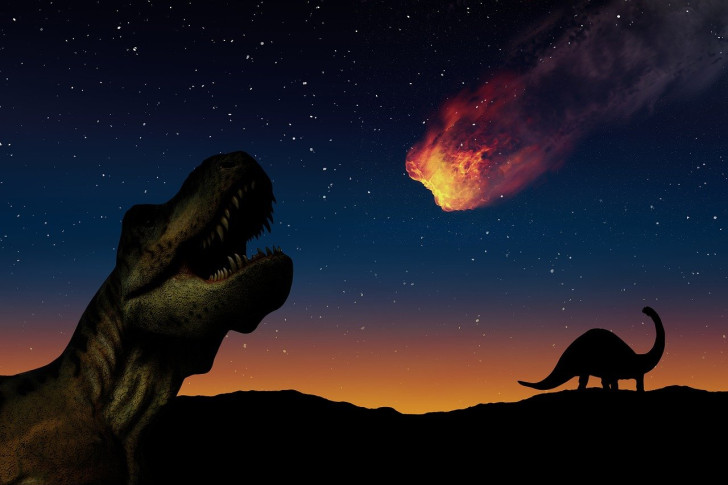
Nieuw onderzoek helpt het mysterie op te lossen van de asteroïde die leidde tot het uitsterven van de dinosauriërs

Nieuw onderzoek helpt het mysterie op te lossen van de asteroïde die leidde tot het uitsterven van de dinosauriërs

door JanineJanine image

Freepik

Nieuwe informatie over het hemellichaam dat 66 miljoen jaar geleden op onze planeet neerstortte en het uitsterven van de dinosauriërs veroorzaakte. Een studie heeft ontdekt wat het werkelijk is.

Artistic representation of the impact

Artistic representation of the impact 

(Image: Dona Jalufka / Universität Wien)

Chicxulub impactor, de ware oorsprong

Wat het uitsterven van de dinosauriërs veroorzaakte, was een ruimtesteen die op de aarde viel, maar waarover altijd een groot mysterie heeft geheerst. Het hemellichaam, de Chicxulub impactor genaamd, heeft al langer twijfels doen rijzen onder wetenschappers, die altijd hebben geloofd dat het een asteroïde of een komeet was. Recent onderzoek heeft echter de hypothese bevestigd dat het rotsblok van meer dan 9 kilometer breed deel uitmaakte van een familie van asteroïden die hun oorsprong vonden na de baan van Jupiter en die zeer zelden in contact komen met de aarde.

Een nieuwe studie, geleid door onderzoeker Mario Fischer-Gödde van de Universiteit van Keulen, Duitsland, heeft in dit opzicht verder bewijs opgeleverd, waarbij ruthenium werd aangetroffen in de geologische overblijfselen van de oude inslag. Dit is een element dat in zeer kleine hoeveelheden in de aardkorst voorkomt, maar juist zeer aanwezig is in asteroïden.

Een koolstofhoudende asteroïde veroorzaakte het uitsterven van de dinosauriërs

Pixabay

Op zoek naar soorten ruthenium in de Chicxulub-inslag onderzochten wetenschappers de wereldwijd verspreide laag puin na de inslag, de zogenaamde “Krijt-Paleogeen grens”, waarbij uniform elementen werden gevonden die behoren tot koolstofhoudende asteroïden, die grote hoeveelheden koolstof bevatten. Zoals Fischer-Gödde uitlegde: "de isotopische signatuur van ruthenium die we meten kan niets anders zijn dan een koolstofhoudende asteroïde."

Hoewel eerdere studies chemische kenmerken hebben ontdekt die verband houden met een koolstofhoudende asteroïde van het C-type, concentreerde het team zich op ruthenium. Omdat het zo zeldzaam is op aarde, zijn kleine hoeveelheden voldoende om dit soort ruimtegesteente te traceren. Wetenschappers hebben dit element gemeten bij vijf verschillende inslagen veroorzaakt door asteroïden van 541 miljoen jaar geleden tot nu: in alle gevallen werden de gebeurtenissen in verband gebracht met kiezelhoudende asteroïden, een groep hemellichamen die hun oorsprong vinden tussen Mars en Jupiter. Veel dichterbij dus dan koolstofachtigen. Dat is de reden waarom, zo merkte Fischer-Gödde op, "Chixulub tot nu toe een uniek en zeldzaam geval lijkt te zijn van een asteroïde van het koolstofhoudende type die de aarde raakt. Het ruthenium dat we in deze laag vinden, is voor bijna 100% afkomstig van de asteroïde."

De monsters van de onderzochte laag zijn afkomstig uit Spanje, Italië en Denemarken en hebben allemaal dezelfde samenstelling ruthenium, die verschilt van die van de aarde en daarom niet, zoals eerder werd aangenomen, afkomstig is van de uitbarstingen van de vulkanen van de Deccan Trappus. Bovendien verschillen de rutheniumisotopen in de onderzochte monsters van die in komeetfragmenten.

?id=100098X1555750&isjs=1&jv=15.7.1&sref=https%3A%2F%2Farstechnica.com%2Fscience%2F2024%2F08%2Fscientists-conclude-chicxulub-impactor-was-an-asteroid-from-beyond-jupiter%2F&url=https%3A%2F%2Fcdn.arstechnica.net%2Fwp-content%2Fuploads%2F2024%2F08%2Fasteroid2.jpg&xs=1&xtz=-120&xuuid=7a28ce06781731f7b524ca8987ff1ec7&cci=06944e83973b5e880a4c1462e8eab743

The 66-million-year-old Cretaceous-Paleogene boundary layer at Stevns Klint in Denmark. This boundary layer contains the globally distributed fallout produced by the asteroid impact at Chicxulub.

Credit...Philippe Claeys

Asteroïde die het tijdperk van de dinosauriërs beëindigde: meer vragen

Maar hoe stortte een koolstofhoudende asteroïde van deze omvang op de aarde? Het antwoord op deze vraag is nog steeds twijfelachtig, hoewel er wordt getheoretiseerd dat het, hoewel het zich na de baan van Jupiter heeft gevormd, mogelijk naar de buitenrand van de asteroïdengordel tussen Mars en Jupiter is geduwd, waar zich nu een groep koolstofhoudende asteroïden bevindt. Destijds kan de instabiliteit van de zwaartekracht van een jong zonnestelsel deze verplaatsing hebben veroorzaakt.

Hoe dan ook zijn er nog steeds veel open vragen over de impact van Chicxulub: een voorbeeld is hoe het de opkomst van nieuw leven kan hebben bevorderd, door sleutelelementen naar de bodem van de aarde te brengen voor de vorming van nieuwe levende wezens. Maar hoe zou de aarde er vandaag de dag uitzien als deze nooit was gevallen? “We moeten waarschijnlijk wat meer waarde hechten aan het feit dat we hier zijn en dat dit wellicht een gelukkig toeval is”, was het antwoord van Fischer-Gödde.

{ https://www.curioctopus.nl/ }

Hoe vind je dit bericht?
Geschreven door peter om 21:46 Stuur door

JFK and UFOs: What Did President Kennedy Really Know?

JFK and UFOs: What Did President Kennedy Really Know?

ngcb1

John F. Kennedy’s presidency is often remembered for the Cuban Missile Crisis, his call for the moon landing, and his tragic assassination. However, there is another, less discussed aspect of his time in office: his involvement with and knowledge of unidentified flying objects (UFOs). Despite being a subject of speculation and conspiracy theories, recent discussions and investigations suggest that JFK’s knowledge of UFOs was not only real but also deeply intertwined with Cold War politics.

UFOs and Government Secrecy

When John F. Kennedy assumed office in the early 1960s, the U.S. government already had a history of dealing with UFO sightings and phenomena. Former Australian intelligence official Geoff Cruickshank shed light on Kennedy’s awareness of these issues during an interview with NewsNation’s “Reality Check.” According to Cruickshank, JFK had access to significant information about UFOs, including official footage that captured Unidentified Aerial Phenomena (UAP) while he was in office.

One notable instance is the “Bluegill” nuclear test, part of the larger “Operation Fishbowl” series of high-altitude nuclear tests. During this test, footage reportedly shows an unidentified object plummeting into the ocean following the detonation of the bomb. The release of this footage, with subsequent redactions, suggests that it may have been made public by mistake. This incident raises questions about the extent of Kennedy’s awareness of such phenomena and the classified information surrounding them.

The Majestic 12 Documents

A key part of the UFO narrative during Kennedy’s presidency involves the so-called “Majestic 12” (MJ-12) documents. These documents, which have long been disputed, are said to be a collection of leaked files from U.S. defense intelligence agencies. They purportedly reveal secret operations involving UFOs and suggest that JFK was concerned about the potential for UFO sightings to escalate Cold War tensions.

While the authenticity of the MJ-12 documents has been debated for decades, recent findings have lent some credibility to their claims. For instance, Cruickshank pointed out that one of the secret operations mentioned in the documents, which involved spoofing UFOs to provoke Soviet reactions, was only publicly revealed two years ago. This raises the possibility that the MJ-12 documents may contain elements of truth, despite their controversial history.

Cold War Tensions and JFK’s Concerns

Kennedy’s concern about UFOs was not just about extraterrestrial visitors but also about the geopolitical implications of such sightings. During the height of the Cold War, any unidentified object in the sky could be misinterpreted as a threat, potentially leading to catastrophic consequences. JFK was particularly worried that Soviet leaders might mistake American military activities for a nuclear strike, especially if those activities involved unidentified aerial phenomena.

To address these concerns, JFK pushed for greater transparency with the Soviet Union. According to the MJ-12 documents, Kennedy ordered the CIA to be more open with the Soviets about U.S. military activities that could be mistaken for UFOs. This move was intended to reduce the risk of accidental nuclear conflict, but it also highlighted JFK’s awareness of and involvement with UFO-related matters.

The Vienna Meeting and JFK’s Awareness

One of the most significant moments in JFK’s UFO-related knowledge reportedly occurred during a meeting in Vienna with Soviet Premier Nikita Khrushchev. According to the story, Khrushchev raised concerns about unidentified objects that the Soviets believed were American in origin. This meeting may have been a turning point for JFK, leading him to become more involved in addressing the potential dangers of misinterpreting UFO sightings during a time of heightened global tensions.

Connections to JFK’s Assassination?

The question of whether JFK’s UFO knowledge played a role in his assassination is a topic of ongoing debate. Some conspiracy theories suggest that his push for transparency, particularly regarding UFOs and covert CIA operations, may have made him a target. While these theories remain speculative, they underscore the mysterious and often controversial nature of JFK’s involvement with UFOs.

VIDEO:

  • What did John F. Kennedy know — and not know — about UFOs? | Morning in America

John F. Kennedy’s knowledge of UFOs was likely more extensive than most people realize. His concerns about the potential for UFO sightings to spark international conflict, particularly with the Soviet Union, led him to take significant steps toward transparency. Whether through the “Bluegill” nuclear test footage, the Majestic 12 documents, or his interactions with Soviet leaders, JFK’s presidency was marked by a complex relationship with the UFO phenomena. While much remains uncertain, it is clear that UFOs were more than just a fringe topic for JFK—they were a matter of national and global security during one of the most dangerous periods in modern history.

{ https://www.latest-ufo-sightings.net/  }

Hoe vind je dit bericht?
Geschreven door peter om 21:28 Stuur door

Meet Oumuamua: the interstellar object some astronomers thought might have been an alien spaceship

Meet Oumuamua: the interstellar object some astronomers thought might have been an alien spaceship

A confusing intersteller visitor that lead to weird theories

A confusing intersteller visitor that lead to weird theories

The Oumuamua comet is now confirmed to be the first interstellar object to visit our solar system, according to NASA. But when the object was first discovered back in 2017 it caused a lot of confusion and spurred on more than a few weird theories about what it was and where it came from.

It only took them half a decade

©Provided by The Daily Digest

It took half a decade to sole the mystery

Astronomers studying the sky back in 2017 were examining the night sky from the Panoramic Telescope and Rapid Response System and stumbled on a weird comet with a speed and trajectory that didn't make sense. 

©Provided by The Daily DigestLike nothing we saw before

©Provided by The Daily Digest

Photo: Wiki Commons By nagual design; Tomruen - Own work made with trajectory data from JPL Horizons, redrawn by nagual design, CC BY-SA 4.0

Like nothing we saw before
The comet in question was moving too fast and entered our solar system on a trajectory that couldn't be explained by any known scientific theory at the time, which led to a lot of speculation about the interstellar object.

Could it be an alien spaceship?

©Provided by The Daily Digest

Could it be an alien spaceship?
In 2018, Harvard astronomers Avi Loeb and Shmuel Bialy theorized that the object's nongravitational acceleration could have been evidence that it was a spaceship using a solar sail according to Space.com, a theory which most astronomers did not support according to the news outlet.

How do early quasars differ from modern quasars?

©Provided by The Daily Digest

A visitor from deep space
The comet had a speed of roughly 54 miles per second according to Time Magazine’s Jefferey Kluger and had a highly elliptical orbit, which scientists said indicated the comet didn’t originate in our solar system and actually traveled to us from deep space.

Theories become reality

©Provided by The Daily Digest

Theories become reality
“For decades we’ve theorized that such interstellar objects are out there, and now—for the first time—we have direct evidence they exist,” said the Associate Administrator of NASA’s Space Mission Direct Thomas Zurbuchen at the time of the comet's discovery.

A history-making discovery

©Provided by The Daily Digest

A history-making discovery
“This history-making discovery is opening a new window to study [the] formation of solar systems beyond our own,” Zurbuchen added, and he was more right than he knew.

Odd data indicated abnormalities

©Provided by The Daily Digest

Photo Credit: NASA

Odd data indicated abnormalities
Scientists quickly realized that at the speed the comet was traveling, it had to have accelerated in the latter half of its journey, a fact that shocked the scientific community according to Kluger since the speed increase couldn’t be explained by our sun's gravitational pull or any other scientific theory.

A possible alien craft?

©Provided by The Daily Digest

A possible alien craft?
“That left even sober scientists to speculate that the object might actually be an alien spacecraft,” Kluger wrote, “speeding up under its own power during its barnstorming of our solar system.”

The comet Oumuamua

©Provided by The Daily Digest

Photo: By Original: ESO/M. Kornmesser Derivative: nagualdesign, CC BY-SA 4.0

The comet Oumuamua
The comet was later named Oumuamua—which means “a messenger from afar” in Hawaiian according to Kluger—and while media speculation ran rampant about the possible discovery of aliens, scientists got to work figuring out a less fantastical explanation for Oumuamua.

The Oumuamua's mysteries have been revealed

©Provided by The Daily Digest

The Oumuamua's mysteries have been revealed
Some researchers theorized that what was found could have been an alien spacecraft, but roughly half a decade after the discovery, astronomers finally figured out the mysteries behind the comet and published their findings in March 2023.

What we should be worried about

©Provided by The Daily Digest

We might have an explanation
Hard work into the origins of our solar system's first interstellar visitor eventually paid off and two scientists believe they’ve finally found an explanation for Oumuamua’s unexplained speed increase halfway through its journey.

Part of the data

©Provided by The Daily Digest

Trapped hydrogen fueled Oumuamua's speed increase
Professors Jennifer Bergner and Darryl Seligman were able to show that Oumuamua’s speed increase was due to the release of what they said was “trapped molecular hydrogen” that had formed through an “energetic processing” of the comet’s icy body.

Calculating our galaxy’s rotation curve

©Provided by The Daily Digest

An explanation from Bergner and Seligman
“In this model, Oumuamua began as an icy planetesimal that was irradiated at low temperatures by cosmic rays during its interstellar journey, and experienced warming during its passage through the Solar System,” the professors explained.

The comet melted and hydrogen emerged

©Provided by The Daily Digest

The comet melted and hydrogen emerged
As Oumuamua warmed, the trapped hydrogen in its body was allowed to escape, which fueled the comet and allowed it to increase its speed to levels that baffled scientists.

Published in Nature

©Provided by The Daily Digest

Photo Credit: NASA

Published in Nature
Bergner and Seligman published their work in the peer-reviewed journal Nature, and if it proves true, it would explain how Oumuamua was able to speed up in the latter half of its journey to our solar system.

©Provided by The Daily Digest

"A very interesting explination"
Karen Meech is a leading expert on comets at the University of Hawaii’s Institute for Astronomy, and she told the New York Times via email at the time the study was published that Bergner and Seligman's explanation for Oumuamua’s speed was a “very interesting” one.

Plausible but not a solved

©Provided by The Daily Digest

Plausible but not a solved
“I’m not willing to say it ‘solves’ things,” Meech continued in her email to the New York Times, “the smoking gun there would be to have detected hydrogen spectroscopically.”

Oumuamua isn't solved

©Provided by The Daily Digest

Oumuamua isn't solved
“But it is very plausible, and if another object is discovered that looks like Oumuamua, then all these models and explanations provide a lot of guidance for the observations,” Meech added.

Debate will rage on

©Provided by The Daily Digest

Debate will rage on
Controversy over Oumuamua raged on, however, since many astronomers at the time didn't agree with Bergner and Seligman’s assessment of Oumuamua’s icy body fueling the comet's speed increase.

A gas that would end all life on Earth

©Provided by The Daily Digest

There was no evidence Oumuamua had an icy body
“The authors of the new paper claim that it was a water ice comet even though we did not see the cometary tail,” Harvard astronomer Dr. Avi Loeb told the New York Times. “This is like saying an elephant is a zebra without stripes.”

The other possibility

©Provided by The Daily Digest

The other possibility
In 2021, Alan Jackson and Steve Desch of Arizona State University proposed that Oumuamua could be a giant chunk of nitrogen that was blasted off of a Pluto-like celestial body according to Space.com.

{ https://www.msn.com/en-us/ }

Hoe vind je dit bericht?
Geschreven door peter om 21:16 Stuur door

10 Things Scientists Can't Explain and Attribute to God

10 Things Scientists Can't Explain and Attribute to God

Story by James Dorman
 
10 Things Scientists Can't Explain and Attribute to God
©Tomas T/Unsplash/Vatican Pool/Getty Images
10 Things Scientists Can't Explain and Attribute to God
It’s human nature to try and explain what we see around us. Many religious teachings came to be as a way to explain the unexplainable.

As the centuries passed and our scientific understanding of the world and the wider universe developed, new scientific theories rendered some of these religious ideas obsolete. There are, though, still some areas where science simply cannot produce an explanation.
The Universe and Its Origins
©Greg Rakozy/Unsplash
The Universe and Its Origins
Let’s start with a big one — the existence of the universe. Scientific understanding of the universe and how it came to be has come a long way from the Biblical notion of God creating existence with a few words.

But there’s still a lot that science doesn’t have an answer for. Scientific opinion has shifted from the universe being infinite to it having a beginning point. If it has a beginning, then something outside of the universe brought it into existence. Perhaps something divine.
A ‘Goldilocks Universe’
©Dario Brönnimann/Unsplash
A ‘Goldilocks Universe’
The universe is also finely tuned, with conditions being “just right” to allow for the existence of life on Earth. Any sort of change one way or the other, and life could not exist.

The nature of the fundamental physical laws of the cosmos is very precise. Some feel that they’re too precise to have occurred by accident and instead point to some sort of intelligent design.
Consciousness
©brewbooks/Wikimedia Commons
Consciousness
The scientific definition of the nature of life is extremely limited. We can describe the biological processes in great detail and talk about how the anatomy of the brain permits higher thought, but science cannot really explain consciousness.

And life in the truest, philosophical sense is all about consciousness. The concept of biocentrism takes a more spiritual view of existence that factors in consciousness and much of what religion might describe as the human soul.
Morality
©Tingey Injury Law Firm/Unsplash
Morality

Similarly, science can handily explain basic, almost animalistic responses humans have to the world around us, such as why we as a species might have shared “fight or flight” threat responses.  

But beyond this, we as a species also have a shared morality. We have ethics. Similar moral constructs crop up time and again in different cultures and civilizations totally independently of one another. Science cannot explain why the animal species we call humans have this fundamental, shared, complex moral code. 

Materialistic Desire

©Shane/Unsplash

Materialistic Desire
If we again think of humans as animals, we can explain why there is a biological imperative to secure resources necessary for our survival. But what if we remove this survival need?

We still seek out and cling to things for materialistic or sentimental values. Science is far weaker at explaining these phenomena. Sentimentality in particular is something that is far better explained in the realm of spirituality.

The Design of Life

©Sangharsh Lohakare/Unsplash

The Design of Life
DNA is essentially the code of life. Sequences of nucleotide base pairs describe how to create specific proteins, basically working a lot like computer code for a piece of software.

Science cannot sufficiently explain the chemical evolutionary origins of complex DNA sequencing. If we stick with the software analogy, one explanation could be that it’s a purpose-built design tool for an intelligent designer to use to “program” life in the universe.

The Existence of Miracles

©Marites Allen/Unsplash

The Existence of Miracles
Miracles are present in the world, if we define a miracle as some surprising outcome that defies scientific conventions, laws and theory and yet happens all the same.

Beyond this, there are coincidental occurrences that stretch credulity. Scientific thinking holds that there is an underlying reason for why things happen, but scientific theory can fail to explain how some of these seemingly impossible coincidences or miracles occur. Instead, there might be the divine at play.

Human Connection

©Hugh Edmund/Wikimedia Commons

Human Connection
There are biological reasons to explain why humans within the same families seek connection. Again, there is a biological imperative to stay connected and make sure your lineage’s genes are passed to the next generation.

But what about connections that aren’t about basic, animalistic survival? Why do we seek meaningful connections with others, a connection that has no survival benefit? Again, this is more about the spiritual meaning of what it is to be human rather than the scientific meaning

Life After Death

©Matthew Schwartz/Unsplash

Life After Death
It’s one of the great mysteries that has preoccupied human existence — what happens after we die? It’s a question that permeates philosophy, culture and literature — the world beyond death is Hamlet’s “undiscovered country.”

The limitations of the scientific definition of life mean that science also struggles to tackle what happens after death. The biological processes end, but what of the consciousness? Even science states that everything in existence must be conserved, so our “souls” must go somewhere.

The Meaning of Life

©Tingey Injury Law Firm/Unsplash

The Meaning of Life
A common theme seems to be that science is very good at explaining the “how” of things but less equipped to tackle questions of “why.” We can explain the origins of life scientifically, but not its purpose.

Some scientific thinking navigates this by removing the idea of purpose entirely — there is no meaning to life, life simply is. Many scientists, however, do not accept this and continue their scientific explanation of the mysteries of the universe, holding a spiritual belief that there is some meaning to it all. A meaning they cannot define.

When Science Meets Faith

©Davide Cantelli/Unsplash

When Science Meets Faith
Science is, fundamentally, the pursuit of answers. Just because science cannot explain something yet, that doesn't mean that scientists relent and accept something as inexplicable.

But by the same token, the fact that science cannot explain something can be taken as proof that the explanation lies beyond the realm of science and exists in the spiritual. Furthermore, science can be great at providing explanations for the world around us but falls short of religion when it comes to giving meaning to everything.

Hoe vind je dit bericht?
Geschreven door peter om 18:47 Stuur door

3 Burning Questions We All Have About Boeing Starliner’s Epic Debacle

3 Burning Questions We All Have About Boeing Starliner’s Epic Debacle

Starliner and its first crewed mission remain in limbo.

by Doris Elín Urrutia
 
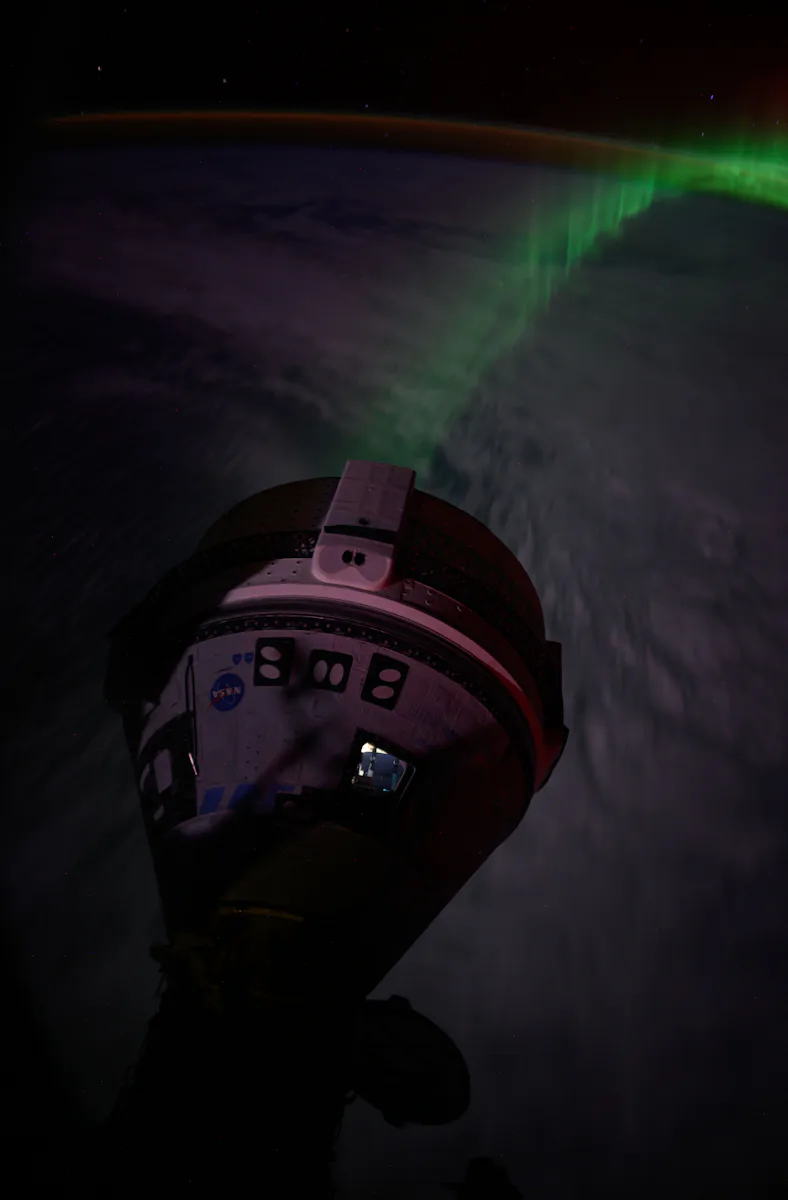
In this file photo, an aurora streams below Boeing's Starliner spacecraft docked to the forward port...
Nasa/UPI/ShutterstockBoeing’s Starliner, which has been stuck in space since June 6 for what was meant to be an eight day long mission, is at a standstill.

The evaluations NASA will undertake over the next few weeks will determine if Starliner returns to Earth with its crew, or if it comes back alone, and leaves its crew in space for many more months with a return home pushed to next year. There are still many unknowns, but a teleconference NASA held on Wednesday did shed light on some big questions.

NASA gave Boeing a contract a decade ago to build a commercial system to fly astronauts to and from low-Earth orbit. The aerospace giant’s first trial run with astronauts launched from NASA’s Kennedy Space Center up towards the International Space Station (ISS) on June 5. The mission, called Crew Flight Test, was slated to last eight days. Friday marked mission day 72.

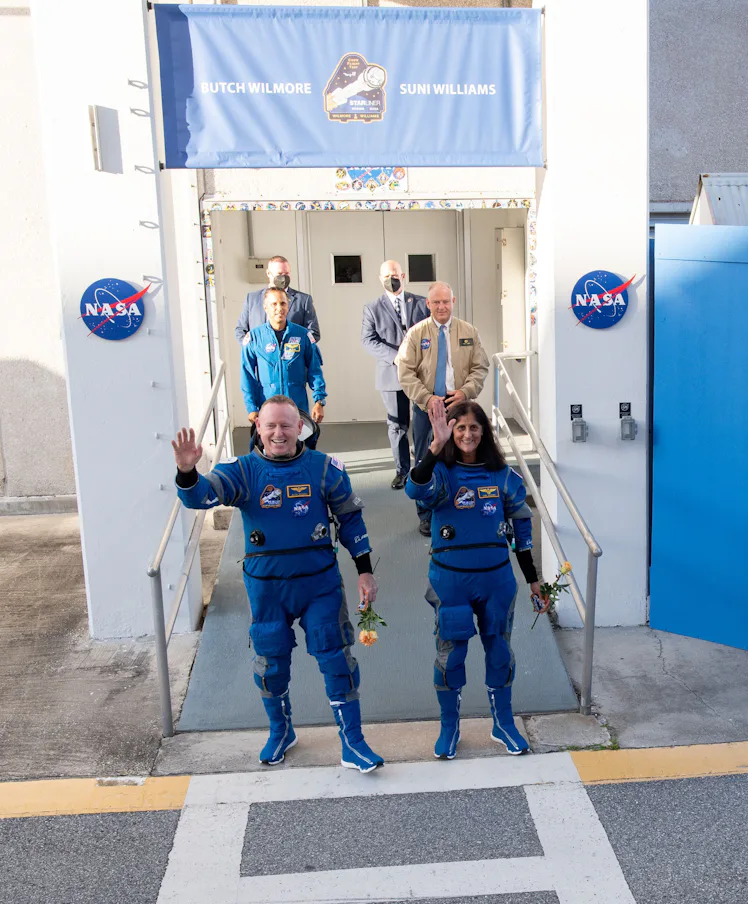
NASA astronauts Butch Wilmore (L, front) and Suni Williams (R, front) wave before boarding Boeing's ...

NASA astronauts Butch Wilmore (left) and Suni Williams (right) wave to a crowd before boarding the Boeing Starliner spacecraft in Cape Canaveral, Florida on June 5, 2024.

Xinhua/Shutterstock

Boeing Starliner’s inaugural crew flight carried NASA veteran astronauts Butch Wilmore and Suni Williams. They’re still in space. The duo’s delay to come home stems from issues that first arose as Starliner sought to rendezvous with the ISS.

A key problem with Starliner is that five of its thrusters, which are part of the propulsion system, failed and turned off during the flight to the ISS. Over the past several weeks, NASA and Boeing have performed a number of tests to both the Starliner ship currently stuck at the ISS as well as a test unit in New Mexico to evaluate whether the thrusters are working and the spaceship can safely take astronauts home.

Specifically, on the Starliner docked at the ISS, scientists have performed what they call "hot fire tests" where they ignite all but one of Starliner's thrusters for a very short period of time to test that the thrusters are working. On a test thruster in New Mexico, Boeing engineers attempted to replicate what the thrusters in space would go through by putting them through the same thermal conditions and sequences that they'd feel during the flight.

The tests revealed that the thrusters were likely overheating, and that a teflon seal on the thruster’s oxidizer line poppet was swelling and causing fuel to get blocked.

When will NASA decide if Starliner will return to Earth with astronauts?

The Flight Readiness Review, in which officials are polled for go or no-go, could happen as early as next week. It could potentially get pushed to the beginning of the week beginning with Monday August 26, Ken Bowersox, associate administrator, NASA’s Space Operations Mission Directorate, told reporters at a teleconference NASA held on Wednesday. “It's a fairly major discussion to decide about whether or not we're going to have crew on board Starliner for return,” Bowersox said.

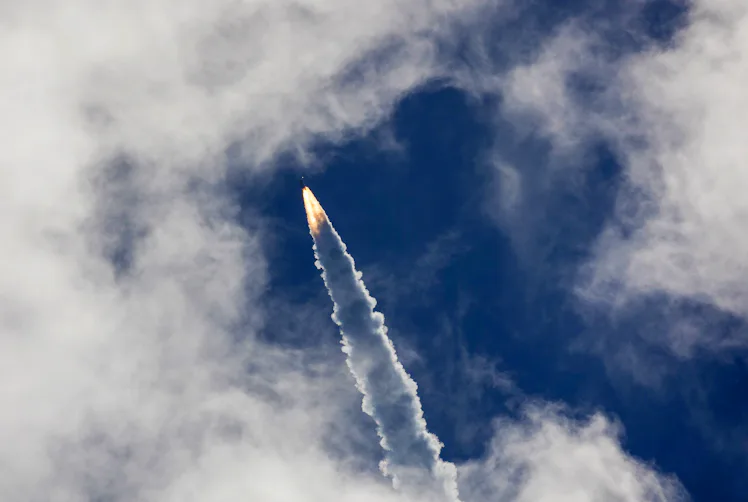
NASA astronauts Suni Williams and Butch Wilmore take their historic ride on Boeing's CST-100 Starlin...

The Boeing Starliner lifting off from Florida up towards low-Earth orbit. 

Orlando Sentinel/Tribune News Service/Getty Images

Could NASA delay the decision again?

At the press conference, Bowersox said that “it’s getting a lot harder,” to delay the decision. He cited consumables, and the need to use the ISS ports for cargo missions, as reasons to avoid postponing the decision of whether or not Starliner returns crewed or empty much longer. “We’re reaching a point where that last week in August we really should be making a call, if not sooner,” Bowersox added.

If Starliner returns with no astronauts, would it mean the end to NASA’s quest for a backup plan in space?

NASA spearheaded its Commercial Crew Program so that it could pay more than one company to fly its astronauts to space. Boeing and SpaceX are meant to be dissimilar contingencies, or different options, in case one company cannot provide astronauts with a lift to space, or return them in case of an emergency.

In fact, although many details haven’t yet been ironed out, NASA has already reached out to SpaceX to bring Wilmore and Williams home on their Crew-9 mission’s Dragon capsule if Starliner is deemed too dangerous to bring the duo home.

“All I can say is that our intent is to keep pressing to have two providers,” Bowersox said.

“We've got two very good companies, and we want to develop two strong and capable spacecraft. We think we still have a very good chance of doing that. But the answer is always in the data, right? That's why we're doing this mission.”

{ https://www.inverse.com/ }

Hoe vind je dit bericht?
Geschreven door peter om 18:15 Stuur door

Saturn's Moon Mimas May Be Way More Inhabitable Than We First Thought

Saturn's Moon Mimas May Be Way More Inhabitable Than We First Thought

The existence of another watery world in the outer solar system may offer clues to how such seas form.

by Shannon Hall and Knowable Magazine
 
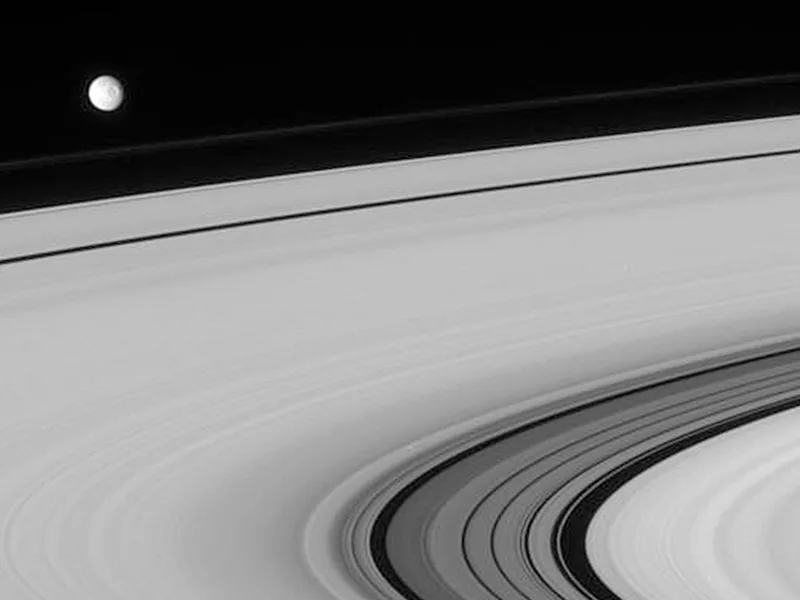
Saturn’s moon Mimas, floating above the planet’s rings, might conceal a liquid ocean beneath its sur...
NASA/JPL

The outer solar system is awash with liquid water. A briny ocean is concealed beneath the icy crust of Jupiter’s fourth largest moon, Europa — with more water than all of Earth’s oceans combined. A subsurface sea on Saturn’s moon, Enceladus, spews plumes of water vapor into space. And there are tantalizing hints that oceans could exist on Ganymede, Callisto, Titan and other distant moons, too.

Now, another moon appears to be secretly flooded. Saturn’s moon Mimas, known for its uncanny resemblance to the Star Wars Death Star, might harbor liquid water beneath its icy shell. If true, similar seas could be hiding in plain sight, and the outer solar system may be far more habitable than previously thought.

In 2014, scientists first published evidence that Mimas might be a watery world — submerging the community in a decade-long debate. Many, including Alyssa Rhoden, a planetary scientist now at the Southwest Research Institute in Boulder, Colorado, were highly skeptical of the possibility. Their reasoning was simple: Mimas’ heavily cratered surface showed no signs of an internal ocean. As with Enceladus, Saturn’s gravity should churn the ocean waters within Mimas, causing large cracks to appear in the surface ice. No such fractures have been seen.

The tides might now have turned. Two studies, one by Rhoden and colleagues and another by Valéry Lainey of the Paris Observatory and colleagues make a stronger case for an ocean and even explain the conundrum at the surface. Together, the research suggests that Mimas may have a young and changing ocean. If so, it raises the prospect of an outer solar system rife with activity. That possibility is what most excites Rhoden, who spoke with Knowable Magazine about the potential ocean and why it could be such a boon for scientists.

This conversation has been edited for length and clarity.

What do we know about these hidden oceans?

In many ways, they look like our own — at least in that they’re likely made up of saltwater.

We know that these ocean worlds have icy surfaces from their overall bright appearance, as confirmed by telescopic and spacecraft measurements that detect signatures of water ice. Some ocean moons even have low enough densities that they probably have water ice mixed into the rock in their interiors. With heat, that water ice melts into liquid water, which will erode rock to create saltwater. On Enceladus, saltwater is conveniently spewing out into space.

Given how cold it is in the outer solar system, what generates the heat?

Distant oceans might at first seem out of the question. Heat to melt ice is hard to come by, so far from the Sun. But thanks to a gravitational quirk, the outer solar system can be quite balmy.

Consider Jupiter and its Moon Europa. Jupiter exerts a strong gravitational force on Europa, elongating Europa in the direction of Jupiter. Because Europa’s orbit is eccentric — it swings close to Jupiter before swinging farther away — Europa gets stretched and released over time. This creates friction in the interior that provides the heat necessary to sustain a liquid ocean.

We first saw hints that Europa might host a subsurface ocean when the Voyager mission swung past Jupiter in 1979. Europa doesn’t look like our Moon or even most bodies in the inner solar system. Its icy surface doesn’t have a lot of craters but is instead covered with crisscrossing lines and broken pieces that have shifted around. You don’t have to look at it very hard to imagine that something different is going on there.

You mention surface features. What other evidence do we rely on to detect a hidden ocean?

One way is to look at magnetic fields. Because saltwater is electrically conductive, it can create a magnetic field around the Moon that disrupts the planet’s magnetic field. That is a leading piece of evidence for Europa’s subsurface ocean.

But that alone is not enough. It’s the combination of evidence that leads us to conclude there’s an ocean. We might also consider, for example, measurements of salt on the surface and how the Moon’s gravity tugs on a spacecraft. Since the densities of rock or liquid metal differ from the density of liquid water, the size of those tugs offers clues to the material, as well as where within the Moon it is concentrated.

Or we might simply imagine how the Moon’s face changes direction throughout its orbit. Generally, these small moons always show the same face as their parent planet, much like our Moon. But as a moon moves through its orbit, the direction it points can shift a bit back and forth — creating a shimmy in the visible portion. The extent of that shimmy depends on the interior. An ice shell over an ocean can move more freely than an ice shell on top of rock, so the changes tend to be larger. That’s how the ocean was detected at Enceladus. And it’s one of the best lines of evidence for an ocean at Mimas.

Let’s talk about Mimas. How did you end up studying the Moon?

I had spent a decade or so working on Europa and other icy moons when the 2014 Mimas paper came out. That paper measured that shimmy, or libration, as the visible portion of the moon shifts, suggesting Mimas either hosted a subsurface ocean or an oddly shaped core.

But an ocean seemed impossible. Mimas look much like our Moon, with a heavily cratered surface. It didn’t host any crisscrossing lines or broken pieces like Europa. And it certainly wasn’t spewing geysers like Enceladus. So I took one look at Mimas, and I said, “There’s no way that is an ocean moon.” Yet I realized I couldn’t refute the idea.

I kept Mimas in my mind over the years, eventually putting together a paper for the Annual Review of Earth and Planetary Sciences in 2023. That paper ruled out several ocean scenarios and left only one option, an ocean that formed recently, well after Mimas itself. A young ocean could be stealthy. But it was still just a hypothesis.

How has the most recent work changed the picture?

Early in 2024, Valéry Lainey and his group reported new observational evidence in favor of an ocean on Mimas. They looked not at the libration but at changes in Mimas’ orbit through time — changes that depend on the interior structure. They found that those changes could not be explained by an oddly shaped core, leaving an ocean as the most viable option.

My team’s research, published in June, has gone on to explain the lack of visible surface fractures. We argue that the ocean is so young — merely 10 million years old — that it has only recently stopped growing. We think that the tidal stresses of a young churning ocean may not be enough to crack the ice above. Instead, what’s needed is the stress that comes when the ocean eventually refreezes. Because Mimas is losing heat as its orbit becomes less eccentric over time, refreezing — which is only just beginning on Mimas — will cause the overlying ice to crack.

The research suggests that eventually, Mimas is probably going to lose its ocean, which is a little sad since it is just being recognized. But on the flip side, Mimas may become the new Enceladus — the new coolest moon of Saturn — with deep cracks and maybe even jets of water.

What are the big-picture implications of this research?

I’m interested in this from a geophysical standpoint. We think of the earliest epochs in our solar system as the hot times when all the activity happens; then, everything evolves toward a quieter state. Pluto’s moon, Charon, might have lost an ocean. And Europa’s and Ganymede’s oceans are pretty old. That a moon could form a new ocean well into its history and that we could watch? That’s exciting! It opens up the possibility that any world, including one with an old, cratered surface, may be going through a similar transition.

There’s also interest in habitability — whether these oceans are suitable for supporting life. We don’t currently know whether any of the solar system’s oceans, other than our own, are habitable, have been inhabited or are currently inhabited. But if Mimas truly has an ocean, we could have a window into how these worlds develop and even how habitats are created and lost. It is exciting to be able to see these processes as they occur — instead of always viewing the end states of things that happened long ago.

What upcoming missions could tell us more?

The European Space Agency has already launched the Jupiter Icy Moons Explorer, or Juice, which will make detailed observations of Europa, and the moons Ganymede and Callisto, which show hints of oceans. And in the fall of 2024, NASA will send the Europa Clipper into orbit around Jupiter to determine if Europa has conditions suitable for life.

The Uranus system, which is high on NASA’s agenda for a future mission, is where I see the most implications for this recent work. It’s surprisingly similar to the Saturn system, including hosting ice-rich, mid-sized moons similar to Mimas and Enceladus. If there’s a young ocean on Mimas, it is not a huge leap to consider that water worlds might exist among the Uranian moons, too.

  • This article originally appeared in Knowable Magazine, an independent journalistic endeavor from Annual Reviews. Sign up for the newsletter.

{ https://www.inverse.com/ }

Hoe vind je dit bericht?
Geschreven door peter om 18:03 Stuur door

Meer van UFO'S of UAP'S, ASTRONOMIE, RUIMTEVAART, ARCHEOLOGIE, OUDHEIDKUNDE, SF-SNUFJES EN ANDERE ESOTERISCHE WETENSCHAPPEN - DE ALLERLAATSTE NIEUWTJES

↑ Terug naar de berichten