Naar de inhoud

UFO'S of UAP'S, ASTRONOMIE, RUIMTEVAART, ARCHEOLOGIE, OUDHEIDKUNDE, SF-SNUFJES EN ANDERE ESOTERISCHE WETENSCHAPPEN - DE ALLERLAATSTE NIEUWTJES

UFO's of UAP'S in België en de rest van de wereld
akke.beakke.be
Ontdek de Fascinerende Wereld van UFO's en UAP's: Jouw Bron voor Onthullende Informatie! Ben jij ook gefascineerd door het onbekende? Wil je meer weten over UFO's en UAP's, niet alleen in België, maar over de hele wereld? Dan ben je op de juiste plek! België: Het Kloppend Hart van UFO-onderzoek In België is BUFON (Belgisch UFO-Netwerk) dé autoriteit op het gebied van UFO-onderzoek. Voor betrouwbare en objectieve informatie over deze intrigerende fenomenen, bezoek je zeker onze Facebook-pagina en deze blog. Maar dat is nog niet alles! Ontdek ook het Belgisch UFO-meldpunt en Caelestia, twee organisaties die diepgaand onderzoek verrichten, al zijn ze soms kritisch of sceptisch. Nederland: Een Schat aan Informatie Voor onze Nederlandse buren is er de schitterende website www.ufowijzer.nl, beheerd door Paul Harmans. Deze site biedt een schat aan informatie en artikelen die je niet wilt missen! Internationaal: MUFON - De Wereldwijde Autoriteit Neem ook een kijkje bij MUFON (Mutual UFO Network Inc.), een gerenommeerde Amerikaanse UFO-vereniging met afdelingen in de VS en wereldwijd. MUFON is toegewijd aan de wetenschappelijke en analytische studie van het UFO-fenomeen, en hun maandelijkse tijdschrift, The MUFON UFO-Journal, is een must-read voor elke UFO-enthousiasteling. Bezoek hun website op www.mufon.com voor meer informatie. Samenwerking en Toekomstvisie Sinds 1 februari 2020 is Pieter niet alleen ex-president van BUFON, maar ook de voormalige nationale directeur van MUFON in Vlaanderen en Nederland. Dit creëert een sterke samenwerking met de Franse MUFON Reseau MUFON/EUROP, wat ons in staat stelt om nog meer waardevolle inzichten te delen. Let op: Nepprofielen en Nieuwe Groeperingen Pas op voor een nieuwe groepering die zich ook BUFON noemt, maar geen enkele connectie heeft met onze gevestigde organisatie. Hoewel zij de naam geregistreerd hebben, kunnen ze het rijke verleden en de expertise van onze groep niet evenaren. We wensen hen veel succes, maar we blijven de autoriteit in UFO-onderzoek! Blijf Op De Hoogte! Wil jij de laatste nieuwtjes over UFO's, ruimtevaart, archeologie, en meer? Volg ons dan en duik samen met ons in de fascinerende wereld van het onbekende! Sluit je aan bij de gemeenschap van nieuwsgierige geesten die net als jij verlangen naar antwoorden en avonturen in de sterren! Heb je vragen of wil je meer weten? Aarzel dan niet om contact met ons op te nemen! Samen ontrafelen we het mysterie van de lucht en daarbuiten.

Archief

3 Burning Questions We All Have About Boeing Starliner’s Epic Debacle
3 Burning Questions We All Have About Boeing Starliner’s Epic Debacle
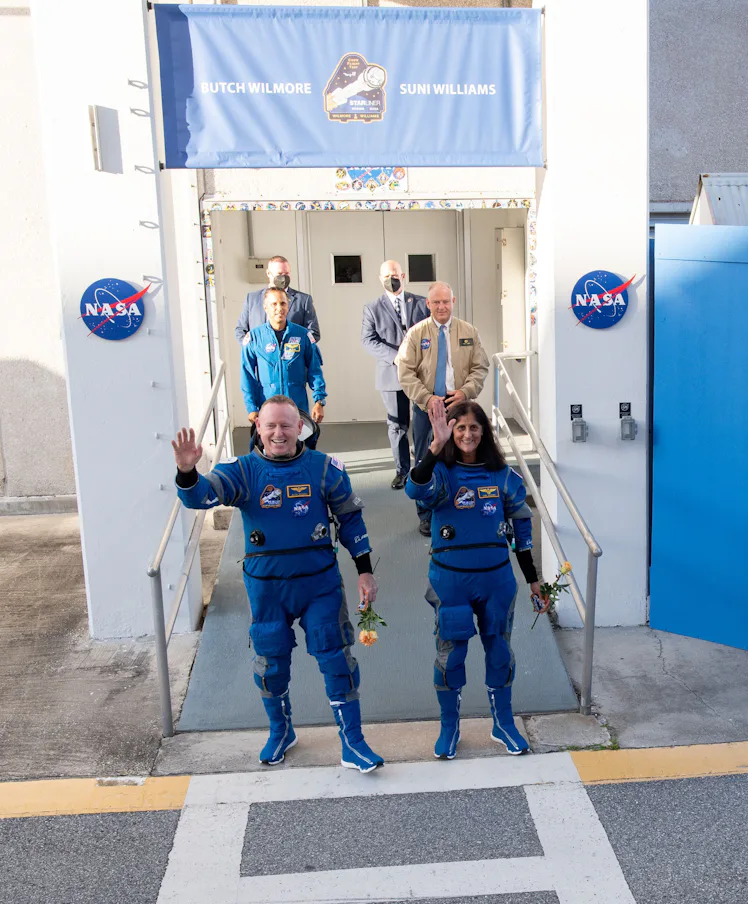
Starliner and its first crewed mission remain in limbo.

by Doris Elín Urrutia
 
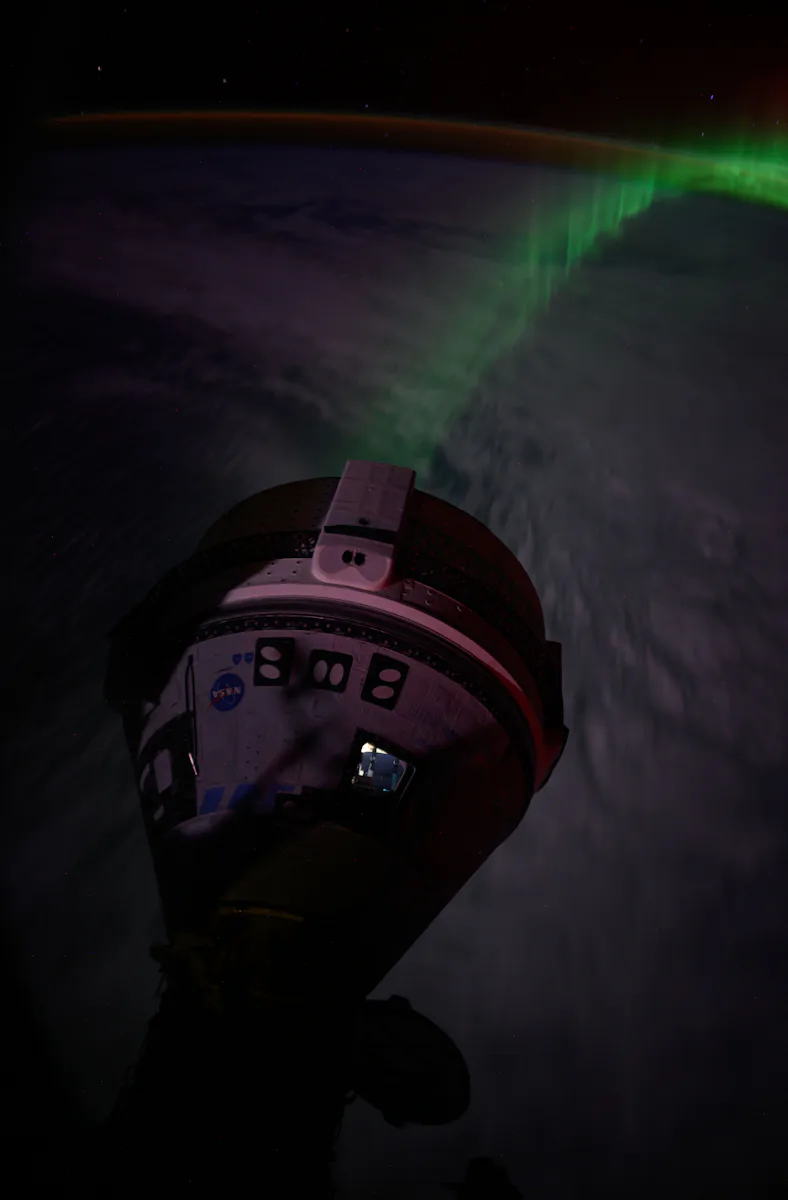
In this file photo, an aurora streams below Boeing's Starliner spacecraft docked to the forward port...
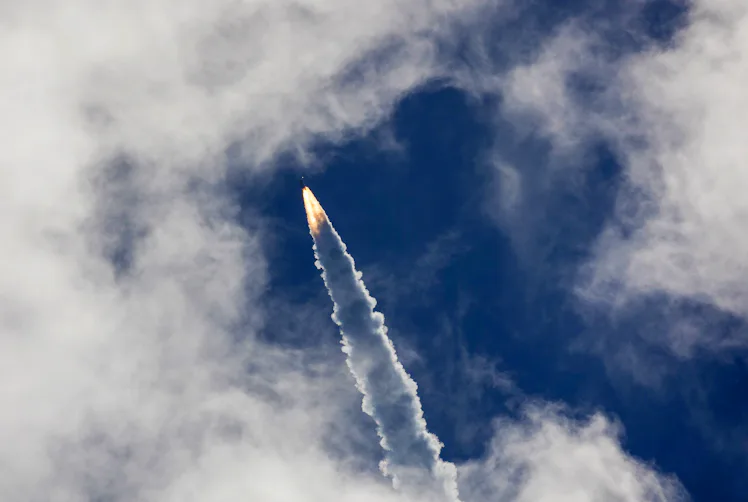
Nasa/UPI/ShutterstockBoeing’s Starliner, which has been stuck in space since June 6 for what was meant to be an eight day long mission, is at a standstill.

The evaluations NASA will undertake over the next few weeks will determine if Starliner returns to Earth with its crew, or if it comes back alone, and leaves its crew in space for many more months with a return home pushed to next year. There are still many unknowns, but a teleconference NASA held on Wednesday did shed light on some big questions.

NASA gave Boeing a contract a decade ago to build a commercial system to fly astronauts to and from low-Earth orbit. The aerospace giant’s first trial run with astronauts launched from NASA’s Kennedy Space Center up towards the International Space Station (ISS) on June 5. The mission, called Crew Flight Test, was slated to last eight days. Friday marked mission day 72.

NASA astronauts Butch Wilmore (L, front) and Suni Williams (R, front) wave before boarding Boeing's ...

NASA astronauts Butch Wilmore (left) and Suni Williams (right) wave to a crowd before boarding the Boeing Starliner spacecraft in Cape Canaveral, Florida on June 5, 2024.

Xinhua/Shutterstock

Boeing Starliner’s inaugural crew flight carried NASA veteran astronauts Butch Wilmore and Suni Williams. They’re still in space. The duo’s delay to come home stems from issues that first arose as Starliner sought to rendezvous with the ISS.

A key problem with Starliner is that five of its thrusters, which are part of the propulsion system, failed and turned off during the flight to the ISS. Over the past several weeks, NASA and Boeing have performed a number of tests to both the Starliner ship currently stuck at the ISS as well as a test unit in New Mexico to evaluate whether the thrusters are working and the spaceship can safely take astronauts home.

Specifically, on the Starliner docked at the ISS, scientists have performed what they call "hot fire tests" where they ignite all but one of Starliner's thrusters for a very short period of time to test that the thrusters are working. On a test thruster in New Mexico, Boeing engineers attempted to replicate what the thrusters in space would go through by putting them through the same thermal conditions and sequences that they'd feel during the flight.

The tests revealed that the thrusters were likely overheating, and that a teflon seal on the thruster’s oxidizer line poppet was swelling and causing fuel to get blocked.

When will NASA decide if Starliner will return to Earth with astronauts?

The Flight Readiness Review, in which officials are polled for go or no-go, could happen as early as next week. It could potentially get pushed to the beginning of the week beginning with Monday August 26, Ken Bowersox, associate administrator, NASA’s Space Operations Mission Directorate, told reporters at a teleconference NASA held on Wednesday. “It's a fairly major discussion to decide about whether or not we're going to have crew on board Starliner for return,” Bowersox said.

NASA astronauts Suni Williams and Butch Wilmore take their historic ride on Boeing's CST-100 Starlin...

The Boeing Starliner lifting off from Florida up towards low-Earth orbit. 

Orlando Sentinel/Tribune News Service/Getty Images

Could NASA delay the decision again?

At the press conference, Bowersox said that “it’s getting a lot harder,” to delay the decision. He cited consumables, and the need to use the ISS ports for cargo missions, as reasons to avoid postponing the decision of whether or not Starliner returns crewed or empty much longer. “We’re reaching a point where that last week in August we really should be making a call, if not sooner,” Bowersox added.

If Starliner returns with no astronauts, would it mean the end to NASA’s quest for a backup plan in space?

NASA spearheaded its Commercial Crew Program so that it could pay more than one company to fly its astronauts to space. Boeing and SpaceX are meant to be dissimilar contingencies, or different options, in case one company cannot provide astronauts with a lift to space, or return them in case of an emergency.

In fact, although many details haven’t yet been ironed out, NASA has already reached out to SpaceX to bring Wilmore and Williams home on their Crew-9 mission’s Dragon capsule if Starliner is deemed too dangerous to bring the duo home.

“All I can say is that our intent is to keep pressing to have two providers,” Bowersox said.

“We've got two very good companies, and we want to develop two strong and capable spacecraft. We think we still have a very good chance of doing that. But the answer is always in the data, right? That's why we're doing this mission.”

{ https://www.inverse.com/ }

Hoe vind je dit bericht?
Geschreven door peter om 18:15 Stuur door

Saturn's Moon Mimas May Be Way More Inhabitable Than We First Thought

Saturn's Moon Mimas May Be Way More Inhabitable Than We First Thought

The existence of another watery world in the outer solar system may offer clues to how such seas form.

by Shannon Hall and Knowable Magazine
 
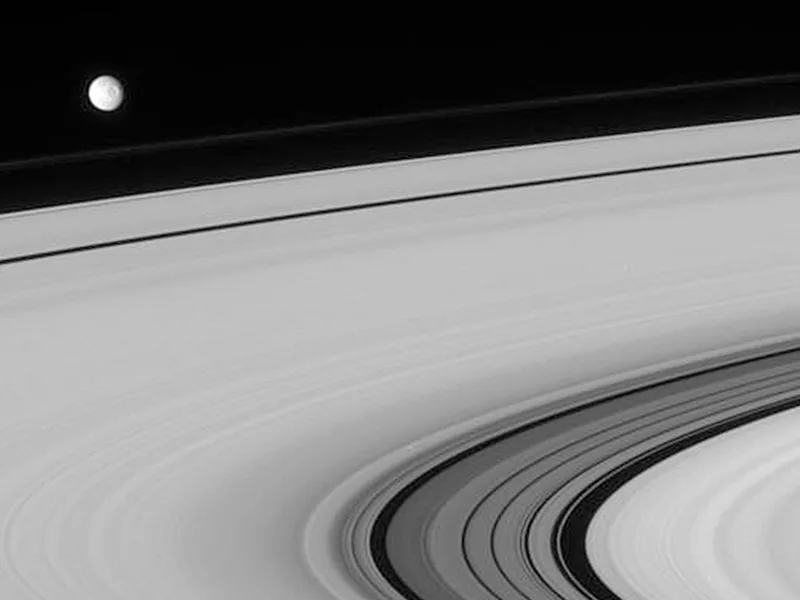
Saturn’s moon Mimas, floating above the planet’s rings, might conceal a liquid ocean beneath its sur...
NASA/JPL

The outer solar system is awash with liquid water. A briny ocean is concealed beneath the icy crust of Jupiter’s fourth largest moon, Europa — with more water than all of Earth’s oceans combined. A subsurface sea on Saturn’s moon, Enceladus, spews plumes of water vapor into space. And there are tantalizing hints that oceans could exist on Ganymede, Callisto, Titan and other distant moons, too.

Now, another moon appears to be secretly flooded. Saturn’s moon Mimas, known for its uncanny resemblance to the Star Wars Death Star, might harbor liquid water beneath its icy shell. If true, similar seas could be hiding in plain sight, and the outer solar system may be far more habitable than previously thought.

In 2014, scientists first published evidence that Mimas might be a watery world — submerging the community in a decade-long debate. Many, including Alyssa Rhoden, a planetary scientist now at the Southwest Research Institute in Boulder, Colorado, were highly skeptical of the possibility. Their reasoning was simple: Mimas’ heavily cratered surface showed no signs of an internal ocean. As with Enceladus, Saturn’s gravity should churn the ocean waters within Mimas, causing large cracks to appear in the surface ice. No such fractures have been seen.

The tides might now have turned. Two studies, one by Rhoden and colleagues and another by Valéry Lainey of the Paris Observatory and colleagues make a stronger case for an ocean and even explain the conundrum at the surface. Together, the research suggests that Mimas may have a young and changing ocean. If so, it raises the prospect of an outer solar system rife with activity. That possibility is what most excites Rhoden, who spoke with Knowable Magazine about the potential ocean and why it could be such a boon for scientists.

This conversation has been edited for length and clarity.

What do we know about these hidden oceans?

In many ways, they look like our own — at least in that they’re likely made up of saltwater.

We know that these ocean worlds have icy surfaces from their overall bright appearance, as confirmed by telescopic and spacecraft measurements that detect signatures of water ice. Some ocean moons even have low enough densities that they probably have water ice mixed into the rock in their interiors. With heat, that water ice melts into liquid water, which will erode rock to create saltwater. On Enceladus, saltwater is conveniently spewing out into space.

Given how cold it is in the outer solar system, what generates the heat?

Distant oceans might at first seem out of the question. Heat to melt ice is hard to come by, so far from the Sun. But thanks to a gravitational quirk, the outer solar system can be quite balmy.

Consider Jupiter and its Moon Europa. Jupiter exerts a strong gravitational force on Europa, elongating Europa in the direction of Jupiter. Because Europa’s orbit is eccentric — it swings close to Jupiter before swinging farther away — Europa gets stretched and released over time. This creates friction in the interior that provides the heat necessary to sustain a liquid ocean.

We first saw hints that Europa might host a subsurface ocean when the Voyager mission swung past Jupiter in 1979. Europa doesn’t look like our Moon or even most bodies in the inner solar system. Its icy surface doesn’t have a lot of craters but is instead covered with crisscrossing lines and broken pieces that have shifted around. You don’t have to look at it very hard to imagine that something different is going on there.

You mention surface features. What other evidence do we rely on to detect a hidden ocean?

One way is to look at magnetic fields. Because saltwater is electrically conductive, it can create a magnetic field around the Moon that disrupts the planet’s magnetic field. That is a leading piece of evidence for Europa’s subsurface ocean.

But that alone is not enough. It’s the combination of evidence that leads us to conclude there’s an ocean. We might also consider, for example, measurements of salt on the surface and how the Moon’s gravity tugs on a spacecraft. Since the densities of rock or liquid metal differ from the density of liquid water, the size of those tugs offers clues to the material, as well as where within the Moon it is concentrated.

Or we might simply imagine how the Moon’s face changes direction throughout its orbit. Generally, these small moons always show the same face as their parent planet, much like our Moon. But as a moon moves through its orbit, the direction it points can shift a bit back and forth — creating a shimmy in the visible portion. The extent of that shimmy depends on the interior. An ice shell over an ocean can move more freely than an ice shell on top of rock, so the changes tend to be larger. That’s how the ocean was detected at Enceladus. And it’s one of the best lines of evidence for an ocean at Mimas.

Let’s talk about Mimas. How did you end up studying the Moon?

I had spent a decade or so working on Europa and other icy moons when the 2014 Mimas paper came out. That paper measured that shimmy, or libration, as the visible portion of the moon shifts, suggesting Mimas either hosted a subsurface ocean or an oddly shaped core.

But an ocean seemed impossible. Mimas look much like our Moon, with a heavily cratered surface. It didn’t host any crisscrossing lines or broken pieces like Europa. And it certainly wasn’t spewing geysers like Enceladus. So I took one look at Mimas, and I said, “There’s no way that is an ocean moon.” Yet I realized I couldn’t refute the idea.

I kept Mimas in my mind over the years, eventually putting together a paper for the Annual Review of Earth and Planetary Sciences in 2023. That paper ruled out several ocean scenarios and left only one option, an ocean that formed recently, well after Mimas itself. A young ocean could be stealthy. But it was still just a hypothesis.

How has the most recent work changed the picture?

Early in 2024, Valéry Lainey and his group reported new observational evidence in favor of an ocean on Mimas. They looked not at the libration but at changes in Mimas’ orbit through time — changes that depend on the interior structure. They found that those changes could not be explained by an oddly shaped core, leaving an ocean as the most viable option.

My team’s research, published in June, has gone on to explain the lack of visible surface fractures. We argue that the ocean is so young — merely 10 million years old — that it has only recently stopped growing. We think that the tidal stresses of a young churning ocean may not be enough to crack the ice above. Instead, what’s needed is the stress that comes when the ocean eventually refreezes. Because Mimas is losing heat as its orbit becomes less eccentric over time, refreezing — which is only just beginning on Mimas — will cause the overlying ice to crack.

The research suggests that eventually, Mimas is probably going to lose its ocean, which is a little sad since it is just being recognized. But on the flip side, Mimas may become the new Enceladus — the new coolest moon of Saturn — with deep cracks and maybe even jets of water.

What are the big-picture implications of this research?

I’m interested in this from a geophysical standpoint. We think of the earliest epochs in our solar system as the hot times when all the activity happens; then, everything evolves toward a quieter state. Pluto’s moon, Charon, might have lost an ocean. And Europa’s and Ganymede’s oceans are pretty old. That a moon could form a new ocean well into its history and that we could watch? That’s exciting! It opens up the possibility that any world, including one with an old, cratered surface, may be going through a similar transition.

There’s also interest in habitability — whether these oceans are suitable for supporting life. We don’t currently know whether any of the solar system’s oceans, other than our own, are habitable, have been inhabited or are currently inhabited. But if Mimas truly has an ocean, we could have a window into how these worlds develop and even how habitats are created and lost. It is exciting to be able to see these processes as they occur — instead of always viewing the end states of things that happened long ago.

What upcoming missions could tell us more?

The European Space Agency has already launched the Jupiter Icy Moons Explorer, or Juice, which will make detailed observations of Europa, and the moons Ganymede and Callisto, which show hints of oceans. And in the fall of 2024, NASA will send the Europa Clipper into orbit around Jupiter to determine if Europa has conditions suitable for life.

The Uranus system, which is high on NASA’s agenda for a future mission, is where I see the most implications for this recent work. It’s surprisingly similar to the Saturn system, including hosting ice-rich, mid-sized moons similar to Mimas and Enceladus. If there’s a young ocean on Mimas, it is not a huge leap to consider that water worlds might exist among the Uranian moons, too.

  • This article originally appeared in Knowable Magazine, an independent journalistic endeavor from Annual Reviews. Sign up for the newsletter.

{ https://www.inverse.com/ }

Hoe vind je dit bericht?
Geschreven door peter om 18:03 Stuur door

Asteroids safely fly by Earth all the time. Here’s why scientists are watching Apophis.

Asteroids safely fly by Earth all the time. Here’s why scientists are watching Apophis.

A menacing asteroid named Apophis is projected to have a close encounter with Earth in 2029. Scientists have long ruled it out as an impact threat, but they still hope to study it.

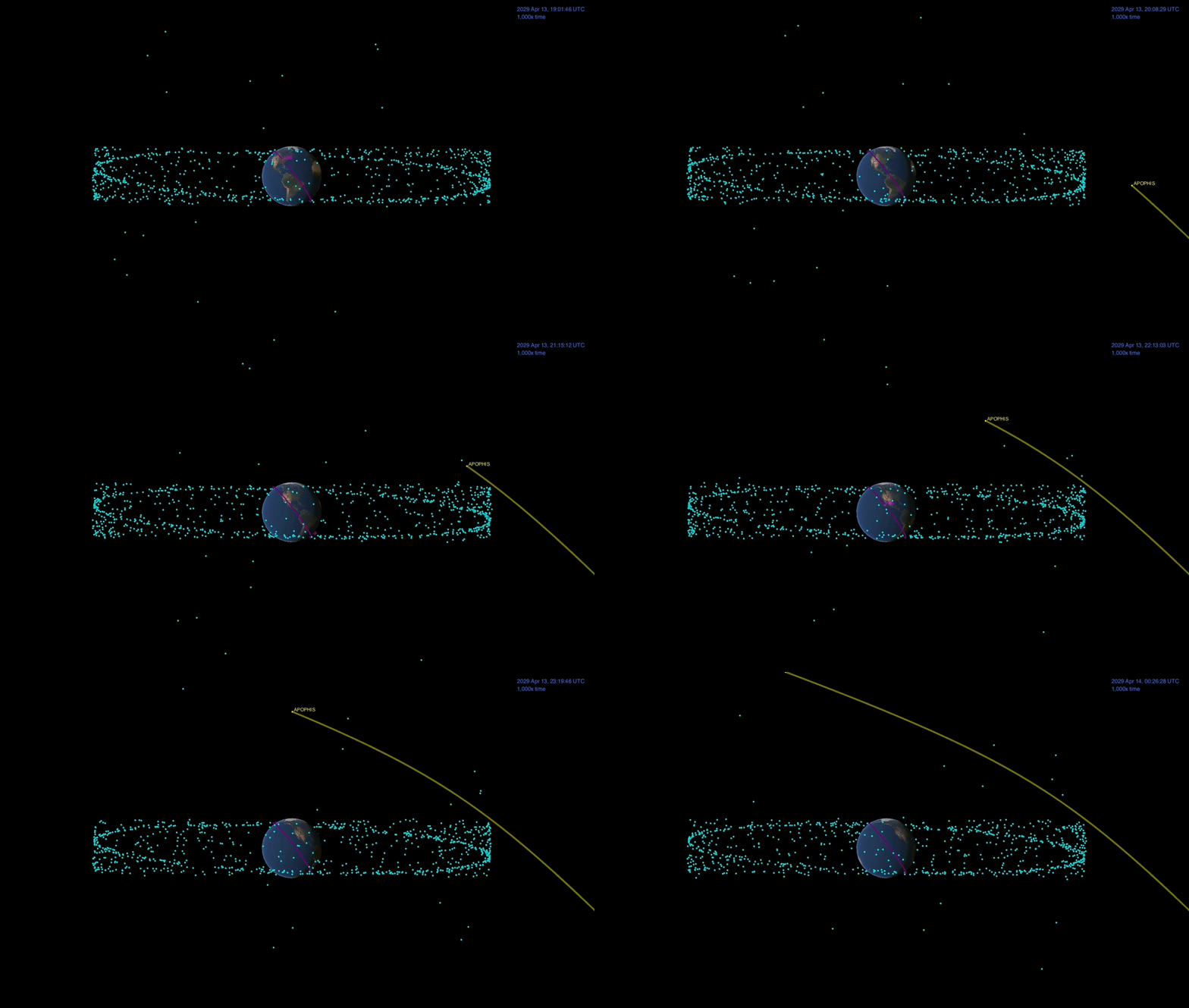
Earth is in the center of this image surrounded by tons of blue dots in a relatively disk-like shape that represent satellites. Toward the right of the screen, a dot is traced with a yellow line as it just barely enters the satellite disk while flying past Earth.

An animation shows Apophis' 2029 path compared to the swarm of satellites orbiting Earth. 
(Image credit: NASA/JPL-Caltech)
Story Summary
  • Apophis is projected to pass within 20,000 miles of our planet’s surface on April 13 2029. The menacing asteroid will harmlessly pass by, astronomers say.
  • Apophis measures nearly a quarter of a mile long – about the size of a cruise ship – making it large enough to be visible to the naked eye when it shoots past Earth.
  • Space agencies and scientific institutes around the world are planning to use the rare flyby to explore Apophis from the ground with telescopes and even spacecraft.

Among astronomers both professional and amateur, perhaps no asteroid is more notorious than Apophis.

If you've heard of Apophis, then you're likely aware of the reputation it gained upon its discovery two decades ago as a potentially very dangerous space rock hurtling too close for comfort toward Earth. It was initially believed that the asteroid could one day pose a serious threat to our planet.

And one day, it just might.

But that day won't come for at least 100 years, astronomers say. No, not even in 2029, when Apophis makes the closest approach to Earth that any asteroid of its size ever has – at least, one that scientists have known about in advance.

Additional observations of Apophis have allowed astronomers to long rule out the risk of an impact in 2029 when Apophis is predicted to come within a distance of Earth 10 times closer than the moon, according to NASA. The asteroid also won't hit our planet when it makes another close approach in 2036.

While we and our children are safe from Apophis' wrath, scientists still see a valuable opportunity to study the asteroid as it whizzes by Earth to learn what they can of other space rocks that actually could hit our planet.

Here's what to know about Apophis and how space agencies hope to protect Earth from other asteroids like it.

Apophis to make 2029 flyby to Earth

Apophis is projected to pass within 20,000 miles of our planet’s surface on April 13, 2029.

For the superstitious lot, yes, that's a Friday, no less.

On that day, Apophis will come closer than telecommunications satellites in geostationary orbit, the ESA says.

The close encounter with Earth will make the asteroid visible in the Eastern hemisphere, including in Europe, Africa, and western Asia. It should look somewhat like a bright star streaking across the sky.

Earth's gravity will significantly influence Apophis – squeezing and distorting the asteroid as one side is pulled toward our planet more than the other. While no affects will be felt on Earth, Apophis may experience some quakes and even landslides, the ESA said.

Will Apophis hit earth?

In short, no. Not during our lifetimes, anyway.

While Apophis is classified as a near-Earth asteroid because its orbit bring it within 30 million miles of Earth, you have nothing to fear from it.

Apophis was initially identified as one of the most hazardous asteroids that could impact Earth after its 2004 discovery, but that assessment has since changed as astronomers tracked it and learned more about its orbit.

While the risk of it impacting Earth during its 2029 flyby rose as high as 2.7%, Apophis has since been removed from NASA’s Sentry Impact Risk Table. That's thanks to a radar observation campaign in March 2021 during a distant flyby that – combined with precise orbit analysis – allowed astronomers to determine that the asteroid poses no risk of crashing into Earth for at least a century.

How big is the Apophis asteroid?

Apophis measures nearly a quarter of a mile long – about the size of a cruise ship – making it large enough to be visible to the naked eye when it shoots past Earth.

The Planetary Society compares its size to the equivalent of about five football fields and taller than the Empire State Building in New York City.

It's hard to know just exactly what Apophis looks like, as scientists do not yet have images of it. But radar observations have suggested that Apophis is shaped roughly like a peanut – a relatively common shape among near-Earth asteroids larger than 660 feet in diameter, according to NASA.

Apophis is believed to be stony, made up of silicate (or rocky) materials and a mixture of metallic nickel and iron.

What would happen if Apophis hit Earth?

Though not as big or catastrophic as the asteroid theorized to have wiped out the dinosaurs 66 million years ago, Apophis would cause widespread destruction up to several hundred kilometers from its impact site.

The energy released would be equal more than 1,000 megatons of TNT, or tens to hundreds of nuclear weapons, according to the Planetary Society, a nonprofit organization promoting space exploration.

What does 'Apophis' mean?

Apophis is no different from other asteroids in that it is a remnant from the early formation of our solar system about 4.6 billion years ago. It originated in the main asteroid belt between Mars and Jupiter and spent millions of years being altered by the gravitational influence of large planets such as Jupiter, NASA said.

Now, Apophis's orbit around the sun brings it startlingly close to Earth.

It's partly due to its proximity, as well as the sheer devastation its impact with Earth would bring, that astronomers named the asteroid after an ancient Egyptian god of disorder.

Specifically, Apophis is named for the demon serpent who personified evil and chaos.

ESA, NASA hope to study Apophis

The NASA spacecraft OSIRIS-APEX hovers over the surface of the near-Earth asteroid Apophis, using its thrusters to disturb the asteroid's surface to reveal what lies beneath, as shown in an undated NASA artist's video rendering, in this screengrab obtained from a handout video.  
NASA's Goddard Space Flight Center/Handout via Reuters

Space agencies and scientific institutes around the world are planning to use the rare flyby to explore Apophis from the ground with telescopes and even spacecraft.

NASA's OSIRIS-REx, which gathered and returned a sample of asteroid Bennu in September, has been renamed OSIRIS-APophis EXplorer (OSIRIS-APEX) and sent on a trajectory that would allow it to cross paths with the asteroid in 2029. When it has its rendezvous with Apophis in June that year, OSIRIS-APEX will spend 18 months mapping the asteroid’s surface and analyzing its chemical makeup, according to NASA.

Earth-based telescopes will observe Apophis as well, but they won't be able to detect as much as the spacecraft will when the asteroid gets near the sun, NASA said. But unlike with the Bennu mission, OSIRIS-APEX will not collect a sample from Apophis.

The European Space Agency, NASA's counterpart across the pond, plans to launch a spacecraft of its own called Ramses.

An art visualization shows how the European Space Agency's "Ramses" mission will approach the massive asteroid Apophis.  
ESA-Science Office

The Ramses spacecraft, which must be ready to launch a year ahead of time, will meet Apophis before it passes by Earth and accompany it on its way out of our orbit. During that time, the mission will observe how the surface of the asteroid changes from being in such close proximity to Earth, the European Space Agency said in July.

NASA takes on dangerous asteroids

The expedition is all part of the steps NASA and other space agencies have taken in recent years to protect humanity from threats posed by asteroids and other inbound space rocks, such as comets.

NASA's Double Asteroid Redirection Test (DART) spacecraft prior to impact at the Didymos binary asteroid system shown in this undated illustration handout.  
NASA/Johns Hopkins/Handout via Reuters

In September 2022, NASA intentionally slammed a spacecraft into the small asteroid Dimorphos at roughly 14,000 mph.

Though Dimorphos posed no threat to Earth, the mission served as the first demonstration of NASA's Double Asteroid Redirection Test, or DART. If an incoming asteroid is ever on a collision course with our planet, the space agency has said that the DART method could prove crucial for deflecting and changing the object's orbital path.

A placard hangs on the wall during the Double Asteroid Redirection Test (DART) Technology Media Workshop Telecon Briefing and tour at the Johns Hopkins Applied Physics Laboratory in Laurel, Maryland, on September 12, 2022, ahead of the September 26 project test mission. The DART mission shifted an asteroid's orbit through kinetic impact specifically, by smashing a spacecraft into the smaller member of the binary asteroid system Didymos.   
Jim Watson/AFP via Getty Images

And to gauge whether authorities are prepared to defend Earth from space objects, NASA has hosted a series of exercises, the fifth and most recent of which occurred in April, with findings announced in June. It was the first such exercise to include about 100 international government representatives who gathered to work through a hypothetical scenario about an inbound asteroid.

The exercise was organized by the U.S. space agency's Planetary Defense Coordination Office, which was established in 2016 to catalog near-Earth objects that could crash into the planet.

NASA is also working on an asteroid-hunting telescope known as the NEO Surveyor to find near-Earth objects capable of causing significant damage. Set to launch no earlier than June 2028, the telescope is designed to discover 90% of asteroids and comets that are 460 feet in size or larger and come within 30 million miles of Earth’s orbit. 

  • Contributing: Claire Thornton, USA TODAY
  • Eric Lagatta covers breaking and trending news for USA TODAY. Reach him at elagatta@gannett.com
{ https://eu.usatoday.com/news/ }

Hoe vind je dit bericht?
Geschreven door peter om 22:13 Stuur door

Apophis, ‘God of Destruction’ is set to skim Earth's orbit; Why scientists are watching closely

Apophis, ‘God of Destruction’ is set to skim Earth's orbit; Why scientists are watching closely

Apophis, ‘God of Destruction’ is set to skim Earth's orbit; Why scientists are watching closely

Apophis, ‘God of Destruction’ is set to skim Earth's orbit; Why scientists are watching closely

In April 2029, the asteroid Apophis will make a close approach to Earth, coming within 20,000 miles of our planet. This encounter will be one of the closest ever recorded for an asteroid of this size, surpassing the distance of geostationary satellites. On April 13, 2029—a Friday the 13th—Apophis will be visible from the Eastern Hemisphere, including parts of Europe, Africa, and Western Asia. It will appear as a bright streak across the sky, resembling a fast-moving star.

What is Apophis?

Apophis is a remnant from the early solar system, formed around 4.6 billion years ago in the asteroid belt between Mars and Jupiter. It has been significantly influenced by the gravitational forces of large planets like Jupiter. Its name derives from the ancient Egyptian god of disorder and chaos, reflecting the potential havoc such an asteroid could wreak. Apophis is named after the demon serpent who personified evil and chaos, symbolizing the potential danger posed by its impact.

Apophis' Safety Assessment

Despite its close proximity, Apophis poses no threat to Earth. Initially identified as a hazardous asteroid after its discovery in 2004, recent observations have ruled out any risk of impact in 2029. "While the risk of it impacting Earth during its 2029 flyby rose as high as 2.7%, Apophis has since been removed from NASA’s Sentry Impact Risk Table," thanks to precise orbit analysis and radar observations in March 2021, NASA confirmed.

What would happen if Apophis hits Earth?

If the asteroid Apophis were to strike Earth, the impact would result in severe destruction, although not as catastrophic as the asteroid believed to have wiped out the dinosaurs 66 million years ago. The devastation from Apophis would extend up to several hundred kilometers from the impact site. The energy released would exceed 1,000 megatons of TNT, a magnitude comparable to tens to hundreds of nuclear weapons, as noted by the Planetary Society, a nonprofit organization dedicated to space exploration.

Physical Characteristics of Apophis

Apophis measures nearly a quarter of a mile long, roughly equivalent to five football fields or taller than the Empire State Building. Radar data suggests that the asteroid is shaped somewhat like a peanut. It is primarily composed of stony silicate materials and a mixture of metallic nickel and iron. Although scientists do not have direct images of Apophis, its shape and size have been inferred from observations.

Potential Impact Consequences

If Apophis were to collide with Earth, the impact would cause significant damage, with effects extending several hundred kilometers from the impact site. The energy released would be equivalent to more than 1,000 megatons of TNT. While not as catastrophic as the asteroid that led to the extinction of the dinosaurs, it would still result in widespread destruction.

Scientific Missions and Observations

The upcoming flyby offers a valuable opportunity for scientific study. NASA's OSIRIS-APEX mission, a renamed version of the OSIRIS-REx spacecraft, is set to rendezvous with Apophis in June 2029. The spacecraft will map the asteroid’s surface and analyze its chemical composition over an 18-month period. The European Space Agency is also preparing a mission called Ramses, which will observe how Earth's gravity affects Apophis during its close approach.

Asteroid Defense and Future Missions

NASA and other space agencies are actively working to enhance planetary defense capabilities. The Double Asteroid Redirection Test (DART) mission, which successfully altered the orbit of the asteroid Dimorphos in 2022, demonstrates potential methods for deflecting hazardous asteroids. "NASA’s mission to Apophis is a chance to practice how to characterize and potentially defend against future threats," said Terik Daly, a planetary scientist involved with both the DART and OSIRIS-APEX missions.

Challenges and Future Plans

As the 2029 flyby approaches, scientists face the challenge of developing and funding additional missions to study Apophis before and during its closest approach. "We’re running out of time," said Jason Kalirai from the Johns Hopkins Applied Physics Laboratory. The need for funding and mission planning is critical, with several proposed missions awaiting approval and support.

Planetary Defense and Future Preparations

The impending close flyby of Apophis in 2029 presents a rare opportunity for detailed scientific study. NASA's OSIRIS-REx spacecraft, which previously returned samples from asteroid Bennu, has been repurposed as OSIRIS-APEX for this mission. Scheduled to rendezvous with Apophis in June 2029, OSIRIS-APEX will spend 18 months mapping the asteroid and analyzing its chemical composition. "The mission will provide critical data on Apophis's surface and structure," said Daniella DellaGiustina, lead scientist on OSIRIS-APEX.

In addition, the European Space Agency (ESA) is preparing the Ramses spacecraft, which will observe Apophis before and after its close encounter with Earth. Ramses aims to study how Earth's gravity affects the asteroid's surface and rotation. "Ramses will help us understand the changes Apophis undergoes due to its proximity to Earth," explained ESA representatives.

NASA has been actively working on planetary defense strategies. In September 2022, NASA's Double Asteroid Redirection Test (DART) demonstrated a method for altering an asteroid's trajectory. This mission successfully redirected the small asteroid Dimorphos by crashing a spacecraft into it. "The DART mission showed that we can deflect an asteroid's orbit, which is crucial for future planetary defense," noted Terik Daly, a planetary scientist involved in DART.

NASA is also developing the NEO Surveyor telescope, set to launch in June 2028. This telescope will search for near-Earth objects larger than 460 feet, aiming to discover 90% of such objects within 30 million miles of Earth's orbit.

Several proposed missions are under consideration, including repurposing the Janus spacecraft and developing new ones. Blue Origin's Blue Ring spacecraft might also be involved in early observations. "No bucks, no Bruce Willis," remarked Richard P. Binzel in a Washington Post report, highlighting the financial constraints in asteroid research.

For more news like this visit The Economic Times.

{ https://www.msn.com/en-us/ }

Hoe vind je dit bericht?
Geschreven door peter om 21:56 Stuur door

Asteroid Apophis will visit Earth in 2029, and this European satellite will be along for the ride

Asteroid Apophis will visit Earth in 2029, and this European satellite will be along for the ride

Earth is in the center of this image surrounded by tons of blue dots in a relatively disk-like shape that represent satellites. Toward the right of the screen, a dot is traced with a yellow line as it just barely enters the satellite disk while flying past Earth.

An animation shows Apophis' 2029 path compared to the swarm of satellites orbiting Earth. 
(Image credit: NASA/JPL-Caltech)

The European Space Agency is fast-tracking a new mission called Ramses, which will fly to near-Earth asteroid 99942 Apophis and join the space rock in 2029 when it comes very close to our planet — closer even than the region where geosynchronous satellites sit. 

Apophis, ‘God of Destruction’ is set to skim Earth's orbit; Why scientists are watching closely

Apophis, ‘God of Destruction’ is set to skim Earth's orbit; Why scientists are watching closely

Ramses is short for Rapid Apophis Mission for Space Safety and, as its name suggests, is the next phase in humanity's efforts to learn more about near-Earth asteroids (NEOs) and how we might deflect them should one ever be discovered on a collision course with planet Earth.

In order to launch in time to rendezvous with Apophis in February 2029, scientists at the European Space Agency have been given permission to start planning Ramses even before the multinational space agency officially adopts the mission. The sanctioning and appropriation of funding for the Ramses mission will hopefully take place at ESA's Ministerial Council meeting (involving representatives from each of ESA's member states) in November of 2025. To arrive at Apophis in February 2029, launch would have to take place in April 2028, the agency says.

This animation depicts the orbital trajectory of asteroid 99942 Apophis as it zooms safely past Earth on April 13, 2029. Earth’s gravity will slightly deflect the trajectory as the 1,100-foot-wide (340-meter-wide) near-Earth object comes within 20,000 miles (32,000 kilometers) of our planet’s surface. The motion has been speeded up 2,000 times.

Credit: NASA/JPL-Caltech

This is a big deal because large asteroids don't come this close to Earth very often. It is thus scientifically precious that, on April 13, 2029, Apophis will pass within 19,794 miles (31,860 kilometers) of Earth. For comparison, geosynchronous orbit is 22,236 miles (35,786 km) above Earth's surface. Such close fly-bys by asteroids hundreds of meters across (Apophis is about 1,230 feet, or 375 meters, across) only occur on average once every 5,000 to 10,000 years. Miss this one, and we've got a long time to wait for the next.

Related: 

When Apophis was discovered in 2004, it was for a short time the most dangerous asteroid known, being classified as having the potential to impact with Earth possibly in 2029, 2036, or 2068. Should an asteroid of its size strike Earth, it could gouge out a crater several kilometers across and devastate a country with shock waves, flash heating and earth tremors. If it crashed down in the ocean, it could send a towering tsunami to devastate coastlines in multiple countries.

Over time, as our knowledge of Apophis' orbit became more refined, however, the risk of impact  greatly went down. Radar observations of the asteroid in March of 2021 reduced the uncertainty in Apophis' orbit from hundreds of kilometers to just a few kilometers, finally removing any lingering worries about an impact — at least for the next 100 years. (Beyond 100 years, asteroid orbits can become too unpredictable to plot with any accuracy, but there's currently no suggestion that an impact will occur after 100 years.) So, Earth is expected to be perfectly safe in 2029 when Apophis comes through. Still, scientists want to see how Apophis responds by coming so close to Earth and entering our planet's gravitational field.

"There is still so much we have yet to learn about asteroids but, until now, we have had to travel deep into the solar system to study them and perform experiments ourselves to interact with their surface," said Patrick Michel, who is the Director of Research at CNRS at Observatoire de la Côte d’Azur in Nice, France, in a statement. "Nature is bringing one to us and conducting the experiment itself. All we need to do is watch as Apophis is stretched and squeezed by strong tidal forces that may trigger landslides and other disturbances and reveal new material from beneath the surface."

The Goldstone radar's imagery of asteroid 99942 Apophis as it made its closest approach to Earth, in March 2021.  (Image credit: NASA/JPL–Caltech/NSF/AUI/GBO)

By arriving at Apophis before the asteroid's close encounter with Earth, and sticking with it throughout the flyby and beyond, Ramses will be in prime position to conduct before-and-after surveys to see how Apophis reacts to Earth. By looking for disturbances Earth's gravitational tidal forces trigger on the asteroid's surface, Ramses will be able to learn about Apophis' internal structure, density, porosity and composition, all of which are characteristics that we would need to first understand before considering how best to deflect a similar asteroid were one ever found to be on a collision course with our world.

Besides assisting in protecting Earth, learning about Apophis will give scientists further insights into how similar asteroids formed in the early solar system, and, in the process, how  planets (including Earth) formed out of the same material.

One way we already know Earth will affect Apophis is by changing its orbit. Currently, Apophis is categorized as an Aten-type asteroid, which is what we call the class of near-Earth objects that have a shorter orbit around the sun than Earth does. Apophis currently gets as far as 0.92 astronomical units (137.6 million km, or 85.5 million miles) from the sun. However, our planet will give Apophis a gravitational nudge that will enlarge its orbit to 1.1 astronomical units (164.6 million km, or 102 million miles), such that its orbital period becomes longer than Earth's. 

It will then be classed as an Apollo-type asteroid. 

Ramses won't be alone in tracking Apophis. NASA has repurposed their OSIRIS-REx mission, which returned a sample from another near-Earth asteroid, 101955 Bennu, in 2023. However, the spacecraft, renamed OSIRIS-APEX (Apophis Explorer), won't arrive at the asteroid until April 23, 2029, ten days after the close encounter with Earth. OSIRIS-APEX will initially perform a flyby of Apophis at a distance of about 2,500 miles (4,000 km) from the object, then return in June that year to settle into orbit around Apophis for an 18-month mission.

Furthermore, the European Space Agency still plans on launching its Hera spacecraft in October 2024 to follow-up on the DART mission to the double asteroid Didymos and Dimorphos. DART impacted the latter in a test of kinetic impactor capabilities for potentially changing a hazardous asteroid's orbit around our planet. Hera will survey the binary asteroid system and observe the crater made by DART's sacrifice to gain a better understanding of Dimorphos' structure and composition post-impact, so that we can place the results in context.

The more near-Earth asteroids like Dimorphos and Apophis that we study, the greater that context becomes. Perhaps, one day, the understanding that we have gained from these missions will indeed save our planet.

{ https://www.space.com/ }

Hoe vind je dit bericht?
Geschreven door peter om 21:40 Stuur door

'Clearest UFO photo ever seen of creepy spaceship chased by fighter jet' uncovered

The photo is claimed by many to be the 'clearest' picture of a UFO

Image: Professor Dave Clarke

'Clearest UFO photo ever seen of creepy spaceship chased by fighter jet' uncovered

By Erin Rose Humphrey, Danny Gutmann  and John O'sullivan

On August 4, 1990, a pair of hikers embarked on a trek through the Scottish Highlands, unaware that they were about to snap what's been hailed as the 'clearest UFO photo ever taken'. The photograph, known as the 'Calvine photo' after the nearby hamlet where it was snapped, would go missing and become the subject of myth for thirty years.

However, after 13 years of relentless investigation by Professor David Clarke, a former journalist and now academic at Sheffield Hallam University, the elusive image was finally located. Prof Clarke discovered ex-RAF press officer Craig Lindsay, who had retained a copy of the photograph depicting the extraordinary scene the two hikers witnessed.

READ MORE: 

What the two men saw in 1990 remains a mystery

Image:  Professor Dave Clarke

In the astonishing image, a sizable saucer-shaped craft is distinctly seen, with a jet fighter seemingly in hot pursuit. The hikers originally handed over the photograph to the Daily Record newspaper in Scotland, but it eventually ended up with the British Ministry of Defence, where it remained shrouded in secrecy until 2022.

If you can't see the photo below, click here.

Video shows 'UFO' over Mexican city that residents claim is 'protected by aliens'

Speaking to Newsweek, Prof Clarke recounted: "The Daily Record's picture editor at that time sent them to Craig Lindsay, who was the RAF press officer in Scotland. He passed the print to the Ministry of Defense in London, the Ministry of Defense in London then asked him to obtain the negatives. So he went back to the Daily Record, asked the Daily Record to send the negatives to London, which they duly did-quite amazingly-and that's when they disappeared."

Despite the media attention the photo received, the two hikers involved have kept mum about their experience. Lindsay, however, shared what he knew about their eerie encounter with Clarke.

For all the latest news straight to your inbox, sign up for our FREE newsletters here.

The pair, who were working as chefs at a hotel in the Scottish Highlands, took an evening stroll in Calvine in August 1990 and encountered the enigmatic object soaring overhead.

Prof Clarke told Newsweek: "They saw this thing in the sky and it scared them. They ran into some woodland to sort of keep their heads down, and they heard this jet come down the valley and then, two minutes later, it returned and started circling around the object. And that's when they took the photographs."

The incident witnessed by the men remains an unsolved enigma to this day.

{ https://www.themirror.com/ }

Hoe vind je dit bericht?
Geschreven door peter om 21:24 Stuur door

NASA Radar Data Confirms Existence of Subsurface “Tunnel” Near Famous Apollo-Era Lunar Landing Site

NqFxGE--?format=jpg&name=900x900

(Credit: University of Trento/NASA)

NASA Radar Data Confirms Existence of Subsurface “Tunnel” Near Famous Apollo-Era Lunar Landing Site

For the first time, scientists have confirmed the existence of an underground tunnel-like feature near the landing site of the first crewed mission to the Moon. The discovery concludes almost half a century of speculation involving the suspected existence of caves below the lunar surface.

On July 20, 1969, astronauts Neil Armstrong and Buzz Aldrin became the first humans to set foot on the lunar surface after making a soft landing in the Apollo 11 Lunar Module on the mare plain of the Moon’s famous Mare Tranquillitatis, Latin for “Sea of Tranquility.”

Now, according to the findings of an international team of researchers led by the University of Trento in Italy, the existence of a subsurface tunnel-like lava tube cave beneath the Mare Plain has been confirmed.

A new study published in the journal Nature Astronomy revealed the discovery, which relied on data obtained with NASA’s Lunar Reconnaissance Orbiter (LRO).

The discovery of the tunnel-like feature has been called a significant milestone toward understanding the Moon’s various geological components more fully. It also offers a potential shelter area that could be used by astronauts during future crewed missions.

Lorenzo Bruzzone, a professor at the University of Trento, said the existence of such underground features had long been suspected, although the team’s discovery is the first confirmation that they exist.

“These caves have been theorized for over 50 years,” Bruzzone said in a statement, “but it is the first time ever that we have demonstrated their existence.”

Data originally obtained in 2010 by the Miniature Radio-Frequency (Mini-RF) instrument aboard the LRO, which included radar reflections from a pit discovered in the Mare Tranquilitatis, were reexamined by the research team.

“Thanks to the analysis of the data, we were able to create a model of a portion of the conduit,” said Leonardo Carrer, a researcher at the University of Trento involved with the new findings.

“The most likely explanation for our observations is an empty lava tube,” Carrer said.

Given the demanding environment on the surface of the Moon, where temperatures can reach as much as 127°C on its illuminated side while dropping to frigid lows nearing -173°C on the unilluminated side, lava tube caves could be ideal locations for astronauts to use as shelters on the Moon.

In addition to being ideal environments for subsurface shelters, such an underground tunnel-like feature could also provide a degree of shielding from cosmic and solar radiation that bombards the lunar surface, which can be up to 150 times more powerful there than on Earth.

The Moon’s thin atmosphere also offers little protection from meteorites that, over time, have led to the natural satellite’s characteristic cratered surface. Creating refuges within subsurface lava tube caves could help to mitigate the constant threat posed by such impacts.

Wes Patterson, principal investigator for the Mini-RF based at the Johns Hopkins Applied Physics Laboratory, said the team’s findings demonstrate “both how radar data of the Moon can be used in novel ways to address fundamental questions for science and exploration and how crucial it is to continue collecting remotely sensed data of the Moon.”

“This includes the current LRO mission and, hopefully, future orbiter missions,” Patterson said.

The discovery is outlined in a new study, “Radar evidence of an accessible cave conduit on the Moon below the Mare Tranquillitatis pit,” which was published in Nature Astronomy on July 15, 2024.

{ https://thedebrief.org/ }

Hoe vind je dit bericht?
Geschreven door peter om 21:04 Stuur door

Unsolved Mystery: Farmer Witnesses Five UFOs Creating Crop Circles

Unsolved Mystery: Farmer Witnesses Five UFOs Creating Crop Circles

crop circles mystery

On September 30, 1974, a serene farming day in Saskatchewan turned into an extraordinary event that continues to baffle researchers and UFO enthusiasts. Edwin Fuhr, a hardworking Saskatchewan farmer, was harvesting rapeseed when he stumbled upon something that would change his life forever and contribute significantly to the enduring mystery of crop circles and UFO sightings.

The Unusual Encounter

As Fuhr was working in his field, he noticed a shiny metallic object that he initially mistook for a duck blind—a common fixture in rural areas used for hunting. Curiosity piqued, he decided to investigate further. Upon closer inspection, what he found was far beyond any ordinary object. Hovering just a foot above the ground was a bun-shaped, stainless steel object, rotating swiftly in a clockwise motion. The grass beneath it swirled in the same direction, seemingly under the influence of the hovering craft.

VIDEO:

  • Crop Circles Mystery: Five UFOs Seen by Farmer | Close Encounters 113

The sight alone was perplexing, but the mystery deepened when Fuhr returned to his tractor and saw four more identical objects hovering in the field. All five objects remained stationary for about 15 minutes before suddenly ascending into the sky and disappearing. The incident left Fuhr in shock and disbelief, as he struggled to make sense of what he had just witnessed.

Investigations and Theories

The incident caught the attention of the Royal Canadian Mounted Police (RCMP), who launched an investigation into the strange occurrence. The RCMP found that the grass in the exact spots where Fuhr reported seeing the UFOs had been flattened and swirled in a circular pattern. This physical evidence corroborated Fuhr’s account, lending credibility to his story.

Two days after the initial sighting, Fuhr discovered a sixth circle in his field, and within weeks, as many as 15 similar circles were reported in seven different locations across Saskatchewan. These findings attracted further attention, and the Canadian National Research Council got involved. However, their explanation—that the circles were caused by a natural phenomenon known as fairy rings, which are circular patterns left by plant-killing fungi—failed to convince many. Critics pointed out that fairy rings do not usually exhibit the uniform size and swirling patterns observed in Fuhr’s field.

The Birth of Crop Circle Phenomenon

What makes Fuhr’s encounter particularly significant is that it may represent one of the earliest documented cases of crop circles. Unlike the typical crop circles that mysteriously appear overnight without any witnesses, Fuhr actually saw the objects that created the circular formations in his field. This unique aspect of his story challenges the common belief that all crop circles are man-made hoaxes.

While many crop circles have been debunked as pranks or artistic expressions, Fuhr’s account provides a rare instance where an eyewitness can testify to the formation of these enigmatic patterns. The presence of UFOs in the creation of crop circles, as described by Fuhr, continues to fuel debates within the UFO and paranormal communities.

Unanswered Questions

Despite numerous investigations and theories, Fuhr’s encounter remains unexplained. Skeptics argue that the objects could have been experimental military drones, though such technology was not known to exist at the time. Others suggest that it was a natural phenomenon that science has yet to understand. Yet, the simplicity and consistency of Fuhr’s testimony, along with the physical evidence found at the scene, make it difficult to dismiss his experience outright.

The case of Edwin Fuhr stands out not just for its strangeness, but for the lasting impact it has had on the study of crop circles and UFO sightings. To this day, it remains one of the most compelling and well-documented cases in the realm of unexplained phenomena.

Conclusion

The mystery of the crop circles and the five UFOs witnessed by Saskatchewan farmer Edwin Fuhr continues to intrigue researchers and the general public alike. Whether viewed as a groundbreaking UFO encounter or an unsolved natural mystery, the incident challenges our understanding of the world and reminds us that some questions may never be fully answered. As investigations into UFOs and crop circles persist, Fuhr’s story stands as a testament to the enduring fascination with the unknown.

LINKS VIDEOS

{ https://www.latest-ufo-sightings.net/ }

Hoe vind je dit bericht?
Geschreven door peter om 20:46 Stuur door

Monday's rare super blue moon is a confounding statistical marvel

Monday's rare super blue moon is a confounding statistical marvel

Story by Doyle Rice, USA TODAY
A full moon shines in the night sky in Surprise, Ariz., on Aug. 1, 2023.
© Diannie Chavez, The Arizona Republic via USA TODAY NETWORK

A rare sky spectacle will occur Monday night that (probably) won't happen again for years: A full moon that can be called both a supermoon and blue moon will grace the night skies over the U.S.

Dubbed a "super blue moon," the rare combination occurs when the different cycles of blue and supermoons happen to align on the calendar, said NASA's Noah Petro, Lunar Reconnaissance Orbiter project scientist.

If that's not confusing enough, astronomers also have varying definitions for what counts as a supermoon and what counts as a blue moon. (Just last year a full moon met the criteria for both, by some definitions.)

Here's why Monday's full moon is so special:

What is a supermoon?

When the moon’s orbit brings it closer to Earth than usual, this cosmic combo is called a supermoon. A supermoon occurs when the moon’s orbit is closest to Earth at the same time the moon is full. The term was coined by astrologer Richard Nolle in 1979.

"Different publications use slightly different thresholds for deciding when a full moon is close enough to the Earth to qualify as a supermoon," NASA said. "Because the orbit of the moon is not a perfect circle, the moon is sometimes closer to the Earth than at other times during its orbit."

Related video: 
  • Tarantula warning for Texas, rare super blue moon (FOX 26 Houston)

When the moon reaches its closest point to Earth, about 226,000 miles away, full moons appears larger and brighter than at other times. A supermoon will appear 30% brighter and 14% larger than a typical full moon.

What is a blue moon?

There are two types of blue moons: seasonal and monthly. The one Monday will be of the seasonal variety.

A seasonal blue moon occurs when there are four full moons in a single season (on this occasion, summer). When this happens, the third of the four is considered a blue moon.

The second definition – which arose from a misunderstanding of the original – is the monthly blue moon, referring to the second full moon in a single calendar month.

In either case, blue moons earn their reputation for being rare because of a quirk in the typical rhythm of one full moon per month.

The moon's cycle takes 29.5 days. But, as Missouri State University professor of astrophysics Mike Reed notes, months can have 28, 29, 30 or 31 days.

The two cycles create odd mismatches resulting in one more moon in a season or month than is typical – that's a blue moon.

Months usually have one full moon – unless there's a (monthly) blue moon. And seasons typically have three full moons – unless there's a (seasonal) blue moon.

In addition, Monday's full moon is unlikely to appear blue, however: Blue-colored moons in photos are usually made using special blue camera filters or photo editing apps.

How rare is a super blue moon? When will the next one occur?

"It's tricky to answer, because it depends on your definition of a supermoon and a blue moon," Edward Bloomer, senior astronomy manager at the U.K.'s Royal Observatory Greenwich told USA TODAY via e-mail.

The answer is different depending on whether you're talking about a seasonal blue moon or a monthly blue moon. If you tweak what counts as a supermoon, the answer also changes.

In general, a blue moon happens once every two or three years on average, according to NASA. The time between super blue moons can be as much as 20 years – but in general, 10 years is the average.

So when will the next super blue moon actually occur?

A safe bet is January 2037, according to NASA.

However, depending on what you count as a super blue moon, you may hear of another one rising before then.

Hoe vind je dit bericht?
Geschreven door peter om 20:34 Stuur door

Moederziel alleen in het universum of toch niet? Sterrenkundige Leen Decin buigt zich over kans op buitenaards leven

Moederziel alleen in het universum of toch niet? Sterrenkundige Leen Decin buigt zich over kans op buitenaards leven

Artikel door Radio 1, Maxine Rappé
 

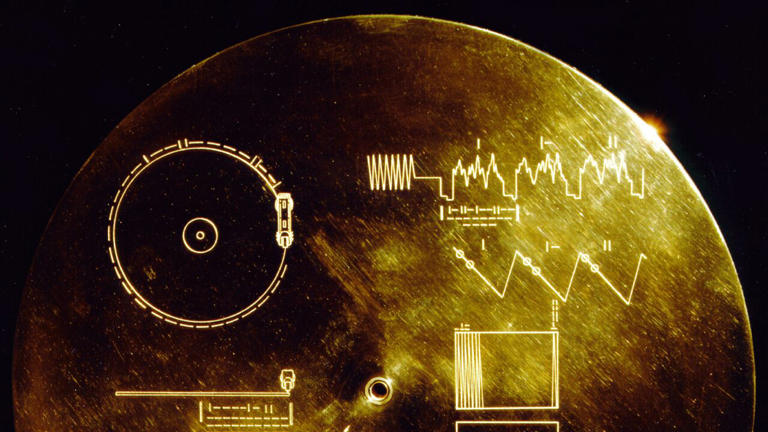
In 1977 zijn de Voyager-ruimtesondes gelanceerd. Uitgerust met een gouden grammofoonplaat, met daarop een boodschap in verschillende talen, hadden die het bereiken van buitenaardse beschavingen als doel. Voorlopig zonder resultaat.

De gouden plaat aan boord van Voyager

De gouden plaat aan boord van Voyager
© NASA/JPL-Caltech/Public domain

Wat het 'correcte' antwoord op die vraag ook is, het brengt volgens Leen Decin, hoofd van het Instituut voor Sterrenkunde van de KU Leuven, hoe dan ook onrust met zich mee. "Het antwoord 'ja' wekt angst op, want dan zijn we alleen in dit immense universum. Maar zijn we niet alleen, dan schuilt daar ook angst in."

"Momenteel kennen we enkel ons eigen leven. We zijn druk aan het zoeken, samen met veel sterrenkundigen, maar tot nu toe is er geen enkele bevestiging van leven elders", zegt Decin in #weetikveel op Radio 1.

"We slagen er al niet in om met de mensheid op 1 aardkluit samen te leven, laat staan als er nog iets anders bestaat waarmee we niet kunnen communiceren", zegt ze. "De ene zouden blij reageren, maar anderen zouden misschien naar wapens grijpen om zich te verdedigen tegen het onbekende."

Zo ver zijn we echter nog niet. "Of we met meerderen zijn, hangt af van hoe je het leven definieert. Daar zit het struikelpunt: wat zien wij als leven?"

‘Leven’ definiëren

Er bestaat geen wetenschappelijke consensus over wat ‘leven’ precies inhoudt. Sterker nog, er zijn volgens Decin 300 tot 400 wetenschappelijke definities.

"Veel mensen denken dat leven gebaseerd is op de Darwiniaanse revolutie: jezelf kunnen reproduceren, natuurlijke selectie… maar dat is maar 1 manier van leven definiëren." Andere stromingen baseren zich niet op de processen zoals Darwin, maar zien leven als een "biochemische soep van kleine elementen". "Die kunnen interageren en hebben een laag energieniveau."

Leen Decin buigt zich in #weetikveel over de definitie van

Leen Decin buigt zich in #weetikveel over de definitie van
© foto: VRT

"Er zijn veel definities, maar een van de zaken die je vaak naar voren ziet komen, is interactie met de omgeving." Waar alle definities toch op blijven botsen, zijn de grensgevallen. Is een amoebe (een eencellig organisme, red.) ‘leven’? En wat met een mechanisch hondje, dat in principe ook met de mens kan interageren?

"De overgang van niet-leven naar leven, kennen we niet", zegt Decin. "Zet een hoop moleculen samen, en die zullen interageren met elkaar. Sommige interacties gaan snel, anderen gaan traag. Maar het is niet omdat ze dan beginnen te groeien en grotere deeltjes vormen, dat dat leven moet zijn."

"Misschien moeten we het anders zien. Moeten we een verschil maken tussen leven en niet-leven? Misschien is het gewoon een heel stomme vraag." De vraag die we dan wel moeten stellen? Of er buitenaards leven bestaat waarmee we kunnen communiceren.

De hordes van het menselijke leven

"Onze aarde is ongeveer 4,5 miljard jaar geleden gevormd. Na een paar 100 miljoenen jaren zou er al leven geweest zijn." Dat lijkt misschien een gigantisch getal, in sterrenkundige termen is dat snel.

"Er zijn bepaalde omstandigheden die bevorderen dat er levensvormen interageren." Warmte en stabiliteit: dat zijn alvast 2 noodzakelijke basisingrediënten. "Om menselijk leven te creëren, heb je nog veel meer nodig. Het is bijvoorbeeld van belang dat we op een aardkluit leven, een vaste ondergrond. Ook het feit dat we vulkanisme hebben, was van belang."

"Er zijn veel hordes om te nemen om ons leven te krijgen. Stel dat elk van die hordes maar 1 kans op de 1.000 heeft om te slagen, dan heb je na enkele hordes nog maar een minuscule kans om leven te krijgen."

"Maar er is een tegenvoorbeeld: jij en ik. Dat maakt het bijzonder, het feit dat je niet 0 maar minstens 1 hebt, vertelt ons iets. Die hordes mogen er zijn, maar misschien moet je niet over die hordes, maar kan je errond. Je moet misschien niet de snelste manier hebben, maar een tragere manier die je ook over de finish brengt", besluit Decin. En daarin zou wel eens een kans kunnen schuilen.

En daarbuiten?

"We hebben bijzonder veel sterren. Rond elk van die sterren, of een grote fractie ervan, draaien 1 tot meerdere planeten. Ergens is er misschien wel een kans, die niet optimaal maar wel goed genoeg is, om toch een alternatieve vorm van leven te krijgen."

"We hebben al duizenden planeten ontdekt, maar slechts enkele zijn de tweelingzus van onze eigen aarde", zegt Decin. "Er zijn veel planeten die we kunnen uitsluiten waar zich geen leven op kan vormen." Groot genoeg, warm of koud, en nog een hele hoop andere parameters, zijn van belang in dat verhaal.

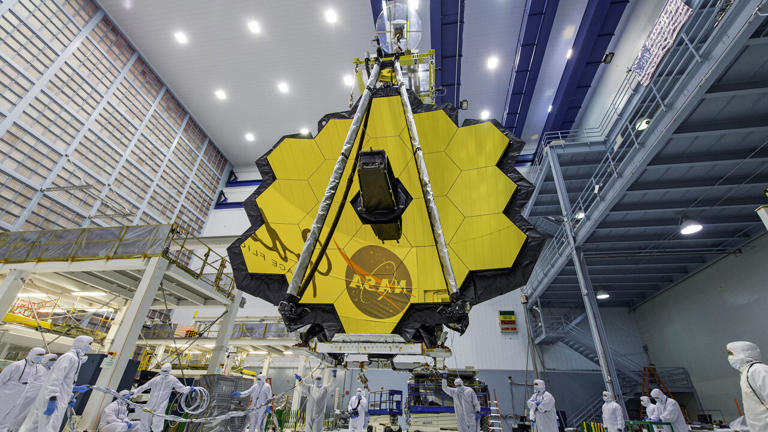
Een grote sprong in kennis op dat vlak, kwam er dankzij de James Webb-ruimtetelescoop. "De telescoop is een kanteling van ons veld. Het is een goudmijn als het gaat over het ontdekken van nieuwe planeten, maar ook over nieuwe kennis die we krijgen over planeten die we al kenden. Hoe ziet de atmosfeer eruit, is die aardachtig of niet?"

De James Webbtelescoop, voor de lancering

De James Webbtelescoop, voor de lancering
© NASA

Dat kan nu bijvoorbeeld achterhaald worden over de TRAPPIST-planeten. "Dat zijn 7 aardachtige planeten rondom een bepaalde ster. 2 of 3 ervan bevinden zich in wat we de 'bewoonbare zone' noemen. Daar krijgen we nu waarnemingen van binnen. We beginnen stap per stap genoeg signalen te krijgen, mondjesmaat."

Dat alles klinkt optimistisch. Maar er is nog een groot verschil tussen een bewoonbare of een effectief bewoonde planeet. Hoe groot de kans op een bewoonde planeet is, weten we (nog) niet. "Daarvoor kennen we de chemie te slecht", zegt Decin. Chemische reacties op aarde zijn immers verschillend van die in de ruimte.

Maar of we dan ook moederziel alleen zijn in dit gigantische universum? Decin sluit ander leven alvast niet uit.

{ https://www.msn.com/nl-be/ }

Hoe vind je dit bericht?
Geschreven door peter om 20:18 Stuur door

Meer van UFO'S of UAP'S, ASTRONOMIE, RUIMTEVAART, ARCHEOLOGIE, OUDHEIDKUNDE, SF-SNUFJES EN ANDERE ESOTERISCHE WETENSCHAPPEN - DE ALLERLAATSTE NIEUWTJES

↑ Terug naar de berichten