Naar de inhoud

UFO'S of UAP'S, ASTRONOMIE, RUIMTEVAART, ARCHEOLOGIE, OUDHEIDKUNDE, SF-SNUFJES EN ANDERE ESOTERISCHE WETENSCHAPPEN - DE ALLERLAATSTE NIEUWTJES

UFO's of UAP'S in België en de rest van de wereld
akke.beakke.be
Ontdek de Fascinerende Wereld van UFO's en UAP's: Jouw Bron voor Onthullende Informatie! Ben jij ook gefascineerd door het onbekende? Wil je meer weten over UFO's en UAP's, niet alleen in België, maar over de hele wereld? Dan ben je op de juiste plek! België: Het Kloppend Hart van UFO-onderzoek In België is BUFON (Belgisch UFO-Netwerk) dé autoriteit op het gebied van UFO-onderzoek. Voor betrouwbare en objectieve informatie over deze intrigerende fenomenen, bezoek je zeker onze Facebook-pagina en deze blog. Maar dat is nog niet alles! Ontdek ook het Belgisch UFO-meldpunt en Caelestia, twee organisaties die diepgaand onderzoek verrichten, al zijn ze soms kritisch of sceptisch. Nederland: Een Schat aan Informatie Voor onze Nederlandse buren is er de schitterende website www.ufowijzer.nl, beheerd door Paul Harmans. Deze site biedt een schat aan informatie en artikelen die je niet wilt missen! Internationaal: MUFON - De Wereldwijde Autoriteit Neem ook een kijkje bij MUFON (Mutual UFO Network Inc.), een gerenommeerde Amerikaanse UFO-vereniging met afdelingen in de VS en wereldwijd. MUFON is toegewijd aan de wetenschappelijke en analytische studie van het UFO-fenomeen, en hun maandelijkse tijdschrift, The MUFON UFO-Journal, is een must-read voor elke UFO-enthousiasteling. Bezoek hun website op www.mufon.com voor meer informatie. Samenwerking en Toekomstvisie Sinds 1 februari 2020 is Pieter niet alleen ex-president van BUFON, maar ook de voormalige nationale directeur van MUFON in Vlaanderen en Nederland. Dit creëert een sterke samenwerking met de Franse MUFON Reseau MUFON/EUROP, wat ons in staat stelt om nog meer waardevolle inzichten te delen. Let op: Nepprofielen en Nieuwe Groeperingen Pas op voor een nieuwe groepering die zich ook BUFON noemt, maar geen enkele connectie heeft met onze gevestigde organisatie. Hoewel zij de naam geregistreerd hebben, kunnen ze het rijke verleden en de expertise van onze groep niet evenaren. We wensen hen veel succes, maar we blijven de autoriteit in UFO-onderzoek! Blijf Op De Hoogte! Wil jij de laatste nieuwtjes over UFO's, ruimtevaart, archeologie, en meer? Volg ons dan en duik samen met ons in de fascinerende wereld van het onbekende! Sluit je aan bij de gemeenschap van nieuwsgierige geesten die net als jij verlangen naar antwoorden en avonturen in de sterren! Heb je vragen of wil je meer weten? Aarzel dan niet om contact met ons op te nemen! Samen ontrafelen we het mysterie van de lucht en daarbuiten.

Archief

Unraveling the Indian Ocean's Mysterious Gravity Hole

Unraveling the Indian Ocean's Mysterious Gravity Hole

Story by Bruno Pugh
Unraveling the Indian Ocean's Mysterious Gravity Hole
© The Island – Sri Lanka/Facebook

For decades, a massive anomaly sprawling across 1.2 million square miles on the Indian Ocean floor has baffled scientists. This phenomenon, known as the “gravity hole,” has sparked endless debate and curiosity. Read on as we uncover this mystery, officially named the Indian Ocean Geoid Low.

The Indian Ocean’s Gravity Anomaly

© Shiv Kar/Facebook

The Indian Ocean’s Gravity Anomaly
So, what’s the deal with this vast region of the Indian Ocean that sits up to 106 meters below the global average sea level? It turns out there’s a significant dip in Earth’s gravity here. This gravitational anomaly has puzzled scientists for years, but recent studies are shedding light on its origins and linking it to deep geological processes.

Understanding the Geoid Low

© Paul Wilson Images/Facebook

Understanding the Geoid Low
Geologists have a term for this “hole”—a geoid low, where Earth’s gravity is weaker than average. It might sound alarming, but it’s just a natural part of our planet’s gravitational landscape. Recent research suggests that molten rock plumes rising from deep beneath Africa are responsible for this phenomenon; these plumes are at the edge of an ancient sea bed.

Earth’s Shape and Gravitational Variation

© International Centre for Global Earth Models (ICGEM)/Facebook

Earth’s Shape and Gravitational Variation
Ideally, Earth would have uniform gravity, but it’s not a perfect sphere. It’s flatter at the poles and bulges at the equator, causing variations in gravity. Different regions exert varying gravitational pulls based on the crust, mantle, and core mass distribution. Such complexity contributes to gravitational anomalies like the low geoid of the Indian Ocean.

The Potsdam Gravity Potato

© Space Live/Facebook

The Potsdam Gravity Potato
To visualize these gravitational tugs, scientists use gravity measurements from sensors and satellites to create models like the “Potsdam gravity potato.” The model highlights Earth’s gravitational highs and lows, helping scientists understand the mass distribution beneath the surface. It’s like taking off each layer of an onion, discovering more with every peel.

Discovery and Confirmation of the IOGL

© Woodwalker/Wikipedia

Discovery and Confirmation of the IOGL
The Indian Ocean Geoid Low (IOGL) was discovered by Dutch geophysicist Felix Andries Vening Meinesz in 1948 during a ship-based gravity survey. Since then, subsequent shipboard expeditions and satellite measurements have confirmed its presence. This IOGL is the planet’s most prominent gravitational anomaly, covering over three million square kilometers.

Investigating the Origins

© Will Walker/Facebook

Investigating the Origins
Researchers Attreyee Ghosh and Debanjan Pal compared various computer models of the region’s formation over the past 140 million years. Each model used different variables for the convection of molten material within the mantle. Their goal? To pinpoint the cause of the IOGL. Their findings point to a distinctive mantle structure influenced by ancient geological events.

The Role of the Mantle and the African Blob

© The Role of the Mantle and the African Blob

The Role of the Mantle and the African Blob
The study suggests that the IOGL is due to a unique mantle structure combined with an adjacent disturbance under Africa known as the “African blob.” This large low-shear velocity province (LLSVP) consists of hot, low-density material, thought to be remnants from ancient seafloor slabs, which influence the region’s gravitational characteristics.

Connection to the Tethys Ocean

© Encyclopedia of Science/Wikipedia
Connection to the Tethys Ocean
Geologists believe Tethyan slabs, remnants of an ancient seafloor from the Tethys Ocean, form the African blob. Over 200 million years ago, the Tethys Ocean existed between the supercontinents Laurasia and Gondwana. As India moved northward, it created the Indian Ocean and left behind these geological traces.
Evolution and Persistence of the IOGL
© NASA Earth/Facebook
Evolution and Persistence of the IOGL
Around 20 million years ago, the geoid low probably formed its current shape as plumes began spreading through the upper mantle. The mantle material flow from the African blob sustains this anomaly. As long as these flows continue, the geoid low will persist.
Future Implications
© Paddy Dolan/Facebook
Future Implications
The IOGL will eventually dissipate when temperature anomalies cause it to move, which could take many millions of years. Studying this geoid low provides valuable insights into Earth’s internal processes and the dynamic nature of its mantle.

The post Unraveling the Indian Ocean’s Mysterious Gravity Hole appeared first on Housely.
Hoe vind je dit bericht?
Geschreven door peter om 23:16 Stuur door

AI Focused Alien Photo From 1930 Alaska, eyewitness killed, UFO Sighing News. Video.

AI Focused Alien Photo From 1930 Alaska, eyewitness killed, UFO Sighing News. Video.

UAP,%20%E0%A4%89%E0%A4%AB%E0%A5%8C%20,%20%E0%A6%87%E0%A6%89%E0%A6%8F%E0%A6%AB%E0%A6%93,%20%C4%91i%CC%83a%20bay,%20MUFON,%20%E7%9B%AE%E6%92%83%E3%80%81%E3%82%A8%E3%82%A4%E3%83%AA%E3%82%A2%E3%83%B3,%20%20.png
Date of sighting: 1930s
Location of sighting: Lake in Alaska, USA
 
I decided to take this old 1930s photo of a creature that was photographed in Alaska and run it though ai correction to see if it brings out any detail, or perhaps corrects it so we can see what it really is, however it was not a deer or animal as some have speculated, instead a white, thin alien figure with a big head is seen. This seems accurate to me. It is definitive proof that something human-like small and wearing white was recorded on that day...but I don't believe it to be human, but alien. 
Scott C. Waring
 
The picture was taken in the early 1930s by the sender's grandfather, who lived in Alaska. The entitiy was first seen when the grandfather was on his way to a lake. He chased the entity until he got close enough to take this one picture. It was some four months before the photograph was developed, being in in a remote, sparsely populated area. The sender received the picture from his grandfather only last week. His grandfather died the day after giving him the photo, and relating his story.

{ https://www.ufosightingsdaily.com/ }

Hoe vind je dit bericht?
Geschreven door peter om 21:17 Stuur door

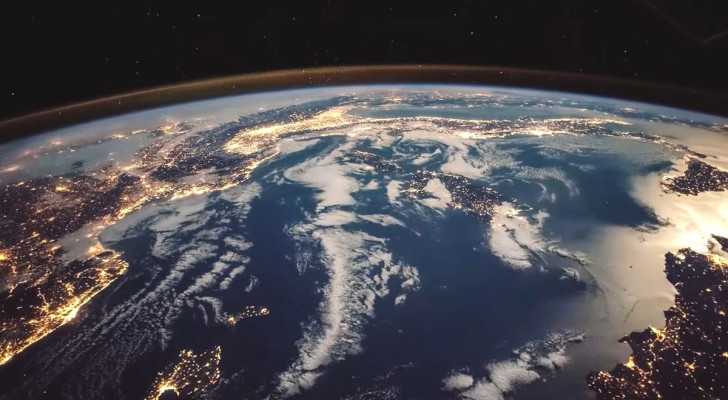
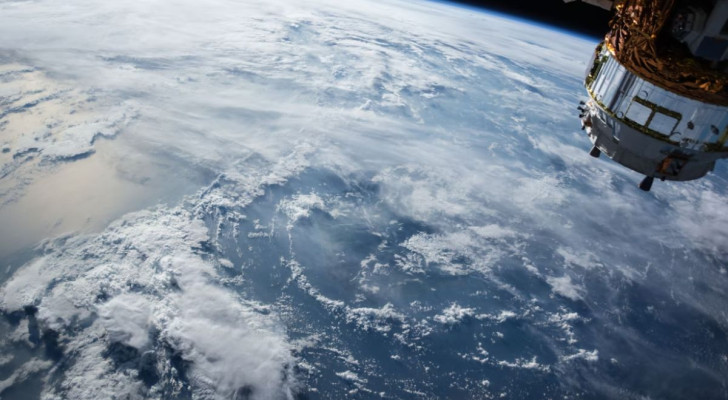
Waar begint de ruimte en eindigt de aarde? Voor velen is het mogelijk om het precieze punt te lokaliseren

Waar begint de ruimte en eindigt de aarde? Voor velen is het mogelijk om het precieze punt te lokaliseren

Janine imagedoor Janine

Una rappresentazione dell'atmosfera terrestre, che potrebbe aiutarci a capire dove inizia lo spazio

We weten al eeuwen dat de aarde slechts een punt is in een steeds groter wordend heelal, en het is vaak moeilijk om je deze afstanden zelfs maar voor te stellen. De bijna 400.000 kilometer die ons van de maan scheiden, verbleken in vergelijking met de 150 miljoen kilometer die nodig is om de zon te bereiken, en het is hoe dan ook een heel klein deel van de Melkweg. Alles rondom onze planeet is lege ruimte, of bijna, maar waar begint de ruimte dan? Dit is een minder banale vraag dan het lijkt: laten we eens kijken waarom!

Ruimte en het idee van ruimte

Wanneer een astronaut zich klaarmaakt om naar het Internationale Ruimtestation te gaan, zeggen we vaak dat hij de ruimte in gaat. Wanneer hij zich al in het ISS bevindt en buiten de structuur een taak uitvoert, spreken we van een ruimtewandeling. Maar is het dat echt? Op het eerste gezicht lijkt het een “eenvoudige” kwestie van grenzen: waar eindigt de aarde, waar begint de ruimte? Het zijn vragen die banaal lijken, maar verbonden zijn met de vraag wat een planeet is, of beter gezegd: wat onze planeet is.

We weten dat de aarde een atmosfeer heeft die ons in staat stelt om op het oppervlak te leven, dus de ruimte moet beginnen wanneer de atmosfeer eindigt, toch? Helaas strekt de atmosfeer van de aarde zich uit tot ongeveer 800 kilometer boven het oppervlak, met een grens verder weg dan de reizen van Gagarin en andere astronauten, zelfs hoger dan het ISS. Misschien begint de ruimte wanneer het effect van de zwaartekracht van de aarde eindigt, maar dan zouden we 21 miljoen kilometer van onze planeet moeten verwijderen en dichter bij Venus moeten komen. Dit is geen bevredigende maatstaf: zoals we al zeiden, we moeten op basis van conventie vaststellen waar de ruimte begint.

Van de atmosfeer tot de thermosfeer

NASA

Zoals vaak gebeurt bij metingen, is het noodzakelijk om een ​​criterium vast te stellen, een bevredigende meting die ons in staat stelt te zeggen waar de ruimte begint. Volgens de Internationale Astronomische Federatie ligt de rand van de ruimte 100 kilometer boven zeeniveau. Daar is de atmosfeer al zo ijl dat gewone vliegtuigen niet kunnen vliegen: een bijna empirische meting, zoals die waarbij het begin van de ruimte op ongeveer 80 kilometer wordt geplaatst, de limiet die door de Amerikaanse X-15-raket in de jaren zestig werd overschreden. Maar is dit genoeg?

Een meer wetenschappelijke methode is die waarbij het einde van de aarde en het begin van de ruimte op ongeveer 118 kilometer boven zeeniveau worden geplaatst. Hier is sprake van een overwicht van deeltjes die uit de ruimte komen vergeleken met deeltjes die van de planeet komen: kortom, er is nog steeds een atmosfeer, maar de dingen worden verwarrend. Een paar honderd kilometer hoger bevindt zich de thermosfeer, het gebied van de atmosfeer waarin het Internationale Ruimtestation zich bevindt. Als er een grens is tussen de aarde en de ruimte, zou dit de grens kunnen zijn, ook al is niet iedereen het daarmee eens.

Waar begint de ruimte?

Zoals we hebben gezien, is het beantwoorden van deze vraag niet zo eenvoudig als het lijkt. Er is geen fysieke barrière die ons in staat stelt te zeggen waar de aarde eindigt en waar de ruimte begint, en er is zelfs geen enkele grens die onze taak gemakkelijker maakt. Er zijn veel grenzen, elk met uitstekende argumenten. De waarheid is dat we mensen zijn en beslissen wat ruimte is en wat niet: dit zijn conventies die meer vertellen over onze doelen en doelstellingen dan over de werkelijke ruimte.

Tegenwoordig heeft de IAF het begin van de ruimte gedefinieerd volgens de Kármánlijn, maar we hebben al gezien dat er meerdere interpretaties zijn, die allemaal legitiem zijn. Op dit moment hebben we het over 100 kilometer, 118 kilometer of de 400 kilometer hoogte van het ISS. In de toekomst zal het toenemende onderzoek ons ​​misschien in staat stellen andere metingen van de ruimte te geven die uiteindelijk alleen maar metingen van onszelf zijn. Of weinig meer.

{ https://www.curioctopus.nl/ }

Hoe vind je dit bericht?
Geschreven door peter om 21:01 Stuur door

Unlocking UAP Mysteries: The Scientific Breakthrough of the MUPAS Experiment

Unlocking UAP Mysteries: The Scientific Breakthrough of the MUPAS Experiment

Scientific Evidence of UAPs? The MUPAS Experiment!

The existence of Unidentified Aerial Phenomena (UAPs) has long been a subject of fascination and debate. Despite numerous eyewitness accounts and anecdotal evidence, mainstream science has traditionally been hesitant to investigate UAPs due to a perceived lack of empirical data. However, a groundbreaking research initiative known as the Modular Unidentified Phenomenon Alert System (MUPAS) is changing the landscape of UAP research by providing scientific evidence to support the existence and effects of these mysterious phenomena.

The MUPAS Initiative

The MUPAS experiment, led by physicist and engineer Jim Segala, represents a pioneering effort to scientifically study UAPs using a combination of advanced technology and human experience reports. Launched in 2018, MUPAS has recorded over 600 verified UAP cases, combining environmental sensor data with participant observations. This approach provides a comprehensive understanding of the phenomena and their potential impacts on humans and the environment.

Advanced Data Collection

The core of the MUPAS initiative lies in its custom-built sensor systems designed to capture a wide range of environmental signals. These sensors monitor:

  • Radio Frequency (RF): Analyzes electromagnetic signals that might be associated with UAP activity.
  • Gravimetric Changes: Measures alterations in gravitational fields that could indicate the presence of unknown crafts or phenomena.
  • Gamma Radiation: Detects spikes in radiation that are often reported during UAP encounters.
  • Microwaves: Monitors microwave emissions that may correlate with sightings.

By continuously collecting data on these signals, MUPAS aims to identify patterns and anomalies that coincide with UAP reports.

Correlating Human Experiences with Environmental Changes

A unique aspect of the MUPAS experiment is its integration of human experiencer reports with environmental data. Participants in the study are encouraged to document their encounters, including any physical or psychological effects experienced during or after the sighting. This information is then cross-referenced with data collected by the sensors to identify correlations.

One notable example from the study is Case 316, where a participant reported an intense experience of disorientation and confusion, stating, “If I were to ever say I was abducted, it would have been last night.” During this time, the MUPAS sensors recorded significant spikes in gamma and microwave radiation, suggesting a direct interaction between the UAP and the participant.

Statistical Significance and Scientific Rigor

A key achievement of the MUPAS experiment is its ability to predict UAP interactions with a high degree of statistical confidence. The data collected has reached a 4.8 Sigma confidence level, approaching the 5 Sigma standard often used in scientific research to denote statistical significance. This level of accuracy indicates a strong correlation between the environmental changes detected by MUPAS and the human reports of UAP experiences.

Addressing Skepticism in the Scientific Community

Despite the compelling findings of the MUPAS experiment, skepticism remains prevalent within the scientific community. Critics argue that the phenomena reported are often anecdotal and lack empirical evidence. However, Jim Segala and his team are addressing these concerns by adhering to the scientific method and employing rigorous data collection techniques.

Segala emphasizes the importance of creating hypotheses based on observable data and testing these hypotheses using verifiable scientific methods. By doing so, MUPAS is challenging the notion that UAPs cannot be studied scientifically and is providing a framework for future research in this field.

Expanding Participation and Public Involvement

The MUPAS initiative is not limited to a select group of researchers; it encourages public participation and aims to expand its reach through crowdfunding and community involvement. By equipping more individuals with sensors and promoting collaboration, MUPAS seeks to gather a larger dataset and enhance its understanding of UAP phenomena.

VIDEO:

  • Chris Lehto – Scientific Evidence of UAPs? The MUPAS Experiment!

The findings of the MUPAS experiment have the potential to revolutionize our understanding of UAPs and their impact on the natural world. If UAPs consistently cause measurable environmental changes, they could provide new insights into unexplained physical phenomena and challenge existing scientific paradigms.

The MUPAS experiment represents a significant step forward in the scientific investigation of UAPs. By combining advanced sensor technology with participant experiences, MUPAS is providing empirical evidence to support the existence of these phenomena and their potential effects. As the project continues to grow and gain traction, it holds the promise of advancing our understanding of UAPs and fostering a more open-minded approach to studying unexplained aerial phenomena.

{ https://www.latest-ufo-sightings.net/ }

Hoe vind je dit bericht?
Geschreven door peter om 20:40 Stuur door

This Shapeshifting Robot Could Be the Future of Space Exploration

A2Anwqdp?format=jpg&name=900x900

(Jie Yin, NC State University)

This Shapeshifting Robot Could Be the Future of Space Exploration

A team of North Carolina State University Engineers has devised a shapeshifting robot inspired by the ancient Japanese paper-folding art of Origami, capable of functions ranging from space exploration to disaster relief.

By implementing hierarchical concepts observed in nature, the team’s approach combines simple and efficient kinematics with “rich shape-morphing capability” to successfully mitigate the complexity and power use issues holding back earlier concept work from real-life implementation. The researchers believe these improvements could pave the way to a simpler, more malleable shape-shifting robot for practical use.

“The question we’re asking is how to achieve a number of versatile shapes with the fewest number of actuators powering the shapeshifting,” said Jie Yin, associate professor of mechanical and aerospace engineering, in a press release announcing their work.

“Here we use a hierarchical concept observed in nature – like layered muscle fibers – but with plastic cubes to create a transforming robot.”

imagestechnology20190925PIA23433-16.width-1024.jpg

A prototype of the transforming robot Shapeshifter is tested in the robotics yard at NASA's Jet Propulsion Laboratory. Shapeshifter is made of smaller robots that can morph into rolling spheres, flying drones, swimming submersibles, and more.

imagestechnology20190925PIA23434-16.jpg

An illustration of an early concept of Shapeshifter imagines the robots on Saturn's moon Titan. In the picture, the Shapeshifter breaks into smaller pieces that can investigate a methane waterfall from the sky.

imagestechnology20190925PIA23435-16.jpg

An illustration of the small robots that form Shapeshifter. Dubbed "cobots," they each have a propeller for flying and can combine to form a sphere, rolling on the ground to save energy

.› Full image and cap... Credit: NASA/JPL-Caltech

Shape-Shifting Robot Built Like Human Muscles 

In that same release, team leader Yin explained that they looked at the hierarchical construction of human muscle, of fiber wrapped in connective tissue, with those bundles once again joined by another layer of connective tissue. To this hierarchical concept, they added a combinatorial principle that the robot could split into sub-pieces or even into smaller autonomous units. According to the team’s new paper recently published in the journal Nature Communications, the combination of these two ideas provided the jumping-off point to rethink how a shape-shifting robot could be composed,

In that work, the team also looked at the issues plaguing previous work, including one Origami-inspired robot previously covered by The Debrief that was otherwise promising. Plus, while advances have been made in other biologically inspired robots, they have so far struggled to compare to the real thing.

For example, the variety of shapes that many robots could put themselves into was limited. Also, those with a more diverse array of potential forms quickly became a complicated mess of intricate control systems and actuators. Their transformations were difficult, lengthy, and tapped too much energy.

In an effort to overcome those limitations, the team designed a robotics framework that can bend, fold, and reshape itself into a variety of forms. In their shape-shifting robot’s final structure, four, six, or eight cubes are connected by an equal number of hinges acting as joints. These joints are also rotational, increasing the angles available to a single pivot.

Adding to the robot’s versatility, the servomotors that control them are controlled by Bluetooth and powered by rechargeable batteries.

Mori3: A polygon-based modular robot

Printing Out a Transforming Robot

To construct their test model, the team relied on 3D printing. First, they printed rigid ABS plastic panels, which were then connected into hollow cubes and joined with flexible hinges. According to the researchers, this design does not just make assembly easy; it becomes a snap to disassemble and change the hierarchy. Additionally, the model tested to have a significant amount of strength. For example, it could support two and a half times its weight even when deployed as a multistory structure. Simpler uses, such as bridges and tunnels, could bear even greater stress, over three and a half times its weight.

“We want to make a more robust structure that can bear larger loads,” said Yanbin Li, an NC State postdoctoral researcher and co-corresponding author of the paper. “If we want a car shape, for example, how do we design the first structure that can transform into a car shape? We also want to test our structures with real-world applications like space robots.”

The efficiency of this robust design relies on allowing for many possibilities while finding the simplest solution. While one robot is equipped with 22 motors controlling 36 joints, it only needs to use up to three at a time for a transformation. This includes rearranging itself from a dense cube into a fully open structure, a feat that was accomplished with only two motors actively driving 16 of its joints.

The Mori3 robot standing up.

The Mori3 robot standing up. 

Gif: EPFL RRL

This reduced transformation times to two minutes from the hours described in earlier work.

When highlighting the design’s efficiency, the paper’s authors noted that at its maximum expansion, the robot could occupy 200 times the initial volume of its components when packed flat. Based on its unprecedented speed of transformation and compactness for transport, the team identified the robots as perfect for use as emergency shelters or other structures needed in rapid deployment situations.

When operating on a planet’s surface, large-scale functions like transforming into a shelter or acting as a cargo robot are possible. In one proposed application, the separate pieces split into multiple robots with separate functions, an idea common in Japanese science fiction entertainment. This level of malleability also allows the shape-shifting robot to assume a more aerodynamic shape for either pointing down and landing or pointing up and taking off without turning the entire structure around. Such a robot could significantly cut down the needed equipment, while simultaneously increasing its own safety and efficiency.

189f8f90-94be-11ec-9f71-b94c29ad07cc

MIT CSAIL

The Future of Space Exploration May Be In Transporting Less

In their paper, the researchers also illustrate an example of how such robots could be used in space exploration. This is consistent with recent work in the field that has been trying to identify ways to make devices more reclaimable and cost-effective. In a previous story, The Debrief looked at the ways engineers have been attempting to make space vehicles reusable.

One example highlighted by the NC State researchers is how it can form itself into a large, flat slab for solar panels, maximizing the surface area for energy collection. It can also reconfigure itself to create holes in its surface for objects to pass harmlessly through, avoiding collisions with small space objects. Such a feature would also allow it to generate docking ports for other spacecraft or even convert itself into a living space for future astronauts.

“We think these can be used as deployable, configurable space robots and habitats,” said Antonio Di Lallo, an NC State postdoctoral researcher and co-first author of the paper. “It’s modular, so you can send it to space flat and assemble it as a shelter or as a habitat, and then disassemble it.”

Whatever form the shape-shifting robots ultimately take, the researchers agree that ease of use will be critical to their overall value.

“For users, it needs to be easy to assemble and to control,” Yin said.

  • Ryan Whalen covers science and technology for The Debrief. He can be reached at ryan@thedebrief.org.

{ https://thedebrief.org/category/space/ }

Hoe vind je dit bericht?
Geschreven door peter om 23:30 Stuur door

Aliens DO Exist, Says Top Secret FBI Memo Found By UFO Researchers

Aliens DO Exist, Says Top Secret FBI Memo Found By UFO Researchers

b5e753f7c697f1ed11538243079f5e82

Aliens do exist, according to a top secret FBI memo found by researchers into UFOs.

Investigators at the Hakui Centre for UFO Research in Tokyo, Japan, claim they have discovered a document that proves there is extra-terrestrial life.

The FBI memo contains details about flying saucers being piloted by three feet tall aliens.

The memo that 'proves aliens landed at Roswell'... released online by ...

The memo that 'proves aliens landed at Roswell'... released online by ...

The Bureau is said to be concerned about the findings at the research centre, fearing the discovery could lead to members of the public gaining access to thousands of documents.

The FBI memo reportedly reads: “An investigator for the Air Force states that three so-called flying saucers had been recovered in New Mexico.

“They were described as being circular in shape with raised centres, approximately 50 feet in diameter.

FBI UFO Document Is The Most Popular Of All Its 'Vault' Files | HuffPost

fbi1950doc

FBI UFO Document Is The Most Popular Of All Its 'Vault' Files

“Each one was occupied by three bodies of human shape but only 3 feet tall, dressed in metallic cloth of a very fine texture.

“According to Mr (name blanked out), the saucers were found in New Mexico due to the fact that the Government has a very high-powered radar set-up in that area and it is believed the radar interferes with the controlling mechanism of the saucers.”

Whatever the details of this reportedly top secret memo, the truth is out there…

FBI's 'flying saucers' online memo intrigues public - CNN.comFBI seize memo from Hakui Centre for UFO Research claiming alien craft ...

FBI's 'flying saucers' online memo intrigues public - CNN.com

  • (Picture: Rex Features)

{ https://uk.news.yahoo.com/ }

Hoe vind je dit bericht?
Geschreven door peter om 22:48 Stuur door

Aerospace Billionaire Saw Interdimensional Forces: Says UFOs & Consciousness Are Linked

Image

Aerospace Billionaire Saw Interdimensional Forces: Says UFOs & Consciousness Are Linked

The most common and yet interesting question that many people ask is: Are we alone in this universe? The answer has taken a great turn from “Maybe yes” to “Maybe no” in the past few years. There is a long list of credible personalities who never denied the presence of non-human intelligent life among us. Moreover, a few of them are certain that aliens are on Earth. American billionaire Robert Bigelow said something shocking about aliens in November 2017.

According to Robert Bigelow, famous in the aerospace industry for the manufacture of inflatable modules such as those tested out at the International Space Station, there are extraterrestrial beings living among humans. He said that he is “absolutely convinced” aliens live among humans on Earth. During the interview with CBS’ 60 Minutes, reporter Lara Logan asked Bigelow if he believes in aliens. He replied: “I’m absolutely convinced. That’s all there is to it.” He further said: “There has been and is an existing presence, an ET presence.”

He continued: “I spent millions and millions and millions – I probably spent more as an individual than anybody else in the United States has ever spent on this subject.” “You don’t have to go anywhere” to find aliens and they are here right in front of people. Bigelow had his own close encounters but declined to go into detail.

When award-winning journalist George Knapp asked his comment on this interview, he said: “There are different ways to go at this. So one is from a hardware standpoint. The other one is from the presence standpoint, ET presence. And, you know, a lot of people say, well, whether they’re, you know, that they can be among the population, whether they’re hybrids, or there’s some other kind of, really look alike, you know, kind of thing. But so, so you can look at it in different kinds of ways. And, and so, I know of a really good high quality researcher who has fantastic academic credentials and background. And he would be predisposed to the latter, saying that, yeah, it could be among us, you know, but he’s probably on the more extreme, he’s definitely on the more extreme. Others would say, well, we’re safe in saying that there’s hardware, you know, so that’s among us, and hardware kind of context.” (Source)

Skinwalker Ranch, a property located in northeastern Utah has been the subject of alleged paranormal activity, including UFO sightings and other strange occurrences. The ranch gained notoriety in the 1990s when it was purchased by Mr. Bigelow, who funded a number of studies of the phenomena reported at the ranch.

However, the specifics of what has been reported at the ranch and the credibility of those reports have been the subject of much debate and skepticism. Some people believe that the ranch is a hotspot for extraterrestrial activity, while others believe that the reports of strange occurrences at the ranch are the result of hoaxes or misidentifications of natural phenomena.

UFO skinwalker ranch

Bryant “Dragon” Arnold (Chief Security Officer on Skinwalker Ranch), Casey Smith, Erik Bard and Kaleb Bench, from left, check the radiation in a sinkhole pit on Skinwalker Ranch, in a moment from History’s series “The Secret of Skinwalker Ranch.” Image via The Salt Lake Tribune

Following his interview with Mr. Bigelow, Knapp then asked if the entities at Skinwalker Ranch would be investigated through the Bigelow Institute for Consciousness Studies (which he founded in 2020 after his wife passed away). Besides, he wondered that if they are among us, can they also be considered alien? Bigelow said: “Well, if you if you follow the literature and pay attention to a lot of other kinds of sources, they absolutely are.”

Further, Mr. Bigelow shared his personal experiences and losses that prompted his interest in life after death, as well as UFOs. He talked about possible links between consciousness research and UFOs. He also talked about the risks of trying to establish  communications with the unknown.

“That’s been mainly what I’ve been doing except for the skinwalker ranch thing for 20 years as the space world has been huge in my life to pursue the legitimate parochial kind of you know using fire engines rockets to get you there. We didn’t expect anything like this to happen and so there this is different. This is the holy grail and is different than the second holy grail. If the second one is ‘Beings’ (E.T.), then the first one: Is there any part of your consciousness that survives your bodily death? That’s a big deal. That’s a huge story. That’s gigantic.”

“Be a little careful about what you wish for. So on the face of it,  communication sounds great and that by the way has been tried forever ever since the oracle of Delphi. I mean you can go back thousands of years and that’s been attempted. So It’s not now you know the last 100 years through electronics and using some kind of electrical apparatus to try to have some kind of  communications. And you know  communication can be at all different kinds of levels. There might be communication that just causes you an awareness.”

Then Knapp asked him what triggered his curiosity about UFOs, possibly it was after Bob Lazar’s story came out. Mr. Bigelow replied that he was already into UFO research. He was looking at UFO stories worldwide to understand what they actually were.

Read also:

In 1992, he started the Bigelow Foundation with Bob Lazar, who worked on reverse-engineering recovered extraterrestrial craft at Area-51. Mr. Bigelow also backed Dr. John E. Mack, a professor of psychiatry at Harvard who wrote two popular books about his work with people who told him they had been abducted by aliens, and Budd Hopkins, an artist who became an abduction investigator and also wrote popular books.

Mr. Bigelow’s investigative team, headed by Colm Kelleher, the institute’s scientific administrator and biochemist, documented their own paranormal events, according to a 2005 book “Hunt for the Skinwalker,” by Dr. Kelleher and Mr. Knapp.

Mr. Bigelow said he saw “interdimensional” forces at play through portals at certain paranormal hot spots like Skinwalker. But he also said he had frequently visited the ranch without experiencing the kind of chilling events others reported, as if some intelligence were selecting the people to act upon. “I slept like a log every single night,” he said. And no human was physically harmed, but he said he and other visitors often carried strange things home, like a sulfurous stink in a certain part of his house. His wife felt the presence of a faceless creature pressing down on her side of bed. (Source)

Bigelow amassed his fortune through the hotel chain Budget Suites of America and used this money to fund his UFO study. In an interview with The Associated Press, he said that UFOs are “under our noses” and wondered why news organizations had not extensively covered UFO sightings.

In 2008, Mr. Bigelow secretly created BAASS (Bigelow Aerospace Advanced Space Studies) to study the UFO mystery and related phenomena. The public did not know that he had signed a contract with the Defense Intelligence Agency to do an investigation under the AAWSAP program.

His political influence has been strong when it comes to UFO study. He once convinced his friend and then-Democratic U.S. Sen. Harry Reid to allocate $22 million to the Advanced Aerospace Threat Identification Program, which investigated UFO reports from 2007 to 2012. The majority of the funds were sent to Bigelow’s company to investigate, and the allocation was not made public until a 2017 New York Times investigation. The Pentagon stated that the program was terminated in 2012, although Reid later stated that he had no remorse about the expenditure.

Later, he and his team hired dozens of investigators, scientists, and support staff to work on putting together a huge database of original investigations and UFO files from other countries. The now-famous 2004 Tic Tac encounter off the coast of Southern California was one of the cases that BAASS looked into.

{ https://www.howandwhys.com/ }

Hoe vind je dit bericht?
Geschreven door peter om 22:33 Stuur door

42,000 Years Ago, Ancient Humans Used ‘Advanced Technology’ to Traverse Oceans and Colonize Remote Islands

ZpNrCK5z?format=jpg&name=900x900

42,000 Years Ago, Ancient Humans Used ‘Advanced Technology’ to Traverse Oceans and Colonize Remote Islands

Newly discovered evidence suggests that 42,000 years ago, ancient humans likely used various forms of maritime capabilities, an advanced form of technology for the period in which it was used, to traverse the world’s oceans.

In Southeast Asia, new evidencs points to the use of watercraft that allowed ancient sailors to colonize a portion of the more than 13,000 islands that make up modern day Indonesia, including the remote Tanimbar Islands.

“The question of how our early ancestors arrived there from Southeast Asia is one of the most captivating in prehistoric migration, mainly because of the vast distances covered and advanced seafaring skills that would have been required,” explained Mr. Hendri Kaharudin, a PhD candidate at the Australian National University (ANU) and the lead author of the study outlining the advanced maritime technologies employed by these early sailors that helped them reach the Tanimbar Island of Elivavan.

“This discovery marks one of the southern route’s earliest known sites, making it a crucial piece of the puzzle,” Mr. Kaharudin added.

42,000 Years Ago, the First Human Migrants Sailed to Tanimbar

While scientists have often theorized about the first arrival of human migrants in Indonesia from Southeast Asia, no concrete theory is universally accepted. According to the team’s research published in Quarternary Science Reviews, recent discoveries made on the Indonesian Tanimbar island of Elivavan revealed that people first arrived there around 42,000 years ago.

“Along with tiny fragments of pottery, we also found evidence of things like bones, shells, and sea urchins that point to the island’s role as a hub for early maritime activities,” Mr. Kaharudin said.

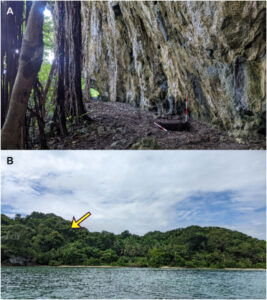
42,000 years ago A) View of Elivavan rock shelter and the test pit location; B) The location of Elivavan rock shelter (yellow arrow) seen from the narrow strait between Fordata and Larat islands. Image Credit: Kaharudin, et. al.

To reach this remote location, ancient mariners would have had to traverse exceedingly long distances over treacherous seas. Mr. Kaharudin said these ancient mariners would have had to traverse bodies of water over 100 kilometers in the distance “regardless of their direction of travel.” According to the press release announcing the new findings, “the risky nature of the sea crossings suggests the colonists had developed advanced maritime technology by around 42,000 years ago.”

The Debrief previously reported on discoveries showing that Stone Age sailors from 7,000 years ago employed some advanced nautical techniques to sail long distances. However, this research is the first to identify similarly advanced techniques from tens of thousands of years earlier.

Mystery of Ancient Routes Potentially Solved

If the discoveries made on Elivavan ultimately confirm the first route to Indonesia taken by ancient mariners over 42,000 years ago was a southern one, it will solve a long-standing debate between scientists about which route these original colonists took to get there.

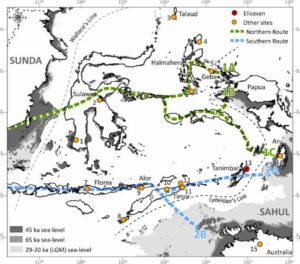
“There are two main routes that have been explored as possibilities since the mid-20th century, a northern path via islands like Sulawesi, and a southern track passing near Timor and the Tanimbar islands,” Kaharudin explained. This particular location, which lies along the southern route, is significant, the researcher notes, as “Tanimbar is located just off the ‘Sahul shelf’, which encompasses modern-day Australia, as well as New Guinea.”

42,000 years ago Map of Wallacea, delineating Birdsell’s northern and southern migration routes. The map also highlights the oldest Pleistocene sites on each island. Along the northern route, the following sites are indicated: 1) Leang Karampuang, Leang Tedongnge, and Leang Bulu Sipong 4, 2) Goa Topogaro, 3) Leang Sarru, 4) Daeo 2, 5) Golo, and 6) Kelo 6. On the southern route, the following sites are highlighted: 7) Liang Bua, 8) Lua Meko, 9) Makpan, 10) Laili, 11) Asitau Kuru, Lene Hara, Matja Kuru 2, 12) Here Sorot Entapa, and 13) Elivavan. The last two sites represent connections to Sahul: 14) Leang Lemdubu, currently in the Aru Islands but once connected to the mainland during the Pleistocene, and 15) Madjedbebe, the oldest known site in Sahul. Image Credit: Kaharudin et. al.

To make such a dangerous crossing, the researchers believe that these ancient seafaring humans likely hopped along the coasts, moving from island to island as they slowly spread out. This strategy evolved over time, the researchers note, meaning that the colonization was not a single event but “a gradual process involving successive waves of seafaring populations.”

“Coastal communities likely navigated shorelines, exploiting marine resources and establishing resilient settlements along their journey,” Mr. Kaharudin explained. “This island-hopping strategy facilitated cultural exchange and adaptation, shaping diverse societies across the land mass.”

Studying Remote Locations Could Uncover More About Ancient Human Life

Although the discovery of human occupation on Elivavan of the Tanimbar Islands over 42,000 years ago is significant, the researchers behind the discovery note that there is still much more work to be done. This includes taking a closer look at the area where these discoveries were made to paint a more complete picture of these early seafaring humans. In fact, according to Kaharudin, it is the exploration of these remote locations that could answer the mysteries of ancient human migration.

“As more work is done in lesser-explored regions like the Tanimbar Islands, I expect we’ll uncover more about early human life and migration patterns,” he explained.

  • Christopher Plain is a Science Fiction and Fantasy novelist and Head Science Writer at The Debrief. Follow and connect with him on X, learn about his books at plainfiction.com, or email him directly at christopher@thedebrief.org.

{ https://thedebrief.org/category/science/ }

Hoe vind je dit bericht?
Geschreven door peter om 22:02 Stuur door

Floating LEAVES Could Characterize Venus’s Atmosphere

Floating LEAVES Could Characterize Venus’s Atmosphere

Venus’s atmosphere has drawn a lot of attention lately. In particular, the consistent discovery of phosphine in its clouds points to potential biological sources. That, in turn, has resulted in numerous suggested missions, including floating a balloon into the atmosphere or having a spacecraft scoop down and suck up atmospheric samples. But a team of engineers led by Jeffrey Balcerski, now an adjunct at Kent State University but then part of the Ohio Aerospace Institute, came up with a different idea years ago – use floating sensor platforms shaped like leaves to collect a wide variety of data throughout Venus’ atmosphere.

The Lofted Environmental and Atmospheric Venus Sensors (or LEAVES) project was funded by NASA’s Institute for Advanced Concepts (NIAC) program in 2018. The mission design is simple enough: design lightweight platforms with a wide surface area, attach some low-cost and weight sensors to them, release them from a mothership transiting into orbit around Venus, and let those platforms float down through the Venusian atmosphere over the course of a few hours, all the while sending back atmospheric, chemical, and temperature data to the mothership.

There are a few enabling technologies behind the idea. The first is a lightweight yet robust and deployable structure that could support a platform of sensors and not be destroyed by Venus’s notoriously hellish environment. Designing this structure required understanding expected flight times and geolocation requirements, as well as the requirement that the system must be trackable by orbital radar in order to communicate back to the mothership. The resulting design resembles the famous inverted pyramid at the Louvre.

Venus is one of the most interesting planets in the solar system – and has captured Fraser’s imagination.

Inside that structure, the second enabling technology sits—harsh environment sensors designed to operate in Venus’s extreme environments. Chemical, pressure, and electrical sensors have undergone extensive development work over the past few years, and some are approaching readiness for use on Venus. They are also lightweight, allowing the structure to descend slowly, which is necessary to complete its mission goals.

After receiving the NIAC Phase I grant, the team led by Dr. Balcerski got to work modeling LEAVES’ structure and mission design. They quickly realized that delivery methodology and a system’s light weight would be critical to future missions. As such, they modeled depositing a series of upwards of 100 LEAVES throughout Venus’ atmosphere, each of which would be networked back to the mothership that deposited them as part of its planned orbital maneuver. They also thought there were several planned Venus missions, such as DaVINCI, which could easily take LEAVES on as a secondary payload with no real risk to mission success or uptime, as the LEAVES would fall and be destroyed by the lower Venusian atmosphere in a matter of hours.

But those hours of data, relayed back to the mothership and then on to Earth, could provide invaluable insights into the inner workings of Venus’s atmosphere. LEAVES would be able to reach a wide altitude range—it is estimated to operate between 100 km and 30 km in altitude. It could also be spread literally all over the world, allowing for a more complete picture of the Venusian atmosphere than other mission designs, which would only capture a small vertical slice of the atmosphere.

Venus’s environmental is rough on technology, to say the least. Fraser discusses the new technologies that could one day survive on its surface.

Given the potential impact of what we might find in the Venusian atmosphere, any mission designs that allow us to capture a large amount of information about a wide swath of it would be welcome. Dr. Balcerski and his colleagues think they have advanced the LEAVES concept to a Technology Readiness Level of 3-4. However, they haven’t yet received further support for LEAVES, and development appears to be on hold. But, given the increasing interest in exploring the Venusian atmosphere, perhaps it’s time to look at this lightweight, inexpensive way of doing so again.

Learn More:

Lead Image:

  • Artist’s depiction of several LEAVES falling through Venus’s atmosphere.
    Credit – Balcerski et al.

{ https://www.universetoday.com/ }

Hoe vind je dit bericht?
Geschreven door peter om 20:50 Stuur door

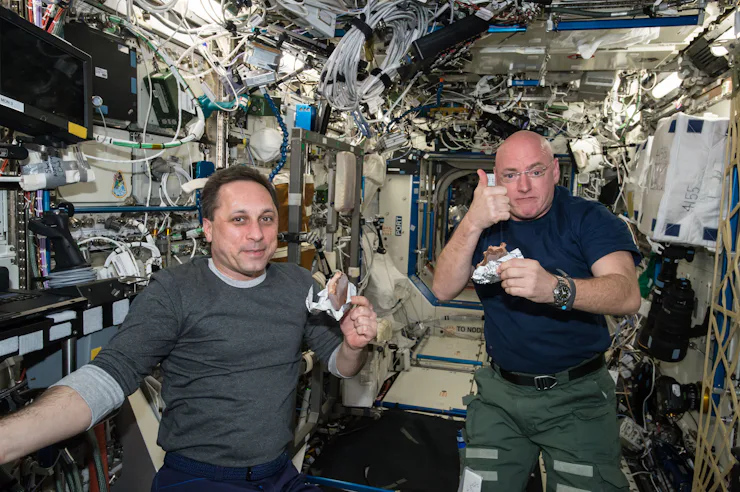
For ISS Astronauts, Digestive Issues Are Surprisingly Common — And A Very Big Problem

For ISS Astronauts, Digestive Issues Are Surprisingly Common — And A Very Big Problem

In space, no one can hear your leaky gut.

IN SPACE - APRIL 20:  In this handout photo provided by NASA, NASA astronaut Scott Kelly gives a thu...
NASA/Getty Images News/Getty Images

The International Space Station (ISS) will soon retire. As humanity’s farthest outpost approaches its sunset, researchers are raking in data on how astronauts might survive in the next iterations of human spaceflight. Unfortunately, a recent study reveals there’s a long way to go before we’re ready to live long stretches off planet Earth.

In short, we can’t stomach it.

Biodata from astronauts and rodents in space are revealing that being up there significantly increases a major digestive issue called gut permeability.

Thursday’s lineup at the International Space Station Research & Development Conference in Boston included a presentation from University of Florida PhD student Oluwamayowa Akinsuyi. After looking at several datasets from NASA and the Japanese Aerospace Exploration Agency (JAXA), Akinsuyi’s team found a “substantial reduction” in the expression of genes that maintain our intestinal barrier.

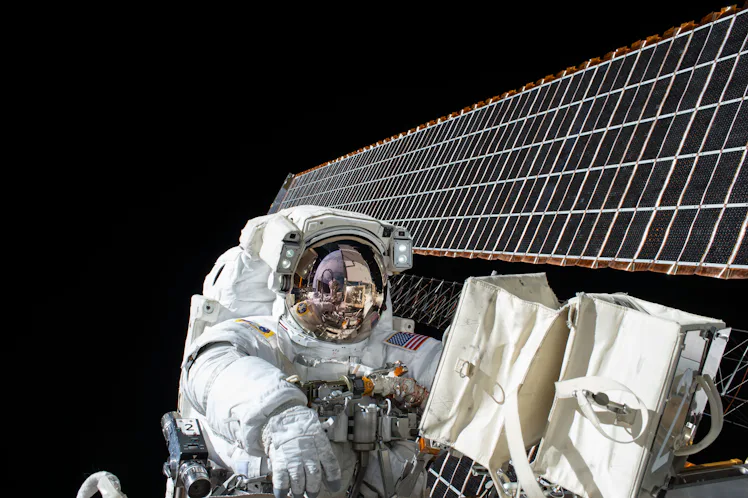
IN SPACE - NOVEMBER 6:  In this handout photo provided by NASA, NASA astronaut Scott Kelly works out...

NASA astronaut Scott Kelly performing a spacewalk on November 6, 2015. 

NASA/Getty Images/Getty Images

“Our findings on this project underscore the critical need to develop effective countermeasures to treat gastrointestinal (GI) health during long-duration spaceflight, “Akinsuyi said in a July 20 presentation about the same work. “And also one key thing our work pointed out is that there is clearly more work that is needed to increase awareness about the problem of leaky gut during space flight.”

It Takes Guts

The human body takes a big risk when we eat. Many times a day, it’s exposed to potentially harmful substances that hitch a ride alongside the good stuff in food and medicine. The gastrointestinal tract operates in a delicately robust fashion consisting of two layers to transport water and nutrients into the rest of the body, secrete other material out, and, all the while, keep out harmful substances like bacteria and toxins.

When the GI tract is in a good groove, that’s intestinal homeostasis. Without homeostasis, when the gut barrier is too permeable, inflammation and a host of diseases can appear. This is called leaky gut.

Akinsuyi analyzed five datasets from the NASA Genelab program. Genetic information from astronauts and rodents that were flown into space seems to suggest that spaceflight alters the gene expression that prevents leaky gut.

The astronauts and rodents experienced an imbalance in their gut microbiome, which is associated with increased intestinal pathogens and decreased beneficial microbes.

“Osteoporosis ... can be worsened by gut microbes and also a weak gut barrier.”

A lack of intestinal integrity could trigger disorders like inflammatory bowel disease, nonalcoholic fatty liver disease, cirrhosis and bone loss.

“Osteoporosis is a big problem astronauts experience during spaceflight, and this can be worsened by gut microbes and also a weak gut barrier,” according to Akinsuyi. The inflammatory response from leaky gut can “ultimately alter bone remodeling and result in bone loss,” he added.

Spaceflight is previously known to have an effect on gene expression and bone loss. If astronaut tummies are also connected to these phenomena, research into long-duration missions may have to continue in the few years that the ISS has left in orbit.

{ https://www.inverse.com/ }

Hoe vind je dit bericht?
Geschreven door peter om 20:00 Stuur door

Meer van UFO'S of UAP'S, ASTRONOMIE, RUIMTEVAART, ARCHEOLOGIE, OUDHEIDKUNDE, SF-SNUFJES EN ANDERE ESOTERISCHE WETENSCHAPPEN - DE ALLERLAATSTE NIEUWTJES

↑ Terug naar de berichten