Naar de inhoud

UFO'S of UAP'S, ASTRONOMIE, RUIMTEVAART, ARCHEOLOGIE, OUDHEIDKUNDE, SF-SNUFJES EN ANDERE ESOTERISCHE WETENSCHAPPEN - DE ALLERLAATSTE NIEUWTJES

UFO's of UAP'S in België en de rest van de wereld
akke.beakke.be
Ontdek de Fascinerende Wereld van UFO's en UAP's: Jouw Bron voor Onthullende Informatie! Ben jij ook gefascineerd door het onbekende? Wil je meer weten over UFO's en UAP's, niet alleen in België, maar over de hele wereld? Dan ben je op de juiste plek! België: Het Kloppend Hart van UFO-onderzoek In België is BUFON (Belgisch UFO-Netwerk) dé autoriteit op het gebied van UFO-onderzoek. Voor betrouwbare en objectieve informatie over deze intrigerende fenomenen, bezoek je zeker onze Facebook-pagina en deze blog. Maar dat is nog niet alles! Ontdek ook het Belgisch UFO-meldpunt en Caelestia, twee organisaties die diepgaand onderzoek verrichten, al zijn ze soms kritisch of sceptisch. Nederland: Een Schat aan Informatie Voor onze Nederlandse buren is er de schitterende website www.ufowijzer.nl, beheerd door Paul Harmans. Deze site biedt een schat aan informatie en artikelen die je niet wilt missen! Internationaal: MUFON - De Wereldwijde Autoriteit Neem ook een kijkje bij MUFON (Mutual UFO Network Inc.), een gerenommeerde Amerikaanse UFO-vereniging met afdelingen in de VS en wereldwijd. MUFON is toegewijd aan de wetenschappelijke en analytische studie van het UFO-fenomeen, en hun maandelijkse tijdschrift, The MUFON UFO-Journal, is een must-read voor elke UFO-enthousiasteling. Bezoek hun website op www.mufon.com voor meer informatie. Samenwerking en Toekomstvisie Sinds 1 februari 2020 is Pieter niet alleen ex-president van BUFON, maar ook de voormalige nationale directeur van MUFON in Vlaanderen en Nederland. Dit creëert een sterke samenwerking met de Franse MUFON Reseau MUFON/EUROP, wat ons in staat stelt om nog meer waardevolle inzichten te delen. Let op: Nepprofielen en Nieuwe Groeperingen Pas op voor een nieuwe groepering die zich ook BUFON noemt, maar geen enkele connectie heeft met onze gevestigde organisatie. Hoewel zij de naam geregistreerd hebben, kunnen ze het rijke verleden en de expertise van onze groep niet evenaren. We wensen hen veel succes, maar we blijven de autoriteit in UFO-onderzoek! Blijf Op De Hoogte! Wil jij de laatste nieuwtjes over UFO's, ruimtevaart, archeologie, en meer? Volg ons dan en duik samen met ons in de fascinerende wereld van het onbekende! Sluit je aan bij de gemeenschap van nieuwsgierige geesten die net als jij verlangen naar antwoorden en avonturen in de sterren! Heb je vragen of wil je meer weten? Aarzel dan niet om contact met ons op te nemen! Samen ontrafelen we het mysterie van de lucht en daarbuiten.

Archief

Scientists Have Found a New Climate Tipping Point

Scientists Have Found a New Climate Tipping Point

Hotter oceans are set to trigger a feedback loop of runaway melting.

 
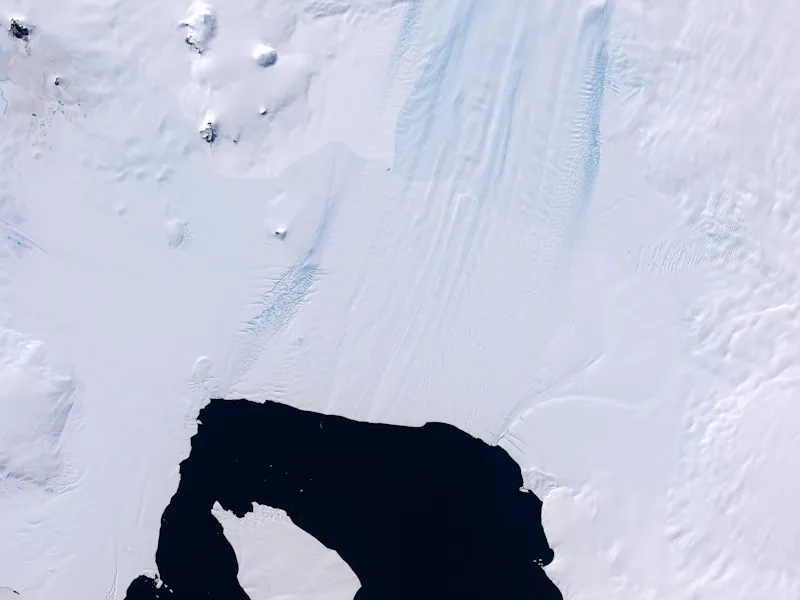
Satellite view of an icy landscape showing dark open water surrounded by white snow with distinct te...
Stocktrek Images/Getty Images

Approximately 3 million years ago, during the Pliocene epoch, atmospheric carbon dioxide levels were similar to today. Global temperatures averaged about 2 to 3 degrees Celsius above pre-industrial levels (a temperature increase we’re on track for in coming decades, unless we significantly reduce global greenhouse gas emissions). And the global mean sea level was upwards of 65 feet higher than present, thanks to ice melt. That’s right: 65 feet higher, an increase that would submerge most of the state of Florida, and nearly all of New York City.

Yet most current-day models of sea level rise don’t indicate we’re headed towards anything like 65 feet of sea level rise in the near-future, even at 2 to 3 C of warming. The discrepancy between past and future projection has been an unsettling mystery for climate and ocean scientists for years. Many researchers in the field think the answer comes down to incomplete and inaccurate models. New study findings could be part of solving the puzzle.

The world’s ice sheets are subject to a never-before-identified and worrying climate tipping point, according to the study published June 25 in the journal Nature Geoscience. The discovery, based on a novel mathematical and computer model of ice melt and seawater movement, means we could be in for far more sea level rise in coming years than previously forecasted. “Our projections of sea level rise might be significant underestimates,” said Alex Bradley, lead researcher and a climate scientist with the British Antarctic Survey (BAS), in a press statement.

Here’s how: Coastal ice sheets are made up of floating shelves and grounded sections. This is where ice sits directly on land. In between is the so-called “grounding zone.” Ocean water rushing beneath the grounding zone triggers melt, which can change the structure of the ice mass, subsequently allowing more water to intrude farther and faster in a feedback loop, according to the new analysis. Generally, models assume that all ice sheets have a point of stability where they’ll stop receding, based on the topography of the land that underlies them. Thanks to gravity, it’s hard for water to flow uphill. But the new assessment suggests that, with enough warming and melt progression widening the grounding zone, ocean water will be able to continue intruding deep beneath ice sheets, even upslope.

Climate tipping points occur when a relatively small shift in something like temperature or atmospheric carbon rapidly leads to an outsized impact. In this case, climatologists behind the new research found that subtle increases in ocean warming could lead to very large ice losses and sea level rise. For every ice sheet, including the pivotal expanse of ice that covers Antarctica and contains about 6 million cubic miles of water, there is a point of ocean warming where that feedback loop of melt, structural shifts, and more melt will become a “runaway” process. At a certain ocean temperature, refreezing ice can’t make up for the losses, triggering “dramatic changes” in ice sheet behavior, according to the researchers’ analysis.

Making matters worse, the researchers suggest there will be little warning that Antarctica and other ice sheets are nearing their individual grounding-zone tipping points. Such changes will be “hard to detect…until the tipping point is passed,” they write. The resulting, fated sea level rise would unfold relatively quickly, on the order of decades to centuries.

“This is missing physics, which isn’t in our ice sheet models,” Bradley said, adding that BAS scientists are now working to incorporate it into revised models.

Surprisingly, the Thwaites “Doomsday Glacier” is less at risk of passing this particular tipping point than other ice shelves, per the assessment. (Though seawater intrusion is causing Thwaites to melt faster than expected, according to another recent study.) But other shelves like the Pine Island glacier, which is already Antarctica’s largest contributor to sea level rise, are highly susceptible.

The analysis offers just one initial and simplified model, which doesn’t account for all of the factors relevant for ice sheet melt. For instance, tides aren’t part of the researchers’ equations. And the scientists don’t expect melt triggered by intrusion to proceed indefinitely. Nonetheless, the findings are alarming.

“With every tenth of a degree of ocean warming, we get closer and closer to passing this tipping point, and each tenth of a degree is linked to the amount of climate change that takes place,” Bradley told The Guardian. “We need very dramatic action to restrict the amount of warming that takes place and prevent this tipping point from being passed.” The only way to stop such melt in its tracks is to halt the largest single driver of climate change and rapidly transition away from burning fossil fuels.

{ https://www.inverse.com/ }

Hoe vind je dit bericht?
Geschreven door peter om 21:44 Stuur door

NASA Releases a New 3D Animation of the Lunar Gateway

A detailed 3D animation of NASA's Gateway space station, showcasing its modules and structural components from various angles against the backdrop of deep space. NASA/Bradley Reynolds, Alberto Bertolin

NASA Releases a New 3D Animation of the Lunar Gateway

To get to the Moon, NASA is building a Lunar Gateway in orbit to facilitate easier access to the Moon. With construction beginning in 2028 as part of Artemis IV there will be an ongoing programme of enhancements and additions. NASA has now released a fabulous new 3D animation of the Lunar Gateway to showcase what the final Gateway will look like. It includes modules from partner nations and an Orion lunar landers dock to carry astronauts. 

NASA’s Artemis program marks a historic return to lunar exploration following on from the Apollo era. It aims to land “the first woman and the next man” on the Moon by 2025 and heralds a new era of space exploration focused on sustainability and international collaboration. This ambitious project will use advanced technologies, including the Space Launch System (SLS) rocket and the Orion spacecraft, to establish a long-term human presence on the surface of the Moon. The program also aims to develop the Lunar Gateway, a space station orbiting the Moon, to support missions and serve as a staging point for future expeditions to Mars. 

Artemis 1 Stacking SLS for Artemis 1. Credit: NASA/Cory Huston

The purpose of the Lunar Gateway is to facilitate the exploration of the many scientific mysteries of deep space with Gateway’s first lunar space station. Starting with the Artemis IV mission in 2028, the international teams of astronauts will live, conducting science, and preparing for various lunar missions to the South Pole.

NASA has released a fabulous computer generated video of the Gateway showing its exterior form in amazing detail. You can view the video here.

A detailed 3D animation of NASA's Gateway space station, showcasing its modules and structural components from various angles against the backdrop of deep space.
NASA/Bradley Reynolds, Alberto Bertolin

The propulsion and power systems are prominent in the video and with the solar array will make the most powerful solar electric spacecraft ever flown. The array will power the station’s systems and even ionise the xenon gas that will produce thrust using an ion system to maintain the spacecrafts polar orbit. 

At the hub of the spacecraft though is the Habitation and Logistics Outpost otherwise known as HALO! This element controls and commands the spacecraft and provides communication links back to Earth and the lunar surface. It has been provided by the European Space Station (ESA) and will also support life support systems, exercise equipment and science payload banks. 

Another element provided by ESA with support from the Japan Aerospace Exploration Agency (JAXA) is the environmental control and life support systems. Without it, life on board simply would not survive. 

There are a whole host of other systems on bard from a refuelling capability to ensure the power and propulsion system is topped up, a crew and science airlock system, science payloads and much more. 

Source : 

{ https://www.universetoday.com/ }

Hoe vind je dit bericht?
Geschreven door peter om 23:46 Stuur door

Determining the Safest Martian Caves for Future Astronauts

Image of a lava tube skylight entrance on the Martian volcano Pavonis Mons obtained by NASA’s HiRISE camera onboard the Mars reconnaissance Orbiter. (Credit: NASA/JPL/University of Arizona)

Determining the Safest Martian Caves for Future Astronauts

When astronauts land on Mars someday, they might have to live in lava caves or lava tubes to survive the harsh radiation that rains down on the Martian surface every second. But which caves could offer them the best chance of survival? This is what a recent study presented at the 55th Lunar and Planetary Science Conference hopes to address as Dr. Anatoliy P. Vidmachenko from the National University of Life and Environmental Sciences of Ukraine investigated where, how, and why lava tubes and lava caves could aid future Mars astronauts regarding their survival. This study holds the potential to help scientists and engineers help mitigate risks for future Mars astronauts and what steps that need to be taken to make that a reality.

For the study, Dr. Vidmachenko examined several locations across Mars that have been found to possess lava caves and lava tubes suitable for future first-time settlements, including Arsia Mons, which is one of three extinct volcanoes that comprise Tharsis Montes. It is here that a 2007 study presented at the 38th Lunar and Planetary Science Conference discussed seven alleged skylights observed from orbital images that were later interpreted to be entrances to lava caves. This recent study mentions that the diameters of these lava caves could be between 100-250 meters (328-820 feet) wide.

“Such reliable caves can be used to create the first permanent settlements,” the study notes. “They will allow you to reliably protect yourself from powerful radiation exposure. And a certain drawback will be the need to organize the delivery of water ice to provide the settlers with water resources and raw materials for extracting the much-needed oxygen and hydrogen fuel for rocket engines.”

The study mentions several other locations across Mars where pits or skylights have been observed, including Hebrus Valles, the Pavonis volcano, Ascraeus Mons, Acidalia Planitia (whose surface location was featured The Martian), and Cydonia Mensae. Additionally, the study discusses how lava channels, caves, or tubes close to sources of water ice would also prove beneficial for future astronauts, which could significantly reduce the costs of shipping and storing water on their spacecraft for the initial journey to Mars.

“The best case would be a lava tube with strong walls found next to powerful glacial structures,” the study notes. “The colony itself, most likely, will have the appearance of separate premises, with residential, engineering, elevator and greenhouse compartments. They will have to be connected to each other by small transition tunnels to control the pressure and composition of the artificially created atmosphere in them.”

Lava tubes were featured prominently in the National Geographic television series, Mars, which depicted the first astronauts to the Red Planet and their quest to survive the harsh environment. During their journey, lava tubes provided shelter from the cosmic and solar radiation while also having large deposits of water ice at their disposal which they used for drinking and rocket fuel while drastically reducing the amount of water they initially had to bring during their journey.

The reason why cosmic and solar radiation rains down on to the Martian surface daily is due to the lack of protective ozone layer and magnetic field that exists on Earth and helps deflect this deadly radiation from reaching our surface, enabling life to exist here for billions of years. While Mars might have had both mechanisms billions of years ago, the interior of the Red Planet has since cooled drastically, causing these protective features to be stripped away by the solar wind and lost to space.

This study comes as NASA plans to send humans back to the Moon for the first time in over 50 years, and eventually Mars, as part of the agency’s Moon to Mars Architecture. Therefore, adequate preparation prior to sending the first astronauts to the Red Planet would prove beneficial in increasing their chances of survival throughout the entire journey, and this study highlighted several ways lava tubes could do just that.

How will lava caves help future Mars astronauts in the coming years and decades? Only time will tell, and this is why we science!

As always, keep doing science & keep looking up!

{ https://www.universetoday.com/ }

Hoe vind je dit bericht?
Geschreven door peter om 23:28 Stuur door

Zijn er andere planeten zoals die van ons?

Zijn er andere planeten zoals die van ons?

Zijn er andere planeten zoals die van ons?

©Shutterstock

Zijn er andere planeten zoals die van ons?
De zoektocht naar buitenaards leven houdt de wereld al tientallen jaren bezig. Terwijl telescopen naar de hemel kijken en de uithoeken van de ruimte afspeuren, leggen sondes zoals Voyager 1 ongelofelijke afstanden af in de hoop buitenaards leven te vinden. Maar waar kan zulk leven gevonden worden? Wat zijn de ideale omstandigheden voor buitenaardse wezens om in te leven? En hoe vergelijkbaar zijn hun planeten met die van ons?

LEES door deze galerij om de antwoorden te vinden die verborgen liggen in de interstellaire ruimte.
Waar te beginnen met zoeken?

©Shutterstock

Waar te beginnen met zoeken?
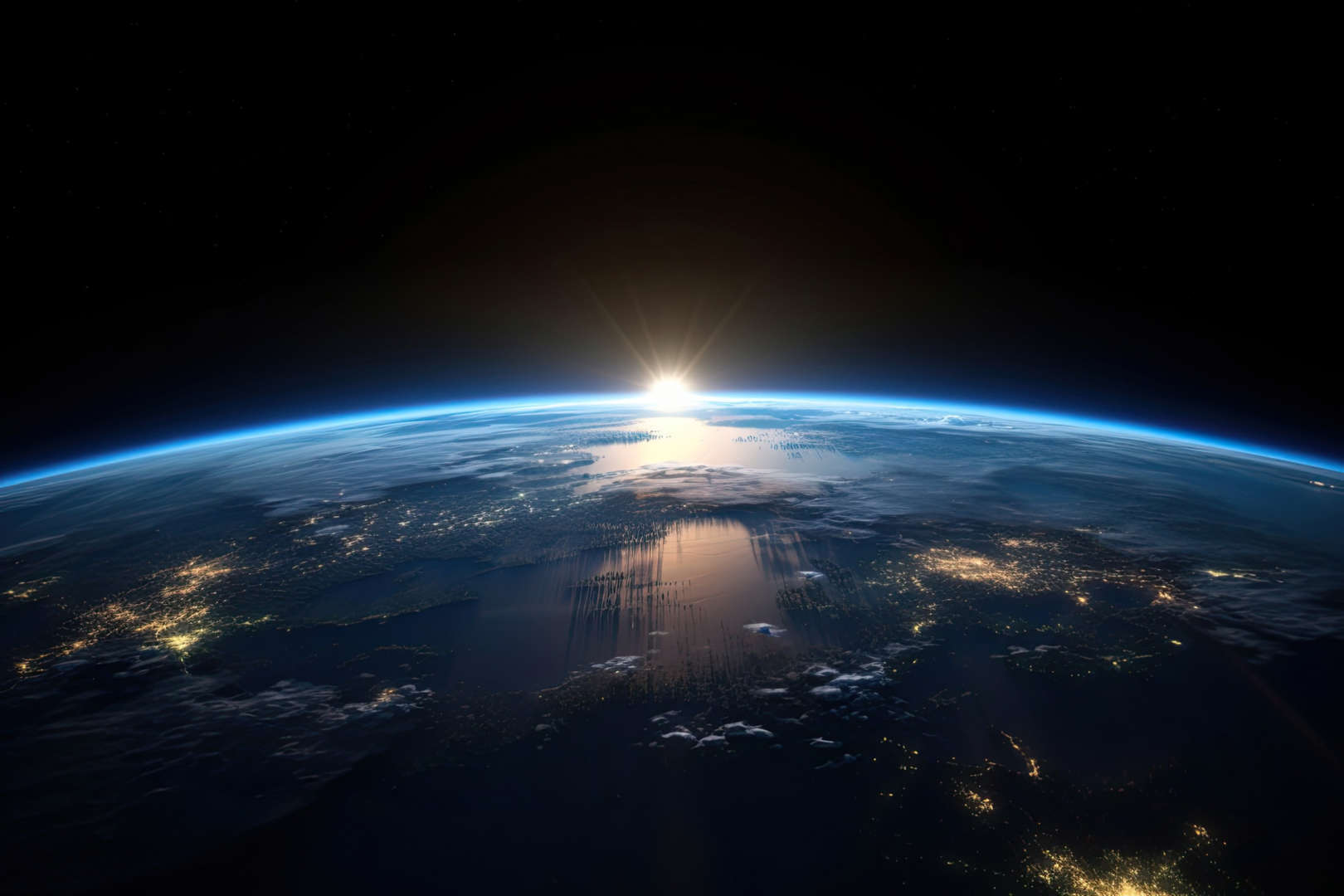
Er zijn naar schatting een septiljoen sterren in het bekende heelal (dat is een 1 gevolgd door 24 nullen!). En om elk van deze sterren kunnen wel een dozijn planeten draaien. Dus hoe kunnen we buitenaards leven vinden? De eerste stap is om het dichter bij huis te zoeken.
©Shutterstock

De aarde en haar omstandigheden
De aarde is astronomisch gezien de perfecte plek om te leven. Het bestaan van water en een stabiele atmosfeer heeft een ideale omgeving gecreëerd waarin leven kan floreren.
De bewoonbare zone

©Shutterstock

De bewoonbare zone
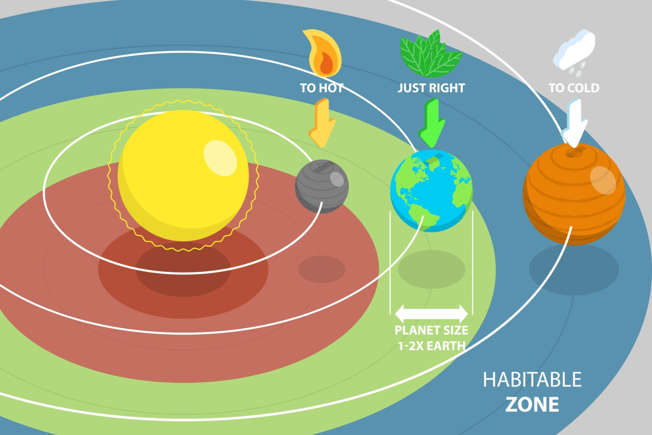
De afstand van een planeet tot zijn ster is cruciaal voor het begrijpen van de leefbaarheid van een planeet. De aarde bevindt zich perfect in wat de bewoonbare zone wordt genoemd, waar de omstandigheden niet te warm of te koud zijn om te kunnen leven.

De 'Goldilocks zone'

©Getty Images

De 'Goldilocks zone'
De bewoonbare zone wordt in het engels ook wel de 'Goldilocks zone' genoemd, vernoemd naar het sprookje. In het verhaal kiest Goudlokje tussen drie sets van items en negeert de items die te extreem zijn (groot of klein, warm of koud), in plaats daarvan neemt ze genoegen met het item dat "precies goed" is.
Venus

©Shutterstock

Venus
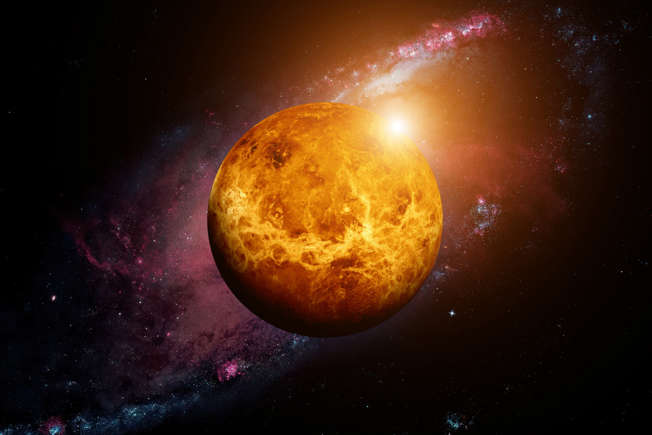
Venus, dat qua massa vergelijkbaar is met de aarde, staat te dicht bij de zon om levensvatbaar te zijn. Planeetwetenschappers denken dat Venus ooit water aan het oppervlak heeft gehad, maar dat de planeet verstikt is door kooldioxide en een temperatuur van 462°C.
Mercurius

©Shutterstock

Mercurius
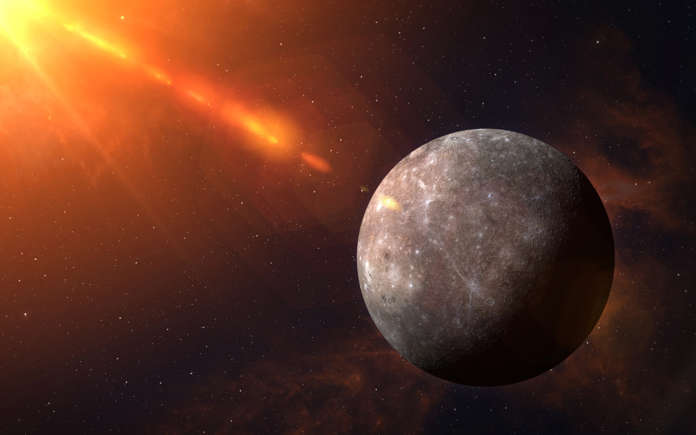
Mercurius staat nog dichter bij de zon dan Venus. Daarnaast is het te klein en heeft het niet eens een atmosfeer om leven te ondersteunen.
Mogelijkheden beperken

©Shutterstock

Mogelijkheden beperken
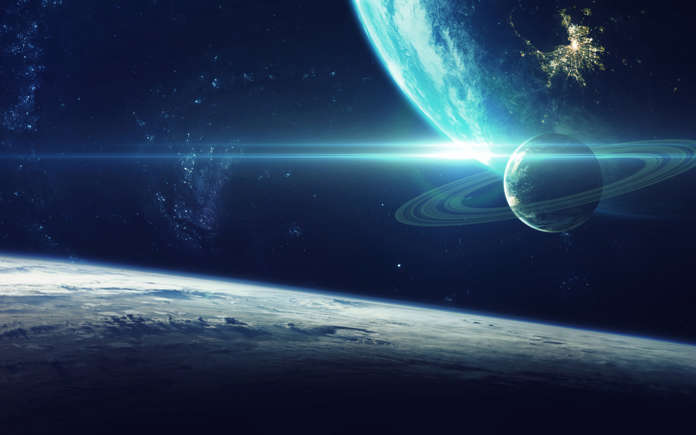
Door de criteria voor de bewoonbare zone te begrijpen, konden astronomen achterhalen dat er zo'n 40 miljard planeten in de bewoonbare zones van de Melkweg zouden kunnen draaien.
In de sterren geschreven

©Shutterstock

In de sterren geschreven
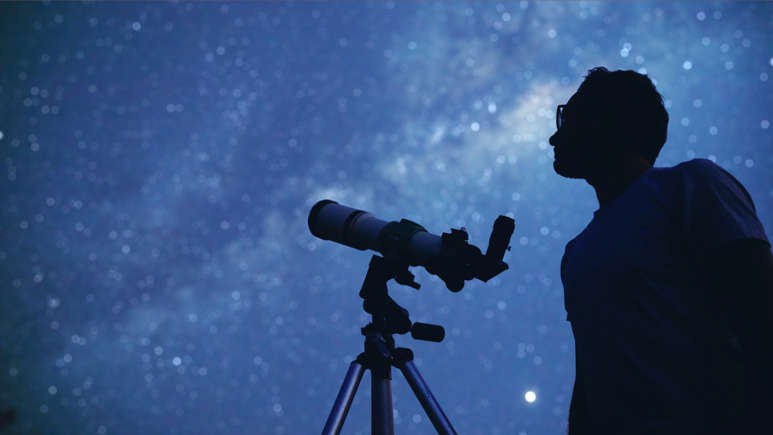
Tot nu toe hebben astronomen slechts 1.780 planeten buiten ons zonnestelsel kunnen bevestigen. En van al die planeten bevinden zich er maar 16 in hun bewoonbare zones.
Oranje overgang van de maan

©Reuters

Te groot of te klein
Maar het is niet genoeg voor een planeet om zich op de juiste afstand van een ster te bevinden. De grootte doet er ook zeker toe. Een kleine planeet kan geen atmosfeer behouden, terwijl een te grote planeet een verpletterende atmosfeer zal hebben.

De aarde als schaal

©Shutterstock

De aarde als schaal
Om de juiste atmosferische druk te hebben, moet een planeet tussen 0,1 en 10 keer de massa van de aarde hebben. Dit is een zeer smalle bewoonbare zone, zeker als je bedenkt hoeveel planeten in het heelal honderden keren groter zijn dan de aarde.
Gliese 581c

©Shutterstock

Gliese 581c
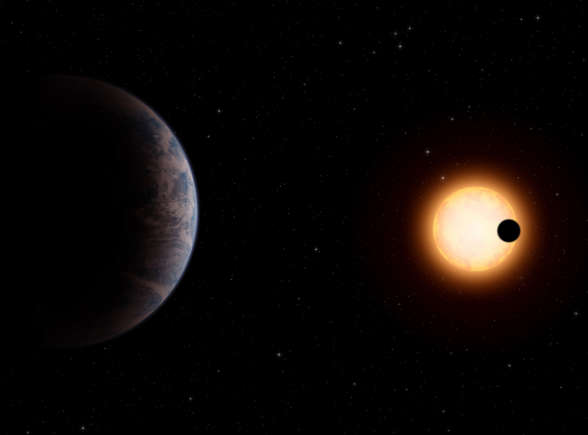
In 2007 werd de wetenschappelijke gemeenschap verblijd met het nieuws over Gliese 581c, de eerste superaarde in de bewoonbare zone. Al snel werd ontdekt dat de omstandigheden aan het oppervlak van de planeet veel leken op die van Venus.
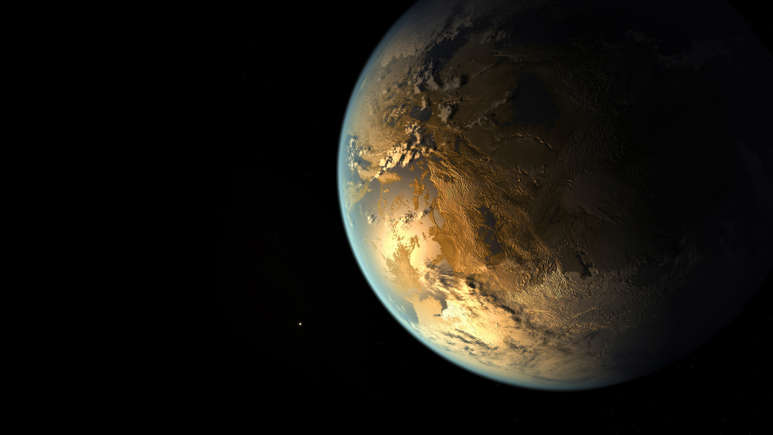
Kepler-186f

©Shutterstock

Kepler-186f
In 2014 werd een exoplaneet ter grootte van de aarde ontdekt die Kepler-186f heet en in de bewoonbare zone van een rode dwergster rondcirkelt. Astronomen proberen nog steeds vast te stellen of de planeet leefbaar is.
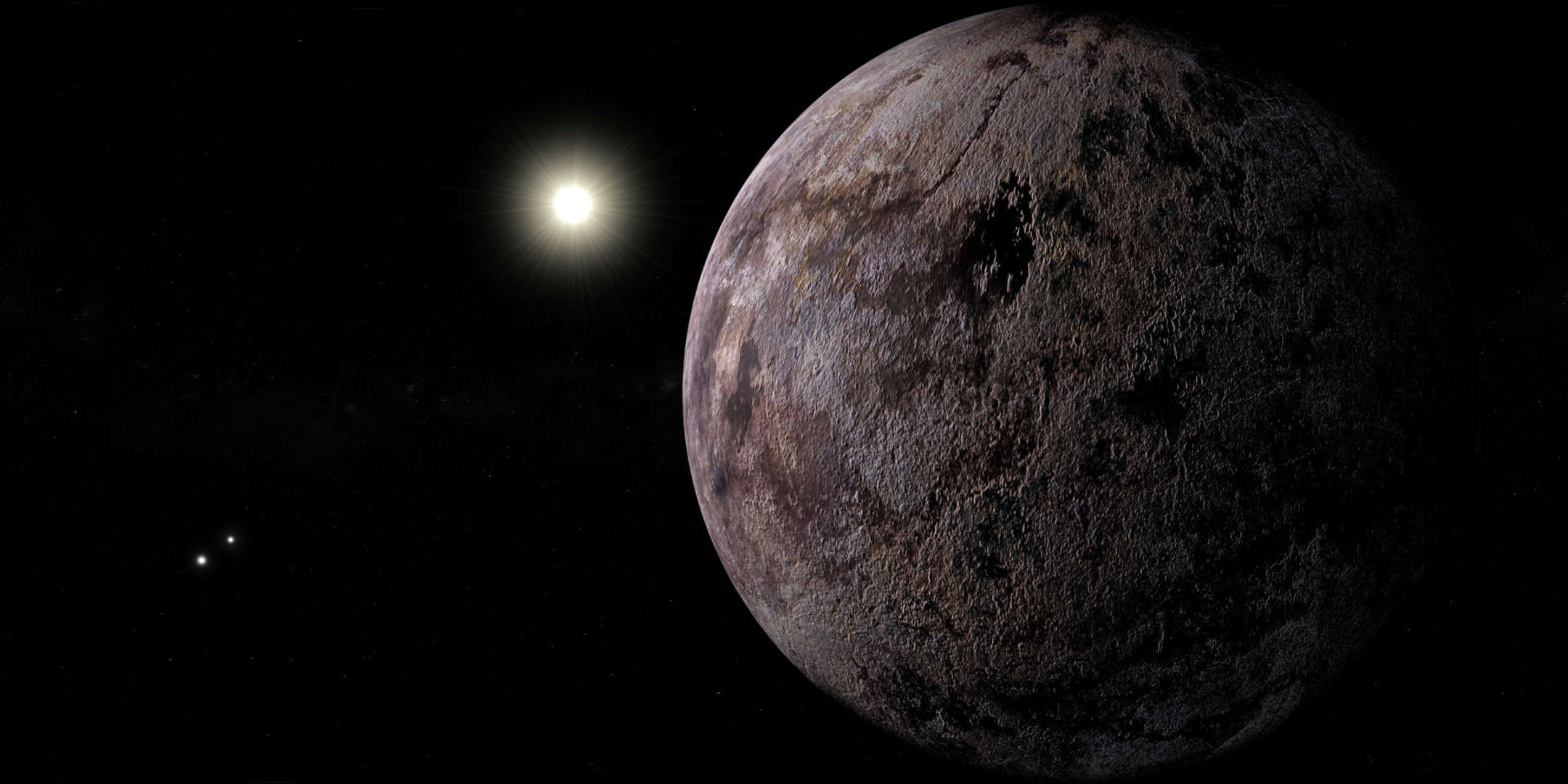
Proxima Centauri b

©Shutterstock

Proxima Centauri b
De exoplaneet die het dichtst bij de aarde staat is Proxima Centauri b. Deze planeet draait rond de ster die het dichtst bij de zon staat, op een afstand van ongeveer vier lichtjaar. Hoewel het een gouden planeet is, weten wetenschappers niet zeker of het ook een atmosfeer heeft.

Andere belangrijke criteria

©Shutterstock

Andere belangrijke criteria
Hoewel de bewoonbare zone en de atmosfeer van een planeet belangrijk zijn om de bewoonbaarheid te begrijpen, is dat zeker niet alles. Planeten moeten aan een groot aantal andere criteria voldoen, waaronder het vermogen om vloeibaar water te bevatten.
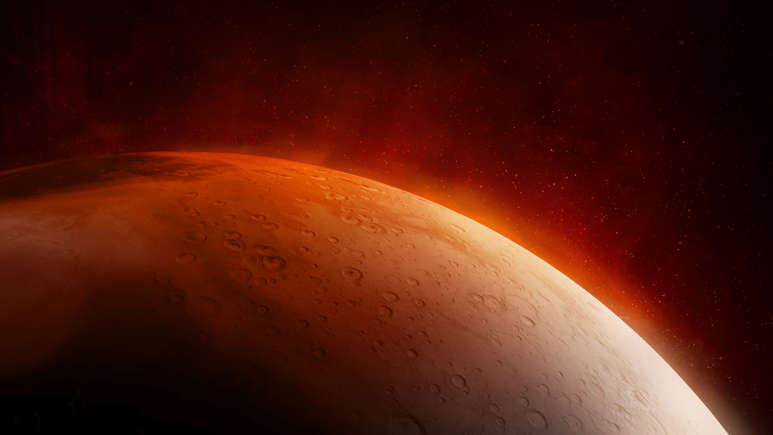
Mars

©Shutterstock

Mars
Mars is de enige andere planeet in ons zonnestelsel die zich binnen de bewoonbare zone bevindt. Maar de juiste atmosferische druk is alleen te vinden op de lage punten van de planeet en er is nog geen bewijs dat de planeet vloeibaar water heeft.

Droge planeten

©Shutterstock

Droge planeten
Hypothetisch gezien zouden droge planeten water kunnen vasthouden via oases. Dit zou betekenen dat zulke planeten dichter bij een ster en buiten de bewoonbare zone kunnen draaien.
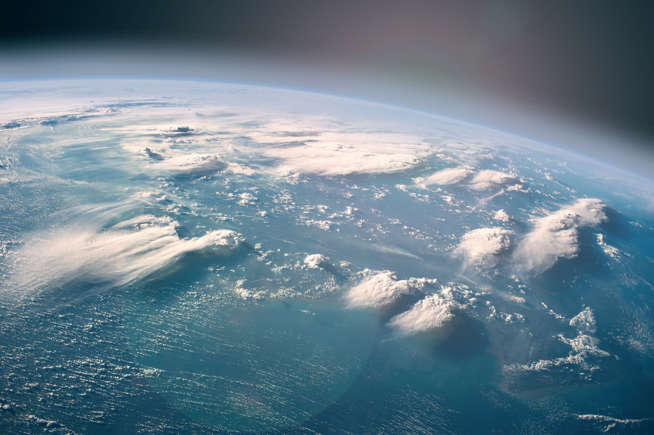
Oceaanplaneten

©Shutterstock

Oceaanplaneten
Er bestaat een theorie dat de oceanen op aarde zijn ontstaan nadat ijslichamen op onze planeet insloegen en vervolgens smolten. Er zouden nog meer van zulke planeten kunnen bestaan.
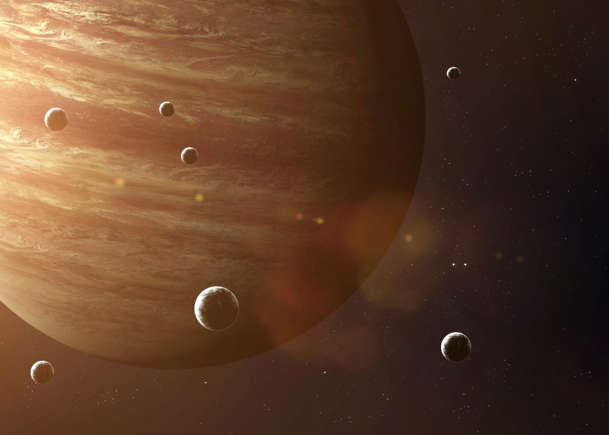
Manen

©Shutterstock

Manen
Natuurlijke satellieten van planeten, of manen, zouden ook bewoonbaar kunnen zijn. Maar deze manen moeten zich binnen de bewoonbare zone van hun gastheerplaneten bevinden en ze moeten ver genoeg rond hun planeet draaien, zodat ze geen vulkanische planeten worden zoals Jupiters maan, Io.
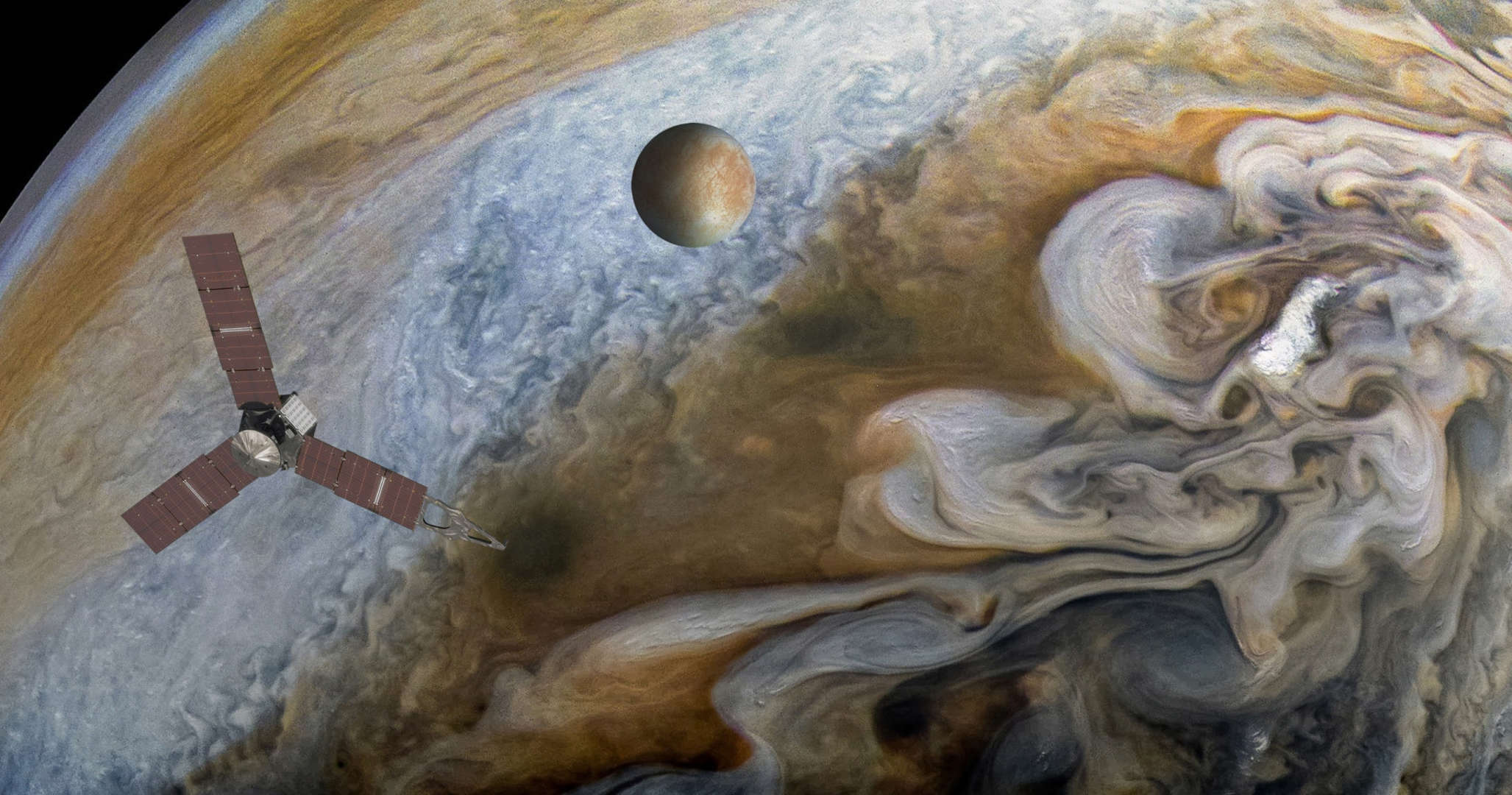
Europa

©Shutterstock

Europa
De op drie na grootste maan van Jupiter, Europa, zou een wateroceaan onder het oppervlak van de planeet bevatten, welke mogelijk buitenaards leven zou kunnen herbergen.
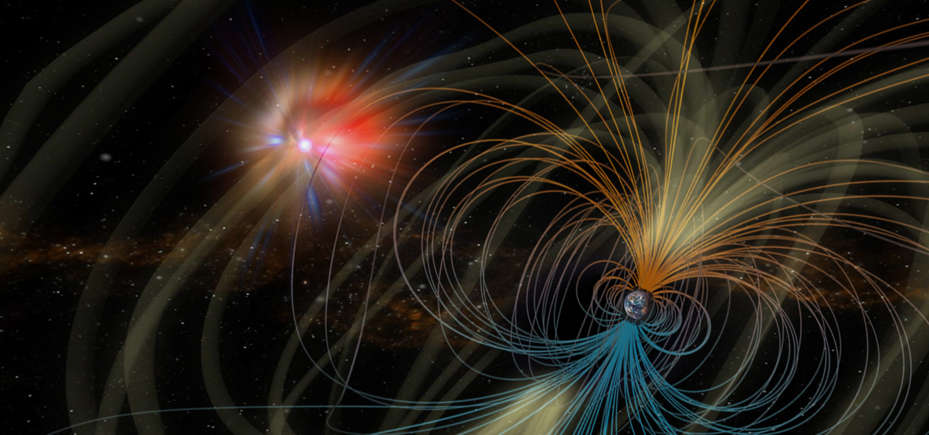
Magnetische velden

©Shutterstock

Magnetische velden
Het magnetische veld van de aarde is een voorbeeld van een ander belangrijk criterium dat de levensvatbaarheid bepaalt, omdat het het oppervlak van de planeet beschermt tegen straling en kosmische stralen. Andere planeten zouden een vergelijkbaar veld moeten hebben om complex leven te kunnen laten floreren.
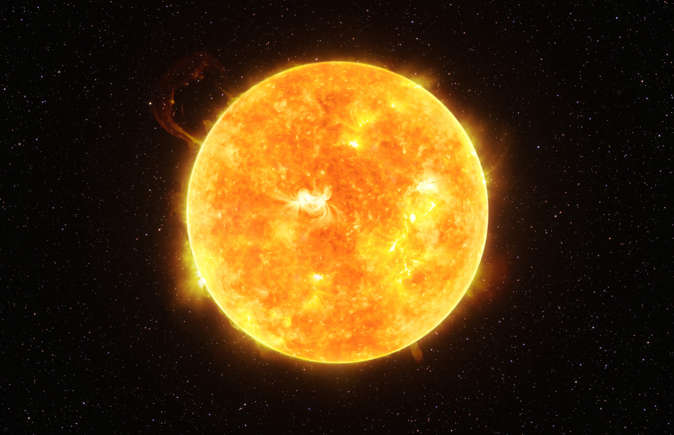
Zonnetweeling

©Shutterstock

Zonnetweeling
Tot op de dag van vandaag hebben astronomen nog geen ster kunnen vinden die op de zon lijkt, een fenomeen dat een zonnetweeling wordt genoemd. Dit heeft het de wetenschappelijke gemeenschap moeilijker gemaakt om buitenaards leven te vinden dat op het onze lijkt.
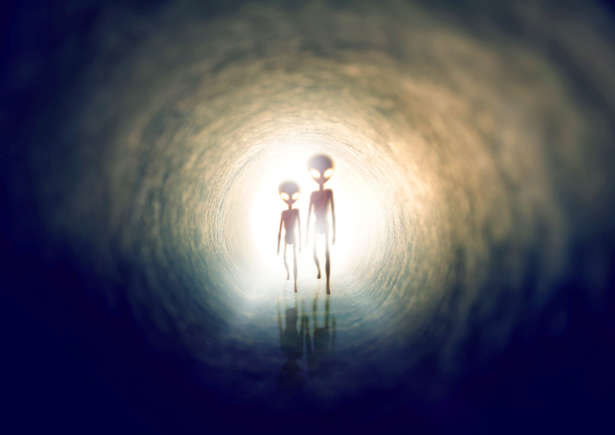
Buitenaards leven

©Shutterstock

Buitenaards leven
Maar welke soorten buitenaards leven zouden we kunnen vinden? Het is algemeen aangenomen dat op koolstof gebaseerde levensvormen de enige levensvatbare manieren zijn waarop leven kan bestaan.

Koolstof-chauvinisme

©Getty Images

Koolstof-chauvinisme
Veel wetenschappers hebben kritiek geuit op het idee dat buitenaards leven gebaseerd moet zijn op koolstof. Hypothetisch gezien zouden buitenaardse wezens uit heel andere elementen kunnen bestaan die hen in staat stellen om op plekken te overleven die voor mensen onherbergzaam zijn.
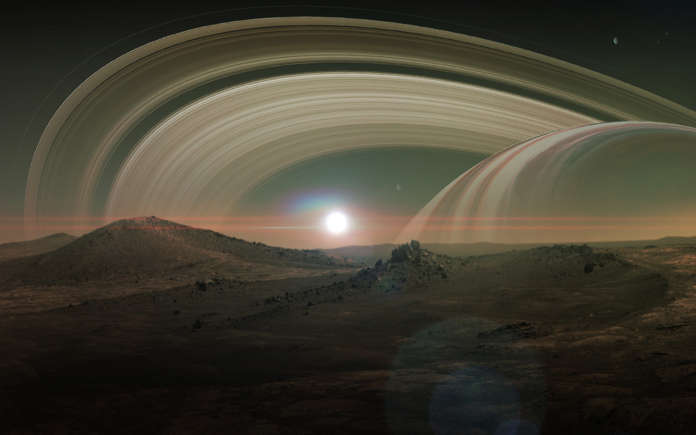
Titan

©Shutterstock

Titan
Titan, de grootste maan van Saturnus, bezit koolwaterstofmeren die mogelijk leven zouden kunnen ondersteunen. Titan is het enige andere object in de ruimte waarvan is ontdekt dat het oppervlak vloeistof bevat.

Zijn we uniek, of alleen de eerste?

©Getty Images

Zijn we uniek, of alleen de eerste?
Natuurkundige Enrico Fermi (1901-1954) kwam met de theorie dat we nog geen buitenaards leven zijn tegengekomen omdat intelligent leven ofwel zeldzaam is, ofwel nog maar net was onstaan in het universum.
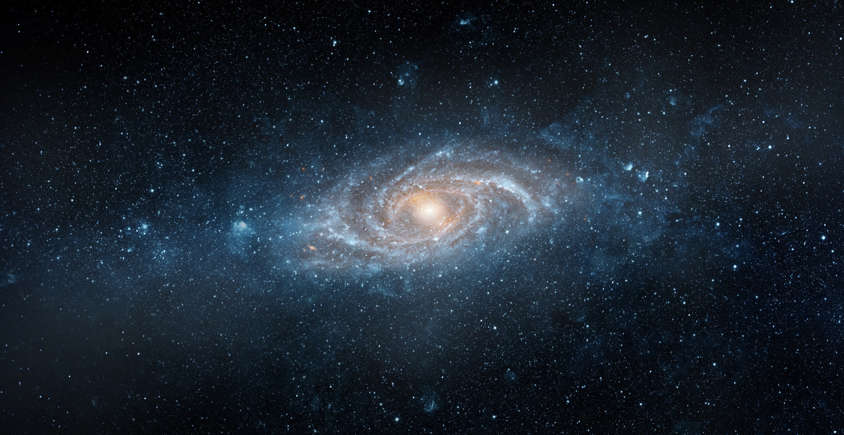
Dicht bij het einde

©Shutterstock

Dicht bij het einde
Andere natuurkundigen hebben beweerd dat we nog geen buitenaards leven hebben gevonden omdat we al te laat zijn. In feite zeggen ze dat de meeste buitenaardse wezens al dood zijn en dat het heelal te ver uitbreidt om hun overblijfselen nog te kunnen vinden.

Het Grote Filter

©Shutterstock

Het Grote Filter
Veel antropologen en astronomen geloven dat de mensheid alleen is in het universum, vanwege Het Grote Filter. Dit betekent in feite dat er zoveel onwaarschijnlijke stappen nodig zijn voor leven om intelligentie te ontwikkelen, dat het onwaarschijnlijk is dat dit nog eens zal gebeuren.
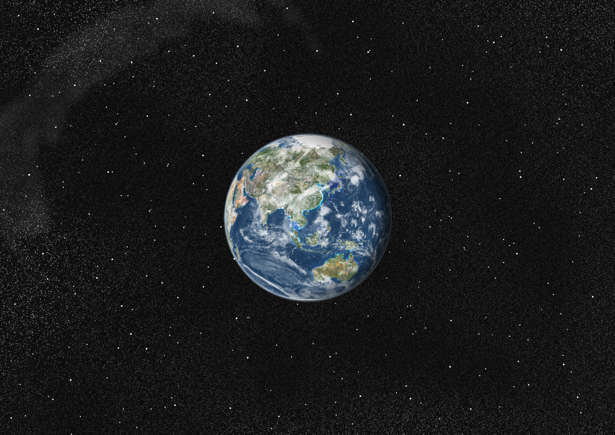
De 'dierentuin hypothese'

©Getty Images

De 'dierentuin hypothese'
Andere wetenschappers veronderstellen dat buitenaards leven wel degelijk bestaat, maar dat ze de mensheid vermijden om ons primitieve bestaan zonder tussenkomst te laten verlopen. Hoe dan ook, de ruimte is een grote grens die heel goed buitenaards leven zou kunnen herbergen.

Bronnen:

  • (National Geographic)
  • (NASA)
  • (Astronomy.com)
  • (Earth How)
  • (Harvard John A. Paulson School of Engineering and Applied Sciences)

{ https://www.msn.com/nl-be/feed?ocid=msedgdhp&pc=u531 }

Hoe vind je dit bericht?
Geschreven door peter om 23:01 Stuur door

UFOs spotted in Canada, video goes viral: ‘Like being in a sci-fi movie’

UFOs spotted in Canada, video goes viral: ‘Like being in a sci-fi movie’

  • The objects, described ‘as bright as the sun,’ were flying southwards above the river’s north shore before they disappeared behind a cloud.
Written By Sudeshna Ghoshal

UFOs as 'bright as the sun' spotted over Winipeg River in Canada

UFOs as ’bright as the sun’ spotted over Winipeg River in Canada

(Pixabay/kalhh)

A Canadian couple spotted two glowing UFOs above the Winipeg river, while driving through Fort Alexander on May 14. Justin Stevenson, and his wife Danielle Daniels-Stevenson spotted mysterious orbs with glowing yellow lights.

The objects, described “as bright as the sun,” were flying southwards above the river’s north shore before they disappeared behind a cloud.

“ Like being in a sci-fi movie," with the objects appearing as "super bright like a fire in the sky," Stevenson described his experience, who is a self-proclaimed fanatic of extraterrestrial life.

UFOs SPOTTED: WATCH VIDEO

A report by the New York Post mentions that the encounter has led Stevenson to believe there is life beyond earth. “I was sceptical before I saw this but now this has given me the proof I need that there's something out there other than humans,” said Stevenson, reported the NY Post.

Also Read 

Reaching over 81,000 views, the video has sparked widespread interest. Many calling it a “strange anomaly” and a “clear shot of UFOs.”

“Oh my word, what is that?? Pretty scary it's so close to home, yikes!” a user commented under the video.

Also Read 

While one user claimed it could be a “drone or a UFO,” someone else offered a more logical and analytical explanation, mentioning that a “swamp gas from a weather balloon was trapped in a thermal pocket and refracted the light from Venus.”

Another user was disappointed and expected more footage. “Why did you stop recording,” the person commented.

Increase in UFO sightings in Canada

Canada has witnessed a surge in "UFO sightings", with at least 17 reports filed in 2023.

In February 2023, a user on X had mentioned about Uruguayan Airforce being on red alert in South America, after spotting “spotting bright aerial vehicles in formation.”

Pilots and crews from airlines such as WestJet, Air France and British Airways, have further mentioned unexplained sightings. In February 2023, two airlines came forward with a strange account on the sky over Quebec, with one crew member describing the phenomenon as "a bit weird". The sightings are documented in an online aviation incident database maintained by Transport Canada, reported the NDTV.

{ https://www.livemint.com/ }

Hoe vind je dit bericht?
Geschreven door peter om 21:05 Stuur door

UFOs: From psychology to air traffic, are we closer than ever to an answer?

UFOs: From psychology to air traffic, are we closer than ever to an answer?

By Shola Lee, BBC News

BBC/Twenty Twenty Productions Ltd/Rory Jackson Sian Eleri standing on a cliff top looking up at the sky

BBC/Twenty Twenty Productions Ltd Sian Eleri, pictured, investigates alleged UFO sightings in the late 1970s and early 1980s

As the new series of the BBC's Paranormal looks into alleged UFO sightings, one aerospace expert says accessible, modern technology puts us in a stronger position than ever to work out what's going on in the skies above us.

It was a rainy day in Pembrokeshire in February 1977 when a group of pupils from Broad Haven Primary School claimed to see an unidentified flying object (UFO) outside.

David Davies, who was just 10 at the time, remembers his fellow students coming inside throughout the day "trying to alert the headmaster that there was something strange going on".

The schoolboy was sure there was a logical explanation for what they had seen. "My intention was to go out there and completely prove them wrong," David says.

But when he went to investigate, he says he saw a "silver, cigar-shaped object" about the size of a bus, with a domed upper section and a "red pulsating glow" on top.

"I had this overwhelming urge to run away," David says of the sighting that lasted about 10 seconds.

BBC/Twenty Twenty Productions Ltd David Davies in a green field in Wales
BBC/Twenty Twenty Productions Ltd
David Davies was one of the children from Broad Haven Primary School who claimed to see a UFO in 1977

This event in south-west Wales is explored in the latest series of the BBC's Paranormal. Across four episodes, host Sian Eleri investigates alleged UFO sightings in the late 1970s and early 1980s.

It comes as claims about extraterrestrial life have captured the public imagination yet again. Last year, the US Congress convened a landmark panel on the topic, mysterious monoliths continue to appear in the UK and around the world, and social media is home to viral trends about "alien bodies". On TikTok, for example, there are more than a million posts with the hashtag "UFO".

And one aerospace expert tells the BBC that in 2024, thanks to everyone having a phone in their pocket and many people using apps to follow air traffic, we are in "a much stronger position to be able to track what's known and what's unknown".

So is there a simple explanation for why we see UFOs? And should they be investigated?

'A lot of UFO hunting'

UFOs have held our attention for decades, ever since reports of alleged extraterrestrial debris in Roswell, New Mexico in 1947, the movie The Flying Saucer being released three years later and the Space Race between the United States and the Soviet Union gaining steam throughout 1950s.

And stories about alien life would go on to influence popular culture in the years to come, from Steven Spielberg's Oscar-winning E.T. in 1982, to The X Files first airing in 1993 and even recent additions like Jordan Peele's 2022 film Nope feeding into the cultural obsession.

Dr Ciaran O'Keeffe - the head of the school of human and social sciences at Buckinghamshire New University - says there was also a "huge peak of interest" in UFO sightings around the 1980s that resulted in "a lot of UFO hunting".

BBC/Twenty Twenty Productions Ltd Broad Haven Primary School children's drawings of UFOs on a table
BBC/Twenty Twenty Productions Ltd
The children at the Broad Haven Primary School were asked to draw what they had seen

Reported sightings were covered by media around the world - and the alleged sighting at Broad Haven Primary School was picked up by publications as far as New Zealand.

The Broad Haven incident was one of a wave of sightings in the area in 1977 - dubbed the Dyfed Triangle. In the past, a number of theories have been put forward to explain them, including the work of a "local prankster".

While sightings like the one in Broad Haven captured mass attention, Dr O'Keeffe says there may be plausible explanations.

"The key fundamental psychological explanation for what's going on is around eyewitness testimony," says Dr O'Keeffe, who also consults on the BBC's Uncanny, adding that eyewitness testimony can be prone to errors.

"The nature of the interviewing of an eyewitness can distort the memory of the event significantly," he adds, especially if the questioning of a witness is poor. For example, leading questions and exposure to media coverage of an event can be distorting factors.

BBC/Twenty Twenty Productions Ltd Broad Haven Primary School children holding drawings of the UFO they had seen
BBC/Twenty Twenty Productions Ltd
The children reportedly drew near identical images of the UFO, which captured widespread media attention

However, the UFO sighting at Broad Haven Primary School was not just one eyewitness, it was a group of pupils. Here, Dr O'Keeffe explains the idea of "contagion" and group conformity could be behind a mass UFO sighting.

"Contagion is this idea that thoughts, feelings and behaviours can spread amongst a group of people," Dr O'Keeffe says.

However, David feels he can "rule out" these psychological explanations for the 1977 sighting after the children reportedly drew near identical images of the UFO they had seen.

Before the incident, David adds, he did not have a "big interest in Sci-Fi". But in the years that followed, he would spend thousands of pounds on books and research materials to understand what happened.

'Not always publicised'

Dr Ryan Marks, an aerospace engineer who appears in Paranormal, says air traffic in the sky could also offer plausible explanations for UFO sightings, particularly around built-up areas where there are airfields.

According to the RAF Museum, between 1970 and 1990 there were five airfields in south Wales, with one being used as a missile testing range.

"There's a huge amount of air traffic at any one time and that's obviously increased over the last 40 years," Dr Marks explains, adding that there is "always a level of military activity" in the sky and that "not all of this is always publicised".

In March this year, for example, a US government report concluded that UFO sightings in the US in the 1950s and 1960s were caused by tests of advanced spy planes and space technology.

BBC/Twenty Twenty Productions Ltd Dr Ryan Marks in an industrial office
BBC/Twenty Twenty Productions Ltd
Dr Marks says today a lot of air traffic movements are recorded using apps

Around the mid-1970s to early 1980s, Dr Marks says developments were taking place in the UK exploring hot air balloons and airships - and some "would resemble traditional UFOs".

He notes, however, these were "small-scale" experiments that did not get outside of the air hangar.

Today, Dr Marks says, "a lot of air traffic movements are recorded," with free-to-download apps able to identify a plane, where it has come from and its destination. This "digital fingerprint" makes it a lot easier to track what is going on in the sky, he explains.

For his part, David remains confident in his UFO sighting.

"Unless somebody can explain to me what type of aircraft was flying at that time, that was 45-feet long, cigar-shaped and silver - I have no explanation for it," he says, adding that believing in UFOs can sometimes be "like you're banging your head against a brick wall, against society".

"It's still being dismissed as nonsense," he says.

The Ministry of Defence (MOD) closed their UFO desk in 2009 after saying it served no defence purpose and was taking staff away from more valuable defence-related activities.

In a statement, an MOD spokesperson added: "In over 50 years, no sightings of extraterrestrial intelligence, Unidentified Flying Objects and Unidentified Aerial Phenomena reported to us indicated the existence of any military threat to the United Kingdom."

{ https://www.bbc.com/ }

Hoe vind je dit bericht?
Geschreven door peter om 20:35 Stuur door

UAP over Baytown, Texas on 6-25-2024, UFO Sighting News. It suddenly turns left into a cloud and flies away.

UAP over Baytown, Texas on 6-25-2024, UFO Sighting News. It suddenly turns left into a cloud and flies away. 

ET,%20UFO,%20UFOs,%20sighting,%20sightings,%20alien,%20aliens,%20W56,%20SOHO,%20NASA,%20solar,%20LASCO,%20top%20secret,%20news,%20paranormal,%20astronomy,%20.png

Date of sighting: 6-25-2-24

Location of sighting: Baytown, Texas, USA
 
Now this was caught on a security cam this week and it not only shows a UFO but it shows a round sphere UFO that quickly flashes a bright green light in an attempt to fake eyewitnesses out and make them believe its a meteor. However the UFO then makes a hard left into the clouds and shoots away. Such maneuvers are impossible for meteors. The evidence is right there on security cam footage. 
Scott C. Waring
 

{ https://www.ufosightingsdaily.com/ }

Hoe vind je dit bericht?
Geschreven door peter om 20:03 Stuur door

Could A Mound of Dust and Rock Protect Astronauts from Deadly Radiation?

Could A Mound of Dust and Rock Protect Astronauts from Deadly Radiation?

Protecting the astronauts of the Artemis program is one of NASA’s highest priorities. The agency intends to have a long-term presence on the Moon, which means long-term exposure to dangerous radiation levels. As part of the development of the Artemis program, NASA also set limits to the radiation exposure that astronauts can suffer. Other hazards abound on the lunar surface, including a potential micrometeoroid strike, which could cause catastrophic damage to mission equipment or personnel. NASA built a team to design and develop a “Lunar Safe Haven” to protect from these hazards. Their working paper was released in 2022 but still stands as NASA’s best approach to long-term living on the lunar surface.

The two hazards mentioned above provided the primary impetus for the design, but there are some nuances to them—in particular, radiation. Astronauts will experience two main types of hazardous radiation on the lunar surface: cosmic rays and solar eruptions. 

Cosmic rays are the more insidious of the two. They have a high energy range, so a shielding material that might work well for higher-energy particles might not do so for lower-energy ones. Moreover, some high-energy particles can interact with shielding, causing even more damaging radiation further down its path. Essentially, this increases the radiation risk inside the shielding compared to outside. The order in which the radiative particles are dealt with is one of the critical design considerations for dealing with this dangerous phenomenon. 

Lunar regolith can be hard to deal with, as Fraser discusses with Dr. Kevin Cannon.

However, solar particle events (SPEs) are the more overtly dangerous of the two types of radiation. While rare, they can cause acute radiation sickness. Current astronauts must shelter in place inside a protected chamber on the ISS when these happen, and building something equivalent on the surface of the Moon is a necessity to ensure that astronauts don’t simply die of acute radiation poisoning within the first six months of arrival.

With the problems to solve firmly in hand, the design team moved on to other considerations—like what the habitat inside the LSH would actually look like and how it would be built. Consideration of the habitat shape focused on one primary distinction—should the habitat be horizontal or vertical? The answer is vertical based on modeling the risk of radiation and micrometeoroid strikes.

So, how do you build a structure around a vertical habitat on the Moon? You employ robots and remotely operated construction equipment. Other groups at NASA had been working on solutions like the Lightweight Surface Manipulation System (LSMS), essentially a large crane that can be constructed in lunar gravity, and the Lunar Attachment Node for Construction and Excavation (LANCE) – a bulldozer module designed to attach to the front of NASA’s Chariot exploration vehicle. Utilizing these ideas and other construction ideas, it’s possible to construct a protective dome of lunar regolith around a long-term habitat for the Artemis missions. 

Fraser overviews the Artemis mission that LSH will attempt to help.

Such a protective habitat has significant advantages over digging one into the ground, which requires moving a massive amount of regolith or utilizing lava tubes with indeterminate structural integrity. But that means the LSH must have an above-ground design. The team developed two separate design ideas – a parabolic arch and a “Round Cake” design using polyethylene. The first is self-explanatory, but the second looks more like a typical cylinder with the radiation and micrometeoroid-blocking polyethylene stored in “beans” at the top of the structure. This could be made of waste materials from the mission, such as discarded food packaging.

Each design has advantages and disadvantages, and the team didn’t pick a final one as part of the paper. However, they did come up with a five-phase development process, from preparing the site in advance to living in interconnected habitats surrounded by regolith and protective shielding. Depending on the amount of automation involved and some real luck, those development phases could take anywhere from a few years to a few decades. 

It remains to be seen if this system will be adopted as an official part of the Artemis program. But it serves a need of critical importance to humanity’s long-term existence on the Moon. If that is indeed NASA’s goal for the end of the 2030s, it would be good to consider how to start making the LSH a reality.

Learn More:

Lead Image:

  • Artist’s depiction of the Parabolic Arc LSH in cutaway.
    Credit – Wok et al.

{ https://www.universetoday.com/ }

Hoe vind je dit bericht?
Geschreven door peter om 00:30 Stuur door

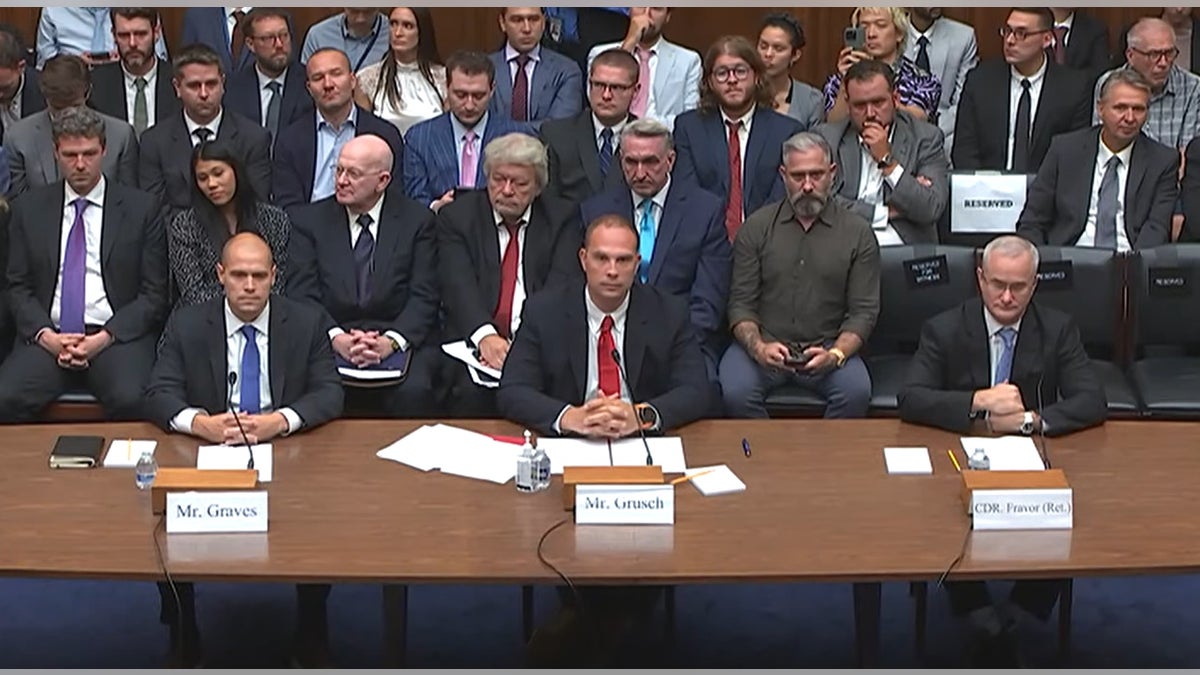
UFO whistleblower says he's being threatened as congressman warns protections are a 'joke'

Hoe vind je dit bericht?
Geschreven door peter om 16:12 Stuur door

Mars is Bombarded by Meteoroids At More Frequent Rates than Previously Thought

Mars is Bombarded by Meteoroids At More Frequent Rates than Previously Thought

Current impact rates at Mars could be 2-10 times higher than previously estimated, depending on the size of the meteoroids, according to new research.

Mars; the center of the scene shows the entire Valles Marineris canyon system. Image credit: NASA Goddard Space Flight Center.

Mars; the center of the scene shows the entire Valles Marineris canyon system.

Image credit: NASA Goddard Space Flight Center.

“It’s possible Mars is more geologically active than we thought, which holds implications for the age and evolution of the planet’s surface,” said Brown University’s Dr. Ingrid Daubar.

“Our results are based on a small number of examples available to us, but the estimate of the current impact rate suggests the planet is getting hit much more frequently than we can see using imaging alone.”

Dr. Daubar and colleagues used the highly sensitive seismometer onboard NASA’s InSight lander to identify eight new impact craters from meteoroids not previously seen from orbit.

The frequency of these cosmic collisions challenges existing notions about how often meteoroids hit the surface of Mars and suggests a need to revise current Martian cratering models to incorporate higher impact rates, especially from smaller meteoroids.

The findings could ultimately reshape current understandings of the Martian surface — as batterings from small meteoroids continue to sculpt it — and the impact history of not just Mars, but other planets.

“This is going to require us to rethink some of the models the science community uses to estimate the age of planetary surfaces throughout the entire Solar System,” Dr. Daubar said.

Six of the craters the researchers detected were near the site where the stationary InSight set down.

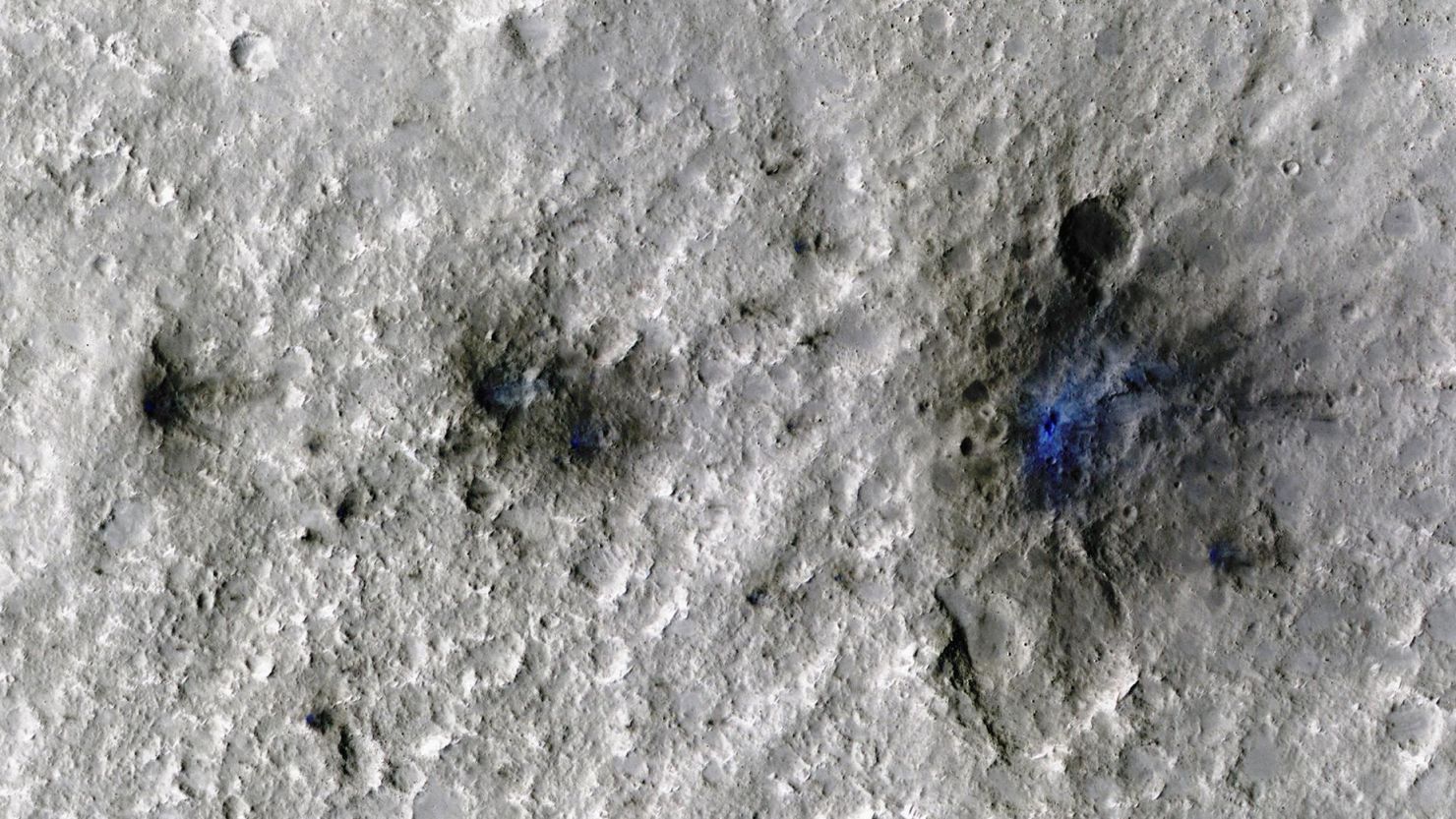
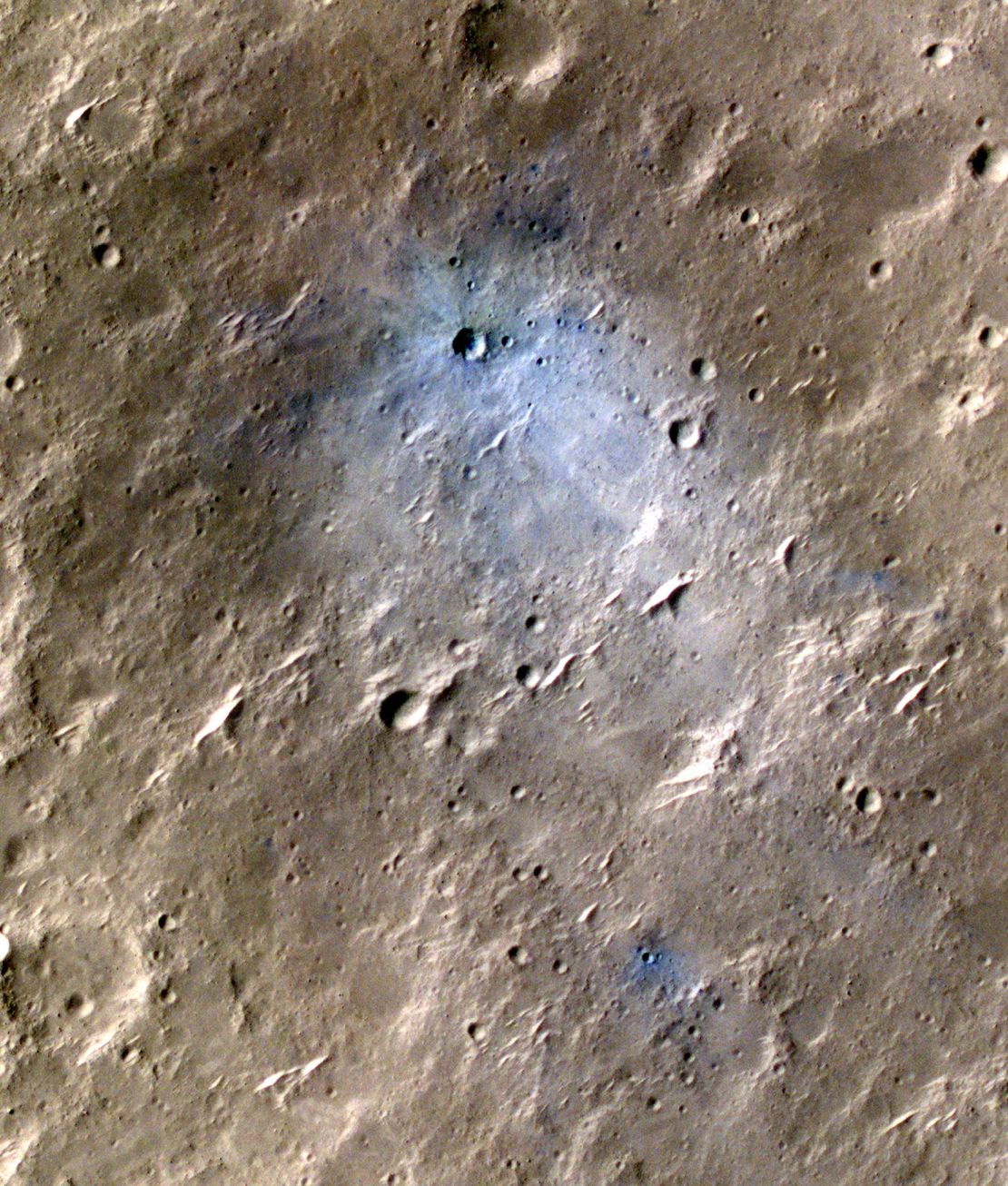
A meteoroid impact on Mars formed Martian craters, seen in blue, on September 5, 2021. NASA's InSight mission detected the impacts, and the Mars Reconnaissance Orbiter imaged the craters.

A meteoroid impact on Mars formed Martian craters, seen in blue, on September 5, 2021. NASA's InSight mission detected the impacts, and the Mars Reconnaissance Orbiter imaged the craters. 
NASA/JPL-Caltech/University of Arizona

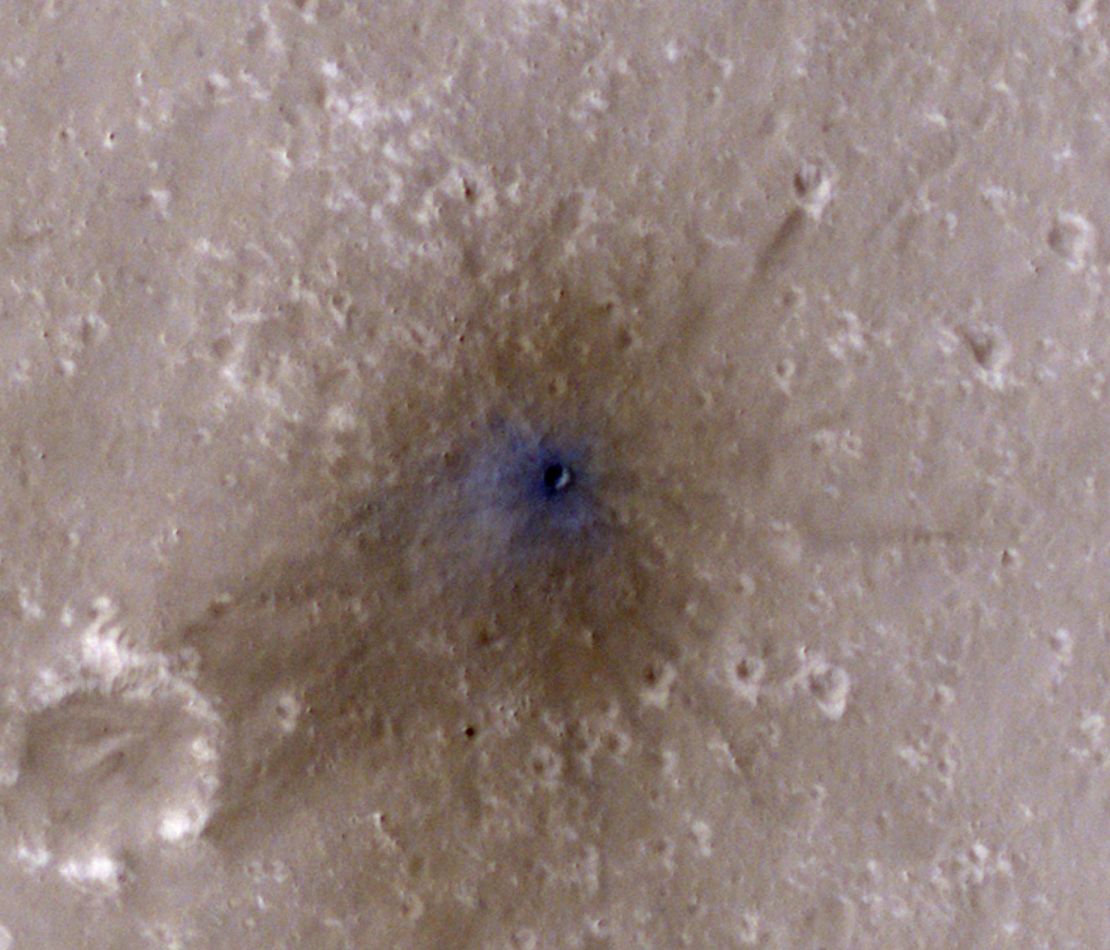
NASA's Mars Reconnaissance Orbiter captured an image of a meteoroid impact that was later associated with a seismic event detected by the agency's InSight lander. This crater was formed on May 27, 2020.

NASA's Mars Reconnaissance Orbiter captured an image of a meteoroid impact that was later associated with a seismic event detected by the agency's InSight lander. This crater was formed on May 27, 2020. 

NASA/JPL-Caltech/University of Arizona

The two distant impacts they identified from the data were the two biggest impacts ever detected by scientists, even after decades of watching from orbit.

The larger impacts, each leaving a crater roughly the size of a football field, came just 97 days apart, underscoring the higher frequency of these types of geological events.

“This size impact, we would expect to happen maybe once every couple of decades, maybe even once in a lifetime, but here we have two of them that are just over 90 days apart,” Dr. Daubar said.

“It could just be a crazy coincidence, but there’s a really, really small likelihood that it’s just coincidence.”

“What’s more likely is that either the two big impacts are related, or the impact rate is a lot higher for Mars than what we thought it was.”

“Planetary impacts are happening all across the Solar System all the time.”

“We’re interested in studying that on Mars because we can then compare and contrast what’s happening on Mars to what’s happening on the Earth,”

“This is important for understanding our Solar System, what’s in it and what the population of impacting bodies in our Solar System looks like — both as hazards to the Earth and also historically to other planets.”

The orbiter spotted a meteoroid impact that occurred on February 18, 2021. InSight tracked a seismic signal from the event.

The orbiter spotted a meteoroid impact that occurred on February 18, 2021. InSight tracked a seismic signal from the event. 

NASA/JPL-Caltech/University of Arizona

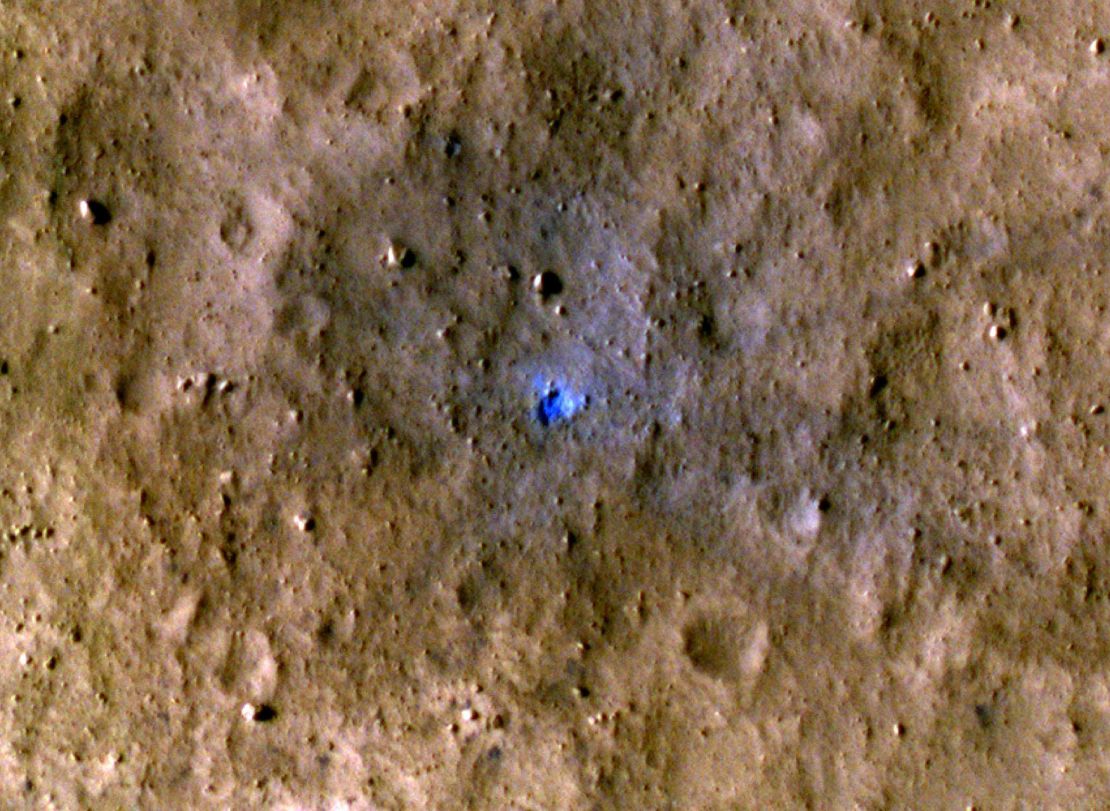
InSight data was matched with photos from orbiters, such as this one of an impact crater created on August 30, 2021, to pin down when and where meteoroid strikes happen on the red planet.

InSight data was matched with photos from orbiters, such as this one of an impact crater created on August 30, 2021, to pin down when and where meteoroid strikes happen on the red planet. 

NASA/JPL-Caltech/University of Arizona

  • The study appeared today in the journal Science Advances.
  • Ingrid J. Daubar et al. 2024. Seismically detected cratering on Mars: Enhanced recent impact flux? Science Advances 10 (26); doi: 10.1126/sciadv.adk7615

{ https://www.sci.news/ }

Hoe vind je dit bericht?
Geschreven door peter om 15:39 Stuur door

Meer van UFO'S of UAP'S, ASTRONOMIE, RUIMTEVAART, ARCHEOLOGIE, OUDHEIDKUNDE, SF-SNUFJES EN ANDERE ESOTERISCHE WETENSCHAPPEN - DE ALLERLAATSTE NIEUWTJES

↑ Terug naar de berichten