Naar de inhoud

UFO'S of UAP'S, ASTRONOMIE, RUIMTEVAART, ARCHEOLOGIE, OUDHEIDKUNDE, SF-SNUFJES EN ANDERE ESOTERISCHE WETENSCHAPPEN - DE ALLERLAATSTE NIEUWTJES

UFO's of UAP'S in België en de rest van de wereld
akke.beakke.be
Ontdek de Fascinerende Wereld van UFO's en UAP's: Jouw Bron voor Onthullende Informatie! Ben jij ook gefascineerd door het onbekende? Wil je meer weten over UFO's en UAP's, niet alleen in België, maar over de hele wereld? Dan ben je op de juiste plek! België: Het Kloppend Hart van UFO-onderzoek In België is BUFON (Belgisch UFO-Netwerk) dé autoriteit op het gebied van UFO-onderzoek. Voor betrouwbare en objectieve informatie over deze intrigerende fenomenen, bezoek je zeker onze Facebook-pagina en deze blog. Maar dat is nog niet alles! Ontdek ook het Belgisch UFO-meldpunt en Caelestia, twee organisaties die diepgaand onderzoek verrichten, al zijn ze soms kritisch of sceptisch. Nederland: Een Schat aan Informatie Voor onze Nederlandse buren is er de schitterende website www.ufowijzer.nl, beheerd door Paul Harmans. Deze site biedt een schat aan informatie en artikelen die je niet wilt missen! Internationaal: MUFON - De Wereldwijde Autoriteit Neem ook een kijkje bij MUFON (Mutual UFO Network Inc.), een gerenommeerde Amerikaanse UFO-vereniging met afdelingen in de VS en wereldwijd. MUFON is toegewijd aan de wetenschappelijke en analytische studie van het UFO-fenomeen, en hun maandelijkse tijdschrift, The MUFON UFO-Journal, is een must-read voor elke UFO-enthousiasteling. Bezoek hun website op www.mufon.com voor meer informatie. Samenwerking en Toekomstvisie Sinds 1 februari 2020 is Pieter niet alleen ex-president van BUFON, maar ook de voormalige nationale directeur van MUFON in Vlaanderen en Nederland. Dit creëert een sterke samenwerking met de Franse MUFON Reseau MUFON/EUROP, wat ons in staat stelt om nog meer waardevolle inzichten te delen. Let op: Nepprofielen en Nieuwe Groeperingen Pas op voor een nieuwe groepering die zich ook BUFON noemt, maar geen enkele connectie heeft met onze gevestigde organisatie. Hoewel zij de naam geregistreerd hebben, kunnen ze het rijke verleden en de expertise van onze groep niet evenaren. We wensen hen veel succes, maar we blijven de autoriteit in UFO-onderzoek! Blijf Op De Hoogte! Wil jij de laatste nieuwtjes over UFO's, ruimtevaart, archeologie, en meer? Volg ons dan en duik samen met ons in de fascinerende wereld van het onbekende! Sluit je aan bij de gemeenschap van nieuwsgierige geesten die net als jij verlangen naar antwoorden en avonturen in de sterren! Heb je vragen of wil je meer weten? Aarzel dan niet om contact met ons op te nemen! Samen ontrafelen we het mysterie van de lucht en daarbuiten.

Archief

Why the World of Humanoid Robots Is on Fire Right Now

Why the World of Humanoid Robots Is on Fire Right Now

It’s not just you — there’s a robot renaissance upon us.

 
Figure humanoid robot that integrate ChatGPT
Figure

AI is fueling a lot of wild ideas for our tech-driven future. If everything pans out, we won’t have to write our own essays, take our own notes, drive our own cars — hell, we might not even have to make our own art.

That’s a tall order, obviously, but with AI’s rapid growth it’s hard not to give at least some of those lofty visions credence; even the most sci-fi ones; even — hear me out — freakin’ Star Wars-level humanoid robots.

THAT [OPTIMUS] IS SO HOT RIGHT NOW

A glut of humanoid robots was not on my 2024 bingo, but here we are. Every time I scroll through X, there’s something — for instance, a new partnership, an exciting demo, or whatever this is.

There are a lot of humanoid bots now and a lot more seemingly on the way — Figure’s AI robot, Unitree’s speed demon, Agility’s workhorse — but arguably most important of all is Tesla’s Optimus.

I don’t mean that Optimus is necessarily more advanced than the rest of the aforementioned — in fact, Tesla’s competition is pretty fierce right now — but Optimus has something that the other robots don’t: clout.

As some of you may already know, Elon Musk, despite Optimus’ nascency, has been bullish on the robot’s future. In fact, this year, Musk went as far as to suggest that Optimus could make Tesla a $25 trillion company. I know, I know...

If you’re rolling your eyes, you’re justified. Musk is often (and not infrequently wrongly) optimistic about future technologies. But his carnival barking is a huge asset, not just for Tesla, but for the prospects of functional, real-world humanoid robots writ large.

What I mean is that, for better or worse, since Tesla awkwardly introduced Optimus on stage last year with a weird interpretive dance, a lot has happened. When Tesla and Musk talk, people, regardless of their opinion of the pair, listen. If Musk says robots are on the way, maybe they actually are, and that added confidence gives other non-Tesla upstarts more opportunities as well.

While Musk and Tesla have paved the way with their own fuel to the humanoid robot fire, AI is an equally powerful hype train that is doing the same thing concurrently.

AI, specifically large language models (LLMs) like the ones that power ChatGPT, is opening up a world of possibilities for what people think humanoid robots are capable of. That means making them more collaborative, helping them understand commands more easily, and maybe more importantly, making them feel more human.

Take Figure’s robot, for example — in lots of ways, it functions like every other humanoid robot of its ilk. But when paired with ChatGPT, things start to look truly futuristic.

It’s crucial to take Figure’s demo with a grain of salt. Right now, chatbots have a way of making things look functional on the surface, but in practice, the results are rocky. But even as a proof of concept, it’s clear AI has a place in the humanoid robot future and there’s interest in figuring out what that place is.

And sure, being conversational isn’t as important as say, making a robot with the fine motor skills to fold a shirt properly, but if these things are going to be in your home, they better have some manners, right?

READY FOR THE SBOTLIGHT

There are obviously a lot more factors than just Tesla and AI at play when it comes to the popularity of humanoid robots. Research paved years ago by companies like Boston Dynamics and the prospect of bots’ applications in factories have been equally pivotal.

But this time around, humanoid robots feel as though they’ve found themselves in front of an even bigger and brighter spotlight; it’s not just Tesla that’s putting them there. Nvidia is getting in on the game, providing its own expertise with systems like GR00T which is meant to help robots train themselves. Similarly, OpenAI seems to be interested in the robotics game and there’s a job opening as proof.

It’s hard to say what will come of all the attention, but if history is an example, money and hype usually mean progress. And if that means I don’t have to haul my own dirty clothes to the laundromat, then consider me a humanoid robot truther.

{ https://www.inverse.com/ }

Hoe vind je dit bericht?
Geschreven door peter om 23:28 Stuur door

A New Study Suggests Aliens Aren’t Little Green Men. They’re Purple People Eaters.

A New Study Suggests Aliens Aren’t Little Green Men. They’re Purple People Eaters.

Story by Darren Orf

We might have had it wrong this whole time.

We might have had it wrong this whole time.
© KATERYNA KON/SCIENCE PHOTO LIBRARY - Getty Images
  • The search for life beyond Earth requires expanding the very definition of what life can be.
  • Some exoplanets, especially those orbiting cooler red dwarfs, might host purple plant life rather than the green-hue vegetation found on Earth.
  • A new study from Cornell University discovered that a particular purple “light fingerprint” could be indicative of extraterrestrial life.

While the Earth is often called “the Pale Blue Dot” thanks to its bountiful oceans, most of the planet’s land masses are dominated by the color green. Plants use chlorophyll (which absorbs red and blue light but, reflects green light) to captures solar energy, and use carbon and water to make food through a process known as photosynthesis. While this fourth grade biology lesson outlines the predominant way plant life thrives on our planet, life on other Earth-like exoplanets (especially those orbiting red dwarf stars) could use a different method entirely—one that would turn the whole world purple.

Scientists from Cornell University analyzed how alien plants that rely on infrared radiation for photosynthesis might transform the hues of alien worlds. These kinds of bacteria, which include phototrophic anoxygenic bacteria and photoheterotrophic bacteria, could emit a distinctive “light fingerprint” that could be detectable by upcoming observatories, including the European Southern Observatory’s Extremely Large Telescope. The results of the study were published in the journal Monthly Notices of the Royal Astronomical Society.

“Purple bacteria can thrive under a wide range of conditions, making it one of the primary contenders for life that could dominate a variety of worlds,” Cornell University Ph.D. student Lígia Fonseca Coelho said in a press statement. “They already thrive here in certain niches… just imagine if they were not competing with green plants, algae and bacteria: A red sun could give them the most favorable conditions for photosynthesis.”

To understand the color and chemical signature such a world would emit, Coelho and her colleagues gathered 20 specimens of purple sulfur and purple non-sulfur bacteria from various places around the world—including hydrothermal vents and even ponds near Cornell’s campus. These bacteria rely on low-energy red and infrared right for a photosynthesis-like process, and while purple bacteria might be a biological niche today, some scientists theorize that an ancient Earth was likely much more purple than it is today.

A 2022 study from the University of Maryland explored why plants reflect the color green when technically the Sun emits the most light in the blue-green spectrum. The scientists argued that a light-sensitive molecule called retinal (which first appeared on Earth before chlorophyll) absorbed green light and reflect red and violet—which, to the human eye, would’ve looked purple.

When the molecule chlorophyll evolved on Earth—thanks in no small part to a rise in oxygen levels—the Sun’s green light was already being absorbed by retinal-leveraging plants. So, instead, the molecule absorbed all other available light. Even though the Sun emits less light in that spectrum, chlorophyll were part of a more advanced, efficient system at producing photosynthesis, and Earth’s green hue began to take shape.

But on oxygen-poor exoplanets orbiting cool, red dwarf stars, things might be drastically different. Coelho developed various models of Earth-like planets across a range of wet and dry environments, and many of the simulated “light fingerprints” came back purple.

“If purple bacteria are thriving on the surface of a frozen Earth, an ocean world, a snowball Earth or a modern Earth orbiting a cooler star,” Coelho said in a press statement. “We now have the tools to search for them.”

So, when aliens finally do reach Earth, don’t count on “little green men.” As for flying purple people-eaters... well, now we’re on to something.

{ https://www.msn.com/en-us/ }

Hoe vind je dit bericht?
Geschreven door peter om 23:18 Stuur door

A Mysterious Object Is Emitting Microwaves in Deep Space. It's Unlike Anything Ever Known.

A Mysterious Object Is Emitting Microwaves in Deep Space. It's Unlike Anything Ever Known.

Story by Darren Orf
 
Scientists found an unknown object emitting microwaves near the Milky Way’s center. The object's unique characteristics don't fit known celestial categories.

Scientists found an unknown object emitting microwaves near the Milky Way’s center. The object's unique characteristics don't fit known celestial categories.
© EzumeImages - Getty Images
  • The Atacama Large Millimeter/submillimeter Array (ALMA) interferometer detected a strange object that appears to only be emitting microwaves near the Milky Way’s center.
  • Now, a new study compares this object to known celestial objects in this chaotic region of deep space. After doing so, the scientists behind the study discovered that none of the known objects’ descriptions fit this new object perfectly.
  • While the authors guess the object could be the remnants of stellar merger or an intermediate-mass black hole (IMBH), future studies in millimeter and mid-infrared bands will need to be conducted in order to definitively identify this currently unknown phenomenon.

Space is a big place.

But despite our diminutive size among the hundreds of billions of stars in the Milky Way (which is itself among hundreds of billions of galaxies), scientists have slowly pieced together a long list of all the strange stuff we might encounter throughout the cosmos. However, sometimes humanity’s collection of orbital space telescopes, ground-based arrays, and interplanetary spacecraft come across something that’s a bit of a head-scratcher.

Meet the latest one—the millimeter ultra-broad-line object, or the MUBLO for short.

56f6ed_ff8f1f522b3143c1919d8cce7a3ef7ee~mv2.jpg

Identified in a new paper published last week in the Astrophysical Journal Letters, the object in question lies near the center of the Milky Way Galaxy, which the researchers describe as containing “tens of millions of solar masses of gas, a supermassive black hole, a tenth of our Galaxy’s ongoing star formation, and an extensive graveyard of stellar remnants.”

Although it’s a cosmic mess, it’s among this interstellar chaos where new celestial objects will be discovered, and the Atacama Large Millimeter/submillimeter Array (ALMA) interferometer is one of the most powerful tools in humanity’s star-gazing arsenal. Composed of 66 radio telescopes, this array (as its name suggests) can analyze electromagnetic radiation emanating from space at millimeter and submillimeter wavelengths.

While gazing at our galaxy’s center, researchers stumbled upon a compact source subsequently labeled “G0.02467–0.0727,” otherwise known as the MUBLO. Made of cold dust and fast-moving gas, the MUBLO also exhibited another strange behavior—it only emitted microwave radiation. Adam Ginsburg, the lead author on the paper, and his team went through the long list of celestial explanations and came up short.

“We consider several explanations for the [MUBLO], including protostellar outflow, explosive outflow, a collapsing cloud, an evolved star, a stellar merger, a high-velocity compact cloud, an intermediate-mass black hole, and a background galaxy,” the paper reads. “Most of these conceptual models are either inconsistent with the data or do not fully explain them. The MUBLO is, at present, an observationally unique object.”

According to Nature, the gas molecules are also not traveling in a simple ring, which could point to having been blown away by a stellar explosion. But the MUBLO lacks certain chemicals that would be tell-tale signs of such an event.

Among the various celestial phenomena examined in the paper, the authors point out two that could explain the MUBLO—a stellar merger or an intermediate-mass black hole (IMHO). However, neither of these hypotheses are perfect. While the stellar merger idea is compelling, the MUBLO has “dust mass is substantially larger, by more than an order of magnitude, than observed toward any other merger remnant.” As for the IMHO suggestion, it “does not explain all of the observed features of the MUBLO.”

To understand this new phenomenon—or, perhaps, a well-disguised known object— uture millimeters and mid-infrared studies will need to analyze the MUBLO and discern previously unseens features that, hopefully, will point toward what it is.

For now, add another galactic mystery to the list.

{ https://www.msn.com/en-us/ }

Hoe vind je dit bericht?
Geschreven door peter om 23:10 Stuur door

Nu in Las Vegas * Mythische en mysterieuze monoliet duikt weer op: toeval of niet?

Nu in Las Vegas * Mythische en mysterieuze monoliet duikt weer op: toeval of niet?

Door  Micajkov

Mythische en mysterieuze monoliet duikt weer op: toeval of niet?

RTL Nieuws

In de natuur bij Las Vegas is er weer eentje verschenen: een zilveren monoliet. Zo reflecterend, dat de zuil bijna opgaat in het landschap eromheen. De afgelopen jaren doken zulke zuilen al vaker op, dus echt nieuw zijn ze niet meer. Hoe komt het dat we deze voorwerpen in de vrije natuur dan toch nog ervaren als mysterieus?

Toen de politie van Las Vegas maandag de meest recente monoliet vond, stond er boven de bijbehorende X-post in koeienletters: 'mysterious monolith'. Op de foto is het zilveren object te zien, in een natuurgebied bij Nevada. 

Drie maanden geleden stond er ook al eentje in Wales. In 2020 doken ze wereldwijd op: eerst in de Amerikaanse staat Utah, om vervolgens weer te verdwijnen, en tevoorschijn te komen in Roemenië. Later stonden ze ook in Californië, New Mexico, het Britse Isle of Wight en, jawel, ook op verschillende plekken in Nederland.

Onder andere in Friesland, Delft, Maasbracht en Oosterhout is er in 2020 eentje neergezet. Hoewel er flink over gespeculeerd werd, is van de monolieten in Nederland nooit komen vast te staan waar ze vandaan kwamen. 

Web van speculaties

Alleen van de monoliet in Californië is bekend wie die daar heeft neergezet. Eind 2020 claimde kunstenaarscollectief The Most Famous Artist het object te hebben gemaakt. Over de oorsprong en makers van de andere monolieten blijven we gissen. 

We ervaren de monolieten als mysterieus, en dat is niet gek, want ze vormen iets 'onnatuurlijks' dat in de natuur staat, vertelt Taede Smedes, godsdienstfilosoof en docent theologie aan de Radboud Universiteit. "Als iets gemaakt is, dan moet er ook een maker zijn."

Space Odyssey en goden

Dat we niet weten waar de monolieten vandaan komen, is volgens Smedes de voornaamste reden dat we er zo gefascineerd door zijn. Ook zijn er connecties met mythes, films en buitenaardse theorieën waardoor de objecten in ons hoofd blijven hangen. 

  • Mysterieuze monoliet duikt op in Wales: 'Lijkt op een soort ufo'
Lees ook

Mysterieuze monoliet duikt op in Wales: 'Lijkt op een soort ufo'

Zo staan de monolieten steeds op onherbergzame plekken, benadrukt Smedes. Boven op een berg, midden in de woestijn of ergens in het bos. "Dat zijn plekken die we van oorsprong associëren met heilige en religieuze locaties. Maar ze doen ook denken aan mythes, waarin de top van een berg bijvoorbeeld de plek is waar de goden elkaar ontmoeten."

Dan is er de cultfilm 2001: A Space Odyssey, naar het gelijknamige boek van Arthur C. Clark. In de film zijn er opeens zwarte objecten, die ook monolieten worden genoemd. Ze worden in verband gebracht met buitenaards leven. "Die associaties over de buitenaardse monolieten uit Space Odyssey en de monolieten bij ons op aarde komen daardoor bij elkaar. We vermoeden altijd wel dat ze door mensen gemaakt zijn, maar net zoals bij graancirkels of UFO', blijft er altijd de vraag: stel dat?"

Zo zien de monolieten eruit in de film 2001: A Space Odyssey: 

2001: A Space Odyssey

Al die vragen, zonder antwoorden, maakt dat de zilveren monoliet wordt bestempeld en ervaren als mysterieus. Maar zodra er antwoorden komen, zijn we eigenlijk alweer uitgecheckt, vertelt Smedes. "Het mysterie lonkt, maar als dus een kunstenaarscollectief laat weten een van de monolieten te hebben gemaakt, dan blijft het eigenlijk niet echt hangen." 

Toeval of niet?

Is het dan toeval dat de monolieten nu weer opduiken? Niet helemaal, denkt Smedes. In 2017 verschenen verschillende Amerikaanse filmpjes waarop het lijkt alsof er UFO's te zien zijn. In de jaren daarna is er gewerkt aan verder onderzoek naar meldingen van vliegende objecten die niet meteen konden worden geïdentificeerd. "Daardoor kwam er veel discussie over buitenaards leven. Die discussie is er nog steeds, en binnenkort gaat het congres in de VS het weer over UFO's hebben." 

Dat er, zodra het onderwerp opleeft, objecten opduiken die mensen associëren met buitenaards leven, is dus niet heel vreemd, besluit Smedes.

{ https://www.rtl.nl/ }

Hoe vind je dit bericht?
Geschreven door peter om 22:39 Stuur door

Een mysterieuze monoliet is verschenen in de woestijn van Las Vegas: niemand weet hoe hij daar is gekomen

Een mysterieuze monoliet is verschenen in de woestijn van Las Vegas: niemand weet hoe hij daar is gekomen

Janine image Door Janine
De monoliet verscheen op mysterieuze wijze in de woestijn van Las Vegas

LVMPD/X

Een mysterieuze monoliet is verschenen in een bergketen in de buurt van Las Vegas, Nevada, maar niemand kan verklaren hoe hij daar is gekomen. Laten we er meer over te weten komen.

Monoliet ontdekt bij Las Vegas: waar komt hij vandaan?

De verwijdering van de monoliet uit de grond die op mysterieuze wijze verscheen in Las Vegas

LVMPD/X

De mysterieuze monoliet die in de bergen van Las Vegas is gevonden, stak uit de rotsen, maar zijn verschijning moet nog worden verklaard. Monolieten zijn solide geologische structuren die meestal uit één steen of rots bestaan en die door erosie aan het licht komen. De herkomst van het object in kwestie is echter onbekend.

Lokale autoriteiten hebben besloten om de formatie te verwijderen. Op de X-pagina van de Las Vegas Metropolitan Police Department staat in een bericht van 21 juni 2024: "Velen van jullie hebben vragen gesteld over de mysterieuze monoliet die onlangs is gezien in het noorden van Las Vegas. Gistermiddag hebben we geassisteerd bij het verwijderen van het object omwille van de openbare veiligheid en het milieu." De politie heeft bekendgemaakt dat "het onbekend is hoe het object op zijn locatie is gekomen of wie er verantwoordelijk voor zou kunnen zijn." De afmeting van de monoliet is 19,5 meter.

Monolieten over de hele wereld, een mysterie begonnen in 2020

Meteen na de ontdekking werd de monoliet weggehaald, maar het bracht een mysterie aan het licht dat teruggaat tot 2020, toen deze vreemde lichtgevende objecten over de hele wereld begonnen op te duiken. De monoliet in kwestie werd gevonden door het zoek- en reddingsteam van de politie van Las Vegas in de buurt van Gass Peak, dat deel uitmaakt van het uitgestrekte Desert National Wildlife Refuge.

Momenteel is dit de laatste verschijning van deze mysterieuze gespiegelde zuilen. In november 2020 verscheen een soortgelijke monoliet in de rode rotswoestijn van Utah, Mountain West, VS. Daarna zijn er monolieten gezien in Californië, New Mexico, Roemenië en zelfs in het centrum van Las Vegas op Fremont Street. Het gemeenschappelijke kenmerk is dat ze plotseling verschenen en net zo snel weer verdwenen. Nick Street, de luitenant van het Utah Department of Public Safety, verklaarde: "Dit ding komt niet van een andere wereld".

Waarom de monoliet van Las Vegas werd verwijderd

Het terrein in Las Vegas waar de verwijderde monoliet was verschenen

LVMPD/X

De formatie in Utah was ingebed in de rotsen in een gebied dat zo verspreid lag dat de locatie aanvankelijk verborgen werd gehouden, om te voorkomen dat mensen erop uit zouden trekken om ernaar te zoeken en het risico liepen te verdwalen. De coördinaten werden echter ontdekt en veel nieuwsgierige toeristen gingen er met de auto naartoe, waarbij ze de natuur beschadigden en veel afval achterlieten. De reden waarom de autoriteiten besloten de monoliet uit Las Vegas te verwijderen, is om te voorkomen dat dezelfde dynamiek zich herhaalt.

Het Desert National Wildlife Refuge, een federaal gebied, is een enorm natuurreservaat waar dikhoornschapen, schildpadden en zeldzame planten leven, allemaal soorten die hier beschermd zijn. Op dit moment bevindt de monoliet, die bestaat uit een plaat reflecterend metaal gemodelleerd naar een prisma en gelast met betonijzer en beton, zich na uit de grond te zijn getrokken waar het een diep gat achterliet, in een geheime opslagplaats, in afwachting van een beslissing van de autoriteiten over de beste manier om zich ervan te ontdoen.

{ https://www.curioctopus.nl/ }

Hoe vind je dit bericht?
Geschreven door peter om 22:27 Stuur door

MUFON teases game-changing UFO cases but be cautious about what you choose to believe

MUFON teases game-changing UFO cases but be cautious about what you choose to believe

In this interview from the Vetted podcast, Ron James, Director of Media Relations for MUFON and filmmaker of "The Accidental Truth," shares shocking new UFO evidence. xxx 
Discover the latest findings from MUFON's upcoming symposium, including mysterious metals received by a Russian experiencer, the compelling 1955 Oregon UFO shootdown case, and a cryogenically frozen alien. 
ufo%20cases.jpg

The Mutual UFO Network (MUFON) is set to reveal findings from a study on alleged UFO material. In a surprising announcement, MUFON has declared that it will present "the most important UAP-related presentation it has ever made" at a live event on July 13th. 
The presentation will focus on alleged UAP material received from a Russian UFO investigator, which was reportedly part of an attempted cover-up. According to the press release, the material was tested in Russia and at a U.S. lab, with both investigations concluding it is "of unknown origin." 
Some samples of the material were allegedly stolen from a U.S. Post Office Box before MUFON Investigator Robert Spearing could retrieve them. The investigation into the theft was hindered by tampered CCTV cameras. 
"This is typical with evidence of this nature," said MUFON Media Relations Director Ron James. "We believe that this material was deliberately taken by someone who could hack into a locked Post Office Box to prevent further testing. Who did it is anybody's guess." 
According to MUFON: "The evidence that supports this story, and others that we will share at the Symposium, could make this the biggest UFO-related news event of the year. We have physical materials and more evidence of non-human technology." 
But, I wouldn't hold out much hope for anything coming from this. 
ufo%20cases.png
For example the UAP material received from a Russian UFO investigator: One commenter @FAA-DPE on Chris Letho's YouTube channel stated: I recognize that material from years of working in petrochemical plants. Shell Norco LA, Union Carbide Taft LA, etc. And it's IDENTICAL to the byproduct of "Fluid Coking" Hydrocarbons. It makes a very unique and strange byproduct material that does not exist in nature and would confuse most of today's lab techs. if they were not given some idea. 
ufo%20cases%201.jpg
About the photo previewed by Ron James on the podcast of the supposedly shot down disk, commenter @zimzimma5688 on Chris Letho's YouTube channel stated: It took all of about 24 hours before that photo previewed by Ron James on the podcast of the supposedly shot down disk in the woods with the two "army men" retrieving it that was going to be a centerpiece at this Mufon conference, was shown to be fake. The two blurry army men exactly match a set of toy figurines. The disk is obviously a model of some sort. 
A lot of people in the community consider Mufon to be a compromised organization as well, essentially it functions as a tool for those responsible for the cover up/psy op. That I don't know to be true, but it would not surprise me. 
Here's the interview from the Vetted podcast. Be cautious about what you choose to believe.
  

{ https://ufosightingshotspot.blogspot.com/ }

Hoe vind je dit bericht?
Geschreven door peter om 22:11 Stuur door

Unveiling the Unknown: Extraordinary Extraterrestrial Encounters You’ve Never Heard Of

Unveiling the Unknown: Extraordinary Extraterrestrial Encounters You’ve Never Heard Of

Discover bizarre extraterrestrial encounters from Italy to Belgium, featuring mysterious beings and unexplained phenomena.

Throughout history, the possibility of extraterrestrial life has fascinated humanity. While mainstream narratives often focus on well-known incidents like Roswell, there exists a myriad of lesser-known encounters that provide intriguing glimpses into potential interactions with beings from beyond our world. This article delves into some of these extraordinary, yet obscure encounters that defy conventional explanation and challenge our understanding of reality.

1. The Tarento Encounter

On a clear evening between March and April, Mr. Johan Franco Maroi and his son experienced an encounter that would change their lives. As they drove from Tarento to Mount Bernady, they noticed a bright, morphing light in the sky. This light, shifting from white to orange to red, eventually descended behind a nearby hill. Driven by curiosity, Maroi stopped the car and ventured towards the light.

Upon reaching the hilltop, Maroi encountered a tall, luminous being clad in a suit resembling medieval armor, but more advanced and meshed with light-emitting wires. As they approached each other, Maroi experienced a sudden vision of a spaceship, highlighting a technology that seemed to utilize light as energy. This vision was interrupted when sparks flew from the being’s hand, affecting Maroi’s hand in return. The encounter left him with severe, mysterious burns that healed only after he received an anonymous package containing a miraculous ointment. The incident, compounded by subsequent visits from mysterious men in black, left Maroi with lasting physical and psychological scars.

2. The Franco-Belgian Frontier Incident

In January 1974, on the Franco-Belgian frontier, Monier X experienced a bizarre encounter with mechanical-like beings. After his car malfunctioned, Monier noticed an unusual object in a nearby field. This object, initially appearing as a haystack, turned out to be a structured craft emitting patches of light. Two figures emerged, moving in a mechanical manner, wearing peculiar helmets and holding a device resembling a revolver.

These beings communicated through modulated sounds that bypassed normal sensory pathways, causing Monier to feel a faint shock. The beings abruptly retreated to their craft, which ascended and vanished. The arrival of another car, whose driver also witnessed the beings, added credibility to Monier’s account, marking this as one of the more corroborated yet mysterious encounters.

3. The Castal Encounter

In 1974, in Castal, Italy, Signoria Giovanna Seni witnessed a hovering figure while tending to her farm animals. This figure, seated in a swinging box-like structure, wore a multicolored suit and appeared to control the box with a rod emitting a humming sound. Despite her initial fear, Giovanna observed the figure and a subsequent bright light moving across the sky.

The figure and light circled a nearby cemetery before disappearing. Although Giovanna’s mother dismissed the phenomenon, Giovanna remained convinced of the extraordinary nature of the encounter. This event, marked by the figure’s unusual attire and behavior, contributed to the rich tapestry of unexplained sightings in rural Italy.

4. The Montville Encounter

In 1978, in Montville, New Jersey, three young boys witnessed a hovering, square-shaped object emitting lights and a red beam. The object remained stationary for several minutes before moving away. The boys then observed strange figures in yellow suits with hawk-like features. These figures, displaying stiff, mechanical movements, were accompanied by a woman who could disappear and reappear mysteriously.

The boys’ account was thoroughly investigated by UFO researchers, who found no conclusive explanation. The incident left the boys deeply shaken, adding to the credibility of their experience and highlighting the persistent enigma of such encounters.

Montvale NJ UFO

5. The Bendini Encounter

In 1979, in Bendini, Brazil, Orlando Grado Santos experienced a series of encounters with various unidentified crafts and beings. While separated from his hunting group, he photographed a descending craft resembling a telephone booth. Subsequently, he witnessed other crafts and was eventually approached by helmeted humanoids.

These beings communicated with Orlando, assuring him of their peaceful intentions. Inside their craft, Orlando observed advanced technology and human-like figures operating unfamiliar machinery.

"On the evening of 28 July 1979, security guard Antonio Carlos Ferreira was allegedly abducted from his workplace - a furniture factory in Mirassol, São Paulo. According to his own accounts, he was approached by three humanoid figures who tranquilized and took him aboard a small ship which ferried him to a larger craft further away. There, he said he was positioned in front of a large television-like device and presented with a variety of images before being forced to mate with a female alien, after which he was tranquilized again and returned to the ground. Ferreira described the creatures as being approximately 1.2 metres (3.9 ft; 120 cm) tall with pointed ears, slanted eyes and human-like mouths. They lacked eyebrows or eyelashes and spoke in a language that superficially resembled Japanese. Some were said to have dark skin and red curly hair, while others had light skin and straight black hair. The ship was spherical with three undercarriage-like legs protruding from the bottom, with the interior lit by bright red and green lights. Ferreira states that he encountered the aliens again in 1982, with the craft supposedly landing close enough for him to see the female alien and a childlike alien observing him from a distance. He said he experienced a third encounter later in 1982 in which he was taken into the hangar of an alien craft via a green beam of light before being injected with a yellow substance. He said he was then taken to meet the two aliens once more, the younger of whom he was led to believe was his own child. Other encounters are said to have followed, to a total of 16 or 20 between 1979 and 1989 ''

{ https://www.latest-ufo-sightings.net/ }

Hoe vind je dit bericht?
Geschreven door peter om 21:59 Stuur door

Are we ready to face an asteroid that could hit Earth in 14 years? NASA sees work to do.

Are we ready to face an asteroid that could hit Earth in 14 years? NASA sees work to do.

Is humanity prepared to face down an asteroid with a 72% chance of hitting Earth in 14 years?

Scientists and experts say there's work to be done.

When NASA posed the hypothetical scenario, devised by the Planetary Defense Coordination Office, to a group of nearly 100 government representatives, they found their plan to combat an asteroid hurtling towards Earth had several "high-level gaps," according to a NASA slide presentation. Space officials have "limited readiness to quickly implement needed space missions," and methods to keep the public informed about a looming disaster are not fully developed.

Of the participants, from federal agencies like the State Department and international bodies like the U.N.'s Office for Outer Space Affairs, 33% said humanity was not prepared to launch a space mission to prevent an asteroid from impacting the planet, and 19% said "reconnaissance missions" were not ready.

Kelly Fast, NASA's acting planetary defense officer, said the exercise helped government agencies to plan out how they would work together to prepare for a future asteroid strike.

"In the unlikely event we ever face a scenario like this, it won't be the first time that anybody's talked about how to treat this," she said.

In the scenario posed by NASA, humanity has 14 years to face an asteroid with a 72% chance of hitting Earth.  
STEFANI REYNOLDS, AFP VIA GETTY IMAGES

More: 

NASA runs fifth test to gauge asteroid preparedness

The exercise, designed to test government readiness for an asteroid headed towards Earth, was organized by NASA and the Federal Emergency Management Agency at an April meeting at the Johns Hopkins Applied Physics Laboratory in Laurel, Maryland, according to a news release. It marked the fifth test to gauge whether authorities are prepared to defend Earth from space. This year's exercise was the first to include "international collaborators on planetary defense."

In the hypothetical scenario, an asteroid collides with the Earth in 2038. The collision would have a 47% chance of affecting more than 1,000 people, and an 8% chance of affecting more than a million. It could strike a swath of cities across the U.S., Europe, and Africa, including Washington, Dallas, Madrid, and Algiers.

In the scenario, participants weren't told "the asteroid’s size, composition, and long-term trajectory," according to the news release. Further observations about the asteroid would also hypothetically have to be delayed by at least seven months as the asteroid passed behind the Sun – "a critical loss of time."

Even with years to prepare, agencies would still have to work efficiently to respond to an approaching asteroid, Fast said. "When you talk about planning a mission, any kind of spacecraft mission, it doesn't happen on a dime," she said.

"Even though 14 years sounds like a long time, it actually might not be when you think of developing missions," Fast added.

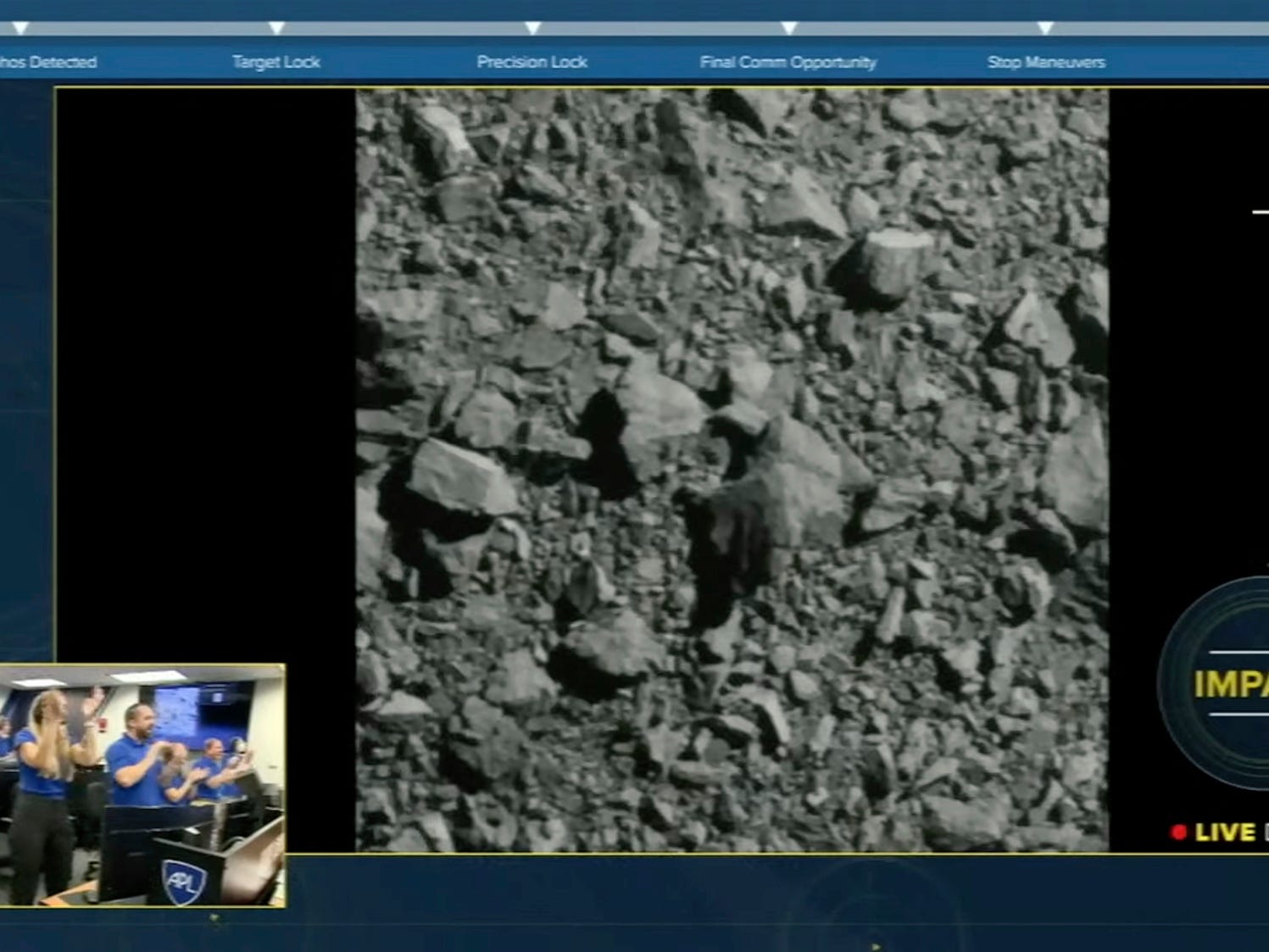
Space officials have only one tested method of heading off an asteroid on its way toward Earth – "kinetic impact," or crashing a spacecraft into the asteroid to change its trajectory. In 2022, NASA crashed a spacecraft into Dimorphos, a small "moonlet" orbiting the asteroid Didymos around 6.8 million miles from Earth, successfully shortening the moonlet's orbit by 32 minutes, according to NASA.

Fast said scientists would need to tailor a space mission to respond to a particular asteroid collision scenario.

"It all depends on the asteroid," she said. "A single kinetic impactor might work for a smaller asteroid but not for something much larger."

Some participants were also skeptical that enough federal funding would be available to deal with the threat, according to the presentation. The decision-making process was "unclear," it said.

Authorities would also have a limited ability to gather more information about the incoming asteroid by flying a spacecraft close to it, evaluators concluded.

The presentation also warned that coordinating the release of information to the public about an asteroid flying towards the planet would pose problems. "Misinformation and disinformation would have to be dealt with," they wrote.

"Maintaining trust at the start of this event is critical and that means talking early – probably earlier than the scientists and lawyers are comfortable with," another unnamed participant said.

Fast said it would be important to "turn information into something that is understandable to the public, and not to be overly technical and jargon-y."

The latest exercise, which used data from the test, recommended more tests on the new technology

Fast said people should be reassured that scientists and agencies are coming together to map out strategies in the unlikely event of an asteroid collision.

The scenario was "just a chance to continue to explore these possibilities and our own readiness, and to identify how we can do better in the future."

"This is actually a good thing, to be talking through this," she said.

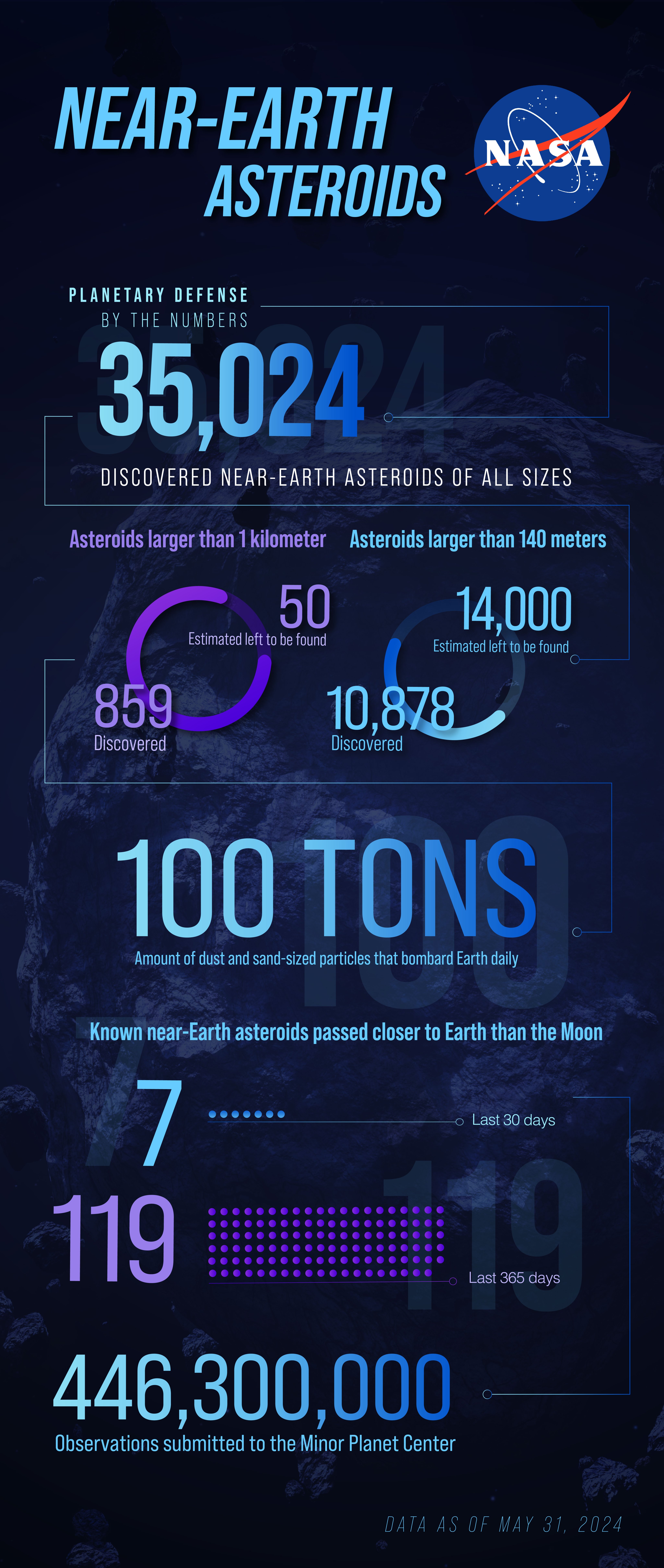
Infographic for Planetary Defense by the numbers. The title reads Near-Earth Asteroids next to the NASA logo. 35,024 discovered near-earth asteroids of all sizes. 859 discovered and 50 estimated left to be found asteroids larger than 1 km. 10,878 discovered and 15,000 estimated left to be found asteroids larger than 140 meters. 100 Tons: Amount of dust and sand-sized particles that bombard Earth daily. 7 known near-Earth asteroids passed closer to Earth than the moon in the last 30 days, 119 in the last 365 days and 446,300,000 observations submitted to the Minor Planet Center.

{ https://eu.usatoday.com/news/ }

Hoe vind je dit bericht?
Geschreven door peter om 21:11 Stuur door

Exact date deadly asteroid could hit Earth as scientists warn 'we're not prepared'

Exact date deadly asteroid could hit Earth as scientists warn 'we're not prepared'

Story by Rosie Jempson
Asteroid hitting Earth
© Getty

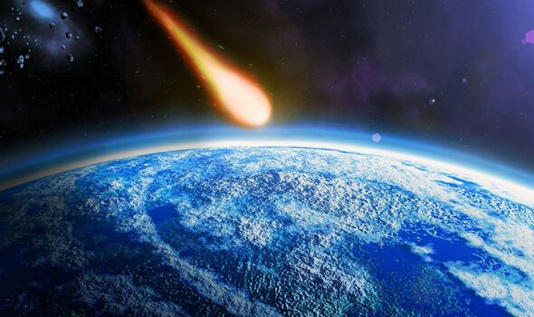
An asteroid with a 72% chance of colliding with Earth on July 12, 2038 is the scenario that Nasa has just tested to see how humanity would handle a massive space rock impact.

NASA organised its fifth planetary defence interagency tabletop exercise, inviting more than 100 participants including the UN, the UK Space Agency (UKSA) and the European Space Agency (ESA).

Faced with the challenge of an asteroid between 60 and 200 metres wide likely to hit somewhere between North America and Saudi Arabia in 14 years' time, these organisations had to collaborate to save us or identify what might hinder the process and leave us bracing for the big impact.

Yes, it appears that even when faced with potential extinction, scientists and space leaders worry that politicians will fail to unite and work as a team to prevent it happening.

In September last year, Nasa's OSIRIS-REx mission successfully brought back samples of an asteroid, named Bennu, to Earth.

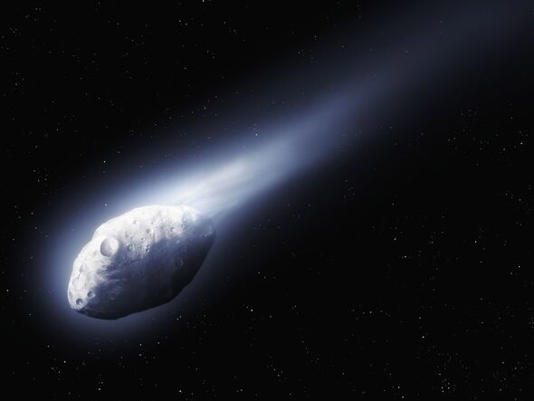
Bright comet tail. Ice evaporates from the comet's surface.

Bright comet tail. Ice evaporates from the comet's surface.

© Getty

Currently, it has about a 1 in 2,700 chance of colliding with Earth on Tuesday, September 24, 2182.

The chances of it hitting sometime between now and 2300 are even lower, at about 1 in 1,750.

While the most costly mission was estimated at just over $1 billion, global GDP is rapidly nearing $1 trillion, so it seems like a worthwhile investment although the NASA scenario predicted it was more likely between 1,000 and 100,000 people would die, rather than a mass extinction.

The change of day and night on planet earth a view from space. 3D render of Earth with a detailed night view showing city lights and shooting stars. T

The change of day and night on planet earth a view from space. 3D render of Earth with a detailed night view showing city lights and shooting stars. 4

T© Getty

The lack of disaster management plans for survivors in the event of an asteroid strike is a major concern, suggesting that not only might politicians fail to prevent the asteroid, but we could also be left to fend for ourselves post-impact.

NASA has already demonstrated its ability to deflect an asteroid if necessary even though it inadvertently created dozens of smaller asteroids that may eventually collide with Mars

While its Double Asteroid Redirection Test (DART) mission has only been tested once, there's hope that it could be repeated if necessary provided there's sufficient funding from politicians.

Furthermore, NASA emphasised that its new Near-Earth Object (NEO) surveyor mission, a powerful infrared telescope designed to detect dangerous space rocks, is scheduled for launch in 2028.

Hoe vind je dit bericht?
Geschreven door peter om 20:39 Stuur door

Fly Through the Pillars of Creation in this New Visualisation Made from Webb and Hubble Data

Webb and Hubble images of the Pillars of Creation

Fly Through the Pillars of Creation in this New Visualisation Made from Webb and Hubble Data

I remember April 1995 very well. It was the month that the stunning and iconic image that has been called ‘Pillars of Creation’ was released. It was taken by the Hubble Space Telescope but now the James Webb Telescope is getting in on the act. Webb snapped images of the Eagle Nebula (home to the ‘pillars’) early on but now astronomers have combined the data form Hubble and Webb to create an amazing 3D animation flight through the nebula. 

The Pillars of Creation are composed mostly of cool molecular hydrogen and dust. They are being worn away by strong winds and ultraviolet radiation emitted by nearby hot, young stars. The pillars, which resemble great big cosmic fingers have additional protrusions, that are larger than the solar system, extending from their tops. Embedded within these fingers are young hot stars. The tallest of the pillars measures three light-years from top to bottom.

pillars of creation Eagle Nebula Pillars of Creation as seen by Hubble Space Telescope in 2005. (Credit NASA, ESA, STScI, J. Hester and P. Scowen (ASU)

The stunning new 3D movie takes viewers on a journey through the structures of the pillars, relying on real observational data from a scientific study led by Anna McLeod, an associate professor at the University of Durham in the United Kingdom. The video allows viewers to get a glimpse at how the two space telescopes can collaborate 

The new visualisation allows viewers to understand how two of the world’s most powerful space telescopes collaborate to deliver a more detailed view. Hubble captures objects glowing in visible light at thousands of degrees, while Webb’s infrared camera is sensitive to cooler objects at just hundreds of degrees and can penetrate the dust to reveal stars embedded within.

This image of NASA’s Hubble Space Telescope was taken on May 19, 2009 after deployment during Servicing Mission 4. NASA

The movie does more than just create a fabulous video. It helps viewers to explore a number of different areas and stages of star formation. The central pillar for example is approached and can be observed with an infant protostar embedded at its top. It can be seen glowing bright red in the infrared image. Near the top of the left pillar is a diagonal jet of material that has been ejected from a newborn star. The hot young star cannot be seen but the jet gives away its presence. Finally at the tip of one of the left pillar’s protrusions is a brand new star that is shining brightly. 

Another wonderful benefit of the new 3D visualisation is the creation of a 3D printable model of the Pillars of Creation. The information has been converted into an STL file format that can be downloaded and printed at home using 3D printers. Not only will this be of fabulous interest to fellow geeks but it will also be of immense educational value to schools. 

The videos of the creation can be seen here

Source : 


About This Video

This scientific visualization explores the iconic Pillars of Creation in the Eagle Nebula (Messier 16 or M16) and the various ways that stars and dust are intertwined in the process of star formation. In developing the contextual story and the three-dimensional model, the video uses data from science papers, the Hubble Space Telescope, the Webb Space Telescope, the Spitzer Space Telescope, and the Chandra X-ray Observatory.

The sequence begins with zoom from our Milky Way galaxy in to the Pillars of Creation, a scale change greater than a factor of 10,000. Along the way, the general distribution of stars and dust clouds on the sky leads to the specific details of the star-forming Eagle Nebula. The stellar winds and high energy light from hot young stars at the center of the nebula are responsible for creating the pillars' shapes.

The video then enters a journey into the three-dimensional structure of the pillars. Based on scientific results, astronomers and artists modeled this striking formation in three dimensions and created a sequence that flies past and among the pillars. What can look like three connected pillars in a two-dimensional image separates into four dust clouds with ionized gas streaming away from each in the three-dimensional model.

As the virtual camera flies through the model, the view shifts back and forth between Hubble's visible-light and Webb's infrared-light perspectives. Viewers explore the contrasts between Hubble's and Webb's observations, which demonstrate how the telescopes complement each other by probing different scientific aspects of the clouds.

The Pillars of Creation get their nickname from the fact that stars are forming within these dust clouds. The visual tour highlights various stages of star formation, including an embedded protostar at the top of the central pillar, bipolar jets from a hidden star in the process of forming in the upper part of the left pillar, and a newborn star in the middle of the left pillar.

This visualization is a product of the AstroViz Project of NASA's Universe of Learning. A shorter non-narrated visualization, The Pillars

{ https://www.universetoday.com/ }

Hoe vind je dit bericht?
Geschreven door peter om 19:01 Stuur door

Meer van UFO'S of UAP'S, ASTRONOMIE, RUIMTEVAART, ARCHEOLOGIE, OUDHEIDKUNDE, SF-SNUFJES EN ANDERE ESOTERISCHE WETENSCHAPPEN - DE ALLERLAATSTE NIEUWTJES

↑ Terug naar de berichten