Naar de inhoud

UFO'S of UAP'S, ASTRONOMIE, RUIMTEVAART, ARCHEOLOGIE, OUDHEIDKUNDE, SF-SNUFJES EN ANDERE ESOTERISCHE WETENSCHAPPEN - DE ALLERLAATSTE NIEUWTJES

UFO's of UAP'S in België en de rest van de wereld
akke.beakke.be
Ontdek de Fascinerende Wereld van UFO's en UAP's: Jouw Bron voor Onthullende Informatie! Ben jij ook gefascineerd door het onbekende? Wil je meer weten over UFO's en UAP's, niet alleen in België, maar over de hele wereld? Dan ben je op de juiste plek! België: Het Kloppend Hart van UFO-onderzoek In België is BUFON (Belgisch UFO-Netwerk) dé autoriteit op het gebied van UFO-onderzoek. Voor betrouwbare en objectieve informatie over deze intrigerende fenomenen, bezoek je zeker onze Facebook-pagina en deze blog. Maar dat is nog niet alles! Ontdek ook het Belgisch UFO-meldpunt en Caelestia, twee organisaties die diepgaand onderzoek verrichten, al zijn ze soms kritisch of sceptisch. Nederland: Een Schat aan Informatie Voor onze Nederlandse buren is er de schitterende website www.ufowijzer.nl, beheerd door Paul Harmans. Deze site biedt een schat aan informatie en artikelen die je niet wilt missen! Internationaal: MUFON - De Wereldwijde Autoriteit Neem ook een kijkje bij MUFON (Mutual UFO Network Inc.), een gerenommeerde Amerikaanse UFO-vereniging met afdelingen in de VS en wereldwijd. MUFON is toegewijd aan de wetenschappelijke en analytische studie van het UFO-fenomeen, en hun maandelijkse tijdschrift, The MUFON UFO-Journal, is een must-read voor elke UFO-enthousiasteling. Bezoek hun website op www.mufon.com voor meer informatie. Samenwerking en Toekomstvisie Sinds 1 februari 2020 is Pieter niet alleen ex-president van BUFON, maar ook de voormalige nationale directeur van MUFON in Vlaanderen en Nederland. Dit creëert een sterke samenwerking met de Franse MUFON Reseau MUFON/EUROP, wat ons in staat stelt om nog meer waardevolle inzichten te delen. Let op: Nepprofielen en Nieuwe Groeperingen Pas op voor een nieuwe groepering die zich ook BUFON noemt, maar geen enkele connectie heeft met onze gevestigde organisatie. Hoewel zij de naam geregistreerd hebben, kunnen ze het rijke verleden en de expertise van onze groep niet evenaren. We wensen hen veel succes, maar we blijven de autoriteit in UFO-onderzoek! Blijf Op De Hoogte! Wil jij de laatste nieuwtjes over UFO's, ruimtevaart, archeologie, en meer? Volg ons dan en duik samen met ons in de fascinerende wereld van het onbekende! Sluit je aan bij de gemeenschap van nieuwsgierige geesten die net als jij verlangen naar antwoorden en avonturen in de sterren! Heb je vragen of wil je meer weten? Aarzel dan niet om contact met ons op te nemen! Samen ontrafelen we het mysterie van de lucht en daarbuiten.

Archief

Mysterious 'ring-shaped UFO' seen hiding in the clouds above Venezuela in broad daylight that looks eerily similar to Jordan Peele horror movie monster

A bizarre, ring-shape UFO that appeared in the skies above Venezuela was recorded by a pair of stunned friends.

The now-viral video shows the dark, circular spot hovering in the clouds over Valencia, a city in the northern Venezuelan state of Carabobo.

'A flying saucer,' one of the young men shouts as they drove down a rode on a sunny afternoon.

He then asks one of his pals for the time on the clock to document the recording.

'Bro, look here: 4:54 pm on the 17th of June in 2024,' he says. 'Look at what is here in the sky in Valencia, Carabobo.' 

A bizarre, ring-shape UFO that appeared in the skies above Venezuela was recorded by a pair of stunned friends

A bizarre, ring-shape UFO that appeared in the skies above Venezuela was recorded by a pair of stunned friends

Pictured: A poster for Jordan Peele's Nope released in 2022

Pictured: A poster for Jordan Peele's Nope released in 2022

The excited man then asks one of his friends to share the video with another person.

Although Venezuelan authorities have not made any public statements, local meteorologist Luis Vargas rained on their parade with several theories that ruled out a possible UFO sighting.

'This could be a smoke vortex or black ring that occurs after an explosion through a circular structure such as an industrial chimney or something similar,' he wrote on X, the platform formerly known as Twitter.

He also indicated that the circular shape may have been produced by a volcano.

'They are also more common in volcanic activities as can be seen … and are known as ring clouds,' Vargas said.

Venezuelan meteorologist Luis Vargas posted an image on his X account to dispel claims that a UFO was spotted in the town of Valencia, indicating it was very likely a cloud of smoke from a chimney explosion
Venezuelan meteorologist Luis Vargas shared a prior image of smoke to shoot down claims of a UFO sighting in the northern city of Valencia

Venezuelan meteorologist Luis Vargas downplayed a video filmed in the northern city of Valencia on June 17 that showed a ring-shaped UFO figure in the sky and took to X, the social media platform formerly known as Twitter, to share two pictures (left and right) explain that it was most like smoke that was produced by an explosion from a chimney

The meteorologist also mentioned that circular shape that was spotted in the sky may also have been produced by volcanic activity (seen here)

The meteorologist also mentioned that circular shape that was spotted in the sky may have been produced by volcanic activity (seen here)

One user on X linked the odd-looking shape to military exercises that had taken place at a camp ahead of Monday's commemoration of the Battle of Carabobo, the 1821 fight for independence between fighters led by Venezuela General Simón Bolivar and the Spanish. 

The victory at Carabobo led to the independence of Venezuelan and the creation of the Republic of Gran Colombia. 

Another social media user linked the ring-shaped clouds to smoke from a cigar.

'It was me who was smoking a cigar, and I started making figures with the smoke,' José Pérez said. 'But yes, his explanation is the most coherent and valid. I don't think UFOs will arrive in Valencia, because we never have electricity, water and there are always lines for gasoline.'

Another joked that the UFO arrived ahead of next month's presidential election to remove President Nicolás Maduro and his regime.

'It is a UFO hired to search for those who leave on July 28,' Alba Ferrero said.

Wilmer Palacios joked: 'Those from Valencia are the chose ones.'

{ https://www.dailymail.co.uk/ }

Hoe vind je dit bericht?
Geschreven door peter om 22:32 Stuur door

UK government's secret UFO investigation came to 'very strong' verdict

UK government's secret UFO investigation came to 'very strong' verdict

The UK Ministry of Defence (MoD) set up a secret group to investigate UFO sightings in the 1950s - and it came to a very similar conclusion to the recent reports from the US

The UK Ministry of Defence (MoD) came to a "very strong" verdict following a clandestine probe into UFO sightings.

MoD

A second report was released in 2006 (file) 

( Image: Getty Images)

In the US, the Pentagon has been releasing reports investigating UFO encounters following the establishment of the All-domain Anomaly Resolution Office (AARO). Their most recent report this March, unsurprisingly, found no signs of extraterrestrial life.

Brits are now beginning to discover that their own government has engaged in similar investigations.

The revelation comes from a post on X (formerly Twitter) from the account for BBC TV programme QI. It read: "In 1950 the UK Ministry of Defence created a secret organisation to look into UFOs called the Flying Saucer Working Party. It disbanded within a year."

READ MORE

Sir Henry Tizard, serving as Chief Scientific Adviser at the MoD at the time, launched the covert Flying Saucer Working Party back in October 1950. When their comprehensive final dossier was disclosed in June 1951, much like their American counterparts, they deduced that every phenomenon they examined did not defy earthly explanation.

Each mysterious sighting, the group concluded, was a consequence of one or more of four factors: astronomical or meteorological phenomena, misidentification, optical illusions and psychological delusions, or hoaxes.

Their findings concluded: "We accordingly recommend very strongly that no further investigation of reported mysterious aerial phenomena be undertaken, unless and until some material evidence becomes available."

th?id=OVFT.R3TwXHYUo1GhF1MYZySgUC&pid=News&w=300&h=186&c=14&rs=2&qlt=90&dpr=1.5

Just like in the US, the British investigation found no signs of alien life (stock)  (Image: Getty Images/iStockphoto)
READ MORE

A second investigation into UFOs, known as Project Condign, was finalised in 2000 but only made public in 2006. Again, it determined that the majority of UFO sightings could be attributed to either mistaken identity or atmospheric conditions.

Social media users have been quick to comment on the recent post about the brief existence of the Flying Saucer Working Party, with one user quipping: "Great name for a band." Meanwhile, another sceptically remarked: "'It disbanded within a year' - that's what THEY want you to think."


Boomerang-shaped UFO spotted on ISS livestream
Disclose Screen Boomerang-shaped UFO spotted on ISS livestream

Disclose Screen

{ https://www.dailystar.co.uk/ }

Hoe vind je dit bericht?
Geschreven door peter om 22:07 Stuur door

Webb Observes Intricate Structures in Ionosphere of Jupiter

Webb Observes Intricate Structures in Ionosphere of Jupiter

Jupiter’s upper atmosphere is composed of a neutral thermosphere and charged ionosphere. Astronomers using the NASA/ESA/CSA James Webb Space Telescope have spotted unexpected small-scale intensity features such as arcs, bands and spots in Jupiter’s low-latitude ionosphere in the region above the Great Red Spot.

This graphic shows the region observed by Webb: first its location on a NIRCam image of the whole planet (left), and the region itself (right), imaged by Webb’s Near-InfraRed Spectrograph (NIRSpec). Image credit: NASA / ESA / CSA / Webb / Jupiter ERS Team / J. Schmidt / H. Melin / M. Zamani, ESA & Webb.

This graphic shows the region observed by Webb: first its location on a NIRCam image of the whole planet (left), and the region itself (right), imaged by Webb’s Near-InfraRed Spectrograph (NIRSpec).

Image credit: NASA / ESA / CSA / Webb / Jupiter ERS Team / J. Schmidt / H. Melin / M. Zamani, ESA & Webb.

Jupiter is one of the brightest objects in the night sky, and it is easily seen on a clear night.

Aside from the bright northern and southern lights at the planet’s polar regions, the glow from Jupiter’s upper atmosphere is weak and is therefore challenging for ground-based telescopes to discern details in this region.

However, Webb’s infrared sensitivity allows scientists to study Jupiter’s upper atmosphere above the infamous Great Red Spot with unprecedented detail.

The gas giant’s upper atmosphere is the interface between the planet’s magnetic field and the underlying atmosphere.

Here, the bright and vibrant displays of northern and southern lights can be seen, which are fuelled by the volcanic material ejected from Jupiter’s moon Io.

However, closer to the equator, the structure of the planet’s upper atmosphere is influenced by incoming sunlight.

Because Jupiter receives only 4% of the sunlight that is received on Earth, astronomers predicted this region to be homogeneous in nature.

University of Leicester astronomer Henrik Melin and his colleagues observed the Great Red Spot in July 2022 using the Integral Field Unit of Webb’s Near-InfraRed Spectrograph (NIRSpec).

Their Early Release Science observations sought to investigate if this region was in fact dull, and the region above the iconic Great Red Spot was targeted for Webb’s observations.

They were surprised to discover that the upper atmosphere hosts a variety of intricate structures, including dark arcs and bright spots, across the entire field of view.

“We thought this region, perhaps naively, would be really boring. It is in fact just as interesting as the northern lights, if not more so. Jupiter never ceases to surprise,” Dr. Melin said.

Although the light emitted from this region is driven by sunlight, the team suggests there must be another mechanism altering the shape and structure of the upper atmosphere.

“One way in which you can change this structure is by gravity waves — similar to waves crashing on a beach, creating ripples in the sand,” Dr. Melin said.

“These waves are generated deep in the turbulent lower atmosphere, all around the Great Red Spot, and they can travel up in altitude, changing the structure and emissions of the upper atmosphere.”

“These atmospheric waves can be observed on Earth on occasion, however they are much weaker than those observed on Jupiter by Webb.”

“We hope to conduct follow-up Webb observations of these intricate wave patterns in the future to investigate how the patterns move within the planet’s upper atmosphere and to develop our understanding of the energy budget of this region and how the features change over time.”

  • The findings appear in the journal Nature Astronomy.
  • H. Melin et al. Ionospheric irregularities at Jupiter observed by JWST. Nat Astron, published online June 21, 2024; doi: 10.1038/s41550-024-02305-9

{ https://www.sci.news/feedb }

Hoe vind je dit bericht?
Geschreven door peter om 21:35 Stuur door

Hey @NASA @NASAjpl @NASA_Johnson could you please answer this question? UFO Sighting News.

Hey @NASA @NASAjpl @NASA_Johnson could you please answer this question? UFO Sighting News.

UFO,%20UAP,%20ovni,%20omni,%20aliens.png

Hey everyone, I decided to tweet to three NASA accounts and see if they respond or not. So I made this video and sent it off to them. They will see it for sure, but the real question is...are they prepared to answer it?

Also I'm currently keeping the NASA like to this photo a secret for now, otherwise NASA would delete it immediately. 

Scott C. Waring - Utah

{ https://www.ufosightingsdaily.com/ }

Hoe vind je dit bericht?
Geschreven door peter om 21:25 Stuur door

Alien City Fragments On Mars In Rover Photo, June 24, 2024, UFO Sighting News.

Alien City Fragments On Mars In Rover Photo, June 24, 2024, UFO Sighting News.

Screenshot%202024-06-24%20at%209.45.18%E2%80%AFPM.png
Date of discovery: June 24, 2024
Location of discovery: Mars
Source Photo: 
Guys I found some interesting evidence of ancient aliens on Mars today. Strongly I found many pyramid like structures with huge openings in them. This to me is signs of a semi intelligent life form that stood about 6 to 7 inches tall. Some of these structures however were torn open, as if someone or something was hunting them, carving up their homes so easily as if they were made of butter. Absolute proof of alien life? We passed that point decades ago with my research. 
Scott C. Waring - Utah, USA
Screenshot%202024-06-24%20at%209.41.00%E2%80%AFPM.png

Screenshot%202024-06-24%20at%209.38.57%E2%80%AFPM.png

Screenshot%202024-06-24%20at%209.29.59%E2%80%AFPM.png
Screenshot%202024-06-24%20at%209.26.48%E2%80%AFPM.png

Screenshot%202024-06-24%20at%209.27.24%E2%80%AFPM.png
Screenshot%202024-06-24%20at%209.37.17%E2%80%AFPM.png

Screenshot%202024-06-24%20at%209.37.36%E2%80%AFPM.png

Screenshot%202024-06-24%20at%209.37.52%E2%80%AFPM.png

Screenshot%202024-06-24%20at%209.42.35%E2%80%AFPM.png

Screenshot%202024-06-24%20at%209.43.26%E2%80%AFPM.png

Screenshot%202024-06-24%20at%209.25.41%E2%80%AFPM.png

Screenshot%202024-06-24%20at%209.44.40%E2%80%AFPM.png

 { https://www.ufosightingsdaily.com/ }

Hoe vind je dit bericht?
Geschreven door peter om 21:20 Stuur door

De binnenkern van onze planeet heeft zijn rotatie vertraagd, dat is bevestigd

De binnenkern van onze planeet heeft zijn rotatie vertraagd, dat is bevestigd

Janine image Door Janine
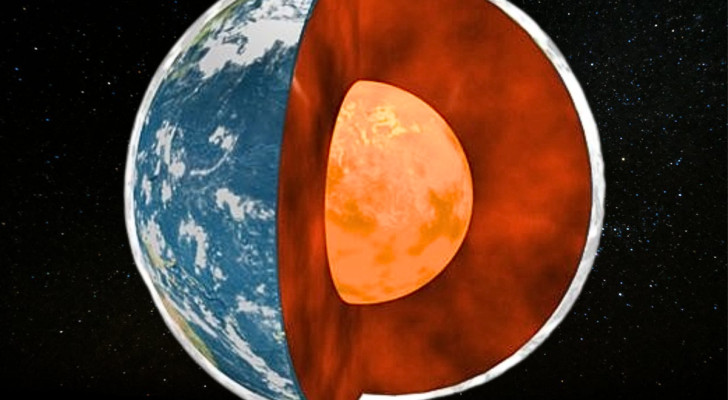
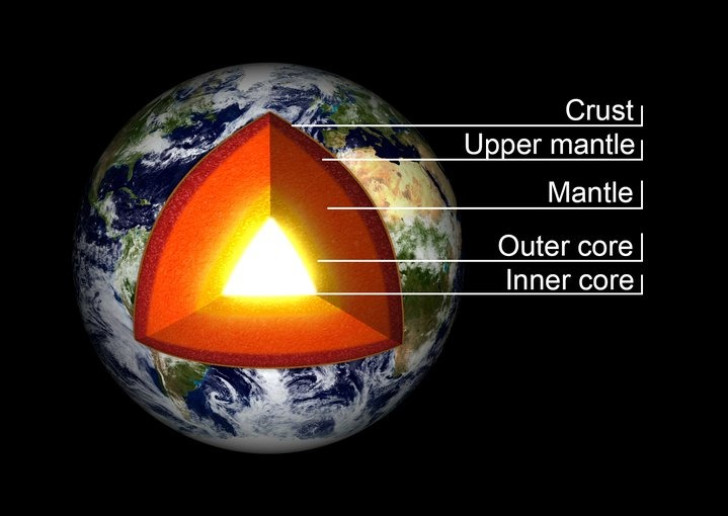
De lagen van de aarde, inclusief de binnenkern

NASA/JPL-Université Paris Diderot - Institut de Physique du Globe de Paris / Pexels

De binnenkern vertraagt ​​al meer dan tien jaar, bevestigt een nieuwe studie. Wat veroorzaakt dit fenomeen en wat kan er in de toekomst gebeuren?

De binnenkern draait nu langzamer dan het aardoppervlak

In het centrum van onze aarde bevindt zich een vaste, dichte, hete binnenkern, bestaande uit ijzer en kleine hoeveelheden nikkel. De straal bedraagt ​​1.221 kilometer en de temperaturen bereiken die van het zonneoppervlak, rond de 5.200°. Dergelijke hitte is voldoende om ijzer te smelten, maar de enorme druk van de planeet zorgt ervoor dat de binnenkern vast blijft. De druk bedraagt ​​bijna 3,6 miljoen atmosfeer.

De kern roteert in dezelfde richting als het aardoppervlak, maar iets sneller, waardoor elk millennium een ​​volledige rotatie meer wordt bereikt. Tenminste, dat dachten wij, of dat was tot enkele jaren geleden zo. Nu heeft een nieuw onderzoek, uitgevoerd door het team van wetenschappers van de Universiteit van Zuid-Californië, aangetoond dat het hart van onze planeet zijn rotatie heeft vertraagd en dat het proces al in 2010 begon. Het onderzoek bevestigde dat nu dus de binnenkern langzamer roteert dan het aardoppervlak.

Waarom de binnenkern van de aarde langzamer beweegt

Dwarsdoorsnede van de verschillende lagen van de aarde

NASA (ADAPTED FROM GODDARD MEDIA STUDIOS)

De kwestie van de beweging van de kern is al twintig jaar omstreden: verschillende onderzoeken beweerden dat de rotatie van de kern groter was dan die van het aardoppervlak. De nieuwe studie bewijst echter onomstotelijk dat dit niet langer het geval is.

John Vidale, hoogleraar aardwetenschappen aan het USC Dornsife College of Letters, Arts and Sciences, zei: "Toen ik voor het eerst de seismogrammen zag die deze verandering suggereerden, was ik verbaasd, maar toen we nog twee dozijn waarnemingen vonden die op hetzelfde patroon wezen, was het resultaat onvermijdelijk. De binnenkern was voor het eerst in vele decennia vertraagd. Andere wetenschappers hebben onlangs soortgelijke en andere modellen beargumenteerd, maar onze laatste studie biedt de meest overtuigende resolutie.”

Maar waarom is de rotatie van de binnenkern van de aarde vertraagd? Wetenschappers denken dat dit fenomeen te wijten is aan de beweging van de aardmantel, die de afgelopen veertig jaar iets langzamer is geworden in plaats van andersom.

Seismische golven onthullen de beweging van de binnenkern

Deze vaste bol, omringd door zijn vloeibare buitenkern die ook uit ijzer en nikkel bestaat, ligt meer dan 4.800 km onder de grond en het is een echte uitdaging om hem te bereiken. Om de beweging ervan te begrijpen, zijn wetenschappers afhankelijk van seismische golven. Voor het nieuwe onderzoek maakten Vidale en Wei Wang van de Chinese Academie van Wetenschappen gebruik van de golven van herhaalde seismische gebeurtenissen, dat wil zeggen gebeurtenissen die in hetzelfde gebied plaatsvonden en identieke seismogrammen opleverden.

De onderzoekers kozen als locatie de Britse Zuidelijke Sandwicheilanden, waar zich tussen 1991 en 2023 121 seismische episodes voordeden. Met behulp van gegevens van kernproeven kwamen ze tot de conclusie dat de vertraging van de binnenkern werd veroorzaakt door de vermenging van de vloeibare buitenkern, die een groot deel van het magnetische veld van de aarde genereert, maar ook door de zwaartekracht van de rotsachtige mantel.

Voorlopig blijven de gevolgen voor het aardoppervlak pure theorie: Vidale schat dat deze verandering de duur van een dag met slechts een paar fracties van een seconde kan veranderen, dus onmerkbaar, maar toekomstig onderzoek zal meer duidelijkheid verschaffen over de kwestie en over waarom de kern zijn rotatie precies vertraagt.

{ https://www.curioctopus.nl/ }

Hoe vind je dit bericht?
Geschreven door peter om 21:07 Stuur door

The Pentagon’s UFO Secrets Exposed: The Truth Behind the Alien Autopsy

The Pentagon’s UFO Secrets Exposed: The Truth Behind the Alien Autopsy

Breaking News: The Pentagon's Hidden UFO Secrets Exposed!

In a stunning revelation, researchers have uncovered a hidden Pentagon report on UFOs that has set off a wave of investigations and debates. This report has rekindled interest in the infamous alien autopsy and the mysterious events in Roswell, New Mexico, in 1947.

The Alien Autopsy Controversy

One of the most persistent mysteries in UFO research is the alien autopsy film. This film has resurfaced repeatedly, most recently due to a series of leaked emails involving prominent figures in the UFO research community. Among these figures is Dr. Kit Green, a former CIA employee who is both a medical doctor and a PhD. According to an 11-page document, Green was shown a film in the 1980s that closely resembled the alien autopsy footage released in 1995.

These leaked emails, sent to billionaire Bob Bigelow, were meant to remain confidential. They describe how Green and other scientists, working under the National Institute for Discovery Science (NIDS), believed the alien autopsy film to be authentic at the time. Green, in particular, concluded that the film was genuine based on his expertise and previous exposure to similar footage during a Pentagon briefing in the late 1980s.

Verification and Doubts

The authenticity of the leaked emails has been confirmed by several sources, though the opinions on the alien autopsy film have evolved over time. Initially, many in the UFO research community, including Green, considered the film to be real. However, subsequent evaluations led some to believe the film was a hoax, causing significant embarrassment among those who had vouched for its authenticity.

Dr. Kit Green’s evaluation of the film was particularly noteworthy. He provided a medical opinion on the procedures depicted in the film, suggesting that despite minor inaccuracies, the overall presentation seemed genuine. This opinion was shared in internal communications within the CIA, further complicating the narrative.

The Roswell Connection

The alien autopsy film is closely tied to the Roswell incident, another cornerstone of UFO lore. The leaked emails revealed that internal CIA communications had discussed the film and its potential authenticity, with some officials believing the footage was real. This has reignited debates among UFO researchers about the events in Roswell and the possibility of a government cover-up.

A Hoax Unveiled

Despite the initial belief in its authenticity, further investigations into the origins of the alien autopsy film have revealed a more prosaic truth. The film was not the work of a mysterious military cameraman but a creation by Keith Bateman and his colleagues at AK Music in the early 1990s. This revelation came from Bateman himself, who described how the film was made using rudimentary special effects and local actors.

The film, initially shot in color and later altered to appear aged and damaged, was presented to Ray Santilli, who then used it as a basis for the infamous alien autopsy footage. Santilli’s claims of having met a military cameraman and possessing genuine alien autopsy film have been debunked by those involved in the production.

The Impact and Legacy

The alien autopsy film, despite being exposed as a hoax, had a profound impact on the UFO community and popular culture. It demonstrated how easily even seasoned researchers and experts could be misled by convincing fabrications. The leaked emails and the ensuing controversy highlight the ongoing fascination with UFOs and the quest for truth in this enigmatic field.

VIDEO:

The Pentagon’s hidden UFO secrets, as exposed through these revelations, offer a cautionary tale about the complexities of UFO research and the potential for misinformation. While the alien autopsy film has been debunked, the interest in UFOs and the search for extraterrestrial life continue to captivate researchers and the public alike. As new information comes to light, the debate over what really happened in Roswell and beyond will undoubtedly persist, fueling both skepticism and belief in the unexplained mysteries of our universe.

{ https://www.latest-ufo-sightings.net/ }

Hoe vind je dit bericht?
Geschreven door peter om 20:33 Stuur door

Satellites are Going to Track Garbage Drifting Across the Oceans

Map of the Mediterranean Sea with the locations of the accumulations of marine litter detected thanks to the European satellite Copernicus Sentinel-2. Each red circle represents an accumulation detected between June 2015 and September 2021 (in blue, the urban and industrial areas of the river countries). (Image credit: M. Arias/A. Cózar/CSIC)

Satellites are Going to Track Garbage Drifting Across the Oceans

We are all too aware of the pollution on planet Earth. There are increased amounts of plastic and garbage on the world’s beaches and debris littering the oceans. Until now, it was thought that satellites weren’t capable of tracking marine debris but a supercomputer algorithm challenges that. 300,000 images were taken every three days at a resolution of 10 metres and were able to identify large concentrations of debris. 

Upper estimates of plastic in our oceans peak at around 200 million tons! Every day it is believed another 8 million pieces of plastic make their way into the marine environment. Now, a study led by a team at the Institut de Ciencies del Mar at the University of Cadiz believe it may be possible to study and track the surface debris in the oceans. Using supercomputers and advanced algorithms, the team have shown that satellites can indeed be used. 

Using data from the European Copernicus Sentinel-2 satellite, a total of 300,000 images of the Mediterranean Sea were analysed. The images were taken every 3 days at a resolution of 10 metres. Typically of course, there is not much debris in the sea which is that big but accumulations of debris have grown to that size. The aggregations are known as ‘windrows’ and have built up as ocean currents and winds bring debris together to form large structures. 

The output from the study reveals the most polluted areas of the Mediterranean and the main entry points from the mainland. It will help us to improve our understanding of the processes and mechanisms that transport debris across the ocean and even help us to perhaps predict movement. The results also show that the amount of debris in the Mediterranean covers around 95 square kilometres.

Eastern Mediterranean Sea Area June 1993 Eastern Mediterranean Sea Area June 1993

Unfortunately the research does not help resolve the issue of pollution but it does help us understand the scale. The team propose future satellites should be equipped with detectors to monitor the debris. It would increase the ability to detect plastic in the open ocean by a factor of 20 and help to model the impact of marine pollution on first, tourism and the marine ecosystem. 

One element of the studies conclusion is that population density, geography and rainfall patterns play an important part in the accumulation of marine litter. Dry arid lands like deserts that play host to cities seem to contribute much less to marine litter while those that are much more temperate with higher rainfall seem to contribute more. 

It is also interesting to note that the majority of litter that originates from land masses seems to be confined to 15 kilometres form the coast and subsequently returns after a few days of months. The team conclude that satellite based monitoring is an essential element in our battle against litter in the ocean. The technology can also be used for the detection of other floating objects such as the loss of ships, oil spills and even search and rescue elements. 

Source : 

 { https://www.universetoday.com/ }

Hoe vind je dit bericht?
Geschreven door peter om 23:37 Stuur door

Satellites are Going to Track Garbage Drifting Across the Oceans

Map of the Mediterranean Sea with the locations of the accumulations of marine litter detected thanks to the European satellite Copernicus Sentinel-2. Each red circle represents an accumulation detected between June 2015 and September 2021 (in blue, the urban and industrial areas of the river countries). (Image credit: M. Arias/A. Cózar/CSIC)

Satellites are Going to Track Garbage Drifting Across the Oceans

We are all too aware of the pollution on planet Earth. There are increased amounts of plastic and garbage on the world’s beaches and debris littering the oceans. Until now, it was thought that satellites weren’t capable of tracking marine debris but a supercomputer algorithm challenges that. 300,000 images were taken every three days at a resolution of 10 metres and were able to identify large concentrations of debris. 

Upper estimates of plastic in our oceans peak at around 200 million tons! Every day it is believed another 8 million pieces of plastic make their way into the marine environment. Now, a study led by a team at the Institut de Ciencies del Mar at the University of Cadiz believe it may be possible to study and track the surface debris in the oceans. Using supercomputers and advanced algorithms, the team have shown that satellites can indeed be used. 

Using data from the European Copernicus Sentinel-2 satellite, a total of 300,000 images of the Mediterranean Sea were analysed. The images were taken every 3 days at a resolution of 10 metres. Typically of course, there is not much debris in the sea which is that big but accumulations of debris have grown to that size. The aggregations are known as ‘windrows’ and have built up as ocean currents and winds bring debris together to form large structures. 

The output from the study reveals the most polluted areas of the Mediterranean and the main entry points from the mainland. It will help us to improve our understanding of the processes and mechanisms that transport debris across the ocean and even help us to perhaps predict movement. The results also show that the amount of debris in the Mediterranean covers around 95 square kilometres.

Eastern Mediterranean Sea Area June 1993 Eastern Mediterranean Sea Area June 1993

Unfortunately the research does not help resolve the issue of pollution but it does help us understand the scale. The team propose future satellites should be equipped with detectors to monitor the debris. It would increase the ability to detect plastic in the open ocean by a factor of 20 and help to model the impact of marine pollution on first, tourism and the marine ecosystem. 

One element of the studies conclusion is that population density, geography and rainfall patterns play an important part in the accumulation of marine litter. Dry arid lands like deserts that play host to cities seem to contribute much less to marine litter while those that are much more temperate with higher rainfall seem to contribute more. 

It is also interesting to note that the majority of litter that originates from land masses seems to be confined to 15 kilometres form the coast and subsequently returns after a few days of months. The team conclude that satellite based monitoring is an essential element in our battle against litter in the ocean. The technology can also be used for the detection of other floating objects such as the loss of ships, oil spills and even search and rescue elements. 

Source : 

 { https://www.universetoday.com/ }

Hoe vind je dit bericht?
Geschreven door peter om 23:37 Stuur door

Will Space Tourists Be Getting Heart Attacks in Space?

Crew Dragon docking with ISS

Will Space Tourists Be Getting Heart Attacks in Space?

Astronauts are considered by many to be an elite bunch of people; healthy, fit and capable in many disciplines. Went they travel into space they can face health issues related to weightlessness from reduction in bone density to issues with their eyesight. These are people at the peak of physical fitness but what will happen to the rest of us when space tourism really kicks off. It is likely that anyone with underlying health issues could worsen in space. A new study suggests those with cardiovascular issues may suffer heart failure in space!

Space travel and automatic intelligence (AI) are two fabulously interesting topics. Combine them and you have a fascinating story. Dr Lex Van Loon from the Australian National University has been using AI and mathematical models to explore human physiology and the impact of space exploration. In a recent study he created digitally identical AI twins, one with an underlying heart condition. 

The interest driving the study is the advancement toward space tourism and the opening up of space to those less physically fit than astronauts. As space travel becomes more available to the mass population we will start to see a shift in demographic of space travellers to older, more wealthy individuals but they are more likely to have health issues. We will eventually see people with a whole multitude of conditions wanting to holiday in space, but what are the likely impacts. 

iss040e006105-gerst-ared-1024x680.jpg

ESA astronaut Alexander Gerst gets a workout on the Advanced Resistive Exercise Device (ARED). Credit: NASA

Microgravity causes a redistribution of fluids around the body and can cause conditions like ‘puffy face bird leg syndrome.’ The name aptly describes the effect, the face swells up and the legs thin. It results in an increase in venous pressure in the upper body, this is fine for healthy people but heart failure sufferers are at a much higher risk. Given that there are over 100 million people around the world that suffer heart failure it is essential this is explored. 

Looking at the wide spectrum of heard failure, conditions can be grouped into two categories; a weak hart that cannot pump effectively and a heart that cannot relax and fill properly. All possible conditions need to be studied with specific ways to treat and mitigate the risk during space travel. 

This is a study that is difficult to collect real data in space so we have to turn to computer modelling to simulate the effects. The team led by Dr Loon showed that a microgravity environment leads to an increase in cardiac output (the quantity of blood pumped by the heart in a given period of time.) This is not a problem for most people but with heart failure patients it is accompanied by a rise in pressure in the left atrial region of the heart, to dangerous levels. If left unchecked, it can lead to a condition where fluid accumulates in the lungs known as a pulmonary edema, making it difficult to breathe!

With the increase in corporate interest in space travel, space tourism is slowly becoming a reality. People can already pay for trips into space but as costs come down, the number of people heading out into space will increase. Eventually, trips into space will be as common as trips to other countries. It is imperative we understand the impact on our health and what we can do to make space as widely accessible as possible without putting our health at risk. 

Source : 

 { https://www.universetoday.com/ }

Hoe vind je dit bericht?
Geschreven door peter om 23:28 Stuur door

Meer van UFO'S of UAP'S, ASTRONOMIE, RUIMTEVAART, ARCHEOLOGIE, OUDHEIDKUNDE, SF-SNUFJES EN ANDERE ESOTERISCHE WETENSCHAPPEN - DE ALLERLAATSTE NIEUWTJES

↑ Terug naar de berichten