Naar de inhoud

UFO'S of UAP'S, ASTRONOMIE, RUIMTEVAART, ARCHEOLOGIE, OUDHEIDKUNDE, SF-SNUFJES EN ANDERE ESOTERISCHE WETENSCHAPPEN - DE ALLERLAATSTE NIEUWTJES

UFO's of UAP'S in België en de rest van de wereld
akke.beakke.be
Ontdek de Fascinerende Wereld van UFO's en UAP's: Jouw Bron voor Onthullende Informatie! Ben jij ook gefascineerd door het onbekende? Wil je meer weten over UFO's en UAP's, niet alleen in België, maar over de hele wereld? Dan ben je op de juiste plek! België: Het Kloppend Hart van UFO-onderzoek In België is BUFON (Belgisch UFO-Netwerk) dé autoriteit op het gebied van UFO-onderzoek. Voor betrouwbare en objectieve informatie over deze intrigerende fenomenen, bezoek je zeker onze Facebook-pagina en deze blog. Maar dat is nog niet alles! Ontdek ook het Belgisch UFO-meldpunt en Caelestia, twee organisaties die diepgaand onderzoek verrichten, al zijn ze soms kritisch of sceptisch. Nederland: Een Schat aan Informatie Voor onze Nederlandse buren is er de schitterende website www.ufowijzer.nl, beheerd door Paul Harmans. Deze site biedt een schat aan informatie en artikelen die je niet wilt missen! Internationaal: MUFON - De Wereldwijde Autoriteit Neem ook een kijkje bij MUFON (Mutual UFO Network Inc.), een gerenommeerde Amerikaanse UFO-vereniging met afdelingen in de VS en wereldwijd. MUFON is toegewijd aan de wetenschappelijke en analytische studie van het UFO-fenomeen, en hun maandelijkse tijdschrift, The MUFON UFO-Journal, is een must-read voor elke UFO-enthousiasteling. Bezoek hun website op www.mufon.com voor meer informatie. Samenwerking en Toekomstvisie Sinds 1 februari 2020 is Pieter niet alleen ex-president van BUFON, maar ook de voormalige nationale directeur van MUFON in Vlaanderen en Nederland. Dit creëert een sterke samenwerking met de Franse MUFON Reseau MUFON/EUROP, wat ons in staat stelt om nog meer waardevolle inzichten te delen. Let op: Nepprofielen en Nieuwe Groeperingen Pas op voor een nieuwe groepering die zich ook BUFON noemt, maar geen enkele connectie heeft met onze gevestigde organisatie. Hoewel zij de naam geregistreerd hebben, kunnen ze het rijke verleden en de expertise van onze groep niet evenaren. We wensen hen veel succes, maar we blijven de autoriteit in UFO-onderzoek! Blijf Op De Hoogte! Wil jij de laatste nieuwtjes over UFO's, ruimtevaart, archeologie, en meer? Volg ons dan en duik samen met ons in de fascinerende wereld van het onbekende! Sluit je aan bij de gemeenschap van nieuwsgierige geesten die net als jij verlangen naar antwoorden en avonturen in de sterren! Heb je vragen of wil je meer weten? Aarzel dan niet om contact met ons op te nemen! Samen ontrafelen we het mysterie van de lucht en daarbuiten.

Archief

IN THE REMOTE ARCTIC, GIANT “INVISIBLE” LIFEFORMS HAVE BEEN DISCOVERED LURKING ON GREENLAND’S ICE SHEET

1xxUJ2TH?format=jpg&name=900x900


(Unsplash)

IN THE REMOTE ARCTIC, GIANT “INVISIBLE” LIFEFORMS HAVE BEEN DISCOVERED LURKING ON GREENLAND’S ICE SHEET

Scientists have made an unexpected discovery on Greenland’s far northern Arctic ice sheet.

As the frozen environment awakens in the spring after the months it spends blanketed in darkness each year, signs of life begin to return to Greenland’s icy landscape. Several large animals, including the region’s polar bears, arctic terns, and musk oxen, begin to stir as sunlight warms the frozen Earth.

Now, scientists have learned that those aren’t the only massive lifeforms that dwell on Greenland’s ice, although new research is revealing how others have remained undiscovered for so long.

GREENLAND’S INVISIBLE “GIANTS”

Researchers studying Greenland’s icy ecosystem report the new discovery of gigantic viruses thriving on the region’s Arctic ice. These viruses could help manage local algal blooms and may even reduce the speed at which ice melts.

Lying dormant on the ice during the months, Greenland remains in darkness. As spring arrives, algae begin to bloom, causing large darkened areas on the ice sheet. This reduces the sunlight it reflects and induces faster melting, a process that could contribute to global warming.

Laura Perini, a postdoctoral researcher from the Department of Environmental Science at Aarhus University, says the giant viruses she and her colleagues have discovered living alongside these Arctic algae may be acting as a natural control mechanism that helps to curb their blooms.

“We don’t know a lot about the viruses, but I think they could be useful in alleviating ice melting caused by algal blooms,” Perini said in a statement. “How specific they are and how efficient it would be, we do not know yet. But by exploring them further, we hope to answer some of those questions.”

At as little as 20 nanometers in size, viruses are generally much smaller than bacteria. However, the viruses Perini and her colleagues have discovered in Greenland are massive by comparison, capable of growing to sizes as much as 2.5 micrometers, making these “giant” viruses larger than most bacteria.

These invisible giants lurking on Greenland’s ice sheet aren’t the only unusually large viruses known to scientists. In 1981, similar massive viruses were discovered in oceanic environments. Like their icy cousins, these giant viruses also infected green ocean algae. Additional examples have also been found on land, and even a few varieties are known to dwell in our bodies.

Still, Perini and her team’s discovery marks the first time that giant viruses have been found thriving on surface ice, subsisting off of microalgae dwelling in snow. These curious organisms were found in dark ice, as well as samples of red snow that the team analyzed.

The new findings challenge past notions that the Arctic landscape was barren and devoid of life. Scientists today recognize it as an ecosystem where bacteria, filamentous fungi, yeasts, protists, and giant viruses thrive and interact.

“There’s a whole ecosystem surrounding the algae. Besides bacteria, filamentous fungi and yeasts, there are protists eating the algae, different species of fungi parasitizing them, and the giant viruses that we found, infecting them,” Perini says.

  • re massive in comparison to other viruses, these newly discovered arctic “giants” are still invisible to the naked eye. They might have gone unnoticed if Perini had not discovered them while analyzing DNA in the samples her team collected, where sequences similar to other known giant viruses were observed.

Although they aBy extracting and sequencing mRNA from their samples, Perini and her team confirmed that viruses were present and living on the ice.

Unlike normal viruses, giant viruses can transcribe their DNA into mRNA themselves, whereas smaller varieties have to rely on hijacking the cells of their hosts. Many questions remain about these unusually large viruses, including what ecological roles they play and about their specific hosts.

Further studies are expected to reveal how these giant viruses interact in their Arctic ecosystem, and in the months ahead, Perini and her team plan to publish additional research on how these viruses infect microalgae, which could help to reveal new insights into the curious, “invisible” giants that thrive on the Greenland Ice Sheet.

Perini and her team’s paper, “Giant viral signatures on the Greenland ice sheet,” was published in the journal Microbiome in May.

{ https://youtu.be/WWvWSvEWnKs }

Hoe vind je dit bericht?
Geschreven door peter om 17:54 Stuur door

Unveiling the US Government’s Secret Alien Interrogation Program: Jon Stewart’s Investigation

Unveiling the US Government’s Secret Alien Interrogation Program: Jon Stewart’s Investigation

The US Government has an Alien Interrogation Program

The idea of the U.S. government engaging in secretive programs involving extraterrestrial beings has long been a staple of conspiracy theories and speculative fiction. However, Jon Stewart, a former professional wrestler turned investigative journalist and political figure, claims to have uncovered evidence supporting the existence of such a program. Stewart’s meticulous investigation over two decades centers around an alleged interrogation of a Gray Alien captured on VHS tape from the early 1990s.

The Discovery and Investigation

In 1997, Jon Stewart stumbled upon a documentary featuring purported footage of an alien interrogation. This documentary, featuring a tan-colored Gray Alien experiencing apparent respiratory distress, captivated Stewart’s interest. Unlike typical Hollywood productions, the footage seemed unremarkable in its presentation, adding to its perceived authenticity. Intrigued by the casual nature of the video, Stewart sought expert opinions from video and animation professionals, all of whom failed to identify any signs of tampering or forgery.

Stewart’s quest for validation led him to consult with medical and military personnel allegedly involved in the interrogation. These interviews unveiled a narrative deeply intertwined with the clandestine activities of a faction within the military establishment, purportedly linked to the secretive S-4 facility within Area 51. The culmination of Stewart’s investigation led him to assert the authenticity of the leaked tape, believed to have been disseminated by an insider known as Victor.

The Whistleblower: Victor

Victor, a biologist employed by the Defense Intelligence Agency (DIA), played a central role in Stewart’s investigation. Victor’s responsibilities included managing the alien interrogation and retention program at S-2 Alpha, a facility south of Area 51. According to Stewart, Victor was the caretaker of six deceased Eban beings stored in glass tubes filled with liquid. His duties also involved educating dignitaries, military personnel, and scientists about the extraterrestrials and their preservation.

Victor’s revelations extended beyond his role at S-2 Alpha. He claimed to have interacted with high-profile figures such as Dick Cheney and Donald Rumsfeld, discussing the deceased aliens. Despite his efforts to bring this information to light, Victor expressed frustration in a 2008 documentary about the lack of interest from the ufology community in verifying his claims or the existence of S-4.

The Alien Interrogation Footage

The footage that sparked Stewart’s investigation depicted an alien being interrogated by intelligence officers through telepathic means. Medical personnel attended to the alien, which appeared to be in distress. The video included a digital overlay with the initials “DNI SL-27,” suggesting the involvement of the Department of Naval Intelligence (DNI). This department, although officially non-existent, was mentioned by a U.S. senator in a manner that reinforced the video’s credibility for Stewart.

The alien, described as a hybrid of organic and synthetic material, exhibited unique physical characteristics such as round eyes and a tan complexion, deviating from the typical portrayal of Gray Aliens. The being’s movements, described as mechanical and puppet-like, further fueled the authenticity claims, as these characteristics aligned with descriptions from other alleged encounters with Gray Aliens.

Speculations and Theories

Throughout his investigation, Stewart encountered various theories regarding the nature and origin of these extraterrestrial beings. One prevalent theory suggests that these aliens are interdimensional travelers capable of traversing space and time by bending the fabric of the universe. Others believe that the Grays are synthetic entities created by other extraterrestrial races to serve as scouts or explorers.

The motivations behind the alleged alien presence on Earth remain a topic of debate. While some experts speculate that these beings have benevolent intentions, others suggest a more ominous perspective, viewing them as demonic entities with a hidden agenda. This dichotomy of beliefs reflects the broader uncertainty and fear surrounding the extraterrestrial phenomenon.

The Government’s Stance and Implications

Stewart’s investigation raises critical questions about the U.S. government’s knowledge and involvement in extraterrestrial activities. The reluctance to disclose information and the alleged use of advanced alien technology to maintain global dominance suggest a complex web of secrecy. According to Stewart, the government’s monopoly on alien technology provides a strategic advantage, making the U.S. military 15 to 20 years more advanced than its global counterparts.

The potential benefits of alien technology extend beyond military applications. Innovations such as zero-point energy and advanced medical treatments could revolutionize various sectors, from energy to healthcare. However, the fear of losing control over these technologies and the societal upheaval they might cause has likely contributed to the continued secrecy.

VIDEO:

Jon Stewart’s investigation into the U.S. government’s alleged alien interrogation program presents a compelling narrative that challenges conventional understanding. While the authenticity of the footage and the existence of such a program remain subjects of debate, Stewart’s findings underscore the need for greater transparency and openness in discussing extraterrestrial phenomena. As the quest for truth continues, the hope remains that one day, humanity will have a clearer understanding of its place in the cosmos and the potential interactions with otherworldly beings.

{ https://www.latest-ufo-sightings.net/ }

Hoe vind je dit bericht?
Geschreven door peter om 17:37 Stuur door

LIFTOFF! WATCH BOEING STARLINER’S HISTORIC LAUNCH THROUGH THESE 7 PHOTOS

LIFTOFF! WATCH BOEING STARLINER’S HISTORIC LAUNCH THROUGH THESE 7 PHOTOS

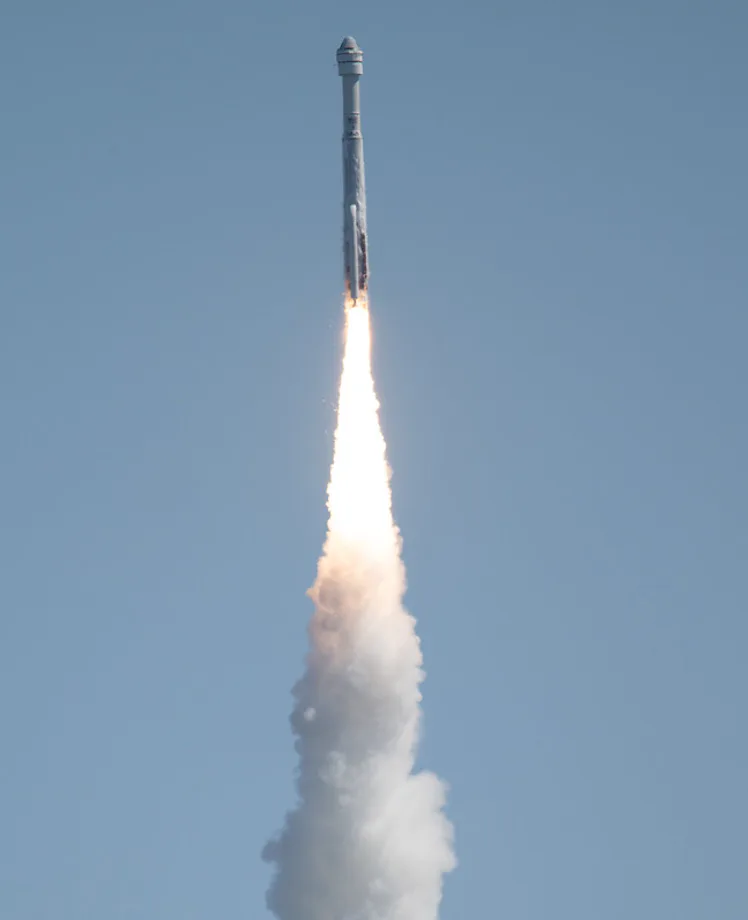
An Atlas-class rocket hasn’t sent humans into space since the Mercury program’s final flight 61 years ago.

 
The United Launch Alliance (ULA) Atlas V rocket with Boeing's CST-100 Starliner spacecraft launches ...
MIGUEL J. RODRIGUEZ CARRILLO/AFP/Getty Images

NASA now has a backup plan for space travel.

When Boeing Starliner launched at 10:52 a.m. Eastern on Wednesday from Space Launch Complex 41 at Cape Canaveral Space Force Station, so began the critical first chapter of the company’s Crew Flight Test.

Astronauts Butch Wilmore and Suni Williams flew at 17,500 miles per hour northbound along the U.S. East Coast, towards Ireland, and over the Mediterranean Sea before entering orbit around Earth.

If Starliner aces the checks, docking with the International Space Station, reentry and landing in this next week, it will become the second U.S. human-rated spacecraft capable of ferrying astronauts into orbit.

Watch Wednesday’s historic launch, in pictures.

CAPE CANAVERAL, FL - JUNE 05:  (EDITOR’S NOTE: This Handout image was provided by a third-party orga...

NASA/GETTY IMAGES NEWS/GETTY IMAGES

NASA astronauts Butch Wilmore and Suni Williams bid farewell to a crowd, which included their family and friends, by giving away flowers and tossing out mission patches. Astronaut Doug Wheelock (not pictured) was also in the crowd, taking video and photos for their families to remember the moment. Soon after, Wilmore and Williams boarded a van to reach the Boeing Starliner “Calypso” spacecraft for the Crew Flight Test launch.

CAPE CANAVERAL, FLORIDA - JUNE 05: Boeing’s Starliner spacecraft atop a United Launch Alliance Atlas...

JOE RAEDLE/GETTY IMAGES NEWS/GETTY IMAGES

Boeing Starliner and its two passengers launched atop a United Launch Alliance Atlas V rocket from Cape Canaveral, Florida. Not since the Mercury program’s final flight 61 years ago has an Atlas-class rocket sent humans into space, according to NASA

A rocket, still close to the ground, ignites its engines to create a fiery plume. The sky above is c...

NASA/JOEL KOWSKY

A view of the Starliner launch from another angle. Starliner launched on a flat trajectory up northward, wrapping around the Atlantic Ocean into Europe, to ensure astronaut safety

A tall slender rocket flies through a cloudless sky. The plume tail is longer than the rocket. The a...

(NASA/JOEL KOWSKY)

About 45 seconds after launch, the spacecraft reached the speed of sound (Mach 1).

CAPE CANAVERAL, FLORIDA - JUNE 05: Boeing’s Starliner spacecraft atop a United Launch Alliance Atlas...

JOE RAEDLE/GETTY IMAGES NEWS/GETTY IMAGES

“Suni and I are honored to share this dream of spaceflight with each and every one of you,” Wilmore said from inside the Starliner, five minutes before launch.

“Let’s go Calypso! Take us to space, and back!” Williams said.

CAPE CANAVERAL, FLORIDA - JUNE 05: Boeing’s Starliner spacecraft atop a United Launch Alliance Atlas...

JOE RAEDLE/GETTY IMAGES NEWS/GETTY IMAGES

Williams and Wilmore will dock with the forward port of the ISS Harmony module at 12:15 a.m. Eastern time, with a hatch opening around 2:00 p.m. Eastern, according to NASA.

The United Launch Alliance (ULA) Atlas V rocket with Boeing's CST-100 Starliner spacecraft launches ...

GREGG NEWTON/AFP/GETTY IMAGES
The next step is certification. Williams and Wilmore will conduct a series of manual tests, and evaluate the performance of Starliner all the way through landing in the U.S. southwest in about one week.

Once Starliner is certified, NASA will have dissimilar redundancy in space, two different options to launch and return astronauts to and from humanity’s farthest human outpost.

{ https://www.inverse.com/ }

Hoe vind je dit bericht?
Geschreven door peter om 17:17 Stuur door

Metal is 3D Printed on the Space Station

S-curve 3D printing on the ISS

Metal is 3D Printed on the Space Station

I have always wanted a 3D printer but never quite found a good enough reason to get one. Seeing that NASA are now 3D printing metal is even more tantalising than a plastic 3D printer. However, thinking about it, surely it is just a computer controlled soldering iron! I’m sure it’s far more advanced than that! Turns out that the first print really wasn’t much to right home about, just an s-curve deposited onto a metal plate! It does however prove and demonstrate the principle that a laser can liquify stainless steel and then deposit it precisely in a weightless environment. 

First metal 3D printing on Space Station

“This S-curve is a test line, successfully concluding the commissioning of our Metal 3D Printer,” 

Arguably 3D printers have revolutionised manufacturing and prototyping industry.   The invention of them has been attributed to Chuck Hull who in 1983 but it’s more true to say he laid the foundations. Hull developed a technique known as stereolithography which involved creating 3D objects by curing thin layers of a photopolymer with UV light. The 3D printers that are commercially available came 5 years later in 1988.

NASA and ESA have been interested in 3D printing in space to make repair/improvement engineering far cheaper, sustainable and timely. Instead of waiting for parts to be shipped up to the ISS. To that end there has been a more conventional plastic 3D printer on board the ISS since 2014 because a 3D printed replacement is far simpler and more cost effective. Indeed ESA are trying to create a circular space economy to recycle materials already in orbit. It makes far more sense to repurpose existing materials in orbit – such as metal from old satellites – to make new tools or parts removing the need for rocket launches to transport them.

3d_printer_in_space-1024x768.jpg

In November 2014, NASA astronaut Butch Wilmore installed a 3-D printer made by Made in Space in the Columbus laboratory’s Microgravity Science Glovebox on the International Space Station. Credit: NASA TV

The metal printer that is now on board the International Space Station employs stainless steel wire being fed onto the medium being printed upon. A high power laser which is a million times more powerful than a laser pointer then heats it up melting a small section. As the steel wire feeds into the melt pool it melts, adding to the metal, making it slightly raised. 

Unlike a 3D printer you may have (or I may be trying to justify) which you can control from your own computer, the printer on ISS is controlled entirely from the ground. The crew do have tasks however, they have to open a nitrogen and venting valve before the printing can start. I guess it’s almost the equivalent of putting the paper in your printer at home! 

The printer was developed by a team led by Airbus under the ESA Directorate of the Human and Robotic Exploration contract. It arrived on the ISS in January 2024 where the 180kg printer was installed in the ESA Columbus Module. 

++++

The next step for the printer is to print four shapes that have been chosen for full-scale 3D printing. They will then be returned to Earth for analysis and comparison against reference prints already created in normal gravity. The teams hope to explore how microgravity impacts 3D printing. Two of the 3D printed parts will go to the Materials and Electrical Components Lab at ESTEC in Netherlands. The other two will go to the European Astronaut Centre at the Technical University of Denmark.

Source : 

{https://www.universetoday.com/ }

Hoe vind je dit bericht?
Geschreven door peter om 01:53 Stuur door

“ALIEN WORLD” REVEALED IN MOST DETAILED MAP OF THE HUMAN BRAIN CREATED BY GOOGLE AND HARVARD RESEARCHERS

1OWii8FW?format=jpg&name=900x900

“ALIEN WORLD” REVEALED IN MOST DETAILED MAP OF THE HUMAN BRAIN CREATED BY GOOGLE AND HARVARD RESEARCHERS

Researchers at Harvard and Google have produced the most detailed map of the human brain ever rendered, revealing the complicated neural interactions occurring within a tiny cubic millimeter sample of brain tissue.

The collaborative effort showcases the power of current electron microscopy paired with the ever-growing capabilities of artificial intelligence, and offers unique insights into neural connections in vivid imagery made available online by the researchers.

Within a single cubic millimeter of brain tissue are close to 57,000 cells, along with hundreds of synapses and blood vessels that, when reproduced in the Harvard and Google collaboration’s reconstructions, resulted in close to 1,400 terabytes of data.

The groundbreaking effort was led by Jeff Lichtman, Harvard’s Jeremy R. Knowles Professor of Molecular and Cellular Biology and newly appointed dean of science, offering an unprecedented glimpse at the intricacies of the human brain and its inner workings.

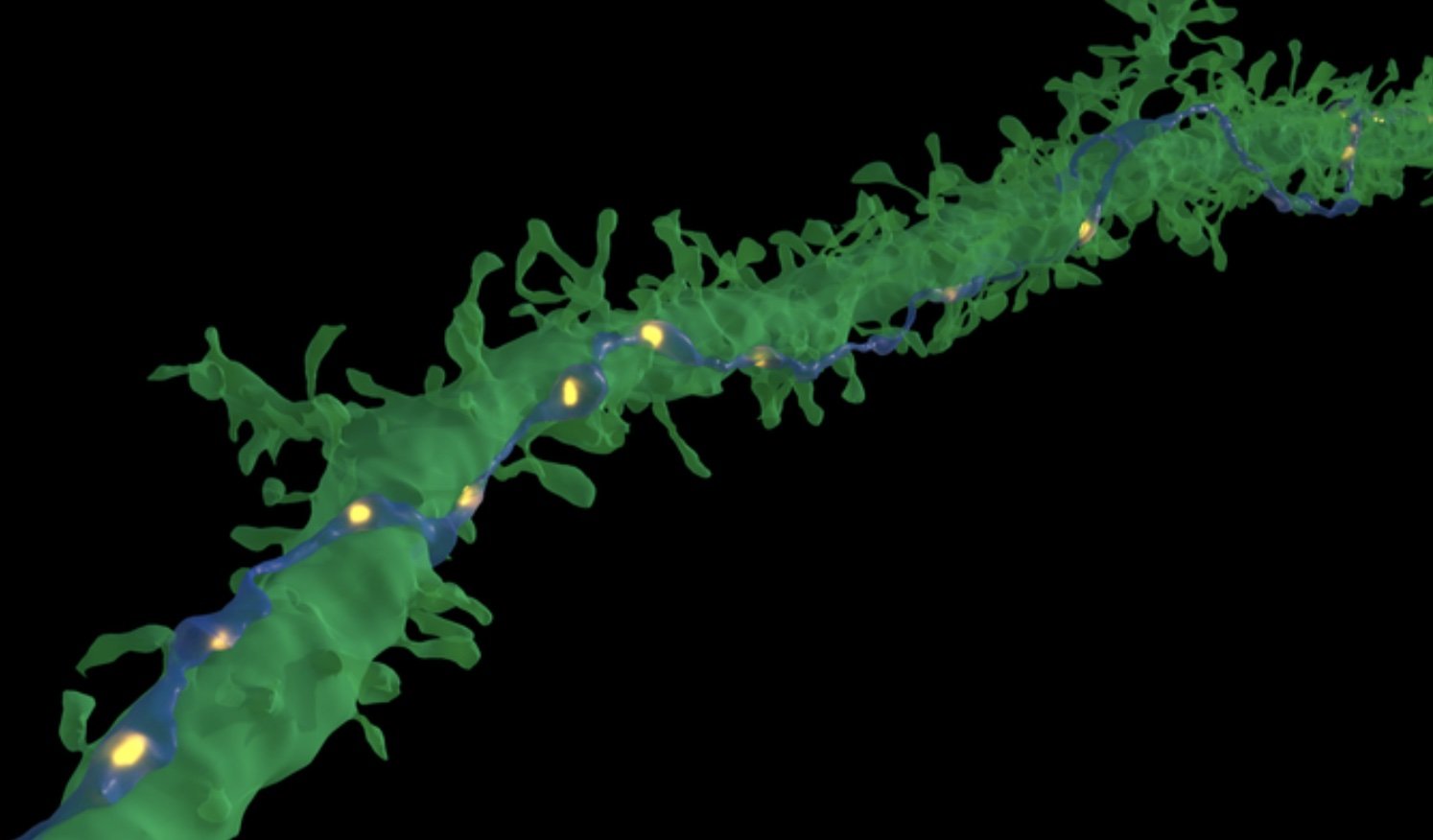
most detailed map Above: Never-before-seen “axon whorls”, shown in blue in the sample above, wer found to sometimes exist on the surface of another nerve cell, shown in yellow. Credit: Google Research & Lichtman Lab (Harvard University). Renderings by D. Berger (Harvard University).

A decade in the making, Lichtman and the Google team’s research combines electron microscopy with Google’s advanced AI in a meticulous reconstruction of the complexities of the brain, as outlined in a recent scientific study by Lichtman, along with former Harvard postdoctoral researcher Alexander Shapson-Coe, Michał Januszewski of Google Research, and Harvard postdoctoral researcher Daniel Berger as co-first authors.

Now, the newly unveiled brain map, which the researchers call a “connectome,” has revealed what Lichtman recently characterized as “an alien world inside your own head.”

In the newly published study, the authors say the functions occurring within our brains represent the key difference that separates us from other life on Earth. Despite this recognition, we currently possess a less-than-complete understanding of the intricate synaptic circuitry underlying these functions.

Enter Google Research’s Connectomics team, which, over the last decade, has worked toward using machine learning to construct a clearer picture of the human brain at previously unmatched scales. The result of this work allows researchers to produce visualizations of extremely large volumes of neural circuits at high resolutions, which could lead to entirely new discoveries about the way our brains function.

A limiting factor in this research involves the problems with obtaining high-quality samples of human brain tissue. Unlike other organ biopsies, brain biopsies rarely occur except when used to extract neoplastic masses, which aren’t ideal for creating visualizations of normal brain structure. In past attempts, brain organoids composed of human cells have been used, but since they lack cortical layers, they were unable to faithfully reproduce all of the features of real human brain tissue.

In their recent paper, the study’s authors proposed a new strategy involving the use of human brain tissue extracted during neurosurgical procedures, which they said “could be leveraged to study normal—and ultimately disordered—human neural circuits.”

unknown neuron connections Above: Lichtman and the research team report that on some occasions, a single axon, shown in blue, was found to make repeated synaptic connections, indicated by yellow areas in the image above, with a target neuron (shown in green). Presently, the researchers say the purpose of these tight connections is unknown. Credit: Google Research & Lichtman Lab (Harvard University). Renderings by D. Berger (Harvard University).

Lichtman obtained such a sample a decade ago. Smaller than a single grain of rice, the sample had been retrieved from the brain of a patient with severe epilepsy as part of a standard procedure where a small portion is removed to help reduce seizures and then analyzed to determine whether it is normal. Apart from the patient’s age and gender, Lichtman knew nothing else about the sample’s origins.

In their research, the team used electron microscopy to produce a massive set of very detailed images using this small piece of temporal cortex, which was only about 1 cubic millimeter in size. Then they analyzed the data with Google’s powerful AI, reconstructing thousands of neurons, over a hundred million synaptic connections, and other brain components like glial cells, blood vessels, and myelin.

The tremendous resulting trove of data, which revealed a previously unrecognized class of neurons hidden within deep layers of the tissue and “very powerful and rare multisynaptic connections between neurons throughout the sample,” was made available online, along with tools to aid other researchers in analyzing it. 

most detailed map Above: Clusters of cells are shown within the deepest layer of the cortex. Credit: Google Research & Lichtman Lab (Harvard University). Renderings by D. Berger (Harvard University).

“This work provides evidence of the feasibility of human connectomic approaches to visualize and ultimately gain insight into the physical underpinnings of normal and disordered human brain function,” the researchers write in their new study. “It is hoped that this endeavor will be aided by providing free access to all of the data and relevant tools.”

“Given the enormous investment put into this project, it was important to present the results in a way that anybody else can now go and benefit from them,” said Google Research collaborator Viren Jain of the team’s findings.

Supported by the National Institutes of Health BRAIN Initiative, this collaboration’s ultimate goal is to create a high-resolution map of a whole mouse brain’s neural wiring. This ambitious project will require approximately 1,000 times the data produced from the current 1-cubic-millimeter fragment of human cortex used by Lichtman and his collaborators in the recent research.

The team’s landmark paper, “A petavoxel fragment of human cerebral cortex reconstructed at nanoscale resolution,” was published in the journal Science on May 10, 2024.

{ https://thedebrief.org/category/science/ }

Hoe vind je dit bericht?
Geschreven door peter om 21:43 Stuur door

Belgen ontdekken ‘suikerspin-planeet’

Belgen ontdekken ‘suikerspin-planeet’

4d7046b0-985c-049e-2387-91c475049108.jpg

Een internationaal team van onderzoekers – waaronder ook wetenschappers van de universiteit van Luik – hebben een nieuwe planeet ontdekt: WASP-193b. En dat is een tamelijk bijzondere planeet; WASP-193b heeft namelijk ongeveer dezelfde dichtheid als een suikerspin.

WASP-193b bevindt zich op zo’n 1200 lichtjaar van de aarde. De planeet is 50 procent groter dan Jupiter, maar heeft een massa die zeven keer kleiner is dan die van Jupiter. Het betekent dat de planeet een zeer geringe dichtheid heeft; vergelijkbaar met de dichtheid van een suikerspin, zo stellen de onderzoekers.

Afwijking

WASP-193b gaat voor nu de boeken in als de op één na minst compacte planeet die tot op heden is ontdekt; alleen de eerder gespotte – maar wel veel kleinere – Kepler-51d heeft een nog lagere dichtheid. “De extreem lage dichtheid (van WASP-193b, red.) is wat de planeet echt doet afwijken van de meer dan 5000 andere exoplaneten die tot op heden zijn ontdekt,” vertelt onderzoeker Khalid Barkaoui.

Barkaoui en collega’s vingen een eerste glimp op van WASP-193b dankzij de zogenoemde Wide Angle Search for Planets (kortweg WASP). Binnen dit onderzoeksproject wordt met behulp van een observatorium op het noordelijk halfrond en een observatorium op het zuidelijk halfrond de helderheid van duizenden sterren in de gaten gehouden. Daarbij werd ook gekeken naar WASP-193: de moederster van WASP-193b. En tussen 2006 en 2008 – maar ook tijdens aanvullende waarnemingen in 2011 en 2012 – zagen onderzoekers de helderheid van deze ster met regelmaat afnemen. Die afnames in helderheid bleken vervolgens te herleiden te zijn naar het bestaan van een planeet die rond WASP-193 cirkelde. Wanneer deze planeet – vanaf de aarde gezien – voor zijn moederster langs beweegt, houdt deze een deel van het licht van zijn moederster tegen, waardoor het lijkt of de helderheid van WASP-193 tijdelijk afneemt.

cotton-candy-exoplanet1.jpg

exoplanet, WASP-193B genoemd, is gevonden op een afstand van 1.232 lichtjaren.

Omlooptijd en omvang

Op basis van de metingen van WASP konden onderzoekers dus al concluderen dat WASP-193 een planeet bezat. Ook wezen de observaties uit dat deze ongeveer 6,25 dagen nodig had om een rondje om zijn moederster te voltooien. Daarnaast konden onderzoekers uit de hoeveelheid zonlicht die WASP-193b tegenhield op het moment dat deze voor zijn moederster langs bewoog ook afleiden hoe groot de planeet ongeveer was: ongeveer 1,5 keer groter dan Jupiter.

Massa

Opmerkelijk werd het echter pas toen de onderzoekers met behulp van andere observatoria ook de massa van de planeet poogden te achterhalen. Tot grote verrassing van de onderzoekers wezen deze aanvullende observaties namelijk uit dat WASP-193b een zeven keer kleinere massa heeft dan Jupiter. En daarmee heeft de planeet – die dus wel 1,5 keer groter is dan Jupiter – een zeer geringe dichtheid. Zo zou WASP-193b een dichtheid hebben van 0,059 gram per kubieke centimeter, zo is in het blad Nature Astronomy te lezen. Ter vergelijking: de dichtheid van Jupiter is 1,33 gram per kubieke centimeter en die van de aarde is maar liefst 5,51 gram per kubieke centimeter.

wasp-193b.jpg

Artistieke weergave van de planeet WASP-193b in een baan om zijn ster WASP-193.

Krediet: MysteryPlanet.com.ar.

Suikerspin

“De planeet is zo licht dat het lastig is om een vast materiaal te bedenken (met een vergelijkbare dichtheid, red.),” merkt onderzoeker Julien de Wit op. Toch is het de onderzoekers gelukt; WASP-193b is qua dichtheid nog het beste te vergelijken met een suikerspin. Het bekende snoepgoed kent namelijk een dichtheid van ongeveer 0,05 gram per kubieke centimeter. “De reden dat (WASP-193b, red.) zo vergelijkbaar is met een suikerspin, is dat beiden in feite grotendeels uit lucht bestaan. De planeet is gewoon super fluffy.”

Waar een suikerspin vooral uit suiker bestaat, bestaat WASP-193b voornamelijk uit waterstof en helium, zo vermoeden de onderzoekers. Die gassen lijken een gigantisch omvangrijke atmosfeer te vormen die tienduizenden kilometers verder reikt dan de atmosfeer van Jupiter. Hoe de planeet zo is kunnen opzwellen, is onduidelijk. Wetenschappers hebben verschillende theorieën over hoe planeten ontstaan, maar geen enkele van die bestaande theorieën kunnen het bestaan van WASP-193b vooralsnog verklaren. “We kunnen niet verklaren hoe deze planeet ontstaan is,” bevestigt onderzoeker Francisco Pozuelos. “WASP-193b is een kosmisch mysterie,” voegt Barkaoui toe. De wetenschappers hopen dat toekomstige waarnemingen – met onder meer de James Webb Telescoop – kunnen helpen om dat mysterie op te lossen.

Bronmateriaal

{ https://scientias.nl/ }

Hoe vind je dit bericht?
Geschreven door peter om 21:28 Stuur door

MIT ASTRONOMERS SAY THEY HAVE DISCOVERED A PLANET CURRENT THEORIES CAN’T EXPLAIN

koAqlRJf?format=jpg&name=900x900

Around a star in our Milky Way galaxy, astronomers have discovered an extremely low-density planet that is as light as cotton candy. The new planet, named WASP-193b, appears to dwarf Jupiter in size, yet it is a fraction of its density.

CRE

MIT ASTRONOMERS SAY THEY HAVE DISCOVERED A PLANET CURRENT THEORIES CAN’T EXPLAIN

A team of astronomers from the Massachusetts Institute of Technology (MIT) say they have discovered a distant planet that they can’t explain with current planet evolutionary theories.

The newly discovered WASP-193b is a gas giant 50 percent larger than Jupiter, the largest gas giant in our solar system. However, it is only one-tenth as dense, making it the second-most dense exoplanet ever found.

The researchers behind the seemingly impossible find, which also includes experts from Belgium and Spain, say these types of “puffy Jupiters” have left astronomers baffled for over 15 years since they cannot explain how they formed using the best modern-day planet forecasting tools

“We don’t know where to put this planet in all the formation theories we have right now because it’s an outlier of all of them,” explained study co-lead author Francisco Pozuelos, a senior researcher at the Institute of Astrophysics of Andalucia, in Spain. “We cannot explain how this planet was formed based on classical evolution models.”

A NASA illustration of the giant planet WASP-193b. It's depicted as orange.

A NASA illustration of planet WASP-193b which is more than 1,200 light-years away.

(Supplied: NASA)

‘PUFFY JUPITER’ IS AS DENSE AS COTTON CANDY

According to a formal announcement of the discovery, WASP-193b was initially spotted between 2006 and 2008 and then again between 2011 and 2012. Those detections were made by the Wide Angle Search for Planets (WASP) project, which is a collaboration between international astronomers using a pair of robotic observatories in the southern and northern hemispheres.

Together, these robotic arrays of wide-angle cameras scour the stars, looking for the periodic ‘dips’ in light that sometimes indicate a planet is orbiting the star. In the case of WASP 193, a star located 1,232 light years from Earth, the southern WASP observatory spotted these types of dips during both recording sessions.

A detailed analysis of that data determined that a planet was likely crossing in front of its host star every 6.25 days. Further analysis of the amount of light blocked by the planet revealed that it was more or less similar in size to Jupiter. However, when astronomers tried to determine the planet’s mass by measuring how much it affected its host star’s orbit, known as the ‘radial velocity’ method, the numbers didn’t add up. In fact, their initial analysis found no shift in the star’s light spectrum at all, belying the planet’s massive size.

“Typically, big planets are pretty easy to detect because they are usually massive and lead to a big pull on their star,” said study co-author Julien de Wit, an assistant professor in MIT’s Department of Earth. “But what was tricky about this planet was, even though it’s big — huge — its mass and density are so low that it was actually very difficult to detect with just the radial velocity technique. It was an interesting twist.”

After reviewing the data and performing further analysis, the team determined that the planet was actually larger than Jupiter but had to be significantly less dense to exhibit so little gravitational pull on its host star.

“[WASP-193b] is so very light that it took four years to gather data and show that there is a mass signal, but it’s really, really tiny,” said lead study author and MIT postdoc Khalid Barkaoui.

The researchers say finding a solid material that has this type of limited density isn’t easy. In fact, in their published study, the authors say the best comparison they could make is that WASP-193b has the same density as cotton candy.

“The planet is so light that it’s difficult to think of an analogous, solid-state material,” Barkaoui says. “The reason why it’s close to cotton candy is because both are mostly made of light gases rather than solids. The planet is basically super fluffy.”

While clearly an outlier they cannot easily explain, the researchers say astronomers have seen similar readings in previous exoplanets. Still, those cases are still considered extreme outliers that don’t fit within planetary formation models.

“To find these giant objects with such a small density is really, really rare,” says lead study author and MIT postdoc Khalid Barkaoui. “There’s a class of planets called puffy Jupiters, and it’s been a mystery for 15 years now as to what they are. And this is an extreme case of that class.”

FOLLOW-UP OBSERVATIONS COULD UNRAVEL THE MYSTERY

In an effort to better understand the planet’s origin, the researchers say they are planning follow-up observations using a technique developed by de Wit. If successful, this process could reveal the planet’s temperature, composition, and even its pressure at various depths of what they suspect is a mostly hydrogen and helium atmosphere.

“Looking more closely at its atmosphere will allow us to obtain an evolutionary path of this planet,” Pozuelos said.

“The bigger a planet’s atmosphere, the more light can go through,” de Wit said in agreement. “So it’s clear that this planet is one of the best targets we have for studying atmospheric effects. It will be a Rosetta Stone to try and resolve the mystery of puffy Jupiters.”

  • Christopher Plain is a Science Fiction and Fantasy novelist and Head Science Writer at The Debrief. Follow and connect with him on X, learn about his books at plainfiction.com, or email him directly at christopher@thedebrief.org.

{ https://thedebrief.org/category/space/ }

Hoe vind je dit bericht?
Geschreven door peter om 21:02 Stuur door

Hoe rusten vogels tijdens lange overzeese migraties?

Hoe rusten vogels tijdens lange overzeese migraties?

Door JanineJanine image

Dit is hoe vogels omgaan met lange overzeese migraties

Wanneer de herfst aanbreekt, verlaten zwermen vogels hun omgeving en migreren overzee op zoek naar een milder klimaat: maar hoe gaan ze om met de oversteek en waar stoppen ze om uit te rusten?

Trekvogels: hoe steken ze de oceaan over?

Wanneer de winter aanbreekt, maken trekvogels zeer lange reizen op zoek naar warmere omgevingen met voedsel, en keren dan de volgende lente terug. Maar heb je je ooit afgevraagd hoe ze reizen van duizenden kilometers over de oceaan doorstaan, zonder een plek om te stoppen om uit te rusten en te eten? Naast de merkwaardige V-vormige vlucht heeft een onderzoek het antwoord gevonden, en het gaat om een ​​“energiebesparende” techniek. In de praktijk maken vogels tijdens de trek gebruik van de wind tijdens de vlucht om de inspanningen te verminderen.

Ongeveer 40% van de soorten migreert elk jaar en vliegt in groepen van het ene continent naar het andere. Er zijn onderweg veel uitdagingen, vooral voor landvogels die lange tijd over open zee moeten vliegen. In tegenstelling tot zeedieren kunnen ze niet rusten en zich verfrissen met water, daarom kan hun vlucht geen pauzes bevatten. In theorie. Ornithologen waren van mening dat landvogels geen overtochten van meer dan 100 km konden ondernemen, omdat het niet mogelijk is lange afstanden af ​​te leggen door voortdurend met hun vleugels te klapperen, maar dat is niet het geval.

Energiebesparing dankzij wind en opwaartse druk

Freepik

Volgens het Duitse onderzoek van het Max Planck Instituut en de Universiteit van Konstanz wordt de jaarlijkse trek over het water vergemakkelijkt door de atmosfeer: door gebruik te maken van wind en opwaartse druk slagen veel trekvogels op het land in deze prestatie en passen ze hun route zo nodig aan. Hoofdauteur Elham Nourani legt uit: "Tot voor kort werd gedacht dat opwaartse druk zwak of afwezig was aan het zeeoppervlak. In plaats daarvan ontdekten we dat trekvogels hun vliegroutes aanpassen om te profiteren van de beste wind en opwaartse kracht wanneer ze over zee vliegen. Dit helpt hen om hun vlucht honderden kilometers lang vol te houden”.

Het onderzoek omvatte de observatie van vijf verschillende soorten roofvogels die lange overtochten over zee maken: de visarend, de oostelijke honingbuizerd, de grijskopbuizerd, de Eleonora’s valk en de slechtvalk. Deze vogels hebben verschillende afmetingen, morfologieën en strategieën, maar de resultaten bevestigden dat het gebruik van rugwind is geoptimaliseerd om zowel tijd als energie te besparen tijdens de reis, naast de opwaartse druk. Het is echter niet helemaal waar dat vogels nooit stoppen tijdens hun inspannende reizen.

Maritieme migratie van vogels: tussenstop op schepen

Pexels

Sommige landtrekvogels hebben rustplaatsen geïdentificeerd die worden gebruikt door volwassen vogels, die meer ervaring hebben met oversteken, en die door de generaties heen worden doorgegeven. Een studie ontdekte echter onverwacht dat veel soorten, veel meer dan eerder gedacht, schepen gebruiken om uit te rusten tijdens hun oceaanreizen. Men dacht namelijk dat boten slechts bij uitzondering als rustplaats werden gebruikt.

Tijdens een onderzoek in de Middellandse Zee werden gedurende vijfentwintig dagen dertien verschillende soorten waargenomen die de boot van de onderzoekers gebruikten als tussenstop. De tussenstop, oftewel de onderbreking van het vliegen, duurde gemiddeld slechts tweeënveertig minuten, waarschijnlijk door het gebrek aan voedsel op de boot. Desalniettemin voldoende tijd om te schuilen voor slecht weer en de batterijen op te laden. De gegevens die hieruit naar voren kwamen, suggereren verdere monitoring van de herfstmigratie boven het Middellandse Zeegebied en passerende boten: miljoenen vogels zouden het als rustplaats kunnen gebruiken.

{ https://www.curioctopus.nl/ }

Hoe vind je dit bericht?
Geschreven door peter om 18:44 Stuur door

Illinois Triangle UFO: The Shocking Police Encounter That Defies Explanation

Illinois Triangle UFO: The Shocking Police Encounter That Defies Explanation

Shocking Police UFO Encounter

On January 5th, 2000, a remarkable UFO sighting occurred over the state of Illinois near Scott Air Force Base, leaving multiple police officers and witnesses baffled. Known as the Illinois Triangle UFO sighting, this event involved detailed testimonies and audio recordings, providing substantial evidence of a massive, triangular unidentified flying object.

Initial Sighting

The first individual to notice the unusual occurrence was Melvin Null, a truck driver and owner of a miniature golf course in Highland, Illinois. Around 4:00 a.m., Null observed what he initially thought was a bright star in the northeastern sky. However, as he continued to watch, he realized that the light was moving towards him. Upon closer inspection, he identified the light as part of a large, rectangular object, roughly the size of a football field, with red lights underneath and several windows. Struck by the surreal sight, Null decided to report the incident to the local police.

Police Involvement

Highland police officers, initially skeptical, soon found themselves witnessing the object as well. Officers from various small towns maintained radio contact, sharing their observations. One officer reported seeing two bright lights that resembled car headlights, but significantly larger and brighter. Another officer noted that the object, which had initially appeared to be two lights, transformed into a single, intense light resembling a rising sun.

Officer Craig Stevens from Lebanon provided one of the most detailed accounts. He described the object as triangular, moving very slowly about 1,500 feet above the ground. As it approached his location, it suddenly accelerated to an incredible speed, covering a distance of six miles in just a few seconds—an estimated speed of Mach 10—without making any noise. Stevens also noted the object’s unusual ability to make flat turns, a maneuver inconsistent with known aircraft capabilities.

Detailed Descriptions

Officer Barton from Lebanon further corroborated these accounts, describing the object as an arrowhead-shaped craft, concaved at the rear with three large, bright lights that illuminated the entire sky beneath it. He noted that the object seemed to hover at a low altitude, moving slowly and silently.

Officer Martin from Shiloh observed the UFO from a different vantage point, describing it as having distinct, large white lights. Despite slight variations in descriptions, the consensus among the officers was clear: they had encountered a massive, silent, and inexplicably fast triangular object.

Radar and Military Considerations

The proximity of Scott Air Force Base raises questions about military awareness and radar detection of the UFO. Typically, radar systems might struggle to detect objects flying at low altitudes and slow speeds, as these characteristics are often filtered out to avoid confusion with birds or weather phenomena. However, once the UFO climbed to higher altitudes, it should have been detectable by military radar, prompting further investigation into why no immediate response was recorded.

VIDEO:

  • Chris Lehto – Shocking Police UFO Encounter | Illinois Triangle Mystery

The Illinois Triangle UFO sighting remains one of the most compelling and well-documented cases in UFO history. The credible testimonies of multiple police officers, all recorded in real-time radio communications, provide a strong case for the authenticity of the event. Whether it was a top-secret military craft, an extraterrestrial vehicle, or something else entirely, the Illinois Triangle UFO continues to intrigue and puzzle both skeptics and believers alike.

This extraordinary encounter invites us to question what we know about aerial phenomena and the capabilities of advanced technology, urging a deeper exploration into the mysteries that lie above us.

{ https://www.latest-ufo-sightings.net/ }

Hoe vind je dit bericht?
Geschreven door peter om 18:35 Stuur door

FACTCHECK. Is ‘The Blob Anomaly’ een buitenaards wezen, zeemonster of geheim overheidsprogramma?

Afgelopen weken toonden weerkaarten een mysterieus, groot en golvend patroon tussen de zuidwestkust van Afrika en Antarctica.
PREMIUM
Afgelopen weken toonden weerkaarten een mysterieus, groot en golvend patroon tussen de zuidwestkust van Afrika en Antarctica. © Ventusky

FACTCHECK. Is ‘The Blob Anomaly’ een buitenaards wezen, zeemonster of geheim overheidsprogramma?

Sociale media zoals TikTok staan vol met video’s over ‘The Blob’. Dat mysterieus, groot en golvend patroon tussen de zuidwestkust van Afrika en Antarctica is te zien op de weerkaarten van de app Ventusky. En uiteraard doen er bij online creators heel wat speculaties de ronde over de oorsprong van dit vreemde fenomeen. Van UFO’s en zeemonsters tot een geheime overheidsinstallatie op Bouveteiland. Maar wat is er écht aan de hand?

Wanneer werd dit fenomeen voor het eerst waargenomen?

Op 10 april verscheen er plotseling een gigantische cluster golven op een weerkaart van Ventusky, meer dan 14 meter hoog en met een omvang van 3.200 kilometer. Die bewoog zich door de oceaan langs de kust van Afrika en verdween na ongeveer 24 uur van de kaart.

De eerste waarneming van 'The Blob'.
De eerste waarneming van 'The Blob'.  © Ventusky

De kaart die de ongebruikelijke zeeactiviteit toonde, werd meteen gedeeld op de diverse sociale media en leidde tot wijdverspreide speculaties. Een TikTok-video die snel viraal ging, vestigde de aandacht op het midden van de afwijking, waarbij werd opgemerkt dat de golven zich vanaf dat punt in verschillende richtingen verplaatsten. Het fenomeen staat nu bekend als ‘The Blob Anomaly’.

Wat werd er tot nu toe allemaal verteld over de oorsprong van het fenomeen?

Meteen volgden speculaties dat de Blob alleen kon zijn gecreëerd door iets dat onder het zeeoppervlak bewoog, waardoor het een “onbekend onderwaterobject” werd, het oceaan-equivalent van een UFO. Reacties op sociale media omvatten ook theorieën over asteroïden, buitenaardse wezens, zeemonsters en een geheim overheidsproject op Bouvet, het meest afgelegen eiland ter wereld.

The blob op 28 mei.
The blob op 28 mei.  © Ventusky

Video’s met commentaar en analyses over de afwijking stroomden van het ene naar het andere sociale mediaplatform en werden honderdduizenden tot miljoenen keren bekeken. Uiteindelijk bleek dat 10 april niet de eerste en laatste keer was dat het fenomeen werd waargenomen. Zelfs gisteren was het fenomeen nog zichtbaar op Ventusky.

Wat is de échte oorzaak van ‘The Blob’

De weerkaart die de Blob Anomaly toonde, werd gevisualiseerd via de weerapp Ventusky en beheerd door het Tsjechische bedrijf InMeteo. Ventusky’s woordvoerder David Prantl verklaarde het volgende: “Het was een modelfout. Ventusky verzamelt gegevens uit verschillende bronnen en de fout zat in het model van de Duitse Meteorologische Dienst. Ze hebben die fout inmiddels opgelost.”

De woordvoerder voegde daaaraan toe dat Ventusky miljoenen datapunten ontvangt van schepen en boeien, en dat zo’n grote database altijd fouten kan veroorzaken. Begin deze week meldde Ventusky echter via X dat het Duitse model opnieuw fouten gaf en daarom niet meer gebruikt zal worden. De Duitse Meteorologische Dienst zal het model opnieuw ontwikkelen.

In verschillende video’s legt men ook een link met ‘vreemde’ meteorologische waarnemingen rond het vulkanische eiland Bouvet die ook in andere weer-apps zichtbaar zouden zijn. Wetenschappers hebben hier echter een logische verklaring voor. Het eiland Bouvet veroorzaakt, net als ander eilanden, vortexen. Wanneer water of lucht rond het eiland stroomt begint die eenmaal voorbij het eiland rond te draaien. Dat leidt tot rimpelingen in de wind en wolken benedenwinds van het eiland.

Rimpelingen in de wolken door een eiland.
Rimpelingen in de wolken door een eiland.  © Getty Images

Dit voorbeeld benadrukt de interactie tussen technologie, menselijke interpretatie en de natuur, en laat zien hoe natuurlijke fenomenen door technische beperkingen verkeerd kunnen worden geïnterpreteerd. Het toont ook wel het belang aan van nauwkeurige communicatie en feitelijke verificatie in het digitale informatietijdperk, waar beelden en video’s gemakkelijk uit hun context kunnen worden gehaald. Het vermogen om een technische fout van een echt meteorologisch fenomeen te onderscheiden is essentieel.

Lees ook:

{ https://www.hln.be/ }

Hoe vind je dit bericht?
Geschreven door peter om 18:23 Stuur door

Meer van UFO'S of UAP'S, ASTRONOMIE, RUIMTEVAART, ARCHEOLOGIE, OUDHEIDKUNDE, SF-SNUFJES EN ANDERE ESOTERISCHE WETENSCHAPPEN - DE ALLERLAATSTE NIEUWTJES

↑ Terug naar de berichten