Naar de inhoud

UFO'S of UAP'S, ASTRONOMIE, RUIMTEVAART, ARCHEOLOGIE, OUDHEIDKUNDE, SF-SNUFJES EN ANDERE ESOTERISCHE WETENSCHAPPEN - DE ALLERLAATSTE NIEUWTJES

UFO's of UAP'S in België en de rest van de wereld
akke.beakke.be
Ontdek de Fascinerende Wereld van UFO's en UAP's: Jouw Bron voor Onthullende Informatie! Ben jij ook gefascineerd door het onbekende? Wil je meer weten over UFO's en UAP's, niet alleen in België, maar over de hele wereld? Dan ben je op de juiste plek! België: Het Kloppend Hart van UFO-onderzoek In België is BUFON (Belgisch UFO-Netwerk) dé autoriteit op het gebied van UFO-onderzoek. Voor betrouwbare en objectieve informatie over deze intrigerende fenomenen, bezoek je zeker onze Facebook-pagina en deze blog. Maar dat is nog niet alles! Ontdek ook het Belgisch UFO-meldpunt en Caelestia, twee organisaties die diepgaand onderzoek verrichten, al zijn ze soms kritisch of sceptisch. Nederland: Een Schat aan Informatie Voor onze Nederlandse buren is er de schitterende website www.ufowijzer.nl, beheerd door Paul Harmans. Deze site biedt een schat aan informatie en artikelen die je niet wilt missen! Internationaal: MUFON - De Wereldwijde Autoriteit Neem ook een kijkje bij MUFON (Mutual UFO Network Inc.), een gerenommeerde Amerikaanse UFO-vereniging met afdelingen in de VS en wereldwijd. MUFON is toegewijd aan de wetenschappelijke en analytische studie van het UFO-fenomeen, en hun maandelijkse tijdschrift, The MUFON UFO-Journal, is een must-read voor elke UFO-enthousiasteling. Bezoek hun website op www.mufon.com voor meer informatie. Samenwerking en Toekomstvisie Sinds 1 februari 2020 is Pieter niet alleen ex-president van BUFON, maar ook de voormalige nationale directeur van MUFON in Vlaanderen en Nederland. Dit creëert een sterke samenwerking met de Franse MUFON Reseau MUFON/EUROP, wat ons in staat stelt om nog meer waardevolle inzichten te delen. Let op: Nepprofielen en Nieuwe Groeperingen Pas op voor een nieuwe groepering die zich ook BUFON noemt, maar geen enkele connectie heeft met onze gevestigde organisatie. Hoewel zij de naam geregistreerd hebben, kunnen ze het rijke verleden en de expertise van onze groep niet evenaren. We wensen hen veel succes, maar we blijven de autoriteit in UFO-onderzoek! Blijf Op De Hoogte! Wil jij de laatste nieuwtjes over UFO's, ruimtevaart, archeologie, en meer? Volg ons dan en duik samen met ons in de fascinerende wereld van het onbekende! Sluit je aan bij de gemeenschap van nieuwsgierige geesten die net als jij verlangen naar antwoorden en avonturen in de sterren! Heb je vragen of wil je meer weten? Aarzel dan niet om contact met ons op te nemen! Samen ontrafelen we het mysterie van de lucht en daarbuiten.

Archief

Steve, A Weird Ribbon of Light in the Northern Sky, Has A Twin

Steve, A Weird Ribbon of Light in the Northern Sky, Has A Twin

"Eh! Steve!"


A mysterious light in the sky, called Steve, now has a twin sibling.

The European Space Agency’s trio of Swarm satellites recently discovered a river of plasma high in the upper reaches of Earth’s magnetic field, which rushes eastwards and lights up the polar sky with an ethereal purple glow — a twin to the atmospheric phenomenon known as Steve.

A Norwegian photographer, Gabriel Arne Hofstra, spotted the streamer of purple light in 2021 images from an all-sky digital camera at the Ramfjordmoen Research Station in Norway. ESA’s Swarm satellites, which study Earth’s magnetic field and how it interacts with the Sun’s electrically-charged solar wind, confirmed that Hofstra had found what the agency calls “something peculiar, something Steve-like.”

photo of aurora and a spiral arm of the Milky Way in the night sky.

The purple light crossing the Milky Way is Steve, seen from Manitoba, Canada.

ESA

WHAT’S A STEVE?

When skygazers saw a ribbon of pale purple light in the night sky over Alberta, Canada in late 2016, they knew it wasn’t a normal part of the Northern Lights; auroras are normally green and sometimes red. Their ephemeral find was so baffling that it attracted the attention of researchers who study how Earth’s magnetic field interacts with the Sun’s electrically-charged solar wind. They gave the strange light a name fittingly shrouded in mystery and intrigue: Steve.

STEVE has since become an acronym for Strong Thermal Emission Velocity Enhancement. And a few months later, Steve turned out to be caused by a stream of extremely hot, electrically charged gas (or plasma) flowing swiftly across the upper reaches of Earth’s magnetic field.

A typical aurora happens when electrons collide with molecules in Earth’s upper atmosphere, releasing energy in the form of light. Those electrons usually arrive on the solar wind: streams of charged particles constantly blown outward by our Sun. They get caught in Earth’s magnetic field and ferried toward the poles, which is why you typically only see auroras at high latitudes.

Steve is a little different; it’s caused by a gas made of electrically charged atoms, not just tiny subatomic particles. Because of its different makeup, it gets caught on different magnetic field lines than the electrons that cause normal auroras. That’s why Steve shows up at lower latitudes. And unlike a normal aurora, which can last for several hours, Steve appears and disappears in a matter of movements.

The plasma that causes Steve gets very hot as it speeds along those magnetic field lines, causing a pale purple glow in the sky. Steve flows westward at dusk, and scientists monitoring Earth’s magnetic field quickly discovered another stream of plasma flowing eastward near dawn. But nobody had ever seen that second, eastbound plasma stream glowing the way Steve does — until recently.

Hofstra spotted the visible flow from Steve’s eastbound twin, and Swarm discovered that although the two auroral features are twins, they’re not identical twins: Steve usually appears a little south of the green Northern Lights, while Steve’s twin shows up closer to the North Pole. Both are long and thin: about 600 miles long and 15 miles wide, moving at more than 13,000 miles per hour.

Nobody has suggested a name for Steve’s twin – which is technically also a STEVE, but it’s so important for twins to have their own identities.

 { https://www.inverse.com/ }

Hoe vind je dit bericht?
Geschreven door peter om 17:50 Stuur door

Haperende ruimtetelescoop Hubble werkt weer na aanpassing

Haperende ruimtetelescoop Hubble werkt weer na aanpassing

Haperende ruimtetelescoop Hubble werkt weer na aanpassing

Haperende ruimtetelescoop Hubble werkt weer na aanpassing
© Aangeboden door Belga

De oude ruimtetelescoop Hubble kan weer aan het werk. De metingen van het observatorium waren vorige maand stilgelegd door een storing aan een van de gyroscopen. Die moeten ervoor zorgen dat de Hubble goed van positie verandert om het heelal in beeld te kunnen brengen. De Amerikaanse ruimtevaartorganisatie NASA denkt een manier te hebben gevonden om daarmee om te gaan.

De Hubble heeft in totaal zes gyroscopen aan boord. Die wieltjes draaien 19.200 keer per minuut om hun as. In 2009 zijn ze voor het laatst vervangen, bij de laatste onderhoudsbeurt van de ruimtetelescoop. Sindsdien zijn drie gyroscopen al uitgevallen en in de afgelopen maanden kreeg een vierde problemen. Die bleven terugkeren.

NASA heeft nu besloten om nog maar één gyroscoop te gebruiken. De Hubble wordt daardoor minder flexibel, hij heeft meer tijd nodig om te draaien. Maar de vluchtleiding denkt dat het leven van de ruimtetelescoop zo verlengd kan worden en dat hij tot in het volgende decennium nog kan werken.

De Hubble, gelanceerd in april 1990, had een verwachte levensduur van vijftien jaar, maar inmiddels draait hij al zo'n 34 jaar in een baan rond de aarde, op een hoogte van ruim 500 kilometer. Hij onderzocht onder meer afgelegen sterrenstelsels, waardoor wetenschappers een beter beeld hebben gekregen van het ontstaan van het heelal. Ook maakte hij beroemde foto's van verre nevels.

Als NASA de ruimtetelescoop aan zijn lot overlaat, kan hij ergens in de komende tien jaar langzaam uit zijn baan om de aarde zakken en uiteindelijk verbranden in de dampkring.

Omdat het einde van de Hubble nadert, is eind 2021 zijn opvolger gelanceerd, de ruimtetelescoop James Webb.

{ https://www.msn.com/nl-be/feed?ocid=msedgntp&pc=acts }

Hoe vind je dit bericht?
Geschreven door peter om 17:37 Stuur door

THE SEARCH FOR ALIEN TECHNOLOGY MAY HAVE ACTUALLY FOUND SOMETHING

kgyhbMjr?format=jpg&name=900x900

THE SEARCH FOR ALIEN TECHNOLOGY MAY HAVE ACTUALLY FOUND SOMETHING

Astronomers scanning distant star systems for signs of alien technology say they have found 60 candidates, including seven M-dwarf stars giving off unexpectedly high infrared heat signatures, which may be surrounded by orbiting extraterrestrial power plants known as Dyson Spheres (DSs).

First proposed by theoretical physicist Freeman Dyson back in 1960, confirmation of these aptly named devices would not only represent the first verifiable signs of life beyond Earth but would likely indicate a species that is more technologically advanced than humans since constructing a Dyson Sphere is still well beyond our current capabilities.

The team behind the tantalizing findings says that more follow-up analysis of the data is planned. However, their initial readings appear to be consistent with the presence of alien technology orbiting at least seven of these stars.

HOW TO SPOT ALIEN TECHNOLOGY LIKE A DYSON SPHERE

Since humanity’s most powerful telescopes cannot image objects orbiting distant stars directly, researchers Matías Suazo at Uppsala University in Sweden and Gaby Contardo at the International School for Advanced Studies in Italy knew they would have to analyze light spectrum data emitted by millions of stars across the galaxy to search for signs of alien technology. In the case of Dyson Spheres, the team would need to look for an ‘unnatural’ imbalance between the visible light and the infrared light emitted by a distant star.

That’s because, as proposed by Dyson, the more technologically advanced a species becomes, the more energy it needs. If they become advanced enough, a species could, in theory, surround an entire star with a “sphere” designed to capture all of its emitted energy. The Debrief previously covered the science fiction origins and viability of Dyson Spheres in 2021.

A fully completed Dyson Sphere would be almost impossible to detect from such a long way away since all of its visible light would be captured by the sphere. However, either an incomplete sphere or a swarm of satellites known as a partial Dyson Sphere or a Dyson Swarm would still allow some of the visible light through for Earth’s telescopes to capture. At the same time, the sphere would radiate an excess of heat energy in the infrared spectrum as it captures the star’s radiated energy and then releases it into space.

Suazo and Contrado proposed that if the ratio between visible light and infrared light coming off of any particular star is just right, it would represent compelling evidence for the presence of a Dyson Sphere.

An alien megastructure like a Dyson sphere doesn’t seem to be causing the weird dimming of one of the weirdest stars in our galaxy, Tabby's star.

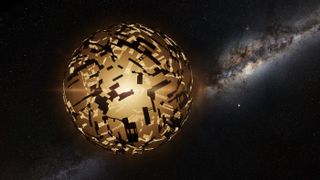
An artist's rendition of what a Dyson sphere might look like.

(Image credit: dottedhippo/iStock/Getty Images Plus)

ANALYSIS OF EXISTING DATA FINDS SEVEN TANTALIZING CANDIDATES

In their published study, which appears in the Monthly Notices of the Royal Astronomical Society, the researchers note that previous efforts dating back to the 1980s and as recently as 2021 have looked for this same type of light signatures coming from distant stars. However, they note that “none of these searches have revealed any strong candidates for Dysonian technology.”

Fortunately, the team says that advancements in modern space and ground telescopes may produce positive results; in fact, they believed that the data they were looking for may have already been collected by modern observatories and were just sitting there waiting for someone to go through it.

Specifically, the team hoped to find telltale signs of alien technology hiding in data captured by the European Space Agency’s (ESA) Gaia satellite, the Wide-field Infrared Survey Explorer (WISE) space telescope, and the ground-based infrared telescope survey MASS2.

“Dyson spheres, megastructures that could be constructed by advanced civilizations to harness the radiation energy of their host stars, represent a potential technosignature that, in principle, may be hiding in public data already collected as part of large astronomical surveys,” they explain.

Dubbed Project Hephaistos (named for the armorer of the Greek Gods), the effort would examine data from over one hundred million stars. Since that is too much data for humans to analyze, the team employed what they described as ‘neural network’ algorithms designed to measure and compare the visible light and infrared signatures emitted by the target stars. Notably, the team stayed away from what are termed “younger stars” since they may still have too much material in their orbits that could artificially skew the readings.

As hoped, the effort was a success. The customized algorithms not only found 60 stars that had the right light ratios, but seven of these were particularly tantalizing, with IR heat signatures that lacked any other good explanation. In fact, the signals were so strong that the team feared they might be young stars with large amounts of debris in their orbits.

To rule this out, the team searched for nearby X-ray sources. X-rays are “a powerful tool for tracing star-forming regions in the sky,” they explain, so if they found sources like this near any of the seven alien technology candidates, they could rule them out.

Luckily, the team says that the analysis came up empty. “After searching the XMM–Newton science archive, we found no evidence of X-ray sources in the neighborhood of our candidates that could be attributed to star formation.”

Image of Tabby's Star in infrared and ultraviolet.

Tabby’s Star in infrared (left) and ultraviolet (right).

Image Credit: Infrared: IPAC/NASA / Ultraviolet: STScI /NASA via Wikimedia Commons

FOLLOW-UP OBSERVATIONS COULD CONFIRM DYSON SPHERES

In the study’s conclusion, the researchers indicate they have already performed a visual check of their seven Dyson Sphere candidate stars. Those tests seem to support their initial conclusions, with the researchers writing that “our visual inspection indicates that these sources are actual sources of infrared radiation that are not subject to any obvious contamination.”

Of course, Suazo and Contrado concede that much more analysis and follow-up observations are necessary to state with any measure of certainty that they have indeed spotted irrefutable signs of alien technology. They also note that although they tried to eliminate any other explanations, the sheer distance between Earth and the observed stellar candidates combined with our still-limited knowledge of the cosmos may mean there is a simple, natural explanation for the unusual light signatures they have found.

“We would like to stress that although our candidates display properties consistent with partial DSs, it is definitely premature to presume that the MIR presented in these sources originated from them,” the researchers write. “The MIR data quality for these objects is typically quite low, and additional data are required to determine their nature.”

They also concede that there are “several natural explanations for the infrared excess in literature,” However, they note, “none of them clearly explains such a phenomenon in the candidates, especially given that all are M dwarfs.”

Although the team is open to other explanations for their findings, Souza admits that “the most fascinating explanation could be actual Dyson spheres.”

By surrounding their star with swarms of energy-collecting satellites, advanced civilizations could create Dyson spheres. [<a href=http://www.space.com/24276-dyson-spheres-how-advanced-alien-civilizations-would-conquer-the-galaxy-infographic.html>Read the Full Dyson Sphere Infographic Here</a>.]

By surrounding their star with swarms of energy-collecting satellites, advanced civilizations could create Dyson spheres.

[Read the Full Dyson Sphere Infographic Here.] 

(Image credit: by Karl Tate, Infographics Artist)

  • Christopher Plain is a Science Fiction and Fantasy novelist and Head Science Writer at The Debrief. Follow and connect with him on X, learn about his books at plainfiction.com, or email him directly at christopher@thedebrief.org.

{ https://thedebrief.org/category/space/ }

Hoe vind je dit bericht?
Geschreven door peter om 23:57 Stuur door

Apollo Worker Found Evidence That Ancient Alien Cities Exist On Moon, NASA Fired Him

Dr. Ken Johnston

Apollo Worker Found Evidence That Ancient Alien Cities Exist On Moon, NASA Fired Him

The mysteries around the Moon have been circulating after the first Apollo mission. Did the first crew really encounter the aliens there? First, many people still believe that NASA has never gone to Moon. But the majority strongly support the six lunar landing missions. In reference to the missions, NASA whistleblowers claimed that the agency is hiding the secret of artificial structures on the Moon. Among them, Dr. Ken Johnston claimed that NASA knows that astronauts discovered ancient alien cities and the remains of incredibly advanced machinery on the Moon. Some of these technologies can manipulate gravity.

Dr. Ralph Kennedy Johnston Sr was born at Fort Sam Houston US Army Air Corps Base in San Antonio, TX. in 1942. He was one of the four Civilian Astronaut Consultant Pilots at NASA who trained Neil Armstrong, Buzz Aldrin, and Michael Collins for the Apollo 11 Mission.

Additionally, Dr. Ken Johnston is a retired aerospace engineer, former active duty US Marine, and now known as “NASA Whistleblower.” He refuses the term “whistleblower” as he says what he did was providing the public with first-hand information that they deserve to know.

Dr. Ken JohnstonDr. Ken Johnston was selected as Mars One Astronaut Round 2 Candidate but later the program was stopped due to no funding.

He refused to strictly follow orders and destroy a nearly-complete collection of 8″ x 10″ glossy photo prints from the Apollo program. These photos are not available from NASA at this time and are of a higher resolution than what is found online.

In the last 40 years, other scientists, engineers, and technicians have accused NASA of cover-ups and data withholding. There is a growing number of people who accuse the space agency of withholding information about anomalous space objects and lying about discovering artifacts on the surface of the Moon and Mars, denying evidence of life reported by the Viking probe in the mid-1970s.

According to Dr. Johnston, the Apollo astronauts brought back photographic evidence of the artifacts they found during their extravehicular activities on the moon. Johnston claimed that NASA ordered to destroy the EVA images at the  Jet Propulsion Laboratory ( JPL), but he refused. When he went public, he was fired from the agency.

In the 2007 press release, Kay Ferrari,  JPL’s Director of the SSA program, asked Dr. Johnston to resign. It was Johnston “being quoted [as] criticizing NASA in Hoagland’s new book, ‘Dark Mission,'” that prompted her to ask for Johnston’s resignation from the SSA Program. When Dr. Johnston refused, citing First Amendment protections of free speech afforded all NASA employees, even those at JPL, Ferrari apparently decided to remove him arbitrarily from the SSA Program, as stated in the press release.

After his abrupt departure, he indicated that he was tired of the US government sitting on evidence for more than four decades, evidence that ancient alien cities exist on the Moon. The low-quality pictures included in the book depict ruins of buildings, huge dome-like objects made of glass, stone towers, and castled hanging in the air.

“I have nothing to lose. I have quarreled with NASA and I got fired,” Ken Johnston said.

Read also:

Dr. Ken Johnston’s Credibility

American space journalist James Oberg continued to attack Dr. Johnston despite he provided his credentials, certificates, and awards, including his doctoral certificate from the Reform Baptist Theological Seminary of Denver, granted in 1985.

ancient cities on moon

Dr. Ken Johnston shared a document on his Facebook page where he stated that he was the substitute for the NASA Astronauts during the testing of the Lunar Module, better known as LTA-8 in Vacuum Chamber “B” at the Johnson Space Center. Source

From his ridiculous accusation that Dr. Johnston was not “in charge” of the photographs in his possession at NASA’s Lunar Receiving Laboratory, to attacking the doctorate itself, Oberg has been – inexplicably for a guy who says he wants to “move on to other things” – persistent. By his own account, Oberg had been burning up the phone lines trying to find something to discredit a man he had known for over 30 years while continuing to pretend he had never even met Dr. Johnston.

Otherwise, Dr. Johnston logged about 3,000 hours as a space pilot without ever going into space. As a test conductor, he helped train all of the Lunar Landing Mission astronauts to fly the Lunar Module.

When the first landing on the moon ended, about 30,000 employees were laid off because research and development were no longer needed, he said. After that, he became the Data and Photo Control Department manager at the Lunar Receiving Laboratory where he was responsible for controlling all of the data and photographic information generated from the Lunar missions.

 Dr. Ken Johnston: The inside opening page of my LM Pilot Log Book.

Dr. Ken Johnston On Aliens

On his visit to Hindustan International School and University (India) in 2017, he shared a lot about the Apollo Mission and aliens with the New Indian Express. [Source]

 Do you believe that aliens exist?

– Yes. Don’t you? Your ancient history suggests that extraterrestrials came to our planet. Back in 1958, we unearthed proof that Eisenhower did meet with extraterrestrials. There is so much evidence not only to prove that there are aliens, but also that they have an impact on this planet.

– How did you develop an interest in aliens and space?

– Back in those days, I would watch series like Buck Rogers in the 25th Century and Flash Gordon. I wanted to go to space. My father was a pilot and I wanted to be one too.

– And then you went on to train Neil Armstrong.

– Not just Neil Armstrong. We were a team of four and our job was to test the lunar mission module in the vacuum chambers to ensure that the systems were safe to be taken to space. In the process, we trained Neil, Buzz and Michael to land it on the moon.

 What is your take on the ‘moon landing – faked’ controversy?

– (Laughs) We still have people who think that Earth is flat. Once a reporter told Buzz Aldrin that he didn’t go to the moon and he punched him. Even the latest satellite pictures show the same lunar footprints.

– How did you manage to get first-hand information about extraterrestrials?

– Once we were done with the first three missions, I was put in charge of photographing and documenting their exact location. One day, my boss ordered me to destroy these images. I reminded him that the government had paid for them and that they should be made public to which he replied, “No. Get rid of it. I don’t care what you think.”

– But why?

– Because there were elements in the pictures that were unexplainable. You can now download them for free from my website. You can see the lunar anomalies too. It looks like something has been smudged out. Way before Photoshop, they would paint things out.
Once, when I walked into the photo lab, I saw a woman painting something out. She called herself a ‘stripper’ and said that she was paid for it. This really upset me as I was in charge of keeping a record of things. I guess that’s why they call me a whistleblower.

– How transparent is NASA?

– People like me, who’ve gotten into trouble with NASA, have a different expansion for the acronym — Never A Straight Answer.

References:

{ https://www.howandwhys.com/ } 

Hoe vind je dit bericht?
Geschreven door peter om 23:38 Stuur door

JAMES WEBB SPACE TELESCOPE DISCOVERY UNVEILS EARLIEST KNOWN GALAXY IN THE UNIVERSE, AND A FEW SURPRISES

VoObD9L9?format=jpg&name=900x900

JAMES WEBB SPACE TELESCOPE DISCOVERY UNVEILS EARLIEST KNOWN GALAXY IN THE UNIVERSE, AND A FEW SURPRISES

Astronomers have discovered a pair of extremely distant celestial objects with help from NASA’s James Webb Space Telescope (JWST), one of which is believed to be the earliest known galaxy detected.

Dubbed JADES-GS-z14-0 and JADES-GS-z14-1, these distant galaxies were revealed during the JWST Advanced Deep Extragalactic Survey (JADES) campaigns and may provide astronomers with crucial new insights into some of the earliest galaxies that formed in our universe.

Significantly, the new findings also challenge past assumptions about these formation processes, a trend that has continued since Webb first began operating.

Using the telescope’s NIRSpec instrument during observations of three candidate galaxies at redshifts greater than 14, the research team involved with the study was able to perform deep measurements of the spectra generated from interactions between matter and radiation in these ancient star systems.

Selected from observations in a region of the Fornax constellation identified within the Great Observatories Origins Deep Survey (GOODS) south field, this grouping of galaxies was initially identified by the Hubble Space Telescope and Cycle 1 JWST/NIRCam data, which at the time pointed to a less than 1% chance that they were low-redshift “interlopers.”

Of the two galaxies, JADES-GS-z14-0 is the brightest and was found near a foreground galaxy, which introduced some initial complications in the team’s assessments. With time, Webb’s NIRCam observations of the region helped to dismiss the possibility of this premise, thanks to “additional deep medium-band NIRCam observations that substantially strengthened the case for the source being at high redshift,” the authors write in a new paper detailing their findings.

JADES-GS-z14-0 NIRSpec spectrographic data related to JADES-GS-z14-0 (Credit: Credit: NASA, ESA, CSA, J. Olmsted (STScI). Science: S. Carniani (Scuola Normale Superiore), JADES Collaboration).

Detailed spectroscopy helped the team affirm the presence of a spectral line of hydrogen known as the Lyman-α break, placing the galaxies at redshifts of approximately 14.

After Webb’s NIRSpec camera also revealed that the faintest of the candidate galaxies had not been significantly detected, the team shifted their attention to JADES-GS-z14-0 and JADES-GS-z14-1, galaxies whose spectra showed a clear flux density break. This information also helped the team to confirm the high redshift of these galaxies.

Ultimately, redshifts of 14.32 for JADES-GS-z14-0 and 13.90 for JADES-GS-z14-1 were determined, revealing spectrographic signatures suggestive of very young stars and relatively low dust in these galaxies, which astronomers recognize as being traits associated with the early universe.

Additionally, JADES-GS-z14-0 appears to display a pronounced distribution of ultraviolet (UV) light when compared with other very bright galaxies, likely due to its size. The team says this points to a spatially extended stellar population, as opposed to a dominant active galactic nucleus (AGN), denoting the small region near the heart of many galaxies which is brighter than astronomers would expect to result from the luminosity of stars alone.

In some cases, the high luminosity of this central region can overpower the rest of the light generated by such galaxies. However, in the case of JADES-GS-z14-1’s UV emissions, the team involved with the new study says they appear to point to stellar rather than AGN dominance.

  • brain

Another significant finding is that the masses of these galaxies appear to have grown rapidly from redshift 20 to 14, which is also suggestive of early star formation activity. This, along with the relatively low dust present in these galaxies, is believed to originate from a few possible factors that may include galactic outflows.

Ultimately, the discovery of these very early galaxies is providing compelling new data that points to the much earlier existence of these massive galaxies than many astronomers previously thought, although that isn’t to say that no one had expected such discoveries.

Still, such ongoing discoveries, made in large part with the help of the JWST, fundamentally support the reality that our existing notions about galaxy formation require a bit more work. With ongoing observations of the most distant and early regions of our universe, astronomers hope to deepen our understanding of the ‘Cosmic Dawn,’ where the first galaxies were born, in the years ahead.

The team’s new paper, “A shining cosmic dawn: spectroscopic confirmation of two luminous galaxies at z ∼14,” was uploaded to the preprint arXive.org server and can be read online.

{ https://thedebrief.org/category/space/ }

Hoe vind je dit bericht?
Geschreven door peter om 23:08 Stuur door

Highlights from the 10th Achieving Mars Workshop

The Tenth Community Workshop for Achievability and Sustainability of Human Exploration of Mars. Credit: Explore Mars Inc.

Highlights from the 10th Achieving Mars Workshop

Back in December, NASA officials, space industry experts, members of the academic community, and science communicators descended on Washington, D.C., for the Achieving Mars Workshop X (AM X). This workshop is hosted by Explore Mars Inc., a non-profit organization dedicated to bringing leading experts from disparate fields together to contribute to creating the first crewed missions to Mars. On May 17th, the results of this year’s workshop were summarized in a report titled “The Tenth Community Workshop for Achievability and Sustainability of Human Exploration of Mars.”

Erik Antonsen, Bruce Jakosky, and Lisa May co-chaired the workshop, which took place from December 5th to 7th at George Washington University. Antonsen is the CTO of Advancing Frontiers, a consulting company providing spaceflight integration services, and an Associate Professor of Space Medicine and Emergency Medicine with the Center for Space Medicine at the Baylor College of Medicine (BCM). Jakosky is a Professor Emeritus of Geological Sciences and the Associate Director of the Laboratory for Atmospheric and Space Physics (LASP) at UC Boulder. May is the Chief Technologist for Lockheed Martin’s Commercial and Civil Space Advanced Programs.

As always, the workshop featured presentations and discussions that addressed the challenges, benefits, and ongoing efforts to realize the human exploration of Mars. But this year was special in several ways, not just because it was the tenth anniversary of the AM series. In addition, AM X took place during an auspicious time for NASA, space agencies, international organizations, and commercial space companies supporting human spaceflight. Between the impending return to the Moon through the Artemis programs and uncertainties about the first crewed missions to Mars, there was a lot to discuss!

For instance, last year’s workshop (AM IX) addressed the pressing question of whether NASA would be able to mount a crewed mission to Mars by 2033. This has been a key aspect of NASA’s Moon-to-Mars (M2M) mission architecture, detailed in the agency’s annual Architecture Concept Reviews (ACRs). It is also in keeping with Explore Mars’ goal of advancing the “human exploration of Mars and beyond no later than the 2030s.” Alas, in recent years, there has been growing skepticism that several key technologies will be ready to meet this deadline.

As Universe Today reported at the time, these doubts were raised at AM IX, and there was no consensus regarding potential solutions. This included the possibility of a flyby mission by 2033 and whether or not a nuclear-thermal propulsion (NTP) system, which can potentially reduce transit times to Mars (45 to 100 days), would be ready in time. In addition, there were the comments of Deputy Administrator Jim Reuters, who acknowledged that sending astronauts to Mars by 2040 was “an audacious goal for us to meet… It may sound like a lot, but it is [a] very short time to develop technologies we need to develop.”

As with previous AM workshops, cooperation and effective communication were emphasized. This includes coordinating robotic and human spaceflight missions and broader cooperation between space agencies, government, and industry. A key concern that was identified was the process through which NASA’s mission architecture evolves. While participants agreed that the M2M ADD “provides a strong starting point for an iterative architecture process,” they also concluded that the development process was insufficient. As stated in the AM X Report:

“Participants observed that despite recent progress, existing channels were insufficient to adequately integrate human capabilities and limitations as well as science objectives into the architecture development process. Similarly, sustainable human exploration of the Moon and Mars will not occur unless science and human exploration objectives are infused early and continuously into the systems engineering processes.”

Artwork for the AM X Workshop Report.  Credit: Explore Mars Inc.

To address these concerns, the workshop participants came up with four recommendations for improving existing channels and the architecture development process. They include:

Public Outreach & Involvement

First, the AM X Workshop Report recommended that public interactive forums be more frequent to develop inputs to NASA’s Architecture Definition Documents. The communities emphasized for engagement include operations, human research, science, international organizations, and others “that empower cross-disciplinary teaming, welcome broad participation from external experts, and provide a pathway to incorporate community recommendations and findings into Mars mission planning.”

The need to coordinate with diverse science communities to prioritize and narrow science objectives was also noted, as was the possible need for certification paths for external groups “to provide input in
smaller settings and more frequently than once a year at the ACR.”

The Report also emphasizes the need for initiatives and workshops that focus on the development and integration of “intelligent systems” and “data analytics” that will be critical for missions operating farther from Earth for extended periods. According to NASA’s mission architecture, this applies to Phase III of the Moon to Mars plan (aka. “Earth Independent”), where operations will shift from cislunar to deep space. This will include transits to and from Mars using the Deep Space Transport (DST) and science operations on the Martian surface.

Risk Mitigation

Second, the Report acknowledges the historical trend where certain priorities (like discovery science, technology, and infrastructure development) are often sacrificed for short-term needs. To this end, it is recommended that NASA acknowledge and address tensions between scientific investment for “risk mitigation purposes and investment for discovery science in planning for M2M missions.” While there is no reference to the sacrifices made to realize the Artemis Program and a return to the Moon by 2024, there are some hints that this could be the case.

An illustration of the Gateway’s Power and Propulsion Element and Habitation and Logistics Outpost in orbit around the Moon. Credits: NASA

The shifting priorities brought about by the expedited timetable have led to the deprioritizing of mission elements crucial to reaching Mars by the 2030s – like the Lunar Gateway. As acting Deputy Administrator Doug Loverro explained in March of 2020 during a NASA Advisory Council science committee, the Gateway was deprioritized to “de-risk” Artemis so NASA could focus on meeting the mandatory goals of Artemis and its 2024 deadline. Meanwhile, no design or feasibility studies have been performed for the DST or a Mars orbital habitat (a la the Mars Base Camp) since 2018/19, coinciding with the Artemis “shake-up.”

Regardless, the Report cites the need for increased funding to ensure “technology maturation, demonstration, and infusion to incorporate capabilities.” This is understandable, given that budget concerns have been an issue since NASA began planning missions to the Moon and Mars. In addition to speeding the development of technology, an increase in funding is also desirable to incorporate rapidly advancing technologies such as “artificial intelligence, data management, in-space manufacturing,” and others that are still relatively early in the development process.

Another important factor emphasized here is Health and Human Performance (HPP), which clearly refers to strategies for mitigating the health risks associated with deep space transits. These include extended periods spent in microgravity and long-term exposure to elevated levels of solar and cosmic radiation. To date, NASA has explored multiple possibilities for addressing these concerns, but no concrete plans have emerged just yet.

Evolving Architectures

Further to Recommendation I, the Report states that NASA and commercial companies invested in Mars exploration should continue designing “evolvable mission and campaign architectures.” The purpose of this is to allow for new technologies to be incorporated along the way and prevent the current state of technology from limiting plans. As per the Report, this will help ensure that “we do not design architecture and hardware applicable only for the first mission without allowing both to evolve for subsequent missions.” To this end, NASA and commercial industries are encouraged to:

  • Develop common standards, requirements, and interfaces to allow the incorporation of multiple technologies, capabilities, and/or solutions as technology progresses over the next two decades.
  • Create and implement a Human and System Readiness Level verification process to assess if the human, hardware, software, and planning systems are sufficiently mature as an integrated system.
  • Ensure that the architecture is sufficiently flexible that it can address a wide range of missions beyond the first one.
Artist’s representation of NASA’s “Moon to Mars” mission architecture. Credit: NASA

Commercial Partnerships

Finally, the Report encourages NASA to continue investing and cooperating with commercial partners to realize lunar capabilities and technologies that will help them reach Mars. This goes to the heart of the M2M mission architecture, which prioritized a return to the Moon during the 2020s to develop the necessary technologies, systems, and expertise to create a pathway to Mars by the 2030s. “The Moon is how we learn to get to Mars,” it reads, “and we want companies thinking not just about getting to the Moon but, at the same time, how getting there prepares us for the more challenging missions to Mars.”

****

As usual, the prospect of sending crewed missions to Mars raised many concerns at this year’s workshop. This should come as no surprise, as the goal itself is incredibly ambitious and presents many major challenges. If there is a takeaway from this year’s workshop, it is that there is plenty of work to be done before a mission can be realized. This work must take place at the architectural level, emphasizing wider public engagement, advancing technologies, and a commitment to long-term goals.

Further Reading: 

{ https://www.universetoday.com/ }

Hoe vind je dit bericht?
Geschreven door peter om 20:41 Stuur door

Life Probably Played No Role in Mars’ Organic Matter

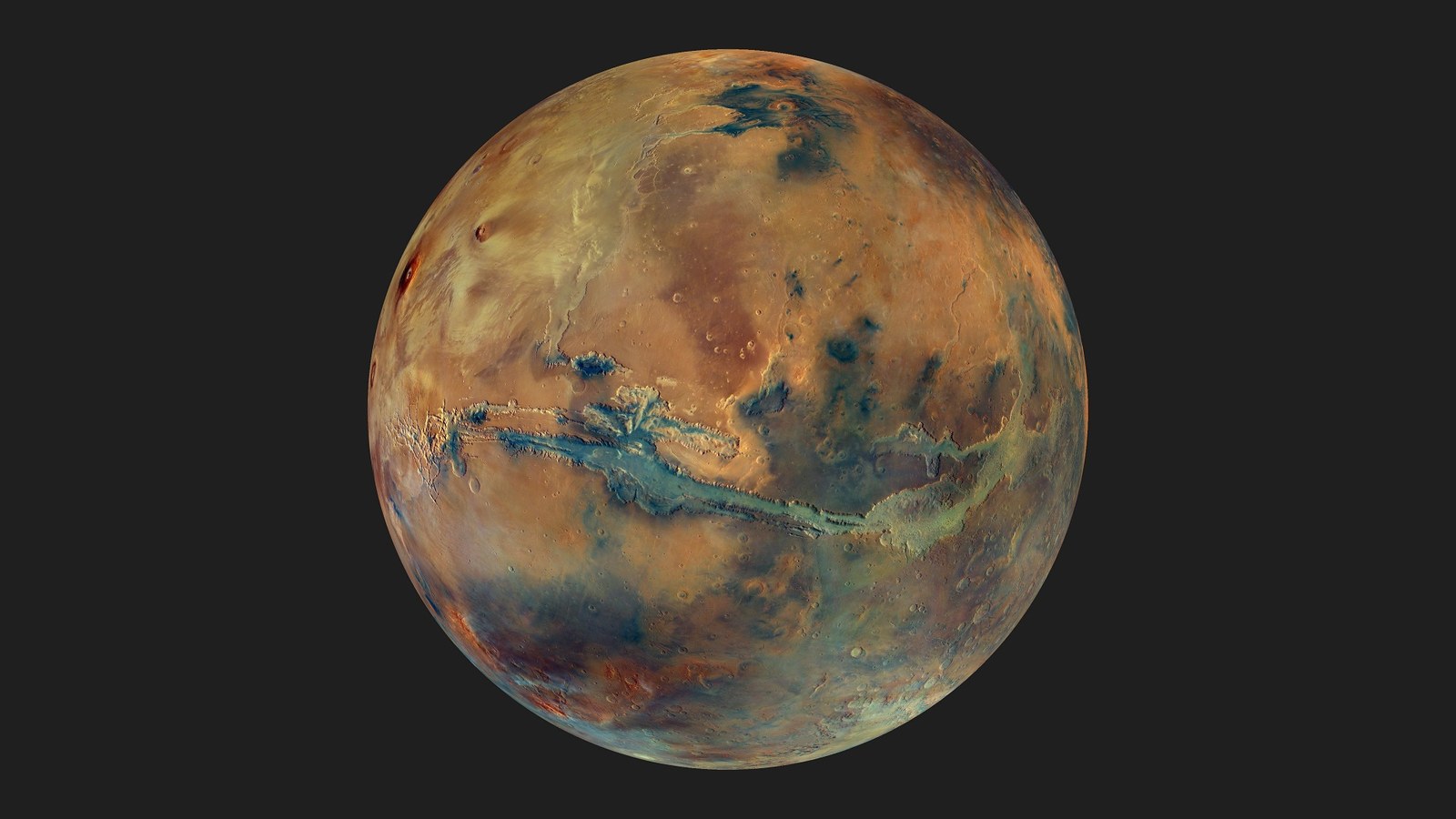
Color mosaic image of Mars, taken by the HRSC instrument aboard the ESA's Mars Express orbiter. Credit: ESA/DLR/FU Berlin (G. Michael)

Life Probably Played No Role in Mars’ Organic Matter

The Martian surface shows ample evidence of its warm, watery past. Deltas, ancient lakebeds, and dry river channels are plentiful. When the Curiosity rover found organic matter in ancient sediments in the Jezero Crater paleolake, it was tempting to conclude that life created the matter.

However, new research suggests that non-living processes are responsible.

There are three carbon isotopes on Earth: carbon-12 (12C), carbon-13 (13C), and carbon-14 (14C). Earth’s carbon is almost entirely carbon-12. It makes up 99% of the carbon on Earth, with carbon-13 making up the other 1%. (14C is extremely rare and unstable, so it decays into nitrogen-14.)

In 2022, MSL Curiosity took an inventory of organic carbon in sediments at Gale Crater. Organic carbon is usually described as carbon atoms bonded covalently to hydrogen atoms and is the basis for organic molecules. The carbon in organic carbon can be either carbon-12 or carbon-13, and the amounts are important. At Gale Crater, Curiosity found about 200 to 273 parts per million of organic carbon. “This is comparable to or even more than the amount found in rocks in very low-life places on Earth, such as parts of the Atacama Desert in South America, and more than has been detected in Mars meteorites,” said Jennifer Stern, a Space Scientist at NASA’s Goddard Space Flight Center when the results came in.

This is the Stimson sandstone formation in Gale Crater on Mars. This is where the Curiosity Rover drilled the Edinburgh hole and found enriched Carbon 12. Image Credit: NASA/Caltech-JPL/MSSS

This carbon is important evidence in understanding Mars’ history. It can tell scientists about the planet’s atmospheric processes and environmental conditions and even shed light on potential life. In fact, understanding Martian carbon can aid our understanding of habitability and prebiotic chemistry on distant exoplanets. The isotope ratio in this carbon is different than on Earth. It has a lower amount of carbon-13 relative to carbon-12 compared to Earth. Why the discrepancy?

In recent research in Nature Geoscience, a team of researchers tried to understand the difference between Earth’s and Mars’s carbon isotope ratios. The work is titled “Synthesis of 13C-depleted organic matter from CO in a reducing early Martian atmosphere.” The lead author is Yuichiro Ueno, a biogeochemist in the Department of Earth and Planetary Sciences at the Tokyo Institute of Technology.

“Strong 13C depletion in sedimentary organic matter at Gale crater was recently detected by the Curiosity rover,” the authors write. “Although this enigmatic depletion remains debated, if correct, a mechanism to cause such strong 13C depletion is required.” 

The amount of carbon-13 in the Martian sediments is far lower than in Earth’s sediments.

“On measuring the stable isotope ratio between 13C and 12C, the Martian organic matter has a 13C abundance of 0.92% to 0.99% of the carbon that makes it up,” lead author Ueno explained in a press release. “This is extremely low compared to Earth’s sedimentary organic matter, which is about 1.04%, and atmospheric CO2, around 1.07%, both of which are biological remnants and are not similar to the organic matter in meteorites, which is about 1.05%.”

The meteorite data is important because a four billion-year-old Martian meteorite named ALH 84001 is enriched in carbon-13, adding to the enigma of Mars’ carbon. Somehow, carbon-13 became depleted in the intervening billions of years. Solar escape is one possible reason for the carbon-13 depletion, but the authors discount that. There likely wasn’t enough time for enough carbon-13 to escape. “Furthermore, based on geomagnetic observations, early Mars probably had a geomagnetic field before 4?Ga,” the authors write. That field would’ve prevented solar escape.

To determine what’s behind this discrepancy, Ueno and his co-researchers simulated different Martian atmospheric conditions to see what would happen.

Their results show that isotope fractionation by solar UV light is responsible for Mars’ 13C depletion.

This graphic outlines the process that creates atmospheric organic matter that finds its way into the Martian sediments sampled by MSL Curiosity. Image Credit: Ueno et al. 2024. This graphic outlines the process that creates atmospheric organic matter that finds its way into the Martian sediments sampled by MSL Curiosity. Image Credit: Ueno et al. 2024.

Carbon-12 and carbon-13 respond differently to UV light. Carbon-12 preferentially absorbs UV, which dissociates it into carbon monoxide that’s depleted in carbon-12. What’s left behind is CO2 enriched with carbon-13.

Scientists have observed this process in the upper atmospheres of Earth and Mars. In Mars’ reducing atmosphere, where oxygen was depleted, the CO2 enriched with carbon-13 would’ve transformed into formaldehyde and possibly methanol. But those compounds didn’t remain stable. In Mars’ early days, the surface temperature was close to the freezing point of water, and it never exceeded about 27 Celsius (80 F.) In that temperature range, the formaldehyde and other compounds could’ve dissolved in water. From there, they gathered in sediments.

But that’s not the end of Mars’ carbon isotope story.

The researchers used models to show that in a Mars atmosphere with a CO2 to CO ratio of 90:10, 20% of the CO2 would have converted to CO, leading to the sedimentary carbon isotope ratio we see today. The remaining atmospheric CO2 would be higher in C-13, and both values are in line with what Curiosity found, and with the ancient Martian meteorite ALH 84001.

This is a plausible scenario that can explain Curiosity’s curious carbon findings.

The team’s study also includes some other important details. For instance, atmospheric CO may not have come solely from photolysis by UV light. Some could have come from volcanic eruptions. And atmospheric CO may not have been the sole source of organics that found their way into the sediments. But either way, the results tell scientists something about Mars’ carbon cycle.

It also tells us to expect to find more organics in Martian sediments in the future.

“If the estimation in this research is correct, there may be an unexpected amount of organic material present in Martian sediments. This suggests that future explorations of Mars might uncover large quantities of organic matter,” said Ueno.

While the research shows us that life needn’t be present to produce these organics, it can’t rule life out. Nobody can, at least not yet.

The research also shows how complex atmospheric chemistry can be and how difficult it can be to draw conclusions from atmospheric studies of exoplanets. The JWST has examined several exoplanet atmospheres and found some interesting results. But there’s so much we don’t know. This research is a reminder that any conclusions are likely premature.

 { https://www.universetoday.com/ }

Hoe vind je dit bericht?
Geschreven door peter om 20:22 Stuur door

Robotische “derde duim” gemaakt om de grenzen van het menselijk lichaam te overwinnen en de bewegingsmogelijkheden te vergroten

Robotische “derde duim” gemaakt om de grenzen van het menselijk lichaam te overwinnen en de bewegingsmogelijkheden te vergroten

Janine imageDoor Janine
Wat zouden we kunnen doen als we een extra duim hadden? Robotica laat het ons zien door een apparaat te maken dat blijkbaar heel gemakkelijk te gebruiken is.

Zijn twee duimen niet genoeg? Daar zorgt robotica voor

De Derde Duim helpt de gebruiker een fles te openen

Dani Clode Design / The Plasticity Lab

Tien vingers in totaal, waarvan slechts twee duimen, is misschien niet genoeg, zelfs als we ons daar niet van bewust zijn. Gedreven door de overtuiging dat “meer beter is” wilden wetenschappers van de Universiteit van Cambridge de menselijke hand een extra verlengstuk geven. Robotisch natuurlijk. Deze sector wordt steeds populairder en ontwikkelt een reeks gemotoriseerde draagbare apparaten. Het doel? Door de grenzen van de menselijke anatomie te overwinnen en de motorische vaardigheden te implementeren die we nodig hebben om de prestaties te verbeteren, en om ondersteuning te bieden aan mensen met bewegingsproblemen.

Tamara Makin van de Cognition and Brain Sciences Unit van de Medical Research Council aan de Universiteit van Cambridge legt uit: “De technologie verandert onze definitie van wat het betekent om mens te zijn, waarbij machines steeds meer een onderdeel van ons dagelijks leven worden. Deze technologieën bieden opwindende nieuwe mogelijkheden waar de samenleving profijt van kan hebben, maar het is van cruciaal belang om te overwegen hoe ze alle mensen in gelijke mate kunnen helpen."

De robotiche derde duim: hoe werkt het

University of Cambridge/Youtube screenshot

De Derde Duim, de specifieke naam van het apparaat, is ontwikkeld door Dani Clode, die meewerkt in het laboratorium van Makin. Het gaat om een extra robotische duim die de bewegingsmogelijkheden vergroot, waardoor zowel het grijpvermogen van de hand als de last die deze kan tillen en dragen toeneemt. Met andere woorden: het maakt het mogelijk om handelingen uit te voeren die met één hand moeilijk of onmogelijk zijn.

Het apparaat wordt aan de andere kant van de hand gedragen dan de natuurlijke duim en wordt bestuurd door een druksensor die onder de grote tenen wordt aangebracht. Druk van de rechterteen verlengt de robotische duim, terwijl druk van de punt van de linker grote teen deze dichter bij de vingers brengt. De kracht van de druk bepaalt de bewegingssnelheid, evenals de terugkeer van het apparaat naar zijn oorspronkelijke positie. Wetenschappers testten de Derde Duim in 2022 tijdens de Royal Society Summer Science Exhibition, waarbij enkele leden van het publiek betrokken waren die de kans hadden om het uit te proberen.

Inclusieve robotische duim: geschikt voor iedereen en eenvoudig in gebruik

University of Cambridge

592 deelnemers in de leeftijd van 3 tot 96 jaar waren in staat om de sensor gedurende vijf dagen te bewegen. Slechts vier deelnemers hadden hier echter moeite mee, omdat het prototype dat op de tentoonstelling werd gepresenteerd niet geschikt was voor de handgrootte van kleine kinderen, noch voor de sensor. In de overgrote meerderheid van de gevallen lukte het de proefpersonen om de duim te bewegen tijdens de minuut die beschikbaar was om hem te testen, geleid door de instructies van het team. De test bestond uit het oppakken van voorwerpen met alleen de Derde Duim, inclusief het oppakken van pinnen van een geperforeerd paneel en deze één voor één in de mand te verplaatsen, om er zoveel mogelijk te verzamelen binnen 60 seconden. Meer dan de helft van de deelnemers slaagde daarin.

Uiteindelijk was 98% van de deelnemers in staat om de objecten naar tevredenheid te verplaatsen, ongeacht verschillen in achtergrond en geslacht. Kinderen en ouderen toonden een vergelijkbaar vaardigheidsniveau, waarbij oudere volwassen deelnemers minder vaardigheid vertoonden vanwege hun leeftijd. Zoals Dani Clode uitlegde: "Gezien de diversiteit van lichamen is het cruciaal dat de ontwerpfase van draagbare technologie zo inclusief mogelijk is, zodat deze apparaten toegankelijk en functioneel zijn voor een breed scala aan gebruikers."

{ https://www.curioctopus.nl/ }

Hoe vind je dit bericht?
Geschreven door peter om 17:20 Stuur door

Astronomers Stumbled Upon A Rare Chance To Capture Just How Fast A Supermassive Black Hole Spins

Astronomers Stumbled Upon A Rare Chance To Capture Just How Fast A Supermassive Black Hole Spins

One unlucky star brought fortune to these astronomers.

There are behemoths that lurk at the center of almost all large galaxies in the known universe, including the sleepy giant in our Milky Way.

These are supermassive black holes, and they’ve been critical to the universe’s evolution. A new study, published today in the journal Nature, offers a fascinating new method to measure their spins. This ability could help astronomers flesh out how our universe came to look as it does today.

Back in 2020, astronomers noticed some strange activity. Using the Zwicky Transient Facility in California, they detected telltale signs that a star was going through what scientists call a tidal disruption event, in which an intense field of gravity rips a star apart. Tidal disruption events really only come from one thing: monster black holes. They realized what they were witnessing was a big black hole feasting on a star.

An animation explaining the work of Pasham’s team.

Astronomers observed the black hole in detail using the International Space Station’s NICER telescope, which is short for Neutron star Interior Composition Explorer. They found a few interesting details. Every 15 days, the supermassive black hole experienced a shift in X-ray intensity, and this pattern remained steady for the entirety of the four months they studied it.

From this, they were able to estimate the spin speed of the black hole. Finding such a specific detail about an object lurking roughly a billion light-years away is impressive. But the researchers say this new technique might be able to help solve some riddles about how the universe came to be. Specifically, how the hearts of galaxies evolved from Cosmic Dawn to today.

The supermassive black hole of the new study behaves somewhat like a kid swaying their hips to move a hula hoop. From the motion of the toy — in this case, the ring of shredded gas from the victim star — helped astronomers observe how the object’s intense gravity warps space-time to affect the disk. Black holes are so dense that not even light can escape them. But accretion disks around the black holes do emit light. They trace the path of this space-time warp. The black hole creates a drag called Lense-Thirring precession, and from this, astronomers deduced the spin speed.

This isn’t the first time that astronomers have derived the spin measurements of supermassive black holes and smaller black holes. But according to the lead author of the new study, MIT research scientist Dheeraj Pasham, this was the first time that the black hole’s warp of the space-time, paired with the luminosity of the accretion disk of an otherwise invisible object, led to finding the black hole’s spin speed.

Tidal disruption

An artist’s impression of a tidal disruption event, created by a black hole swallowing a star

Carl Knox / OzGrav, ARC Centre of Excellence for Gravitational Wave Discovery, Swinburne University of Technology

The team owe much of their accomplishment to this black hole being a great candidate for study. It helped that the black hole was tilted towards Earth, letting astronomers investigate the X-rays clearly. NICER also has an easier job if it’s targeting objects in the direction of Earth’s poles, where the Sun can’t obstruct. The black hole is in the polar part of our sky, fortunately.

The spin speed of the black hole is a fingerprint. An abundance of slow-spinning black holes would mean frequent chaotic mergers between black holes — and the galaxies they reside in. “You’re dumping angular momentum in random orientations, and essentially spinning down the remnants,” Pasham tells Inverse.

“The other scenario is, let’s say you find most of the black holes are fast-spinning as close to the speed of light, that means they grew by accretion. Like a spinning top,” Pasham added. Over time, the balls of gas pulled in towards the black hole sped it up a little more.

This new research, along with discoveries emerging from a myriad of new telescopes taking flight soon, the universe’s history may not stay so hidden for long.

{ https://www.inverse.com/ }

Hoe vind je dit bericht?
Geschreven door peter om 17:04 Stuur door

This Dwarf Planet Is Basically A Sweet Red Snow Cone

This Dwarf Planet Is Basically A Sweet Red Snow Cone

Please do not lick the science.

Close-up image of a distant celestial body resembling two connected spheres with a textured, uneven ...
NASA

If there were a recipe for Kuiper Belt’s sweetest dwarf planet, it would look something like this: Take one 22-mile long, figure-8-shaped blob of mixed ice, and add a heaping pour of methanol. Bombard with cosmic rays and solar wind for about 2 billion years, until it reaches a nice reddish color. Serve chilled to -390 degrees Fahrenheit.

A recent study found that Arrokoth, a weirdly-shaped dwarf planet in the Kuiper Belt, gets its distinctive reddish coloration from complex hydrocarbon molecules, which form when cosmic rays and solar wind bombard the tiny world’s frozen methanol surface. The same chemical reactions that spawn those hydrocarbons also produce sugars like glucose and glycerol, which means that if you licked Arrokoth, it would probably taste sweet, but also a little like soap. (Please don’t try this, because methanol is poison, and also you shouldn’t open your spacesuit helmet in a vacuum. Safety first!)

University of Hawai’i at Manoa chemist Chaojiang Zhang and colleagues published their work in the Proceedings of the National Academy of Science.

photo of a reddish-brown pair of rocks in space, stuck together.

The chemical building blocks for life formed on Arrokoth thanks to chemical reactions in its ice, triggered by cosmic rays.

NASA

LAB-GROWN DWARF PLANETS

Zhang and colleagues froze a slab of methanol and carbon monoxide to around -390° Fahrenheit, or about 40 Kelvin, in their lab, then blasted it with high-energy electrons to simulate a couple billion years of cosmic rays.

The simulated cosmic rays triggered a series of chemical reactions in the ice, which produced complicated molecules called polycyclic aromatic hydrocarbons — the chemicals that stain Arrokoth’s surface a distinctive reddish color. Those same chemical reactions also produced sugars like glucose (the stuff that sweetens honey, berries, nuts, grains, and even potatoes), glycerol (the backbone of fatty acids called lipids, which make up part of our cell membranes, among other things), and ribose (and important part of DNA and RNA).

And the hydrocarbon molecules that give Arrokoth its color are built benzene, a chemical that is a ring of six carbon atoms with six hydrogen atoms on the outside. That ring structure is the basis for most organic chemistry, including some of the most important molecules for life: the “nucleobases” that make up the genetic code, as well as the amino acids that combine to form proteins.

In other words, the surface of Arrokoth is probably laden is with the chemical building blocks for life — and that’s pretty sweet, too.

“SUGAR WORLDS” MEET WITH EARTH

Some of the ribose in your DNA right this moment may once have been locked in frozen ice on the surface of a world like Arrokoth.

“Sugar worlds” like Arrokoth may have played a role in giving Earth its starter kit of life-building molecules, like sugars and benzene-based hydrocarbon rings. Some of the comets that bombarded early Earth around 4 billion years ago may have come from tiny Kuiper Belt worlds like Arrokoth. And Zhang and colleagues’ experiment suggests those comets may have carried more than just water ice to our young planet.

Different Kuiper Belt worlds may have supplied different organic chemicals to early Earth, according to Zhang and colleagues. Pluto’s dancing partner, Charon, and another dwarf planet called Orcus, have water and ammonia frozen on their surfaces; others have carbon dioxide. Zhang and colleagues want to do more experiments in their lab to simulate how cosmic rays change the chemistry on each of those worlds to learn what’s out there — and how it got here

{ https://www.inverse.com/ }

Hoe vind je dit bericht?
Geschreven door peter om 16:48 Stuur door

Meer van UFO'S of UAP'S, ASTRONOMIE, RUIMTEVAART, ARCHEOLOGIE, OUDHEIDKUNDE, SF-SNUFJES EN ANDERE ESOTERISCHE WETENSCHAPPEN - DE ALLERLAATSTE NIEUWTJES

↑ Terug naar de berichten