Naar de inhoud

UFO'S of UAP'S, ASTRONOMIE, RUIMTEVAART, ARCHEOLOGIE, OUDHEIDKUNDE, SF-SNUFJES EN ANDERE ESOTERISCHE WETENSCHAPPEN - DE ALLERLAATSTE NIEUWTJES

UFO's of UAP'S in België en de rest van de wereld
akke.beakke.be
Ontdek de Fascinerende Wereld van UFO's en UAP's: Jouw Bron voor Onthullende Informatie! Ben jij ook gefascineerd door het onbekende? Wil je meer weten over UFO's en UAP's, niet alleen in België, maar over de hele wereld? Dan ben je op de juiste plek! België: Het Kloppend Hart van UFO-onderzoek In België is BUFON (Belgisch UFO-Netwerk) dé autoriteit op het gebied van UFO-onderzoek. Voor betrouwbare en objectieve informatie over deze intrigerende fenomenen, bezoek je zeker onze Facebook-pagina en deze blog. Maar dat is nog niet alles! Ontdek ook het Belgisch UFO-meldpunt en Caelestia, twee organisaties die diepgaand onderzoek verrichten, al zijn ze soms kritisch of sceptisch. Nederland: Een Schat aan Informatie Voor onze Nederlandse buren is er de schitterende website www.ufowijzer.nl, beheerd door Paul Harmans. Deze site biedt een schat aan informatie en artikelen die je niet wilt missen! Internationaal: MUFON - De Wereldwijde Autoriteit Neem ook een kijkje bij MUFON (Mutual UFO Network Inc.), een gerenommeerde Amerikaanse UFO-vereniging met afdelingen in de VS en wereldwijd. MUFON is toegewijd aan de wetenschappelijke en analytische studie van het UFO-fenomeen, en hun maandelijkse tijdschrift, The MUFON UFO-Journal, is een must-read voor elke UFO-enthousiasteling. Bezoek hun website op www.mufon.com voor meer informatie. Samenwerking en Toekomstvisie Sinds 1 februari 2020 is Pieter niet alleen ex-president van BUFON, maar ook de voormalige nationale directeur van MUFON in Vlaanderen en Nederland. Dit creëert een sterke samenwerking met de Franse MUFON Reseau MUFON/EUROP, wat ons in staat stelt om nog meer waardevolle inzichten te delen. Let op: Nepprofielen en Nieuwe Groeperingen Pas op voor een nieuwe groepering die zich ook BUFON noemt, maar geen enkele connectie heeft met onze gevestigde organisatie. Hoewel zij de naam geregistreerd hebben, kunnen ze het rijke verleden en de expertise van onze groep niet evenaren. We wensen hen veel succes, maar we blijven de autoriteit in UFO-onderzoek! Blijf Op De Hoogte! Wil jij de laatste nieuwtjes over UFO's, ruimtevaart, archeologie, en meer? Volg ons dan en duik samen met ons in de fascinerende wereld van het onbekende! Sluit je aan bij de gemeenschap van nieuwsgierige geesten die net als jij verlangen naar antwoorden en avonturen in de sterren! Heb je vragen of wil je meer weten? Aarzel dan niet om contact met ons op te nemen! Samen ontrafelen we het mysterie van de lucht en daarbuiten.

Archief

Look! NASA’s Lucy Mission Stumbled Upon An Asteroid With Planet-Like Features

Look! NASA’s Lucy Mission Stumbled Upon An Asteroid With Planet-Like Features

Dinkinesh is a tough half-mile-wide rock.

Blurred image of two irregular, angular shapes against a dark background, suggesting a low-resolution, close-up view of celestial objects or debris.

NASA's Lucy mission, which is a first of its kind mission to study a population of mysterious relics from the formation of the Solar System near Jupiter. And, as mission photos suggest, it’s not always about the destination, but the rocky encounters you make along the way.

The Lucy mission, named after the famous 3 million year old hominid fossil, is slated to visit the Trojans, a swarm of asteroids stuck in Jupiter’s orbit that may be relics of the Solar System’s formation. But the spacecraft made a pitstop at asteroid Dinkinesh on November 1, 2023 for what was meant to be a simple test subject for the spacecraft's navigational systems.

The asteroid, however, turned out to have plenty of science to offer, including new information about how planets form, according to a new study published Wednesday in the journal Nature. Dinkinesh, and its surprise mini-moon Selam, might also contain clues about how the planets formed billions of years ago, the study reveals.

Dots indicate a trough, a cavity along an asteroid. Dots of another color run perpendicular, and rep...

Panels a, b, and c each show stereographic image pairs of the asteroid Dinkinesh that NASA’s Lucy Spacecraft’s took, using its L’LORRI instrument. The images were snapped in the minutes around closest approach on November 1, 2023. 

The yellow dots indicate the trough, and the rose dots show the ridge features. 

NASA/GSFC/SWRI/JOHNS HOPKINS APL/NOIRLAB

HELLO DINKINESH

Dinkinesh is a rough half-mile-wide rock.

Lucy’s images show that Dinkinesh, located in the inner edge of the main asteroid belt between Mars and Jupiter, has a trough and a ridge, and is shaped like a spinning top.

Researchers think the ridge formed when a large chunk of rock dislodged from Dinkinesh. When the rock got knocked out, it broke into tiny pieces. These bits then settled to form the ridge. Some rock pieces might also have been lofted into space and then rained back down to add to the ridge.

“Basically, the planets formed when zillions of smaller objects orbiting the Sun, like asteroids, ran into each other. How objects behave when they hit each other, whether they break apart or stick together, has a lot to do with their strength and internal structure,” Lucy mission principal investigator Hal Levison said in the announcement.

Dinkinesh's terrain suggests it has a sturdy interior. This would have been an essential trait during the formation of the planets billions of years ago. The researchers think that the rock dislodged when an earthquake-like event occurred. During these types of events, there's a gradual buildup of stress that culminates as a swift release. If a celestial body experiences this type of event, that suggests it has a compact composition. If Dinkinesh's rocks were more loosely gathered together, the stress may not have built up, but instead, created gradual changes to the terrain, similar to the way a sand dune shape shifts.

The dislodged rock event could also explain how Dinkinesh’s tiny moon, Selam, formed. Over millions of years, the Sun’s thermal radiation caused Dinkinesh’s spin to accelerate. This created a centrifugal force. As material pooled near the center, or flew off into nearby space, Selam gained its raw ingredients.

In keeping with the moniker theme of the Lucy mission, Selam is a greeting meaning “peace” in the Amharic language. It’s spoken in Ethiopia, where the Lucy fossil was discovered. Dinkinesh is another Amharic word, meaning “marvelous.”

{ https://www.inverse.com/ }

Hoe vind je dit bericht?
Geschreven door peter om 16:42 Stuur door

The Alien Abduction of the Century: The Unbelievable Story of Linda Napolitano

The Alien Abduction of the Century: The Unbelievable Story of Linda Napolitano

LINDA NAPOLITANO

In the realm of UFO encounters and alien abductions, few stories are as compelling and mysterious as that of Linda Napolitano. Her extraordinary experience on the night of November 30, 1989, has been dubbed “the alien abduction case of the century” by experts in the field. This article delves into the intriguing details of her encounter and its broader implications for our understanding of extraterrestrial phenomena.

The Initial Encounter

Linda Napolitano, an ordinary housewife from New York City, had her life turned upside down in the early hours of a cold autumn night. At around 3 a.m., she was awakened by an unsettling presence at the foot of her bed. What she saw defied all rational explanation: a small, skeletal-bodied creature with a large head and completely black eyes. This being, along with two similar figures, would soon transport her into an experience that remains one of the most detailed and disturbing accounts of alien abduction to date.

Linda described a powerful blue light flooding her bedroom, paralyzing her and lifting her out of her bed. She floated through her apartment window, high above the streets of Manhattan, towards a massive UFO suspended in the sky. The craft was oyster-shaped and adorned with colorful lights. Inside, she found herself subjected to strange and invasive procedures by her captors.

The Aftermath and Hypnosis

Following the incident, Linda’s memories of the abduction were fragmented and hazy. Desperate for answers, she reached out to Budd Hopkins, a well-known ufologist. Hopkins, who had extensive experience with abduction cases, conducted several sessions of regressive hypnosis with Linda. Through these sessions, they managed to piece together the details of her ordeal, from the moment she was lifted from her bed to the invasive procedures performed aboard the UFO.

Eyewitness Accounts

What sets Linda Napolitano’s case apart from other abduction stories is the corroborative eyewitness testimony. Two men, Richard and Dan, who initially claimed to be police officers, later revealed they were security agents assigned to an important political figure. They reported seeing Linda and the three alien beings floating in the sky and entering the UFO. Their accounts added a significant layer of credibility to Linda’s story.

In total, 24 witnesses came forward, describing bright lights in the sky, strange flying beings, and an unidentified flying object. This multitude of testimonies makes Linda’s case one of the most well-documented and witnessed UFO encounters in history.

Government Involvement and Threats

As Hopkins and Linda delved deeper into the case, it became apparent that there were broader implications. Richard and Dan’s initial friendly demeanor turned sinister as they began to harass and threaten Linda. They forced her into their car, interrogated her, and even subjected her to bizarre and invasive examinations. Their behavior suggested a deeper, more troubling connection to government agencies and possible cover-ups.

Hopkins received a letter from a third party, referred to as the “third man,” who warned him to cease his investigations. This mysterious figure hinted at ecological dangers, geopolitical implications, and the involvement of extraterrestrial forces in global affairs. Hopkins speculated that this third man might have been Javier Perez de Cuellar, the then-Secretary-General of the United Nations, who allegedly witnessed the abduction.

Theories and Implications

One of the most compelling aspects of Linda’s case is the possible explanations and theories that emerged from it. Professor Corrado Malanga, an Italian chemist and ufologist, proposed a groundbreaking theory based on his extensive research and regressive hypnosis sessions with abductees. Malanga suggested that aliens were interested in the human soul, a component of our being that they lacked.

According to Malanga, aliens performed intricate procedures to extract and utilize this soul component, which is timeless and immortal. This theory posits that humans are used as a source of life force by these extraterrestrial beings. Malanga’s findings suggest that the abduction phenomenon might be far more complex and sinister than previously thought.

VIDEO:

  • THE ALIEN ABDUCTION OF THE CENTURY : LINDA NAPOLITANO STORY – ORIGINAL V MOVIES

Linda Napolitano’s story remains one of the most fascinating and well-documented cases of alien abduction. With multiple eyewitnesses, government involvement, and credible research by experts like Budd Hopkins and Corrado Malanga, her experience continues to intrigue and challenge our understanding of extraterrestrial encounters. As ufology advances, the case of Linda Napolitano stands as a pivotal moment in the ongoing quest to uncover the truth about alien abductions and their implications for humanity.

LINKS VIDEOS

{ https://www.latest-ufo-sightings.net/ }

Hoe vind je dit bericht?
Geschreven door peter om 16:13 Stuur door

Tom Delonge Has UFO Secrets That Kept Him Up For 3 Nights: ‘These Beings Have Been Around Forever’

Afbeelding

Tom Delonge Has UFO Secrets That Kept Him Up For 3 Nights: ‘These Beings Have Been Around Forever’

There are many things happening within the UAP phenomenon. With the recent Mexican UAP hearings, the entire world has come to learn about how governments worldwide are earnestly investigating this phenomenon. It is not solely about alien objects flying at supersonic speeds; the UAP phenomenon is intricately connected to our reality. Such like-minded individuals as Jacques Vallee and Michio Kaku propose the existence of other dimensions, also known as parallel universes, coexisting alongside our own reality. Within these dimensions, it is plausible that there are beings or entities living alongside us, despite our inability to perceive them.

Interestingly, Tom DeLonge, the former lead vocalist and guitarist of the popular band Blink-182, has always had a keen interest in UFOs. He has spent many years researching and studying the topic. He has even formed a company, To The Stars Academy of Arts and Science (or To The Stars) to investigate and promote research on UFOs and other related phenomena.

DeLonge even paid a visit to Rome with former Pentagon UFO official Luis Elizondo, where they discovered shocking details about the 2004 Sicily UFO attack. His “To The Stars” is behind publishing the three footages (captured in 2004 and 2015 by the US Navy) that were released in 2017 and 2018. They depict UFOs and include audio recordings of the pilots. These videos gained a lot of attention when they were released.

Tom’s fondness for UFOs began at a young age. As a child, he was fascinated by stories of alien encounters and sightings. He used to spend hours reading books and watching documentaries about unidentified flying objects and was particularly interested in the 1947 Roswell crash. Furthermore, his research led him to conclude that UFOs are not only real but that they have alien origins. He believes that there is a wealth of evidence to support this conclusion, including reports of sightings and encounters, as well as physical evidence such as radar tracks and photographs.

In this podcast with Dr. Brian Keating, Tom DeLonge shared several insights and personal experiences related to his involvement in UFO research. He was asked by TOE host Curt Jaimungal what it was that kept him up for three days.

DeLonge at first hesitates to delve into this topic but continues to talk about his communication with Jim Semivan (who is a co-founder of TTSA) and their unique way of thinking. Tom notes that Semivan and others have taught him how to analyze information more critically and avoid jumping to conclusions. They emphasize the importance of forming patterns and analyzing data over time.

Tom then touches on the idea of not fully grasping the stakes involved in the UAP phenomenon. He explains that initially, he struggled to accept the reality of it, despite encountering videos and books on the subject. He emphasizes the importance of verifying the authenticity of such evidence, especially when it comes to videos with a chain of title traced back to the Department of Defense (DOD).

“That’s why it was so important with the ones we brought out had chain of title all the way back to the DOD. So we knew those were real, it wasn’t just like it was on YouTube and leaked. So it’s, it’s the idea of bringing for things that you know, where they come from, and and you really take it from that point forward, and start getting really good data and evidence on people’s encounters, and the stakes that come with that. And that when when I’ve talked about this, as a threat, you know, this, that’s just my words, right? I mean, I would never know the way that government treats that that’s not my zone, obviously.

But for me, in my own personal research, if something’s been here for a long period of time, and it really is showing up in people’s bedrooms, or in front of an F 18, or on a petroglyph wall, or in an ancient text down in archives of the Vatican, or whatever it might be, it’s obviously doing something. And it’s obviously having an influence, and it might only be an influence on where we end up as mankind, or it might be an influence, to keep us suppressed in a weird way to where they can take advantage of something, who knows, um, but it’s here for a reason. And it’s not really being, you know, forward about its intent. But we do know that we’ve been dealing with it for a long period of time.”

Tom then recalls a personal experience when he had a meeting with a couple of generals in Colorado Springs. During the discussion, they talked about things that people were experiencing or witnessing related to the UAP phenomenon. This conversation left him feeling uneasy and made him question the safety of his environment, similar to how his religious mother might feel if she encountered something that contradicted her beliefs. He emphasizes that the phenomenon’s impact becomes more significant when it is perceived as real rather than just a belief.

He shares his personal belief that as humanity advances in its understanding of consciousness and the UAP phenomenon, it will merge metaphysical consciousness science with conventional science. He suggests that this merging might lead to a more harmonious coexistence of various religious beliefs, as the core principles of many religions focus on the individual’s connection to a higher consciousness. Tom hopes that instead of crumbling, religions will adapt and find common ground in this new understanding of reality.

“You know, I look at the taskforce report, and I look at what’s going on now. And if I if there was such a thing, like bodies are great After whatever, um, and they’re so advanced, and they’re somehow influencing the, you know, mankind and the way we are engineered to evolve or something crazy. I mean, because I look at us now it’s like, first we, we got into the biology of our bodies, and then we got deeper and we got into like, you know, DNA and what that’s doing. And every time we master parts of the body and parts of, you know, the world, we see and touch and feel like, what’s the next thing?

Well, I think the next thing is going to be discovering consciousness, and then we’re going to go how do we manipulate consciousness? And how do we capture it? And how do we are you know, so I’m kind of thinking of this, these beings have been around for so long, they must be in, they must be so far beyond like, wondering about our DNA, or wondering about like, what our spleen does, I think it’s going to be probably unnerving, probably complicated, probably a lot that we don’t know. And so the idea of the government just coming out and saying, Hey, look, what we got, before they know what it is, doesn’t make any sense to me.”

Read also:

For some reason, Tom could not boldly speak about what he had discussed with those generals that kept him up for three days. In the same context, the case of former NASA researcher Ed Harris might shed some light on what Tom was trying to say.

Ed Harris claimed that serious researchers on the subject believe the story of former President Jimmy Carter crying after being briefed about classified UFO information to be true. According to the story corroborated by multiple witnesses, the U.S. presidents are given only a brief overview of the subject by the CIA, and presidential curiosity is not considered a sufficient need to know. (Click here to read the full article)

After being repeatedly stonewalled, Carter was given “the talk,” which reportedly left him deeply sobbing and visibly disturbed for weeks. He was told that major religions, including Christianity, were created by extraterrestrials to prevent humans from destroying themselves while they ran experiments on us, and that they made us. Carter, a deeply religious man who had witnessed a UFO with six other people, realized that releasing such information could cause tremendous economic and social upheaval.

Richard Dolan also covered this incident in his book, “UFOs and the National Security State: The Cover-Up Exposed.” He wrote that President Carter was given a UFO briefing at the White House on June 14, 1977, which he was then bound to secrecy about.

Astronomer Jacques Vallée developed an alternative hypothesis that UFOs are part of a mechanism for controlling mankind. He is one of the few people who added credibility to the UFOlogy. When others called the UFO encounters a hoax, Vallée explained it scientifically. During his interview in 1986, he said that UFOs are a “physical object that interacts with the environment that causes effects on the witnesses on the psychology and the physiology and leaves traces on the ground and yet are capable of appeared to be manipulating time and space in ways that go beyond what our physics understands.” (Click here to read the full article)

Dr. Vallée argued that when investigating a UFO encounter, the focus should be on the witness, how he/she interpreted the event, and how it affected their life (he noted that many people tend to emotionally react to a UFO sighting as a spiritual or religious experience).

{ https://www.howandwhys.com/ }

Hoe vind je dit bericht?
Geschreven door peter om 00:48 Stuur door

CUTTING-EDGE AI PROGRAM “COSMOAGENT” SIMULATES FIRST CONTACT WITH ALIEN CIVILIZATIONS

JfQWAa7u?format=jpg&name=900x900

CUTTING-EDGE AI PROGRAM “COSMOAGENT” SIMULATES FIRST CONTACT WITH ALIEN CIVILIZATIONS

Blending artificial intelligence (AI) and speculative cosmology, an international team of researchers has introduced “CosmoAgent,” an innovative AI framework designed to simulate interactions between human and extraterrestrial civilizations. 

This novel approach assesses the feasibility of peaceful coexistence while considering potential risks that could threaten well-intentioned civilizations. 

The study, conducted by a collaboration of scientists from Northwestern University, New York University, Rutgers University, the New Jersey Institute of Technology, Shanghai Jiao Tong University, and Georgetown University, offers new insights into the dynamics of interstellar interactions.

“CosmoAgent leverages large language models (LLMs) to simulate complex interactions between human and extraterrestrial civilizations,” the researchers explained. Employing mathematical models and state transition matrices, our approach quantitatively evaluates civilizations’ development trajectories, offering insights into future decision-making at critical points of growth and saturation.” 

In a preprint published on ArXiv, researchers explain that the novel “CosmoAgent” framework draws inspiration from the late Dr. Stephen Hawking’s cautionary advice about trying to haphazardly initiate contact with extraterrestrial species. 

In the latter part of his career, Dr. Hawking became an outspoken critic of attempts to contact intelligent alien life, warning that encountering advanced extraterrestrials could lead to the end of humanity.

“We don’t know much about aliens, but we know about humans,” said Dr. Hawking at a 2015 event. “If you look at history, contact between humans and less intelligent organisms have often been disastrous from their point of view, and encounters between civilizations with advanced versus primitive technologies have gone badly for the less advanced.” 

“A civilization reading one of our messages could be billions of years ahead of us. If so, they will be vastly more powerful and may not see us as any more valuable than we see bacteria.”

Inspired by Dr. Hawking’s warnings, researchers sought to explore the potential consequences of human policies toward extraterrestrial life and devise strategies to mitigate risks associated with first contact scenarios.

Employing large language models (LLM) to model diverse ethical paradigms, CosmoAgent simulates interactions between entities with distinct moral principles. This approach addresses the Earth-centric bias inherent in current AI designs by incorporating varied cosmologies, ethical codes, and worldviews that might be held by alien civilizations.

CosmoAgent’s simulations allow civilizations to choose between hiding, fighting, or collaborating based on their characteristics and decision-making processes. 

These choices are evaluated in a dynamic environment that examines potential outcomes, including alliances, rivalries, adherence to specific rules or agreements, and responses to unexpected threats or opportunities.

One key aspect of the study is the use of a Multi-Agent System (MAS) framework to model interactions among various civilizations. The framework allows for detailed exploration of different scenarios, such as civilizational alliances or rivalries, the effects of asymmetric information, and the development of novel cultures or technologies.

“Our simulations investigate potential interactions among different civilizations, including alliance formations, competitive relationships, and responses to unknown threats or opportunities,” researchers wrote. “By simulating these interactions, we gain insights into the mysteries of extraterrestrial existence, communication, conflict, and cooperation, potentially uncovering significant behavioral patterns and contributing valuable knowledge on diversity and order in the universe.”

The study addresses several key research questions, including the risks and benefits of human policies toward aliens, by using state transition matrices to simulate development levels and decision-making modes. Additionally, the model examines the management of asymmetric information and the impact of different moral views on civilizational interactions.

For instance, the researchers explored how LLMs handle asymmetric information differences, notably when observational data lags behind the actual development of civilizations. This aspect is crucial for making effective decisions in interstellar exploration and contact efforts.

“Information Asymmetry, particularly the time delay in observational data due to the speed of light, poses a significant challenge in space exploration and the study of extraterrestrial civilizations,” the study noted. “This time lag means that any observed information about extraterrestrial civilizations is inherently outdated, potentially leading to misconceptions about their current states.”

“Our research seeks to understand how to effectively manage and overcome these asymmetric information challenges in future extraterrestrial exploration and contact efforts.”

Researchers designed “CosmoAgent” to pay special attention to the potential “Diversity of morality” between humanity and an alien species. Powered by LLMs, the AI model examines how differing moral views might affect interactions, including recognizing that an alien civilization will likely hold divergent worldviews and ethical beliefs from human beings. 

With the release of CosmoAgent’s code and datasets, researchers hope the model can provide a foundation for future studies and spur further academic investigation into the intriguing outcomes of “first contact” between humans and intelligent extraterrestrials. 

“This study marks a pivotal advancement in computational social science. It shows how we can leverage the latest artificial intelligence technologies, especially LLMs, to mimic complex social phenomena.,” the researchers emphasized. “These models serve as the foundation for multi-agent systems, enabling the creation of detailed and varied behaviors and interactions within civilizations.” 

“This research not only broadens the scope and realism of simulations but also opens a new area for investigation within computational social science: the study of civilizations in the universe.” 

CosmoAgent could also offer astronomers a fresh perspective and tool for exploring and understanding civilizations beyond Earth. By simulating how different civilizations develop and make decisions, the study could aid in forecasting and spotting the distinct characteristics of intelligent alien civilizations. 

Moreover, the study opens a novel platform for philosophical exploration, addressing the existence, communication, conflicts, and collaborations among civilizations in the universe. Through simulations of ethical viewpoints and behavior patterns of diverse cultures, it exposes the moral variety and intricacy within the universe’s civilizations.

As humanity continues to explore the cosmos, the insights gained from CosmoAgent could prove invaluable in shaping our approach to potential encounters with extraterrestrial life, ensuring that we are prepared to navigate the challenges and opportunities of interstellar communication and cooperation.

Finally, by integrating diverse ethical paradigms and simulating interactions between human and alien civilizations, researchers believe their innovative approach can expand our perspective and provide valuable insights for future decision-making and conflict resolution.

“This innovative research provides a new way to understand complex inter-civilizational dynamics, expanding our perspective while pioneering novel strategies for conflict resolution,” researchers concluded. “These strategies are key to avoiding interstellar conflicts and broaden our understanding of inter-civilizational relations.” 

  • Tim McMillan is a retired law enforcement executive, investigative reporter and co-founder of The Debrief. His writing typically focuses on defense, national security, the Intelligence Community and topics related to psychology. You can follow Tim on Twitter: @LtTimMcMillan.  Tim can be reached by email: tim@thedebrief.org or through encrypted email: LtTimMcMillan@protonmail.com 

{ https://thedebrief.org/category/space/ }

Hoe vind je dit bericht?
Geschreven door peter om 00:28 Stuur door

Ex-Defence Minister: E.T.s From Andromeda & Saturn’s Moon Visiting Earth For Thousands Of Years

Paul Hellyer alien

Ex-Defence Minister: E.T.s From Andromeda & Saturn’s Moon Visiting Earth For Thousands Of Years

There are already dozens of claims in favor of extraterrestrial visitation. Today, numerous astronauts and government officials support the UAP phenomena, and some are highly positive that they could have an alien origin. The Honorable Paul Hellyer (1923-2021), former Canadian Minister of Defense said extraterrestrials have been visiting our planet for thousands of years and it is likely that at least two of them are working with the U.S. government and sharing their highly-advanced technologies with humans.

In the 1960s, Paul Hellyer, a high-ranking official during the Cold War, asserted that he had discovered with certainty about the existence of aliens while serving in the military. He said that people from other worlds had been coming to Earth for a very long time. He insisted that a lot of the stuff that makes up our high-tech gadgetry had been gifted to us by overly-advanced ETs.

Hellyer had long expressed his views on extraterrestrials in public. He testified at the Citizen Hearing on Disclosure in May 2013 in Washington, DC. Five former members of U.S. Congress and one former U.S. senator listened to more than thirty hours of testimony from government officials, military personnel, researchers, and witnesses.

Huffington Post Canada described that, as part of his testimony, Hellyer stated that “aliens are living among us and that it is likely at least two of them are working with the U.S. government.” More specifically, Hellyer announced that at least four species of extraterrestrials had been visiting Earth for thousands of years. According to Huffington Post Canada, he also stated that some extraterrestrials originate from the “Zeta Reticuli, the Pleiades, Orion, Andromeda, and Altair star systems” and “may have different agendas.”

He first spoke openly about his belief governments are covering up an alien presence back in 2005, saying UFOs are as plentiful in our sky as airplanes. “Much of the media won’t touch it, so you just have to keep working away at it and we will get a critical mass and one day they will say Mr. President or Mr. Prime Minister, we want the truth and we want it now because it affects our lives.”

In 2013, Hellyer appeared on the RT interview show SophieCo with Sophie Shevardnadze to discuss extraterrestrials and UFOs. Shevardnadze asked Hellyer, “Why do you say that UFOs are as real as airplanes flying over our heads?” Hellyer replied, “Because I know that they are. As a matter of fact, they’ve been visiting our planet for thousands of years.” He further stated military action had brought down UFOs, and humans had adapted alien technology for use on Earth. (Source)

Read also:

He said: “As far as technology is concerned, they are light years ahead of us, and we have learned a lot of things from them. A lot of the things we use today we got from them, you know – led lights and microchips and Kevlar vests and all sorts things that we got from their technology and we could get a lot more too, especially in the fields of medicine and agriculture if we would go about it peacefully. But, I think, maybe some of our people are more interested in getting the military technology, and I think that’s wrong-headed, and that’s one of the things that we are going to have to change, because we’re going to have to work together, all of us, everywhere on the planet.”

Paul Hellyer alien Hellyer takes us to where he saw his first UFO, and points. Credit: Motherboard

Shevardnadze asked: “Have you ever had your own encounter with aliens?” Hellyer replied: “Not encounter with aliens, no. I’ve seen a UFO, about 120 miles north of  Toronto, over Lake Muskoka, where I have a cottage. Two years ago, at Thanksgiving, which is October, [my wife?] said that she wanted to go out and look at the stars, so… I’m not much of a night man… but I put on my cap and went out with her and she looked into the eastern sky and said, ‘There’s a star,’ and I turned the other way and said, ‘Oh, there’s a much brighter one over here,’ and she looked there and we watched it until our necks almost broke for about 20 minutes, and it was definitely a UFO because it could change position in the sky by three or four degrees in three or four seconds.”

Shevardnadze further asked Hellyer if shooting down those UFOs was risking an interstellar war, and, if so, “should we be creating a Star Wars force to defend ourselves from possible invasion or something like that?”

Hellyer said: “I think it’s a possibility, but it’s a possibility especially if we shoot down every UFO that comes into our airspace without asking who they are and what they want. Right from the beginning, we started scrambling planes, trying to shoot them down, but their technology was superior enough that we weren’t able to get away with it, certainly not for a long while.”

He continued: “During that period of time they could have taken us over without any trouble if they wanted to, so I think, rather than developing our own Star Wars to protect ourselves against them, we should work with the benign species that are of a vast majority and work together, and rely largely on them, of course, and cooperate, so that we would be contributing something at the same time; I don’t think there’s any point in us developing a galactic force that would tempt us to ride on our own and get into mischief, which is one of the things that some of them are.

On countering physicist Stephen Hawking’s assertion that any alien visitors to Earth would likely be malevolent, Hellyer argued that not only have aliens already visited Earth but that they have helped contribute to humanity’s technological progress. He said earthlings owe a lot to their alien friends. “Even that computer screen on your desk,” he said, “can trace its origins to spaceships. Microchips, for example, fiber-optics, they are just two of the many things that allegedly — and probably for real — came from crashed vehicles,” Hellyer added. (Source)

Hellyer was not the only one speaking of a partnership between humans and extraterrestrial intelligence. The former head of the Israeli space security program and retired general Haim Eshed also claimed that a sort of agreement had been made between aliens and the US government to keep silent on their experiments on Earth and secret bases on Mars.

Mr. Eshed said that aliens and “Galactic federation” do exist and have been working with the US and the Israel government for years, but they keep it a secret to avoid mass hysteria. According to him, President Trump was aware of it and has already been in contact with space aliens. He further said that the aliens have been waiting for humans to evolve and reach a certain stage to actually understand space and spaceships. Besides, they signed a contract with humans to do experiments on Earth and also research with them to learn the fabric of the universe.

{ https://www.howandwhys.com/ }

Hoe vind je dit bericht?
Geschreven door peter om 23:46 Stuur door

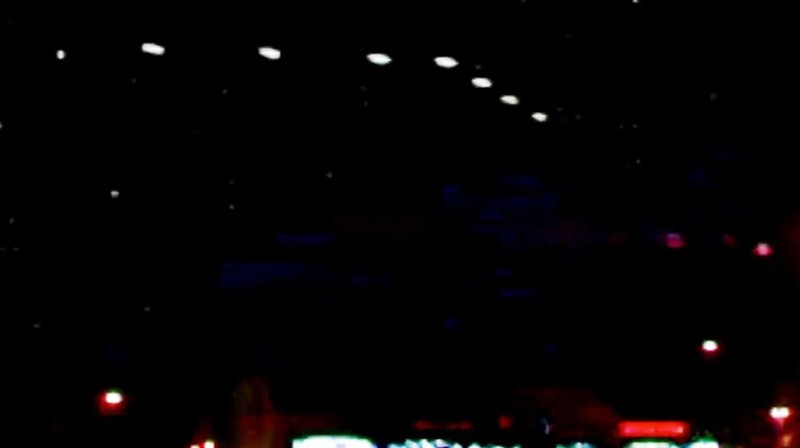
Phoenix Lights explained: Everything to know about the legendary UFO sighting

Phoenix Lights explained: Everything to know about the legendary UFO sighting

We're not saying it was aliens.
Hoe vind je dit bericht?
Geschreven door peter om 22:55 Stuur door

Een oude Maya-techniek zou de groei van planten op Mars kunnen bevorderen, zo beweert een onderzoek

Een oude Maya-techniek zou de groei van planten op Mars kunnen bevorderen, zo beweert een onderzoek

Janine imageDoor Janine

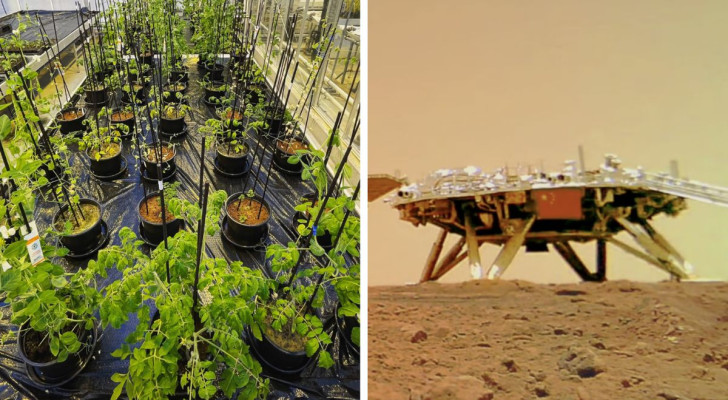
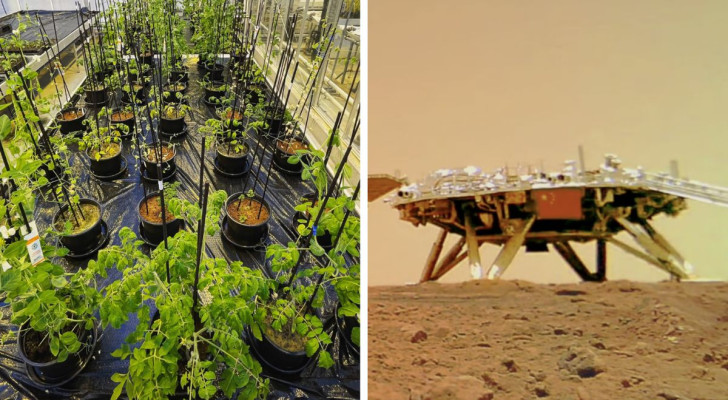
De tussenteelt van gewassen, getest door onderzoekers, en een voorbeeld van Marsgrond ernaast

Vroeg of laat zullen mensen naar Mars gaan. Misschien zal de missie niet in de nabije toekomst plaatsvinden, maar het staat vast dat het koloniseren van de rode planeet een van de doelstellingen van ruimtevaartorganisaties is. De vraag is: wat zullen toekomstige kolonisten eten? Leveringen vanaf de aarde zijn allesbehalve duurzaam, en dus blijft er maar één optie over: voedsel direct op Mars verbouwen, met enige hulp van oude Maya-praktijken.

De Maya's en de landbouw op Mars

PLOS ONE/Gonçalves et al./2024

De voedselvoorziening en de landbouw op Mars zijn verre van een ondergeschikt probleem, maar uiterst belangrijke kwesties. Met name een onderzoek van Wageningen University & Research in Nederland heeft mogelijk de eerste stappen gezet om het probleem op te lossen. De onderzoekers hebben in feite een moderne versie van een oude Maya-techniek overgenomen, genaamd intercropping of tussenteelt, en zijn begonnen met het telen van tomaten, erwten en wortels in dezelfde potten.

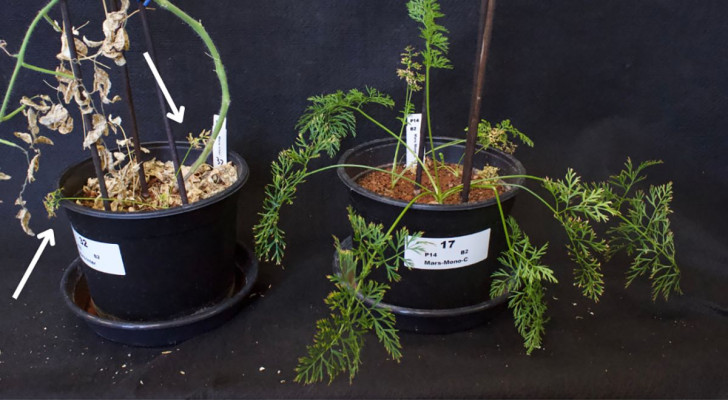
De resultaten, gepubliceerd in PLOS ONE, waren verrassend. Tomaten geteeld door middel van tussenteelt verdubbelden hun productie vergeleken met individueel geteelde tomaten, met grotere vruchten en in minder tijd. Hetzelfde gebeurde niet met erwten, die een onveranderde opbrengst behielden, en wortelen, die daarentegen een lagere opbrengst vertoonden. Terwijl aan de ene kant intercropping veelbelovende resultaten oplevert, is het aan de andere kant essentieel om zorgvuldig gewassen, grond en additieven te kiezen.

Verbouwen op Marsgrond: is dat mogelijk?

PLOS ONE/Gonçalves et al./2024

Bij het experiment van de onderzoekers van de Nederlandse universiteit waren in deze eerste fase drie soorten gewassen betrokken. Zoals we al zeiden, zijn de grondsoort en eventuele toevoegingen even belangrijk. Om de bodem van Mars te simuleren, ontwikkelden wetenschappers een bodem die bestaat uit regoliet, zonder organisch materiaal, waaraan ze vervolgens bacteriën en voedingsstoffen toevoegden. Een proces dat sterk lijkt op het proces dat toekomstige kolonisten zouden kunnen gebruiken om gewassen op Mars te verbouwen.

Als aanvoer vanaf de aarde moet worden uitgesloten vanwege de kosten en tijd die daarvoor nodig is, lijkt teelt op de rode planeet de enige optie. En intercropping, oftewel het gebruik van planten met complementaire eigenschappen, zou echt een levensvatbare toekomst kunnen vertegenwoordigen. Evenals een manier om het gebruik van water en voedingsstoffen te optimaliseren.

De nieuwe landbouw op Mars en de kunst van het kiezen van de juiste planten

PLOSE ONE/Gonçalves et al./2024 / 中国新闻网/Wikimedia Commons - CC BY 3.0 DEED

Uit de resultaten van hun experiment ontdekten de onderzoekers dat de tomatenplanten een concreet voordeel haalden uit de nabijheid van erwten. Deze laatste kunnen namelijk zeer efficiënt stikstof uit de lucht opnemen en omzetten in voedingsstoffen. Tegelijkertijd profiteerden de wortels niet alleen niet van de nabijheid van de erwten, maar werden ze er ook door geschaad, waarschijnlijk als gevolg van de concurrentie om licht. En we weten dat zonlicht op Mars niet in grote hoeveelheden beschikbaar is: ook in dit geval zal het nodig zijn om na te denken over duurzame alternatieven voor een menselijke kolonie.

Het succes van toekomstige missies naar de rode planeet hangt inderdaad ook af van het vermogen van de kolonisten om zelfvoorzienend te zijn. En deze capaciteit hangt op zijn beurt af van duurzame landbouw op Marsgrond, dat wil zeggen van de tussenteelt van de oude Maya’s. Naast het kiezen van de juiste gewassen om het project te starten, rest er vandaag nog maar één twijfel: niemand heeft de tomaten, erwten en wortelen geproefd. Wie weet hoe ze zullen smaken.

{ https://www.curioctopus.nl/ }

Hoe vind je dit bericht?
Geschreven door peter om 22:37 Stuur door

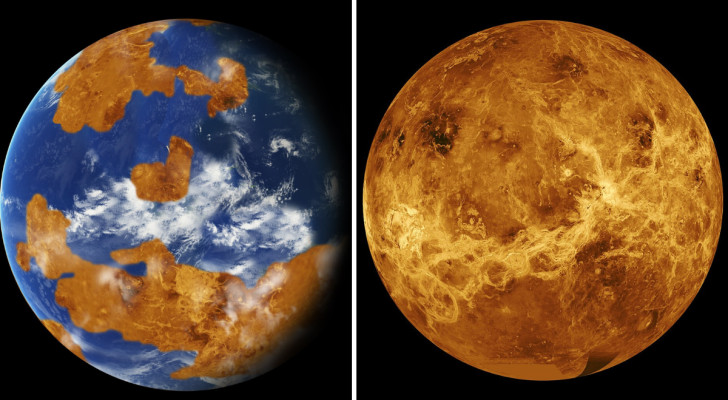
Venus had oorspronkelijk hetzelfde water als de aarde: eindelijk is ontdekt waarom het zo droog werd

Venus had oorspronkelijk hetzelfde water als de aarde: eindelijk is ontdekt waarom het zo droog werd

Janine imageDoor Janine

De planeet Venus toen er nog water was en de dorre bol van vandaag

Venus, onze dorre buur, was ooit rijk aan water. Maar waar is al het water gebleven? Een nieuwe studie heeft het antwoord gevonden.

Waarom is Venus een warme, droge planeet als er water is?

Waarom Venus van een planeet met water, zo warm en droog is geworden, is voor wetenschappers een mysterie. De oeroude aanwezigheid van water zou de planeet heet en vochtig moeten maken, maar toch is er geen spoor van waterdamp te vinden. Dit werd ontdekt door planeetwetenschappers van de University of Colorado Boulder en werpt een licht op waarom deze hete en onbewoonbare planeet is geworden wat hij nu is.

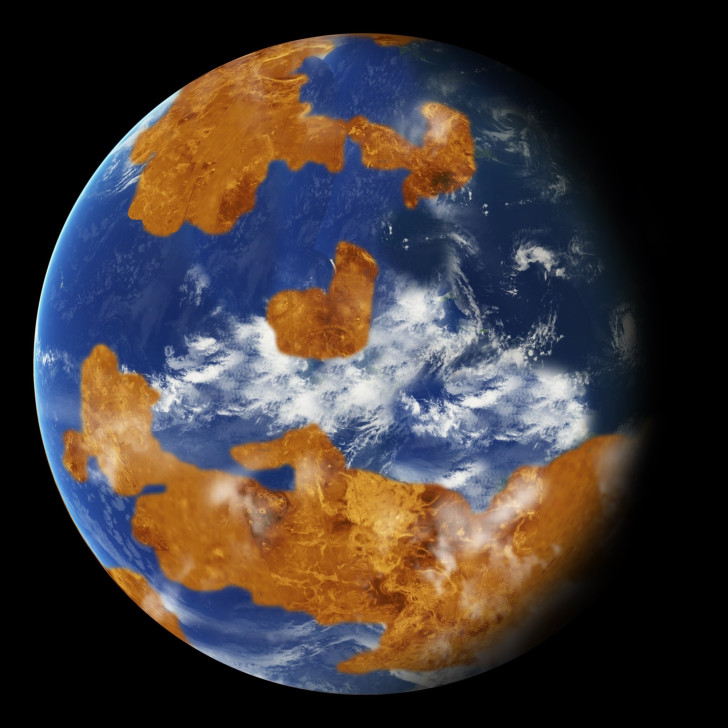
Men denkt dat Venus oorspronkelijk een vergelijkbare hoeveelheid water had als de aarde. Er is echter nog maar een honderdduizendste van over, volledig ingesloten in de atmosfeer, in plaats van verspreid in de oceanen, zeeën, ijs en lucht zoals op onze planeet. Dus waar is al het water gebleven? Een echt mysterie dat eindelijk ontrafeld lijkt te zijn.

De verantwoordelijke voor de dorre toestand van Venus

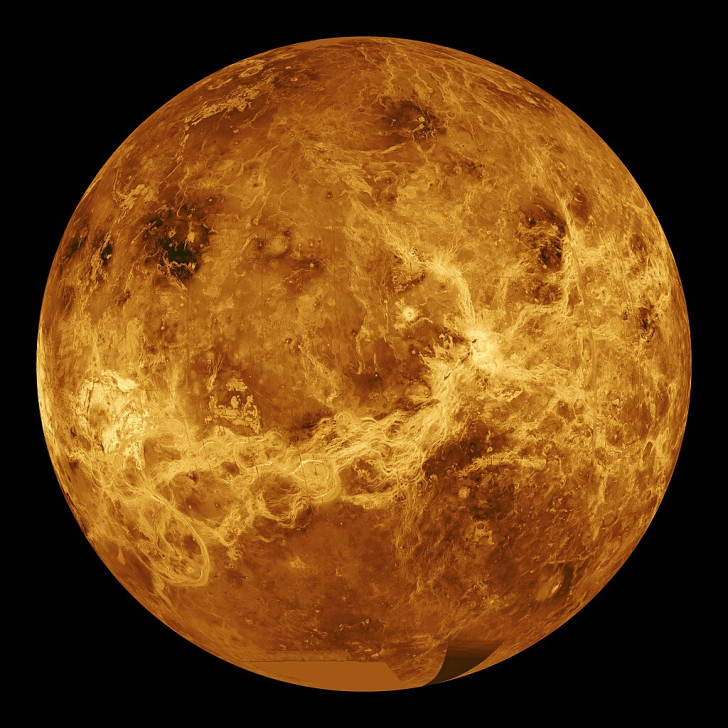
Globaal beeld van het oppervlak van Venus, gecentreerd op 180 graden oosterlengte

NASA/JPL/Wikimedia commons - Public domain

Eryn Cangi, co-hoofdauteur van het onderzoek en onderzoeker aan het Space and Atmospheric Physics Laboratory, legt uit: "Water is echt belangrijk voor leven. We moeten de omstandigheden begrijpen die vloeibaar water in het heelal ondersteunen en die mogelijk de huidige droge staat van Venus hebben veroorzaakt." Als we al het water op aarde op het oppervlak van onze planeet zouden gieten, zouden we een vloeibare laag hebben van ongeveer 3 kilometer. Als we hetzelfde zouden doen op Venus, zou de diepte slechts 3 centimeter zijn. Dat komt omdat de droge planeet 100.000 keer minder water heeft dan de aarde, ook al is hij even groot.

In wezen heeft het turbulente broeikaseffect van Venus het water letterlijk gekookt, waardoor stoom ontsnapte. Door middel van computersimulaties ontdekten de onderzoekers dat de waterstofatomen in de atmosfeer van Venus de ruimte in vliegen door “associatieve recombinatie”, een proces dat ervoor zorgt dat de planeet twee keer zoveel water verliest als eerder werd voorspeld. Met behulp van computermodellen stelden wetenschappers zich Venus voor als een enorm scheikundelaboratorium, waar ze reacties in de atmosfeer observeerden. Een molecuul genaamd HCO+, een ion dat bestaat uit een waterstof-, koolstof- en zuurstofatoom en dat wordt aangetroffen in de bovenste atmosfeer van de planeet, zou verantwoordelijk kunnen zijn voor het ontsnappen van water van Venus.

Dit is hoe Venus zo anders werd dan de aarde

Land-oceaan diagram van het oude Venus

NASA

Daarom kan deze ontdekking volgens Cangi onthullen waarom Venus zo anders werd dan de aarde, ook al waren de twee planeten oorspronkelijk bijna identiek: "We proberen te begrijpen welke kleine veranderingen zich op elke planeet voordeden om ze in deze zeer verschillende toestand te brengen." Volgens de wetenschappers veroorzaakten de machtige wolken koolstofdioxide in de atmosfeer een ongekend broeikaseffect in het hele zonnestelsel, waardoor de temperatuur steeg tot ongeveer 480°. Water werd stoom en het meeste daarvan kwam in de ruimte terecht. De rest verdween door HCO+, gevormd door de interactie tussen water en koolstofdioxide in de bovenste atmosferen van de planeet.

Dezelfde molecule kan ook een belangrijke rol hebben gespeeld bij het verdwijnen van water van Mars. Op Venus wordt de molecule continu geproduceerd, maar de ionen leven niet lang: de elektronen splitsen ze in twee delen, waarvan er één door de ruimte raast. Waarschijnlijk is de hoeveelheid van de molecule nooit gedetecteerd bij gebrek aan geschikte apparatuur.

{ https://www.curioctopus.nl/ }

Hoe vind je dit bericht?
Geschreven door peter om 22:28 Stuur door

Chinese Probe Lands on Moon’s Far Side to Collect Samples for Return

An image captured during the Chang'e-6 probe's descent shows lunar terrain. (Credit: CLEP / CNSA)

Chinese Probe Lands on Moon’s Far Side to Collect Samples for Return

After touching down on the moon’s far side, China’s Chang’e-6 lander is collecting samples to bring back to Earth — and sending back imagery documenting its mission.

Chang’e-6, which was launched May 3, went through weeks’ worth of in-space maneuvers that climaxed with its weekend landing in the moon’s South Pole-Aitken Basin region. The mission plan calls for the probe to collect samples of lunar soil and rock over the course of about two days, and then pack them up for the return trip.

If the operation is successful, Chang’e-6 would bring back the first fresh lunar samples ever collected on the moon’s far side — following up on the Chang’e-5 mission in 2020, which returned samples from the moon’s Earth-facing side.

The China National Space Administration said the lander used its onboard camera during its powered descent to detect obstacles autonomously and select a safe landing site. Chang’e-6 captured video imagery during the final phase of the lander’s descent and transmitted the views back to Earth. One video frame shows the shadow of the lander itself moments before touchdown.

Chang’e-6 is built to collect samples using a drill and a robotic arm. It’s also expected to gather scientific data about its surroundings using a radon detector, a negative-ion detector and a mini-rover. During surface operations, data and telemetry are being relayed between Chang’e-6 and Earth via China’s Queqiao-2 satellite.

Up to 2 kilograms (4.4 pounds) of lunar samples will be stowed inside the lander’s “ascender” stage. The rocket-powered ascender will then lift off from the surface and transfer the samples to the Chang’e-6 orbiter, which is currently in lunar orbit. Following the model set by Chang’e-5, the orbiter will head back toward Earth and release the sample capsule for atmospheric re-entry and touchdown in Inner Mongolia.

240602-change-1024x747.jpg

An image captured by a camera aboard the Chang’e-6 lander shows the spacecraft’s shadow on the lunar surface just moments before touchdown. (Credit: CLEP / CNSA)

The moon’s south polar region is of particular interest because it’s thought to harbor reserves of water ice that could support lunar settlement. Studying fresh samples from the South Pole-Aitken Basin could help scientists and mission planners learn more about the region’s resources.

Chang’e-6 is the latest spacecraft in an international armada of moon landers — including Russia’s Luna 25, iSpace’s Hakuto-R and Astrobotic’s Peregrine, which were unsuccessful, plus more fruitful missions such as India’s Chandrayaan-3, Japan’s SLIM and Intuitive Machines’ Odysseus.

Coming attractions include NASA’s VIPER rover, which is currently due to be delivered to the moon late this year; and China’s Chang’e-7 mission, which features a hopping probe and is set for launch in 2026. Looking further ahead, China aims to send astronauts to the lunar surface by 2030 — not long after NASA’s Artemis 3 crewed lunar landing, currently scheduled for 2026.

{ https://www.universetoday.com/ }

Hoe vind je dit bericht?
Geschreven door peter om 20:47 Stuur door

Exploring the Depths: Admiral Tim Gallaudet on Underwater Alien Bases, UFO Psyops, and Weather Weapons

Exploring the Depths: Admiral Tim Gallaudet on Underwater Alien Bases, UFO Psyops, and Weather Weapons

ngcb1

Admiral Tim Gallaudet, a retired Navy Admiral and oceanographer, has an extensive and distinguished career in both military and civilian sectors. His expertise spans across oceanographic research, national security, and, more recently, unidentified submerged objects (USOs) and unidentified aerial phenomena (UAPs). This article delves into Gallaudet’s insights on underwater alien bases, UFO psyops, and the potential for weather manipulation weapons.

Career Background

Gallaudet’s military career included pivotal roles aboard several naval vessels, such as the USNS Harkness, USS Peleliu, and USS Kitty Hawk. He participated in numerous operations, including Operations Southern Watch, Provide Promise, Sharp Guard, Deny Flight, Enduring Freedom, and Iraqi Freedom. Beyond his naval service, Gallaudet contributed significantly to environmental research and management as the Deputy Administrator of the National Oceanic and Atmospheric Administration (NOAA). Today, he is the CEO of Ocean STL Consulting, a firm specializing in ocean exploration, including the study of USOs.

Underwater Alien Bases and USOs

Gallaudet’s exploration into USOs has revealed intriguing possibilities about underwater alien bases. He recounts an incident involving the USS Omaha, which captured video evidence of a UAP entering the water. This, coupled with classified information and various anecdotal reports, suggests that underwater phenomena may be more common than previously acknowledged.

One particularly fascinating case involves a feature off the Southern California coast. This area, often referred to as an undersea mesa, has been speculated to be an alien base due to its unnatural appearance in Google Earth imagery. However, Gallaudet clarifies that such features often appear man-made due to data processing and resolution discrepancies in mapping technologies.

UFO Psyops and Government Disinformation

Gallaudet discusses the complex issue of government disinformation related to UAPs and USOs. He references historical cases such as the Project Beta, where the Air Force allegedly deceived a civilian researcher into believing in an imminent alien invasion, leading to his mental breakdown. This case exemplifies the lengths to which government entities might go to obscure the truth about UAPs.

Moreover, Gallaudet criticizes the All-domain Anomaly Resolution Office (AARO) for its inadequate report on UAPs, which he believes deliberately omits significant information. He argues that the government’s reluctance to disclose the full extent of UAP activities is partly due to national security concerns and the potential public panic it might cause.

Weather Weapons and Geoengineering

The concept of weather manipulation as a weapon has also been explored within military circles. Gallaudet touches upon the history and potential of geoengineering to influence weather patterns. Although the technology to create typhoons or manipulate weather on a large scale remains underdeveloped, research in this field continues, driven by both defense and climate change mitigation interests.

For instance, Gallaudet mentions a theory about using space weather monitoring to predict earthquakes, a concept that has faced resistance from traditional geological institutions. He advocates for a multidisciplinary approach to studying such phenomena, similar to how weather forecasting has evolved to include oceanographic data for better accuracy.

VIDEO:

  • Admiral Tim Gallaudet – Underwater Alien Base, UFO Psyops and Weather Weapons | SRS #113

Admiral Tim Gallaudet’s contributions to oceanographic research, national security, and the study of UAPs provide a comprehensive view of the unexplored frontiers beneath our oceans and in our skies. His advocacy for transparency and scientific inquiry into USOs, UAPs, and potential weather manipulation technologies underscores the need for an open-minded and multidisciplinary approach to these enigmatic subjects. As Gallaudet continues to push for more rigorous exploration and understanding, his work reminds us of the vast unknowns that still lie within our reach, waiting to be discovered.

{ https://www.latest-ufo-sightings.net/ }

Hoe vind je dit bericht?
Geschreven door peter om 20:37 Stuur door

Meer van UFO'S of UAP'S, ASTRONOMIE, RUIMTEVAART, ARCHEOLOGIE, OUDHEIDKUNDE, SF-SNUFJES EN ANDERE ESOTERISCHE WETENSCHAPPEN - DE ALLERLAATSTE NIEUWTJES

↑ Terug naar de berichten