Naar de inhoud

UFO'S of UAP'S, ASTRONOMIE, RUIMTEVAART, ARCHEOLOGIE, OUDHEIDKUNDE, SF-SNUFJES EN ANDERE ESOTERISCHE WETENSCHAPPEN - DE ALLERLAATSTE NIEUWTJES

UFO's of UAP'S in België en de rest van de wereld
akke.beakke.be
Ontdek de Fascinerende Wereld van UFO's en UAP's: Jouw Bron voor Onthullende Informatie! Ben jij ook gefascineerd door het onbekende? Wil je meer weten over UFO's en UAP's, niet alleen in België, maar over de hele wereld? Dan ben je op de juiste plek! België: Het Kloppend Hart van UFO-onderzoek In België is BUFON (Belgisch UFO-Netwerk) dé autoriteit op het gebied van UFO-onderzoek. Voor betrouwbare en objectieve informatie over deze intrigerende fenomenen, bezoek je zeker onze Facebook-pagina en deze blog. Maar dat is nog niet alles! Ontdek ook het Belgisch UFO-meldpunt en Caelestia, twee organisaties die diepgaand onderzoek verrichten, al zijn ze soms kritisch of sceptisch. Nederland: Een Schat aan Informatie Voor onze Nederlandse buren is er de schitterende website www.ufowijzer.nl, beheerd door Paul Harmans. Deze site biedt een schat aan informatie en artikelen die je niet wilt missen! Internationaal: MUFON - De Wereldwijde Autoriteit Neem ook een kijkje bij MUFON (Mutual UFO Network Inc.), een gerenommeerde Amerikaanse UFO-vereniging met afdelingen in de VS en wereldwijd. MUFON is toegewijd aan de wetenschappelijke en analytische studie van het UFO-fenomeen, en hun maandelijkse tijdschrift, The MUFON UFO-Journal, is een must-read voor elke UFO-enthousiasteling. Bezoek hun website op www.mufon.com voor meer informatie. Samenwerking en Toekomstvisie Sinds 1 februari 2020 is Pieter niet alleen ex-president van BUFON, maar ook de voormalige nationale directeur van MUFON in Vlaanderen en Nederland. Dit creëert een sterke samenwerking met de Franse MUFON Reseau MUFON/EUROP, wat ons in staat stelt om nog meer waardevolle inzichten te delen. Let op: Nepprofielen en Nieuwe Groeperingen Pas op voor een nieuwe groepering die zich ook BUFON noemt, maar geen enkele connectie heeft met onze gevestigde organisatie. Hoewel zij de naam geregistreerd hebben, kunnen ze het rijke verleden en de expertise van onze groep niet evenaren. We wensen hen veel succes, maar we blijven de autoriteit in UFO-onderzoek! Blijf Op De Hoogte! Wil jij de laatste nieuwtjes over UFO's, ruimtevaart, archeologie, en meer? Volg ons dan en duik samen met ons in de fascinerende wereld van het onbekende! Sluit je aan bij de gemeenschap van nieuwsgierige geesten die net als jij verlangen naar antwoorden en avonturen in de sterren! Heb je vragen of wil je meer weten? Aarzel dan niet om contact met ons op te nemen! Samen ontrafelen we het mysterie van de lucht en daarbuiten.

Archief

New Data Reveals How Galaxies Grew in the Early Universe

New Data Reveals How Galaxies Grew in the Early Universe

These new galaxies in the early universe were still hungrily gobbling up nearby gas.

JWST recently caught three of the universe’s earliest galaxies in the act of pulling themselves together from a giant, dark cloud of hydrogen gas.

The three dim spots of red light in a recent batch of JWST data traveled more than 13 billion light years across space to reach the telescope’s mirrors. That ancient light carries a snapshot of what galaxies looked like between 400 and 600 million years after the Big Bang, back when the universe was basically a cosmic toddler. And all three of these early galaxies are shrouded in dense hydrogen gas, which is slowly falling into the galaxies’ gravity wells — where it will eventually help them form new stars.

University of Copenhagen astrophysicist Kasper Heintz and his colleagues published their work in the journal Science.

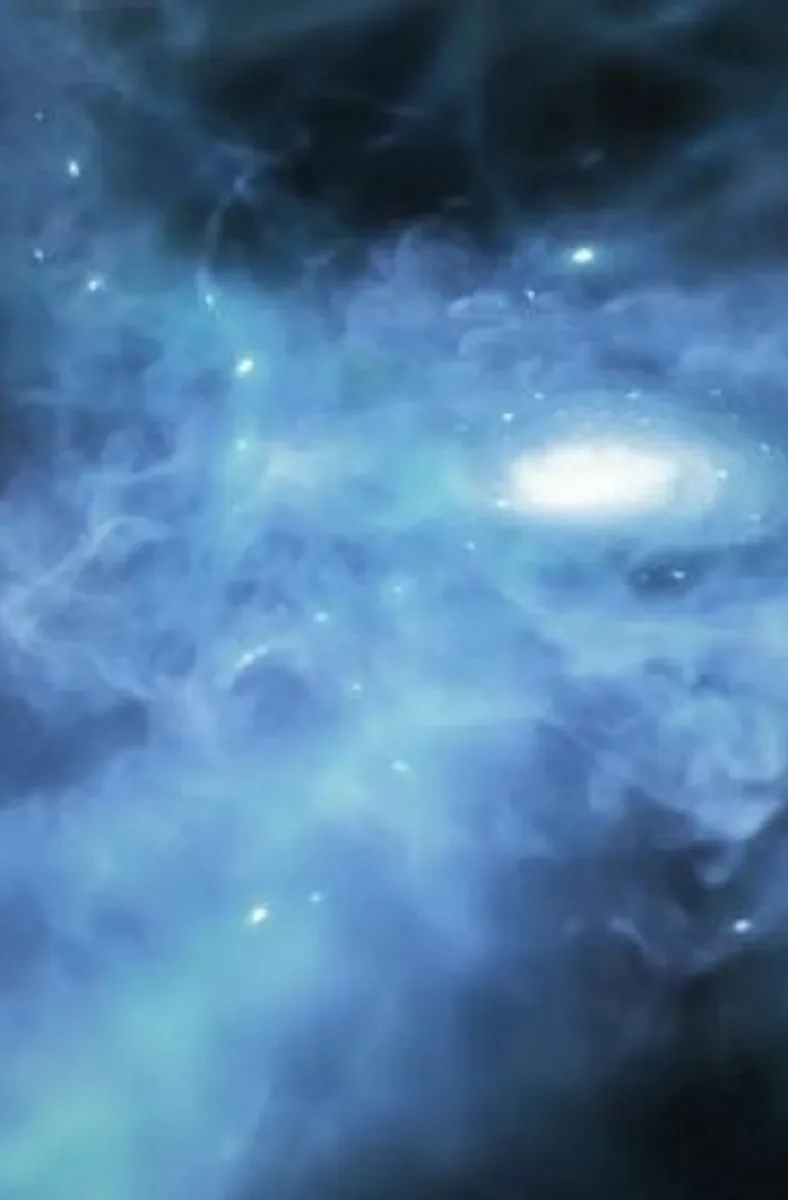
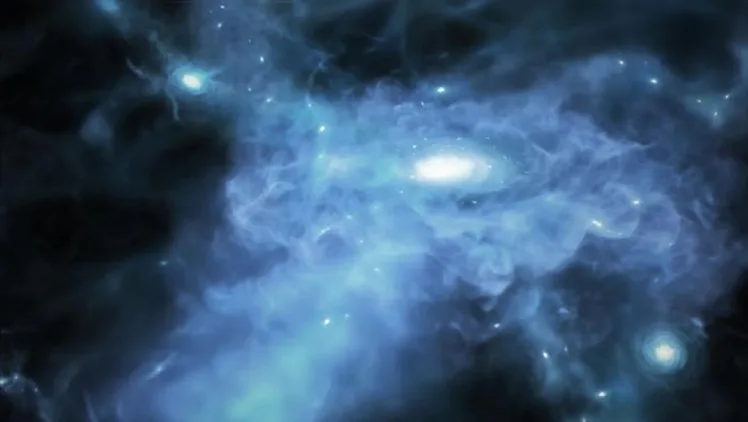
image of a small round galaxy in the middle of a cloud of blue and white gas, in space.

This artist’s illustration shows a young galaxy, just a few hundred million years after the Big Bang, still trying to pull itself together from the surrounding cold hydrogen gas.

NASA, ESA, CSA, JOSEPH OLMSTED (STSCI)

THE EPOCH OF REIONIZATION IS GONNA BE LIT

JWST’s instruments helpfully split the light from the distant galaxies into the individual wavelengths that make it up. The spectrum of light coming from an object, like a galaxy, is like a fingerprint of the chemicals that form it, because each chemical compound absorbs, emits, and reflects its own very specific wavelengths of light. Around the three distant galaxies, Heintz and his colleagues noticed that something seemed to be absorbing the same wavelengths of light as cold hydrogen gas – and lots of it.

“These galaxies are like sparkling islands in a sea of otherwise neutral, opaque gas,” says Heintz in a recent statement.

Hydrogen gas, when it’s cold and not electrically-charged (or ionized), absorbs light but doesn’t emit it. This neutral gas filled the early universe, making it impossible for light to travel very far, until a few hundred million years after the Big Bang: a period called the Cosmic Dark Ages.

It took powerful blasts of radiation from the first stars in the first galaxies to strip away electrons from all those hydrogen atoms, creating ionized gas (also called plasma) which is translucent instead of opaque. The Epoch of Reionization had begun – and the three galaxies in Heintz and his colleagues’ recent study are just starting to light it up.

BRAND NEW GALAXIES, SOME ASSEMBLY REQUIRED

Somewhere between 13.2 billion and 13.4 billion years ago — when the light that just reached JWST started its long journey across space — these three early galaxies were still in the process of assembling themselves from the surrounding gas.

“[The data] suggests that we are seeing the assembly of neutral hydrogen into galaxies,” says University of Copenhagen astrophysicist Darach Watson, a coauthor of the recent study, in a statement. And that’s a stage of galaxy formation that astronomers haven’t seen before, especially in the very early universe.

The galaxies, in their infancy, are still surrounded by a cloud of cold, dark, neutral hydrogen gas — the same stuff that caused the Cosmic Dark Ages. Most of that gas will be heated up as it falls into the galaxies, pulled in by their inexorable gravity. And then it will slowly cool, forming lumps like congealed oatmeal, and some of those lumps will be so heavy that they collapse on themselves to form new stars.

Right now (or as we see them right now, which actually happened billions of years ago), what stars these early galaxies contain are mostly young and newly-formed.

“The fact that we are seeing large gas reservoirs also suggests that the galaxies have not had enough time to form most of their stars yet.” But they’ll get there, most likely.

The data reveals not only a previously unseen moment in a galaxy’s life, but also a glimpse of what the early universe was like before the expansion of space pulled everything farther apart, turning most galaxies into lonely beacons, or at most isolated clusters of lights, in the void.

“We’re moving away from a picture of galaxies as isolated ecosystems,” says University of Copenhagen astrophysicist Simone Nielsen in a recent statement. “At this stage in the history of the universe, galaxies are all intimately connected to the intergalactic medium with its filaments and structures of pristine gas.”

In the very early universe, no galaxy was an island (yet).

 { https://www.inverse.com/ }

Hoe vind je dit bericht?
Geschreven door peter om 00:20 Stuur door

The 5 most infamous alien encounters in Arizona history

The 5 most infamous alien encounters in Arizona history

Arizona is a hotspot for alleged UFO activity. Here are five of the most well-known cases.

"Much has happened since the historic and still-unexplained March 13, 1997, mass sighting, propelling the Phoenix Lights into the international limelight as the most witnessed, most documented, and most important mass anomalous aerial events in modern history,” she tells New Times. 

Jeff Willes says the Phoenix Lights was impossible for the government to conceal. 

"The Phoenix Lights is Arizona's biggest UFO story," he says. "Thousands of witnesses saw this V-shaped object that flew all across the state. There still hasn’t been a UFO sighting like that in UFO history."

    - (This article originally appeared in 2016 and has been updated.)

Hoe vind je dit bericht?
Geschreven door peter om 22:13 Stuur door

UFO Sighting Caught On Video In New York During Blue Angels Show Has People Stumped

UFO Sighting Caught On Video In New York During Blue Angels Show Has People Stumped

BY DOUGLAS CHARLES

UFO Unidentified Flying Object

STOCKPHOTO

It is not unusual for pilots to report seeing UFOs. In fact, they probably see more UFOs than the average person because, well, they are thousands of feet up in the sky.

What is more unusual is for people on the ground watching pilots fly their aircraft to spot a UFO in the same sky at the very same time.

Then again, how often does the average person spend looking at the sky in a given day. Surely, it is much less than they do when they are at an air show. So someone spotting a UFO at an event like that makes some sense.

It happened in 2023 when a UFO appeared to join the Royal Air Force (RAF) Red Arrows and was caught on camera.

It also happened in 2022 during Queen Elizabeth II’s Platinum Jubilee parade while nine fighter jets flew in formation over the festivities.

And now it has happened again in 2024.

While the Navy’s Blue Angels were performing a demonstration during an air show on Long Island over Memorial Day weekend, a UFO appeared to zoom past a Boeing F/A-18 Super Hornet while it was flying over Jones Beach.

Of course, it was caught on video, but just for a split second. Even slowing down the video shows how incredibly quick this UFO was when compared to the speed of the fighter jet.

According to a report filed with the National UFO Reporting Center (NUFORC), here’s what the witness saw.

“Weekend of Bethpage Airshow – was looking for anything in the sky,” they wrote. “From stated location above, looking very high in the sky – approximately 36,500 to 41,000 ft high. Looking Westward from my location, tracking it going North by Northwest, by eye.

“Held at arms length, UAP was about the size of a slightly less than a pea, but greater than a grain of rice. Going very fast for a craft that high. No trails seen. Vividly tracked it visually for about 9 seconds. Then, saw it take an immediate and distinct 90 degree turn downward to about 18,000 feet within two to maybe 3 seconds. Distinctly able to follow it visually to that level when it simply disappeared.

“Not the Blue Angels (flying this weekend). Not commercial. Appeared relatively normal until it took the 90 degree turn and accelerated downward in the same position but to a lower altitude.”

What was it? No one seems to know with 100 percent certainty.

Perhaps it could have been similar to the UFO that made national news after a woman filmed it from a plane over LaGuardia Airport in April.

The truth is out there… somewhere.

Douglas Charles headshot avatar BroBible
Before settling down at BroBible, Douglas Charles, a graduate of the University of Iowa (Go Hawks), owned and operated a wide assortment of websites. He is also one of the few White Sox fans out there and thinks Michael Jordan is, hands down, the GOAT.

{ https://brobible.com/ }

Hoe vind je dit bericht?
Geschreven door peter om 21:44 Stuur door

Een Japanse robot loste een Rubiks kubus op in minder dan een seconde: de video is te snel

Een Japanse robot loste een Rubiks kubus op in minder dan een seconde: de video is te snel

Janine imageDoor Janine

De door Japanse ingenieurs gebouwde robot loste de Rubiks kubus op in 0,305 seconde: een record

Het Guinness Book of World Records is altijd een soort boek geweest van menselijke en dierlijke prestaties. Van het meest ongelofelijke tot het meest bijzondere, een vermelding in het Guinness World Records betekent dat je ergens de beste in bent. Het is echter niet altijd een levend wezen dat een record vestigt. Onlangs verdiende een robot een ereplaats onder de wereldrecords door een Rubiks kubus op te lossen in minder dan een seconde. Laten we eens kijken hoe hij dat deed.

Mensen, machines en Rubiks kubus: een genadeloze vergelijking

Unsplash

Dat Guinness World Records ruimte maakt voor prestaties betreft Rubiks Kubus is niets nieuws. In 2023 en daarvoor, in 2018, wisten twee mannen in iets meer dan drie seconden een Rubiks kubus op te lossen, waarmee ze in beide gevallen een wereldrecord vestigden. De laatste is van Max Park, een 21-jarige man die de 3x3x3-kubus in slechts 3,13 seconden in zijn oorspronkelijke staat terugbracht.

Dit is een buitengewone en ongekende prestatie, maar wel een die Park heeft bevestigd als een van de specialisten van Rubuks kubus. In 2020 had Netflix zelfs al de documentaire “The Speed Cubers” aan hem gewijd, oftewel de mensen die gespecialiseerd zijn in het razendsnel oplossen van Rubiks kubussen. Dit zijn verhalen over een toewijding en vaardigheid die geen grenzen kent. Zo niet die van het menselijk lichaam.

Robot lost de Rubiks kubus in minder dan een seconde op

guinnessworldrecords/Instagram

Max Park vertegenwoordigt daarom het toppunt van menselijk vermogen bij het oplossen van een Rubiks kubus, een niveau dat echter niet door machines kan worden bereikt. Een team van ingenieurs van Mitsubishi Electric Corporation, een Japans bedrijf, heeft namelijk een robot ontwikkeld die de Rubiks kubus kan oplossen. Dit is niet de eerste poging, maar op dit moment is het wel de poging die een nooit eerder vertoond record heeft gevestigd.

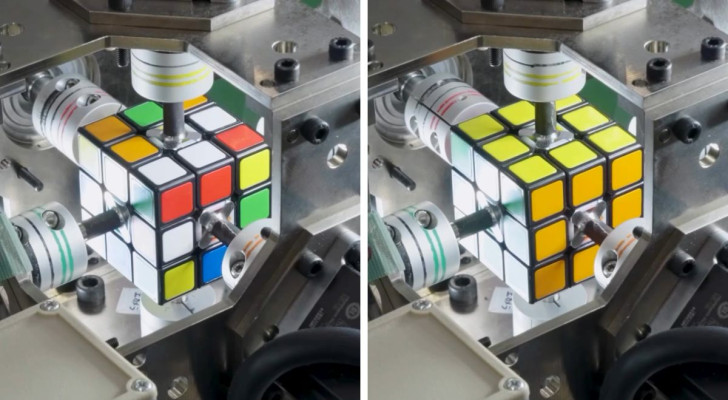
De robot ontwikkeld door het Component Production Engineering Center van MEC slaagde erin de 3x3x3 Rubiks kubus in minder dan een seconde op te lossen, om precies te zijn in 0,305 seconden. Dit is zo'n snelle tijd dat het menselijk oog deze niet eens kan volgen, tenzij gebruik wordt gemaakt van slow motion. Deze prestatie wordt bevestigd door het profiel van Guinness World Records zelf, dat de video in slow motion publiceerde.

Het geheim achter het Guinness van de robot

Het recordbrekende robotproject werd geleid door ingenieur Tokui, geïnspireerd door de vele online video's van robots die een Rubiks kubus probeerden. Tokui was ervan overtuigd dat zijn team een beter resultaat kon bereiken en ging meteen aan de slag, maar hij realiseerde zich al snel voor welke uitdagingen hij stond. Niet alleen het ontwerp van de robot om de Rubiks kubus op te lossen zorgde voor problemen, maar ook de Rubiks kubus zelf. Het mechanisme in de puzzel kan namelijk gemakkelijk vastlopen of zelfs leiden tot het breken ervan. Het oplossen van een Rubiks kubus in minder dan een seconde vereist snelheid, maar ook een grote vloeiendheid in de bewegingen van de machine en de puzzel.

Na een mislukte eerste poging slaagde het ingenieursteam erin om de robot te perfectioneren voor een tweede poging, die de klok stopte op 0,305 seconden. Een wereldrecord dat het vorige record dat was gevestigd als onderdeel van The Rubik's Contraption overtrof. Misschien is de tijd wel rijp voor een Guinness Book of Robots, en niet alleen een Guinness World Record.

{ https://www.curioctopus.nl/ }

Hoe vind je dit bericht?
Geschreven door peter om 21:24 Stuur door

Retired Colonel Karl Nell: Aliens Exist and Interact with Humans

Retired Colonel Karl Nell: Aliens Exist and Interact with Humans

In a recent and highly provocative declaration, Retired U.S. Army Colonel Karl Nell stated that not only do extraterrestrials exist, but they have also been interacting with humanity. Nell, who formerly directed the Pentagon’s Unidentified Aerial Phenomena (UAP) task force, made these claims during a speech at the SALT conference in New York City on May 21st. His bold assertions have sparked significant interest and debate, particularly as they come from someone with his extensive military and intelligence background.

Extraordinary Claims from a High-Ranking Officer

Colonel Nell’s extensive career includes roles in the U.S. Army Space Command, Northrop Grumman, Lockheed Martin, and Bell Labs, among others. His high-level security clearances and positions within the defense sector lend considerable weight to his statements. During his speech, Nell emphatically stated, “Non-human intelligence exists. Non-human intelligence has been interacting with humanity. This interaction is not new and it’s been ongoing.” He also asserted that there are unelected officials within the government who are aware of these interactions.

Acknowledging the Critics

Ross Coulthart, the host of the event, addressed the skepticism that often surrounds such claims. Critics frequently ask, “Where’s the evidence?” Coulthart acknowledged that while Nell’s statements might not introduce new information, the way he presented them—with clear resolve and preparedness—was compelling. Coulthart pointed out that Nell’s statements align with those made by other notable figures in the UAP community, including Lou Elizondo, David Grusch, and Chris Mellon.

The Challenge of Secrecy

A significant portion of the controversy stems from the classified nature of the information. Nell and others in similar positions are bound by national security oaths and top-secret clearances, limiting what they can publicly disclose. Coulthart emphasized that these individuals, whom he describes as patriots, are constrained by their commitments to national security, which complicates the public’s demand for evidence.

Historical Context and New Legislation

Nell’s involvement in significant intelligence operations, such as the Defense Intelligence Agency’s foreign material program, adds another layer of credibility to his claims. This program, which deals with the retrieval and analysis of foreign technology, is rumored to involve collaboration with international allies, further indicating the potential global implications of these interactions.

Moreover, the discussion touched on recent legislative efforts, such as the Schumer Amendment, aimed at increasing transparency around UAPs. Although the amendment faced setbacks, it underscores the ongoing efforts within Congress to address the issue. Senator Chuck Schumer and others have voiced their frustration over the government’s reluctance to share UAP information with the public and Congress, highlighting a bipartisan desire for greater transparency.

The Path Forward

Coulthart and Nell both stressed the importance of continued advocacy for disclosure. They believe that pressure from informed and engaged citizens can compel Congress to act. Nell outlined six potential reasons for the government’s reluctance to disclose information, including national security concerns, societal disruption, and the potential for technological and strategic advantages.

However, Nell also presented strong arguments for disclosure, emphasizing the moral right of the public to know the truth and the potential benefits of scientific collaboration. He suggested that a controlled, measured disclosure could help advance humanity’s understanding of advanced technologies while maintaining national security.

VIDEO:

  • Senior US military officer: ‘Zero doubt’ of alien life on earth | Reality Check

Colonel Karl Nell’s statements at the SALT conference have reignited the debate on UAPs and the existence of extraterrestrial life. His authoritative voice, combined with his extensive experience in military and intelligence roles, adds significant weight to the conversation. While the challenge of secrecy remains a significant barrier, ongoing legislative efforts and public advocacy could pave the way for greater transparency and understanding of this profound issue.

{ https://www.latest-ufo-sightings.net/ }

Hoe vind je dit bericht?
Geschreven door peter om 20:46 Stuur door

Webb-telescoop legt melkwegstelsel vast van 290 miljoen jaar na oerknal

Webb-telescoop legt melkwegstelsel vast van 290 miljoen jaar na oerknal

Webb-telescoop legt melkwegstelsel vast van 290 miljoen jaar na oerknal

Webb-telescoop legt melkwegstelsel vast van 290 miljoen jaar na oerknal
© Aangeboden door Belga

Wetenschappers hebben, met behulp van de James Webb-ruimtetelescoop (JWST), een melkwegstelsel gevonden dat "slechts" 290 miljoen jaar na de oerknal bestond. Dat meldt het Europese ruimtevaartagentschap ESA, dat spreekt van een record, donderdag.

De afgelopen twee jaar hebben wetenschappers de telescoop gebruikt om de zogenaamde Cosmic Dawn, of kosmische dageraad, te onderzoeken, de periode in de eerste paar honderd miljoen jaar na de oerknal waarin de eerste sterrenstelsels ontstonden. "Die sterrenstelsels geven vitaal inzicht in de manieren waarop het gas, de sterren en de zwarte gaten veranderden toen het heelal nog heel jong was", aldus ESA.

In oktober 2023 en januari 2024 gebruikte een internationaal team van astronomen de ruimtetelescoop om sterrenstelsels te observeren als onderdeel van het JWST Advanced Deep Extragalactic Survey (JADES) programma. Het gaat om een observatieprogramma dat zich, gebruikmakend van Webb's NIRSpec (Near-Infrared Spectrograph), focust op een heel klein deel van de hemel en die focus behoudt voor langere tijd. Het resultaat zijn zogenaamde deep field-beelden van verafgelegen hemellichamen.

"Wetenschappers hebben op die manier een melkwegstelsel ontdekt dat slechts 290 miljoen jaar na de oerknal werd waargenomen", zo klinkt het.

De Webb-telescoop, de opvolger van de beroemde ruimtetelescoop Hubble, is ontwikkeld door de Verenigde Staten, Europa en Canada. Hij werd in 2021 gelanceerd.

Ter info: de oerknal, of Big Bang, zou zo'n 13,7 miljard jaar geleden hebben plaatsgevonden.

{ https://www.msn.com/nl-be/feed?ocid=msedgntp&pc=acts }

Hoe vind je dit bericht?
Geschreven door peter om 20:31 Stuur door

Prehistoric discovery in US lake leaves experts in shock and awe

Prehistoric discovery in US lake leaves experts in shock and awe

Story by Andrea Vacchiano

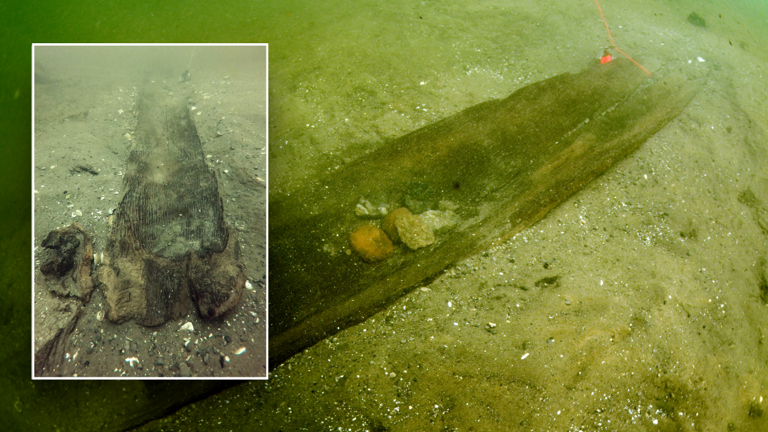
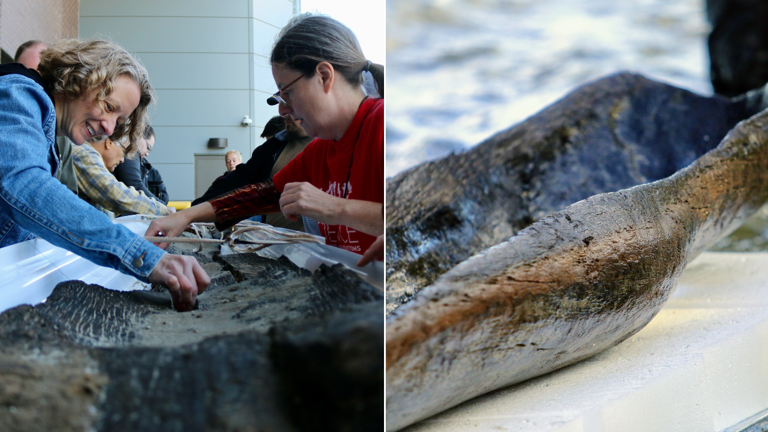
Wisconsin historians recently announced the discovery of at least 11 ancient canoes in a Badger State lake – including one boat that dates back to 2500 BC.

The findings were announced in a press release by the Wisconsin Historical Society on May 23. The canoes were found in Lake Mendota, which is located outside of Madison.

The Wisconsin Historical Society explained that two ancient canoes were found in a cache in the lake in 2021 and 2022. Since then, historians have found at least 11 other ancient canoes, along what they believe was an ancient shoreline that became submerged over time. 

Not all the canoes will be removed from the lake due to their fragility. In an interview with Fox News Digital on Wednesday, State Archaeologist for the Wisconsin Historical Society Dr. Amy Rosebrough explained the significance of the discovery.

The discovery of ancient canoes was announced in a press release by the Wisconsin Historical Society last week.
Fox News© Wisconsin Historical Society

"The Indigenous peoples of Wisconsin and the wider United States fished, traveled, and traded extensively on inland lakes and streams, and until now we have not had a clear look at the canoes used in the Great Lakes region," she explained.

"To put it in modern terms, it’s like trying to understand life in the Midwest without ever seeing a real pickup truck in person. Canoes allowed people to fish in deeper lakes, to transport goods over hundreds of miles, and to travel to far-away places. "

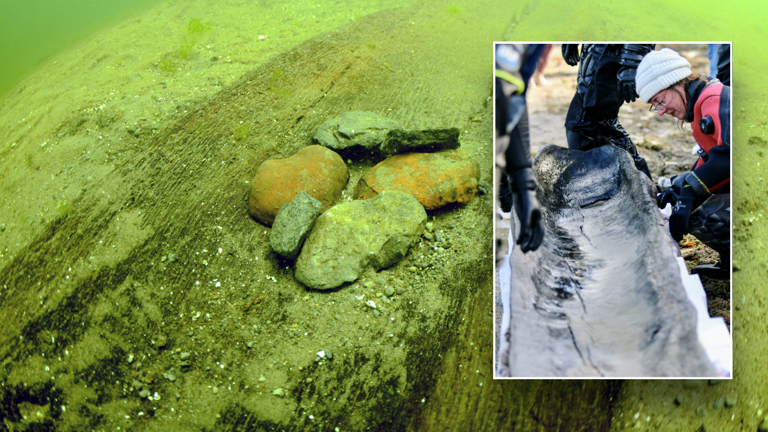
Rosebrough added that they believe an ancient village site is located under the waters, although it has not been found yet. Divers have found stone tools in the water, and experts believe that the lake is filled with other hidden sites.

"Lake Mendota is a hard lake to work in, however," Rosebrough admitted. "There is a limited window of visibility for diving missions, and we are exploring non-destructive remote sensing techniques that might help this summer."

Archaeologists discovered the ancient canoes in the murky waters of Lake Mendota.
Fox News© Fox News

"Even without finding the village, the discovery of these canoes and the tools found within the first canoe that was found, human-worked stone tools called net sinkers, reminds us that people have lived and worked alongside the lake for thousands of years."

Radiocarbon dating found that the oldest canoe dates back to 2500 B.C., which would mean it was built around the time Stonehenge was constructed. The canoe was constructed more than 1,700 years before Ancient Rome was first settled and 2,500 years before the birth of Jesus Christ.

All the canoes varied in age, with the youngest one dating back to 1250 AD. The archaeologist explained that the canoes "may have been intentionally cached in the water during the winter months, a standard practice to keep canoes safe from freezing and warping."

All the canoes varied in age. Not all will be removed from the lake due to their fragility.
Fox News© Fox News

"Either this practice of storing canoes for winter was carried out in roughly the same spot over generations – perhaps because of a living area nearby – or we are only seeing a window into a much larger site that might span much of the lakeshore," she described.

Rosebrough added that, though the Great Lakes dwarf Lake Mendota, the south central Wisconsin lake is small but mighty when it comes to archaeological potential.

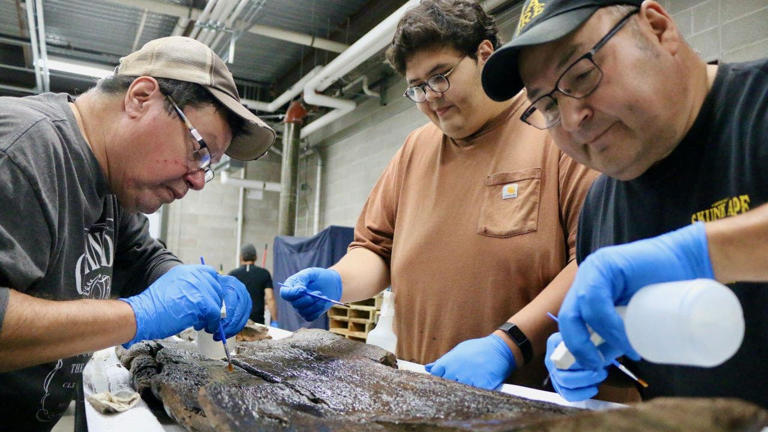
Archaeologists conduced carbon dating to determine age of canoes.
Fox News© Fox News

"The Great Lakes oftentimes receive more funding for maritime archaeology but smaller bodies of water like Lake Mendota have their own distinct histories and stories to tell us about the people who lived here hundreds and thousands of years ago," she said. "We are proud to work in partnership with Native Nations in Wisconsin to discover all we can about Tee Waksikhominak and to share these stories now and in the future at the new Wisconsin History Center set to open in early 2027."

{ https://www.msn.com/en-us/feed?ocid=nl_article_link }

Hoe vind je dit bericht?
Geschreven door peter om 13:00 Stuur door

A Weather Satellite Watched a Space Rock Burn Up Above Spain and Portugal

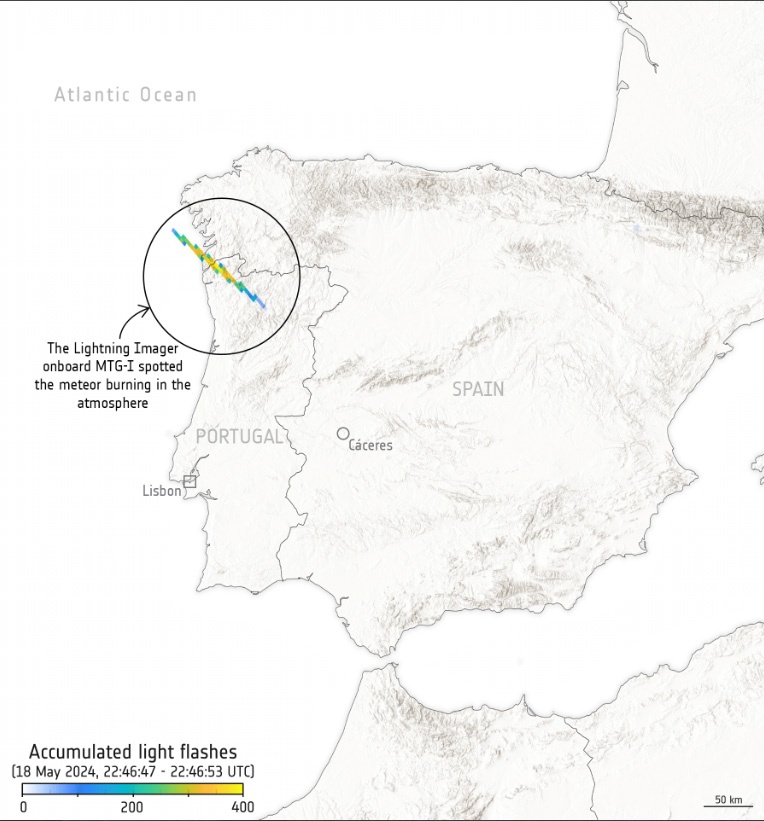
A map of the track of the vaporizing space rock that lit up skies over Portugal and Spain on May 18, 2024. The track was created from position measurements of the fireball flashes as seen by ESA's MeteoSat weather satellite. Courtesy ESA.

A Weather Satellite Watched a Space Rock Burn Up Above Spain and Portugal

It’s been a momentous May for skywatchers around the world. First the big auroral event of May 10-11, next a flaming space rock entering over Spain and Portugal. The inbound object was captured by ground-based cameras and the MeteoSat Third Generation Imager in geostationary orbit.

The incoming meteor dazzled viewers across both countries as it sped across the skies at 160,000 km/hour. Of course, social media came alive with speculation about what was burning up in the atmosphere. Most people thought it was a piece of space rock from an asteroid. European Space Agency members of the Planetary Defence Office immediately began analyzing images and data to figure out the composition of the impactor. Now it seems more likely the chunk of space debris came from a comet. They used other data about the energy released as the fragment flew through the atmosphere to determine the size of the object. It was likely about 1 meter across with a mass of between 500 to 1,000 kg.

On 18 May, the meteor burned up in the night sky over Spain and Portugal – as seen by the fireball camera in Cáceres, Spain, operated by ESA’s Planetary Defence Office

This is pretty small, which makes it hard to spot on the way in. Also, the object approached from the direction of the sky crowded with stars, making it doubly difficult to see as it spun into our planet’s atmosphere. It explains why planetary defense telescopes or observers didn’t detect the meteor.

The Meteor’s Appearance

To most observers, the meteor over Portugal and Spain looked blue-green and very bright. Those colors are created as various elements in the meteor get heated up by friction with our atmosphere. That vaporizes them and we see the “fiery” aspect light up the sky. If it was a piece of a comet, then the colors also indicate the materials it contained. Most comets contain water, carbon dioxide, ammonia, and methane ice. Other comet “stuff” consists of silica dust, carbon, various metals, and organic molecules. The metals, in particular, could show spectacular colors as they heat up and vaporize.

It’s not known which comet supplied the chunk that broke up and vaporized that night. Earth’s orbit crosses the orbit of several different comets. As they travel through space, particularly as they get close to the Sun, comets shed pieces of themselves. That cometary debris stays in the original orbit around the Sun. Occasionally, Earth’s orbit intersects that cometary path. Its particles particles eventually end up in our atmosphere. The best-known path creates the Orionid Meteor Shower and we can thank Comet Halley for that show from late September to mid-November.

Surveys to Detect an Incoming Space Rock

As planetary scientists learn more about the near-Earth environment and its population of asteroids and other space debris, they’ve formed observation groups within NASA and ESA. There’s a network of ground-based observers and facilities that watch the sky each night, looking for incoming impactors. Most of the time, their search is limited to objects larger than the Portugal/Spain object. In addition, satellites such as MeteoSat can pick up these intruders. MeteoSat was launched by ESA to monitor weather conditions and detect lightning strikes. The instrument has four cameras covering Europe, Africa, the Middle East, and parts of South America. Each can capture up to a thousand images per second, allowing the satellite to monitor lightning continuously from space.

ESA’s Planetary Defence Office is in charge of monitoring the positions and approaches of near-Earth objects that could pose a threat to any portion of our planet. It does regular observing campaigns to search for bits of asteroids and comets. NASA operates the Center for Near Earth Object Studies (CNEOS) to do similar searches for possibly dangerous rocks. The Near-Earth objects it’s most concerned about are asteroids and comets with orbits that bring them to within 195 million kilometers of the Sun. Their orbits can move through our planet’s neighborhood. Most of these small bodies are asteroids as small as a few meters wide to nearly 40 kilometers across.

Artist's concept of the path that a space rock can take that might bring it near Earth. Planetary defense facilities around the planet try to track these objects and warn of their close approach whenever possible. Courtesy: ESA - P.Carril. Artist’s concept of the path that a space rock can take that might bring it near Earth. Planetary defense facilities around the planet try to trackthese objects and warn of their close approach whenever possible. Courtesy: ESA – P.Carril.

The office uses data from observatories around the world—both professional and amateur. Much of this data comes from larger facilities, including Pan-STARRS, the Catalina Sky Survey, and NASA’s NEOWISE mission. In addition, there’s a significant program of planetary radar measurements that contribute data to the NEO observations effort. All of these skywatching campaigns contribute to increased awareness and predictions of near-Earth objects that could pose a threat to our planet.

For More Information

{ https://www.universetoday.com/ }

Hoe vind je dit bericht?
Geschreven door peter om 00:41 Stuur door

Enjoy Five New Images from the Euclid Mission

The central, brightest region of this Euclid image is the Messier 78 star formation region. This is the widest and deepest image of this often-imaged region ever taken. Image Credit: ESA/Euclid/Euclid Consortium/NASA, image processing by J.-C. Cuillandre (CEA Paris-Saclay), G. Anselmi LICENCE CC BY-SA 3.0 IGO

Enjoy Five New Images from the Euclid Mission

We’re fortunate to live in these times. Multiple space telescopes feed us a rich stream of astounding images that never seems to end. Each one is a portrait of some part of nature’s glory, enriched by the science behind it all. All we have to do is revel in the wonder.

The ESA’s Euclid space telescope is the latest one to enrich our inboxes. It was launched on July 1st, 2023, and delivered its first images in November of that year. Now, we have five new images from Euclid, as well as the first science results from the wide-angle space telescope.

“They give just a hint of what Euclid can do.”

Valeria Pettorino, ESA’s Euclid Project Scientist.

The images demonstrate the telescope’s power and its ability to address some of the deepest questions we have about the Universe. They are also impressive because of their visual richness and because they took only 24 hours of the telescope’s expected six years of observing time.

“Euclid is a unique, ground-breaking mission, and these are the first datasets to be made public – it’s an important milestone,” says Valeria Pettorino, ESA’s Euclid Project Scientist. “The images and associated science findings are impressively diverse in terms of the objects and distances observed. They include a variety of science applications, and yet represent a mere 24 hours of observations. They give just a hint of what Euclid can do. We are looking forward to six more years of data to come!”

The leading image is the most stunning and perhaps the most relatable. It shows Messier 78, aka NGC 2068. It’s a reflection nebula and star-forming region contained in the vast Orion B molecular cloud complex. Euclid used its infrared capabilities to see through the dust that shrouds the star-formation region. It’s given us our most detailed look at the filaments of gas and dust that give the region its ghostly appearance.

Euclid can detect objects that are just a few times more massive than Jupiter, an impressive feat. In its M78 image, it found over 300,000 objects in that mass range.

This zoomed-in portion of Euclid’s M78 image shows the depth the telescope’s images deliver. Image Credit: ESA/Euclid/Euclid Consortium/NASA, image processing by J.-C. Cuillandre (CEA Paris-Saclay), G. Anselmi. LICENCE CC BY-SA 3.0 IGO

One of Euclid’s objectives is to study dark matter and how it’s distributed in the Universe. It uses gravitational lensing to probe dark matter, and its image of the Abell 2390 galaxy cluster exhibits the tell-tale curved arcs of light coming from distant background objects created by gravitational lensing. The image also shows more than 50,000 galaxies.

Euclid's image of the Abell 2390 cluster of galaxies contains over 50,000 galaxies. It also shows the intracluster light that comes from individual stars torn from their galaxies and sitting in intergalactic space. These stars can help astrophysicists determine where dark matter is. Image Credit: ESA/Euclid/Euclid Consortium/NASA, image processing by J.-C. Cuillandre (CEA Paris-Saclay), G. Anselmi.  LICENCE: CC BY-SA 3.0 IGO Euclid’s image of the Abell 2390 cluster of galaxies contains over 50,000 galaxies. It also shows the intracluster light that comes from individual stars torn from their galaxies and sitting in intergalactic space. These stars can help astrophysicists determine where dark matter is. Image Credit: ESA/Euclid/Euclid Consortium/NASA, image processing by J.-C. Cuillandre (CEA Paris-Saclay), G. Anselmi.
LICENCE: CC BY-SA 3.0 IGO

Most of the stars currently forming in the Universe are forming in spiral galaxies. Euclid captured this image of NGC 6744 as an archetype of that galaxy type. The telescope’s wide-angle lens and depth of field capture the entire galaxy and also small details. It shows lanes of dust that emerge as spurs on the spiral arms.

With this image, astronomers can map individual stars and the gas that feeds their formation. They can also identify globular clusters and new dwarf galaxies. Euclid already found one new dwarf galaxy astronomers have never seen before, which is impressive for a galaxy that’s already been studied so intently.

Euclid's complete image of NGC 6744 is on the left, and a zoomed-in portion is on the right. NGC 6744 is one of the largest spiral galaxies outside our region of space. The telescope's detailed image will let astronomers count and map individual stars and map the gas that feeds star formation. Star formation is how galaxies evolve, so studying NGC 6744's star formation activity feeds into a greater understanding of galaxy evolution. Image Credit: ESA/Euclid/Euclid Consortium/NASA, image processing by J.-C. Cuillandre (CEA Paris-Saclay), G. Anselmi. LICENCE: CC BY-SA 3.0 IGO Euclid’s complete image of NGC 6744 is on the left, and a zoomed-in portion is on the right. NGC 6744 is one of the largest spiral galaxies outside our region of space. The telescope’s detailed image will let astronomers count and map individual stars and the gas that feeds star formation. Star formation is how galaxies evolve, so studying NGC 6744’s star formation activity feeds into a greater understanding of galaxy evolution. Image Credit: ESA/Euclid/Euclid Consortium/NASA, image processing by J.-C. Cuillandre (CEA Paris-Saclay), G. Anselmi. LICENCE: CC BY-SA 3.0 IGO

Euclid also imaged another galaxy cluster, Abell 2764. This cluster contains hundreds of galaxies within a halo of dark matter. Euclid’s impressive wide-field view comes into play in this image. Not only does it show Abell 2764 in the image’s upper right, but it also shows other clusters that are even more distant, multiple background galaxies, and interacting galaxies with their streams of stars.

In this image, Euclid captured galaxy cluster Abell 2764 and the wider region surrounding it. Abell 2764 is in the upper right corner. Image Credit: ESA/Euclid/Euclid Consortium/NASA, image processing by J.-C. Cuillandre (CEA Paris-Saclay), G. Anselmi LICENCE CC BY-SA 3.0 IGO In this image, Euclid captured galaxy cluster Abell 2764 and the wider region surrounding it. Abell 2764 is in the upper right corner. Image Credit: ESA/Euclid/Euclid Consortium/NASA, image processing by J.-C. Cuillandre (CEA Paris-Saclay), G. Anselmi LICENCE CC BY-SA 3.0 IGO

The image highlights one of Euclid’s other capabilities. The foreground star is in our own galaxy, and when viewed with a telescope, its diffuse light creates a halo that obscures distant objects behind it. Euclid was built to minimize that diffuse halo effect. The disturbance from the star’s diffuse light is minimal, meaning Euclid can see distant background objects near the star’s line of sight.

This pair of zoomed-in images of Abell 2764 shows Euclid's power. On the left is the foreground star. These stars can create halos of diffuse light that obscure other objects, but Euclid is built to minimize the effect. On the right is a zoom-in of Abell 2764 itself, with multitudes of background galaxies. Image Credit: ESA/Euclid/Euclid Consortium/NASA, image processing by J.-C. Cuillandre (CEA Paris-Saclay), G. Anselmi. LICENCE: CC BY-SA 3.0 IGO This pair of zoomed-in images of Abell 2764 shows Euclid’s power. On the left is the foreground star. These stars can create halos of diffuse light that obscure other objects, but Euclid is built to minimize the effect. On the right is a zoom-in of Abell 2764 itself, with multitudes of background galaxies. Image Credit: ESA/Euclid/Euclid Consortium/NASA, image processing by J.-C. Cuillandre (CEA Paris-Saclay), G. Anselmi. LICENCE: CC BY-SA 3.0 IGO

The final of the five new images is of galaxies in the Dorado Group. Euclid’s image shows signs of galaxies merging. The Dorado Group is a relatively young group, and many of its member galaxies are still forming stars. The image helps astronomers study how galaxies form and evolve inside halos of dark matter.
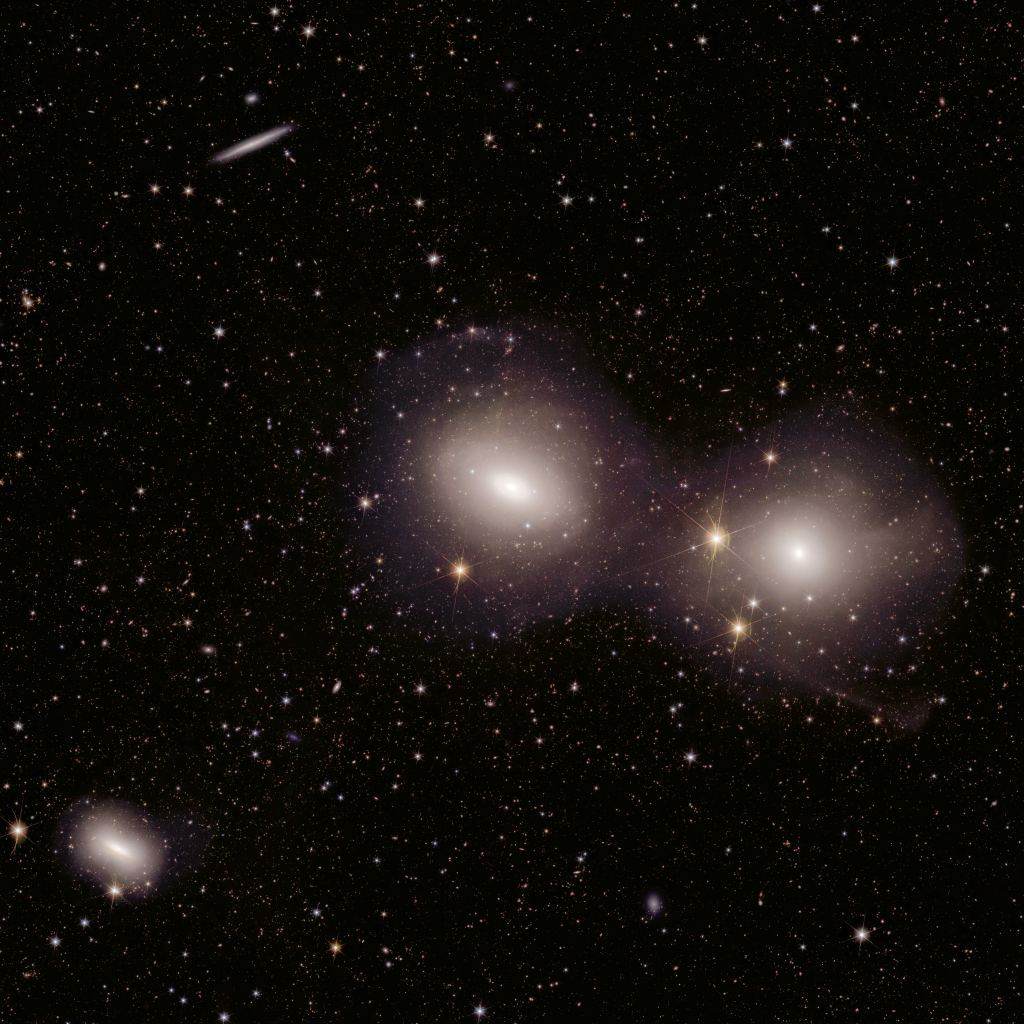
The Dorado Group is one of the richest galaxy groups in the southern hemisphere. Euclid's wide and deep images give astronomers their best look at it. Image Credit: ESA/Euclid/Euclid Consortium/NASA, image processing by J.-C. Cuillandre (CEA Paris-Saclay), G. Anselmi. LICENCE: ESA Standard Licence

The Dorado Group is one of the richest galaxy groups in the southern hemisphere. Euclid’s wide and deep images give astronomers their best look at it. Image Credit: ESA/Euclid/Euclid Consortium/NASA, image processing by J.-C. Cuillandre (CEA Paris-Saclay), G. Anselmi. LICENCE: ESA Standard Licence

A zoomed-in image shows more detail of the main pair of galaxies in the image. Euclid’s unique large field-of-view and high spatial resolution means that for the first time, astronomers can use the same instrument and observations to deeply study tiny objects the size of star clusters, intermediate objects like the central regions of galaxies, and larger features like tidal tails in one large region of the sky.

“The beauty of Euclid is that it covers large regions of the sky in great detail and depth, and can capture a wide range of different objects all in the same image – from faint to bright, from distant to nearby, from the most massive of galaxy clusters to small planets.”

ESA Director of Science, Prof. Carole Mundell

Prior to Euclid, astronomers had to use small chunks of data to painstakingly catalogue globular clusters around galaxies. But Euclid’s wide images capture far more data in a single image, simplifying the task. Globular clusters provide important clues to how galaxies evolve over time.

This zoom-in shows a pair of interacting galaxies in the Dorado Group. Tidal tails of stars are visible as wispy streams near the right and bottom right of the right-side galaxy. Image Credit: ESA/Euclid/Euclid Consortium/NASA, image processing by J.-C. Cuillandre (CEA Paris-Saclay), G. Anselmi. LICENCE: ESA Standard Licence This zoom-in shows a pair of interacting galaxies in the Dorado Group. Tidal tails of stars are visible as wispy streams near the right and bottom right of the right-side galaxy. Image Credit: ESA/Euclid/Euclid Consortium/NASA, image processing by J.-C. Cuillandre (CEA Paris-Saclay), G. Anselmi. LICENCE: ESA Standard Licence

Euclid’s mission is only starting. The telescope’s images so far have no equivalent, and there’s much more to come. Euclid hasn’t even begun its main survey yet. That survey will comprise both a wide survey covering about 15,000 square degrees of the sky and a deep survey covering about 50 square degrees.

“It’s no exaggeration to say that the results we’re seeing from Euclid are unprecedented,” says ESA Director of Science, Prof. Carole Mundell. “Euclid’s first images, published in November, clearly illustrated the telescope’s vast potential to explore the dark Universe, and this second batch is no different.”

“The beauty of Euclid is that it covers large regions of the sky in great detail and depth, and can capture a wide range of different objects all in the same image – from faint to bright, from distant to nearby, from the most massive of galaxy clusters to small planets,” said Mundell. “We get both a very detailed and very wide view all at once. This amazing versatility has resulted in numerous new science results that, when combined with the results from Euclid’s surveying over the coming years, will significantly alter our understanding of the Universe.”

  • The scientific papers released with these images are available here.

{ https://www.universetoday.com/ }

Hoe vind je dit bericht?
Geschreven door peter om 00:24 Stuur door

Mystery Fireball Seen Breaking Up in Sky Over Southern Russia: Video

RW6s4EKo?format=jpg&name=900x900

Mystery Fireball Seen Breaking Up in Sky Over Southern Russia: Video

By Isabel van Brugen

A mysterious fireball was spotted breaking up in the sky over southern Russia on Wednesday, videos shared by locals show.

Footage showing the unknown flying object was shared on social media by residents from several regions, including Stavropol Krai, the Karachay-Cherkess Republic, Krasnodar Krai, and the Republic of Kalmykia. Russian state-run news agency RIA Novosti reported that some residents believed it was a falling meteorite or comet, while others said they thought they had seen a satellite or an "enemy object."

The videos showed the fireball breaking up into multiple parts as it moved slowly across the night sky. Newsweek has not independently verified the footage.

This comes weeks after social media users reported seeing mysterious spiral UFO sightings across the United States and Europe. Interest in unidentified aerial phenomena (UAP) peaked last year after several experts testified before a Congress committee in July 2023 that they could pose a threat to national security. A Gallup poll conducted in 2021 found that 41 percent of Americans believe alien spacecraft have visited Earth, up eight points from 33 percent in 2019.

RIA Novosti reported, citing amateur astronomers, that the sighting could have been space debris burning at low speed.

The Telegram channel of the observational astronomy project, AstroAlert, said the burning object was likely a SpaceX Starlink satellite.

"The culprit of today's sky show has been found! This is most likely STARLINK-2653," the channel said, sharing a map purportedly showing its flight path.

"On this map, its final flight path is the lower orbit turning from white to green and then to the red line, going through the center of the Sahara Desert, the Mediterranean Sea, Turkey, the Black Sea, Sochi and further over the northern Caspian Sea."

"15 minutes before combustion (at 17:35 UT or 20:35 Moscow time), the spacecraft flew over the western coast of Africa near a point with coordinates 0° longitude and 0° latitude," the channel said.

Newsweek reached out to SpaceX for comment by email.

A man with a telescope
A man stands in front of his telescope in Vienna, Austria, on July 16, 2019. A mysterious fireball was spotted breaking up in the sky over southern Russia on Wednesday, videos shared by local residents... More GEORG HOCHMUTH/AFP/GETTY IMAGES

Russia this week announced that it had kickstarted the first stage of testing tactical nuclear weapons in the region. Personnel of the Southern Military District had started training and completing combat tasks with "special ammunition" for Iskander missile systems, the Russian defense ministry said in a statement.

There is no suggestion that the fireball spotted on Wednesday is linked to the tactical tests. Newsweek has reached out to Russia's Foreign Ministry for comment via email.

"The personnel of the aviation units of the Russian Aerospace Forces involved in the exercise practice are equipping aviation weapons with special warheads, including the Kinzhal hypersonic missiles, and flying into designated patrol areas," the statement said.

{  https://www.newsweek.com/ }

Hoe vind je dit bericht?
Geschreven door peter om 22:14 Stuur door

Meer van UFO'S of UAP'S, ASTRONOMIE, RUIMTEVAART, ARCHEOLOGIE, OUDHEIDKUNDE, SF-SNUFJES EN ANDERE ESOTERISCHE WETENSCHAPPEN - DE ALLERLAATSTE NIEUWTJES

↑ Terug naar de berichten