Naar de inhoud

UFO'S of UAP'S, ASTRONOMIE, RUIMTEVAART, ARCHEOLOGIE, OUDHEIDKUNDE, SF-SNUFJES EN ANDERE ESOTERISCHE WETENSCHAPPEN - DE ALLERLAATSTE NIEUWTJES

UFO's of UAP'S in België en de rest van de wereld
akke.beakke.be
Ontdek de Fascinerende Wereld van UFO's en UAP's: Jouw Bron voor Onthullende Informatie! Ben jij ook gefascineerd door het onbekende? Wil je meer weten over UFO's en UAP's, niet alleen in België, maar over de hele wereld? Dan ben je op de juiste plek! België: Het Kloppend Hart van UFO-onderzoek In België is BUFON (Belgisch UFO-Netwerk) dé autoriteit op het gebied van UFO-onderzoek. Voor betrouwbare en objectieve informatie over deze intrigerende fenomenen, bezoek je zeker onze Facebook-pagina en deze blog. Maar dat is nog niet alles! Ontdek ook het Belgisch UFO-meldpunt en Caelestia, twee organisaties die diepgaand onderzoek verrichten, al zijn ze soms kritisch of sceptisch. Nederland: Een Schat aan Informatie Voor onze Nederlandse buren is er de schitterende website www.ufowijzer.nl, beheerd door Paul Harmans. Deze site biedt een schat aan informatie en artikelen die je niet wilt missen! Internationaal: MUFON - De Wereldwijde Autoriteit Neem ook een kijkje bij MUFON (Mutual UFO Network Inc.), een gerenommeerde Amerikaanse UFO-vereniging met afdelingen in de VS en wereldwijd. MUFON is toegewijd aan de wetenschappelijke en analytische studie van het UFO-fenomeen, en hun maandelijkse tijdschrift, The MUFON UFO-Journal, is een must-read voor elke UFO-enthousiasteling. Bezoek hun website op www.mufon.com voor meer informatie. Samenwerking en Toekomstvisie Sinds 1 februari 2020 is Pieter niet alleen ex-president van BUFON, maar ook de voormalige nationale directeur van MUFON in Vlaanderen en Nederland. Dit creëert een sterke samenwerking met de Franse MUFON Reseau MUFON/EUROP, wat ons in staat stelt om nog meer waardevolle inzichten te delen. Let op: Nepprofielen en Nieuwe Groeperingen Pas op voor een nieuwe groepering die zich ook BUFON noemt, maar geen enkele connectie heeft met onze gevestigde organisatie. Hoewel zij de naam geregistreerd hebben, kunnen ze het rijke verleden en de expertise van onze groep niet evenaren. We wensen hen veel succes, maar we blijven de autoriteit in UFO-onderzoek! Blijf Op De Hoogte! Wil jij de laatste nieuwtjes over UFO's, ruimtevaart, archeologie, en meer? Volg ons dan en duik samen met ons in de fascinerende wereld van het onbekende! Sluit je aan bij de gemeenschap van nieuwsgierige geesten die net als jij verlangen naar antwoorden en avonturen in de sterren! Heb je vragen of wil je meer weten? Aarzel dan niet om contact met ons op te nemen! Samen ontrafelen we het mysterie van de lucht en daarbuiten.

Archief

The Joe Rogan Experience: George Knapp on Alien Abductions and Paranormal Phenomena

The Joe Rogan Experience: George Knapp on Alien Abductions and Paranormal Phenomena

In a compelling episode of The Joe Rogan Experience, investigative journalist George Knapp discusses the eerie and often disturbing events at the infamous Skinwalker Ranch. This episode sheds light on a series of bizarre and unexplained phenomena, ranging from alien abductions to paranormal activities, that have plagued the ranch for decades.

Unexplained Auditory and Visual Disturbances

Residents and investigators at Skinwalker Ranch have reported hearing strange voices speaking in unknown languages and seeing large, humanoid shapes lurking outside their windows at night. These auditory phenomena were often accompanied by visual disturbances, such as mysterious shapes and lights. One rancher, initially suspecting government involvement, armed himself and patrolled the property only to realize that the source of these disturbances was something far more enigmatic and possibly extraterrestrial.

Chilling Animal Mutilations

Animal mutilations are among the most unsettling events at Skinwalker Ranch. Cows, cats, and dogs were found with precise, surgical mutilations. Often, these animals were discovered in places where tracks leading to or from the scene were nonexistent. The surgical nature of these mutilations suggested the use of advanced technology, pointing to an intelligence beyond known human capabilities. The animals appeared to be cut up with extreme precision, leading to speculation about extraterrestrial involvement.

UFO Encounters

The ranch has been a hotspot for numerous UFO sightings. Witnesses have reported seeing various types of unidentified flying objects, including lights that resembled headlights, which then ascended into the sky and vanished. Orbs of different colors—white, blue, and red—were also observed, with the blue orbs in particular inducing intense fear in both animals and humans. These orbs seemed to be intelligently controlled, further complicating the already perplexing situation at the ranch.

The Disappearance and Reappearance of Bulls

One of the most baffling incidents involved the sudden disappearance of four prized bulls. These large animals, each weighing around 2,000 pounds, were inexplicably found crammed into a small, locked trailer. The corral around the trailer was magnetized, suggesting the use of advanced technology. This event highlighted the mysterious forces at play and raised questions about the nature of the phenomena affecting the ranch.

Intensive Investigations and Elusive Evidence

The National Institute for Discovery Science (NIDS), funded by aerospace entrepreneur Robert Bigelow, conducted extensive investigations at Skinwalker Ranch. Despite their efforts, the phenomena remained elusive, often evading documentation. Cameras would malfunction or be destroyed, and evidence was hard to come by. The intelligence behind these events seemed to be playing a cat-and-mouse game with the investigators, demonstrating its presence while avoiding capture on film or in photographs.

The Mutilation of a Calf

A particularly horrifying incident involved the mutilation of a calf. Within a brief period, the calf was found completely stripped of flesh and blood, with no tracks or signs of human or animal interference. The meticulous nature of the mutilation, with not a drop of blood left behind, suggested the use of advanced or extraterrestrial technology. This incident, documented with photographs and videos, provided some of the most compelling evidence of the strange activities at the ranch.

Theories and Speculations

The phenomena at Skinwalker Ranch have led to numerous theories and speculations:

  • Extraterrestrial Experimentation: The precision of the mutilations and the advanced technology involved suggest that extraterrestrial beings might be conducting biological or environmental experiments.
  • Interdimensional Beings: The ability of the phenomena to appear and disappear, as well as manipulate physical objects, suggests the possibility of interdimensional beings interacting with our reality.
  • Government Experiments: The advanced technology and lack of concrete evidence might also point towards secret government experiments involving psychological operations or advanced robotics.

VIDEO:

  • JRE: How Aliens Abducted Humans!

The episode featuring George Knapp on The Joe Rogan Experience provides a gripping account of the mysterious and often terrifying phenomena at Skinwalker Ranch. The lack of concrete evidence and the evasive nature of the activities make it a challenging subject to study and understand. However, the consistency of reports from various witnesses and investigators suggests a significant and unexplained presence or activity at the ranch. This episode underscores the need for continued investigation and open-mindedness when it comes to understanding the unknown forces that may be at work.

{ https://www.latest-ufo-sightings.net/ }

Hoe vind je dit bericht?
Geschreven door peter om 17:21 Stuur door

Ex-Pentagon David Grusch: ‘We Have Dead Pilot Bodies From Extraterrestrial Craft’

David Grusch UFO testimony

Ex-Pentagon David Grusch: ‘We Have Dead Pilot Bodies From Extraterrestrial Craft’

Nobody would have ever thought that an individual from the US military with high credibility can come out and say we have partially intact extraterrestrial crafts. David Charles Grusch, a Former UAP Task Force member and US Air Force veteran, claims that the government, its allies, and defense contractors have been recovering partial fragments and intact vehicles related to these phenomena for decades.

According to Mr. Grusch, analysis of these objects has revealed their “exotic origin” and suggests the presence of non-human intelligence, whether extraterrestrial or of unknown origin. This determination is based on vehicle morphologies, material science testing, unique atomic arrangements, and radiological signatures.

Leslie Kean and Ralph Blumenthal, the New York Times reporters, are the first people who broke the story of Mr. Grusch. On June 5, 2023, they published an exclusive article in The Debrief, stating Mr. Grusch gave Congress and the Intelligence Community Inspector General extensive classified information about deeply covert programs that he says possess retrieved intact and partially intact craft of non-human origin.

In an exclusive interview with investigative journalist Ross Coulthart, Grusch, a 36-year-old Air Force veteran, exposed the top-secret military program that allegedly discovered fully intact UFO wreckage. During the interview, Mr. Grusch made bold claims about the existence of UFOs and their non-human origin.

He stated: “UFOs exist. The U.S. government found quite a number of them, and they are indeed of non-human origin.” Mr. Grusch’s assertions are supported by his insider knowledge as a former member of the U.S. government’s Unidentified Aerial Phenomena task force and the National Geospatial Intelligence Agency.

Mr. Grusch discussed the classified nature of the program, saying: “For years, there have been whispers and rumors that the government had aircraft of non-human origin. This report is the first evidence it might be true.” He emphasized the secrecy surrounding the program, claiming that much of the information has been kept hidden from Congress and the public.

In the interview, Mr. Grusch described the retrieval of non-human origin technical vehicles, referring to them as spacecraft. He explained: “These are retrieving non-human origin technical vehicles, you know, call it spacecraft if you will. Non-human exotic origin vehicles that have either landed or crashed.” When asked about the number of such craft, Mr. Grusch astonishingly replied, “Quite a number. [You’re kidding?] No, I thought it was totally nuts at first.”

Mr. Grusch revealed that his initial skepticism had been challenged when current and former senior intelligence officers confided in him about their involvement in the program. He stated: “They approached me. I have plenty of current and former senior intelligence officers that came to me, many of whom I knew almost my whole career, that confided to me they were part of a program.” He also mentioned receiving oral testimony, documents, and other proof supporting the existence of the program.

During the interview, Mr. Grusch spoke about the potential cover-up and disinformation campaign surrounding UFOs. He claimed: “There’s a sophisticated disinformation campaign targeting the U.S. populace, which is extremely unethical and immoral.” Mr. Grusch emphasized the significance of his revelations, stating, “I am for real, and I’m sitting here at great personal risk and obvious professional risk by talking to you today.”

“Do we have bodies? Do we have species?” Coulthart asked. “Well, naturally when you recover something that’s either landed or crashed, sometimes you encounter dead pilots.” “And believe it or not, as fantastical as that sounds, it’s true,” Mr. Grusch replied.

While Mr. Grusch’s claims are extraordinary, journalist Leslie Kean stated: “I believe it because of all the sources I have who have told me the same thing. So who am I to doubt these very, very high-level people who have been inside these programs for decades?” Kean emphasized that Grusch’s credibility is further bolstered by the fact that multiple high-ranking individuals have publicly vouched for him.

Despite Grusch’s testimony and the support he has garnered, the Pentagon released a statement in response to the report. The statement from the Pentagon’s All Domain Anomaly Resolution Office (ARRO) said that no verifiable information has been discovered to substantiate claims of past or current programs involving extraterrestrial materials. However, ARRO acknowledged ongoing investigations and welcomed individuals with relevant information to come forward.

Soon after The Debrief’s exclusive publication on Mr. Grusch, Dutch website REVU journalist Max Moszkowicz disclosed that David Grusch has documents signed by the inspector general, indicating that one of the UFOs in US Holding was found in Sicily, Italy and taken from Mussolini during WW2.

Moszkowicz stated that in 1933, fascist dictator Benito Mussolini was briefed by his secret service about a crashed air vehicle that was not recognized as human. It is suggested that the Italians initially believed the UFO to be a secret weapon from Germany, but it was later discovered to be of unknown origin. The object was studied in an Italian variant of Area 51 and eventually transported to the United States, possibly to Area 51/S-4.

Read also:

The claims of the UFO coverup directly come from the documents released from Mussolini’s office. According to them, Mussolini took all measures to silence the witnesses and classified the craft as top secret. Studying the craft was Mussolini’s next top objective. The best engineers and scientists in Italy came together to form a top-secret organization that was allegedly commanded by radio inventor and renowned engineer Guglielmo Marconi. (Click here to read the full article)

In an interview with Moszkowicz, a former AATIP Director Lue Elizondo gave this rumor some credit by saying he had seen documents from Mussolini’s office that he had found “compelling” before theorizing (as per the rumor) that pieces of the craft were transported to the USA. Mr. Sharp claimed that he has a source in the aerospace industry who told Liberation Times that something was recovered from Italy following World War II.

In an interview with French paper le Parisien, Mr. Grusch claims that the United States and its allies have been involved in secret programs for almost ninety years, recovering fragments and intact non-human objects. These objects have been subjected to analysis, which has provided proof of their non-human origin.

When asked about the origin of these objects, Mr. Grusch suggests they could be extraterrestrial or from other dimensions as described by quantum mechanics. He mentions that he has not seen enough data to determine the exact origin and believes that the U.S. government likely possesses more information on the matter.

Grusch reveals that one of the recovered “ships” was found in Italy in 1933. It was described as a bell-like craft, approximately ten meters in size, and was kept by Mussolini’s government until 1944 when it was recovered by agents of the Office of Strategic Services (OSS). Mr. Grusch states that this particular case predates well-known incidents like Roswell. He indicates that he was authorized to talk about it by the Department of Defense’s Office of Prepublication and Security Review.

Regarding his concerns about conspiracy theories, Grusch acknowledges the possibility of encouraging unfounded theories but points out that what was once a conspiracy theory has turned out to be true in this case.

Although Grusch mentions having seen interesting things that he is not currently authorized to discuss publicly, he confirms the involvement of a handful of U.S. subcontractors in reverse engineering, primarily from the Five Eyes alliance countries (Canada, the UK, Australia, and New Zealand). He suggests that the potential uses of the studied materials could benefit advanced space programs, materials science, and other applications related to climate or health.

Mr. Grusch mentions that his freedom of speech is still limited by his confidentiality agreement with the U.S. government, preventing him from discussing classified information. He indicates that he has faced reprisals after alerting the Department of Defense Inspector General in 2021 but cannot provide many details due to the ongoing investigation.

When asked about his personal safety, Grusch acknowledges past threats and the risks involved in remaining anonymous or becoming a public figure. Despite the risks, he believes it is worth raising awareness and push for answers from elected representatives and the president. He plans to publish more information in the future and establish a non-profit foundation to facilitate scientific research and protocols on this subject within the university system.

{ https://www.howandwhys.com/ }

Hoe vind je dit bericht?
Geschreven door peter om 00:54 Stuur door

Ontdekking op onze buurplaneet kan hoop bieden op voorwaarden voor leven

Ontdekking op onze buurplaneet kan hoop bieden op voorwaarden voor leven

Wetenschappers vinden de ontdekking van een bepaald element in gesteente op Mars opmerkelijk.

Gale-krater op Mars.

In 2012 stuurde NASA de rover Curiosity naar Mars om de Galekrater te onderzoeken.

© NASA/JPL-Caltech/MSSS

Al meer dan 10 jaar rijdt NASA’s Marsrover Curiosity rond om monsters te nemen van grond en gesteente. Zo wil NASA erachter komen of de omstandigheden op de planeet ooit gunstig waren voor leven.

In 2018 vond de rover moleculen die belangrijke bouwstenen zijn voor leven zoals we dat op aarde kennen.

En nu heeft de Curiosity mineralen in gesteente ontdekt die lijken op mineralen op aarde, wat bewijs kan zijn dat Mars vroeger leven kon herbergen.

Hoge concentraties gevonden

De onderzoekers beschrijven dat er een ongewoon hoog gehalte van het element mangaan is gevonden.

In het artikel, dat is gepubliceerd in het tijdschrift JGR Planet schrijven ze dat die hoge concentraties zijn gevonden in een gebied waar volgens hen ooit een meer was.

In een persbericht zegt Patrick Gasda van Los Alamos National Laboratory dat ze niet hadden verwacht mangaan in zulke hoge concentraties aan te treffen.

Hij legt uit dat afzettingen zoals ze die op Mars hebben gevonden op aarde voorkomen omdat er een hoog zuurstofgehalte is.

‘Op Mars is er geen bewijs van leven, en de mechanismen om zuurstof in de atmosfeer te produceren zijn onduidelijk. Hoe mangaanoxide is ontstaan en hoe de concentratie ervan is toegenomen, is een mysterie,’ schrijft Gasda.

Gesteente onthult leefbaar milieu

De metingen in Galekrater zijn gedaan met de Chemcam-apparatuur van de Curiosity.

‘Het milieu bij het Galemeer lijkt verrassend veel op bepaalde plaatsen op aarde, wat suggereert dat het leefbaar kan zijn geweest,’ voegt de leider van het Chemcam-onderzoek, Nina Lanza, eraan toe.

Ze legt uit dat mangaanmineralen vaak worden aangetroffen aan de oevers van ondiepe meren, maar dat het een opmerkelijke vondst is in oud gesteente op Mars.

{ https://wibnet.nl/heelal }

Hoe vind je dit bericht?
Geschreven door peter om 23:35 Stuur door

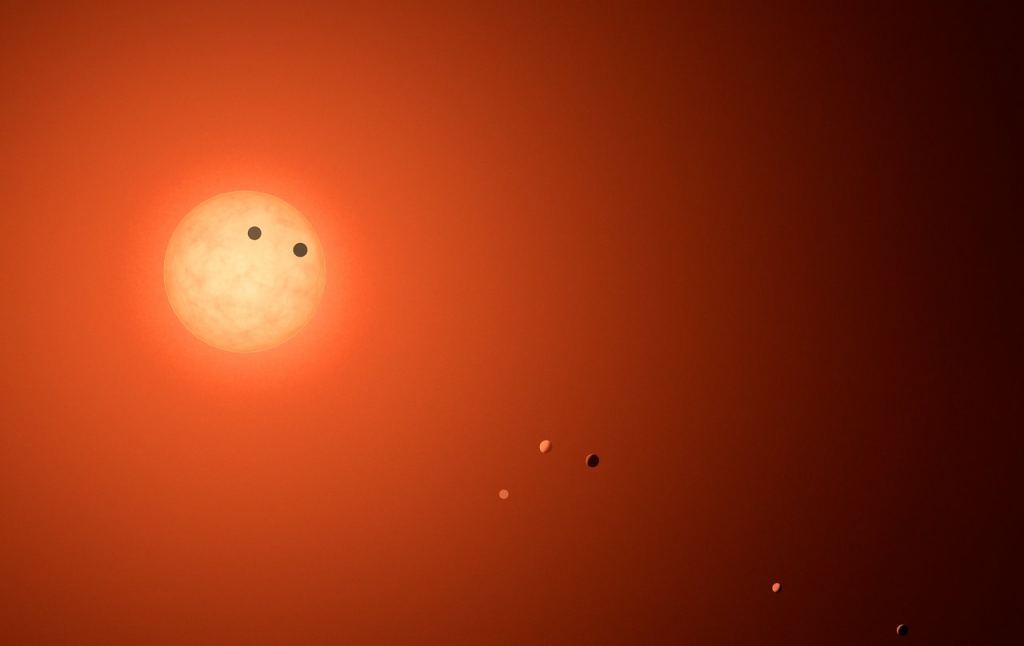
TRAPPIST-1 Outer Planets Likely Have Water

Three of the TRAPPIST-1 planets – TRAPPIST-1e, f and g – dwell in their star’s so-called “habitable zone. CreditL NASA/JPL

TRAPPIST-1 Outer Planets Likely Have Water

The TRAPPIST-1 solar system generated a swell of interest when it was observed several years ago. In 2016, astronomers using the Transiting Planets and Planetesimals Small Telescope (TRAPPIST) at La Silla Observatory in Chile detected two rocky planets orbiting the red dwarf star, which took the name TRAPPIST-1. Then, in 2017, a deeper analysis found another five rocky planets.

It was a remarkable discovery, especially because up to four of them could be the right distance from the star to have liquid water.

The TRAPPIST-1 system still gets a lot of scientific attention. Potential Earth-like planets in a star’s habitable zone are like magnets for planetary scientists.

Finding seven of them in one system is a unique scientific opportunity to examine all kinds of interlinked questions about exoplanet habitability. TRAPPIST-1 is a red dwarf, and one of the most prominent questions about exoplanet habitability concerns red dwarfs (M dwarfs.) Do these stars and their powerful flares drive the atmospheres away from their planets?

New research in the Planetary Science Journal examines atmospheric escape on the TRAPPIST-1 planets. Its title is “The Implications of Thermal Hydrodynamic Atmospheric Escape on the TRAPPIST-1 Planets.” Megan Gialluca, a graduate student in the Department of Astronomy and Astrobiology Program at the University of Washington, is the lead author.

Most stars in the Milky Way are M dwarfs. As the TRAPPIST-1 makes clear, they can host many terrestrial planets. Large, Jupiter-size planets are comparatively rare around these types of stars.

ssc2017-01f_Sm.jpg

artist concepts of the seven planets of TRAPPIST-1 with their orbital periods, distances from their star, radii and masses as compared to those of Earth. Credit: NASA/JPL

It’s a distinct possibility that most terrestrial planets are in orbit around M dwarfs.

But M dwarf flaring is a known issue. Though M dwarfs are far less massive than our Sun, their flares are way more energetic than anything that comes from the Sun. Some M dwarf flares can double the star’s brightness in only minutes.

Another problem is tidal locking. Since M dwarfs emit less energy, their habitable zones are much closer than the zones around a main sequence star like our Sun. That means potentially habitable planets are much more likely to be tidally locked to their stars.

That creates a whole host of obstacles to habitability. One side of the planet would bear the brunt of the flaring and be warmed, while the other side would be perpetually dark and cold. If there’s an atmosphere, there could be extremely powerful winds.

“As M dwarfs are the most common stars in our local stellar neighbourhood, whether their planetary systems can harbour life is a key question in astrobiology that may be amenable to observational tests in the near term,” the authors write. “Terrestrial planetary targets of interest for atmospheric characterization with M dwarf hosts may be accessible with the JWST,” they explain. They also point out that future large ground-based telescopes like the European Extremely Large Telescope and the Giant Magellan Telescope could help, too, but they’re years away from being operational.

This is an artist's impression of the TRAPPIST-1 system, showing all seven planets. Image Credit: NASA This is an artist’s impression of the TRAPPIST-1 system, showing all seven planets. Image Credit: NASA

Red dwarfs and their planets are easier to observe than other stars and their planets. Red dwarfs are small and dim, meaning their light doesn’t drown out planets as much as other main-sequence stars do. But despite their lower luminosity and small size, they present challenges to habitability.

M dwarfs have a longer pre-main-sequence phase than other stars and are at their brightest during this time. Once they’re on the main sequence, they have heightened stellar activity compared to stars like our Sun. These factors can both drive atmospheres away from nearby planets. Even without flaring, the closest planet to TRAPPIST-1 (T-1 hereafter) receives four times more radiation than Earth.

“In addition to luminosity evolution, heightened stellar activity also increases the stellar XUV of M dwarf stars, which enhances atmospheric loss,” the authors write. This can also make it difficult to understand the spectra from planetary atmospheres by creating false positives of biosignatures. Exoplanets around M dwarfs are expected to have thick atmospheres dominated by abiotic oxygen.

Despite the challenges, the T-1 system is a great opportunity to study M dwarfs, atmospheric escape, and rocky planet habitability. “TRAPPIST-1 is a high-priority target for JWST General and Guaranteed Time Observations,” the authors write. The JWST has observed parts of the T-1 system, and that data is part of this work.

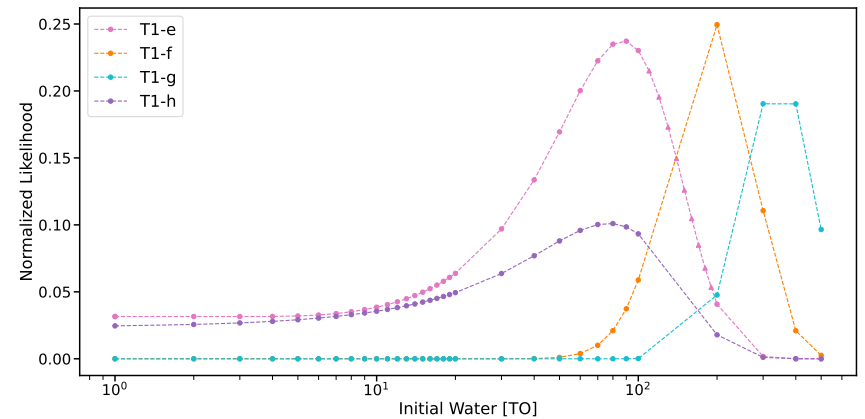
In this work, the researchers simulated early atmospheres for each of the TRAPPIST-1 (T-1 hereafter) planets, including different initial water amounts expressed in Terrestrial Oceans (TO.) They also modelled different amounts of stellar radiation over time. Their simulations used the most recent data for the T-1 planets and used a variety of different planetary evolution tracks.

In this research, the authors took into account the predicted present-day water content for each of the outer planets and then worked backwards to understand their initial water content. This figure shows In this research, the authors took into account the predicted present-day water content for each of the outer planets and then worked backwards to understand their initial water content. This figure shows “The likelihood of each initial water content (in TO) needed to reproduce the predicted present-day water contents for each of the outer planets,” the authors write. The four outer planets would’ve started out with enormous amounts of water compared to Earth. Image Credit: Gialluca et al. 2024.

The results are not good, especially for the planets closest to the red dwarf.

“We find the interior planets T1-b, c, and d are likely desiccated for all but the largest initial water contents (>60, 50, and 30 TO, respectively) and are at the greatest risk of complete atmospheric loss due to their proximity to the host star,” the researchers explain. However, depending on their initial TO, they could retain significant oxygen. That oxygen could be a false positive for biosignatures.

The outer planets fare a little better. They could retain some of their water unless their initial water was low at about 1 TO. “We find T1-e, f, g, and h lose, at most, approximately 8.0, 4.8, 3.4, and 0.8 TO, respectively,” they write. These outer planets probably have more oxygen than the inner planets, too. Since T1-e, f, and g are in the star’s habitable zone, it’s an intriguing result.

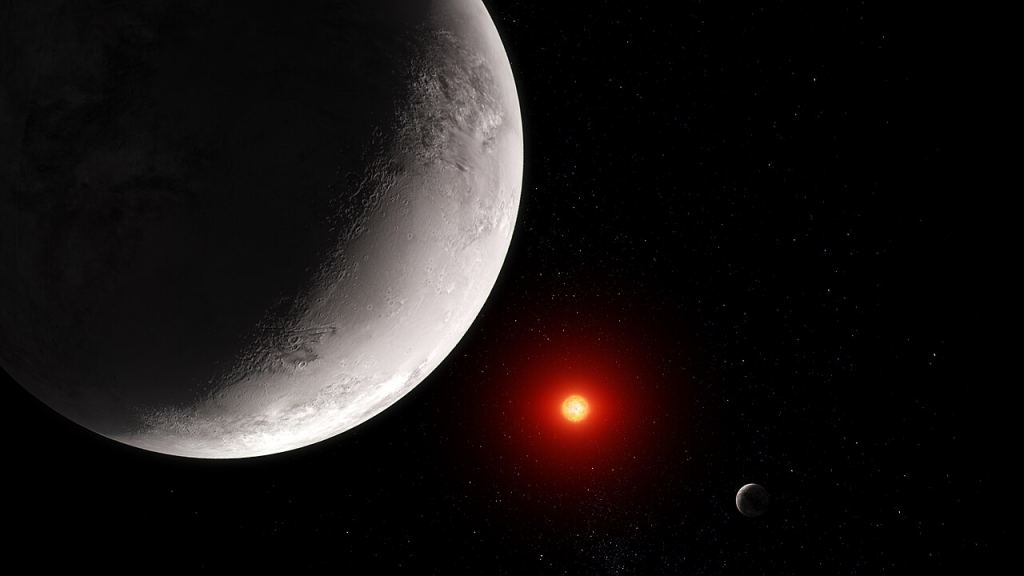
T-1c is of particular interest because, in their simulations, it retains the most atmospheric oxygen regardless of whether the initial TO was high or low.

This artist's illustration shows what the hot rocky exoplanet TRAPPIST-1 c could look like. Image Credit: By NASA, ESA, CSA, Joseph Olmsted (STScI) - https://webbtelescope.org/contents/media/images/2023/125/01H2TJJF981PWQK9YT0VGH2HPV, Public Domain, https://commons.wikimedia.org/w/index.php?curid=133303919 This artist’s illustration shows what the hot rocky exoplanet TRAPPIST-1 c could look like. Image Credit: By NASA, ESA, CSA, Joseph Olmsted (STScI) – https://webbtelescope.org/contents/media/images/2023/125/01H2TJJF981PWQK9YT0VGH2HPV, Public Domain, https://commons.wikimedia.org/w/index.php?curid=133303919

The potential habitability of T-1 planets is an important question in exoplanet science. The type of star, the number of rocky planets, and the ease of observation all place it at the top of the list of observational targets. We’ll never really understand exoplanet habitability if we can’t understand this system. The only way to understand it better is to observe it more thoroughly.

“These conclusions motivate follow-up observations to search for the presence of water vapour or oxygen on T1-c and future observations of the outer planets in the TRAPPIST-1 system, which may possess substantial water,” the authors write in their conclusion.

{ https://www.universetoday.com/ }

Hoe vind je dit bericht?
Geschreven door peter om 23:29 Stuur door

Wetenschappers ontdekken planeet zo "licht en pluizig" als een suikerspin

Wetenschappers ontdekken planeet zo "licht en pluizig" als een suikerspin

Artikel door Heleen Vander Beke

WASP-139b is de helft groter dan Jupiter, maar heeft een massa die zeven keer kleiner is. De "dichtheid" van de planeet is dus minimaal, 0,059 gram per kubieke centimeter om precies te zijn. Ter vergelijking: de dichtheid van water is bijna één gram per kubieke centimeter, bijna twintig keer zo veel.

"Hij is zo licht dat het moeilijk was om aan een vergelijkbare vaste materie te denken", zegt Julien de Wit, professor op Massachusetts Institute of Technology (MIT) en een van de ontdekkers. Enter de suikerspin of de paardenbloem.

De planeet werd vorig jaar ontdekt. Onderzoekers hielden een ster, op een afstand van 1.200 lichtjaren, in het oog met het observatorium WASP (Wide Angle Search for Planets) en zagen dat die met momenten minder licht leek te geven. Er moest dus iets in de weg zitten van dat licht: een planeet die rond de ster draaide, telkens op iets meer dan 6 dagen. 

Kosmisch mysterie

Na die ontdekking gingen ze met andere meetinstrumenten aan de slag om in te schatten hoe groot de planeet is en hoeveel die weegt. Extreem weinig dus, en dat stelt de onderzoekers voor een raadsel. 

Ze vermoeden dat de planeet uit gassen bestaat, waterstof en helium, zoals andere zogenaamde "gasreuzen". In dit geval is de planeet zo "opgeblazen" dat haar atmosfeer tienduizenden kilometers verder reikt dan die van Jupiter, die nochtans bekend staat voor de wolkachtige atmosfeer. 

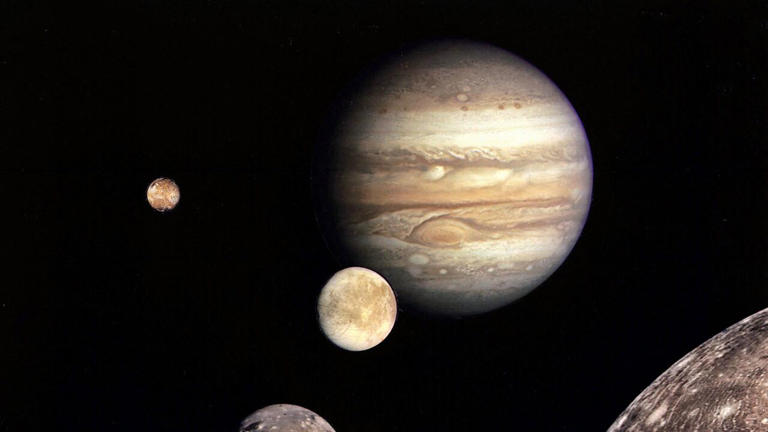
Jupiter, de planeet rechtsboven, heeft ook een redelijk lage dichtheid en is herkenbaar aan de wolkachtige atmosfeer
© Foto: Belga

"We kunnen niet verklaren hoe deze planeet zich heeft gevormd", zegt Francisco Pozuelos, een van de auteurs en onder meer verbonden aan de Universiteit van Luik. Er is geen enkele bestaande theorie die dat op dit moment verklaart. "Het is een kosmisch mysterie", besluiten de wetenschappers. Op de website van de Amerikaanse ruimteorganisatie NASA kan je een illustratie en meer info vinden. 

{ https://www.msn.com/nl-be/ }

Hoe vind je dit bericht?
Geschreven door peter om 23:29 Stuur door

STANFORD RESEARCHERS CREATE FIRST-EVER AUGMENTED REALITY 3D HOLOGRAPHIC HEADSET USING ORDINARY GLASSES

vfOp2S1C?format=jpg&name=900x900

STANFORD RESEARCHERS CREATE FIRST-EVER AUGMENTED REALITY 3D HOLOGRAPHIC HEADSET USING ORDINARY GLASSES

A team of researchers says they have successfully created an immersive 3D augmented reality headset using ordinary glasses instead of the bulky apparatus employed by typical VR and AR headsets.

While still in the prototype phase, the researchers believe that their augmented reality 3D glasses could impact anything from gaming and social media environments to training and education applications.

“Our headset appears to the outside world just like an everyday pair of glasses, but what the wearer sees through the lenses is an enriched world overlaid with vibrant, full-color 3D computed imagery,” said Stanford’s Gordon Wetzstein, an associate professor of electrical engineering.

“There is no other augmented reality system out there now with comparable compact form factor, or that matches our 3D image quality,” added Gun-Yeal Lee, a postdoctoral researcher in the Stanford Computational Imaging lab and co-first author of the published paper outlining the team’s efforts.

BULKY HEADSETS HAVE LIMITED APPLICATION OF AUGMENTED REALITY

The Stanford researchers faced a number of technical hurdles in combining the benefits of current VR headsets with the versatility and ease of ordinary glasses. The first was reducing or replacing the complex optical systems used in bulkier headsets. That’s because these headsets don’t allow the viewer to see the landscape directly.

Instead, tiny cameras capture what the wearer is “looking” at and then project a viewable, 3D image on a tiny screen embedded within the device. For augmented reality purposes, any data used to aid the viewer is overlaid on this digital projection rather than appearing on top of the actual image.

“The user sees a digitized approximation of the real world with computed imagery overlaid,” explained Lee. “It’s sort of augmented virtual reality, not true augmented reality.”

Unfortunately, these types of headsets employ magnifying lenses between the user’s eye and the screen. To work properly, this layout requires a set distance between the eye, the lens, and the screen, resulting in the oversized, bulky headsets currently on the market. According to user experience, this setup can also detract from the overall immersive “realness” of the augmented reality experience, defeating the entire point of the system.

“Beyond bulkiness, these limitations can also lead to unsatisfactory perceptual realism and, often, visual discomfort,” explained Suyeon Choi, a doctoral student in the Stanford Computational Imaging lab and co-author of the paper.

80-YEAR-OLD TECHNIQUE MEETS CUTTING-EDGE SCIENCE TO BREAK TECHNOLOGICAL BARRIERS

Determined to overcome these obstacles, the Stanford researchers turned to a Nobel Prize-winning technology first developed in the 1940s: holography. According to the team, this technique has seen limited use in VR and #D systems due to issues with the depth perception of visual cues, “leading to an underwhelming, sometimes nausea-inducing, visual experience.”

Still, the researchers believed that holography was the key to eliminating the bulky lens-and-screen technique and creating a true, augmented reality headset that allows the viewer to see the real image while simultaneously receiving overlaid information about that image in real time. The key, they determined, was improving the 80-year-old holography techniques with the power of 21st-century AI computing to dramatically improve the depth cues of the projected holographic images.

“With holography, you also get the full 3D volume in front of each eye increasing the life-like 3D image quality,” said Brian Chao, a doctoral student in the Stanford Computational Imaging lab and also co-author of the paper.

The team also employed modern breakthroughs in nanophotonics and waveguide technologies, which increased the complexity and overall realness of the projected images. According to the press release announcing the breakthrough, “A waveguide is constructed by etching nanometer-scale patterns onto the lens surface. Small holographic displays mounted at each temple project the computed imagery through the etched patterns which bounce the light within the lens before it is delivered directly to the viewer’s eye.”

As a result, someone wearing the team’s new ordinary-looking glass lenses can see both the “real world” and the 3D computer-enhanced augmented reality images displayed on top of the world.

augmented reality headset

Through holography and AI, these glasses can display full-color, 3D moving images over an otherwise direct view of the real world.

Image credit: Andrew Brodhead.

POTENTIAL APPLICATIONS INCLUDE GAMING, MILITARY SIMULATIONS, AND ON-THE-JOB TRAINING

Having completed their initial prototype, the team says they can now envision a number of potential applications for their system. Some obvious uses include enhanced gaming or other recreational uses that have thus far eluded current bulkier headsets. However, the team says they believe their system could dramatically improve the work done by highly-trained experts in medicine or engineering.

“One could imagine a surgeon wearing such glasses to plan a delicate or complex surgery or airplane mechanic using them to learn to work on the latest jet engine,” said Manu Gopakumar, a doctoral student in the Stanford Computational Imaging lab and co-first author of the paper.

Although more work is expected before the augmented reality headset made from ordinary glasses is commercially available, the Stanford team says their ability to combine modern AI techniques and nanophotonic breakthroughs with 1940s holography is the step that folks in their industry have been waiting for.

“Holographic displays have long been considered the ultimate 3D technique, but it’s never quite achieved that big commercial breakthrough,” Wetzstein said. “Maybe now they have the killer app they’ve been waiting for all these years.”

  • Christopher Plain is a Science Fiction and Fantasy novelist and Head Science Writer at The Debrief. Follow and connect with him on X, learn about his books at plainfiction.com, or email him directly at christopher@thedebrief.org.

{ https://thedebrief.org/category/tech/ }

Hoe vind je dit bericht?
Geschreven door peter om 16:52 Stuur door

FBI Chilling UFO Reports: Recovered 3 UFOs With Alien Bodies In New Mexico & 27,000 mph Craft

FBI UFO report

FBI Chilling UFO Reports: Recovered 3 UFOs With Alien Bodies In New Mexico & 27,000 mph Craft

An astonishing report was found in the archives of the FBI that reveals the chilling details about aliens, UFOs, and the way these objects maneuver. The documents suggest that some of the UFOs were apparently flying across the skies at an incredible speed of 27,000 miles per hour. The FBI report is dated back to the 1940s when federal agents investigated mysterious crafts in regard to a flurry of sightings. The report also suggests that several documents related to UFOs and aliens were subsequently destroyed by the government.

The FBI report revealed that some UFOs moved at speeds five times more than sound. It was during a time when the infamous Roswell event happened. Initially, it was reported that a flying saucer crash-landed in Roswell but soon, the military claimed that the crashed object was actually a weather balloon.

Many of the memos for the entire study of aliens were addressed to Director J. Edgar Hoover and then placed in the secret FBI archives. Now, they are declassified and stored as an open electronic file in the FBI archives.

FBI officials admitted in an August 16 memo to director Hoover that their office destroyed UFO reports “in great numbers.” But curiously another memo written in 1950, which was released with a huge cache of declassified documents, contains a remarkable statement from special agent Guy Hottel about Roswell.

FBI UFO report Former FBI Director J. Edgar Hoover. Image credit: CBS news

According to the FBI, “Guy L. Hottel was born around 1902. He was a graduate of George Washington University in Washington, D.C., where he was a star football player. He was later inducted into the university’s athletic hall of fame. He entered the FBI as a special agent in 1934. In December 1936, he was named acting head of the FBI’s Washington Field Office; he was appointed special agent in charge the following May and served until March 1941. Hottel was re-appointed special agent in charge in February 1943 and served until 1951, when he took a position in the Identification Division. He retired in 1955. Hottel was married three times and had two sons. Following his FBI career, Hottel served as executive secretary of the Horseman’s Benevolent Association. He died in June 1990.”

Read also:

The memo states that the three flying saucers recovered in New Mexico were approximately 50 feet in diameter. In each of them, there was one alien creature, and their figures resembled human bodies a lot, however, they were about three feet tall and dressed in peculiar metal suits.

“They [the saucers] were described as being circular in shape with raised centers, approximately 50 feet in diameter. Each one was occupied by three bodies of human shape but only three feet tall, dressed in metallic cloth of a very fine texture. Each body was bandaged in a manner similar to the blackout suits used by speed fliers and test pilots.”

Presumably, these were specialized suits of foreigners, like those used by pilots, but made using alien technologies.

It is one of the popular declassified information released by the FBI that has been viewed more than a million times. Besides, the incident happened three years after the Roswell incident, and both have no connection with each other as stated by the FBI.

The document also said that the aliens were peaceful and really reminded people in some way of their behavior. The photo of two alien humanoids also became famous. It was taken before the intergalactic war between American intelligence and reptilians in 1979 at the Dulce Base in New Mexico.

Another declassified document from April 4, 1949, tells how three men, on patrols miles apart, each reported seeing a UFO break up over mountains north of Salt Lake City. Their accounts were sent to Hoover in a memo titled “Flying Discs.”

The file said that a policeman, a highway patrolman, and an army guard all “saw a silver-colored object high up approaching the mountains at Sardine Canyon” that “appeared to explode in a rash of fire.” And another file sent to Hoover, dated January 31, 1949, reveals the sighting by a pair of airline pilots.

They reported the “rocket ship” shaped object with no wings was hurtling out of a thunderhead at speeds of 2700 mph. And elsewhere in the document, further sightings are mentioned that can hit speeds of 27,000 mph (Mach 35).

FBI UFO report UFOs had been reported travelling at speeds of up to 27,000mph even in the 1940s

“No scientific experiments are known to exist in this country which could give rise to such phenomena,” the agent from the San Antonio office writes.

Perhaps hammering home a possible danger from UFOs, special agent DM Ladd also wrote a letter to Hoover. He warned he had heard a report of a transport plane in Czechoslovakia which collided with an “unidentified missile.”

“The missile and the transport were completely disintegrated without recovery of parts or survivors,” Ladd wrote.

While the discussion on bizarre UFO reports is going on, this year, the Pentagon released 1,500 pages of UFO-related research as part of a FOIA request.

According to a massive database of U.S. government reports recently made public through a Freedom of Information Act (FOIA) request, Encounters with UFOs have reportedly left Americans suffering from radiation burns, brain and nervous system damage, and even “unaccounted for pregnancy.”

The report includes a list of alleged biological effects of UFO sightings on human observers between 1873 and 1994, compiled by the Mutual UFO Network (MUFON) — a civilian non-profit group that studies reported UFO sightings. The reported effects of UFO encounters include “unaccounted for pregnancy,” “apparent abduction,” paralysis, and experiences of perceived telepathy, teleportation and levitation.

{ https://www.howandwhys.com/ }

Hoe vind je dit bericht?
Geschreven door peter om 16:36 Stuur door

Primeur in de ruimte: Belgische astronomen ontdekken ‘Speculoos’-planeet die even groot is als onze aarde

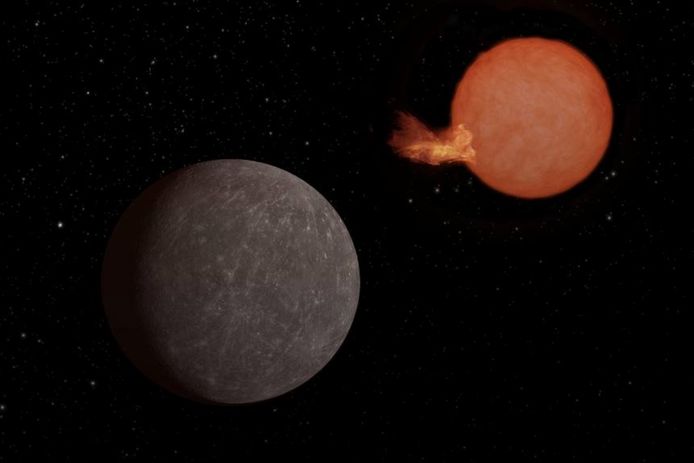
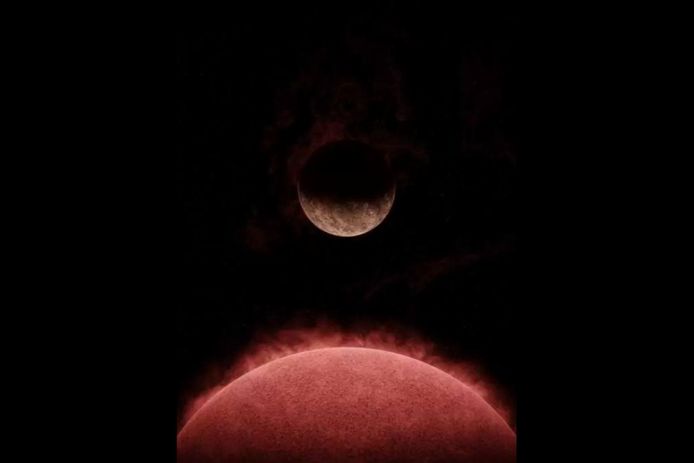
De nieuwe planeet 'Speculoos-3 b’ (links) draait rond een gelijknamige dwergster (rechts).
De nieuwe planeet 'Speculoos-3 b’ (links) draait rond een gelijknamige dwergster (rechts).  © ULiège

Primeur in de ruimte: Belgische astronomen ontdekken ‘Speculoos’-planeet die even groot is als onze aarde

Een groep astronomen van de Universiteit van Luik is erin geslaagd om een nieuwe planeet te ontdekken die bijna even groot is als de aarde. De planeet heeft de naam ‘Speculoos-3 b’ gekregen. Dat is geen verwijzing naar het bekende koekje, maar wel naar de koele dwergster waarrond de planeet draait. “Eén jaar duurt er 17 uur en de dagen en nachten eindigen er nooit”, leggen de onderzoekers uit.

De astronomen maakten het nieuws dinsdag bekend. De ontdekking is het resultaat van het zogenaamde ‘SPECULOOS’-project – oftewel ‘Search for Planets EClipsing ULtra-cOOl Stars’ – dat de Universiteit van Luik in 2019 opstartte. Het doel van het project is om met een netwerk van telescopen op zoek te gaan naar exoplaneten. Die draaien niet rond de zon, maar wel rond koele dwergsterren.

De nieuwe planeet heeft de naam ‘Speculoos-3 b’ gekregen, naar het gelijknamige project en de dwergster waarrond de planeet draait. Die ster is iets groter dan de planeet Jupiter, is kouder dan de zon en geeft ook honderd keer minder licht.

De nieuwe planeet 'Speculoos-3 b’ draait rond een gelijknamige dwergster.
De nieuwe planeet 'Speculoos-3 b’ draait rond een gelijknamige dwergster.  © ULiège

Geen kans op leven

“Speculoos-3 b is bijna even groot als de aarde en is ook rotsachtig”, legt hoofdonderzoeker Michaël Gillon uit. De planeet bevindt zich op zo’n 55 lichtjaar van ons. Dat is relatief dichtbij als je weet dat ons sterrenstelsel, de Melkweg, zich over 100.000 lichtjaar uitstrekt.

Een jaar op de planeet, oftewel één baan rond de ster, duurt ongeveer 17 uur. “Daarnaast eindigen de dagen en de nachten er wellicht nooit”, zegt Gillon. Zo zou de planeet zowel rond zichzelf als rond de dwergster draaien. “Daardoor is de ‘dagkant’ van de planeet altijd naar de ster gericht, net zoals de maan dat voor de aarde doet, terwijl de ‘nachtkant’ zich in de eindeloze duisternis bevindt.”

De kans dat er leven op de planeet is, is volgens Gillon zo goed als onbestaand. Speculoos-3 b ligt te dicht bij de dwergster en die heeft een temperatuur van 2.600 graden Celsius, ongeveer de helft van die op de zon. “Dat is dus veel te heet om bewoonbaar te zijn”, benadrukt de astronoom.

De planeet ontvangt per seconde ook bijna zestien keer meer energie van de zon dan de aarde. “Ze wordt dus letterlijk gebombardeerd met kosmische straling. In zo’n omgeving is de aanwezigheid van een atmosfeer dus zeer onwaarschijnlijk”, klinkt het.

Lees ook: 

{ https://www.hln.be/ }

Hoe vind je dit bericht?
Geschreven door peter om 14:59 Stuur door

DARPA FUNDING MILITARY-GRADE QUANTUM LASER PROTOTYPE

-Gi98Eya?format=jpg&name=900x900

DARPA FUNDING MILITARY-GRADE QUANTUM LASER PROTOTYPE

The Defense Advanced Research Projects Agency (DARPA) has awarded a $1 million grant to fund the development of a military-grade prototype quantum laser that leverages the unique properties of quantum physics to overcome diffusion and data loss problems experienced by other state-of-the-art laser technologies.

The team from Washington University in St Louis receiving the DARPA grant says their goal is to use an aspect of quantum mechanics known as quantum entanglement to help communication lasers and lasers used for surveillance to operate in extreme temperatures, dense fog, or over extremely long distances.

“Quantum entanglement is a correlation between photons,” explained Associate Professor Jung-Tsung Shen from the university’s McKelvey School of Engineering and the leader of the team who received the grant. “We are trying to exploit the property of entanglement to do something innovative.”

To create their prototype quantum laser, Shen’s team will develop and test methods for what they are calling a “quantum photonic-dimer laser.” According to the press release announcing the project, this two-color photonic technology, “in which carefully controlled pairs of light particles or photonic dimers” are entangled, results in a coherent beam of laser beam made up of two different light wavelengths that contain the same information due to their state of entanglement. This two-colored laser loses significantly less information when passing through the atmosphere, even when experiencing adverse environmental conditions or traversing long distances.

“Photons encode information when they travel, but the travel through the atmosphere is very damaging to them,” Shen said. “When two photons are bound together, they still suffer the effects of the atmosphere, but they can protect each other so that some phase information can still be preserved.”

Along with graduate student Qihang Liu and colleagues from Texas A&M University’s Institute for Quantum Science & Engineering, Shen believes he can create a quantum photonic-dimer laser method so powerful they will entangle two-color photonic pairs at the rate of one million per second. That’s a rate the researchers say has “never been seen before.” The team will also be required to generate advanced algorithms for the efficient detection of entangled photonic pairs.

Notably, this is not the first time the U.S. military has explored using advanced laser systems in the 21st-century battlefield. In the last few years alone, military lasers have undergone testing by the U.S. Air Force, which is trying separate systems for their aircraft and counter-drone systems; the U.S. Navy, which successfully test-fired a laser back in 2022, and the U.S. Army, which is preparing to mount combat lasers to their Stryker combat vehicles. In March of this year, the Army actually deployed a military-grade laser system in the Middle East.

combat laser quantum laser

Above: Amphibious transport dock ship USS Portland (LPD 27) conducts a high-energy laser weapon system demonstration on a static surface training target on Dec. 14, 2021, while sailing in the Gulf of Aden

U.S. Navy photo illustration by Mass Communication Specialist 2nd Class Devin Kates).

Aside from potential military applications, the research team believes their prototype system and its methods could be used in civilian applications that employ lasers in more extreme environments. These include advanced communications systems, quantum computing, and quantum imaging.

“The unique thing about this project is its dual focus on generating these novel strongly correlated quantum photonic states and developing the theoretical framework and advanced algorithms for their efficient detection, potentially revolutionizing quantum imaging and communication,” Shen said.

While this is only a two-year project, the team also believes their work is only a first step. In fact, according to Shen, science is just now beginning to explore the benefits of quantum entanglement to create any number of breakthrough technologies beyond their quantum laser.

“The entanglement can do many things that we can only dream of — this is just the tip of the iceberg,” Shen said.

  • Christopher Plain is a Science Fiction and Fantasy novelist and Head Science Writer at The Debrief. Follow and connect with him on X, learn about his books at plainfiction.com, or email him directly at christopher@thedebrief.org.

{ https://thedebrief.org/category/tech/ }

Hoe vind je dit bericht?
Geschreven door peter om 14:45 Stuur door

Altijd al willen weten hoe het is om in een zwart gat te duiken? NASA komt met indrukwekkende simulatie

Altijd al willen weten hoe het is om in een zwart gat te duiken? NASA komt met indrukwekkende simulatie

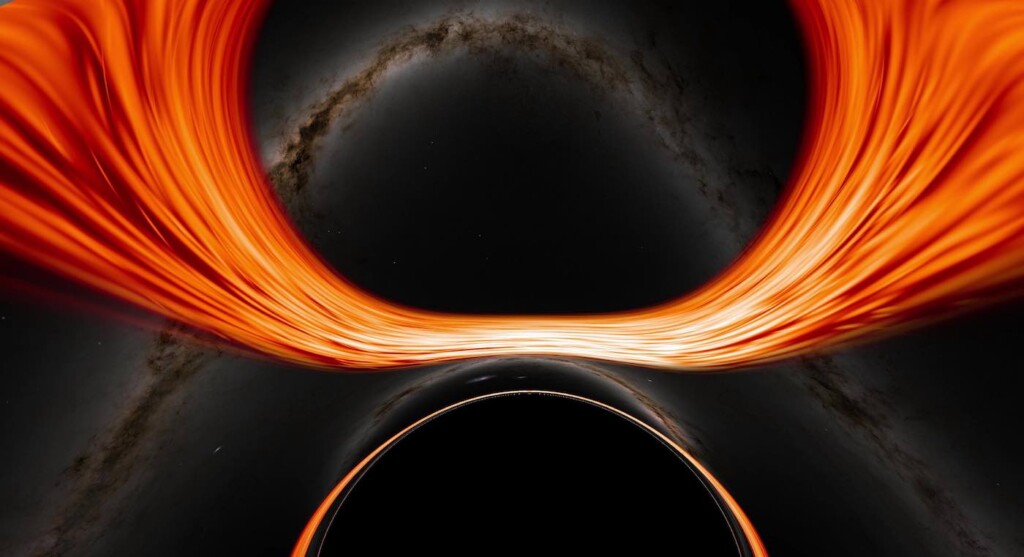
Sinds we hebben ontdekt dat er zoiets bestaat als een zwart gat vraagt menigeen zich af: hoe zou het zijn om erin te springen? Dat weten we voorlopig nog niet, maar NASA heeft wel een spectaculaire simulatie gemaakt om je een idee te geven.

Visual-simulation-of-entering-a-black-hole-by-Jeremy-Schnittman-NASA-astrophysicist-at-Goddard-Space-Flight-Center-NASA-1024x557.jpg

Visual simulation of entering a black hole – by Jeremy Schnittman, astrophysicist at Goddard Space Flight Center / NASA

Een zwarte gat ontstaat als een heel zware ster doodgaat en instort onder zijn eigen zwaartekracht. Het is een astronomische ruimte waaraan niets, zelfs geen licht, kan ontsnappen. Dat komt door een extreme vervorming van de ruimtetijd die het gevolg is van de enorme zwaartekracht van de heel compacte massa. Rond het zwarte gat is een denkbeeldige grens die de waarnemingshorizon of event horizon wordt genoemd. Vlak daarbuiten kan licht nog wel ontsnappen. Als zwarte gaten samensmelten kan een superzwaar zwart gat ontstaan, dat zich vermoedelijk in het centrum van de meeste sterrenstelsels bevindt. Albert Einstein beschreef zwarte gaten voor het eerst in zijn algemene relativiteitstheorie in 1915, maar wetenschappers vonden er pas eentje in het echt in 1971.

Paradox
Omdat licht het belangrijkste middel is waarmee we het universum onderzoeken en we daar bij een zwart gat weinig mee kunnen, weten we nauwelijks wat zich er afspeelt. Maar zelfs in theorie lopen wetenschappers tegen een paradox aan, waarbij informatie zowel bewaard blijft op de event horizon vanuit het oogpunt van de waarnemer als voor altijd opgesloten zit als je het vanuit het object bekijkt dat de grens overgaat.

Wat we echter wel weten, op basis van hoe licht en materie zich rond zwarte gaten bewegen, is dat de zwaartekracht rond de waarnemingshorizon compleet bizar is. In sommige gevallen wordt alles wat te dichtbij komt uit elkaar getrokken tot op atomair niveau.

Dappere astronaut
Hoe dan ook, spreken zwarte gaten enorm tot de verbeelding. “Mensen vragen er vaak naar en de simulatie van zoiets nauwelijks voorstelbaars helpt me de wiskunde van de relativiteitstheorie te verbinden met daadwerkelijke gevolgen in het echte universum”, zegt wetenschapper Jeremy Schnittman van NASA’s Goddard Space Flight Center. “Dus simuleerde ik twee verschillende scenario’s, een waarbij een camera – een vervanger voor een dappere astronaut – net de waarnemingshorizon mist en terug slingert, en een waarbij die de grens overschrijdt en zijn lot bezegelt.”

“Als je moet kiezen, wil je in een superzwaar zwart gat vallen”, vervolgt Schnittman. “Zwarte gaten met een stellaire massa tot ongeveer dertig zonsmassa’s hebben een veel kleinere event horizon en sterkere getijdenkrachten, die naderende objecten kunnen verscheuren voordat ze de horizon bereiken.”

Sagittarius A*
De astrofysicus heeft dus geprobeerd een superzwaar zwart gat na te bootsen, geholpen door de enorme doorbraken in de laatste jaren op dit gebied. Zo hebben we informatie over superzware zwarte gaten M87* in het centrum van het gelijknamige sterrenstelsel en Sagittarius A* in ons eigen stelsel. Het zwarte gat zelf is natuurlijk nog steeds onzichtbaar, maar het licht dat wordt uitgezonden door de gloeiende wolken met materie rond elk gat heeft ons een ongekend inzicht gegeven in het fenomeen.

De nieuwe simulatie is gebaseerd op een zwart gat dat erg vergelijkbaar is met Sagittarius A*. Schnittman begon met een zwart gat met een massa gelijk aan ongeveer 4,3 miljoen zonnen en voerde de gegevens in NASA’s supercomputer in.
Na vijf dagen draaien had het programma 10 terabyte aan data gegenereerd, die de wetenschappers gebruikten om meerdere video’s te maken over hoe het zou kunnen voelen om in een supermassief zwart gat te vallen. Op een normale laptop zou dit tien jaar hebben geduurd.

Spaghettificatie 
De camera begint op ongeveer 640 miljoen kilometer van het zwarte gat en beweegt naar binnen. Naarmate het gat nadert, worden de schijf van materiaal rond het zwarte gat en een structuur bestaande uit een ring van fotonen, steeds duidelijker.
Deze elementen en de ruimtetijd, worden meer vervormd als de camera dichterbij komt.

Uiteindelijk maakt de camera bijna twee omwentelingen van het zwarte gat mee voordat hij voorbij de waarnemingshorizon duikt en na slechts 12,8 seconden spaghettificeert. In de andere versie komt de camera dicht bij het zwarte gat, voordat hij ontsnapt aan de zwaartekracht en wegvliegt.

  • Hopelijk kunnen we ooit échte beelden zien van zwarte gaten, maar tot die tijd hebben we hier vast een voorproefje zonder dat we ervoor uit onze luie stoel hoeven te komen:

Bronmateriaal

{ https://scientias.nl/ }

Hoe vind je dit bericht?
Geschreven door peter om 14:14 Stuur door

Meer van UFO'S of UAP'S, ASTRONOMIE, RUIMTEVAART, ARCHEOLOGIE, OUDHEIDKUNDE, SF-SNUFJES EN ANDERE ESOTERISCHE WETENSCHAPPEN - DE ALLERLAATSTE NIEUWTJES

↑ Terug naar de berichten