Naar de inhoud

UFO'S of UAP'S, ASTRONOMIE, RUIMTEVAART, ARCHEOLOGIE, OUDHEIDKUNDE, SF-SNUFJES EN ANDERE ESOTERISCHE WETENSCHAPPEN - DE ALLERLAATSTE NIEUWTJES

UFO's of UAP'S in België en de rest van de wereld
akke.beakke.be
Ontdek de Fascinerende Wereld van UFO's en UAP's: Jouw Bron voor Onthullende Informatie! Ben jij ook gefascineerd door het onbekende? Wil je meer weten over UFO's en UAP's, niet alleen in België, maar over de hele wereld? Dan ben je op de juiste plek! België: Het Kloppend Hart van UFO-onderzoek In België is BUFON (Belgisch UFO-Netwerk) dé autoriteit op het gebied van UFO-onderzoek. Voor betrouwbare en objectieve informatie over deze intrigerende fenomenen, bezoek je zeker onze Facebook-pagina en deze blog. Maar dat is nog niet alles! Ontdek ook het Belgisch UFO-meldpunt en Caelestia, twee organisaties die diepgaand onderzoek verrichten, al zijn ze soms kritisch of sceptisch. Nederland: Een Schat aan Informatie Voor onze Nederlandse buren is er de schitterende website www.ufowijzer.nl, beheerd door Paul Harmans. Deze site biedt een schat aan informatie en artikelen die je niet wilt missen! Internationaal: MUFON - De Wereldwijde Autoriteit Neem ook een kijkje bij MUFON (Mutual UFO Network Inc.), een gerenommeerde Amerikaanse UFO-vereniging met afdelingen in de VS en wereldwijd. MUFON is toegewijd aan de wetenschappelijke en analytische studie van het UFO-fenomeen, en hun maandelijkse tijdschrift, The MUFON UFO-Journal, is een must-read voor elke UFO-enthousiasteling. Bezoek hun website op www.mufon.com voor meer informatie. Samenwerking en Toekomstvisie Sinds 1 februari 2020 is Pieter niet alleen ex-president van BUFON, maar ook de voormalige nationale directeur van MUFON in Vlaanderen en Nederland. Dit creëert een sterke samenwerking met de Franse MUFON Reseau MUFON/EUROP, wat ons in staat stelt om nog meer waardevolle inzichten te delen. Let op: Nepprofielen en Nieuwe Groeperingen Pas op voor een nieuwe groepering die zich ook BUFON noemt, maar geen enkele connectie heeft met onze gevestigde organisatie. Hoewel zij de naam geregistreerd hebben, kunnen ze het rijke verleden en de expertise van onze groep niet evenaren. We wensen hen veel succes, maar we blijven de autoriteit in UFO-onderzoek! Blijf Op De Hoogte! Wil jij de laatste nieuwtjes over UFO's, ruimtevaart, archeologie, en meer? Volg ons dan en duik samen met ons in de fascinerende wereld van het onbekende! Sluit je aan bij de gemeenschap van nieuwsgierige geesten die net als jij verlangen naar antwoorden en avonturen in de sterren! Heb je vragen of wil je meer weten? Aarzel dan niet om contact met ons op te nemen! Samen ontrafelen we het mysterie van de lucht en daarbuiten.

Archief

Mars Express Spots ‘Spiders’ at Outskirts of Martian ‘Inca City’

Mars Express Spots ‘Spiders’ at Outskirts of Martian ‘Inca City’

ESA’s Mars Express spacecraft have spotted the telltale traces of ‘spiders’ scattered across the southern polar region of Mars.

This image of the Martian Inca City was captured by the High Resolution Stereo Camera onboard ESA’s Mars Express orbiter on February 27, 2024. Image credit: ESA / DLR / FU Berlin.

This image of the Martian Inca City was captured by the High Resolution Stereo Camera onboard ESA’s Mars Express orbiter on February 27, 2024.

Image credit: ESA / DLR / FU Berlin.

“Rather than being actual spiders, the Martian ‘spiders’ form when spring sunshine falls on layers of carbon dioxide deposited over the dark winter months,” members of the Mars Express team said.

“The sunlight causes carbon dioxide ice at the bottom of the layer to turn into gas, which subsequently builds up and breaks through slabs of overlying ice.”

“The gas bursts free in Martian springtime, dragging dark material up to the surface as it goes and shattering layers of ice up to a meter thick.”

“The emerging gas, laden with dark dust, shoots up through cracks in the ice in the form of tall fountains or geysers, before falling back down and settling on the surface.”

This creates dark spots of between 45 m and 1 km (148-3,280 feet) across.

This same process creates characteristic ‘spider-shaped’ patterns etched beneath the ice — and so these dark spots are a telltale sign that spiders may be lurking below.

“The dark spots can be seen all over the Mars Express image. However, most can be seen as small spots in the dark region to the left, which sits just at the outskirts of a part of Mars nicknamed Inca City,” the researchers said.

“The reason for this name is no mystery, with the linear, almost geometric network of ridges being reminiscent of Inca ruins.”

More formally known as Angustus Labyrinthus, Inca City was discovered in 1972 by NASA’s Mariner 9 probe.

“We’re still not sure exactly how Inca City formed. It could be that sand dunes have turned to stone over time,” the scientists said.

“Perhaps material such as magma or sand is seeping through fractured sheets of Martian rock. Or, the ridges could be ‘eskers,’ winding structures related to glaciers.”

“The ‘walls’ of Inca City appear to trace part of a large circle, 86 km (53.5 miles) in diameter.”

The researchers suspect that Inca City sits within a large crater that itself formed as a rock from space crashed into the planet’s surface.

“This impact likely caused faults to ripple through the surrounding plain, which were then filled with rising lava and have since worn away over time,” they said.

{ https://www.sci.news/ }

Hoe vind je dit bericht?
Geschreven door peter om 22:54 Stuur door

Did Chris Mellon just confirm U.S. UFO crash retrievals?

Did Chris Mellon just confirm U.S. UFO crash retrievals?

UFO historian Michael Schratt joins Richard during the second half of this special episode, which was sparked by a powerful statement from Christopher Mellon on April 22. 
On his substack page, Mellon shared a redacted and annotated screenshot of an exchange he had on Signal with a senior government official from around 2020. This official discussed access to a U.S. alien technology recovery and exploitation program. 
kingman%20ufo%20crash%20(1).png

The official also mentioned that progress was being made in accessing a classified program related to a UAP that landed in Kingman, Arizona, in the 1950s. In addition, he referred to the program's management, security controls, and the recovery process for landed or crashed UAPs. 
Finally, he mentioned a classified memo from the 1950s by a Secretary of the USAF as as still being in effect to maintain secrecy this matter. All of this is new information. Most importantly, it is supported by longstanding UFO research into the matter, an abundance of which is provided by Michael Schratt. 
We are talking about the 1953 UFO Kingman incident. 
The UFO flew through an experimental high powered radar range, and was forced to land South of Kingman. This craft was in perfect condition. 
A group of 40 people (15 specialists and 25 scientists) boarded a General Motors Model 3301 bus (with blackout windows) in Phoenix, and made a four hour trip to the site where the craft had come down. 
kingman%20ufo%20crash%20(3).png

After arriving at the site the bus parked approximately 50 feet from the object, the team members were told that they were here to examine a secret Air Force vehicle that had come down. 
Not one but three UFOs came down at the same time. 
Over the course of a decade-long investigation, Historian and researcher Harry Drew meticulously sifting through archival materials, newspapers, and records, came to the conclusion that actually three unidentified crafts crashed near Kingman. 
One craft met its demise upon crashing into the mountainside near Kingman, igniting a fierce blaze. Another was discovered fully intact amidst the desert terrain, while the third craft endured a turbulent landing, scraping against rocky terrain before coming to rest near a small reservoir. 
Military personnel swiftly secured the crash sites, guarding them until a specialized recovery team could transport the unidentified crafts to a Nevada base. 
kingman%20ufo%20crash%20(2).png

Drew asserts that his research not only illuminates the details of the crashes themselves but also unveils the covert operations involved in transporting the crafts to Nevada. The preservation of one of the machines, largely intact, offering a tantalizing glimpse into alien technology.
  

{ https://ufosightingshotspot.blogspot.com/ }

Hoe vind je dit bericht?
Geschreven door peter om 22:33 Stuur door

,Brazil’s Bold Approach to UFO Sightings


Brazil’s Bold Approach to UFO Sightings

ngcb1

Decades of Mystery: Brazilian Air Force’s 60-Year Investigation into Unidentified Flying Objects

In the vast and vibrant landscapes of Brazil, where the lush Amazon meets bustling metropolises, lies a narrative not just of natural wonders but of cosmic intrigue. Over the decades, Brazil has emerged as a fascinating chapter in the global anthology of UFO sightings, distinguishing itself with an official stance that marries curiosity with transparency. This tale is not merely about unidentified flying objects in the conventional sense but a profound journey into how a nation confronts the unknown.

A Night to Remember: The Official Night of the UFOs

The saga of UFOs in Brazil reached its zenith on a memorable night in May 1986, an event that would etch itself into the annals of ufology as “The Official Night of the UFOs.” On this extraordinary evening, the Brazilian Air Force found itself in an unprecedented pursuit of 21 unidentified flying objects. These were not fleeting shadows in the night sky but luminous entities, witnessed by hundreds across four states, their presence affirmed by both eye and radar

The response was swift and decisive. Lieutenant General Octávio Júlio Moreira Lima, then head of the Brazilian Air Force, mobilized five fighter jets in a daring attempt to intercept the mysterious visitors. Despite their efforts, the luminous objects eluded capture, demonstrating maneuvers and speeds beyond human comprehension. This event alone could fuel countless tales, but it was Brazil’s response that truly set it apart.

Transparency and Investigation: A Public Archive

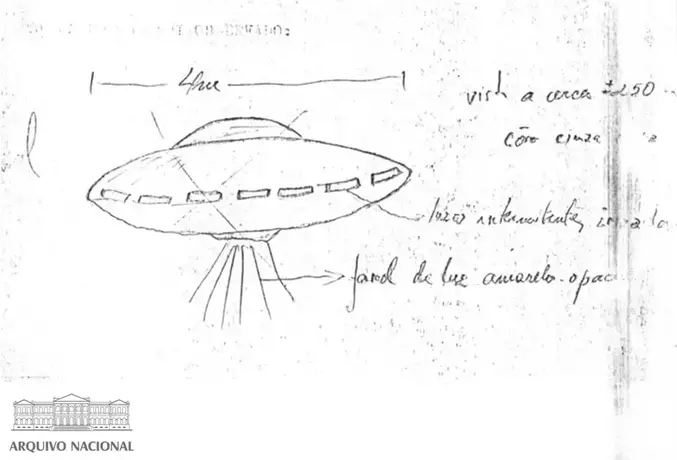
In an era where UFO sightings are often shrouded in secrecy, Brazil took a path less traveled. The nation not only acknowledged these encounters but promised a detailed investigation. This commitment materialized in the form of a comprehensive report, eventually made accessible to all through the National Archives of Brazil. Herein lies the heart of Brazil’s unique approach: transparency. The archives, a repository of over 20,000 pages spanning reports, drawings, and even audio recordings from 1952 to 2016, stand as a testament to Brazil’s open-minded investigation into the 743 incidents recorded by its military.

SIOANI: Systematic Monitoring of the Unexplained

Amidst the backdrop of the Cold War and national curiosity, Brazil established the Unidentified Aerial Object Investigation System (SIOANI), under the leadership of Commander Gilberto Zani de Mello. From 1969 to 1972, this unit embarked on a systematic quest to understand the unexplained. Through interviews, sketches, and bulletins, SIOANI epitomized an organized approach to UFO phenomena, a rare endeavor within the military frameworks of the time.

Cultural Context and Global Recognition

Brazil’s engagement with the unexplained is not merely a governmental or military venture but deeply interwoven with the cultural fabric of the nation. A country where spirituality and the supernatural find a harmonious existence, Brazil’s open-mindedness towards UFOs mirrors its broader acceptance of the unknown and the unexplainable. This cultural backdrop, coupled with official endeavors like SIOANI and the public archives, positions Brazil as a pioneer in the global dialogue on UFOs.

Explore Over 700 UFO Cases Investigated by the Brazilian Air Force in the National Archives, Available Online and In-Person Explore Over 700 UFO Cases Investigated by the Brazilian Air Force in the National Archives, Available Online and In-Person

In recent years, the conversation around UFOs has gained momentum, with entities like NASA adopting methodologies to study unidentified anomalous phenomena. Brazil’s historical and ongoing efforts in this realm, underscored by its policy of transparency, offer valuable insights and set a precedent for global approaches to these mysteries.

Looking Up and Beyond

Brazil’s story in the context of UFO sightings is more than a series of isolated incidents; it’s a narrative about how a nation confronts the unknown with an open heart and mind. The Official Night of the UFOs, the establishment of SIOANI, and the accessibility of comprehensive archives illustrate a journey of curiosity, skepticism, and openness. As the world continues to look up at the skies with wonder and intrigue, Brazil’s bold approach to UFO sightings stands as a beacon of transparency, urging us to explore the unexplained with courage and openness.

{ https://www.latest-ufo-sightings.net/ }

Hoe vind je dit bericht?
Geschreven door peter om 21:54 Stuur door

De mysterieuze stad die wetenschappers al jaren verbijstert

De mysterieuze stad die wetenschappers al jaren verbijstert

De mysterieuze stad die wetenschappers al jaren verbijstert

©Shutterstock

De mysterieuze stad die wetenschappers al jaren verbijstert

In een afgelegen gebied van de westelijke Stille Oceaan ligt een verbluffend en spookachtig onopgelost mysterie: de ruïnes van de oude stad Nan Madol. Gelegen naast de oostelijke oever van het Micronesische eiland Pohnpei, bestaat deze ooit zo grote, prehistorische stad uit bijna 100 geometrisch gevormde kunstmatige stenen eilanden, en het is de enige oude stad die bovenop een koraalrif is gebouwd.

Niemand is zeker van de oorsprong, noch waarom iemand een stad zou willen bouwen op deze desolate plek. Rond de ruïnes hangt een zweem van mysterie, legendes en spookverhalen. Klik verder en ontdek deze vreemde

 

Het Venetië van de Stille Oceaan

©Shutterstock

Het Venetië van de Stille Oceaan
De ruïne bestaat uit 92 kunstmatige eilandjes gebouwd bovenop koraalriffen, die verbonden zijn door een netwerk van kanalen, waardoor het de bijnaam 'Venetië van de Stille Oceaan' heeft gekregen.

De betekenis van de echte naam

©Shutterstock

De betekenis van de echte naam
'Nan Madol' betekent 'de ruimte ertussen', wat verwijst naar de kanalen. Echter doet het ook een beroep op de geschiedenis van de stad en de reputatie van het huisvesten van geesten.

De hamvraag

©Shutterstock

De hamvraag
Waarom zou iemand een stad bouwen in het midden van de oceaan, zo ver weg van een andere bekende beschaving?

Een ding is zeker

©Shutterstock

Een ding is zeker
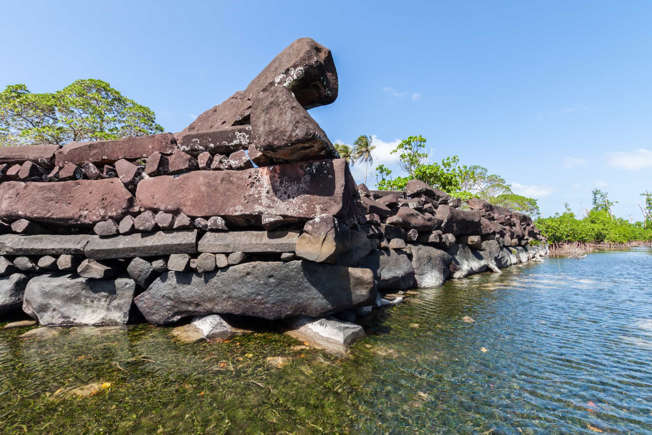
Het is een technisch wonder, volledig gebouwd van gigantische basaltplaten in een tijd waarin gereedschappen zoals we die kennen, nog niet bestonden.
Indrukwekkende schaal

©Shutterstock

Indrukwekkende schaal
De massieve basaltmuren zijn naar verluidt op sommige plaatsen 7,6 meter lang en 5 meter dik.

Megalithische architectuur

©Shutterstock

Megalithische architectuur
Koolstofdatering geeft aan dat sommige van de structuren ongeveer 900 jaar oud zijn, maar de eilandjes zelf dateren nog verder terug: naar de 8e en 9e eeuw n.Chr.

Mensen waren daar al eerder

©Shutterstock

Mensen waren daar al eerder
Bewijs van de vroegste menselijke activiteit dateert volgens Atlas Obscura uit de eerste of tweede eeuw voor Christus. Er is weinig bekend over het oude ras dat het gebied bewoonde.

Waar komt al dat basalt vandaan?

©Shutterstock

Waar komt al dat basalt vandaan?
De basaltstenen zijn naar verluidt afkomstig van de andere kant van Pohnpei, van een vulkanische plug waar magma was uitgehard in de opening van een actieve vulkaan.

Hoe werd het vervoerd?

©Shutterstock

Hoe werd het vervoerd?
Moderne archeologen hebben geen idee hoe de massieve stenen van de ene kant van Pohnpei naar de andere zijn verplaatst en vervolgens zo hoog zijn gestapeld, gezien de primitieve technologie die destijds beschikbaar zou zijn geweest.

Het wedijvert met het werk van de piramides

©Shutterstock

Het wedijvert met het werk van de piramides
De inspanning die nodig was om de megalithische structuren te bouwen, zou die van de Egyptische piramides hebben geëvenaard, aangezien de rotsen een geschat totaal gewicht hadden van 750.000 ton.

Theorieën over transport

©Shutterstock

Theorieën over transport
Experts hebben gesuggereerd dat vlotten kunnen zijn gebruikt om de enorme rotsen naar het rif te transporteren, maar hoe ze oorspronkelijk uit hun verre steengroeven werden getakeld of hoe ze tot die indrukwekkende structuren zijn gemaakt blijft tot op de dag van vandaag onduidelijk
De locatie alleen al is verbijsterend

©iStock

De locatie alleen al is verbijsterend
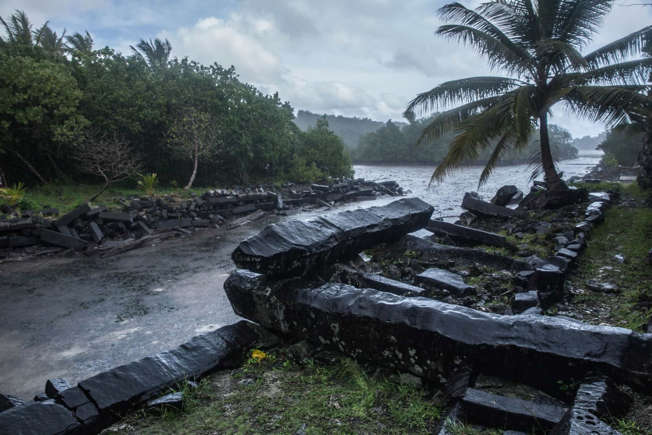
Waarom zou iemand een locatie zo ver van de bewoonde wereld kiezen, ergens op een koraalrif, om al die gigantische rotsen naar toe te slepen?

De vreemde eilandjes

©Shutterstock

De vreemde eilandjes
De 92 eilandjes lijken erg op elkaar en zijn geometrisch gevormd, maar niemand weet waarom

Mythologie komt om de hoek kijken

©Shutterstock

Mythologie komt om de hoek kijken
Mythe vult de kloof, waar de wetenschap geen antwoord op weet. De Pohnpeiaanse legende zegt dat de stad werd gebouwd door twee tovenaarsbroers, Olisihpa en Olosohpa.

Een plek voor aanbidding

©Shutterstock

Een plek voor aanbidding
De broers wilden een plek om een altaar te bouwen zodat ze Nahnisohn Sahpw, de god van de landbouw, konden aanbidden, wat enigszins ironisch is omdat de eilanden niet geschikt zijn voor landbouw.

Hoe hebben ze de stenen verplaatst?

©Shutterstock

Hoe hebben ze de stenen verplaatst?
De legende zegt dat de broers rituelen uitvoerden en de hulp van een vliegende draak gebruikten om het massieve basalt te vervoeren, om daarmee de eilandjes van Nan Madol te creëren.

Natuurlijk waren zij de heersers van de stad

©Shutterstock

Natuurlijk waren zij de heersers van de stad
Olosohpa werd uiteindelijk de eerste Saudeleur en markeerde het begin van een dynastie die tot ongeveer 1628 over Nan Madol regeerde.

Tovenarij

©Shutterstock

Tovenarij
De meeste inwoners van Pohnpei geloven naar verluidt nog steeds dat de oude stad het werk van tovenarij was, aangezien er geen andere levensvatbare theorie is opgedoken voor hoe mensen 750.000 ton basalt hebben verplaatst.

Een heilige plek

©Shutterstock

Een heilige plek
Hoe het ook is ontstaan, het wordt erkend als een heilige plaats gesticht door de Saudeleur-dynastie, die ooit werd bevolkt door stamhoofden en priesters, evenals gewone mensen om hen te dienen. Afgebeeld is het graf van de Saudeleur-dynastie.

Politieke zetel van macht

©Shutterstock

Politieke zetel van macht
De Saudeleur-heersers gaven lokale stamhoofden het mandaat om in Nan Madol te verblijven, zodat ze hun activiteiten konden volgen en de controle konden behouden.
Verschillende toepassingen voor de eilandjes

©Shutterstock

Verschillende toepassingen voor de eilandjes
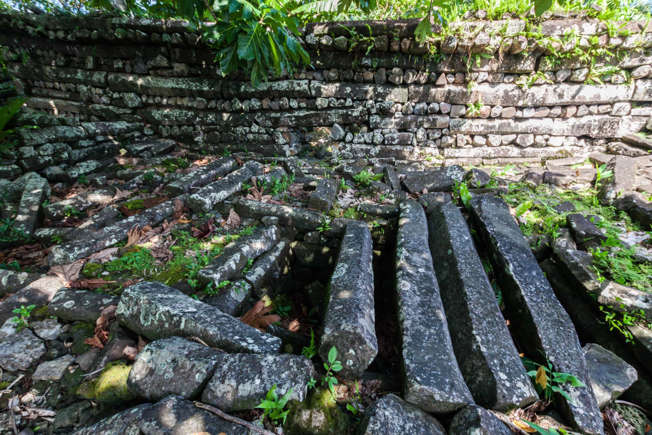
Hoewel de meeste eilandjes woonwijken waren, waren sommige speciaal gewijd aan voedselbereiding, kokosolieproductie of kanobouw.

Het had een vrij aanzienlijke populatie

©iStock

Het had een vrij aanzienlijke populatie
Er wordt geschat dat de bevolking van Nan Madol meer dan 1.000 bedroeg in een tijd dat de hele bevolking van Pohnpei amper 25.000 bereikte.

Geen eten of water

©iStock

Geen eten of water
De onderworpen inwoners moesten voedsel en water naar de stad brengen, omdat er geen middelen waren om gewassen te verbouwen of zoet water op het rif op te slaan.

Een logistiek probleem om te overleven

©Shutterstock

Een logistiek probleem om te overleven
Dit probleem heeft mogelijk geleid tot het verlaten van deze indrukwekkende stad.

Verschillende verhalen over hoe het eindigde

©Shutterstock

Verschillende verhalen over hoe het eindigde
Er zijn veel verhalen over hoe het bewind van Saudeleur eindigde, maar ze schrijven het allemaal toe aan de legendarische krijger Isokelekel in de 15e eeuw, die naar verluidt een nieuw systeem van stamhoofddom implementeerde.

Het wordt soms 'de spookstad' genoemd

©Shutterstock

Het wordt soms 'de spookstad' genoemd
Het mysterie van de oorsprong en het doel van de oude stad heeft natuurlijk heel wat legendes geïnspireerd over geesten. Sommigen zijn bang om te bezoeken, terwijl anderen juist voor de paranormale ervaring gaan.

Geïnspireerde HP Lovecraft

©Shutterstock

Geïnspireerde HP Lovecraft
Howard Phillips Lovecraft was een beroemde Amerikaanse schrijver wiens fictieve verzonken stad R'lyeh, te zien in zijn Cthulhu-mythos, blijkbaar was geïnspireerd door Nan Madol.

'Roep van Cthulhu'

©Shutterstock

'Roep van Cthulhu'
Zijn korte verhaal vermeldt het echte eiland Pohnpei en gebruikt de mythologie van Nan Madol in zijn beschrijving van 'De nachtmerrieachtige lijkstad van R'lyeh', die 'in onmetelijke eeuwen achter de geschiedenis werd gebouwd'.

Het wordt nog maar net als 'beschermd gebied' behandeld

©Shutterstock

Het wordt nog maar net als 'beschermd gebied' behandeld
In 2016 werd Nan Madol toegevoegd aan de lijst van UNESCO-werelderfgoederen.

Maar het wordt ook bedreigd

©Shutterstock

Maar het wordt ook bedreigd
De ruïnes worden bedreigd door klimaatverandering, stijgende zeespiegels, oprukkende mangroven en het temperamentvolle weer in de Stille Oceaan, waardoor het ook een plaats krijgt op de Werelderfgoedlijst van bedreigde plekken.

{ https://www.msn.com/nl-be/feed?ocid=msedgdhp&pc=u531 }

Hoe vind je dit bericht?
Geschreven door peter om 21:39 Stuur door

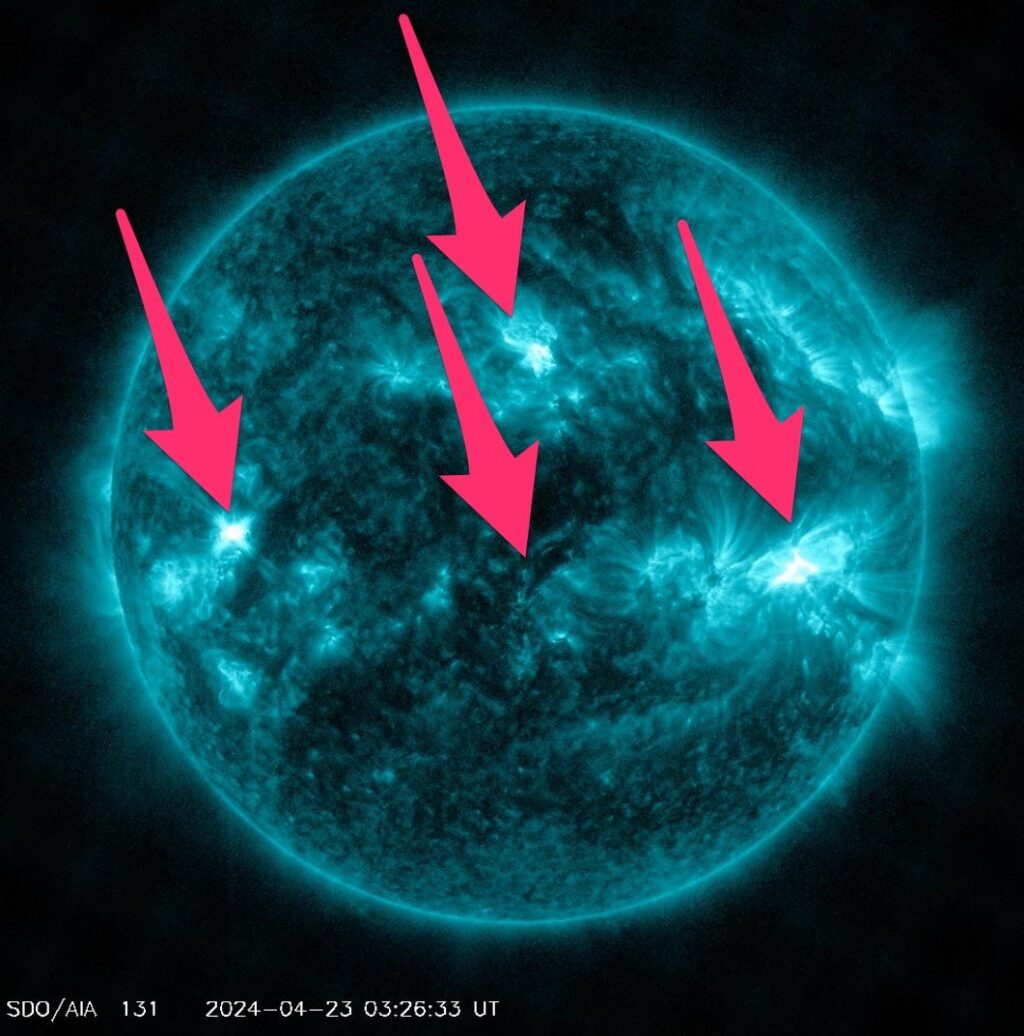
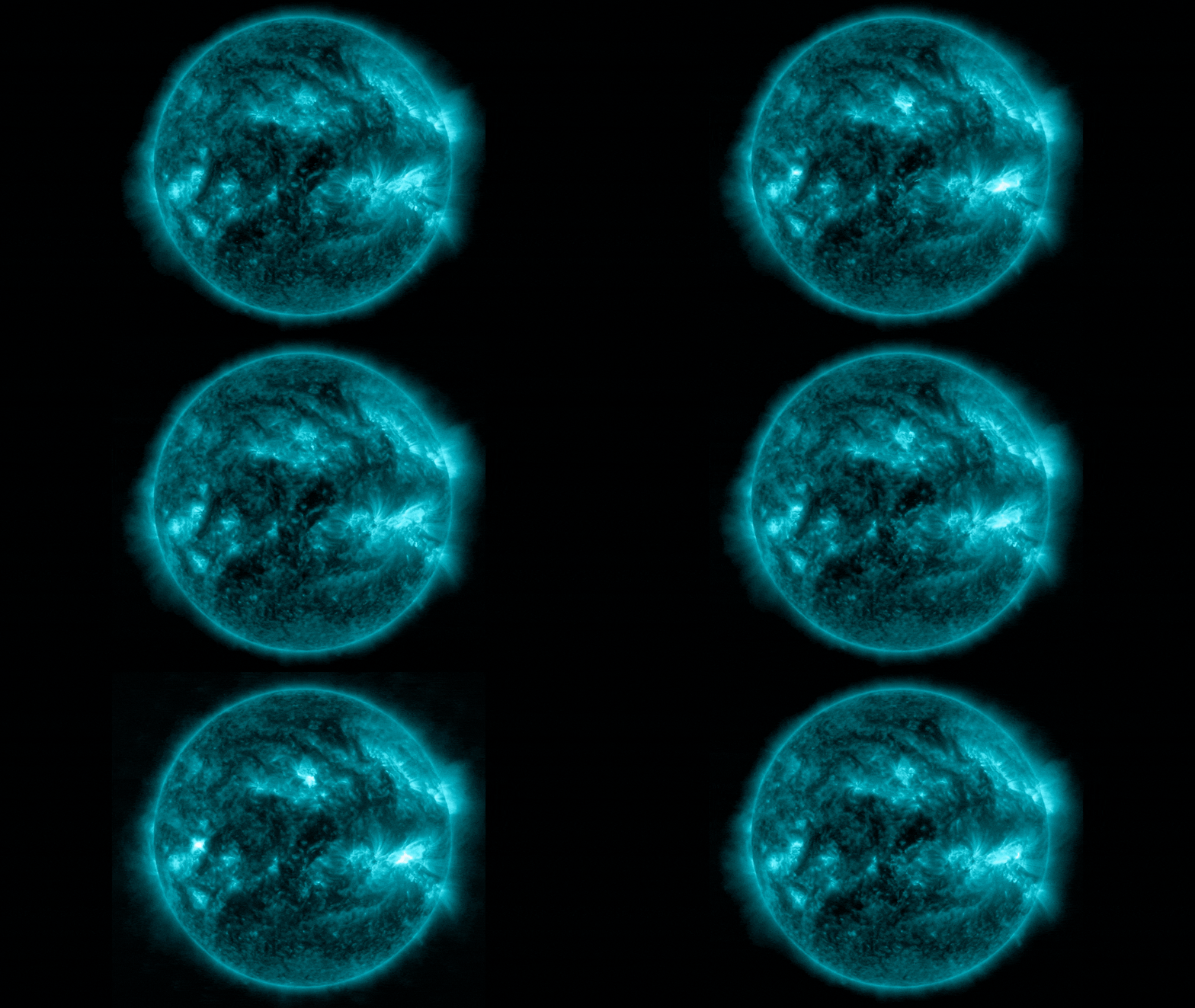
Watch 4 solar flares erupt from the sun at nearly the same time in extremely rare event

Watch 4 solar flares erupt from the sun at nearly the same time in extremely rare event 

Hoe vind je dit bericht?
Geschreven door peter om 00:30 Stuur door

US Congressman Says Revealing UFO Technology Is a Threat to Energy Sector: It Can Disrupt World Economy

_ARhwagY?format=jpg&name=900x900

US Congressman Says Revealing UFO Technology Is a Threat to Energy Sector: It Can Disrupt World Economy

A thought-provoking interview has recently been conducted between Project Unity host Jay Anderson and the U.S. Congressman Andy Ogles. The discussion focused on the implications of complete UAP (Unidentified Aerial Phenomena) disclosure. Anderson asked serious questions to Rep. Ogles about UFOs, revealing that the release of extraterrestrial technology could potentially disrupt the world economy and energy sector.

Rep. Andy Ogles spoke about the difficulty in gathering information due to the compartmentalization of special access projects, emphasizing the need for a methodical and persistent approach to uncover the truth. In the interview, he expressed his concern about UAPs operating in both military and commercial airspace, raising questions about the potential national security threats. He said, “I’m not going to assume I know what it may or may not be. What I do know is there’s a national security issue here.”

He considers various possibilities, including the involvement of experimental aircraft, joint ventures, or foreign adversaries. He emphasizes the importance of avoiding predetermined conclusions and encourages an open-minded investigation to determine the true nature of the UAP phenomenon.

When asked about his personal understanding of UAPs, Rep. Ogles talks about the hope that it might be advanced technology possessed by the United States. He says, “My hope would be… some new technology that we possess… puts us that next generation above our adversaries.” However, he acknowledges the mysterious aspects of UAPs, saying they seem to “defy physics.”

Rep. Ogles then considers the energy implications of the advanced propulsion technology displayed by UAPs. He wonders about the amount of energy needed for such rapid movements and how it could impact the energy sector.

He says, “That being said, these UAPs seem to defy physics. They seem to have some sort of propulsion technology that’s unknown to man as we understand it. So, what does that do to the energy sector? If there’s a new way of thinking about the amount of energy it takes to take a craft that’s hovering and suddenly it’s going Mach one in a matter of seconds – the human body can’t sustain that as we understand it, right? So that craft would have to have next-level technology to protect tissue, if you will, or it’s an unmanned type of craft. Again, there are just a lot of questions that have to be probed. But, if there is this propulsion technology out there and this energy capability out there, not only are we in a renaissance when it comes to aircraft, but we’re in a renaissance in terms of propulsion and energy production consumption. So, again, huge implications across the economic scale, both domestically and internationally.”

He mentions his inquiries in committee about the DOE (Department of Energy), suggesting it could be an ideal place to house top-secret technologies. He says, “If you’re going to house a top-secret Next Level technology, what better place to have it and house it than… nuclear facilities.”

“Everybody knows about Area 51. It’s a testing area… You’ve got this super top-secret, super secure facility that, again, would be ideal to have and to house some new technology, emerging technology that we want to fully master for ourselves and quite frankly control. Because again, as you look at that next generation of warfare, it’s not just tanks and planes. It’s drones. It’s unmanned aircraft. It’s economic. There’s a lot that’s about to happen as we go forward as a superpower and our competitive edge on the global stage.”

Later in the interview, Jay Anderson brings up Congressman Burchett’s positive impression of David Grusch’s testimony during classified briefings. Rep. Ogles says that credible sources have vouched for Grusch’s reliability. He suggests believing what Grusch said, thinking about it carefully, and not trying to say it is wrong without some good proof. Ogles says it is important to keep an open mind, focus on getting answers, and not to try finding faults without good reasons.

Rep. Ogles explains that it does not require unanimous congressional support but rather the speaker’s will to initiate action. He emphasizes the bipartisan interest in addressing the issue and expresses the need for a select committee to ensure transparency and accountability in the investigation. He, along with Congressman Burchett, acknowledges the likelihood of a multi-decade cover-up or compartmentalization due to the secretive nature of special access programs (SAPs) and classified information related to national security.

When asked about evidence suggesting reverse engineering or more exotic propositions, Rep. Ogles mentions the classification of such information and the need for careful consideration. He discusses questions about the origin of technology, whether it is our own creation or recovered from elsewhere, and the potential for reverse engineering.

Read also:

Stephen Bassett, the only registered lobbyist of Washington and founder of Paradigm Research Group, shares the same UFO disclosure concerns that will pose serious implications for the world’s economy.

The PRG researchers claim they have known the reasons why the US authorities were hiding information about UFOs. According to them, disclosing UFO data would lead to the collapse of the entire world economy. Bassett added that all so-called “flying saucers” do not use oil, gasoline, gas, or coal. “They have a different energy system. Without a doubt, a much more complex and deep system based on anti-gravity,” he said.

“Some programs have been removed from the jurisdiction of the White House and Congress and are working somewhere very, very deep, in a ‘hidden mode,'” the researcher emphasized. “I assure you, when the head of state finally officially admits this fact and presents evidence, people will start to worry and want to know more.” But even if the economy stops developing in the current way, it will have new opportunities, Bassett believes.

During an interview with uInterview, he said that UFOs are not unidentified flying objects, as the acronym suggests, but rather alternative energy and propulsion devices. The technology behind UFOs was heavily studied by a team headed by Dr. Vannevar Bush in the 1940s, 1950s, and 1960s, and by 1954, they had developed what is known as “gravity control” and “zero-point energy.”

[Editor’s note] In January 2015, former NASA astronaut Edgar Mitchell sent an email to Podesta, asking him to have an urgent meeting to discuss Disclosure and Zero Point Energy (ZPE). He was concerned about the peace in space. Mitchell wrote: “My Catholic colleague Terri Mansfield will be there too, to bring us up to date on the Vatican’s awareness of ETI. Another colleague is working on a new Space Treaty, citing involvement with Russia and China. However, with Russia’s extreme interference in Ukraine, I believe we must pursue another route for peace in space and ZPE on Earth.” (Click here to read the full article)

However, Dr. Greer stated that the secrecy surrounding this technology went off the rails and became deeply entrenched in compartmented intelligence operations, even causing President Eisenhower to become frustrated with being denied information on the projects.

“The problem became to be, and this is what President Eisenhower warned us about, the secrecy became so enmeshed and compartmented in intelligence operations, that even he as president lost control over it,” Dr. Greer said.

He further stated: “One of our military witnesses, he was a young man working at the White House – which I’m looking at from my place here in Washington, he told us, Mr. Lubkin, who is an attorney, said that Eisenhower was very frustrated that he was being denied information on the projects controlling this issue. So the secrecy went off the rails into these unacknowledged special access projects.”

The disclosure of UFOs would mean the end of oil, gas, coal, and public utilities, as the technology would completely transform the world. Those with trillions of dollars invested in these industries would not be enthused about this possibility. This is the reason for the secrecy, and it has been maintained for 70 years, according to Dr. Greer.

 { https://www.howandwhys.com/ }

Hoe vind je dit bericht?
Geschreven door peter om 23:59 Stuur door

Earth's weird 'quasi-moon' Kamo'oalewa is a fragment blasted out of big moon crater

Earth's weird 'quasi-moon' Kamo'oalewa is a fragment blasted out of big moon crater

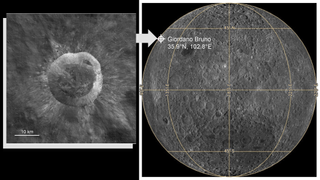
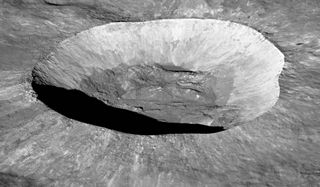
two side by side images. at left, a closeup of a lunar crater. at right, a view of the moon against the blackness of space.
The Giordano Bruno crater on the moon, the home of the asteroid Kamo'oalewa. 
(Image credit: Nature Astronomy)

Earth's "quasi-moon"  was likely blasted away from the actual moon relatively recently in the solar system's history, a new study suggests. 

Kamo'oalewa, a 131- to 328-foot-wide (40 to 100 meters) near-Earth object (NEO), was liberated by an asteroid impact between 1 million and 10 million years ago, a smashup that created the moon's 13.7-mile-wide (22 kilometers) Giordano Bruno crater, according to the research.

Kamo'oalewa, or "469219 Kamoʻoalewa" as it is officially designated, was discovered in 2016 by the Pan-STARRS 1 asteroid survey telescope on Haleakalā, Hawaii, as part of NASA's planetary defense effort to discover space rocks that could possibly hit our planet. 

Kamo'oalewa, which means "an oscillating celestial object" in Hawaiian, was later found to orbit the sun in synchronization with Earth and is spinning extremely fast for an asteroid. These puzzling characteristics led scientists to investigate the quasi-moon's origins. In 2021, research revealed that Kamo'oalewa's composition is similar to rocks recovered from the moon, hinting at its lunar origin. The question was, Where exactly on the moon did it come from?

Related: 

"Our major findings are that Kamo’oaelewa originated from the moon, and not from the asteroid belt, contrary to the majority of asteroids belonging to the NEO population," Patrick Michel, team member and senior researcher at Centre National de la Recherche Scientifique (CNRS), France's state research agency, told Space.com. 

"Like detectives, we used all known information regarding this Kamo‘oalewa and the lunar surface to derive a scenario for the origin of this object, starting from the impact that produced the Giordano Bruno crater," Michel said.

Recreating a 'cosmic crime scene' on the moon

The team connected Kamo‘oalewa with the Giordano Bruno crater by working like  crime scene investigators. They used a computer model to mimic the type of impact that would have produced a space rock like this quasi-moon. 

That meant factoring in things like the size and velocity distributions of the resulting ejecta and their dynamical evolution. This reconstruction demonstrated that some ejecta would eventually get into an orbital 1:1 resonance with Earth, with the same dynamical properties as Kamo’oalewa.

"Our results tell us that Kamo’oalewa is very likely to be a fragment from the lunar surface for which we have a direct relation to a known crater if our scenario is correct," Michel said. 

"Usually, the best we can do is to determine the source region in the asteroid belt of a NEO, knowing its current orbit. A region is usually very wide in these kinds of estimates, such as the inner or outer asteroid belt," he added. "Here, we identified a very specific body and location where this object comes from, which is very exciting."

Home sweet home? The lunar crater Giordano Bruno may have been the home of Earth's Kamo’oaelewa quasi-moon.  (Image credit: NASA/Goddard/Arizona State University)

Michel explained that Kamo’oalewa’s orbit is not stable, leading the team to link it to a crater that is not too old, possibly with an age between one and 10 million years. 

"Then we also needed the crater to be not too large, so that an intact fragment of the size of Kamo’oaelewa can be produced," he continued. "The best candidate was then Giordano Bruno, which matches both constraints." 

The team's impact modeling also gave them an idea of the size of the space projectile that would have created the nearly 14-mile-wide lunar crater and its quasi-moon ejecta. They estimated that the asteroid that struck the moon must have had a width of around 1 mile (1.6 kilometers) to carve out the Giordano Bruno crater and liberate Kamo’oalewa. 

If an asteroid of such a size were to hit Earth, it would release roughly the same amount of energy as the detonation of a one-million-megaton bomb.

Related: 

An artist impression of Earth quasi-satellite Kamo`oalewa near the Earth-Moon system.  (Image credit: Addy Graham/University of Arizona)

The findings also have ramifications for our understanding of the NEO population around Earth, implying that a larger proportion of these bodies than suspected could have been created by impacts on the moon or upon other solar system bodies.

"Although the majority of NEOs come from the main asteroid belt between Mars and Jupiter, a small portion can originate from the moon or other locations," Michel said. "When there is something unusual and when a lunar origin seems possible, then we now know that we can check whether a fragment from the moon can lead to the orbit of the considered object and possibly identify the crater where it comes from, closing the loop."

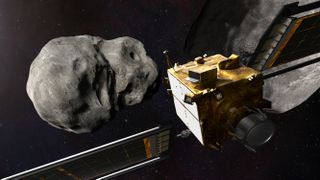
An illustration of NASA's Double Asteroid Redirection Test,or DART, as it approaches its target moonlet around the asteroid Didymos.    (Image credit: NASA/Johns Hopkins APL)

Michel added that the discovery that Giordano Bruno crater and the NEO Kamo’oalewa are likely linked is a stark reminder that, even in this later, calmer epoch of the solar system's 4.6-billion-year history, impacts by massive space rocks happen. 

This stresses the importance of planetary defense projects such as NASA's recent Double Asteroid Redirection Test (DART), which studied the effectiveness of diverting an asteroid on a collision course with Earth.

"Impacts occur in the inner solar system, but while traces are erased on Earth, they are not erased on the moon. Thus, our natural satellite contains the record of the impact history in Earth’s environment over the last 4 billion years," Michel said. "This is the reason why some of us are highly involved in planetary defense, the NASA DART mission that performed the first asteroid deflection test and the European Space Agency Hera mission, for which I serve as principal investigator, that will measure DART impact outcome in detail."

Michel concedes that the team's results are only provisional. Thus, while they have offered a strong link between Kamo’oalewa and the moon, it will take further investigation of the asteroid to confirm this connection.

"The next most exciting study of Kamo’oalewa will be offered by the Chinese Tiawen-2 mission that should launch in 2025 to sample the surface of the asteroid and return the samples to Earth for laboratory analysis," he said. "This is a very challenging mission, as nobody has ever visited such a small object that rotates over itself in only 28 minutes before.

"The analysis of samples will, for the first time, tell us what [are] the physical and thermodynamical state of a fragment of this size extracted from the lunar surface by an impact, which is something we cannot determine in our impact model."

Robert Lea
Senior Writer

Robert Lea is a science journalist in the U.K. whose articles have been published in Physics World, New Scientist, Astronomy Magazine, All About Space, Newsweek and ZME Science. He also writes about science communication for Elsevier and the European Journal of Physics. Rob holds a bachelor of science degree in physics and astronomy from the U.K.’s Open University. Follow him on Twitter @sciencef1rst.

{ https://www.space.com/ }

Hoe vind je dit bericht?
Geschreven door peter om 17:04 Stuur door

Can NASA's Mars Sample Return Program Be Saved? Some Experts Think So

Can NASA's Mars Sample Return Program Be Saved? Some Experts Think So

The quest continues to bring pristine Mars rocks to Earth.

 
NASA/JPL-Caltech

The Mars Sample Return (MSR), one of NASA’s most critical programs designed to bring pristinely sampled Mars rocks inside 30 titanium tubes to Earth, just hit a major roadblock.

On Monday, NASA announced that the current MSR budget was too expensive, costing somewhere between $8 billion and $11 billion. To avoid budget cuts to other critical programs, like the Near-Earth Object (NEO) Asteroid Surveyor space telescope that could spot a rocky existential threat to our planet, NASA pushed the retrieval back until the 2040s. That’s a decade longer than the space agency’s initial timeline.

But one possible savior could be the private aerospace sector, whose biggest player is SpaceX.

WHAT’S GOING ON WITH MARS SAMPLE RETURN?

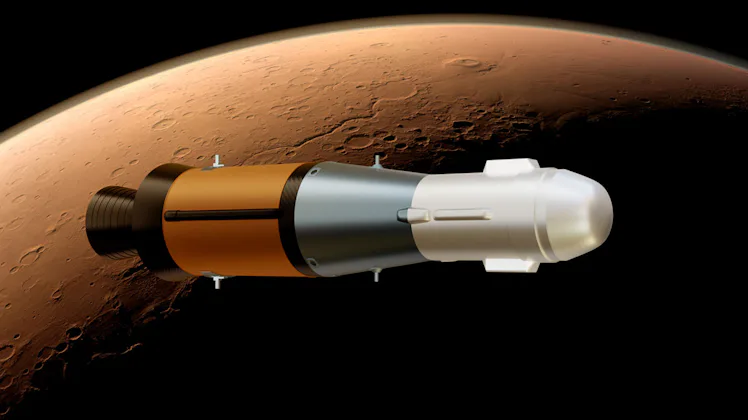
A long rocket flies high above Mars' reddish terrain. Half the surface is in shadow.

This illustration shows NASA’s Mars Ascent Vehicle (MAV), which will carry tubes containing Martian rock and soil samples into orbit around Mars. 

NASA

On our planet, the samples would reveal untold secrets about the big “if” in space science: Are we alone in the universe? Over the last several decades, robotic explorers have gleaned from the reddish landscape that life may have had the right conditions to flourish on the fourth rock from the Sun. Scientists might be able to prove this tantalizing possibility if they can get ahold of these rocks. The Voyager golden records, the myriad of international missions that have orbited Mars, and the host of upcoming missions to the possibly aquatic moons in the outer Solar System, would win an incredible endorsement.

Extending the mission timeline is what makes the most sense to preserve the MSR plan as it currently exists, Casey Dreier, chief of space policy at the non-profit The Planetary Society, told The New York Times on Monday.

But NASA leadership does not want to wait until 2040. “That is unacceptable to wait that long. It’s the decade of the 2040s that we are going to be landing astronauts on Mars. It’s also unacceptable at $11 billion,” NASA Administrator Bill Nelson told reporters at a news conference on Monday.

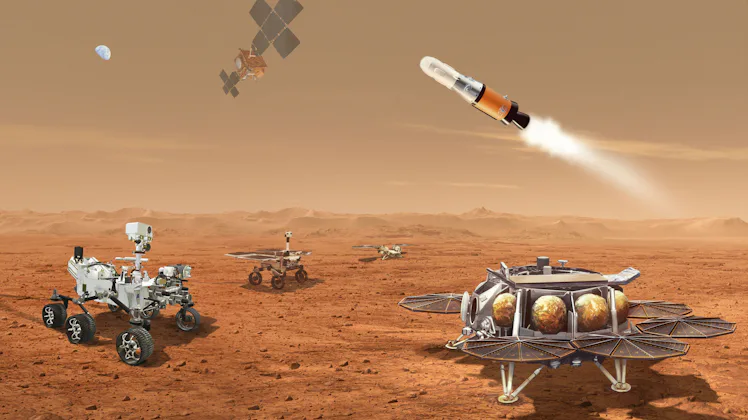
Four robots sit on Mars's surface, while two sail in the sky. In the distance, a blue Earth can be s...

A concept for multiple robots that would work together to ferry to samples from Mars to Earth. 

NASA/ESA/JPL-CALTECH

NASA will ask for proposals from the private sector to find solutions that would offset costs and maintain the project’s integrity. In addition to that, NASA will develop “a revised plan that leverages innovation and proven technology,” according to their published announcement.

WHAT COULD PUT MARS SAMPLE RETURN BACK ON TRACK?

NASA has historically leveraged its partnerships with the private sector to save on costs. For its Artemis program, which marks NASA’s first major crewed return to the Moon since Apollo, the agency has already issued contracts for companies to launch instruments for studying the lunar environment in preparation for crews and has selected proposals for crewed Moon rovers.

MSR’s architecture shares some similarities with that of Artemis III, of which SpaceX will play a key role.

NASA is now building upon the success, and resolving issues, from 2022’s Artemis I mission. For Artemis II, four astronauts are currently in training to fly around the Moon and back as early as September 2025. Then on Artemis III, the program scales up in a whole new way.

PASADENA, CALIFORNIA - APRIL 11: A mobility prototype for the National Aeronautics and Space Adminis...

A mobility prototype for NASA’s Mars Sample Return mission was demonstrated in the Mars Yard at NASA’s Jet Propulsion Laboratory (JPL) on April 11, 2023 in Pasadena, California.

MARIO TAMA/GETTY IMAGES NEWS/GETTY IMAGES

SpaceX holds the contract to build the Starship human landing system for NASA, which would ferry astronauts from lunar orbit to the Moon’s surface, and then carry them back up there.

The vehicle will reach the Moon before the four Artemis III astronauts set sail there, according to NASA. Soon after the Orion capsule arrives with the crew, it will rendezvous with the SpaceX lander, and two brave explorers will get onboard to become the first people to descend to and walk on the Moon’s surface since 1972. When the week of the surface expedition ends, Starship would ferry the duo up to meet the orbital Orion capsule, which would then exit the Moon’s environment and fly the crew back to Earth

Artemis III’s sequence resembles, in part, what must happen on Mars Sample Return. Titanium tubes containing the Red Planet samples would be placed on a spacecraft that could launch them into Martian orbit. Here, another spacecraft would jet off to Earth, carrying the samples to their new home.

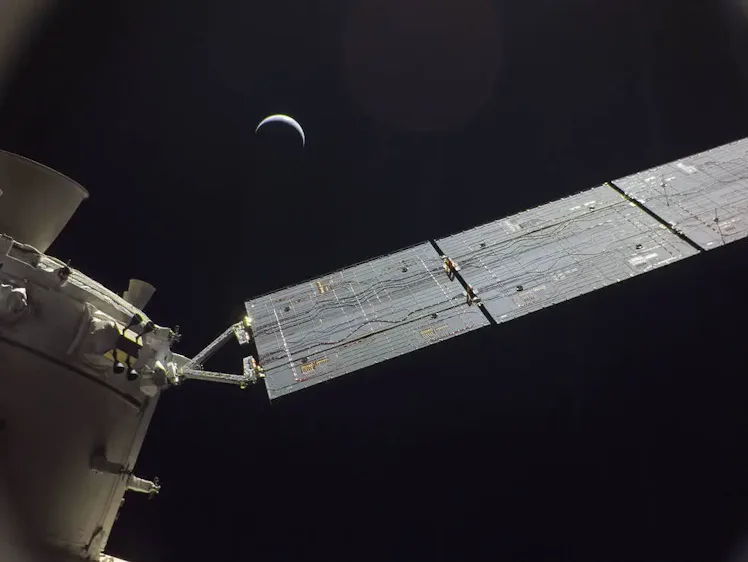
The Orion spacecraft, with the Moon in the distance. The Moon makes a downward-facing crescent again...

The Orion spacecraft, with the Moon in the distance.

NASA

“The challenges of getting off the surface of the Moon have been demonstrated already through the Apollo missions,” Dianne DeTurris, an aerospace engineer at California Polytechnic State University, tells Inverse in an email. “A vehicle got off the surface with people onboard successfully 6 times. The issues for getting on and off of Mars are similar, but the distance to travel to get there is much greater, and with that, there is a greater signal lag due to the time difference. Can it be done? Yes. Will it be done? Very likely. The technology exists already, it is just about finding a cost-effective way to execute the task.”

In February, Dreier wrote a column for The Planetary Society arguing that Starship likely wouldn’t come to MSR’s rescue. Among several reasons he cited, a November 2023 report from the U.S. Government Accountability Office says the Starship human landing system for Artemis III is running into delays.

“NASA remains responsible for its own destiny,” Dreier wrote. For now, MSR and the first modern human landing seem so close — but just out of reach.

{ https://www.inverse.com/ }

Hoe vind je dit bericht?
Geschreven door peter om 16:46 Stuur door

Voyager 1 Just Sent Its First Coherent Message Back to NASA In Months

Voyager 1 Just Sent Its First Coherent Message Back to NASA In Months

A clever programming fix has cured the spacecraft's electronic aphasia.

 
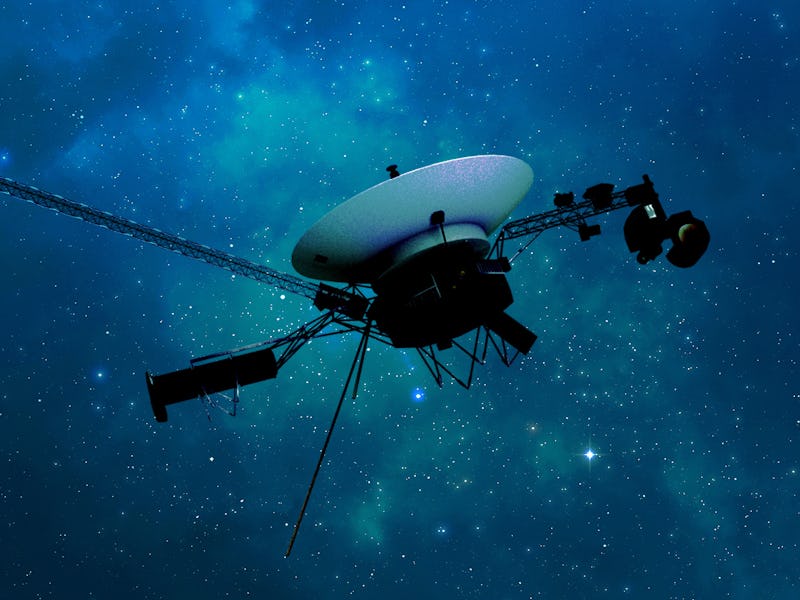
illustration of a spacecraft in space
NASA/JPL

After 5 months of electronic aphasia, NASA’s Voyager 1 spacecraft can communicate intelligibly again, thanks to a clever programming fix from its engineers.

The Voyager 1 team received a clear message about the spacecraft’s status on April 20, and they expect to have science data flowing again in the next few weeks. This comes a few months after Voyager program manager Suzanne Dodd said restoring the spacecraft’s ability to talk to its operators on Earth would take a miracle.

“In the last decade, I have learned from Voyager that there is (almost) always a way around a problem, no matter how dire it is,” Voyager mission assurance manager Bruce Waggoner told Inverse in March. “You just have to think ‘outside the box’ when people tell you not to do so.”

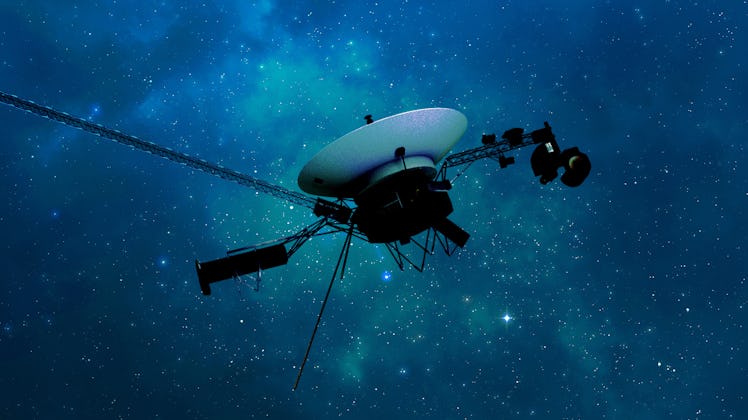
illustration of a spacecraft in space

Voyager 1 entered interstellar space in 2012, and this illustration shows what it might look like out there (although it’s probably a lot darker in reality).

NASA/JPL

FLIPPED BITS AND ELECTRONIC GIBBERISH

Back in November, a passing cosmic ray hit one of Voyager 1’s three onboard computers, and it “flipped a bit” (or altered a tiny unit of data) in the spacecraft’s Flight Data Subsystem. This unit of data happened to be a key piece of the code that tells Voyager 1 how to package up science and engineering data, including information about its own condition, before sending the message to Earth.

Like the robot version of a person recovering from a stroke, Voyager 1 could receive and understand messages from home, and it could gather data to send back. But when it tried to “speak,” its data came out as a gibberish of random 0s and 1s.

Engineers at NASA realized that to fix the problem, they needed to reprogram Voyager 1 with the correct code. However, there wasn’t enough data storage space on the Flight Data Subsystem computer to hold it all. The programmers had to split the code into sections, which could be tucked into Voyager 1’s computer wherever there was room. Then include instructions about where to find each one.

On April 18, Voyager 1’s team transmitted the new code to the distant spacecraft. Then they waited. It took 22.5 hours for the data, moving at the speed of light, to cross more than 15 billion miles of space to reach Voyager 1, and then it took another 22.5 hours for Voyager 1’s response to cross the vastness of space and reach NASA’s Jet Propulsion Laboratory. But after a tense 45 hours, on April 20, the team downloaded Voyager 1’s message: a clear, understandable status update declaring that all was well with the intrepid space robot.

The Voyager 1 team will spend the next few weeks reworking the code that packages science data, and they expect Voyager 1 to return to sending back reports from the edge of the Solar System — ones its human operators can actually read.

Meanwhile, Voyager 2, a well-behaved space robot that hasn’t been in the news lately, is still cruising out of the Solar System on its own trajectory. NASA says it hopes to keep both missions gathering data and calling home until around 2035.

{ https://www.inverse.com/ }

Hoe vind je dit bericht?
Geschreven door peter om 16:34 Stuur door

Unveiling the Sky: A Closer Look at The UFOs of Soesterberg Documentary

Unveiling the Sky: A Closer Look at The UFOs of Soesterberg Documentary

SOESTERBERG ufos

In a world brimming with tales of the unknown, The UFOs of Soesterberg emerges as a beacon of rationality, casting a refreshing light on the enigmatic phenomenon of UFO sightings. Directed by Bram Roza, this documentary delves into a notable event in 1979, where military personnel in the Netherlands reported an unexplained aerial object. Unlike typical sensationalist narratives, Roza’s film stands out for its sober, scientific scrutiny, intertwined with a dash of dry humor, providing a compelling narrative that appeals to skeptics and believers alike.

Roza, with a background in documentary filmmaking, approaches the subject of UFOs with a unique blend of skepticism and open-mindedness. Through The UFOs of Soesterberg, he navigates the fine line between dismissing the unexplained and indulging in fantastical theories. His previous work, including the documentary about the Dutch horror movie The Johnsons, showcases his ability to engage audiences with intriguing subjects, making him a respected figure in the documentary filmmaking community.

What sets this documentary apart is not just its focus on a historical sighting by credible witnesses but also its commitment to demystifying the phenomenon. Roza’s methodical investigation, coupled with his initiative to set up a hotline for UFO sightings, exemplifies a dedication to uncovering the truth behind these mysterious occurrences. The film’s tagline, “Close Encounters of the Dutch Kind,” hints at the numerous sightings in the region, inviting viewers to explore the plausibility of each account.

The UFOs of Soesterberg refuses to offer easy answers or engage in speculation, treating its subjects—both the witnesses and the skeptics—with dignity and respect. The use of animations and drawings for re-enactments adds a visual richness to the documentary, steering clear of the talking-heads format that plagues many documentaries in this genre.

As the documentary tours the Netherlands, captivating audiences with sold-out screenings, it’s clear that Roza has struck a chord. His work not only provides a “glass of water for sane people” amidst the sea of sensationalism surrounding UFOs but also ignites a conversation about the importance of approaching the unexplained with both curiosity and critical thinking.

In the landscape of UFO-related content, The UFOs of Soesterberg stands as a testament to the power of documentary filmmaking that respects its subjects and its audience. Bram Roza’s work is a crucial addition to the discourse on UFO sightings, offering a balanced perspective that is sorely needed.

VIDEOS

{ https://www.latest-ufo-sightings.net/ }

Hoe vind je dit bericht?
Geschreven door peter om 16:19 Stuur door

Meer van UFO'S of UAP'S, ASTRONOMIE, RUIMTEVAART, ARCHEOLOGIE, OUDHEIDKUNDE, SF-SNUFJES EN ANDERE ESOTERISCHE WETENSCHAPPEN - DE ALLERLAATSTE NIEUWTJES

↑ Terug naar de berichten