Naar de inhoud

UFO'S of UAP'S, ASTRONOMIE, RUIMTEVAART, ARCHEOLOGIE, OUDHEIDKUNDE, SF-SNUFJES EN ANDERE ESOTERISCHE WETENSCHAPPEN - DE ALLERLAATSTE NIEUWTJES

UFO's of UAP'S in België en de rest van de wereld
akke.beakke.be
Ontdek de Fascinerende Wereld van UFO's en UAP's: Jouw Bron voor Onthullende Informatie! Ben jij ook gefascineerd door het onbekende? Wil je meer weten over UFO's en UAP's, niet alleen in België, maar over de hele wereld? Dan ben je op de juiste plek! België: Het Kloppend Hart van UFO-onderzoek In België is BUFON (Belgisch UFO-Netwerk) dé autoriteit op het gebied van UFO-onderzoek. Voor betrouwbare en objectieve informatie over deze intrigerende fenomenen, bezoek je zeker onze Facebook-pagina en deze blog. Maar dat is nog niet alles! Ontdek ook het Belgisch UFO-meldpunt en Caelestia, twee organisaties die diepgaand onderzoek verrichten, al zijn ze soms kritisch of sceptisch. Nederland: Een Schat aan Informatie Voor onze Nederlandse buren is er de schitterende website www.ufowijzer.nl, beheerd door Paul Harmans. Deze site biedt een schat aan informatie en artikelen die je niet wilt missen! Internationaal: MUFON - De Wereldwijde Autoriteit Neem ook een kijkje bij MUFON (Mutual UFO Network Inc.), een gerenommeerde Amerikaanse UFO-vereniging met afdelingen in de VS en wereldwijd. MUFON is toegewijd aan de wetenschappelijke en analytische studie van het UFO-fenomeen, en hun maandelijkse tijdschrift, The MUFON UFO-Journal, is een must-read voor elke UFO-enthousiasteling. Bezoek hun website op www.mufon.com voor meer informatie. Samenwerking en Toekomstvisie Sinds 1 februari 2020 is Pieter niet alleen ex-president van BUFON, maar ook de voormalige nationale directeur van MUFON in Vlaanderen en Nederland. Dit creëert een sterke samenwerking met de Franse MUFON Reseau MUFON/EUROP, wat ons in staat stelt om nog meer waardevolle inzichten te delen. Let op: Nepprofielen en Nieuwe Groeperingen Pas op voor een nieuwe groepering die zich ook BUFON noemt, maar geen enkele connectie heeft met onze gevestigde organisatie. Hoewel zij de naam geregistreerd hebben, kunnen ze het rijke verleden en de expertise van onze groep niet evenaren. We wensen hen veel succes, maar we blijven de autoriteit in UFO-onderzoek! Blijf Op De Hoogte! Wil jij de laatste nieuwtjes over UFO's, ruimtevaart, archeologie, en meer? Volg ons dan en duik samen met ons in de fascinerende wereld van het onbekende! Sluit je aan bij de gemeenschap van nieuwsgierige geesten die net als jij verlangen naar antwoorden en avonturen in de sterren! Heb je vragen of wil je meer weten? Aarzel dan niet om contact met ons op te nemen! Samen ontrafelen we het mysterie van de lucht en daarbuiten.

Archief

RARE ASTEROIDS SHOWING STRANGE “ACTIVITY” ARE CHALLENGING EXISTING THEORIES ABOUT THE SOLAR SYSTEM

TMdJ_PUz?format=jpg&name=900x900

RARE ASTEROIDS SHOWING STRANGE “ACTIVITY” ARE CHALLENGING EXISTING THEORIES ABOUT THE SOLAR SYSTEM

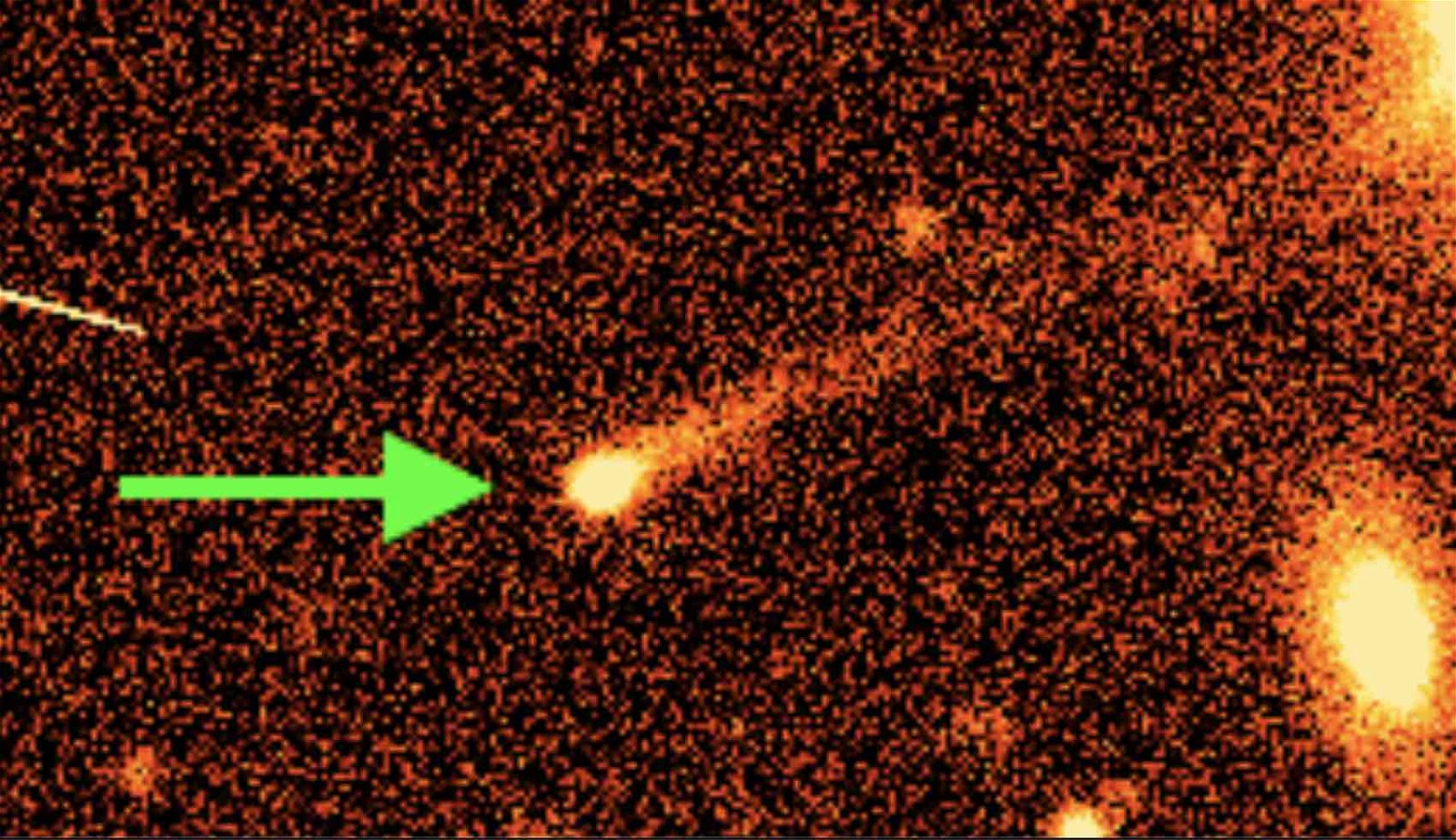
Fifteen rare asteroids showcasing very unusual “active” properties have been detected as part of an ongoing international volunteer effort to unravel the mysteries of a peculiar variety of space objects.

The asteroids were spotted amid 430,000 images during an effort comprising more than 8000 volunteers who scoured images from the Dark Energy Camera, or DECam, on Chile’s Victor M. Blanco telescope.

Founded by Colin Orion Chandler, Ph.D., a University of Washington and DiRAC Institute scientist, the Active Asteroids project continues to leverage the work of volunteers in its ongoing search for asteroids possessing these unusual properties.

What makes these “active” objects so rare is that they possess traits that blur the lines between asteroids and other kinds of celestial objects, as some of them possess tails like comets, while others are enveloped in pockets of dust or gas.

Since their first discovery in 1949, only a few dozen of the rare asteroids have ever been discovered.

According to NASA, the properties these objects display challenge our conventional ideas about objects in the solar system, and present opportunities for new insights about the behavior and origins of these rare “active” asteroids.

Among the things astronomers hope to learn from studying these objects are insights into solar system evolution and the formation of planets, as well as clues to the origins of water on Earth.

Active asteroids may also help provide valuable resources for future space missions, since the ice within their tails could be used for a range of applications in deep space that include providing breathable air, to help power spacecraft on long missions.

The fifteen newest additions to the growing number of active asteroids currently known to exist are described in a new paper in the Astronomical Journal.

rare asteroids a comet tail coming from Asteroid 2015 VA108, one of the active asteroids spotted by volunteers from NASA’s “Active Asteroids” Citizen Science project (Credit: Colin Orion Chandler/University of Washington).

For many of the Active Asteroid project’s participants, helping to spot these odd space objects has been a life-changing experience. Virgilio Gonano, an Italian amateur astronomer and one of the volunteers who helped make the discoveries, said it was a “dream come true” to be able to be part of such an effort.

  • water splitting

Tiffany Shaw-Diaz, a volunteer from Dayton, Ohio, said that she has been a member of Active Asteroids since the project produced some of its earliest results.

“To say that this project has become a significant part of my life is an understatement,” Shaw-Diaz recently said. “I look forward to classifying subjects each day, as long as time or health permits, and I am beyond honored to work with such esteemed scientists on a regular basis.”

There’s potentially good news for others who may be interested in joining the volunteer-driven effort: Active Asteroids is seeking additional volunteers for its growing network of contributors. Who knows, you may even be the next volunteer who helps them spot an asteroid that behaves a lot like a comet. More about the project can be found online at the project’s official website.

{ https://thedebrief.org/category/space/ }

Hoe vind je dit bericht?
Geschreven door peter om 23:41 Stuur door

Bekijk de beelden: Astronomen hebben op Mars een ontdekking gedaan van 450 kilometer breed

Bekijk de beelden: Astronomen hebben op Mars een ontdekking gedaan van 450 kilometer breed

Dicht bij de evenaar van de planeet hebben astronomen iets ontdekt wat al meer dan 50 jaar verborgen is.

Op 14 november 1971 gebeurde er iets wat cruciaal was voor ons begrip van onze rode buurplaneet, Mars.

Na een ruimtereis van 167 dagen arriveerde de onbemande NASA-sonde Mariner 9 in het gebied rond de rotsplaneet en bracht zichzelf als het eerste ruimtevaartuig ooit in een baan om Mars.

Binnen een jaar wist de satelliet beelden vast te leggen van ongeveer 80 procent van het grillige oppervlak, waar bijvoorbeeld grote ravijnen in zitten, maar ook oude kraters en droge riviergeulen.

Maar blijkbaar hebben astronomen een groot landschapselement over het hoofd gezien op de in totaal ruim 7000 foto’s die in 50 jaar zijn gemaakt.

‘We waren bezig met geologisch onderzoek in een gebied waar we afgelopen jaar de resten van een gletsjer ontdekten toen we beseften dat we in een enorme, geërodeerde vulkaan zaten,’ zegt onderzoeksleider dr. Pascal Lee in een persbericht.

Uitbarsting is al lang gaande

De pas ontdekte vulkaan, die voorlopig de naam Noctis-vulkaan heeft gekregen, is uitgestrekt over 450 kilometer en heeft een hoogte van 9022 meter.

De onderzoekers zeggen dat zowel de grootte als de vorm van de vulkaan erop wijzen dat de reus al vroeg in de geschiedenis van de planeet zijn krachten verzamelde, en zeer lange tijd actief is geweest.

Illustratie van de locatie van de reusachtige vulkaan

De pas ontdekte megavulkaan (rode ring) ligt ten zuiden van de evenaar van de planeet, in het oostelijke deel van het doolhofachtige gebied Noctis Labyrinthus en in het westelijke deel Valles Marineris, een gebied met kloven met een diepte van 2 tot 7 kilometer. Ter vergelijking: het diepste punt van Grand Canyon is 1800 meter.

© BACKGROUND IMAGE: NASA/USGS MARS GLOBE. GEOLOGIC INTERPRETATION AND ANNOTATIONS BY PASCAL LEE AND SOURABH SHUBHAM 2024

Hoe vroeg die uitbarsting begon, is nog onbekend.

Maar de reusachtige vulkaan is niet de enige nieuwe ontdekking in het iconische gebied.

In het zuidoostelijke deel van de vulkaan ligt een nieuwere, smalle afzetting, waar volgens de onderzoekers gletsjerijs verstopt kan zitten.

De onderzoekers noemen de ontdekkingen opmerkelijk, want ze wijzen in de richting van een nieuw gebied, dat interessant kan zijn als we meer willen weten over de ontwikkeling van de planeet door de tijd heen en mogelijke tekens van leven.

De reden dat we tientallen jaren de 450 kilometer brede reus over het hoofd hebben gezien, moeten we zoeken in het grillige en gehavende landschap. Daardoor ging de als het ware op in de omgeving.

Op de rotsplaneet zijn meerdere grote, slapende vulkanen uit een ver verleden te vinden.

Een daarvan heet Olympus Mons en is met zijn 25 kilometer hoogte en 600 kilometer breedte de grootste vulkaan in het zonnestelsel.

{ https://wibnet.nl/heelal }

Hoe vind je dit bericht?
Geschreven door peter om 22:24 Stuur door

US government wanted to reverse-engineer alien ships — but never found any, Pentagon UFO report reveals

US government wanted to reverse-engineer alien ships — but never found any, Pentagon UFO report reveals

FNqpC_FM?format=jpg&name=900x900

The Pentagon, Washington DC, USA. 
(Image credit: Glowimages via Getty Images)

The U.S. government is not hiding aliens or their spaceships — although it did once propose a program to reverse-engineer any hypothetical alien technology it found, a Department of Defense (DOD) report reveals.

The Pentagon report, a highly anticipated review of classified documents from 1945 to 2023 that was submitted to Congress Friday (March 8), found no evidence that the U.S. government has encountered aliens or covered up their existence.

Instead, the report blames UFO sightings in the 1960s on top-secret flights of prototype American spy planes and spacecraft. And while the U.S. government did consider a program to reverse-engineer any captured alien ships in the 2010s, no craft were ever found and the proposal was rejected for "lacking merit," according to the report.

Related: 

There is "no verifiable evidence for claims that the U.S. government and private companies have access to or have been reverse-engineering extraterrestrial technology," Maj. Gen. Pat Ryder, the Pentagon press secretary, said in a statement after the report's release. The report also found "no evidence that any U.S. government investigation, academic-sponsored research, or official review panel has confirmed that any sighting of a UAP [unidentified aerial phenomenon] represented extraterrestrial technology."

"All investigative efforts, at all levels of classification, concluded that most sightings were ordinary objects and phenomena and the result of misidentification," Ryder added.

The 63-page review was made by the Pentagon's All-domain Anomaly Resolution Office (AARO), which was established in 2022 to investigate and manage reports of UFO sightings from the U.S. Army, Navy and Air Force. The review included classified and unclassified archical evidence, full access to all secretive government programs related to UFOs, and 30 interviews with intelligence personnel.

{ https://www.livescience.com/ }

Hoe vind je dit bericht?
Geschreven door peter om 21:34 Stuur door

ASTRONOMERS REVEAL THE LARGEST EVER THREE-DIMENSIONAL MAP OF THE KNOWN UNIVERSE

_1Ag_deG?format=jpg&name=900x900

ASTRONOMERS REVEAL THE LARGEST EVER THREE-DIMENSIONAL MAP OF THE KNOWN UNIVERSE

An international team of astronomers has revealed a three-dimensional map of the known universe that charts the largest-ever volume of the extended cosmos. The tools used to create the map were initially designed to measure stars in our galaxy. However, their sensitivity revealed the locations of quasars powered by supermassive black holes at the centers of other galaxies, leading to the map’s eventual creation.

“This quasar catalog is different from all previous catalogs in that it gives us a three-dimensional map of the largest-ever volume of the universe,” says map co-creator David Hogg, a senior research scientist at the Flatiron Institute’s Center for Computational Astrophysics in New York City and a professor of physics and data science at New York University. “It isn’t the catalog with the most quasars, and it isn’t the catalog with the best-quality measurements of quasars, but it is the catalog with the largest total volume of the universe mapped.”

MAP OF THE KNOWN UNIVERSE COMBINES DATA FROM MULTIPLE OBSERVATORIES

Fans of the movie Star Trek: Generations may recall the map of the known universe used by Captain Picard and Commander Data to track an anomaly across vast regions of space known as the Nexus. Of course, such a detailed map covering the entire cosmos has thus far existed only in the world of science fiction. Now, a team of Flatiron Institute researchers say they have created the first-ever real-world map of the known universe, bringing yet another concept from science fiction to science fact.

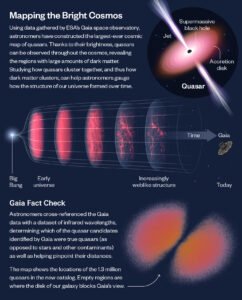
To create their map of the known universe, the researchers compiled data from the European Space Agency’s Gaia Space telescope, which included over 6.6 million quasar candidates. That data was then compared against observations collected by NASA’s Wide-Field Infrared Survey Explorer and the Sloan Digital Sky Survey, allowing the map’s creators to remove “noise” from the final product, including from other stars and galaxies, which resulted in a final 1.3 million quasars ending up in the final version of the map. The team also mapped dust and other “nuisances” that may block out certain quasars from observation.

map of the known universe An infographic explaining the creation of a new map of around 1.3 million quasars from across the visible universe. CREDIT: ESA/Gaia/DPAC; Lucy Reading-Ikkanda/Simons Foundation; K. Storey-Fisher et al. 2024.

As previously noted, Gaia’s primary mission involved mapping stars in the Milky Way Galaxy. However, the researchers behind this latest effort found that Gaia “inadvertently spots objects outside the Milky Way.” This includes supermassive quasars dating back to 1.5 billion years after the Big Bang.

“We were able to make measurements of how matter clusters together in the early universe that are as precise as some of those from major international survey projects—which is quite remarkable given that we got our data as a ‘bonus’ from the Milky Way–focused Gaia project,” explained the paper’s lead author, Kate Storey-Fisher.

While black holes themselves typically emit no light, quasars driven by supermassive black holes are often hundreds of times brighter than entire galaxies. That’s because the extreme gravitational pull of black holes at the center of galaxies collects and “spins up” nearby gas, resulting in an enormously bright disk that can be spotted across the space between galaxies. The result is a massive collection of bright objects that can be spotted by humanity’s most advanced telescopes, leading to the creation of the cosmic map.

NEW MAP ALREADY PAYING SCIENTIFIC DIVIDENDS

In their published study, which appears in The Astrophysical Journal, the researchers behind the largest-ever map of the known universe say their tool is already paying dividends. For instance, the data gathered by Gaia was recently compared against the light from the Big Bang, known as the cosmic microwave background. According to the researchers, this comparison will allow scientists to measure how matter clumps together throughout the cosmos.

The map is also likely to aid scientists who are trying to unravel the mystery of dark matter, as enormous rings of dark matter surround these individual quasars. In fact, the researchers say they expect their new largest-ever map of the known universe to aid astronomers and astrophysicists across a wide range of research efforts.

“It has been very exciting to see this catalog spurring so much new science,” Storey-Fisher says. “Researchers around the world are using the quasar map to measure everything from the initial density fluctuations that seeded the cosmic web to the distribution of cosmic voids to the motion of our solar system through the universe.”

“This quasar catalog is a great example of how productive astronomical projects are,” adds Hogg. “Gaia was designed to measure stars in our own galaxy, but it also found millions of quasars at the same time, which give us a map of the entire universe.”

  • Christopher Plain is a Science Fiction and Fantasy novelist and Head Science Writer at The Debrief. Follow and connect with him on X, learn about his books at plainfiction.com, or email him directly at christopher@thedebrief.org.

{ https://thedebrief.org/ }

Hoe vind je dit bericht?
Geschreven door peter om 21:11 Stuur door

Zoo hypothesis likely explains why we haven’t seen aliens yet

Zoo hypothesis likely explains why we haven’t seen aliens yet

Are alien civilizations hiding from us? A new study analyzes the possibility of the ‘zoo hypothesis’ in light of the Fermi paradox.

ByayrNqK?format=jpg&name=900x900

Representational image of an alien and spaceship.

  • A new paper suggests that the “zoo hypothesis” may explain why we haven’t heard from aliens yet
  • Extraterrestrial societies may have advanced means to conceal themselves
  • One of the researchers thinks we’ll get proof of extraterrestrials within 15 years

Where are all the aliens? This question hasn’t just puzzled UFO enthusiasts but has been the subject of longstanding scientific inquiry. Famously, during one lunch-time conversation in 1950, Enrico Fermi, the Nobel-Prize-winning physicist who was known as the “architect of the nuclear age,” asked his colleagues a similar question – “where is everybody?” 

Fermi asked this question of fellow physicists Edward Teller, Herbert York, and Emil Konopinski, referring to the fact you’d think in a 13.8 billion-year-old universe that’s teeming with ingredients for life, we would have encountered alien intelligence by now.

The researcher’s model showed that the degree of contact between the civilizations would depend on their amount. Fewer societies in existence would mean less potential contact.

The model also suggests that if civilizations lived for less than a million years, there would likely be several galactic groupings, with no full consensus emerging, and you would need to make a treaty that involved everyone. But if all civilizations lived well past a million years, the models propose that a single “galactic club” could exist.

As Forgan wrote, “If civilization cliques do come into contact, it is likely they will hold significantly different perspectives on the universe, and the rights and responsibilities of sentient beings and the institutions they construct.”

{ https://interestingengineering.com }

Hoe vind je dit bericht?
Geschreven door peter om 20:57 Stuur door

We've Got 'Multiple US Military Whistleblowers' Saying There's Video of a UFO Shooting Down a Nuke With a Laser Beam

We've Got 'Multiple US Military Whistleblowers' Saying There's Video of a UFO Shooting Down a Nuke With a Laser Beam

Hoe vind je dit bericht?
Geschreven door peter om 20:40 Stuur door

NASA Reveals its Planetary Science Goals for Artemis III

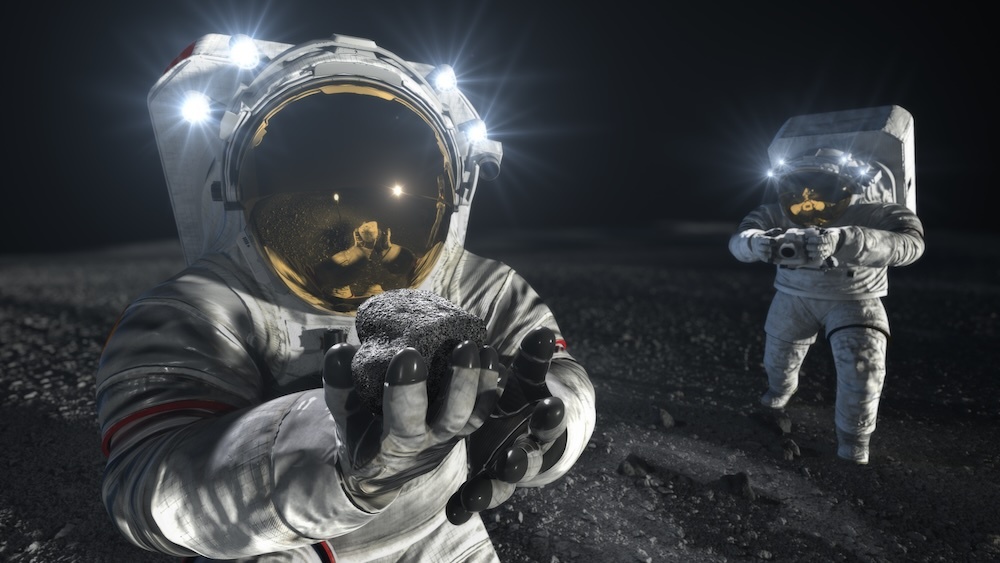
Artist's illustration of Artemis III astronauts on the Moon. Credit: NASA.

NASA Reveals its Planetary Science Goals for Artemis III

If all goes well, NASA’s Artemis III mission will bring humans back to the Moon as early as 2026, the first time since the Apollo 17 crew departed in 1972. It won’t be a vacation, though, as astronauts have an enormous amount of science to do, especially in lunar geology. A team from NASA recently presented their planetary science goals and objectives for Artemis III surface activities, which will guide the fieldwork the astronauts will carry out on the lunar surface.

The Artemis III Geology Team presented their priorities at the Lunar and Planetary Science Conference in March 2024. In addition, NASA also announced their choices for the first science instruments that astronauts will deploy on the surface of the Moon during Artemis III.

The landing site hasn’t been chosen yet, but it will be within 6 degrees of latitude from the South Pole. These instruments will collect valuable scientific data about the lunar environment, the lunar interior, and how to sustain a long-duration human presence on the Moon, which will help prepare NASA to send astronauts to Mars.

“Artemis marks a bold new era of exploration, where human presence amplifies scientific discovery. With these innovative instruments stationed on the Moon’s surface, we’re embarking on a transformative journey that will kick-start the ability to conduct human-machine teaming – an entirely new way of doing science,” said NASA Deputy Administrator Pam Melroy. “These three deployed instruments were chosen to begin scientific investigations that will address key Moon to Mars science objectives.”

Two of the three main Artemis science goals and the instruments deal with understanding the Moon itself. The Lunar Environment Monitoring Station (LEMS) is a compact, autonomous seismometer suite will help study planetary processes, while the Lunar Dielectric Analyzer (LDA) will aid in understanding the character and origin of lunar polar volatiles. The third main science objective will investigate how to mitigate the risks of human exploration, and to that end the Lunar Effects on Agricultural Flora (LEAF) instrument will investigate the lunar surface environment’s effects on space crops to see if the lunar regolith can be used to grow food.  

Artist’s concept of an Artemis astronaut deploying an instrument on the lunar surface. Credits: NASA

Falling under the planetary science goals with the two instruments, scientists have laid out four main objectives, which are designed to be “site agnostic,” so that they can be performed at any landing site, or be able to be modified to fit with any future chosen landing site.

  • A. Understand the Early Evolution of the Moon as a Model for Rocky Planet Evolution

The main objective here is to evaluate the leading theory of the Moon’s early days, which is the Lunar Magma Ocean (LMO) theory. It is theorized that a layer of molten rock was present on the surface of the Moon from the time of the Moon’s formation (about 4.5 or 4.4 billion years ago) to tens or hundreds of millions of years after that time, which led to the formation of the crust, mantle, and core. While the LMO model is supported by many observations, it is not supported by all.

The scientists said gathering samples from the Moon’s polar region and comparing the ages and chemical and isotopic compositions of the new samples to those collected by the Apollo astronauts will help to evaluate the current LMO model and perhaps “find alternate or more complex LMO models.” Scientists would also like to determine the composition of the lower crust, and mantle materials if possible.

Artist’s impression of the impact that caused the formation of the Moon. Credit: NASA/GSFC

Another theory that scientists hope to put under scrutiny during the Artemis program is the giant impact hypothesis. This is the most widely accepted theory for the origin of the Earth–Moon system, which proposes the Moon formed during a collision between the Earth and another small planet, about the size of Mars. The debris from this impact collected in an orbit around Earth to form the Moon. However, similarities between the Earth and Moon don’t quite fit that model, the majority of the Moon’s material should originate from the impactor. “The Artemis III samples will allow new assessments of the formation process and age of the Moon,” the scientists wrote.

  • B. Determine the Lunar Record of Inner Solar System Impact History.

Impacts played a big role in the early history of our Solar System, and scientists say they would like to determine the age of South Pole Aitken (SPA) Basin, the oldest known lunar impact basin. “This will provide key new information for determining when the record of bombardment starts and how complete that early record is,” the scientists wrote. They also hope to determine the sources of early impactors, which will provide a fundamental benchmark for understanding the ages of surfaces across the Solar System.

Scientists would also like to gather data to test the Lunar Cataclysm Hypothesis, a theory that says an intense period of bombardment occurred on the Moon about 3.9 billion years ago, where about 80% of the Moon was “resurfaced,” with the formation of approximately 1,700 craters 100 kilometers in size or larger.  This hypothesis is controversial, but determining if this period of bombardment did occur would help scientists determine if a similar cataclysmic bombardment may have affected life on Earth or been involved in life’s origins.

For the two above goals, the Lunar Environment Monitoring Station (LEMS) will carry out continuous, long-term monitoring of the seismic environment, namely ground motion from moonquakes, in the lunar south polar region. This instrument is expected to operate for at least three months and up to two years and may become a key station in a future global lunar geophysical network. NASA said the instrument will characterize the regional structure of the Moon’s crust and mantle, providing valuable information to analyze the current lunar formation and evolution models.

  • C & D: Determine the Variability of Regolith in the Circumpolar Environment as a Keystone for Understanding Surface Modification of Airless Bodies, and Reveal the Age, Origin, and Evolution of Solar System Volatiles

The Moon’s poles – and especially the permanently shadowed regions – have been compared to an attic in an old house, because it likely contains a record of history. On the Moon, the “attic-like” regions near the poles would still hold the exogenous material delivered to the inner Solar System. Since the terrestrial record of the early Earth is largely lost, finding it on the Moon would be extremely valuable.  

A map showing the permanently shadowed regions (blue) that cover about 3 percent of the moon’s south pole. Credit: NASA Goddard/LRO mission

“Little is known about cold-trapped volatile composition, abundance, age, and the general ability of the Moon to retain volatiles over time,” the scientists wrote. “….Assessing volatiles in cold traps of varying thermal environments and age will provide key new observations to understand their nature.”

And there’s also growing evidence for the presence of lunar polar volatiles like water, hydrogen, and methane, which would be extremely important for future long-term habitation on the Moon. Scientists also want to study how volatiles might be transported across the lunar surface, as such transport has yet to be measured on the Moon, and how it might occur – whether it driven by diurnal temperature changes, solar wind or and micrometeoroid delivery across the Moon.

The Lunar Dielectric Analyzer (LDA) will help in these studies as it will measure the regolith’s ability to propagate an electric field, which is a key parameter in the search for lunar volatiles, especially ice. It will gather essential information about the structure of the Moon’s subsurface, monitor dielectric changes caused by the changing angle of the Sun as the Moon rotates, and look for possible frost formation or ice deposits.

“These three scientific instruments will be our first opportunity since Apollo to leverage the unique capabilities of human explorers to conduct transformative lunar science,” said Joel Kearns, deputy associate administrator for exploration in NASA’s Science Mission Directorate in Washington. “These payloads mark our first steps toward implementing the recommendations for the high-priority science outlined in the Artemis III Science Definition Team report.”

With the Artemis program, NASA will land the first woman, first person of color, and its first international partner astronaut on the Moon, and with the goal of establishing long-term exploration for scientific discovery and preparation for human missions to Mars for the benefit of all.


{ https://www.universetoday.com/ }

Hoe vind je dit bericht?
Geschreven door peter om 18:19 Stuur door

Watch a Real-Time Map of Starlinks Orbiting Earth

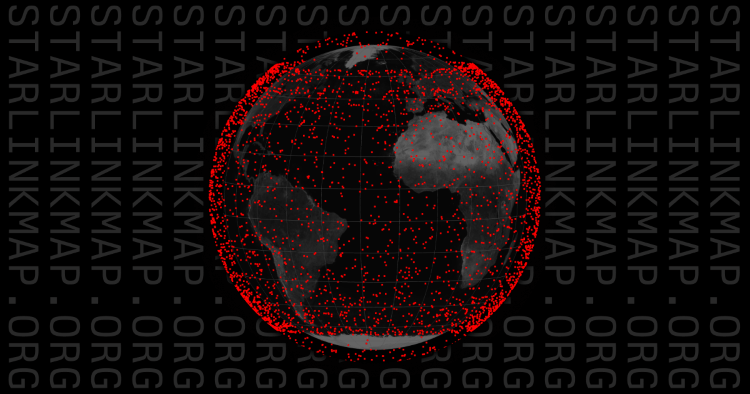
Image of the Starlink interactive map offered by SpaceX. (Credit: StarlinkMap.org)

Watch a Real-Time Map of Starlinks Orbiting Earth

In an effort to enhance the educational outreach of their Starlink constellation, SpaceX has an interactive global map of their Starlink internet satellites, which provides live coverage of every satellite in orbit around the Earth. This interactive map comes as SpaceX continues to launch Starlink satellites into orbit on a near-weekly basis with the goal of providing customers around the world with high-speed internet while specifically targeting rural regions of the globe. In 2022, Starlink officially reached all seven continents after Starlink service became available in Antarctica. Additionally, SpaceX announced in 2023 a partnership with T-Mobiel for Starlink to provide mobile coverage, as well.

2021 video showing an early attempt at Starlink tracking

Within this interactive map, users can opt to see live satellite coverage or rewind and fast forward their respective orbital speeds. Scrolling your mouse will highlight each satellite, and clicking on them will produce their individual satellite information and orbital trajectory, enabling the user to see if a particular satellite will pass over their location. Additionally, users can rotate the Earth and zoom in to anywhere on the planet. All in all, this interactive map gives users near-total control over identifying Starlink satellites currently orbiting the Earth.

To complement the interactive map, users can find data on the number of satellites both launched and currently in orbit, noting a few hundred of the several thousand satellites have been deorbited to burn up on re-entry. As of this writing, 5,977 satellites have been launched with 5,601 satellites currently in operation, and the remaining 376 having been deorbited for a variety of reasons, including failing to reach their target orbit or containing design flaws, as Elon Musk recently announced he plans to deorbit 100 Starlink satellites slowly degrading their orbits over the next five years.

Scrolling down the left menu provides users with information pertaining to the running gigabytes and terabytes having been sent to Earth, along with the most recent and next Starlink launch by SpaceX. Additionally, this menu provides the average time between Starlink launches, along with the number of satellites in orbit by SpaceX’s competition and how many Starlinks jobs are presently available at SpaceX.

As noted, the goal of Starlink is to provide worldwide high-speed internet, with the interactive map noting “The Starlink constellation could serve up to 188,180 MB/sec to Earth.” Despite the more than 5,500 Starlink satellites currently in orbit, SpaceX hopes to launch up to 12,000 satellites during this phase and possibly 42,000, someday.

Despite its impressive numbers and credentials, Starlink has been met with its share of backlash and controversy, including its negative impacts on astronomy, as reports have indicated the streaks from Starlink satellites caused by prolonged camera exposures result in obscuring optical images of the night sky from ground-based telescopes. Most recently, a 2023 study discussed both deliberate and accidental radio signals emanating from Starlink satellites that could interfere with radio astronomy. Additionally, there is growing concern over the increasing number of Starlink satellites could result in unavoidable collisions, leading to increasing space debris in Earth orbit.

With thousands of Starlink satellites still scheduled to be launched into orbit, this Starlink interactive map is going to get busier, and hopefully along with the worldwide high-speed internet access it provides across the globe.

How will Starlink contribute to internet availability in the coming years and decades? Only time will tell, and this is why we science!

  • As always, keep doing science & keep looking up!

{ https://www.universetoday.com/ }

Hoe vind je dit bericht?
Geschreven door peter om 18:06 Stuur door

Ross Coulthart’s Dive into UK’s UFO Mysteries

Ross Coulthart’s Dive into UK’s UFO Mysteries

UK UFO Phenomenon

In an eye-opening exploration into the unexplained aerial phenomena within the United Kingdom, investigative journalist Ross Coulthart, associated with 7NEWS Australia, delves into a series of perplexing sightings and encounters that have sparked intrigue and debate for decades. Coulthart’s investigation, a blend of historical research and firsthand accounts, sheds new light on incidents that have both fascinated and puzzled experts and the public alike.

The Catalysts of Inquiry

Central to Coulthart’s inquiry are the infamous Rendlesham Forest and Cosford incidents, events that have stood the test of time as quintessential examples of UFO phenomena. The Rendlesham Forest incident, often described as Britain’s Roswell, and the lesser-known but equally mystifying Cosford incident, serve as pivotal case studies in Coulthart’s reportage. These incidents, characterized by sightings of unidentified flying objects and unexplained lights, have been the subject of extensive investigation by military and civilian authorities.

The Voices of Experience

Coulthart’s investigation is enriched by conversations with pivotal figures in the UFO research community and witnesses to these enigmatic events. Notably, Nick Pope, a former Ministry of Defence official who was tasked with investigating UFO sightings, offers insights into the government’s response to UFO phenomena. Pope’s transition from skeptic to believer underscores the compelling nature of the evidence encountered during his tenure.

Further depth is added through interviews with witnesses such as Darren Perks, Colonel Charles Halt, and former RAAF Commander Alan Turner, each bringing a unique perspective to the fore. Their testimonies provide a gripping narrative of encounters with objects displaying capabilities far beyond human technology.

Skepticism and Science

Balancing the narrative, Coulthart engages with skeptics like Professor Chris French, who advocate for caution in interpreting these phenomena. French suggests that psychological factors, such as perception and memory distortion, can influence eyewitness accounts, reminding us of the complexity of human cognition and the need for scientific rigor in UFO studies.

The Enduring Mystery

Despite decades of investigations, reports, and debates, the truth behind the UK’s UFO sightings remains shrouded in mystery. Coulthart’s report highlights a critical takeaway: while significant evidence suggests the presence of unidentified aerial phenomena, definitive explanations remain elusive. The investigation into the UK’s UFO phenomenon not only uncovers a history of unexplained encounters but also underscores the ongoing challenge in distinguishing between myth and reality.

VIDEO:

  • Ross Coulthart investigates UK’s UFO Phenomenon (7NEWS Spotlight)

Ross Coulthart’s investigation into the UK’s UFO phenomenon offers a compelling journey through the heart of one of modern society’s most enduring mysteries. By weaving together eyewitness accounts, expert analyses, and historical data, Coulthart provides a nuanced perspective on the UFO enigma. His work invites us to ponder the possibilities of what might lie beyond our current understanding, urging both believers and skeptics alike to keep an open mind in the face of the unknown.

{ https://www.latest-ufo-sightings.net/ }

Hoe vind je dit bericht?
Geschreven door peter om 17:55 Stuur door

Forget the Skies, the U.S. Military Is Looking for UFOs Below the Waves

Skipjack-Class Submarine U.S. Navy

Forget the Skies, the U.S. Military Is Looking for UFOs Below the Waves

No matter how much is learned about UAP in the atmosphere, a complete understanding of anomalous phenomena will remain hidden absent dedicated research in our largely unknown oceans.

Throughout the early stages of the Cold War, there was a significant focus on unidentified flying objects (UFOs)—more recently known as an unidentified anomalous phenomenon (UAP). Most UFOs/UAPs have been identified as known objects or atmospheric phenomena, yet, a small number remained unexplained

That fact has led to wild conspiracy theories, but UAPs are still seen as a very serious source of concern as these objects could pose a clear and present danger to the security of the United States. That fact was highlighted in a Department of Defense (DoD) report released last month, which found that while there is no evidence of “extraterrestrial technology,” official records and public reporting are filled with evidence of unknown craft that exhibit what appears to be extraordinary technology.

However, there has been a focus not just on what has been seen in the skies, but also on what may be lurking below the waves. Rear admiral and oceanographer Tim Gallaudet recently authored a white paper for the Sol Foundation think tank and called for greater attention on unidentified submersible objects (USOs). He suggested that while past research and attention have been on aerial occurrences, instances of UAP at sea, whether under the surface or traveling “transmedium”—between the atmosphere and the ocean—are also occurring.

“We have less research on transmedium UAP and USOs than is ideal, yet what data there is points to a few conclusions. First, these underwater anomalies jeopardize US maritime security, which is already weakened by our relative ignorance about the global ocean. Second, their presence in the oceans at the same time presents an unprecedented opportunity for maritime science. Third, to meet the security and scientific challenges, transmedium UAP and USOs should be elevated to national ocean research priorities,” wrote Gallaudet.

He further suggested that the security implications of UAP and USO and the scientific ramifications are nothing short of world-changing.

Mysteries of the Deep

For eons, sailors have claimed to have spotted the seemingly unexplainable at sea, and that included mythical creatures like the Kraken and mermaids, as well as phantom ships such as the infamous “Flying Dutchman.” The mysterious creatures were attributed to misidentified marine life, while the Flying Dutchman was actually fabricated by the British as propaganda in retaliation against the Dutch East India Company.

Yet, there remain countless mysteries of the deep—which isn’t all that surprising as 95 percent of the ocean remains unexplored. There is no doubt that some undersea life has yet to be seen.

As the U.S. Naval Institute noted in 2022, “to date, there has been no documented damage to a plane caused by a UFO,” yet, the report identified multiple incidents where vessels have had all too close encounters with aquatic life that in another time might have been described as “sea monsters.”

That included the 1978 incident involving the Knox-class destroyer escort USS Stein (DE-1065) and an unknown species of giant squid. The “NOFOUL” rubber coating of the vessel’s AN/SQS-26 sonar dome was damaged by multiple cuts. While that might not seem all that unusual, the cuts contained remnants of sharp, curved claws found on the rims suction cups of some squid tentacles—and these were far larger than any squid that had ever been encountered!

What Is Under the Sea?

The number of unexplained incidents at sea is as great as those seen in the sky.

“The underwater and transmedium UAP reported in these sources are as diverse as their aerial counterparts, including luminous orbs, silver and gray discs, and triangular and cigar-shaped objects with various lighting configurations. Large lighted craft are often seen under the sea surface without ever emerging,” explained Gallaudet.

He added that subsequent research has shown that many such phenomena often have a down-to-earth explanation—bioluminescent organisms excited by near-surface turbulence—and that this serves to “remind us that prosaic explanations for phenomena should always be considered to avoid jumping to conclusions about alien craft.”

Yet, Gallaudet added that there is still much we can’t easily explain, and worse, perhaps not enough is being said or done about it.

“The fact that unidentified objects with unexplainable characteristics are entering US water space and the DOD is not raising a giant red flag is another sign that the government is not sharing all it knows about all-domain anomalous phenomena,” wrote Gallaudet.

He further warned that the focus shouldn’t be just what is seen in the heavens above, which is finally getting the attention it may deserve.

“Not so in Neptune’s realm,” Gallaudet concluded in his paper. “No matter how much is learned about UAP in the atmosphere, a complete understanding of anomalous phenomena will remain hidden absent dedicated research in our largely unknown oceans. Without gazing into the abyss, one will never know if the abyss does indeed return the gaze.”

Author Experience and Expertise: Peter Suciu

Peter Suciu is a Michigan-based writer. He has contributed to more than four dozen magazines, newspapers, and websites with over 3,200 published pieces over a twenty-year career in journalism. He regularly writes about military hardware, firearms history, cybersecurity, politics, and international affairs. Peter is also a Contributing Writer for Forbes and Clearance Jobs. You can follow him on Twitter: @PeterSuciu. You can email the author: Editor@nationalinterest.org.

{ https://nationalinterest.org/ }

Hoe vind je dit bericht?
Geschreven door peter om 01:34 Stuur door

Meer van UFO'S of UAP'S, ASTRONOMIE, RUIMTEVAART, ARCHEOLOGIE, OUDHEIDKUNDE, SF-SNUFJES EN ANDERE ESOTERISCHE WETENSCHAPPEN - DE ALLERLAATSTE NIEUWTJES

↑ Terug naar de berichten