
Date of sighting: March 2024
Location of sighting: Mount Shasta, California, USA
Scott C. Waring


 Mysterious Lights Over the Ocean: A Remarkable UFO Sighting on November 28, 2023

In the realm of unexplained phenomena, few topics capture the imagination as vividly as UFO sightings. These enigmatic occurrences prompt a whirlwind of speculation, intrigue, and a perennial quest for understanding. A recent event, reported on January 16, 2024, to the National UFO Reporting Center (NUFORC), stands as a poignant testament to the enduring allure of the unknown. This sighting, occurring on November 28, 2023, features an eyewitness account that is as compelling as it is mystifying.
The incident unfolded in an unexpected locale: the vast, open ocean. The witness, a passenger aboard a cruise ship, ventured back to their room to enjoy the serene ambiance of the sea from their balcony. What was meant to be a moment of tranquility quickly turned into an encounter with the inexplicable. The observer noticed a bright object performing erratic maneuvers in the sky, a sight so unusual and distant from any landmass that it defied immediate explanation. According to the witness, “the closest land was hundreds of miles away,” underscoring the isolation and the oddity of the sighting.
In pursuit of answers, the passenger approached the cruise ship’s crew, only to be met with information that deepened the mystery. The crew member confirmed that drones were not only prohibited on board but also not utilized by the ship itself. This detail is crucial, effectively eliminating a common rational explanation for such sightings. The suggestion that “maybe Mexico is doing something” adds a layer of geopolitical intrigue, albeit without concrete evidence to substantiate this theory.
Accompanying the eyewitness report is a video, a visual testament to the encounter that lends credence to the observer’s account. While the video will undoubtedly be subjected to scrutiny by skeptics and enthusiasts alike, it serves as a pivotal piece of evidence in the ongoing dialogue about UFOs and their place in our collective consciousness.
This sighting is a reminder of the vastness of our world and the mysteries that linger in its unexplored corners. UFO sightings, such as the one reported on November 28, 2023, challenge our understanding of the possible and propel us to look beyond the horizon, in search of answers that may forever remain just out of reach.
For enthusiasts and skeptics alike, this sighting adds another intriguing chapter to the annals of UFO encounters. As we gaze up at the night sky, we are reminded that sometimes, the most extraordinary mysteries are not found in the far reaches of space but right here, in the vast expanse of our own planet’s skies.
For those captivated by the unexplained and the extraordinary, this recent UFO sighting over the open ocean serves as a compelling invitation to explore the unknown. The video accompanying the eyewitness account provides a glimpse into an encounter that defies easy explanation, reminding us that the mysteries of the universe are not only vast but also closer than we might think.
400-Mile-Thick Solid Metallic Ball Found Inside Earth’s Core: Underground World?
It has been previously thought that Earth is composed of four different layers: inner core, core, mantle, and crust. But a recent scientific discovery might change the way we see Planet Earth. Scientists claimed to they have found one more layer inside the inner core that takes the form of a solid, metallic sphere situated at the core’s center. It is not molten but solid.
A recent study published in the journal Nature Communications reveals that scientists have detected a 400-mile-thick solid metallic layer located at the Earth’s innermost core. This layer responds differently than previously known layers to earthquake shockwaves
The research was conducted by a team of two seismologists from the Australian National University (ANU), who speculates that this “innermost inner core” found inside Earth might have originated from a significant global occurrence in the past. Two Harvard seismologists, Miaki Ishii and Adam Dziewonski, first proposed the idea of the innermost inner core in 2002 based on peculiarities in the speed of seismic waves passing through the inner core.
 The inner core of the Earth appears to hold an innermost secret.
Image via The New York Times
The research states scientists have discovered up to fivefold reverberating waves from earthquakes along the Earth’s diameter, using a growing number of global seismic stations. This has enabled them to probe the Earth’s center and infer a transversely isotropic inner-core model that contains an anisotropically distinctive innermost inner core and its transition to a weakly anisotropic outer shell.
These findings improve current knowledge of the Earth’s formation and evolution and suggest that the anisotropy could be a fossilized record of a significant global event from the past. This research has shed light on our planet’s evolution over billions of years, including the development of the Earth’s magnetic field, which transformed it from an uninhabitable terrain into a habitable abode.
Dr. Thanh-Son Phạm, from the ANU Research School of Earth Sciences, stated that around two decades ago, a hypothesis was proposed about the presence of an internal metallic ball in the innermost core. According to Dr. Phạm, they are now presenting another line of evidence to support this hypothesis.
The ANU scientists describe this process as similar to a ping pong ball bouncing back and forth. “By developing a technique to boost the signals recorded by densely populated seismograph networks, we observed, for the first time, seismic waves that bounce back – and forth up to five times along the Earth’s diameter. Previous studies have documented only a single antipodal bounce,” Dr. Phạm said. (Source)
“This inner core is like a time capsule of Earth’s evolutionary history – it’s a fossilized record that serves as a gateway into the events of our planet’s past. Events that happened on Earth hundreds of millions to billions of years ago,” said in a statement one of the researchers, Hrvoje Tkalčić.
Scientists studied one of the earthquakes that originated in Alaska. Its seismic waves were observed to bounce off a location in the south Atlantic Ocean before returning to Alaska.
The researchers investigated the anisotropy of the iron-nickel alloy that forms the Earth’s inner core. Anisotropy refers to the way seismic waves speed up or slow down depending on their direction of travel through the Earth’s inner core, potentially caused by varying arrangements of iron atoms at high temperatures and pressures or preferred alignment of growing crystals.
The scientists discovered that the bouncing seismic waves probed the Earth’s center from different angles multiple times. By examining the travel times of seismic waves for various earthquakes, the researchers inferred that the crystallized structure within the innermost region of the inner core is likely different from the outer layer. This discrepancy could explain why seismic waves change speed depending on their entry angle as they penetrate the innermost part of the inner core.
Read also:
According to the researchers, the formation of this metallic ball could have been triggered by a major global event, such as a large tectonic shift that occurred millions of years ago. Its significance lies in its potential role in supporting the thriving of life on Earth. As a crucial piece of the puzzle, it provides a captivating insight into our planet’s distant past.
Since the 1970s, the discovery of two giant structures inside the Earth has baffled scientists. They are located on opposite sides of our planet, and their size may be compared to continents. Each of these structures is almost 100 times bigger than Mount Everest and is located at the core of the Earth, at a depth of 2900 km. (Click here to read article)
Seismic studies show that the discovered formations have a different composition than the rest of the Earth’s mantle. These waves generated by earthquakes travel through the Earth’s interior, changing speed, bending, or scattering as they pass through different materials. Scientists use seismometers to detect these waves and create a picture of the rock below the surface.
A recent study used a machine-learning algorithm to analyze around 7,000 seismic wave records, revealing new information about three-dimensional structures near the core-mantle boundary in the sub-Pacific region of Earth.
 The blobs, seen from the (a) North and (b) South Poles. The two-toned structures show the shapes of the blob based on the agreement of five different models (brown) and three different models (tan). Credit: Cottaar and Lekic, 2016, https://doi.org/10.1093/gji/ggw324
Geophysicists have known about these structures anomalies (generally they call them blobs) since the 1970s but are not much closer to understanding them today.
“They’re among the largest things inside the Earth,” University of Maryland geologist Ved Lekic told Eos reporter Jenessa Duncombe, “and yet we literally don’t know what they are, where they came from, how long they’ve been around, or what they do.”
The blobs begin thousands of miles below Earth’s surface, where the planet’s rocky lower mantle meets the molten outer core. One blob lurks deep below the Pacific Ocean, the other beneath Africa and parts of the Atlantic. Both are massive, stabbing up about halfway through the mantle and measuring as long as continents. According to Duncombe, each blob stretches about 100 times higher than Mount Everest; if they sat on the planet’s surface, the International Space Station would have to navigate around them.
These discoveries suggest that Earth is hiding many secrets within which are yet to reveal. Could there be a hidden civilization inside these structures?
Comparing ancient texts and megalithic architecture reveals an anthropological connection between civilizations that were considered technologically inferior and geographically removed from one another. The Silurian Hypothesis by Schmidt & Frank and Ultraterrestrial Models by H. E. Puthoff have evolved out of a process of elimination that has taken decades to come to light due to the layered nature of the phenomena and the incommensurability problem.
UFO Fleet Cloaked As Clouds Moving Over Mount Shasta, March 2024, UFO Sighting News.
Date of sighting: March 2024
UFO hovers over oil rig near where locals believe there is an ‘alien base’, UAP Sighting News.
 Man claims to have been abducted by aliens who forced him to perform 'sexual experiments' UFO Sighting News.

As funny a it may seem...such things do occur and there are hundreds of reports of such treatment by aliens, both in Project Blue Book reports and Majestic 12 reports and more. It doesn't seem about sex at all, but instead more about inbreeding, mixing species to make two strong species one single more powerful species (talking powerful through genetics and DNA). Biology says that when two species mix, often the new DNA introduced to the offspring brings fresh and more unique traits and abilities. Whats wrong with wanting a better life for ones offspring?
Scott C. Waring
What did Buzz Aldrin mean when he said, “you didn’t, no you didn’t, you watched animation.” About the nasa moon landing? UFO sighting news.
 UFO Shoots Across Moon As Astronomer Is Blown Away By What He Had Seen, March 2024, UAP Sighting News.

UFO Shoots Across Moon As Astronomer Is Blown Away By What He Had Seen, March 2024, UAP Sighting News.


 An Asteroid Found Sharing the Orbit of Mars
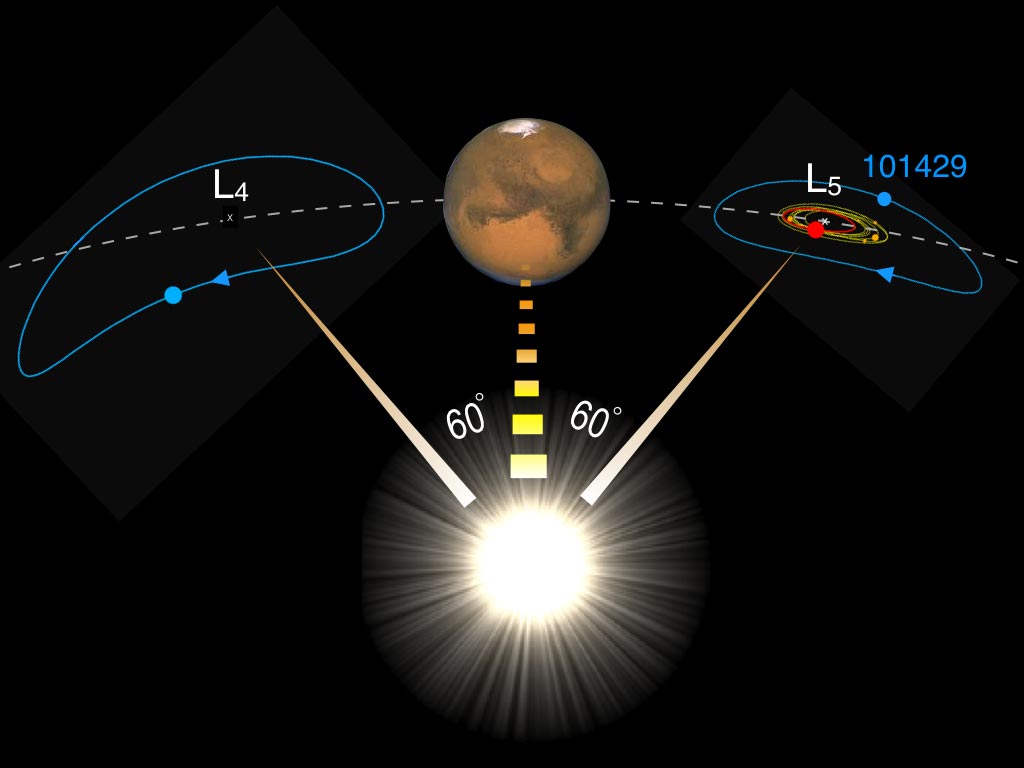
Astronomers discovered another asteroid sharing Mars’ orbit. These types of asteroids are called trojans, and they orbit in two clumps, one ahead of and one behind the planet. But the origins of the Mars trojans are unclear.
Can this new discovery help explain where they came from?
There are now 14 known Mars Trojans and the name of the newest one is 2023 FW14. They’re in two groups, one 60 degrees ahead and one 60 degrees behind Mars. These are the Lagrange 4 and Lagrange 5 points.
Most of the Mars trojans are at the L5 point, and this newly discovered one is the second one found at the L4 point.
New research published in the journal Astronomy and Astrophysics presents the discovery. Its title is “Dynamics of 2023 FW14, the second L4 Mars trojan, and a physical characterization using the 10.4 m Gran Telescopio Canarias.” The lead author is Raul de la Fuente Marcos from the Earth Physics and Astrophysics Department at the Universidad Complutense de Madrid.
Scientists aren’t certain where the Mars trojans came from. Other trojans like the Jupiter trojans may have been captured by Jupiter in the Solar System’s early years. Or Jupiter may have captured them later when it migrated.
But Mars is a much less massive planet, and astronomers aren’t certain if Mars can capture trojans the same way Jupiter does. The Mars trojans could be as old as the Jupiter trojans, but some evidence suggests otherwise. The dozen or more trojans at the Mars L5 point seem to be a family from the same collision. The family is called Eureka, and their spectra indicate an olivine-rich composition.
Olivine is relatively rare in the main asteroid belt. That’s led some researchers to suggest that the L5 Mars trojans are debris from an ancient impact between Mars, where olivine is common, and a planetesimal.
The two L4 Mars trojans are different. They don’t have the same spectra as the L5 trojans, but the pair do show some similarities in their spectra, so a common origin for these two is a possibility.
In this paper, the researchers set out to determine 2023 FW14’s origins. They used the Gran Telescopio Canarias for their work. It’s a 10.4-meter telescope in Spain’s Canary Islands with an attached instrument called the OSIRIS camera spectrograph.
2023 FW14’s spectrum places it in the same class as an Xc-type asteroid. The X-type name contains several different types of asteroids with similar spectra but probably with different compositions. Xc-types are a sub-class of the X-types that are intermediate between C-type asteroids, the most common type of asteroid in the Solar System, and the uncommon K-type asteroids.
 This graph from the research shows the spectrum of 2023 FW14 and several spectra of the other known L4 Mars Trojan (121514) 1999 UJ7. Orange shows 2023 FW14, with the red line representing the best asteroid taxonomical match, the Xc-type. Teal, blue, and green show different published spectra of 1999 UJ7. The gray area fills the entire domain between the mean B-type and D-type classes of asteroids.
Image Credit: Marcos et al. 2024.
The researchers also used N-body simulations to try to understand the new asteroid’s resonance with Mars. Trojans follow what are known as tadpole orbits. Tadpole orbits are influenced by Earth’s gravity, which causes objects to librate or accelerate or decelerate alternately.
Tadpole orbits are complex. Asteroids on these orbits exchange large amounts of energy and angular momentum with a planet moving in a circular orbit. Tadpole loops are made of multiple overlapping epicyclic loops.
This video illustrates the tadpole orbit followed by an asteroid in Jupiter’s L4, not Mars’ L4, but the concept is the same.2023 FW14 has a higher orbital eccentricity and lower inclination than Mars’ other L4 trojan. This means that it occupies an unstable region and orbits at the whim of several different resonances. That instability means that in a few million years, it’ll likely be ejected.
The researchers calculated its size as approximately 318 metres (+493/-199.) That makes it one of the smallest known trojans so far.
As for its origins, the authors say that there are two possibilities.
Its long-term behaviour, including its past, suggests that it was captured from the Near Earth Asteroid (NEA) population of Mars-crossing asteroids. But it could be a fragment of another trojan, as well, one that is so far undiscovered, or one that is no longer a trojan.
Spectral data suggests something else. Both of the L4 asteroids appear to be more primitive than Mars’ L5 trojans. 2023 FW14’s spectrum also supports the idea that it’s a captured Mars-crossing NEA. However, that data isn’t as clear, according to the authors, and can’t be used to rule out the other hypothesis, which is that the asteroid formed in situ. “Although incomplete, the data support the interpretation of 2023 FW14 as an interloper captured from the Mars-crossing NEA population, but they cannot be used to reject the competing hypothesis that 2023 FW14 was produced in situ,” they write.
Whatever its origins are, the researchers calculate that 2023 FW14 has about 10 million years before it’s ejected from its trojan orbit. It’s a temporary trojan, and this discovery could prove that Mars trojans can be temporarily captured, something that so far has been unproven.
The Sound of an Interstellar Meteor Might Have Just Been a Rumbling Truck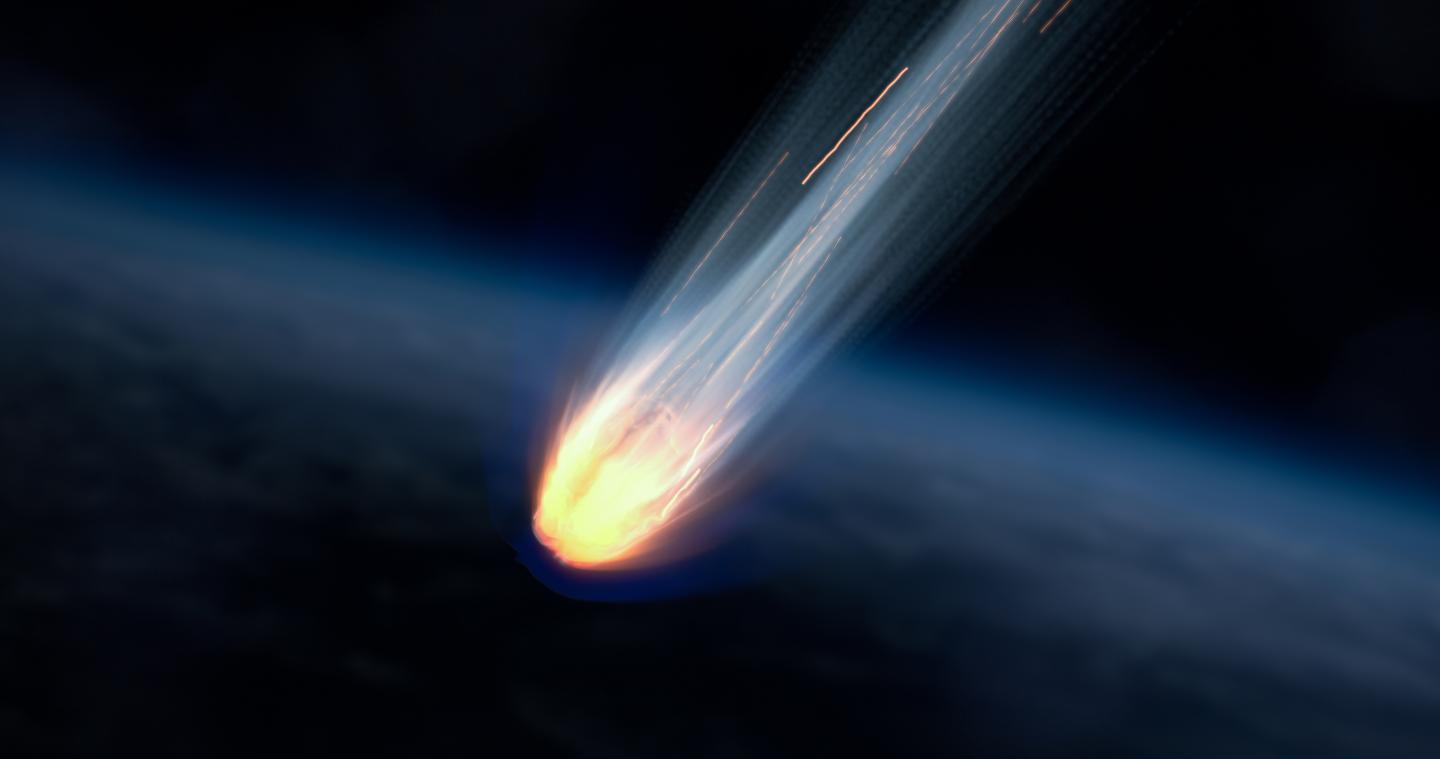
A 2023 expedition to the Pacific Ocean, searching for debris from a suspected extraterrestrial object, may have been looking in the wrong place. A new look at the infrasound data used to locate the point of impact suggests that they may have been confused by the rumblings of a truck driving past.
On 14 January 2018, a space rock hit the Earth’s atmosphere off the coast of Papua New Guinea. It was detected by what are mysteriously described as “US Government Sensors”, and given the catalogue entry “CNEOS 2014-01-08”. Based on the brightness of the fireball and its apparent speed, the physical rock likely survived without burning up completely. The observation was logged in a database kept by the Center for Near Earth Object Studies. Bolides like this can be a spectacular sight, when spotted by human eyes, but they are not rare; several are detected each week.
A few years later, Oumuamua was discovered. Oumuamua was traveling at a high speed, along a path that showed it was not orbiting the Sun. Instead, it had come from interstellar space and was merely passing through. This was very exciting because it was the first time anybody had observed an interstellar rocky object, and so it attracted a lot of attention.
Some observations showed that Oumuamua’s path wasn’t steady, but kept making tiny changes. Most scientists agreed that this was almost certainly because of pockets of ice melting and jetting away in the Sun’s heat. This is a common phenomenon, that we often see happening with comets. More detailed observations and simulations showed that it had a long and skinny shape, more like a splinter than a boulder, which is very unusual among the asteroids and comets that we’re used to. But Oumuamua only really hit the mainstream press when a well-known and prestigious astrophysicist decided, in a surprising leap of logic, that all these details proved that it could be an alien spacecraft!
The Oumuamua discovery led many scientists to start searching for other interstellar objects. CNEOS 2014-01-08, with its high reported speed, looked like a promising candidate. The physicist who had made such a big deal about Oumuamua being artificial took a closer look at the bolide reports and concluded that it must have been traveling fast enough to be another extrasolar object. This claim was controversial, not only because the government sensors appear to be classified and so cannot be verified, but because meteor speeds are notoriously difficult to measure. Observers have mistakenly reported extrasolar meteors as far back as 1951!
But if CNEOS 2014-01-08 truly was from outside the Solar System, and we could find pieces of it, that would be an incredible discovery: The first actual geological samples from a planetary system outside our own!
This is why an expedition was launched in 2023 to try and find it. The research team used seismic and infrasound data from seismic research stations in the area to try and find the exact place where the meteoroid would have splashed into the sea. They identified two likely signals from Geoscience Australia’s Passive Seismic Network. The signals were recorded by Manus Island, Papua New Guinea (AU.MANU) and Coen, Queensland, Australia (AU.COEN), at around the same time that people saw the fireball. They triangulated a precise location based on those recordings, and sailed out to search the ocean floor.
The expedition was widely reported as a success, after they found “metallic spherules”. These spherules had an unusual composition, which the expedition leader said was proof of a possible extraterrestrial origin. Like the speed calculations, though, this interpretation was widely challenged. Specialists in other fields have weighed in to argue that there was nothing unusual about the debris, and that various natural and human processes could have created them (My personal favorite: 19th century pollution!). With so much doubt as to where the spherules came from in the first place, it’s probably not wise to say that they are of “extraterrestrial technological” origin.
 The area near the seismic station in Manus Island, based on satellite images.
Image credit: Roberto Molar Candanosa and Benjamin Fernando/Johns Hopkins University, with imagery from CNES/Airbus via Google.
The most recent challenge to the results of this expedition come from a team led by Dr Benjamin Fernando of Johns Hopkins University. Their report focuses on the seismic and infrasound data used to locate the impact site.
They noticed a number of problems with the expedition’s analysis, starting with the fact that none of the detections happened within 30 seconds of the fireball. But beyond that, these stations are located in the Pacific Ring of Fire, which is very tectonically active. They detect a great many earthquakes and other natural seismic events every day, and some of these happened at the same time as the the meteorite impact. Separating the two signals is hard to do without distorting both of them. This adds a lot of error to any calculations based on those data.
Along with seismic data, these stations also have infrasound detectors, meant to detect and monitor nuclear weapons tests. But infrasound has a limited range, and is strongly affected by geography.
Fernando’s team concluded that only one station recorded an infrasound signal that could have come from CNEOS 2014-01-08, and that none of the seismic detections had anything to do with the bolide. Based on this, they believe that the expedition was looking in the wrong place, and that the debris they discovered had nothing at all to do with the 2014 bolide.
But their most damning claim is this: The strongest signal had an unusual pattern, lasting a long time and coming from a direction which changed halfway. They noticed that there is a road passing near the station, with a curve in it that matches the change in direction of the signal. They point out that the signals recorded by trucks driving that road are a far closer match than any natural event.
In other words, they believe that the expedition based its search location for an extraterrestrial meteoroid on the noise of somebody in a truck going for a drive.
It’s tempting to laugh at the researchers on the expedition, especially since their leader was a respected astrophysicist who has recently developed a reputation for having crackpot ideas about aliens. But I think there is value in investigating these questions.
It’s easy to get tired of cranks and fools wasting our time with conspiracy theories and crazy stories about abductions. And we should always be skeptical of any claims about aliens, given what we know about the physics of interstellar travel and the absurd scale of the Universe.
But most astronomers agree that life has to exist elsewhere in the Universe, and many think that it could well be intelligent and technologically capable, like us. Nobody’s saying that they can’t possibly exist, only that it’s extremely unlikely that they are over here!
So we should be skeptical of these reports. It’s good to not waste too much time studying them, when there are other mysteries that are far more likely to be true. But that doesn’t mean we should ignore the possibility altogether. It would be disastrous if, by some chance, it turned out to be real, and the scientific community had simply refused to acknowledge it! When new evidence comes in, we must revisit our assumptions and go back and check our previous conclusions. And it’s important that somebody do this even when we’re certain that they’ll get a negative result.
Parker Solar Probe Was Blasted by Coronal Mass Ejections 28 Times in 4 Years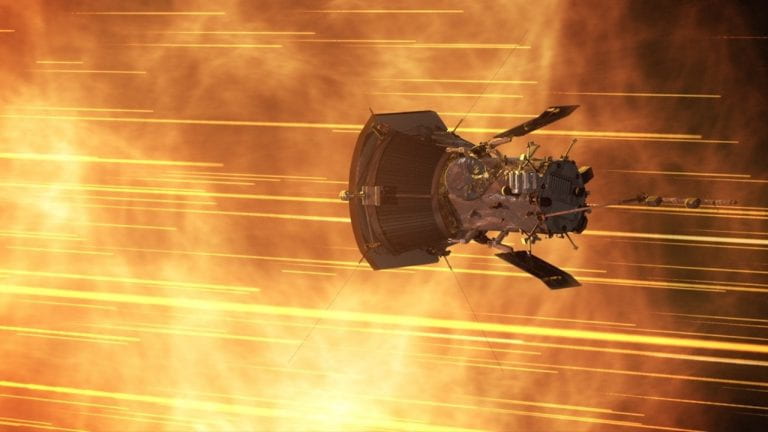
NASA’s Parker Solar Probe (PSP) was launched on August 12, 2018, with the goal of becoming the first spacecraft to touch the Sun while teaching us more about our host star than any spacecraft or solar instrument in human history. Now, a recent study submitted to The Astrophysical Journal discusses the incredible data that PSP collected on coronal mass ejections (CMEs) over a four-year period. This study holds the potential to help scientists and the public better understand the CMEs and how they contribute to space weather.
Here, Universe Today speaks with Dr. Tarik Mohammad Salman, who is a Postdoctoral Research Fellow at NASA and George Mason University and lead author of the study regarding the motivation behind the study, its most significant results, implications for future research, PSP contributions, and the importance of studying CMEs. So, what was the motivation behind this study?
“The PSP science data is a treasure trove as it samples the solar wind at uncharted radial distances from the Sun,” Dr. Salman tells Universe Today. “There have been numerous case studies of coronal mass ejections (CMEs) using PSP observations that provided new insights into the evolution of CMEs as the structures propagate farther from the Sun. We are in the sixth year of the PSP mission which provided us with a reasonable number of CME events to perform a statistical investigation. That was the motivation for this project to compile a catalog of CME events that PSP measured from 2018-2022 and also to investigate different perspectives of CME evolution in a statistical manner.”
For the study, PSP collected direct measurements of 32 interplanetary coronal mass ejections (ICMEs) between October 2018 and August 2022 and distances from the Sun ranging between 0.23 and 0.83 astronomical units (AU), with 1 AU being the distance between the Earth and the Sun, or approximately 150 million kilometers (93 million miles). Of the 32 measurements, four were discarded due to gaps in the data, leaving 28 CMEs successfully measured by PSP. The study’s objectives were to identify various aspects of CMEs, specifically pertaining to how they change as they travel farther from the Sun, also known as radial distance. So, what were the most significant results from this study?
Dr. Salman tells Universe Today, “A few results that I would like to highlight are that we observed the internal CME magnetic structure to become more complex with radial distance. We found the CME magnetic field strength to decrease at a lower rate than previous studies. We also saw that the expansion of the CME is important in the formation of the compression region ahead of it and the internal magnetic field has an influence on the short-scale fluctuations we find within the compression region.”
While the study of CMEs falls under the scientific field of solar physics, which studies how our entire Sun functions, scientists also classify CMEs as part of space weather, which studies the activity on the Sun’s surface and how it affects the surrounding environment. Space weather can wreak havoc on electronics, specifically communication satellites and power stations on Earth, with one of the most notable space weather events occurring in September 1859 known as the Carrington Event, which was caused by a massive solar storm that wreaked havoc on worldwide electrical grids and created spectacular auroras across the globe, as well, with the latter traditionally only being visible in the northern and southern latitudes. Therefore, what implications can this study have on future research regarding our Sun, and specifically space weather?
“The compiled catalog of CME events itself will be a valuable resource for performing future extensive case studies,” Dr. Salman tells Universe Today. “Understanding the evolution of CMEs is of paramount importance for space weather operations. This statistical investigation of different aspects of CME evolution is a step towards that as it validates previous approximations but also raises new questions that need to be explored further with a more robust data set in the future.”
After having its first solar encounter in October 2018, PSP has continued to smash records regarding its distance from our Sun. This includes achieving its closest distance of 7.26 million kilometers (4.51 million miles) on September 27, 2023, which is slated to be surpassed after its last flyby of Venus in November 2024. Science objectives for PSP include determining the solar corona processes responsible for producing the solar wind, gaining insight into the solar plasma and magnetic field properties, and learning more about additional energy particles emitted by the Sun.
The reason why PSP can travel so close to our Sun is due to its state-of-the-art solar shield comprised of a 11.43-centimeter-thick (4.5-inch-thich) carbon-composite shield capable of withstanding scorching temperatures up to 1,377 degrees Celsius (2,500 degrees Fahrenheit). While PSP has already broken records regarding its distance to the Sun, PSP is slated to come within 6.16 million kilometers (3.83 million miles) during its mission, which is planned to last a total of seven years. But how has PSP contributed to our understanding of our Sun and space weather?
“PSP is so important for us to advance our current understanding of CME evolution and space weather,” Dr. Salman tells Universe Today. “The questions of interest for space weather are will a CME impact Earth and whether it will have a southward field component to interact with the northward magnetic field of Earth. Our modeling frameworks depend on an initial characterization of the CME closer to the Sun (within 20 solar radii) based on which the models project the CME parameters when it impacts Earth.”
Dr. Salman continues, “The initial characterization is made based on CME remote-sensing imaging. What PSP is doing is providing direct measurements of CMEs in the initial phases of propagation. Adding to this are the widespread radial observations of PSP to make our statistical approximations more robust. This is how PSP is contributing to develop a more accurate picture of the CME propagation and evolution from closer to the Sun to Earth.”
 Animation showing NASA’s Parker Solar Probe studying the Sun.
(Credit: NASA Goddard Space Flight Center/CIL/Brian Monroe)
CMEs have been observed for thousands of years in the form of auroras when the solar wind interacts with the Earth’s magnetic field near the planet’s surface. They are produced from the Sun’s corona in the form of massive discharges when solar plasma interacts with the Sun’s massive magnetic field and their velocities can range from 250 kilometers per second (155 miles per second) to almost 3,000 kilometers per second (1,864 miles per second).
CMEs are monitored by the Space Weather Prediction Center with the National Oceanic and Atmospheric Administration using a combination of ground- and space-based solar observatories. As noted, space weather is constantly monitored to determine how much damage can be caused to Earth surface power grids and satellite communications. But aside from monitoring space weather, why is it so important to study CMEs?
“CMEs are crucial for the existence of our Sun,” Dr. Salman tells Universe Today. “CMEs appear as a valve that releases the built-up magnetic field from the Sun without which the Sun will rip itself apart. But the investigation of CME science also has important societal relevance. CMEs drive the strongest solar storms that can wreak havoc through impacting power grids and telecommunication networks. CMEs can also damage orbiting satellites and technological infrastructure. CMEs are now counted among the major natural hazards as well. A more in-depth understanding of CMEs (from initiation to propagation to evolution along the Sun-Earth line) is thus required to improve the current status quo of space weather operations.”
What new discoveries will researchers make about coronal mass ejections in the coming years and decades? Only time will tell, and this is why we science!