Naar de inhoud

UFO'S of UAP'S, ASTRONOMIE, RUIMTEVAART, ARCHEOLOGIE, OUDHEIDKUNDE, SF-SNUFJES EN ANDERE ESOTERISCHE WETENSCHAPPEN - DE ALLERLAATSTE NIEUWTJES

UFO's of UAP'S in België en de rest van de wereld
akke.beakke.be
Ontdek de Fascinerende Wereld van UFO's en UAP's: Jouw Bron voor Onthullende Informatie! Ben jij ook gefascineerd door het onbekende? Wil je meer weten over UFO's en UAP's, niet alleen in België, maar over de hele wereld? Dan ben je op de juiste plek! België: Het Kloppend Hart van UFO-onderzoek In België is BUFON (Belgisch UFO-Netwerk) dé autoriteit op het gebied van UFO-onderzoek. Voor betrouwbare en objectieve informatie over deze intrigerende fenomenen, bezoek je zeker onze Facebook-pagina en deze blog. Maar dat is nog niet alles! Ontdek ook het Belgisch UFO-meldpunt en Caelestia, twee organisaties die diepgaand onderzoek verrichten, al zijn ze soms kritisch of sceptisch. Nederland: Een Schat aan Informatie Voor onze Nederlandse buren is er de schitterende website www.ufowijzer.nl, beheerd door Paul Harmans. Deze site biedt een schat aan informatie en artikelen die je niet wilt missen! Internationaal: MUFON - De Wereldwijde Autoriteit Neem ook een kijkje bij MUFON (Mutual UFO Network Inc.), een gerenommeerde Amerikaanse UFO-vereniging met afdelingen in de VS en wereldwijd. MUFON is toegewijd aan de wetenschappelijke en analytische studie van het UFO-fenomeen, en hun maandelijkse tijdschrift, The MUFON UFO-Journal, is een must-read voor elke UFO-enthousiasteling. Bezoek hun website op www.mufon.com voor meer informatie. Samenwerking en Toekomstvisie Sinds 1 februari 2020 is Pieter niet alleen ex-president van BUFON, maar ook de voormalige nationale directeur van MUFON in Vlaanderen en Nederland. Dit creëert een sterke samenwerking met de Franse MUFON Reseau MUFON/EUROP, wat ons in staat stelt om nog meer waardevolle inzichten te delen. Let op: Nepprofielen en Nieuwe Groeperingen Pas op voor een nieuwe groepering die zich ook BUFON noemt, maar geen enkele connectie heeft met onze gevestigde organisatie. Hoewel zij de naam geregistreerd hebben, kunnen ze het rijke verleden en de expertise van onze groep niet evenaren. We wensen hen veel succes, maar we blijven de autoriteit in UFO-onderzoek! Blijf Op De Hoogte! Wil jij de laatste nieuwtjes over UFO's, ruimtevaart, archeologie, en meer? Volg ons dan en duik samen met ons in de fascinerende wereld van het onbekende! Sluit je aan bij de gemeenschap van nieuwsgierige geesten die net als jij verlangen naar antwoorden en avonturen in de sterren! Heb je vragen of wil je meer weten? Aarzel dan niet om contact met ons op te nemen! Samen ontrafelen we het mysterie van de lucht en daarbuiten.

Archief

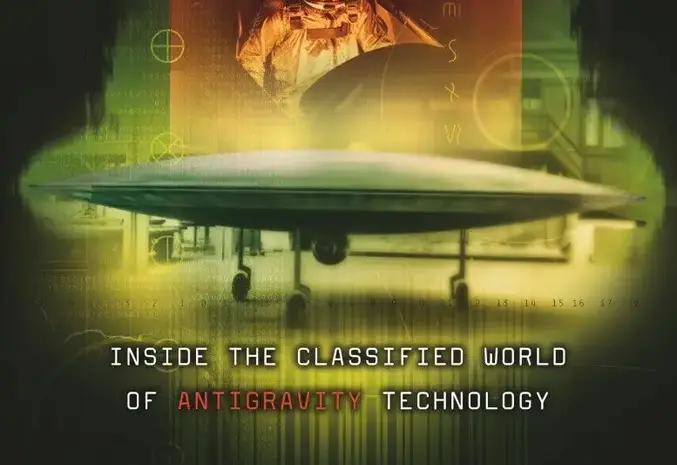
Townsend Brown: The Unsung Inventor Behind CIA’s UFO Projects

Townsend Brown: The Unsung Inventor Behind CIA’s UFO Projects

antigravity

In the annals of American history, tales of unidentified flying objects (UFOs) and their secretive builders have long captivated the imagination of the public. Among these stories, the account of Bob Lazar stands out as one of the most famous and controversial. Lazar claimed to have worked on reverse engineering alien spacecraft at a secret site near Area 51. However, the narrative of UFO development in the United States encompasses more than just Lazar’s revelations. There exists a lesser-known but equally fascinating figure: Townsend Brown, an inventor whose groundbreaking work in

 the mid-20th century may have significantly contributed to the U.S. government’s understanding and potential development of UFO-like technology.Townsend Brown’s journey into the realm of advanced propulsion began not with extraterrestrial artifacts but with the pursuit of a scientific holy grail: unifying the forces of electromagnetism and gravity. Unlike Lazar, whose story is filled with claims of alien technology, Brown’s work was grounded in experimental physics. He explored the potential of high-voltage electrostatic charges to produce propulsion, a concept that might explain the physics-defying maneuvers reported by witnesses of UFOs.

Brown’s most notable contribution to the field was the development of the Biefeld-Brown effect, an anomalous propulsion phenomenon observed when electric charge is applied to asymmetric capacitors in a vacuum. This effect, which seemed to allow objects to levitate or move without conventional propulsion, suggested a potential method for creating craft capable of extraordinary flight capabilities. Brown’s experiments, conducted from the 1920s onward, attracted the attention of both the U.S. Navy and the newly formed CIA, who were interested in any technology that could offer a strategic advantage during the Cold War.

Despite the groundbreaking nature of his work, Townsend Brown remained a relatively obscure figure in the history of American aerospace. His contributions were overshadowed by disinformation campaigns and the classified nature of his research. The government’s interest in his inventions was evident, as evidenced by his coordination with key figures in the American intelligence and scientific communities, including William Stephenson (Churchill’s super spy) and Edward Teller (the father of the hydrogen bomb). Brown’s involvement in projects with these high-profile individuals hints at the significance of his work and its potential applications in classified aerospace project

VIDEO:

  • The Man Who Built UFOs For The CIA (Not Bob Lazar)

One of the most compelling aspects of Townsend Brown’s story is the mystery surrounding the practical application of his research. While public records and acknowledged inventions, like the Ionic Breeze air purifier, are relatively mundane, rumors persist that his more revolutionary work in electrogravitics was absorbed into black aerospace programs. Such programs, beyond the reach of public scrutiny, could potentially explain the advanced propulsion capabilities attributed to UFOs observed by military pilots and civilians alike.

Support me on Patreon and receive news and videos before they’re published publicly!

Link: patreon.com/LUFOS

The notion that Townsend Brown might have experimentally discovered a link between electromagnetism and gravity opens up intriguing possibilities. It suggests a paradigm shift in our understanding of physics and propulsion, one that could have profound implications for aerospace engineering and our conceptualization of interstellar travel. If Brown’s theories and experiments were indeed incorporated into secret aerospace projects, it could mean that the foundation for UFO-like technology has existed for decades, hidden not in alien wreckage but in the work of a visionary American inventor.

In the shadow of more sensational stories like Bob Lazar’s, Townsend Brown’s contributions to the field of unconventional propulsion and his potential role in the development of UFO technology for the CIA deserve a closer examination. His life and work represent a fascinating chapter in the secret history of American innovation, one that challenges our understanding of the boundaries between science fiction and scientific fact.

{ https://www.latest-ufo-sightings.net/ }

Hoe vind je dit bericht?
Geschreven door peter om 22:24 Stuur door

Mysteries Beneath the Ice: The Enigmatic Secrets of Antarctica and Its UFO Connections

Mysteries Beneath the Ice: The Enigmatic Secrets of Antarctica and Its UFO Connections

Mysteries Beneath the Ice The Secrets of Antarctica

Antarctica, the coldest, driest, and windiest continent on Earth, has long been a source of fascination and mystery. Its icy expanses have captured the imagination of scientists, explorers, and enthusiasts of the unexplained alike. Among the most intriguing aspects of this remote wilderness are the persistent rumors and theories connecting it to unidentified flying objects (UFOs) and extraterrestrial visitors. This article delves into the enigmatic secrets of Antarctica, exploring its connection to UFOs and aliens, and separating the tantalizing myths from the compelling facts.

Historical Context and Early Explorations

Antarctica’s isolation and extreme environment have made it a challenging yet rewarding destination for explorers. The continent’s exploration history is filled with tales of hardship and discovery, laying the groundwork for modern scientific research. However, it is the continent’s lesser-known stories and alleged findings that often capture public interest, particularly those suggesting ancient civilizations or alien activity beneath the ice.

Speculative Theories and Anecdotal Accounts

Among the most captivating theories are those that propose the existence of ancient, advanced civilizations buried under miles of ice. Proponents of these ideas often cite mysterious maps, like the Piri Reis map of 1513, which some claim shows Antarctica free of ice, suggesting ancient knowledge of the continent. Additionally, stories of crashed UFOs and secret Nazi bases have woven a complex tapestry of unverified claims around Antarctica.

Anecdotal accounts from individuals claiming to have witnessed unusual activity or structures in Antarctica add to the mystery. These stories range from encounters with unidentified aerial phenomena to discoveries of alien technology and hidden bases under the ice. While these accounts are compelling, they often lack verifiable evidence and are primarily shared through documentaries and interviews with anonymous sources.

The Scientific Perspective and Environmental Concerns

From a scientific standpoint, Antarctica is a treasure trove of information about Earth’s past climate, biodiversity, and glacial history. Researchers conduct extensive studies on its ice cores, marine life, and geological formations, contributing valuable data to our understanding of climate change and environmental conservation. The continent’s role in global climate patterns and sea-level rise underscores the importance of scientific research over speculative theories.

The environmental changes affecting Antarctica, including ice melt and ecosystem disruption, are of significant concern to scientists. These changes offer a real, observable mystery concerning the future of the continent and its global impact. As the ice recedes, previously inaccessible areas may reveal new discoveries, though likely of a geological or biological nature rather than the remnants of lost civilizations or alien outposts.

UFOs, Aliens, and Official Responses

  • The connection between UFOs, aliens, and Antarctica is primarily fueled by popular culture and anecdotal tales rather than concrete evidence. Official responses to these theories are scarce, as government and scientific bodies focus on tangible research and exploration efforts. The Antarctic Treaty System, which governs the continent’s use for peaceful purposes and scientific research, restricts military activity and ensures the protection of the environment, further complicating the notion of secret alien bases or covert operations.

VIDEO:

  • The Why Files – Mysteries Beneath the Ice: The Secrets of Antarctica

Antarctica remains one of the world’s most mysterious and unexplored regions, a true final frontier on Earth. While speculative theories about UFOs, aliens, and ancient civilizations capture the imagination, the real mysteries of Antarctica are being uncovered by scientists dedicated to understanding our planet. The continent’s harsh, pristine environment offers a unique window into Earth’s past and present, holding lessons that are crucial for our future. As we continue to explore and study this enigmatic continent, we may find that the most extraordinary discoveries lie not in the realm of science fiction but in the reality of our natural world.

{ https://www.latest-ufo-sightings.net/ }

Hoe vind je dit bericht?
Geschreven door peter om 21:50 Stuur door

Sunken ruins of a 11,000-year-old megastructure found in the Baltic Sea

Sunken ruins of a 11,000-year-old megastructure found in the Baltic Sea

A remarkable slice of ancient history has been unearthed beneath the depths of the Baltic Sea, marking a significant milestone in archaeological exploration. This groundbreaking discovery was serendipitously made in Germany’s Bay of Mecklenburg, during a routine student expedition. 
ufo%20baltic%20sea.png

Located approximately 10 kilometers (six miles) offshore, the team of researchers stumbled upon an intriguing anomaly using their multi-beam sonar system. 
What they found was a sprawling, enigmatic wall extending nearly a kilometer along the seabed, nestled at a depth of 21 meters (69 feet). Detailed analysis has revealed that this colossal structure dates back over 10,000 years, potentially making it the oldest known megastructure built by ancient Europeans. 
Comprising approximately 1,670 individual stones meticulously arranged to connect some 300 larger boulders, the structure hints at a deliberate construction, suggesting a specific purpose conceived millennia before being submerged beneath the sea. 
Led by geophysicist Jacob Geerson from Kiel University, the research team has dubbed the discovery the "Blinker wall." They propose that it was likely built by Stone Age hunter-gatherers near a lake or marsh, serving as one of the earliest documented man-made hunting structures in history and ranking among Europe's largest Stone Age constructions. 
Over millennia, Earth's geography has undergone profound transformations due to sea level fluctuations, erosion, and geological shifts, submerging countless ancient settlements beneath the waves and concealing their secrets. However, advancements in technology continue to unveil these submerged relics, offering invaluable insights into our ancestors' way of life. 
While the precise function of the Blinker wall remains elusive, experts speculate it might have functioned as a hunting aid, possibly guiding reindeer herds. The construction's strategic layout suggests the intentional creation of bottlenecks to corral animals, with the potential presence of a second adjacent wall hinted at by the researchers. 
Detailed examination of the structure's dimensions, composition, and alignment strongly indicates human involvement, ruling out natural formation. The team's analysis posits the Blinker wall's construction over 10,000 years ago, with submersion occurring around 8,500 years ago. 
The significance of the Blinker wall extends beyond its age, promising valuable insights into the socioeconomic complexities of ancient hunter-gatherer societies in the region, illuminating their way of life and interaction with the environment. 
ufo%20baltic%20sea.jpg
The Baltic Sea is full off ancient mysteries, not only the discovery of the ruins of the 11,000-year-old megastructure but also the discovery in June 2011 by Swedish OceanX diving team of an enigmatic anomaly displaying unconventional characteristics sparking speculation that it could be a submerged UFO. Despite the explanation behind the Blinker wall, the UFO-like anomaly continues to baffle experts, shrouded in mystery to this day.
  

{ https://ufosightingshotspot.blogspot.com/ }

Hoe vind je dit bericht?
Geschreven door peter om 21:36 Stuur door

Amerikaanse maanlander Odysseus ligt allicht op zijn zij,

Amerikaanse maanlander Odysseus ligt allicht op zijn zij, "maar hij is stabiel en communiceert met de aarde"

Artikel door Kathleen Heylen 
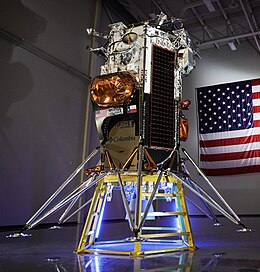
De maanlander Nova-C, bijgenaamd Odysseus, werd op 15 februari gelanceerd richting de maan met een Falcon 9-raket van SpaceX, het ruimtevaartbedrijf van Elon Musk. De landing was gepland voor 22 februari.  Het werd nog erg spannend, omdat het navigatiesysteem van de Odysseus in de laatste uren voor de landing begon te haperen. Maar het controlecentrum in Houston, Texas, kon uiteindelijk meedelen dat de landing geslaagd was.
https%3A%2F%2Fstatic.hbvl.be%2FAssets%2FImages_Upload%2F2024%2F02%2F24%2F97bf6715-5567-4aa7-99d1-e614015502d1.jpg

Groot nieuws, want de Odysseus is het eerste Amerikaanse ruimtetuig op de maan in 52 jaar. Bovendien is het de eerste lander ooit van een commercieel bedrijf die succesvol kon landen op het maanoppervlak. Het toestel kwam neer bij een krater in de buurt van de zuidpool van de maan, de geplande landingsplaats.

Maar nu blijkt uit de eerste gegevens van de lander dat een en ander toch niet helemaal volgens plan verlopen is.

Vermoedelijk blijven haken op het maanoppervlak

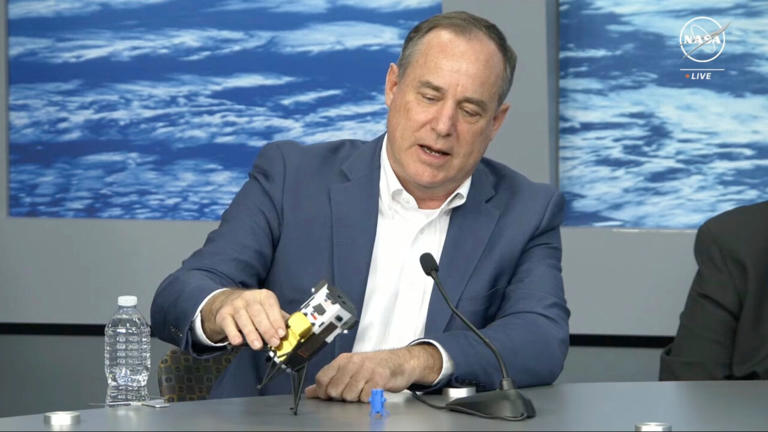
Intuitive Machines, het bedrijf dat de Odysseus heeft ontworpen en gebouwd, zegt dat de lander waarschijnlijk op zijn zij is beland. "Hij is hoogstwaarschijnlijk  tijdens de laatste fase van de landing omgevallen", zei CEO Steve Altemus op een persconferentie. Volgens hem lijkt het erop dat een van de zes "poten" van de lander bij de afdaling waarschijnlijk is blijven haken op het maanoppervlak. Daardoor is het tuig gekanteld en tot stilstand gekomen tegen een rotsblok.

In eerste instantie leek het er nochtans wel op dat de Odysseus rechtop was geland. Volgens Steve Altemus bleek dat echter gebaseerd op data van net voor de landing.

Topman Steve Altemus toont wat er vermoedelijk is gebeurd tijdens de afdaling en de landing van de Odysseus.
© VRTNWS

Intuitive Machines zegt wel dat de lander stabiel is en met de aarde communiceert. Hij is ook nog steeds in staat om energie op te wekken uit zijn zonnepanelen en dus te werken. Hij is ook volledig opgeladen.

Het team verwacht dit weekend foto's binnen te krijgen. Die kunnen meer duidelijkheid geven over de exacte positie van de Odysseus. Op basis daarvan "kunnen we daadwerkelijk een beoordeling maken van de structuur en de staat van de externe apparatuur", zegt Altemus.

Mogelijk zit het deel van Odysseus met wetenschappelijke instrumenten aan "de goede kant", waardoor het geplande wetenschappelijke onderzoek met de lander wel gewoon zou kunnen doorgaan.

260px-Intuitive_Machines%E2%80%99_Nova-C_lunar_lander_%28IM_00309%29_%28cropped%29.jpg

Contracten met de NASA

Het was al de vierde keer dat een commercieel bedrijf probeerde "zacht" te landen op de maan, en de eerste keer dat het succesvol was. Eerdere pogingen van het Israëlische bedrijf SpaceIL, het Japanse iSpace en het Amerikaanse Astrobotic Technology mislukten.

De Amerikaanse ruimtevaartorganisatie NASA heeft met het oog op latere onbemande en bemande maanmissies commerciële aanbestedingen uitgeschreven voor de bouw van maanlanders. Enkele Amerikaanse bedrijven, waaronder Intuitive Machines, sleepten zo'n contract in de wacht.

De NASA stuurt wetenschappelijke en technologische experimenten mee met de commeriële maanlanders. De Odysseus heeft zes van die experimenten aan boord.

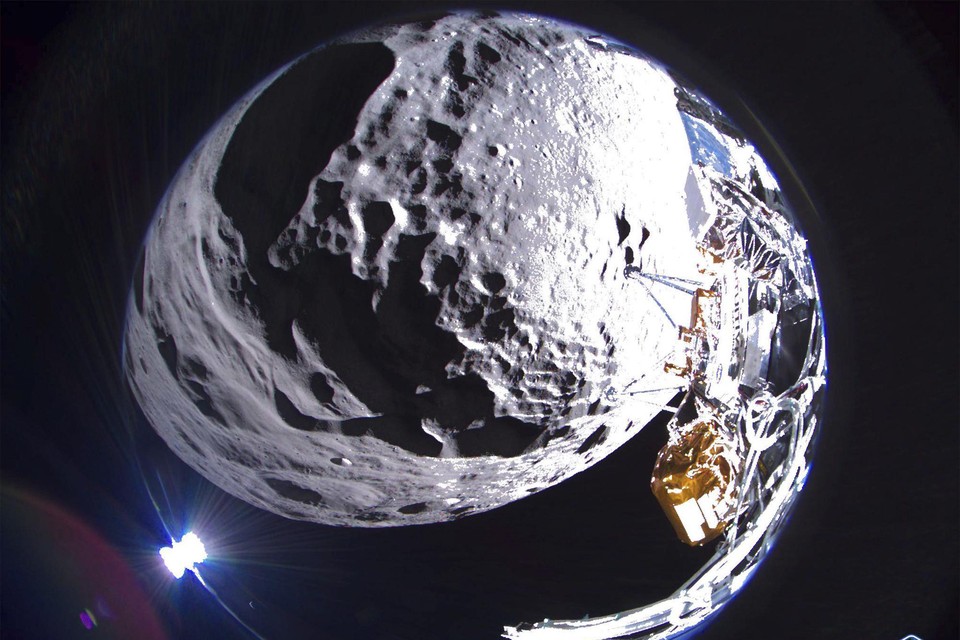
Intuitive Machines deelde afgelopen nacht een foto van de maan, gemaakt door de Odysseus, kort voor de landing. Het tuig bevond zich op ongeveer 10 kilometer boven het maanoppervlak.

Hoe vind je dit bericht?
Geschreven door peter om 21:03 Stuur door

A New, More Accurate Measurement for the Clumpiness of the Universe

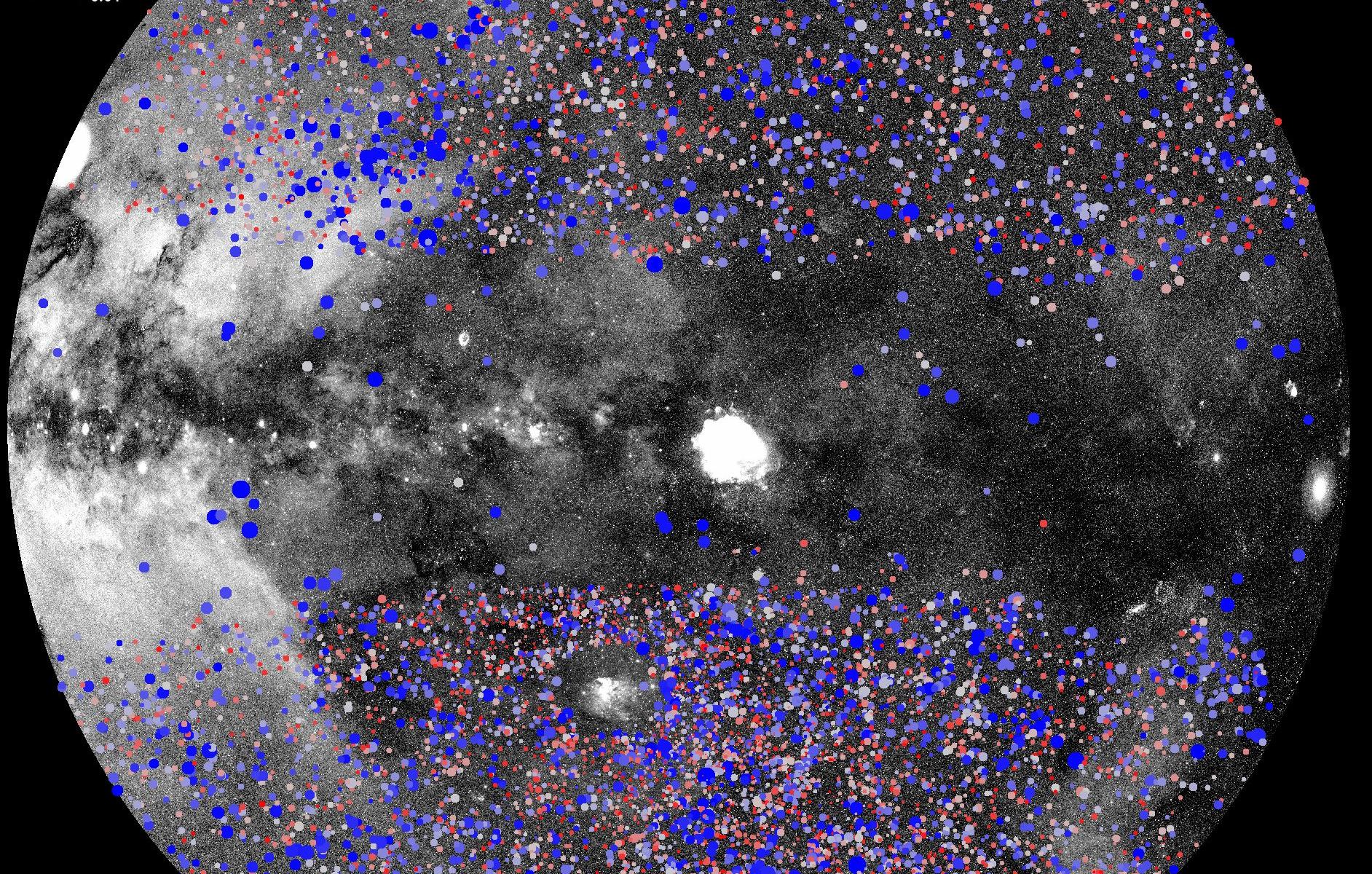
Clusters of galaxies as observed by the eROSITA instrument. The idea is to determine the clumpiness (or distribution) of matter in the Universe. Colors indicate the redshift of the clusters, up to about 9 billion years of lookback time. Credit: MPE, J. Sanders for the eROSITA consortium.

A New, More Accurate Measurement for the Clumpiness of the Universe

Cosmologists are wrestling with an interesting question: how much clumpiness does the Universe have? There are competing but not compatible measurements of cosmic clumpiness and that introduces a “tension” between the differing measurements. It involves the amount and distribution of matter in the Universe. However, dark energy and neutrinos are also in the mix. Now, results from a recent large X-ray survey of galaxy clusters may help “ease the tension”.

The eROSITA X-ray instrument orbiting beyond Earth performed an extensive sky survey of galaxy clusters to measure matter distribution (clumpiness) in the Universe. Scientists at the Max Planck Institute for Extraterrestrial Physics recently shared their analysis of its cosmologically important data.

“eROSITA has now brought cluster evolution measurement as a tool for precision cosmology to the next level,” said Dr. Esra Bulbul (MPE), the lead scientist for eROSITA’s clusters and cosmology team. “The cosmological parameters that we measure from galaxy clusters are consistent with state-of-the-art cosmic microwave background, showing that the same cosmological model holds from soon after the Big Bang to today.”

eROSITA, the Standard Cosmological Model, and Clumpiness

To get a better feel for what this means, let’s look at what the team is trying to confirm. The idea is to figure out just what the Universe has been like through time. That means understanding matter, its distribution (or clumpiness), and what role dark matter and dark energy have played. It all began just after the Big Bang when the Universe was in a hot, dense state. The only things existing were photons and particles. The Universe expanded and began to condense into regions of higher density. Think of these as density variations, or areas of more or less clumpiness in the primordial soup. As things cooled and expanded, the denser clumps in the soup became galaxies and eventually galaxy clusters. The clumpiness was smoother (or “isotropic”) than expected. That raises questions about the role of dark matter and dark energy, among other things.

eROSITA’s observations of galaxy clusters and distribution of matter showed several interesting results. First, both dark matter and visible matter (baryonic matter), make up about 29 percent of the total energy density of the Universe. Presumably, the rest consists of dark energy, which we don’t know much about, yet. Energy density is the amount of energy stored in a region of space as a function of volume. In cosmology, it also includes any mass in that volume of space.

This plot shows the constraints put on the total matter density in the Universe and the S8 “tension”. Constraints from eROSITA galaxy clusters are in orange, from the Cosmic Microwave Background (Planck) in blue, from weak lensing (DES+KiDS) in grey, and from cluster number counts (SPT) in black. Credit: MPE, V. Ghirardini for the eROSITA consortium

The measurement of energy density agrees with measurements of the cosmic microwave background radiation—also known as the CMB. Think of that as a map of the density variations in the early Universe. It’s made up of microwave radiation that permeates the Universe. That radiation is not completely smooth or uniform. That’s the variability in density that eventually became the seeds of the first galaxies.

Measuring Clumpiness

eROSITA’s goal is to measure the assembly of galaxy clusters over cosmic time. By tracing their evolution via the X-rays emitted by hot gas, the instrument traced both the total amount of matter in the Universe and its clumpiness. Those measurements solve the “tension” or discrepancy between past clumpiness measurements that used different techniques. Those included the CMB and observations of weak gravitational lensing.

A computer simulation of what gas and stars in a galaxy cluster look like, and how they look embedded in the cosmic web.  The assembly of galaxy clusters has implications for the clumpiness of the Universe throughout time. Credit: Yannick Bahé. A computer simulation of what gas and stars in a galaxy cluster look like, and how they look embedded in the cosmic web. The assembly of galaxy clusters has implications for the clumpiness of the Universe throughout time. Credit: Yannick Bahé.

The eROSITA data shows the distribution of matter is actually in good agreement with previous measurements of the CMB. That’s good news because cosmologists were afraid they’d have to invoke “new physics” to explain the tension between measurements. “eROSITA tells us that the Universe behaved as expected throughout cosmic history,” says Dr. Vittorio Ghirardini, the postdoctoral researcher at MPE who led cosmology study. “There’s no tension with the CMB. Maybe the cosmologists can relax a bit now.”

But Wait, There are Neutrinos to Worry About!

Interestingly, the eROSITA measurements of galaxy clusters and other large structures also provide information about neutrinos. They’re the most abundant particles with mass that we know of in the Universe. They come from the Sun and supernovae (for example), but also originated in the Big Bang. eROSITA’s survey offers new information about the mass of neutrinos and their prevalence. “We have obtained tight constraints on the mass of the lightest known particles from the abundance of the largest objects in the Universe,” said Ghirardini.

Computer simuations show how neutrinos can form cosmic clumpiness. Credit: Yoshikawa, Kohji, et al Computer simulations show how neutrinos can form cosmic clumpiness. Credit: Yoshikawa, Kohji, et al

Neutrinos may be small and tough to “see”, but they have mass that contributes to the total density of matter in the Universe. Cosmologists describe them as “hot”, which means they travel at nearly the speed of light. Therefore, they tend to smooth out the distribution of matter—which can be probed by analyzing the evolution of galaxy clusters in the Universe. And, there’s a good chance that eROSITA may help solve the mystery of neutrino mass. “We are even on the brink of a breakthrough to measure the total mass of neutrinos when combined with ground-based neutrino experiments,” added Ghirardini.

How eROSITA Did It

There’s a lot more to explore in the eROSITA data, but it’s also fascinating to look at the extent of the survey data. It comprises one of the most extensive catalogs of clusters of galaxies done so far. The so-called “Western Galactic half” of the all-sky survey contains 12,247 optically identified X-ray galaxy clusters. “Of these, 8,361 represent new discoveries – almost 70%,” said Matthias Kluge, a postdoctoral researcher at MPE who is responsible for the optical identification of the detected clusters. “This shows the huge discovery potential of eROSITA.”

All that data can be charted in three dimensions, and when scientists do that, galaxy clusters show up as intersections of the cosmic web. In addition, there’s a supercluster catalog, which also shows connected clusters and the filaments of matter between them. “We find more than 1,300 supercluster systems, which makes this the largest-ever X-ray supercluster sample,” said Ang Liu, a postdoctoral researcher at MPE.

This new look at clumpiness in the Universe comes from the first release of data from eROSITA. The instrument completed additional surveys in early 2022. Once those data are analyzed, astronomers expect to be probing even deeper into the distribution of matter in the Universe and testing their models against reality. “When the full data are analyzed,” said Esra Bulbul, “eROSITA will again put our cosmological models to the most stringent test ever conducted through a cluster survey.”

For More Information

{ https://www.universetoday.com }

Hoe vind je dit bericht?
Geschreven door peter om 01:07 Stuur door

Unveiling the Secrets: Dulce Base and its Alleged Ties with the U.S. Government

Unveiling the Secrets: Dulce Base and its Alleged Ties with the U.S. Government

The Shocking TRUTH Inside Dulce Base and the American Government Connection

In the vast expanse of the American Southwest, beneath the rugged terrains of the Colorado–New Mexico border, lies a subject of intense speculation and intrigue: the Dulce Base. This purported underground facility has become the epicenter of numerous conspiracy theories, suggesting a clandestine collaboration between humans and extraterrestrial beings. The narrative surrounding Dulce Base draws upon a blend of eyewitness accounts, whistleblower testimonies, and speculative lore, creating a complex tapestry that challenges our understanding of reality and governance.

The Origins of the Dulce Base Theory

The Dulce Base theory posits the existence of a multi-level underground complex, allegedly situated under Archuleta Mesa near the town of Dulce, New Mexico. According to conspiracy theorists, this facility is not just a military installation but a joint human-alien endeavor. The roots of this extraordinary claim trace back to individuals like Phil Schneider, a former government geologist and engineer, who came forward with sensational details about his experiences at Dulce.

Schneider’s accounts of battles between humans and aliens, advanced technology beyond our comprehension, and hidden agendas have fueled the fire of speculation. He claimed to have encountered extraterrestrial beings and to have suffered injuries in a skirmish, purportedly confirming the presence of non-human entities deep beneath the earth.

The Alleged American Government Connection

What makes the Dulce Base narrative particularly compelling is its implication of an extensive government cover-up. Theories suggest that the U.S. government, along with other global powers, has been engaging with extraterrestrial intelligence for decades, entering into secret treaties and exchanges that have remained hidden from the public eye. The purported objective of such collaborations ranges from technological advancement to strategic military alliances, and even to darker agendas involving human experiments.

Critics of the official government narrative argue that the existence of such a facility, if proven true, would signify a profound and unsettling level of secrecy maintained by the government. It raises questions about the extent of governmental transparency, the ethical boundaries of covert operations, and the potential for abuses of power under the guise of national security.

Skepticism and Scrutiny

Despite the compelling nature of the Dulce Base stories, there remains a significant lack of concrete evidence to substantiate the claims. Skeptics point out that many of the assertions rely heavily on anecdotal evidence, unverifiable personal testimonies, and speculative leaps. The scientific community, for the most part, dismisses the Dulce Base theories as unfounded conspiracy theories lacking in empirical support.

However, the persistence of the Dulce Base narrative within popular culture and conspiracy theory circles reflects a deeper, widespread fascination with the unknown and a profound distrust of governmental institutions. It underscores a collective appetite for exploring alternative explanations for the mysteries that surround us, as well as a suspicion of the narratives presented by authorities.

VIDEO:

  • The Shocking TRUTH Inside Dulce Base and the American Government Connection

The story of the Dulce Base intertwines elements of science fiction, political intrigue, and speculative conspiracy, creating a perplexing puzzle that captivates the imagination. While definitive proof of its existence and the extent of any government involvement remains elusive, the Dulce Base has secured its place in the annals of conspiracy theory lore. It serves as a powerful reminder of the human desire for knowledge, the fear of the unknown, and the ever-present question of what lies beyond the boundaries of our understanding. Whether myth or reality, the tale of the Dulce Base challenges us to question, to wonder, and to seek the truth, however shocking it may be.

{  https://www.latest-ufo-sightings.net/ }

Hoe vind je dit bericht?
Geschreven door peter om 00:29 Stuur door

Ontdek de verborgen kanten van deze bekende dieren, verschijnselen en objecten

Ontdek de verborgen kanten van deze bekende dieren, verschijnselen en objecten

Ontdek de verborgen kanten van deze bekende dieren, verschijnselen en objecten

©Shutterstock

Ontdek de verborgen kanten van deze bekende dieren, verschijnselen en objecten
In ons dagelijks leven beoordelen we dieren, zaken en objecten vaak op hoe ze er (op het eerste gezicht) uit zien, zonder er al te veel over na te denken. Het is echter belangrijk om te onthouden dat wanneer we iets vanuit een ander perspectief bekijken ons beeld dat we erbij hebben volledig kan veranderen.

Neem even de tijd om je te vergapen aan deze fascinerende foto's die er ongetwijfeld voor zullen zorgen dat je op een andere manier naar de werkelijkheid kijkt. Klik verder om te beginnen.
De stenen hoofden op Paaseiland

©Shutterstock

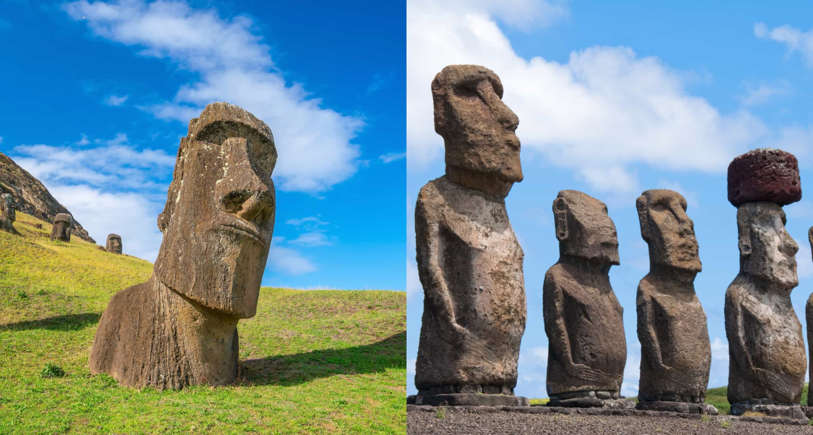
De stenen hoofden op Paaseiland
Vaak wordt gedacht dat de stenen hoofden op Paaseiland alleen hoofden zijn. Het blijkt echter dat het gewoon lichamen zijn die deels onder de grond zitten!
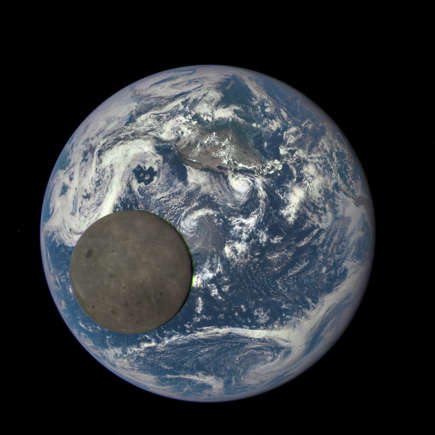
De donkere kant van de maan

©Reuters

De donkere kant van de maan
Vanuit dit perspectief lijkt het alsof de achterkant van de maan de grote, donkere basaltvlaktes mist die we aan de kant die we vanuit de aarde kunnen zien meteen herkennen.

Baby-flamingo's

©Shutterstock

Baby-flamingo's
Baby-flamingo's zijn als ze geboren worden niet roze. Ze krijgen felrode melk uit het bovenste deel van het spijsverteringskanaal van hun ouders en hun veren worden roze naarmate ze ouder worden.

De gele pitjes in aardbeien

©Shutterstock

De gele pitjes in aardbeien
Een aardbei is eigenlijk geen vrucht, maar een opgezwollen weefsel van de bloembodem. De kleine gele zaadjes die het bevat zijn de 'werkelijke' vruchten.
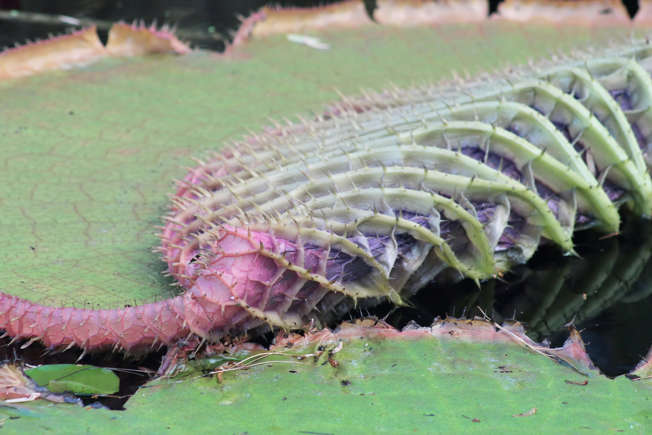
De onderkant van leliebladeren

©Shutterstock

De onderkant van leliebladeren
Onder het blad van een waterlelie loopt een netwerk van stengels en buizen die verbonden is met openingen aan de bovenkant van het blad. Via dit netwerk kan het blad zuurstof opnemen en doorgeven.
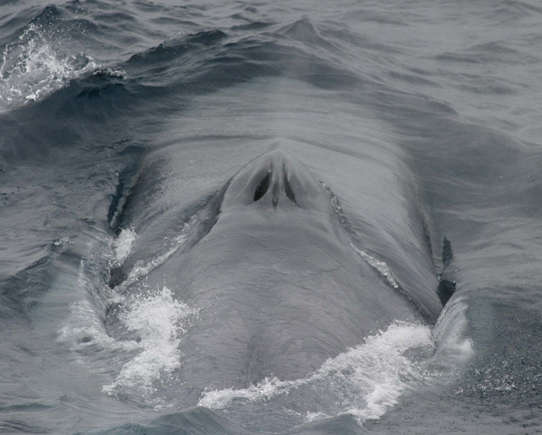
De blaasgaten van een blauwe vinvis

©Public Domain

De blaasgaten van een blauwe vinvis
Blauwe vinvissen hebben, net zoals wij, ook een neus!
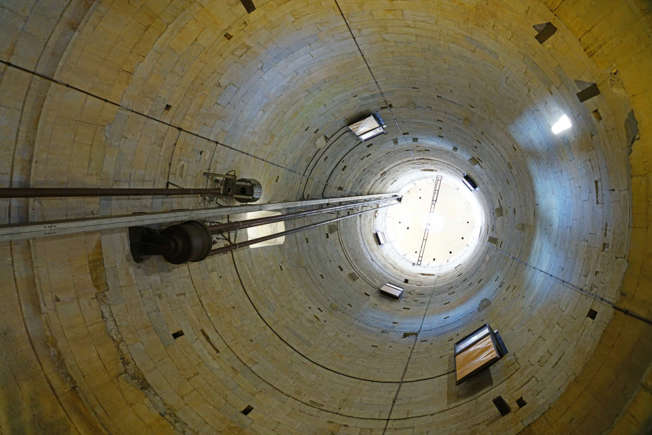
De binnenkant van de toren van Pisa

©Shutterstock

De binnenkant van de toren van Pisa
Van binnenuit lijkt het niet alsof hij scheef staat, toch? Daarom worden de meeste foto's van de buitenkant genomen!
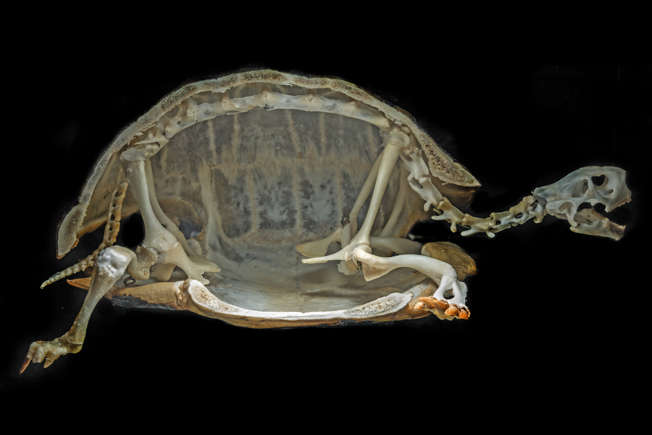
Het skelet van een schildpad

©Shutterstock

Het skelet van een schildpad
Wist je dat het schild van een schildpad rechtstreeks verbonden is met zijn ruggengraat?

De top van de Mount Everest

©Shutterstock

De top van de Mount Everest
In plaats van dat het een prachtig, vredig beeld biedt in het blauw en wit, is de top van de Mount Everest nu bedekt met vlaggen.
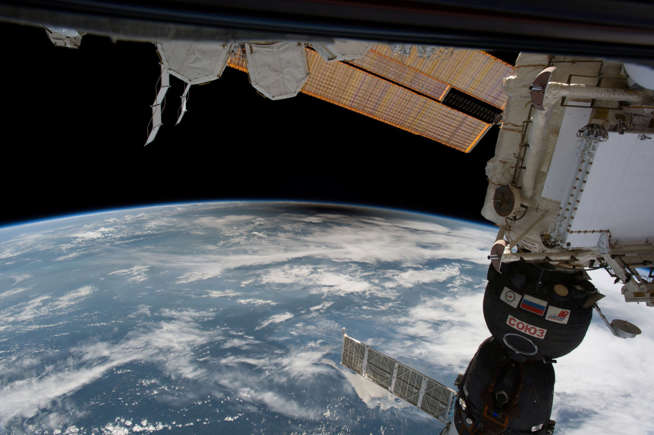
Hoe een zonsverduistering er vanuit de ruimte uitziet

©Reuters

Hoe een zonsverduistering er vanuit de ruimte uitziet
De schaduw van de maan hangt als een onheilspellende, donkere wolk boven de wereld.
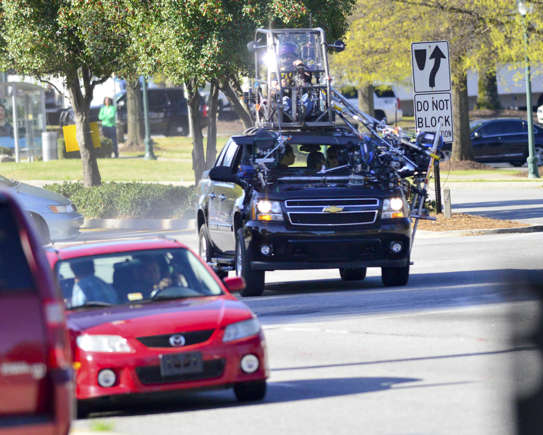
De echte 'Baby Driver'

©BrunoPress

De echte 'Baby Driver'
Spoiler alert! Hoewel het voor degenen die de film 'Baby Driver' gezien hebben misschien leek alsof er echt een auto bestuurd werd, was het niet de acteur Ansel Elgort die dat deed. Het was namelijk een stuntman die het voertuig bediende vanuit een soort cabine die er bovenop was geplaatst, terwijl de acteurs werden gefilmd.
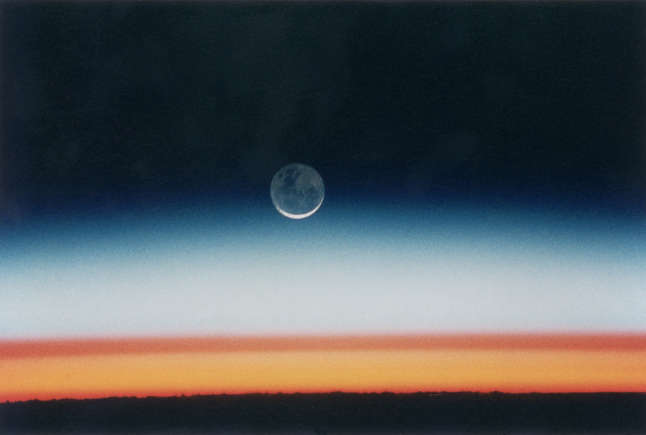
De maanopkomst gezien vanuit de ruimte

©Getty Images

De maanopkomst gezien vanuit de ruimte
Dit is wat je ziet als je aan boord van een spaceshuttle bent, 285 km boven de aarde, op het moment dat de zon onder gaat en de maan tevoorschijn komt. De bruine laag die je ziet is de tropopauze, die de grens vormt tussen de troposfeer en de stratosfeer. Het lijkt net alsof het universum een 'niet storen'-bordje heeft neergezet!

De onverwachte fans van 'My Little Pony'

©Getty Images

De onverwachte fans van 'My Little Pony'
Hoewel de tv-serie op jonge meisjes is gericht, komen elk jaar ongeveer 10.000 mannen tussen de 18 en 30 jaar samen op BronyCon om zich te verkleden als hun favoriete personages en om te genieten van een sfeer van vriendelijkheid, acceptatie en liefde!
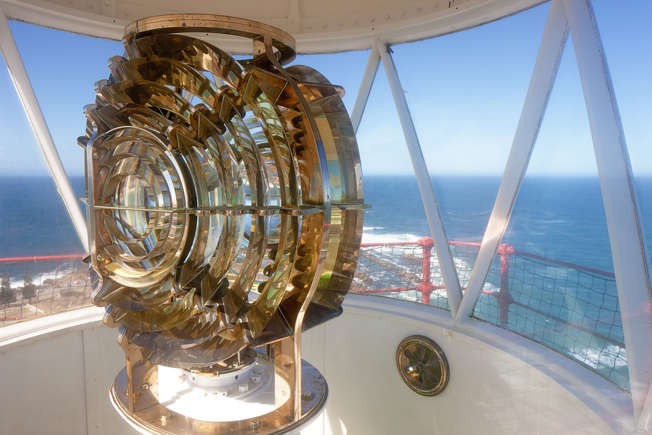
Het werkelijke licht van een vuurtoren

©Shutterstock

Het werkelijke licht van een vuurtoren
De Fresnel-lens wordt vaak in vuurtorens gebruikt omdat deze schuin licht opvangt en daardoor vanaf een grotere afstand zichtbaar is.
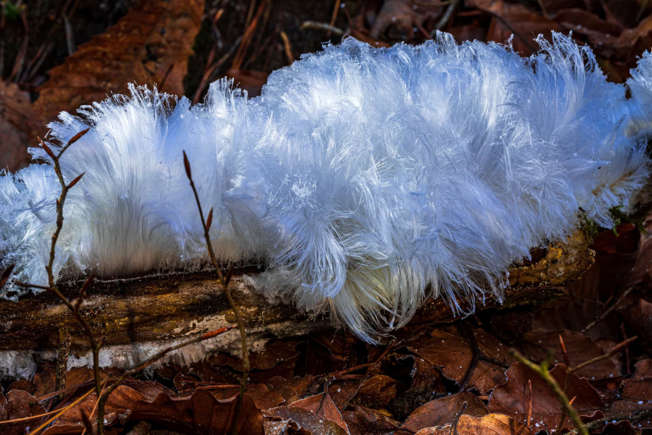
IJshaar

©Shutterstock

IJshaar
Dit bijzondere verschijnsel, dat aan suikerspin doet denken, groeit op dood hout aan de hand van schimmels. Hierbij ontstaat er een zachte, harige ijsstructuur dat 's nachts tevoorschijn komt en weer verdwijnt als het wordt blootgesteld aan licht.
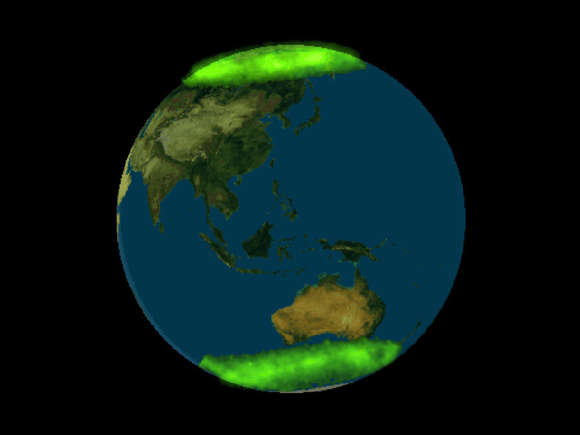
Een poollicht gezien vanuit de ruimte

©Reuters

Een poollicht gezien vanuit de ruimte
Poollichten zijn fascinerende natuurverschijnselen van groen licht in de bovenste lagen van de aardatmosfeer. Ze worden gevormd door een een samenspel tussen geladen deeltjes en het magnetische veld van de aarde. Hier bevinden ze zich boven de poolgebieden van onze planeet.
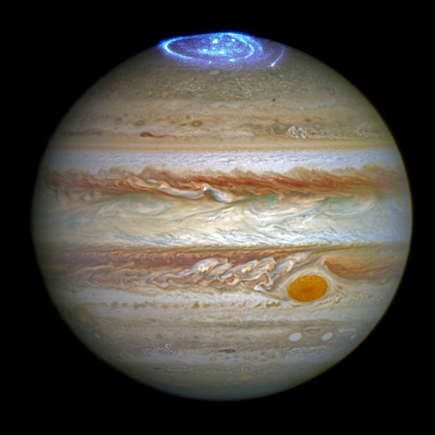
Een poollicht boven een andere planeet

©Reuters

Een poollicht boven een andere planeet
Hier kun je ook nog een lichtshow zien van geladen deeltjes, maar dan boven Jupiter!

Een doorzichtige huid

©Shutterstock

Een doorzichtige huid
De glaskikker komt in de Zuid-Amerikaanse regenwouden voor. Tot op de dag van vandaag weten wetenschappers nog steeds niet waarom ze een volledig doorzichtige huid hebben gekregen. Je kunt echt echt letterlijk alles zien...

Hoe bakstenen worden gelegd

©Shutterstock

Hoe bakstenen worden gelegd
Dit is een machine die bakstenen aanlegt om straten te maken en veel mensen weten misschien niet eens dat deze uit ons eigen land komt! In andere landen vragen mensen zich af waarom niet iedereen dit zo doet...

Hoe een virus eruit ziet

©Getty Images

Hoe een virus eruit ziet
Dit is hoe een humaan immunodeficiëntievirus (HIV) eruit ziet, gezien door de lens van een elektronenmicroscoop.
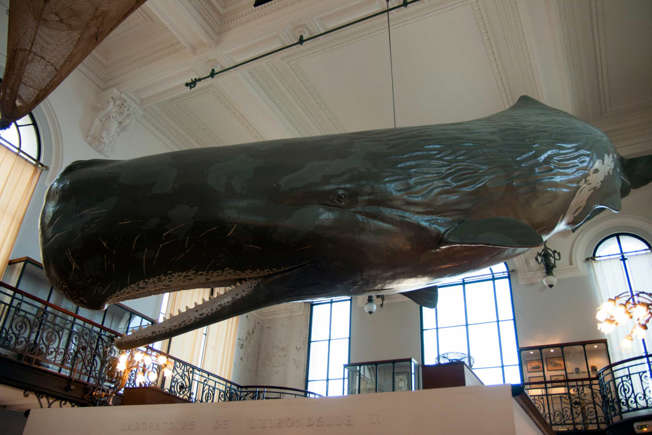
De roofdieren met de grootste tanden hebben ze maar aan één kant

©Shutterstock

De roofdieren met de grootste tanden hebben ze maar aan één kant
Wist je dat potvissen (haast) geen tanden in hun bovenkaak hebben? Ze hebben alleen (zichtbare) tanden in de onderste holtes. Het zijn geen grote bijters, maar ze kunnen wel reuzeninktvissen naar binnen slurpen.

Een schelp van agaat

©Shutterstock

Een schelp van agaat
Agaat is een soort mineraal, maar hier is de stof in de holtes van een schelp gegroeid en is de schelp omgevormd tot deze prachtige steen.
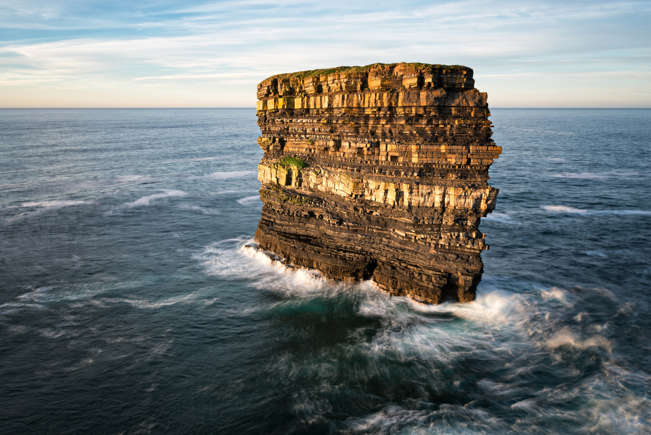
Duizenden jaren in één foto

©Shutterstock

Duizenden jaren in één foto
De Ierse Dún Briste is een 45 meter hoge brandingspilaar die duizenden jaren oud is, zoals je kunt zien aan de bijzondere strepen. Bovenop liggen er nog steeds overblijfselen van oude huizen!

Het puntje van de staart van een olifant

©Shutterstock

Het puntje van de staart van een olifant
Als we aan een olifant denken, zien de meesten van ons dit multifunctionele deel van zijn lichaam over het hoofd. Het wordt gebruikt om te communiceren, zich te oriënteren en ook om vervelende vliegen weg te slaan.
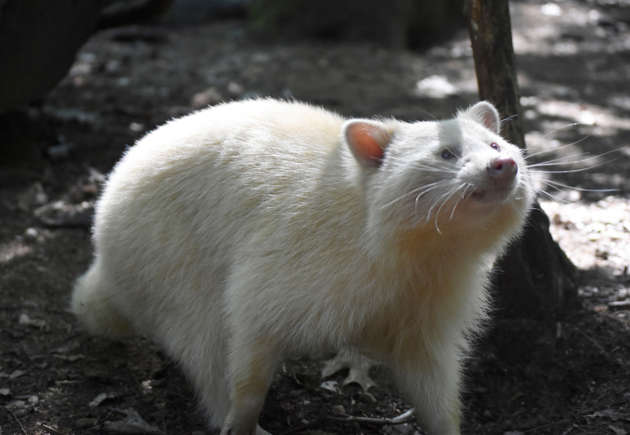
Een albino-wasbeer

©Shutterstock

Een albino-wasbeer
Wasberen lijken doorgaans met hun zwart-witte uiterlijk op een inbreker, maar albino-wasberen zijn net gloeiende neonreclames met de tekst: 'Op heterdaad betrapt'!
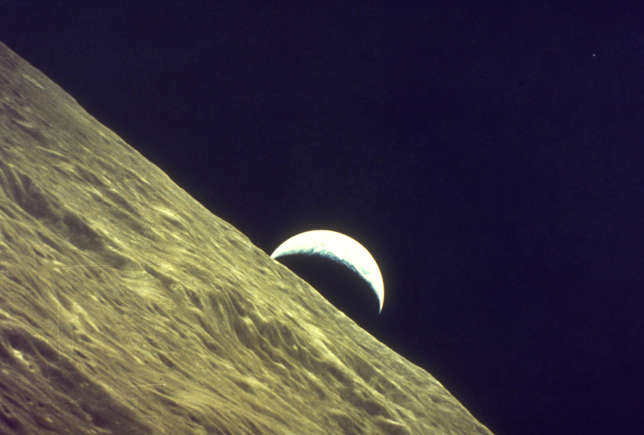
'Halve aarde'

©Getty Images

'Halve aarde'
Hier lijkt het net alsof de aarde een halve maan nabootst, terwijl hij over de horizon van de maan gluurt. Plagen ze elkaar een beetje?
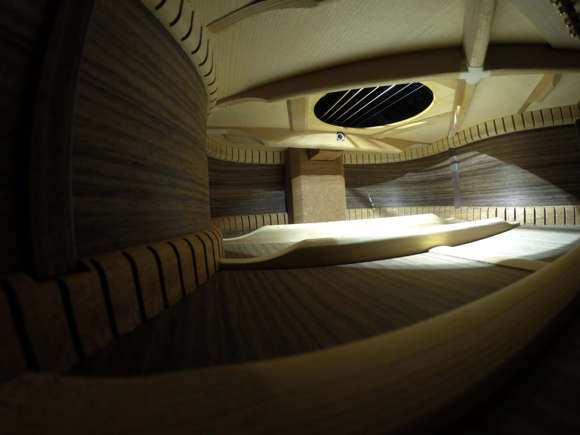
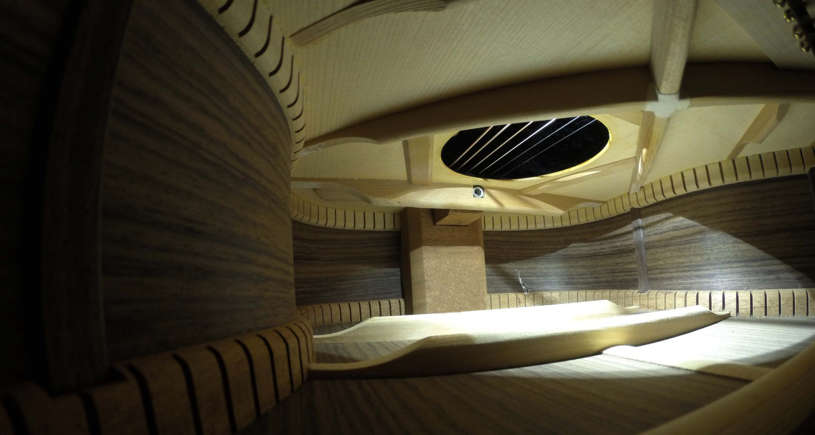
De binnenkant van een gitaar

©Shutterstock

De binnenkant van een gitaar
Of is dit een leuk eenkamerappartement met dakraam?
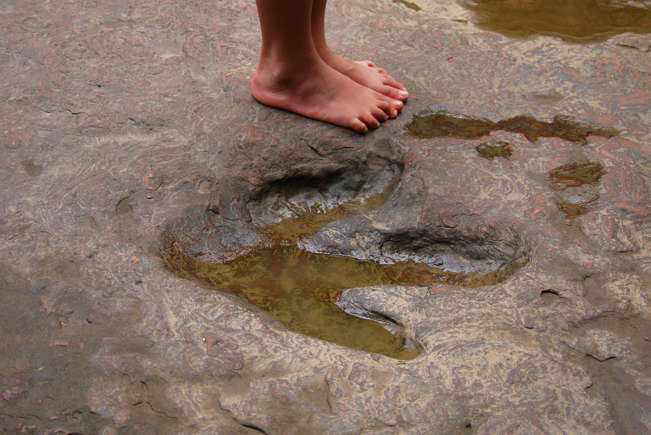
Voetafdrukken van dinosaurussen

©Shutterstock

Voetafdrukken van dinosaurussen
Deze voetafdrukken van theropoden (soort dinosaurussen), die werden ontdekt in Thailand en de Verenigde Staten, zijn meer dan 100 miljoen jaar oud. Veel mensen vergeten dat dinosaurussen niet alleen in 'Jurassic Park' voorkwamen.

Een winkelcentrum na Black Friday

©Shutterstock

Een winkelcentrum na Black Friday
Verlaten winkelcentra zien er behoorlijk angstaanjagend uit zonder het bizarre koopgedrag van klanten... of is het juist andersom?

Bronnen:

  • (NASA)
  • (Mad History)

{ https://www.msn.com/nl-be/ }

Hoe vind je dit bericht?
Geschreven door peter om 23:26 Stuur door

Kuiper Belt May Be Much Larger than Previously Estimated

Kuiper Belt May Be Much Larger than Previously Estimated

Kuiper Belt objects (KBOs) are thought to be the dominant source of interplanetary dust particles in the outer Solar System due to both collisions between KBOs and their continual bombardment by interstellar dust particles. New measurements by NASA’s New Horizons spacecraft show higher than model-predicted levels of interstellar dust as the spacecraft approaches the putative outer edge of the Kuiper Belt.

Beyond Neptune, there is a large disk of small objects, called the Kuiper Belt and beyond that is the Oort Cloud, home of the comets. This artwork shows a section of Kuiper Belt, crowded with the icy cores of potential comets. Image credit: M. Kornmesser / ESO.

Beyond Neptune, there is a large disk of small objects, called the KuiperBelt and beyond that is the Oort Cloud, home of the comets. This artwork shows a section of Kuiper Belt, crowded with the icy cores of potential comets.

Image credit: M. Kornmesser / ESO.

Interplanetary dust particles carry information about the birth and evolution of planetary bodies within our Solar System.

The orbital distribution of these dust particles is driven by the forces of gravity from the Sun and planets, radiation pressure etc. Additionally, the size and mass of individual particles are constantly evolving due to sputtering and mutual collisions.

While Jupiter-family comets and asteroids dominate the production of interplanetary dust particles in the inner Solar System, the Kuiper Belt is the dominant source of the particles in the outer Solar System from either mutual KBO collisions or interstellar dust bombardment.

Speeding through the outer edges of the Kuiper Belt, the New Horizons Venetia Burney Student Dust Counter (SDC) instrument is now detecting higher than expected levels of interplanetary dust.

The readings contribute to a growing body of evidence that suggests the outer edge of the main Kuiper Belt could extend billions of km farther than current estimates — or that there could even be a second belt beyond the one we already know.

“New Horizons is making the first direct measurements of interplanetary dust far beyond Neptune and Pluto, so every observation could lead to a discovery,” said lead author Alex Doner, a graduate student at the University of Colorado Boulder who serves as SDC lead.

“The idea that we might have detected an extended Kuiper Belt — with a whole new population of objects colliding and producing more dust — offers another clue in solving the mysteries of the Solar System’s most distant regions.”

The SDC instrument has detected microscopic dust grains produced by collisions among asteroids, comets and Kuiper Belt objects all along New Horizons’ 18-year journey across our Solar System — which after launch in 2006 included historic flybys of Pluto in 2015 and Arrokoth in 2019.

The first science instrument on a NASA planetary mission to be designed, built and ‘flown’ by students, the SDC counts and measures the sizes of dust particles, producing information on the collision rates of such bodies in the outer Solar System.

The latest, surprising results were compiled over three years as New Horizons traveled from 45 to 55 AU from the Sun.

These readings come as New Horizons scientists, using observatories like the Japanese Subaru Telescope in Hawaii, have also discovered a number KBOs far beyond the traditional outer edge of the Kuiper Belt.

This outer edge — where the density of objects starts to decline — was thought to be at about 50 AU, but new evidence suggests the belt may extend to 80 AU, or farther.

“As telescope observations continue, scientists are looking at other possible reasons for the high SDC dust readings,” Doner said.

“One possibility, perhaps less likely, is radiation pressure and other factors pushing dust created in the inner Kuiper Belt out past 50 AU.”

“New Horizons could also have encountered shorter-lived ice particles that cannot reach the inner parts of the Solar System and were not yet accounted for in the current models of the Kuiper Belt.”

“These new scientific results from New Horizons may be the first time that any spacecraft has discovered a new population of bodies in our Solar System,” said New Horizons principal investigator Dr. Alan Stern, a researcher at the Southwest Research Institute.

“I can’t wait to see how much farther out these elevated Kuiper Belt dust levels go.”

Now into its second extended mission, New Horizons is expected to have sufficient propellant and power to operate through the 2040s, at distances beyond 100 AU from the Sun.

That far out, the SDC could potentially even record the spacecraft’s transition into a region where interstellar particles dominate the dust environment.

With complementary telescopic observations of the Kuiper Belt from Earth, New Horizons, as the only spacecraft operating in and collecting new information about the Kuiper Belt, has a unique opportunity to learn more about KBOs, dust sources and expanse of the belt, and interstellar dust and the dust disks around other stars.

“Ongoing SDC measurements at even larger heliocentric distances will continue to constrain the contributions of dust production in the Kuiper Belt,” the authors said.

“Continued SDC measurements remain crucial for understanding the Kuiper Belt and the interpretation of dust disks around other stars.”

  • Their paper appears in the Astrophysical Journal Letters.
  • Alex Doner et al. 2024. New Horizons Venetia Burney Student Dust Counter Observes Higher than Expected Fluxes Approaching 60 AU. ApJL 961, L38; doi: 10.3847/2041-8213/ad18b0

 { https://www.sci.news/ }

Hoe vind je dit bericht?
Geschreven door peter om 21:04 Stuur door

Airline pilot reports UFO doing 90 degree turn, Over Boston, Massachusetts, Feb 12, 2024, UAP Sighting News.

Airline pilot reports UFO doing 90 degree turn, Over Boston, Massachusetts, Feb 12, 2024, UAP Sighting News.

ET,%20UFO,%20UFOs,%20sighting,%20sightings,%20alien,%20aliens,%20W56,%20SOHO,%20NASA,%20solar,%20LASCO,%20top%20secret,%20news,%20paranormal,%20%20ESA,%20UN,%20CNN,%20CNBC,%20.png

Date of sighting: Feb 12, 2024
Location of sighting: Boston, Massachusetts, USA
Source:
Listen to this pilot describing a UFO while looking at the UFO, telling an aircraft tower in Boston. Its amazing! The UFO makes a hard right angle turn and flashes at the plane several times. Awesome firsthand recording of the UFO sighting. He said its orange...the UFO is orange...I have read so many UFO reports telling of a orange glowing craft...I think the number of reports I saw was about 300+ including those in the MJ12 reports. This is 100% proof aliens are trying to make themselves known to the public, without the US gov consent. 
Scott C. Waring
 

{ https://www.ufosightingsdaily.com/ }

Hoe vind je dit bericht?
Geschreven door peter om 20:40 Stuur door

Scientists Track How a Giant Wave Moved Through Our Galactic Backyard

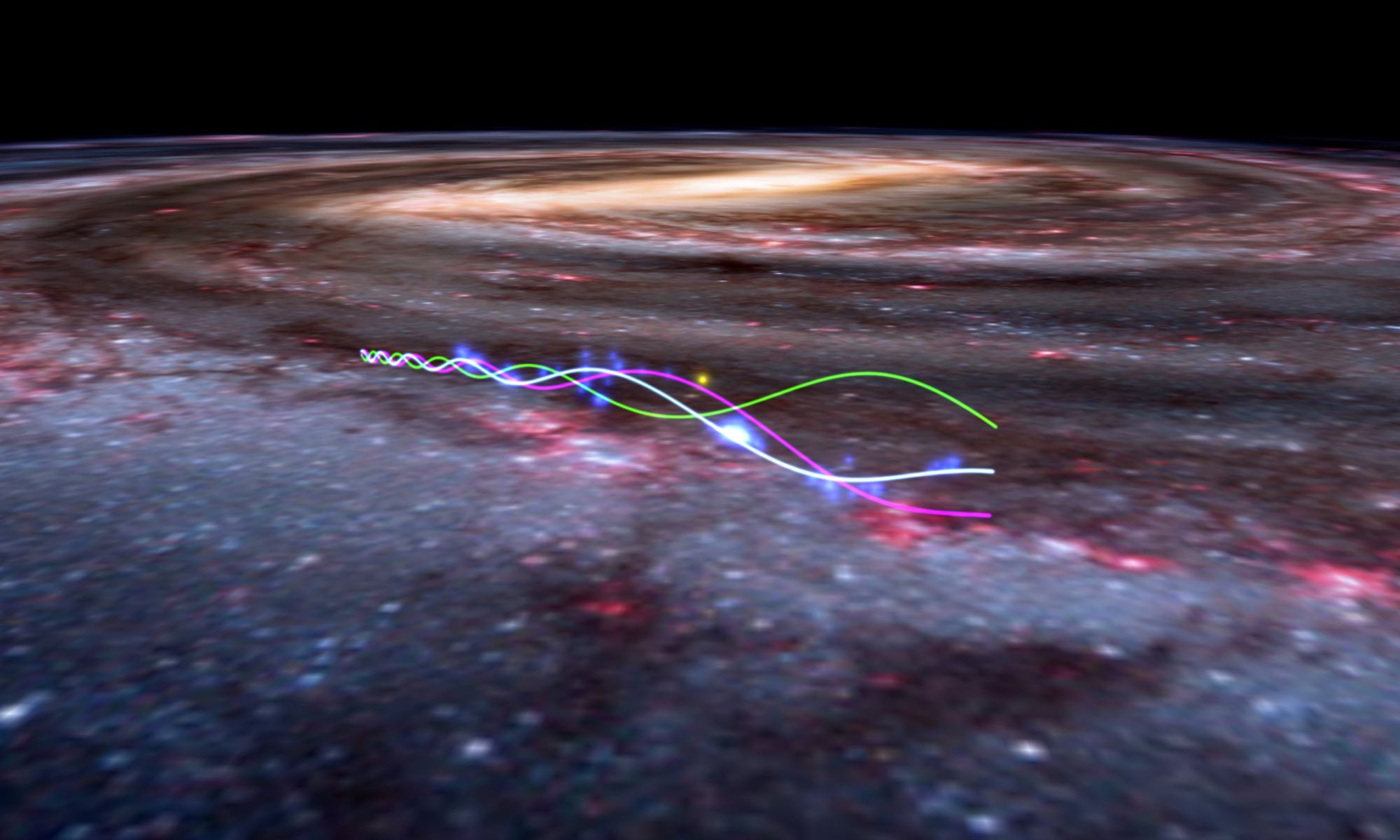
This illustration shows how the Radcliffe Wave moves through the backyard of our sun (shown as a yellow dot). The white line represents the wave's current shape and motion. Magenta and green lines show how the wave is expected to move over time. (Credit: Ralf Konietzka, Alyssa Goodman and WorldWide Telescope via CfA)

Scientists Track How a Giant Wave Moved Through Our Galactic Backyard

Astronomers say there’s a wave rippling through our galactic neighborhood that’s playing a part in the birth and death of stars — and perhaps in Earth’s history as well.

The cosmic ripple, known as the Radcliffe Wave, was identified in astronomical data four years ago — but in a follow-up study published today by the journal Nature, a research team lays out fresh evidence that the wave is actually waving, like the wave that fans in a sports stadium create by taking turns standing up and sitting down.

“Similar to how fans in a stadium are being pulled back to their seats by the Earth’s gravity, the Radcliffe Wave oscillates due to the gravity of the Milky Way,” study lead author Ralf Konietzka, a researcher at Harvard and the Harvard-Smithsonian Center for Astrophysics, or CfA, said in a news release. 

The wave — which is named in honor of Harvard Radcliffe Institute, where the undulation was discovered — consists of a string of star clusters spread out over a stretch of the Milky Way measuring about 9,000 light-years in length.

Astronomers reported in 2020 that they identified the wavy pattern by correlating the 3-D locations of the clusters in data from the European Space Agency’s Gaia space telescope, plus observations of dust and gas clouds in the same region.

“It’s the largest coherent structure that we know of, and it’s really, really close to us,” said study co-author Catherine Zucker, an astrophysicist with the Smithsonian Astrophysical Observatory at the CfA. “It’s been there the whole time. We just didn’t know about it, because we couldn’t build these high-resolution models of the distribution of gaseous clouds near the sun, in 3-D.”

At the time, the astronomers didn’t have enough data to determine whether the peak of the wave was rolling down the line. That’s what’s known as a traveling wave, as opposed to a stationary wave — the kind of wave that’s set off, for example, by a vibrating guitar string.

Since then, additional readings about the motion of the star clusters have led the astronomers to conclude that the Radcliffe Wave is indeed a traveling wave that rises to a maximum height of more than 700 light-years and has a mean wavelength of roughly 6,500 light-years.

“Now we can go and test all these different theories for why the wave formed in the first place,” Zucker said.

Konietzka said the potential explanations range from “explosions of massive stars, called supernovae, to out-of-galaxy disturbances like a dwarf satellite galaxy colliding with our Milky Way.”

Astronomers say the wave’s rippling effect could in turn trigger bursts of supernovae and swarms of star formation within the gas and dust clouds of the interstellar medium. In earlier research, Zucker and other astronomers suggested that sometime around 14 million years ago, just such a burst gave rise to the “Local Bubble,” a star-forming shell that surrounds our own solar system. 

Other researchers have proposed that the long-lasting fallout from all those supernovae could have affected Earth’s geology and climate — for example, by showering our planet with radioactive dust or perhaps even triggering an ice age.

The Radcliffe Wave is currently about 980 light-years away from our own solar system, and appears to be drifting outward at a speed of about 11,000 mph (5 km/sec). “The measured drift of the Radcliffe Wave radially outward from the galactic center suggests that the cluster whose supernovae ultimately created today’s expanding Local Bubble may have been born in the Radcliffe Wave,” authors of the newly published paper say.

Study co-author Alyssa Goodman, an astronomer at the CfA, said the evidence supports the case for claiming that the Radcliffe Wave had an effect on Earth and its cosmic neighborhood. 

“Passage of the sun through over-dense material like the Radcliffe Wave and the Local Bubble does affect the heliosphere,” she wrote in an email, “and the timing does work out that some of the peaks in radioactivity on Earth (e.g., iron-60) line up time-wise with when the sun would have crossed the RadWave, Local Bubble surface, and other ‘Local Fluff’ clouds as well.”

Now the study’s authors are wondering whether the Radcliffe Wave is merely a local phenomenon. Could such waves be common? “The question is, what caused the displacement giving rise to the waving we see?” Goodman said. “And does it happen all over the galaxy? In all galaxies? Does it happen occasionally? Does it happen all the time?”

 { https://www.universetoday.com/ }

Hoe vind je dit bericht?
Geschreven door peter om 00:51 Stuur door

Meer van UFO'S of UAP'S, ASTRONOMIE, RUIMTEVAART, ARCHEOLOGIE, OUDHEIDKUNDE, SF-SNUFJES EN ANDERE ESOTERISCHE WETENSCHAPPEN - DE ALLERLAATSTE NIEUWTJES

↑ Terug naar de berichten