Ontdek de Fascinerende Wereld van UFO's en UAP's: Jouw Bron voor Onthullende Informatie!
Ben jij ook gefascineerd door het onbekende? Wil je meer weten over UFO's en UAP's, niet alleen in België, maar over de hele wereld? Dan ben je op de juiste plek!
België: Het Kloppend Hart van UFO-onderzoek
In België is BUFON (Belgisch UFO-Netwerk) dé autoriteit op het gebied van UFO-onderzoek. Voor betrouwbare en objectieve informatie over deze intrigerende fenomenen, bezoek je zeker onze Facebook-pagina en deze blog. Maar dat is nog niet alles! Ontdek ook het Belgisch UFO-meldpunt en Caelestia, twee organisaties die diepgaand onderzoek verrichten, al zijn ze soms kritisch of sceptisch.
Nederland: Een Schat aan Informatie
Voor onze Nederlandse buren is er de schitterende website www.ufowijzer.nl, beheerd door Paul Harmans. Deze site biedt een schat aan informatie en artikelen die je niet wilt missen!
Internationaal: MUFON - De Wereldwijde Autoriteit
Neem ook een kijkje bij MUFON (Mutual UFO Network Inc.), een gerenommeerde Amerikaanse UFO-vereniging met afdelingen in de VS en wereldwijd. MUFON is toegewijd aan de wetenschappelijke en analytische studie van het UFO-fenomeen, en hun maandelijkse tijdschrift, The MUFON UFO-Journal, is een must-read voor elke UFO-enthousiasteling. Bezoek hun website op www.mufon.com voor meer informatie.
Samenwerking en Toekomstvisie
Sinds 1 februari 2020 is Pieter niet alleen ex-president van BUFON, maar ook de voormalige nationale directeur van MUFON in Vlaanderen en Nederland. Dit creëert een sterke samenwerking met de Franse MUFON Reseau MUFON/EUROP, wat ons in staat stelt om nog meer waardevolle inzichten te delen.
Let op: Nepprofielen en Nieuwe Groeperingen
Pas op voor een nieuwe groepering die zich ook BUFON noemt, maar geen enkele connectie heeft met onze gevestigde organisatie. Hoewel zij de naam geregistreerd hebben, kunnen ze het rijke verleden en de expertise van onze groep niet evenaren. We wensen hen veel succes, maar we blijven de autoriteit in UFO-onderzoek!
Blijf Op De Hoogte!
Wil jij de laatste nieuwtjes over UFO's, ruimtevaart, archeologie, en meer? Volg ons dan en duik samen met ons in de fascinerende wereld van het onbekende! Sluit je aan bij de gemeenschap van nieuwsgierige geesten die net als jij verlangen naar antwoorden en avonturen in de sterren!
Heb je vragen of wil je meer weten? Aarzel dan niet om contact met ons op te nemen! Samen ontrafelen we het mysterie van de lucht en daarbuiten.
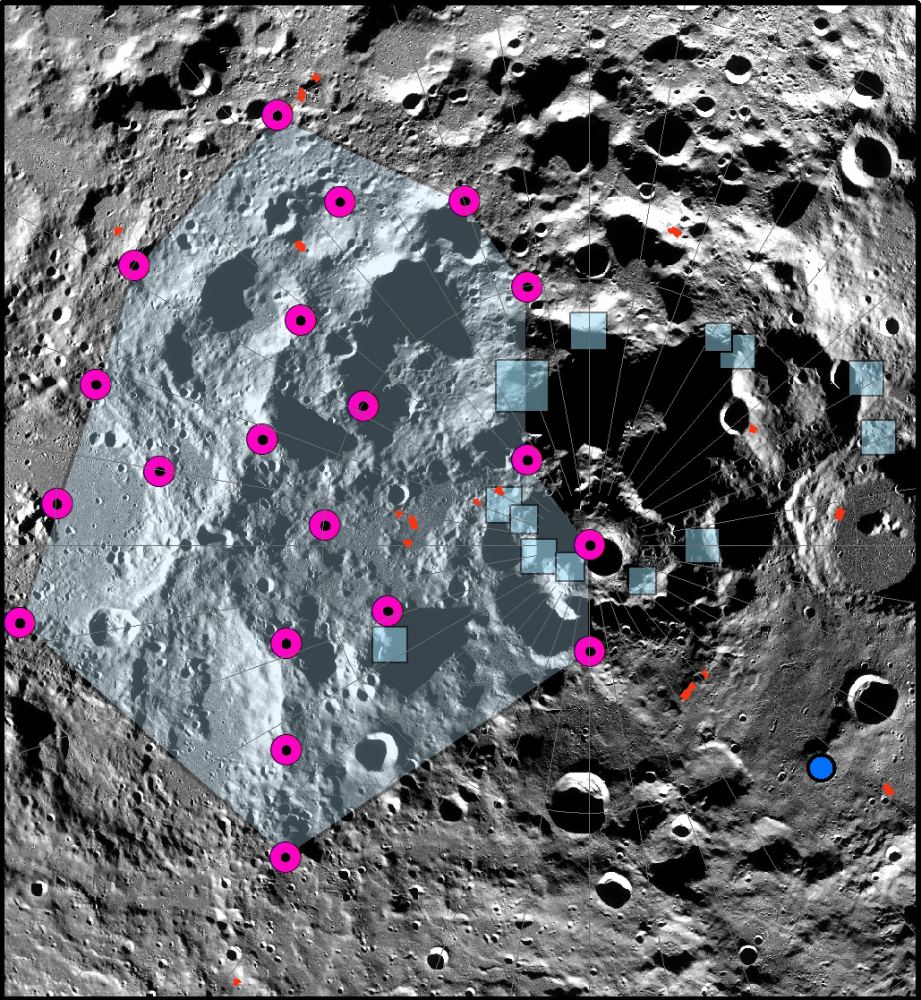
Artemis mission landing locations near the South Pole of the Moon. Blue boxes indicate selected landing spots, while small red marks are locations of scarps caused by moonquakes. Credit: NASA/ LRO/ LROC/ASU/ Smithsonian Institution
The Moon is Still Shrinking, Explaining Why it Still Has Landslides
Although our Moon formed 4.5 billion years ago, it’s still evolving. The interior continues to cool and its orbit is slowly changing. As a result, the Moon has lost 150 feet of its circumference. That shrinkage contributes to near-constant moonquakes, and those trigger landslides and other surface changes. The Moon is currently uninhabited, but all that activity threatens future Artemis landing sites and missions at the South Pole.
In a recent paper, planetary scientists point out that the potential of strong seismic events from active thrust faults should be a top consideration when NASA and other agencies are planning permanent outposts on the Moon. This is particularly true as the Artemis mission planners plot exploration of the South Pole. “Our modeling suggests that shallow moonquakes capable of producing strong ground shaking in the south polar region are possible from slip events on existing faults or the formation of new thrust faults,” said the study’s lead author Thomas R. Watters, a senior scientist emeritus in the National Air and Space Museum’s Center for Earth and Planetary Studies. “The global distribution of young thrust faults, their potential to be active, and the potential to form new thrust faults from ongoing global contraction should be considered when planning the location and stability of permanent outposts on the Moon.”
The Moon is particularly vulnerable to the large-scale effects of moonquakes. That’s because its surface is very brittle and easily broken up during a quake. One of the strongest quakes in lunar history occurred in the 1970s and lasted for hours. Such a lengthy event does quite a bit of damage to the lunar surface. So, even a light moonquake could cause significant damage via landslides.
Our Shaky, Shrinking Moon
Moonquakes generally happen within a hundred miles or so of the lunar surface. On Earth, that might result in a fairly mild quake. But, since the Moon’s surface is so brittle, the effects of those “shakes” are much more noticeable. According to Nicholas Schmerr, a co-author of the paper and an associate professor of geology at the University of Maryland, this means that shallow moonquakes can devastate hypothetical human settlements on the Moon.
“You can think of the Moon’s surface as being dry, grounded gravel and dust,” he said. “Over billions of years, the surface has been hit by asteroids and comets, with the resulting angular fragments constantly getting ejected from the impacts,” Schmerr explained. “As a result, the reworked surface material can be micron-sized to boulder-sized, but all very loosely consolidated. Loose sediments make it very possible for shaking and landslides to occur.”
An LROC NAC mosaic of the Wiechert cluster of lobate scarps in Moon’s south pole region, left pointing arrows). A scarp crosscuts a small (?1 km) degraded crater (right-pointing arrow).
Quakes affect every part of the lunar surface. Global compressional stresses deform the surface, forcing splits and cracks to occur. These scarps—steep slopes and cliffs—exist everywhere there. In their paper, the team suggests that many are close to the epicenters of geologically recent quakes. And the regions where they occurred could still be active today. That includes the lunar South Pole.
Risks to Artemis
The team led by Watters examined data and images of the lunar South Pole and linked faults there to a major moonquake in the 1970s. The region is filled with scarps, which are prime evidence for moonquakes. Although they conclude that some regions in the area are probably safe enough for the Artemis missions, others are not. The team’s computer models show that the most dangerous areas are vulnerable to landslides triggered by seismic shaking. They continue to map the Moon and track its quakes to identify the riskiest areas for Artemis astronauts to land.
A mosaic of Shackleton Crater at the Moon’s south pole region. It shows a portion of an interior wall and floor, with arrows pointing to boulder falls likely created during seismic shaking during a moonquake. Image courtesy: NASA/KARI/ASU
That mission could take place by the end of the decade, when NASA hopes to establish long-term habitations for research and exploration. Schmerr points out that the risks to safety from even the slightest quakes can’t be overestimated. “As we get closer to the crewed Artemis mission’s launch date, it’s important to keep our astronauts, our equipment, and infrastructure as safe as possible,” Schmerr said. “This work is helping us prepare for what awaits us on the moon—whether that’s engineering structures that can better withstand lunar seismic activity or protecting people from really dangerous zones.”
The Artemis missions essentially mark NASA’s return to human exploration of the Moon. The idea is to collaborate with both commercial partners and international agencies to make this happen. Teams of lunar astronauts will establish an Artemis Base camp, and depend on a lunar gateway to connect the mission to Earth. Eventually, what they learn there will inform the first human missions to Mars.
Watch a House-Sized Space Habitat (Intentionally) Burst
We live in an age of renewed space exploration, colloquially known as Space Age 2.0. Unlike the previous one, this new space age is characterized by inter-agency cooperation and collaboration between space agencies and the commercial space industry (aka. NewSpace). In addition to sending crews back to the Moon and onto Mars, a major objective of the current space age is the commercialization of Low Earth Orbit (LEO). That means large constellations of satellites, debris mitigation, and plenty of commercial space stations.
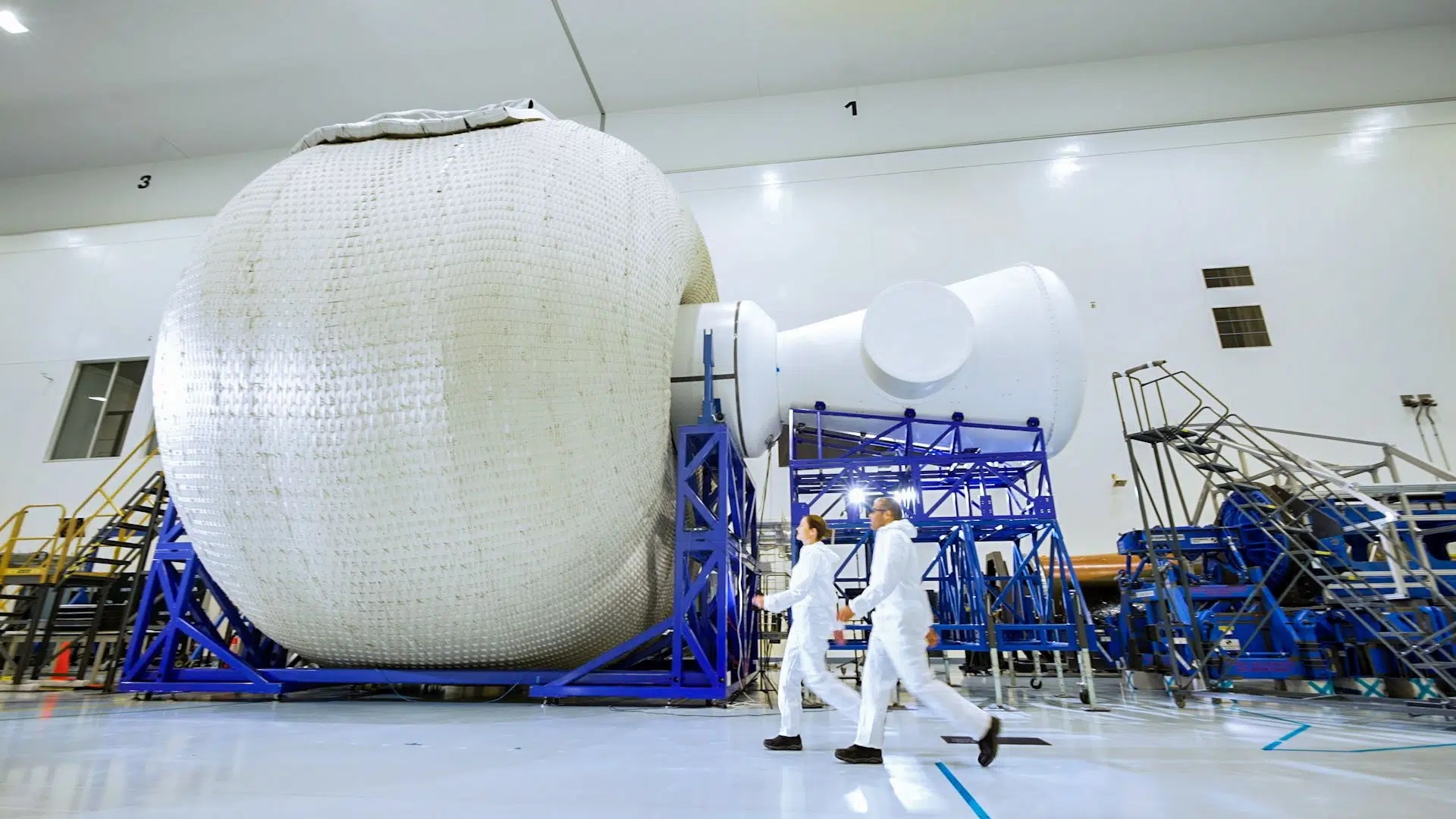
To accommodate this commercial presence in LEO, Sierra Space has developed the Large Integrated Flexible Environment (LIFE) habitat, an inflatable module that can be integrated into future space stations. As part of the Commercial Low Earth Orbit Development Program, NASA, Sierra Space, and ILC Dover (the Delaware-based engineering manufacturing company) recently conducted a full-scale burst pressure test of their LIFE habitat. The test occurred at NASA’s Marshall Space Flight Center in Huntsville, Alabama, and was caught on video (see below).
Commercial space has become one of the fastest-growing businesses on Earth. In the past decade, the space economy has expanded by over 60% and is currently valued at around $400 billion. This is expected to grow considerably in the coming years as launch services increase, small satellites (CubeSats) become more affordable, and orbital stations are built. As the International Space Station (ISS) nears retirement, these commercial stations will provide opportunities for research and development, orbital manufacturing, and space tourism.
Sierra Space, the developer of the Dream Chaser reusable spaceplane, has demonstrated its commitment to the commercialization of LEO and the NewSpace economy. The first iteration of their inflatable habitat, LIFE 1.0, measures 6 meters (~20 feet) long and 9 meters (~30 feet) in diameter and can be launched using conventional rockets and inflates once in orbit. With a volume of 285 cubic meters (over 10,000 ft3), it can accommodate four astronauts, with additional room for science experiments, exercise equipment, and Sierra Space’s Astro Garden® plant-growing system.
The purpose of a burst pressure test is to gauge the structural tolerances of a component, be it a fuel tank or an inflatable module. The data gained from this test will assist engineers in simulating how the module will fare in the vacuum of space. Once development and testing are complete, the module will be used on commercial space stations like Orbital Reef, a collaborative effort between Blue Origin and Sierra Space. Future versions, like Life 2.0 and 3.0, will offer additional volume and be able to accommodate larger crews and more science operations.
According to their National Strategic Plan (released in 2022), one of NASA’s strategic goals is to develop a human spaceflight economy in collaboration with the NewSpace industry. In 2021, as part of a Commercial LEO Destinations (CLDs) project, NASA Space Act Agreements with three companies to design commercial space stations. This includes the Orbital Reef proposed by Blue Origin and Sierra Space, the Starlab space station by Nanoracks LLC, Voyager Space, Lockheed Martin, and Northrop Grumman’s free flyer commercial space station.
Starlab, from Nanoracks, Voyager Space, and Lockheed Martin – a continuously crewed, free-flying commercial space station in low-Earth Orbit. Credits: NanoRacks/Lockheed Martin/Voyager Space
As per NASA’s plan, creating a human spaceflight economy will ensure continued research and development in space while “allowing NASA to focus Government resources on the challenges of deep space exploration through Artemis.” Another goal is to maintain the legacy of the ISS long past its retirement:
“Since its inception, industry, academia, and our international partners have used the International Space Station (ISS) as a testbed for research and the development and maturation of state-of-the-art systems that increase access to space. NASA is supporting new space stations from which we and other customers can purchase services and stimulate the growth of commercial human spaceflight activities. As commercial LEO destinations become available, we intend to implement an orderly transition from current ISS operations to these new commercial destinations.”
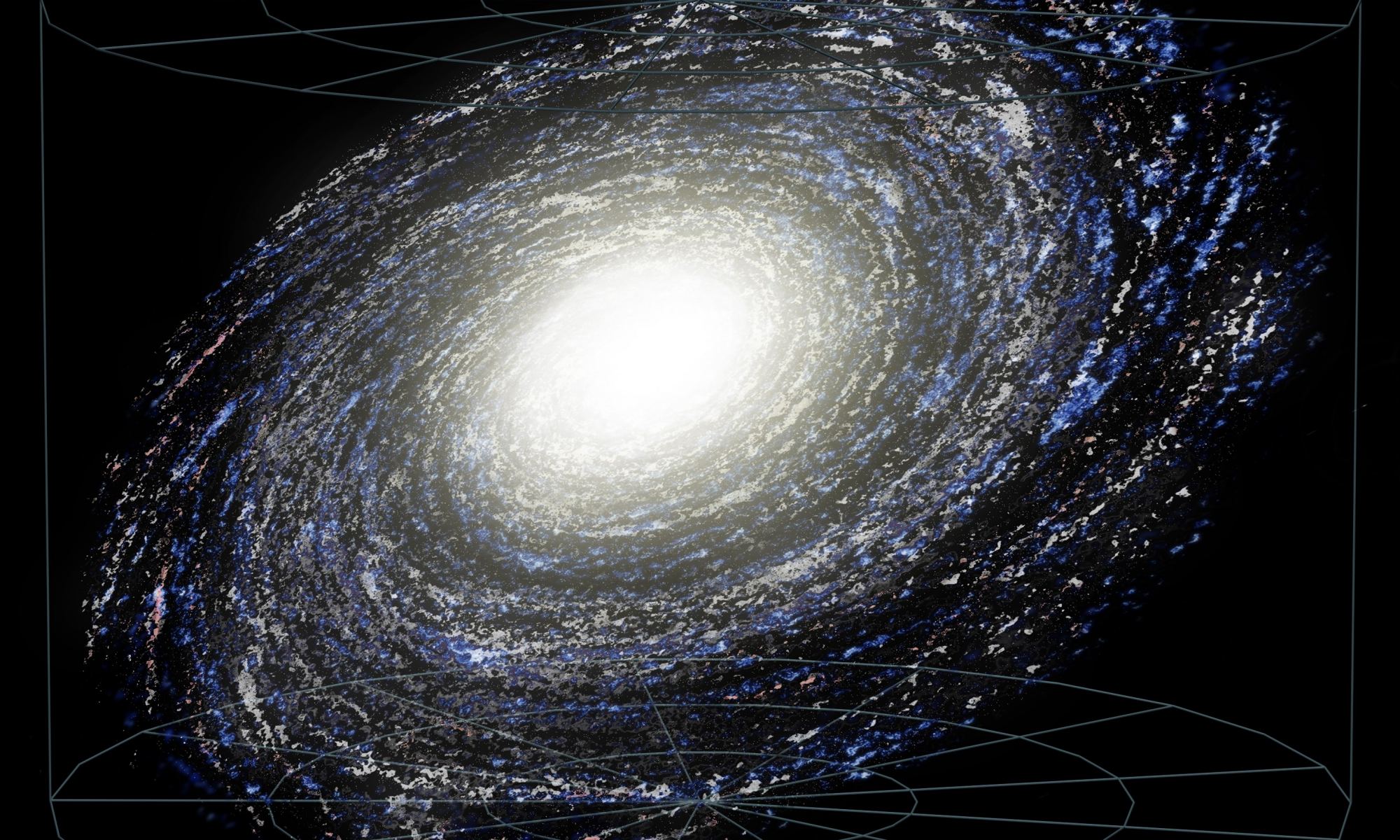
Our planet sits in the Habitable Zone of our Sun, the special place where water can be liquid on the surface of a world. But that’s not the only thing special about us: we also sit in the Galactic Habitable Zone, the region within the Milky Way where the rate of star formation is just right.
The Earth was born with all the ingredients necessary for life – something that most other planets lack. Water as a solvent. Carbon, with its ability to form long chains and bind to many other atoms, a scaffold. Oxygen, easily radicalized and transformable from element to element, to provide the chain reactions necessary to store and harvest energy. And more: hydrogen, phosphorous, nitrogen. Some elements fused in the hearts of stars, other only created in more violent processes like the deaths of the most massive stars or the collisions of exotic white dwarfs.
And with that, a steady, long-lived Sun, free of the overwhelming solar flares that could drown the system in deadly radiation, providing over 10 billion years of life-giving warmth. Larger stars burn too bright and too fast, their enormous gravitational weight accelerating the fusion reactions in their cores to a frenetic pace, forcing the stars to burn themselves out in only a few million years. And on the other end of the spectrum sit the smaller red dwarf stars, some capable of living for 10 trillion years or more. But that longevity does not come without a cost. With their smaller sizes, their fusion cores are not very far from their surfaces, and any changes or fluctuations in energy result in massive flares that consume half their faces – and irradiate their systems.
And on top of it all, our neighborhood in the galaxy, on a small branch of a great spiral arm situated about 25,000 light-years from the center, seems tuned for life: a Galactic Habitable Zone.
Too close to the center and any emerging life must contend with an onslaught of deadly radiation from countless stellar deaths and explosions, a byproduct of the cramped conditions of the core. Yes, stars come and go, quickly building up a lot of the heavy elements needed for life, but stars can be hundreds of times closer together in the core. The Earth has already suffered some extinction events likely triggered by nearby supernovae, and in that environment we simply wouldn’t stand a chance. Explosions would rip away our protective ozone layer, exposing surface life to deadly solar UV radiation, or just rip away our atmosphere altogether.
And beyond our position, at greater galactic radii, we find a deserted wasteland. Yes, stars appear and live their lives in those outskirts, but they are too far and too lonely to effectively spread their elemental ash to create a life-supporting mixture. There simply isn’t enough density of stars to support sufficient levels of mixing and recycling of elements, meaning that it’s difficult to even build a planet out there in the first place.
And so it seems that life would almost inevitably arise here, on this world, around this Sun, in thisregion of the Milky Way galaxy. There’s little else that we could conceivably call home.
Another Asteroid Discovered Hours Before it Impacts the Earth
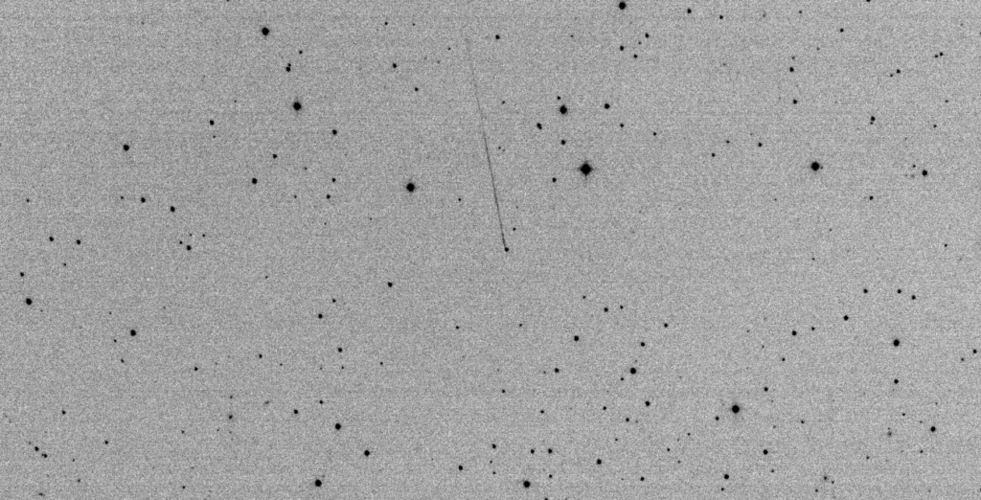
What were you doing last Saturday? As it turns out, I was doing something rather unexciting… Trying to fix my washing machine (I did – in case you are interested). At the same time, Hungarian geography teacher by day and asteroid hunter by night Krisztián Sárneczky was out observing and detected a small asteroid which it transpired was on a collision course with Earth!
Spotting asteroids is a tricky business. Not least because they are typically dark in colour against a very black sky but the sky is quite a big place and spotting a tiny dark object against a massive black sky is worse than looking for a needle in a haystack!
Unperturbed by the statistics and likelihood of actually discovering one, Sárneczky regularly scours the sky looking for asteroids and supernova at the Konkoly observatory in Budapest, Hungary. He was engaged in this very task last Saturday night (20th January) at 22:48 CET (21:48 UT) when he spotted a new asteroid using a 0.6m Schmidt Telescope. Any discovery of this sort requires swift action to get the data over to the Minor Planet Center (MPC) who co-ordinate observations from astronomers around the World.
Sárneczky only had three observations when he submitted the data but continued to observe and over the course of the following minutes secured four more observations which he passed over realising it was heading straight for Earth. The actions that follow any such discovery like this are that the MPC alert others for follow up observations. Astronomers and automated impact monitoring systems including the European Space Agency’s wonderfully named ‘MeerKAT’ system sprang into action and more observations came in.
A radio image of the central portions of the Milky Way galaxy composited with a view of the MeerKAT radio observatory. Radio bubbles and associated vertical magnetized filaments can be seen. Courtesy: MeerKAT/SARAO/Oxford University/Heywood
With more data, came more accuracy and thankfully the knowledge the the impactor was only about a metre across and due to impact just west of Berlin in Germany. It is not unusual for asteroids of this size to hit Earth indeed, we get them every couple of weeks but they generally burn up in the atmosphere and pose no threat. Larger asteroids that do pose a threat are thankfully much rarer. Larger objects are also easier to spot so the majority have already been spotted and are already being tracked but there are automated searches and individuals like Sárneczky who are always on the look out.
The asteroid, which is now known as 2024-BX1 hit the Earth’s atmosphere just a few hours after discovery at 01:32 CET (00:32 UT) on Sunday morning the 21st January, 50km to the west of Berlin. It burned up, leaving a fabulous streak across the sky which people witnessed as a fireball even being spotted over here in the UK.
Worryingly it is actually quite an unusual thing for asteroids to have been discovered before they impact our atmosphere. Only eight have been spotted with the first back in 2008. The difficulty of course is to find them early enough to give us time to understand their trajectory and size to understand what level of threat they pose to us. I should add there are no known asteroids on a collision course with Earth and fortunately there are people like Sárneczky and a number of automated search systems out there on the lookout for the next one.
US officials do not have the capabilities to defend America against a hypothetical alien invasion, internal Pentagon watchdogs have determined.
A newly declassified document found the Department of Defense (DoD) lacks comprehensive or coordinated effort to track and analyze UFOs - which have been rebranded Unidentified Anomalous Phenomena (UAP) in recent years.
The Office of Inspector General (OIG) made the eerie conclusion that this blindspot in the DoD's defensive capabilities 'poses a threat to military forces and national security.'
To address the issues identified in this report, the OIG has made 11 recommendations, including the enforcement of protection policies and the development of new tools in the event of an extraterrestrial attack.
A newly declassified document determined the Department of Defense (DoD) lacks comprehensive or coordinated effort to track and analyze UAP, such as one spotted by the US Navy in 2004
'However, military pilots have continued to report UAP incidents despite the sporadic efforts of the DoD to identify, report, and analyze the events'
The 2023 report was a collection of evaluations on whether the Pentagon, military branches, defense agencies and counterintelligence organizations conducted actions 'to detect, report, collect, analyze, and identify UAP.'
'The DoD has not issued a comprehensive UAP response plan that identifies roles, responsibilities, requirements, and coordination procedures for detecting, reporting, collecting, analyzing, and identifying UAP incidents,' OIG concluded.
The agency conducted the work for the evaluation from May 2021 through June 2023 and interviewed Presidential and DoD policies, directives and guidance.
Those individuals are tasked with establishing requirements for intelligence gathering, counterintelligence, force protection, and civil liberty protections for
'As a result, the DoD response to UAP incidents is uncoordinated and concentrated within each Military Department.'
In July 2022, the Pentagon set up the All-domain Anomaly Resolution Office (AARO), to handle reports of UAPs.
AARO is responsible for synchronizing and standardizing the collection, analysis, and identification of UAP incidents.
Inspector General Robert P. Storch announced the declassification of the report on Thursday, noting it was released due to the 'significant public interest in how the DoD is addressing UAPs'
However, OIG has questioned the abilities of the nation to organize and defend itself in a summary of the classified report.
OIG found that due to a lack of DoD-level guidance, AARO has not developed a formal process to detect and report on unidentified object in US skies.
UAPs are designated as 'Special Interest Items' among military officials, who require aircrews to document and report sightings within 24 hours of shutting down the engines of their own aircraft.
Some of those unexplained observations have been sent to AARO, but the reported noted that the DoD does not require military services to do so.
'DoD Components have largely excluded geographic combatant commands, which are responsible for detecting, deterring, and preventing threats and attacks against the United States and its territories, possessions, and bases in their respective areas of responsibility, in developing UAP policies and procedures,' OIG determined in the 16-page document.
In July 2022, the Pentagon set up the All-domain Anomaly Resolution Office (AARO), to handle reports of UAPs. AARO is responsible for identification of UAP incidents such as this observation in 2023 above LAX
To address the issues identified in the report, the DoD OIG said they have made eleven recommendations to the Under Secretary of Defense for Intelligence and Security.
For example, OIG recommended that the DoD issue a policy to integrate roles, responsibilities, requirements, and coordination procedures regarding UAP into existing intelligence, counterintelligence, and force protection policies and procedures,' the report reads.
The report also suggested the Chairman of the Joint Chiefs of Staff issue guidance to 'the geographic combatant commanders regarding unidentified anomalous phenomena detection, reporting, collection, analysis, and identification within their area of responsibility.
'At a minimum, the guidance should include tools to help commands determine the threats posed by unidentified anomalous phenomena.'
Inspector General Robert P. Storch announced the declassification of the report on Thursday, noting it was released due to the 'significant public interest in how the DoD is addressing UAPs.'
'We are releasing this unclassified summary to be as transparent as possible with the American people about our oversight work on this important issue,' Storch shared in a statement.
A new genus and species of temnospondyl amphibian has been described by a team of paleontologists from the Universidade Federal do Pampa, the Universidade Federal do Vale do São Francisco, Princeton University and Harvard University.
An artist’s impression of Kwatisuchus rosai.
Image credit: Márcio Castro.
The newly-identified temnospondyl species roamed our planet during the Early Triassic epoch, some 249 million years ago.
Named Kwatisuchus rosai, the ancient animal was approximately 1.5 m (4.9 feet) in length.
It belonged to Benthosuchidae, a small group of giant crocodile-like amphibians that lived during the Triassic.
These creatures were primarily aquatic, living in rivers and lakes. They were up to 2.5 m (8.2 feet) in length and have no direct living relatives.
“Kwatisuchus rosai can be confidently assigned to the Benthosuchidae, a stereospondyl clade with a distribution previously restricted to the East European Platform,” said Universidade Federal do Pampa paleontologist Felipe Pinheiro and his colelagues.
“Phylogenetic analysis confirms the relationship of the new genus to the trematosaurian lineage, being closely related to the genus Benthosuchus.”
The skull of Kwatisuchus rosai.
Image credit: Felipe Pinheiro.
The fossilized skull of Kwatisuchus rosai was found in August 2022 in the Sanga do Cabral Formation, a sedimentary rock formation found in Rio Grande do Sul, Brazil.
“Kwatisuchus rosai was a survivor,” said Dr. Pinheiro, led author of a paper published in The Anatomical Record.
“It lived in an environment devastated by the greatest mass extinction in the history of the planet.”
“Since they were animals adapted to conditions of high environmental stress, temnospondyl amphibians became abundant throughout the world.”
“They help us understand how extinctions affected the planet and how we can understand their effects today.”
“This was the most diverse group of primitive tetrapods, recorded on every continent on Earth,” said Dr. Estevan Eltink, a paleontologist at the Universidade Federal do Vale do São Francisco.
“Temnospondyls survived the greatest mass extinction of all time.”
“They have a broad record across geological periods, and had several pulses of irradiation over the millions of years of their existence.”
Felipe L. Pinheiro et al. Interrelationships among Early Triassic faunas of Western Gondwana and Laurasia as illuminated by a new South American benthosuchid temnospondyl. The Anatomical Record, published online January 19, 2024; doi: 10.1002/ar.25384
Professor of Religion Gives Her Take on the UFO Phenomenon
In a recent episode of “The Joe Rogan Experience,” an intriguing dialogue unfolded, featuring Diana Walsh Pasulka, a respected Professor of Religion. The podcast delved into the enigmatic world of UFOs, offering a perspective that bridged the gap between the mystical and the empirical.
Pasulka, known for her in-depth research and scholarly approach, brought a unique lens to the topic. She emphasized the diverse nature of UFO phenomena, suggesting that these experiences, steeped in history, are more than mere sightings; they are interactions with something beyond our conventional understanding.
At the heart of Pasulka’s argument lies the idea of transformation. She posited that encounters with UFOs often lead individuals to seek justice and societal improvement. This pattern, illustrated through anecdotes from her research, points to a profound impact on human behavior and societal structures.
What stands out in Pasulka’s discourse is her holistic approach. She doesn’t shy away from considering interdimensional theories, proposing that some UFOs might be objects existing simultaneously in multiple dimensions. This hypothesis ties into the discussion of historical anomalies like the Shroud of Turin, suggesting a tangible intersection between the material world and unknown realms.
Pasulka also touched on the role of technology in shaping public perception of UFOs. With the advent of digital platforms, stories and experiences that were once isolated incidents have found a communal space, amplifying the phenomenon’s reach and impact. This digital age, as she notes, has allowed for a viral spread of information, akin to the rapid expansion seen in early religious movements.
In her conversation with Rogan, Pasulka navigated the complex web of government involvement, scientific inquiry, and public discourse surrounding UFOs. She hinted at a possible government acknowledgment of UFOs, a step that could lead to wider engagement in understanding these phenomena.
Moreover, Pasulka’s discussion ventured into the realms of historical parallels and religious implications. She drew connections between modern UFO experiences and esoteric traditions, suggesting a deeper, perhaps spiritual, dimension to these encounters.
Diana Walsh Pasulka’s appearance on “The Joe Rogan Experience” provided a nuanced, scholarly perspective on the UFO phenomenon. Her approach, blending historical insight with contemporary analysis, invites us to consider the broader implications of these mysterious encounters. It’s a conversation that not only piques curiosity but also encourages a thoughtful exploration of the unknown.
Unraveling the Mystery of the Cold War Era ‘Black Knight Satellite’
The Cold War era was a time of intense rivalry and technological race between the United States and the Soviet Union. Amidst this geopolitical tension, a curious incident unfolded that captured the imagination of the world: the discovery of an unidentified flying object (UFO) orbiting the Earth. This mysterious object, later known as the “Black Knight Satellite,” remains a subject of fascination and speculation even today.
Discovery and Initial Speculations
The story began in the late 1950s, a period marked by rapid advancements in space technology. In 1957, the Soviet Union launched Sputnik 1, the first man-made satellite, signaling its lead in the space race. Around this time, the U.S. Naval Research Laboratory was operating a radar system called Dark Fence, designed to monitor space activities. In January 1960, Dark Fence detected an unknown object in a polar orbit around Earth – an orbit that was technologically challenging at the time.
The detection of this object caused a stir within the defense and scientific communities. The United States and the Soviet Union, the only two nations capable of such a feat, both denied responsibility for the mysterious satellite. This denial led to wild speculations: Was it a covert spy satellite, or could it be something more extraordinary?
The Black Knight Legend and Tesla’s Connection
The enigma surrounding this object fueled various theories, one of which linked it to the legendary Black Knight satellite. This legend proposed that an ancient, alien spacecraft was orbiting Earth, left behind by an extraterrestrial civilization. This theory found roots in an earlier claim by the famous inventor Nikola Tesla, who, in 1899, reported receiving strange radio signals that some later speculated might have been from the Black Knight.
The Discoverer Program and Corona Spy Satellites
The truth, however, was more grounded, albeit still shrouded in secrecy. Years later, it was revealed that the United States had indeed launched a series of satellites into polar orbit as part of the Discoverer program. This program, ostensibly for scientific research, was a cover for the CIA’s Corona spy satellite project. These satellites were designed to replace the U-2 spy planes and gather reconnaissance over the Soviet Union. The object detected by Dark Fence was likely a piece of debris from these covert operations.
Impact and Legacy
The Black Knight satellite story is more than just a Cold War anecdote; it reflects the era’s atmosphere of mystery, technological rivalry, and the penchant for conspiracy theories. While the object’s true nature was likely mundane, its legacy endures in popular culture as a symbol of the unknowns in space exploration and surveillance.
VIDEO:
The UFO Discovered Orbiting Earth During The Cold War | NASA’s Unexplained Files
The Black Knight satellite mystery encapsulates a fascinating period in history where space exploration was in its nascent stages, and the line between science and fiction was often blurred. It serves as a reminder of the lengths nations went to in the name of security and dominance, and how these efforts sparked the human imagination, leading to enduring legends and myths. As we continue to explore the cosmos, stories like that of the Black Knight satellite remind us of our perpetual quest to understand the unknown.
Wetenschappers zien het nog minstens net zo somber in als een jaar geleden: de doemdagklok blijft ook in 2024 hangen op 90 seconden voor middernacht. En daarmee bevinden we ons – net als in 2023 – nog altijd dichter bij de ondergang van planeet en mensheid dan in de zeven decennia hiervoor het geval was.
Dat heeft het Bulletin of the Atomic Scientists zojuist bekend gemaakt. De organisatie boog zich over de situatie in de wereld en kan niet anders dan concluderen dat deze in het afgelopen jaar nauwelijks verbeterd is en de dreiging dat we de planeet en/of onszelf vernietigen nog minstens net zo groot is als in 2023; het jaar waarin de doemdagklok (zie kader) op een ongeëvenaarde 90 seconden voor 12 werd gezet. En dus blijft de klok ook in 2024 op 90 seconden voor 12 staan.
Wat is de doemdagklok? De doemdagklok werd in 1947 in het leven geroepen om in één oogopslag weer te kunnen geven in hoeverre de mensheid erop afstevent de planeet (en misschien zelfs zichzelf) te vernietigen. Daarbij wordt de klok steevast op een aantal minuten voor middernacht gezet, waarbij middernacht dus symbool staat voor de apocalyps. In de tijd dat de doemdagklok geboren werd – kort na de Tweede Wereldoorlog – vreesde men sterk dat de inzet van kernwapens de apocalyps zou inluiden. En bij het bepalen van de tijd op de doemdagklok werd in beginsel dan ook vooral gekeken naar de ontwikkeling van die wapens en de mate waarin landen dreigden met inzet ervan. Het resulteerde erin dat de doemdagklok in het jaar van oprichting – 1947 dus – op 7 minuten voor middernacht werd gezet, maar in 1953 – de Koude Oorlog was toen in volle gang – op 2 minuten voor 12 kwam te staan. Inmiddels zijn kernwapens lang niet meer de enige dreiging die in overweging wordt genomen alvorens de wijzers van de doemdagklok worden verzet. Zo wordt sinds 2017 bijvoorbeeld ook de dreiging van de catastrofale effecten van klimaatverandering meegenomen. Waar de wijzers van de doemdagklok temidden van al het tumult in de wereld op uitkomen wordt met enige regelmaat besproken binnen een speciaal comité – het Science and Security Board van het Bulletin of the Atomic Scientists – waarin vooraanstaande wetenschappers zitting hebben.
2023 Vorig jaar zetten wetenschappers de doemdagklok dus op 90 seconden voor middernacht. Dat was ongeëvenaard: nog nooit hadden de wijzers zo dicht bij middernacht gestaan. Het was vooral te wijten aan de oorlog in Oekraïne en het feit dat Rusland in het kader daarvan met enige regelmaat met de inzet van kernwapens dreigt.
Oorlogen en kernwapens Met het aanbreken van 2024 hebben wetenschappers zich opnieuw over de wereldwijde situatie gebogen, om vervolgens te bepalen of de wijzers van de doemdagklok al dan niet voor- of achteruit moesten worden gezet. Die overwegingen werden opnieuw overschaduwd door de oorlog in Oekraïne, maar ook door de in oktober vorig jaar uitgebroken oorlog in Gaza, zo laat de onderzoekscommissie in kwestie weten. Die laatstgenoemde oorlog kan zomaar leiden tot een grootschaliger conflict in de regio, met alle gevolgen van dien. Daarnaast hebben de onderzoekers grote zorgen over het feit dat landen als China en en Rusland druk bezig zijn om hun nucleaire wapenarsenalen te moderniseren en uit te breiden. Een nieuwe kernwapenwedloop ligt op de loer, zo waarschuwen ze.
Klimaat en AI Maar er zijn meer zorgen. Bijvoorbeeld over ons klimaat: 2023 was het warmste jaar ooit, waarin overstromingen, natuurbranden en andere klimaatgerelateerde rampen miljoenen mensen troffen. Ook zijn de onderzoekers bezorgd over de razendsnelle opkomst van kunstmatige intelligentie (KI): een ontwikkeling die de mensheid ten goede kan komen, maar voor hetzelfde geld ook kan bedreigen en op dit moment nauwelijks door overheden gecontroleerd wordt. “Vergis je niet,” zo benadrukt Rachel Bronson namens het Bulletin of the Atomic Scientists. “Dat de klok op 90 seconden voor middernacht blijft staan, wil niet zeggen dat de wereld stabiel is. In tegendeel zelfs. Het is de hoogste tijd voor overheden en samenlevingen wereldwijd om in actie te komen.”
Eerdere tijden In 2023 stond de klok op 90 seconden voor middernacht. En daarmee stond de mensheid er slechter voor dan in 2022 toen de klok op 100 seconden voor middernacht bleef hangen. Dat wetenschappers wel eens aanzienlijk optimistischer zijn geweest over het lot van de mensheid staat vast; in 1991 stond de klok nog op 17 minuten voor 12 en reflecteerde zo de rust die het einde van de Koude Oorlog had gebracht. Maar die rust was van korte duur. Want in de jaren die volgden, kropen de wijzers steeds iets dichter naar middernacht: van 14 minuten voor 12 in 1995 naar 7 minuten voor 12 in 2002. Nog eens tien jaar later staat de klok op 5 voor 12 en in 2018 komt deze op het niveau van het Koude Oorlogsjaar 1953, met een tijd van 2 voor 12. En in 2020 komt deze zelfs op een ongeëvenaarde 100 seconden voor middernacht te staan. Een droevig record dat in 2023 dus alweer verbroken wordt en ook in 2024 standhoudt.
Reële dreiging En zo schetst de doemdagklok al jaren een weinig rooskleurig beeld. Maar tegelijkertijd zijn we er gewoon nog. Het roept bij de wat sceptischer aangelegde geesten wellicht de vraag op of de angst voor de apocalyps eigenlijk wel terecht is. Wetenschappers kunnen er kort over zijn: die angst fluctueert misschien door de jaren heen, maar is zeker reëel. “Zolang kernwapens bestaan en gebruikt kunnen worden, is er ook een kans dat we onze beschaving vernietigen (…) En zolang het klimaat blijft veranderen, is er een kans dat we daar gevolgen van ondervinden die een bedreiging vormen voor de overleving van onze soort.”
Maar er is altijd hoop Maar de Doemdagklok is niet bedacht met het idee de mensheid een collectieve depressie aan te praten. Juist niet. Wetenschappers willen mensen aan het denken zetten, waarschuwen en in actie laten komen. “Mensen hebben zowel kernwapens als de door fossiele brandstoffen aangedreven machines die bijdragen aan klimaatverandering, bedacht. We weten hoe ze werken, dus is het aannemelijk dat we ook manieren kunnen vinden om de dreiging die ervan uitgaat, te verminderen,” zo is op de site van het Bulletin of the Atomic Scientists te lezen.
Titanic Vooralsnog lijkt het er echter niet op dat wereldleiders echt van de ernst van de situatie doordrongen zijn, zo moet Jerry Brown, voorzitter van het Bulletin of the Atomic Scientists vaststellen. “Net als op de Titanic sturen leiders de wereld richting een catastrofe: meer kernbommen, enorme koolstofemissies, gevaarlijke ziekteverwekkers en KI. Alleen de grootmachten zoals China, Amerika en Rusland kunnen ons nog redden. Ondanks grote vijandschap moeten zij gaan samenwerken – anders zijn we verloren.”
Het klinkt weinig hoopgevend. Maar de wetenschappers houden hoop, zo laat Bronson weten. “Wat ons hoopvol stemt en inspireert is dat we zien dat jongere generaties de leiding nemen.” Over een jaar moet blijken of dat in 2025 dan misschien genoeg is om de grote wijzer wat terug te draaien.
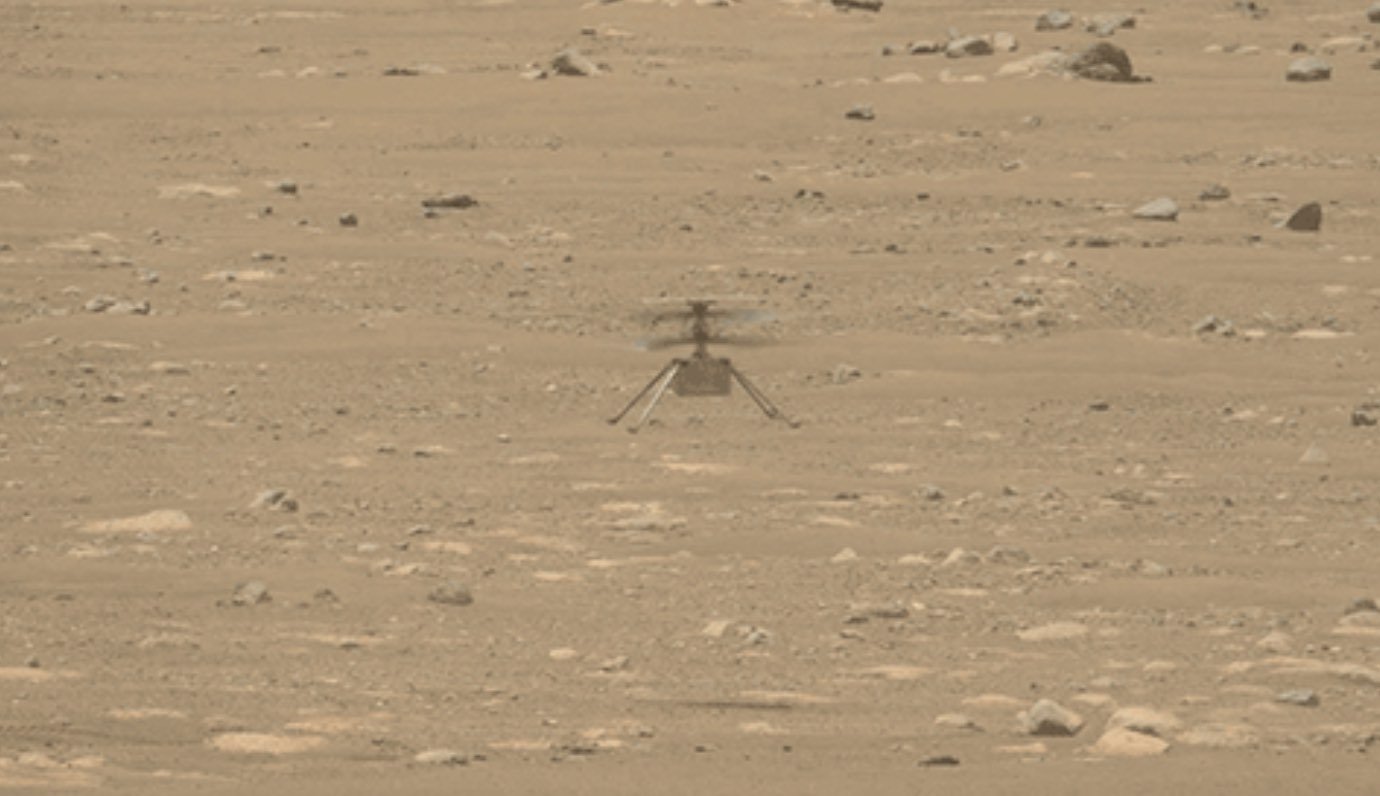
NASA has announced that the Ingenuity helicopter has formally concluded its mission on Mars, following dozens of successful test flights during its three-year tenure on the planet.
The small helicopter, specially designed for flight in the Red Planet’s thin atmosphere, made history as the first aircraft to perform a powered, controlled flight on another planet.
Although initially planned as a technology demonstration that would only conduct five test flights, Ingenuity went on to perform a remarkable 72 flights, many of which provided useful aerial reconnaissance for the Perseverance rover in advance of its movement to areas of interest for potential study.
“It is bittersweet that I must announce Ingenuity… has taken its last flight on Mars,” Nelson said in a statement.
Characterizing the small aircraft as “the little helicopter that could,” Nelson said the helicopter sustained damage to one of its rotor blades while attempting a landing.
NASA’s Ingenuity helicopter takes off above Jezero crater
(Credit: NASA/JPL-Caltech/MSSS).
“At least one of its carbon fiber rotor blades was damaged,” Nelson said. “We’re investigating the possibility that the blade struck the ground.”
The damage occurred during a vertical flight the helicopter performed to determine its location several days ago, following an emergency landing during its previous flight.
Although the aircraft achieved a maximum altitude of 40 feet, hovering for a total of 4.5 seconds before beginning its descent, Ingenuity lost contact with Perseverance before reaching the ground. Several days later the rotor blade damage was revealed.
“What Ingenuity accomplished far exceeds what we thought possible,” Nelson said.
“Ingenuity demonstrated how flight can enhance operational missions, and it’s helping us in the search for life on Mars.”
Ingenuity’s first flight occurred on April 19, 2021, after arriving on the Red Planet earlier that year with the Perseverance rover.
Laurie Leshin, director of NASA’s Jet Propulsion Laboratory in Southern California, said Ingenuity was “an exemplar of the way we push the boundaries of what’s possible every day.
“I’m incredibly proud of our team behind this historic technological achievement and eager to see what they’ll invent next,” Leshin added.
Comparing Ingenuity’s operations to the pioneering flights of Wilbur and Orville Wright, Nelson said the Mars helicopter has set the pace for the future use of aircraft in space exploration.
“Ingenuity has paved the way for future flight in our solar system,” Nelson said, “and it’s leading the way for smarter, safer human missions to Mars and beyond.”
Meer van UFO'S of UAP'S, ASTRONOMIE, RUIMTEVAART, ARCHEOLOGIE, OUDHEIDKUNDE, SF-SNUFJES EN ANDERE ESOTERISCHE WETENSCHAPPEN - DE ALLERLAATSTE NIEUWTJES


 The Moon is Still Shrinking, Explaining Why it Still Has Landslides Although our Moon forme