Ontdek de Fascinerende Wereld van UFO's en UAP's: Jouw Bron voor Onthullende Informatie!
Ben jij ook gefascineerd door het onbekende? Wil je meer weten over UFO's en UAP's, niet alleen in België, maar over de hele wereld? Dan ben je op de juiste plek!
België: Het Kloppend Hart van UFO-onderzoek
In België is BUFON (Belgisch UFO-Netwerk) dé autoriteit op het gebied van UFO-onderzoek. Voor betrouwbare en objectieve informatie over deze intrigerende fenomenen, bezoek je zeker onze Facebook-pagina en deze blog. Maar dat is nog niet alles! Ontdek ook het Belgisch UFO-meldpunt en Caelestia, twee organisaties die diepgaand onderzoek verrichten, al zijn ze soms kritisch of sceptisch.
Nederland: Een Schat aan Informatie
Voor onze Nederlandse buren is er de schitterende website www.ufowijzer.nl, beheerd door Paul Harmans. Deze site biedt een schat aan informatie en artikelen die je niet wilt missen!
Internationaal: MUFON - De Wereldwijde Autoriteit
Neem ook een kijkje bij MUFON (Mutual UFO Network Inc.), een gerenommeerde Amerikaanse UFO-vereniging met afdelingen in de VS en wereldwijd. MUFON is toegewijd aan de wetenschappelijke en analytische studie van het UFO-fenomeen, en hun maandelijkse tijdschrift, The MUFON UFO-Journal, is een must-read voor elke UFO-enthousiasteling. Bezoek hun website op www.mufon.com voor meer informatie.
Samenwerking en Toekomstvisie
Sinds 1 februari 2020 is Pieter niet alleen ex-president van BUFON, maar ook de voormalige nationale directeur van MUFON in Vlaanderen en Nederland. Dit creëert een sterke samenwerking met de Franse MUFON Reseau MUFON/EUROP, wat ons in staat stelt om nog meer waardevolle inzichten te delen.
Let op: Nepprofielen en Nieuwe Groeperingen
Pas op voor een nieuwe groepering die zich ook BUFON noemt, maar geen enkele connectie heeft met onze gevestigde organisatie. Hoewel zij de naam geregistreerd hebben, kunnen ze het rijke verleden en de expertise van onze groep niet evenaren. We wensen hen veel succes, maar we blijven de autoriteit in UFO-onderzoek!
Blijf Op De Hoogte!
Wil jij de laatste nieuwtjes over UFO's, ruimtevaart, archeologie, en meer? Volg ons dan en duik samen met ons in de fascinerende wereld van het onbekende! Sluit je aan bij de gemeenschap van nieuwsgierige geesten die net als jij verlangen naar antwoorden en avonturen in de sterren!
Heb je vragen of wil je meer weten? Aarzel dan niet om contact met ons op te nemen! Samen ontrafelen we het mysterie van de lucht en daarbuiten.
Documentary filmmaker Jeremy Corbell has stunned UFO enthusiasts with his piece of evidence on the phenomenon and information he received while studying UFOs. He is the one who shared the video footage showing the UFO as a transmedium vehicle. Additionally, he says that UFOs and aliens are just a small part of a larger reality along with other interesting and eye-opening statements in an extensive interview with Theories of Everything with Curt Jaimungal.
Jeremy Kenyon Lockyer Corbell is an American contemporary artist and investigative filmmaker based in Los Angeles, California. He did extensive research on nanotechnology, aerospace exploration, and exotic propulsion systems, as well as an in-depth examination into the life and discoveries of the enigmatic “Godfather of Conspiracy” John Lear.
Corbell has documented the surgical removal of alleged off-world alien implants, and has filmed NASA’s analysis of anomalous materials alleged to be physical evidence of extraterrestrial nano-technology from UFO landing sites. He has obtained deathbed confessions from former CIA and government intelligence officials who claim to expose the truth about UFOs and the worldwide coverup of the ultimate truth.
Jeremy Corbell with former Pentagon UFO official Luis Elizondo.
Corbell released the film “Bob Lazar: Area 51 & Flying Saucers” on Netflix, adding credibility to Lazar’s case. Moreover, his 2-hour interview with Curt Jaimungal discussed dozens of topics that added great information to the UAP/UFO phenomena. In 2021, he leaked a film of the US Navy photographed & filmed “spherical” shaped UFOs & advanced transmedium vehicles. In the footage shared by filmmaker and UFO enthusiast Jeremy Corbell, a flying object can be seen disappearing into the water off California.
In this interview, he covers a variety of controversial subjects including the release of the Tic-Tac videos by the government, possible government disinformation campaigns, and the claims of Bob Lazar that he once worked on backward engineering an alien craft.
UFOs and Aliens Just Small Part of ‘Larger Reality’
Corbell asserted in the interview that aliens and UFOs are a small part of a much larger reality of this mysterious and mind-boggling phenomenon.
He said:
“UFOs appear to be part of a larger phenomenon meaning UFOs are kind of an auxiliary implication of a much larger reality. So this idea that what we’re seeing are machines from other planets. I’m unconvinced what we may be seeing is an alternate reality. You know maybe it is something closer to dimensional travel.
There seems to be another version of reality that is occurring and that somehow once they pop through into our reality. And this is not just from a cursory look at the ufo phenomenon, this is from talking with thousands of close encounter eyewitnesses who tell me that this is something bigger than just flying machines.
To give you an example at Skinwalker Ranch. The report is that a piece of the sky opened up like a tear and out of this came “Beings” came “Craft.” So, UFOs is a symptom, it’s part of this alternate reality, The phenomenon as I call it. But it’s not just about UFOs represent this phenomenon.
I know this to be true that Skinwalker ranch is the best example of this because you have UFO phenomena. But you also have cattle mutilation which is often associated with lights in the sky. So, cattle mutilation is something a concrete example.
Cattle mutilation, Is this a UFO phenomenon or a government experiment, or is this a private corporation that’s going around mutilating these cows and draining their blood in the dead of the night? Nobody has ever been caught during these cattle mutilations.
They are the same across the board. They’re drained of blood. The farmers and people that are cattle ranchers see UFOs oftentimes during these mutilations so I can’t separate them.”
American billionaire Robert Bigelow shared his personal experiences and losses that prompted his interest in life after death, as well as UFOs. He talked about possible links between consciousness research and UFOs. He also talked about the risks of trying to establish communications with the unknown.
“That’s been mainly what I’ve been doing except for the skinwalker ranch thing for 20 years as the space world has been huge in my life to pursue the legitimate parochial kind of you know using fire engines rockets to get you there. We didn’t expect anything like this to happen and so there this is different. This is the holy grail and is different than the second holy grail. If the second one is ‘Beings’ (E.T.), then the first one: Is there any part of your consciousness that survives your bodily death? That’s a big deal. That’s a huge story. That’s gigantic.”
Dr. Travis Taylor’s Statement On Skinwalker Ranch
Dr. Taylor joined businessman Brandon Fugals’s team at Fugals’s infamous Skinwalker ranch three years ago and firmly believed he would be able to resolve the ranch’s assorted mysteries in short order. But the longer he stayed, the stranger things became. In his interview with investigative journalist George Knapp, he said: “You know, I had never seen a UFO until I got out there. Now, I have seen more UFOs now than you can count.” (Source)
In the surprisingly candid and wide-ranging interview, Dr. Taylor shared his opinions about the role of science in the pursuit of the unknown, his personal experiences with strange phenomena on Skinwalker Ranch, the physical effects of close encounter cases, and the mysterious “hitchhiker effect” that multiple UFO/paranormal eyewitnesses have reported.
In his opinion, this unexplained phenomenon can be different for people in regards to their brain activity. Hypothetically speaking, he said that the phenomenon can be connected with different planes in the universe. He added that he could go along with the idea of a portal but was not sure. He believes it is bizarre but there is some truth to it.
Throughout human history, the call of the unknown has driven explorers to embark on daring voyages into uncharted waters. These intrepid explorers have braved treacherous seas, and unknown dangers, driven by the thrill of discovery and the promise of new knowledge and riches. From the earliest days of seafaring civilizations the human desire to explore and push the boundaries of what is possible has led to some of the greatest achievements in history. Here are 8 of the greatest voyages of all time and how they shaped history.
1. Pytheas - Discovered Thule (Kind Of)
We start our list with one of the great ancient Greek explorers, Pytheas. Born in around 350 BC, Pytheas spent much of the 4th century BC on voyages exploring the coasts of Europe. His most famous voyage was when he set sail from the Greek colony of Massalia (modern-day Marseille in France) and sailed to the north, reaching regions the Greeks had never laid eyes upon before.
His most famous achievement is perhaps discovering the land of Thule in the Northern Atlantic. This is a bit of a strange one because, for all intents and purposes, Thule doesn’t exist and never has. Pytheas believed he had discovered a hitherto unknown frozen island far North of Britain, the only problem being, there was no island there.
Today many historians believe Pytheas was either lying or got lost. It is likely that “Thule” was actually modern-day Norway or Iceland. Pytheas described Thule as a land of perpetual ice and snow where the sun barely rose. It’s more likely Pytheas would have described anywhere near England as perpetually damp and grey!
Pytheas didn’t just discover imaginary islands. He extensively voyaged around the coasts of Britain, Iceland, and northern Germany, documenting the customs and lifestyles of the people he met along his way.
His greatest accomplishments were perhaps on the scientific side of his voyages. He was fascinated by tidal systems which he studied and described them in great detail. He is also credited as being one of the first navigators to identify the phenomenon of the midnight sun, where the sun remains visible for 24 hours a day in the far north during the summer months.
2. Leif Erikson - Beat Columbus to it
Christopher Columbus was the first European to set foot on North American soil. Right? Wrong. Over the years it has become increasingly likely that a Norse explorer by the name of Leif Erikson beat Columbus to it, and likely many others did too.
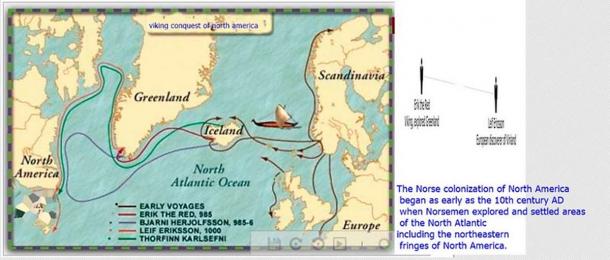
Leif Erikson was a Norse explorer active during the 10th century. According to the Norse sagas , Leif’s greatest achievement was when he sailed from Greenland to a region called Vinland, believed to be somewhere in modern-day Newfoundland, Canada today.
L'Anse aux Meadows is the only site widely accepted as evidence of pre-Columbian trans-oceanic contact. It is notable for its possible connection with the attempted colony of Vinland established by Leif Erikson around the same period or, more broadly, with Norse exploration of the Americas.
Our knowledge of Norse history is famously spotty, but it’s believed Leif’s voyage set sail around the year 1000 AD. It is likely he got the idea for his journey after another famous Norse explorer, Bjama Herjolfson, had been blown off course while sailing to Iceland and stumbled across the unknown region.
Leif set sail with around 30 of his best men and upon reaching Vinland, established a Viking settlement in an area called L’Anse aux Meadows. They weren’t there for very long (carbon dating estimates from 990-1050 AD) but it was a major achievement in Norse exploration and colonization. Evidence of Norse buildings including a longhouse and a smithy has been found and it is believed they traded and interacted with the locals, whom they dubbed “Skraelings.”
Leif Erikson is a celebrated figure in Norse culture and mythology but only in recent years has he started to get the recognition he deserves as the first European to land in North America. Today L’Anse aux meadows is a UNESCO World Heritage Site and a popular tourist attraction.
3. Columbus - Set Out for Asia, Found America
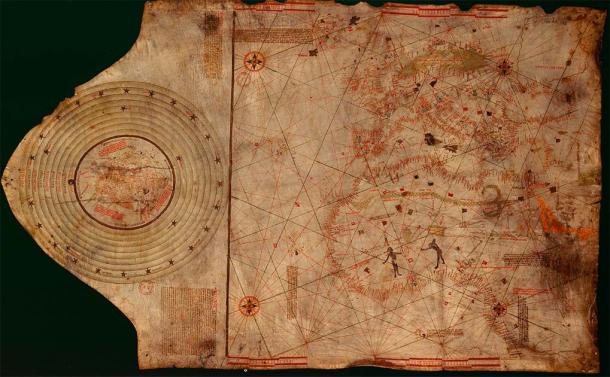
It might seem a little unkind to follow up Leif with Columbus, but Columbus’s voyage was still an important one. Born in Genoa, Italy, in 1451, Columbus is perhaps the most famous explorer of all time. In particular, he’s famed for his attempt at finding a new route to the lucrative spice trade in Asia.
Going against what was accepted knowledge at the time, Columbus believed that by sailing west across the Atlantic, he could reach Asia more quickly than by sailing around the southern tip of Africa like everyone else.
"Columbus map", drawn c. 1490 in the Lisbon mapmaking workshop of Bartholomew and Christopher Columbus.
Getting sponsors for his voyage was no easy task. Most people believed the earth was flat and thought Columbus’s ship would sail right off the edge of the earth. Those who were coming around to the idea of earth being a globe just thought he’d get lost. Still, in 1492 Columbus set sail from the port of Palos in Spain and headed west. He took three ships with him, the Nina, the Pinta, and the Santa Maria.
After a few weeks at sea, Columbus and his crew spotted land, which they believed to be Asia. Instead, they reached an island in the Bahamas, which Columbus named San Salvador. Over the next few months, Columbus and his men explored the coasts of Cuba and Hispaniola, establishing the settlement La Navidad.
Over the years Columbus made a total of four voyages to the New World. Once hailed as a hero, today his legacy is a complicated one. On the one hand, he’s credited as being responsible for opening up the Americas to European exploration and colonization.
But on the other hand, what one person calls colonization, another calls exploitation. His treatment of the indigenous peoples he found has been widely criticized. Columbus and his men brought disease and violence to the New World and the European colonizers happily enslaved and exploited many of the locals.
4. Zheng He - Ancient China’s Greatest Explorer
It isn’t just Europe that has given us some of history’s greatest voyages. The Chinese explorer Zheng He was born in China in 1371. A high-profile admiral in the imperial navy of the Ming dynasty, Zheng He was tasked with an important mission, to lead a series of voyages to establish diplomatic and trade relations with other countries.
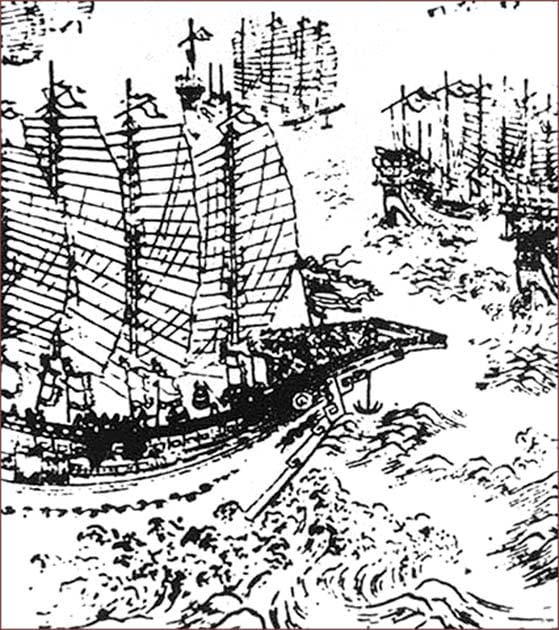
His first voyage took place in 1405 and was of a grand scale. Zheng He commanded over 300 ships, including colossal treasure ships measuring up to 400 feet long (121.92m). The voyages had one goal, to promote Chinese power and prestige and it was Zheng He’s mission to deliver gifts and treasures to the leaders of the countries he visited.
Under the Yongle Emperor (third Emperor of the Ming dynasty ) and Xuande Emperor (fifth Ming Emperor) Zheng He carried out 7 voyages. He visited a wide range of countries and regions, including Southeast Asia, India, and East Africa. Along the way, he established important Chinese trading posts and diplomatic missions in these areas. On his return trips, he brought home exotic animals such as giraffes and zebras to entertain the Chinese court.
All of this wasn’t cheap. While his voyages were remarkable achievements in both maritime exploration and diplomacy, after his death in 1433 the Chinese government turned inward and brought an end to China’s age of exploration.
Columbus wasn’t the only European whose voyages were focused on the spice trade. Ferdinand Magellan , born in Portugal in 1480, was a soldier and sailor who was commissioned by the Spanish government to lead an expedition to find a western route to the spice islands of Indonesia.
He set sail from Spain in 1519 with a fleet of five ships and a crew of over 200 men. He crossed the Atlantic and traveled south along the coast of South America. In doing so he discovered a passage that led through the southern tip of the continent, the Strait of Magellan. His voyage then continued as he crossed the Pacific Ocean, encountering several new islands along the way, including Guam and the Philippines.
Magellan’s voyage was a long one. So long in fact, that by the time his crew returned to Spain in 1522, they had circumnavigated the globe. The first people in history to do so. Despite being remembered as the first man to circumnavigate the globe, Magellan didn’t finish his voyage.
His trip had faced numerous challenges along the way from storms to mutinies and skirmishes with ingenious people. One of these skirmishes proved fatal and Magellan fell in the Philippines, killed by a bamboo spear, on 27th April 1521 after trying to convert the locals to Christianity.
6. Hanno the Navigator - Ancient Voyage in Africa
Hanno the Navigator, or Hanno the Carthaginian as he was also known, was an explorer from the ancient city-state of Carthage located in modern-day Tunisia. In the 5th century AD, he set out on a voyage along the west coast of Africa looking to establish new trade routes that would expand his people’s influence.
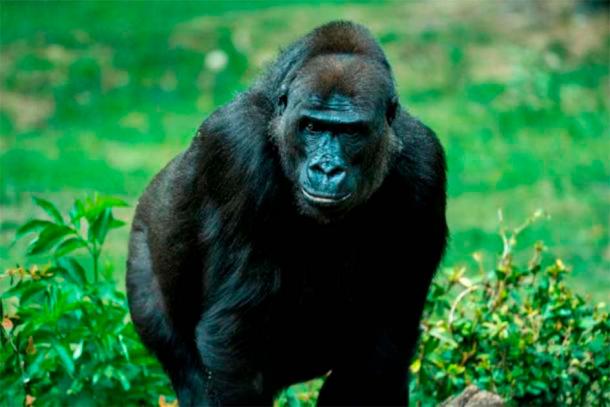
Hanno voyaged far and wide. His ships took him along the Atlantic coast of Africa through present-day countries like Morocco, Western Sahara, Senegal, and Gambia. Along the way Hanno stopped to take in the sites, encountering many new lands and peoples, including the people of the Verde Islands. He even discovered a tribe of ape-like, highly aggressive people. He killed three of them, skinned them, and took their pelts back to Carthage. Their name? The Gorillai.
The term gorilla comes from Carthaginian explorer Hanno the Navigator, who was exploring the African coast. He described coming across a tribe of “gorillae”, monstrous and violent humans. It is likely he actually encountered chimps or baboons.
Hanno recorded his voyages in a text called the Periplus of Hanno which details the lands and peoples he came across. While some historians today doubt its accuracy it is still seen as an important document in the history of exploration and geography. Hanno’s voyage helped establish Carthage’s influence along Africa’s west coast and paved the way for further exploration and trade in the region.
7. Sir Francis Drake - Survived Circumnavigating the Globe
Magellan may have been the first man to circumnavigate the globe but Sir Francis Drake, the second man to do so, did it in style. Sir Francis Drake was a 16th-century English explorer, privateer, and naval commander whose voyages have become the stuff of legend.
Drake’s first voyage was in 1567 when he sailed to the Caribbean as part of a slave trading expedition. Over the next ten years, he made several voyages to the Americas. During these trips, he was a state-sanctioned privateer. He raided Spanish ships and settlements accumulating great wealth and fame in the process.
A map of Drake's voyage [showing Europe, western Africa, northern South America, and eastern North America]; the four other engravings consist of bird's-eye battle plan views of the cities of Santiago, Santo Domingo, Cartagena, and St. Augustine, Florida.
In 1577 he used this wealth to set out on a three-year voyage around the world, copying Magellan’s feat. Along the way, he explored the west coast of South America, claimed land for England in what is now California, and traded with the people of the Moluccas in modern-day Indonesia.
Perhaps his greatest achievement came in 1588 when he played a key role in the defeat of the Spanish Armada which had been sent to invade England. Drake's years of experience and skill as a naval commander helped to turn the tide of the battle and secure a massive victory for England.
History often focuses on those explorers who made the most famous discoveries or whose accomplishments had the most visible impact on history. But often these men’s successes and achievements wouldn’t have been possible if it weren’t for the work of the lesser-known explorers who came before them.
Erik the Red was a Norse explorer and adventurer whose voyages paved the way for later Norse expeditions to North America during the 10th century AD. According to legend, Erik was exiled from Iceland after committing murder and so he set out to find new lands to live in.
He and his crew sailed westward across the north Atlantic and eventually arrived in a remote, uninhabited land that they named Greenland. Conditions were harsh and the environment was challenging, but Erik and his followers managed to set up several settlements, thriving there for several centuries.
These settlements enabled later explorers, like Leif, to head even further northwards, eventually discovering North America. Today Erik is remembered as a bold and daring explorer who played a crucial role in shaping the history of the North Atlantic region.
Erik the Red is remembered in medieval and Icelandic sagas as having founded the first continuous settlement in Greenland.
The voyages of exploration throughout human history have shaped the world we live in today. From the ancient mariners like Pytheas and Hanno who connected different civilizations and sparked cultural exchange, to the early voyages of discovery that led to the discovery of new continents, each journey has contributed to our understanding of the world and our place within it.
Today we often take travelling great distances for granted, or worse, see it as a chore. We must remember these early voyages required incredible feats of courage, resourcefulness, and adaptability from the explorers who undertook them. They not only expanded our knowledge of the world, but also enriched our cultures and transformed our societies. The legacies of these voyages continue to inspire and captivate us, driving us to seek out new frontiers and push beyond our boundaries.
Top image: Ancient voyages set off to discover new realities.
Mysteries and Monsters: Episode 182 Philip Mantle UFO Landings UK
It's a warm welcome back to UFO researcher, author and publisher Philip Mantle on this weeks show as we uncover some of the UK's lesser known UFO encounters from history.
Philip's new book has tens of fascinating cases that many people may not be aware of and we discuss some of my favourites from the book including a personal favourite case from 1961 when two teenagers see a strange whose occupant isn't very friendly.
We meet a Dame who has no time for the MOD's excuses, a family who have two encounters within a week, visit the former UFO hotspot of Warminster and much, much more.
There are so many brilliant accounts in the book, with witness statements, newspaper cuttings, photos and sketches, it's a must have for anyone who loves UFO's and Ufology
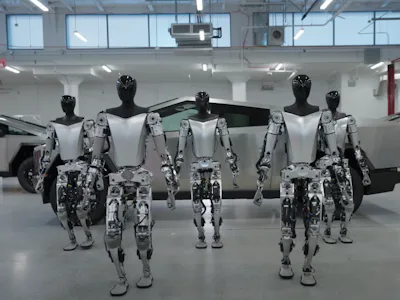
Tesla’s humanoid robot prototype (known as Tesla Bot or Optimus) seems to walk relatively smoothly and can recognize and pick up objects with relative ease, according to a new video presented by Elon Musk at the Tesla shareholder event on May 16.
The faceless bots give off an uncanny valley vibe as they traverse the Tesla office in an intimidating pack — suggesting a major improvement from last year’s lackluster demonstration at Tesla’s AI Day event. At the time, employees merely held the bot on a stand and programmed it to wave to the audience. And when Musk announced the bot in 2021, all he had to show was a guy dancing in a suit.
At the recent Tesla shareholder event, Elon Musk showed off improvements to the Tesla bot.
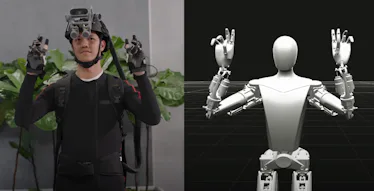
Now, the new video promotes Tesla Bot features like “motor torque control,” “environment discovery and memorization” — hinting that the robots can use cameras and sensors to map their surroundings — and skilled manipulation of objects. Tesla also indicated that the robot’s AI system can pick up new tricks from human demonstrations: One clip shows an employee decked out in a futuristic suit and headpiece placing items in boxes while a 3D model replicates their movements.
Tesla seems to be training the bot prototypes with human demonstrations.
TESLA/YOUTUBE
Ultimately, Tesla hopes its humanoid Bot can accomplish “increasingly complex tasks,” hinting at a potential ability to sort objects into boxes — likely a helpful skill in a factory production line.
Last year, Musk toldTheWall Street Journal that the Tesla Bot could solve the human labor crisis. He has also claimed that these robots could eclipse the company’s vehicle business. Last year, he estimated that each could cost “probably less than $20,000.”
Tesla hasn’t offered a clear timeline for production, and the company had previously stated that things could kick off this year. But it seems like engineers are still working out the prototype’s kinks, and it could be years before the humanoids begin tinkering on Teslas in the factories of the future.
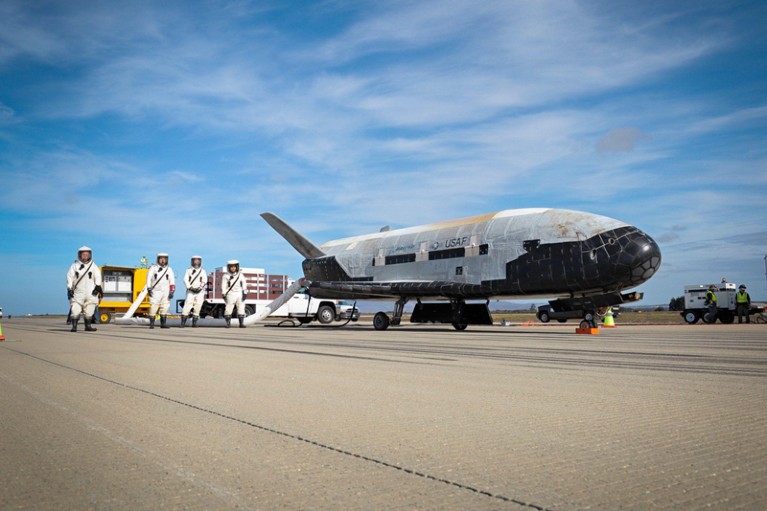
The Boeing X-37B, pictured here, is thought to have inspired China’s mysterious spaceplane.
Credit: Boeing/Sipa/Shutterstock
China has landed a mysterious spacecraft that spent nine months in Earth’s orbit, making the nation one of just a handful of entities that have successfully operated a reusable spacecraft. Although China has not revealed details about the spacecraft’s design and operation, aerospace engineers have pieced together information from fragments, painting a picture of a craft with potential for research as well as military uses.
“The complete success of this experiment marks a significant breakthrough in our country’s research on reusable spacecraft technology,” Chinese state media agency Xinhua reported, suggesting that Chinese researchers have developed technology, such as heat shields and landing equipment, specifically for reusable craft.
China, the US companies Boeing and SpaceX and NASA are the only players to have launched and recovered orbiting reusable craft. Although the upfront costs are high, the costs of running reusable craft are a fraction of those for single-use craft, making reusable spacecraft attractive if a mission requires several flights. The nine-month mission is probably a second test of the reusable spacecraft. In September 2020, China returned a reusable experimental spacecraft that had spent two days in orbit.
Imitating Boeing?
The spacecraft is likely to be similar to a US spaceplane, the Boeing X-37B, according to Kevin Pollpeter, a senior research scientist at the Center for Naval Analyses, a US government-funded research and analysis organization in Arlington, Virginia. The purpose of X-37B is unknown, but he says the Chinese government was concerned about the craft’s military capacities when it was revealed in 2010.
Jonathan McDowell, an astrophysicist at Center for Astrophysics Harvard & Smithsonian in Boston, Massachusetts, agrees that China’s experimental spacecraft could be a nod to Boeing’s X-37B spaceplane. McDowell says satellite sensing shows the spacecraft gliding and performing a runway landing at the Lop Nur military base in China’s northwest Xinjiang region, suggesting that it is a plane. Some other reusable spacecraft, such as SpaceX’s Dragon capsule, are modules attached to launch rockets that rely on parachutes to land.
Like the X-37B, the Chinese vehicle seems to be fairly small. The Chinese media reported that the spacecraft was launched last August from the Jiuquan Satellite Launch Center in northwestern China on a Long March 2F rocket, which China used to launch its Shenzhou crewed space missions. Given that the maximum payload capacity of the launch vehicle is 8.4 tonnes, the spaceplane probably weighs between 5 and 8 tonnes, says McDowell — much smaller than NASA’s retired space shuttles that performed crewed missions, including Columbia and Challenger.
Although the current model is too small to carry crew members, McDowell says he would not be surprised if the country introduces a larger spaceplane for crewed missions in the future.
Satellite capture?
China might be testing a variety of technologies that could further its space ambitions, says McDowell. Changing orbital trajectories or unfolding solar panels are just two examples of the kinds of mid-orbit manoeuvre that would be useful to perfect.
Releasing and capturing satellites while in orbit might also have been tested. According to a report by the Center for Strategic and International Studies, a think tank in Washington DC, the spaceplane released an object that was detected last October. The object seemed to disappear from orbit in January before reappearing in March, according to McDowell, who tracks the spacecraft using US Space Force data. One possible explanation, he says, is that the spaceplane captured the object and carried it as cargo before releasing it again. That would suggest the spaceplane has cargo capacity, meaning it could be used to carry instruments and satellites. The manoeuvre, which he says could have been achieved with a robotic arm, might have been practice for satellite maintenance and repair.
“[The Chinese] have been working a lot with robot arms in other contexts, like the Chinese space station and other satellite servicing experiments,” McDowell says. For example, last year China removed a defunct satellite from orbit using another satellite.
The Xinhua story about the spacecraft’s landing highlighted “the peaceful use of space”. McDowell notes that, with plenty of spy satellites already in space, China doesn’t necessarily need a spaceplane for that purpose. But China’s space programme is run largely by the military, and consequently, its space missions tend to be secretive, says Pollpeter. “I think the inclination is to release less information rather than more information, because even if they are using it for something like satellite servicing and repair, it doesn’t mean that it couldn’t be used for more offensive or more military activities.”
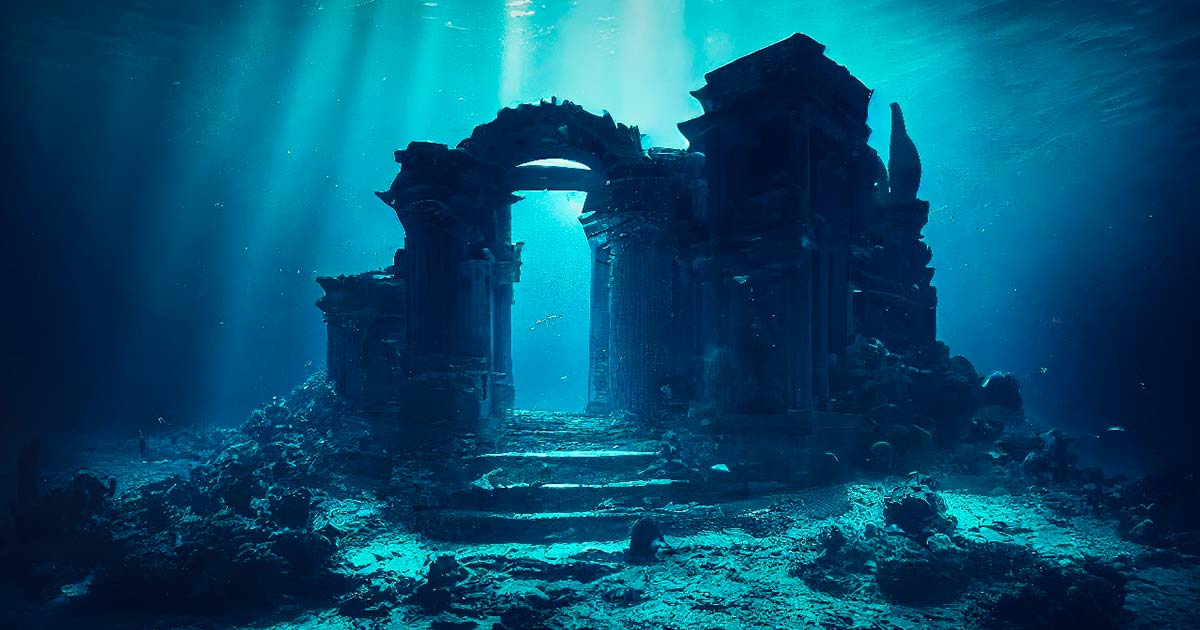
In the depths of the English Channel lies a lost city that has been submerged for over 8,000 years. It is known as Doggerland. One maritime archaeologist , Garry Momber, has spent two decades exploring these waters to uncover its secrets. The English Channel is notoriously difficult to navigate, with cold water and powerful tides creating treacherous conditions for divers.
However, Momber's meticulous preparations have paid off, revealing that Doggerland is a treasure trove of ancient wood that has survived underwater for millennia. These preserved hunter-gatherer landscapes offer a rare glimpse into life from another age, and composite structures like these are of international significance. The discovery of what is believed to be the oldest boat building site in the world adds to the intrigue of this remarkable find.
As the dominant feature of our night sky and sporting a surface reflection that reminds us of our own faces, humans have long believed or at least hoped that the Moon is inhabited by other beings who might visit us or welcome us to their home. The same is true of Mars, the reddest dot in the night sky. As space travel finally began in the late 1950s, we have been frustrated in our search for signs of current life on the lunar surface or the Martian landscape, and excuses have been made that it lives deep underground, on the opposite side (of the Moon), in the shade of craters or other areas that hide not only their physical presence but all evidence of their existence. Now, scientists from Japan and China have noticed something unusual about their lunar and Martian space equipment, and true believers in life on the Moon and Mars think this could be the holy grail of evidence they’ve been looking for. Whatever is causing these anomalies, it is a mystery that is baffling space scientists and the interested public.
It was here a minute ago.
“The HAKUTO-R Mission 1 Lunar Lander was scheduled to touchdown on the surface of the Moon at approximately 1:40 a.m. JST. As of 8:00 a.m. JST, April 26, 2023, the communication between the lander and the Mission Control Center was lost, although it was expected even after the touchdown, and it has been determined that Success 9 of the Mission Milestones is not achievable.” (statement from ispace)
On December 11, 2022, the Hakuto-R Mission 1 from the private Japanese space company ispace was successfully launched onboard a SpaceX Falcon 9 rocket. After traveling 870,000 miles – farther than any privately-funded spacecraft, it attempted to land on April 25, 2023, in the Lacus Somniorum plain. Communication with Hakuto-R Mission 1 was lost permanently during the final descent to the lunar surface and the spacecraft was believed to have been destroyed in a hard crash on the lunar surface. Or was it?
“Some researchers express conspiracy theories that the cause may be not only natural conditions, but also human actions. They believe that the disappearance of space equipment could be due to deliberate actions by other countries. Others believe that there were representatives of extraterrestrial civilizations on our satellite, who allegedly did not like the neighborhood with terrestrial technology.”
The website ufo.com.br expresses the sentiments of two groups outside of the scientific community. While an accident is certainly plausible, many in the military as well as conspiracy theorists point to the secret missions of space programs in the U.S., Russia, China and now some smaller countries as evidence that sabotage of flights and the possible stealing of crash remains is indeed a possibility. The other sentiment is the possibility that an alien presence on the Moon is protecting its own secret existence by sabotage and retrieval – possibly for analysis, possibly for protection. The Hakuto-R Mission 1 is not the only one that suffered a mysterious disappearance recently.
"We have not had any communication from the rover since it entered hibernation. We are monitoring it every day and believe it has not woken up because the sunlight has not yet reached the minimum level for power generation."
Fox News reported that Zhang Rongqiao, the chief designer of China’s Mars exploration program, is concerned about its non-functioning Zhurong rover, part of its Tianwen-1 mission which was launched on July 23, 2020, landed on Mars on May 14, 2021, and has been operating ever since. A NASA probe was able to locate the dead rover and NASA’s experience with its own Martian rovers and landers suggests Zhurong is covered with Martian dust and its solar panels are unable to get enough rays to recharge its batteries and return to operation. However, it is puzzling that the Chinese rover stopped functioning after 358 days, while NASA's Perseverance and Curiosity rovers are still roaming the Martian surface for more than two years and over ten years respectively. Is the Zhurong rover dead due to dust … or could it be something else? Does Mars have a presence that doesn’t want to be detected? Or a saboteur?
Those who support the sabotage conspiracy theories look at the experiences of two minor players in space travel – India and Israel – for more validation. On September 7, 2019, the Indian Space Research Organization (ISRO) lost all communications with its Vikram lunar lander in the final phase of its descent to the lunar surface. It took until late November of 2019 for ISRO to finally admit the spacecraft was lost when it likely crashed on the lunar surface. The space agency’s long reluctance to admit it had lost the lander and had no idea why it failed are fodder for conspiracy theories involving sabotage and aliens. Those theories are supported by another mysterious lunar crash in 2019 – Israel’s Beresheet lunar lander built by the space nonprofit SpaceIL.
“We have a failure of the spacecraft. We unfortunately have not managed to land successfully.”
Israel Aerospace Industries general manager Opher Doron told CNBC that Beresheet – the Hebrew word for “genesis” – never made it to its own beginning on the lunar surface as it also crashed on final descent on April 11, 2019. While Israeli space and government officials put up a positive front, calling the mission a success even though the lander crashed, the officials again had little knowledge as to what caused the failure.
“In turn, representatives of China and Japan said they would conduct additional research to find out the reasons for the disappearance of space equipment. They say they will work to prevent similar incidents in the future and protect their space missions from potential threats.”
Is landing on the Moon so difficult - or is it something else?
Is it really that hard to successfully land a spacecraft on the surface of the Moon? Or is there something else happening that is disrupting equipment as it gets close … something that causes functioning equipment to suddenly stop all functions? Four space agencies have experienced these problems and one (and possibly more – the agencies are obviously reluctant to release news of these failures) has admitted its equipment has disappeared. It is easy to blame accidents for some of these incidents, but the knowledge base is growing and the successes should be as well. Keep an eye on NASA’s upcoming mission to send humans back to the Moon and SpaceX’s mission to send humans in an observational swing around it. Watch for unexplained or questionable delays.
Dmitry Rogozin, former head of Russia’s ROSCOSMOS space program, said recently in his strange statement that he doesn’t believe the U.S. really put humans on the Moon because they haven’t been able to do it again in over 50 years. Is it really budgets and other priorities … or is there something or someone preventing it? We may soon find out.
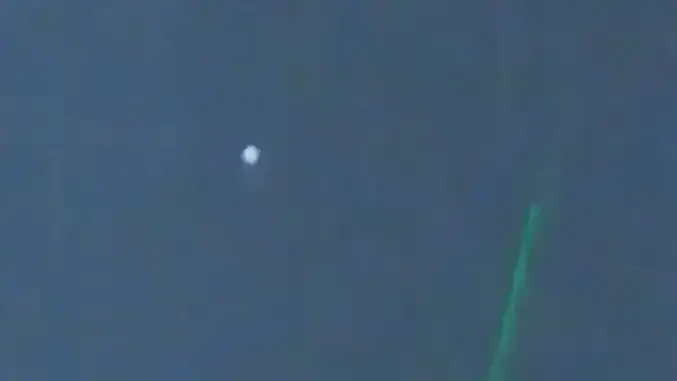
Laser Pointer Strike Triggers Sudden Movement from UFO over Big Bear Lake, California
An intriguing new report of UFO sightings in May 2023 has sparked curiosity and awe among enthusiasts and skeptics alike. The incident took place over the serene setting of Big Bear Lake, California. The captivating video footage showcasing these mysterious occurrences has added another layer of enigma to the ongoing discourse on extraterrestrial life and unidentified flying objects
The witness, a local resident, shared an electrifying account of the sightings. “There are always planes flying over my backyard, and one can easily identify them,” the resident said. “However, what I saw and captured on camera over the course of a few nights were two stationary lights. Their appearance was unlike any conventional aircraft I’ve seen.”
In the video, one can distinguish a moving light to the left—identifiable as an airplane—yet the stationary lights remain a mystery. As the resident zoomed in, the lights seemed to fluctuate in color at an extraordinary pace, transitioning between hues of red and white.
These sudden transformations in color and the sharp maneuver of the airborne objects, especially following a laser pointer strike, are characteristics atypical of any conventional flying object, increasing the intrigue surrounding this sighting.
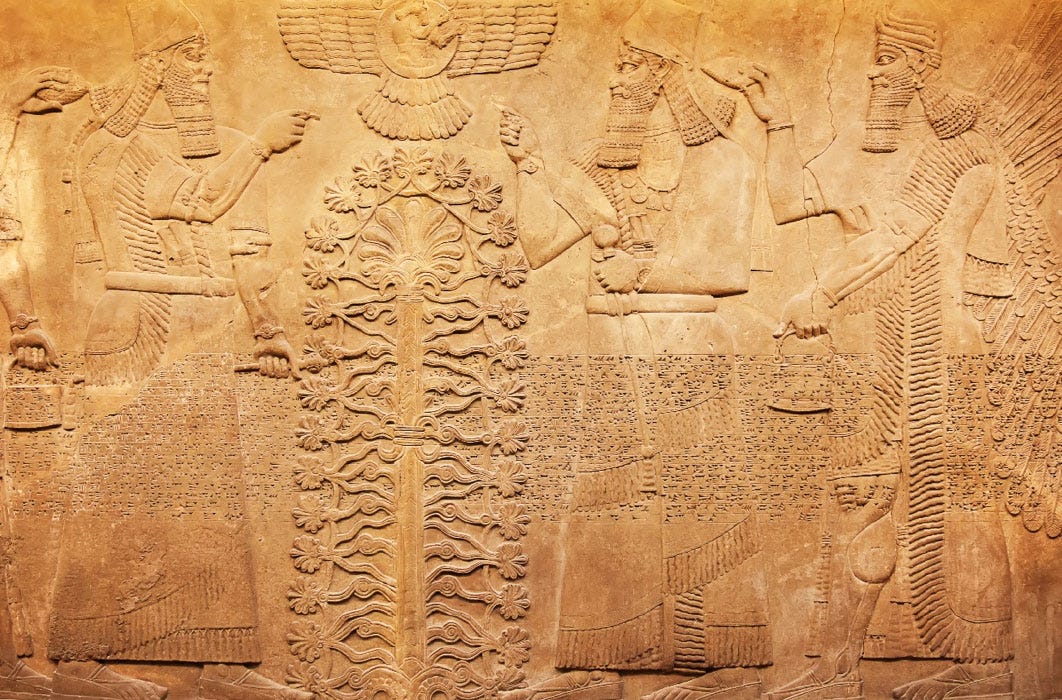
Sumer, in Mesopotamia, was called ‘the land of civilized kings’. It reached its peak around 6,500 years ago when it had the distinction of being a very advanced civilization with a sophisticated written language, magnificent architecture for the time, complex mathematics, and amazing astronomy. Hundreds of gods comprised its religious system. Sumerians believed that although humans and the gods once shared the earth together, they didn't share a co-equal existence. Humans, they believed, were designed for the express purpose of serving the gods. Their chief god, Anu, commissioned his son, Enki (Ea), and his daughter Ninki (Enki's half-sister) to create humans by sacrificing a god, mixing his body and blood with clay, and forming the first human being made in the likeness of the gods.
According to Sumerian mythology, human-like gods called Anunna had initially come to mine resources that were needed on their home planet. Now, with the creation of a human labor force, their duties were changed. They ruled over what was, for all practical purposes, a human slave race. Their base of operations was Mesopotamia, the land between the Tigris and Euphrates river. In the Epic of Gilgamesh, the world's first epic poem, it was called Eden.
At first, according to the texts, humans were unable to reproduce on their own. This proved inconvenient. So, Enki and Ninki found a way to modify the new species. The result was a man called Adapa, a fully functional and independent human being. Enki had given Adapa great wisdom and the ability to understand the concept of eternal life. But Adapa's curse was that he could never attain that which he was able to conceive.
Detail of The Adda Seal. Goddess Inanna, god Utu, god Enki and chief minister Usimu. (Public Domain)
Were it not for the Amarna texts, discovered all the way over in Egypt in the archives of the Egyptian king Amenophis, we might never know about Adapa. But in 1912 his story was verified and confirmed by a unique discovery in the Library of Ashurbanipal. Five partial fragments, since translated, were revealed that told part of the story, called Adapa and the South Wind.
According to the story, Adapa had risen to the position of priest or sage. One day, while fishing in the Persian Gulf, the sea became rough and his boat capsized. Adapa became angry and: "broke the wings of the south wind." He prevented it from blowing for seven days and nights. This, of course, caught the attention of the god Anu, who wanted to punish Adapa for the sin of hubris. But Enki came to Adapa's aid. He instructed him to journey to the abode of the goddess Tammuz, who, along with Gishzida, stood guard at the gates of heaven. While there, he was told not to eat or drink anything because heavenly food would kill him.
Adapa put on traditional sackcloth and ashes, the garb of mourning, and appeared before Tammuz and Gishzida, claiming he was in mourning because the two gods had disappeared from his land. Ever hospitable, they offered Adapa food and drink. Forewarned, he refused. Only later did he come to understand that he had made a mistake. When he was brought before Anu, Anu asked why he hadn't eaten the food that had been placed before him. He said it was because Enki had told him not to eat: "the bread and water of life."
At this, Anu laughed: "What ill has Adapa brought on mankind?" If Adapa had partaken of the food, he would have obtained immortality. As it is, humankind, the creation of Enki, would henceforth suffer disease and death.
The Flood by Vasily Petrovich Vereshchagin (1869) (Public Domain)
The Deluge
Compare this story to the biblical account. In Genesis, God forbid the first man from eating of the Tree of Immortality. In the Sumerian version, it was Enki. This is about to become an important distinction.
Adapa was sent back down to earth. Now the plot thickens. Enki's brother, Enlil, hadn't been told about Enki's work. He had wanted only an obedient slave race, and now Enki was tinkering with things like wisdom and eternal life. Enlil and Enki fought, and the battle continues to this day.
Enlil advised the gods that he was going to destroy the newly created human race with a great flood. Afterwards, he reasoned, they could start over from scratch. But Enki overheard the plans and contacted a righteous man named Utnapishtim.
The Deluge, frontispiece to Gustave Doré's illustrated edition of the Bible. Based on the story of Noah's Ark, this engraving shows humans and a tiger doomed by the flood futilely attempting to save their children and cubs.(1866) (Public Domain)
Ancient Sources Predating the Bible
It's important to remember that the Sumerian authors didn't believe they were the earliest human civilization. They claimed to have received all this from an earlier civilization that had, by their time, become extinct. Who comprised this civilization, and where they came from, is a mystery.
Added to the dilemma is the fact that when we read a text such as the Bible, we are reading the edited work of scholars who lived centuries ago. They made choices, compiling one work and condensing another, so it seems as if we are reading a seamless book written by one author. No one ever did that with ancient Sumerian texts. We read a little of this and a little of that, from here and there, and the story doesn't seem as uniform as the familiar Hebrew text. On top of that, some of the old texts are written in Sumerian hieroglyphs, some in Babylonian cuneiform, and others in ancient Egyptian. A modern editor has a lot to choose from, and can snip a little from one text or another, confidant that most of us, who don't read any of the ancient languages, will be none the wiser. But a comparison of Sumerian and Biblical texts, even in translation, is revealing.
One of the most important Sumerian texts is called Enki and the World Order. In this myth, Enki decided that the world needed to be managed by the gods or it would descend into chaos. He appointed various overseers to supervise such activities as managing the use of water and crops, building cities, herding domestic animals, overseeing the heavens, and managing the activities of women.
Both the Genesis Eden Story and the Sumerian texts address similar issues and help us understand what was going on in the minds of the old ones at the time of the birth of our civilization. They can be read as metaphors for historical precedents such as the agricultural revolution and city building. They are an attempt to explain why things are the way they are in the world. They point back to an earlier civilization, now lost to history. They reveal that our ancestors thought long and hard about philosophy and psychology. They point to what was even back then considered a lost golden age—paradise. They try to plumb the depths of human behavior and ask questions about the nature of good and evil.
In that sense, things haven't changed a great deal in the last 5,000 years. But there is another way to read these two stories. From a religious perspective, they are very different.
Is Eden Paradise?
Anton Parks is a French scholar who has devoted years to the Sumerian texts, even going so far as to translate them himself. He points out that the Bible portrays our ancient ancestors being very happy in Paradise. In the Sumerian texts, they are living in a concentration camp. In his translation God doesn't plant a garden for humankind in which he: "walks in the cool of the evening," as in Genesis. His version says the gods: "came in strength from beyond time. They were carried, one day, by the rebellion of the universe." His gods, the Anunna, were very real entities from beyond, who represented a patriarchal and a matriarchal regime. Enlil, the so-called ‘evil’ god who wanted to enslave the human race, was quite different from Enki, who befriended them.
A woman-serpent bends around the Tree of Knowledge as Adam and Eve reach into the branches. Line engraving by T. de Bry after J. van Winghe. (Wellcome Images / CC BY-SA 4.0)
The feminine presence, represented by Ninki, is often portrayed as a reptilian figure. Could she have been the inspiration for the serpent in the Eden of Genesis? If that is the case, then the serpent wasn't evil at all. She was trying to free humankind by offering them the gift of the knowledge of good and evil. She then wanted them to eat of the Tree of Life and: "be like gods." It was a good thing she was doing, not a bad one.
But Enlil won the day. Although he failed to keep them from eating the fruit of the Tree of Knowledge, he cast humans out of the garden before they ate from the Tree of Life. And since history is both interpreted and written by the winners, Enlil's story was later told in Genesis, not Enki's. That explains why the Genesis account emphasizes the fact that sword-wielding cherubim, or ‘Shining Ones’, were placed at the entrance to Eden in order to ensure that humans never attain the godhead, or eternal life. It has been said that the smartest thing the devil ever did was to convince humans that he didn't exist. This reading of the Sumerian myth goes one step further. It says that the smartest thing the devil ever did was to convince humans that he was God.
Jehovah the Evil God Enlil
According to Anton Parks, YHVH of the Bible, translated ‘The Lord’, is not the Creator. The creator is Enlil, the enslaver of humankind, henceforth known as the Demiurge. He is head of the Patriarchal system that wants to suppress freedom, especially the freedom of women. He doesn't want equality. He wants subservient slaves. He doesn't want creative, right-brained, intuitive thinkers. He wants left-brained, obedient servants who are forced to toil every day.
This reading of the story says that humans were upright-walking animals who were modified through DNA manipulation to fill the role of worker bees. The word Adam in Sumerian, according to Parks, means ‘animal’. Eden consists of the words E, meaning ‘home’ and den, which means ‘life’. Satan, in Sumerian, means ‘The Administrator’
Ancient Sumerian cylinder seal impression showing the god Dumuzid being tortured in the Underworld by galla demons (Public Domain)
Enki managed to grant wisdom to humans when he, through Ninki, the ‘serpent’ of Eden, gave them the ability to discern between good and evil. That caught Enlil by surprise. The best he could do was to drive them out of Eden and forbid their return. To put it bluntly, according to this reading of the story, the God whom monotheists have been worshipping for the last 5,000 years is not Jehovah, the creator God. He is Enlil, the patriarchal Demiurge—Satan himself. This explains the God of the Old Testament who sent the flood to destroy humankind, who commanded the Israelites to kill innocent Canaanite women and children, who was the justification for the Crusades and the Inquisition, who seems so incredibly bloodthirsty. It explains why the author of John in the New Testament could declare that: "we know we are of God and the whole world is in the hands of the evil one" (1 John 5:19). He recognized that humans have been fighting the good fight, trying to get back to Eden.
According to this interpretation, we are caught in a divine battle of competing spiritual forces. We still need to: "earn our daily bread by the sweat of our brow." It's just that we have turned our curse into a search for meaning. We want to get back to Paradise.
Gustave Doré, illustration to Paradise Lost"... he [Satan] held on /His midnight search, where soonest he might finde /The Serpent: him fast sleeping soon he found ..."(Public Domain)
Sophia, Wisdom the Word of God is Feminine
There are indications that the Gnostic texts, discovered in Nag Hammadi, Egypt, in 1945, sympathized with this version of the story. The Gnostics were an early Christian sect that was declared heretical by the Roman establishment. The church burned their scriptures and made sure none of them, except for perhaps, the Gospel of John, made it into the New Testament. But with the discovery of books that had been hidden away and kept from destruction, we now know that to the Gnostics, wisdom, or Sophia, represented a feminine energy that refused to be kept buried. She was the Logos, or Word of God.
The Gnostics believed there was a bigger game being played out, by forces outside of planet Earth. The universe is bigger than we realize, they declared. As a matter of fact, the universe is simply one cell in the immense body (Multiverse) that is God. Here on earth the battle between good and evil, between the feminine and the masculine, between Enki and Enlil, is raging. But good will eventually triumph.
This religious system of belief says we have an ‘angel’ on one shoulder and a ‘devil’ on the other. Their names are Enki and Enlil. The earth may be the domain of the Demiurge, but that domain itself is called ‘Mother Earth’, the world of Sophia, the goddess of wisdom, the divine spark that Enlil, the devil, strives to put out. The Demiurge may dominate our day to day reality, but Eden still awaits if we can only persevere. And we are not alone in the battle.
This is a completely different reading than the biblical account many of us grew up with, and whether we read it allegorically or historically, it causes us to pause and think about what we have been taught in our impressionistic youth—to contemplate the idea that we are involved in something a lot bigger than we thought.
Galactic Black Hole Winds Blow Up to a Third the Speed of Light. The Impact on Their Galaxies is Impressive.
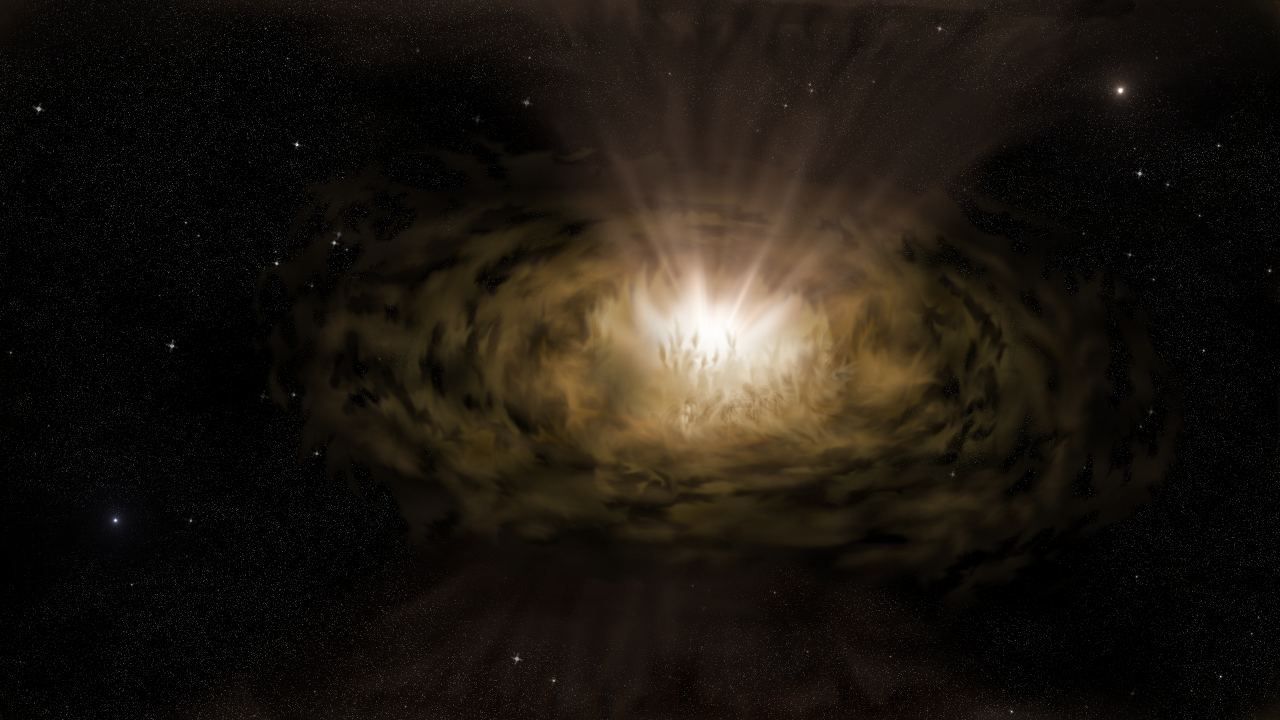
They are known as ultra-fast outflows (UFOs), powerful space winds emitted by the supermassive black holes (SMBHs) at the center of active galactic nuclei (AGNs) – aka. “quasars.” These winds (with a fun name!) move close to the speed of light (relativistic speeds) and regulate the behavior of SMBHs during their active phase. These gas emissions are believed to fuel the process of star formation in galaxies but are not yet well understood. Astronomers are interested in learning more about them to improve our understanding of what governs galactic evolution.
This is the purpose of the SUper massive Black hole Winds in the x-rAYS (SUBWAYS) project, an international research effort dedicated to studying quasars using the ESA’s XMM-Newton space telescope. The first results of this project were shared by a group of scholars led by the University of Bologna and the National Institute for Astrophysics (INAF) in Italy. In the paper that describes their findings, the team presented X-ray spectroscopic data to characterize the properties of UFOs in 22 luminous galaxies.
Artist’s impression of the path of the star S2 as it passes very close to the supermassive black hole at the center of the Milky Way. Credit: ESO/M. Kornmesser
The paper, titled “Supermassive Black Hole Winds in X-rays: SUBWAYS,” recently appeared in the journal Astronomy & Astrophysics. As they described, the SUBWAYS team used the X-ray Multi-Mirror Mission (XMM) to analyze active galactic nuclei (AGN) for a period of more than 1.6 million seconds (eighteen days). These regions surrounding SMBHs emit tremendous amounts of radiation across the electromagnetic spectrum (when the black holes are active) to the point that they temporarily outshine all of the stars in the galaxy’s disk combined.
The extreme temperatures generated near SMBHs – up to tens of millions of degrees – also causes the material surrounding them to become highly ionized and emit radiation. The powerful winds arise when dust and gas in the SMBHs accretion disk are ejected outwards, transferring some of the material and energy into interstellar space. Research has shown that this mechanism has important implications for regulating the process of star formation,
To get a better look at UFOs, the team analyzed high-energy spectra emitted in the X-ray band by elements like iron. Their analysis included 17 AGNs located 1.5 to 5 billion light years away, to which they added data from 5 AGNs collected by previous observations. Their results showed that in about 30% of the AGNs analyzed, there are space winds traveling at speeds of 10% to 30% of the speed of light (0.1 to 0.3 c). Marcella Brusa, a professor at the University of Bologna and INAF associate, is the coordinator of the SUBWAYS project. As she explained in a UniBo Magazine press release:
“These results allow us to establish with greater certainty that a significant proportion of active galactic nuclei hosts ultra-fast winds called UFOs, ultra-fast outflows. And we were able to confirm that the intensity of these gas flows is sufficient to significantly change the ecosystem of their galaxies.”
Artist’s impression of a quasar that existed during the early Universe.
Credit: NASA/ESA/STScI
Between an SMBH and the galaxy surrounding it, there is a reciprocal relationship where the two influence each other’s formation and evolution. While the mechanisms driving this relationship are not yet well understood, the ultra-fast wings emitted by AGNs are thought to play a vital role. Gabriele Matzeu, a researcher at the University of Bologna, INAF associate, and first author of the paper, summarized:
“These observations have allowed us to obtain new independent evidence of the existence of highly ionized matter that is ejected from the innermost regions of active galactic nuclei at speeds close to that of light. These outcomes have allowed us to learn more about these ultrafast winds and to better understandtheir role in shaping the evolution process of galaxies.”
Meer van UFO'S of UAP'S, ASTRONOMIE, RUIMTEVAART, ARCHEOLOGIE, OUDHEIDKUNDE, SF-SNUFJES EN ANDERE ESOTERISCHE WETENSCHAPPEN - DE ALLERLAATSTE NIEUWTJES


 Filmmaker Jeremy Corbell Claimed ‘UFOs & Aliens Are Just Small Part of Larger Reality’