Naar de inhoud

UFO'S of UAP'S, ASTRONOMIE, RUIMTEVAART, ARCHEOLOGIE, OUDHEIDKUNDE, SF-SNUFJES EN ANDERE ESOTERISCHE WETENSCHAPPEN - DE ALLERLAATSTE NIEUWTJES

UFO's of UAP'S in België en de rest van de wereld
akke.beakke.be
Ontdek de Fascinerende Wereld van UFO's en UAP's: Jouw Bron voor Onthullende Informatie! Ben jij ook gefascineerd door het onbekende? Wil je meer weten over UFO's en UAP's, niet alleen in België, maar over de hele wereld? Dan ben je op de juiste plek! België: Het Kloppend Hart van UFO-onderzoek In België is BUFON (Belgisch UFO-Netwerk) dé autoriteit op het gebied van UFO-onderzoek. Voor betrouwbare en objectieve informatie over deze intrigerende fenomenen, bezoek je zeker onze Facebook-pagina en deze blog. Maar dat is nog niet alles! Ontdek ook het Belgisch UFO-meldpunt en Caelestia, twee organisaties die diepgaand onderzoek verrichten, al zijn ze soms kritisch of sceptisch. Nederland: Een Schat aan Informatie Voor onze Nederlandse buren is er de schitterende website www.ufowijzer.nl, beheerd door Paul Harmans. Deze site biedt een schat aan informatie en artikelen die je niet wilt missen! Internationaal: MUFON - De Wereldwijde Autoriteit Neem ook een kijkje bij MUFON (Mutual UFO Network Inc.), een gerenommeerde Amerikaanse UFO-vereniging met afdelingen in de VS en wereldwijd. MUFON is toegewijd aan de wetenschappelijke en analytische studie van het UFO-fenomeen, en hun maandelijkse tijdschrift, The MUFON UFO-Journal, is een must-read voor elke UFO-enthousiasteling. Bezoek hun website op www.mufon.com voor meer informatie. Samenwerking en Toekomstvisie Sinds 1 februari 2020 is Pieter niet alleen ex-president van BUFON, maar ook de voormalige nationale directeur van MUFON in Vlaanderen en Nederland. Dit creëert een sterke samenwerking met de Franse MUFON Reseau MUFON/EUROP, wat ons in staat stelt om nog meer waardevolle inzichten te delen. Let op: Nepprofielen en Nieuwe Groeperingen Pas op voor een nieuwe groepering die zich ook BUFON noemt, maar geen enkele connectie heeft met onze gevestigde organisatie. Hoewel zij de naam geregistreerd hebben, kunnen ze het rijke verleden en de expertise van onze groep niet evenaren. We wensen hen veel succes, maar we blijven de autoriteit in UFO-onderzoek! Blijf Op De Hoogte! Wil jij de laatste nieuwtjes over UFO's, ruimtevaart, archeologie, en meer? Volg ons dan en duik samen met ons in de fascinerende wereld van het onbekende! Sluit je aan bij de gemeenschap van nieuwsgierige geesten die net als jij verlangen naar antwoorden en avonturen in de sterren! Heb je vragen of wil je meer weten? Aarzel dan niet om contact met ons op te nemen! Samen ontrafelen we het mysterie van de lucht en daarbuiten.

Categorie: ARCHEOLOGIE ( E, Nl, Fr )

11,000-Year-Old Stone Sculpture Unearthed at Göbekli Tepe’s Mysterious Sister Site Was Carved Millennia Before the First Human Societies

Türkiye Ministry of Culture and Tourism

11,000-Year-Old Stone Sculpture Unearthed at Göbekli Tepe’s Mysterious Sister Site Was Carved Millennia Before the First Human Societies

Officials from Turkey’s Ministry of Culture and Tourism working at Karahan Tepe, a “significant parallel site” to the enigmatic Göbekli Tepe, have announced the discovery of a unique stone sculpture depicting a human figure riding a leopard.

Ministry officials said the 70-centimeter-tall “composite sculpture,” likely carved thousands of years before the first organized human societies, “opens new questions” about the ancient Neolithic artist who created it.

The discovery also offers insights into the sophistication of the society and the types of artistic expression taking place thousands of years ago in this archaeologically rich region of southeastern Turkey, according to a recent Yenisafak news agency report.

11,000-Year-Old Composite Sculpture Found at “Parallel Site” to Göbekli Tepe

When most people think of ancient megalithic structures, well-known archaeological sites like the Egyptian pyramids, Stonehenge, and Machu Picchu likely come to mind. Critically, all those impressive feats of ancient engineering were accomplished after the generally agreed-upon formation of humanity’s first societies.

Those attitudes began to shift after the relatively recent discovery of Göbekli Tepe in southeastern Turkey. Famous for its massive stone pillars and lifelike animal sculptures found throughout much of the site, the site’s construction has been scientifically dated to between 11,500 and 12,000 years before present. That date places this impressive site and its artwork’s creation thousands of years before those first human societies.

While researchers continue to excavate Göbekli Tepe, they have also unearthed several historically rich sites in the same region. That includes the nearby Karahan Tepe, which has been dated to a few hundred years after its more famous neighbor.

“Composite Sculpture” Represents Style Not Previously Identified in Region

According to the ministry, Karahan Tepe lies approximately 30 kilometers from Göbekli Tepe. The historic sites are part of the larger Taş Tepeler archaeological project. That effort includes a cluster of Stone Hills sites previously dated to the Neolithic period more than 11,000 years before present.

When Turkey’s Culture and Tourism Minister Mehmet Nuri Ersoy announced the discovery, he described the ancient artwork as a “composite sculpture.” The Minister said the find, which he also described as 11,000 years old, represented a style not previously encountered at the ancient site, near Şanlıurfa.

The minister said the unusual sculpture was found during ongoing excavations this year. Instead of resting inside a majestic monument like the Göbekli Tepe sculptures, the leopard-and-man statue was found resting on a bench along the wall of a circular structure “roughly three meters in diameter.”

Notably, the structure’s floor was paved with flat stones. The ministry said this suggests a sophisticated level of deliberate architectural planning “during an era predating the emergence of cities and written records.”

Find “Opens the Door to New Questions About the Earliest Periods of Human History”

When discussing the discovery’s significance, the ministry pointed to the volume of monumental structures and elaborate artworks found in the region. They also noted the value of artifacts representing humanity’s transition “between mobile hunter-gatherer existence and settled agricultural life,” which “challenge previous assumptions about the timeline of complex social organization.”

“While Göbeklitepe has drawn international attention since the 1990s for its T-shaped pillars and animal carvings, Karahantepe has emerged as a significant parallel site since excavations began there in 2019,” the announcement explains.

After highlighting Turkey’s ‘Heritage to the Future’ initiative, which supported the effort, Minister Ersoy said the ancient statue’s discovery “opens the door to new questions about the earliest periods of human history” and would resonate throughout the scientific community.

  • Christopher Plain has spent the last six years as Associate News Editor and Head Science Reporter at The Debrief. Follow and connect with him on X, learn about his novels at plainfiction.com, or email him at christopher@thedebrief.org.
RELATED

Göbekli Tepe: The 11,500-Year-Old Temple That Rewrote Human History

The 12,000-Year-Old Temple That Rewrote Human History: Göbekli Tepe Full Documentary

The Untold Story of Göbekli Tepe – Secrets of the World’s Oldest Temple Finally Revealed

{ https://thedebrief.org/category/science/ }

Hoe vind je dit bericht?
Geschreven door peter om 22:30 Stuur door

The World’s Oldest Monument Was Not in Egypt, It Was Hidden in an American Swamp for More Than 5,000 Years

The World’s Oldest Monument Was Not in Egypt, It Was Hidden in an American Swamp for More Than 5,000 Years

For more than 5,000 years, this forgotten site remained concealed beneath the landscape. When researchers began uncovering its secrets, they found a story that changed the way we understand ancient builders.

The World’s Oldest Monument Was Not In Egypt, It Was Hidden In An American Swamp For More Than 5,000 Years

© Credit: Shutterstock

A 5,400-year-old monumental mound complex hidden in the wetlands of Louisiana has changed the way archaeologists view ancient construction. Watson Brake shows that hunter-gatherer communities created a monumental landscape nearly 2,000 years before the oldest pyramids of Egypt.

For decades, the earthworks remained almost invisible beneath trees, roots, and swamp vegetation in the Ouachita River Valley. The discovery revealed that communities without agriculture or permanent settlements could still organize large-scale construction projects.

The story of this monument began in 1981, when amateur archaeologist Reca Jones noticed that several exposed formations in the landscape appeared too structured to be natural. After logging activity cleared parts of the area, Jones identified eleven mounds connected by ridges and arranged in a circular pattern.

The discovery later drew the attention of archaeologist Joe Saunders, who studied the site while researching other ancient earthworks in Louisiana. At the time, Poverty Point was considered one of the region’s oldest major mound complexes, but Watson Brake revealed an even earlier chapter of human activity.

Dating Reveals A Lost Ancient Project

Research carried out during the 1990s transformed the understanding of Watson Brake. Radiocarbon dating showed that the complex was built around 3400 B.C.E. and developed over approximately four centuries. A 1997 study published in Science by Joe Saunders and soil scientist Thurman Allen reported that Watson Brake was older than other known mound complexes with earthen enclosures in North America by about 1,900 years.

The researchers also discovered that the soil beneath the mounds had been deliberately compacted, which helped preserve the structures over thousands of years. The layout of the site indicated careful organization, with builders aligning parts of the complex with the surrounding landscape before adding more mounds and connecting ridges.

Topographic Map Of The Watson Brake Mound Complex In Louisiana Topographic map of the Watson Brake mound complex in Louisiana. Credit: Science

The largest mound reached about 25 feet in height. Archaeologists estimate that the construction of the mounds and ridges required around 100,000 hours of labor, showing a significant level of cooperation among the people who built the site.

A Monument Built By Ancient Hunter-Gatherers

The builders of Watson Brake monument belonged to the Evans culture, a Paleoindian population that depended on seasonal movement, hunting, fishing, and gathering resources rather than farming. The archaeological evidence shows that the site was used by communities that collected aquatic resources and plant species. The research described inhabitants who gathered plants that later became among the first domesticated species in eastern North America.

Artifacts discovered at Watson Brake include projectile points, hunting tools, animal remains, shells, gravel used as cooking stones, charred seeds, and fired earth objects that may have served as early pottery.

Map Of The Watson Brake Mound Complex In Louisiana
Map of the Watson Brake mound complex in Louisiana.
Credit: American Antiquity

The site challenged the traditional idea that monumental architecture only emerged after agriculture created permanent settlements and social hierarchies. Watson Brake demonstrated that mobile communities could also coordinate major building efforts through collective action.

A Hidden Discovery From The Ancient World

Archaeologists believe the site functioned as a seasonal gathering place rather than a permanent settlement. The remains found at the site suggest that groups returned repeatedly to the area for shared activities. The construction does not appear to have been directed by a ruler or centralized authority. Instead, the evidence points to a large community effort involving many individuals working toward a common goal.

The significance of Watson Brake continued after its discovery encouraged further research into ancient landscapes across the region. In 2022, experts identified the Monte Sano mounds near Baton Rouge as even older, dating back around 7,000 years.

Still, Watson Brake remains a key archaeological site because it revealed that complex organization existed among ancient communities long before the development of farming societies. A landscape once hidden under forest and wetlands preserved evidence of one of North America’s earliest monumental construction projects.

RELATED VIDEOS

The Ancient Pyramids Hidden in a Louisiana Swamp Older Than Egypt!

Watson Brake - Ancient Mounds of Louisiana

Watson Brake ~ Louisiana's 5,400 Year Old Mystery Site

{ https://dailygalaxy.com/category/news/ }

Hoe vind je dit bericht?
Geschreven door peter om 21:39 Stuur door

Noah's Ark Found? Radar Scans Reveal 3 Underground Decks and 13-Foot Hidden Tunnel in Turkey

Noah's Ark Found? Radar Scans Reveal 3 Underground Decks and 13-Foot Hidden Tunnel in Turkey

Independent scientists have yet to verify the claims, and the team behind the scans plan deeper drilling and testing before drawing firm conclusions.

Durupinar Site

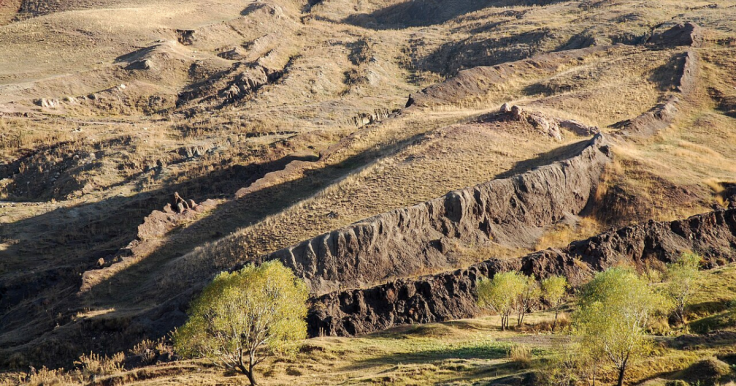
Archaeologists in Turkey say they have made a remarkable find, using ground‑penetrating radar to pinpoint what they believe may be the remains of Noah’s Ark, with scans reportedly revealing a ‘chemical imprint’, fragments of wood in the soil and the clear outline of a hall‑like structure. 

Zorka Sojka, CC BY-SA 4.0 , via Wikimedia Commons/Wikimedia Commons

Archaeologists in eastern Turkey say new radar scans have revealed a three‑decked, ship‑shaped structure and a 13‑foot tunnel buried beneath a remote mountainside, renewing claims that the legendary Noah's Ark may lie at the Durupinar Formation near Mount Ararat.

The fresh evidence, gathered by an American team working under the banner Noah's Ark Scans over several years, centres on ground‑penetrating radar images that researchers argue align strikingly with the Biblical description of Noah's Ark.

Noah's Ark Searches Focus On Turkish Mountain

According to Scripture, Noah's Ark was the vast wooden vessel that carried humanity and animal species through a catastrophic flood more than 4,300 years ago.

Genesis 8 in The Bible says the ark came to rest on the 'mountains of Ararat' after 150 days of deluge, a passage that has fuelled centuries of speculation and expeditions across this rugged corner of eastern Turkey.

The Durupinar site, only recognised by modern researchers for less than a century, appears at first glance to match that story rather neatly.

Its dimensions echo the Biblical blueprint for the ark, given in Genesis 6 as 300 cubits long, 50 cubits wide and 30 cubits high, which translates to about 515 feet by 86 feet by 52 feet. The mound lies near a summit whose outline, from the air, bears a notable resemblance to a hull.

That visual similarity alone has never been enough to convince mainstream science. Many academics still regard the entire formation as the product of natural geological processes. The team behind the latest work, however, argue that their data now point beyond coincidence.

Radar Scans Hint At Three Decks And Inner Corridors

Independent researcher Andrew Jones, who fronts the Noah's Ark Scans project, has led multiple survey seasons at Durupinar using ground‑penetrating radar, a technique that sends radio waves into the earth to map buried structures.

Speaking to the Christian Broadcasting Network, he said the new scans detected what looked like a 13‑foot passage running through the centre of the formation, along with angular shapes that could represent internal compartments.

A fresh analysis of the radar data, shared with outlets including Express UK, suggests a pattern of central and lateral corridors or hallways, rather than a single homogenous block. Crucially for the ark hypothesis, the scans also show three distinct layers below the surface.

Supporters say that aligns with Genesis 6:16, which instructs: 'Make it with lower, second, and third decks.'

Jones is careful not to promise a perfectly preserved ship. 'We're not expecting something that's fully preserved,' he told CBN. 'What's left is the chemical imprint, pieces of wood and in the ground, the shape of a hall.'

He later added that the radar returns were 'not what you'd expect to see if the site were simply a solid block of rock or the result of random mudflow debris.'

He argued instead that the pattern is 'exactly what you'd expect to find if this were a man‑made boat, consistent with the biblical specifications of Noah's Ark.'

Soil Clues And A Possible Hidden Tunnel

The radar work is being paired with basic soil science. William Crabtree, a soil scientist who also works with Noah's Ark Scans, said his team collected 22 samples from inside and outside the boat‑shaped outline.

He told CBN that organic matter levels were roughly double inside the formation compared with the surrounding ground, while potassium levels were about 40 per cent higher and the pH noticeably different.

'If you know soil science – as I'm a soil scientist – you'll understand that potassium levels, organic matter, and pH can all be influenced by decaying organic material,' Crabtree said. 'If this was a wooden boat and the wood had rotted over time, we would expect to see elevated levels of potassium, changes in pH, and higher organic content – and that's exactly what we're finding.'

Jones also pointed to a change in vegetation, saying grass growing within the boat‑shaped perimeter appeared a different colour from that just outside, which he believes may hint at human construction beneath.

Alongside the three radar‑defined layers and compartment‑like shapes, the team say they have identified a tunnel‑like feature. Jones described what seems to be a 13‑foot passage extending from the tip of the formation towards its centre, with sufficient space for a person to walk through.

To date, this remains an interpretation of the scans; the structure has not been physically entered or excavated.

Debate Over Noah's Ark Discovery Far From Settled

The Durupinar Formation has split opinion for decades. Some geologists argue the mound's outline and internal patterns can be explained by erosion and natural faulting, with no need to invoke a vast timber hull. Others, often working from a faith background, continue to see it as one of the most promising candidates for Noah's Ark.

Jones presents his project as scientific rather than devotional, though he readily acknowledges the religious significance. Noah's Ark sits at the heart of Judaism, Christianity and Islam, and the flood narrative speaks to broader questions of survival, judgement and the power of nature.


For believers, physical evidence of the ark would be a profound validation. For many scientists, on the other hand, the story remains a myth into which data are too easily forced.

The Noah's Ark Scans team say they are only at the start of their investigation. They plan to extend soil sampling beyond the initial 22 tests, carry out core drilling to bring up physical material from deeper layers, and run further ground‑penetrating radar surveys to refine their picture of what lies under the surface. Any excavation or drilling would require Turkish permits and close oversight.

Read more
  • Alien

Jones himself has framed the next steps simply: 'We want to compare what's inside the formation to what's outside. That could give us a much clearer picture of whether this is truly something man‑made.'

The Durupinar Formation sits about 18 miles south of Mount Ararat, Turkey's highest peak, and has intrigued explorers and believers since it was exposed by storms and seismic activity in 1948.

The boat‑shaped mound, roughly 538 feet long, has long been touted by some as the resting place of the ark described in Genesis, while many geologists maintain it is simply a natural rock feature. The latest radar work is the most detailed attempt yet by this particular group to test those rival theories.

RELATED 

Scientists Found Something Beneath Turkey's Noah's Ark — And It Changes the Mystery

{ https://www.ibtimes.co.uk/trending }

Hoe vind je dit bericht?
Geschreven door peter om 20:18 Stuur door

Mystery statue unearthed at Sardis archaeological dig

Mystery statue unearthed at Sardis archaeological dig

Mystery statue unearthed at Sardis archaeological dig

Bahadir Yildirim, Sardis expedition administrator and assistant director of fieldwork, takes a closer look at the statue’s unusual design.

Researchers with the long-running Harvard–Cornell Archaeological Exploration of Sardis have unearthed a larger-than-life statue estimated to be nearly 2,500 years old.

The discovery is remarkable for several reasons, said Nicholas Cahill, the field director of the AES team and a professor of Greek and Roman art and archaeology at the University of Wisconsin–Madison.

"It is very rare to find such monumental sculptures of this period anywhere in the Mediterranean, and this exceptionally well-preserved, unique monument casts important new light on the major arts of Lydia and on the Lydians' ties to their own past," he said.

The excavation is sponsored by the Ministry of Culture and Tourism of the Republic of Türkiye and by Harvard Art Museums. The Turkish site was named a UNESCO World Heritage Site last year, cementing its position as a critical site for understanding the ancient world.

Researchers made the discovery in late May while examining a major Roman colonnaded avenue. The statue had been broken into two main pieces and reused, face down, as paving stones in the ancient thoroughfare.

Mystery statue unearthed at Sardis archaeological dig
Credit: Archaeological Exploration of Sardis/President and Fellows of Harvard College

A buried monument emerges

"You sort of see these whole worlds opening up in front of you," Cahill said of the moment he realized the team had found something extraordinary.

A team of conservators carefully excavated around the statue to gradually reveal its full shape and size in the ground.

"Then the guesswork started," said Susanne Ebbinghaus, the George M.A. Hanfmann Curator of Ancient Art at Harvard Art Museums, who was in Sardis for part of the excavation. "'Is this archaic? Maybe not, it looks a little later. Is it a guy? Is it a girl?' When they started cleaning the soil around the head, we saw he had sideburns, so that question was settled."

The people of the Lydian Empire, which controlled what is now western Türkiye from about the middle of the 7th century to the middle of the 6th century B.C., left little written record of their civilization. Much of what was known came from what Greeks and Romans wrote about it—and from their point of view, the Lydians were eastern barbarians. But archaeological evidence has revealed that Sardis, the capital of the Lydian Empire, was a center for luxury and culture, particularly perfumes and fine clothing.

James McCurley '27, a Classics and Physics concentrator who worked on the dig over the summer, said the excavation of the mammoth statue was the highlight of his experience.

"After all the anticipation, I was worried the statue might be underwhelming, that we'd dig it up and find its front weathered beyond recognition. Discovering that the statue was not only well-preserved but almost intact and 2,500 years old was a wonderful surprise."

Conservators lifted the pieces from the ground on July 13 and transported them to an AES conservation lab to begin a thorough, ongoing analysis.

Many details have been revealed since that early, excited guesswork.

An old style with new clues

At well over 7 feet (2.1 meters) tall, the figure would have towered over onlookers. He wears a tunic of thinner material (called a chiton in Greek), a diagonally wrapped mantle and a distinctive, perhaps local garment with fine horizontal folds. The design has few parallels in ancient sculpture, said Harvard Art Museums' Bahadir Yildirim, who is the Sardis expedition administrator and assistant director of fieldwork and who participated in the cleaning and analysis.

"The surprising thing about this piece is that it has some features that haven't been seen on sculpture like that ... the drapery underneath, the distinctive horizontal patterning," he said.

The statue's bolt-upright stance, long coiffed hair and manner of dress resemble archaic Greek sculptures from the 6th century B.C. But the prominent veins and other anatomical details betray a much later date, likely in the 470s to 450s B.C., the early Classical period in Greece. During this era, Sardis was no longer an independent capital but had been conquered by the Achaemenid Persians and had become a major provincial center.

But the figure shows no Persian influence. The statue, therefore, comes across at first as a very traditional sculpture, adhering to age-old hairstyles and dress codes while also hinting at familiarity with the current styles in Greece, where such a sculpture might have been depicted as a nude youth. But the Lydians and other Anatolian peoples did not exercise naked and did not depict their young men without clothes.

The references to multiple cultural traditions and time periods reflect an artist with a complex understanding of his or her place in the world, Cahill said.

"This sculptor knows about contemporary styles in Mediterranean and Anatolian sculpture, the interest in hands and the structure of the face and so forth, and yet [the statue is] wearing clothes from 100 years earlier," Cahill said. "I think they're very clearly looking back to their own past."

A likely sacred setting

The original placement and purpose of the monumental statue is unknown. But one possibility is that it stood at the sanctuary of Cybele, the native mother goddess, which has never been found but has been described in literary sources as one of the most important sanctuaries in Sardis. It was common for wealthy citizens or political leaders to ensconce their likeness in the presence of a deity so they could effectively worship in perpetuity, Ebbinghaus explained.

"You put yourself in a prominent place where your fellow citizens or subjects can see you, but also you are indeed worshiping the god—and if you're a ruler, drawing legitimization from the relationship to that deity. So it might well have been an important person being represented," she said.

Most ancient marble statues were painted, and this one was likely no exception. The Sardis conservation team is now working to clean the statue while preserving any remaining flecks of paint for color analysis.

When conservation is complete, the fragments will be joined, and the statue will be displayed in a Turkish archaeological museum, along with other finds from Sardis. The first Harvard excavation of Sardis, a joint project with Cornell University, began in 1958 and was led by George M.A. Hanfmann (1911–1986), a professor of fine arts at Harvard and curator of ancient art at the Fogg Art Museum.

Provided by Harvard Gazette


Sardes has revealed another remarkable chapter of Anatolian history.

The Sardinia Giants: Ancient Statues That Rewrote History

2,500-year-old monumental marble statue unearthed at ancient Sardes in Türkiye

{ https://phys.org/science-news/ }

Hoe vind je dit bericht?
Geschreven door peter om 23:04 Stuur door

From vanished cities to missing tombs, 7 historical mysteries that remain still unsolved

Science can scan forests, date skeletons, and decode ancient machines, but some chapters of history still refuse to close.

By Kaif Shaikh

From unexplained explosions to vanished civilizations, these seven mysteries still resist scientific explanation.

Something abrupt and poorly understood occurred, leaving behind questions that modern science can narrow, but not close.1 ,2 ,3 ,4

Modern science has transformed how we study the past, allowing researchers to extract DNA from ancient bones, map buried cities through dense forests, and peer inside sealed artifacts without opening them. 

Yet even with these tools, some historical mysteries remain unresolved. Not because they lack importance, but because earthquakes, climate shifts, erosion, and human activity have erased the very evidence needed to solve them, or maybe because the events themselves unfolded in ways that defy easy explanation.

From unexplained explosions and abandoned settlements to missing tombs and lost technologies, these cases sit at the boundary between what can be proven and what can only be inferred. 

The seven mysteries that follow are not rooted in myth or speculation, but in real events supported by credible evidence, each offering a reminder that, despite our best efforts, history does not always yield its secrets.

The Tunguska Event Explained | The Greatest Explosion in History

1. The 1908 Tunguska event – Siberia, Russia  

On June 30, 1908, a powerful explosion detonated over a remote region of Siberia near the Tunguska River, flattening an estimated 80 million trees across more than 2,000 square kilometers. The blast was so intense that seismic waves were recorded across Eurasia, and atmospheric disturbances were detected as far away as Western Europe. Yet no impact crater or large fragments were ever conclusively identified.

The Tunguska Event (1908): Investigating the Enigma of Siberia's ...

Most scientists agree the event was caused by a stony asteroid or comet fragment that exploded mid-air in what is known as an atmospheric airburst. Computer simulations and field studies support this explanation, but uncertainties remain about the object’s composition, size, and trajectory. 

Competing hypotheses, including a cometary fragment rich in volatiles, persist because physical evidence is sparse. Over a century later, Tunguska remains the largest known impact event in recorded human history, and its exact mechanics are still being refined by modern planetary science.

2. The tomb of Cleopatra and the tomb of Alexander the Great

Despite centuries of exploration, the burial sites of two of antiquity’s most famous rulers, Cleopatra VII of Egypt and Alexander the Great, remain unknown. Ancient sources describe Cleopatra being buried alongside Mark Antony in a royal tomb near Alexandria, but earthquakes, subsidence, and rising Mediterranean sea levels have dramatically altered the city’s ancient landscape.

Where Are They Buried? The Lost Tombs of History’s Iconic Figures ...

Where Are They Buried? The Lost Tombs of History’s Iconic Figures ...

Alexander’s body was reportedly transported to Egypt after his death in 323 BCE and entombed in Alexandria, where Roman emperors later claimed to have visited it. By late antiquity, references to the tomb disappear entirely. 

Archaeological searches around Alexandria and nearby sites such as Taposiris Magna have produced tantalizing clues but no definitive evidence. Urban development, looting, and environmental change have likely erased or buried the remains beyond easy recovery, leaving historians uncertain whether these tombs are still intact or lost forever.

3. The lost colony of Roanoke – America 

Established in 1587 on Roanoke Island off the coast of present-day North Carolina, the Roanoke Colony was England’s first serious attempt at permanent settlement in North America. When Governor John White returned from a supply mission to England three years later, the settlement was completely abandoned. No bodies were found, and there were no signs of violence.


The Lost Colony of Roanoke 👻 | America's Greatest Unsolved Mystery 🇺🇸

The only clue was the word “CROATOAN” carved into a post, a reference to a nearby island inhabited by Indigenous peoples. Archaeological work suggests the colonists may have dispersed and integrated into local communities due to food shortages, disease, or strained relations with neighboring groups. 

However, no single explanation accounts for all the evidence, and no confirmed remains of the settlers have ever been identified. Roanoke endures as a case study in early colonial fragility and the limits of historical reconstruction.

What's Hidden Behind 2,124,000 Square Miles of the Unexplored Amazon Forest?

4. The lost cities of the Amazon Rainforest and the collapse of the Indus Valley Civilization

For much of the 20th century, scholars believed the Amazon rainforest could not support large, complex societies. That assumption has been overturned by lidar surveys and archaeological research, which have revealed extensive networks of roads, plazas, fortified settlements, and managed landscapes hidden beneath the forest canopy. 

These discoveries suggest populations in the millions may have lived there before European contact. Why these societies collapsed—whether due to disease, environmental change, or social disruption—remains unresolved.

The Lost Civilization That Vanished Without a Trace: The Indus Valley Mystery

Similarly, the Indus Valley Civilization, one of the world’s earliest urban cultures, declined around 1900 BCE. Major cities were systematically abandoned, not destroyed. Geological evidence points to shifting river systems and prolonged drought, but the civilization’s undeciphered script limits understanding of its political and social response. In both cases, advanced societies vanished without clear historical records, leaving archaeology to piece together incomplete stories.


The Nazca Lines: Who Carved These In The Desert Rock Floor of Peru? And Why?

5. The Nazca lines – Peru 

Etched into the arid plains of southern Peru between roughly 500 BCE and 500 CE, the Nazca Lines consist of hundreds of enormous geoglyphs depicting animals, plants, geometric shapes, and straight lines stretching for kilometers. The figures are best visible from the air, raising questions about how and why they were created.
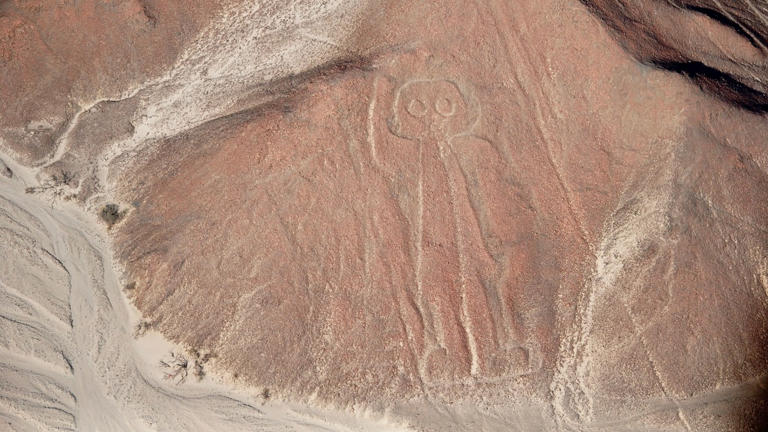
Peru’s Nazca Lines form giant figures visible only from the sky

Peru’s Nazca Lines form giant figures visible only from the sky

© Janeth Charris/Pexels

Archaeological research suggests the lines were made by removing dark surface stones to expose lighter soil beneath, a technique that has allowed them to endure for centuries in the dry climate. Leading interpretations link the geoglyphs to ritual activity, water management, or ceremonial pathways tied to seasonal cycles. 

Some align with celestial events, but no single theory explains the full range of designs. Without written records from the Nazca culture, their precise purpose remains one of South America’s most enduring archaeological mysteries.

Himalaya Secrets: Why Roopkund Lake is Filled with Ancient Bones

6. Roopkund lake skeletons – India

High in the Indian Himalayas, near a glacial lake known as Roopkund, the skeletal remains of hundreds of individuals were discovered scattered along the shore. Radiocarbon dating and genetic analysis reveal that these people did not die in a single event. Instead, they belonged to multiple groups from different regions and time periods, some separated by nearly a thousand years.

One group appears to have died around the ninth century CE, likely due to a sudden, severe weather event. Scientific studies suggest large hailstones could have caused fatal head injuries consistent with observed skull fractures. 

Later groups may have been pilgrims or travelers who met different fates. While modern techniques have clarified aspects of the mystery, questions remain about why people repeatedly traveled to such a remote, high-altitude location, and why fatal events occurred there more than once.

2007 model I. Mogi

2007 model I. Mogi

7. The Antikythera Mechanism – Ancient Greece 

Recovered from a Greek shipwreck dated to around 100 BCE, the Antikythera Mechanism is the most complex known mechanical device from the ancient world. Composed of interlocking bronze gears, it was used to predict eclipses, planetary movements, and astronomical cycles with remarkable precision.

The Antikythera Mechanism – Ancient Greece’s Computer

Advanced imaging techniques, including X-ray tomography, have revealed inscriptions and gear systems far more sophisticated than anything previously known from that era. While researchers have reconstructed much of its function, critical questions remain: who designed it, how widespread such technology was, and why this level of mechanical knowledge disappeared for over a millennium. 

The device challenges conventional timelines of technological development and stands as a rare glimpse into lost scientific traditions that were never fully transmitted to later civilizations.

Kaif Shaikh is a journalist and writer passionate about turning complex information into clear, impactful stories. His writing covers technology, sustainability, geopolitics, and occasionally fiction. A graduate in Journalism and Mass Communication, his work has appeared in the Times of India and beyond. After a near-fatal experience, Kaif began seeing both stories and silences differently. Outside work, he juggles far too many projects and passions, but always makes time to read, reflect, and hold onto the thread of wonder.


3 HOURS of MIND-BLOWING UnSolved Ancient Mysteries That Shouldn't Exist Until Now

{ https://interestingengineering.com/science }

Hoe vind je dit bericht?
Geschreven door peter om 22:18 Stuur door

Archaeologists Unsealed an Ancient Egyptian Tomb and Discovered Something Completely Unexpected Inside

ancient Egyptian tomb

Exterior view of the superstructure of TT 209. The protective covering and visual homogenization of its walls were completed at the end of the 2026 season.
Image Credit: Proyecto dos cero nueve / José Miguel Barrios Mufrege.

Archaeologists Unsealed an Ancient Egyptian Tomb and Discovered Something Completely Unexpected Inside

Spanish archaeologists excavating an ancient Egyptian tomb in the Theban Necropolis opposite Luxor have discovered an unexpected order to how the 16 mummified human remains were placed within it over several centuries.

The team studying chamber three of tomb TT 209 also found the completely unexpected remains of a mummified dog placed carefully among the ancient burials, suggesting a deep connection between humans and animals or a previously unidentified ritualistic practice.

Researchers Document Ancient Egyptian Tomb in Detail

The Theban Necropolis contains over 400 tombs. Previous studies have determined that the burial space was used and reused from its construction during Egypt’s Twenty-fifth Dynasty (754-656 BCE) until its abandonment during the Ptolemaic period (305-30 BCE).

However, archaeologists are still searching for new clues to the people who built them and those buried inside. Dr Miguel Ángel Molinero Polo, a professor of Egyptology at the University of La Laguna and the senior author of the study detailing the team’s discoveries, said researchers have “few details” about how people who entered the tombs behaved. Dr. Polo also noted a lack of knowledge about these people’s motivation “in each historical period” the site was in use, and how they “conceptually reconfigured the pre-existing space” as time passed.

The research team ultimately determined that the best way to explain the methodology for placing the human remains and individual dog remains found in the ancient Egyptian tomb was to excavate the chamber and photograph the mummies. They also decided to create sketches and descriptions of the mummy’s position, orientation, and any possible relationship with the overall structure. 

Archaeologists Unearth 16 Mummified Bodies and Related Funerary Items

As the team began cataloging their findings, they realized the chamber contained nine funerary deposits, which they described as “individual and multiple burials.” The site also contained several “associated funerary objects.”

“We found a total of 16 mummified human individuals, a mummified dog, and a disturbed deposit containing the remains of at least four individuals,” explained Dr. Jared Carballo-Pérez, a researcher at the University of La Laguna and the study’s first author.

After further examination, a pattern began to emerge. For example, the earliest burials were relatively separated. These earliest bodies were also placed in coffins, with funerary nets and amulets. These burials also contained what Dr. Molinero Polo termed “an assemblage containing costly items, such as the contents held in Phoenician amphorae,” placed with or near them. The research said these discoveries suggest that these individuals were likely “of high social standing.”

When the researchers examined the second layer, they noted that bodies were less carefully placed and instead “inserted into any space available.” Critically, this shift occurred towards the end of the 25th dynasty and into the Persian period (around 680-404 BCE).

Examples of the new interment method include limb positioning. In one case, an arm was found folded in, and in others, two arms were folded.

ancient Egyptian tomb Above: Mummified individuals from Side Chamber 3 of Theban Tomb 209, showing variation in body orientation and arm position. Image Credit: Proyecto dos cero nueve, Universidad de La Laguna / Jared Carballo-Pérez.

This positioning differed from earlier burials, where the arms were stretched out. The team also cataloged a change in body position in the ancient Egyptian tomb, with later mummies deposited vertically. The team said the resulting “superposition of bodies” was found in two-thirds of the burial chamber.

Still, Dr. Molinero Polo explained, although the vertically positioned bodies were not placed in coffins, the remains were “carefully mummified.” The researcher said the later internments “can be associated with upright jars that point to a specific ritual not found in the earlier phases of the tomb’s use.”

Mummified Dog Buried with Humans Suggests Intimate Relationship

Perhaps the most unexpected find inside the ancient Egyptian tomb was the remains of a mummified dog. Even more unexpected, the animal’s remains were buried with human remains “one on top of another.”

“One detail I find quite beautiful is the presence of a mummified dog placed directly on top of the mummies of a man and a woman,” said Carballo-Pérez.

dog mummy in ancient Egyptian tomb Above: A detail of superposition and spatial relationships between individuals in SC3 (TT 209). The figure shows the relative position of several individuals, highlighting direct vertical contacts and partial overlaps between bodies. M6 and M7 are closely superimposed. The dog’s remains (M9) are placed over its lower limbs. Image Credit: J. Carballo-Pérez.

The researcher said this preferred, intimate placement could suggest a close relationship between the animal and its humans, “an idea that I think is quite easy to empathize with.” Carballo-Pérez said the unexpected placement could also reflect a change in funerary or ritualistic practices, “with an animal taking on the role of a psychopomp, a symbolic helper in the journey to the afterlife.”

Although an initial examination gave the team the impression the site’s internment became less organized over the centuries, they said that impression was likely false. For example, the team notes that bodies buried in the Osirian position, meaning both arms folded, suggest that the ancient Egyptian tomb “did not become disordered or without structure, or that cultural rites were lost.”

“The detailed study of the bodies indicates neither chaotic accumulation nor a loss of the original ritual over time,” Dr. Carballo-Pérez explained. “Rather, there was a spatial logic in which each new deposition was adapted to the presence of previous bodies – a kind of funerary memory in the processes of reuse.”

ancient Egyptian tomb Above: Evidence of disturbance and displacement affecting two mummified individuals inside Chamber 3. Image Credit: Proyecto dos cero nueve, Universidad de La Laguna / Jared Carballo-Pérez.

The team conceded that it was sometimes difficult to identify the sequence of some of the funerary deposits, including what they described as the “disturbed” remains of four individuals. They also suggest that the chamber was likely flooded several times over the centuries, experienced periodic fires, and human re-entry, which “transported debris within the tomb.”

Still, Carballo-Pérez concluded that their findings suggest deposits previously considered ‘disordered’ can now be reinterpreted.

“This helps us develop a better understanding of the social behaviors behind funerary practices,” the researcher explained.

The study “From individualized mummies to collective accumulations: an archaeothanatological analysis of funerary reuse in Theban Tomb 209 (Twenty-Fifth Dynasty–Ptolemaic Egypt)” was published in Frontiers in Environmental Archaeology.

  • Christopher Plain is a Science Fiction and Fantasy novelist and has spent the last six years as Associate News Editor and Head Science Writer at The Debrief. Follow and connect with him on X, learn about his books at plainfiction.com, or email him at christopher@thedebrief.org
RELATED

They Opened A Tomb Sealed For 4,000 Years — And What Was Inside Shouldn't Exist

😱 They Opened a 3,000-Year-Old Egyptian Tomb... What They Found Inside Shocked Archaeologists!


Tombs Older Than the Pyramids Just Found in Egypt

{ https://thedebrief.org/category/science/ }

Hoe vind je dit bericht?
Geschreven door peter om 18:38 Stuur door

Verbijsterende ontdekking in Nieuw-Zeelandse grot onthult fossielen van 1 miljoen jaar oud

Verbijsterende ontdekking in Nieuw-Zeelandse grot onthult fossielen van 1 miljoen jaar oud

341d52416674-1024x576.webp
Interessante fakta – Verbijsterende ontdekking in Nieuw-Zeelandse grot onthult fossielen van 1 miljoen jaar oud

Adembenemende vondst werpt nieuw licht op prehistorische dieren

Een spectaculaire paleontologische ontdekking in een grot op het Noordereiland van Nieuw-Zeeland heeft fascinerende geheimen prijsgegeven over de evolutie van dieren in deze regio. Wetenschappers hebben verstarde overblijfselen gevonden van landdieren die ongeveer een miljoen jaar oud zijn, waardoor we nu kunnen reconstrueren hoe het leven eruitzag lang voordat mensen hun intrede deden. Deze bevindingen schudden onze aannames over de krachten die de biodiversiteit in het verleden hebben gevormd grondig op.

Het onderzoek, gepubliceerd in het vakblad Alcheringa: An Australasian Journal of Palaeontology, documenteert de allereerste verzameling fossielen van landdieren uit die tijdsperiode – het vroege Pleistoceen, dat zich uitstrekte van ongeveer 2,6 miljoen tot 780.000 jaar geleden. Deze vondsten bieden een verrassend nieuwe kijk op hoe vogels transformeerden en welke uitstervingsgolven zich voltrokken, eeuwen voordat de mens een voet op het eiland zette.

Een tijdcapsule uit een grot gaat open

Wetenschappers uit Australië en Nieuw-Zeeland hebben in een grot bij Waitomo op het Noordereiland van Nieuw-Zeeland oude dierlijke resten ontdekt. De fossielensite bevat resten van zo'n miljoen jaar oud, waaronder 12 oude vogelsoorten en vier soorten kikkers. Onderzoekers noemen het een zeldzaam venster op de wilde dieren van Nieuw-Zeeland, lang vóór de komst van mensen.

Verdwenen diversiteit en dramatische veranderingen in de fauna

Bij de analyse van fossielen uit de zogenaamde Moa Eggshell Cave, gelegen nabij de beroemde Waitomo-grotten, identificeerden onderzoekers overblijfselen van vier kikkersoorten uit het geslacht Leiopelma en twaalf verschillende vogelsoorten. Het verbazingwekkende is dat minstens vier, mogelijk zelfs zes van deze vogels nooit meer opdoken in latere fossielvondsten. Dit wijst op ingrijpende verschuivingen en vervanging van soorten gedurende het afgelopen miljoen jaar.

Het artikel stelt nadrukkelijk dat het bestaan van deze fauna vóór de Kidnappers tephra aantoont dat de vogelpopulatie met 33 tot 50 procent is veranderd over het laatste miljoen jaar. Deze aslaag, achtergelaten door een gigantische vulkaanuitbarsting, fungeert als een natuurlijke tijdsmarker die de precieze datering van de resten mogelijk maakt.

Een mogelijke verwant van de kākāpō valt op

Een van de opvallendste vondsten is een oude verwant van de kākāpō, de grote, loopvogelachtige papegaai die vandaag nog leeft. In sommige berichtgeving wordt deze oeroude vorm beschreven als mogelijk beter in staat om te vliegen dan de moderne kākāpō. Dat detail is belangrijk, omdat het laat zien hoe sterk de vogelwereld van Nieuw-Zeeland in de loop van de tijd is veranderd. Zelfs bekende soorten hebben een diepe, veranderlijke geschiedenis.

Twee baanbrekende soortontdekkingen

Tussen de meest opmerkelijke ontdekkingen bevinden zich beschrijvingen van twee nooit eerder geziene soorten. De eerste is Strigops insulaborealis uit de familie Strigopidae, een oude verwant van de huidige kakapo-papegaai. De tweede is Porphyrio claytongreenei uit de familie Rallidae, een uitgestorven voorouder van de moderne takahē.

Het onderzoek meldt ook voor het eerst de aanwezigheid van prehistorische duiven uit de phabine-groep in de oude geschiedenis van Nieuw-Zeeland. Het enorme verschil tussen de dieren uit deze grot en die welke vlak voor de komst van mensen leefden, toont aan dat het uitsterven en vervangen van soorten frequent en ingrijpend was.

Natuurkrachten als oorzaak van massale uitstervingen

De studie benadrukt dat deze uitstervingsgolven werden veroorzaakt door natuurlijke krachten, specifiek razendsnelle klimaatveranderingen en grootschalige vulkaanuitbarstingen. Dit doorbreekt het populaire beeld dat massale uitsterving alleen verband hield met de aankomst van mensen op het eiland, ongeveer 750 jaar geleden.

Volgens Trevor Worthy, hoofdauteur van het onderzoek, demonstreert dit werk dat natuurkrachten zoals supervulkanen en dramatische klimaatschommelingen al meer dan een miljoen jaar geleden de unieke samenstelling van de fauna vormgaven. De vulkanische aslagen maken het mogelijk om de ouderdom van de gevonden resten nauwkeurig vast te stellen.

De prehistorische wilde dieren van Nieuw-Zeeland stonden niet stil voordat mensen arriveerden. Vulkanische activiteit, klimaatveranderingen en milieuveranderingen bepaalden welke dieren overleefden. De fossielen vullen een gat op tussen veel oudere vondsten en recentere fauna uit de tijd vóór de mens. Ze laten zien dat het landschap al te maken had met natuurlijke veranderingen.

Kikkers voegen een extra laag toe

De fossiele kikkers zijn belangrijk, omdat amfibieën vaak minder zichtbaar zijn in openbare discussies over de natuur van Nieuw-Zeeland. Hun aanwezigheid helpt het oude milieu te reconstrueren, inclusief vochtigheid, habitatstructuur en klimaat. Een fossiele grot is niet alleen een lijst met botten. Het is een verslag van een ecosysteem.

Precisiedatering dankzij vulkanische aslagen

Wetenschappers slaagden erin de exacte ouderdom van de fossielen te bepalen dankzij twee lagen vulkanische as die in de grot werden aangetroffen. De onderste laag ontstond na een uitbarsting die 1,55 miljoen jaar geleden plaatsvond, terwijl de bovenste laag gevormd werd na de Kidnappers-superuitbarsting van 1 miljoen jaar geleden.

Daarnaast ontdekten onderzoekers aan het oppervlak van de sedimenten een speleotheem – een mineralenformatie zoals een stalagmiet – die 535.000 jaar oud is. Deze combinatie van vulkanische lagen en mineraalformaties maakt nauwkeurige datering mogelijk, waardoor deze locatie de oudst bekende fossielegrot op het Noordereiland van Nieuw-Zeeland is.

Multidisciplinair team ontraadselt mysteries
Een multidisciplinair team van paleontologen van Flinders University en Canterbury Museum werkte samen met vulkanologen van de Universiteit van Auckland en Victoria University in Wellington om de soorten te identificeren. Ze vergeleken de gevonden botten met huidige soorten en andere fossielen, waarbij ze uitgebreide studies uitvoerden naar hun vorm en structuur.

Worthy benadrukt dat deze fossielen een cruciale basis bieden die ontbrak in de natuurlijke geschiedenis van het land. Ze vormen een essentieel referentiepunt voor het analyseren van de evolutie van de inheemse fauna.

Nieuwe theorieën over overleven op afgelegen eilanden

Deze ontdekking levert ongekende informatie over de evolutie van biodiversiteit in de regio. De bevinding dat voorouders van de kakapo-papegaai waarschijnlijk konden vliegen, samen met duivensoorten verwant aan Australische neven, maakt het mogelijk om nieuwe hypotheses te formuleren over hoe vogels aankwamen, zich verspreidden en aanpasten in Nieuw-Zeeland.

Tegelijkertijd vult het onderzoek een belangrijke lacune in de fossielengeschiedenis van de regio, waarin tot nu toe geen gegevens waren over landdieren van die ouderdom in grotten. Dit werk onderstreept het belang van het herstellen en bestuderen van oude fossielverzamelingen om te begrijpen hoe dieren reageren op extreme milieucrises.

De informatie verkregen uit de Moa Eggshell Cave zal een fundamentele bron zijn voor toekomstig onderzoek naar hoe soorten uitsterven, diversifiëren en overleven op oceanische eilanden. Deze grot biedt een zeldzaam venster op een verborgen wereld die ons begrip van de natuurgeschiedenis volledig hervormt.

Uitsterven heeft een langere geschiedenis

De komst van mensen veranderde de wilde dieren van Nieuw-Zeeland ingrijpend, maar deze ontdekking laat zien dat er daarvoor ook al verliezen en veranderingen waren. Dat neemt de huidige verantwoordelijkheid niet weg. Het helpt wetenschappers juist om te begrijpen hoe natuurlijke druk en menselijke druk van elkaar verschillen. De grot onthult een verloren wereld, maar ook een waarschuwing over hoe snel uniek eilandleven kan veranderen.

{ https://bloedjesbloemen.nl/ }

Hoe vind je dit bericht?
Geschreven door peter om 17:45 Stuur door

Fossiel dat in 1948 in de buurt van de Noordpool werd achtergelaten, blijkt van gigantisch onbekend dier

Fossiel dat in 1948 in de buurt van de Noordpool werd achtergelaten, blijkt van gigantisch onbekend dier

fossil-abandoned-in-th-e1786554735476.jpg
Hoe het fossiel van Arctobatrachus urdensis er in 1948 uitzag (A–C), de schedel zoals die er nu uitziet (D), en een gereconstrueerde tekening (E). Schaalbalk = 10 cm.
Foto: Schoch et al. 2026

Bijna tachtig jaar geleden stuitte een Britse expeditie op de gehavende resten van een gigantisch fossiel op de top van Bereneiland, onderdeel van Spitsbergen. Het gevaarte bleek te groot om mee te nemen. De onderzoekers maakten foto’s, namen enkele botten mee en lieten de rest achter. Decennialang leek het fossiel verloren. Tot nu. Het blijkt te gaan om de grootste vertegenwoordiger ooit van een merkwaardige groep oeroude, amfibieachtige dieren.

De nieuwe soort krijgt de naam Arctobatrachus urdensis. Het dier behoorde tot de plagiosauriërs, een uitgestorven groep grote roofdieren die tijdens het Trias leefden, zo’n 251 tot 201 miljoen jaar geleden. Met een geschatte lichaamslengte van ongeveer 2,7 meter torende Arctobatrachus urdensis ver boven alle eerder bekende plagiosauriërs uit. “De soort was een van de overlevers van een extreem hete periode die enkele miljoenen jaren eerder een enorme uitstervingsgolf veroorzaakte”, vertelt paleontoloog Rainer Schoch van het natuurhistorisch museum in Stuttgart.

Fossiel raakte tientallen jaren uit beeld

Plagiosauriërs hadden een opvallend uiterlijk. Ze leefden op de bodem van rivieren, meren en ondiepe zeeën, waar ze roerloos wachtten tot een prooi dichtbij kwam. Vervolgens zogen ze die met hun enorme bek naar binnen. Hun brede kaken zaten vol met talloze kleine tanden. “De schedel was veel breder dan hij lang was en de omtrek lijkt op een boemerang”, zegt Schoch.

Fossielen van plagiosauriërs zijn eerder gevonden op uiteenlopende plekken, van Brazilië tot China. Het exemplaar van Bjørnøya, zoals Bereneiland officieel heet, kende echter een uitzonderlijke geschiedenis. Nadat het in 1948 was ontdekt, gingen onderzoekers ervan uit dat het de strenge Arctische winters niet zou overleven. Pas in 1984 stuitte een Noorse expeditie bij toeval opnieuw op het fossiel.

In de 37 jaar dat niemand het had gezien, had het flink te lijden gehad onder het poolklimaat. Scheuren en ontbrekende botten verrieden hoe wind, regen en vorst hun sporen hadden nagelaten. Na een opgraving van een week werd het fossiel veiliggesteld. Vervolgens bleef het opnieuw jarenlang grotendeels onaangeroerd, totdat het in het museum in Stuttgart zorgvuldig werd geprepareerd voor het huidige onderzoek.

Leestip: 

Gigantische schedel

De oude foto’s uit 1948 bleken van onschatbare waarde. Daarmee konden ontbrekende delen van de schedel worden gereconstrueerd. De schedel was ongeveer 70 centimeter breed, maar slechts 21 centimeter lang. Hij had een bijna perfecte halfronde vorm.

De enorme afmetingen, de grote tanden en de uitzonderlijk brede bek wijzen erop dat het dier een actieve jager was en mogelijk tot de toppredatoren van zijn leefgebied behoorde. Tegelijkertijd wijkt de bouw van het fossiel duidelijk af van alle bekende plagiosauriërs, waardoor duidelijk is dat het om een nieuwe soort gaat.

Analyse van de evolutionaire verwanten laat bovendien zien dat Arctobatrachus urdensis tot de vroegste leden van de plagiosauriërs behoort. Daarmee biedt het fossiel een zeldzame blik op de voorouders van deze opmerkelijke diergroep. In hun vroege geschiedenis waren plagiosauriërs actievere zwemmende dieren met een minder afgeplat lichaam. Pas later ontwikkelden ze de sterk afgeplatte lichaamsvorm waarmee ze langdurig op de bodem konden liggen.

De vondst levert daarmee nieuwe inzichten op in de evolutie van deze mysterieuze waterroofdieren uit het Trias. “Veel mensen zijn gefascineerd door ons verleden”, zegt Schoch. “Hoe zagen de planeet, het klimaat en het leven er bijvoorbeeld 240 miljoen jaar geleden uit? Fossielen zoals deze reusachtige plagiosauriër met zijn platte kop bieden een zeldzame blik op die verdwenen wereld.”

Bronmateriaal

{ https://scientias.nl/ }

Hoe vind je dit bericht?
Geschreven door peter om 16:43 Stuur door

Ancient Egypt mystery deepens after major discovery at Giza

Ancient Egypt mystery deepens after major discovery at Giza

Findings from landmark excavation

©The Daily Digest

Fresh insight draws intrigue
Egyptian officials announced a major archaeological discovery in 2023: a previously unknown corridor hidden inside the Great Pyramid of Giza. The remarkable find offers new clues about the pyramid’s design and could help researchers better understand how the ancient monument was constructed and what purpose its hidden spaces may have served.

At the north entrance of the pyramid

©Provided by The Daily Digest

At the north entrance of the pyramid
At a press conference in front of the Pyramid of Giza in early March of 2023, Egypt's Minister of Tourism and Antiquities, Ahmed Issa, said that the tunnel was discovered on the north side of the pyramid.

What does the tunnel look like?

©Provided by The Daily Digest

What does the tunnel look like?
Egypt's Ministry of Tourism and Antiquities said in the statement that the mysterious tunnel was nine meters long or 30 feet long and more than two meters or six feet wide.

Groundbreaking technology

©Provided by The Daily Digest

Groundbreaking technology
Thanks to an endoscopic camera with a diameter of 5 mm, which penetrated between the stones without causing any damage, scientists were able to take pictures. These show a stone cavity with a gabled roof.

An international scientific mission

©Provided by The Daily Digest

An international scientific mission
This secret room was discovered as part of an international research project called ScanPyramids. Since 2015, German, French, Japanese and Canadian universities have been collaborating with Egyptian archaeologists to study the pyramids and learn more about the construction methods used to build the pyramids more than 4,500 years ago.

Look through the stones

©Provided by The Daily Digest

Look through the stones
ScanPyramids' mission is to use non-invasive technologies to look through the stones to discover previously unknown internal structures within the pyramids.

©Provided by The Daily Digest

"We didn't want to dig indiscriminately"
Ground-penetrating radar and ultrasonic testing are the techniques used to discover this space through the stones. "We already knew in 2017 that there was a cavity behind it, we just didn't want to dig indiscriminately (...), so additional measurements were needed," explains research engineer Sébastien Procureur, who worked on the project.

A space that remains mysterious

©Provided by The Daily Digest

A space that remains mysterious
"Discovering an empty space in a pyramid is something special," explains German professor Christian Große, leader of the research team. "But the fact that this space is large enough to accommodate several people makes it even more important."

What was it for?

©Provided by The Daily Digest

What was it for?
According to Zahi Hawass, a famous Egyptian archaeologist, it is "very possible" that this room is "protecting something". It could even house a huge treasure: "In my opinion, it protects the true burial chamber of the Egyptian monarch Khufu," adds the Egyptologist.

©Provided by The Daily Digest

"There is not the direct connection that we could hope for"
Sébastien Procureur remains more skeptical: "That's a bit of the bad news: there isn't the hoped-for direct connection to the 'Big Void' (the so-called 'great void' at the heart of the pyramid where the pharaoh's body is said to be)". However, research is ongoing to clarify this question.

The Great Pyramid of Khufu

©Provided by The Daily Digest

The Great Pyramid of Khufu
The Pyramid of Khufu is the largest of the Pyramids of Giza. For thousands of years it was the tallest, most voluminous and most massive man-made structure in the world. It was built about 45 centuries ago (ca. 2551-2528 BC) to house the body of the pharaoh Khufu, the second ruler of the dynasty.

A fascinating construction

©Provided by The Daily Digest

A fascinating construction
An achievement that has always impressed and fascinated scientists. Its many architectural features are further mysteries that have not been solved until now. The researchers' only certainty today is the relatively short construction period: just 25 years.

The existence of the 'Big Void' was discovered in 2017

©Provided by The Daily Digest

The existence of the 'Big Void' was discovered in 2017
The "Big Void" is one of the questions that are still unanswered about the Khufu pyramid. Its existence was discovered by the Scan Pyramids teams in 2017. It is a "cavity at least 35 meters long and about 3 meters high," as Sébastien Procureur explains in an interview for Sciences et Avenir magazine.

What is in the 'Big Void'?

©Provided by The Daily Digest

What is in the 'Big Void'?
Archaeologists don't yet know what's in the 'Big Void'. Hypotheses vary, it could simply be a cavity formed during the construction of the pyramid or, what scientists hope, the real burial chamber of the pharaoh Khufu.

The Mystery of Pharaoh Khufu

©Provided by The Daily Digest

The Mystery of Pharaoh Khufu
The tomb of Khufu could contain all the treasures of this ancient king, but also the corpse of the pharaoh, which has not yet been discovered.

The research goes on

©Provided by The Daily Digest

The research goes on
Only one thing is certain: the pyramid has not yet revealed all its secrets to us. The Scan Pyramids teams intend to deepen their research to gather new data and make more discoveries.

RELATED

The Hidden Chambers Beneath the Great Pyramid | The Discovery That Could Rewrite History

The Secret Vault of Egyptian Treasures Hidden on the Giza Plateau

The Unsolved Mysteries Of The Pyramids

{  The Daily Digest.  }

Hoe vind je dit bericht?
Geschreven door peter om 20:09 Stuur door

Mini masterpieces! Remarkable 40,000-year-old bird figurines the size of a thumbnail reveal the artistic genius of Ice Age humans

Mini masterpieces! Remarkable 40,000-year-old bird figurines the size of a thumbnail reveal the artistic genius of Ice Age humans

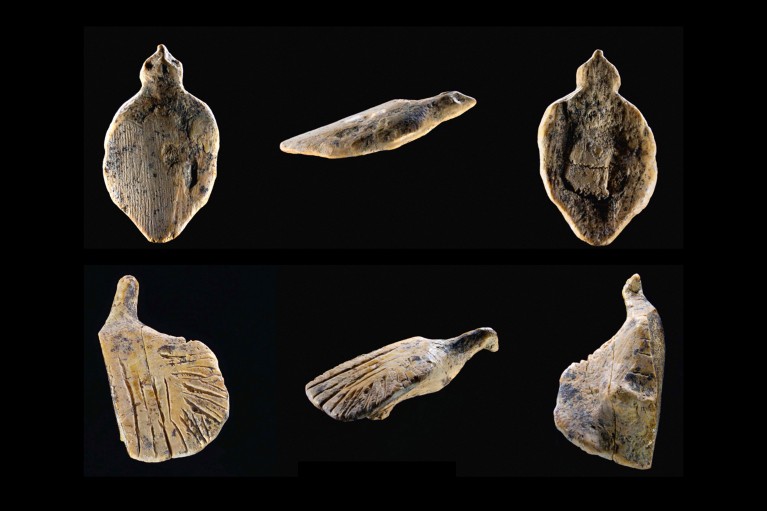
Archaeologists have uncovered two exquisitely carved bird figurines dating back 40,000 years, each no bigger than a human thumbnail.

The miniature Ice Age masterpieces were discovered in the famous Hohle Fels Cave in southwest Germany, one of Europe's richest prehistoric archaeological sites.

Experts believe the tiny sculptures were painstakingly carved from mammoth ivory by some of the earliest modern humans to settle in Europe.

Measuring just two to three centimetres long, one bird appears to be brooding while the other has its wings outstretched as though soaring through the air.

The remarkably lifelike carvings were found during excavations after researchers painstakingly sifted every gram of sediment removed from the cave.

Researchers think the carvings resemble ptarmigans, grouse-like birds that would have lived in the cold Ice Age environment.

They believe the figurines could have served as personal talismans or as symbols of identity of the person who carved or carried them.

‘The figurines demonstrate that the earliest artists were skilled ivory carvers who could depict delicate motifs in miniature form,’ Professor Nicholas Conard, director of excavations at the University of Tübingen, said.

Measuring just two to three centimetres long, one bird appears to be brooding while the other has its wings outstretched as though soaring through the air

Measuring just two to three centimetres long, one bird appears to be brooding while the other has its wings outstretched as though soaring through the air

Archaeologists excavate the cave in tiny sections just two to three centimetres deep before washing the soil through fine sieves in search of the smallest artefacts

Archaeologists excavate the cave in tiny sections just two to three centimetres deep before washing the soil through fine sieves in search of the smallest artefacts

The newly discovered birds are extremely small, approximately 2cm long by 1cm wide (0.8 x 0.4 inches).

The resting bird is depicted in great detail with prominent eyes, while the bird with outstretched wings has a distinctive beak and clear markings representing feathers.

‘The figurines in their present state weigh only 1.3 and 0.7 grams and are the smallest and finest depictions from this period, 40,000 years ago,’ Professor Conard said.

Modern experiments recreating similar Ice Age carvings suggest they would have taken hundreds of hours of skilled work using primitive tools.

Composite image showing multiple views of two bird-shaped figurines from the front, back and side, against a black background.

In 2025, archaeologists discovered two small bird figurines, resembling relatives of the pheasant called ptarmigans, in Hohle Fels Cave, Germany. One figurine has its wings outstretched; the other is resting.

Credit: R. Ehmann, University of Tübingen

Professor Conard believes the artistic skill displayed by these early humans reflects a leap in cultural and cognitive sophistication that may have helped them flourish across Ice Age Europe while other groups disappeared.

The discoveries add to the extraordinary collection of prehistoric art already unearthed at Hohle Fels Cave.

Previous finds include the world-famous Venus of Hohle Fels, thought to be the oldest known depiction of a human figure, along with some of the world's earliest musical instruments.

Fragments of a vulture-bone flute were also uncovered during the latest excavation season, suggesting music may once have echoed through the cave.

Researchers think the carvings resemble ptarmigans, grouse-like birds that would have lived in the cold Ice Age environment (file image)

Researchers think the carvings resemble ptarmigans, grouse-like birds that would have lived in the cold Ice Age environment (file image)

Previous finds at the cave include the world-famous Venus of Hohle Fels, thought to be the oldest known depiction of a human figure

Previous finds at the cave include the world-famous Venus of Hohle Fels, thought to be the oldest known depiction of a human figure

Archaeologists excavate the cave in tiny sections just two to three centimetres deep before washing the soil through fine sieves in search of the smallest artefacts.

The painstaking approach allows even thumbnail-sized carvings to be recovered after lying hidden for tens of thousands of years.

article image

Exactly why the figurines were created remains a mystery.

Some experts believe they may have played a role in storytelling, spiritual rituals or rites of passage, while others suggest they helped preserve memories or reinforce group identity.

‘These objects were created with a purpose other than simple enjoyment,’ Daniel Adler, a palaeolithic archaeologist at the University of Connecticut in Storrs, told Nature.

Lyn Wadley, a specialist in African archaeology at the University of the Witwatersrand in Johannesburg, South Africa, believes the objects could have been used in rites of passage, such as pregnancy or birth.


40,000-year-old bird figurines the size of a thumbnail discovered in German cave #Shorts

{ https://www.dailymail.com/sciencetech/index.html }

Hoe vind je dit bericht?
Geschreven door peter om 18:45 Stuur door

Meer van UFO'S of UAP'S, ASTRONOMIE, RUIMTEVAART, ARCHEOLOGIE, OUDHEIDKUNDE, SF-SNUFJES EN ANDERE ESOTERISCHE WETENSCHAPPEN - DE ALLERLAATSTE NIEUWTJES

↑ Terug naar de berichten