Naar de inhoud

UFO'S of UAP'S, ASTRONOMIE, RUIMTEVAART, ARCHEOLOGIE, OUDHEIDKUNDE, SF-SNUFJES EN ANDERE ESOTERISCHE WETENSCHAPPEN - DE ALLERLAATSTE NIEUWTJES

UFO's of UAP'S in België en de rest van de wereld
BerichtenArchiefGastenboekContact
akke.beakke.be
Ontdek de Fascinerende Wereld van UFO's en UAP's: Jouw Bron voor Onthullende Informatie! Ben jij ook gefascineerd door het onbekende? Wil je meer weten over UFO's en UAP's, niet alleen in België, maar over de hele wereld? Dan ben je op de juiste plek! België: Het Kloppend Hart van UFO-onderzoek In België is BUFON (Belgisch UFO-Netwerk) dé autoriteit op het gebied van UFO-onderzoek. Voor betrouwbare en objectieve informatie over deze intrigerende fenomenen, bezoek je zeker onze Facebook-pagina en deze blog. Maar dat is nog niet alles! Ontdek ook het Belgisch UFO-meldpunt en Caelestia, twee organisaties die diepgaand onderzoek verrichten, al zijn ze soms kritisch of sceptisch. Nederland: Een Schat aan Informatie Voor onze Nederlandse buren is er de schitterende website www.ufowijzer.nl, beheerd door Paul Harmans. Deze site biedt een schat aan informatie en artikelen die je niet wilt missen! Internationaal: MUFON - De Wereldwijde Autoriteit Neem ook een kijkje bij MUFON (Mutual UFO Network Inc.), een gerenommeerde Amerikaanse UFO-vereniging met afdelingen in de VS en wereldwijd. MUFON is toegewijd aan de wetenschappelijke en analytische studie van het UFO-fenomeen, en hun maandelijkse tijdschrift, The MUFON UFO-Journal, is een must-read voor elke UFO-enthousiasteling. Bezoek hun website op www.mufon.com voor meer informatie. Samenwerking en Toekomstvisie Sinds 1 februari 2020 is Pieter niet alleen ex-president van BUFON, maar ook de voormalige nationale directeur van MUFON in Vlaanderen en Nederland. Dit creëert een sterke samenwerking met de Franse MUFON Reseau MUFON/EUROP, wat ons in staat stelt om nog meer waardevolle inzichten te delen. Let op: Nepprofielen en Nieuwe Groeperingen Pas op voor een nieuwe groepering die zich ook BUFON noemt, maar geen enkele connectie heeft met onze gevestigde organisatie. Hoewel zij de naam geregistreerd hebben, kunnen ze het rijke verleden en de expertise van onze groep niet evenaren. We wensen hen veel succes, maar we blijven de autoriteit in UFO-onderzoek! Blijf Op De Hoogte! Wil jij de laatste nieuwtjes over UFO's, ruimtevaart, archeologie, en meer? Volg ons dan en duik samen met ons in de fascinerende wereld van het onbekende! Sluit je aan bij de gemeenschap van nieuwsgierige geesten die net als jij verlangen naar antwoorden en avonturen in de sterren! Heb je vragen of wil je meer weten? Aarzel dan niet om contact met ons op te nemen! Samen ontrafelen we het mysterie van de lucht en daarbuiten.

Categorie: Diversen (Eng, NL en Fr)

Woensdag 10 december 2025

The real-life Demogorgon! Incredibly rare '7-legged' octopus washes up on a beach in Scotland

The real-life Demogorgon! Incredibly rare '7-legged' octopus washes up on a beach in Scotland

  • READ MORE: Can you spot what makes this snail so special?

By JONATHAN CHADWICK, ASSISTANT SCIENCE & TECHNOLOGY EDITOR

Scottish beachgoers have been left dumbfounded by a rare 'seven-legged' octopus that washed up on a local beach.

The creature, also known as septopus, was found in fragments along the Ythan estuary near Forvie National Nature Reserve, Newburgh, Aberdeenshire. 

Due to its impressive size – its arms alone reach about 20 inches – researchers think the deep sea creature was a female. 

Dr Lauren Smith, a marine biologist at research organisation Saltwater Life, called it 'an extraordinary find' – but how it got there is 'a bit of a mystery'. 

It's possible the unfortunate specimen was attacked by hungry whales before its remains washed along the shore. 

'It may have been trawl-caught and thrown back, or predated on by a whale,' she told the Daily Mail. 

'Or somehow it found its way into the shallow waters and become disoriented then predated on.

'Specimens are being sent various labs and museums. It's very rare to get this species to work with so everyone is exited.' 

The final missing piece of the creature to be found was the beak and the three arms (pictured) which washed onto shore last Thursday

The final missing piece of the creature to be found was the beak and the three arms (pictured) which washed onto shore last Thursday 

The discovery has now been confirmed as Haliphron atlanticus, commonly known as the giant gelatinous octopus or seven-arm octopus  a species typically found in waters deeper than 1,600 feet (500 metres)

The discovery has now been confirmed as Haliphron atlanticus, commonly known as the giant gelatinous octopus or seven-arm octopus  a species typically found in waters deeper than 1,600 feet (500 metres)

Dr Smith found out about the remains when a friend sent her photos that were circulating online following the sighting by beachgoers on November 30. 

The final 'missing piece' of the creature to be found was the beak and the three arms, which washed onto shore last Thursday (December 4). 

'All parts and photographs will be from the same individual,' Dr Smith said. 

Photos and measurements taken at the scene quickly ruled out any of Scotland’s native coastal octopus species. 

It had been initially thought the remains might be of a giant squid (Architeuthis dux) – a species with a few historic records in Aberdeenshire, including Newburgh in 1998. 

However, the absence of the characteristic 'toothed' suckers seen in the giant squid suggested otherwise. 

Instead, it has been confirmed as Haliphron atlanticus, a species formally identified in the 19th century, also known as blob octopus or septopus. 

This species is found in tropical and temperate waters worldwide, from the Azores west of Portugal, Puget Sound at Washington State and Chatham Rise, New Zealand. 

Experts think the unfortunate septopus might have been attacked by hungry whales before its remains washed along the shore

Experts think the unfortunate septopus might have been attacked by hungry whales before its remains washed along the shore

It had been initially thought the remains (pictured) might be of a giant squid (Architeuthis dux) - a species with a few historic records in Aberdeenshire, including Newburgh in 1998. However, the absence of the characteristic toothed suckers seen in the Giant Squid suggested otherwise

It had been initially thought the remains (pictured) might be of a giant squid (Architeuthis dux) - a species with a few historic records in Aberdeenshire, including Newburgh in 1998. However, the absence of the characteristic toothed suckers seen in the Giant Squid suggested otherwise

The identification has been agreed upon by researchers in California, New Zealand and Natural History Museum London

The identification has been agreed upon by researchers in California, New Zealand and Natural History Museum London

What is the septopus?

The seven-arm octopus (Haliphron atlanticus), also known as the blob octopus and septopus, is a species of octopus found worldwide. 

It lives in the ocean’s twilight zone - 660 to 3,280 feet down, where sunlight can barely penetrate. 

The seven-arm octopus actually has eight arms. 

As is typical of octopuses, male Haliphron atlanticus have a specialized hectocotylus arm for transferring sperm during mating. 

But they tend to keep this arm tucked into a sac beneath their eye, giving the appearance of only seven arms.

Source: MBARI 

Septopus is typically found in waters deeper than 1,600 feet (500 metres) – known as 'the twilight zone' due to lack of sunlight that penetrates so far down. 

Males of the species are quite small, typically only reaching 8 inches (21 cm) long, but females are comparatively enormous, reaching 13 feet (4 metres). 

Despite their name, the seven-arm octopus actually has eight arms like other octopuses – but there is a reason why it's known as such. 

As is typical of octopuses, male Haliphron atlanticus individuals have a special modified arm (a 'hectocotylus') for transferring sperm during mating. 

But the species tends to keep this arm tucked into a sac beneath their right eye, giving the appearance of only seven arms. 

'Likely the first specimen was just observed to have seven arms and the name stuck,' Dr Smith told the Daily Mail. 

Nevertheless, this is a 'remarkable and rarely documented' species, which has even fewer recorded appearances in northeast Scotland than the giant squid. 

For now, the remains of the deep-water giant gelatinous octopus are in Dr Smith's freezer, where they will stay until 'the not too distant future', she said.

Remains of the deep-water giant gelatinous octopus (aka the blob octopus) washed ashore in Newburgh, Aberdeenshire. Arms measure about 20 inches

Remains of the deep-water giant gelatinous octopus (aka the blob octopus) washed ashore in Newburgh, Aberdeenshire. Arms measure about 20 inches 

Following outreach to cephalopod specialists worldwide and the sharing of images on social media, the identification was confirmed as Haliphron atlanticus

Following outreach to cephalopod specialists worldwide and the sharing of images on social media, the identification was confirmed as Haliphron atlanticus

Read More

  • Scientists capture first ever footage of rare Antarctic squid 7,000 feet deep in the Southern Ocean 

article image

They will be studied and preserved at Aberdeen University, TRACE Wildlife Forensics Network, National Museum Scotland and Natural History Museum London. 

'To have a deep-water species like Haliphron atlanticus appear here is incredibly rare and offers a valuable opportunity for further study,' Dr Smith added. 

'The recovered remains have been frozen down for further study, with some potentially being preserved as museum specimens.' 

Dr Steve O’Shea, a marine biologist, environmentalist and world expert on cephalopod (octopus and squid), helped verify the species. 

The identification has been agreed upon by researchers in California, New Zealand and Natural History Museum London.  

The world's largest invertebrates

Invertebrates are animals that neither develop nor retain a vertebral column (a spine or backbone). 

The largest living invertebrates (and most likely of all time) are two species of mega-squid. 

Based on length, the record holder is the giant squid (Architeuthis dux) which can grow to at least 42ft 8in (13 metres).

However, most of this length is in its tentacles with the main body (mantle) reaching up to 7ft 5in (2.25 metres). 

The heaviest entire specimen of giant squid on record was approximately 220 kg (485lb). 

Colossal squid (Mesonychoteuthis hamiltoni), on the other hand, take the record based on weight. 

They have a similar-sized mantle (up to 8ft 2in/2.5 metres) but shorter tentacles.

The biggest intact colossal squid to date measured 17ft 9in (5.4 metres).

Colossal squid are much heftier, weighing up to 495kg (1,091 lb). 

Source: Guinness World Records

{ https://www.dailymail.co.uk/sciencetech/index.html }

Diversen (Eng, NL en Fr)

Hoe vind je dit bericht? 0 stemmen
Geschreven door peter om 21:44 Stuur door
Vrijdag 5 december 2025

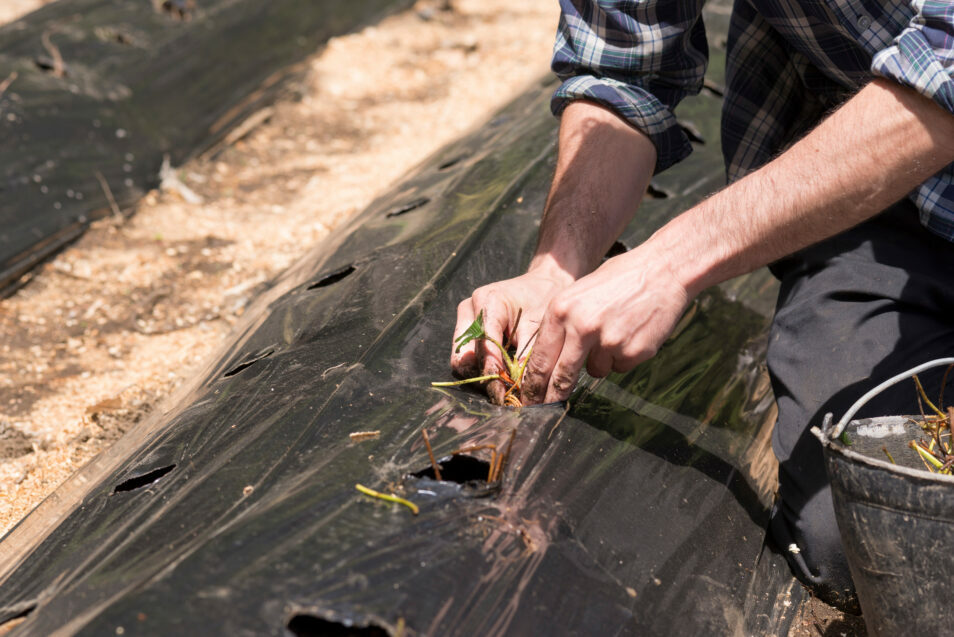
Schadelijke effecten van microplastics op bodemleven bevestigd door nieuw onderzoek

planting-strawberry-plants-in-the-field-organic-g-2025-10-16-08-56-40-utc-954x637_1.jpg

Schadelijke effecten van microplastics op bodemleven bevestigd door nieuw onderzoek

Lasse Arwert - Redacteur

Het gebruik van landbouwplastic kan een schadelijk effect hebben op het bodemleven doordat er microplastics achterblijven.

Er wordt steeds meer landbouwplastic gebruikt. Een goed voorbeeld daarvan is mulchfolie, waarmee de bodem wordt afgedekt om het gebruik van bestrijdingsmiddelen, water en meststoffen te verminderen. Inmiddels wordt er elk jaar wereldwijd genoeg mulchfolie gebruikt om heel Nederland tien keer te bedekken.

Een deel van deze plastics blijft in de bodem achter en valt dan uit elkaar in microplastics. Dit zijn deeltjes van tussen de 5 millimeter en een duizendste van een millimeter groot. Ecotoxicoloog Sam van Loon onderzocht wat de effecten van deze microplastics zijn op het bodemleven.

Methode

Voor het onderzoek voerde Van Loon experimenten uit in het laboratorium, waar hij springstaarten blootstelde aan microplastics in natuurlijke grond. Springstaarten zijn kleine zespotige insecten die in de bovenste lagen van de bodem leven. Ze voeden zich daar voornamelijk met rottend organisch materiaal en schimmels en spelen daarmee een grote rol bij de omzetting van natuurlijk materiaal.

Meerdere soorten springstaarten kregen korter of langer verschillende concentraties microplastics te verduren. Hierbij keek de onderzoeker naar de overleving en voortplanting van de dieren. Daarnaast deed hij tests met gesimuleerde ecosystemen, waarbij niet alleen springstaarten, maar ook regenwormen en planten werden blootgesteld aan microplastics.

Geen direct risico voor springstaarten, wel voor het brede bodemleven

Het onderzoek laat zien dat de microplastics niet direct giftig zijn voor sommige bodemdieren, zoals springstaarten, zelfs bij langdurige blootstelling aan hoge concentraties. De microplastics lijken echter wel schadelijk te zijn voor het bodemleven in de bredere zin.

Bij hogere concentraties zijn er effecten te zien op de zuurgraad, het waterhoudend vermogen en de dichtheid van de bodem. Van Loon en zijn medeonderzoekers zien veranderingen in de microbiële soortensamenstelling en activiteit. Ook lage concentraties hebben al schadelijke effecten op planten en er zijn verschuivingen in hoe het ecosysteem zich als geheel gedraagt.

De concentraties waarbij de onderzoekers de effecten van de microplastics op het bodemleven en de bodemeigenschappen vonden, worden momenteel al gemeten in landbouwgrond in Europa. Dit betekent dat er een risico is voor het bodemleven en daarmee voor de productiviteit van de grond. Dit risico wordt mogelijk nog beïnvloed doordat de bodem ook andere giftige stoffen kan bevatten, zoals bestrijdingsmiddelen en PFAS. In het onderzoek is namelijk vastgesteld dat de microplastics ook invloed kunnen hebben op de giftigheid van die stoffen.

Update 3 december: Wat is ‘erger?’

Dan is de volgende grote vraag: wat is er een groter probleem? Het mulchfolie wordt gebruikt bij het afdekken van de grond, waardoor minder bestrijdingsmiddelen, water en meststoffen nodig zijn. Wegen deze goede effecten dan op tegen de slechte effecten van microplastics in de bodem?

We legden dit voor aan hoofdonderzoeker Van Loon, die de vraag goed begrijpt. “De complexiteit van het vraagstuk is echter heel groot en kan helaas enkel beantwoord worden met een uitgebreid vervolgonderzoek, bijvoorbeeld in de vorm van een zogenaamde levenscyclusanalyse”, vertelt hij aan Scientias.nl. “Hiermee zouden dan alle voor en nadelen van het gebruik van pesticiden tegenover alle voor en nadelen van mulchfolie moeten worden gezet. Dit lag helaas buiten het bereik van mijn onderzoek. “

Hij benadrukt dan ook het belang van een vervolgonderzoek. “Het zou wel heel waardevol zijn om die vraag te beantwoorden en hopelijk wordt dit in de nabije toekomst ook mogelijk, naarmate we een steeds beter beeld krijgen van de effecten van het gebruik van mulchfolies.”

Alternatieven voor het gebruikte mulchfolie

Toch is er hoop. “Er zijn uiteraard alternatieven, het gebruik van mulch gebeurt volgens sommige bronnen immers al voor 2500 jaar. Toen gebruikte men bijvoorbeeld stenen, vulkanisch as of stro”, vervolgt Van Loon. “Het zou interessant kunnen zijn om de technieken van vroeger mee te nemen in zo’n levenscyclusanalyse, om te kijken hoe die opwegen tegen moderne alternatieven.”

Van Loon benadrukt ook dat dit onderzocht moet worden. Het gebruik van bijvoorbeeld stro klinkt een stuk duurzamer dan het gebruik van plastic mulchfolie, “maar stro zal tegenwoordig niet alleen duurder zijn dan een plastic mulchfolie en maar bijvoorbeeld ook minder lang te bewaren zijn.”

We schreven vaker over deze onderwerpen, lees bijvoorbeeld ook 

  • Biodiversiteit helpt het bodemleven beter overleven tijdens extreme droogteen 
  • Hoeveel microplastics er echt op je bord terechtkomen als je een visje eet.

Of lees dit artikel: 

  • We ademen dagelijks tot 68.000 microplastics in: 100 keer meer dan eerdere schattingen.

Bronmateriaal

  • "Ecotoxicological Effects of Microplastics in Agricultural Soil Emerge With Increasing Test System Complexity" - Vrije Universiteit Amsterdam
  • Afbeelding bovenaan dit artikel: ToastedPictures, via Envato

{ https://scientias.nl/nieuws/natuur-klimaat/ }

Diversen (Eng, NL en Fr)

Hoe vind je dit bericht? 0 stemmen
Geschreven door peter om 21:29 Stuur door
Maandag 1 december 2025

China introduceert helikopterdrone voor extreem landschap

China introduceert helikopterdrone voor extreem landschap

China introduceert helikopterdrone voor extreem landschap

China introduceert helikopterdrone voor extreem landschap

Key takeaways

  • De “Meyu Arrow” is een Chinese helikopterdrone die ontworpen is voor extreme omgevingen en moeilijk terrein.
  • Het heeft indrukwekkende capaciteiten, waaronder een vliegtijd van acht uur, een bereik van 900 kilometer en een maximaal operationeel plafond van 7.000 meter.
  • Deze drone vult een cruciaal gat in China’s onbemande arsenaal door de wendbaarheid van roterende vleugels te combineren met een gewapende precisieslag over extreem terrein.

China heeft zijn nieuwste onbemande luchtvaartuig onthuld, de Meyu Arrow helikopterdrone. De geavanceerde drone, ontwikkeld door Tengden Technology uit Sichuan, onderging onlangs zijn eerste live raketafvuurtest op meer dan 4.000 meter hoogte.

China' Meyu Arrow drone helicopter

Bestrijding van extreme omgevingen

Volgens China Central Television (CCTV) is de Meyu Arrow ontworpen voor extreme omgevingen en moeilijk terrein. Na een succesvolle eerste raketlancering gaat de helikopter nu een nieuwe fase van testvluchten in. Tengden Technology wil de mogelijkheden verder uitbreiden en plant tests voor besturing buiten de zichtlijn op hoogtes boven 6.000 meter.

De Meyu Arrow heeft een aantal indrukwekkende technische kenmerken. Hij is 7,87 meter lang en heeft een rotordiameter van 6,4 meter, kan tot acht uur in de lucht blijven en heeft een bereik van 900 kilometer. Het operationele plafond is een indrukwekkende 7.000 meter.

Demonstratie

Tengden Technology heeft eerder de prestaties van de drone gedemonstreerd door het bereiken van een snelheid van 135 km/u op 6.500 meter en een werkelijke snelheid van 178 km/u tijdens een afdaling naar 4.500 meter. Deze tests tonen het vermogen van de helikopterdrone om de controle te behouden in moeilijke windomstandigheden en in ijle lucht.

De Meyu Arrow is ontworpen voor verkennings- en aanvalsmissies, gewapende escorte en precisiedoelen. Hij blinkt uit in bergachtige gebieden waar traditionele UAV’s met vaste vleugels beperkt zijn. Dankzij de mogelijkheden voor verticaal opstijgen en landen kan het toestel opereren vanuit krappe ruimtes. Die zijn ontoegankelijk voor bemande vliegtuigen, zoals smalle valleien of hooggelegen posities.

Nieuw schakelpunt in China’s dronecapaciteit

Deze helikopter vult een cruciaal gat in China’s onbemande arsenaal door de wendbaarheid van roterende vleugels te combineren met een bewapende precisieslag over extreem terrein. De mogelijkheid om op 6.000 meter hoogte te opereren met behulp van satellietcommunicatie zou het operationele bereik vergroten tot buiten de gezichtslijn, een eigenschap die meestal geassocieerd wordt met grotere UAV’s met vaste vleugels.

Dergelijke drones op grote hoogte zijn bijzonder nuttig voor het beveiligen van betwiste grenszones, hoogvlakten en bergcorridors. Ze krijgen daardoor een strategische rol binnen China’s defensiebeleid, vooral langs de grens met India.

{ Business AM Dutch }

Diversen (Eng, NL en Fr)

Hoe vind je dit bericht? 0 stemmen
Geschreven door peter om 23:25 Stuur door
Donderdag 27 november 2025

Scientists have come up with an unusual way to stop the Gulf Stream collapsing and plunging Europe into another Ice Age - and it involves MELTING an ice sheet

Scientists have come up with an unusual way to stop the Gulf Stream collapsing and plunging Europe into another Ice Age - and it involves MELTING an ice sheet

  • READ MORE: Gulf Stream on the verge of collapsing reveals key 'fingerprint'

By JONATHAN CHADWICK, ASSISTANT SCIENCE & TECHNOLOGY EDITOR 

Melting the West Antarctic Ice Sheet could save the Gulf Stream, a remarkable new study reveals. 

The vast icy mass in the southern hemisphere contains around 750,000 cubic miles of ice – enough to fill Wembley Stadium nearly three billion times. 

As it melts, the West Antarctic Ice Sheet sends salty water towards the North Atlantic, which helps the water stay dense enough to keep the crucial ocean current moving, the study authors reveal. 

However, the scientists stress that in other ways the melting of the West Antarctic Ice Sheet would be a total disaster.  

If the ice sheet melted, it would raise sea levels by up to 14 feet (4.3 metres) – causing flooding, fatalities, infrastructure damage and more.

The findings suggest we may have to choose between saving the Gulf Stream (which would stop Europe from entering a deep freeze) and saving the West Antarctic Ice Sheet (which would prevent global flooding). 

According to study author Dr Sacha Sinet, climate scientist at Utrecht University, which terrifying scenario is worse is 'hard to tell'. 

Ultimately, reducing greenhouse gas emissions might be the only way to save both the Gulf Stream and the ice sheet – and avoid both eventualities. 

There are two ice sheets on Earth: the Greenland Ice Sheet in the Northern Hemisphere and the Antarctic Ice Sheet in the Southern Hemisphere (divided into east and west). According to the study's findings, melting of the West Antarctic Ice Sheet could keep the AMOC from collapsing

There are two ice sheets on Earth: the Greenland Ice Sheet in the Northern Hemisphere and the Antarctic Ice Sheet in the Southern Hemisphere (divided into east and west). According to the study's findings, melting of the West Antarctic Ice Sheet could keep the AMOC from collapsing 

The Gulf Stream is only a small part of a much wider system of currents, officially called the Atlantic Meridional Overturning Circulation or AMOC. 

A 'conveyor belt of the ocean', AMOC moves warm water near the ocean's surface northwards – from the tropics to the northern hemisphere. 

When the warm water reaches the North Atlantic (Europe and the UK, and the US east coast), it releases the heat and then freezes. 

As this ice forms, salt is left behind in the ocean water.

Due to the large amount of salt in the water, it becomes denser, sinks, and is carried southwards – back towards the tropics – in the ocean depths below. 

Eventually, the water gets pulled back up towards the surface and warms up ('upwelling'), completing the cycle.

Experts think AMOC brings enough warmth to the northern hemisphere to keep temperatures there relatively mild, so if the AMOC were to slow down or collapse, large parts of Europe and the US could enter a deep freeze.

But according to the Utrecht University researchers, the West Antarctic Ice Sheet is potentially the AMOC's unlikely saviour. 

The researchers used a complex computer model, CLIMBER-X to examine how the AMOC would respond to different speeds and timing of ice sheet collapse

The researchers used a complex computer model, CLIMBER-X to examine how the AMOC would respond to different speeds and timing of ice sheet collapse

Scientists think AMOC brings enough warmth to the northern hemisphere that without it, large parts of Europe could enter a deep freeze. This remarkable satellite picture showing the extent of snow across Britain on January 7, 2010 gives an idea of what this could be like

Scientists think AMOC brings enough warmth to the northern hemisphere that without it, large parts of Europe could enter a deep freeze. This remarkable satellite picture showing the extent of snow across Britain on January 7, 2010 gives an idea of what this could be like

The world's ice sheets 

Ice sheets are masses of glacial ice extending more than 19,000 square miles (50,000 square kilometers).

There are two ice sheets on Earth - the Greenland Ice Sheet and the Antarctic Ice Sheet - and together they contain about 99 per cent of the freshwater on Earth.

As the name suggests, the West Antarctic Ice Sheet is the western segment of the latter – and is more strongly affected by climate change. 

Unlike its eastern counterpart, the West Antarctic Ice Sheet largely rests on the sea bed. 

In other words, the West Antarctic Ice Sheet is sitting in water – and today this water is getting warmer and warmer due to global warming. 

The team used a computer model called CLIMBER-X to predict what would happen if both Greenland and Antarctica started melting rapidly in the future due to continuing global warming. 

CLIMBER-X simulates the response of the Earth to changes in different climate-related factors, such as changes in greenhouse gas concentrations. 

Amazingly, the model revealed that the West Antarctic Ice Sheet's melting water didn't always increase the risk of an AMOC collapse. 

Under some conditions, such as when its melting was rapid and began to slow down as Greenland's melt peaked, it could prevent a total collapse.

The effect happens because Antarctic meltwater changes how layers of water behave in the Southern Ocean, which eventually sends slightly saltier water toward the North Atlantic. 

Over time, this helps the water stay dense enough to keep the AMOC moving, at least according to the computer model. 

Previous studies have already shown that melting of the Greenland Ice Sheet destabilises the AMOC. When its meltwater pours into the North Atlantic, it can slow down or stop the sinking of dense water that helps drive it. 

Amazingly, the study, published in Science Advances, seems to suggest the opposite for West Antarctic Ice Sheet. 

An ice sheet is a mass of glacial land ice extending more than 50,000 square kilometers (20,000 square miles). The West Antarctic Ice Sheet is the western segment of the Antarctic Ice Sheet - and is more strongly affected by climate change

An ice sheet is a mass of glacial land ice extending more than 50,000 square kilometers (20,000 square miles). The West Antarctic Ice Sheet is the western segment of the Antarctic Ice Sheet - and is more strongly affected by climate change 

Greenland melt generally destabilises the AMOC, whereas, as we have shown, West Antarctic Ice Sheet's melt may, under certain conditions, stabilise it,' Dr Sinet told the Daily Mail. 

However, if the timing is wrong, such as if the West Antarctic Ice Sheet's melt peaks too late or is too slow, its stabilising effect vanishes. 

Read More

  • West Antarctic Ice Sheet is on the verge of collapsing, scientists warn 

article image

In fact, the West Antarctic Ice Sheet's meltwater could even accelerate the AMOC's tipping point.

Dr Sinet stressed that greenhouse gas emissions need to be curtailed to avoid both collapse of the AMOC and melting of the West Antarctic Ice Sheet.

But the new findings may be helpful to understand the nuances of a warming world.  

'If emissions remain too high to preserve the stability of key tipping elements, then understanding whether the AMOC collapses or not becomes essential for anticipating the climate impacts that societies will need to prepare for,' he told the Daily Mail. 

'The important distinction is that the Greenland effect is well established and broadly accepted, whereas the influence of West Antarctic melt remains poorly understood and lacks consensus, and will likely continue to be debated for some time.' 

How does global warming affect global currents?  

Scientists think melting glaciers could cause the collapse of the Atlantic Meridional Overturning Circulation or AMOC, the system of ocean currents.

Described as 'the conveyor belt of the ocean', the AMOC transports warm water near the ocean's surface northwards – from the tropics up to the northern hemisphere.

When the warm water reaches the North Atlantic (Europe and the UK, and the US east coast), it releases the heat and then freezes. As this ice forms, salt is left behind in the ocean water.

Due to the large amount of salt in the water, it becomes denser, sinks, and is carried southwards – back towards the tropics – in the depths below.

Eventually, the water gets pulled back up towards the surface and warms up in a process called upwelling, completing the cycle.

Scientists think AMOC brings enough warmth to the northern hemisphere that without it, large parts of Europe could enter a deep freeze.

Prior studies have already shown that due to climate change, the AMOC is weakening (meaning the movement of heat is slowing down)

The engine of this conveyor belt is off the coast of Greenland, where, as more ice melts from climate change, more freshwater flows into the North Atlantic and slows everything down. 

Why could the AMOC collapse? 

Scientists think melting glaciers could cause the collapse of the AMOC, the system of ocean currents.

Described as 'the conveyor belt of the ocean', the AMOC transports warm water near the ocean's surface northwards – from the tropics up to the northern hemisphere.

Prior studies have already shown that due to climate change, the AMOC is slowing down.

The engine of this conveyor belt is off the coast of Greenland, where, as more ice melts from climate change, more freshwater flows into the North Atlantic and slows everything down.

{ https://www.dailymail.co.uk/sciencetech/index.html }

Diversen (Eng, NL en Fr)

Hoe vind je dit bericht? 0 stemmen
Geschreven door peter om 18:45 Stuur door
Maandag 24 november 2025

Scientists issue ominous warning over mind-altering 'brain weapons' that can control your perception, memory and behaviour

Scientists issue ominous warning over mind-altering 'brain weapons' that can control your perception, memory and behaviour

  • READ MORE: Analysis of 45 notorious murderers uncovers 4 common traits

By WILIAM HUNTER, SENIOR SCIENCE & TECHNOLOGY REPORTER

Mind control weapons may sound like something from a dystopian science fiction film, but experts now say they are becoming a reality. 

Scientists have issued an ominous warning over mind-altering 'brain weapons' that can target your perception, memory, and even behaviour.

In a newly published book, Dr Michael Crowley and Professor Malcolm Dando, of Bradford University, argue that recent scientific advances should be a 'wake-up call'.

Professor Dando says: 'The same knowledge that helps us treat neurological disorders could be used to disrupt cognition, induce compliance, or even in the future turn people into unwitting agents.'

Nations including the US, China, Russia, and the UK have been researching so-called central nervous system (CNS)-acting weapons since the 1950s.

Now, Dr Crowley and Professor Dando argue that modern neuroscience has become so advanced that truly terrifying mind weapons could be created.

Professor Dando says: 'We are entering an era where the brain itself could become a battlefield.

'The tools to manipulate the central nervous system – to sedate, confuse, or even coerce – are becoming more precise, more accessible, and more attractive to states.'

Scientists have issued an ominous warning that developments in neuroscience could see powerful 'brain weapons' become a reality (stock image) 

Just like the fictional drug 'Soma' from the science-fiction classic 'Brave New World' (pictured), scientists warn that new chemicals could be used as a powerful form of mind control

Just like the fictional drug 'Soma' from the science-fiction classic 'Brave New World' (pictured), scientists warn that new chemicals could be used as a powerful form of mind control 

Throughout the 1950s and 1960s, most of the world's major powers 'actively sought' to develop their own mind-controlling weapons.

Their goal was to create devices that could incapacitate large numbers of people through unconsciousness, hallucination, disorientation, or sedation.

Most famously, the American military developed the compound 'BZ', which produces a powerful sense of delirium, hallucinations, and cognitive dysfunction.

The US manufactured approximately 60,000 kilograms of the potent drug and used it to create a 340-kilogram (750 lbs) cluster bomb.

Although the bomb was intended to be used in Vietnam, and BZ was tested intensively on US soldiers, there's no evidence that the weapon was ever used.

Meanwhile, the Chinese military has developed a 'narcosis-gun' designed to shoot syringes of incapacitating chemicals.  

However, Dr Crowley and Professor Dando point out, the only time that a CNS-targeting weapon has ever been used in combat was by Russian security forces during the 2002 Moscow theatre siege.

After armed Chechen militants took 900 civilians hostage, security forces used a fentanyl-derived 'incapacitating chemical agent' to disable the attackers.

During the 1960s, the US military developed a cluster bomb to deploy hallucination-inducing gasesMore recently, China has been developing a 'narcosis-gun' designed to deliver mind-altering chemicals. Pictured: Poster for 'BBQ-901 narcosis gun' on display on State 9616 Plant stand at Asia Pacific China Police Expo 2006
 

Since the 1950s, major world powers have been attempting to create chemical weapons that target the brain. These include the US military's BZ bomb filled with hallucination-inducing gas (right) and the Chinese 'Narcosis-gun' (right)

The only time that so-called central nervous system (CNS)-targeting weapons have been used was by the Russian security services during the 2002 Moscow theatre siege (pictured). A gas containing fentanyl derivatives was used to knock out the gunmen inside

The only time that so-called central nervous system (CNS)-targeting weapons have been used was by the Russian security services during the 2002 Moscow theatre siege (pictured). A gas containing fentanyl derivatives was used to knock out the gunmen inside 

While the chemical weapon did break the siege, the gas killed 120 of the 900 hostages and an undetermined number more to face long-term health issues and premature death.

However, since then, the mind-warping potential of these weapons has extended far beyond simply knocking out attackers or triggering hallucinations.

The same scientific research that is helping to treat neurological disorders can also be used to build weapons which target specific brain functions.

'That's the dual-use dilemma we face,' says Professor Dando.

For example, scientists are investigating parts of the brain's 'survival circuits', which are the neural pathways that control fear, sleep, aggression, and decision making.

Understanding how these circuits work is critical for treating neurological conditions, but also opens the door to weaponising these regions of the brain.

In fact, Dr Crowley and Professor Dando are so concerned about this possibility that they are travelling to the Hague for a key meeting of states to argue the case for urgent action.

The issue, the researchers warn, is that CNS-targeting weapons currently sit within a 'loophole' in the rules governing the use of chemical weapons.

While the gas did break the siege, it also killed 120 of the 900 hostages in the theatre and left an unknown number with life-long illnesses. Pictured: Vladimir Putin visits survivors of the theatre siege

While the gas did break the siege, it also killed 120 of the 900 hostages in the theatre and left an unknown number with life-long illnesses. Pictured: Vladimir Putin visits survivors of the theatre siege 

This comes amid growing concern that future armies could be made up of cyborgs with neurological enhancements allowing them to see, hear and fight better than current soldiers

This comes amid growing concern that future armies could be made up of cyborgs with neurological enhancements allowing them to see, hear and fight better than current soldiers

Read More

  • The most detailed map of the brain ever seen: Stunning simulation details 10 MILLION neurons 

article image

The Chemical Weapons Convention prohibits the use of harmful chemicals in war, but there is a grey area allowing the use of some chemicals in certain circumstances, such as law enforcement.

That leaves a potential legal justification for the development and use of powerful mind-control weapons within the current scope of the law.

Professor Dando says: 'There are dangerous regulatory gaps within and between these treaties. Unless they are closed, we fear certain States may be emboldened to exploit them in dedicated CNS and broader incapacitating agent weapons programmes.

'We must act now to protect the integrity of science and the sanctity of the human mind.'

WHAT ARE PSYCHO-ELECTRONIC WEAPONS AND HOW MIGHT THEY WORK?

Rumours of governments experimenting with pyscho-electronic weapons have long abounded among conspiracy theorists.

Also known as pscyhotronic or mind-control weapons, it is claimed they use electromagnetic forces to achieve a variety of results.

This includes mind-reading and mind control, as well as torture and harassment.

The basis for these claims does have some origin in fact.

In 1953, the then director of Central Intelligence officially approved project MKUltra. 

It was intended to help the US government keep up with experiments they believed the Soviets were conducting during the Cold War.

They hoped to achieve this aim through 'the use of biological and chemical materials in altering human behavior,' CIA director Stansfield Turner testified in 1977.

Footage has since emerged of experiments conducted into the potential of weaponising LSD as a method of controlling or subduing enemy forces.

Since that time, conspiracy theorists have expanded their claims about the kinds of techniques agencies like the CIA or others may have experimented with.

Some individuals say they have been targeted with pscyhotronic weapons, leading to a variety of unpleasant side effects.

That includes transmitting thoughts and sounds into people's minds, although most medical professionals agree this is likely the result of psychiatric disorders.

{ https://www.dailymail.co.uk/sciencetech/index.html }

Diversen (Eng, NL en Fr)

Hoe vind je dit bericht? 0 stemmen
Geschreven door peter om 22:46 Stuur door
Maandag 17 november 2025

The most detailed map of the brain ever seen: Stunning simulation details 10 MILLION neurons across 86 interconnected regions

The most detailed map of the brain ever seen: Stunning simulation details 10 MILLION neurons across 86 interconnected regions

  • READ MORE: Here's what happens in football fans' brains when their team loses

By JONATHAN CHADWICK, ASSISTANT SCIENCE & TECHNOLOGY EDITOR 

Scientists have unveiled the most detailed map of the brain ever created. 

The fascinating chart represents almost 10 million neurons, 26 billion synapses and 86 interconnected brain regions.

It was created with Fugaku, Japan's ultra–fast supercomputer, which is capable of quadrillions of calculations per second. 

Scientists will use their digital copy to answer questions about what happens in a disease, how brain waves shape mental focus and how seizures spread in the brain. 

Until now, these questions could only be answered using real brain tissue, one experiment at a time. 

Dr Anton Arkhipov, an investigator at the Allen Institute in Seattle who worked on the project, called the map a 'technical milestone'. 

'With this kind of computational power, the goal of a full, biophysically accurate brain model isn't just science fiction anymore,' he said. 

'Scientists are in a new frontier where understanding the brain means, quite literally, being able to build one.'

The image is a detailed simulation of the whole mouse cortex neuron by neuron. It represents 'spontaneous' activity of the cortex in a resting state. Neurons are colored by cortical area and marked with a light flash when active. Only 1 per cent of neurons are shown for clarity

The image is a detailed simulation of the whole mouse cortex neuron by neuron. It represents 'spontaneous' activity of the cortex in a resting state. Neurons are colored by cortical area and marked with a light flash when active. Only 1 per cent of neurons are shown for clarity

The stunning new image is a virtual copy of a mouse's cortex, the brain's critically important outermost layer. 

The vibrant colours refer to the different cortical areas responsible for different jobs, such as visual processing, body movement, decision–making and more.

Each region is made up of an incredibly dense forest of neurons (otherwise known as nerve cells) which transmit electrical and chemical signals to enable communication throughout the brain and body.

The little white tree–like branches emanating from all the regions are the active neurons, which spike, signal, and chatter to send messages. 

Electrical signals travel the length of a single neuron, from its round central body down a long, specialized tendril called an axon, until that axon reaches a connection point with another neuron. 

The electrical signal triggers a chemical signal, where molecules known as neurotransmitters flow from one cell to the next and serve as the signal hand–off, beginning a new electrical current in the next cell.

'Modeling is incredibly important, because the brain is too complex a system to use your intuition to figure out how cells should be behaving,' said Dr Tim Jarsky, associate director of electrophysiology at the Allen Institute. 

'Even with the subset of kinds of neurons in this dataset, we have so many possible interactions with many different types of signaling. 

The incredibly detailed brain simulation shows a dense forest of neurons - otherwise known as nerve cells, which transmit electrical and chemical signals to enable communication

The incredibly detailed brain simulation shows a dense forest of neurons – otherwise known as nerve cells, which transmit electrical and chemical signals to enable communication

The simulation, carried out on supercomputer Fugaku with approximately 150,000 compute nodes, describes several seconds of biological dynamics of the mouse cortex

The simulation, carried out on supercomputer Fugaku with approximately 150,000 compute nodes, describes several seconds of biological dynamics of the mouse cortex

What is Fugaku?

Fugaku is a supercomputer at the Riken Center for Computational Science in Kobe, Japan. 

It is the seventh–fastest supercomputer in the world, according to the 2025 edition of the TOP 500 list.

Fugaku is capable of quadrillions of calculations per second (one quadrillion is written as 1,000,000,000,000,000). 

The supercomputer is made up of small parts called nodes, which are grouped together in layers like units, shelves, and racks. 

Together, these components add up to a total of 158,976 nodes, allowing Fugaku to manage a massive volume of data and computations.

'You really need a model to understand how the circuit could behave when you put all those elements together.' 

According to the experts, the long–term goal is to simulate the entire brain of the mouse, not just the cortex, as well as human brain models.

This is, however, a reliable model for human brain development due to certain structural similarities between the two species. 

The image was created using Fugaku, a powerful supercomputer at the Riken Center for Computational Science in Kobe, Japan. 

Japan's flagship supercomputer is capable of more than 400 quadrillion calculations per second and can crunch data faster than we can blink. 

To put that into perspective, if you started counting in seconds right now, it would take over 12.7 billion years to reach that number – nearly the age of the universe! 

'Fugaku is used for research in a wide range of computational science fields, such as astronomy, meteorology, and drug discovery, contributing to the resolution of many societal problems,' said Dr Tadashi Yamazaki from Japan's University of Electro–Communications in Tokyo.

'On this occasion, we utilised Fugaku for a neural circuit simulation.' 

It is the product of Supercomputer Fugaku (pictured), one of the fastest supercomputers in the world built with the backing of the Japanese government

It is the product of Supercomputer Fugaku (pictured), one of the fastest supercomputers in the world built with the backing of the Japanese government  

Fugaku was deemed the world's fastest supercomputer back in June 2020, but five years later it has slipped down the TOP 500 list to seventh. 

At the top of the list is El Capitan, hosted at Lawrence Livermore National Laboratory in Livermore, California. 

El Capitan, the most powerful supercomputer in the world, is the third 'exascale' system deployed by the United States. 

Exascale refers to a system that can perform at least one quintillion operations per second – a billion billion calculations, or 1 followed by 18 zeroes. 

An upcoming paper will unveil the new virtual brain simulation at SC25, a supercomputing conference taking place this week in St. Louis, Missouri. 

WHAT IS A SUPERCOMPUTER? 

A supercomputer is a computer with a high level of performance compared to a general–purpose computer. 

Performance of a supercomputer is measured in floating–point operations per second (FLOPS) instead of million instructions per second (MIPS).

Supercomputers contain tens of thousands of processors and can perform billions and trillions of calculations or computations per second. 

Supercomputers are used for data–intensive and computation–heavy scientific and engineering purposes such as quantum mechanics, weather forecasting, oil and gas exploration, molecular modeling, physical simulations, aerodynamics, nuclear fusion research and cryptoanalysis. 

Because supercomputers are often used to run artificial intelligence programs, supercomputing has become synonymous with AI. 

This regular use is because AI programs require high–performance computing that supercomputers offer. 

In other words, supercomputers can handle the types of workloads typically needed for AI applications. 

Source: IBM/SUSE 

{ https://www.dailymail.co.uk/sciencetech/index.html }

Diversen (Eng, NL en Fr)

Hoe vind je dit bericht? 0 stemmen
Geschreven door peter om 20:36 Stuur door
Zaterdag 15 november 2025

Unusual inventions throughout history

Unusual inventions throughout history

Unusual inventions throughout history

©Getty Images

Unusual inventions throughout history
Thousands of patents are granted for new inventions every year in the hope they will change the world. And while many inventions have over the decades, from computers to domestic appliances, made life easier, numerous inventions ended up being pointless, and some even dangerous.

Intrigued to check out some bizarre inventions? Then click through this gallery.

Illuminated tires

©Getty Images

Illuminated tires
Goodyear Tire & Rubber Co. wanted to brighten up tires with 18 internal light bulbs. Despite being well received, the flashy tires were too costly and impractical to produce on a large scale.

Siamese dancing shoes

©Getty Images

Siamese dancing shoes
Designed for ballroom dancing, these Siamese dancing shoes could help couples stay in sync on the dance floor, whether it was mastering the foxtrot or waltz.

Horse gas mask

©Getty Images

Horse gas mask
Developed by Our Dumb Friends League, a humane society in London, England, the horse gas mask was meant as a precaution against gas attacks during World War II.

Family bicycle

©Getty Images

Family bicycle
Invented by Charles Steinlauf, this four-person bicycle was made so that the whole family could enjoy the pleasures of a bike ride. It even had a dedicated seat for a seamstress to continue her sewing work on the go!

Rolling bridge

©Getty Images

Rolling bridge
The rolling bridge was a British invention that emerged during the Victorian era. The invention served as an alternative to the traditional bridge, and enabled the user to move across water on a rolling platform that was attached to rails. Not very practical at all!

Pramobile

©Getty Images

Pramobile
In the 1920s, parents and their baby could hit the streets with the pramobile. Modern-day versions of this design allow parents to tow their youngsters in trailers that clip on behind bicycles.

Massage helmet

©Getty Images

Massage helmet
If you wanted a head massage back in the 1960s, then you could slip on a massage helmet for the ultimate air-powered scalp relaxation.

Spaghetti aid

©Getty Images

Spaghetti aid
Sorry to any Italian! If swirling spaghetti around the fork got tricky, this invention was there to help with just that.

Mass shaving machine

©Getty Images

Mass shaving machine
Men were flocking to barbershops in the 19th century, and to manage the high demand this unusual invention allowed barbers to shave several costumers simultaneously.

The face glove

©Getty Images

The face glove
Developed in the US, the face glove mask was designed to refine and preserve youthful skin. Resembling something from a creepy horror film, the main problem was the treatment didn't result in anything...

Urban window baby cage

©Getty Images

Urban window baby cage
The urban window baby cage was used in the 1930s to give infants plenty of fresh air. Doctors believed that this would boost their immune systems and help them stay healthy. However, there were some obvious risks of dangling a baby above a city street!

Doughnut dunker

©Getty Images

Doughnut dunker
Dunking a doughnut into a cup of coffee without getting your fingers wet was a real challenge. But with this gadget, it became a problem of the past..

Cat-mew machine

©Getty Images

Cat-mew machine
For anyone who needed a mousetrap, this 1963 mechanical cat from Japan was an option. To scare away rodents, its eyes would light up, and it would meow 10 times every 60 seconds.

Cyclomer

©Getty Images

Cyclomer
Don't want to abandon your bike when entering the ocean? The cyclomer is just for you! Invented in 1932 in Paris, the bike worked both on land and sea.

Hip trimmer

©Getty Images

Hip trimmer
Forget the gym! Back in the '20s, the hip trimmer was the go-to for anyone looking to trim a few inches off their waistline by simply jiggling fat away.

Mustache shield

©Getty Images

Mustache shield
The mustache shield was designed to keep facial hair out of the way when drinking and eating. It was patented by Virgil A. Gates in 1876.

Rain goggles for race drivers

©Getty Images

Rain goggles for race drivers
Wipers were not just on racecar windshields in the 1930s. They also came on special rain goggles that drivers would wear in open cars.

©Getty ImagesDynasphere

©Getty Images

Dynasphere
The dynasphere was invented by John Purves as an alternative road vehicle in the 1930s. Drivers, however, may have gone head over heels if they tried to brake too hard!

Butter protector

©Getty Images

Butter protector
In the 1950s, no one wanted to accidentally drag their sleeves through a stick of butter while reaching across the table. So inventor Russell E. Oakes solved that problem with this spider-like gadget.

Churchill’s pressure egg

©Getty Images

Churchill’s pressure egg
Aircraft pressurization hadn’t yet become a thing during the time of Winston Churchill, so the Institute of Aviation Medicine built him his very own pressurized pod for safer flying. Unfortunately, it was rejected for its size and weight.

Rubber bumper

©Getty Images

Rubber bumper
The first few decades of the 20th century were a dangerous time to be on the road, with thousands of deaths and injuries. Inventor A.J. Grafham tried to make it safer in the 1930s with a rubber bumper that promised to protect pedestrians from injuries if they were hit by a speeding car.

Anti-bandit briefcase

©Getty Images

Anti-bandit briefcase
This anti-bandit bag would release its contents all over the ground if a thief tried to steal it. It wasn't as frighting as a similar bag of the time, which would release a smoking chemical vapor if someone tried to steal it.

Yodel meter

©Getty Images

Yodel meter
Before auto-tune, there was the yodel meter! The device, photographed here in 1925, could measure the pitch of a singer’s voice. A bizarre but interesting gadget.

Water taxi

©Getty Images

Water taxi
For travelers who needed to cross the rivers around Somerville, Massachusetts, they could hail this water taxi for on-demand service.

Ornithopter

©Getty Images

Ornithopter
In 1963, engineer Alan Stewart created the ornithopter, a human flight machine designed to flap its wings like a bird. Smaller versions are now used at some airports to scare away pigeons and seagulls.

Amphibocycle

©Getty Images

Amphibocycle
Lakes and rivers didn't have to interrupt a blissful bike ride. In the early 1900s, the amphibocycle allowed cyclists to keep going over water.

Ice age-resistant boats

©Getty Images

Ice age-resistant boats
Back in the 1600s in the Netherlands, there was a fear of an impending ice age. So they designed a boat that they believed had the capacity to transport goods over frozen rivers and lakes.

Portable hat radio

©Getty Images

Portable hat radio
Decades before the Walkman, iPod, and smartphones in general, listening to the radio on the move became a reality with a portable hat radio.

The gas-resistant stroller

©Getty Images

The gas-resistant stroller
When World War II hit, gas-resistant strollers were designed to protect babies and toddlers from gas attacks during possible air raids.

Sources:

  • (All That's Interesting)
  • (Insider)
  • (History Hit)

RELATED

{ Stars Insider }

Diversen (Eng, NL en Fr)

Hoe vind je dit bericht? 0 stemmen
Geschreven door peter om 22:00 Stuur door
Donderdag 13 november 2025

This Russian Woman Claimed to Have Super Psychokinetic Powers, Could Move Objects with Her Mind, Magnetize Items, and Affect Organs.

Nina Kulagina

This Russian Woman Claimed to Have Super Psychokinetic Powers, Could Move Objects with Her Mind, Magnetize Items, and Affect Organs.

By Vicky Verma

Nina Kulagina was particularly interesting to the United States government, which possessed unbelievable telekinesis abilities. Stranger still, her supernatural achievements are detailed in multiple US federal reports.

Nina was born in St. Petersburg in 1926. At 14, she was recruited to fight against the Nazis in World War II. During her service in the Red Army, she was seriously injured, ending her military career. Afterward, she got married and had children. But soon, strange things started happening to her.

One day, when she was furious, Nina noticed objects around her moving on their own. She thought it might be a poltergeist. Over time, she realized that these movements were linked to her strong emotions.

Nina KulaginaNina Kulagina

Curious, Nina began practicing to control this strange ability, known as psychokinesis. At first, she struggled to move objects at will. But with persistence, she managed to move small items like matchsticks just by thinking about it.

As her confidence grew, she could move heavier objects and even develop other psychic abilities, such as sensing what was in a stranger’s pocket or identifying colors while blindfolded.

However, the intense mental training started to affect her health, and she ended up in the hospital for exhaustion. While there, the medical staff witnessed her strange powers. Soon after, the state authorities took an interest in her.

Nina attracted the attention of parapsychologists and doctors across Russia. Many were doubtful about her supposed supernatural abilities. Forty scientists, including two Nobel Prize winners, studied the mysterious housewife and conducted various strict experiments. To the experts’ surprise, she repeatedly succeeded in many tests under controlled conditions, showing impressive skill.

After confirming her telekinetic abilities, doctors examined her. They found that her heartbeat, brain waves, and electromagnetic field changed during psychokinesis. Each session was closely monitored by researchers. Here are some of the intriguing paranormal accomplishments they recorded and filmed:

  • Physically moving objects & altering their rotation.
  • Cracking an egg, then reassembling the shell fragments.
  • Imprinting images on undeveloped film. Magnetizing or demagnetizing things.
  • Altering living cells and organic tissue. Modifying essential physiological functions.
  • Affecting internal organs such as the heart.

On March 10, 1970, Nina Kulagina, a housewife and former member of the Red Army tank regiment, stopped a frog’s beating heart using only her mind.

According to the Soviet doctors monitoring her, Kulagina’s own heart rate increased dramatically during the seven minutes it took her to mentally stop the frog’s heart. It had taken her 20 minutes to prepare for the exercise.

Dr. Genady Sergeyev claimed that normally frog hearts remain active in solution up to 1.5-2 hours after removal from the frog. In the first of the experiments, the electrocardiogram (EKG) indicated activity ceased about 7 minutes after Kulagina began concentrating on “stopping the heart.” The heart had been in a ceramic container.

In the second experiment, with the heart in a metallic container, heart activity ceased after 22 minutes. In both these experiments, Kulagina was 1.5 meters from the “target” hearts. (U) Sergeyev measured weak electric and magnetic fields at the target heart that correlated with some of Kulagina’s physiological activity.

Read also:

  • This Man Says NASA Asked for Help After Astronauts Encountered Orbs Containing 125-Foot Winged Angelic Beings That Smiled at Them
  • This Woman Claims to Have Touched a Non-Physical Being Hand Formed from Ectoplasm During a Séance
  • The Mexican Scientist Who Vanished Said We Live in Holographic Matrix & Shamans Can Manipulate It

This may have been responsible for the effect noted on heart activity. (U) In another experiment, Kulagina attempted to increase the heart rate of a skeptical physician.

Electroencephalogram, electrocardiogram, and other parameters were measured in both. Abrupt changes in these parameters were noted in both people within 1 minute after the experiment began. After 5 minutes, Sergeyev judged that the heart activity of the physician had reached dangerous levels, and the experiment was terminated.

Subsequent analysis indicated a definite synchronous effect was noted between certain heart parameters for both the physician and Kulagina. Sergeyev apparently views psychokinetic-type phenomena as being closely related to healing-type phenomena and apparently has done (and is doing) considerable investigations in this direction. (Source)

As the arms race unfolded and the atmosphere of deep suspicion intensified, both the U.S. and the USSR focused enormous resources on innovating ever-stranger and more sophisticated modes of spycraft. One of them was psychic power.

It was an odd turn for the Soviets, considering that they saw mysticism the same way they saw religion: as an “opiate of the masses,” in Marxist terms. As historian Annie Jacobsen writes in her book Phenomena: The Secret History of the U.S. Government’s Investigations into Extrasensory Perception and Psychokinesis, the Soviets had outlawed anything in the realm of the paranormal — that is, until they realized they might be able to use mysticism to spy on their enemies, and did an ideological about-face.

Nina Kulagina

But first, they had to couch their activities in more scientific terms. In a 1963 edict, “Soviet nomenclature around ESP was rewritten to sound technical,” writes Jacobsen, “thereby severing all ties to ESP’s occult past.” She goes on to list some of the notable terminological changes this entailed: telepathy became “long-distance biological systems transmissions.” Psychokinesis (moving physical objects with the mind) became “non-ionizing, in particular electromagnetic, emissions from humans.” (Source)

In the 1960s, the Soviets studied energy around humans to control physical systems. They believed understanding this energy could be as powerful as atomic energy.

Meanwhile, the US discovered strange signals coming from a Moscow apartment, aimed at the US Embassy. This led the Pentagon to start a secret program to duplicate the signals. Later, the US studied Soviet psychic powers, like a woman who could move objects with her mind.

A report concluded that the Soviets were developing ways to control human behavior through hidden means, and their interest in psychic powers was huge. In 1978, the CIA started a secret program called StarGate to develop psychic abilities, especially “remote viewing”. This meant using psychic powers to describe places far away, like Soviet military bases, just by knowing their coordinates.

The results were often surprisingly accurate. The CIA called this unusual way of gathering information “anomalous cognition”. Some of the strange activities of StarGate were documented in the book “The Men Who Stare At Goats”, which was later made into a film.

The psychic programs always had their detractors, but they persisted into the 1990s and possibly beyond. In 1984, The Washington Post reported that the CIA continued to take psychic research seriously, adding that “Former CIA director Stansfield Turner told critics their skepticism about the CIA’s psychic projects was healthy, but that research should keep pace with their skepticism.”

For her part, Kulagina was suspected by magicians and other skeptics of rigging her supposedly psychic feats. She was called out by the Russian newspaper Pravda as a fraud. She sued for defamation in 1987 and was granted a partial victory. But her exposure didn’t change the Soviet and even post-Soviet pursuit of a psychic advantage.

Officials involved in the program report that groups of military psychics were employed by Russia as recently as the Chechen wars. (Source)

Nina struggled much to prove her psychic abilities and would have given many such experiments. But, near the end of her life, in her late seventies, she seems to have lost her powers, and her health did not support conducting scientific tests to prove her abilities. According to some reports, her psychic abilities were the root cause of her heart attack.

So, the truth behind Nina’s abilities wied along with her. At her funeral, the Soviets praised Nina Kulagina as a “Hero of Leningrad” who fought for her people and her country. But, till now, some Russians believe in her psychic abilities that are yet to be proven genuine even today.

Whether or not the Soviet Union faked Kulagina, or if she really did have profound psychokinetic abilities, remains a mystery.

RELATED

{ https://howandwhys.com/ }

Diversen (Eng, NL en Fr)

Hoe vind je dit bericht? 0 stemmen
Geschreven door peter om 21:38 Stuur door
Donderdag 6 november 2025

Urgent warning to seafood lovers as scientists discover dangerous microplastics in LOBSTERS

Urgent warning to seafood lovers as scientists discover dangerous microplastics in LOBSTERS

  • READ MORE: Man catches rare 'FRECKLED' lobster off Massachusetts coast

By JONATHAN CHADWICK, ASSISTANT SCIENCE & TECHNOLOGY EDITOR

It's bad news for seafood lovers, as dangerous microplastics have been found in the meat of the American lobster for the first time. 

Scientists at Dalhousie University analysed the flesh of 16 male and female lobsters found in major fishing regions in Canada's east coast.

They found the tiny toxic particles in every one of the creatures, which are a popular food exported around the world. 

Five years ago, scientists found microplastics in the larvae of American lobsters, but this is the first study to find them in the flesh of adults. 

The experts say there's an 'urgent need' for continued research and monitoring of lobsters and their microplastic consumption at the site. 

'The presence of microplastics in lobster muscle tissue has potential implications for the overall health of lobsters, seafood consumers and various stakeholders,' they say.

'[We need] to fully comprehend the transport and fate of microplastics within marine organisms, the environment and on human health.' 

Microplastics – plastic fragments less than 5 mm in diameter, invisible to the naked eye – have been linked with toxic impacts on the body, such as cancer. 

Scientists have found microplastic contamination in the muscle tissue of edible American lobster (Homarus americanus, pictured)

Scientists have found microplastic contamination in the muscle tissue of edible American lobster (Homarus americanus, pictured)

Graphical abstract from the study: Interestingly, the smaller the lobster tail the higher the concentration of microplastics

Graphical abstract from the study: Interestingly, the smaller the lobster tail the higher the concentration of microplastics

In the lab, the researchers examined edible muscle tissue from the tails of 16 American lobsters (Homarus americanus). 

The creatures, representing both sexes and a mix of sizes, were caught in four major commercial fishing zones off of Nova Scotia, the eastern Canadian province.

Around 60 per cent of Nova Scotia's lobster is exported to buyers in the US, although other important markets include Asia and Europe. 

The team used a special dye that makes microplastics glow under a microscope, allowing them to see tiny specks of plastic light up like 'small stars'. 

They also used a technique called 'raman spectroscopy' that acts like a chemical fingerprint for each particle to identify each type of plastic embedded in flesh.

Worryingly, all the lobsters examined contained 'internalized microplastics' in their tail muscle tissues, 'possibly originating from the digestive tract'.

On average, the team found six to seven microplastic particles in a single gram of meat (one gram is equivalent to about three pea-sized blobs).

They found the average size of plastic particles was 3.65 micrometres or 0.003 of a millimetre – about 30 times thinner than the width of a human hair. 

The researchers analysed the flesh of lobsters caught in four commercial fishing areas off of Nova Scotia, the eastern Canadian province. Interestingly, there were significantly higher microplastic concentrations in lobsters from the south-west area ('site 1')

The researchers analysed the flesh of lobsters caught in four commercial fishing areas off of Nova Scotia, the eastern Canadian province. Interestingly, there were significantly higher microplastic concentrations in lobsters from the south-west area ('site 1')

Microplastics in lobsters 

  • Polyethylene vinyl acetate - used footwear, packaging, and medical applications
  • Polyester - known for its use in the textiles industry
  • Polysulfone - involved in making electrical equipment, in vehicle construction and medical technology

Interestingly, there were significantly higher microplastic concentrations in lobsters from the south-west zone ('site 1'), although it's unclear why. 

In this area, lobsters tended to have shorter tails, but did not have a significantly smaller total weight relative to other lobsters.

Smaller tails may be to due to microplastic ingestion causing reduced feeding and metabolic rates. 

The scientists then identified the various plastic specks as polyester clothing fibres, industrial adhesives and marine-grade plastics. 

The most abundant polymer identified was polyethylene vinyl acetate, found in everything from footwear to surfboards and shower curtains. 

Also abundant were polyester (used to manufacture clothing, home furnishings, carpeting) and polysulfone (used for electrical equipment, in vehicle construction and medical technology). 

Already, ingested microplastics have been shown to reduce feeding efficiency and increase mortality rates in various crustaceans, but microplastics will inevitably end up in the human body as we are at the top of the food chain. 

The human health risks of ingesting microplastics and other human-made particles are understudied, but have been linked to cancer, DNA damage and cellular damage. 

This image reveals the percentage of different-sized microplastics in micrometres (μm) from lobsters collected at four different sites in Nova Scotia waters

This image reveals the percentage of different-sized microplastics in micrometres (μm) from lobsters collected at four different sites in Nova Scotia waters 

Read More

EXCLUSIVE
  • Boiling lobsters alive DOES cause excruciating pain, scientists say as they call for immediate ban 

article image

'Microplastics have been detected in human body tissues, including blood, placenta and brains,' the team conclude. 

'Their presence in humans has raised concerns regarding potential health effects, such as cardiovascular disease, diabetes, infertility, premature births, and various types of cancers.' 

The study, published in the journal Regional Studies in Marine Science, is just the latest to find microplastics in the food we eat. 

Earlier this year another team of scientists reported the discovery of microplastics in six popular seafood options – salmon, lingcod, black rockfish, pink shrimp, Pacific herring and Pacific lamprey. 

Scientists warned at the time that the foreign fragments travel 'from the ocean to our kitchen table' before being consumed by humans in restaurants and homes. 

Microplastics are ubiquitous, having already been found in bottled water, salt, milk, sugar, beer, honey, beef, chicken, veggie burgers and tofu. 

Microplastic pollution harms lobster larvae, 2020 study finds 

Microplastic fiber pollution in the ocean impacts larval lobsters at each stage of their development, a 2020 study found. 

The tiny fibres affect the animals' feeding and respiration, and they could even prevent some larvae from reaching adulthood, said the authors at the Bigelow Laboratory for Ocean Sciences in Maine. 

The youngest lobsters didn't consume microplastics but they were plagued by fibres accumulating under the shells that protect their gills.

In experiments where the larvae were exposed to high levels of fibers, the youngest larvae were the least likely to survive.

More mobile and agile, the older lobster larvae did not accumulate fibers under their shells but they did ingest the particles and keep them in their digestive systems. 

This could be problematic for lobster larvae coming of age in the ocean. 

{ https://www.dailymail.co.uk/sciencetech/index.html }

Diversen (Eng, NL en Fr)

Hoe vind je dit bericht? 0 stemmen
Geschreven door peter om 20:31 Stuur door
Woensdag 5 november 2025

Arachnophobes, look away now! World's biggest spiderweb is discovered - and it contains more than 111,000 creepy crawlies

Arachnophobes, look away now! World's biggest spiderweb is discovered - and it contains more than 111,000 creepy crawlies

  • READ MORE:  Britain's most dangerous spider goes on a biting spree

By XANTHA LEATHAM, EXECUTIVE SCIENCE EDITOR

If you're not keen on spiders, look away now.

Experts have unearthed the world's largest web that's home to more than 110,000 arachnids, creating a nightmare megacity deep within a cave.

The monumental structure stretches 106 square metres (1,140 square feet) along the wall of a narrow, low–ceilinged passage.

It is situated deep inside 'Sulphur Cave' on the Albanian–Greek border, around 50 metres (164 feet) from the cavern's entrance.

The sprawling network of thousands of funnel–shaped webs is home to two species – Tegenaria domestica, also known as the domestic house spider, and Prinerigone vagans, a small, moisture–loving spider measuring just 3mm in length.

Their giant web is strikingly similar to that of the lair of Shelob – an enormous, mystical spider that features in the Lord of the Rings. Her home, a winding network of tunnels, is filled with thick, sticky webbing that catches her prey.

'The natural world still holds countless surprises for us,' lead author István Urák, an associate professor of biology at Sapientia Hungarian University of Transylvania in Romania, told Live Science.

'If I were to attempt to put into words all the emotions that surged through me [when I saw the web], I would highlight admiration, respect and gratitude.'

The enormous spider web deep inside Sulphur Cave is home to a mixed colony of two different species

The enormous spider web deep inside Sulphur Cave is home to a mixed colony of two different species

The monumental structure stretches 106 square metres (1,140 square feet) along the wall of a narrow, low-ceilinged passage

The monumental structure stretches 106 square metres (1,140 square feet) along the wall of a narrow, low–ceilinged passage

The domestic house spider weaves funnel-shaped webs which have joined together to create a megacity

The domestic house spider weaves funnel–shaped webs which have joined together to create a megacity

The massive colony marks the first documented case of communal behaviour in two spider species.

Researchers estimate around 69,000 domestic house spiders and more than 42,000 P. vagans are sharing the same sprawling structure.

The web is so heavy that, at certain points, it may 'detach from the wall under its own weight'.

'We report the discovery and detailed analysis of an extraordinary spider assemblage in Sulphur Cave,' they wrote in the journal Subterranean Biology.

They suggest that the cave's unique sulphur–rich environment may have encouraged the two species to cluster together in record–breaking numbers.

Scientists would normally expect domestic house spiders to prey on their smaller neighbours, but the lack of light in the cave may impair their vision, the team said.

Instead, they appear to feast on non–biting midges which also call the dark cave their home.

Further analysis revealed the spiders living inside the cave are genetically different to their counterparts living outside, indicating they have adapted to their unique surroundings.

A male (left) and female (right) Prinerigone vagans, a tiny spider who also call the huge web home

A male (left) and female (right) Prinerigone vagans, a tiny spider who also call the huge web home

Their giant web is strikingly similar to that of the lair of Shelob – an enormous, mystical spider that features in the Lord of the Rings

Their giant web is strikingly similar to that of the lair of Shelob – an enormous, mystical spider that features in the Lord of the Rings 

Read More

  • South American SPIDER arrives in the UK: Egg sac from venomous arachnid hitches a ride on a bunch of Aldi bananas 

article image

'Often, we think we know a species completely, that we understand everything about it, yet unexpected discoveries can still occur,' Dr Urák added.

'Some species exhibit remarkable genetic plasticity, which typically becomes apparent only under extreme conditions.

'Such conditions can elicit behaviours that are not observed under 'normal' circumstances.'

Concluding their study, the researchers wrote: 'Sulfur Cave in the Vromoner Canyon located on the border between Greece and Albania contains exceptionally abundant and diverse invertebrate communities that thrive in total darkness.'

ARACHNOPHOBIA IS IN OUR DNA

Recent research has claimed that a fear of spiders is a survival trait written into our DNA.

Dating back hundreds of thousands of years, the instinct to avoid arachnids developed as an evolutionary response to a dangerous threat, the academics suggest.

It could mean that arachnophobia, one of the most crippling of phobias, represents a finely tuned survival instinct.

And it could date back to early human evolution in Africa, where spiders with very strong venom have existed millions of years ago.

Study leader Joshua New, of Columbia University in New York, said: 'A number of spider species with potent, vertebrate specific venoms populated Africa long before hominoids and have co-existed there for tens of millions of years.

'Humans were at perennial, unpredictable and significant risk of encountering highly venomous spiders in their ancestral environments.'

RELATED VIDEOS

{ https://www.dailymail.co.uk/sciencetech/index.html }

Diversen (Eng, NL en Fr)

Hoe vind je dit bericht? 0 stemmen
Geschreven door peter om 22:33 Stuur door
‹ Nieuwere berichten Meer berichten

Meer van UFO'S of UAP'S, ASTRONOMIE, RUIMTEVAART, ARCHEOLOGIE, OUDHEIDKUNDE, SF-SNUFJES EN ANDERE ESOTERISCHE WETENSCHAPPEN - DE ALLERLAATSTE NIEUWTJES

 FORUM 

Geen fotobeschrijving beschikbaar.

Kan een afbeelding zijn van hond

Geen fotobeschrijving beschikbaar.

5 juni 2025 , DAN BESTAAT MIJN BLOG AL 14 JAAR!!!

Carl Sagan Space GIF by Feliks Tomasz Konczakowski

X Files Ufo GIF by SeeRoswell.com

1990: Petit-Rechain, Belgium triangle UFO photograph - Think AboutIts

Ufo Pentagon GIF

Alberta_meteor_GIF_%283%29.gif

Asteroid_sitecard.gif

ufo abduction GIF by Ski Mask The Slump God

Flying Sci-Fi GIF by Feliks Tomasz Konczakowski

Season 3 Ufo GIF by Paramount+

DEAR VISITOR,


MY BLOG EXISTS TODAY 6 - 10 - 2026 15 YEARS AND 4 MONTHS  = 5.622 days.

ON 06/10/2026 MORE THAN 4.434.000 bezoekers..

VISITORS FROM 135 DIFFERENT NATIONS ALREADY FOUND THEIR WAY TO MY BLOG.

THAT IS AN AVERAGE OF 789 GUESTS PER DAY.

THANK YOU FOR VISITING  MY BLOG AND HOPE YOU ENJOY EACH TIME.


Goodbye and thanks
PETER2011

De bronafbeelding bekijken

De bronafbeelding bekijken

Beste bezoeker, bedankt voor uw bezoek.

Dear visitor, thank you for your visit.

Cher visiteur, je vous remercie de votre visite.

Liebe Besucher, vielen Dank für Ihren Besuch.

Estimado visitante, gracias por su visita.

Gentile visitatore, grazie per la vostra visita.

Inhoud blog

  • 'Replace Us': Whistleblower Dylan Borland Shares Terrifying Alien Theory That Riles Up Online UFO Critics
  • Did AI Come From Aliens? Deep Prasad Links Roswell UFO Crash to Modern Technology Breakthroughs
  • NASA’s second crew spent 378 days in “Martian isolation”
  • A 4.5-billion-year-old asteroid contains a complete set of DNA bases
  • The Charlton Crater: Did a UFO land in Wiltshire in 1963?
  • Former US Army Sniper Claims Soldier Was Allegedly Killed Fighting Reptilian Beings Near Area 51, His Death Covered Up as Training Accident
  • Humanity receives mysterious 'mega-laser' signal from unknown source in deep space
  • Scientists detect mysterious radio signal in search of alien life
  • North Atlantic's 'cold blob' may contain climate nuance
  • Hubble Space Telescope photos that show the universe in stunning detail
  • Cosmic rays could scar the heart, raising risks for Mars-bound astronauts, rat study hints
  • Will disclosure come from the sea? Newly released Catalina Island files raise UAP questions about alien life
  • ‘Absolute Acoustic Silence’: Triangular UFO Spotted by Federal Agents
  • Steven Spielberg Thinks UFOs Might Just Be Humans Travelling Back From 500,000 Years In The Future
  • Democrats Reportedly Prepare UFO Disclosure Committee Because Whistleblowers Do Not 'Trust Another President'
  • Democrats plan UFO disclosure committee as Trump trust wanes
  • Number of mysterious drones flying over defence bases rises as authorities in the dark
  • Ariyuanhas & Adrieiuous — The Alleged Pleiadian Prisoner Photographs — United States — 1972
  • Steven Greer’s CE-5 Alien Photographs — Andromedan Ambassador “Bijou,” the Light Being, the Mt. Shasta Being & the Healer — 2009–2017
  • Salt deposits on Ceres may conceal reserves of water ice

Categorieën

  • ALIEN LIFE, UFO- CRASHES, ABDUCTIONS, MEN IN BLACK, ed ( FR. , NL; E ) 3759
  • André's Hoekje (ENG) 745
  • André's Snelkoppelingen (ENG) 383
  • ARCHEOLOGIE ( E, Nl, Fr ) 2085
  • ARTICLES of MUFON ( ENG) 478
  • Artikels / PETER2011 (NL EN.) 174
  • ASTRONOMIE / RUIMTEVAART 14035
  • Before it's news (ENG.) 5702
  • Belgisch UFO-meldpunt / Frederick Delaere ( NL) 23
  • Diversen (Eng, NL en Fr) 4380
  • FILER FILES - overzicht met foto's met dank aan Georges Filer en WWW.nationalUFOCenter.com (ENG) 930
  • Frederick's NEWS ITEMS (ENG en NL) 112
  • HLN.be - Het Laatste Nieuws ( NL) 1717
  • INGRID's WEETJES (NL) 6
  • Kathleen Marden 's News about Abductions... ( ENG) 36
  • LATEST ( UFO ) VIDEO NEWS ( ENG) 12023
  • Michel GRANGER - a French researcher ( Fr) 22
  • MYSTERIES ( Fr, Nl, E) 2267
  • MYSTERIES , Complot Theories, ed ( EN, FR, NL ) 519
  • Myths, legends, unknown cultures and civilizations 231
  • National UFO Center {NUFOC} 110
  • News from the FRIENDS of facebook ( ENG ) 6019
  • NIEUWS VAN JAN ( NL) 42
  • Nieuws van Paul ( NL) 17
  • NineForNews. nl ( new ipv NIBURU.nl) (NL) 3711
  • Oliver's WebLog ( ENG en NL) 118
  • Paul SCHROEDER ( ENG) 98
  • Reseau Francophone MUFON / EUROPE ( FR) 87
  • références - MAGONIE (Fr) 486
  • Ruins, strange artifacts on other planets, moons, ed ( Fr, EN, NL ) 655
  • SF-snufjes }, Robotics and A.I. Artificiel Intelligence ( E, F en NL ) 978
  • UFO DIGEST / a Weekly Newsletter - thanks that I may publish this on my blog (ENG) 125
  • UFOs , UAPs , USOS 3191
  • Vincent'snieuws ( ENG en NL) 5
  • Who is Stanton FRIEDMAN - follow his news (ENG) 16
  • WHO IS WHO? ( ENG en NL) 5

Zoeken in blog

Beoordeel dit blog

Bekijk de resultaten

12:57:43 PM

Goede namiddag op m'n blog!

Er is nu 1 bezoeker op dit blog.
Record tot nu toe: 845

Donderdag5november2026

The purpose of  this blog is the creation of an open, international, independent and  free forum, where every UFO-researcher can publish the results of his/her research. The languagues, used for this blog, are Dutch, English and French.You can find the articles of a collegue by selecting his category.
Each author stays resposable for the continue of his articles. As blogmaster I have the right to refuse an addition or an article, when it attacks other collegues or UFO-groupes.
 

Archief per maand

  • November 2026
  • Oktober 2026
  • September 2026
  • Augustus 2026
  • Juli 2026
  • Juni 2026
  • Mei 2026
  • April 2026
  • Maart 2026
  • Februari 2026
  • Januari 2026
  • December 2025
  • November 2025
  • Oktober 2025
  • September 2025
  • Augustus 2025
  • Juli 2025
  • Juni 2025
  • Mei 2025
  • April 2025
  • Maart 2025
  • Februari 2025
  • Januari 2025
  • December 2024
  • November 2024
  • Oktober 2024
  • September 2024
  • Augustus 2024
  • Juli 2024
  • Juni 2024
  • Mei 2024
  • April 2024
  • Maart 2024
  • Februari 2024
  • Januari 2024
  • December 2023
  • November 2023
  • Oktober 2023
  • September 2023
  • Augustus 2023
  • Juli 2023
  • Juni 2023
  • Mei 2023
  • April 2023
  • Maart 2023
  • Februari 2023
  • Januari 2023
  • December 2022
  • November 2022
  • Oktober 2022
  • September 2022
  • Augustus 2022
  • Juli 2022
  • Juni 2022
  • Mei 2022
  • April 2022
  • Maart 2022
  • Februari 2022
  • Januari 2022
  • December 2021
  • November 2021
  • Oktober 2021
  • September 2021
  • Augustus 2021
  • Juli 2021
  • Juni 2021
  • Mei 2021
  • April 2021
  • Maart 2021
  • Februari 2021
  • Januari 2021
  • December 2020
  • November 2020
  • Oktober 2020
  • September 2020
  • Augustus 2020
  • Juli 2020
  • Juni 2020
  • Mei 2020
  • April 2020
  • Maart 2020
  • Februari 2020
  • Januari 2020
  • December 2019
  • November 2019
  • Oktober 2019
  • September 2019
  • Augustus 2019
  • Juli 2019
  • Juni 2019
  • Mei 2019
  • April 2019
  • Maart 2019
  • Februari 2019
  • Januari 2019
  • December 2018
  • November 2018
  • Oktober 2018
  • September 2018
  • Augustus 2018
  • Juli 2018
  • Juni 2018
  • Mei 2018
  • April 2018
  • Maart 2018
  • Februari 2018
  • Januari 2018
  • December 2017
  • November 2017
  • Oktober 2017
  • September 2017
  • Augustus 2017
  • Juli 2017
  • Juni 2017
  • Mei 2017
  • April 2017
  • Maart 2017
  • Februari 2017
  • Januari 2017
  • December 2016
  • November 2016
  • Oktober 2016
  • September 2016
  • Augustus 2016
  • Juli 2016
  • Juni 2016
  • Mei 2016
  • April 2016
  • Maart 2016
  • Februari 2016
  • Januari 2016
  • December 2015
  • November 2015
  • Oktober 2015
  • September 2015
  • Augustus 2015
  • Juli 2015
  • Juni 2015
  • Mei 2015
  • April 2015
  • Maart 2015
  • Februari 2015
  • Januari 2015
  • December 2014
  • November 2014
  • Oktober 2014
  • September 2014
  • Augustus 2014
  • Juli 2014
  • Juni 2014
  • Mei 2014
  • April 2014
  • Maart 2014
  • Februari 2014
  • Januari 2014
  • December 2013
  • November 2013
  • Oktober 2013
  • September 2013
  • Augustus 2013
  • Juli 2013
  • Juni 2013
  • Mei 2013
  • April 2013
  • Maart 2013
  • Februari 2013
  • Januari 2013
  • December 2012
  • November 2012
  • Oktober 2012
  • September 2012
  • Augustus 2012
  • Juli 2012
  • Juni 2012
  • Mei 2012
  • April 2012
  • Maart 2012
  • Februari 2012
  • Januari 2012
  • December 2011
  • November 2011
  • Oktober 2011
  • September 2011
  • Augustus 2011
  • Juli 2011
  • Juni 2011

Rondvraag / Poll

Bestaan UFO's echt? Are UFOs real?Les OVNIS existent-ils vraiement?

Bekijk resultaat

Rondvraag / Poll

Denk Jij dat UFO's buitenaards zijn? Do You think that UFOs are extraterrestrial? Les OVNIS sont- ils ET?

Bekijk resultaat

E-mail mij

Druk oponderstaande knop om mij te e-mailen.
E-mail mij!

Zoeken in blog

Deze blog is opgedragen aan mijn overleden echtgenote Lucienne.

In 2012 verloor ze haar moedige strijd tegen kanker!

In 2011 startte ik deze blog, omdat ik niet mocht stoppen met mijn UFO-onderzoek.

BEDANKT!!!

Een interessant adres?

Hello GIFs – Fun Animated Images to Greet Anyone - Funimada.com

Item preview, Colorful UFO Design with Hello Text designed and sold by Rue Market.

Ufo GIFs | Tenor

De bronafbeelding bekijken

MUFON’s New Social Network

full-blackMUFON-logo-copy.png

Mijn favorieten

  • Verhalen TINNY * SF
  • IFO-databank van Belgisch UFO meldpunt
  • Belgisch UFO meldpunt
  • The Black Vault
  • Terry's Theories UFO Sightings. Its a Youtube Channel thats really overlooked, but has a lot of great and recent sightings on it.
  • . UFO Institute: A cool guy who works hard
  • YOUTUBE kanaal van het Belgisch UFO-meldpunt
  • LATEST UFO SIGHTINGS

DES LIENS AVEC LE RESEAU FRANCOPHONE DE MUFON ET MUFONEUROP

  • BELGISCH UFO-NETWERK BUFON
  • RFacebook BUFON
  • MUFONFRANCE
  • MUFON RHÔNE-ALPES
  • MUFON MIDI-PYRÉNNÉES
  • MUFON HAUTE-NORMANDIE
  • MUFON MAROC
  • MUFON ALSACE LORRAINE
  • MUFON USA
  • Site du REUB ASBL

Other links with friends / bloggers # not always UFOs

  • PANGRadio MarcSima
  • Blog 2 Bernward
  • Nederlandse UFO-groep
  • Ufologie Liège
  • NIBURU
  • Disclose TV
  • UFO- Sightings - HOTSPOT
  • Website van BUFON ( Belgisch UFO-Netwerk)
  • The Ciizen Hearing on Disclosure
  • Exopolitics Finland: LINKS

LINKS OF THE BLOGS OF MY FACEBOOK-FRIENDS

  • ufologie -Guillaume Perrot
  • UFOMOTION
  • CENTRE DE RECHERCHE OVNI PARASPYCHOLOGIE SCIENCE - CROPS -
  • SOCIAL PARANORMAL Magazine
  • TJ Morris ACO Associations, Clubs, Organizations - TJ Morris ACO Social Service Club for...
  • C.E.R.P.I. BELGIQUE
  • Attaqued'un Autre Monde - Christian Macé
  • UFOSPOTTINGNEDERLAND
  • homepage UFOSPOTTINGNEDERLAND
  • PARANORMAL JOURNEY GUIDE
WELCOME TO THIS BLOG! I HOPE THAT YOU ENJOY THE LECTURE OF ALL ISSUES. If you did see a UFO, you can always mail it to us. Best wishes.

Beste bezoeker,
Heb je zelf al ooit een vreemde waarneming gedaan, laat dit dan even weten via email aan Frederick Delaere op
 www.ufomeldpunt.be. Deze onderzoekers behandelen jouw melding in volledige anonimiteit en met alle respect voor jouw privacy. Ze zijn kritisch, objectief  maar open minded aangelegd en zullen jou steeds een verklaring geven voor jouw waarneming!
DUS AARZEL NIET, ALS JE EEN ANTWOORD OP JOUW VRAGEN WENST, CONTACTEER FREDERICK.
BIJ VOORBAAT DANK...

Laatste commentaren

  • crop cirkels (herman)
    op UFO'S FORM CROP CIRCLE IN LESS THAN 5 SECONDS - SCOTLAND 1996
  • crop cirkels (herman)
    op UFO'S FORM CROP CIRCLE IN LESS THAN 5 SECONDS - SCOTLAND 1996
  • Een zonnige vrijdag middag en avond (Patricia)
    op MUFON UFO Symposium with Greg Meholic: Advanced Propulsion For Interstellar Travel

Gastenboek

  • Nog een fijne avond
  • Hallo Lieverd
  • kiekeboe
  • Een goeie middag bezoekje
  • Zomaar een blogbezoekje
Druk op onderstaande knop om een berichtje achter te laten in mijn gastenboek Alvast bedankt voor al jouw bezoekjes en jouw reacties. Nog een prettige dag verder!!!
Voeg berichtje toe!

Over mijzelf

Ik ben Pieter, en gebruik soms ook wel de schuilnaam Peter2011.
Ik ben een man en woon in Linter (België) en mijn beroep is Ik ben op rust..
Ik ben geboren op 18/10/1950 en ben nu dus 76 jaar jong.
Mijn hobby's zijn: Ufologie en andere esoterische onderwerpen.

Op deze blog vind je onder artikels, werk van mezelf. Mijn dank gaat ook naar André, Ingrid, Oliver, Paul, Vincent, Georges Filer en MUFON voor de bijdragen voor de verschillende categorieën... Veel leesplezier en geef je mening over deze blog.

Zoeken in blog

LINKS NAAR BEKENDE UFO-VERENIGINGEN - DEEL 1

  • http://www.ufonieuws.nl/
  • http://www.grenswetenschap.nl/
  • http://www.beamsinvestigations.org.uk/
  • http://www.mufon.com/
  • http://www.ufomeldpunt.be/
  • http://www.ufowijzer.nl/
  • http://www.ufoplaza.nl/
  • http://www.ufowereld.nl/
  • http://www.stantonfriedman.com/
  • http://ufo.start.be/

LINKS NAAR BEKENDE UFO-VERENIGINGEN - DEEL 2

  • www.ufo.be
  • www.caelestia.be
  • ufo.startpagina.nl.
  • www.wszechocean.blogspot.com.
  • AsocCivil Unifa
  • UFO DISCLOSURE PROJECT

Een interessant adres?

Mijn favorieten

  • Verhalen
↑ Terug naar de berichten
SeniorenNet BlogsEen blog op SeniorenNet
Maak ook een blog Mijn blog
RSSAtom JavaScript Meld misbruik Privacy