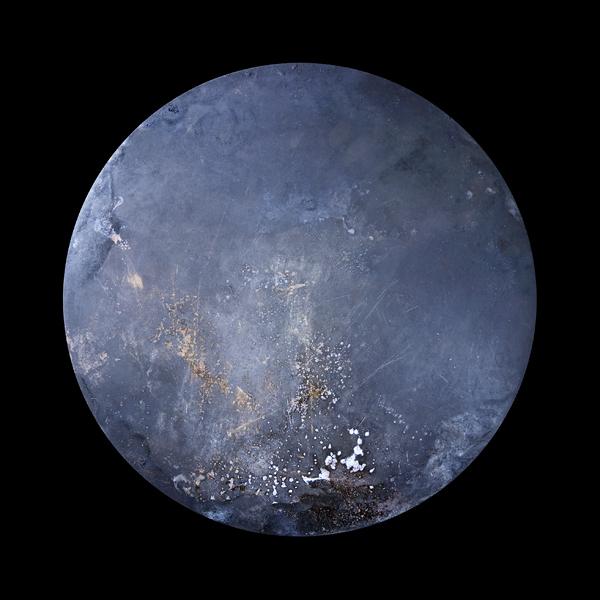


Europa or frying pan? One of these is Jupiter’s moon Europa, the rest are frying pans.
Donderdag 27 augustus 2015
 Does Ice on Mars mean Life will be Found?

Does Ice on Mars mean Life will be Found?
Scientists have found vast oceans of ice lying just below the surface of Mars in a major boost to the search for alien life on the Red Planet.
- ‘This discovery will provide the momentum, we are going to put a man on Mars,’ said Nasa’s Dr Jim Garvin.
How much Ice is there? If it was to melt, it would cover the entire planet in an ocean at least 1,640ft deep.
The news greatly increases the chances that there was once at least microscopic life on Mars and that some of it may still survive-Having water just below the surface also means that human colonies could survive and even thrive on the planet and indicates that fuel for manned spaceflight could be manufactured there.
Just beneath the planet’s dirt surface, UA researchers found an enormous slab of water ice, measuring 130 feet thick and covering an area equivalent to that of California and Texas combined.
It was a “crazy-looking crater” on the face of Mars that caught Ali Bramson’s eye. But it was a simple calculation that explained the crater’s strange shape.
Combining data gleaned from two powerful instruments aboard NASA’s Mars Reconnaissance Orbiter, or MRO, Bramson and her colleagues determined why the crater is terraced — not bowl shaped, like most craters of this size.
“Craters should be bowl shaped, but this one had terraces in the wall,” says Bramson, a graduate student in the University of Arizona’s Lunar and Planetary Laboratory, or LPL.
Terraces can form when there are layers of different materials in the planet’s subsurface, such as dirt, ice or rock.
“It’s worth mentioning that terraced craters of this size are quite rare,” says Shane Byrne, associate professor in LPL. “But in this area of Mars (Arcadia Planitia), there are a lot of terraced craters. The craters may have formed at different times, but they all have terraces, which indicates something weird is going on in the subsurface.”

Terraced Crater in Arcadia Planitia NASA/JPL/University of Arizona
Thanks to Mars’ unstable obliquity — the degree the planet tilts on its axis — its climate changes often. Unlike Earth, Mars doesn’t have a large moon to keep it stable. Instead, it wobbles on its axis, and that wobbling leads to dramatic climatic shifts. Those shifts, in turn, have led to intermittent ice ages.
Using MRO’s High Resolution Imaging Science Experiment, or HiRISE, camera, which is operated out of LPL, the researchers created three-dimensional models of the area’s craters, which allowed them to measure the depth of their terraces. The researchers then used MRO’s Shallow Radar, or SHARAD, instrument to beam radar pulses to Mars, allowing them to measure the time it took for the radar signals to penetrate the surface’s buried layers and bounce back.
Bramson combined the two data sets to measure the radar waves’ speed, a pivotal clue to the layers’ composition.
In this crater’s case, the layers turned out to be ice, and lots of it. Just beneath Mars’ dirt surface, or regolith, the researchers found an enormous slab of water ice, measuring 130 feet thick and covering an area equivalent to that of California and Texas combined.
The researchers’ results were published online in Geophysical Research Letters, a journal of the American Geophysical Union.
While the presence of ice came as little surprise to Bramson and Byrne, its age, amount and location did. Although scientists have known for some time about Mars’ icy deposits at its poles and have used them to look at its climatic history, knowledge of icy layers at the planet’s midlatitudes, analogous to earthly latitudes falling between the Canadian-U.S. border and Kansas, is something new.
“Knowing where the ice is and how thick it is can tell you about Mars’ past climates,” Byrne says. “The fact that the ice is so thick and widespread leads us to think it came into place during one of Mars’ past climates when it snowed a bunch, ice accumulated, was buried, and then preserved.
“There have been a lot of climate changes between now and the tens of millions of years ago when we suspect the ice was put there. But it shouldn’t be stable today, and other past climates of ice instability in this region mean the ice should’ve sublimated away into the dry Martian atmosphere by now. So, that’s what we need to investigate.
“What kept the ice around all this time? There’s no climate model that we have now that explains this.”
Also Curiosity confirms Water!
UNEXPECTEDLY high levels of liquid water have been found just a metre under the surface of Mars, boosting the chances of the Red Planet once housing life.
The historic discovery was made by Nasa’a Curiosity Rover – a robotic four-wheel drive space probe which is exploring in detail the surface of Mars – during its latest mission to forensically analyse the Martian floor.
The rover will now turn its attention to looking for evidence of “ancient habitable environments” by examining layers of the lower Mount Sharp region of Mars, and hopefully evidence about how early Mars environments evolved from wetter to drier conditions.

Until this year it was believed Mars was too cold to hold any liquid water, but it emerged in April the Rover found Martian soil is damp with liquid brine, due to the presence of a salt that significantly lowers the freezing point of water.
But now this month the rover had found rocks just a meter below the surface with up to four times as much water content as previously found.
Previous observations by the probe’s stereo camera showed areas characteristic of old riverbed, with rounded pebbles indicating there were once flowing rivers up to one meter deep.
In April close-up images showed slanting expanses of sedimentary deposits, lying one above the other – the kind of deposits formed when large amounts of water flow down the slopes of a crater and meet stagnant water in the form of a lake.

Curiosity rover MAHLI camera wheel images from SOL 529. You can clearly see soil sticking to the rover wheels as if moist:
Silica, monitored with Curiosity’s laser-firing Chemistry and Camera (ChemCam) instrument, is a rock-forming chemical containing silicon and oxygen, commonly found on Earth as quartz.
Hydrogen in the ground beneath the rover is monitored by the rover’s Dynamic Albedo of Neutrons (DAN) instrument. It has been detected at low levels everywhere Curiosity has driven and is interpreted as the hydrogen in water molecules or hydroxyl ions bound within or absorbed onto minerals in the rocks and soil.
Igor Mitrofanov, DAN Principal Investigator of Space Research Institute, Moscow, said: “The ground about one metre beneath the rover in this area holds three or four times as much water as the ground anywhere else Curiosity has driven during its three years on Mars.”
The rover has spent several weeks in the Marias Pass region investigating a “geological contact zone” and rocks “unexpectedly high in silica and hydrogen content” indicating water bound to minerals in the ground.
Also Mars Glaciers Confirmed!
Several satellites orbit Mars and on satellite images, researchers have been able to observe the shape of glaciers just below the surface. For a long time scientists did not know if the ice was made of frozen water (H2O) or of carbon dioxide (CO2) or whether it was mud.
Using radar measurements from the NASA satellite, Mars Reconnaissance Orbiter, researchers have been able to determine that is water ice.

The image from the High Resolution Stereo Camera shows that a thick layer of dust covers the glaciers, so they appear as the surface of the ground, but radar measurements show that there are glaciers composed of frozen water underneath the dust.
Credit: ESA/DLR/FU Berlin
Mars has thousands of glaciers buried beneath its dusty surface, enough frozen water to blanket the planet with a 3.6-foot(1.1- meter) thick layer of ice, scientists said In August 2015.
The glaciers are found in two bands in the mid-southern and mid-northern latitudes. Radar data, collected by Mars-orbiting satellites, combined with computer models of ice flows show the planet has about 5.3 trillion cubic feet (150 billion cubic meters) of water locked in the ice, according to a study published in the issue of the journal Geophysical Research Letter.

Mars distinct polar ice caps, but Mars also has belts of glaciers at its central latitudes — between the blue lines, in both the southern and northern hemispheres. A thick layer of dust covers the glaciers.
Credit: Mars Digital Image Model, NASA/Nanna Karlsso
We have known about Ice Deposits for some time, the HRSC on ESA’s Mars Express obtained this perspective view on 2 February 2005 during orbit 1343 with a ground resolution of approximately 15 meters per pixel.
It shows an unnamed impact crater located on Vastitas Borealis, a broad plain that covers much of Mars’s far northern latitudes, at approximately 70.5° North and 103° East.
The crater is 35 kilometers wide and has a maximum depth of approximately 2 kilometers beneath the crater rim. The circular patch of bright material located at the center of the crater is residual water ice.
The colors are very close to natural, but the vertical relief is exaggerated three times. The view is looking east.

A frozen lake of water-ice on the floor of a 35 km wide impact crater on Mars.
Credit: ESA/DLR/FU Berlin/G. Neukum
We Live in Exciting Times in Space and Planet exploration and with plans of human settlements on Mars these discoveries confirm that settlements will have access to water. And with water a large list of possibilities come into play, like Terraforming!
What would the Red Planet look like?
See a fantasy animation below
http://www.modifiedmars.com/ is a project with the ambition to visualize a 23rd century terraformed Mars and to explore its touristic potential.
It is hard to believe that just a few centuries ago Mars was a lifeless place. Around the turn of the millennium, a time when space programs were stagnating due to a lack of vision by those in power, no human had even set foot on the then Red Planet. Dust storms were torturing the arid landscape, it’s stark beauty unseen by human eyes.
Only a few people were aware of the immense promise of terraforming Mars. With environmental problems on the home world running out of control, even the thought of modifying another planet was like blasphemy to many other earthlings’ ears. Still, it happened.
Just over two hundred years later, rivers are running once more through ancient valleys, ocean waters are washing a long and capricious shoreline, forests are working their way up on magnificent slopes.This Modified Mars is a home to millions of people and the Solar System’s favorite tourist destination.
Ok,… so the the last Video is more of promising fantasy visualization.
What does Science Say?
What do you Say?
Thanks for Reading! Please comment and Share!
Brent Peterson @UAATN
Sources: http://uanews.org/story/terraced-craters-windows-into-mars-icy-past
http://phys.org/news/2015-04-mars-belts-glaciers-frozen.html#jCp
{ http://www.ufoandalientruthnetwork.com/}
Geschreven door peter om 23:42
Stuur door