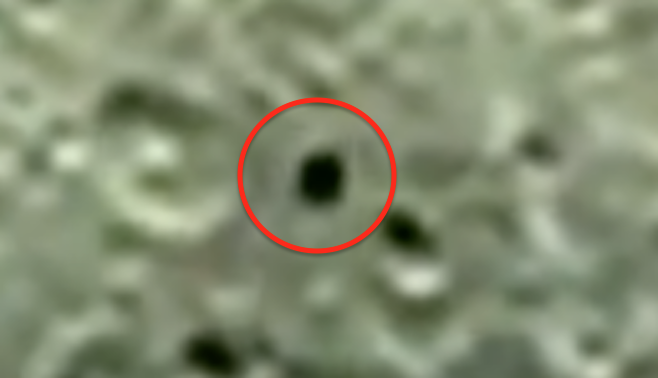
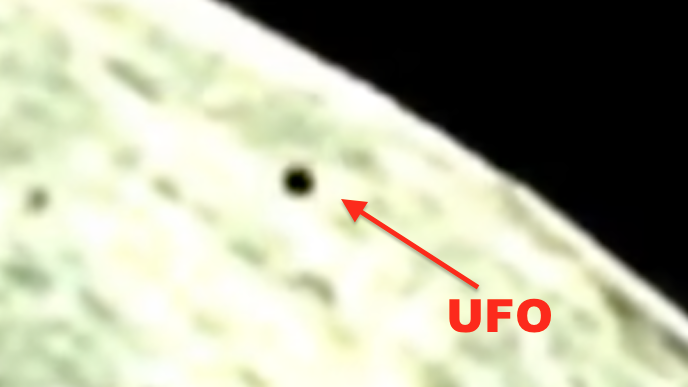
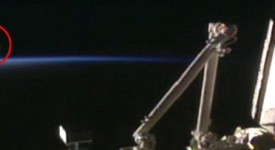
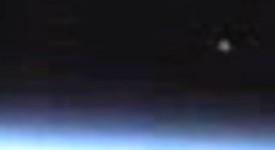
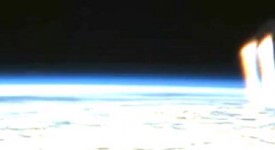
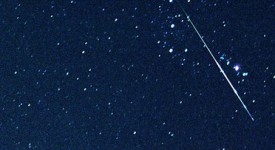
UFO Seen On Moon Live Stream, Dark Disk Near Earths Moon, Aug 10, 2016, Video, UFO Sighting News.

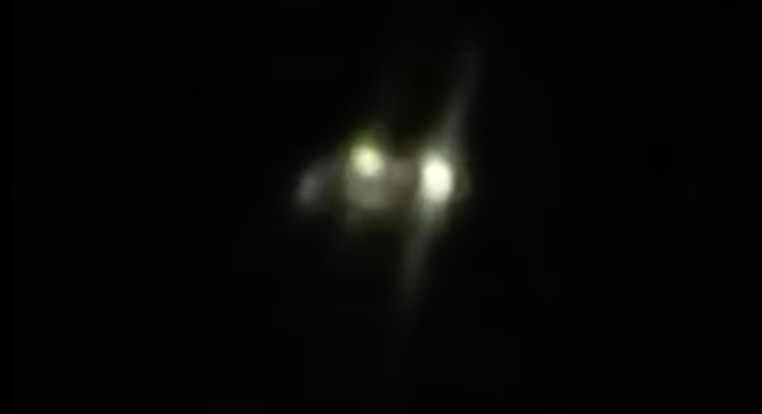
UFO Seen On Moon Live Stream, Dark Disk Near Earths Moon, Aug 10, 2016, Video, UFO Sighting News.
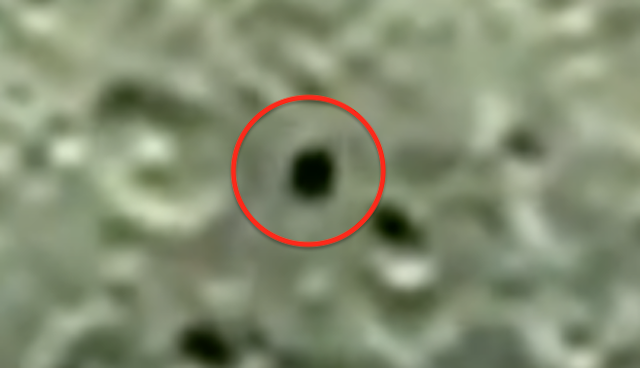
Disclosure, The Most Profound Event In Human History - Stephan Bassett, Video, UFO Sighting News.
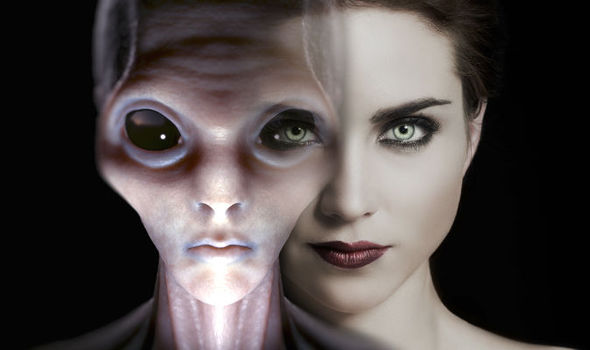
ALIEN THREAT! THE UFO HUBRID INFILTRATION - DARK, Aug 2016, Video, UFO Sighting News.
UFO Over London Has Many Similarities To A USAF TR3B, Feb 2016, Video, UFO Sighting News.
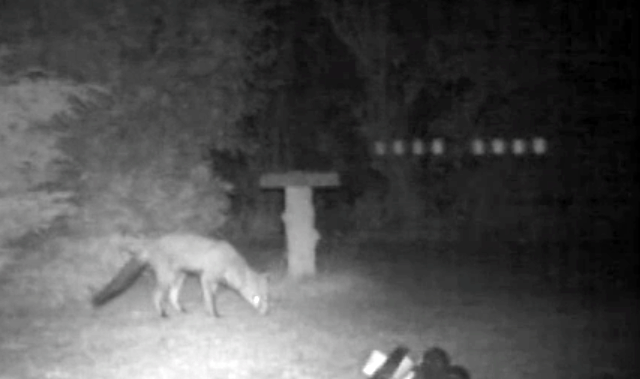
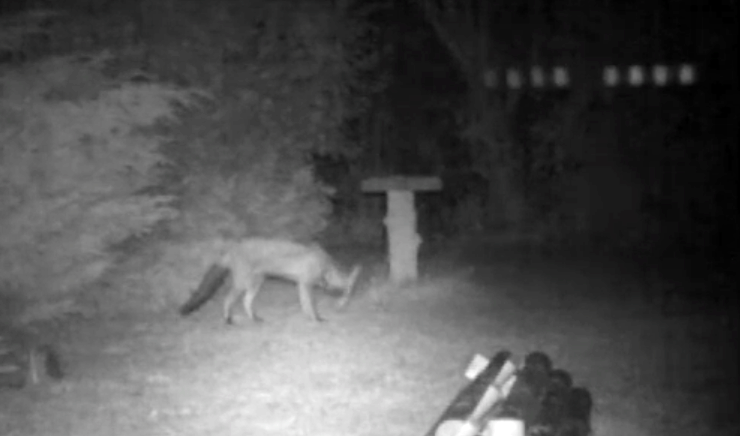
UFO Seen By Trail Cam As It Examines Fox On July 2016, Video, UFO Sighting News.
What Conspiracy Theorists Say About the Square-Shaped Black Patch Around the Sun

Solar and Heliospheric Observatory (SOHO) reportedly took an image of the Sun with a massive square-shaped black patch, which sparked debate and wild speculation among UFO conspiracy theorists. Some space enthusiasts suggest NASA uses a black square to hide or block a large alien spacecraft orbiting and drawing off energy from the Sun.
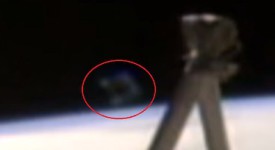
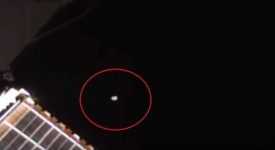
Other UFO hunters believe that the black cube is Borg cube alien spacecraft, derived from science fiction movie series “Star Trek.”
Skeptics say the dark square-shaped patch found in the SOHO image could be just pixelation flaws in the digital device or a NASA device used as an occulting disk.
Meanwhile, the believers argue that NASA might be using the occulting device to block out from view a massive UFO around the sun.
There have been several reports in the past on alien spacecraft seen around the Sun and thought to refuel energy from it. Moreover, many theories are suggesting extraterrestrial races would use any star as a power source.
But for some believers, the black square isn’t a UFO, but a NASA cover-up to hide a massive alien spacecraft orbiting around the Sun to harvest solar energy.
Meest bizarre ster ooit is zojuist nog mysterieuzer geworden
Caroline Kraaijvanger

'Venus was mogelijk de eerste leefbare planeet in ons zonnestelsel
Caroline Kraaijvanger

LIGO-Detected Black Holes May Be the Origin of Dark Matter

Two papers in the Physical Review Letters hold that the black holes detected by LIGO may be primordial black holes, and they may explain the nature of dark matter.
The Laser Interferometer Gravitational-wave Observatory (LIGO) has been one nifty new astronomical tool. In its brief existence, it has been able to detect several of the elusive gravitational waves. Previously, these had just been the stuff of speculations.
Now, these new discoveries could be key to identifying another astronomical speculation: dark matter. Two papers published in Physical Review Letters posit that the black holes that produced the first LIGO-detected gravitational waves could explain the nature of dark matter in the universe.
Dark matter is the speculative substance that astronomers say makes up most of the mass of the universe and is what holds galaxies and clusters together. Conventional theories say that this matter is made up of unidentified particles. But the data from LIGO may prove that it actually originated in primordial black holes.
Primordial black holes are those that are not formed by collapsing stars, but dense regions of the early universe that collapsed in on themselves.
Earlier this month, a Japanese team reported that the black holes LIGO detected may be primordial, and that they may make up some portion of the universe’s dark matter– although this would make up but a small fraction of dark matter. Back in May, a team from John Hopkins discovered that the rate of black hole mergers LIGO estimated was the same as that of the primordial black hole dark matter.
Previous research has shown that the primordial black hole dark matter could only be possible for a very specific set of masses. But that range of masses corresponds neatly with the masses of the black holes LIGO found. The John Hopkins team saw that if primordial black holes were the source of dark matter, the estimated rate of LIGO seeing merging primordial black holes was the same as LIGO’s estimated detection rate. Although both estimates have large errors, their agreement indicates that dark matter may be composed of primordial black holes.
Ultimately, more LIGO detections would have to be made in order to confirm these theories.
New Theory Suggests Black Holes Are “Back Doors” to The Universe

A team of researchers propose an alternative explanation to what a black hole contains, one that deviates from Einstein's theory of gravity. They propose that a simple, rotational, electrically charged black hole contains new geometric elements, like those of crystals and graphene, with a spherical center point.
Scientists believe that in the middle of a black hole is a one-dimensional point that contains a huge mass despite its infinitely small space. And in this point, the density of matter becomes infinite, the whole fabric of space-time breaks apart, physics no longer applies, and basically, everything blows into chaos and nothing makes sense. This theoretical point of madness is called the gravitational singularity.
Much like everything else about black holes, the gravitational singularity is a source of endless debate. One interesting theory is that if you, for some crazy reason, end up in this hellhole, you will be stretched and squeezed in different directions, infinitely—a process technically called (yes, technically) spaghettification.
“Spaghettification” looks like fun, but it’s probably not.
Credit: Katherine Streeter for NPR
“The gravity wants to sort of stretch you in one direction and squeeze you in another,” says Joe Polchinski, a physicist at the University of California, Santa Barbara.
Since very little is known (much less definitively proven) about black holes, the floor is open to exploration of concepts beyond general relativity. A team of researchers are trying to look at the singularity in an entirely different light.
They propose that perhaps the gravitational singularity were an imperfection in the geometric structure of space-time, with geometric structures like that of a crystal or graphene.
“Just as crystals have imperfections in their microscopic structure, the central region of a black hole can be interpreted as an anomaly in space-time, which requires new geometric elements in order to be able to describe them more precisely. We explored all possible options, taking inspiration from facts observed in nature,” the team explains.
In a model following their theory, the new geometries would imply that the center point would be a very small spherical surface—consistent with that of a wormhole in a simple, rotational, electrically-charged black hole.
“Our theory naturally resolves several problems in the interpretation of electrically-charged black holes”, says Gonzalo Olmo, one of the researchers from the Institute of Corpuscular Physics, Universitat de Valencia. “In the first instance we resolve the problem of the singularity, since there is a door at the center of the black hole, the wormhole, through which space and time can continue.”
This model would also make the spaghettification process possible (yay?), and would allow a hypothetical traveler to go through the wormhole, and come out of it in their normal, pre-spaghettification size (phew!, yay).
That sounds okay. That is, until you hear Neil DeGrasse Tyson describe that journey in graphic detail.
Unlike Einstein’s theory of gravity, which requires unusual properties such as a negative energy pressure or density (which have yet to be observed), the team’s wormhole is much more feasible: “In our theory, the wormhole appears out of ordinary matter and energy, such as an electric field,” says Olmo.
This “backdoor” would also address the information paradox, because nothing is lost but instead comes out the other end. Where and what is in that other end, however, is another “black hole” of questions.
New Clues to Ceres’ Bright Spots and Origins

NASA’s Dawn spacecraft has been taking images of Ceres, the largest body in the asteroid belt, since December 2014. As Dawn’s orbit brought it closer to the dwarf planet’s surface, a mystery appeared: Ceres has bright spots. Over 130 separate areas on Ceres, reaching up to 6 miles wide, shine out from their dark surroundings. After months of study and speculation, scientists have confirmedthat the brightest spots are made of sodium carbonate, making Ceres’ Occator Crater the largest deposit of this sort of mineral ever found beyond Earth.

Credit: Source.
Since images of the bright spots were released, scientists and the public alike have speculated about what they could be: NASA even created a poll to gather opinions. At first, the leading theory suggested that the bright spots were expanses of water ice, either brought to the surface by volcanic activity or revealed by an impact. Even as evidence mounted that the spots were made of some sort of mineral salt, more and more ideas, ranging from the plausible theory that Ceres was covered in an ice mantle just below the surface to the fanciful notion that the spots could be a shining alien city.
Until June, no clear answer revealed itself. According to Andreas Nathues of the Max Planck Institute in Germany, “The main problem we had [analyzing the bright spots] during approach phase was that our spatial resolution was too low.” Because Dawn’s instruments were calibrated based on Ceres’ darker surface, the images didn’t capture any detail in the bright areas. “In June, we divided our exposure times for the bright spots and the dark surface. Then the spatial resolution started to become sufficient to identify what the spots are,” Nathues said.

Credit: Source.
As Dawn and its newly-calibrated cameras approached Ceres, details of the bright spots came into focus. “Dawn has transformed what was so recently a few bright dots into a complex and beautiful, gleaming landscape,” said Marc Rayman, Dawn’s chief engineer and mission director. Now, two new studies, published in Nature and Nature Geoscience, have concluded that Ceres’ bright spots are sodium carbonate and that Ceres is much drier than previous observations led scientists to expect.
On Earth, sodium carbonate is primarily found in hydrothermal environments, where hot water leaks from the planet’s crust. Similarly, the sodium carbonate on Ceres appears to
have welled up from deeper inside the planet, suggesting that its interior may be warmer than scientists previously thought. The sodium carbonates also serve as a clue that Ceres once had liquid water below its surface: author of the Nature study and Dawn scientist Maria Cristina De Sanctis said, “These minerals can be formed only in a liquid water environment.”
However, the study found no evidence for water in any of Ceres’ craters: if there was a subsurface ocean (or subsurface puddles) there, it either froze or disappeared millions of years ago. Ceres even has less ice than expected, according to the study in Nature Geoscience, led by Michael Bland of the US Geological Survey. “Before Dawn’s arrival there was this expectation that Ceres would be relatively ice-rich,” Bland said, but when the spacecraft got there it found topographical features indicating that Ceres’ subsurface isunder 40 percent water ice by volume. That could be enough water to aid in the formation of carbonates, but it would have to be liquid and Ceres has a temperature of -105 degrees Celsius.
As Nathaus expressed, “it’s very hard to explain carbonates in these amounts. This is still a mystery.” The results published in these two studies “are two pieces of the puzzle, and . . . there’s still work to be done to link them together,” Bland said. The Dawn spacecraft will continue to collect puzzle pieces for the remainder of its mission, as NASA recently decided that it will remain at Ceres rather than moving on to other objects in the asteroid belt.
“It’s amazing how much we have been able to learn about Ceres’ interior from Dawn’s observations of chemical and geophysical properties. We expect more such discoveries as we mine this treasure trove of data,” said Carol Raymond, deputy principal investigator for the Dawn mission. The data will keep pouring in; it’s up to scientists to piece it together.
Is dit het bewijs dat aliens bestaan?

Niet panikeren, maar wetenschappers hebben een mysterieus zwevend voorwerp ontdekt in ons zonnestelsel en ze hebben geen flauw idee wat het zou kunnen zijn.
Is het Superman? Of zijn het buitenaardse wezens die de mensheid willen uitroeien? Niemand weet het zeker. Wat we wel zeker weten, is dat wetenschappers en vlek net voorbij Neptunus ontdekt hebben, en het is 160000 keer zwakker dan de verste planeet van de zon. Volgens de website New Scientist gedraagt het voorwerp zich erg vreemd: het draait achterwaarts om de zon en gaat iedere dag iets hoger vliegen.
De ruimtevlek kreeg de naam Niku, wat ‘rebel’ betekent in het Chinees. Astrofysicus Matthew Holman laat weten dat Niku het bewijs is dat er in ons zonnestelsel veel meer gaande is dan we beseffen. Andere astronomen zijn benieuwd naar wat het voorwerp volgens theoretische analisten zou kunnen zijn.
The Dragon’s Triangle, Resting Place of a Now-Defunct Underwater Alien Base?


Official Apollo mission transcripts reveal fascinating details about Aliens
NASA Scientist Admits Portals Are Opening Around Earth – Proof that Project Pegasus is Real?

You’d Better Steer Clear of these 12 Vile Vortices!


Mysterieuze kubus gespot bij de zon: NASA beschuldigd van cover-up
Op woensdag is een opvallende kubus bij de zon gespot. Het object, dat is vastgelegd door twee verschillende camera’s, lijkt een stuk groter te zijn dan de aarde, schrijft de Britse Daily Star.
Het object is vastgelegd met de camera’s EIT 195 en EIT 171 aan boord van het zonneobservatorium SOHO van de Amerikaanse ruimtevaartorganisatie NASA.
UFO-jagers stuitten op de mysterieuze kubus en plaatsten de beelden op het internet, waarna complottheoretici suggereerden dat het een ongeïdentificeerd vliegend object is dat rond de zon draait.
Het is volgens de krant niet de eerste keer dat zo’n vierkant bij de zon tot controverse heeft geleid. Op 28 juni 2011 werd ook al een kubus ontdekt op foto’s die met ruimtesonde SOHO van de zon waren gemaakt.
Volgens Scott C. Waring van UFO Sightings Daily zijn de foto’s bewijs dat de kubus niet is veroorzaakt door pixellatie. “Dit is bewijs dat de kubus echt bestaat en dat het een groot blokvormig object is dat groter is dan de aarde,” zei hij. “De kubus bevindt zich op beide foto’s op dezelfde plaats.”
Velen claimen nu dat de NASA de zwarte vierkanten gebruikt om UFO’s te verbergen voor het gewone publiek. Op foto’s die op de website van SOHO zijn te downloaden is echter geen spoor van de kubus meer te bekennen. Sceptici beschuldigen de UFO-jagers van bangmakerij.
Afgelopen maand werd de NASA nog gedwongen te reageren op een vreemd object dat werd gespot bij het ISS. Op beelden was te zien hoe een witte lichtbol langzaam afdaalde naar de aardatmosfeer, waarna de livestream plotseling werd stopgezet.
Woordvoerder van de NASA Tabatha Thompson ontkende dat het ruimteagentschap met opzet de livestream stopzet als er ongeïdentificeerde objecten in beeld komen.
Extra veel vallende sterren de komende nachten dankzij zeldzaam fenomeen
Augustus is elk jaar een waar meteorenfestijn. In deze periode kunnen we genieten van de Perseïden-meteorenzwerm. Dankzij Jupiter zijn er dit jaar extra veel vallende sterren te zien.
De Perseïden vormen een wolk van stofdeeltjes die is achtergelaten door de komeet Swift-Tuttle. Die was hier voor het laatst in 1992 en komt in 2126 pas weer terug. In de jaren negentig was men bang dat de komeet in botsing zou komen met de aarde.
Het maximum bereiken we vannacht rond 03.00 uur: dan zijn er onder ideale omstandigheden tot wel 200 (!) vallende sterren per uur te zien. De meteoren zijn helder en snel en hebben nalichtende sporen.
Jupiter doet er 12 jaar over om rond de zon te draaien en doorkruist zo dus maar eens in de 12 jaar de meteorenzwerm. Door de zwaartekracht van de planeet is de meteorenzwerm dit jaar compacter en komen er dus meer meteoren in de baan van de aarde terecht. In 2004, toen Jupiter ook voor extra meteoren zorgde, was er een extra piek ruim 16 uur voor het reguliere maximum.
Om de meteoren waar te kunnen nemen heb je geen telescoop of verrekijker nodig. Het volstaat om met het blote oog naar een willekeurige plaats aan de nachtelijke hemel te kijken. Ondanks de naam hebben vallende sterren eigenlijk niet echt iets met sterren te maken. Het zijn eerder stofdeeltjes die door de verbranding in de atmosfeer een lichtspoor achterlaten.
Het Jet Propulsion Laboratory van de NASA voorspelt dat rond het maximum tot wel 200 meteoren per uur zijn te zien. De meteoren komen met een snelheid van bijna 60 kilometer per seconde in botsing met de dampkring van de aarde.
Texan recounts close encounter with sphere UFO

A Texas witness at Keltys recounted a 1969 UFO encounter with a low flying sphere-shaped object, according to testimony in Case 78077 from the Mutual UFO Network (MUFON) witness reporting database.
The witness and a friend were “spot lighting racoons” off 103W between Lufkin and Crockett alongside a river at 1 a.m. on July 20, 1969, when the incident occurred.
The witness and a friend saw a low flying light in 1969 in Keltys, which is now part of Lufkin, TX, pictured.
(Credit: Google)
“We were staying the night at his grandparent’s house,” the witness stated.“We were in a large field, maybe 20+ acres, surrounded by old growth woods and with small pines in the center. We were driving my friend’s truck inside the perimeter fence. I was shining the light out the passenger window in the truck, up and down trees trying to see raccoon’s eyes, when my friend said, ‘turn off that light.’”
The driver saw something odd in the nearby woods.
“Up ahead at ground levelthe woods were lit up, and we suggested that maybe his cousins were coming in the Jeep, although it was not moving, to hunt with us.”
The two watched the light.
“While we sat and watched, the light rose up fairly quickly to above the treetops, and it appeared to be the moon – only huge. It was very scary and my friend turned the truck around and drove with the intention of leaving. When we got to the other side, headed toward the entry gate to the field, I told him to stop and asked, ‘where did it go,’ as it was no longer in sight.”
But they quickly found the light again.
“While we sat there looking out the front windshield into a cloudless sky, it reappeared just like a falling star that did not burn out, but fired directly at us, immediately growing huge once again.”
The witness almost fired his gun at the object until his friend stopped him. Pictured, Lufkin, TX, pictured.
(Credit: Google)
The event caused the witness to go for his gun.
“It startled us so much, that I began to raise the shotgun at my side. My friend slapped it back down and said, ‘No, don’t shoot it,’ and attempted to back up, but he popped the clutch too fast and the truck died. He restarted it and took off backwards.”
But the witness wanted to see the object again.
“As we were backing toward the river, I told him to stop. The object did not move again, and in every way appeared as the moon, although very huge and bright. If anyone saw it at this point, they would only have said, ‘Wow, look how big and bright the moon is.’ We sat only for a minute or two, and then he drove off toward the entrance. When we went through the gate and started into the woods, I looked back through the rear window and it was still not moving. But, as I realized only later, that it could not have been all that high, because we actually passed under it.”
The witness has never forgotten the events of that evening.
“My friend and I have discussed this event over and over throughout the years, and I have given it much thought. I have no idea what we saw, but it certainly was not the moon. I believe that it could even be human descendants of a culture with new and different technologies and abilities to create magician-like optical illusions to be able to hide in plain sight. Maybe illusions like those bomb worshipers in Planet of the Apes. I only know that we both saw the same thing and discussed it as it happened, and it most definitely was unexplainable.”
The witness and his friend drove under the object at one point. Pictured: Lufkin, TX, pictured.
(Credit: Google)
Keltys, Texas, now a part of Lufkin, was once a separately incorporated town near the junction of the Angelina and Neches rivers and the Cotton Belt railroads in northwestern Angelina County, with an estimated population of about 800.Please remember that most UFO sightings can be explained as something natural or man-made. The above quotes were edited for clarity. Please report UFO activity to MUFON.com.
Witness videotapes star-like UFOs crossing Pennsylvania

A Pennsylvania witness at Bristol reported watching and videotaping a series of star-like objects slow moving in a straight line across the sky, according to testimony in Case 78125 from the Mutual UFO Network (MUFON) witness reporting database.
The witness first noticed the object due to their brightness and began videotaping. Pictured: Bristol, PA.
(Credit: Wikimedia Commons)
The witness stepped out a back door to a vehicle at 9 p.m. on July 31, 2016, when a low flying airplane was first noticed.
“I looked north and noticed five objects—I don’t want to say hovering, but flying straight; not maneuvering, but also moving away from each other,” the witness stated. “They were going at a slow pace underneath the clouds.”
Cropped and enlarged frame from the witness video.
(Credit: MUFON)
The witness also noticed planes in the sky.
“Planes were flying around them and across from them. There were a lot of planes in the sky at that time—it seemed abnormal to me. Other than that, they were going real slow, but they didn’t look like airplanes.”
The brightness of the objects first triggered the witness to notice them.
“I first noticed the object because of how bright they were and how close they were at the beginning. It looked like several stars (a constellation in the sky but it wasn’t that high) when I first noticed it.”
Cropped and enlarged frame from the witness video.
(Credit: MUFON)
The witness had a feeling to look at the objects.
“I felt like I always feel, when I felt a feeling like ‘look here,’ instead of looking the direction I normally look because whatever there was there. Like a feeling of ‘look before it’s too late.’ It’s weird, I don’t know. Followed them for about five minutes before it looked like they disappeared from view based on the cloud cover.”
Bristol is a borough in Bucks County, PA, population 9,726. Pennsylvania Field Investigator Bob Luther is investigating. Please remember that most UFO sightings can be explained as something natural or man-made. The above quotes were edited for clarity. Please report UFO activity to MUFON.com.