Naar de inhoud

UFO'S of UAP'S, ASTRONOMIE, RUIMTEVAART, ARCHEOLOGIE, OUDHEIDKUNDE, SF-SNUFJES EN ANDERE ESOTERISCHE WETENSCHAPPEN - DE ALLERLAATSTE NIEUWTJES

UFO's of UAP'S in België en de rest van de wereld
akke.beakke.be
Ontdek de Fascinerende Wereld van UFO's en UAP's: Jouw Bron voor Onthullende Informatie! Ben jij ook gefascineerd door het onbekende? Wil je meer weten over UFO's en UAP's, niet alleen in België, maar over de hele wereld? Dan ben je op de juiste plek! België: Het Kloppend Hart van UFO-onderzoek In België is BUFON (Belgisch UFO-Netwerk) dé autoriteit op het gebied van UFO-onderzoek. Voor betrouwbare en objectieve informatie over deze intrigerende fenomenen, bezoek je zeker onze Facebook-pagina en deze blog. Maar dat is nog niet alles! Ontdek ook het Belgisch UFO-meldpunt en Caelestia, twee organisaties die diepgaand onderzoek verrichten, al zijn ze soms kritisch of sceptisch. Nederland: Een Schat aan Informatie Voor onze Nederlandse buren is er de schitterende website www.ufowijzer.nl, beheerd door Paul Harmans. Deze site biedt een schat aan informatie en artikelen die je niet wilt missen! Internationaal: MUFON - De Wereldwijde Autoriteit Neem ook een kijkje bij MUFON (Mutual UFO Network Inc.), een gerenommeerde Amerikaanse UFO-vereniging met afdelingen in de VS en wereldwijd. MUFON is toegewijd aan de wetenschappelijke en analytische studie van het UFO-fenomeen, en hun maandelijkse tijdschrift, The MUFON UFO-Journal, is een must-read voor elke UFO-enthousiasteling. Bezoek hun website op www.mufon.com voor meer informatie. Samenwerking en Toekomstvisie Sinds 1 februari 2020 is Pieter niet alleen ex-president van BUFON, maar ook de voormalige nationale directeur van MUFON in Vlaanderen en Nederland. Dit creëert een sterke samenwerking met de Franse MUFON Reseau MUFON/EUROP, wat ons in staat stelt om nog meer waardevolle inzichten te delen. Let op: Nepprofielen en Nieuwe Groeperingen Pas op voor een nieuwe groepering die zich ook BUFON noemt, maar geen enkele connectie heeft met onze gevestigde organisatie. Hoewel zij de naam geregistreerd hebben, kunnen ze het rijke verleden en de expertise van onze groep niet evenaren. We wensen hen veel succes, maar we blijven de autoriteit in UFO-onderzoek! Blijf Op De Hoogte! Wil jij de laatste nieuwtjes over UFO's, ruimtevaart, archeologie, en meer? Volg ons dan en duik samen met ons in de fascinerende wereld van het onbekende! Sluit je aan bij de gemeenschap van nieuwsgierige geesten die net als jij verlangen naar antwoorden en avonturen in de sterren! Heb je vragen of wil je meer weten? Aarzel dan niet om contact met ons op te nemen! Samen ontrafelen we het mysterie van de lucht en daarbuiten.

SpaceX versus Blue Origin: de ontsluiting van de ruimte nadert

{ http://www.scientias.nl/ }

Hoe vind je dit bericht?
Geschreven door peter om 00:13 Stuur door

Meer dan 15.000 aardscheerders bekend

{ http://www.scientias.nl/ }

Hoe vind je dit bericht?
Geschreven door peter om 23:54 Stuur door

Is er water gevonden op de grootste planetoïde van ijzer?

Hoe vind je dit bericht?
Geschreven door peter om 23:50 Stuur door

MAVEN Gives Unprecedented Ultraviolet View of Mars

MAVEN Gives Unprecedented Ultraviolet View of Mars

MAVEN Mars nightside nitric oxide emissions

This image of Mars’ nightside shows ultraviolet emission from nitric oxide (abbreviated NO). The emission is shown in false color with black as low values, green as medium, and white as high. These are the first such images obtained at Mars. Nightglow is a common planetary phenomenon in which the sky faintly glows even in the complete absence of external light. These emissions track the recombination of atomic N and O produced on the dayside, and reveal the circulation patterns of the atmosphere. The splotches, streaks and other irregularities in the image are indications that atmospheric patterns are extremely variable on Mars’ nightside. The portion of the globe without data lies on the dayside, making NO emission from recombination undetectable. The inset shows the viewing geometry on the planet. MAVEN’s Imaging UltraViolet Spectrograph obtained this image of Mars on May 4, 2016 during late winter in Mars Southern Hemisphere.

(Courtesy NASA/University of Colorado-LASP/MAVEN-IUVS)

New global images of Mars from the MAVEN mission show the ultraviolet glow from the Martian atmosphere in unprecedented detail, revealing dynamic, previously invisible behavior. They include the first images of “nightglow” that can be used to show how winds circulate at high altitudes. Additionally, dayside ultraviolet imagery from the spacecraft shows how ozone amounts change over the seasons and how afternoon clouds form over giant Martian volcanoes. The images were taken by the MAVEN Imaging UltraViolet Spectrograph (IUVS).

“MAVEN obtained hundreds of such images in recent months, giving some of the best high-resolution ultraviolet coverage of Mars ever obtained,” said Nick Schneider of the Laboratory for Atmospheric and Space Physics at the University of Colorado Boulder. Schneider is presenting these results Oct. 19 at the American Astronomical Society Division for Planetary Sciences meeting in Pasadena, California.

Nightside images show ultraviolet (UV) “nightglow” emission from nitric oxide (abbreviated NO). Nightglow is a common planetary phenomenon in which the sky faintly glows even in the complete absence of external light. Mars’ nightside atmosphere emits light in the ultraviolet due to chemical reactions that start on Mars’ dayside. Ultraviolet light from the sun breaks down molecules of carbon dioxide and nitrogen, and the resulting atoms are carried around the planet by high-altitude wind patterns that encircle the planet. On the nightside, these winds bring the atoms down to lower altitudes where nitrogen and oxygen atoms collide to form nitric oxide molecules. The recombination releases extra energy, which comes out as ultraviolet light.

Scientists predicted NO nightglow at Mars, and prior missions detected its presence, but MAVEN has returned the first images of this phenomenon in the Martian atmosphere. Splotches and streaks appearing in these images occur where NO recombination is enhanced by winds. Such concentrations are clear evidence of strong irregularities in Mars’ high altitude winds and circulation patterns. These winds control how Mars’ atmosphere responds to its very strong seasonal cycles. These first images will lead to an improved determination of the circulation patterns that control the behavior of the atmosphere from approximately 37 to 62 miles (about 60 to 100 kilometers) high.

MAVEN IUVS cloud formation


MAVEN’s Imaging UltraViolet Spectrograph obtained these images of rapid cloud formation on Mars from July 9-10, 2016. The ultraviolet colors of the planet have been rendered in false color, to show what we would see with ultraviolet-sensitive eyes. The series interleaves MAVEN images to show about 7 hours of Mars rotation during this period, just over a quarter of Mars’ day. The left part of the planet in morning and the right side in afternoon. Mars’ prominent volcanoes, topped with white clouds, can be seen moving across the disk. Mars’ tallest volcano, Olympus Mons, appears as a prominent dark region near the top of the images, with a small white cloud at the summit that grows during the day. Olympus Mons appears dark because the volcano rises up above much of the hazy atmosphere which makes the rest of the planet appear lighter. Three more volcanoes appear in a diagonal row, with their cloud cover merging to span up to a thousand miles by the end of the day. These images are particularly interesting because they show how rapidly and extensively the clouds topping the volcanoes form in the afternoon. Similar processes occur at Earth, with the flow of winds over mountains creating clouds. Afternoon cloud formation is a common occurrence in the American West, especially during the summer.

(Courtesy NASA/University of Colorado-LASP/MAVEN-IUVS)

Dayside images show the atmosphere and surface near Mars’ south pole in unprecedented ultraviolet detail. They were obtained as spring comes to the southern hemisphere. Ozone is destroyed when water vapor is present, so ozone accumulates in the winter polar region where the water vapor has frozen out of the atmosphere. The images show ozone lasting into spring, indicating that global winds are inhibiting the spread of water vapor from the rest of the planet into winter polar regions. Wave patterns in the images, revealed by UV absorption from ozone concentrations, are critical to understanding the wind patterns, giving scientists an additional means to study the chemistry and global circulation of the atmosphere.

MAVEN observations also show afternoon cloud formation over the four giant volcanoes on Mars, much as clouds form over mountain ranges on Earth. IUVS images of cloud formation are among the best ever taken showing the development of clouds throughout the day. Clouds are a key to understanding a planet’s energy balance and water vapor inventory, so these observations will be valuable in understanding the daily and seasonal behavior of the atmosphere.

“MAVEN’s elliptical orbit is just right,” said Justin Deighan of the University of Colorado Boulder, who led the observations. “It rises high enough to take a global picture, but still orbits fast enough to get multiple views as Mars rotates over the course of a day.”

MAVEN’s principal investigator is based at the University of Colorado’s Laboratory for Atmospheric and Space Physics, Boulder. The university provided two science instruments and leads science operations, as well as education and public outreach, for the mission. NASA’s Goddard Space Flight 

Center in Greenbelt, Maryland, manages the MAVEN project and provided two science instruments for the mission. The University of California at Berkeley’s Space Sciences Laboratory also provided four science instruments for the mission. Lockheed Martin built the spacecraft and is responsible for mission operations. NASA’s Jet Propulsion Laboratory in Pasadena, California, provides navigation and Deep Space Network support, as well as the Electra telecommunications relay hardware and operations.

{ http://lasp.colorado.edu/home/maven/ }

Hoe vind je dit bericht?
Geschreven door peter om 22:30 Stuur door

Mogelijk schuilt in 20 jaar oude data van het CERN een nieuw deeltje - HLN.be

Mogelijk schuilt in 20 jaar oude data van het CERN een nieuw deeltje - HLN.be

Bron: Belga

media_xll_9219539.jpg

© ap.

De gigantische deeltjesversneller LHC van het Europees Centrum voor Nucleair Onderzoek in Genève mag dan wel het met het Higssboson het sluitstuk van het Standaardmodel rond de materie, en België een Nobelprijs, hebben opgeleverd, in twintig jaar oude data van zijn voorganger schuilt mogelijk nog een nieuw deeltje. Dat heeft het populair-wetenschappelijke tijdschrift New Scientist vandaag getwitterd.

In de tunnel waar nu de LHC staat, werkte van 1989 tot 2000 de deeltjesversneller LEP of "Large Electron-Positron Collider". Daarmee analyseerden wetenschappers bij botsingen van elektronen en prositronen het verval van Z-bosonen.

Maar de vorsers tendeerden daarbij, net als bij de zoektocht naar het Higgsboson, enkel te kijken naar signalen dat theoretische modellen hadden voorspeld. Zo was het bestaan van het Higgsboson in 1964 voorspeld door de Schot Peter Higgs, en de Belgen François Englert en Robert Brout.

Sinds het experiment met de ALEPH-deeltjesdetector afliep, zijn echter vele nieuwe theorieën ontstaan. Wat Arno Heister van het CERN ertoe aanzette de oude data nog eens opnieuw te bekijken. 

Zonder iets bijzonders te zoeken stootte hij op een lichte overschrijding van vervalproducten bij een energie van zowat 30 gigaelectronvolt (GeV). Als het geen statistisch artifact is, kan het wijzen op het bestaan van een nieuw deeltje dat naar een complexere theorie over het wezen van de natuur kan leiden.

Zo hongeren natuurkundigen naar een model dat vragen kan beantwoorden waarom er meer materie is dan antimaterie en waaruit donkere materie bestaat.

Lees ook

{ http://www.hln.be/ }

Hoe vind je dit bericht?
Geschreven door peter om 22:15 Stuur door

Radiotelescoop zoekt nu toch naar buitenaards leven nabij mysterieuze ster - HLN.be

Radiotelescoop zoekt nu toch naar buitenaards leven nabij mysterieuze ster - HLN.be

Bron: Belga

media_xll_9218268.png

Een voorstelling van Tabby's Ster. © NASA.

STER Het mysterie rond Tabby's Ster of KIC 8462852, de meest tot de verbeelding sprekende ster in onze Melkweg, wordt groter en groter. Wetenschappers merken voortdurend schommelingen op in haar helderheid en er blijkt tussen de ster en ons af en toe iets zeer groots en donkers te passeren. Sommigen suggereerden eerder al dat er buitenaards leven in het spel is.

media_l_9218254.jpg De Green Bank-telescoop in West Virginia is de grootste ter wereld en wordt nu ingeschakeld om de ster te onderzoeken. © epa.

Wetenschappers gaan voort in hun onderzoek van Tabby's Ster en richten gedurende twee maanden elke nacht vier uur lang de Green Bank-radiotelescoop in West Virginia op de mysterieuze ster, die op 1.480 lichtjaar van ons verwijderd is. Dat meldt alvast de Amerikaanse zender ABC.

Dat de ster een erg afwijkend lichtpatroon vertoont, heeft allicht te maken met de aanwezigheid van een gigantische meteoor die in de omgeving van de ster te vinden is.

Hoewel de kans op buitenaards leven dus zeer minimaal is en eerder al uitgesloten, zijn de onderzoekers toch van plan alle data die de telescoop oplevert, na te gaan. Dat werkje zal meer dan een maand in beslag nemen.

Eén op een miljard
Wetenschapper Dan Werthimer (universiteit van Berkeley) zegt dat de kans op buitenaards leven - en het vreemde gedrag van de ster die gelinkt kan worden aan een megastructuur van een geavanceerde buitenaardse beschaving om energie te vangen - "één op een miljard" is. "Niettemin zullen we het controleren."

"Ik denk dat E.T., wanneer hij ooit wordt gevonden, iets als dit kan zijn", vervolgde hij laconiek.

Lees ook

{ http://www.hln.be/ }

Hoe vind je dit bericht?
Geschreven door peter om 22:08 Stuur door

Van alle gevonden asteroïden riskeren er 15.000 ooit in te slaan op aarde - HLN.be

Van alle gevonden asteroïden riskeren er 15.000 ooit in te slaan op aarde - HLN.be 

 Bron: ANP

media_xll_9216728.jpg

© Thinkstock.

RUIMTE Wetenschappers hebben al 15.000 asteroïden gevonden die door de ruimte razen en ooit kunnen inslaan op aarde. En het totale aantal ligt waarschijnlijk nog veel hoger. Drie jaar geleden stond de teller op 10.000.

Lees ook

"We ontdekken gemiddeld dertig nieuwe objecten per week", meldt Europese ruimtevaartorganisatie ESA, die meedoet aan het onderzoek. "Enkele tientallen jaren geleden vonden we dertig in een jaar." Dat tempo gaat waarschijnlijk omhoog als nieuwe, geavanceerde telescopen in gebruik worden genomen.

media_l_9216729.jpg © Thinkstock.

Door ons zonnestelsel suizen meer dan 700.000 asteroïdes. De meeste staan ver weg en komen nooit in de buurt van de aarde, maar een deel ervan komt wel in de buurt. Dat zijn de Near-Earth Objects (NEOs). 

Van klein tot heel groot
Sommige rotsblokken zijn meer dan een kilometer in doorsnee, en daarvan is volgens ESA ongeveer 90 procent gevonden. "Van de rotsen die groter dan 100 meter zijn, hebben we slechts 10 procent gevonden. En minder dan 1 procent van de objecten die groter dan 40 meter zijn.'' 

De kans is bijzonder klein dat een van die objecten in de komende veertig jaar inslaat. Maar volgens ESA moeten alle NEOs in de gaten worden gehouden om te weten waar ze naartoe gaan.

 { http://www.hln.be/ }

Hoe vind je dit bericht?
Geschreven door peter om 21:58 Stuur door

WikiLeaks Documents Reveal United Nations Interest In UFOs

WikiLeaks Documents Reveal United Nations Interest In UFOs

An international UFO committee almost became reality.

5813c33d190000ec02c2fb08.jpeg
GETTY IMAGES/HUFFINGTON POST ILLUSTRATION
Numerous WikiLeaks documents from 1978 reveal strong interest in UFOs at the United Nations.

Revelations in a set of hacked emails released by WikiLeaks earlier this month have sparked new conversations about UFOs and speculation that extraterrestrialshave been visiting Earth. But a very significant ― and possibly overlooked ― group of WikiLeaks items relevant to the topic was released on May 18, 2015.

WikiLeaks posted more than half a million U.S. State Department diplomatic documents from 1978 detailing America’s interactions with countries all around the world ― including Grenada Prime Minister Eric Gairy’s efforts to organize a United Nations-based committee to research and investigate global UFO reports.

Many of the documents, written by American UN officials, indicated how closely they were monitoring Grenada’s UFO-related activities. 

One document, from Nov. 18, 1978, revealed my involvement in helping Grenada to produce a credible UFO presentation. 

I had an opportunity in early 1978 to meet Gairy in New York to present an idea about how I thought the UN would pay attention to his UFO crusade. Through his ambassadors, I gave him a copy of a documentary record album, “UFOs: The Credibility Factor,” that I produced for CBS Inc. in 1975. 

Gairy and I met, and after I convinced him I could bring a very credible group of speakers to the UN, he agreed to sponsor my proposal (see image below). Shortly after a handshake deal, he made me a temporary delegate-adviser of Grenada and the rest was, well, history.

581499a0150000e6025308a8.jpeg
COURTESY OF LEE SPEIGEL
This 1978 letter from Grenada to Lee Speigel confirmed that country’s commitment to sponsor Speigel’s UFO presentation at the United Nations.

The following image shows part of the group I brought together in July 1978 to meet with UN Secretary-General Kurt Waldheim. He wanted to know what we were planning to do at our November event in front of the Special Political Committee, which included representatives from the Committee on the Peaceful Uses of Outer Space.

5813cbf2170000aa025ba77d.jpeg
COURTESY OF LEE SPEIGEL
On July 14, 1978, producer Lee Speigel (now a Huffington Post writer) brought together a group of military, scientific and psychological experts to meet with United Nations Secretary-General Kurt Waldheim to discuss Speigel’s upcoming presentation to the U.N. Special Political Committee later that year. Topic: The importance of establishing an international UFO committee. Pictured from left: USAF astronaut Col. Gordon Cooper, astronomer Jacques Vallee, astronomer/astrophysicist Claude Poher, astronomer J. Allen Hynek, Grenada Prime Minister Sir Eric Gairy, Waldheim, Morton Gleisner of the Special Political Committee, Lee Speigel, researcher Leonard Stringfield and University of Colorado psychologist David Saunders.

Another cable posted on WikiLeaks, from Nov. 24, 1978, refers to Ambassador Richard Petree’s meeting with Grenada representatives “to discuss their UFO resolution. Ambassador Petree acknowledged the high level of interest in UFOs among some elements of the private sector and scientific community ... and pointed to the budgetary impact as a major concern of the U.S. and other countries.”

On Nov. 28, 1978, the day after our presentation at the UN, this document was sent through official channels, detailing the actual UFO event, describing what each of the invited scientific and military speakers had to say to the member nations.

A few days after that, on Dec. 2, 1978, a follow-up cable was transmitted, including the following:

Subsequent to the introduction of the Grenadian UFO resolution, Misoff [Mission Officer] has engaged in two separate informal negotiating sessions, which included representation from Austria, USSR and Grenada, in an attempt to arrive at a mutually acceptable compromise solution to the problem.

A draft decision to be taken by the Special Political Committee (SPC) has been agreed upon by the participants in the informal negotiations, subject to concurrence of their respective capitals. We think referral of the [UFO] matter to the Outer Space Committee (OSC) without a preordained mandate as to what action is to be taken, provides the flexibility the OSC needs to take whatever action it deems appropriate.

It will also obviate the need to vote on a resolution (and gamble on the results).

The following week brought forth another document, on Dec. 8, 1978, which stated:

“The General Assembly invites interested member states to take appropriate steps to coordinate on a national level scientific research and investigation into extraterrestrial life, including unidentified flying objects, and to inform the secretary-general of the observations, research and evaluation of such activities.”

It was further suggested that Grenada’s views on UFOs could be discussed in 1979. Unfortunately, that didn’t come to pass, as Grenada Prime Minister Gairy was overthrown in a 1979 coup.

Needless to say, without the Gairy-based initiative on UFOs, it was quietly relegated to Grenada’s back burner.

This is the tip of the UFO-UN iceberg. It shows how the subject of UFOs wasn’t merely officially ridiculed or slapped aside. There was, and perhaps still is, some interest there, just waiting to emerge. 

{ http://www.huffingtonpost.com }

Hoe vind je dit bericht?
Geschreven door peter om 21:34 Stuur door

“Buitenaardse invasie behoedt de aarde voor Derde Wereldoorlog”

"Buitenaardse invasie behoedt de aarde voor Derde Wereldoorlog"

“Buitenaardse invasie behoedt de aarde voor Derde Wereldoorlog”

Diverse websites hebben het over een gelekt topgeheim ‘rapport’ van het Kremlin over plannen om een UFO-invasie tegen te houden.

De Britse tabloid Daily Star schreef zondag dat NASA-satellieten een invasievloot zouden hebben opgepikt die rond september 2017 zou aankomen bij de aarde.

“Hoewel sommigen geloven dat de aliens oorlogszuchtig zijn, geloven anderen dat ze goedaardig zijn en de aarde behoeden van een derde wereldoorlog tussen de VS en Rusland, schreef nieuwssite Inquisitr, die in handen is van een Israëlische zakenman.

Voorspeld

Deze complottheorie circuleert al tenminste sinds januari 2014 op het internet. Believers claimen dat de invasie al was voorspeld door Nostradamus.

Er is nog geen nieuwsagentschap dat aandacht heeft besteed aan dit verhaal en er is geen bewijs dat het Witte Huis of de NASA zich voorbereidt op de nakende invasie, merkt de International Business Times op. Toch wordt het verhaal alvast gretig gedeeld.

Bezocht

Uit verschillende peilingen blijkt dat de meerderheid van het volk gelooft in buitenaards leven.

Zo laat een recente peiling van YouGov zien dat 56 procent van de Duitsers, 54 procent van de Amerikanen en 52 procent van de Britten in aliens gelooft.

Uit een enquête van National Geographic uit 2012 blijkt dat liefst 77 procent van de Amerikanen zegt dat aliens op een bepaald punt in de geschiedenis de aarde hebben bezocht.

Overal

Ook veel NASA-wetenschappers en andere onderzoekers behoren tot de believers, aldus IBTimes.

Wetenschappers vertelden het Congres in 2014 dat leven waarschijnlijk overal in de Melkweg mogelijk is.

Daarnaast onderzoekt de Universiteit van Californië te Berkeley momenteel of er leven aanwezig is rond een ster op 1500 lichtjaar van de aarde.

[IBTimes]
Hoe vind je dit bericht?
Geschreven door peter om 21:11 Stuur door

Gelekte WikiLeaks-documenten: VN erg geïnteresseerd in vliegende schotels

Gelekte WikiLeaks-documenten: VN erg geïnteresseerd in UFO's

Gelekte WikiLeaks-documenten: VN erg geïnteresseerd in vliegende schotels

WikiLeaks heeft meer dan een half miljoen diplomatieke documenten van het Amerikaanse ministerie van Buitenlandse Zaken openbaar gemaakt.

Uit enkele van de documenten blijkt dat minister-president Eric Gairy van Grenada een speciale VN-commissie in het leven wilde roepen om onderzoek te doen naar vliegende schotels.

De stukken laten zien dat VN-functionarissen de activiteiten van Grenada op dit gebied op de voet volgden.

Veel interesse

In juli 1978 had een delegatie van Grenada een ontmoeting met VN-secretaris-generaal Kurt Waldheim, die wilde weten wat Gairy precies van plan was.

Een document dat dateert van 24 november 1978 verwijst naar een ontmoeting tussen ambassadeur Richard Petree en de delegatie van Grenada om te spreken over UFO’s.

Ambassadeur Petree erkende dat er binnen de particuliere sector en de wetenschappelijke gemeenschap interesse was voor UFO’s.

In een stuk van 8 december 1978 valt te lezen:

De Algemene Vergadering van de VN spoort lidstaten aan om wetenschappelijk onderzoek naar buitenaards leven, inclusief ongeïdentificeerde vliegende objecten, te coördineren en de secretaris-generaal te informeren over de waarnemingen, het onderzoek en de beoordeling van dergelijke activiteiten.

Staatsgreep

Verder werd gesteld dat de kijk van Grenada op UFO’s in 1979 zou kunnen worden besproken. Dat gebeurde helaas niet, omdat minister-president Gairy dat jaar werd afgezet tijdens een staatsgreep.

Later datzelfde jaar volgde een Amerikaanse invasie. De Washington Post meldde dat de CIA pogingen heeft ondernomen om de overheid van Grenada te destabiliseren.

Topje van de ijsberg

Dit is nog maar het topje van de ijsberg, schrijft de Huffington Post. De stukken tonen aan dat het onderwerp niet belachelijk werd gemaakt, maar op het hoogste niveau werd besproken.

[Huffington Post]
Hoe vind je dit bericht?
Geschreven door peter om 21:06 Stuur door

Massive Saucer Shape on COR2 Camera - Other side of the SUN. Oct 24, 2016, Video, UFO Sighting News.

Massive Saucer Shape on COR2 Camera - Other side of the SUN. Oct 24, 2016, Video,UFO Sighting News.

Sun%252C%2BSOHO%252C%2Bship%252C%2Bscience%252C%2BUSAF%252C%2BNASA%252C%2Bunidentified%2Bflying%2Bobject%252C%2BUFO%252C%2BUFOs%252C%2Bsighting%252C%2Bsightings%252C%2Baliens%252C%2Bmars%252C%2Bface%252C%2Bweather%252C%2BBigelow%2BAerospace%252C%2Bbad%2Bastronomer%252C%2Banomaly%252C%2BMars%252C%2BAnomalies%252C%2BTR3B%252C%2Bastrobiology%252C%2BPlanet%2Bx%252C%2Bleak%252C%2Bleaks%252C%2B1.png

Date of sighting: Oct 24, 2016 at 23:09:15
Location of sighting: Earths Sun
Source sun photo: 
https://stereodata.nascom.nasa.gov/browse//2016/10/24/ahead/cor2/1024/20161024_230915_n4c2A.jpg

This photo was taken with the SOHO last week and it shows a giant UFO hovering over our sun. The object does look like a giant disk seen front the side. And did you notice, there is a explosion of energy shooting from just below it? The ship is extracting the suns material. Hopefully this won't adversely effect our sun and throw the Earth into chaos. Excellent find by Streetcap1. 
Scott C. Waring

Streetcap1 states: 

At the moment Stereo Ahead COR2 is around 160 -170 million miles distant on the other side of our Sun, near Venus. Cor2 will pick up any activity passing it's camera while the shutter is open.

{ http://www.ufosightingsdaily.com/ }

Hoe vind je dit bericht?
Geschreven door peter om 20:26 Stuur door

UFO seen over Vienna, frightened onlookers call police, Oct 2016, UFO Sighting News.

UFO seen over Vienna, frightened onlookers call police, Oct 2016, UFO Sighting News.

halloween%252C%2Bprank%252C%2Bastronomy%252C%2BUFO%252C%2BUFOs%252C%2Bsighting%252C%2Bsightings%252C%2Bnews%252C%2Bmap%252C%2Bcrater%252C%2Bmoon%252C%2Bdisclose.tv%252C%2Bgovernment%252C%2BBrazil1.png
Date of sighting: Oct 2016
Location of sighting: Vienna, Austria
News Source: 
Now sure the lights are bright...alien tech...LEDs for sure. This seems like a drone with lights on its arms to me. Also the size is only about half a meter across...which screams Halloween prank UFO, but interesting to see for sure. UFOs can certainly be smaller than this. I have seen one the size of a baseball sneak up behind my camera then shoot off like grease lighting...stopped at 50 meters away in 3-4 seconds it took me to flip the tripod around. So...this could be, but I just don't feel it. 
Scott C. Waring
RT News states: 
Startled residents in the Austrian cities of Graz and Vienna were so spooked by an apparent UFO hovering in the skies, they called the police.
 
Footage was uploaded on social media showing the bright object flying through the skies and while many people were skeptical of the sightings, others thought an alien invasion was imminent.
 
In one clip, an object can be seen flying through the sky as bystanders stand in shock.
 
Officials did not comment on the mysterious object, according to the Local, while alien skeptics are confident it is in fact just a small remote controlled helicopter.
halloween%252C%2Bprank%252C%2Bastronomy%252C%2BUFO%252C%2BUFOs%252C%2Bsighting%252C%2Bsightings%252C%2Bnews%252C%2Bmap%252C%2Bdrone%252C%2Bmoon%252C%2Bdisclose.tv%252C%2Bgovernment%252C%2BBrazil3.png

halloween%252C%2Bprank%252C%2BNYC%252C%2BUFO%252C%2BUFOs%252C%2Bsighting%252C%2Bsightings%252C%2Bnews%252C%2Bmap%252C%2Bcrater%252C%2Bmoon%252C%2Bdisclose.tv%252C%2Bgovernment%252C%2BBrazil2.png
UFO%252C%2BUFOs%252C%2Bsighting%252C%2Bsightings%252C%2Bnews%252C%2Bgiphy.gif

{ http://www.ufosightingsdaily.com/ }

Hoe vind je dit bericht?
Geschreven door peter om 20:18 Stuur door

UFO Over Hawaii Mountain Top Shocks Eyewitness, Possible Underground Base In Hawaii, UFO Sighting News.

UFO Over Hawaii Mountain Top Shocks Eyewitness, Possible Underground Base In Hawaii, UFO Sighting News

halloween%252C%2Bprank%252C%2Bastronomy%252C%2BUFO%252C%2BUFOs%252C%2Bsighting%252C%2Bsightings%252C%2Bnews%252C%2Bmap%252C%2Bmountains%252C%2Bdisclose.tv%252C%2Bwikileaks%252C%2BBrazil12.png
 
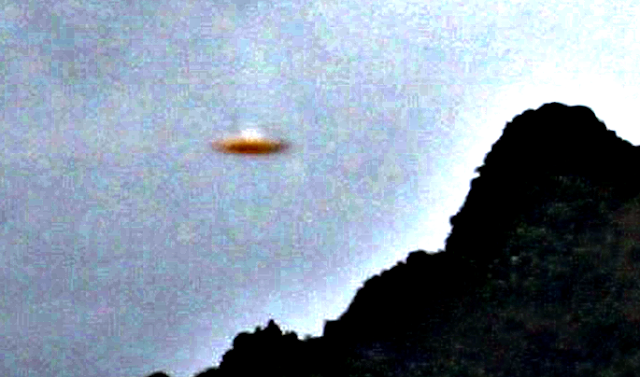
I added contrast above to make the UFO come into focus. 
halloween%252C%2Bprank%252C%2Bastronomy%252C%2BUFO%252C%2BUFOs%252C%2Bsighting%252C%2Bsightings%252C%2Bnews%252C%2Bmap%252C%2Bmountains%252C%2Bdisclose.tv%252C%2Bgovernment%252C%2BBrazil11.png

Date of sighting: Oct 23, 2016
Location of sighting: Waikane, Hawaii, USA
Source: MUFON #79999

UFOs are often seen around mountain tops because their exits from the underground bases need to be in locations where few people ever venture. That cuts down on the likelihood of them being seen. 

Scott C. Waring

Eyewitness states: 
I was taking pictures at Kaneoha Bay at lunch time of the mountains. I had on the "multiple pictures" setting which means if I hold down the button of my camera then it will continuously snap photos with not even a second invetween shots. I had this option on and took multiple picture of the mountains. I went to go look back at my pictures when I noticed one of them was not like the others. At first I thought a wood hip was on my lense but I looked closer and I realized I had spotted a UFO! Now, I don't really believe in stereotypical UFOs but this creeped me out so much that I'm reporting it just in case it really is one! The U identified object I saw was a disk, football shape and it was yellow/orange. When I zoom up on my camera, there seems to be a dome on the top as well. As soon as I saw the picture and realized it wasn't a football or woodchip I got a very eerie feeling. I showed my brother and dad the photo right when I saw but they didn't seem to be worried much about it. I attached the photos in this report as well. The first one should be a plain picture of the mountains and the second one has the weird object in it. It seems to be hovering over the mountain in the middle right side of the photo.

halloween%252C%2Bprank%252C%2Bastronomy%252C%2BUFO%252C%2BUFOs%252C%2Bsighting%252C%2Bsightings%252C%2Bnews%252C%2Bmap%252C%2Bmountains%252C%2Bdisclose.tv%252C%2Bgovernment%252C%2BBrazil13.png

halloween%252C%2Bprank%252C%2Bastronomy%252C%2BUFO%252C%2BUFOs%252C%2Bsighting%252C%2Bsightings%252C%2Bnews%252C%2Bmap%252C%2Bmountains%252C%2Bdisclose.tv%252C%2Bgovernment%252C%2BBrazil14.jpeg

Hoe vind je dit bericht?
Geschreven door peter om 20:14 Stuur door

See Tom DeLonge’s Reaction To His Leaked Emails About UFOs

See Tom DeLonge’s Reaction To His Leaked Emails About UFOs

tom-delonge

It was revealed last week that Tom DeLonge, former guitarist and co-lead vocalist of American rock band Blink-182, has sent multiple emails to John Podesta. The emails show that Tom asked about aliens and UFOs to Hillary Clinton’s presidential chairman. Compared to some information leaked by WikiLeaks, his questions appeared trivial. However, DeLonge seems serious about the subject in question.

Tom, longtime UFO enthusiast, has since been focusing on his extraterrestrial interests since quitting the band. A few days later, he reacted about those emails.

On his Facebook account, he wrote: “I am still here.” Wikileaks messed up some important stuff. What seems like the ridiculous subject matter to most, is of tremendous importance to admirable National Security Leadership.”

Based on his reaction, he appears upset how most people show lighthearted manner with his emails.

Tom added “It’s easy to poke fun about the topic from an armchair, but unless you’re invited to the meetings I have been a part of, then…no more laughing. Big things are coming. The project is still on, believe it or not, things just got bigger. #SekretMachines.”

Tom’s thoughts on UFOs were detailed in his 2012 interview with Larry King.

{ http://www.latest-ufo-sightings.net/ }

Hoe vind je dit bericht?
Geschreven door peter om 20:01 Stuur door

NASA Photo Shows Apparent Mothership On Lunar’s Crater

NASA Photo Shows Apparent Mothership On Lunar’s Crater

An Apollo 15 photo sparks another theory of intelligent alien life on the Moon. It shows an alleged 10-kilometer long UFO mothership that appeared to be abandoned near the Waterman Crater. There’s speculation among UFO enthusiasts that the image had not been intended for release.

They say that it is almost impossible to detect the mysterious object because the location where it is located cannot be seen directly from Earth.

One of the two photographs had already been deleted supposedly by NASA. Some UFO researchers decided to preserve the image on video just in case NASA will also remove the only remaining photo.

nasa-ufo

Many speculate that the one responsible for releasing the photos did not know that they are classified Apollo 15 pictures. Others did not rule out the idea that the NASA employee who released the images tried to play the role of a whistleblower.

Some UFO conspiracy theorists went on to say that NASA knows the existence of alien race on the Moon and that they canceled Apollo 18 to 20 missions, not because of lack of funds. They explained that advanced aliens probably ordered NASA to leave and never return.

As a result, according to the conspiracy theory, NASA failed to bring back evidence of advanced ET technology for reverse engineering.

{ http://www.latest-ufo-sightings.net/ }

Hoe vind je dit bericht?
Geschreven door peter om 19:57 Stuur door

Blinking Lights in the Dark Sky Could Be A UFO Communication Attempt

Blinking Lights in the Dark Sky Could Be A UFO Communication Attempt

charlotte-ufos

Strange lights have been observed in the night sky, and onlookers claimed they were from alien spacecraft.

UFO followers have been speculating online following the release of the strange lights video, which was captured on October 15, showing a cluster of between 5 and 10 lights. These lights appear to move randomly in dark skies over Charlotte, North Carolina.

A voice can be heard saying “Wow! What is it…?” as the camera tried to focus on the moving illuminations.

The videographer stated that he thought they were just flares off a chopper, but their unusual movements changed his mind.

YouTube username C Hulbert shared the footage, and it since receives mix comments.

One describes the footage as amazing and that it is the best he has seen in a while.

Another says it could be sky lanterns that appear to be blinking because they are moving and spinning in a low visibility amidst air pollution. He adds that sky lanterns could keep ascending higher and higher.

One commenter suggests that the lights could be a communication attempt. He noted that there are 3 luminosities for each light and all lights have two patterns. However, the one behind the camera moved around too much, so he can’t tell where the repetition point, making it impossible to know the message, according to the commenter.

{ http://www.latest-ufo-sightings.net/ }

Hoe vind je dit bericht?
Geschreven door peter om 19:54 Stuur door

Giant Metallic Asteroid Psyche May Have Water

Giant Metallic Asteroid Psyche May Have Water

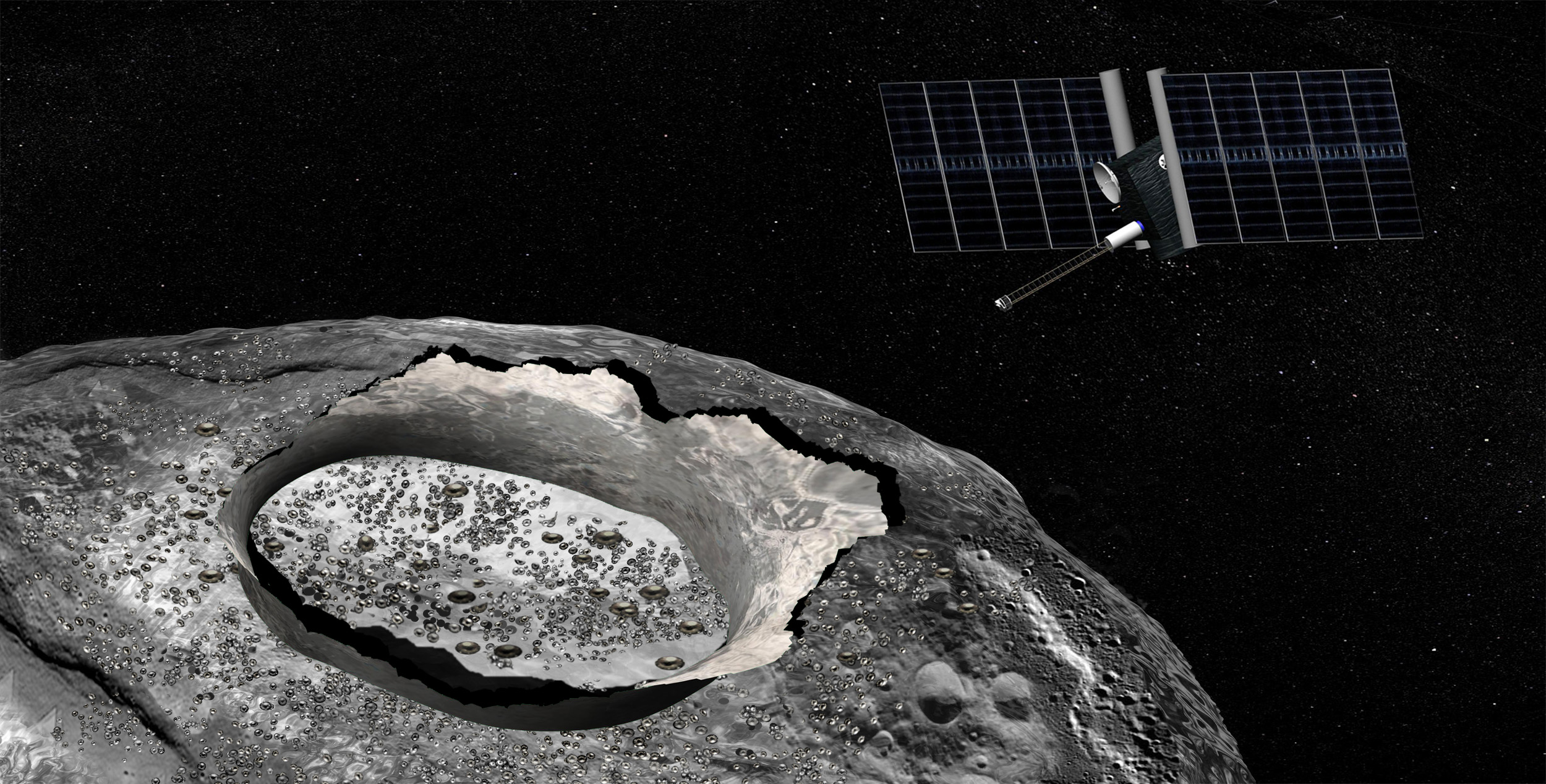
Artist's concept of a spacecraft studying the huge metal asteroid Psyche from orbit.
Credit: JPL/Corby Waste

The largest metallic asteroid in the solar system may have water on its surface, astronomers have found. 


psyche-metal-asteroid-140114c-02.jpg?1389735584
This SPACE.com infographic takes a look at the strange magnetic asteroid Psyche, which may be all that remains of what was once a protoplanet in the early solar system. See the full Psyche asteroid explainer infographic here.
Credit: by Karl Tate, Infographics Artist

The asteroid, called 16 Psyche, is one of the most massive in the asteroid belt. Researchers think the 186-mile-wide (300 kilometers) body, made of almost pure nickel-iron, might be the core of a world whose outer layers were blasted off by impacts billions of years ago. 

Previous observations of Psyche showed no water on the surface. But according to Vishnu Reddy, an assistant professor at the University of Arizona's Lunar and Planetary Laboratory, new data from the NASA Infrared Telescope Facility show evidence for water or hydroxyl, a molecule with one hydrogen atom bound to one oxygen atom, on Psyche's surface. Hydroxyl exists on Earth, but it is very reactive and tends to combine with other compounds — and in fact can remove those compounds from the air.

"We did not expect a metallic asteroid like Psyche to be covered by water and/or hydroxyl," Reddy said in a statement. "Metal-rich asteroids like Psyche are thought to have formed under dry conditions without the presence of water or hydroxyl, so we were puzzled by our observations at first."

Reddy presented his results Wednesday (Oct. 20) at the 48th meeting of the American Astronomical Society's Division for Planetary Sciences and 11th European Planetary Science Congress in Pasadena, California.

The water could have reached Psyche via past impacts from smaller asteroids that contain volatiles such as carbon, hydrogen and water, Reddy said.

NASA is currently reviewing a proposed mission to Psyche, which could tell astronomers whether the signal from the surface comes from water or hydroxyl. 

The new research, co-authored by Reddy and led by Driss Takir at the U.S. Geological Survey, has been accepted to the Astronomical Journal, and can be read online here.

Follow us @Spacedotcom, Facebook and Google+. Original article on Space.com.

{ http://www.space.com/ }

Hoe vind je dit bericht?
Geschreven door peter om 00:39 Stuur door

Proxima b Might Be a Habitable 'Ocean Planet'

Proxima b Might Be a Habitable 'Ocean Planet'

Proxima b Might Be a Habitable 'Ocean Planet'
This image is an artist's impression of the surface of the planet Proxima b, which orbits a red dwarf star called Proxima Centauri — the closest star to the solar system.
Credit: ESO/M. Kornmesser

The entire surface of Proxima b — the possibly Earth-like planet orbiting the closest star to the sun, Proxima Centauri — may be covered in a liquid ocean, according to a new study. 

While there is still much to learn about the solar system's newfound neighbor, previous research found that Proxima b has two key features in common with Earth: it orbits within the habitable zone of its star — meaning it could have the right surface temperature to allow for the presence of liquid water— and it has a mass 1.3 times that of Earth.  

Using this information, a team led by researchers at the Marseille Astrophysics Laboratory in France, developed different models to help discover what the conditions might be like on the rocky exoplanet, according to a statement from NASA. [Proxima b: Closest Earth-Like Planet Discovery in Pictures]

The new findings suggest Proxima b could have a large liquid ocean covering its entire surface and stretching 124 miles (200 kilometers) deep, as well as a thin gas atmosphere much like that found on Earth. These features favor the planet's potential for supporting life, according to the statement.

Scientists have proposed different ideas about Proxima b's composition and surface conditions, and the new models provide more information that could help inform those ideas, NASA officials said in the statement. Some of those ideas "involve a completely dry planet, while others permit the presence of a significant amount of water in its composition," according to the statement.

Using the planet's known mass (1.3 times that of Earth), the authors of the new research simulated different potential compositions for Proxima b and then estimated the radius of the planet for each of those scenarios. The study revealed that Proxima b could have a radius anywhere between 0.94 and 1.4 times that of Earth, according to the NASA statement. 

For one of the potential composition models, the researchers found Proxima b may be an "ocean planet" similar to some of the icy moons around Jupiter and Saturn that harbor subsurface oceans. In this water-world scenario, the planet would have a radius of 5,543 miles (8,920 km), which is 1.4 times the radius of Earth. It would be composed of about 50 percent rock and 50 percent water. The pressure beneath this massive, deep ocean would be so strong that a layer of high-pressure ice would form, according to the NASA statement. 

Another model developed in the study suggests Proxima b would have an internal composition similar to the planet Mercury, with a minimum radius of 3,722 miles (5,990 km), or 0.94 times the radius of the Earth. In this scenario, the planet would be incredibly dense, with a metal core accounting for 65 percent of the planet's mass. The rest of the planet would be composed of a rocky silicate mantle, and liquid water oceans accounting for less than 0.05 percent of the planet's mass (similar to that seen on Earth), according to the statement. 

However, ultraviolet and X-rays from Proxima Centauri could leave the water on Proxima b prone to evaporation. To account for this, the researchers also calculated the radius of Proxima b with a completely dry composition. 

"Future observations of Proxima Centauri will refine this study," NASA officials said in the statement. In particular, by measuring the abundance of certain heavy elements in the star system, scientists can further deduce the planet's likely composition, and its radius.

The study findings will be published in The Astrophysical Journal Letters.

Follow Samantha Mathewson @Sam_Ashley13. Follow us @Spacedotcom, Facebook and Google+. Original article on Space.com.

{ http://www.space.com/ }

Hoe vind je dit bericht?
Geschreven door peter om 00:18 Stuur door

New Horizons stuurt laatste geheimpje van Pluto naar de aarde

Hoe vind je dit bericht?
Geschreven door peter om 00:00 Stuur door

Jesus' Tomb Opened for First Time in Centuries

Jesus' Tomb Opened for First Time in Centuries

Jesus' Tomb Opened for First Time in Centuries
The Holy Edicule, the shrine that surrounds the rock tomb traditionally believed to belong to Jesus Christ, sits within the Church of the Holy Sepulchre in Jerusalem. Here, a conservation team led by the National Technical University of Athens works on a long-awaited restoration project of the structure.
Credit: ODED BALILTY / NATIONAL GEOGRAPHIC

The original rock where Jesus Christ is traditionally believed to have been buried in Jerusalem has been exposed to the light of day for the first time in centuries.

According to an exclusive report by National Geographic, a partner in the project at the Church of the Holy Sepulchre, the original rock surface has been covered with marble slabs since at least 1555, and possibly longer. During a conservation project to shore up the shrine surrounding the tomb, a team from the National Technical University of Athens in Greece realized that they would need to access the substructure of the shrine to restore it, said Fredrik Hiebert, the archaeologist-in-residence at the National Geographic Society. [See Photos of the Church of the Holy Sepulchre] 

"The Greek conservation group are the first, as far as we know, to actually open this," Hiebert told Live Science. "It's pretty exceptional."

Some theological historians believe that Jesus was a real man who was born sometime around the year 1 or earlier in Bethlehem in modern-day Palestine, only later to move to Nazareth in Israel. He is thought to have died around the year 29.

Workers remove a marble slab covering the original stone "burial bed" where Jesus Christ is said to have been laid to rest after being crucified. A layer of loose fill material is seen beneath. Scientists were surprised at how much of the original cave structure remained, said National Geographic archaeologist-in-residence Fredrik Hiebert.
Credit: DUSAN VRANIC/NATIONAL GEOGRAPHIC

The site venerated as the tomb of Jesus is encased in structures like a Russian nesting doll. According to the Hebrew Bible, Jesus was laid to rest on a stone platform in a cave hewn out of a rock wall. In 326, the first Christian emperor of Rome, Constantine, sent his mother, Helena, as a representative to Jerusalem, where locals pointed out one cave among an area of first-century burials that was said to hold the tomb of Jesus.


Constantine had a shrine installed over the cave. The original top of the cave was removed so that pilgrims could look down and view the slab where Jesus' body was said to have rested. This shrine is known as the Holy Edicule, and it was last reconstructed after a fire in the early 1800s, according to National Geographic. [See Images of Jesus' House and Nazareth Artifacts]

The Holy Edicule itself sits within the Church of the Holy Sepulchre or Church of the Resurrection, which is a famed pilgrimage site and working monastery. It's built directly over the cave where Jesus was said to be buried; another wing sits over the site where he is said to have been crucified. Three sects jointly manage the site: the Greek Orthodox Church, the Roman Catholic Church and the Armenian Orthodox Church. The three groups agreed in 1958 that conservation of the Edicule was necessary, but it's taken nearly 50 years to agree on a method and to secure funding. (According to National Geographic, the project will cost more than $4 million.)

"There was a moment in which you could see on the faces of the important people of the church, a certain happiness that this has actually happened," Hiebert said of the conservation.

A grid of iron bars installed in the 1940s held the Edicule structure upright until the project started. Now, Hiebert said, the Greek team — with years of experience under their belts of shoring up ancient structures like the Parthenon — will inject mortar around the marble slabs that make up the Edicule.

"This will permanently restore them, and it won't need supports," Hiebert said.

The conservation team was surprised at how much of the original cave structure remains, he said. They've peeled back marble slabs from the 19th century that were in turn covering slabs from the 15th century, covering slabs from the 12th century, which themselves shield the original bedrock.

As to whether the tomb ever contained the remains of the historicalJesus, "it's a matter of faith," Hiebert said. There are no remains to analyze or DNA evidence to exhume. There is scholarly debate over whether Jesus even existed, said Robert Cargill, an archaeologist and author of "The Cities that Built the Bible" (HarperOne, 2016). A minority of historians think Jesus was a literary construct, said Cargill, who was not involved in the new tomb project, while others think a real person named Jesusexisted but that little is known about him.

"We know that Romans crucified people and that people were buried there" in the first and second centuries, Cargill told Live Science. It's also known that there was an oral tradition about the site of Jesus' burial 300 years later, when Helena came to visit Jerusalem.

"We still don't have any [archaeological] evidence that Jesus was crucified, nor do we have evidence that he was crucified there beneath the Church of the Holy Sepulchre," Cargill said.

Nevertheless, Cargill said, the site is an important one for early Christianity and for the Christian cultural tradition.

"It has been a sacred place for 1,600 years," he said.

The excavations are unlikely to reveal anything new about the history of early Christianity, particularly since the current Edicule structure is only about 200 years old, Cargill said. However, the conservation project has opened up a new view of this old site.

"You can actually look down onto the rock from above, which you couldn't do when the Edicule is actually there," Cargill said. "That's a perspective that most people haven't seen."

Original article on Live Science.

{ http://www.livescience.com/ }

Hoe vind je dit bericht?
Geschreven door peter om 23:51 Stuur door

Meer van UFO'S of UAP'S, ASTRONOMIE, RUIMTEVAART, ARCHEOLOGIE, OUDHEIDKUNDE, SF-SNUFJES EN ANDERE ESOTERISCHE WETENSCHAPPEN - DE ALLERLAATSTE NIEUWTJES

↑ Terug naar de berichten