Exclusive! Churchill's 'found' essay on aliens grips world, mistakenly
JAKE ELLION, SPECIAL TO SEATTLEPI.COM
"And there shall in that time be rumours of things going astray, and there will be a great confusion as to where things really are, and nobody will really know where lieth those little things with the sort of raffia work base, that has an attachment ... " — Monty Python, "Life of Brian."
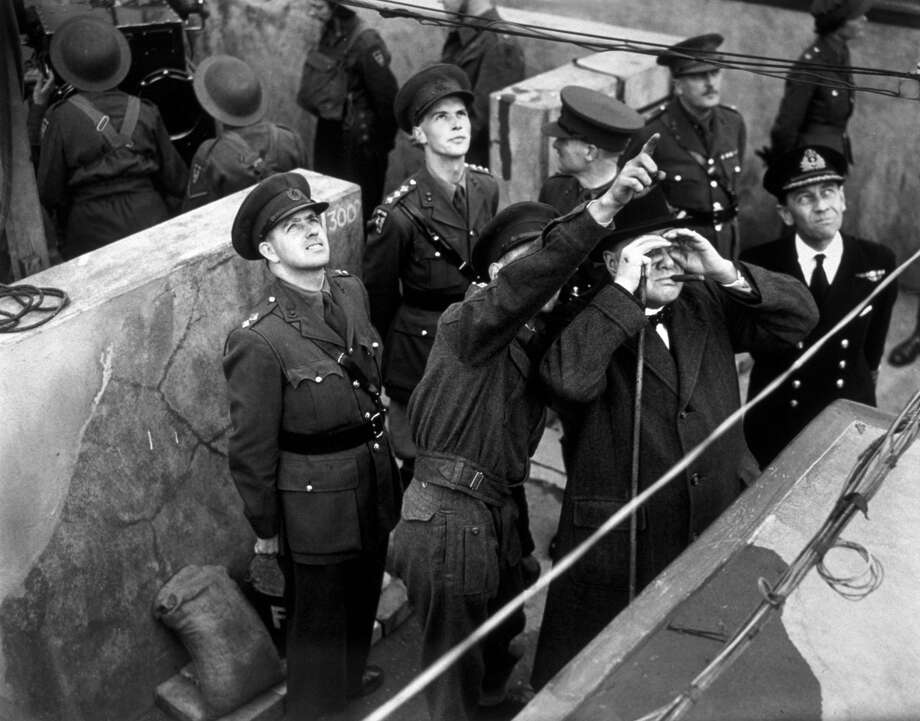
Winston Churchill doing research for his essay on the possibility of extraterrestrial life titled "Are We Alone in the Universe?" found at the National Churchill Museum at Westminster College? ... perhaps.
In a world where many are absolutely desperate for the discovery of alien life, especially intelligent alien life — possibly even the takeover of politics by a superior extraterrestrial life form — news that Winston Churchill had mused about aliens in an unpublished essay nearly broke the internet.
In fact, we got on the bandwagon and sought to explore what Churchill had written about LGMs (aka Little Green Men). Did he mention UFOs? Did he have conspiracies about aliens living here among us ... you know, not immigrants but ALIENS?
So, we hit the streets and pounded on doors ... well, we started searching the internet. And, while our feats of journalism — one phone call and a couple of emails — are astounding and brilliant, we'll cut to the chase. (Lots more details below.)
First, the Churchill essay in question exists in two very similar unpublished forms, both held in university archives, and in one truncated form published in a newspaper in 1942.

Churchill also stated that he saw great opportunity for space exploration. “One day, possibly in the near future, it may be possible to travel to the moon, or even to Venus or Mars,” he wrote 30 years before Neil Armstrong became the first person to walk on the Moon.
So, while the essay was certainly forgotten by many and the found version contains paragraphs not published, the bulk of the essay was indeed published.
Second, the 11-page essay in question does in fact ponder the questions of whether extraterrestrial life might exist, where it might exist, whether we could ever discover it or communicate with it, and whether or not we would recognize extraterrestrial organisms as life in the first place.
"Does life exist elsewhere in the Universe?—indeed a fascinating question," Churchill writes in the opening of all extant versions of the essay.

Photo: Hans Wild/The LIFE Picture Collection/Getty Images
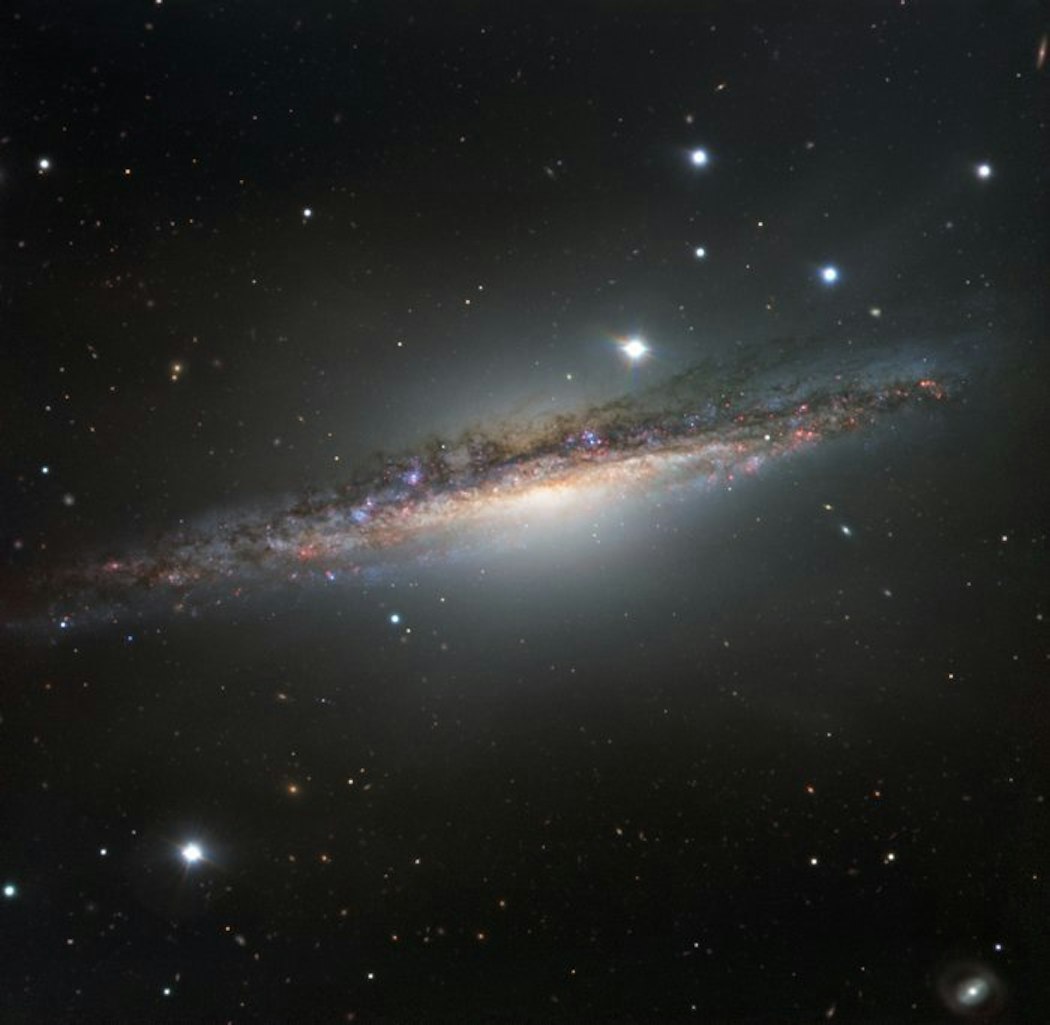
Given the vastness of the Universe, Churchill said it is hard to believe that humans on Earth represent something unique.
Okay, then, what the hell happened?
Timothy Riley, Chief Curator in the National Churchill Museum at Westminster College, said he discovered one version of the essay in 2014 while digging through the museum's archives looking for paintings by Churchill for a retrospective.
That version's title page reads: "'Are We Alone in the Universe?' by The Right Honorable Winston S. Churchill." He was understandably excited about it, but put it aside to complete his other work.

Winston Churchill’s essay titled “Are We Alone in the Universe?” found at the National Churchill Museum at Westminster College.
(Photo courtesy of National Churchill Museum at Westminster College)
Riley passed the copy to astrophysicist Mario Livio — lecturer and author of several books, including the upcoming book "Why?: What Makes Us Curious" published by Simon & Schuster. Riley figured this well-regarded astrophysicist could give some scientific perspective on Churchill's musings.
At that time, Riley says, he knew the essay was a slightly-edited version of a 1939 essay that had not been published, but he did not know about the shorter, though substantial, version published in 1942. He was tipped off to the fact of the published version by another Churchill scholar after Livio published his thoughts on Churchill's musings in the Journal Nature on Feb. 15.
Consequently, Livio published his essay — "Winston Churchill's essay on alien life found" — under the impression that it was an unpublished essay ... which it was ... sort of.

After noting that some viruses can be crystallized, making them hard to categorize, he decides to concentrate on “comparatively highly-organized life,” presumably multicellular life.
"Imagine my thrill that I may be the first scientist to examine this essay," Livio wrote.
His exploration of the essay was primarily about Churchill's scientific bent, reliance on scientific advisors in government and his pretty modern exploration of the prospect of extraterrestrial life.
Churchill had, Livio said, identified early on many of the prospects for life in the universe that would continue to be the focus of attention today.
"Almost 80 years later, the question that obsessed Churchill is one of the hottest topics of scientific research. Searches for signs of subsurface life on Mars are ongoing. Simulations of Venus's climate hint that it may once have been habitable. Astronomers believe that, in a few decades, we will discover some biological signatures of present or past life in the atmospheres of extrasolar planets, or at least be able to constrain its rarity," he wrote.
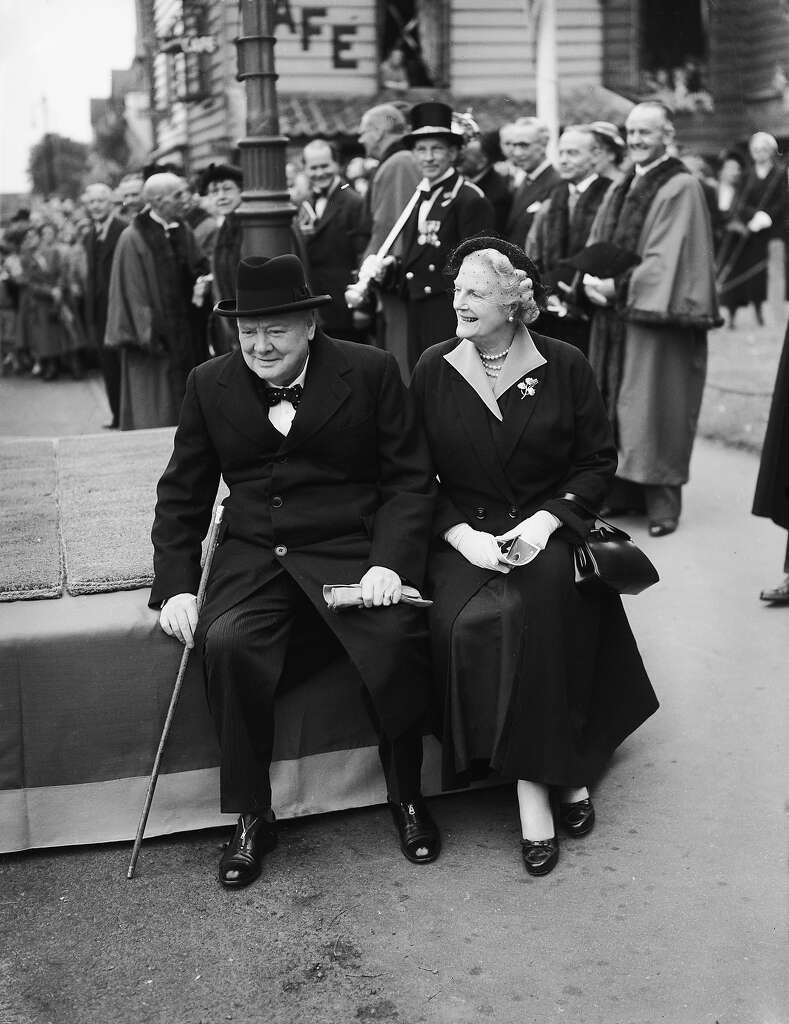
All living things of the type we know require water,” he wrote. Other life-sustaining liquids cannot be ruled out, he stated, but “nothing in our present knowledge entitles us to make such an assumption.”
The internet frenzy strikes again
The mass-media coverage of the story, meanwhile, very quickly hinged on the idea that this was a "lost" or "discovered" Churchill essay. Harried reporters the world over, in a state of near hysteria to keep up, spread the story like, well, an internet virus.
Riley explains in a email exchange with us: "On February 16, after the Dr. Livio's story in Nature was published, I learned from Christopher Bell, a history professor at Dalhousie University in Nova Scotia, about the existence of the published version of 'Are there Men on the Moon?'"
Check out Bell's blog post on the topic and read the 1942 version on the Winston Churchill Project at Hillsdale College website.
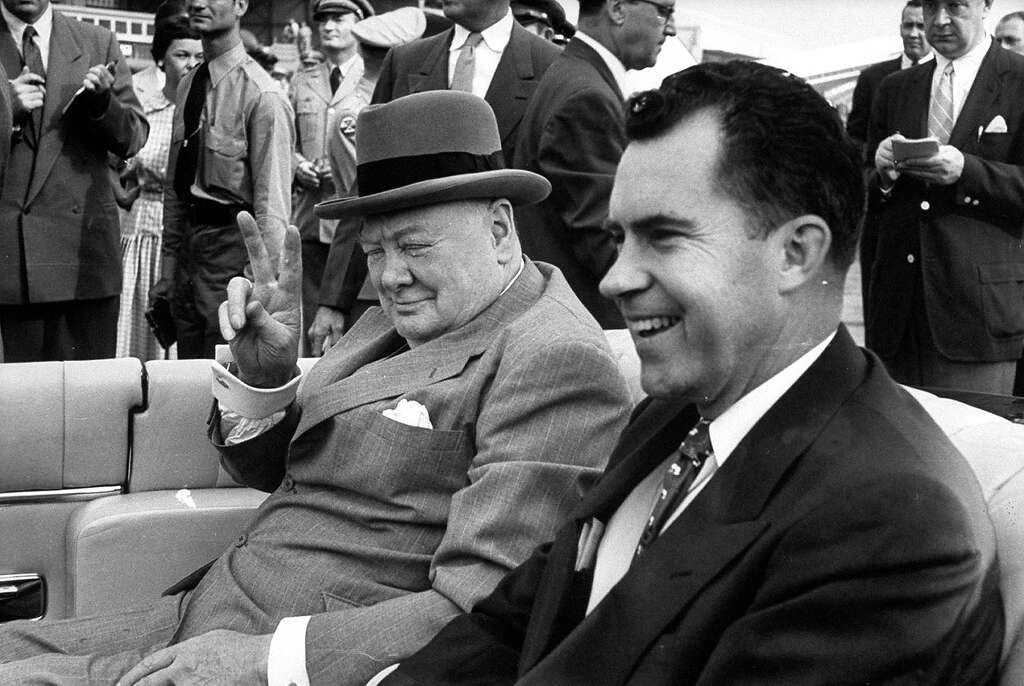
Photo: Walter Sanders, The LIFE Picture Collection/Gett
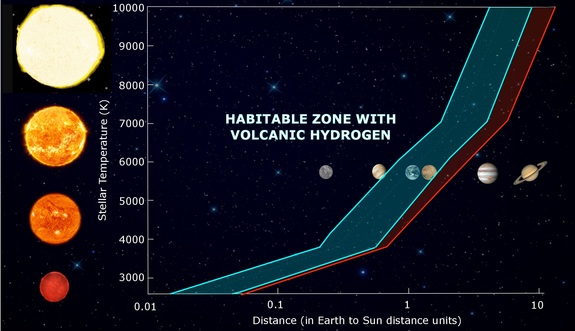
Churchill also defined what is known today as the “habitable zone” — a narrow region around a star that is neither too cold nor too hot, so that liquid water may exist on the surface of a rocky planet. He stated that life can survive only in regions “between a few degrees of frost and the boiling point of water.”
Riley added in his email:
The essay entitled "Are We Alone in the Universe?" in the National Churchill Museum archive is, with minor typographical differences and the change in title, identical to "Are We Alone in Space?" first drafted in 1939. The essay ("Space?") is in the Churchill Archive Centre in Cambridge (CHAR 8/644). It went unpublished in 1939, though notes in the Cambridge Archive seem to indicate that News of the World was the newspaper chosen to publish the essay at that time.
The essay, "Are There Men on the Moon?" was published in the Sunday Dispatch on March 8, 1942. It was later included in The Collected Essays of Sir Winston Churchill (1975).
While it is true that much of "Are There Men on the Moon?" contains the same content as the earlier "Are We Alone in Space?" and the later "Are We Alone in the Universe?" there are important differences.
Here are a few key sentences from that unpublished essay's first pages:
- One is apt to think that the most important characteristics of a living entity are that it can breed and multiply.
- There are certain curious substances called 'viruses'... The particles of which they are presumably composed are too small to be seen under the microscope, but if you keep a small amount of the virus in the proper conditions for a few days, it is found to increase in quantity.
- No one would believe that a lump of sugar or salt could be alive. Well, here we have a crystal ... we know will increase and multiply given the right environment. Is it alive or not?

Photo: Keystone, Getty Images
Churchill stated that a large fraction of extrasolar planets “will be the right size to keep on their surface water and possibly an atmosphere of some sort” and some will be “at the proper distance from their parent sun to maintain a suitable temperature”
Okay, but, did he think ETs exist?
Churchill's conclusion about the existence of alien life in all versions of the essay is that there must be. (You can find more of what he wrote on the topic in the slideshow above.)
According the reprint of the 1942 version published by the Winston Churchill Project in response to all the hubbub, Churchill's essay ends:
All we can say is that with hundreds of thousands of nebulae, each containing thousands of millions of suns, the odds are enormous that there must be immense numbers which possess planets whose circumstances would not render life impossible. If we are sufficiently self-centred and choose to deny that any of these support life, no one can prove we are wrong. But I, for one, am not so immensely impressed by the success we are making of our civilization here that I am prepared to think we are the only spot in this immense universe which contains living, thinking creatures, or that we are the highest type of mental and physical development which has ever appeared in the vast compass of space and time.
Indeed.

Photo: Galerie Bilderwelt, Getty Images
He concludes that Mars and Venus are the only places in the Solar System besides Earth that could sustain life.
Note: We messaged Livio on Facebook and Twitter (the contact info he gave on his personal website), but have not yet heard back. Here's what he told professor and author Chris Bell in a Facebook exchange about the history of the essay:
As I'm sure you understand, all I did was to compare Churchill's points to current scientific thinking. All the comments on the history of the piece have been based on the best knowledge that Tim had on the piece. It's fascinating to find out that the history is even richer.
It was for us, that's for sure.
About Churchill's intellect and scientific explorations, Riley said, "The longer you study Winston Churchill, the harder it is to be surprised, because of the breadth of his intellectual curiosity. And, we know he valued science and saw the power of science to do good, but he also warned repeatedly of the nuclear threat and that science could be devastating."
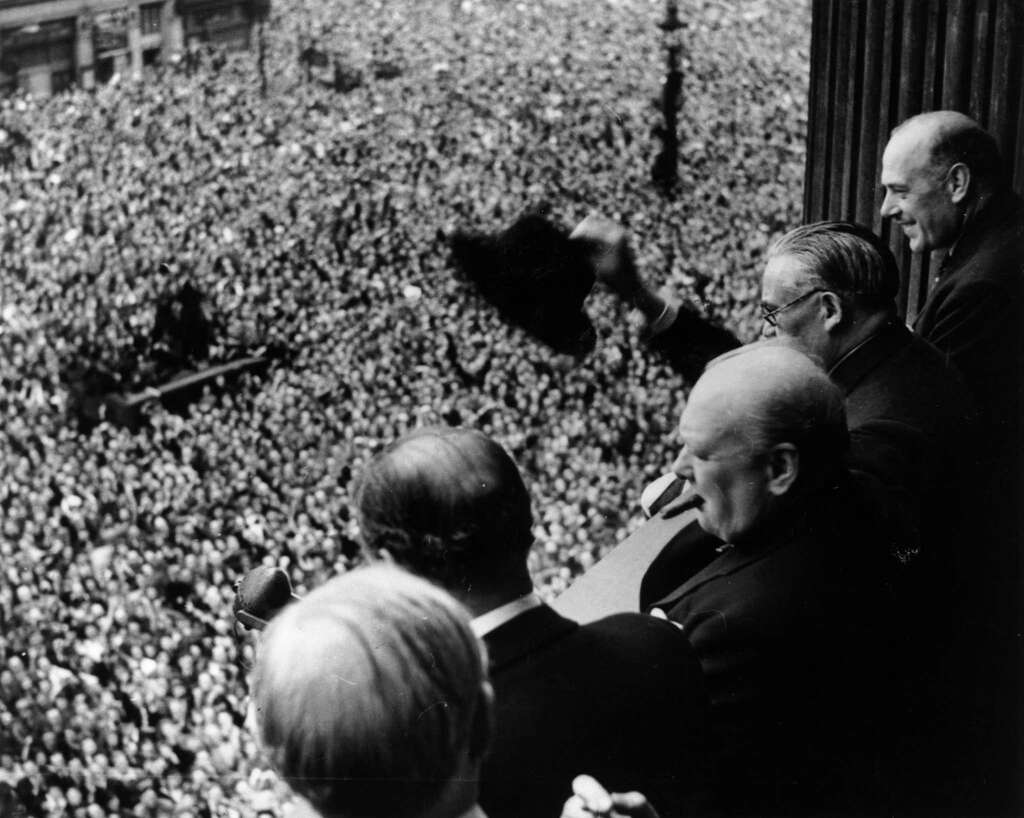
Photo: Keystone, Getty Images
He defines the most important characteristic of life as the ability to “breed and multiply.”
Jake Ellison can be reached at jakeellisonjournalism@gmail.com. Follow Jake on Twitter at twitter.com/Jake_News. Also, swing by and *LIKE* his page on Facebook. If Google Plus is your thing, check out our science coverage here.
{http://www.seattlepi.com/ }




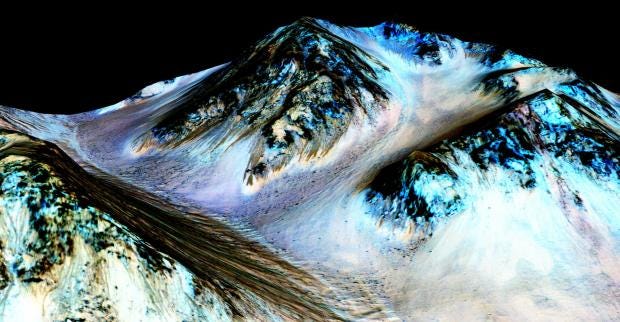
 Scientists claim Mars was once completely covered in water - and may have harboured alien LIFE



 Emma Watson reveals VERY intimate details of her beauty...
 Bottoms up! Student becomes a viral hit after filming...