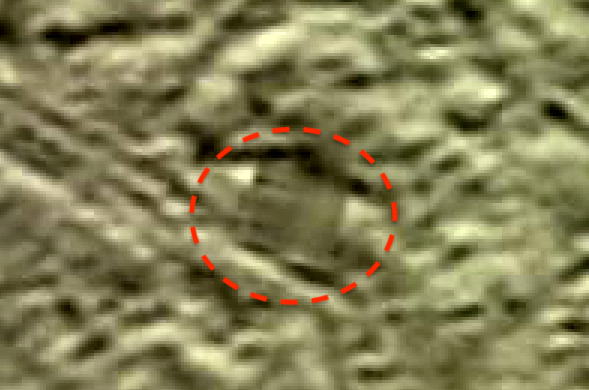
Alien made base found on moon Triton, orbiting Neptune, June 2018, photos, UFO Sighting News.

Alien made base found on moon Triton, orbiting Neptune, June 2018, photos, UFO Sighting News.
Swedish Town Residents Capture A UFO Apparently Pumping Water From Lake Malaren

The Swedish town of Strangas residents Karina Lindquist and her friend Mike claimed to have witnessed a remarkable phenomenon.
The witnesses were reportedly walking to Lake Malaren after midnight when a surprise came. They saw a large, glowing yellow saucer-shaped object floating above the pond that emitted a mysterious beam.
They later realised that the flying saucer pumped from the lake water. They then captured it on camera phones. Immediately after they got home, they posted a clip of their sighting on the Internet.
The video has relatively low quality, but an apparent glowing plate can be seen above the night lake.
The video seems to depict a scene from a sci-fi movie. The UFO appears to pump water from the lake. Conspiracy theorists say that unidentified flying objects tend to take not only people and animals on Earth but also the planet’s resources, such as fresh water.
Sceptics say that the video was intentionally blurred to hide the obvious. They say it is impossible nowadays to have a phone with a camera less than 3 megapixels. They say that these Swedes must have been so poor that they cannot have a modern smartphone with a decent camera.
Alternative suggestions to UFOs

Professor Chris French offers alternative suggestions to UFOs.
Alternative suggestions to UFOs

Professor Chris French offers alternative suggestions to UFOs.
Roswell crash site debris may be confiscated by BLM, says researcher

A researcher who discovered peculiar material at the site where many believe an alien spacecraft crashed is saying the Bureau of Land Management (BLM) may be confiscating the material next week. He says he is on the brink of proving the material is of extraterrestrial origins and is seeking help to keep the BLM from stopping his research.
Frank Kimbler (Credit: Alejandro Rojas)
Frank Kimbler teaches Geology and other earth sciences at the high school and college level at the New Mexico Military Institute in Roswell. When he first arrived in Roswell to begin work at the Institute, he says he thought it would be fun to look into the local UFO legend. Roswell is famous for the alleged crash of an extraterrestrial spacecraft in 1947 in the nearby desert. Kimbler examined satellite photos of the area and found areas where it appeared the ground had been burnt. He has searched these areas and has found fragments of material he feels are unusual.
An initial isotopic ratio test done in conjunction with the Roswell International UFO Museum and Research Center was inconclusive, but suggested the material may be of unearthly origins. Kimbler has continued research on the material and says he is close to proving the “ET origins of Roswell.”
A piece of the material found by Kimbler.
(Credit: Frank Kimbler)
However, now the BLM is inquiring about the materials and Kimbler is terrified that they may want to take it from him. Kimbler was recently contacted by them and asked to bring the materials in on Monday, June 25. This news comes less than two weeks before the annual Roswell UFO festival.
Kimbler says the BLM was told about his work when the BLM was looking into plans by festival organizers to take people out the site. However, Kimbler says according to a BLM pamphlet, he is not breaking any of their rules. Indeed the booklet does say it is OK to take a “reasonable” amount of material, barring that it is not historically or culturally significant. The material Kimbler collected would not fit either of these specifications, unless he proves otherwise, which he has not done yet, and will not be able to do if the material is taken from him.
Field where the “real” Roswell debris is said to have been found.
(Credit: OpenMinds.tv)
In an email sent to me after a conversation about Kimbler’s concerns, he writes (edited for clarity):
The Bureau of Land Management contacted me today and requested that I bring the artifacts that I found down to their office in Roswell. They want their enforcement officer to look at the material and see if I’m in violation of US laws. [Their] own published document clearly says that anything less than 100 years old is not an artifact. It also says of human origin in all US laws. This a prelude to confiscation or fines or both. Seriously, folks, I’m one scientific test away from proving the ET origins of Roswell.
The meeting with the BLM is Monday morning 10:15 AM in the Roswell District office. Contact your friends especially the ones in high places, send me a good free lawyer and contact as many media people as you can. I want CBS, NBC, ABC, Fox, CNN. I’m serious; the government is attempting to take the material that was found at the crash site. They are trying to stop the research.
This kind of government control needs to stop, and we as Americans have the power to do it. I can’t do by myself. I NEED HELP!
BLM may just be doing their due diligence to make sure Kimbler is in compliance, but Kimbler’s concern is understandable. It would be tragic if he could not continue his work, especially when it does not appear he is breaking any BLM regulations.
For more information on Kimbler’s material read Test determines Roswell debris is not from Earth.
Einstein's Theory of Relativity Explained (Infographic)
NASA updates its plan to deflect dangerous asteroids
A new 10-year plan authored by NASA describes a number of steps that we need to undertake in order to prepare for an incoming asteroid, including some ways to deflect them.
An impact with an asteroid isn’t the likeliest thing to happen in the universe. However, despite its low probability, such a scenario is a high-consequence event which requires “some degree of preparedness,” according to the authors of the new 18-page document titled the “National near-Earth Object Preparedness Strategy and Action Plan”.
NASA has so far cataloged about 18,310 objects of all sizes, of which just over 800 are 140 meters or bigger. A 2005 congressional mandate tasked the agency with tracking 90 percent of the near-Earth objects larger than 140 meters. NASA is just one-third of the way there, however.
But while big asteroids, such as the kind that wiped out the dinosaurs 65 million years ago, are absolutely brutal, that doesn’t mean that we shouldn’t be worried by anything smaller. For instance, a 40- to 60-meter asteroid that exploded over Tunguska, Russia, leveled 2,000 square kilometers of forest. If the same were to happen over New York City, it would cause millions of casualties. Today, an asteroid of this size can’t be detected with more than a couple weeks of warning — this is why the new NASA master plan is so important.
This year, an asteroid the size of a football field came mighty close to Earth, whizzing past our planet at about half the distance from here to the moon. The really scary part is that the asteroid was detected a mere couple of hours before the flyby.
The new document establishes five strategic goals to reduce the risk of an asteroid strike. The first is improving capabilities for detecting and tracking asteroids by investing in new telescopes and computers. Secondly, NASA would like to see better modeling and simulation of impacts in order to assess potential risks. This kind of information would then be disseminated to able government bodies in order to form contingency plans and quick-response missions. Increased international cooperation is also outlined as an important strategic step in improving the planet’s security in the face of an asteroid threat.
The document also lists some potential deflection plans in the event that NASA does, in fact, detect a dangerous asteroid on a collision course with Earth. It’s worth noting that were this to happen today, there wouldn’t be much we could do.
According to the authors of the new plan, it would take as much as ten years to deflect a killer asteroid — a couple of years to design and build a spacecraft specifically designed to rendezvous with the asteroid, and another couple of years for the spacecraft to reach the cosmic body.
To deflect an asteroid or comet, a powerful robotic spacecraft would be put on a collision course with the object in the hope of changing its path. Another option is launching a nuclear device — not to blow it up but rather to superheat it enough so that the blown-off material is enough to divert the asteroid.
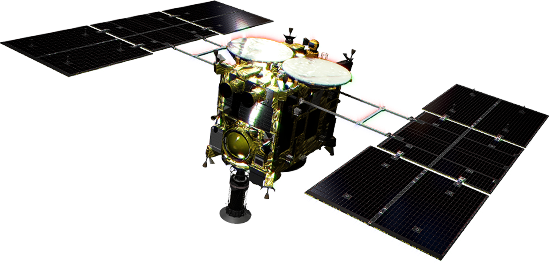
Meanwhile, scientists hope to learn about asteroids with some upcoming very important missions. NASA’s Osiris-Rex spacecraft is expected to travel to the asteroid Bennu later this year and return samples in 2023, while Japan’s Hyabusa 2 is close to asteroid Ryugu, with samples to be returned in 2020.
Cosmologist Claims Aliens May Be Hoarding Stars for Power

“We also discuss the observable signatures of a civilization elsewhere in the universe that is currently in this state of stellar harvesting.”
Stellar harvesting! If this were a movie, the opening would show a scientist played by Jeff Goldblum peering into a telescope, then looking up, rubbing his eyes, peering in again, then looking up again with a suitably concerned face, turning to a scientist played by Jodie Foster and saying, “You need to take a look at this!” In the real-life version, “this” is a Dyson sphere – one of those alien-built megastructures imagined to be large enough to surround a star and harvest its energy – except “this” is actually “these” … and it may not be your imagination.
Are Aliens Harvesting The Energy Of Stars?
Theoretical astrophysicist Dan Hooper from the Fermi National Accelerator Laboratory has written a new study entitled “Life Versus Dark Energy: How An Advanced Civilization Could Resist the Accelerating Expansion of the Universe” in which he lays out the scenario of how and why …
“… a sufficiently advanced civilization would chose to expand rapidly outward, build Dyson Spheres or similar structures around encountered stars, and use the energy that is harnessed to accelerate those stars away from the approaching horizon and toward the center of the civilization.”
“A sufficiently advanced civilization” – well, Hopper isn’t talking about us. But … is he talking about a civilization that already exists and is collecting star power to navigate the galaxies, potentially conquer the universe and possibly save themselves? The “saving” part is what he focuses on in the paper. Hooper points out that the universe is expanding and that growth is accelerating, which means civilizations, us included, will start seeing stars disappear over the horizon of the universe (a great name for a progressive rock album) like ships on the ocean.
Hopper sees this as a big problem and he sees Dyson spheres as the energy harvesting tool of choice for advanced civilizations. It makes sense. We have to wait a whole eight minutes for solar energy to reach Earth. Just think how much power we’d have with a Dyson sphere around the Sun? Sure, it would block the light (see Tabby’s star) but it would provide power for plenty of lamps, not to mention ships to find more stars to suck the energy out of.
Dyson sphere cut-away
If this is already happening, Hopper says we would know it because there would be unexplained holes in the sky where there should be stars. Or stars inexplicably moving across the sky because they’re being propelled by their Dyson sphere spaceship to the star of the advanced civilization. The fact that we haven’t seen any yet doesn’t necessarily mean they don’t exist. The process may just be too complex for our less-advanced civilization to detect.
Yes, this is very sci-fi. Or is it? Anyone? Bueller? Tabby?
Are We An Alien Experiment?
Fantastic Documentary Reveals How Ancient Aliens Built The Pyramids of Ancient Egypt

From the mysterious history of ancient Egypt emerge so many unanswered questions. Mainstream scholars are completely clueless and that’s probably because of their traditional beliefs. But what if the truth hides beyond our imagination?
When it comes to Ancient Egypt, probably, the most remarkable attribute is the Pyramids. Theconstruction of these megalithic structures thousands of years ago develops lots of mysteries.
The Ancient Alien Theory implies that otherworldly beings – guests on Earth, lend a hand on the building of the Pyramids at the Giza Plateau.
This theory asserts that our ancestors, with the technology they had thousands of years ago, couldn’t create not only the pyramids but other amazing structures within our world.
Going further from this point, the theory claims it was the intelligent alien beings who actually did it.
North Pole’s position changes with the time. This pyramid was exactly aligned at one time.
The centers of the four sides are calculated with an amazing precision bringing into existence this extraordinary eight-sided pyramid.
Namely, this result is not noticeable when you stand on the ground or from a larger distance. However, above in the air, under suitable brightness, this phenomenon glows into our perception.
In addition, these proper lights require being dawn or sunset in the spring and autumn equinoxes when the sun spreads shadow on the pyramid.
The Great Pyramid of Giza is the oldest and the largest pyramid of Ancient Egypt. It measures fascinating 481 feet in height. Moreover, the shape carved into the faces of the pyramid accurately suits the radius of the Earth.
The subsequent documentary gives another, different insight into the construction of the Great Pyramid of Giza. Its intriguing yet provocative content proposes another possible choice that explains the history of Ancient Egypt.
Watch it and leave us your comment and thoughts on the pyramids’ construction. Do you think aliens helped to build such vast structures that no doubt deserved their place in the world wonders’ list?
Another video
"'Enormous petrified mulberries': a new dimension on carved stone balls" -
"'Enormous petrified mulberries': a new dimension on carved stone balls"
By Dr Hugo Anderson-Whymark
Curator of Early Prehistory, Scottish History and Archaeology
Carved stone balls are one of Scotland’s most enigmatic prehistoric artefacts. Created some 5000 years ago in the Late Neolithic, their distinctive knobbed forms were carefully pecked and ground to shape by communities across the north east of Scotland. A small number, such as the Towie Ball, were elaborately incised with circles and spirals and represent some of the finest examples of Neolithic ‘passage grave’ art in Europe.
Yet we still don’t know how carved stone balls were used; in the words of archaeologists Stuart Piggott and Glyn Daniel (1951) ‘their use is wholly unknown’. It has long been postulated that they were weapons – mounted as maceheads or bound with sinew or twine and thrown like South American bolas. But other authors have suggested they were used as weights, measures, mnemonic devices or symbols of power; some mathematicians have even viewed them as representations of platonic solids. It’s easy to see why these artefacts have captured the imagination for more than two centuries.
Around 525 carved stone balls are known, the vast majority being from Scotland, with rare finds from England, Ireland and one example from Norway. National Museums Scotland holds the largest collection of carved stone balls in the world, with some 140 originals and casts of a further 60 examples from other collections. Some of our finest carved stone balls are on display in the Early People gallery, but as these artefacts are so popular we have decided to bring 60 of our carved stone balls to you as 3d models via our Sketchfab account. These examples represent a broad cross-section of the different known forms and raw materials in our collections; from three to six knobbed stones in granite, to sandstone examples covered in numerous rounded projections. The latter infamously described by Sir John Evans in his book Ancient Stone Implements (1897) as resembling ‘enormous petrified mulberries’.

Strange Prehistoric Carved Stone Balls - Atom

Carved ball from Towie, Aberdeenshire ©NMS 'Special' stone artefacts (e. carved stone balls and maceheads). Find this Pin and more on Scottish prehistoric ...

These models were made using photogrammetry, which uses around 150-200 images of each artefact to produce an exceptionally high-resolution 3D model. The resolution allows you to examine and appreciate these artefacts in unprecedented detail. Indeed, the model of one carved stone ball (X.AS 91) revealed traces of fine concentric circles on one projecting knob that had never been recorded before, despite the artefact having been in the museum for more than 100 years and examined by dozens of scholars. Traces of decoration and working are particularly clear in ‘matcap’ mode, which makes the artefact look like shiny metal, emphasising any irregularities in the surface.
Sharing these models on Sketchfab allows you explore these wonderful artefacts in 3d and Virtual Reality from the comfort of your own home, anywhere in the world. Enjoy!
Chinese satellite could link world to Moon's far side: space expert


Ryugu seen from 330-240km

The ONC-T (Optical Navigation Camera - Telescopic) captured images of Ryugu on June 17, 2018 at around 15:00 JST and June 18 at around 06:00 JST. At 15:00 JST on June 17, the distance to Ryugu was approximately 330 km, which had decreased to 240 km by June 18 at 06:00 JST.
Ryugu seen from between 220 ~ 100 km. Are we seeing the history of the asteroid etched on its surface? http://www.hayabusa2.jaxa.jp/topics/20180621je/index_e.html …

The following figures show the original images taken by the ONC-T, without any pixel smoothing. The order of the photographs is not chronological, but show the sequential rotation of the asteroid. The change in distance is compensated by keeping the size of the asteroid constant through the image set.

[Enlargement]Figure 1: Images of Ryugu taken with the ONC-T. These photographs were taken on June 17, 2018 at around 15:00 and June 18 at around 06:00 JST. They are arranged in order of rotation; a, b, c, d.
ONC team: JAXA, University of Tokyo, Koichi University, Rikkyo University, Nagoya University, Chiba Institute of Technology, Meiji University, University of Aizu and AIST.
This next image set is the same as the previous photographs, but with the pixels smoothed and the image processing applied which emphasizes light and dark regions.

[Enlargement]Figure 2: Images of Ryugu taken with the ONC-T. Image interpolation was performed during enlargement and the light and dark regions emphasized (brightness squared). The photographs were taken on June 17, 2018 at around 15:00 JST and June 18 at around 06:00 JST. They are arranged in order of rotation: a, b, c, d.
ONC team: JAXA, University of Tokyo, Koichi University, Rikkyo University, Nagoya University, Chiba Institute of Technology, Meiji University, University of Aizu and AIST.
The vertical direction in these images is tilted by 10 degrees counterclockwise compared to the vertical direction of the orbital plane of Ryugu. From looking between the multiple images in this set, you can see that the vertical direction is nearly perpendicular to the plane of revolution of the asteroid. We call this direction the asteroid's axis of rotation. The direction of the rotation is reversed compared to the Earth, with a rotation period of about 7.5 hours.
The diameter of Ryugu is about 900m, which is consistent with the prediction from ground observations. However, since the distance between the spacecraft and Ryugu is not precisely determined, there is still some uncertainty in the exact diameter at this time.
The shape of the asteroid looks like a spinning top (called a "Coma" in Japanese), with the equatorial part wider than the poles. This form is seen in many small asteroids that are rotating at high speed. Observed by radar from the ground, asteroid Bennu (the destination of the US mission, OSIRIS-REx), asteroid Didymous (the target of the US DART project), and asteroid 2008 EV5 that is approaching the Earth, all have a similar shape.
On the surface of asteroid Ryugu, you can see a number of crater-like round recessed landforms. In the first image, one large example can be seen with a diameter exceeding 200m. This moves to the left and darkens as the asteroid rotates and the lower part becomes cast in shadows.
The bulge at the equator forms a ridge around the asteroid like a mountain range. Outside this, the surface topology appears very ridge-shaped and rock-like bulges are also seen. These details should become clearer as the resolution increases in the future.
When I saw these images, I was surprised that Ryugu is very similar in shape to both the destination of the US OSIRIS-REx mission, asteroid Bennu, and also the target of the previously proposed MarcoPolo-R mission by Europe, asteroid 2008 EV5. Bennu and 2008 EV5 are about half the diameter (and 1/8 the volume) of Ryugu, with rotation periods about half as long. In other words, these celestial bodies are small and rotating fast compared to Ryugu. On the other hand, Bennu is a B-type asteroid, which is very similar to C-type asteroids such as 2009 EV5 and Ryugu. Therefore there should also be common properties due to the asteroid type. So we have both differences and similarities that have combined to produce very similar shapes... why is that? I think this is very interesting. So far, the asteroids we have explored have been different in shape, so Ryugu and Bennu could be the first time two similar-shaped asteroids have been examined. It will be interesting to clarify exactly what this similarity means scientifically.
If the axis of rotation for Ryugu is close to the vertical direction in this image, there is a big advantage as it will be possible to know almost the entire appearance of Ryugu at an early stage after arrival. This makes the project planning easier. However, it is also possible that potential landing sites may be limited to the equator of Ryugu. I hope we can find a suitable place to set down the lander and rovers.
Hayabusa2 project
2018.06.19

Japanse sonde ontdekt kraters en gebergte op planetoïde Ryugu

Schotten maken prachtige 3D-modellen van de meest mysterieuze ballen op aarde
Caroline Kraaijvanger

Muldashev: four civilizations on Earth before man

Muldshev, who in 2002 published three volumes of “In Search of Cities of the Gods”, followed by numerous other volumes (among which “Where do we come from” e “Between the arms of Dracula”), is convinced that the existence of more ancient civilizations of man is confirmed by archaeological finds, rock carvings, references to airplanes and Ufos in stories and legends. According to the expert, the civilizations that inhabited the planet would have been four.

The Asuras, or the natives, according to Muldashev were the first race appeared on Earth 10 million years ago. They were incredibly tall beings, up to 50 meters, they had an etheric body, they lived for up to ten thousand years and used telepathy to communicate with each other. In reality they were not natives of the Earth: they moved there after the death of the Phaethon planet.

As the millennia passed, the Asuras changed, their bodies became denser. Thus a new race would develop, the Atlanteans, i.e. “those born after”. They were slightly smaller than the Asuras, they still did not have bones, but they had a third eye, located between the eyebrows.
After the Atlanteans, appeared on Earth the Lemurians. Much more similar to modern humans, they possessed a bone skeleton and were differentiated according to sex. The third eye was still present, but not as well developed as the Atlanteans.
Lemurians were about 7-8 meters tall and lived about a thousand years. According to Muldashev, they were the ones who built the Sphinx, Stonehenge and many other wonderful monuments of antiquity.

Lastly the Borei would have appeared: this race was formed long after the other, its members were much lower, did not exceed 3-4 meters in height, their third eye was more hidden while the other organs were very similar to those of man.
What happened to all these beings? According to Muldashev, about 25-30 thousand years ago on our planet occurred a nuclear catastrophe following a conflict between Lemurians and Borei. Some of the Lemurians took refuge in the caves, where they fell into a hibernating state, the other side flew away on space ships.
After the Lemurians left the scene, the Boers and the Atlanteans reached unprecedented development peaks, but they could not avoid the disappearance of their civilizations that would have happened about 12 thousand years ago.
According to Muldashev a fifth race would have developed just before the disappearance of Atlantis, whose myth survived so far: the "aryan" race. The ancestors of modern man did not have a third eye and that's why our society would be developing more slowly.
Will it be true, or as official science says it's just about fantastic theories without any concrete proof? The experts have spoken, but this does not interest the readers of Muldashev.
Einstein Was Right! Scientists Confirm General Relativity Works With Distant Galaxy
Scientist invents technology to see multidimensional beings

Daniel Nemes scientist and inventor, originally from Spain but residing in Colombia, since he was 14 years old he became interested in astronomy and science. He was a member of the astronomical group of Madrid, Spain.
He says that the project started when he read an article in a magazine about the Dark Matter of the universe and the multidimensional universe momentarily interested him and called attention so he had the initiative to perform mathematical calculations and optical experiments to be able to capture images of ” the beyond”.
He discovered a method of capturing far superior to infrared, ultraviolet, black light, video camera with TV without antenna, etc. And that method I call ENERGIVISION . I use special lenses, ultrasensitive screens of his invention and above all sunlight. The images that he captures are of unknown origin. He explains that his theory is that they are images of other planes. However he says he has not traveled to other places to expose the invention. He has tried to make known to the scientific community and only answered a scientific body of the USA and in a rude way. The media have ignored and silenced the discovery along with the images captured.
Daniel Nemes says: “The only way I have to publicize my invention and the captures are by Facebook, since 2015 I have posted 1000 photos on my facebook. When I started to publish my images on my social network I had a lot of rejection, it was very hard and even insults towards me, fortunately my images are now more known and when I post on my facebook or in other groups it is rare to receive a disqualification or insult ” .
Judge for yourself the following images, the note is at the discretion of each person.


{ http://www.mysterious-times.com/ }
Nazi UFO Toy Pulled for Historical Inaccuracy
No, the Nazis did not get to space.
Stonehenge onthult nieuw mysterie: pleegde Pythagoras plagiaat? - HLN.beHet nieuwe boek “Megalith: Studies in Stone” beweert dat de geometrische principes van Pythagoras terug te vinden zijn in het mysterieuze Stonehenge. De wereldberoemde stenen cirkel werd 5000 jaar geleden gebouwd en staat bekend om zijn speciale positie ten opzichte van de zon. Elk jaar trekken duizenden toeristen naar de site om het eeuwenoude mysterie te bewonderen.
Een van de auteurs van het boek, Robin Heath, beweert dat een grote driehoek van Pythagoras te zien is op de Engelse site in Wales, waarvan de bluestones zijn afgesneden. Een rechthoek van vier zandstenen vormt volgens het boek een perfecte driehoek van Pythagoras wanneer de zandstenen diagonaal in tweeën worden gedeeld.
Megalithomaniacs Robin Heath and John Martineau launching their new book MEGALITH at Stonehenge solstice...
And Archdruid Rollo Maughfling is a fan!


|
9
|
Reageren
|
Delen
|
Niet alleen de onderzoekers van Stonehenge, maar ook andere experts zeggen dat ze bewijs hebben gevonden dat de beroemde stelling al lang voor Pythagoras bestond. Vorig jaar nog onthulden wetenschappers de geheimen van een mysterieuze 3.700 jaar oude Babylonische kleitablet, waarop de oudste goniometrische tabel te lezen staat. De Griekse filosoof leefde pas in 6de en 5de eeuw voor Christus en kan dus niets met die tabel of Stonehenge te maken hebben.
Duizenden nieuwsgierigen keken donderdag naar de zon op Stonehenge. De zon kwam op achter de Heel Stone. Die steen markeert de plaat voor zonsopgang aan de horizon. De toeschouwers stonden versteld van het fenomeen en verspreidden foto’s op sociale media, terwijl de stralen door het monument stroomden. Die stralen kondigden de langste dag van het jaar aan op het noordelijk halfrond.
Astronomen doen meest precieze test ooit van de theorie van Einstein - HLN.beBron: Belga
Met het MUSE-instrument van de VLT in Chili heeft een team onder leiding van Thomas Collett van de Universiteit van Portsmouth eerst de massa van het nabije sterrenstelsel ESO 325-G004 berekend door de bewegingen van sterren in dit relatief nabije elliptische sterrenstelsel te meten.
De wetenschappers namen met de Hubble ook een Einsteinring waar die is ontstaan doordat ESO 325-G004 het licht van een ver verwijderd sterrenstelsel vervormt. Aan de hand van deze waarnemingen konden de astronomen meten hoe de enorme massa van ESO 325-G004 licht, en daarmee dus ook de ruimtetijd, afbuigt.
Einsteins algemene relativiteitstheorie voorspelt dat objecten de hen omringende ruimtetijd vervormen, waardoor passerend licht wordt afgebogen. Dit resulteert in een verschijnsel dat het zwaartekrachtlenseffect wordt genoemd. Dit effect valt alleen op bij objecten die heel veel massa hebben. Inmiddels zijn een paar honderd van die sterke zwaartekrachtlenzen bekend, maar de meeste zijn te ver weg om hun massa exact te kunnen meten. Met een afstand van ‘slechts’ 450 miljoen lichtjaar is het sterrenstelsel ESO 325-G004 een van de meest nabije gravitationele lenzen.
De onzekerheid van de test bedraagt ‘slechts’ 9 procent. Daarmee is dit de meest precieze test van de algemene relativiteitstheorie buiten de Melkweg tot nu toe, zegt Collett.
Deze bevindingen kunnen belangrijke gevolgen hebben voor alternatieve zwaartekrachtmodellen, benadrukt de ESO ook. Deze alternatieve theorieën voorspellen dat de effecten van de zwaartekracht op de kromming van ruimtetijd ‘schaalafhankelijk’ zijn. Dit betekent dat de zwaartekracht zich op extragalactische lengteschalen anders zou moeten gedragen dan op de kleinere schaal van het zonnestelsel. Collett en zijn team hebben vastgesteld dat dit waarschijnlijk niet het geval is tenzij de verschillen alleen optreden op lengteschalen van meer dan 6000 lichtjaar.