Ontdek de Fascinerende Wereld van UFO's en UAP's: Jouw Bron voor Onthullende Informatie!
Ben jij ook gefascineerd door het onbekende? Wil je meer weten over UFO's en UAP's, niet alleen in België, maar over de hele wereld? Dan ben je op de juiste plek!
België: Het Kloppend Hart van UFO-onderzoek
In België is BUFON (Belgisch UFO-Netwerk) dé autoriteit op het gebied van UFO-onderzoek. Voor betrouwbare en objectieve informatie over deze intrigerende fenomenen, bezoek je zeker onze Facebook-pagina en deze blog. Maar dat is nog niet alles! Ontdek ook het Belgisch UFO-meldpunt en Caelestia, twee organisaties die diepgaand onderzoek verrichten, al zijn ze soms kritisch of sceptisch.
Nederland: Een Schat aan Informatie
Voor onze Nederlandse buren is er de schitterende website www.ufowijzer.nl, beheerd door Paul Harmans. Deze site biedt een schat aan informatie en artikelen die je niet wilt missen!
Internationaal: MUFON - De Wereldwijde Autoriteit
Neem ook een kijkje bij MUFON (Mutual UFO Network Inc.), een gerenommeerde Amerikaanse UFO-vereniging met afdelingen in de VS en wereldwijd. MUFON is toegewijd aan de wetenschappelijke en analytische studie van het UFO-fenomeen, en hun maandelijkse tijdschrift, The MUFON UFO-Journal, is een must-read voor elke UFO-enthousiasteling. Bezoek hun website op www.mufon.com voor meer informatie.
Samenwerking en Toekomstvisie
Sinds 1 februari 2020 is Pieter niet alleen ex-president van BUFON, maar ook de voormalige nationale directeur van MUFON in Vlaanderen en Nederland. Dit creëert een sterke samenwerking met de Franse MUFON Reseau MUFON/EUROP, wat ons in staat stelt om nog meer waardevolle inzichten te delen.
Let op: Nepprofielen en Nieuwe Groeperingen
Pas op voor een nieuwe groepering die zich ook BUFON noemt, maar geen enkele connectie heeft met onze gevestigde organisatie. Hoewel zij de naam geregistreerd hebben, kunnen ze het rijke verleden en de expertise van onze groep niet evenaren. We wensen hen veel succes, maar we blijven de autoriteit in UFO-onderzoek!
Blijf Op De Hoogte!
Wil jij de laatste nieuwtjes over UFO's, ruimtevaart, archeologie, en meer? Volg ons dan en duik samen met ons in de fascinerende wereld van het onbekende! Sluit je aan bij de gemeenschap van nieuwsgierige geesten die net als jij verlangen naar antwoorden en avonturen in de sterren!
Heb je vragen of wil je meer weten? Aarzel dan niet om contact met ons op te nemen! Samen ontrafelen we het mysterie van de lucht en daarbuiten.
Maandag 26 november 2018
What If Genetically Modified People Became the Norm?
What If Genetically Modified People Became the Norm?
SHENZEN, China — Amy and John Bollinsworth are sitting on a white couch in the waiting room of BabyX, China’s chain of premiere fertility clinics. Two days ago they flew from London with a mixture of excitement and anxiousness for today’s appointment with their genetic counselor.
After a month’s discussion and going through the BabyX’s gene catalogue, they’re ready to pick out the traits of their future baby: a piercing blue eyed, curly-red haired girl with tiny freckles on her face and a gene enabling her to sleep just a couple of hours a night and feel rested.
It is 2070, the year when China registered five million “designer babies” being born, up 20% from last year and expected to continue growing. BabyX, a part state-owned enterprise, is at the forefront on the boom. Developed out of GHealth, a consumer genomics company offering genetic tests to improve fertility treatments, BabyX received the first commercial baby-engineering license in 2030.
“We’re happy to be able to provide a high quality genetic service to our customers coming from over 50 countries across the world,” said Xiao Bao, head of BabyX business operations, speaking at a recent launch of a new product line in Beijing — a gene catalogue of sports traits including increased reaction speed, endurance, among others.
BabyX is one of many companies which sprung up during the genomics revolution in the first half of the 21st century. In 2014 the total sequencing market was estimated at $1.9 billion, with the potential market being estimated at $23 billion. For reproductive testing market, the opportunity was estimated to be close to $2.0 billion annually.
The “designer babies” are created using CRISPR gene editing, a technique that allows genes to be modified at specific desired locations within the genome and that became commonly used in laboratories around the world in early 2010s.
Gene editing is done using a tool called CRISPR-Cas9. CRISPR stands for Clustered Regularly Interspaced Palindromic Repeats. The name refers to the DNA sequence within the bacterial system where CRISPR was initially discovered. The DNA sequence repeats itself over and over again with unique sequences in-between the repeating palindromic ones. Cas9 is a protein which acts like molecular scissors, while a guiding piece of RNA (the other molecule essential to life) works as a small tag pointing Cas9 to which area in the DNA it should go and then where it should make very precise cuts. One way to think about CRISPR is as a text editor where you could search the given text of your genome, find the place where you want to edit it and make a change.
The technology has developed rapidly since the 2010s, although it initially ran into heavy resistance. Around forty countries, including China, discouraged or banned the editing tool to genetically engineer germline cells — cells whose change in the genome will be passed onto the progeny.
After publishing the first study on human embryos in 2015, where scientists attempted to modify a gene responsible for B-thalassaemia, a fatal blood disorder, China took the lead from the US in genome editing of embryos.
Whereas in the US, the federal funding of germline gene editing research was prohibited, the B-thalassaemia study was funded by the Chinese government. Within the next decade, technical challenges on the road to designer babies were overcome. One of the biggest challenges was preventing CRISPR going rogue and acting on unintended sites within the genome. This could lead to unwanted mutations such as inadvertently activating a cancer-causing gene or allowing pieces of chromosome to come together in a genomic rearrangement called a translocation, one of the causes of diseases like chronic myeloid leukemia. But by 2025 CRISPR system evolved up to the point where such off-targeting was strictly controllable.
The same year, 2025, China established its Human Fertilization Agency and lifted the ban on embryo genome editing, paving the way to commercializing the science behind it. The role of the Human Fertilization agency was to issue licenses to private and governmental organizations to use embryo genome editing for commercial and research purposes.
In China, these arguments were brushed aside. “China supports human rights and is a leader in the fight to improve health around the world with use of genetic engineering. UNESCO declarations do not create a legally binding obligations for the countries which signed them,” was the only short statement given from the communications department of the Human Fertilization Agency. After this act, a number of private designer genomic clinics sprung up in China.
The first “designer baby” was born in 2030 in Tianjin: Adam, a boy with purple eyes and golden locks framing his heart-shaped face. Like the Bollinsworths’ future daughter, Adam also had the ability to sleep just a couple of hours a day and feel rested. The activation of this gene enhanced the productivity of the working population by 3 percent around 2070, when the generation after Adam’s began entering the workforce. In the 2030s, though, it initially just meant longer sleepless nights for Adam’s parents.
Adam and other designer babies were born with enhanced intellectual abilities and physical appearances, designed to be more attractive based on population wide polls. However, the superhuman life they were given to lead came at a price.
In the decades after Adam’s birth debates raged from questions of serving genetically enhanced people to the need for different grading systems adapted to designer children’s enhanced abilities. Private schools appeared, offering accelerated curriculum specially catering for designer children. Education specialists warned that designer children could face similar challenges as gifted learners. A 2006 study, reported that 67% of gifted individuals experienced some form of bullying by the age of 14 within the educational system and therefore could face higher rates of suicide and depression.
The rise of genetically-modified people also quickly provoked fear, particularly in the US.
On Time Magazine’s 2040 Person-of-the-Year cover, a 10 year-old Adam stared out under the headline, “U.S. or Them” — just a decade after he had appeared on it under a celebratory one. A month earlier, the U.S. had banned entrance to all genetically-modified people, except in cases where the modification was medical-related.
“We won’t let those monsters enter our country and procreate with our citizens!” Benjamin Jackson, the country’s controversial president, had told TV cameras, as he signed an executive order imposing the ban.
There had also been a fearful reaction in Europe, where France required special visas for GM-people entering. Countries enforced strict border controls where the special visa stamped in the passport contained a barcode with person’s stored genome sequence, allowing immigration officers to see what modifications had been made.
Just five years before that, in 2035 the world had celebrated a milestone together. Thirty two OECD countries had recorded zero new cases of cystic fibrosis. In more than two thirds of cases the difference between suffering the disease or not had proved to be just a single missing letter in a person’s genome.
This disease was just one of many genetic disorders that future generations in developed countries would know nothing about. Progress was still uneven though, while developed nations were making huge strides towards disease eradication, developing countries faced the same problems as in the past: poor medical access and unaffordable prices of genetic engineering. Similar to prices of insulin which soared in 2010s, the price of a genetic modification didn’t depend only on the price of technology. Although the technology was getting cheaper, prices often depended more on the politics around governments and the pharmaceutical companies providing the service. Genetic engineering of embryos came coupled with IVF treatments, which, according to the Advanced Fertility Center of Chicago, in their basic form without CRISPR came with a price tag of $15,000, making them unattainable for populations of developing countries.
But, while throughout the 2030s the world embraced editing embryo’s genomes as a way to eradicate heritable diseases, enhancing the genetic traits of your offspring remained intensely contested.
The EU and the US initially banned any kind of genetic manipulation which didn’t directly aid disease prevention and treatment. Asian and Latin American countries, however — led by Japan, China, Brazil and India — allowed the creation of designer babies under one condition: a designed life couldn’t create life, all people created this way were compulsorily born sterile.
Unsurprisingly, the technology was quickly identified as a potential means of population control, particularly in countries where policies meant to target overcrowding were already in place. The same year Adam was born, China, released a planning document estimating a 1:1 ratio of designer vs. normal newborns would lead to a decrease in the population numbers. India projected that by 2080 a quarter of its births would be designer babies, conducted under a public births program. As the GM-people matured, adoptions also surged.
After half a year in China and two IVF treatments, Amy and John Bollinsworth returned to London expecting a child. Not everyone was pleased by their decision — some friends refused to hold baby Jemima. Many things though were the same for them as any other family — there were still waiting lists for childcare, and the scrambling later to get her into the right school catchment area. Even in a world of genetically-designed life some things didn’t change.
De Europese ruimtevaartorganisatie ESA heeft een video vrijgegeven van de lancering van een Russische onbemande draagraket op 16 november in Kazachstan. Het bijzondere aan de beelden is dat ze geschoten werden vanuit het internationaal ruimtestation ISS. Astronaut Alexander Gerst deelde de timelapse op Twitter. In het filmpje is goed te zien hoe de raket en de cargo van elkaar losgekoppeld worden, en die eerste naar de Aarde terugkeert. Het ISS bevond zich op dat moment op ruim 400 kilometer van de onbemande Soyuz.
RUSSEN WILLEN OP DE MAAN KIJKEN OF DE AMERIKANEN ER ECHT WAREN ( VIDEO )
De discussie of de Amerikanen nu wel of niet mensen op de maan hebben gezet blijft tot op de dag van vandaag aktueel.
Om aan alle speculaties een einde te maken, zijn het de Russen die op de maan willen controleren of de Amerikanen er werkelijk zijn geweest.
Voor velen is het niet voor te stellen dat de maanlandingen door de Amerikanen waarbij mensen op dit hemellichaam rondliepen wellicht in scene is gezet.
De discussie of dit nu wel of niet echt is gebeurd, wordt uiteraard niet alleen bij ons gevoerd, maar eigenlijk overal ter wereld.
En zo kan het dat de president van Moldavië aan Dmitry Rozogin, hoofd van Roscosmos (de Russische NASA), vroeg of hij wist of de Amerikanen nu wel of niet op de maan zijn geweest. Dit mede omdat Rusland zelf ook plannen heeft om met maanmissies te gaan beginnen. In de jaren zeventig van de vorige eeuw waren ook zij bezig met maanmissies, maar na vier exploderende raketten werden verdere pogingen toen afgeblazen.
Rozogov antwoordde dat een onderdeel van de Russische maanmissies zal zijn om te controleren of de Amerikanen daadwerkelijk op de maan zijn geweest. Nu wordt er in de Amerikaanse media gezegd dat Rozogov dit gezegd zou hebben als grap, maar Russen staan er in het algemeen niet om bekend dat ze echte grappenmakers zijn. Verder weet Associated Press te melden dat er in Rusland veel mensen zijn die samenzweringstheorieën aanhangen.
Er is uiteraard een reden dat Rozogov dit zegt en misschien doet hij het wel voor komen als grappig bedoeld, maar dat zal het waarschijnlijk niet zijn. Uiteraard zullen de Russen controleren of er inderdaad sporen te vinden zijn op de maan van de geclaimde Amerikaanse aanwezigheid.
Wij hebben twee jaar geleden een uitgebreid artikel gepubliceerd, geschreven door een lezer, waar overtuigend wordt afgerekend met de Amerikaanse bewering dat ze op de maan zijn geweest.
Ook nu nog, bijna een halve eeuw later, komen er nog steeds nieuwe dingen boven water waaruit blijkt dat NASA heeft gelogen over de maanlandingen, zoals het volgende uit een artikel eerder dit jaar.
Het schijnt een wetenschappelijk feit te zijn dat geluid niet hoorbaar is in de ruimte. Dit komt omdat volgens de wetenschapje klaarblijkelijk geen geluid kunt horen omdat er geen atomen of moleculen zijn om dit geluid te dragen.
Ruimtefilms met zware explosies slaan de plank volledig mis. In de ruimte is het doodstil, want geluid plant zich niet voort in een vacuüm.
Nasa laay zich door dit soort kleinigheden niet uit het veld slaan en wil de wereldbevolking doen geloven dat astronauten op de maan met een hamer kunnen slaan en dat dat geluid vervolgens kan worden gehoord.
We kunnen daarom ook een lang verhaal kort houden dit keer, want de fameuze Streetcap heeft beelden ontdekt van de Apollo 15 missie, waarbij een astronaut druk bezig is met met een hamer een soort paal in de grond te slaan en iedere keer als hij de paal raakt dan hoor je dit.
Dat betekent dan dat de maan een atmosfeer heeft net als de aarde en als dat niet zo is, dan zijn de beelden volkomen nep en is Nasa bij deze wederom betrapt.
Mocht je nog meer argumenten willen hebben waaruit zou blijken dat de maanlandingen nep waren, dan volgen er hier nog tien in de volgende video.
Maar, het is zoals met alles. Ook al wijzen veel argumenten in de richting van een nep maanlanding, het zou natuurlijk heel mooi zijn als de Russen er daadwerkelijk in zouden slagen om voor eens en voor altijd vast te stellen wat er nu wel of niet is gebeurd.
En mochten zij vaststellen dat de maanlandingen inderdaad helemaal nep waren, dan is nog maar de grote vraag of wij dat ooit te weten zullen komen. Waarschijnlijk zullen de Russen dat lekker voor zichzelf houden, bijvoorbeeld om Amerika mee onder druk te zetten, net zoals Erdogan dat doet met de moord op de journalist Jamal Khashoggi.
En, mocht je al moeite hebben met het idee dat de bevolking massaal is voorgelogen betreffende de maanlandingen, dan raden wij je voor je eigen gemoedsrust aan vooral niet op deze link te klikken.
It’s the favorite Old Testament story of fire-and-brimstone preachers who want their flocks to clean up their acts. In fact, fire and brimstone (an ancient word for ‘sulfur’) is what the Book of Genesis says rained down on the cities of Sodom and Gomorrah as punishment for various sins (sexual, of course – the source of ‘sodomy’). And who can forget Lot’s wife, who disobeyed an order and looked back at what was happening to Sodom and turned into a pillar of salt. Did Sodom and Gomorrah really exist? Is there some sort of natural explanation for what might have happened to them … and to poor Lot’s wife, who doesn’t even get a name in the account? A group of researchers recently found evidence that leads them to believe the fire-and-brimstone the destroyed Sodom was the result of an atmospheric meteor explosions that puts those of Tunguska and Chelyabinsk to shame. And they name names!
“That the most productive agricultural land in the region, which had supported flourishing civilizations continuously for at least 3,000 years, should suddenly relinquish, then resist, human habitation for such a long period of time has begged investigation.”
That puzzle was the inspiration for “The 3.7kaBP Middle Ghor Event: Catastrophic Termination of a Bronze Age Civilization,” a paper produced by a multidisciplinary group of scientists and presented by archaeologist Philip Silvia at the annual meeting of the American Schools of Oriental Research held last week in Denver. According to The Times of Israel, Silvia revealed the results of twelve seasons of study in a 25-km (15 mile)-wide circular plain north of the Dead Sea called Middle Ghor which is where Sodom and Gomorrah were believed to have once stood. Radiocarbon dating and minerals that appeared to have been instantly crystallized by high temperatures convinced them that these were the result of a massive airburst caused by a meteor about 3,700 years ago … the time when Lot’s wife would have turned around to see the explosion and possible been incinerated.
The excavations showed that the area, now a part of Jordan, was continuously occupied for at least 2.500 years before an estimated 65,000 people disappeared, entire cities were reduced to rubble and the Dead Sea suddenly spread its salty waters over once-fertile farmlands, rendering the area uninhabitable for 700 years. The archeologists found pieces of pottery melted into glass and shards of minerals embedded into their surfaces by incredibly high-force winds. This evidence and much more left them no doubt as to what Lot’s wife saw:
“This paper surveys the multiple lines of evidence that collectively suggest a Tunguskalike, cosmic airburst event that obliterated civilization — including the Middle Bronze Age city-state anchored by Tall el-Hammam — in the Middle Ghor (the 25 km diameter circular plain immediately north of the Dead Sea) ca. 1700 BCE, or 3,700 years before present (3.7kaBP). Based upon the archaeological evidence, it took at least 600 years to recover sufficiently from the soil destruction and contamination before civilization could again become established in the eastern Middle Ghor.”
OK, that explains the fire-and-brimstone, but does it prove that this meteor destroyed the biblical cities of Sodom and Gomorrah?
There are biblical references to “ha-kikkar,” which means “the plain,” and translations of Genesis refer to the rain of “burning sulfur” destroying “those cities and the entire plain, including all those living in the cities — and also the vegetation in the land.” Silvia and co-author Dr. Steven Collins write:
“The physical evidence from Tall el-Hammam and neighboring sites exhibit signs of a highly destructive concussive and thermal event that one might expect from what is described in Genesis 19. The destruction not only of Tall el-Hammam (Sodom), but also its neighbors (Gomorrah and the other cities of the plain) was most likely caused by a meteoritic airburst event.”
What about Lot’s wife and all the sinning? You’ll have to wait for another study.
PRE-ADAMITES: DID HUMANS INHABIT EARTH BEFORE ADAM AND EVE?
The timeline of human existence has captured the attention of philosophers, scientists, and ordinary, curious people throughout the ages. Of course, there is the famous tale of Adam and Eve, but were they truly the first humans to walk the Earth? There is a growing body of research that suggests modern humans were not the first intelligent beings to live on our planet.
IS IT POSSIBLE PRE-ADAMITES EXISTED?
There are groups from all belief systems — Christians, conspiracy theorists, alien researchers, evolutionists, and more — who believe pre-Adamites (humans or intelligent beings that walked the Earth before Adam) actually existed.
The idea of the possibility of a pre-Adamite civilization and discussion about the origin of the human race is not a new one. Debates on the topic have been taking place since 170 AD. Over the years, many theories swirled about, enticing logical and romantic thinkers alike to explore further, look deeper, and question what they had been taught.
THE CHRISTIAN DEBATE
A growing number of Christians and people of other faiths believe modern-day humans were not the first — and possibly are not the last.
The Bible has clear passages about events that have taken place and that will take place at some point in the future, stating human existence operates on a 7,000-year cycle. Based on scripture now, the Earth is only a little over 6,000 years old. However, a great deal of scientific evidence indicates it is much, much older.
The Bible does not specifically state Adam was the first man ever to walk the Earth. There are too many gaps in the information contained in that chapter to get a clear picture.
Consider the account of Noah and the Great Flood. All humans were wiped out, except for Noah and his family. It’s quite possible a new Adam and Eve were born out of this catastrophe, starting the cycle anew. Therefore, it’s not entirely irrational to have doubts over whether or not Adam and Eve were truly the first humans on Earth.
In the book of Genesis, we read the Earth was without form and void — as if it had experienced a great catastrophe. We know from scripture that water already covered the Earth, and scientists are now finding, under the great bodies of water of the world, evidence of entire civilizations. These findings raise more questions than answers. How do we mesh science with scripture? Is it possible?
Many events documented in the biblical texts seem to be supported by science. Can these two seemingly oppositional systems coexist and come together to give us a more complete picture of where we came from?
Consider that the original biblical texts have been translated repeatedly. The version we use today has only been around since the 1600s, and the Catholic church uses a heavy hand in changing the scripture and the structure of the book itself. If you stop and think about it, perhaps we’ve lost something in all the edits and translations. Maybe we don’t have the whole story.
Keep in mind, there is nothing new under the sun (Ecclesiastes 1:9).
THE SCIENTIFIC DEBATE
Traditionally, science and religion are diametrically opposed, with religion calling for faith and science calling for fact. However, scientific findings in recent years seem to be closing that gap.
Scientists present evidence that dinosaurs once roamed the Earth. Christians open their Bibles to the book of Job to read about what appears to be dinosaurs coexisting with humans. More recently found civilizations and objects defy all scientific and biblical teaching.
Throughout the world, ancient cities are being discovered; not on mountaintops or in forests, but under the ocean. These include:
Port Royal, Jamaica
Lion City of Quiandao Lake, China
Nero’s sunken city
Cleopatra’s Palace in Alexandria, Egypt, and Thonis-Heracleion in Egypt
Sunken city of Cuba
Dwarka, India
Yonaguni Monument, Japan
What are these ancient underwater cities? Are they evidence of a pre-Adamite civilization? Many of them have elaborate structures and display a level of technology scientists say was not possible at the time they would have been in use. Could carbon dating and other methods scientists use to date materials really be that far off? That’s not just a decade or two but a multi-billion-year error. Scientists believe they have definitive evidence, or are at least very close, to support their timelines.
Some scientists believe they have found evidence of the inhabitants of some of these civilizations. A flash frozen civilization in Antarctica is of particular interest. The skeletons looked vaguely human except for the elongated skulls. Who were they? What were they? Scientists speculate an ancient race that has long since died out.
Conspiracy theorists, on the other hand, believe they are an alien race that came here to escape their dying planet. They set up their civilizations and “seeded” the Earth. That is what we humans are.
Everyone has a story, a theory about what took place. The truth is, there are very strange things on this planet that cannot be explained by our current understanding of history, science, technology, and culture. What do we do? We press on. We continue to explore. We keep our minds open and keep searching for the truth.
Regardless of our belief systems, nothing can be learned by blindly walking through life ignoring what does not fit in the history books. Skeptics must acknowledge these ancient civilizations are real, and they were left here for a reason. Why weren’t they destroyed? Is this part of an elaborate puzzle, a higher test to separate the wheat from the chaff?
As for the scientists, are they doing all they can? Is science truly utilizing all available resources to explore these civilizations and search for clues that would change the way we view society and the world? The fact that these structures and entire cities were left behind and buried, only for us to find them so many years later, suggests intent.
When you are deciding what to believe, the greatest tool that can be sharpened and utilized is your critical thinking.
Want more like this article?
Don’t miss Ancient Civilizations on Gaia. Inside we take you on a journey through humanity’s suppressed origins to reveal the secret code left behind by our ancestors.
All modern humans descended from a solitary pair who lived 100,000 to 200,000 years ago, scientists say.
Scientists surveyed the genetic 'bar codes' of five million animals - including humans - from 100,000 different species and deduced that we sprang from a single pair of adults after a catastrophic event almost wiped out the human race.
These bar codes, or snippets of DNA that reside outside the nuclei of living cells, suggest that it's not just people who came from a single pair of beings, but nine out of every 10 animal species, too
Stoeckle and Thaler, the scientists who headed the study, concluded that ninety percent of all animal species alive today come from parents that all began giving birth at roughly the same time, less than 250 thousand years ago - throwing into doubt the patterns of human evolution.
Scientists surveyed the genetic 'bar codes' of five million animals and 100,000 different species
'This conclusion is very surprising,' Thaler admitted, 'and I fought against it as hard as I could.'
The new report from experts at the Rockefeller University along with from the University of Basel published the extraordinary findings in Human Evolution.
The research was led by Senior Research Associate Mark Stoeckle and Research Associate David Thaler of the University of Basel, Switzerland.
They mined 'big data' insights from the world's fast-growing genetic databases and reviewed a large literature in evolutionary theory, including Darwin.
Dr Stoeckle said: 'At a time when humans place so much emphasis on individual and group differences, maybe we should spend more time on the ways in which we resemble one another and the rest of the animal kingdom.'
The conclusions throw up considerable mystery as to why the need for human life to start again was needed such a relatively short time ago, especially since the last known extinction we know of was during the time of the dinosaurs 65 million years ago.
This opens up the possibility of an inbuilt human evolutionary process wherein we break down and die out, leaving the need to start from scratch.
Mark Stoeckle (left) of Rockefeller University made findings with David Thaler of Basil Uni
The research deduced that humans and animals sprang from single pair - as did animals
We're also surprisingly similar to not just every other human, but every other species.
'If a Martian landed on Earth and met a flock of pigeons and a crowd of humans, one would not seem more diverse than the other according to the basic measure of mitochondrial DNA,' said Jesse Ausubel, Director of the Program for the Human Environment at The Rockefeller University.
'Culture, life experience and other things can make people very different but in terms of basic biology, we're like the birds,' Dr Stoeckle added.
The 'mitochondrial DNA' examined in the research is that which mothers pass down from generation to generation and it showed the 'absence of human exceptionalism.'
'One might have thought that, due to their high population numbers and wide geographic distribution, humans might have led to greater genetic diversity than other animal species,' added Stoeckle.
'At least for mitochondrial DNA, humans turn out to be low to average in genetic diversity.'
The study has been misunderstood by some religious parties who thought it meant that we all came into being in some seminal Big Bang-typed event 100,000 ago, but this isn't what the findings actually suggest.
What Stoeckle and Thaler's findings point to is that our species has to revamp far more often than we thought, and we do so in unison with all animals.
On Monday (Nov. 26), Mars fans around the globe willwatch eagerlyto see NASA land a new mission calledInSighton the Red Planet — but for the scientists who built the mission, the real excitement will just be getting started.
That's because the $850 million InSight mission has anambitious slateof scientific tasks to accomplish during its time at work on the surface, which is planned to last about two years. While plenty of orbiters, landers and rovers have sought to understand Mars' surface and atmosphere, InSight — or more formally Interior Exploration using Seismic Investigations, Geodesy and Heat Transport — will be the first to turn its gaze inward.
With just three main instruments aboard the lander, the team has carefully designed the mission to tackle a big mystery: What's hiding beneath the Martian surface — geologically, that is. That makes InSight stand out from the string of missions that have gradually looked at the possibility of life on Mars throughout the planet's history, most recently the Curiosity rover and the upcoming Mars 2020 rover. [NASA's InSight Mars Lander: Full Coverage]
An artist's depiction of NASA's InSight lander at work on the surface of Mars.
Credit: NASA
InSight has three main projects that will structure its time on Mars.
First, it carries a seismometer decked out with a suite of environmental sensors. You may be familiar with seismometers from their work here on Earth detecting tremors in the ground, and InSight's will perform a similar task, sensing hypothesized shakes in the ground that scientists call marsquakes, as well as tremors triggered by meteorite impacts.
But terrestrial seismometers build up a dense network of instruments, helping scientists pinpoint what's causing the shakes those instruments feel. InSight's seismometer will be the only quake sense on all of Mars, so scientists had to rig the instrument to make sure they could still get the data they need. They'll also be hoping to see as many shakes as possible to maximize the data they can use and its precision.
Another challenge for the seismometer was eliminating all the other factors that could look like shakes to the super-sensitive instrument. That means the seismometer is decked out with a suite of sensors measuring factors like wind and pressure, which could be misinterpreted as marsquakes.
Once the seismometer has time to gather data on shakes, the team hopes to be able to map layers within Mars, since waves travel differently through rock under different conditions. The analysis could also potentially identify liquid water or plumes feeding volcanoes, although scientists aren't yet confident of that.
That underground-mapping project is paralleled by the work being done by a second instrument, a pair of incredibly precise radio transmitters. By bouncing signals to and from Earth and watching how they travel, scientists can identify where InSight is in space down to just a couple inches (a few centimeters).
Using that ultra-detailed location, the scientists can then watch the lander move over time and gradually map the tiny wobbles in how Mars rotates. Those wobbles reflect the planet's interior structure, specifically where its core falls on the spectrum between solid and liquid — the latter sloshes more.
InSight's final task is to deploy a heat probe that can hammer itself 16 feet (5 meters) below the Martian surface — much deeper than the mere inches that other spacecraft have drilled on planetary bodies.
The probe will measure how heat is rising through the planet, which should help scientists figure out where the heat is coming from. It can also produce its own brief flashes of heat and study how that heat flows through the surrounding rock, learning more about the rock that makes up the Martian crust.
All told, InSight's three projects will help scientists figure out how our neighbor was born and whether Mars was formed from the same mixture of materials as Earth and our moon. That could have implications for our broader understanding of how our solar system formed — and even for what we know about solar system formation more generally.
So get excited for the drama of landing — but remember, it's just the beginning for InSight.
Look out, International Space Station, this spacecraft is hot on your tail! An astronaut captured a stunning time lapse video of the Russian Progress MS-10 cargo spacecraft, also known asProgress 71, on its way to the orbiting complex.
About 15 minutes of the Progress launch on Nov. 16 show up in the time lapse video posted on theEuropean Space Agency website. The video clearly shows the flare of rocket launch, the spacecraft making its way up into space, and the re-entry of the first stage of the rocket. As the spacecraft becomes a bright light in the sky, the Earth spins below.
European Space Astronaut Alexander Gerst, the commander of Expedition 57, captured the images from the wrap-around Cupola window on the space station. He set a camera that took pictures at regular intervals, and the resulting timelapse shows the launch at about eight to 16 times normal speed, according to a statement from ESA.
Progress delivered 5,652 pounds (2,564 kg) to the space station Nov. 18 after making a flawless launch from Baikonur Cosmodrome in Kazakhstan, where Russia blasts cargo and cosmonauts to the space station. The next scheduled launch from the site will have a crew on board — the three-person Expedition 58 crew, which is expected to leave Earth at 6:31 a.m. EST Dec. 3 (1131 GMT).
Gerst, NASA astronaut Serena Auñón-Chancellor and Russian cosmonaut Sergey Prokopyev arrived at the space station on June 8. Gerst's crew was supposed to be joined by two other astronauts after an Oct. 11 launch, but that flight aborted during launch due to a deformed sensor in the rocket. Russia swiftly wrapped up an investigation and moved the Expedition 58 launch three weeks earlier in order to keep the station crewed while Gerst's team leaves for home on Dec. 20.
Retired Air Force officer claims he chased a 8000 mph craft over Stonehenge
As a former flight and intelligence officer with a 20-year service record, he said he has personally witnessed some pretty bizarre phenomena, George Filer III came clean saying that the UK government hides extraterrestrial life as a top-secret
George Filer III is 82 years old and currently serves as the New Jersey director of MUFON, which is an American based non-profit association that studies the UFO phenomena. He is one of the many ex-military and NASA veterans to speak openly about UFOs. However, he also happens to have 20 years of experience as an Air Force officer. He revealed that some of the events he experienced in the air are rather inexplicable.
Illustration of an Unidentified Flying Object
Namely, during the Cold War, Filer was placed in Scotland. He remembers piloting a military aircraft that tried to intercept a weird object that was as big as a bridge on the radar. As they were getting nearer, they were able to see lights off in the distance. He described the lights looked something like a cruise ship at night. There were multiple all over the object.
When we got closer, we could see lights off in the distance – kind of like a cruise ship you would see at night, with multiple lights across it. As we got, I don’t know, about 5 miles from it – it went up into space. And we were doing over 400 (miles per hour) and I would say it was doing 10, 20 times our speed and it was this huge object. So we were convinced that it was something that was not ours, let’s put it that way. To me, it looked like a long cylinder.
George Filer III came clean saying that the UK government hides extraterrestrial life as a top-secret, further describing his own UFO confrontation:
Source and references
NotFromEarth.co - UFOs Are Real: Ex Air Force Officer Claims He Chased A ‘8000 mph’ Craft
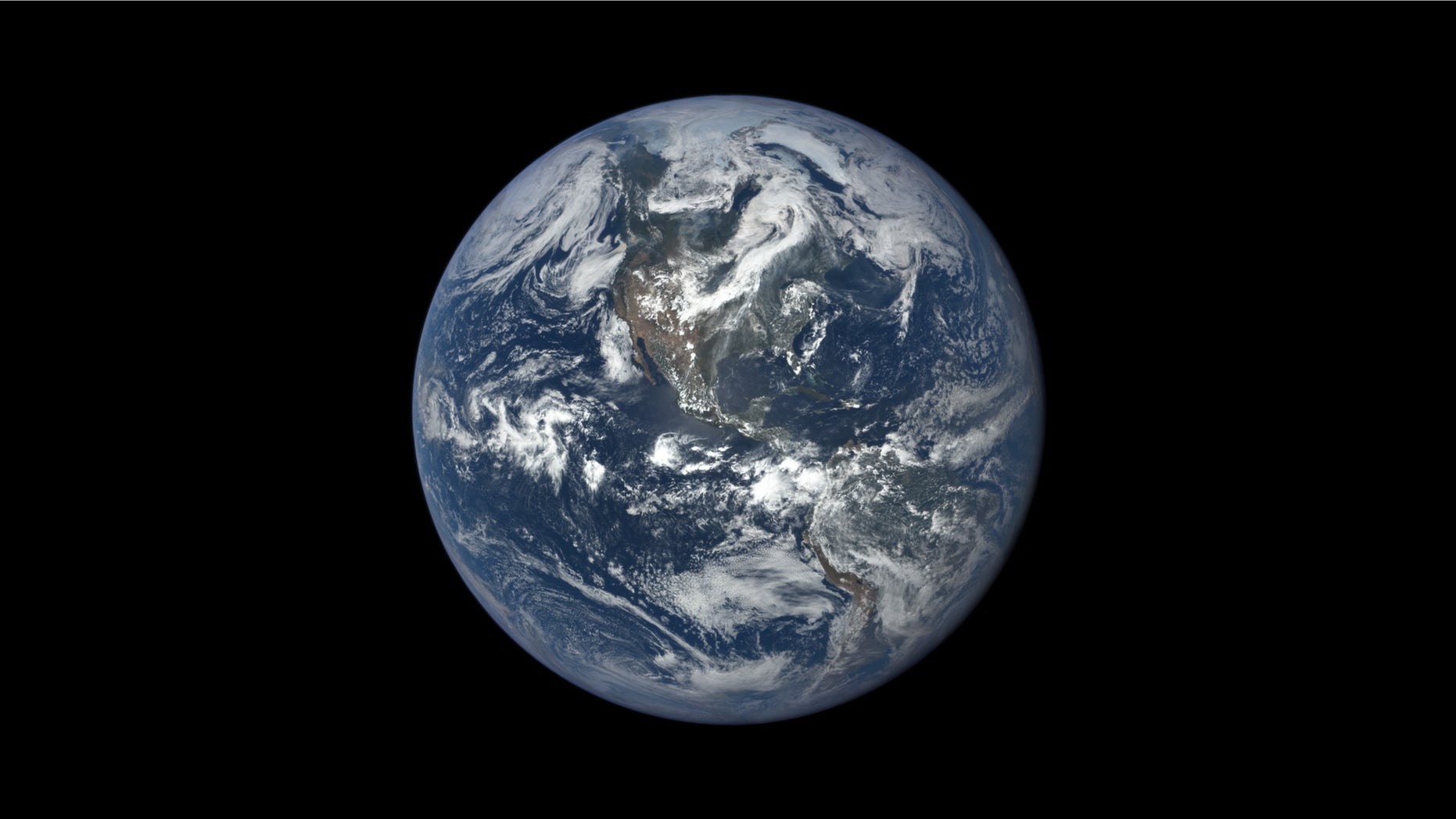
FILE -- This image shows Earth as seen by NASA's Earth Polychromatic Imaging Camera (EPIC), aboard NOAA's Deep Space Climate Observatory (DSCOVR) spacecraft.
(NASA)
In one of the most provocative and misunderstood studies of the year, scientists in the U.S. and Switzerland have madean astonishing discovery: All humans alive today are the offspring of a common father and mother – an Adam and Eve – who walked the planet 100,000 to 200,000 years ago, which by evolutionary standards is like yesterday. Moreover, the same is true of nine out of every 10 animal species, meaning that nearly all of Earth’s creatures living today sprang into being recently from some seminal, Big Bang-like event.
Mark Stoeckle at Rockefeller University and David Thaler at the University of Basel reached this striking conclusion after analyzing the DNA “bar codes” of five million animals from 100,000 different species. The bar codes are snippets of DNA that reside outside the nuclei of living cells – so-called mitochondrial DNA, which mothers pass down from generation to generation.
With each reproduction, errors creep into the bar code, as they do when you repeatedly photocopy a document. By measuring the accumulated errors – the blurriness or “diversity” among the bar codes – scientists are able to infer the passage of time.
That’s how Stoeckle and Thaler concluded that ninety percent of all animal species alive today come from parents that all began giving birth at roughly the same time, less than a quarter-million years ago. “This conclusion is very surprising,” Thaler avers, “and I fought against it as hard as I could.”
What caused animal life on Earth to be almost completely renewed such a short time ago? For now, it remains a mystery.
It’s possible something far more powerful than H-bombs decimated life and only a single set of parents for each species survived to live and procreate another day. But the last major extinction event we know about – the one that snuffed out the mighty dinosaurs – happened a full 65 million years ago.
It’s also possible there is something in nature that limits the size of an animal population. Perhaps it’s some built-in evolutionary process that when a population gets too big, it crashes and must restart itself from scratch.
In their report, published in Human Evolution, Stoeckle and Thaler offer other possible explanations, including, Thaler explains, “ice ages and other forms of environmental change, infections, predation, competition from other species and for limited resources, and interactions among these forces.” Whatever the explanation, he adds, the takeaway is this: “all of animal life experiences pulses of growth and stasis or near extinction on similar time scales.”
That is, humans, elephants, birds, you name it – Earth’s creatures tend to stand and fall in unison, like the rising and falling of the tides. And even though we don’t know what Svengali is directing the show, we now have scientific evidence that it wipes the slate clean far more frequently than we ever imagined.
Many religious commentators misunderstand this study to mean that species abruptly came into being only recently. To be clear: according to evolutionary biologists, species developed gradually over many millions of years. Stoeckle and Thaler’s discovery is that something happened roughly 100,000 years ago that created entirely new populations from long-existing species.
That said, Stoeckle and Thaler’s study does line up with the Bible in at least two notable ways. First, it affirms that we and our fellow creatures on Earth arose from a recent and profound creation event, orchestrated by some unknown mechanism. And second, the DNA bar codes reveal that species are quantized. Instead of there being a continuum of animal varieties, as one might expect from millions of years of gradual evolution, creatures fall into very distinct, widely separated populations – what the Bible describes as “kinds,” from the Hebrew word min.
“Darwin struggled to understand the absence of intermediates and his questions remain fruitful [to this day],” says Thaler. What the new study discovered, he explains, is that “If individuals are stars, then species are galaxies. They are compact clusters in the vastness of empty sequence space.”
Above all, Stoeckle and Thaler’s intriguing study serves up hard evidence for the astonishing fragility of life and a humbling lesson for the high-and-mighty among us. It proves we are at the mercy of forces we do not see nor understand; forces that made our existence possible a few hundred thousand years ago and that just as quickly – in the twinkling of an eye – can and will one day take us out.
Groot, groot nieuws in deze video. En voordat we beginnen moet ik zeggen dat uit de duizend of zo video’s die ik in de laatste vier of vijf jaar heb gepost, van al die vreemde dingen waar we over spraken, over alle beelden die we hebben gezien en van al het bewijs dat naar boven is gekomen dat het buitenaardse fenomeen bevestigde en het lange verbergen ervan. Van al die zaken waar we over hebben gesproken is er waarschijnlijk geen andere video of ander onderwerp waar ik meer opgewonden van raak als het onderwerp waar we het vandaag over gaan hebben. En ik heb dit in het verleden al opgemerkt, en ik heb er sindsdien een veelvoud aan vragen over ontvangen en ik ben er min of meer zwijgzaam over geweest omdat ik niet wist wat er zou gaan gebeuren. Maar vandaag ben ik opgewonden en verheugd te zeggen dat de man waarvan de Amerikaanse overheid trachtte die uit te wissen, Bob Lazar een exclusief interview zal doen hier op SecureTeam, tezamen met mr Jeremy Corbell die een film in voorbereiding heeft die uit zal komen, en nogmaals, ik vertelde jullie een paar maanden geleden erover, toen we hier min of meer over fluisterden, die film is getiteld: ‘Bob Lazar, Area-51 en vliegende schotels. En als jullie de naam Bob Lazar kennen, als je al van deze man hebt gehoord of je weet wie hij is en wat hij heeft gedaan, wel, dan weet je hoe explosief deze film en dit interview zal zijn en wat het betekent voor dit onderwerp. Hier wordt daadwerkelijk geschiedenis geschreven.
Intro Music: Spellbound by Kevin Macleod Outro Music: "Dark Trap" by rh_music For business inquiries or concerns regarding footage used in this video, please contact me at: SecureteamNews@gmail.com and I'll get back to you within 48 hours. Thanks!
Killer Robots? They Are Reality. Should We Be Concerned?
As I write this my robot vacuum cleaner hums away downstairs quietly doing its thing, sometimes rumbling over the air vent in such a way that I can hear it upstairs in my office. It has a name – Sharknado.
The robot vacuum is great. I was initially skeptical. How could it do a decent job ? It’s a rolling disk with brushes. How could it do anything close to the job of a conventional vacuum? But after 2 sessions with the thing I was convinced. As I marveled at the nice fresh family room courtesy of our new gadget I became a believer.
It was yesterday that I heard my wife yell to the kids that they needed to pick their headphones up off the floor “so the robot could clean” their rooms. The sentence gave me pause.
It won’t be long before yards are cut, kids are driven to school, dogs are walked, beds are made, and meals are cooked by robots on a large scale. The trajectory seems clear. The robots are coming.
We are just in the opening scenes of this new world and we would be wise to have a serious debate about the role of robots in our society,now. The ethical questions we are and will be presented with in a robotized world are and will be profound. They will challenge our understanding of what it means to be human. We will have to consider seriously the prospect of robots as potentially sentient beings. (Beyond sci-fi movies.) What does it mean generally if a robot can “think”? What if a robot can “feel”? What does that mean for us in a real (forgive me) nuts and bolts sense?
In a more narrow sense we need to be aware of the fact that robots represent a leap in warfare, and that the leap is happening right now. If robot slaves can go to war and do the bidding of governments (and other entities with resources), governments are going to use them. Imagine a Golden Horde of automated soldiers sweeping into a city to raise it. Consider how one would counter such an assault. (Likely with other robots.) Consider what it means to have these machines wandering the landscape. Machines that with time may prove more robust than relatively fragile humans. We’d better make sure we do some real hard thinking before we end up with a Terminator-like situation. No joke and God forbid.
(From The Daily Beast)
The introduction of automatons into factory jobs has lead to the displacement of hundreds of workers, and has forced surviving workers to work harder, longer, and more intricate jobs. Christoph Walter, a robotics engineer in Freiburg, Germany, doesn’t see automated labor as an issue, though. When interviewed in the documentary, he explains, “We don’t want to replace a worker [with a robot]. We want to support workers.”
Linda Moulton Howe Discloses Huge Whistleblower Testimonies That Will Change Everything (Video)
Linda Moulton Howe has received astonishing emails about extremely strange extremely events happening in this world right now.
These stories relate to some of the biggest UFO and Alien stories that you wont find anywhere else.
From the Vietnam jungles to Area 51 and S4 at Nellis AFB in Nevada, to Wright-Patterson AFB and bases beyond — whistle-blowers have revealed to me firsthand encounters with various kinds of entities and technologies in an alien presence that has allegedly interacted with Earth for thousands of years.
WETENSCHAP De autoriteiten in het Egyptische Luxor hebben gisteren een opvallend goed bewaarde, 3.000 jaar oude mummie van een vrouw onthuld. Het was de eerste keer dat voor de ogen van de pers een tot nu toe gesloten sarcofaag, een oude doodskist, werd geopend.
Het ging om een van de twee sarcofagen die archeologen eerder deze maand aantroffen op een grote begraafplaats aan de westoever van de Nijl, meldt Reuters. Het eerste exemplaar werd eerder al geopend en onderzocht door Egyptische oudheidsdeskundigen. “Eén sarcofaag was van de rishi-stijl, daterend uit de zeventiende dynastie”, vertelde de betrokken minister Khaled Al Anani. “De andere kist was van de achttiende dynastie.”
De achttiende dynastie stamt uit de dertiende tot en met de zestiende eeuw voor Christus. In die periode leefde een aantal van de bekendste farao’s, onder wie Toetanchamon en Ramses de tweede. De gisteren geopende kist was volgens Egypt Today van hout; de mummie aan de binnenkant was in linnen doeken gehuld. De Egyptische autoriteiten meldden aanvankelijk dat de vrouw Thuya heette, maar voegde later toe dat onderzoekers de identiteit van de vrouw nog moeten vaststellen.
AFP
De oude Egyptenaren mummificeerden mensen om hun lichamen te conserveren voor hun leven na de dood. Sinds begin dit jaar heeft Egypte al meer dan een dozijn aan archeologische vondsten onthuld. De hoop is dat de cultuurschatten het imago van het land oppoetsen en toeristen lokken. Die bleven sinds de politieke onrust die in 2011 begon namelijk vaak weg uit het land.
Mysterious tunnels discovered in Tampa may have been used for smuggling Chinese-Cuban prostitutes during Prohibition
A network of underground passageways has been unearthed in Tampa, Florida
The tunnels were found this week during construction of an office building
University of Southern Florida - St. Petersburg professor Emeritus of history Dr. Gary Mormino told DailyMail.com they were likely part of a criminal network
Mormino believes Ybor City officials would have had to be in on the construction
He's ruled out use of the tunnels by bootleggers, and instead thinks they were used to smuggle in Chinese-Cuban prostitutes and Chinese laborers after 1865
Spacious tunnels that may have been used for smuggling in Chinese-Cuban prostitutes during Prohibition have been discovered during construction in Florida.
There's been talk about mysterious passageways underneath the suburb of Ybor City in Central Florida going back about 20 years, University of Southern Florida - St. Petersburg professor Emeritus of history Dr. Gary Mormino told DailyMail.com.
Mormino, 71, who has been researching the history of Ybor City for about 40 years, said the first tunnels of this kind were unearthed about two decades ago when work was being down below a Blue Ribbon grocery store.
'That provoked the question, "Why would you build a tunnel in an area that has a water table of about one foot below sea level?"'
While some have guessed the underground passages may have been used by bootleggers, Mormino said that doesn't make sense, and it's more likely they were used to bring in prostitutes or Chinese laborers from Cuba.
Spacious tunnels that may have been used for smuggling in Chinese-Cuban prostitutes during Prohibition have been discovered during construction in Tampa, Florida's Ybor City
These latest tunnels were found earlier this week near the Old Florida Brewery, close to East 6th Avenue and Noccio Parkway, while construction was being done on a new office building.
Workers were tearing down a warehouse when they found the hidden passage, tall enough to stand up in with a rounded ceiling.
Mormino described them as, 'nothing too remarkable to look at,' flat on the bottom, and wide, making them unsuitable as a sewage system, and all the more interesting to those wondering why they exist.
History professor and researcher Dr. Gary Mormino described the tunnels to DailyMail.com as, 'nothing too remarkable to look at,' flat on the bottom, and wide, making them unsuitable as a sewage system, and all the more interesting to those wondering why they exist
'At this point, I'm looking at ruling things out,' he said. 'I'm asking myself, "What were the tunnels not used for?"'
While some are quick to guess they may have been used to transport bootlegged alcohol during the 1920s and early 1930s, Mormino said that doesn't make any sense, either.
'I interviewed a lot of people in the 1970s and '80s who would have been involved in bootlegging of '20s and '30s and they've all said the only people who feared the police were those who weren't involved in the rackets' he said. 'If you paid off the police, you were fine.'
Mormino shared a story about one of his interview subjects named Sam, who said his father was an Italian bootlegger, who would receive a call once each month from the police telling him he had to come in and be arrested and pay his fines.
Once there, Sam said the police would ask his father what name he wanted to be arrested under 'this time,' and the next day the front page of the newspaper would read, 'Seven Italian bootleggers arrested,' as part of a ruse intended to appease the public.
In fact, Mormino said Sam also told him he used to deliver crates of bootlegged alcohol to shops and when the police were they, they would open the door and help him carry the boxes in, praising him for being such an enterprising young man.
So, Mormino has determined, the tunnels probably weren't used for bootlegging.
Instead, he said, it's far more likely they were used for 'white slavery related to bringing women across interstate lines for immoral purposes,' along with smuggling in Chinese laborers and Chinese-Cuban prostitutes.
Mormino said Ybor City has had a large Chinese-Cuban population dating back to 1886.
'Chinese people were brought to Cuba after slavery ended in late 19th century to replace slaves and work in the sugar industry,' Mormino said.
The professor guessed that around that time, city of Tampa officials may have been in on creating the tunnels which would have otherwise been a massive and expensive undertaking for a criminal enterprise.
While some are quick to guess they may have been used to transport bootlegged alcohol during the 1920s and early 1930s, Mormino said that doesn't make any sense, because police were so 'in on it' that tunnels wouldn't have been necessary; In this undated photo federal authorities are shown unearthing a buried whiskey cache in the backyard of a Ybor City home
Mormino believes that local leaders may have extending the passages down to the port
'Basically, corrupt politics likely allowed the criminal elements to use those tunnels as part of a vast, interconnected network,' he said.
But, Mormino made sure to mention, that while it's fun to guess about what may have gone on in those hidden passageways all those years ago, anything anyone has come up with is just a guess.
'I don't know if we'll ever know the truth, to be honest,' Mormino said. 'It's a rather elusive story now.
Mormino told DailyMail.com they were likely part of a criminal network, and that Ybor City officials would have had to be in on the construction; Ybor City's 7th Avenue Historic Street is pictured in a file photo from November 28, 2016
I don’t know what UFOs are, but I do know one thing. I can say with confidence that according to hundreds of thousands of reports across the globe and going back over several millennia, humans have a knack for encountering unexplainable things.
Does this mean that every single anomaly is a message from spirits, alien beings, or mystical entities? No. Just because someone saw something doesn’t mean that it is real, objective or honest. Lying and hallucinations are authentic phenomena. Moreover, many things that were once spooky to our little species have since been explained. We know that bubonic plague is not caused by evil spirits and that lightning is not the wrath of a vengeful god. That being said, there are still many things that escape our explanation. Many mysteries remain, and bizarre sightings and events continue to haunt us. Indeed, one day, many more of these odd events will be explainable as our ability to learn, grow and understand changes. We will continue to develop. With all that being said, errors and delusion happen, but can we claim that nothing is outside of current human knowledge? We still have much to learn.
The UFO, as an objective and cultural phenomenon, is undefinable. Author and academic Dr. Jeffrey Kripal, in his book, The Super Natural; A New Vision of the Unexplained,compares the “UFO phenomenon” to “a wastebasket problem.” He writes that the,
“UFO phenomenon is not a single thing. It is a broad set of things that are constantly being confused and mixed up.”
We tend to hold assumptions, the vast majority of which are influenced by our cultures, histories and collective mythologies, concerning exactly what we believe the UFO phenomenon to be. We toss all those assumptions into the wastebasket, creating a chaotic mix of ideas which have little rhyme or reason to be together. As I continue to study both the community and the phenomenon, I am at a loss on how to properly define the term “UFO phenomenon.”
We lump alien abductions and extraterrestrial contact in with seeing strange lights and unknown objects in the sky. The channeling of inter-dimensional entities or spirits, and even poltergeist activity, often accompany UFO sightings. Sightings of Sasquatch often accompany orbs and aerial lights. Are these all part of the UFO enigma? While the term “UFO” itself began as an American Cold War military response to ‘foo fighters’ and flying saucers, it has often been co-mingled with parapsychological phenomena such as remote viewing and telepathy. How about ancient sightings and reports of fairies, goblins, and elves? Various other modern creatures like the Mothman and the Flatwoods Monster also have connections to the UFO phenomenon. How about New Age mystical beliefs, UFO cults, demonology, secret military black aerospace projects, seeing ghosts of deceased loved ones, and near-death experiences? It is impossible to make adequate distinctions.
The UFO is incredibly pervasive, not because of the number of sightings, but because it seems to co-mingle with a vast array of established and soon to be established mythological constructs. Interestingly, it is possible to trace the various shifts in Ufological thinking across the century. From ancient mythological creatures, to evil bacteria prone Martian invaders, to flying saucers piloted by men from Venus, to extraterrestrial Greys and Nordics from distant stars, to ultraterrestrials and interdimensional beings crawling through portals, to TicTac piloting “Others,” the UFO has always been symbiotically connected to broader cultural motifs, anxieties, and ideologies. The UFO is undefinable because our cultures are. UFOs are the ghosts which haunt our socio-cultural zeitgeist, and we, in turn, haunt UFOs and make them reflections of us. It is impossible to understand what UFOs are because, fundamentally, we do not yet understand what we are.
Our cultural ideologies are constantly changing and shifting. Our values and worldview evolve. To paraphrase philosopher Guy Debord, we live in and as “representations” of the real, in a spectacle of reality, and not totally in the ‘real’ itself. This begs a key question. What contemporary ideological constructs will shape the UFO reality going forward?
With last year’s revelations concerning the Advanced Aerial Threat Identification Program and the Advanced Aerospace Weapons Systems Application Program, a very specific framework is continuing to form around the phenomenon. Former intelligence officers and current defense contractorsare involved in Tom DeLonge’s To The StarsAcademy of Arts and Science. We learned that the Defence Department put boots on the ground at Utah’s Skinwalker Ranch, as well as other alleged “paranormal hotspots.” We know that today, a private corporate security firm monitors the Skinwalker gate. How long before serious discussion surrounding meta-materials turns to the potential manufacturing of weapons and military hardware? While the military conspiracy trope has a long history in the Ufological narrative, the lines between absurd conspiracies and factual investment into the study of UFOs are blurring.
With defense contractors and players in the military intelligence game openly getting into bed with the UFO community, am I the only one who is a little nervous? As author Robbie Graham pointed out in his book, Silver Screen Saucers, the military has always tried to have a hand in the creation of fictional UFO-themed films. However, it seems that they are much more involved in the factual aspects of Ufology, and if their intent in dramatic films is to manage the message, what ideologies and hegemonic systems are being established when it comes to the “real” thing?
If 2017 has shown us anything, it is that the tenets and ideas within UFO research can change quickly. If anyone asked me in 2016 whether the majority of the UFO community trusted certain military and intelligence organizations, I would have guffawed. Today, my Twitter feed is a massive military industrial love-in. Are we being sold that this phenomenon is a threat and that weaponization is part of the solution?
I am not suggesting that there is a conspiracy or some secret cabal. There really doesn’t need to be. The UFO community is reflective and reflexive, and every cultural movement is influenced by a wide collection of experiences and events. The only Ufological reality we can be certain of is that reality is changing.
In retrospect, maybe the one thing I know about UFOs is that I know nothing.
Unexplained mass animal deaths just don’t seem to get the headlines they should. Shouldn’t we be worried when large groups of animalsfall from the sky or wash up on shorewith no discernible cause of death? These unexplained animal deaths appear to be getting more common. Couple that with the World Wildlife Fund’s recent data demonstrating that 60% of vertebrate life has been lost in the last four decades, and it’s easy to imagine the type of future envisioned in Blade Runnerand other sci-fi in which humans are the last living things on Earth. Bye bye, bacon.
Eat as much as possible while you can.
The latest mysterious mass animal death to drive a nail in the animal kingdom’s coffin occured in Hillsboro, Oregon this month where dozens of birds from four different species were found dead with “no obvious signs of death.” Wildlife agencies are currently testing the birds to try and determine a cause of death, but as in other recent mass bird suicide events and deaths, the cause will likely remain elusive.
The bird suicides are the most troubling. Entire flocks have been seen to dive bomb the ground for no reason.
The dead birds in Hillsboro include dozens of red-winged blackbirds and European starlings, a red-tailed hawk, and a bald eagle. It’s quite uncommon for so many birds to die at once, and the fact that several different species were involved is even more anomalous. Bob Sallinger, the Conservation Director at Audubon Society of Portland, believes the birds may have been unintentionally poisoned, but other residents aren’t so sure. One resident, who refused to speak on camera, toldlocal news outlet KPTV that he has been finding dead birds on his property ever since a new electrical transformer was installed in a nearby field.
All of the new types of radiation we’ve introduced to the world can’t be good for animals.
Could electromagnetic fields generated by telecommunications or electric grid infrastructure be affecting birds’ internal navigation mechanisms? NASA has been exploring the possibility that solar weather and fluctuations in Earth’s magnetic field may be driving unexplained mass marine mammal beachings. Could something similar be causing these recent bird deaths and suicides?
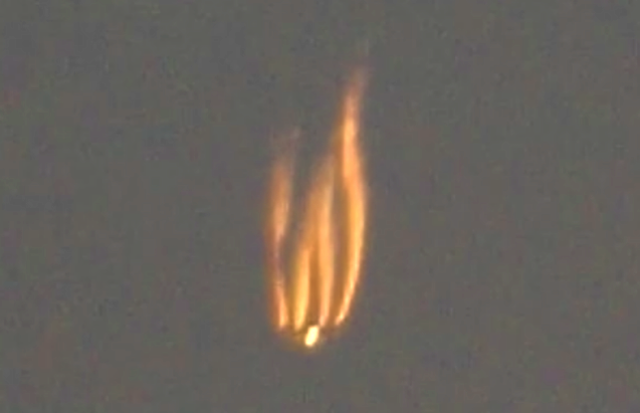
Burning UFO Over Polska, Poland May Be Secret Space Project, Nov 2018, Video, UFO Sighting News.
Date of sighting: Nov 23, 2018
Location of sighting: Polska, Poland
This is a UFO video that just came out. It was released by an eyewitness in Poland today. At first the video shows what looks like a four engine passenger jet burning up and crashing, but no news of such a plane crash exists. As we watch the video, the object begins to burn more and more until its just a burning ball with a flaming tail behind it. It does look like its coming from outside Earths atmosphere and boring up on reentry. There is no chance in hell that this is a meteor. No meteor ever had four contrail tails lined up side by side. Either this is a top secret space craft of Russia making a crash landing (a boarder neighbour of Poland) or this is a UFO. But as you can see, if this is a top secret craft...by the time it hit the ground, it was a crispy critter.
I do know that many UFOs can make such trails behind them, because I have seen such UFO first hand. I use to work on aircraft in the USAF. I worked on B1 and B2 bombers at Ellsworth AFB, South Dakota, a SAC high security base.
Na 9 maanden werken op archeologische site: mummies van meer dan 3.500 jaar oud gevonden
Een team van archeologen heeft in Egypte een oude tombe ontdekt met daarin nog intacte mummies van meer dan 3.500 jaar oud.
De ontdekking werd gedaan in de Al-Assasif-vallei, niet ver van de stad Luxor. Daar werden twee sarcofagen gevonden, met daarin telkens een mummie. Volgens de archeologen dateert de vondst uit de tijd van de 13e tot de 16e eeuw voor Christus. Een van de twee mummies was een vrouw met de naam Thuya.
De wetenschappers waren al sinds maart aan het werk op de plaats waar de sarcofagen nu zijn gevonden. Er werden bovendien ook zo’n 1.000 beeldjes van begrafenisrituelen gevonden, naast ook een aantal andere mummies die niet in een sarcofaag lagen. Daar zaten ook kinderen bij.
Researcher Found An Alien Shipwreck In The Bermuda Triangle
Mysterious underwater objects have emerged in the Bermuda Triangle and no one can explain whether they have a natural, an artificial or an extraterrestrial origin. The researcher who discovered the objects believes that, in fact, he found an extraterrestrial ship.
For those who don’t know, the Bermuda Triangle is located in the western part of the North Atlantic Ocean. However, it doesn’t appear on any official geographic map. Its second infamous name is the Devil’s triangle.
Under the water, this area hosts many mysteries and secrets. Namely, the Bermuda Triangle is notoriously responsible for many disappearances of aircraft and ships for unknown reasons.
According to some claims, the disappearances happen due to some strange hexagonal clouds in the area.
Numerous diving researchers claim they have witnessed perplexing events in this scope. For instance, a few years ago, divers exploring the area said to have discovered a large ancient underwater city with sunk sphinxes and old wrecks. Could it have been the legendary city of Atlantis? Many, rightfully, thought so.
Treasure hunter Darrell Miklos announced yet another interesting discovery regarding the area. According to him, the Bermuda Triangle could be the home of an alien spaceship.
While diving in an area nearby the Bahamas, he saw a marvelous but mysterious underwater structure. “It was a formation unlike anything I’ve ever seen related to shipwreck material, it was too big for that,” Miklos said in an interview with Daily Mail.
As Daily Mail further reveals, Miklos arrived in the undisclosed area thanks to some secret maps designed by Gordon Cooper, a NASA astronaut and a close friend of his.
At first, Miklos actually believed he would find an English sunken ship linked to Sir Francis Drake. However, he encountered something far more mystical.
“I was trying to identify shipwreck material based on one of the anomaly readings on Gordon’s charts when I noticed something that stuck out, that shocked me. It was a formation unlike anything I’ve ever seen related to shipwreck material, it was too big for that.”
Miklos added that the objects he discovered were unique and they didn’t look as they were created by nature. “It’s almost like there are five arms coming out of a steep wall cliff and each one of these is the size of a gun on a battleship. They’re enormous and then there’s five over here and five over there, 15 in total,” he said.
There are identical formations in three different areas and they don’t look nature made, they don’t look man-made, certainly nothing I’ve ever seen based on my experience and I have years of experience at doing this, we’ve identified multiple different types of shipwreck material, this doesn’t match or look anything like that.”
Even though Miklos is convinced the structures have an extraterrestrial origin, it is still too quick to draw such conclusions. Therefore, they need to undergo a further analysis in the future.
Meer van UFO'S of UAP'S, ASTRONOMIE, RUIMTEVAART, ARCHEOLOGIE, OUDHEIDKUNDE, SF-SNUFJES EN ANDERE ESOTERISCHE WETENSCHAPPEN - DE ALLERLAATSTE NIEUWTJES


 What If Genetically Modified People Became the Norm?




 Scientists on a hike in Canada discover rare organism that's...
 Australian academic reveals how the 'bin chicken' played a...








 Man accused of killing his friend on Thanksgiving Day tells...
 AWOL California National Guardsman 'tried to smuggle three...