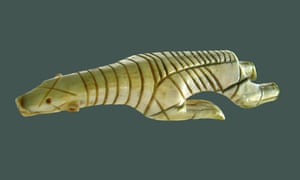
Ontdek de Fascinerende Wereld van UFO's en UAP's: Jouw Bron voor Onthullende Informatie!
Ben jij ook gefascineerd door het onbekende? Wil je meer weten over UFO's en UAP's, niet alleen in België, maar over de hele wereld? Dan ben je op de juiste plek!
België: Het Kloppend Hart van UFO-onderzoek
In België is BUFON (Belgisch UFO-Netwerk) dé autoriteit op het gebied van UFO-onderzoek. Voor betrouwbare en objectieve informatie over deze intrigerende fenomenen, bezoek je zeker onze Facebook-pagina en deze blog. Maar dat is nog niet alles! Ontdek ook het Belgisch UFO-meldpunt en Caelestia, twee organisaties die diepgaand onderzoek verrichten, al zijn ze soms kritisch of sceptisch.
Nederland: Een Schat aan Informatie
Voor onze Nederlandse buren is er de schitterende website www.ufowijzer.nl, beheerd door Paul Harmans. Deze site biedt een schat aan informatie en artikelen die je niet wilt missen!
Internationaal: MUFON - De Wereldwijde Autoriteit
Neem ook een kijkje bij MUFON (Mutual UFO Network Inc.), een gerenommeerde Amerikaanse UFO-vereniging met afdelingen in de VS en wereldwijd. MUFON is toegewijd aan de wetenschappelijke en analytische studie van het UFO-fenomeen, en hun maandelijkse tijdschrift, The MUFON UFO-Journal, is een must-read voor elke UFO-enthousiasteling. Bezoek hun website op www.mufon.com voor meer informatie.
Samenwerking en Toekomstvisie
Sinds 1 februari 2020 is Pieter niet alleen ex-president van BUFON, maar ook de voormalige nationale directeur van MUFON in Vlaanderen en Nederland. Dit creëert een sterke samenwerking met de Franse MUFON Reseau MUFON/EUROP, wat ons in staat stelt om nog meer waardevolle inzichten te delen.
Let op: Nepprofielen en Nieuwe Groeperingen
Pas op voor een nieuwe groepering die zich ook BUFON noemt, maar geen enkele connectie heeft met onze gevestigde organisatie. Hoewel zij de naam geregistreerd hebben, kunnen ze het rijke verleden en de expertise van onze groep niet evenaren. We wensen hen veel succes, maar we blijven de autoriteit in UFO-onderzoek!
Blijf Op De Hoogte!
Wil jij de laatste nieuwtjes over UFO's, ruimtevaart, archeologie, en meer? Volg ons dan en duik samen met ons in de fascinerende wereld van het onbekende! Sluit je aan bij de gemeenschap van nieuwsgierige geesten die net als jij verlangen naar antwoorden en avonturen in de sterren!
Heb je vragen of wil je meer weten? Aarzel dan niet om contact met ons op te nemen! Samen ontrafelen we het mysterie van de lucht en daarbuiten.
Dinsdag 4 juni 2019
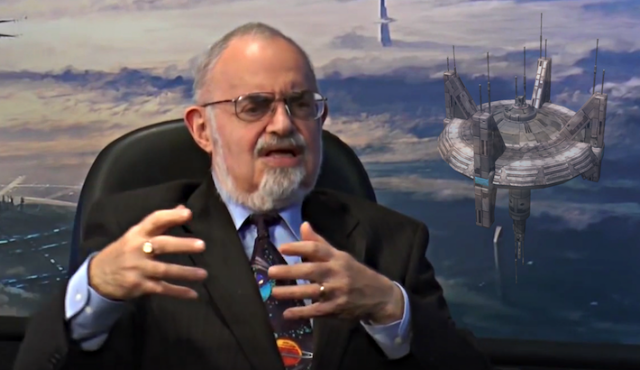
Stanton Friedman Talks Life After Death And Technological Progress With MUFON Interview. UFO Sighting News.
Stanton Friedman Talks Life After Death And Technological Progress With MUFON Interview. UFO Sighting News.
Here is a 2019 interview with the great late Stanton Friedman. He dives into some very interesting topics about life after death, the possibilities that exist and how we need to open our minds more in the science community. He says what was once thought impossible is now possible, even considering telepathy as a possible way aliens communicate. But he says one thing that stands out more than all the others...which has serious consequence for Generations Z..."Remember...technological progress comes from doing things differently in unpredictable ways." Yeah, thats is exactly what most UFO and alien researchers (astrobiologists) are doing today. They are each following their own paths, searching their own leads and finding some extraordinary proof that aliens exist. Stan the man...your UFO and alien research will change generations. Scott C. Waring
Ancient Alien Entrance To Underground Base On Mars Google Map, Video, UFO Sighting News.
Date of discovery: June 4, 2019 Location of discovery: Mars Google coordinates:79°26'47.94"S 135°26'51.84"E I found this entrance today on Google Mars map. The entrance is huge...about 8km by 3.5km across. This is seen on three different maps on google earth, so its not a glitch or mistake in the processing of the photos of Mars. Its unusual to say the least, but I do believe this should be looked into and possible investigated within to see what its depth is and if its a possible location for a future Mars colony to be built. If we are going to Mars, we need to find the best locations to start off at. This looks like one of those places. Scott C. Waring
U.S. Navy pilots and sailorswon't be considered crazy for reporting unidentified flying objects, under new rules meant to encourage them to keep track of what they see. Yet just a few years ago, the Pentagon reportedly shut down another official program that investigated UFO sightings. What has changed? Is the U.S. military finally coming around to the idea that alien spacecraft are visiting our planet?
The answer to that question is almost certainly no. Humans' misinterpretation of observations of natural phenomena are as old as time and include examples such as manatees being seen as mermaids and driftwood in a Scottish loch being interpreted as a monster. A more recent and relevant example is the strange luminescent structure in the sky caused by a SpaceX rocket launch. In these types of cases, incorrect interpretations occur because people have incomplete information or misunderstand what they're seeing.
Based on my prior experience as a science advisor to the Air Force, I believe that the Pentagon wants to avoid this type of confusion, so it needs to better understand flying objects that it can't now identify. During a military mission, whether in peace or in war, if a pilot or soldier can't identify an object, they have a serious problem: How should they react, without knowing if it is neutral, friendly or threatening? Fortunately, the military can use advanced technologies to try to identify strange things in the sky.
Taking the 'U' out of 'UFO'
"Situational awareness" is the military term for having complete understanding of the environment in which you are operating. A UFO represents a gap in situational awareness. At the moment, when a Navy pilot sees something strange during flight, just about the only thing he or she can do is ask other pilots and air traffic control what they saw in that place at that time. Globally, the number of UFO reportings in a year has peaked at more than 8,000. It's not known how many the military experiences.
UFOs represent an opportunity for the military to improve its identification processes. At least some of that work could be done in the future by automated systems, and potentially in real time as an incident unfolds. Military vehicles – Humvees, battleships, airplanes and satellites alike – are covered in sensors. It's not just passive devices like radio receivers, video cameras and infrared imagers, but active systems like radar, sonar and lidar. In addition, a military vehicle is rarely alone – vehicles travel in convoys, sail in fleets and fly in formations. Above them all are satellites watching from overhead.
Military vehicles bristle with antennas, cameras and sensors of all kinds. Credit: U.S. Army
Drawing a complete picture
Sensors can provide a wealth of information on UFOs including range, speed, heading, shape, size and temperature. With so many sensors and so much data, though, it is a challenge to merge the information into something useful. However, the military is stepping up its work on autonomy and artificial intelligence. One possible use of these new technologies could be to combine them to analyze all the many signals as they come in from sensors, separating any observations that it can't identify. In those cases, the system could even assign sensors on nearby vehicles or orbiting satellites to collect additional information in real time. Then it could assemble an even more complete picture.
For the moment, though, people will need to weigh in on what all the data reveal. That's because a key challenge for any successful use of artificial intelligence is building trust or confidence in the system. For example, in a famous experiment by Google scientists, an advanced image recognition algorithm based on artificial intelligence was fooled into wrongly identifying a photo of a panda as a gibbon simply by distorting a small number of the original pixels.
So, until humans understand UFOs better, we won't be able to teach computers about them. In my view, the Navy's new approach to reporting UFO encounters is a good first step. This may eventually lead to a comprehensive, fully integrated approach for object identification involving the fusion of data from many sensors through the application of artificial intelligence and autonomy. Only then will there be fewer and fewer UFOs in the sky – because they won't be unidentified anymore.
A new study shows that Mars has a unique water vapor cycle that occurs only once about every 2 years. The cycle might help explain how Mars lost most of its water.
Artist’s concept of water vapor molecules being ejected into space from Mars. Scientists have found a new water cycle on the planet, where water vapor can be transported into the upper atmosphere and even at times escape into space.
Scientists have discovered a new type of water cycle on Mars, which is a bit surprising given the generally severe lack of water on the planet. According to a new study, water vapor rises from the lower atmosphere to Mars’ upper atmosphere, and some of it even escapes into space, but this can only happen under very limited conditions. This finding may also help explain how Mars lost most of its water billions of years ago.
The intriguing new results were published in the current issue of the peer-reviewed journal Geophysical Research Letters on April 16, 2019, by researchers from the Moscow Institute of Physics and Technology (MIPT) and the Max Planck Institute for Solar System Research (MPS) in Germany.
Computer simulations showed that, surprisingly, water vapor can rise from the lower atmosphere and pass through the colder middle atmosphere into the upper atmosphere, but only under certain circumstances. This unique movement of water vapor occurs about every two years, during summer in the southern hemisphere. Some of the water vapor is carried by winds to the north pole, while the rest of it decays and escapes into space. This could be how Mars lost most of its water vapor in the distant past, as well.
Vertical distribution of water vapor on Mars during the course of one Mars year, at 3 a.m. local time. The water vapor can only reach higher atmospheric layers when it is summer in Mars’ southern hemisphere.
So how is the water vapor able to pass through the cold barrier in the middle atmosphere? The researchers think there is a previously unknown mechanism at work, which acts sort of like a pump. The middle atmosphere is normally very cold, making it difficult for water vapor to go through it. But twice a day – and only at a certain location and at a certain time of year – that barrier becomes more permeable. At those times, the water vapor can sneak through the middle atmosphere and enter the upper atmosphere.
The water vapor cools in the upper atmosphere, where some of it finds its way to the north pole and sinks downward again. But some of the water molecules are disintegrated by solar radiation at those extreme heights, and escape into space.
The orbit of Mars is a key factor in how this process works. Its orbit is about twice as long as Earth’s, two years, and much more elliptical. It is summer in Mars’ southern hemisphere when the planet is closest to the sun, about 26 million miles (42 million km) closer than at its farthest point, and the summer temperatures in Mars’ southern hemisphere are therefore significantly warmer than summer temperatures in its northern hemisphere. This makes it easier for water vapor to rise through the atmosphere at that time. According to Paul Hartogh from MPS:
When it is summer in the southern hemisphere, at certain times of day water vapor can rise locally with warmer air masses and reach the upper atmosphere.
Mars’ dust storms, such as this one seen by the Mars Express orbiter in April 2018 in the Utopia Planitia region, can also carry water vapor higher up into the atmosphere.
Image via ESA/DLR/FU Berlin.
This, combined with the pump mechanism, means that doing those relatively brief moments, water vapor can actually ascend all the way through the atmosphere, even into space. But there is also another process that can help with this: dust storms. Dust storms on Mars can be monsters, even encircling the entire planet sometimes. The dust particles heat up and can increase the atmospheric temperature by as much as 30 degrees. The dust can also lift water vapor high up into the atmosphere, as noted by Alexander Medvedev from MPS:
The amounts of dust swirling through the atmosphere during such a storm facilitate the transport of water vapor into high air layers.
One huge dust storm was in 2007, and the researchers calculated that it lofted approximately twice as much much vapor in to the upper atmosphere than would normal occur. As explained by Dmitry Shaposhnikov of MIPT, first author of the new study:
Our model shows with unprecedented accuracy how dust in the atmosphere affects the microphysical processes involved in the transformation of ice into water vapor.
As Hartogh also commented:
Apparently, the Martian atmosphere is more permeable to water vapor than that of the Earth. The new seasonal water cycle that has been found contributes massively to Mars’ continuing loss of water.
Artist’s concept of what Mars might have looked like with an ancient ocean in its northern hemisphere; some scientists believe this Mars ocean might once have existed. Today, Mars is a dry, cold world with ice on and below the surface, with very little water vapor in its atmosphere.
Image via NASA/GSFC.
The Martian atmosphere is also now so thin, it can’t hold onto nearly as much water vapor as it used to a few billion years ago. And even today, it seems that whatever vapor there is can, at times, easily escape out into space. Scientists also think that Mars’ atmosphere overall was once much thicker than it is now, which could have held much more water vapor, like Earth does today. Rain, rivers and lakes were all possible at this time, and perhaps even an ocean in the northern hemisphere, as some scientists now think. Now it is mostly ice on and below the surface, with some evidence for liquid water lakes deeper down, and much less water vapor. How Mars changed so much has long been a mystery to scientists, but now thanks to studies like this one, researchers are finally learning how the planet changed from a more Earth-like world to the cold, dry desert we see today.
Bottom line:Mars doesn’t have a lot of water left, other than ice and some liquid water deeper down, but it doesstill have an active water cycle in the atmosphere. This new study not only shows how the cycle works, but might also help explain why Mars lost most of its water vapor – and atmosphere overall – in the first place.
You know a UFO has earned its "unidentified" status when cockpit transcripts from elite Navy fighter jets include this frantic pilot exclamation: "Holy s___, what is that?"
When Luis Elizondo ran a small team at the U.S. Department of Defense investigating military-based reports of unidentified aerial phenomena (UAP), he heard numerous such accounts—by some of the most highly trained aeronautic experts in the military. They describe objects that appeared to be intelligently controlled, possessing aerodynamic capabilities that far surpass any currently known aircraft technology.
Now pursuing his investigations as part of To the Stars Academy of Arts & Sciences, Elizondo is an integral part of the investigative team featured on HISTORY's “Unidentified: Inside America’s UFO Investigation," where they have continued to gather eyewitness accounts:
"It's white. It has no wings. It has no rotors."
"It didn't fly like an aircraft. It was so unpredictable—high g, rapid velocity, rapid acceleration."
"I didn't see a trail."
"It was going 70-plus knots underwater."
Those reports—from Navy fighter pilots, radar operators and other witnesses from the USS Nimitz aircraft carrier strike group incident from November 2004—were among a handful of shocking encounters the Unidentified team explored. When Elizondo ran the Defense Department initiative, called the Advanced Aerospace Threat Identification Program, or AATIP, he compiled a list of extraordinary, logic-defying capabilities most commonly associated with unidentified aerial phenomena sightings. He calls those traits the “five observables”:
Unlikeanyknown aircraft, theseobjects have been sighted overcoming the earth’s gravity with no visible means ofpropulsion. They also lack any flight surfaces, such as wings. In the Nimitz incident, witnesses describe the crafts as tubular, shaped like a Tic Tac candy.
2) Sudden and instantaneous acceleration.
The objects may accelerate or change direction so quickly that no human pilot could survive the g-forces—they would be crushed. In the Nimitz incident, radar operators say they tracked one of the UFOs as it dropped from the sky at more than 30 times the speed of sound. Black Aces squadron commander David Fravor, the Nimitz-based fighter pilot who was sent to intercept one of the objects, likened its rapid side-to-side movements, later captured on infrared video, to that of a ping-pong ball. Radar operators on the USS Princeton, part of the Nimitz carrier group, tracked the object accelerating from a standing position to traveling 60 miles in a minute—an astounding 3,600 miles an hour. According to manufacturer Boeing, the F/A 18 Super Hornet fighter jet typically currently reaches a maximum speed of Mach 1.6, or about 1,200 miles an hour.
If an aircraft travels faster than the speed of sound, it typically leaves "signatures," like vapor trails and sonic booms. Many UFO accounts note the lack of such evidence.
4) Low observability, or cloaking.
Even when objects are observed, getting a clear and detailed view of them—either through pilot sightings, radar or other means—remains difficult. Witnesses generally only see the glow or haze around them.
5) Trans-medium travel.
Some UAPhave been seenmoving easily in and between different environments, such as space, the earth’s atmosphere and even water. In the Nimitz incident, witnesses described a UFO hovering over a churning "disturbance" just under the ocean's otherwise calm surface, leading to speculation that another craft had entered the water. USS Princeton radar operator Gary Vorhees later confirmed from a Navy sonar operator in the area that day that a craft was moving faster than 70 knots, roughly two times the speed of nuclear subs.
No one has yet gotten close to crafts that display these traits, so their origins are still unknown. Are they a super-top-secret U.S. defense project? Do they hail from Russia? China? Or from even further afield? The only thing we do know is that their capabilities exceed any technologies currently in the U.S. arsenal.
Is dit een grap of zijn we serieus? Nee, we zijn serieus. Wetenschappers beweren dit wel degelijk.
Inktvisachtigen zijn uiterst complexe en intelligente wezens. Ze hebben grote hersenen, een zeer complex zenuwstelsel, zijn net zoals kameleons in staat om van kleur te veranderen en hebben grote en enorm goed ontwikkelde ogen. En toch vallen deze dieren onder de categorie “weekdieren”, waartoe ook de mossel behoort. Inktvissen en octopussen passen héél slecht in het evolutionaire diagram (net als alle andere levensvormen overigens): men tekent lijnen die op één punt samenkomen, zonder dat daar één millimeter bewijs voor is.
Bovendien verschillen de huidige vormen van de cephalopoda amper van de vormen die zogezegd miljoenen jaren geleden leefden. Een groep van 30 wetenschappers uit alle grote universiteiten en onderzoekscentra van de wereld heeft nu een paper gepubliceerd met als titel “Oorzaak van de Cambrische explosie: aards of kosmisch?” Dit vanwege Darwins bewering dat indien er geen voorouders worden gevonden voor de gigantische hoeveelheid soorten die in de lagen van het ‘Cambrium’ en het ‘Siluur’ worden gevonden, zijn theorie teniet wordt gedaan. Wetenschappers hebben die lagen met “voorouderlijke soorten” tot op heden nog niet gevonden, en beginnen wat onrustig te worden. Vandaar gaan ze hun heil nu zoeken in – noem het maar science fiction: de bewering dat bepaalde levensvormen uit de ruimte zouden komen.
In deze paper suggereren deze wetenschappers dat cephalopoda (katvissen, inktvissen en octopussen) zodanig complex zijn dat ze “misschien wel ergens anders dan op aarde hun oorsprong hebben.”“Bewijs voor de rol van buitenaardse virussen die aardse evolutie hebben beïnvloed, werd recent plausibel geacht bij de genoom- en transcriptoom-sequentiëring van cephalopoda”, zo staat er te lezen. “Het genoom van de octopus toont een verbijsterend niveau van complexiteit, met 33.000 meer eiwitcoderende genen dan bij Homo Sapiens.” De wetenschappers betwisten het geloof dat de moderne cephalopoden tot hun huidige vorm evolueerden op aarde, en suggereren de mogelijkheid dat de soorten die we nu zien afstammen van wezens die op aarde belandden in een bevroren ijsachtige komeet.
“Z’n grote brein en ingewikkeld zenuwstelsel, camera-achtige ogen, flexibele lichamen, onmiddellijke camouflage via de mogelijkheid om van kleur en vorm te veranderen zijn slechts enkele van de frappante kenmerken die plots verschijnen op het evolutionaire toneel”, waarbij naar de mogelijkheid wordt gewezen dat “deze grote stap voorwaarts” in complexiteit was ten gevolge van “cryobewaarde (heel diep bevroren) inktvissen en/of octopus-eieren” die via een komeet miljoenen jaren geleden in de oceaan terechtkwamen. De wetenschappers zijn duidelijk ten einde raad. De echte wetenschap is in de vuilbak gekieperd – science fiction is de norm geworden. Wie gelooft die mensen nog?
The football-shaped dwarf planet Haumea, which is surrounded by an almost perfectly circular ring of particles, is the most distant ringed object in the solar system. Haumea's ring is too faint to be seen from planet Earth, so astronomers have turned to context clues to find out more about these particles.
In a new study, researchers with the São Paulo Research Foundation in Brazil have detailed the ring's size, shape and other characteristics by simulating the Haumea system on a computer. By simulating the ring's particles in different configurations around the dwarf planet and calculating which scenario would render the ring most stable, the scientists were able to infer the likely qualities of the ring without ever looking at it directly.
“Our study isn’t observational. We did not directly observe the ring. No one ever has,” Othon Cabo Winter, an engineering professor at São Paulo State University in Guaratinguetá, Brazil, who led the new study, said in a statement.
Astronomers first spotted Haumea far beyond the orbit of Pluto in 2003, and it was originally classified as a Kuiper Belt Objects (KBO). The dwarf planet's two moons, Hi'iaka and Namaka, were first seen in 2005 by astronomers using the W.M. Keck Observatory in Hawaii. As astronomers began to find more objects like Haumea floating in that outer region of the solar system, the dwarf planet later became one of a handful of far-out bodies whose discovery led to Pluto being demoted from its status as the ninth planet in the solar system to the "king of the dwarf planets" in 2006.
Although astronomers have pretty solid evidence that Haumea has a ring, no one has actually observed the ring directly. The feature is too narrow and distant to see through a ground-based telescope, and no spacecraft has ever flown by Haumea to take photos of the dwarf planet up close. Somewhat ironically, everything we know about Haumea's ring system came from an even more distant object — a bright star named URAT1 533-182543.
In 2017, Haumea briefly passed in front of the star in what's known as a stellar occultation. By looking at how the starlight flickered during the occultation, astronomers hoped to learn more about Haumea's physical properties such as its size, shape and density. But to the researchers' surprise, they discovered the ring system, too.
"The light from the star was observed from Earth as the star was occulted by Haumea. Its brightness decreased as Haumea passed in front of it, enabling the astronomers to obtain information about Haumea's shape," Winter said. "The star’s light also faded when the ring passed in front of it, enabling them to obtain information on the ring as well."
After the occultation, researchers studied the light curves and determined that Haumea and its ring have an orbital resonance of 1:3, which means that in the time it takes the ring particles to complete one orbit around Haumea, the dwarf planet itself completes three full rotations. However, the new simulations suggest that in order for this to be true, the ring can't be perfectly circular.
"Based on simulations using the available data on Haumea and the ring, subject to Newton's law of gravitation, which describes the motions of the planets, we concluded that the ring isn't in that region of space owing to the 1:3 resonance but owing to a family of stable periodic orbits," Winter said. In other words, the ring particles don't orbit the dwarf planet with a resonance of 1:3, but do orbit Haumea periodically in a slightly different path that puts them close to that 1:3 resonance.
So, Haumea's ring is still pretty round, but it isn't as perfectly round as earlier research has suggested. And even though the ring particles appeared to be in orbital resonance with Haumea, their periodic orbits don't form a nice whole-number ratio with Haumea's orbit after all.
Insulating layers of 'gas hydrates' may keep buried water from freezing solid.
This view of Pluto's Sputnik Planitia nitrogen-ice plain was captured by NASA's New Horizons spacecraft during its flyby of the dwarf planet in July 2015.
Buried oceans like the one thought to slosh beneath the icy surface of the dwarf planet Pluto may be incredibly common across the cosmos.
A gassy insulating layer probably keeps Pluto's liquid-water ocean from freezing solid, a new study reports. And something similar could be happening under the surfaces of frigid worlds in other solar systems as well, study team members said.
"This could mean there are more oceans in the universe than previously thought, making the existence of extraterrestrial life more plausible," lead author Shunichi Kamata, of Hokkaido University in Japan, said in a statement.
The proposed interior structure of Pluto. A thin clathrate (gas) hydrate layer works as a thermal insulator between the subsurface ocean and the ice shell, keeping the ocean from freezing.
The case for a subsurface ocean on Pluto is bolstered by the location of Sputnik Planitia, a 600-mile-wide (1,000 kilometers) plain of nitrogen ice that forms the left lobe of the dwarf planet's famous "heart."
Observations by NASA's New Horizons probe showed that Sputnik Planitia is aligned with Pluto's tidal axis — the line along which the gravitational pull from the dwarf planet's biggest moon, Charon, is most powerful. Scientists think that Pluto rolled into this orientation because of extra mass concentrated at and near the surface in the Sputnik Planitia region.
That extra mass likely comes from the nitrogen ice that's built up on the plain, as well as water from the buried ocean, which was freed to rise from deep underground after the comet impact that formed Sputnik Planitia shattered the crust in that locale, previous research suggests.
But how could a buried ocean stay unfrozen on Pluto over the 4.6-billion-year history of the solar system? After all, the dwarf planet doesn't circle a gas giant, so its innards aren't roiled and heated by tidal forces nearly as dramatically as are the insides of Jupiter's moon Europa and the Saturn satellite Enceladus, both of which also harbor subsurface oceans.
The new study offers a possible explanation. Kamata and his colleagues hypothesized that an insulating layer of "gas hydrates" — ice-like solids composed of gases trapped within "cages" of molecular water — beneath Pluto's ice shell might be responsible, then performed computer simulations to test the idea.
In simulations run without the gas hydrates, Pluto's ocean froze solid hundreds of millions of years ago. But with the insulating layer, the ocean persists to this day, the researchers found. The gas hydrates also act as an insulator in the other direction, helping to keep Pluto's surface cold enough to support observed variations in ice-shell thickness, the researchers said.
It's unclear what the gas inside the water cages might be (if such a layer does indeed exist). But the study team thinks methane is a good candidate, partly because Pluto's wispy atmosphere is notably lacking the stuff.
The new study was published online today (May 20) in the journal Nature Geoscience.
Before this slow process dried out the planet, Mars may have been covered by a vast ocean. This illustration shows how the planet may have looked billions of years ago.
There's a hole in the Martian atmosphere that opens once every two years, venting the planet's limited water supply into space — and dumping the rest of the water at the planet's poles.
That's the explanation advanced by a team of Russian and German scientists who studied the odd behavior of water on the Red Planet. Earthbound scientists can see that there's water vapor high in the Martian atmosphere, and that water is migrating to the planet's poles. But until now, there was no good explanation for how the Martian water cycle works, or why the once-drenched planet is now a dry husk.
The presence of water vapor high above Mars is puzzling because the Red Planet has a middle layer of its atmosphere that seems like it should be shutting down the water cycle altogether. [Mars-like Places on Earth]
"The Martian middle atmosphere is too cold to sustain water vapor," the researchers wrote in the study, which was published April 16 in the journal Geophysical Research Letters.
So how is water crossing that middle-layer barrier?
The answer, according to computer simulations in the current study, has to do with two atmospheric processes unique to the Red Planet.
On Earth, summer in the Northern Hemisphere and summer in the Southern Hemispheres are pretty similar. But that's not the case on Mars: Because the planet’s orbit is much more eccentric than Earth’s, it’s significantly closer to the sun during its southern hemisphere summer (which happens once every two Earth years). So summers on that part of the planet are much warmer than summers in the Northern Hemisphere.
When that happens, according to the researchers' simulations, a window opens in Mars' middle atmosphere between 37 and 56 miles (60 and 90 kilometers) in altitude, allowing water vapor to pass through and escape into the upper atmosphere. At other times, the lack of sunlight shuts down Martian water cycles almost entirely.
Mars is also different from Earth in that the Red Planet gets frequently overtaken by giant dust storms. Those storms cool the planet's surface by blocking light. But the light that doesn't reach Mars' surface instead gets stuck in the atmosphere, warming it and creating conditions better suited to moving water around, the scientists' simulations showed. Under global dust-storm conditions, like the one that enveloped Mars in 2017, tiny particles of water ice form around the dust particles. Those lightweight ice particles float into the upper atmosphere more easily than other forms of water, so during those periods more water move into the upper atmosphere.
Dust storms can move even more water into the upper atmosphere than the southern summers, the researchers showed.
Once the water passes through the middle boundary, the researchers wrote, two things happen: Some of the water drifts north and south, toward the poles, where it's eventually deposited. But ultraviolet light in the upper atmosphere can also sever the bonds between the oxygen and hydrogen in the molecules, causing the hydrogen to escape into space, leaving the oxygen behind.
This process could be part of the story of how a once-drenched Mars has ended up so dry in its current epoch, the researchers wrote.
Pluto might be harbouring an ocean underneath its surface, thanks to a layer of gassy material that would stop it from freezing over.
NASA spacecraft images of Pluto have shown the presence of an icy basin that experts think could overlie an ocean.
However, calculations suggest that any such sea should have frozen solid hundreds of millions of years ago due to the frigid temperatures on Pluto.
Researchers believe an insulating layer of gassy material may be keeping the ocean warm — a possibility supported by new models of Pluto's evolution.
If these gassy insulating layers exist on other bodies in space, this could mean that there are far more potentially-life-supporting oceans in the universe.
Scroll down for video
Pluto might be harbouring an ocean underneath its surface (pictured), thanks to a layer of gassy material that would keep the subsurface sea from freezing over
Images of Pluto have revealed the presence of a white-coloured basin located near the equator, Sputnik Planitia, under which it is thought an ocean might exist.
However, calculations suggest that any ocean under the dwarf planet's surface should have frozen over hundreds of millions of years ago.
To reconcile these two findings, an international team of researchers led from Japan's Hokkaido University have suggested that the ocean might be covered by an insulating layer of gas hydrates that is keeping the sea from freezing solid.
Gas hydrates are ice-like solids in which tiny pockets of gas become trapped in molecular water cages, giving them a low thermal conductivity that could provide insulating properties.
To investigate whether such a gas layer could be keeping an ocean insulated, researchers simulated the thermal and structural evolution of Pluto since the solar system began to form 4.6 billion years ago.
They considered the cases where a gassy layer existed and where none was present.
Simulations revealed that Pluto's subsurface sea would have completely frozen hundreds of millions of years ago if there was no gas hydrate insulating layer.
With this layer, however, the ocean would hardly freeze at all.
Researchers also found that the presence of a gas hydrate insulating layer would delay the formation of a thick, uniform ice crust over the ocean, making it take over a billion years than just around a million.
Because of this, the simulations support the potential for their being a long-lived liquid ocean underneath Sputnik Planitia's icy crust.
Researchers suggest now that an insulating layer of gassy material could be keeping the ocean warm — a possibility supported by new models of Pluto's evolution (Pictured: a natural colour image of Pluto, left, with its topography, right. Sputnik Planitia can be seen on the equator)
The most likely gas held within this insulating gas hydrate layer would be methane, the researchers said, which would have originated from Pluto's rocky core.
This would be consistent with the usual composition of the dwarf planet's atmosphere, which is rich in nitrogen but methane-poor.
And similar layers of gas hydrate could be insulting long-lived, sub-surface oceans on other icy moons and other celestial bodies, researchers said.
'This could mean there are more oceans in the universe than previously thought, making the existence of extraterrestrial life more plausible,' said lead paper author and planetary scientist Shunichi Kamata, of Hokkaido University.
The full findings of the study were published in the journal Nature Geoscience.
WHAT IS PLUTO'S GASSY INSULATING LAYER?
This cross-section through Pluto shows how experts envisage an insulating layer of gas hydrates (depicted in orange) overlying a subsurface ocean (in blue)
Researchers have proposed that a layer of gas hydrates might exist under Pluto's icy surface, above a buried ocean.
Gas hydrates are ice-like solids in which tiny pockets of gas become trapped in molecular water cages.
These gassy materials are both very viscous and have a low thermal conductivity that provides insulating properties.
The most likely gas held within an insulating gas hydrate layer on Pluto would be methane.
This methane would have originated from Pluto's rocky core.
This would be consistent with the usual composition of the dwarf planet's atmosphere, which is rich in nitrogen but methane-poor.
A gas hydrate layer on Pluto would insulate any subsurface ocean, stopping it from freezing completely solid.
Aliens? Maybe not? Or, maybe it is one big conspiracy. Even if you are a hardcore doubter of the “Roswell Incident” there are some eyebrow-raising details about the incident that are a little fishy at best, attracting decades of conspiracy theories and references throughout pop-culture.
Humanity has always wondered what could potentially lurk out in the great beyond. How could there not be some form of intelligence in our infinite universe? A little over 50% of people believe in aliens in places like the UK, Germany, and the United States with only relatively small fluctuations in numbers across the world.
Just in the United States alone, 16% of people have reported seeing a UFO at some point in their lives. However, the 1947 Roswell incident will go down in history as one of the most conspicuous pieces of evidence that the US government has covered up the existence of extraterrestrial life on Earth.
On July 8, 1947, the newspaper the Roswell Daily Record published a front-page article headlined “RAAF Captures Flying Saucer On Ranch in Roswell Region”. This headline and its sudden recant has become a legend in UFO history.
The documents to the incident have actually been declassified. Today we are going to explore that incident and what the facts say and maybe you can decide for yourself what exactly happened at Roswell.
On that fateful day in 1947, the Roswell Army Air Field or RAAF issued a press release stating that a “flying disk” had crashed on a ranch near Roswell during a powerful storm. Fueling the overall legend, not too long after the event government scientists arrived in the area, triggering an immediate change to the story.
Once the government scientists had arrived, a press conference was held and that report of a flying saucer immediately changed to a crashed weather balloon. The objects taken from the crash site were said to be foil, rubber, and wood.
According to the US Army Air Force, the object was a highly classified project that would eventually go on to detect atomic bomb tests in the Soviet Union.
Recovered by a ranch worker, William Brazel, his words and description of the device is what originally had triggered the alien frenzy only to later regret his words. According to official accounts, the technology found out the site was part of an experimental technology trial codenamed Project Mogul.
According to the United States Air Force, Project Mogul was a highly classified project lead by the United States Air Force designed to detect sound waves in the upper atmosphere. The technology was born out of Cold War and Soviet Paranoia, with the eventual aim to identify sound waves from the Soviet atom bomb tests.
The technology had actually been kept quiet for obvious reasons and actually played a crucial role in Cold War surveillance of the Soviet Union. This same mystery around the device and lack of explanation during the incident further propelled the rumors of a government cover-up.
A Delayed Response
The Roswell incident did not gain national traction or even international traction until years much much later. In fact, it was until 31 years later, when The National Enquirer ran the story again without the correction, that the story became folklore. The government’s lack of information on the incident and suspicious activity towards the incident is what cemented the Roswell.
What “Really” Happened?
Years later, after the story was published again, the public jumped on the story curious about what exactly happened at that ranch just northwest of Roswell, New Mexico. Reports by newspapers of the military harassing locals who witnessed the event raised questions However, the weirdness does not end there.
In 1978, UFO researcher Stanton Friedman sent conspiracy theorists into a frenzy with an interview of Jesse Marcel, the officer who originally assessed the crash site. The officer described what he saw stating, "It was not anything from this Earth, that I'm quite sure of... I was familiar with just about all the materials used in aircraft and/or air travel. This was nothing like that...It could not have been."
“It felt like you had nothing in your hands; it wasn’t any thicker than the foil out of a pack of cigarettes. But the thing about it that got me is that you couldn’t even bend it, you couldn’t dent it, even a sledgehammer would bounce off of it… I knew that I had never seen anything like that before.”
The weirdness does not stop there. Supposed witnesses gave descriptions of alleged humanoid alien bodies 3-4 feet tall with large heads, large eyes and a hole for a nose at the crash site. Other insider witnesses who have come forward have gone on to describe things like memory metal at the Roswell site and a ship that had no engine.
What Do You Think Happened?
The Roswell cover-up is a long rabbit hole with equally conflicting and matching stories. The facts are that there was a crash that day and the government worked really hard to cover up that information. What do you think happened on that fateful day on July 8, 1947?
Experts have discovered a unique ancient tool that was used by Maya salt workers more than 1,000 years ago.
Fashioned from the mineral jadeite, the chisel-style implement was found at the site of Ek Way Nal, a Maya salt works in southern Belize that is now submerged in a saltwater lagoon. The tool’s Honduras rosewood handle was also discovered, offering a glimpse into the ancient Maya culture.
The jadeite tool McKillop is the first of its kind recovered with its wooden handle intact.
(Photo Credit: Heather McKillop, LSU.)
Surrounded by a forest, the lagoon’s soggy mangrove soil preserved the wooden handle. “This jadeite tool is the first of its kind that has been recovered with its wooden handle intact,” said anthropologist Heather McKillop of Louisiana State University, who led the research project, in a statement.
A paper on the research was published in the journal Antiquity.
The tool was analyzed at the American Museum of Natural History in New York. A paper on the discovery was recently published in the journal Antiquity.
Also in 2018, archaeologists harnessed sophisticated technology to reveal lost cities and thousands of ancient structures deep in the Guatemalan jungle, confirming that the Maya civilization was much larger than previously thought.
LiveScience reports that hundreds of Maya artifacts that may have been used in ritual animal sacrifices have also been discovered at the bottom of a Guatemalan lake.
From its heart in what is now Guatemala, the Maya empire reached the peak of its power in the sixth century A.D., according to History.com, although most of the civilization’s cities were abandoned around 900 A.D.
The Associated Press contributed to this article. Follow James Rogers on Twitter @jamesjrogers
Ancient Aliens – New Discovery In Mexico Changes Everything
A whole host of newly discovered extraterrestrial architecture has been released in Mexico. The finds could be exponential and prove once and for all ancient aliens visited our early ancestors’ thousands of years ago.
These new ancient sculptures depict UFO’s, extraterrestrial humanoid entities, and mysterious texts, and have been the topic of much alien news discussion.
This ancient art appears to depict what many believe to be a human laying on a table surrounded by bizarre creatures with UFO’s in the sky.
The aliens appear reptilian. This may indicate the theory that alien astronauts visited our planet thousands of years ago and interfered with our evolutionary process. This ancient art discovered in Mexico certainly displays numerous unanswered anomalies.
Could this piece of ancient art be proof of the ancient alien theory?
Is it just a coincidence that ancient cultures from around the world recorded similar activities? From UFO sightings to alien abductions, our ancient ancestors spoke of visitors from another world. They always mentioned another race of beings that inhabited our planet long before mankind arose. Could these pieces of ancient art confirm popular conspiracy theories about extraterrestrial beings?
A video uploaded to YouTube discusses questions about the incredible artifacts discovered in Mexico.
Alien Contact in Mexico
Many Ufologists believe this is evidence that the ancient Mexican civilization documented extraterrestrial contact. Alien beings visited the ancient man and an alien intervention was underway. This is essentially the concept of the ancient alien’s theory.
However, there are those who question its authenticity. Due to the artifacts being in almost perfect condition after being discovered, many skeptics say that they cannot date back thousands of years ago.
Take a look at a few other ancient artifacts found in Mexico to see if you believe they could be in reference to alien extraterrestrial visitors.
The ancient alien artifact may demonstrate extraterrestrial life.
So, could this ancient artifact show three aliens inside a UFO?
Alien figures displayed in ancient artifacts.
YouTube image.
The bizarre artifact could tell the story of an alien intervention.
YouTube imagery.
These artifacts are in the typical design style of ancient Mayan culture, which thrived in what is now called Mexico. They display strange figures that many have interpreted as evidence of aliens visiting our planet many thousands of years ago.
Furthermore, a number of other discoveries from Mexico show alien-like beings in astronaut suits and disc-shaped objects flying in the skies.
This ancient sculpture seems to depict a ritual happening. The beings in the art may be humanoid in structure, but certainly are not humans.
Many see these creatures as the typical “Grey aliens” and “Draconic aliens” from pop culture.
What exactly did our ancient ancestors see and hear? Has there been a cover-up about the truth of the history of mankind? Since we do not know the answer, we can only guess.
Michael Halsall, our own alien news writer, is currently asking the same questions. He is currently writing a book about the truth being a cover-up of extraterrestrial life called “You Can’t Spell ‘Alien’ Without ‘A Lie’“.
Not only is there clear evidence of the UFO phenomena, but there is an ever-growing amount of proof that aliens exist.
Just one of many ancient artifacts recently discovered in Mexico.
So, please feel free to leave your own thoughts and opinions in a comment.
What Archaeologist Discovered in a Peru Cave May be About To Change Everything
Genetics research has transformed our understanding of human history, particularly in the Americas. The focus of the majority of high profile ancient DNA papers in recent years has been on addressing early events in the initial peopling of the Americas. This research has provided details of this early history that we couldn’t access though the archeological record.
Collectively, genetics studies have shown us that the indigenous inhabitants of the Americas are descended from a group that diverged from its Siberian ancestors beginning sometime around 23,000 years before present and remained isolated in Beringia (the region of land that once connected Siberia and North America) for an extended period of time. When the glaciers covering North America melted enough to make the Pacific coast navigable, southward travel became possible, and patterned genetic diversity across North and South America reflects these early movements.
Recent ancient DNA studies indicate that approximately 13,000 years ago, two clades (genetic groups) of peoples emerged; one exclusively consisting of northern Native Americans, and one consisting of peoples from North, Central, and South America, including the 12,800 year old Anzick child from a Clovis burial site in Montana. All genetics research to date has affirmed the shared ancestry of all ancient and contemporary indigenous peoples of the Americas, and refuted stories about the presence of “lost tribes”, ancient Europeans, and (I can’t believe that I actually have to say this) ancient aliens.
Events that occurred after people first entered the Americas – how they settled in different parts of the continents, adapted to local environments, interacted with each other, and were affected by European colonialism – have received somewhat less attention in the press, but as can be seen in the links above, there have been some very significant research papers published on these topics. One such paper that I’ve recently found very interesting (in fact, I wrote up a short article for Current Biology that discusses its significance), Genetic Discontinuity between the Maritime Archaic and Beothuk Populations in Newfoundland, Canada by Duggen et al. (2017), explores the genetic diversity within three different ancient groups who lived in Newfoundland and Labrador.
One reason this region is of particular interest is that it’s on the furthest northeastern margin of North America and so was one of the last areas in the Americas to be peopled. It appears to have been occupied successively by three culturally distinct groups beginning about 10,000 years before present (YBP) in Labrador and 6,000 YBP in Newfoundland: the Maritime Archaic, the Paleo-Inuit (also referred to as the Paleo-Eskimo), and the indigenous peoples that Europeans called the Beothuk. Today the region is home to several indigenous groups, including the Inuit, the Innu, the Mi’kmaq and the Southern Inuit of NunatuKavut.
Iceberg Alley, Newfoundland, Canada Photograph: Grant Faint/Getty Images
The members of the Maritime Archaic tradition created the oldest known burial mounds in North America (dating to 7,714 YBP) and subsisted upon coastal marine resources. Approximately 3,400 YBP they seem to have abandoned Newfoundland, either in response to the appearance of Paleo-Inuit in the region or because of climate changes. The Paleo-Inuit’s presence on the island overlapped with the peoples referred to as the Beothuk beginning around 2000 YBP. The Beothuk encountered European settlers in 1500 AD, and in response to their presence gradually moved to the interior of the island, where their populations declined.
According to Duggen et al:
The last known Beothuk, Shanawdithit, died of tuberculosis in captivity in 1829. Although it remains possible that Beothuk traces of ancestry persist in contemporary residents of NL, including members of the Innu, Mi’kmaq, and European communities, it is generally accepted that the Beothuk became culturally extinct with the death of Shanawdithit.
Portrait of Demasduit, the aunt of Shanawdithit, by Lady Henrietta Hamilton, 1819Illustration: Hamilton , Lady Henrietta Martha (ca. 1780 -1857 ) (Artist)/Library and Archives Canada
By analyzing mitochondrial haplogroups (groups of closely related maternal lineages) present within individuals from all three populations, Dugan et al. addressed the question of whether they were genetically similar or whether all three groups were biologically as well as culturally distinct from each other. This happens to be one of the most fundamental questions that arises when studying the past: do cultural changes in the archaeological record of a region represent the arrival of new groups, or did one group of people living in the same region over time adopt new cultural practices and technologies from others?
In the case of Newfoundland, the three groups were genetically distinct; they do not share any maternal haplogroups except for haplogroup X2a, lineages of which were found in both the Maritime Archaic and Beothuk. (The presence of haplogroup X2a in North American populations has sometimes been cited as evidence for European ancestry in ancient Americans. If you’re interested in why I and most other geneticists specializing in Native American populations disagree with that, you can read about it here).
Apart from that single exception, the Maritime Archaic, Paleo-Inuit, and Beothuk are clearly genetically distinctive from one another. However, it’s important to note that this study was done on mitochondrial DNA, which is exclusively matrilineally inherited, and so we can only say that the three groups were not maternally related. While they indicate that the groups are genetically different from each other, does that mean that there was no shared ancestry between them at all? It’s unclear without looking at the rest of the genome whether, for example, there might have been any paternal lineages shared between the populations. I hope that the authors of this study will follow up with analyses of complete genomes from these ancient individuals, as there is a great deal more to be learned by looking more deeply at their ancestry.
As this study shows, we can learn a lot about the past by characterizing the genomes of ancient and contemporary peoples. This paper by Duggen et al. adds to decades of study of the genomes from ancient and contemporary peoples of the Americas, which reveals a nuanced picture of their complex and remarkable history of evolution, interaction, and resilience in the face of unbelievable oppression.
But it’s also important to understand what genetics can’t tell us. While writing up this article, I was appalled (although not surprised) that there is at least one personal ancestry testing company that has made the claim that they can help you determine whether or not you are Beothuk based on your DNA.
Let’s be clear: all claims that a person’s tribe or indigenous nationality can be determined from their genomes are scientifically inaccurate. First, this is because there simply are no currently known genetic markers that allow us to identify individual tribes or nations; although we see geographically patterned genetic variation throughout the Americas in ancient and contemporary populations which allows us to differentiate them (as done in this study), genetic lineages are not tribal or nation-specific.
More importantly, who is or is not a member of a particular community is determined by indigenous groups’ own standards of belonging, which are often just as much about relations and community ties as they are about biological descent. Geneticists can’t determine who is or is not authentically Beothuk, Cherokee, or anything else based on the percentage of “Native American DNA” they might have. (For more in-depth discussions of the issues regarding genetics and Native American identity, see here and hereand the reading below).
Humans may never discover evidence of alien life because we'll accidentally destroy it.
That's the bold theory from a top physicist who believes we could wipe out aliens without even realizing it.
Human travel to other planets and stars could accidentally wipe out alien life
Credit: Getty - Contributor
Scientists think it's likely alien life exists, but we've never seen any proof – a puzzle known as the Fermi Paradox.
And the answer may be that humans will (and may have already) destroyed evidence of alien life.
That's according to theoretical physicist Alexander Berezin, of Russia's MIET, who details a new theory in a paper published on Arxiv.
He believes that when it comes to traveling between stars, we're in a "first in, last out" situation.
Berezin thinks that many types of "life" could gain access to high-speed space travel.
However, he argues that the type of civilization doesn't matter – only the level of technology they reach.
"The specific nature of civilizations arising to interstellar level should not matter," he writes.
"They might [be] biological organisms like ourselves, rogue AIs that rebelled against their creators, or distributed planet-scale minds like those described by Stanislaw Lem in Solaris."
According to Berezin, the first life that reaches interstellar travel capability may "necessarily eradicate all competition, to fuel its own expansion".
The Fermi Paradox questions why we haven't seen aliens yet, despite alien life being so likely to exist
Credit: Alamy
Fermi Paradox – what is it?
Here's what you need to know...
It's a famous contradiction posed by physicist Enrico Fermi
The Fermi Paradox isn't strict evidence for alien life – but more of a thought experiment
Fermi suggested that the enormous size of the universe – and the billions of Sun-like stars in the galaxy, and their planets – makes it highly likely that there is intelligent life out there
Some of these civilisations may have developed interstellar travel
But Fermi also noted that there's a significant lack of evidence for life on other planets
The chances of aliens being able to reach us are high, but there's no evidence that aliens ever have
This paradox has baffled scientists for decades
He says this doesn't mean an alien race would intentionally destroy other forms of life.
Instead, it could happen by accident.
"They simply won't notice, the same way a construction crew demolishes an anthill to build real estate because they lack incentive to protect it," he wrote.
If you're panicking about being squashed like an ant by an unimaginably powerful alien race, don't.
Berezin believes that we're the construction crew (not the ant) in this scenario.
The physicist argues that this annihilation of alien life could happen simply because humans – and our technologies – become too powerful.
"One rogue AI can potentially populate the entire supercluster with copies of itself, turning every solar system into a supercomputer," he wrote.
"And there is no use asking why it would do that. All that matters is that it can."
He said this terrifying future means that because we're the first to arrive at interstellar travel, we "most likely will be the last to leave."
SpaceX put 60 Starlink satellites in space May 23, the first little chunk of an eventual 12,000-satellite-strong "megaconstellation" that the private company plans to place in orbit. Not long after the launch, observers and astronomers noticed something: This train of five dozen objects looked really bright overhead — unusually bright for artificial satellites. And this light show has many astronomers worried.
"The Starlink satellites just passed directly overhead," Boulder, Colorado-based astronomer Alex Parker tweeted Saturday (May 25). "They were glinting, some as bright as Polaris. Quite an eerie looking thing. And yes, the stars are out."
Parker, an expert in orbital mechanics, caused a stir Saturday by posting the results of some modeling he'd done of the eventual Starlink constellation. Assuming the 12,000 satellites, intended to provide worldwide internet connectivity, were distributed randomly across a wide range of possible orbits, he found, hundreds of them might be visible in the night sky at any given moment as fast-moving, bright dots. [15 Amazing Images of Stars]
There are two problems with this scenario, Parker told Live Science in a Tuesday (May 28) interview.
A train of SpaceX Starlink satellites are visible in the night sky in this still from a video captured by satellite tracker Marco Langbroek in Leiden, the Netherlands on May 24, 2019, just one day after SpaceX launched 60 of the Starlink internet communications satellites into orbit.
The first is that none of the telescopes collecting data from the sky are prepared to deal with this many bright, artificial dots flitting across their fields of view.
"When we develop new, big facilities, big observatories, big surveys to go and do things like discover hazardous asteroids, we design them to within an inch of their lives. We do so to make sure that every [risk] is accounted for," he said. "This is one of those confounding factors that, generally speaking, we haven't prepared for because it hasn't been an issue up ‘til now."
And it could be a big issue, he said.
"If you're looking at things that are this bright moving through your field of view, potentially every image or every other image that you collect — depending on the size of your camera and where you're located on the Earth and the time of year — it's easy to intuit that this might be a problem," he said.
It's difficult to know yet just how significant a problem these satellites could be, he said, in large part because of all the unknowns about the eventual megaconstellation. Over what parts of the Earth will the satellites orbit? At what altitude? How will they be oriented? What are their exact dimensions and specifications? All those factors could have a big impact on how the Starlink megaconstellation looks from Earth, Parker said. SpaceX has not released any of that information.
"That's all the information we need in order to anticipate whether these [scientific surveys of the night sky], which are huge national endeavors, are going to succeed," he said.
"The sky is a shared cultural, natural resource. Literally, every human that has ever lived has lived under the same sky that we have above us now. And there's value in that. And it's really hard to quantify what the value of preserving the experience of the night sky is," Parker said.
Elon Musk, CEO of SpaceX, initially responded to Parker's calculations on Twitter with a post stating, "sats will be in darkness when stars are visible."
This isn't true, Parker explained to Live Science. When it's nighttime on Earth, he said, one might assume that the sun is directly behind the planet. But in most places, that assumption isn't true. Instead, especially for midlatitudes in summertime, there's a relatively small fraction of the planet between the ground and the sun. Get an object high enough, like a satellite, and it will catch sunlight coming over the nearest pole and reflect it down to the planet. It's unclear why the Starlink satellites seem to reflect so much more light than other satellites in orbit, Parker said, but it's not surprising that they catch the sunlight.
Musk later tweeted that Starlink will have "~0% impact on major advancements in astronomy," pointing out that there are already 4,900 satellites in orbit that people mostly don't notice from the ground. He also said that "we need to move telescopes to orbit anyway."
"If we need to tweak sat orientation to minimize solar reflection during critical astronomical experiments, that’s easily done," Musk added.
Later, he also tweeted that "potentially helping billions of economically disadvantaged people [via internet access through the constellation] is the greater good," and that he had "sent a note to Starlink team last week specifically regarding albedo reduction."
Live Science reached out to SpaceX with questions about the details of the eventual megaconstellation and other relevant issues. A SpaceX representative replied by email with links to Musk's tweets and this two-page fact sheet with details about the first Starlink launch, but no details on the satellites' specifications or whether SpaceX believed it had a responsibility to preserve the night sky.
Parker said the astronomy community still doesn't have enough information to feel confident.
"We're really operating in an information vacuum at the moment," he said. "All we know is that when these launched, they were very bright. "
He noted a sense of powerlessness among his colleagues.
"We don't know what process we can take to raise these concerns," Parker said. "There's nobody we can lobby to make a new requirement… that launches consider the visual impact of satellites. It's not a conversation that's ever had to happen before. And that's where I think part of where you see people getting concerned, is waking up to this issue and the possibility that there's nothing they can do about it."
An artist's depiction of a stellar flare in a distant star system.
Astronomers may have spotted a distant star spitting out a giant flare that packed 100,000 times more energy than any seen from Earth's sun, a new study finds.
The researchers also said they've made the first clear detection of a remote star emitting a kind of eruption known as a coronal mass ejection that were until now only seen from our sun. Such explosions may wreak havoc on any surrounding worlds, lead author Costanza Argiroffi, an astrophysicist at the University of Palermo in Italy, told Space.com.
Scientists are most familiar with the dynamics of our own sun. Solar flares are the largest explosions in Earth's solar system. Our star unleashes these intense bursts of radiation when magnetic energy that builds up in the sun gets suddenly released. The blasts can endanger satellites or astronauts in orbit.
Often, solar flares are accompanied by the release of giant bubbles of stellar material, and these are the coronal mass ejections. These eruptions are the most powerful magnetic events on Earth's sun, blasting out up to 44 billion tons (40 billion metric tons) of superheated plasma, or clouds of electrically charged particles. One of the fastest recorded coronal mass ejections, detected in 2012, raced across space at up to 7.92 million mph (12.75 million km/h).
Scientists have suspected that both of these phenomena occur on other stars as well. Astronomers have spotted brief spikes in average stellar brightness that they believe represent flares. Researchers have also found that other stars could prove up to 10,000 times more magnetically active than the sun, suggesting that they could burst with coronal mass ejections many times stronger than ones seen from the sun.
"Stellar coronal mass ejections are thought to be important for stellar physics," lead author Costanza Argiroffi, an astrophysicist at the University of Palermo in Italy, told Space.com. "Stellar coronal mass ejections could cause large amounts of mass and kinetic-energy loss during stellar life. In addition, stellar coronal mass ejections could also affect exoplanetary systems."
However, until now, astronomers had not detected any coronal mass ejections from another star, because researchers could not resolve any details on the surfaces of stars.
"Stellar coronal mass ejections have been very elusive," Argiroffi said. "In the last few decades, there were a few claims of stellar coronal mass ejection detection, but all were rather uncertain." Now Argiroffi and his colleagues have said they have stronger evidence for such a detection.
The researchers focused on HR 9024, a yellow giant star nearly three times the mass of Earth's sun located about 455 light-years from our planet. Using NASA's Chandra space observatory, they analyzed X-rays from the star's plasma, which was a searing hot 7.2 million degrees Fahrenheit (4 million degrees Celsius).
The scientists found that light from HR 9024 shifted in frequency in a manner that suggested hot plasma was moving up from and down toward the star's surface. (That change would register in the X-ray data in a phenomenon similar to the Doppler effect, which causes an ambulance siren to sound higher-pitched as the vehicle drives toward you and lower-pitched as it moves away.) The researchers suggested that this was evidence of a coronal mass ejection from the star.
The researchers estimated that the coronal mass ejection blasted out about 1.3 million billion tons (1.2 million billion metric tons) of material, a little less than one-quarter the average mass of Earth's atmosphere. The team suggested that the ejection released about 5.2 trillion quadrillion joules of kinetic energy, or about 80 trillion times the amount of energy released from the atomic bomb dropped on Hiroshima and about 100,000 times more energy than seen from the strongest known flares from our sun.
"The detected coronal mass ejection is 10,000 times more massive than the most extreme solar coronal mass ejections, but not as fast as expected," Argiroffi said. " Solar coronal mass ejections can be ejected at velocities up to a thousand kilometers per second [2.2 million mph], while the detected coronal mass ejection has a velocity of 90 kilometers per second [200,000 mph]." That relatively slow speed suggests that the strong magnetic fields of young, active stars such as HR 9024 are not as effective as the sun's at accelerating coronal mass ejections, Argiroffi said.
But in general, all these detected qualities "neatly agree with predictions based on flare modeling, proving that our understanding of stellar flares is really robust," Argiroffi said. That said, future research could uncover more stellar coronal mass ejections, allowing scientists to see how else these might differ from the ones produced by the sun, he noted.
The scientists detailed their findings online May 27 in the journal Nature Astronomy.
An international team of researchers has managed to identify the first coronal mass ejection, or CME, in a star other than our Sun.
Image credits NASA / GSFC.
An intense flash of X-rays, followed by the bursting on an immense bubble of plasma — that’s what researchers led by Costanza Argiroffi, a researcher at the University of Palermo and associate researcher at the National Institute for Astrophysics in Italy, have seen in the corona of HR 9024, an active star about 450 light-years away from us. This is the first CME ever spotted in a star outside our solar system.
The findings help us better understand how CME fits into the lives of active stars across the Universe and will help us systematically study such dramatic events in the future.
Starburst
“The technique we used is based on monitoring the velocity of plasmas during a stellar flare,” said Costanza Argiroffi. “This is because, in analogy with the solar environment, it is expected that, during a flare, the plasma confined in the coronal loop where the flare takes place moves first upward, and then downwards reaching the lower layers of the stellar atmosphere.”
“Moreover, there is also expected to be an additional motion, always directed upwards, due to the CME associated with the flare.”
The team used data collected by NASA’s Chandra X-ray Observatory to analyze a “particularly-favorable” flare, according to a Chandra Observatory press release. Solar flares are sudden, quite violent events, during which a star’s brightness increases substantially. Flares are sometimes, but not always, associated with CMEs.
The High-Energy Transmission Grating Spectrometer (HETGS) device aboard Chandra is the only instrument we have at our disposal so far that can be used to measure the movement of matter involved in CMEs. CMEs involve the expulsion of plasma — very hot, electrically-charged gas — in a star’s corona (atmosphere), at speeds of up to tens of thousands of miles per hour.
CMEs are only produced in magnetically-active stars, the results confirm. The findings also support the validity of what we know about CMEs so far, for example, that material involved in a flare is very, very hot (from 18 to 45 million degrees Fahrenheit), and that it first rises and then drops with speeds between 225,000 to 900,000 miles per hour.
“This result, never achieved before, confirms that our understanding of the main phenomena that occur in flares is solid,” said Argiroffi. “We were not so confident that our predictions could match in such a way with observations, because our understanding of flares is based almost completely on observations of the solar environment, where the most extreme flares are even a hundred thousand times less intense in the X-radiation emitted.”
The “most important” discovery, however, is that after the flare a body of much coolerplasma (of around 7 million degrees Fahrenheit) rises from the star’s body with “a constant speed of about 185,000 miles per hour,” adds Argiroffi. Such a result is “exactly what one would have expected for the CME associated with the flare.”
The team adds that, based on Chandra’s readings, the mass of the CME in questions was roughly two billion pounds. This would make it about ten thousand times as massive as the largest CMEs put out by the Sun. This last tidbit reinforces the idea that more magnetically active stars generate larger-scale versions of solar CMEs.
“The observed speed of the CME, however, is significantly lower than expected. This suggests that the magnetic field in the active stars is probably less efficient in accelerating CMEs than the solar magnetic field,” Argiroffi concludes.
The paper “A stellar flare−coronal mass ejection event revealed by X-ray plasma motions” has been published in the journal Nature.
WETENSCHAPVijftig jaar nadat de eerste mens voet op de maan zette, plant NASA nogmaals een tripje naar de maan. Maar aan boord van de eerste raket richting de maan zullen in eerste instantie geen mensen zijn. In plaats daarvan schakelt het Amerikaanse ruimtevaartagentschap de hulp van drie robots in. Ontmoet Peregrine, Nova-C en Orbit Beyond of Edison.
“We gaan naar de maan, om er te blijven”, verkondigde NASA zo’n maand geleden bij de voorstelling van het nieuwe “Artemis”-programma. Eind mei werden de plannen wat concreter met de voorstelling van het nieuwe ruimtestation waarvan er een testmodel in 2022 gelanceerd zal worden.
En volgens een recente aankondiging zullen er volgend jaar alvast de eerste robots naar de maan gestuurd worden om het maanoppervlak te onderzoeken. “De maanlanders zullen de weg effenen voor de eerste vrouw op de maan”, aldus NASA-directeur Jim Breidenstine tijdens een persconferentie.
Peregrine is een maanlander afkomstig van het commerciële bedrijf Astrorobotic. Peregrine is 1,9 meter lang en zo’n 2,5 meter breed, en zal in staat zijn om zo’n 265 kilogram te vervoeren. In totaal zal de robot maar liefst 14 ladingen naar Lacus Mortis - Latijn voor “het meer des doods” – in het noordoostelijke deel van de maan, vervoeren. Astrorobotic ontvangt bijna 80 miljoen dollar voor Peregrine.
AFPPeregrine van Astrorobotic zal er ongeveer zo uitzien.
Nova-C
Nova-C is een tweede maanlander die geproduceerd wordt door het privébedrijf Intuitive Machines. Volgens de vooropgestelde planning zal Nova-C de maan bezoeken tijdens de zomer van 2021. De maanlander van Intuitive Machines zal zo’n 100 kilogram kunnen vervoeren. In totaal ontvangt het bedrijf 77 miljoen dollar van NASA in ruil voor de Nova-C maanlander.
AFPOok het voorlopige model van Nova-C van Intuitive Machines werd voorgesteld tijdens de persconferentie van het Amerikaanse ruimtevaartagentschap NASA.
Orbit Beyond
De derde maanlander is ietwat ambitieuzer dan zijn collega’s. Niet voor niets krijgt het bedrijf in New Jersey het grote prijzengeld, 97 miljoen dollar, om de Orbit Beyond klaar te stomen tegen september 2020.
OrbitBeyondDe OrbitBeyond of Edison
Alternatieven
Alle drie de robots zijn afkomstig van commerciële bedrijven, en NASA maakte er een budget van maar liefst 254 miljoen dollar (227 miljoen euro) voor vrij. De contracten met commerciële bedrijven zijn een belangrijke stap voor het ruimtevaartagentschap, volgens Clive Neal, een ruimtewetenschapper aan de University of Notre Dame in de Amerikaanse staat Indiana . “Als je zo’n ambitieus ruimtevaartprogramma hebt, moet je aan de belastingbetaler kunnen tonen dat je iets verwezenlijkt hebt. En er is heel wat tijdsdruk”, legt Neal uit. “Die tijdsdruk verhoogt het risico. Daarom voorziet NASA voldoende alternatieven.”
Tegenwoordig kunnen de prachtigste beelden worden gemaakt. Sinds de intrede van drones kunnen nóg betere foto's en video's dan voorheen worden geschoten van de meest afgelegen of moeilijk bereikbare plaatsen. En dat zorgt soms voor ontdekkingen van bijzondere locaties.
Kijk maar eens naar het volgende, indrukwekkende lijstje met foto's die door drones gemaakt zijn. Bereid je voor spectaculaire beelden met bijzondere verhalen. De meeste plaatjes moet je wel meerdere keren bekijken, voordat je precies begrijpt wat je ziet. Je zult versteld staan... We willen je speciale aandacht vragen voor de vijfde foto uit dit lijstje. Op deze foto ging het nog maar net goed en gelukkig is iedereen ongedeerd. Bekijk ook vooral de video die bij de foto's hoort waarmee we het artikel afsluiten.
Ik heb enkel de video op mijn blog geplaatst... Wil je de 30 foto's + verhalen apart bekijken, dan raad ik jouw aan om naar de website te gaan https://www.bright-story.com/nl/
Meer van UFO'S of UAP'S, ASTRONOMIE, RUIMTEVAART, ARCHEOLOGIE, OUDHEIDKUNDE, SF-SNUFJES EN ANDERE ESOTERISCHE WETENSCHAPPEN - DE ALLERLAATSTE NIEUWTJES


 Stanton Friedman Talks Life After Death And Technological Progress With MUFON Interview. UFO Sighting News.


 Revealed: The stars that Voyager and Pioneer probes will...
 Protect the solar system from a mining 'gold rush' by...
 NASA wants to return to Uranus and Neptune and probe the...