Ontdek de Fascinerende Wereld van UFO's en UAP's: Jouw Bron voor Onthullende Informatie!
Ben jij ook gefascineerd door het onbekende? Wil je meer weten over UFO's en UAP's, niet alleen in België, maar over de hele wereld? Dan ben je op de juiste plek!
België: Het Kloppend Hart van UFO-onderzoek
In België is BUFON (Belgisch UFO-Netwerk) dé autoriteit op het gebied van UFO-onderzoek. Voor betrouwbare en objectieve informatie over deze intrigerende fenomenen, bezoek je zeker onze Facebook-pagina en deze blog. Maar dat is nog niet alles! Ontdek ook het Belgisch UFO-meldpunt en Caelestia, twee organisaties die diepgaand onderzoek verrichten, al zijn ze soms kritisch of sceptisch.
Nederland: Een Schat aan Informatie
Voor onze Nederlandse buren is er de schitterende website www.ufowijzer.nl, beheerd door Paul Harmans. Deze site biedt een schat aan informatie en artikelen die je niet wilt missen!
Internationaal: MUFON - De Wereldwijde Autoriteit
Neem ook een kijkje bij MUFON (Mutual UFO Network Inc.), een gerenommeerde Amerikaanse UFO-vereniging met afdelingen in de VS en wereldwijd. MUFON is toegewijd aan de wetenschappelijke en analytische studie van het UFO-fenomeen, en hun maandelijkse tijdschrift, The MUFON UFO-Journal, is een must-read voor elke UFO-enthousiasteling. Bezoek hun website op www.mufon.com voor meer informatie.
Samenwerking en Toekomstvisie
Sinds 1 februari 2020 is Pieter niet alleen ex-president van BUFON, maar ook de voormalige nationale directeur van MUFON in Vlaanderen en Nederland. Dit creëert een sterke samenwerking met de Franse MUFON Reseau MUFON/EUROP, wat ons in staat stelt om nog meer waardevolle inzichten te delen.
Let op: Nepprofielen en Nieuwe Groeperingen
Pas op voor een nieuwe groepering die zich ook BUFON noemt, maar geen enkele connectie heeft met onze gevestigde organisatie. Hoewel zij de naam geregistreerd hebben, kunnen ze het rijke verleden en de expertise van onze groep niet evenaren. We wensen hen veel succes, maar we blijven de autoriteit in UFO-onderzoek!
Blijf Op De Hoogte!
Wil jij de laatste nieuwtjes over UFO's, ruimtevaart, archeologie, en meer? Volg ons dan en duik samen met ons in de fascinerende wereld van het onbekende! Sluit je aan bij de gemeenschap van nieuwsgierige geesten die net als jij verlangen naar antwoorden en avonturen in de sterren!
Heb je vragen of wil je meer weten? Aarzel dan niet om contact met ons op te nemen! Samen ontrafelen we het mysterie van de lucht en daarbuiten.
In the 1980s, the Soviet Union launched the Phobos program to study and explore the two moons of the planet Mars, Phobos and Deimos. The unmanned probe called the Phobos 2 was one of two such probes, which were equipped with loads of some of the most state of the art instruments and equipment available, as well as two small landers that were to be deployed to the surface of Phobos. The two moons were already considered two of the most enigmatic objects in the solar system, with the famed author and scientist Dr. Carl Sagan once musing that the acceleration of Phobos didn’t make sense and that it must actually be hollow, and this mission was to be the first good look Earthlings had ever gotten. Unfortunately, some very weird events would make sure that all did not go according to plan, and so would begin the tale of a probe possibly destroyed by aliens.
The mission actually started off very smoothly and with much promise. Phobos 1 was launched on July 7, 1988 and Phobos 2 on July 12, 1988. Although a malfunction took Phobos 1 out of the picture in September of 1988 while still in transit, the Phobos 2 operated perfectly for the entire trip all the way to Mars, collecting data along the way, and inserted itself into orbit around the planet on January 29, 1989. It was here where it began to experience problems, with two of its three onboard computer systems experiencing malfunctions, yet after taking numerous photos of the Martian surface it nevertheless soldiered on towards its final destination, which was the moon Phobos. It did manage to approach the moon and carried out three successful preliminary encounters with Phobos, taking 37 high quality images of the moon’s surface before things got strange. On March 28, 1989, the Phobos 2, which had been performing admirably despite its computer issues, just abruptly and without explanation stopped working, right as it was synching into a permanent orbit around the moon.
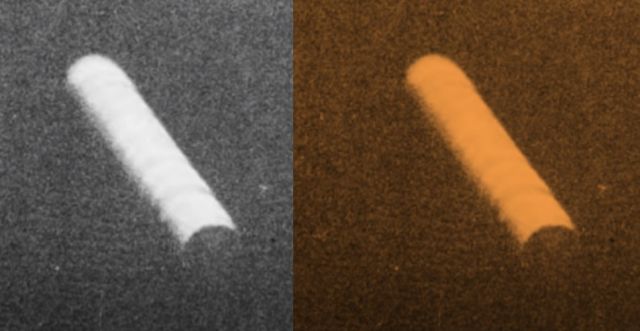
This might have been chalked up to a mere system malfunction, but it gets a bit weirder when looking at some of the evidence surrounding it. First of all were some of the photographs set back by the probe in the time leading up to its demise, which were seen as very curious, indeed. In one of these images, indeed the probe’s last image just before contact was lost, during a time in which it was aligning itself to the orbit of Phobos, there can be seen what appears to be a long, spindle shaped or cylindrical object estimated as measuring around 20 kilometers long and 1.5 kilometers wide, and which appears to be somewhere in the atmosphere between the probe and the surface of Mars. Although it might be easy to write it off as an optical illusion or shadow, the structure was photographed on two different color cameras from slightly differing angles, and it also turns up in the infrared footage. At the time, even the chairman of the Soviet equivalent of NASA, said of the photo, “One image appears to include an odd-shaped object between the spacecraft and Mars.”
Adding to the mystery were other photos taken earlier by the probe, which seemed to show strange rectangular forms on the surface of Mars, and making it even more mysterious still would be that it was later stated by the Kaliningrad control center and reported in the October 19, 1989 issue of Nature Magazine that an investigation into the death of the Phobos 2 had concluded that the probe had been spinning wildly after its final transmission, almost as if it had been impacted by something. You can perhaps see where this is going. The idea among some in the UFO community is that this probe had stumbled across something it was not supposed to see, and that it was either struck by the object in the picture, which has been called a “mothership,” or shot down by it. It certainly doesn’t help that the Soviets were loathe to release the images in the first place, long refusing to show these frames to the public, with most of this being leaked to the West by a Russian astronaut and pilot by the name of Colonel Dr. Marina Popovich, causing whispers of a cover-up.
The mysterious image of the “mothership”
The images and their close proximity to the loss of the Phobos 2 probe have managed to generate discussion ever since. It has been suggested that the cylindrical object is nothing more than a shadow of Phobos the moon and that the end of transmissions from the probe is merely a coincidence, but others have pointed out that the outline appears to be too distinct and the shape not consistent to the shadow of the moon, which has actually been photographed before. The more fringe idea is that there is something out there that does not appreciate our snooping around, and indeed there have been an oddly high number of such Mars probes and missions that have experienced difficulties or been lost. One more recent high-profile case was NASA’s 1992 Mars Observer mission, which was meant to undertake a 2-year mapping of the planet’s surface, but which was suddenly lost in August of 1993 to disappear without a trace. There has been so much trouble in studying Mars that of course there are some who speculate that perhaps there is something out there that does not want us there.
It is hard to know just what is going on here. Is this all just misidentification mixed with coincidence? What really happened to the Phobos 2 probe? Was this just a technical glitch, as they’d like everyone to believe, or something far stranger? What do those photos really show? Mars has definitely become ground zero for a wide variety of mysterious images from both its surface and above, and this certainly adds to the pile of strangeness associated with the Red Planet.
“There are hints of a novel object (“Planet 9″) with a mass 5−10 M in the outer Solar System, at a distance of order 500 [astronomical units].”
Thus begins a new paper by a renowned theoretical physicist who believes the “hints” of Planet 9 can be found and identified using spacecraft currently under development. He himself hints that this “Planet 9” may not be a planet at all, but something even more theoretical and “exotic.” More exotic? Like a planet of prehistoric women?
“Searches for this object are in progress. On the other hand, it has been suggested that Planet 9 might really be a primordial black hole (PBH) or other exotic compact object.”
In a new paper published in arxiv.org but not yet peer-reviewed, Ed Witten, a theoretical physicist at Princeton’s Institute for Advanced Study, proposes that where there’s hints of smoke, there’s likely hints of fire, but not necessarily of the planetary kind. Witten certainly has the creds to present this kind of theory – he’s worked on the mathematics of quantum field theory and developed string theory’s unifying “M-theory” which proposes 11 dimensions (9 space dimensions, 1 time dimension, 1 energy dimension) and is the closest thing so far to a “Theory of Everything,” even though no experimental support for it exist.
Witten stays in theoretical mode by proposing that Planet 9 might be a primordial black hole – hypothetical black holes thought to have formed shortly after the Big Bang, meaning they aren’t collapsed stars like conventional black holes. If Planet 9 is a black hole in our solar system (a scary thought), it can’t be seen with conventional telescopes. Fortunately, Witten proposes a soon-to-be-conventional alternative.
“A possible alternative is to probe the gravitational field of this object using small, laser-launched spacecraft, like the ones envisioned in the Breakthrough Starshot project.”
Breakthrough Starshot is the project – founded by Yuri Milner, Stephen Hawking, and Mark Zuckerberg – to build a fleet of tiny light sail spacecraft that would be pushed by lasers at speeds approaching 20% of the speed of light to distant locations. A trip to the Alpha Centauri star system 4.37 light-years away would thus take 20+ years, but one to the edge of the solar system where this Planet 9 or Primordial Black Hole 1 might live would take far less time.
According to LiveScience, each craft would contain just an atomic clock and a radio transmitter. That simple pairing would tell Earth researchers when the craft was affected by the gravity of a large space object, where it is and, depending on the force, whether it’s a planet, a prmoridal black hole or something more exotic. A planet of prehistoric women?
“Think “quark nugget.””
The unimaginative LiveScience proposes a quark nugget (or strangelet), which is a theoretical object composed of approximately equal numbers of up, down, and strange quarks. Whatever the “hint of a novel object” might be, Witten’s proposal is a good news/bad news idea. Tiny light sails are low cost, but their completion, deployment and arrival are still decades away – far too long for those who want their Planet 9 questions answered now.
For those people, I suggest passing the time with viewings of “Voyage to the Planet of Prehistoric Women,” a 1968 sci-fi film directed by Peter Bogdanovich and starring the lovely Mamie Van Doren as Moana, a prehistoric woman living on Venus. Not exactly string theory or even string bikinis, but a fun romp based on a Roger Corman film.
Linda Moulton Howe: Antarctica E.T. Facilities Are Identical To Those On Our Moon... 'They' Are Experts at Hiding!
NASA have been aware of a huge E.T. monitoring facility on the dark side of our Moon since 1965. Numerous people who worked at NASA have seen the images such as officer Karl Wolfe who revealed his experience to the world during the Disclosure Project.
Since then other whistleblowers have spoke out in regards an abandoned E.T. facility in Antarctica, which triggered secret meetings being held at the location. Both these facilities, on our Moon and in Antarctica are seemingly identical.
Filmed by Zohar Entertainment Group All content on this channel is licensed, and or produced by Zohar Entertainment Group/Awakening Expo/Phenomena Magazine.
They Captured Something Huge in Russia and There Is Something Inside It!
I seen 3 stars years ago before this was news. I call them stars only because that’s what they looked like. But they came to a pyramid and stopped for seconds. Then went in different directions. I have always looked up since then . Never have seen that formation again. So yes I believe there is something out there. 🕊 SB
There is proof from ancient paintings, that the aliens have been here since 1200 A. D. & living in the deepest part of the ocean. Colombus wrote about the chariots of fire under the ocean in 1492. We know it’s true, only the religious hierarchy is preventing the government’s from revealing the truth. Larry Lightner
The last few minutes I say I hope so. Because 90% of man are still primitive and would most likely be scared and ready to fight right away when the entire world knows of them. MK
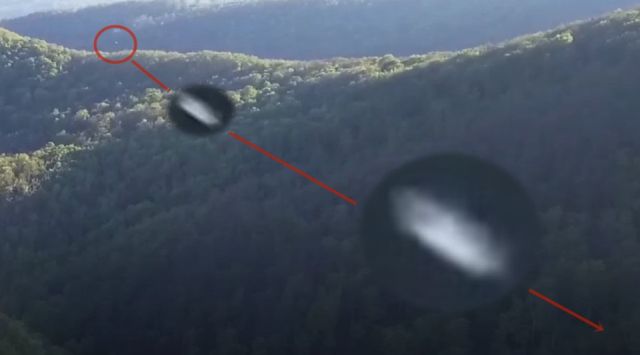
This is a great video of a UFO entering the peak of Mount Hood. The eyewitness recorded this from a plane and wanted to test out the camera. They didn't even see the UFO until they got home and looked at the video later. The video clearly shows a glowing disk in the distance moving slowly towards the top of Mount Hood and then disappearing. It has been long thought by UFO researcher that such high mountains and volcanos are being used as entrances to underground alien bases, because the peaks of such places are rarely visited by humans. Thus aliens have the seclusion and privacy they want. Scott C. Waring
Eyewitness states:
I saw this after the fact. while I was seeing how good my new pocket digital camcorder was! bam one of the first things I found. at 5 seconds and stopped on my large screen, it looks like a tic tac UFO.
Alien Entity Appeared In Church In Infrared Camera, Video, UFO Sighting News.
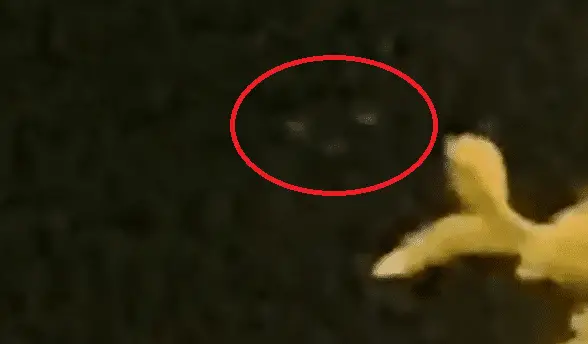
Date of sighting: May 2, 2020 Location of sighting: Mississippi, USA Here is some great raw video from some ghost hunters in Mississippi. Last week they were recording inside an old church using a special infrared camera when something appeared in front of them. A jellyfish shaped orb appeared. Very rare, never seen an orb quite like this before. It almost appears to have long legs and begins to move closer to the person holding the camera, but then vanishes. Looks like they caught an alien entity. They call it a ghost, but I really feel that these smaller orbs are alien entities living amounts that we cant normally see with the human eye. Its a well known fact that infrared cameras record cloaked UFOs, orbs and entities that the human eye cannot see. Even the US military and the Chile military releases UFO videos in infrared of them changing UFOs. So...infrared works...both at night and during the day. Scott C. Waring
Here is an interesting capture in Mississippi this week. A person spotted a orange ball moving across the sky. The UFO traveled across the sky at the same speed as a jet. Such UFOs have been seen a lot around the world. But I think aliens are taking notice that most people are on lock down and unable to see the sky, so aliens have free access to the sky for a while in some locations. From the screenshot above, I can tell you this is not a plane, helicopter or rocket...this is a glowing orb craft. This is 100% alien made. Scott C. Waring - Taiwan
News states:
For one Natchez resident, a late-night trip out of his house turned into an otherworldly experience when he spotted a bright orange fireball streak across the sky. “It scared the heck out of me,” Alex Sandel said Monday morning. “It was bright orange, red and spinning.” Living near Merit Health Natchez, Sandel said he has stepped outside to watch a helicopter take off from the hospital’s helipad Sunday evening at approximately 10:15 when he was startled by the fireball streaking across the sky. “I was outside waiting for the helicopter to take off when I saw this thing coming,” Sandel said. “It came from the north and went straight south.” Sandel said the fireball was traveling at a slow enough speed for him to reach his phone to capture an image of the flying object. “It wasn’t any faster than a jet,” Sandel said.
Drone Caught A Fastwalker Speeding Over Medvednica, Croatia
Adrone accidentally recorded a UFO or more likely a fastwalker moving at an incredible speed over Medvednica, Zagreb, Croatia.
On May 10, 2020.a drone owner was shooting video material for his video with his drone and in the montage he noticed a white object moving at high speed towards the drone, but he couldn't identify what it could be.
“Fastwalker” is a term used by NORAD and branches of armed forces to describe unidentified aerial phenomena moving and/or changing directions at high speed far beyond what current aerospace technology is capable of.
Usually these objects are observed in space and although it is assumed that these objects only move in space, in recent years, these fastwalkers have also been filmed while moving through our atmosphere at such an incredible speed that is not perceptible to the naked eye.
The Croatia footage shows such a mysterious fastwalker.
The Air Force Said This Object Was The Moon. Was It?
Before Project Blue Book came Project Grudge, an Air Force project its director later admitted was to debunk the UFO phenomenon. One file buried in the Grudge data concerns a cylindrical object photographed above Manhattan in 1950 — by one of New York City's most prestigious photographers (now featured in the Library of Congress).
The photographer, Irving Underhill, was adamant what was in the photo was an object, that wasn't there before or after it was shot.
The Air Force, though, had other ideas. They believed he misidentified the Moon, and forgot he was taking a time-lapse image.
In this video, we'll explore that hypothesis, and show its many issues, including the USAF's statement that the photo happened during sunset (the only time the Moon was in that part of the sky). Underhill's photo, taken at night, was used for a postcard titled "Night Lights from Queensboro Bridge."
In isolation, this may not be a big deal. But the early 1950s were full of cylindrical UFO sightings, including several made by trained observers noting cylinders traveling — strangely — through the air in an upright position or at an angle. We'll discuss all of this in today's episode.
Triangle-shaped UFO filmed over Lemon Grove, California 4-May-2020
Check out this amazing footage of a triangle UFO flying across the night sky above Lemon Grove, a city in San Diego County, California. This happened on 4th May 2020.
A dazzling new image of Jupiter makes the planet look like a gigantic, swirling ball of fire.
While it’s a dramatic sight to behold, the image doesn’t really show what Jupiter looks like through a telescope, BBC News reports. Rather, it’s a composite taken with a technique called “lucky imaging” that peers beneath the planet’s cloudy surface and shows the tumultuous distribution of heat hiding beneath.
Focusing In
Even though it’s an infrared heatmap, the new image is still among the sharpest images of Jupiter ever taken from Earth, according to BBC News.
That’s because lucky imaging helps filter out the usual blurriness caused by Jupiter’s extremely turbulent atmosphere, resulting in a much sharper image. This final image, from Hawaii’s Gemini North Telescope, combined a lot of those lucky images — letting researchers focus on the entire planet, bit by bit.
In a reportpublished last month, a team of scientists discussed how to ensure that human space travelers don’t contaminate distant planets — and that they don’t bring back extraterrestrial pollutants back to Earth, a topic that seems more pertinent than ever in the midst of a global pandemic.
“In my opinion, and that of the science community, the chance that rocks from Mars that are millions of years old will contain an active life form that could infect Earth is extremely low,” said adjunct Stanford professor of aeronautics and astronautics Scott Hubbard, co-author of the report, in an interview with Stanford News. “But, the [Mars] samples returned by [NASA] will be quarantined and treated as though they are the Ebola virus until proven safe.
The solution, Hubbard said, is “planetary protection.” Now that humanity is edging ever closer to traveling to Mars thanks to SpaceX and NASA, Hubbard and the rest of the committee argue that the US government and private sector need to “‘continually authorize and supervise’ private activities in space,” Hubbard told Stanford News.
To counteract any chances of contaminating other places around our solar system, Hubbard suggests scientists could implement “combinations of chemical cleaning, heat sterilization, applying reduction credit for time spent in the highly sterilizing space radiation environment and clever mechanical systems” that have already been shown to be effective.
For instance, for NASA Martian Sample Return mission, a part of the agency’s Perseverance Rover initiative set to launch this year, have already been decontaminated using extremely high temperatures.
But that still leaves germy humans.
“Spacesuits can leak or ‘blow out,’ potentially releasing all manner of earthly microbes and contaminating the surface for any future science missions,” Hubbard said.
“Humans obviously cannot be cleaned like robots, so much more attention to spacesuits, human habitats and using robots as assistants is required,” he added.
There’s somewhat of a precedent when it comes to the Moon, he pointed out. The quarantine requirements for Apollo astronauts was eliminated relatively quickly in the 1970s once we found out the Moon posed no risk of contamination.
But that doesn’t mean we shouldn’t handle the samples from Mars with extreme caution.
A team of MIT researchers are suggesting that we could use a “dynamic orbital slingshot” to get an up-and-close look at interstellar objects — or, in other words, they want to send tiny satellites screaming through space to chase space rocks from beyond our star system.
It’s a far-out concept that’s even grabbed the attention of NASA. The project has secured proof-of-concept funding from the NASA Innovative Advanced Concepts (NIAC) Program, an incubator for radically futuristic concepts such as turning a crater on the far side of the Moon into a giant radio telescope.
Interstellar objects have been a fascinating and relatively recent addition to scientific inquiry. In particular, space rock Oumuamua, first spotted in 2017, and 2I/Borisov, spotted by amateur astronomer Gennadiy Borisov last year, have puzzled astronomers due to their extremely unusual trajectories, leading them to believe they arrived from a neighboring star system.
“There are a lot of fundamental challenges with observing [interstellar objects] from Earth — they are usually so small that light from the sun needs to illuminate it in a certain way for our telescopes to even detect it,” said Richard Linares, assistant professor in the Department of Aeronautics and Astronautics (AeroAstro) at MIT who came up with the idea, in a statement.
“They are traveling so fast that it’s hard to pull together and launch a mission from Earth in the small window of opportunity we have before it’s gone,” Linares explained. “We’d have to get there fast, and current propulsion technologies are a limiting factor.”
To get over these limitations, Linares suggests using a series of “static satellites” that each use “solar sail” technology — using only radiation of the Sun as propulsion.
This constellation of space buoys could then jump into action, releasing stored energy as well as using the gravitational pull of the sun to slingshot themselves after interstellar objects once they’ve been detected.
But they won’t attempt to stop when they get to these elusive extragalactic visitors.
“Flyby missions tend to be easier because they don’t require you to slow down — you fly past the object and try to get as many pictures as you can in that window,” Linares said.
“Studying an interstellar body close-up would revolutionize our understanding of planet formation and evolution,” professor of planetary sciences Benjamin Weiss, who is also working on the project, said in the statement.
The slingshots could even allow us to study the feasibility of sending objects to other solar systems, according to Weiss.
NASA's Lucy asteroid mission already faced a busy itinerary with seven different space-rock targets. Now, the team has discovered that one of those asteroids has a tiny companion.
The realization came thanks to the Hubble Space Telescope, which the team first recruited in 2018 to study a space rock called Eurybates. Like several of the other Lucy mission targets, Eurybates belongs to a group of asteroids known as Trojans, which occupy about the same orbit around the sun as Jupiter but cluster ahead of or behind the gas giant. Scientists had wondered whether Eurybates might have a companion, but combing through those 2018 Hubble images came up empty — until the researchers revisited the data in November 2019 and saw something.
"We asked for more Hubble time to confirm, and they gave us three tries," Keith Noll, Lucy project scientist at NASA's Goddard Space Flight Center in Maryland and a co-discoverer of the Eurybates satellite, said in a statement. "In the first two observations in December we didn't see anything, so we began to think we might be unlucky. But on the third orbit, there it was." That third orbit came in early January.
Scientists working on the Lucy mission hope to get another look at the satellite next month, when it comes back into Hubble's view for the first time since the discovery was confirmed in January. In the meantime, they are focused on using what data they have to pin down the satellite's orbit around Eurybates, which should increase the odds of successfully observing it during the next attempt.
What the researchers know so far suggests that the newly identified space rock is truly tiny: because the object is more than 6,000 times fainter than Eurybates, the satellite is likely less than 0.6 miles (1 kilometer) across, according to the statement.
The scientists on the Lucy mission hope that the newly discovered satellite — and the rest of the mission's Trojan tour — will help them understand how the solar system came to look the way it does. The Trojans are likely crumbs that slipped away during the formation of the gas giants and became trapped in these pockets of orbital stability, which means these space rocks should hold clues to the early days of the solar system.
A diagram of Lucy's itinerary among the Trojan asteroids that trail and lead Jupiter. (Image credit: Southwest Research Institute)
Eurybates and its tiny companion may also be two pieces of a formerly larger space rock, the scientists suspect, which means studying the pair could help scientists understand what happens during solar system collisions.
"There are only a handful of known Trojan asteroids with satellites, and the presence of a satellite is particularly interesting for Eurybates," Thomas Statler, Lucy Program Scientist at NASA headquarters in Washington, said in the statement. "It's the largest member of the only confirmed Trojan collisional family — roughly 100 asteroids all traceable to, and probably fragments from, the same collision."
The discovery should not affect the plan for Lucy, according to NASA, although the team behind the mission will be evaluating the situation to be sure the spacecraft won't accidentally slip too close to the rock and smash itself to bits.
Meer van UFO'S of UAP'S, ASTRONOMIE, RUIMTEVAART, ARCHEOLOGIE, OUDHEIDKUNDE, SF-SNUFJES EN ANDERE ESOTERISCHE WETENSCHAPPEN - DE ALLERLAATSTE NIEUWTJES


 The Time Martians Destroyed a Russian Space Probe