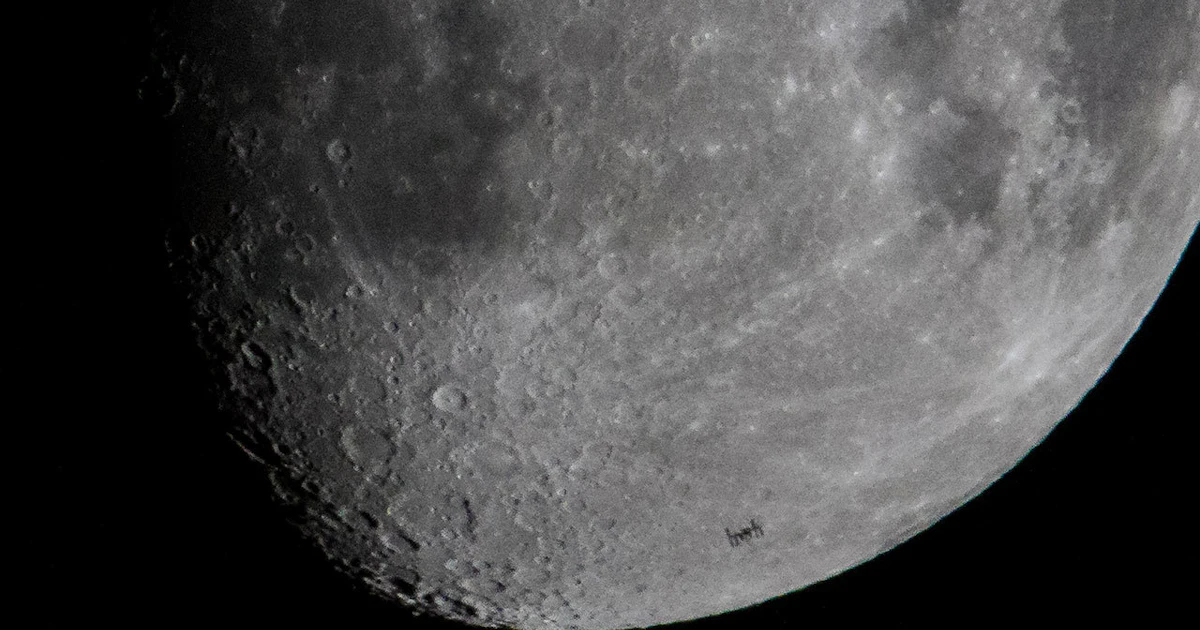
SOFIA finds water on the moon’s sunlit surface


China has curiously chosen a prime touchdown map for its Tianwen-1 Mars rover earlier than the spacecraft’s arrival at the Purple Planet in February 2021.
Tianwen-1, consisting of an orbiter and a lander-rover duo, is presently on its arrive to Mars following initiate on a Long March 5 rocket on July 23. Mission team participants own already tested its science instruments.
The most modern legitimate substitute from China acknowledged that Tianwen-1 had traveled a total of 85.12 million miles (137 million kilometers) as of Sept. 11 and became as soon as 9.5 million straight-line miles (15.3 million km) from Earth at the time.
China has already acknowledged that the rover will are trying and land in a designated home of Utopia Planitia, a large basin formed by a gargantuan affect a ways assist in Mars’ history. The house is to the south of NASA’s Viking 2 touchdown map and northwest of the distance where the American home company’s Mars InSight lander touched down in November 2018.

Nonetheless knowledge printed in an editorial (in Chinese language) within the legitimate China House Info newsletter following initiate in July affords a explicit major touchdown map. The article reported touchdown coordinates of 110.318 degrees east longitude and 24.748 degrees north latitude, for the interval of the southern section of Utopia Planitia. On-line versions of the article own since been edited to favor the coordinates; alternatively, these remain printed by sources citing the article.
The home looks to provide a relatively safe put for a touchdown strive nonetheless is furthermore of substantial scientific hobby, consistent with Alfred McEwen, director of the Planetary Image Evaluation Laboratory at the University of Arizona and the important investigator of the worthy HiRISE digicam aboard NASA’s Mars Reconnaissance Orbiter.
McEwen described the positioning as odd southern Utopia Planitia, alongside side that it is “largely flat and tender nonetheless with craters, aeolian [wind-sculpted] ridges, and just a few boulders.”
The home has been “interpreted as coated by mud flows by some scientists, so outdated deep groundwater may perchance furthermore own existed, and this may perchance furthermore very well be a attention-grabbing discipline to stare with a rover,” McEwen instructed House.com.
McEwen added that he’s not mindful of any proof suggesting that there may perchance furthermore very well be water ice at or arrive the bottom of the Tianwen-1 touchdown map.
The yet-to-be-named, roughly 530-lb. (240 kilograms) solar-powered Tianwen-1 rover will compare the bottom soil traits and seemingly water-ice distribution with its Subsurface Exploration Radar instrument. China’s Chang’e 4 rover makes use of a the same instrument to glimpse beneath the bottom of the a ways aspect of the moon.
The Mars rover will furthermore analyze ground cloth composition and traits of the Martian climate and atmosphere on the bottom.
China has twice landed on the moon, with Chang’e 3 in 2013 and Chang’e 4 on the a ways aspect in 2019. Nonetheless Tianwen-1 is China’s first honest interplanetary mission, and touchdown on Mars, with its skinny atmosphere, remoteness and varied gravity discipline, items fresh and elevated challenges.
After arrival in Mars orbit in February subsequent One year, Tianwen-1 will use two to three months making ready for the rover’s touchdown strive, the usage of excessive- and medium-option cameras to assess the positioning and the conditions.
This may perchance then strive entry, descent and touchdown. The spacecraft will destroy free the orbiter and enter the atmosphere, being slowed by a conical aeroshell. Subsequent, a parachute will additional expressionless the craft earlier than retropropulsion rockets provide the closing deceleration for the descent onto the Martian ground.
The low elevation of Utopia Planitia ability there’ll seemingly be more time and atmosphere for the entry spacecraft to expressionless down and safely tumble to the bottom.
If it lands efficiently, the Tianwen-1 rover is expected to be in operation for approximately 90 Martian days, or sols.
The Tianwen-1 orbiter will provide a relay communication hyperlink to the rover whereas performing its possess scientific observations for one Martian One year. (One sol is ready 40 minutes longer than an Earth day. One Martian One year is 687 Earth days.)
- Follow us on Twitter @Spacedotcom and on Facebook.