Date of sighting: December 3, 2021
Source: MUFON
UFO Appears Over Florida Coast And Shoots Up and Away, Dec 3, 2021, Photos, UFO Sighting News.Date of sighting: December 3, 2021
UFO Over Las Vegas, Nevada Nov 13, 2021, UFO Sighting News.Date of sighting: Nov 13, 2021
Eyewitness states:
I don’t know what to say it was above the mountain and I'm pretty sure you’re not supposed to be that close. There’s nothing that close ever flying by the mountains and if it was a rescue then who where they rescuing?
Weird alien-like fish spotted in the ocean’s twilight zone off the coast of California
Stanford Professor Claims to have REAL UFO Parts!Dr. Garry Nolan is the Rachford and Carlota A. Harris Professor in the Department of Pathology at Stanford University School of Medicine. He has published over 300 research articles and is the holder of 40 US patents, and has been honored as one of the top 25 inventors at Stanford University. Dr. Nolan was the founder of Rigel Inc. (NASDAQ: RIGL), and Nodality, Inc. (a diagnostics development company), BINA (a genomics computational infrastructure company sold to Roche Diagnostics), Founder of Apprise (sold to Roche Sequencing Solutions), co-Founder of Ionpath and co-Founder of Akoya.
But in this conversation, we focus on his interest in the area of UFO’s. Since 2016, Garry has been in possession of and analyzing materials given to him by some of the top “Ufoologists” in the country like Jacque Vallee. He’s also consulted for the CIA in studying the brain structures of people who claim UFO encounters. In this interview, we discuss his very interesting findings on both UFO materials and brain structures. Spoiler alert: the materials contain isotope ratios not naturally occurring anywhere on earth, and the brain structures are very unique. Please enjoy this wild conversation with Dr. Garry Nolan.
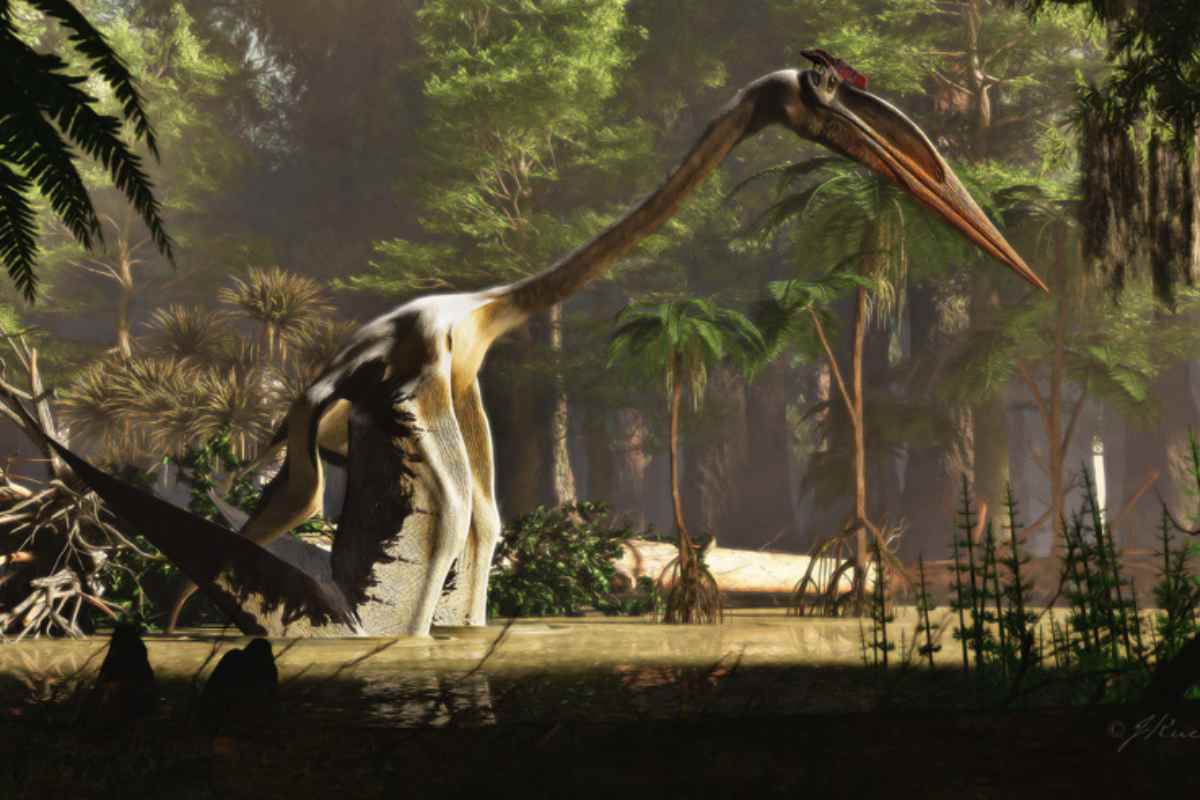
WETENSCHAPPERS ONTHULLEN HET UNIEKE LOOPJE VAN HET GROOTSTE VLIEGENDE DIER DAT OOIT OP AARDE HEEFT GELEEFD

China's Lunar Rover to Investigate 'Mystery Hut' Spotted on Far Side of MoonChina's Lunar Rover to Investigate 'Mystery Hut' Spotted on Far Side of Moon
by Tim Binnall
China’s Yutu 2 lunar rover is en route to investigate a curious cube-like anomaly, that has been dubbed the 'mystery hut,' spotted on the far side of the moon. Word of the weird observation reportedly came about by way of the China National Space Administration's Our Space website in a post on Friday, The blog recounted how scientists were admiring the horizon as seen by the rover when "suddenly, an obtrusive cube on the northern skyline attracted their attention" as it "pierced through the winding of the skyline, like a "mysterious hut" that appeared out of thin air."
The report went on to note that there was a sizeable impact crater near the object and then fantastically wondered if the oddity is "a home built by aliens after crash landing" or "a pioneer spacecraft of the predecessors to explore the moon." A less imaginative explanation put forward by scientists is that the anomaly is merely a boulder that came to rest upon the surface of the moon by whatever created the crater next to it. Be that as it may, the team behind the rover are understandably intrigued by the peculiar observation and, in an admirable display of scientific inquiry, have now directed the craft to head towards the 'mystery hut.'
Although it is located around 260 feet from the rover, it will take actually approximately two to three months for the research vehicle to fully reach the anomaly. One assumes that the cube will come into clearer focus as the craft gets closer to the object. The 'mystery hut' is not the first time that Yutu 2 has stumbled upon something strange on the far side of the moon as the rover previously observed and subsequently identified a 'mystery substance' that wound up being a rock transformed by extreme heat. With that in mind, one may wish to temper their expectations that the object will turn out to be an alien's house rather than the just a very big boulder.
NASA Launches New Mission to Explore Universe’s Most Dramatic Objects
![]()
A SpaceX Falcon 9 rocket launches with NASA’s Imaging X-ray Polarimetry Explorer (IXPE) spacecraft onboard from Launch Complex 39A, Thursday, Dec. 9, 2021, at NASA’s Kennedy Space Center in Florida. The IXPE spacecraft is the first satellite dedicated to measuring the polarization of X-rays from a variety of cosmic sources, such as black holes and neutron stars. Launch occurred at 1 a.m. EST.
Credits: NASA/Joel Kowsky
NASA’s Imaging X-ray Polarimetry Explorer (IXPE) mission launched at 1 a.m. EST Thursday on a SpaceX Falcon 9 rocket from NASA’s Kennedy Space Center in Florida.
A joint effort with the Italian Space Agency, the IXPE observatory is NASA’s first mission dedicated to measuring the polarization of X-rays from the most extreme and mysterious objects in the universe – supernova remnants, supermassive black holes, and dozens of other high-energy objects.
“IXPE represents another extraordinary first,” said Thomas Zurbuchen, associate administrator for the Science Mission Directorate at NASA Headquarters in Washington. “Together with our partners in Italy and around the world, we’ve added a new space observatory to our fleet that will shape our understanding of the universe for years to come. Each NASA spacecraft is carefully chosen to target brand new observations enabling new science, and IXPE is going to show us the violent universe around us – such as exploding stars and the black holes at the center of galaxies – in ways we’ve never been able to see it.”
The rocket performed as expected, with spacecraft separation taking place 33 minutes into flight. Approximately one minute later, the spacecraft unfurled its solar arrays. IXPE entered its orbit around Earth’s equator at an altitude of approximately 372 miles (600 kilometers). About 40 minutes after launch, mission operators received the first spacecraft telemetry data.
“It is an indescribable feeling to see something you’ve worked on for decades become real and launch into space,” said Martin Weisskopf, IXPE’s principal investigator at NASA’s Marshall Space Flight Center in Huntsville, Alabama. Weisskopf came up with the idea for the spacecraft and has conducted seminal experiments in X-ray astronomy since the 1970s. “This is just the beginning for IXPE. We have much work ahead. But tonight, we celebrate!”
IXPE carries three state-of-the-art space telescopes with special polarization-sensitive detectors. Polarization is a property of light that holds clues to the environment from which the light originates. The new mission builds on and complements the scientific discoveries of other telescopes, including the Chandra X-ray Observatory, NASA’s flagship X-ray telescope. First light operations are scheduled to begin in January.
NASA Marshall manages the IXPE mission for the agency’s Science Mission Directorate as a project of the NASA’s Explorers Program. IXPE is an international collaboration between NASA, the Italian Space Agency, along with partners and providers in 12 other countries. Marshall built the three X-ray telescopes. The Italian Space Agency contributed IXPE’s polarization detectors. Ball Aerospace in Broomfield, Colorado, provided the spacecraft and manages spacecraft operations at the University of Colorado Boulder’s Laboratory for Atmospheric and Space Physics. NASA's Goddard Space Flight Center in Greenbelt, Maryland, manages the Explorers Program.
For more information about the IXPE mission, visit:
-end-
Spinal Missing Link Is Discovered Unifying Apes, Neanderthals and Us

Spinal Missing Link Is Discovered Unifying Apes, Neanderthals and Us
A team of scientists has analyzed a set of two-million-year-old so-called ‘missing link’ fossils. Unlike anything presented before, their new study shows how the ancient human relative, Australopithecus sediba , 'walked like a human, but climbed like an ape'. Is this the missing link Darwin dreamed of?
A collection of two-million-year-old fossil vertebrae from an early human relative, discovered in Africa, has finally put to bed a long outstanding anthropological debate. The argument had always been whether Australopithecus sediba could both walk and climb trees, or not.
Now, a new paper shows that this early hominin was like a cat, being a master of both vertical and horizontal planes. The researchers have demonstrated how A. sediba used its upper limbs to climb trees and cliffs, while their lower limbs powered them along, walking like humans.

Australopithecus sediba silhouette showing the newly-found vertebrae (colored) which is the spinal missing link, along with other skeletal remains from the species.
The team of researchers from New York University, the University of the Witwatersrand, and 15 other academic institutions around the world, published their findings in the open access journal e-Life. The study was based on two discoveries of ‘lumbar vertebrae from the lower backs’ of a male and female Australopithecus sediba.
According to a New York University release , in 2008, Professor Lee Berger from the University of the Witwatersrand and his son, Matthew, first discovered the two million years old fossilized spine of the new species of ancient human relatives. Researchers call this female skeleton “Issa,” which means ‘protector’ in Swahili, after she was found at Malapa Cave, in the self-proclaimed Cradle of Humankind World Heritage Site northwest of Johannesburg, South Africa.

The female Australopithecus sediba skeleton was named ‘Issa’, meaning Protector in Swahili.
(Elisabeth Daynes / Wits University )
Then, in 2015, anthropologists discovered ’the most complete lower back ever discovered’ of a male sediba at the same site. Together, the two sets of vertebrae have been used to successfully demonstrate that our ancient human relatives climbed like animals and walked like modern humans.
The fossils were encrusted in breccia, a cement-like rock, so, to avoid damaging the fossils, they were scanned with a Micro- CT scanner at the University of the Witwatersrand. Once the fossilized vertebrae had been ‘virtually prepared,’ they were then pieced together with other fragments of fossils recovered at the site. The 2008 and 2015 vertebrae were found to ‘articulate perfectly’, according to the study.
Professor Scott Williams of New York University and Wits University, the lead author on the new paper, said the lumbar region ‘is critical to understanding the nature of bipedalism in our earliest ancestors. Moreover, lumbars inform scientists as to whether any given species could walk on two legs, like modern humans do. Previous lumbar studies were all based on incomplete lower spines. Until now, it was not noticed that sediba had ‘a relatively straight spine, without the curvature, or lordosis, typically seen in modern humans,’ according to the paper.

Australopithecus sediba silhouette showing the newly found vertebrae along with other skeletal remains from the species.
Professor Gabrielle Russo of Stony Brook University was a coauthor of the new study and he explained that ‘Lordosis’ is the inward curve of the lumbar spine associated with tendencies towards bipedalism. The research showed how the lordosis of sediba was ‘more extreme than any other australopithecines yet discovered.’ This indicates ‘a powerful trunk musculature, perhaps for arboreal [tree climbing] behaviors,’ according to Russo. And, Issa’s spine was found to be more similar to ‘Neanderthals, and other more primitive species of ancient hominins older than two million years’.
The study concluded that the new spine research demonstrates sediba’s ‘transitional nature’ being able to walk like a human and climb trees like an ape: ‘a missing link’ showing another intermediate species between the great apes, Neanderthals and modern humans.
By Ashley Cowie
RELATED VIDEOS, selected and posted by peter2011
Las Vegas is Building the World’s Largest Sphere

The skyline-changing MSG Sphere entertainment venue in Las Vegas will be the largest such structure in the world.
The $1.8 billion orb will feature 17,500 seats surrounded by a super high-resolution LED screen that projects at an amazing 19,000 x 13,500 pixels, a world record.
The set up will create a revolutionary fully immersive, multi-sensory platform for audiences, and artists.
Just gotta beat that Covid thing and we’re off. Have a look.
What if We Aren’t the First Advanced Civilization on Earth?
Earth scientists at the turn of the century, Gavin Schmidt among them, were enthralled by a 56-million-year-old segment of geologic history known as the Paleocene-Eocene Thermal Maximum (PETM). What most intrigued them was its resemblance to our own time: Carbon levels spiked, temperatures soared, ecosystems toppled. At professional workshops, experts tried to guess what natural processes could have triggered such severe global warming. At the dinner parties that followed, they indulged in less conventional speculation.
During one such affair, Schmidt, now the director of NASA’s Goddard Institute for Space Studies, couldn’t resist the comparison. If modern climate change — unambiguously the product of human industry — and the PETM are so alike, he mused, “Wouldn’t it be funny if it was the same cause?” His colleagues were charmed by the implication. An ancient race of intelligent, fossil-fueled… chickens? Lemurs? “But,” he says, “nobody took it seriously, obviously.” Until, nearly two decades later, he took it seriously himself.
One day in 2017, Schmidt received a visit from Adam Frank, a University of Rochester astrophysicist seeking insight into whether civilizations on other planets would inevitably alter their climates like we have. Truth be told, Frank expected his alien conjecture to come across as mildly outlandish.
He was surprised when Schmidt interrupted with an even stranger idea, one he’d been incubating for years: “What makes you so sure we’re the first civilization on this planet?”
One thing nearly all human creations have in common is that, geologically speaking, they’ll be gone in no time. Pyramids, pavement, temples and toasters — eroding away, soon to be buried and ground to dust beneath shifting tectonic plates. The oldest expansive patch of surface is the Negev Desert in southern Israel, and it dates back a mere 1.8 million years. Once we disappear, it won’t take Earth long to scrub out the facade human civilization has built upon its surface. And the fossil record is so sporadic that a species as short-lived as us (at least so far) might never find a place in it.
How, then, would observers in the distant future know we were here? If the direct evidence of our existence is bound for oblivion, will anything remain to tip them off? It’s a short step from these tantalizing questions to the one Schmidt posed to Frank: What if we are the future observers, discounting some prehistoric predecessor that ruled the world in long, long ago?
Frank’s mind whirled as he considered. A devotee of the cosmos, he felt suddenly dazed by the mind-boggling immensity of what lay beneath, rather than above, him. “You’re looking at Earth’s past as if it were another world,” he says. At first glance the answer seems self-evident — surely we would know if another species had colonized the globe like Homo sapiens did. Or, he now wondered, would we?
Take the analogy where the planet’s entire history is compressed into a single day: Complex life emerged about three hours ago; the industrial era has lasted only a few thousandths of a second. Given how rapidly we are rendering our home uninhabitable, some researchers think the average lifespan of advanced civilizations may be just a handful of centuries. If that’s true, the past few hundred million years could hide any number of industrial periods.
In the months after that conversation, Frank and Schmidt crafted what seems to be the first thorough scholarly response to the possibility of a pre-human civilization on Earth. Even sci-fi has mostly neglected the idea. One 1970s episode of Doctor Who, however, stars intelligent reptilians, awakened by nuclear testing after 400 million years of hibernation. In homage to those fictional forebears, the scientists dubbed their thought experiment the “Silurian hypothesis.”
Both scientists are quick to explain that they don’t actually believe in the hypothesis. There isn’t the slightest evidence for it. The point, as Frank puts it, is that “the question is an important one, and deserves to be answered with acuity,” not dismissed out of hand. Moreover, he says, “you can’t know until you look, and you can’t look until you know what to look for.” To see what traces an industrial civilization might leave behind, they start with the only one we’re aware of.
Our seemingly indelible mark on this planet will someday be reduced to a thin layer of rock, composed of the eclectic materials with which we’ve constructed the human world. Collectively they will make up our “technosignature,” the unique imprint that accompanies every technological species. For example, the sediment from our current geological epoch, the Anthropocene, will likely contain abnormal amounts of nitrogen from fertilizer, and rare-earth elements from electronics. Even more telling, it may harbor veins of substances that don’t occur naturally, like chlorofluorocarbons, plastics and manufactured steroids. (In fact, that’s the premise of an ominous short story Schmidt wrote to accompany the study.)
Of course, there’s no reason every civilization must unfold in the same way. Some may never avail themselves of plastic. But they must share certain universal features. Probably they would disperse indicator species, like mice and rats in our case, in their travels. And Schmidt notes that even aliens can’t violate the laws of physics: “Does every technological species need energy? Yes, so where does the energy come from?”
We humans conquered our planet with the help of combustion, and it seems reasonable to bet that ascendant life forms everywhere do the same. It’s just intuitive, Frank says: “There's always biomass, and you can always set biomass on fire.” For a long time we’ve founded our industry on fossil fuels, and, climatic consequences aside, that will leave a geological footprint. Carbon occurs in three types, called isotopes. When we burn the tissues of long-dead creatures, we change the ratio of isotopes in the atmosphere, a shift known as the Suess effect. Scientists have noted similar ratios in events like the Paleocene-Eocene Thermal Maximum, and if anyone is looking in another 50 million years, they should have no trouble seeing it in the Anthropocene.
So what about the PETM? Did those fumes originate in the engines of primeval jalopies? Unlikely. The carbon surge of that period was far more gradual than the one that began with our Industrial Revolution. The same is true of other comparable events in the distant past; geologists have yet to find anything as abrupt as the Anthropocene. That said, the brevity may be the problem — it can be incredibly difficult to make out short intervals in the rock record, as well as at the astronomical level. Which brings us to the Fermi paradox.
If the universe is so vast, with so many livable planets, why haven’t we found any hint of intelligent life? That’s what puzzled the Italian physicist Enrico Fermi. One solution is that plenty of civilizations have arisen, but they fizzle out so quickly that few exist at any given moment. Time, like space, is enormous, and humans may not overlap with many other extraterrestrial world-builders, reducing our chance of discovering any. Then there’s a more optimistic scenario: They may evade our notice not because they died off but because they mastered the art of sustainability, making their technosignatures less conspicuous.
That said, Frank is skeptical that a technological species could ever become undetectable — subtle, certainly, but not invisible. To build solar panels, you need raw materials; to acquire those materials, you need some other form of energy. As for wind power, recent research suggests that even if we raised enough turbines to power the planet, they too would contribute to short-term warming. This, Frank says, demonstrates at global scale the principle that there is no free lunch: “You cannot build a world-girdling civilization and not get some kind of feedback.”
Since publishing the Silurian hypothesis, the authors have predictably attracted as many eccentrics as academics. “Everybody and their dog who has an ancient aliens podcast wanted to interview us,” Schmidt says. Both Schmidt and Frank realize the prospect of earlier earthlings is a seductive one. But regardless of who latches onto their hypothesis, they still see meaningful scientific lessons in their research.
For one, they hope it will inspire geologists looking in (and astrobiologists looking out) to hone their methods of detection. To identify a bygone civilization, they argue, scientists must search for a broad range of signals at once, everything from carbon fluctuations to synthetic chemicals. And they’ll need to pinpoint the rise and fall of these signals, given the importance of timing in distinguishing natural and industrial causes.
The hypothesis also bears on the famous Drake equation, used for calculating the number of active civilizations in the Milky Way galaxy. The equation assumes at most one civilization per inhabitable planet; an increase in that estimate could radically change its output, or the probability that we have intelligent galactic neighbors.
Perhaps most importantly, Frank and Schmidt’s work represents a call to action, and humility. It could be that both potential solutions to the Fermi paradox — extinction and technological transcendence — are possible. If so, we have a choice: “Are we going to live sustainably, or are we going to keep making a mess?” Schmidt wonders. “The louder we are in the cosmos, the more temporary we’re going to be.” Through one door, humans achieve a lasting place in the universe. Through the other we exit, leaving only a trail of cataclysmic breadcrumbs as a warning for the next big-brained saps to find — or overlook.

MUFON SADDENED BY THE PASSING OF DR. R. LEO SPRINKLE

Remote Viewing Alien Life Forms: Locating Space Aliens On Earth

Most psychic abilities are innate and come naturally to people. Clairvoyance and telepathy are two of the most known abilities. However, there is a form of psychic ability that can be learned through a scientific method known as Scientific Remote Viewing.
What is Scientific Remote Viewing?
Scientific Remote Viewing, also known as SRV, is a process of being able to view something or someone at a distant location and can be used to view the target of the viewing session at any point in time.
The idea is to obtain information without using any of the five senses. Instead, SRV works to override the conscious mind to get to soul-level communication.
The viewer is given two random four-digit numbers. Although these numbers would have no meaning to the viewer’s conscious mind, the viewers’ subspace mind recognizes what the numbers signify.
O̳r̳i̳g̳i̳n̳a̳l̳ly developed by the CIA and U. S. military, this particular remote viewing process was developed by Dr. Courtney Brown.
Dr. Courtney Brown is a scientist and director of The Farsight Institute which is an organization dedicated to the development of remote viewing as a scientific way of collecting information.
One of the foremost and most respected viewers in the world, Dr. Courtney Brown has been able to remote view different races of e̳x̳t̳r̳a̳t̳e̳r̳r̳e̳s̳t̳r̳i̳a̳l̳s and claims some of them are on Earth now.
E̳x̳t̳r̳a̳t̳e̳r̳r̳e̳s̳t̳r̳i̳a̳l̳s̳ on Earth
When remote viewing e̳x̳t̳r̳a̳t̳e̳r̳r̳e̳s̳t̳r̳i̳a̳l̳s, both Dr. Brown and many other viewers at the Farsight Institute have collected the same data. Although some of the data might seem difficult to believe, much of the information is similar to information obtained by many researchers in the field of U̳F̳O̳ investigations.
The best known a̳l̳i̳e̳n̳ life forms are those referred to as the Greys. Due to abuse to their environment, they destroyed their own planet. They had to move underground and began genetically altering themselves in order to adapt to their new surroundings.
It’s said that they altered their minds so that they could avoid emotions and it’s said that they altered their bodies to be smaller.
One of the drawbacks from this is that they could no longer produce their own offspring. They came to Earth to work with human biology in an effort to create a hybrid race which in time will allow them to reproduce on their own and feel emotions again.
Life on Mars and Martians on Earth
According to information received through SRV, there was once life on Mars. Due to a comet or asteroid, the Martian c̳i̳v̳i̳l̳i̳z̳a̳t̳i̳o̳n̳ was mostly destroyed.
While it’s said that some of the survivors moved underground, others were brought to Earth and supposedly live in an underground facility under a mountain in Santa Fe Baldy, New Mexico.
Who are the R̳e̳p̳t̳i̳l̳i̳a̳n̳s and Why are They Here?
Apparently the Martians aren’t the only ones with a secret underground base. Allegedly, another race of a̳l̳i̳e̳n̳s known as the R̳e̳p̳t̳i̳l̳i̳a̳n̳s have at least one base on Earth as well.
Both R̳e̳p̳t̳i̳l̳i̳a̳n̳s and hybrid R̳e̳p̳t̳i̳l̳i̳a̳n̳s have been viewed, along with humans. The apparent reason the R̳e̳p̳t̳i̳l̳i̳a̳n̳s came to Earth was to form a hybrid species between Man and R̳e̳p̳t̳i̳l̳i̳a̳n̳s.
Remote viewing was originally developed to be used as a type of psychic spying for the military. Although the above information regarding a̳l̳i̳e̳n̳ life may seem difficult to believe, especially since it isn’t verifiable, numerous remote viewing sessions have had verifiable results, indicating that the process does work.
If military bases and weapons can accurately be remote viewed, then the possibility of remote viewing a̳l̳i̳e̳n̳s should be considered, especially if viewed by Dr. Courtney Brown who has an outstanding reputation in his field.
Alien Abductee Travis Walton And His Terrifying Experience

Perhaps one of the most famous alien abduction stories is that of Travis Walton. He claims he has had an alien encounter on November 5th, 1975. He was 22 at the time.
He was working with a logging crew of seven men at the Apache-Sitgreaves National Forest, Arizona. The crew were heading home after work in their pickup truck when they saw strange bright lights coming through the trees.
As their truck rolled slowly along the road, they stopped when they reached a portion of trees where the light was so bright it looked like the sunset, but the sun had set a half an hour before.
The men suddenly became aware that what they were witnessing was a UFO. The driver rolled to a stop on the side of the road, along the edge of the trees for a better look.
He shut off the engine as the mesmerized men observed a golden-colored object hovering twenty feet above the ground through the trees. Walton was suddenly seized with an overwhelming desire to see the spacecraft up close before it flew away, so he got out of the truck and blazingly walked up to it.
The ground was vibrating under his feet. He stood within feet of the craft, basking in its glow.

Looking up at the golden disc, Travis stood in awe of it and wondered what mysteries it held. As his mind expanded on the possibilities, the craft began to move oddly and erratically, his friends screamed at Walton to get away from it.
Travis started to move away from the craft when suddenly he felt a tremendous electrifying shock hit him and pass throughout his body. The energy lifted his body above the ground and then hurled him ten feet through the air. When his body hit the ground he felt numb all over.
What Walton’s friends witnessed was a blast of blinding greenish colored light coming from the aircraft that suddenly hit and lifted his body in the air. His back was arched, his legs and arms outstretched.
He was thrown through the air like a rag doll and landed on the ground in a lifeless heap. His friends thought he was dead because he was not moving. In fear, the crew left Travis behind and went for help.
The men went to the sheriff and told them what happened. The sheriff believed them and sent out a search party after Travis later that night but Walton was gone. His disappearance made news. Search dogs, airplanes, and trackers could not locate the logger. After four days they gave up.
When Walton woke up, he was on a flat surface on his back. At first he thought he was in a hospital, but when his eyes began to adjust to his surroundings, he realized he was in the alien aircraft.
Three small figures in orange-colored surgical coats stood over him. The strange entities were studying him closely. He said they were about five feet tall with very pale and hairless skin, no fingernails, and had small human-like features, but their eyes and heads seemed oddly large.
Terrified, Travis struck out at one of the aliens with his arm, although it was ineffectual in his weakened state. He then managed to get off of the examining table and moved away from the prying eyes and had nowhere to go.

He was backed up against the wall of the craft ready to defend himself as the creatures moved in on him. While Walton screamed at the aliens and tried to defend himself, they never spoke.
Walton claims the aliens suddenly left the room after his outburst and he wondered through the spacecraft looking for an escape. Eventually, he met up with a tall looking human in a blue space-like suit with a clear helmet.
The stranger never spoke, but took him to another place where two more of these human-looking people were waiting. The other humans never spoke but carefully escorted Travis to an examining table.
He felt powerless as they gently pushed him back on the table and placed a mask over his face. He immediately fell unconscious. When he woke up again, he was laying on the side of a road near Heber, Arizona over thirty miles away from the abduction sight. The craft was hovering over him, then suddenly shot out of sight.
He was gone for five days and was in shock. The story made headlines, and soon a movie about his experience was made (Fire in the Sky).
Still, there were skeptics who wanted to know the truth. Next, Walton was polygraphed by expert, John J. McCarthy, who claims that Walton failed the exam, and felt that Travis had perpetrated a hoax. But McCathy’s outdated methods were called into question.
Travis later took two more polygraphs and passed them. Still, the old polygraph seemed to overshadow him, leading some to believe that he was lying about his ordeal. Walton went on to write the book, “The Walton Experience” which was adapted into the film, “Fire in the Sky.” He has been a guest on Larry King Live and also a guest of several UFO conventions.
RELATED VIDEOS, selected and posted by peter2011
By Definition UFOs Are Real, But If They Are Not Aliens, What Might They Be?
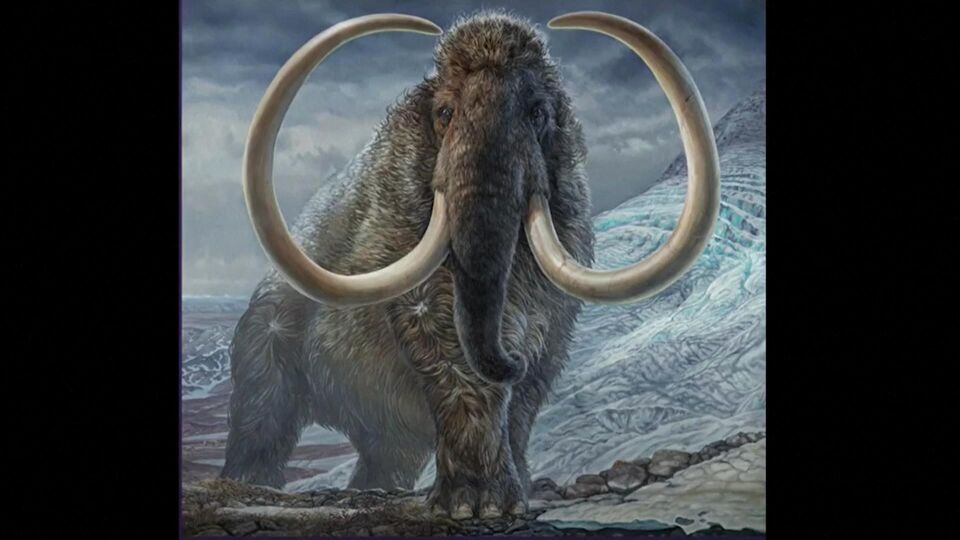
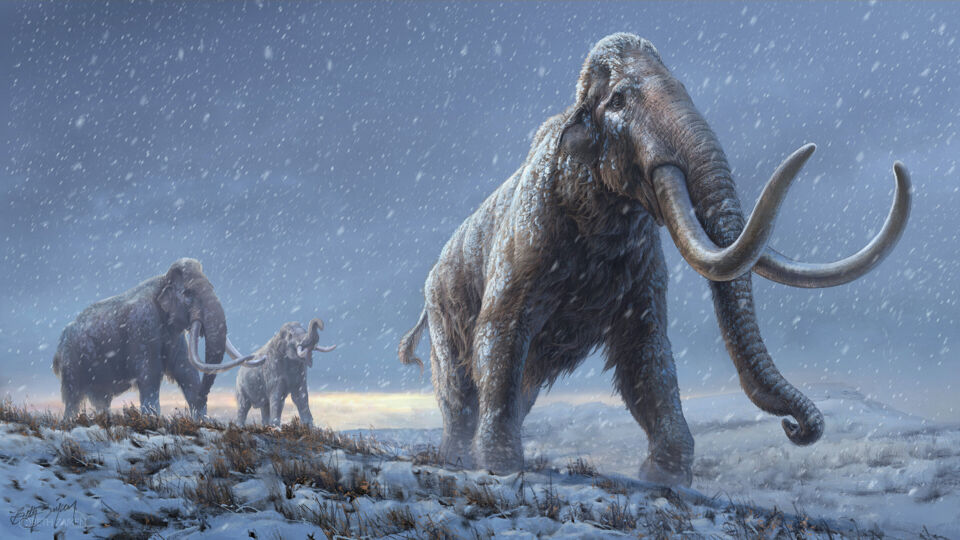
Woolly Mammoths Survived Thousands of Years Longer Than Previously Believed

Recent analysis of ancient DNA found in soil samples collected in the Canadian permafrost has revealed that mammoths and Yukon wild horses survived thousands of years longer than previously thought.
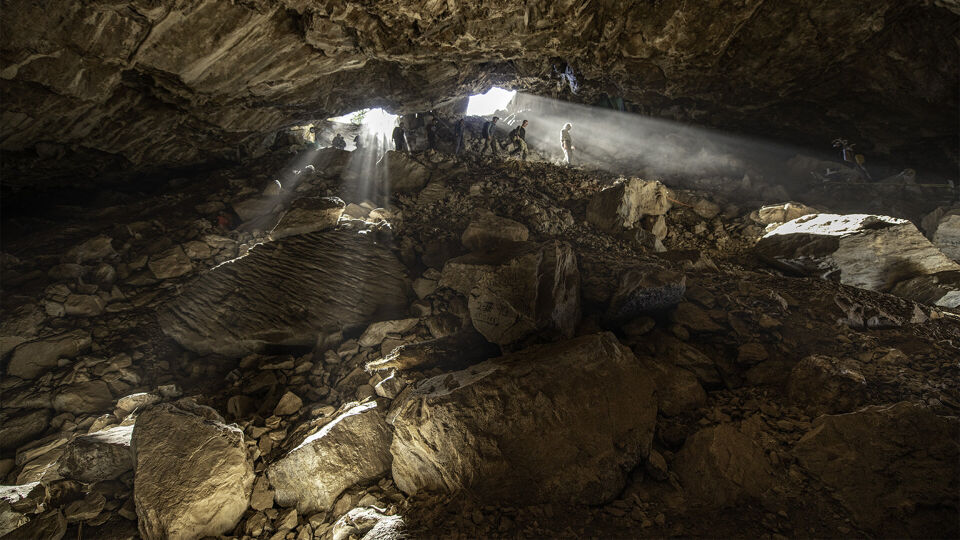
The samples, which were found specifically in the Klondike region of Yukon, were analyzed and presented in a 30,000-year DNA record by researchers from McMaster University, the University of Alberta, the American Museum of Natural History, and the Yukon government.
The samples provided the researchers with valuable information regarding plants and animals from the Pleistocene-Holocene transition period that occurred between 14,000 and 11,000 years ago. This was also the time when numerous animals were believed to have gone extinct such as mammoths, sabre-toothed cats, and mastodons.
They found that the woolly mammoths and North American horses were already declining drastically in numbers before that time period when the climate became unstable. However, they did not completely go extinct until around 5,000 years ago – thousands of years later than previously estimated. Previous research conducted by scientists at McMaster University claimed that woolly mammoths and North American horses were alive in the Yukon around 9,700 years ago.
Hendrik Poinar, who is an evolutionary geneticist and director of the McMaster Ancient DNA Centre, discussed their research in further details, “The rich data provides a unique window into the population dynamics of megafuana and nuances the discussion around their extinction through more subtle reconstructions of past ecosystems.” Their study was published in the journal Nature Communications.
Researchers used DNA capture-enrichment technology developed at McMaster to isolate and rebuild the fluctuating animal and plant communities during the Pleistocene-Holocene transition.
Credit: Julius Csotonyi
Ross MacPhee from the American Museum of Natural History weighed in by noting, “Although mammoths are gone forever, horses are not,” adding, “The horse that lived in the Yukon 5,000 years ago is directly related to the horse species we have today, Equus caballus. Biologically, this makes the horse a native North American mammal, and it should be treated as such.”
He is correct in regards to woolly mammoths currently being extinct; however, a new company is planning on changing that. A few months ago, it was reported that a new de-extinction company named Colossal is planning on resurrecting the woolly mammoth within the next six years.
As for how they plan on doing that, they want to change the genome in Asian elephants to create a modern mammoth. More specifically, they would need to add mammoth genes to the DNA of Asian elephants so that the modified creature would have curved tusks, subcutaneous fat stores, smaller ears, and a thick shaggy coat that would help them to live in the Arctic Circle. Realistically, if they succeed, it would be an Asian elephant/woolly mammoth hybrid. We’ll have to wait and see how that experiment turns out…
A video from McMaster University explaining the study:
Oud DNA uit permafroststalen toont aan dat mammoeten en wilde Yukon-paarden duizenden jaren langer overleefd hebben dan gedacht
Enkele lepeltjes vol aarde uit de Canadese permafrost, meer hadden onderzoekers niet nodig om een nieuw, ruim venster te openen op het vroegere leven in het noordelijke Yukon-gebied. Dankzij gesofisticeerde analyses konden ze een DNA-databank aanleggen van de ecosystemen uit het verleden en meer informatie inwinnen over het overleven en uitsterven van megafauna als mammoeten, paarden en andere al lang uitgestorven levensvormen. Daar bleek uit dat mammoeten en wilde paarden langer overleefd hebben dan tot nog toe gedacht werd.
De sedimenten werden gehaald uit boorkernen van permafrost die afkomstig zijn uit het Klondike-gebied in het centrum van het Yukon Territory, het meest noordwestelijke deel van Canada dat grenst aan Alaska.
Onderzoekers van de Canadese McMaster University, de University of Alberta, het American Museum of Natural History en de regering van het Yukon Territory legden in hun nieuwe studie met DNA uit de sedimentstalen een DNA-bestand aan van de ecosystemen uit het verleden over een periode van 30.000 jaar.
Ze gebruikten daarvoor de 'DNA capture-enrichment' (DNA opvang en verrijking) technologie die ontwikkeld is aan de McMaster University. Daarmee konden ze in opmerkelijk detail de veranderende planten- en dierengemeenschappen reconstrueren op verschillende tijdstippen tijdens de overgang van het Pleistoceen naar het Holoceen. Dat was een periode met een onstabiel klimaat, zo'n 11.000 tot 14.000 jaar geleden, waarin een aantal grote soorten zoals mammoeten, mastodonten en sabeltandkatten verdwenen.
Ze reconstrueerden de oude ecosystemen aan de hand van minieme bodemstalen die miljarden genomische sequenties bevatten van dier- en plantensoorten.
De analyse toonde aan dat mammoeten en paarden al een flinke achteruitgang kenden voor het klimaat onstabiel werd, maar ook dat ze niet onmiddellijk verdwenen ten gevolge van overbejaging door de mens, zoals eerder gedacht werd.
De aanwijzingen uit het DNA tonen integendeel aan dat zowel de wolharige mammoet als het Noord-Amerikaanse paard overleefde tot zelfs 5000 jaar geleden. Dat brengt hen bijna in het Laat-Holoceen, het geologische interval waarin we nu nog leven.
Gedurende het Vroeg-Holoceen bleef het milieu in het Yukon-gebied grote veranderingen ondergaan. Het ooit zo rijke grasland - de mammoetsteppe - werd overgroeid door struiken en mossen, soorten die niet langer in bedwang werden gehouden door grote grazende kuddes mammoeten, paarden en bizons.
Vandaag doen graslanden het niet al te best in het noorden van Noord-Amerika, voor een deel omdat er geen megafauna meer zijn die hen als 'ecologische ingenieurs' kunnen beheren.
"De overvloed aan gegevens biedt een unieke kijk op de populatiedynamiek van de megafauna en ze nuanceren de discussie over hun uitsterven dankzij subtielere reconstructies van de ecosystemen uit het verleden", zei evolutionair geneticus Hendrik Poinar, een hoofdauteur van de nieuwe studie en de directeur van het Ancient DNA Centre van McMaster.
De studie bouwt voort op eerder onderzoek van wetenschappers van McMaster die tot de conclusie waren gekomen dat wolharige mammoeten en Noord-Amerikaanse paarden waarschijnlijk nog aanwezig waren in het Yukon-gebied zo'n 9700 jaar geleden. Betere technieken en verder onderzoek hebben die eerdere analyse sindsdien verfijnd en de datum nog meer opgeschoven naar het heden.
Een video van de McMaster University met uitleg over de studie:
"Nu we deze technologieën hebben, beseffen we hoeveel informatie over de geschiedenis van het leven er opgeslagen zit in permafrost", zei Tyler Murchie, een postdoctorale onderzoeker in het departement antropologie van McMaster en een tweede hoofdauteur van de studie.
"De hoeveelheid genetische gegevens in permafrost is echt enorm en laat de reconstructie van ecosystemen en de evolutie toe op een schaal die niet geëvenaard wordt met andere methoden", zo zei hij.
De onderzoekers benadrukten ook dat het nodig is om meer permafrost-stalen te nemen en te archiveren, aangezien die voor altijd dreigen verloren te gaan nu het Noordpoolgebied opwarmt.
"Hoewel mammoeten voor altijd verdwenen zijn, zijn paarden dat niet", zei mede-auteur Ross McPhee van het American Museum of Natural History. "De paarden die 5000 jaar geleden in de Yukon leefden, zijn directe verwanten van de paardensoort die we nu kennen, Equus caballus. Biologisch maakt dat van het paard een inheems Noord-Amerikaans zoogdier en het zou ook zo behandeld moeten worden."
De studie over het veranderende milieu in het Yukon-gebied is verschenen in Nature Communications. Dit artikel is gebaseerd op een persbericht van de McMaster Unversity.
PACE FORCE INSTALLS HUGE RADAR SYSTEM TO TRACK TINY OBJECTS IN ORBIT

The US Space Force installed a high tech new radar system this week that it says will be able to detect objects the size of baseballs in orbit.
The massive monitoring system, dubbed the Long Range Discrimination Radar (LRDR), is located at the Clear Space Force Base near Fairbanks, Alaska, according to The Anchorage Daily News. The radar is slated to support the US missile defense system and provide reconnaissance data in space.
“Today marks an extremely important milestone for US homeland defense,” US Missile Defense Agency (MDA) director Jon Hill said in a press release yesterday. “The LRDR has finished construction, and we can now begin the testing phase that will lead to the full operational use of this vital system.”

The testing phase of the LRDR system will now take at least another year, with its operational date slated for 2023.
Once operational, the radar will give the US Space Force the ability to “simultaneously search, track, and discriminate multiple small, baseball-sized objects” in orbit, according to a press release from the MDA.
“LRDR will allow Northern Command to better defend the United States from ballistic and hypersonic missile threats,” Hill added in the release.
The installation of the LRDR marks a significant milestone for both the US Space Force and the burgeoning geopolitical arms race.
Early in the fall, US officials were reportedly caught off guard by a hypersonic missile test from China. Meanwhile, Russia is beginning to escalate its anti-satellite missile tests, much to the chagrin of the International Space Station crew members.
Now, with the US Space Force ramping up its own detection efforts, it’s just more evidence that underscores a clear and haunting fact: the world’s biggest powers seem to be gearing up for a conflict the likes of which has not been seen since the Cold War. Let’s just hope it stays just as bloodless.
Updated to clarify source of MDA claim.
READ MORE:
More on the New Cold War:
China's New Hypersonic Aircraft Is Based on a Rejected NASA Design
And it can go faster than five times the speed of sound.

A team of researchers in China has built and tested a prototype hypersonic flight engine that is allegedly based on a design that was scrapped by NASA over 20 years ago, according to a report from the South China Morning Post (SCMP).
The prototype itself might not lead to a production version of hypersonic aircraft. Still, in a paper in the Journal of Propulsion Technology, the team behind the machine said "understanding its work mechanism can provide important guidance to hypersonic plane and engine development."

The original design was proposed by Ming Han Tang, a former chief engineer of NASA's hypersonic program in the late 1990s. Tang's Two-Stage Vehicle (TSV) X-plane design was at the center of the Boeing Manta X-47C program, as per the SCMP report. However, before the program could verify the viability of the design, it was terminated by the U.S. government due to its high costs as well as a series of technical issues.
Unlike the majority of hypersonic aircraft proposals, which feature an engine on the underside, the TSV X-plane design by Tang has two separate engines on each side. At lower speeds, the engines work as normal turbine jet engines. With no moving parts, the configuration then allows the aircraft to quickly switch to high-speed mode to accelerate to more than five times the speed of sound.
Now, Professor Tan Huijun and colleagues at the Nanjing University of Aeronautics and Astronautics in Jiangsu, China, have constructed a prototype based on Tang's original specifications. They were able to do this due to the fact that the blueprints for the Boeing Manta X-47C program were declassified in 2011. Huijun and his team tested the prototype in a wind tunnel that allows testing in conditions resembling flight at Mach 4 to Mach 8. The tests revealed that Tang's proposed engine design works in these conditions, meaning they should be able to conduct further tests and build new iterations of their prototype.
The U.S. and China are in the midst of a space and aviation race. According to the SCMP article, a number of high-profile Chinese scientists quit NASA and other government engineering firms in the U.S. in the late 90s due to strained relations between the two countries. This reportedly coincided with the start of China's hypersonic weapons program in the early 2000s.
China's space agency recently announced that it is building a fission reactor for the Moon that will reportedly be 100 times more powerful than one in development by NASA. China's government also announced earlier this year that it will collaborate with Russia on a lunar space station, which will directly rival NASA's lunar Gateway program. In October, China also launched a hypersonic missile with "an advanced space capability" that took U.S. officials by surprise.
In July, meanwhile, the U.S. Air Force granted a hypersonic aircraft startup called Hermeus a $60 million contract to develop a prototype aircraft within three years that could travel at speeds of Mach 5 using only one engine. The race to go hypersonic is in full force.
NASA SCIENTISTS ARE GONNA BAWL THEIR EYES WHEN THE TINY MARS CHOPPER DIESNASA’s Mars itty bitty scouting helicopter has outlived its life expectancy seven times over — and when it does finally cross the cosmic rainbow bridge, things are probably gonna get emotional.
This heartwrenching insider scoop comes from Christopher Hamilton, an associate professor of planetary sciences at the University of Arizona who’s witnessed other tearjerker endings at NASA’s Jet Propulsion Laboratory in Pasadena.
Ingenuity, the four-pound helicopter that acts as a scout for the Perseverance Rover, was only supposed to last for 30 days when it was first took to the Martian skies more than seven months ago. As Hamilton told United Press International, Ingenuity’s surprisingly-long lifespan will make its final transmission, whenever it comes, that much more bittersweet.
“When the day comes that Ingenuity makes its final flight on Mars,” the cosmologist told UPI, “there will be a mixture of emotions — sadness that such an exceptional spacecraft has reached the end of its journey, but also triumph in that Ingenuity opened a new paradigm in Mars exploration.”
This little chopper that could is special for more reasons than its lifespan. It was also, as UPI noted, designed as an experiment into whether such a tiny and high-tech robot could survive Mars’ notoriously thin atmosphere at all. Seven-and-a-half months and 17 flights around Mars’ Jezero Center crater later, Ingenuity has demonstrated that ability in spades.
Much of Ingenuity’s worth lies in the fundamental things it can do that terrestrial rovers cannot, chief of which being that it can fly and take high-resolution photos while the Perseverance Rover can only move on the ground. In doing so, Ingenuity has shown the way for the Rover in ways JPL drivers on Earth could not.
What was planned as a “what-if” experiment turned into an important complement for Perseverance, an article in IEEE Spectrum magazine noted.
And what’s more, the researchers who have worked with Ingenuity have become very attached to the little rotorcraft on an emotional level.
“The whole team, we all love it!” Olivier Toupet, a Mars Rover driver at the JPL, told Spectrum. “We didn’t know we were going to love it.”
As the publication pointed out, Ingenuity’s timeline has been repeatedly extended, first from 30 days to a few months, and now indefinitely. That’s been “a big surprise,” Olivier said.
Extended missions are nothing new for the JPL, the rover driver noted, but the limits of Ingenuity’s design mean that it could last for months or years more — or die at any moment.
“Ingenuity’s achievements cannot be overstated, and it will be remembered as one of the great pioneering vessels of all time,” Hamilton told UPI. “One day, Ingenuity will make its last flight on the Red Planet, but it will not be the last aircraft to fly on Mars — it’s just the beginning.”
If that’s not enough to make astrophysicists cry, I don’t know what is.
READ MORE:
More on this cute little guy:
Former US AIR FORCE Officer: “The United States Is Aware Of ALIEN BASES On The MOON

U̳F̳O̳ researchers have always argued that on the Moon and more precisely in the dark side, there could be some e̳x̳t̳r̳a̳t̳e̳r̳r̳e̳s̳t̳r̳i̳a̳l̳ bases. The theory suggests that if these a̳l̳i̳e̳n̳s from a distant planet, from another solar system, they could have many bases on the Moon and other planets in our solar system, from which they can make their regular visits to Earth. It is also true that these beings from other worlds could travel by exploiting the StarGates or Wormholes for long distances. They have had this technology for thousands of years already.
In support of this claim, Milton William Cooper, an American writer, broadcaster and former US AIR FORCE intelligence officer, stated under oath in 1989 that the US government was aware of a̳l̳i̳e̳n̳ bases on the Moon. the exactness “outposts”) where spaceships are hosted that often visit the Earth.
“Beyond the Moon there are a̳l̳i̳e̳n̳ bases” – declared Milton Cooper in a statement. “They have been seen by the Apollo astronauts. During the trip to the Moon these a̳l̳i̳e̳n̳ bases were photographed, which were equipped with large machines used for work on the surface of the satellite (perhaps who knows for mining) and large spaceships “. Let’s not forget that the Apollo 15 Mission had photographed a large 3 km long spaceship near Delport Crater. Then subsequently the Apollo 20 mission flew over and photographed the whole area where the a̳l̳i̳e̳n̳ ship was parked on the lunar soil.
Cooper has also written about other conspiracy theories, related to the United States government. But the surprise came in 2001, when Cooper was murdered by agents from the Sheriff’s Office (Apache County). There was a police raid on his home in Arizona over a tax evasion report. The official story says Cooper opened fire first. Is there perhaps a better proof? You know how these things go. If you know too much … you get killed. The truth hurts…

Pictures
Many conspiracy theorists claim that there are actual NASA photographs, which clearly show a̳l̳i̳e̳n̳ bases on the far, far side of the Moon. “There is a complex of a lunar a̳l̳i̳e̳n̳ base on the far side of the moon,” said Scott C. Waring, one of the most respected U̳F̳O̳logists. “This seems to be crazy, but it’s true and we have irrefutable evidence … especially directly from the military.”

In 1994, the US Navy sent a satellite called Clementine which was intended to photograph the moon for two months in a row. During this period, the satellite images sent to the space center were 1.8 million, but only 170,000 of those images were made available to the public. The rest were classified. Classified images of the craters of the moon? ” One of the most fascinating evidence of e̳x̳t̳r̳a̳t̳e̳r̳r̳e̳s̳t̳r̳i̳a̳l̳ bases on the far side of the moon comes from remote viewing by Ingo Swann (1933-2013). Swann, who was instrumental in creating the US government\’s remote viewing program in 1970, was one of the most famous RVs in the world, but far more recognized than a few others. For example, in 1973, while performing a distant view of Jupiter, Swann had reported that the giant gas planet had rings. This fact was unknown to astronomers before, until it was confirmed by the Voyager 1 spacecraft in 1979.
But Swann was also known for a remote viewing session on the far side of the moon. Swann asked a man named Axelrod, who worked for the United States government, for some a̳l̳i̳e̳n̳ targets.

“Axelrod together with Ingo Swann, agreed on a series of RV sessions in the coordinates of the Moon” – declares the writer Gary S. Bekkum, of the American Chronicle – “Swann visualized the Moon with his remote vision in the predetermined coordinates, under the guidance of Axelrod. In particular, a dozen different places were searched and soon realized that in some points there were a̳l̳i̳e̳n̳ bases. Swann had found what appeared to be tracks with wheel tracks as large as those of tractors. In principle Swann was confused by what he was seeing, but he realized that he was witnessing the activity of building intelligent structures on the Moon. At the bottom of a crater he saw a dusty haze, illuminated by rows of artificial green lights mounted on large towers. Swann was surprised during the VR session when he realized that “someone” or “something” has appeared in one of the buildings of one of the bases on the Moon.

Swann knew that an interplanetary VR operation had been endorsed, due to the need to monitor underground structures and e̳x̳t̳r̳a̳t̳e̳r̳r̳e̳s̳t̳r̳i̳a̳l̳ activities in an unconventional way. Swann was on a mission to psychically spy on an a̳l̳i̳e̳n̳ moon base, because these beings were very rude to the human military. When Ingo Swann “listened” in Remote, he sensed that he had been psychically discovered by two of the ET humanoid inhabitants of the moon base, also asking if he was in danger. ”
Are astronauts and scientists aware of e̳x̳t̳r̳a̳t̳e̳r̳r̳e̳s̳t̳r̳i̳a̳l̳ bases on the far side of the moon? As we have seen, there is only some evidence that a̳l̳i̳e̳n̳ bases may be on the far side of the moon. Unfortunately, even this theory cannot be proved or proved, but we know that some American military and astronauts are witnesses to the fact that up there, on the Moon, there is someone watching us.
RELATED VIDEOS, selected and posted by peter2011