Date of sighting: July 12, 2022
Five Lights Over Othello, Washington July 12, 2022, Video, UFO Sighting News.

Five Lights Over Othello, Washington July 12, 2022, Video, UFO Sighting News.
Date of sighting: July 12, 2022
Airline Pilot Sees Foofighter over Wilmington, North Carolina Aug 12, 2022, UFO Sighting News.
Romanian General Strainu Tell The Story Of a Submarine Commander Who Discovered An Underwater City

Talking to a Soviet-era submarine commander, who patrolled the Pacific Ocean for about 10 years, General Emil Strainu managed to find out an extremely interesting story about a highly advanced underwater city.
Mysterious 5.2 mile-wide crater found in Atlantic Ocean off the coast of west Africa may have been left by the baby cousin of the asteroid that killed the dinosaurs 66 million years ago
A mysterious crater found in the Atlantic Ocean off the coast of west Africa may have been left by the baby cousin of the asteroid that killed the dinosaurs 66 million years ago, scientists say.
Dubbed the Nadir Crater, the new feature was discovered 248 miles (400km) off the coast of Guinea in west Africa.
It sits around 1,000ft (300m) below the seabed and has a diameter of 5.2 miles (8.5km).
The impact site is not as big as the Chicxulub crater in Mexico, which was left by the asteroid that wiped out the dinosaurs, but it is of a very similar age.
It has raised questions about whether Earth was hit by more than one space rock during that cataclysmic period in natural history.
If confirmed, it would also be of great scientific interest, because it would be one of a small number of known marine asteroid impacts, so may offer new insights into what happens during such a collision.
The depression was identified by Dr Uisdean Nicholson, from Heriot-Watt University in Edinburgh, who has been analysing seismic survey data to better understand past climatic changes on Earth.

Researchers believe they identified a second asteroid that hit around the same time as the big one that killed the dinosaurs 66 million years ago. The second one, named Nadir crater, is much smaller that Chicxulub

The impact site is not as big as the Chicxulub crater in Mexico, which was left by the asteroid that wiped out the dinosaurs, but it is of a very similar age. It sits around 1,000ft (300m) below the seabed
'These surveys are kind of like an ultrasound of Earth. I've spent probably the last 20 years interpreting them, but I've never seen anything like this,' Dr Nicholson told BBC News.
'Nadir's shape is diagnostic of an asteroid impact.
'It's got a raised rim surrounding a central uplift area, and then layers of debris that extend outwards.'
The crater is just over 5 miles (8km) wide, and Dr Nicholson believes it was was likely caused by an asteroid more than 1,300ft (400m) wide smashing into the Earth's crust.
This, therefore, was much smaller than the city-sized space rock that caused the 100-mile-wide Chicxulub crater.
'Our simulations suggest this crater was caused by the collision of a 400m-wide asteroid in 500-800m of water,' said Dr Veronica Bray from the University of Arizona.
'This would have generated a tsunami over one kilometre high, as well as an earthquake of Magnitude 6.5 or so.

Mystery: A crater found in the Atlantic Ocean off the coast of west Africa may have been left by the baby cousin of the asteroid that killed the dinosaurs, scientists say (stock image)

The depression (pictured) was identified by Dr Uisdean Nicholson, from Heriot-Watt University in Edinburgh, who has been analysing seismic survey data to better understand past climatic changes on Earth
'The energy released would have been around 1,000 times greater than that from the January 2022 eruption and tsunami in Tonga.'
Nadir was identified using 'seismic reflection' as part of a wider project to reconstruct the tectonic separation of South America from Africa back in the Cretaceous period.
To be certain the crater was caused by an asteroid strike, Dr Nicholson said that scientists will need to drill into the the crater and test minerals from its floor.
However, it has all the hallmarks experts would expect, including the right ratio of crater width to depth, the height of the rims, and the height of the central uplift.
The latter is a mound in the centre created by rock and sediment forced up by the shock pressure.
The discovery of the Nadir Crater feature has been published in the journal Science Advances.
Read more:
RELATED VIDEOS, selected and posted by peter2011
Was er nog een tweede asteroïde die dinosauriërs op dezelfde dag uitroeide?66 miljoen jaar geleden sloeg een asteroïde in op de aarde, op de plaats die we nu kennen als de Golf van Mexico. De impact was zo enorm dat de dinosaurussen werden uitgeroeid. Maar mogelijk was er die dag nog een tweede inslag, aan de overkant van de Atlantische Oceaan.
Het was Uisdean Nicholson van de Heriot-Watt University in Edinburgh die de verborgen West-Afrikaanse krater ontdekte. De wetenschapper onderzocht seismische gegevens, op zoek naar een plek om te kunnen boren en zo meer inzicht te verwerven in de klimaatveranderingen op aarde uit het verleden. Bij zo’n analyses worden de verschillende lagen van de ondergrond tot een diepte van vaak enkele kilometers in kaart gebracht.
“Die onderzoeken zijn een soort echografie van de aarde”, aldus Nicholson aan BBC News. Hij besteedde zowat de laatste 20 jaar aan de interpretatie ervan. “Maar zoiets als dit heb ik nog nooit gezien”, beweert hij. “De vorm van Nadir is kenmerkend voor een asteroïde-inslag. Het heeft een opstaande rand rond een centraal opwaarts gebied, en dan lagen puin die zich naar buiten uitstrekken.”
Ter vergelijking: de asteroïde die de Chicxulubkrater in de Golf van Mexico heeft doen ontstaan, was naar schatting 12 km in doorsnee. De krater is maar liefst 200 km breed. De inslag veroorzaakte zware aardschokken, tsunami’s en een wereldwijde vuurstorm. Er werd zoveel stof de lucht in geslingerd dat de aarde in een diepe vrieskou terecht kwam. De dinosaurussen overleefden de klimaatschok niet.
In het geval van de Nadir-asteroïde zouden de gevolgen niet zó groot zijn geweest, maar toch nog “een tsunami van meer dan een kilometer hoog hebben gegenereerd, en een aardbeving met een magnitude van 6.5 of zo”, volgens Veronica Bray van de Universiteit van Arizona. “De vrijgekomen energie zou ongeveer 1.000 keer groter zijn geweest dan die van de uitbarsting en tsunami in Tonga in januari 2022", vermoedt ze.
Verder onderzoek van de Nadirkrater is nodig - op basis van gesteenten uit de krater zelf en niet die uit een nabijgelegen boorgat - om de ouderdom ervan preciezer te kunnen bepalen en om te bevestigen dat het inderdaad om de inslag van een asteroïde gaat.
Wetenschappers zijn voorzichtig om deze gebeurtenis te koppelen aan de inslag in Chicxulub, ook al is de speculatie rond een mogelijke cluster van inslagen door grote ruimtestenen in het verleden niet nieuw. Zo wordt niet uitgesloten dat de Boltisjkrater in Oekraïne eveneens op een of andere manier verband houdt met de Chicxulubgebeurtenis.
Volgens professor Sean Gulick van de universiteit van Texas in Austin kan de West-Afrikaanse krater op dezelfde dag zijn ontstaan als de Chicxulubkrater, maar zal die ons niet rechtstreeks iets bijleren over het lot van de dino’s. “Een veel kleiner neefje of zusje voegt niet noodzakelijk iets toe aan wat we weten over het uitsterven van de dinosauriërs, maar wel aan ons begrip van de astronomische gebeurtenis die Chicxulub was”. Zo stelt de expert zich onder meer de vraag, die nog moet worden onderzocht: “Was Chicxulub een dubbele asteroïde waarbij een kleiner object in een baan om een groter object draaide?”
R136 is the Most Massive Star Astronomers Have Ever Found. We Just got Some new Images of itMeet R136a1, the most mass star known. Located in the Large Magellanic Cloud, it’s a hulking behemoth weighing somewhere between 150 and 200 times the mass of the Sun. Understanding the upper limit of stars helps astronomers peace together everything from the life cycles of stars to the histories of galaxies.
A team of astronomers have studied in detail the star cluster known as R136. This star cluster is located in the Large Magellanic Cloud about 150,000 light-years from Earth. The star cluster itself is huge, featuring many incredibly bright newborn stars.
Based on the image the astronomers were able to estimate the masses of some of the stars including R136a1, which they estimate has a mass somewhere between 150 and 200 times the mass of the Sun. This latest estimate is significantly lower than previous estimates of this same star. Despite that new estimate, however, R136a1 still has a surface temperature eight times hotter than the Sun and a radius forty times bigger.
It’s likely that R136a1 represents one of the most massive stars in the universe. Stars form in a variety of sizes, from red dwarfs a tenth the mass of the Sun to these giants that would put our home star to shame. Understanding how common supergiant stars are helps astronomers understand their formation mechanisms. After all, you need a lot of gas collapsing in a very brief amount of time in order to form a giant star like this. And since there are so massive they do not live long, so they are that much more difficult to detect.
Galaxies live their lives constantly turning out generation after generation of stars. The ability to make large stars depends on the existence of previous generations. This is because when stars die they release their fused heavy elements out into the interstellar medium. Those heavy elements help other clouds of gas cool quickly to collapse and form bigger stars without fragmenting into many smaller ones.
The more we learn about giant stars like R136a1, the more we learn about the history of galaxies
The post R136 is the Most Massive Star Astronomers Have Ever Found. We Just got Some new Images of it appeared first on Universe Today.µ
Source:
Photo and video evidence of Alien Bodies coming?
The Military slowly removing the history of UFOs as it enables them to continue to pretend that there’s no cover-up.jpg)
Cube like object with large energy field in sky above Toronto 17-Aug-2022

This daytime UFO footage was filmed in the sky above Toronto, Canada on 18th August 2022.
Witness report:
I got to Jimmy Simpson park in leslieville Toronto at 8:20. I always watch the sky for Planes and UAP sightings. The sun was setting and below the tree line which made for really nice colours of blue and light cloud contrast. I noticed very high up this circular glow that was about the size of a small plane. It was circular from what my eyes could see. It gave off a glow. Like an energy field. I pulled out my camera and started recording. I took two videos as I was trying to keep my eye on it as it travelled slowly across the sky from the north east to the east.
It was almost like it was hoovering at very high altitude but moving. Then it just disappeared. Totally gone. Not a trace anywhere in the sky. When I zoomed in on my video I could see it was cube shaped. The week before I saw the same UAP over the Toronto beaches. That was at high altitude as well.
Why we can't rule out a visit from alien beings

Over the years there are a few questions that have been put to me more times than I can count.
One of the favourites is: "Have you ever seen a UFO?"
As I am sure you know, UFO – unidentified flying object – is the modern term for ‘flying saucer’.
Radioactive DIAMOND battery powered by nuclear waste 'will run for 28,000 years' and could go on sale by 2023
A battery powered by nuclear waste could keep a spaceship or hospital operating for 28,000 years without needing to be recharged or replaced, its developers claim.
The radioactive battery is 'completely safe' for humans, according to California-based Nano Diamond Battery (NDB), who say it will 'change the world'.
The firm hopes to start selling the battery to commercial partners, including space agencies for long duration missions, within the next two years.
NDB are also working on a consumer version that could run a smartphone or electric car for up to a decade without requiring a charge.
No details on pricing have been revealed by the technology startup, who say it is still in development phase.

A battery powered by nuclear waste could keep a spaceship or hospital operating for 28,000 years without needing to be recharged or replaced, its developers claim
The technology involves combining radioactive isotopes taken from nuclear waste with layers of panelled nano diamonds stacked in a battery cell.
Extremely good heat conductance of the microscopic diamonds acts to move heat away from the radioactive isotopes so quickly the transaction generates electricity.
It is based on a technology called diamond nuclear voltaic (DNV) presented by scientists in 2016 from the University of Bristol using waste graphite blocks.
This technology is best suited for devices that need a slow trickle of electricity, consistently over a long period of time due to low energy production.
The NDB system is able to work in consumer products by adding layers and layers of diamonds and radioactive waste panels to increase the total energy output.
'This battery has two different merits,' NDB CEO Nima Golsharifi told Future Net Zero.
'One is that it uses nuclear waste and converts it into something good. And the second is that it runs for a much longer time than the current batteries.'
The firm has also worked to ensure the material is safe and people can't easily access the radioactive material inside the stacked power cells.
'The DNV stacks along with the source are coated with a layer of poly-crystalline diamond, which is known for being the most thermally conductive material,' a spokesperson said.
This material 'also has the ability to contain the radiation within the device and is the hardest material,' up 12 times tougher than stainless steel.
'This makes our product extremely tough and tamperproof.'
Use cases include having a watch with a tiny NDB battery that could be passed down from generation to generation without ever having to replace the power supply.
Diamond batteries may one day power satellites, providing them with enough spare energy to de-orbit at the end of their life, or probes heading into deep space for thousands of years.
'The human desire to explore space is fuelled by the excitement of exploring the unknown,' NDB said on their website.

Future devices can also be used to power a smartphone or a laptop, each containing a miniature power generator that will last as long as the device itself - with no need to ever charge, or an electric car that could run for thousands of miles without a charge
'Recent advances in space technology and the rise of the first manned electric aircrafts have led to increasing demand on their battery systems, hindered by concerns regarding longevity and safety.
'NDB can be utilized to power drones, electric aircrafts, space rovers and stations whilst allowing for longer activity.'
Future devices can also be used to power a smartphone or a laptop, each containing a miniature power generator that will last as long as the device itself - with no need to ever charge.
'In situ medical devices and implantable such as hearing aids and pacemakers respectively can benefit from long battery life in a smaller package with added benefit of safety and longevity,' the firm added.
Scientists Turn Nuclear Waste Into Diamond Batteries That Could Last For Thousands Of Years
We have an unquenchable energy need. When we need to run anything that cannot be plugged in, electricity will have to come from a battery, and the quest for a better battery is being launched in laboratories around the globe. Hold that thought for a moment.
Nuclear waste is radioactive waste generated by nuclear power plants that no one wants to be kept near their houses or even carried through their communities. The ugly substance is poisonous and deadly, takes thousands of years to disintegrate completely, and we continue to produce more of it.
Now, a California-based business, NDB, says it can resolve both of these issues. They claim to have built a self-powered battery made entirely of radioactive waste that has a life expectancy of 28,000 years, making it ideal for your future electric car or iPhone 1.6 x 10⁴.
Rather than storing energy generated elsewhere, the battery generates its own charge. It is constructed of two kinds of nano-diamonds, which makes it almost crash-proof when used in vehicles or other moving things. Additionally, the business claims that its battery is safe since it emits less radiation than the human body.
NDB has already created a proof of concept and intends to construct its first commercial prototype once its laboratories restart operations after the COVID outbreak(which should be soon).
The nuclear waste from which NDB intends to manufacture its batteries consists of reactor components that have become radioactive as a result of exposure to nuclear power plant fuel rods.
While this is not considered high-grade nuclear waste—that would be spent fuel—it is nonetheless very poisonous, and a nuclear plant generates a lot of it. The International Atomic Energy Agency estimates that the "core of a typical graphite-moderated reactor" may contain up to 2000 tonnes of graphite. (A tonne is equal to one metric tonne, or about 2,205 pounds.)
Carbon-14 is a radioisotope found in graphite. It is the same radioisotope used by archaeologists for carbon dating. It has a half-life of 5,730 years and ultimately decays into nitrogen 14, an anti-neutrino, and a beta decay electron, the charge of which piqued NDB's curiosity as a possible source of electricity.
NDB cleanses graphite and then converts it to microscopic diamonds. The business claims that by using current technology, they've engineered their little carbon-14 diamonds to generate a large quantity of electricity. Diamonds also operate as a semiconductor, absorbing energy and dispersing it via a heat sink.
However, since they are still radioactive, NDB encases the miniature nuclear power plants in other low-cost, non-radioactive carbon-12 diamonds. These glistening lab-created shells provide diamond-hard protection while also containing the carbon-14 diamonds' radiation.
NDA intends to manufacture batteries in a variety of common and unique sizes, including AA, AAA, 18650, and 2170. Each battery will feature many stacked diamond layers, as well as a tiny circuit board and a supercapacitor for energy collection, storage, and discharge. The ultimate result, the business claims, is a battery that will last an extremely long period.
According to NDB, a battery may live up to 28,000 years when utilized in a low-power setting, such as a satellite sensor. They predict a usable life of 90 years as a car battery, much longer than anyone vehicle would last—the business believes that one battery could theoretically power one pair of wheels after another. For consumer gadgets like phones and tablets, the firm estimates that a battery will last around nine years.
“Think of it in an iPhone,” NDB’s Neel Naicker tells New Atlas. "With the same size battery, it would charge it five times an hour from zero to full. Imagine that. Imagine a world where you wouldn’t have to charge your battery at all for the day. Now imagine for the week, for the month… How about for decades? That’s what we’re able to do with this technology.”
NDB expects commercialising a low-power version in a few of years, followed by a high-power version in roughly five years. If all goes according to plan, NDB's technology will represent a significant step forward in terms of delivering low-cost, long-term energy to the world's electronics and cars.
The company says, “We can start at the nanoscale and go up to power satellites, locomotives.”
Additionally, the business anticipates that its batteries will be comparably priced to existing batteries, including lithium-ion, and maybe much cheaper after they are produced of nuclear waste may even pay the company to take care of their poisonous issue.
The garbage of one enterprise becomes the diamonds of another.
Reference(s):
RELATED VIDEOS, selected and posted by peter2011
Something Massive Has Just Been Observed Inside Our Solar System Behind Our Sun During The Daytime via Unexplained Mysteries.jpg)
.jpg)
Something massive has just been observed inside our Solar System behind our Sun during the daytime. Today we take a look at this massive object that’s been observed behind the Sun during the daytime. Space is truly the final frontier, nowhere else on Earth are there as many seemingly unsolvable mysteries that leave scientists scratching their heads in the search for answers.
From mysterious flashes emanating from the depths of space to new glimpses of long obstructed planets, there is always progress being made in the attempt to uncover the deepest darkest secrets of space. Just recently this photograph was posted to various online groups that research strange discoveries in space. Thank you for watching!
RELATED VIDEOS, selected and posted by peter2011
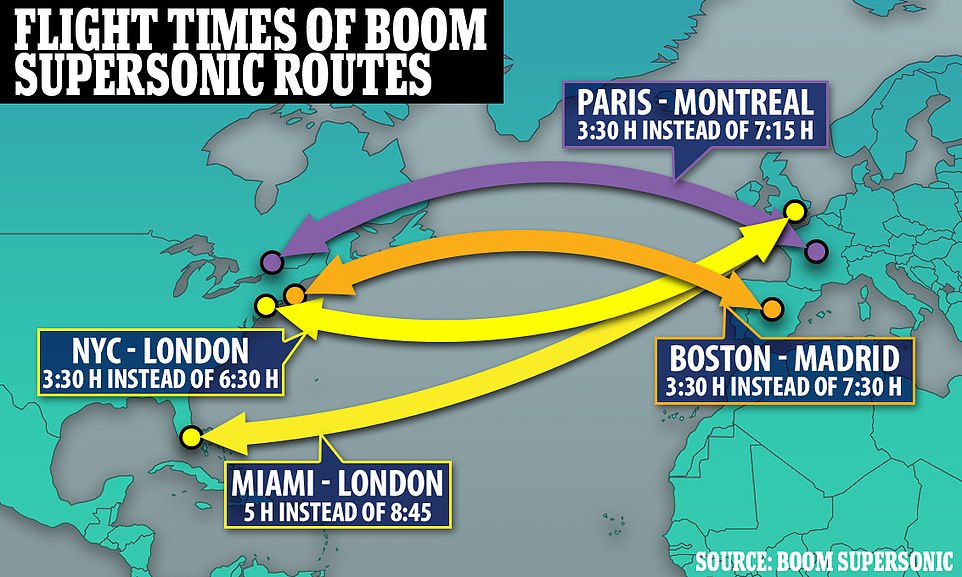
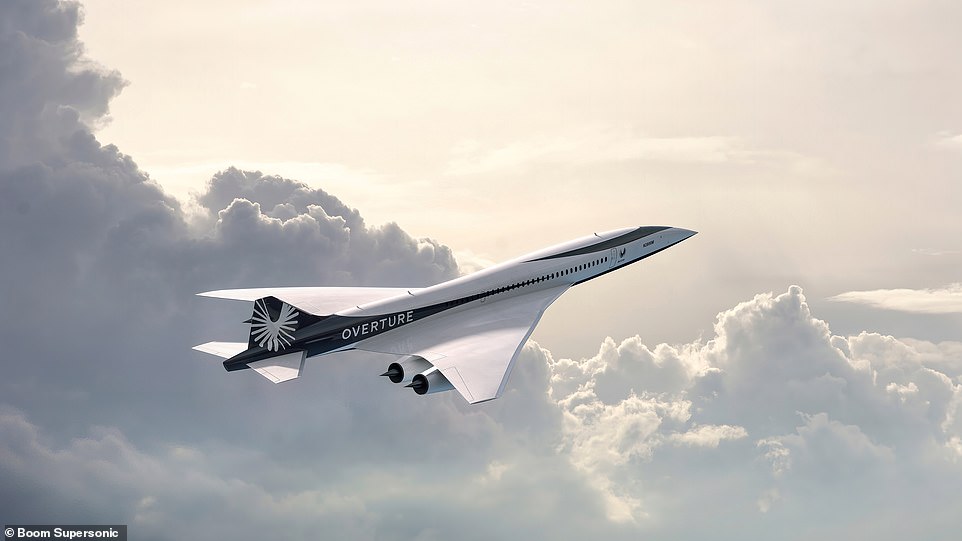
The world's fastest airliner: Boom Supersonic Overture jet dubbed 'Son of Concorde' hits 1,300mph and runs on sustainable fuel - and could fly passengers from New York to London in 3.5HRS by 2029
The idea of travelling from Miami to London in just five hours might sound too good to be true for many weary travellers.
But it could become a reality in just seven years, following the news that American Airlines has agreed to buy 20 Overture jets from aircraft maker Boom Supersonic.
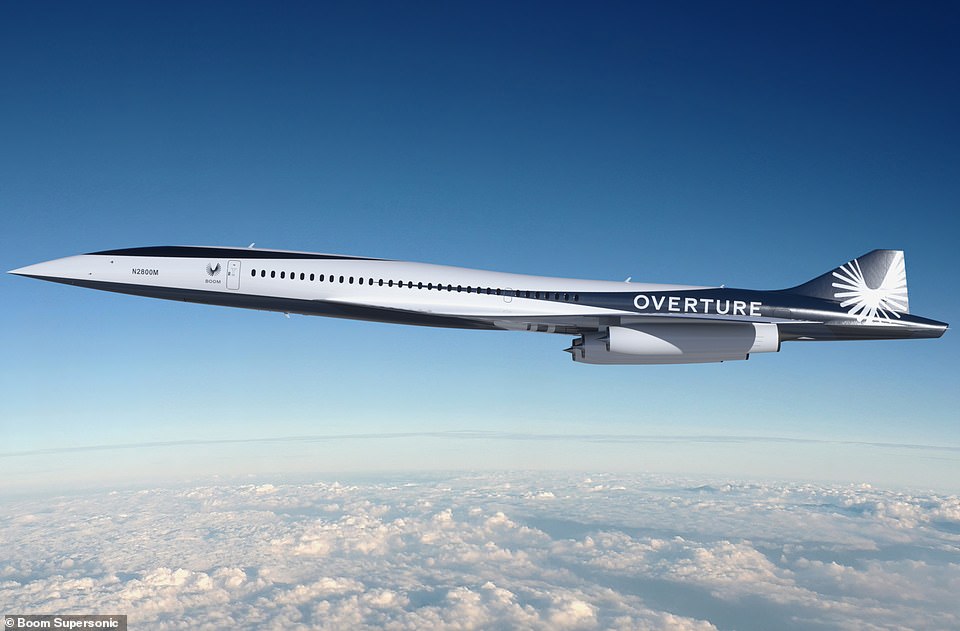
The Overture, dubbed the 'Son of Concorde' is still under development, but is tipped to be the 'world's fastest airliner', reaching speeds of Mach 1.7 (about 1,300mph).
This is double the speed of current commercial jets, and could slash the journey time between Miami and London from nine hours to just five.
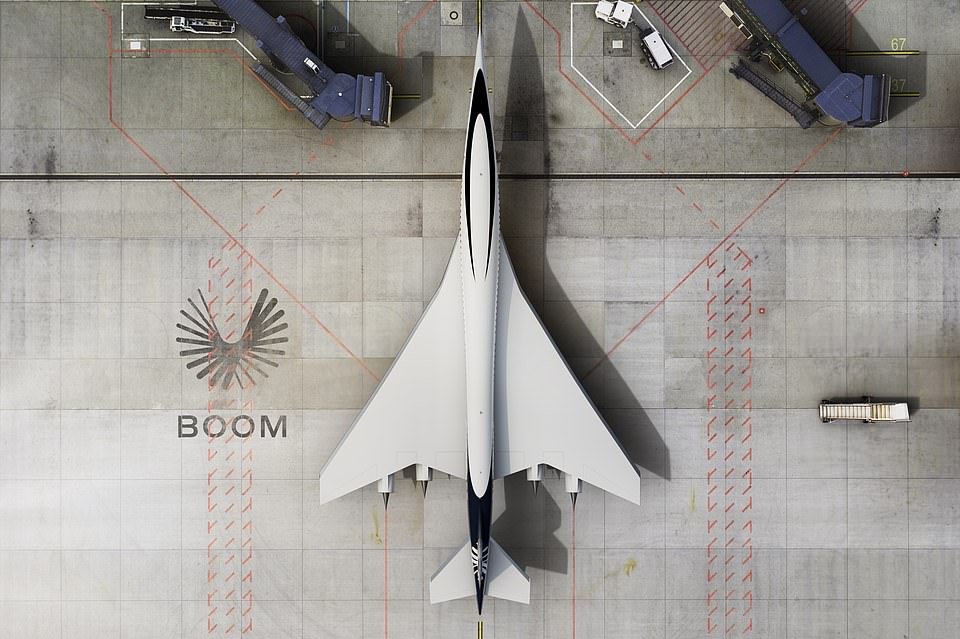
'Overture is our flagship aircraft, a supersonic commercial airplane that will carry up to 88 passengers,' Boom Supersonic explains on its website. 'We are designing Overture to industry-leading standards of speed, safety, and sustainability.'
Here's a look at the key features we expect to see in Overture, ahead of its roll out in 2025, first flight in 2026, and first passenger flight in 2029.

The Overture is still under development, but is tipped to be the 'world's fatest airliner', reaching speeds of Mach 1.7 (about 1,300mph). Overture is slated to roll out in 2025, fly in 2026 and expected to carry passengers by 2029

Still under development, the Overture is expected to reach speeds of Mach 1.7, or about 1,300 mph, roughly double the top speed of the fastest current commercial jets on the market, including the Boeing 747
Four-engine design
Overture is driven by four powerful wing-mounted engines that power the plane to cruising speeds of Mach 1.7 (1,300mph) over water, and just under Mach 1 (767mph) over land without the use of afterburners.
'The use of four engines keeps weight and temperature balanced, and shrinks the size requirements of each engine, which allows the production of those engines to fall within current supply chain and manufacturing capabilities,' Boom Supersonic explained.
Each engine is fed by a highly-efficient, streamline-traced, axisymmetric inlet.
These inlets provide 'exceptional' pressure consistency that allows the engines to operate with subsonic airflow at supersonic speed, according to Boom Supersonic.
'Engine placement was selected to conform to the strictest passenger safety requirements,' it added.
Quieter operation
While you might expect Overture to be incredibly loud, thankfully this isn't the case.
Using four engines results in lower thrust requirements for each, which means reduced overall noise levels, according to Boom Supersonic.
The plane is also fitted with the world's first automated noise reduction system.
'With no afterburners and buzz-free engines, Overture’s takeoffs will blend in with existing long-haul fleets, resulting in a quieter experience for both passengers and airport communities, meeting or exceeding ICAO (International Civil Aviation Organization) requirements for all subsonic aircraft operating over land and at or near airports,' Boom Supersonic explained.

Still under development, the Overture is expected to reach speeds of Mach 1.7, or about 1,300 mph, roughly double the top speed of the fastest current commercial jets on the market, including the Boeing 747

Boom says that Overture, which will be able to fly at 60,000ft and carry between 65 and 80 passengers, will use 'the world's first automated noise reduction system'
American Airlines Agrees to Buy 20 Boom Supersonic Jets
Astronomers Discover 'First of Its Kind' 3-Star System in Deep Space

Two blazing balls of gas are tightly pirouetting around each other, completing their mutual orbit to the rhythm of an Earth day. Simultaneously, a third star steadily encircles the pair, casting a spotlight on the performance.
Details of the cosmic situation can be found in a paper published in June in Monthly Notices of the Royal Astronomical Society. "As far as we know, it is the first of its kind ever detected," Alejandro Vigna-Gomez, an astrophysicist at the University of Copenhagen and co-author of the paper, said in a statement Monday.
Though this animation is of a star and a black hole binary system, it helps illustrate what binary objects' motions would look like.
Even though we know of many tertiary star systems, per Vigna-Gomez, not only are they much farther apart than this sparkly trio, but they're also typically less massive.
By quite a bit. According to the new paper, the internal, close-quarter binary stars hold a combined mass approximately 12 times that of our sun, and the wide-field globe surrounding them boasts a whopping 16 times the mass of our sun.
For context, it would take more than 330,000 Earths to match one solar mass, a quantity that comprises 99.8% of the mass of our entire solar system. Simply put, these stellar ballerinas are absolutely colossal. But in the grand scheme of things, Vigna-Gomez was after much more than merely identifying this unusual starry arrangement.
The goal was to decode precisely how such a fierce triplet -- formally dubbed TIC 470710327 -- came together in the first place. A missing ballerina Along with fellow researcher Bin Liu, a theoretical astrophysicist also affiliated with the University of Copenhagen, Vigna-Gomez first came up with several options for the newly observed three-star system's backstory.
Foremost, there was the idea that the bigger, outer star formed first. However, this option eventually fell through because, after some investigation, the team realized such a starry leviathan would've likely ejected material inward that would disrupt the binary stars' formation.
There wouldn't have been a trio. There'd have been gaseous rubble spilling in all directions. Second, the team considered that the binary star dancers and third star spectator might've formed separately -- far away from each other -- then eventually have fallen together by some force of gravity.
Though this particular scenario hasn't been totally ruled out yet, the researchers think it still might not be the best one. They're much more focused on the final and preferred possibility. A slightly less collaborative one.
What if two individual binary star systems formed near each other, the researchers wondered, then maybe one of those pairs merged into a giant star? If true, that massive combo star would be the outer one we see today, orbiting the smaller -- but still huge -- stars within. In other words, it could be possible that a fourth dancer was part of this cosmic ballet, but was unfortunately eaten up by its own partner prior to the final scene.
Well, as of the team's new research -- based on tons of computer models and fascinatingly rooted in the discoveries of citizen scientists -- this case was the most probable. "But a model is not enough," Vigna-Gomez said, arguing that to prove his and Liu's suspicion with high certainty would require either using telescopes to study the tertiary system in better detail or statistically analyzing nearby star populations.
"We also encourage people in the scientific community to look at the data deeply," Liu said in a statement. "What we really want to know is whether this kind of system is common in our universe."
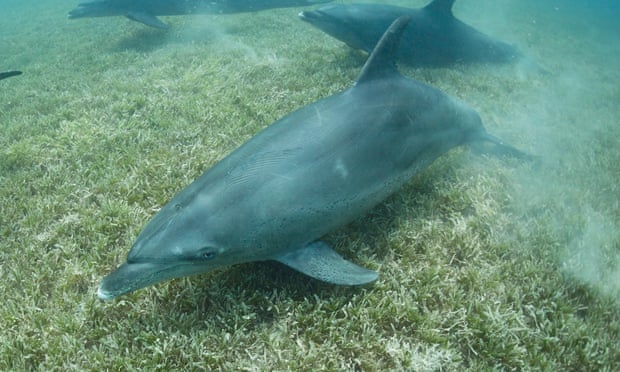
FURIOUS DOLPHIN BITES AT LEAST SIX BEACHGOERS IN JAPAN

Right as "Jaws" hits theaters again this summer, one dolphin in the sea of Japan is looking to put that titular maneater to shame.
According to Japanese newspaper The Mainichi, officials say that a single dastardly dolphin has been responsible for at least six different attacks on humans this month, prowling the shores of several beaches of the Fukui Prefecture in Japan.
We’re not talking about attacks on people wading far out into the ocean. In fact, most of them occurred less than ten yards from shore.
After the initial wave of dolphin attacks, the city of Fukui installed underwater, ultrasonic wave emitting devices to stave off sea animals, The Mainichi reports. But the rogue dolphin has continued to strike even in the face of those deterrents, at least twice more as of Tuesday.
In the grand scheme of things, dolphin attacks on humans are quite rare — and so are shark attacks, it’s worth mentioning, contrary to what Spielberg’s blockbuster might have you believe — but that doesn’t mean beachgoers shouldn’t be careful.
"There are certain body parts where dolphins don’t like to be touched, like the tip of their nose and their dorsal fin," cautioned a tourism department official while speaking to Agence France-Presse, quoted by The Guardian.
Despite their cheery status in pop culture, dolphins can be shockingly cruel, likely in part due to their high levels of intelligence. They’re some of the biggest assholes in the ocean, mutilating the babies of other sea creatures for fun, and other grisly details we’d rather not mention here.
So if you see a dolphin swimming your way, treat it with the same respect and caution you would any other wild animal — and maybe just leave it alone entirely.
More on wildlife:

Astronomers Discover an Unexplained Phenomenon!
Bright star like UFOs clumped together flying over Palmdale, California 13-Aug-2022

This strange UFO video was filmed in the night sky above Palmdale in California on 13th August 2022.
What do you think this is? Please leave a comment down below!
How Many of Today's

Nick Redfern
There is no doubt that as our technology advances in quick fashion, it gets harder and harder to determine what might be a real UFO and something that just might be from...elsewhere. So, with that said, today I'll share with you the strange and fantastic crafts in our skies that I believe are terrestrial and not extraterrestrial. Perhaps, you'll agree with me. Maybe, you won't agree in the slightest. But, I think we are all looking for the answers. I'll begin with the near-legendary "Black Triangles." Beginning in 1989 and continuing through 1990, Belgium was the focus of intense UFO activity. There was not a single flying saucer in sight, however. Rather, people were reporting encounters with what became known as black-colored “Flying Triangles.” Superficially, they resembled the U.S. Stealth bomber and fighter. There were, however, significant differences: the FTs flew silently, could hover, and were able to fly at speeds as slow as 20 miles per hour and in excess of 1,000 miles per hour. While, in some quarters, there was a nagging suspicion that the Flying Triangles were aircraft still on the secret list, most observers dismissed such a theory. After all, why not test-fly them above the deserts of Area 51, where they would not be seen?

It wasn’t just the general public, UFO investigators, and the Belgian military that were deeply concerned by all of this. The U.S. Defense Intelligence Agency was worried, too. As a perfect example, a 1990 DIA report, titled “Belgium and the UFO Issue,” reveals the facts concerning a wealth of Flying Triangle encounters, including the following, which occurred on March 18, 1990. According to the DIA: “Source A cited Mr. Leon Brenig, a 43-year-old professor at the Free University of Brussels in the field of statistics and physics…Mr. Brenig was driving on the Ardennes autoroute in the Beaufays region east of Liege, Sunday, 18 March 1990 at 2030 hours when he observed an airborne object approaching in his direction from the North. It was in the form of a triangle…and had a yellow light surrounding it with a reddish center varying in intensity. Altitude appeared to be 500-1000 meters, moving at a slow speed with no sound. It did not move or behave like an aircraft." My firm view is that we are looking at ongoing next-gerenation Stealth planes and not the work of ETs. Onto another aspect of this controversy.
In the early 1990s, rumors began to circulate among the aviation world that a highly secret, futuristic aircraft was being flown out of Area 51 – and under distinctly covert circumstances - to say the very least. The reportedly large, black-colored, triangular-shaped aircraft which could fly at incredible speeds, could outmaneuver just about anything else on the planet. It was rumored to be known as the Aurora. Officially, at least, and according to the U.S. Government, the Aurora does not exist and has never existed - at all. But, we should remember that was once said about Area 51, too. So, with that in our collective minds, we need to tread cautiously when it comes to official proclamations of the controversial type. And that includes the aviation industry.
The story began – publicly, at least , I should stress – in the early part of March 1990. That was when the well-respected magazine Aviation Week & Space Technology covered the story. They revealed that the term “Aurora” had appeared in the 1985 U.S. budget – and had possibly appeared by mistake, which makes sense if the program was so highly sensitive that its existence had to be denied at all costs. And talking of costs, it was rumored that around $455 million had been provided to those working out at Area 51 on secret, futuristic aircraft. AW&ST suspected that Aurora was a codename for multiple kinds of aircraft that were both radical in design and technology. Other investigators, though, concluded that Aurora referred to just one type of aircraft. AW&ST learned that by 1987 the budget had soared to in excess of two billion dollars. Impressive!
Now, to another aircraft of the secret type; one that went wrong. Some might say this is a case of a "UFO crash." I say "Wrong." In March 1997, the U.K.’s Independent newspaper ran an article titled “Secret US spyplane crash may be kept under wraps.” In part, it stated: “A top-secret United States spyplane which flies on the edge of space at five times the speed of sound crashed at the British experimental airbase at Boscombe Down, Hampshire, in September 1994, according to a report in a leading military aviation journal. The SAS [Special Air Service], the report said, was scrambled to throw a cordon round the wreckage, which was flown back to the US two days later. The hypersonic reconnaissance aircraft, called Astra or Aurora, is believed to have been developed in the 1980s as a secret US government ‘black program.’” The explanation, from British officials, that the mysterious craft was nothing stranger than a Tornado aircraft has been met with rolling eyes and shaking heads. Particularly since the Tornado in question actually came down in August 1994 and not late one night in September of that year. National Archives papers on the affair state the following:
“…the only flying that took place that night was the launch of two Royal Navy Sea King helicopters in support of an exercise. Claims that members of the public were turned away by police roadblocks may have arisen from some confusion over dates. On August 12, 1994 a Tornado participating in a trial made an emergency landing there after the decoy target under trial failed to jettison. The Tornado landed with a trailing 375ft steel cable and, for safety reasons, roads close to Boscombe Down were closed while the aircraft passed overhead. We are aware of press reports regarding an aircraft known as ‘Aurora’. The Ministry of Defense has no knowledge of any U.S. aircraft with this designation operating in UK airspace. The existence of such a program would, in any case, be a matter for the US Government to confirm.”
Now, we get to the matter of the incredible "UFOs" that Bob Lazar said he saw out at Area 51's S-4. For the record, I believe Lazar was at Area 51. But, there was a great deal of disinformation, too. So the story went, the staff at Area 51 had no less than nine alien craft in their possession. Most of them were allegedly in good condition – in fact, some were said to be in excellent condition. One was superficially damaged, but not overly so. It’s hardly surprising that Lazar was threatened – with his life, no less – to never talk about any of this with anyone outside of the program. That included Lazar’s wife, family and friends. On this issue, Lazar was told that to ensure he towed the line, his home phone would be tapped. He had to sign a document that starkly detailed the result of any violations of the agreement – which included lengthy jail sentences and even a visit from the Grim Reaper. Or, from a government agent with a flair for snuffing out lives. He was even told that if he did ever speak out of line, hypnosis and chemicals could be used to wipe out his memories of what he saw out at S-4. For Lazar this was all very ominous, but the stakes were so high – the ability to work on alien spaceships – that it was too great a lure to say "no" to. Lazar eagerly signed away his life in an instant. Maybe all of us would.

There's something else, too: Lazar didn't just see a bunch of Flying Saucer-style craft at S-4; he was also drugged. We’re talking about ways and means to blur reality, to have the targeted individual – in this case Lazar – see and experience something that may not actually be part of what passes for reality. UFO writer Timothy Good made a notable statement on this issue. Good stated that Lazar told him, “Security was formidable, and various methods of intimidation (including the possible use of drugs and hypnosis [italics mine]) were used to ensure that those who worked at the base kept their mouths shut.” Renowned ufologist, Dr. Jacques Vallee, noted something that was almost certainly connected to the drugs / hypnosis issue. Vallee, speaking on KLAS-TV’s show, UFOs: The Best Evidence, said he asked Lazar “if he felt that his memory might have been tampered with.”
There was a good reason for that question to have been asked. Lazar has admitted that on a couple of occasions, all he could remember was being flown out to S-4…and flying back. And that’s all. His mind had been wiped clean of around two days’ worth of memories. And he never, ever got those missing days back. In light of that, we have to seriously wonder if Lazar genuinely recalled his experiences as he remembered them, but that what he remembered wasn’t real. It may well have been part of an ingenious plan to have Lazar become the ultimate patsy in a plot to convince someone – maybe the Russians – that the U.S. Government has UFOs and alien technology in its secret arsenals. In that sense, the entirety of Lazar’s story needs to be addressed very carefully. Not because he was a liar. But, because his memories cannot be trusted. A strong case can be made that the hypnosis - tied to mock-ups of high-tech-type craft - would easily empasize what Lazar was seeing. Or, what he wasn't seeing or remebering.
There can be no doubt that the alien angle of the history of Area 51 excites many. Maybe that’s what the U.S. Government is counting on. After all, not even the power of all the military, defense, and intelligence-based agencies in the United States can prevent a few leaks of classified information. So, perhaps to keep eager Ufologists away from stumbling on covert programs concerned with new aircraft designs, next-generation weapons-systems, mind-control techniques and more of a down to earth nature, they swamp those same Ufologists with enticing tales of extraterrestrial conspiracies, the Roswell affair, and interviews with a sickly creature from another world. For the people at Area 51, it may be a case of this: if you can’t plug the genuine leaks, then swamp them with far more tantalizing and enticing tales of E.T. And, tales of strange craft in the skies that are really ours. A good argument could be made that this is exactly what has happened. At times, the targeted people might have been patriotic American citizens who overstepped the mark in their quests to find out if alien life really does hang out at Area 51. On other occasions, and particularly during the Cold War, the targets may have been Soviet spies, seeking the very same answers. Dangling an alien carrot – so to speak – would be Aurorathe perfect way to reel in and arrest eager Russian agents. And if that carrot never really existed – except in the minds of those running the disinformation programs – then all the better.
It is, perhaps, highly appropriate to end this article with the words of David Duchovny’s character of FBI Special-Agent Fox Mulder in The X-Files. Episode seventeen of the first season is titled “E.B.E.,” (which is said to be an abbreviated term used by staff at Area 51 to describe aliens: “Extraterrestrial Biological Entities”). As the episode comes to an end, Mulder says to one of his well-informed sources on the inside, dubbed Deep Throat, “I’m wondering which lie to believe.” We can all surely relate to that. Is it possible that many of our UFOs really are high-tech aircraft of the U.S. military and that the government is quite happy to go along with the UFO/extraterrestrial angle and camouflage things? I say that is precisely what's going on. You may not be happy with my words, but we need facts and hard data on the "secret aircraft," phenomenon and not on staged UFOs.