We're done with the UFO cover-up!

We're done with the UFO cover-up!
UFO Sightings Over Marina Del Rey – An Unforgettable Afternoon

In an era teeming with curiosity about the inexplicable, UFO sightings have become a captivating global narrative. Today, we spotlight a post recently uploaded to Reddit, that takes us back to an intriguing incident in Marina Del Rey, CA. The event unfolded on the afternoon of July 18th, 2021, but has just now caught the public eye, sparking renewed fervor in UFO enthusiasts around the globe.
As the golden California sun bathed Marina Del Rey in a warm afternoon glow, something extraordinary appeared in the azure skies. It was not an airplane, nor was it a bird. It was something that couldn’t be easily identified, something that has been intriguing mankind for centuries – a UFO.
A local eyewitness reported seeing three bright, luminescent dots that first formed a triangular pattern, a formation common in many recorded UFO sightings. But then, in a twist that made this event even more interesting, the objects shifted into a three-dotted line. The dots seemed to move with a level of coherence and precision that dismissed any chance of them being floating debris or atmospheric phenomena. The distance, however, made it challenging to discern the specifics of the objects, leaving a lot to the viewer’s imagination.
Our pursuit of the truth behind these UFO sightings isn’t just about curiosity. It’s about exploring the possibility of extraterrestrial life, about venturing into the limitless expanse of the cosmos. Sightings like these are the puzzle pieces that might one day complete the picture.
The witness’s account of the UFO sighting in Marina Del Rey echoes many similar reports worldwide. Such incidents stimulate curiosity and inspire explorations into the uncharted territories of our vast universe. Could these be extraterrestrial visitors or merely inexplicable natural phenomena? The jury is still out.
Stay tuned as we delve further into this UFO sighting and others. Who knows what astonishing revelations await us in the cosmic ocean?
In the realm of the unknown, UFO sightings are the ultimate frontier. And with every new sighting, we are a step closer to unveiling the mysteries that the universe holds. From the distant skies of Marina Del Rey to the far reaches of the cosmos, join us in our journey of discovery.
LATEST UFO SIGHTINGS AND VIDEOS - 20/07/2023LATEST UFO SIGHTINGS AND VIDEOS - 20/07/2023
Three witnesses unveiled for UFO hearing next week | Morning in America
House Oversight Committee members leading the UAP whistleblower hearing unveiled the names of the whistleblowers testifying and shared a glimpse of what the public should expect during testimony next week. Ryan Graves, Americans for Safe Aerospace executive director; David Fravor, a former commanding officer of the Black Aces Squadron with the U.S. Navy; and David Grusch, a former national reconnaissance officer representative of the Unidentified Anomalous Phenomena Task Force with the Department of Defense will testify next week.
Is David Grusch's testimony about UFOs true or false? | Morning in America
House Oversight Committee members leading the UAP whistleblower hearing unveiled the names of the whistleblowers testifying and shared a glimpse of what the public should expect during testimony next week. Nick Pope discusses the news that's expected to be unveiled in next week's testimony.
A Whopper of a Storm Speeds Towards Earth | Space Weather News 20 July 2023
This Space Weather News forecast sponsored in part by Millersville University: https://www.millersville.edu/swen
Our Sun has been extremely busy this week firing off so many glancing solar storm blows that the media has had a hard time keeping track of all of the action. In particular Region 3363 has been a major source of this activity, topping things off with a whopper of a solar storm launch on 17 July during an M5.7-flare. This solar storm is predicted to graze Earth sometime by mid-day July 20. Aurora photographers should keep their batteries charged as not only this, but one more storm following it have upped aurora chances through the 22 July. Amateur radio operators and GPS users should also stay vigilant this week as we still have a heightened risk for radio blackouts on Earth's dayside. Add to that the solar storm impacts on Earth's nightside over the next few days and that means radio signal disruptions will be a common occurrence, day or night, over the next few days. Learn the details of the coming solar storm, watch as we say goodbye to Region 3363, and see what new activity our Sun has in store has in store this week.
James Webb and Euclid: The Ultimate Duo to Hunt for the Dark Universe
In this video, we will explore one of the most fascinating and mysterious topics in physics: dark matter and dark energy. These are two invisible phenomena that make up most of the universe, but we have no idea what they are or how they work. We will learn how we detect them, what they do to the cosmos, and what some of the possible explanations are. We will also discover how two amazing space missions, the James Webb Space Telescope and the Euclid spacecraft, will work together to shed some light on the dark side of the universe. Join us as we dive into the ultimate space mystery: what is dark matter and dark energy?
The U.S. Air Force Just Admitted They've Created Something So Advanced It Can't Be Stopped
In an unprecedented announcement, the U.S. Air Force has unleashed a technological marvel that defies all comprehension. With its unparalleled speed, unmatched stealth capabilities, and devastating payload, this creation is deemed unstoppable. It's a game-changer that strikes fear into the hearts of enemies and instills an unprecedented sense of power within its creators.
5 Strangest UFO Mysteries That’ll Creep You Out
The Proof Is Out There: Night Vision Rod UFO | Exclusive (Season 2)
Fernando Medina was always a UFO believer, but when his neighbor Jason introduced him to UFO signaling, even he was in for a surprise. Fernando recounts the awe-inspiring sighting that keeps him looking skyward.
Watch all new episodes of The Proof Is Out There, Fridays at 10/9c, and stay up to date on all of your favorite The HISTORY Channel shows at http://history.com/schedule.
NASA Researches Find "Alien Life" Conditions On Saturns Moon Enceladus
Saturn is one of the planets that keep on fascinating scientists. Even though they have been studying Saturn since the 17th century, they have barely scratched the surface of this interesting planet. It is the second-largest planet after Jupiter and the sixth planet from the sun. Like its twin, Jupiter, it is called a gas giant because it is composed of hydrogen and helium. Saturn is one-eighth the average density of the Earth, but it is over 95 times larger than the Earth. It has a pale yellow hue due to the presence of ammonia crystals in its upper atmosphere. It also has a prominent ring system that comprises mainly ice particles with a small amount of rocky debris and dust.
Sphere UFOs, Glitching UFOs, Fast UFOs. Best UFOs Of June 2023, AFO
UAP Sightings That Are BEYOND BELIEF!
These are some awesome sightings throughout the decade! From flash appearances to Vimanas to what turned out to be just ball lightning, I’ve got it all! I provide file commentary and my commentary is opinion not proven facts, feel free to share your thoughts and theories in the comments! This is not just a growing phenomena but something you can capture yourself! I'm still blown away by my first experience!
UFO / UAP STOPS missile plus MORE Fascinating UFO video clips!
UFO Sightings BEYOND BELIEF!
These are some awesome sightings throughout the decade!
From flash appearances to Vimanas to what turned out to be just ball lightning, I’ve got it all!
On July 13, a dangerous asteroid nearly hit the Earth! And NASA didn't know it was there!
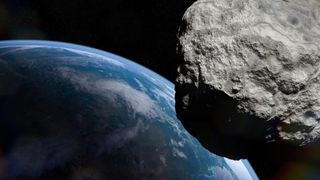
On July 13, 2023, a newly discovered asteroid came very close to hitting our planet. Unfortunately, we didn't discover it until two days after the close encounter. What would've happened if this object had hit us with no warning? What can we do to keep this from happening again?
Astronomers Discover A Cosmic "Unicorn": Two Planets on the Same Orbit
It's the first time astronomers have ever spotted exoplanet Trojans in the wild.

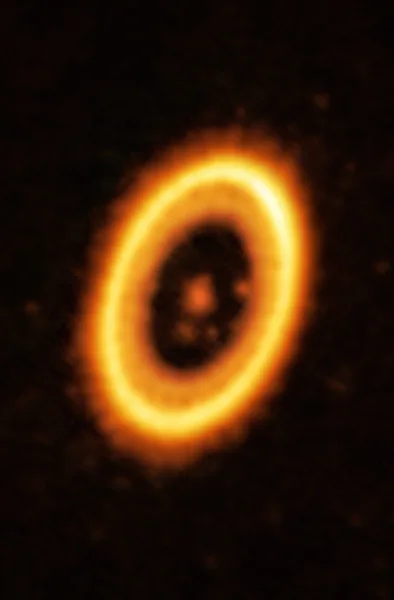
About 370 light years away, in the infant star system PDS-70, astronomers may have just caught an exoplanet pulling itself together on the same orbit as its giant sibling.
We already know that more than one object can share the same orbit; Jupiter has a collection of 120,000 asteroids following its same path around the Sun, for example. Earth has one, too. But although it’s theoretically possible, astronomers have never discovered two whole planets sharing the same orbit around a star before.
“Who could imagine worlds that share the duration of the year and the habitability conditions? Our work is the first evidence that this kind of world could exist,” says Olga Balsalobre-Ruza of the Centre for Astrobiology in a recent statement. She and her colleagues published their findings in the journal Astronomy and Astrophysics.

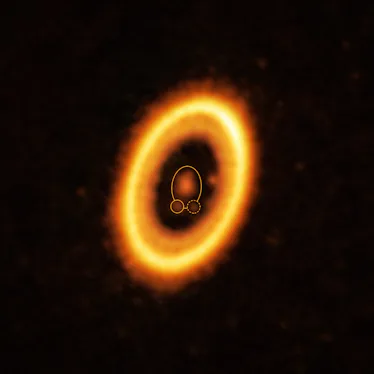
The large solid line shows PDS-70b's path around its star. The smaller solid line circles PDS-70b itself, while the dotted line circles the newly-spotted debris cloud.
ALMA
PDS-70 is a very young star system, only about 5.4 million years old, so young that planets are still coalescing from the disk of gas and dust surrounding the small star. It’s one of the few exoplanet systems that astronomers have managed to image directly; from Earth, we appear to be looking straight up (or straight down) into the system. At least two planets, both gas giants, have formed so far: PDS-70b and PDS-70c. There may be others soon; astronomers can see gaps in the dust that forms the disks, which may mark the orbits of planets in various stages of forming.
Balsalobre-Ruza and her colleagues recently spotted a cloud of debris about twice the mass of our Moon trailing a bit behind the innermost gas giant, PDS-70b. The debris could be the building blocks of a new little planet, or it could be a cloud surrounding a young planet that’s already formed. PDS-70b itself is so young that it’s still surrounded by its own little disk of gas and rocky debris, which will eventually coalesce into moons (PDS-70c also has a disk of moon material still swirling around it).
The debris cloud is in exactly the right spot for what astronomers call a Trojan object (the name comes from Jupiter’s merry band of asteroids, mentioned above, which were originally named after Trojan heroes from The Iliad; now it’s a catch-all term for any objects that share an orbit in the same way). It’s in what’s called a Lagrangian zone, a region in a planet’s orbit where objects — like asteroids — can be trapped thanks to the balance between the planet’s gravity and the star’s gravity.
“[Exoplanet Trojans] have so far been like unicorns: They are allowed to exist by theory, but no one has ever detected them,” says coauthor Jorge Lillo-Box, also of the Centre for Astrobiology, in a recent statement.
As if the orbital situation in PDS-70 wasn’t complicated enough, PDS-70b and PDS-70c are in a nearly 1:2 orbital resonance, which means that PDS-70b completes roughly one orbit in the time it takes its outermost neighbor, PDS-70c, to complete roughly two orbits. It’s entirely possible that every time these two planets pass each other on a lap around their star, their mutual gravitational attraction will pull them closer to being in a true resonance. And it’s not clear how that might affect PDS-70b’s Trojan follower.
Balsalobre-Ruza and her colleagues discovered the debris cloud in archived data from the Atacama Large Millimeter/submillimeter Array (ALMA), a telescope in the highlands of Chile. They’ll have to wait a few years to confirm that what they’ve found really is orbiting the star on the same path as PDS-70b, though; it takes the gas giant about 120 years to make a complete lap around the star, so it will take a few years before the planet, or the debris cloud, will have moved enough for astronomers to confirm that they’re actually moving together.
A skyscraper-size asteroid flew closer to Earth than the moon — and scientists didn't notice until 2 days later
Niemand zag het aankomen: asteroïde die langs aarde scheerde pas twee dagen later gespotEen onbekende en letterlijk ongeziene asteroïde passeerde afgelopen donderdag tussen onze aarde en de maan. De ontdekking werd pas twee dagen later gedaan: ‘2023-NT1’, zoals de asteroïde is gedoopt, naderde onze aarde namelijk met de zon in de rug. Daarover schrijven ‘7sur7’ en ‘The Independent’.
KIJK.
Ancient Alien Base On Moons South Pole Region, Photos, UFO Sighting News.
Date of discovery: July 19, 2023
VERSION=1.1.1&REQUEST=GetMap&STYLES=&SRS=IAU2000%3A30166%2C9001%2C39.0180068885043%2C

Dark Orb Over Scottsdale, Arizona July 18, 2023, UFO Sighting News.
Date of sighting: July 18, 2023
UFOs Over Northwest Las Vegas, Nevada 7-18-2023 UFO Sighting News.
Date of sighting: 7-18-2023
2,000 year old Nazca Ant Drawing Found In Peru, UFO Sighting News.
RELATED
Divers encounter enormous ‘doomsday"' deep sea fish off the coast of Ruifang, Taiwan
Harvard Scientist Suggests Potential Discovery of Alien Technology

In a stirring announcement from Harvard, a team of intrepid researchers, led by the renowned Professor Avi Loeb, claimed to have potentially unearthed fragments of what could be alien technology. The fragments were meticulously retrieved from a meteor that plunged into the ocean near Papua New Guinea in 2014.
A typical morning turned into a historic moment when an enigmatic meteor was found to contain unexpected materials. This ground-breaking discovery could reshape our understanding of the cosmos and bring us closer to answering the age-old question: are we alone in the universe?
Instead of peering into the abyss of the cosmos through telescopes, these researchers have switched to a micro-scale approach, investigating under microscopes. The microscopic explorers of the universe have discovered a multitude of metallic spheres amidst the recovered debris. These metallic marbles from the depths of the ocean floor have captured the imagination of scientists across the globe.
Identifying these materials proved a challenging feat, as the team had to filter out minuscule particles from magnetic material collected from the ocean floor. While this might sound like a scene from a science fiction movie, these determined researchers managed to acquire the material and then embark on an extensive examination to reveal its secrets.
Interestingly, it’s not just the size or shape of these spheres that’s fascinating. Data suggests that the strength of these meteorite fragments is significantly higher than the majority of space rocks cataloged by NASA. This raises a tantalizing question: could these fragments be of technological, rather than natural, origin? Could they be remains of some alien technology, zipping through interstellar space?
The mysterious nature of these fragments conjures up images of interstellar voyages, like NASA’s Voyager spacecraft. Imagine if Voyager was on a similar trajectory, colliding with a planet in a distant star system and disintegrating, leaving only traces of its existence that journey through the cosmos and ultimately land on an alien world. Could these microscopic fragments be the messengers of such a voyage, sent by an unknown civilization?
VIDEO:
The speed at which this particular meteor moved – faster than 95% of stars in our solar vicinity – adds another layer of intrigue to this interstellar riddle. The meteor’s remnants that the team retrieved might contain clues to its astounding speed and unusual strength.
To add to the mystique, this is the first time an object from another solar system has been identified and retrieved by our planet’s residents. The meteor was roughly half a meter in size, and when it exploded above the Pacific Ocean, it released energy equivalent to a small percentage of the Hiroshima atomic bomb. The aftermath of this explosion left behind a trail of melted droplets, concentrated in a specific region of the ocean.
The real revelation, however, would be if these droplets could be proven to be artificial in origin. Imagine if we find traces of semiconductors or an unusually high concentration of rare elements, which are typically not found in such quantities in nature. This would be a game-changer, potentially pointing to an advanced civilization’s interstellar craft debris.
As scientists analyze the material and continue their quest for answers, one thing is certain: this investigation has the potential to be a historical turning point. Even if these fragments turn out to be of natural origin, we stand to learn much about the universe and our place in it. For now, we eagerly await the next chapter in this exciting voyage of discovery.
RELATED
Pink disc seen from plane, Tennessee, May 24, 2023, UFO Sighting News. Video.
Two Orbs Caught On Animal Cam, May 28, 2023, UFO Sighting News
Top 3 Unbelievable Alien Artifacts

Aliens have long been a topic of controversy and fascination. However, are we edging closer to unveiling their mysterious presence on Earth? From ancient texts to unexplained artifacts, let’s delve into this extraterrestrial enigma, as we unpack revelations from an interview with Richard Lawrence, a noted UFO expert.
Ancient structures and artifacts across the globe have stirred debates among historians, archeologists, and alien enthusiasts alike. The Temple Mount in Jerusalem, the depths of the Aegean Sea, and Mt. Sinai in Egypt have all been focal points of such discussions. How could these complex, precise structures have been created with the limited technology of the time? Are they evidence of ancient alien interaction, or is there a more mundane explanation?
In recent years, there’s been a growing demand for governments worldwide to declassify UFO records. This demand has been fuelled in part by a persistent belief among a section of the public that governments are withholding truth about the existence of extraterrestrial life. This skepticism towards government transparency isn’t unfounded. Over time, it has been proven that governments, including the U.S., have indeed lied about UFO-related incidents.
As per Richard Lawrence, there’s a chance that governments across the world might be on the brink of revealing long-withheld information on UFOs, but it’s also a probability that these revelations might be tied up with defense policies, creating a barrier to complete transparency.
One of the intriguing aspects of the UFO narrative is the claim of alien technology being present on Earth. This theory proposes that advanced technology, capable of feats beyond our current scientific understanding, has either been given to us by extraterrestrial beings or reverse-engineered from captured alien spacecraft. This could encompass innovations related to sound or light speed, or even unprecedented materials that could be utilized in warfare.
This raises an intriguing question: could these technologies actually have an alien origin, or are they just the products of human ingenuity and scientific progression?
UAP is a term increasingly used by officials, replacing the popular term UFO. It’s still a term that refers to unexplained flying objects, but with a fresher, less stigmatized branding. But what’s in a name? Be it UFO or UAP, the major question remains the same – are they terrestrial or extraterrestrial?
Ancient texts, like the Sanskrit records and the Bible, often narrate tales that could be interpreted as encounters with UFOs or extraterrestrial beings. UFO believers argue these records could be evidence of alien visitations in the past. However, the interpretation of these records is contentious, and skeptics often regard these as myth, not fact.
The extraterrestrial narrative is a captivating topic that continues to be debated globally. As we anticipate more transparency from governments and continue to examine ancient texts and artifacts, we might get closer to answering these mysteries. Until then, the debate between UFO skeptics and believers rages on. Whether these mysterious phenomena are the result of alien interaction or just misinterpreted natural occurrences is a question that continues to puzzle us. One thing is clear – our fascination with the possibility of life beyond Earth isn’t going away anytime soon.
UFO Expert Richard Lawrence: The Pentagon May Unveil Its UFO Secrets

In the world of ufology – the study of unidentified flying objects – there’s perhaps no name as instantly recognizable as Richard Lawrence. With a reputation steeped in decades of research and analysis, Lawrence has been at the forefront of the push for UFO transparency. The recent drive by US senators towards declassification of all government records regarding UFOs brings this conversation back into the limelight. Will we finally see what’s been lurking behind the curtain of government secrecy?
Lawrence, a stalwart figure in ufology, stands firm in his conviction that the truth may soon be revealed. This arises from the fact that the Pentagon, under bipartisan pressure, might have to disclose what they know about UFOs. Yet, the path to such disclosure raises more questions than answers. How much information will be revealed, and how long will we have to wait to see it?
Ever the skeptic, Lawrence refuses to shy away from the hard truths. He shares his skepticism about governments and their habitual shrouding of information related to UFOs. Historically, if you made the claim that governments were concealing the truth about UFOs, you were often labeled a conspiracy theorist. However, the narrative is gradually changing as governments are seen to be more open about their knowledge of unidentified aerial phenomena (UAPs), the current term used for UFOs.
Lawrence notes that, contrary to popular belief, this isn’t a modern conspiracy. There are countless references to UFO-like phenomena in ancient texts like the Sanskrit records and the Bible, hinting at a long history of extraterrestrial encounters. Interestingly, Lawrence points out that the term ‘star’ used in many historical contexts, could very well have been a reference to these mysterious flying objects.
VIDEO:
So, why has there been so much secrecy around UFOs? Lawrence posits that much of this can be tied to defense policies and a race among nations to harness this advanced technology. Evidence suggests that governments, not just in the US but worldwide, are scrambling to understand and potentially replicate the high-tech capabilities demonstrated by these phenomena.
Despite the veil of secrecy, the potential for UFO technology to advance our understanding of the universe is astounding. We’re looking at possibilities ranging from travel beyond the speed of sound to the discovery of new materials that could revolutionize industries. These possibilities can often overshadow the most existential questions: Who are they, and why are they here?
In this climate of increased transparency, the discussion around UFOs has been progressively destigmatized. Despite the skepticism that continues to surround the topic, there is hope that the impending declassification by the Pentagon will spark new conversations, leading to a better understanding of these mysterious phenomena.
In the wake of these revelations, one thing is clear – the call for truth has never been louder. As Richard Lawrence, and indeed the entire ufology community, wait with bated breath for more information to be revealed, it’s a reminder that the quest for knowledge is an ongoing journey. It’s a journey that spans not just our lifetimes, but the annals of history, ever reaching towards the stars.
RELATED VIDEOS
Elusive exoplanet is 'cosmic sculptor' that carved spiral arms of its starAstronomers have discovered a giant alien planet that is shaping the spiral arms developing in gas and dust around its parent star.
The planet also happens to be the reddest planet outside the solar system, or 'exoplanet,' ever seen, scientists have said.
Spiral arms are structures usually associated with galaxies, with images of our spiral galaxy, the Milky Way, providing a striking example of such a structure. Spiral arms aren't limited to galaxies; gas and dust around young stars can also develop these features too.
Related:
Located around 500 light-years from Earth, the star, MWC 758, is estimated to be just a few million years old, practically an infant in comparison to our 'middle-aged' sun, which is around 4.6 billion years old.
And just as the sun was in its infancy, MWC 758 is surrounded by a disk of planet-birthing material called a protoplanetary disk. But since at least 2013, astronomers have been aware of a spiral pattern forming two arms in this protoplanetary disk. University of Arizona researchers now think that those twin spiral arms are the work of a massive planet, dubbed MWC 758c, which orbits the star at a distance equivalent to 100 times the distance between Earth and the sun.
"Our study puts forward a solid piece of evidence that these spiral arms are caused by giant planets," research lead author and University of Arizona Steward Observatory postdoc Kevin Wagner said in a statement. "And with the new James Webb Space Telescope, we will be able to further test and support this idea by searching for more planets like MWC 758c."
Related:
Protoplanetary disks like this one and the one that once formed the solar system usually take around 10 million years to dissipate. The debris comprising them can either be ejected from the system, can be swallowed by the infant star, or can be used as the building blocks for planets, moons, asteroids, and comets.
"I think of this system as an analogy for how our own solar system would have appeared less than 1% into its lifetime," Wagner said. "Jupiter, being a giant planet, also likely interacted with and gravitationally sculpted our own disk billions of years ago, which eventually led to the formation of Earth."
Spiral arms in protoplanetary disks are fairly common. Of 30 disks identified in relatively nearby young star systems, astronomers have found around 10 have their own spiral arms.
"Spiral arms can provide feedback on the planet formation process itself," Wagner said. "Our observation of this new planet further supports the idea that giant planets form early on, accreting mass from their birth environment, and then gravitationally alter the subsequent environment for other, smaller planets to form."
The leading theory is that these spiral arms are sculpted when a massive gas giant pulls on material swirling around its parent star. Until now, however, astronomers have failed to spot the planets that could be acting as cosmic sculptors for these arms.
"It was an open question as to why we hadn't seen any of these planets yet," Wagner said. "Most models of planet formation suggest that giant planets should be very bright shortly after their formation, and such planets should have already been detected."
If MWC 758c is enshrouded by a large amount of dust, this material would be absorbing short-wavelength light resulting in the planet appearing bright only at longer red wavelengths.
If the exoplanet is surrounded by a great deal of dust, this may indicate that it is still forming or even that it is in the process of gathering its own moons as the solar system gas giant Jupiter did billions of years ago.
"In the other scenario of a colder planet surrounded by less dust, the planet is fainter and emits more of its light at longer wavelengths," research co-author and University of Arizona theoretical astrophysicist Kaitlin Kratter said.
If this chillier model for MWC 758c is correct, this means that there may be something happening in young planetary systems such as this that results in planets being colder than expected when they form. This might have an impact on planet formation models and on the techniques that astronomers currently use to hunt exoplanets.
"In either case, we now know that we need to start looking for redder protoplanets in these systems that have spiral arms," Wagner said.
The researchers behind the detection of MWC 758c will now view the exoplanet with the JWST in 2024 in an effort to distinguish between potential scenarios at work in this infant planetary system.
The MWC 758 planetary system is shown directly imaged by the Large Binocular Telescope Interferometer (LBTI) in infrared wavelengths. Theoretical models suggest that the newly discovered exoplanet, MWC 758C, is likely producing spiral arms in the protoplanetary disk encircling the young star.
(Credit: K. Wagner et al.)
"Depending on the results that come from the JWST observations, we can begin to apply this newfound knowledge to other stellar systems," Wagner said, "and that will allow us to make predictions about where other hidden planets might be lurking and will give us an idea as to what properties we should be looking for in order to detect them."
The team's research is published in the journal Nature Astronomy.
Four Glowing Objects Over Dallas, Texas 7-4-2023, UFO Sighting News.
Very interesting arch support on Mars rover photo. It looks like it was intelligently designed. UFO Sighting News.
Date of discovery: July 2023

UFO Caught On Security Cam, West Beach, British Columbia Canada. UFO Sighting News. July 9, 2023